“I am the Alpha and the Omega,” says the Lord God, who is and who was and who is to come, the Almighty.
Services of Death and Resurrection are sacred moments in the life of the church. For a brief time we gather together in our grief, we praise God for the life of a friend or family member, and then we proclaim the hope of the resurrection. Dozens of people will fill the pews, some of who have not entered a church in years, and sing those beautiful hymns like “In the Garden” and “Blessed Assurance.”
As a pastor, it is a humbling thing to be tasked with leading the services and preaching a faithful word about God’s love and the life of the dead. I try to find the right stories and scriptures that shed light on the individual and pray for God to speak through my words so that they resonate with God’s Word. I try to lead the service in such a way that we can experience tears and laughter. And I try to ensure that the experience is one of profound holiness.
Yesterday, after concluding a Service of Death and Resurrection for a long-time member of St. John’s UMC, I gathered in the social hall with friends and family for a reception. Like a high school reunion, I saw groups of people gathered together to share stories and offer condolences. I spent some time wandering about the room in order to check on the members of the immediate family when someone stuck out his hand and asked to speak with me. I had never met the man before but he explained his connection to the man that had died and he thanked me for my words. He described his fear of funerals because they always remind him that death will come for him one day as well. But then he said, “However, my favorite thing about funerals is the fact that I learn so much more about a person I thought I knew so well.”
Funerals do teach us so much more about the people we love. We hear from friends and family members willing to offer witness to the particular life and often we hear a pastor who is able to share a new vision of the life of someone close to us. It is in our willingness to listen that we discover something new.
Whenever I perform a funeral I am re-struck by the scripture: “I am the Alpha and the Omega.” I have said it before groups of people more times than I can count, but each time it reinforces the fact that I still have so much more to learn about God. Every day is a new opportunity to open up scripture, pray deeply to the divine, and discover the Lord’s work in other people. Similarly, it brings me great comfort to know that God is the beginning and the end, that our lives are gifts from God and that death is not the end.
This week, let us take time to learn more about the people in our lives and to learn more about the God of life. Maybe it means picking up the phone and calling a dear friend, or opening up our bibles to read a familiar passage. Maybe it means praying for the people in our local and global community, or listening for God’s still soft voice in the words of a hymn. Whatever we do, let us do so with the hope of learning more about one another and our Lord who is the beginning and the end.
As he came out of the temple, one of his disciples said to him, “Look, Teacher, what large stones and what large buildings!” Then Jesus asked him, “Do you see these great buildings? Not one stone will be left here upon another; all will be thrown down.” When he was sitting on the Mount of Olives opposite the temple, Peter, James, John, and Andrew asked him privately, “Tell us, when will this be, and what will be the sign that all these things are about to be accomplished?” Then Jesus began to say to them, “Beware that no one leads you astray. Many will come in my name and say, ‘I am he!’ and they will lead many astray. When you hear of wars and rumors of wars, do not be alarmed; this must take place, but the end is still to come. For nation will rise against nation, and kingdom against kingdom; there will be earthquakes in various places; there will be famines. This is but the beginning of the birth pangs.
The temple in Jerusalem was something to behold. It captivated the hearts and imaginations of countless Israelites throughout the centuries and was the pivotal focus of their faith. During times of strife and warfare the Hebrews would pray for the foundation of the temple. When uncertainties remained in the air, the temple was the place to offer sacrifices. It stood as a beacon to all with eyes to see regarding the power and the glory of the Lord.
It is no wonder therefore why the disciples couldn’t help but marvel at the giant stones when they were walking with Jesus. After spending a considerable amount of time ministering to the last, least, and lost in Galilee, Jesus triumphantly entered Jerusalem on the back of a donkey and brought his friends to the temple.
“Look Lord! Look at the large stones and large buildings!” Like the dwarfing power of a modern skyscraper the temple kept the disciples’ eyes in the sky. But then Jesus said, “See these buildings? Not one stone will be left here upon another; all will be thrown down.”
I can almost imagine the disciples rubbing their hands together in anticipation; “Finally Jesus is getting ready for the revolution! He keeps talking about the first being last and the last being first, now is the time to strike!”
Later, when Jesus was sitting on the Mount of Olives opposite the temple, the inner circle of disciples gathered close and asked Jesus privately, “Tell us, when is it going to happen? What will be the sign that all these things are about to be accomplished?”
Then Jesus began to teach them, “Beware that no one leads you astray with empty promises about the end. Many will come in my name declaring change and messianic power, and they will lead people astray. When you hear about wars and destruction, do not be alarmed; this must take place, the end is still to come. There will be earthquakes. There will be famines. This is just the first part of the birth pangs, the beginning of the end.”
We call this an apocalypse. Commonly understood to mean the destruction of the world, it conveys much more than that. An apocalypse is a revelation from God; it is a vision of a timeless reality. It is the past, the present, and the future. Jesus’ friends saw the temple as the end-all-be-all of faithful living, and he quickly brushed it aside to say that even bricks and mortar will fall away. Don’t put your faith in the buildings and in the structure but in the Lord who reigns forever.
But then Jesus takes the time to warn his friends about the coming days, things that we are still experiencing even now. Watch out for the deceivers who claim to know when the end of the world is coming, beware of the preacher who proclaims words in Jesus name that don’t match what Jesus said, keep guard when you encounter the Christian as sales-rep and instead look for the Christian as servant.
Jesus’ words are tough to swallow in our comfortable contemporary condition. We would rather hear about the miracles or the ethical teachings of Jesus. But today we hear about the devastation, the destruction, and the death that will come before the end. When you look out at the world and it looks like the very fabric of life is unraveling, the end is still to come. When you feel lost and alone deep in your soul, unsure of your future and welfare, the end is still to come. When you lose a loved one to death, and you feel like you can’t go on, the end is still to come.
Only a Messiah like ours would dare to proclaim the end as the beginning, the fear as the new birth.
Francine Christophe is an 83-year-old French writer and poet who survived the Holocaust. She was recently interviewed for a documentary about what it means to be human and this is what she said:
“My name is Francine Christophe. I was born on August 18th, 1933. 1933 was the year when Hitler took power… When I was 11 years old in the Bergen-Belsen camp, an amazing thing happened. Let me remind you, as the children of prisoners of war, we were privileged. We were permitted to bring something from France. A little bag, with two or three small items. One woman brought chocolate, another some sugar, a third, a handful of rice. My mom had packed two little pieces of chocolate. She said to me, “We’ll keep this for a day when I see you’ve collapsed completely, and really need help. I’ll give you this chocolate, and you’ll feel better.
“One of the women imprisoned with us was pregnant. You couldn’t tell, she was so skinny… But the day came, and she went into labor. She went to the camp hospital with my mom, the barracks chief. Before they left, my mom said, “Remember that chocolate I was saving for you?” “Yes, Mama.” “How do you feel?” “Fine, Mama. I’ll be okay.” “Well, then, if it’s alright with you, I’d like to bring your chocolate to this lady, our friend Helene. Giving birth here will be hard. She may die. If I give her the chocolate, it may help her.” “Yes, Mama. Go ahead.”
“Helene gave birth to the baby. A tiny, little, feeble thing. She ate the chocolate. She did not die. She came back to the barracks. The baby never cried. Never! She didn’t even wail. 6 months later, the camp was liberated. They unwrapped the baby’s rags, and the baby screamed. That was when she was born. We took her back to France. A puny little thing, for 6 months.
“A few years ago, my daughter asked me, “Mama, if you deportees had had psychologists or psychiatrists when you returned, maybe if would have been easier for you.” I replied, “Undoubtedly, but we didn’t have them. No one thought of mental illness. But you gave me a good idea. We’ll have a lecture on that topic.” I organized a lecture on the theme: “If the survivors of concentration camps had had counseling in 1945, what would have happened?”
“The lecture drew a crowd. Elderly survivors, historians, and many psychologists, psychiatrists, psychotherapists… Very interesting. Many ideas emerged. It was excellent. Then, a woman took the podium and said, “I live in Marseille, where I am a psychiatrist. Before I deliver my talk, I have something for Francine Christophe.” In other words, me. She reached into her pocket, and pulled out a piece of chocolate. She gave it to me and she said, “I am the baby.”
I can’t imagine the fear of being pregnant while in one of the concentration camps. New birth and new life is supposed to be filled with such hope and promise, but to be pregnant in one of the camps was basically a death sentence.
Francine Christophe’s story is a powerful reminder of the power of new life in the midst of chaos and calamity. We see the truth and depth of Jesus’ words, “the end is not yet.”
Today, faithfulness and religious observance is either a fanatical or apathetic endeavor. Turn on the news and you will quickly hear about the destructive powers of ISIS, the greed of the Church, or the failure of Christian politicians. The world quickly identifies the people who claim to speak on behalf of Jesus who then rapidly lead disciples away from the truth. They care more about the color of Starbucks coffee cups than they do about children going hungry. They preach intolerance instead of love, they emphasize death over resurrection, and they support destruction above new life.
On the other side, countless churches contain only the blandness of discipleship. Week after week the pews are filled with less and less people as the sermons are filled with more and more trite clichés about living a better life. Cultural Christians might take the time to attend worship and offer up a few dollars and change when the plate comes around but their once deeply rooted faithfulness has been replaced with apathy for all things religious. They have a bible displayed at their homes but it is covered in dust, they go to church simply because that’s what you’re supposed to do, and they only pray when they don’t know what else to do.
Against the fanatical religious leaders of today, Jesus warns us to “beware that no one leads us astray.” Hold fast to the love that has been revealed to you in scripture and in the church, remember who you are and whose you are.
And against the apathetic churches of today, Jesus announces an electrifying message: the end is not yet!
This kind of scripture might terrify us to the core; we might see the world falling apart and immediately identify what we witness with what Jesus warned his disciples about. From our comfortable vantage point, these verses are more horrifying than hopeful. But for those for whom the present is a terrifying reality, it is a truly hopeful word.
For a pregnant woman in the middle of a concentration camp, “this is not the end” rings true in a young woman with a gift of chocolate.
For a grieving family preparing to gather for a funeral, “this is not the end” takes on a whole new meaning when they hear about the glory of the promised resurrection.
For a city in France that is still mourning the loss of so many innocent lives, “this is not the end” becomes powerful through the global community responding in love and prayer.
For a church that sees fewer and fewer people in the pews each week, “this is not the end” resonates in the commitment to spread the Good News of Jesus Christ.
No matter what you are going through in your life right now, hear Jesus’ hopeful words and know that they are meant for you, “this is not the end.” Amen.
Then I saw a new heaven and a new earth; for the first heaven and the first earth had passed away, and the sea was no more. And I saw the holy city, the new Jerusalem, coming down out of heaven from God, prepared as a bride adorned for her husband. And I heard a loud voice from the throne saying, “See the home of God is among mortals. He will dwell with them; they will be his peoples, and God himself will be with them; he will wipe every tear from their eyes. Death will be no more; mourning and crying and pain will be no more, for the first things have passed away.” And the one who was seated on the throne said, “See, I am making all things new.” Also he said, “Write this, for these words are trustworthy and true.” Then he said to me, “It is done! I am the Alpha and the Omega, the beginning and the end. To the thirsty I will give water as a gift from the spring of the water of life.”
Revelation is full of some of the most bizarre imagery in all of Christianity. Pick up the bible; flip all the way to the end, and what you find sounds like the stuff that some people will scream out from the street corners of life. In Revelation we read about beasts and dragons and lambs, we catch a glimpse of the bowls of God’s wrath, and the destruction of the world.
It is an often-ignored book of the bible, and for good reason. Revelation has been responsible for countless deaths throughout the centuries, as zealous Christians believed they were seeing the images of the book before their eyes and acted accordingly. It rests at the foundation for some of the strangest modern Christian literature. And it accounts for the never-ending amount of fundamentalist preachers who claim to know the exact day of calamity that will bring about the end of the existence.
Growing up in the church, I can barely remember ever hearing about Revelation. On Sunday mornings we were more inclined to hear about the miracles of Jesus in the gospels, or the great narratives of Genesis, than we were to hear about visions of God’s power and destruction. Even today as a pastor, I am ashamed to admit that after leading worship for two and a half years, I have only preached on Revelation once, and frankly it was to talk about the writer of Revelation more than the text itself.
Yet, if regular worship ignores the power of Revelation, funerals are the place where it is most needed.
It is no accident that the text we read this morning has been used and associated with Christian burials for nearly as long as the church has existed. When faithful disciples gather for services of death and resurrection, Revelation 21.1-6 needs to be read precisely because of what it proclaims. This handful of verses offers evocative and moving images of comfort to those of us who live past our friends and family who die, and for those of us who live in troubled times.
John of Patmos, the writer of Revelation, saw a map of the future; a description of what God will do in time. From his vantage point John witnessed a new heaven and a new earth. All that we have come to know had passed away from recognition, and even the sea was no more. But there in the sky John saw the holy city, the new Jerusalem, coming down from heaven adorned like a bride for her husband. Like the wonderful moment of a bride walking down the aisle in church, with all of the joy and expectation of a new and beautiful future, God’s city came to rest with God’s creation.
And then John heard a loud and booming voice declare, “See God’s home is now with mortals. God will live with them and He will wipe away every tear from their eyes. Death will cease to exist; mourning and crying and pain will be no more. The first things have passed away and God’s divine reality will reign forever.”
And the one seated on the throne said, “See, I am making all things new! Write this down because it is trustworthy and true. It is done! I am the Alpha and Omega, the beginning and the end. To the thirsty I will give water as a gift from the spring of the water of life.”
John’s words are a consolation, a vision of hope for a people in distress. These words have brought comfort to countless Christians throughout the centuries, from the earliest disciples persecuted for their faith to those who still live in fear because of what they believe. And at funerals, they help to remind each of us about God’s love in the past, present, and future.
It was freezing outside as we all gathered around the grave. We had gone through the funeral service in the sanctuary, we had praised God in spite of loss, we had remembered the saint’s life that were now about to bury in the ground, and we had somberly marched into the cemetery with our heads hung low.
There is a strange thing that happens between the sanctuary service and the graveside. The finality of death takes on an entirely new and deeper meaning as you witness a casket or urn prepared to be lowered into the earth. Gone are the familiar smells and sights of the sanctuary only to be replaced with the sounds of nature and the smell of dirt.
We stood there and patiently waited for the family to gather as close as possible, and then every eye turned to me. When we mourn the dead, we become helpless and rely on someone to guide us through the right words and actions, hoping that the pastor will be true to the life and death of our beloved while declaring the hope of the resurrection.
Every person shivered in the wind. I offered prayers and scriptures reflective of the person’s life, I made time for silence so that we could all properly reflect on what we were doing, and then I walked over the casket. I reached down to the ground, and like I had countless times before, I grabbed the loose soil and dropped it onto the wood. And then with my hands resting on the casket I began to sing, “Softly and tenderly Jesus is calling. Calling for you and for me. Earnestly tenderly Jesus is calling, calling O Sinner come home. Come home, come home, ye who are weary come home. Earnestly tenderly Jesus is calling, calling O sinner come home.”
4.2.7
The beauty of Revelation 21 is in the discovery that God will dwell with us, and the home of God will be with us. The hope of the text is the fact that God will call for all of us to come home at one point or another. The bell will toll for us all, but death has lost its sting because of the gift and grace of Jesus Christ.
Since becoming a pastor, I have had to bury a lot of saints, those faithful servants of God’s kingdom who witnessed in their lives to the love of God. While I have sat with numerous friends and families as we mourned the dead I have been brought back to this passage in Revelation that describes the beautiful future in store for us. And though we weep here and now on earth, we wait for that glorious day when death will be no more, when mourning and crying and pain will be no more and we live and with the One who reigns forever.
Today we honor the saints who have come before us, whose examples we wish to follow. God has gathered us in this place to remember what the saints did with their lives, and give thanks for their witness. The saints of faith are our brothers and sisters who risked in all for the sake of Christ.
Today we remember those from this church who have died in the last year, and we join in mourning with all of their friends and families. We remember George Harris, Howard Cassidy, Ray Lancaster, John Taylor, Sam Folkes, Jerry Pangburn, Jo Anne Berg, Dick Dickerson, Lucy Wisely, Frances Pack, Frank Rankin, and Steve Wisely. Some of us have the privilege to recall the life lessons they shared with us, we can remember admiring them for their faith, and we can even picture where they used to worship in this sanctuary.
To hear their names while hearing the words of God from Revelation is to join in solidarity with the saints of our lives and be strengthened by their witness; we too can be saints if our lives become examples of God’s love and compassion toward others.
Being a saint is not something that just happens when we die, but is a worthy goal in the here and now. Instead of lazily watching the days of life pass by, we can embrace God’s call on our lives to start bringing about glimpses of God’s kingdom on earth. This vision of the new heaven is available to us because God continues to make all things new, even us.
So where do we begin?We begin by looking to the place where God dwells with mortals: worship. We start our saintly lives by mirroring the saints who have come before us. We give thanks for their witness remembering that they modeled their lives after Christ and we start doing the same.
We look for the living saints in the pews next to us. We ask for their prayers to give us the grace to be better Christians, we seek them out for advice, and we rely on their teachings. We begin seeing the pews not as walls of division, but instead as avenues of connection.
And then we come to the table and feast from the bread and the cup being strengthened for the work of ministry in the world. We start seeing this table as the connection between past, present, and future, as we remember all who have feasted before us and that this is a foretaste of God’s heavenly kingdom.
We can start living like saints because we belong to a communion of saints. We can start living like saints because Jesus gave his life to destroy the powers of death. We can start living like saints because God makes all things new. Amen.
David intoned this lamentation over Saul and his son Jonathan. (He ordered that the Song of the Bow be taught to the people of Judah; it is written in the Book of Jashar.) He said: Your glory, O Israel, lies slain upon your high places! How the mighty have fallen! Tell it not in Gath, proclaim it not in the streets of Ashkelon; or the daughters of the Philistines will rejoice, the daughters of the uncircumcised will exult. You mountains of Gilboa, let there be no dew or rain upon you, nor bounteous fields! For there the shield of the mighty was defiled, the shield of Saul, anointed with oil no more. From the blood of the slain, from the fat of the mighty, the bow of Jonathan did not turn back, nor the sword of Saul return empty. Saul and Jonathan, beloved and lovely! In life and in death they were not divided; they were swifter than eagles, they were stronger than lions. O daughters of Israel, weep over Saul, who clothed you in crimson, in luxury, who put ornaments of gold on your apparel. How the mighty have fallen in the midst of battle! Jonathan lies slain upon you high places. I am distressed for you, my brother Jonathan; greatly beloved were you to me; your love to me was wonderful, passing the love of women. How the mighty have fallen, the weapons of war perished!
Funerals are strange, difficult, and at times, beautiful. I usually receive the phone call from someone in the family, or from a funeral home, that someone has died and they were hoping that I would preside over the service. No matter who the person is, I am immediately filled with sadness knowing that someone, anyone, is now gone. Regardless of my personal connection to the individual, there is a sense of loss that comes with death and not even I can avoid it.
But then I have to get to work. I have to take that grief and hold it for a moment while I help others properly grieve their loss. I have to balance the proper amount of mourning with hope, sadness with peace, and death with resurrection.
When I receive that first phone call I have to start taking care of the logistics: Where will the funeral take place and when? Do they want someone to play the organ? Are they hoping for a particular soloist? Does anyone from the family want to speak on behalf of the dead? And only after the plans are made can we begin talking about the person, making sure that I know everything I can in order to properly proclaim their life, death, and resurrection.
Most of the time funerals take place in the middle of the day in the middle of the week. Friends and family have to take time off from work, or take their children out of school, in order to attend the service. Yet, funerals are not meant for immediate friends and family alone. The entire community of faith is called to witness to the life of those who have died so that we can continue to live out their witness regardless of how well we knew them, or not.
So, this morning, as I mentioned before, we are doing something a little different. A few weeks ago one of our church members named Dick Dickerson passed away. He had only been coming for a few years, but he was a staple in worship. He always sat in the back of the church on the right side, he flirted with every female that crossed his path, and he was incredibly sweet.
When I found out that his family would be having a private service in Kentucky at a later date I knew that we still needed to do something here in order to say goodbye. I knew that we needed to praise God for putting Dick in our lives. And I knew that we were going to have our own little funeral for him on a Sunday morning.
Dick Dickerson
Dick Dickerson called me “honey.” I know that this might’ve bothered other young pastors, but to me it was endearing and precious. I would walk over to visit Dick next door at Brightview/Baldwin Park and the moment I entered his room he would always say something like “Come on honey and sit down with me.” For months I cherished this identification, it made me feel special that Dick felt so connected to me. It was only later that I learned he called most of the people in his life “honey”!
My wife Lindsey would stop by to say hello before a church service started and he would hug her while calling her “honey,” Grace Daughtrey would smile and politely nod her head as he greeted her with a “good morning honey,” and even Marshall Kirby would start to blush when Dick would refer to his Sunday driver as “honey.”
Dick Dickerson was a man of profound love, who deeply appreciated all that God had given him from the very beginning till the very end.
Dick grew up in Kentucky with a family in the midst of financial struggles. Living through the depression was, as he put it, one of the hardest things to witness. But at some point there was a family in the community who saw Dick’s potential, and they brought him under their wing and helped to provide for his education. He always maintained a connection with his biological family, but in his quasi-adoptive family he saw the Christian commitment to loving others, something that would affect the rest of his life.
Dick was a man of stories, stories that shaped his life and the lives of others. When he served as a quartermaster in Patton’s army during World War II he used to offer whisky to his fellow soldiers so long as they affirmed the beliefs of the Republican party. He told me that at the beginning of the war most of his friends were Democrats, but by the time they got home (and enjoyed the whisky) they had become staunch conservatives!
He, unlike others who served in World War 2, was ready and willing to share reflections on his experiences precisely because he did not want anyone to have to experience what he did. He often told a story about an evening that took place in the middle of the war on Christmas Eve when he found himself resting for the night in a bombed out church building. He could remember the wax dripping from the candles, the hole in the roof letting in the tiniest of snowflakes, and all the soldiers huddling together for warmth.
He asked a question of the men that night that he only later attributed to the Holy Spirit. He asked if the men wanted to pray for anything. One soldier prayed for his family back home, another prayed for warmer weather, but one of the youngest said something that would stay with Dick the rest of his life: “I seem to remember Jesus saying something about praying for our enemies, so tonight I would like to pray for the men we’re fighting against. I pray that God would be with them as He is with us.” Dick said that while other men might have grown angry or dismissed the prayer, all of the men joined together in that tiny church on Christmas eve, and prayed for their enemies.
Prayer was at the heart of Dick Dickerson’ life. He spent most of his free time going through a list of people that he lifted up to the Lord and regularly invited me to join him in his prayers. He once told me that prayer was the only thing that got him through the war, and that prayer was the only thing that kept him together once he returned home.
Dick lived a wonderful and blessed life. He married his sweetheart Mildred, had two children, and eventually began working for Madison College in Harrisonburg. Dr. Dickerson, as he was known to his students, made himself available to everyone all all times because he saw the value in other people. Whether in the classroom or at home, you knew that he would make time for you no matter what.
I spent a lot of time with Dick over the last two years, we talked about a great number of things, but the one thing we talked about the most was death. In fact during our very first and our very last conversations he said the same thing to me: “Honey, I’m ready to die.”
In the beginning of 2 Samuel we have a song that David wrote in memory of Saul and Jonathan. After giving their lives for the Lord and the people, David called the nation to weep for their loss: “O how the mighty have fallen.” In life David and Saul were seemingly opposed, but in the experience their death David wept and mourned.
Many of us take the people in our lives for granted. We grow so accustom to their presence and persistence, that we rarely think about what life would be like without them. It is only when someone is truly gone that we can really appreciate what they always meant to us. It happened to David after Saul died. It happened to the disciples during those three days before Jesus rose again. And it has happened to me with nearly every person that I have buried while I have served this church.
But friends, resurrection comes into its fullest meaning when we lose someone we love.
Can you imagine the exultation the disciples experienced when they saw their Lord again after he broke free from the chains of death? Can you picture the joy on their faces when they were able to sit again with their teacher and friend? Can you imagine how David would have felt if he knew that one day someone from his family tree would eventually hang in a tree for the sins of the world so that we could all rise again in the resurrection?
Dick Dickerson was ready to die because he trusted the Lord. His trust was evident in our many conversations, and in is interactions with others, but it was most present while he prayed at this altar.
Dick rarely missed a communion Sunday. Even while his bone cancer was spreading throughout his body, he would make the long and slow journey to the front of this sanctuary to pray on his knees to the Lord. After feasting on the body and the blood, Dick would lay all the worries of his life out for the Lord, he would pray for God’s forgiveness over his sins, and he would thank the Almighty for surrounding him at every moment throughout his blessed life.
Are we ready to die? Every death in this church community is a constant reminder that the bell will toll for us all, and that tomorrow is never guaranteed. Are we ready to die? What kind of faith would it take to be ready to give our lives over to the Lord?
Dick Dickerson certainly had that kind of faith, a faith born out of prayer, presence, and praise, a kind of faith shaped by World War 2, and a kind of faith made real through the witness of Christ’s church.
As we prepare to take steps toward this altar, to feast at Christ’s table, we do well to remember all who have gone before us to eat and pray. We remember Dick Dickerson and his willingness to lift us up. We remember the saints before us, in our midst, and those who will come after and discover God’s grace in a moment like this. And we remember that Jesus came to die so that we would all live, so that death would be defeated, so that the resurrection would be offered to us all.
So, thanks be to God for the great gift at this table and for the life of Dick Dickerson, a man who lived by faith, prayed with every fiber of his being, and was ready to die. Amen.
So we do not lose heart. Even though our outer nature is wasting away, our inner nature is being renewed day by day.
One day I’m going to write a book about all the hilarious, remarkable, frightening, and life-giving things that have taken place during my ministry. Being a pastor is, in my opinion, one of the greatest vocations because it is a privileged responsibility. Pastors are invited in the depth of brokenness, the height of celebration, and everything in between. Some of the stories I have accrued over the last two years who never be appropriate from the pulpit, but one day I’ll get the good ones written down.
Dick Dickerson was a source of great moments. When I received a phone call about his passing away on Saturday, I gave God thanks for putting him in my life and helping me to discover what grace really looks like. But his death did not fully hit me until I announced it from the pulpit yesterday morning and I realized that I would no longer get to see his smiling face, hear his endearing laugh, or listen to one of his great stories.
For instance: When he served during World War 2 as a Quarter-Master he would lie to his superiors when requesting certain supplies saying they were for General Patton just so he could get the equipment necessary to support his troops. Or the story about how he not so subtly attempted to make conservatives out of his friends by offering them whisky only so long as they declared allegiance to the Republican Party. His life was one great story worth telling over and over.
A few weeks ago we were sitting in his apartment talking about the end. Death was not far away and Dick’s bone cancer was getting worse and worse everyday. Yet, he was completely prepared for it. He kept saying, “I’m ready for the Lord to take me.” While the pain was striking deep in his bones he kept such tremendous faith because he knew the Lord was with him and waiting to take him home.
When we lose the people we love, we are caught in a dilemma. On some level we are thankful that they are finally at peace and have gone to be with God, but at the same time we mourn losing them in our lives. Yet Dick was a witness to the kind of faith we are called to have: His outer nature was wasting away, but his faith was growing each and every day. The last thing Dick ever said to me was this: “I never knew God could love me this much.”
This week, let us reflect on what it means to keep the faith. Not a blind faith without doubt, but a willingness to see how our inner nature is being renewed even while our outer nature wastes away. Let us give thanks to God for all who have gone on before us, and pray that the Lord would give us the strength to be better witnesses for those who will come after us.
Answer me when I call, O God of my right! You gave me room when I was in distress. Be gracious to me, and hear my prayer. How long, you people, shall my honor suffer shame? How long will you love vain words, and seek after lies? But know that the Lord has set apart the faithful for himself; the Lord hears when I call to him. When you are disturbed, do not sin; ponder it on your beds, and be silent. Offer right sacrifices, and put your trust in the Lord. There are many who say, “O that we might see some good! Let the light of your face shine on us, O Lord!” You have put gladness in my heart more than when their grain and wine abound. I will both lie down and sleep in peace; for you alone, O Lord, make me lie down in safety.
He was resting in the bed when I entered the room. Like many people suffering from a terminal illness, the living room had been reimagined as a bedroom with medical equipment spread throughout the space. The older man’s son stood next to me, trying not to cry while he watched his dad sleeping in the bed. The son gently nudged his father to wake up and introduced me as the young seminary intern. He then left us alone.
After his son left the room, the older man sat up from his bed with a smile that left me feeling disoriented. I could see his physical discomfort, but there was a sense of joy and peace that emanated from his whole person to anyone around. Unsure how to begin our conversation, I just sat there trying to come up with something, when he interrupted my thoughts by saying, “Taylor, this cancer has been the best thing that ever happened to me.”
Rev. Willie Mac Tribble was dying of a brain tumor. He had spent the majority of his life serving as a United Methodist Pastor in the North Georgia Conference. He had pastored 10 different churches during his 40-year career, but now he was stuck in his living room talking to a young seminarian about his life and ministry. Though simple movements sent lightning bolts of pain throughout his body, and he was nearing the end of his life, he claimed that his suffering had been a blessing.
Psalm 4 is often overlooked in the life of faithfulness, but it conveys the depth of what it means to rely on the Lord and have the right perspective. Upon first inspection we might label it as an evening psalm, something to be prayed before our heads hit the pillows: I will both lie down and sleep in peace; for you alone, O Lord, make me lie down in safety. It sounds like a prayer that we hope the leaders of our community would utter up to God recognizing they have endured shame for the betterment of the people. It is selfless, hopeful, and faithful.
Yet, this psalm is not just for a particular set of people with a specific set of problems, but it is a psalm for all of us, worthy to be prayed throughout our lives.
Psalm 4 begins by addressing the Lord:
God, when I start praying, please listen and answer me. I know that you are the Lord of my life, and you are with me in all things, but I need you presence now.
In the past you provided for me when I was in need. You placed words on my tongue when I was speaking, you sent the right people into my life when I was lonely, and you provided food from the earth when I was hungry. So Lord, be gracious yet again and listen to me as I pray.
The psalmist then moves to address the people who no longer trust God:
How long will all you people fall short of you potential? Why do you continue to love words that puff up, that make you sound better than you are, that inflate your ego and self-perception? How long will you believe all the lies that surround you? Why are you so transfixed by the rumors and drama? Remember this: the Lord has set us apart to be a holy people who pursue holiness. The Lord listens when we call to him.
When life is full of disappointment and regret, when you feel like nothing is going your way and the floor is crumbling underneath, when you experience loneliness and fear, do not sin. Instead of venting and taking out your frustrations on other people, ponder your circumstances and be silent. Give up the things that are tearing you down, and put your trust in the Lord.
Too many people only believe and keep faith when everything is going right in their lives. They only praise the Lord when they are successful, and the minute something becomes derailed they blame the Lord first before looking at themselves. Too many prayers are based upon: “Lord, if you do this for me, I will turn my life around, or I’ll start going to church.”
We are at the peak of our faithfulness when we recognize the gladness the Lord has placed in our hearts more than when all the material things of life abounded. We do well to recognize the Lord’s blessing in all things and trust that God is with us. Because it is only with a deep trust and confidence in the Lord that we can sleep in peace, for the Lord is the one who brings us comfort in our rest.
Why are all of us here this morning? I count it as nothing short of a miracle that God continues to gather people together every week for worship. But the fact that people choose to spend their time doing something like this will always surprise me. With all the competing narratives in our world, we decided to come here to participate in an ancient practice of letting the Lord reorient our lives.
Why are we here? Perhaps the best answer to that question is this: we want to hear something true. All of us are constantly bombarded by the facts of the life, and the subsequent denial of those facts. We wake up feeling sore and then we watch a commercial about a cream that can make all of our pain go away. We struggle through relationship after relationship and then we get invited to an online dating service that promises to find us a companion for life. We wrestle with children who neglect to pay attention at home and school, and a friend tells us about the magic pill that will calm our children, and make them into who they are supposed to be.
And then we come to church and we hear the truth. We learn about our sinfulness and how we need to be better. But through the church there are no cheap fixes, there’s no pill or simple prayer that can turn everything around. Discovering our sinfulness and seeking holiness requires a lifetime of work.
Yet, here we are. I have to believe that even though the life of discipleship is remarkably difficult, we are here because we believe it is worth it. We are here because we hear the words of Psalm 4 and we know that it is speaking something new and truthful into our very lives on this very day.
Church, at its best, is the arena of reality checks. Whether we want to admit it or not, this is the time when we face the truth: The unrighteous often flourish, and the faithful are usually ridiculed and ignored. In fact, godliness tends to make suffering inevitable. Psalm 4 speaks to the deep truth of what it means to follow Christ: if we really act like the Christians we claim to be, we will be persecuted for our discipleship.
So here is the deep reality check of Psalm 4: True happiness and faithfulness is often found in the least likely of places. We imagine that the wealthy and powerful are joyful but what they have cannot make them happy and sleep in peace. It never ceases to amaze me, but I regularly discover happiness in places I would never imagine: hospitals and funerals. The people who are in the midst of pain and suffering are somehow renewing their own lives. They are the ones who are proving that they can face life’s harshness and still stand fast. There is an inner glow in the heart of a disciple who can show such faith in the midst of something so tragic.
“Taylor” he said, “this cancer has been the best thing that ever happened to me. For the first time in years people have been anxious to come visit with me. For decades I served as a pastor and was surrounded by people, but since I retired I have never been so lonely in my life. Yet now, my sons and daughter, who used to just call once in awhile, have been driving to see me on a regular basis. I’ve had old confirmands and church members from past seek me out since my diagnosis. Friends from long ago have reached out through letters, phone calls, and even visits. I am ashamed that, for the first time in my life, I am thankful for living at all.”
Mac’s faith was not grounded in simple and straightforward theological claims, but was instead rekindled by the recognition of how blessed his life really was. It is so sad that it often takes a profound loss or an unwavering diagnosis to make us appreciate what we have, but for Mac it made all the difference. He recognized the true gladness in his heart, even in the midst of suffering, because God’s love was being poured down upon him during the final days of his life. He could only claim his cancer as the best thing to happen, because he understood that death is not the end, and that God will take care of us when we die.
This room is full of sinners and maybe that’s exactly why we are here. While the world tells us to forget our mistakes and press forward, the church calls us to look upon our short-comings and repent. While we seek to find fulfillment in relationships and passions, the church challenges us to remember that only the Lord can provide wholeness. While we strive to ignore that annoying co-worker, and push off our children’s problems onto someone else, the church tells us to love one another and take responsibility.
This is one of the only places left that actually challenges us with the truth.
I stand at the front door every Sunday and I see all the sinners gather for worship. I see the broken relationships, the arguments between friends, the bad blood that continues to boil over, the resentments and frustrations, the prejudices and failures. And we stand and sit, we praise and pray, and then the chief sinner of us all gets to stand at the front and talk about what God is still doing in our lives.
My friends, we can’t wait for something bad to happen before we begin to appreciate what we have. If we base our happiness around material success, then we will never feel truly fulfilled. If Psalm 4 is speaking something to us today, it’s to start giving thanks for what we have, and seeking out those whom God has placed in our lives.
But if we’re not at that point, then we can at least begin with prayer. Maybe like the psalmist we can commune with the Lord before we go to sleep, or perhaps we can go to God the moment we awake in the morning. It does not matter how we pray, but that we pray in the first place because prayer leads to trust, a trust in the Lord that even when we die, it will not be the end. Amen.
Two others also, who were criminals, were led away to be put to death with him. When they came to the place that is called The Skull, they crucified Jesus there with the criminals, one of his right and one on his left. Then Jesus said, “Father, forgive them; for they do not know what they are doing.” And they cast lots to divide his clothing. And the people stood by, watching; but the leaders scoffed at him, saying, “He saved others; let him save himself if he is the Messiah of God, his chosen one!” The soldiers also mocked him, coming up and offering him sour wine, and saying, “If you are the King of the Jews, save yourself!” There was also an inscription over him, “This is the King of the Jews.” One of the criminals who were hanged there kept deriding him and saying, “Are you not the Messiah? Save yourself and us!” But the other rebuked him, saying, “Do you not fear God, since you are under the same sentence of condemnation? And we indeed have been condemned justly, for we are getting what we deserve for our deeds, but this man has done nothing wrong.” Then he said, “Jesus, remember me when you come into your kingdom.” He replied, “Truly I tell you, today you will be with me in Paradise.” It was now about noon, and darkness came over the whole land until three in the afternoon, while the sun’s light failed; and the curtain of the temple was torn in two. Then Jesus, crying with a loud voice, said, “Father, into your hands I commend my spirit.” Having said this, he breathed his last.
Religious people aren’t supposed to fail, or suffer, or get arrested. They’re not supposed to hang out with vagrants, and criminals, and failures. Religious people are supposed to live good lives, surrounded by good people, doing good things. They’re supposed to have life all figured out, to be content, and to be filled with joy.
Jesus was beaten, dirtied, and was marched to his death with two criminals. While they walked along the way, the few disciples who had yet to abandon him must’ve lost all their hope; their Messiah was carrying a cross to the place called The Skull where he was to be crucified. Yet while the crowds screamed and threw their complaints into the air, Jesus calmly forged ahead with his eyes on the ground and the cross digging into his shoulder.
When they arrived on the hill, the guards nailed Jesus and the two thieves to their crosses and hung them in the air. The crowds must have grown larger the closer they came to the place and they hurled insults at the man in the air, ridiculing him for all that he had said and done. With the chaos erupting around him, Jesus bowed his head to speak with his Father: “Forgive them, for they don’t know what they’re doing.”
In the entirety of the Christian year, Ash Wednesday and Good Friday are the least attended services. Christmas Eve and Easter are big days in the life of the church because we celebrate the incarnation and Jesus’ resurrection from the dead. But Ash Wednesday and Good Friday are all about death; “You are dust and to dust you shall return,” “Father, into your hands I commend my spirit.”
We don’t want to talk about death, we don’t want to talk about our own suffering, we don’t want to “bring other people down.”
One of the things that surprises me most about funerals is our inability to confront death. When I preside over services of death and resurrection I am tasked with talking about, and affirming, the one thing that most people are afraid of: death being real. The juxtaposition between a funeral and the reception afterwards is sometimes nauseating.
Here in the sanctuary we speak the truth about death, we begin the process of grieving, we talk about what the person did with their lives and we acknowledge the void we now feel. But then I go to a reception and everyone wants to talk about everything else: March Madness brackets, the latest movies, new restaurants, and children’s activities. I’m not saying that we need to wallow in the sadness of death, but it is clear that we want to avoid death because it stinks.
By the time Jesus made it to the cross, the disciples had all cleared out. They had abandoned him for the same reasons that we avoid death today, it is too frightening, too heavy, and too sad.
The people began to mock the messiah in the tree: “he saved others; let him save himself if he really is the Messiah!” The soldiers taunted him with sour wine and scream out: “If you are the King of the Jews, save yourself.” And above his head they hung a sign containing his conviction: “This is the King of the Jews.”
Verbal attacks kept pouring in from the ground, but the scene now moves to the air. One of the criminals rebuked Jesus: “If you are the Messiah, save yourself and us!” But the other criminal spoke up, “we are getting what we deserve, but this man has done nothing wrong. Jesus please remember me when you come into your kingdom.”
Jesus replied, “Truly I tell you, today you will be with me in paradise.”
For the next three hours darkness came over the whole land and the temple curtain was town in two. Then Jesus, crying out with a loud voice, said, “Father, into your hands I commend my spirit.” And he died.
For a long time I always inserted myself into the story as the forgiven criminal. I believed that even at the end I would’ve understood what Jesus was doing. As I grew older I started seeing myself as one of the disciples who abandoned the Lord and was nowhere to be found. I recognized that my faith isn’t as strong as I would like it to be, and that I would’ve been more concerned with my safety than with Jesus on the cross. But now, now I see myself as one of the bystanders who was there on Palm Sunday screaming “Hosanna” and then quickly began to scream “crucify!” a few days laters.
We sinners are lousy and fall short of God’s glory. We avoid people who are not like us, we want to shy away from common criminals, we want our lives to be perfect, and organized, and clean, and comfortable. And more often than not we enjoy witnessing the suffering of others.
But there is no shade in the shadow of the cross.
It is vitally important for us to remember that Jesus Christ was executed as a criminal among criminals! His death was made real on a cross because it warned the people about crimes agains the state and it added shame, pain, and public ridicule.
From the cross Jesus had no anger, only peace. He did not save himself, instead he saved a criminal. He did not thrash about with frustration, instead he was filled with serenity. He did not doubt God’s presence, he only trusted and kept faith.
Death is messy and ugly. I have been in enough hospitals, and stood over enough caskets to know how frightening death can be. Jesus’ death was likewise ugly. It was filled with shame and embarrassment. How did this prophetic Messiah go from the crowds cheering his name to being killed on a cross? How did he go from having faithful disciples to spending his finals moments with two criminals?
Jesus’ crucifixion was dirty and shameful. Yet, the hardest thing to comprehend is his willingness to forgive. More than the physical suffering and his literal death, his forgiving spirit is what stops us in our tracks when we read these words from so long ago.
From the cross Jesus announces forgiveness – this is the heart of the Gospel, it is the crux of the story, and it is what we are called to do if we are to follow him.
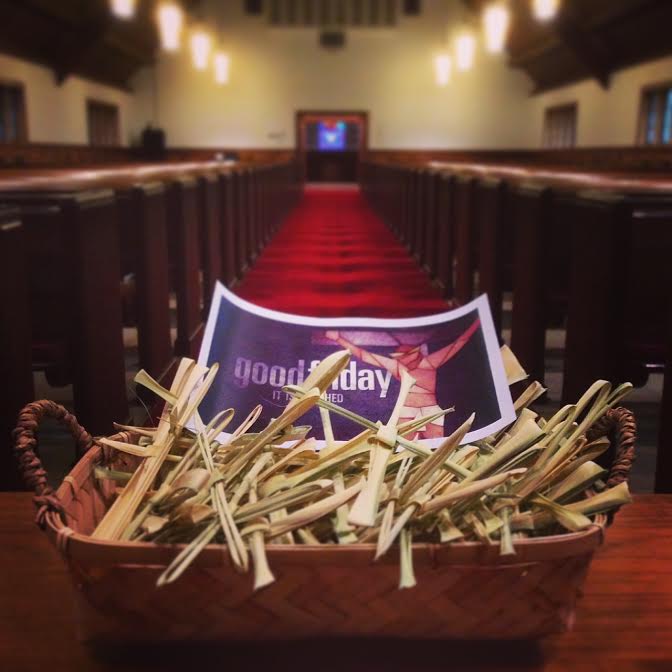
Last year I asked us to look at the cross and live. I implored us to give thanks to God for dying in Christ on our behalf to save us. I handed out crosses so that we might ponder the kind of divine love that was made real for us. I asked us to look at the cross and live.
This year I want to ask us to look at the cross and forgive. If Jesus was willing to use some of his final breaths to forgive the crowds for betraying him and bringing him to the cross, why are we so unwilling to forgive? If Jesus was so filled with love, shouldn’t we do the same?
Being a Christian is messy, ugly, and frightening if we are willing to follow Jesus. If we really want to be like him, then we have to start by forgiving others, and forgiving ourselves.
When they were approaching Jerusalem, at Bethphage and Bethany, near the Mount of Olives, he sent two of his disciples and said to them, “Go into the village ahead of you, and immediately as you enter it, you will find tied there a colt that has never been ridden; untie it and bring it. If anyone says to you, ‘Why are you doing this?’ just say this, ‘The Lord needs it and will send it back immediately.’ “ They went away and found a colt tied near a door, outside in the street. As they were untying it, some of the bystanders said to them, “What are you doing, untying the colt?” They told them what Jesus had said; and they allowed them to take it. Then they brought the colt to Jesus and threw their cloaks on it; and he sat on it. Many people spread their cloaks on the road, and others spread leafy branches that they had cut in the fields. Then those who went ahead and those who followed were shouting, “Hosanna! Blessed is the one who comes in the name of the Lord! Blessed is the coming kingdom of our ancestor David! Hosanna in the highest heaven!” Then he entered Jerusalem and went into the temple; and when he had looked around at everything, as it was already late, he went out to Bethany with the twelve.
Weekly Chapel Time requires a willing and humble spirit. What we do here on Sunday mornings carries an air of sophisticated and focused liturgy. But when I bring the Preschoolers in during the week… there are no rules. When we worship together most of us have fairly decent attention spans, but the 2, 3, and 4 year-olds need to be consistently bombarded with images and ideas in order to stay focused.
I’ll freely admit that I treat our preschoolers the same way that I treat our worshippers (I’ll let you decide whether or not that is a good thing) because we are all working toward the same goal: a greater awareness of God’s love and mercy in the world.
Anyway, this week, in preparation for Palm Sunday, we gathered the children in the sanctuary for their lesson. They sat in the pews up here in the choir loft, with their little legs dangling in the air, excited and nervous to keep learning about this guy named Jesus. I love quizzing them on previous stories because they are fascinated by scripture. For instance: If I could get all of us to be as excited about Zacchaeus, the wee-little man, climbing up a sycamore tree, just imagine how faithful we would become.
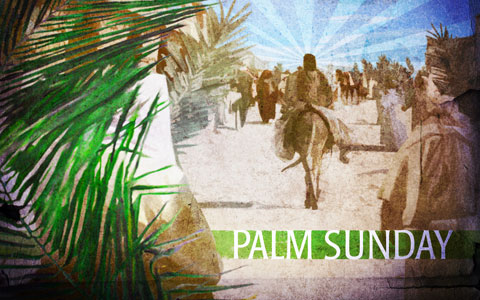
I shared with the children that Jesus needed to get to a strange place called Jerusalem to do something incredible for his friends. They gathered together outside the city and Jesus sent two men to find a donkey for him to ride on. The closer the came to the gates, more and more people gathered palms from the surrounding area and waved them in the air, and placed them on the ground all while shouting “Hosanna!” which means “saveus!”
I then had all the children line up with their own palm branches in the center aisle and we were going to recreate the story. I found a young boy to be Jesus and when I asked who they thought the donkey should be they all emphatically yelled, “You Pastor Taylor!” I’m not sure how I felt about them so quickly identifying me with that particular animal, but I let it go.
So there I was on my hands and knees with a child saddled across my back making our way into Jerusalem. I had instructed all the children to either wave their palms or place them on the ground and shout “save us!” to the boy on my back. The entire journey down the center aisle took longer than I thought because I did not want to drop the Jesus on my back, but as I walked forward and saw the palms beneath my feet I was struck by the Holy Spirit.
The children continued to scream and beg for their salvation, the Jesus on my back kept kicking into my rib cage to make me go faster, but all I could think about was what the donkey must have experienced when he carried Jesus into Jerusalem, what it must have been like to deliver the Lord to his death.
The following is an imaginative retelling of the story from the donkey’s perspective…
With palms beneath my feet, Jesus, there are so many things I wish I could tell you. Carrying you while the crowds scream on our sides, I wish I could share all the things I have seen and heard. This might be the only chance I’ll get, and it already feels too late.
I was there Jesus. I was there in the manger when you were born. Your parents had come into the tiny room and your mother looked like she was about to burst. I was but a young foal back then, but I remember. They were so afraid and alone when they cuddled together holding you close. While they were filled with fear, I was filled with joy. I knew from the moment I saw you that you were special, that you were the Son of God. The other animals could feel it too, and while your family fell into the familiar rhythm of sleep, we gathered around you to share our warmth. I watched you sleep all night and I could feel that our lives were connected, and I knew that I would see you again one day.
You left from Bethlehem but as the years passed I heard stories about your life. I would be in the marketplace, or moving about the village and rumors would fall upon my ears.
When you were a child they said that you stood apart. Other children would spend their days running around and getting into mischief, but you would sit in the synagogue and teach the elders. Your command of the scriptures spread before you even started your ministry. I would watch the people while they talked about you and they were filled with such hope. Words like “messiah, lord, and savior” were used to describe you and I could tell that the Lord was among us.
Then it came to pass that you were baptized by your cousin John in the Jordan river. Witnesses said they saw the sky open up and they heard the voice of God. While others denied the claims, I knew it was true, I could feel that your ministry was about to begin and that everything would change.
You traveled throughout Galilee proclaiming the year of the Lord’s favor. You healed the sick, gave sight to the blind, and restored the outcasts to their families. Everywhere you went stories about your love and mercy traveled ahead and the crowds grew larger and larger. You fed the multitudes by the sea, you walked on water, and you brought Lazarus back from the dead. You spoke of mustard seeds, prodigal sons, and good samaritans. You ate with sinners, worked on the sabbath, and argued with the Pharisees. Some say that even just a few weeks ago you were on the mountaintop when Moses and Elijah appeared and you were transfigured.
This morning I was tied up near the door when two of your disciples came close. One of them spoke to my owner and said, “The Lord needs him” and they brought me to you. I knew the time had come when we would be reunited, but the joy I expected to feel has been mixed with trepidation.
Jesus, how I wish you could hear me, how I wish I could tell you all I have seen and heard. We departed early this morning and the crowds gathered around us. It feels as if the closer we get to Jerusalem the people grow louder and more eager to cry out. Do they know what they mean when they say, “Hosanna! Blessed is the one who comes in the name of the Lord! Blessed is the coming kingdom of our ancestor David! Hosanna in the highest heaven!”?
I’m beginning to worry Jesus. I don’t think they know who you really are. The people sound more like an angry mob waiting for you to overthrow the Romans than a faithful group waiting for the kingdom of God. They want another Moses to lead them out of physical bondage, they want another David who can lead them into battle, they want another Solomon to build a giant temple.
These people have suffered but they believe in you. Did you see them take off their cloaks and place them in the road? I have been walking over garments for hours. Did you see them rush into the fields for palm branches to wave them in the air and create a royal pathway? The palms beneath my feet are a sign of how much these people believe in you.
What are you going to do Jesus? I can hear people murmuring about your coming mission, some are saying that you are going to the temple and you are going to overthrow the tables. Some are saying that you are going to lead the rebellion and kill the chief priests and scribes. Some are saying that you are going to destroy the temple and then build a new one.
Jesus I’m afraid for your life! These people don’t know who you really are and what you’ve come to do. They shout “Hosanna, Hosanna!” but I fear their shouts will soon turn to “Crucify, Crucify!” They are only concerned about themselves. Even your disciples on either side of us, I can smell their fear.
Jesus, I was there when you were born. I felt God’s presence in you and I knew you would save the world. But please Jesus, let me take you away from this place. Jerusalem can only bring about your death. We still have a chance to turn around and head home.
Or is it too late?
The crowds are starting to thin Jesus. The people are beginning to head home. We are stepping through the gate and the palms are no longer beneath my feet. I want to believe in you and what you are doing. I want to believe this is God’s will. But I’m so afraid.
Jesus, I am an old donkey and I don’t know how much further I can carry you.
It’s just us now and the sun is beginning to set.
What will happen? What are you going to do?
If this is the last time I will see you, I wish I could talk to you. I wish I could warn you about what is to come. I wish I could stop you.
You swing your legs around and are standing right before me. Your eyes contain the same hope they did the day you were born in the humble manger. As you pet my old matted fur I can feel all the people you have already touched and healed. I can feel the sick children and parents, I can feel the blind and the lame, the last, least and lost.
What a privilege it was to carry you today my Lord. I knew that we would meet again, I only wish I could do something to warn you.
You’re now leaning in close to whisper in my ear. Is this goodbye? Is this the end?
You said, “No my old friend. I know exactly what I am doing. And this is only the beginning.” Amen.
The horse’s hay lay beneath His head our Lord was born to a manger bed, that all whose wells run dry could drink of his supply.
To keep Him warm the sheep drew near, so grateful for His coming here: You come with news of grace, come to take my place!
The donkey whispered in His ear: Child, in thirty-some-odd years, You’ll ride someone who looks like me (untriumphantly).
While the cardinals warbled a joyful song: He’ll make right what man made wrong, bringing low the hills, that the valleys might be filled!
Then Child, asked the birds, well, aren’t they lovely words we sing? The tiny Baby lay there without saying anything.
As a distance stood a mangy goat with crooked teeth and a matted coat, weary eyes and worn, chipped & twisted horns.
Thinking: Maybe I’ll make friends some day with the cows in the pens and the Rambouillet, but for now I’ll keep away – I got nothin’ smart to say.
But there’s a sign on the barn in Cabbagetown: “WHEN THE RAIN PICKS UP AND THE SUN GOES DOWN, SINNERS COME INSIDE! WITH NO MONEY, COME AND BUY. NO CLEVER TALK NOR GIFT TO BRING REQUIRES OUR LOWLY, LOVELY KING. COME YOU EMPTY-HANDED, YOU DON’T NEED ANYTHING.
And the night was cool and clear as glass with the sneaking snake in the garden grass, as Deep cried out to Deep, the disciples fast asleep.
And the snake perked up when he heard You ask: If You’re willing that this cup might pass we could find our way back home, maybe start a family all our own… but does not the Father guide the Son? Not my will but Yours be done! What else here to do? What else me but You?
And the snake who’d held the world, a stick, a carrot and a string, was crushed beneath the Foot of Your not wanting anything.
By the sweat of your face you shall eat bread until you return to the ground, for out of it you were taken; you are dust, and to dust you shall return.
Matthew 6.9-15
“Pray then this way: Our Father in heaven, hallowed be your name. Your kingdom come. Your will be done, on earth as it is in heaven. Give us this day our daily bread. And forgive our debts, as we also have forgiven our debtors. And do not bring us to the time of trial, but rescue us from the evil one.” For if you forgive others their trespasses, your heavenly father will also forgive you; but if you do not forgive others, neither will your Father forgive your trespasses.
This morning marks the beginning of our two part Sermon Series on Questions. After polling the gathered body about the types of questions you all have about God, Faith, and the Church this series was created. We begin by looking at two of the most prevalent questions: What does it mean to forgive? Should the dead be cremated or buried?
Strange things are done for funerals. There are people who insist on placing the favorite objects or tokens from the deceased into the casket in order to bring comfort to the dead, after they’re dead. Others take the ashes of their loved ones to have them placed under high pressure and temperature and have them formed into diamonds to be worn on a finger or necklace. In some communities the location of the burial spot has less to do with geology and availability as it does regarding the direction of the grave.
In Western North Carolina almost every cemetery is organized so that the gravestone, and therefore the bodies, are facing east. While I helped a church in Bryson City, North Carolina it was not uncommon to hear stories about families standing at the graveside, deeply grieving in their loss, when a distant cousin or uncle would pull out a trusty compass and declare that they had the body facing the wrong direction. Whether built in a valley or up on a hill, EVERY grave had to face east. Part of this comes from biblical reasons, but I always heard that it was done so that when Jesus comes back with the sunrise, he wants to see smiling faces, and not rear-ends.
Because I work for the church, I have the privilege to be with people at the paramount of their suffering and help guide them through their grief and pain. Whereas most of the world refuses to talk about death and what comes with it, I relish in the opportunity to declare that even though death is real, it has been defeated. We tend to treat death as an unspeakable subject, when it is at the very heart of what it means to be human.
Even with the sorrow that death brings, I must also admit that comedy often comes along with it.
I could tell you about all the truly scandalous things I have learned about the departed when I meet with a family to plan the funeral. We share stories about the person’s life, what they were passionate about, what set them a part from others. But at some point, and it almost always happens, the friends and families begin to share stories that should not be repeated. I sit there with my pen and paper in hand, fighting the urge to write down every perfect bit of gossip I hear, until someone usually realizes who they are talking to and they politely request that I neglect to mention those parts during the sermon.
I could tell you about how nobody knew what to do with the ashes of my grandfather’s brother after he passed so they just kept him around for awhile. And when my great-grandmother died, my grandfather asked the funeral home if he could spend a few moments alone with her after the viewing. Feigning some sort of important spiritual and prayerful goodbye, he quickly walked up once the room was empty, took a gallon size zip-lox bag containing uncle Preston, and carefully hid him in the casket with my great-grandmother.
I could tell you about how the first time I met Dick Dickerson, he shared with me all sorts of stories regarding his wife Mildred and he kept motioning over toward the kitchen. I thought that this was a sweet and precious habit that was born out of their relationship, and that Dick was habituated into remembering her being in the kitchen, but when I asked him about it, he laughed out loud and told me that he was keeping her ashes in a bag above the sink.
It is important to remember that it okay to laugh after death. That first laugh or smile often comes with a feeling of guilt, but, if I can be so bold as to speak for the people I have buried, they would be happy to know that we are happy.
Strange things are done for funerals. Sometimes they bring the best out in people; a prodigal son returns home to bury his father; a wayward daughter reconnects with her family. But other times, they bring out the worst.
There were two brothers who fiercely loved their mother. Raised by her alone after losing their father at a young age, they worshipped her and were so very thankful for all that she had given them. The time came for them to start their own families, but they never neglected to remember their wonderful mother. It came as a shock to the local community when she passed away rather abruptly, but the wake of her death was truly felt between her sons.
They met with the pastor to go over funeral arrangements when the fight began…
The older son wanted his mother to be cremated. He claimed it was what she desired and had shared the detail with him on a number of occasions.
The younger son wanted his mother to be buried. He respected her wishes, but he was utterly convinced that the bible said you have to be buried in the ground.
By the time I arrived in the community, no one could even remember what they wound up doing with the mother, but ever since that fight, the brothers had refused to speak to one another.
Both of them had good points when it came to taking care of their mother’s body- we should respect the wishes of the person, while at the same time remain faithful to scripture.
Some believe that we should only bury bodies. Their arguments are based on the concept that out bodies were made in the image of God and will be resurrected when Christ returns. Most of the key people people in both the Old and New Testaments were buried, including the one who was crucified on a cross. It allows us to properly mourn their loss, and even create a place, such as cemeteries, for us to visit and pay our respects to those who helped to shape and mold us. Moreover they claim that burning a body, cremating it, prevents it from being newly constituted in the resurrection.
Some believe that we should only cremate bodies. Their arguments are based on the concept that nothing is impossible with God, that God can most certainly recreate a body for the resurrection. All flesh eventually decays and returns to the earth becoming just like the dust from which we were created. If God can only resurrect those whose bodies are buried, then anyone who has perished under less than ideal circumstances would be withheld from the resurrection. They also argue that cremation can be less expensive than burial and therefore helps families to thrive and serve God and neighbor. They choose to keep the ashes in an urn or scatter them in such a way that it is done in a fruitful and honorable manner.
Bottom line: we are dust, and to dust we shall return. When we die, whether we are cremated or buried in the ground, we are gone. Our bodies remain and eventually return to the dust from which God brought us into being. Nothing is impossible for God. When the time comes for the bodily resurrection, nothing, and I mean nothing, can stop God from forming us into our new bodies, bodies that will not look like the ones we had here on earth, bodies that are brilliant and beyond our imagination. What becomes important for us is the need to be present with the friends and families for those who have died, and be loving in the way that we see to their needs, whatever they are, in order to help them grieve and mourn.
I never had a chance to talk with the brothers about their argument before the funeral. This happened long in the past. I never had a moment for a surprise intervention or reconciliation. I wish I had the opportunity because this is what I would share with them:
“One of the bravest and strangest things we do as Christians is pray the Lord’s Prayer. Asked by his disciples about the way to pray, Jesus taught his friends to say the words that each of us say every Sunday in church. We collectively pray to OUR father, not MY father, or Jesus’ Father, but OUR father. We request that our limited daily means be met, we yearn for the bread that gives us life. And then we pray for God to forgive us just as we forgive those around us. We pray this to God because we are not strong enough to do it on our own and we need the Spirit to move in us and strengthen us for the terrifically difficult work of forgiveness.
You two lost your mother, you lost the rock that so much of your lives were founded upon. The one who was always there for you, cared for you, and nurtured you was gone and you wanted to do everything you could for her funeral to be perfect. Yet, you let your own opinions get the better of you, and you let your selfishness blind you from the kind of love your mother made manifest here among us. Your mother is gone, I know you might not be ready to hear it, the grief might still be too difficult to bear, but she is gone. She is now with OUR heavenly father.
What are you two going to do with the lives she gave you, what are you going to do with the lives that God gave you? Will you continue to bear grudges against each other, refuse to speak and commune, ignore the needs of your respective brother? Will you let an argument about funeral practices divide you from the only family you have left?
Forgiveness is the hardest thing in the world; to see the other and look past everything that have done to hurt you and belittle you, and act on love rather than hate. We don’t forgive because God told us to, and we don’t forgive because its what your mother would have wanted, we forgive because its the last thing worth working for. Without forgiveness we are nothing.
God’s love knows no bounds. Neither should ours. Look at each other and stop seeing the old arguments and disagreements, look at each other forgive.”
Strange things are done for funerals and they can bring out the best, or the worst, in us. It is my prayer that funerals might bring out the best in us. Instead of limiting them to a simple worship service to praise God, think about how we could truly recognize the gift of the one who has gone, and strive to live better and braver lives. Let us see those tense and vulnerable moments, like funerals, as opportunities to forgive and start anew with the people in our lives.
Forgiveness is a difficult thing. It is irrational, draining, and frightening. It requires bravery rarely seen, faith rarely developed, and hope rarely witnessed. Yet, if Christ was willing to forgive those who hung him on the cross, if God is willing to forgive us all our trespasses, just imagine how many things we can forgive in our lives, even the dust.













 think and let think