Matthew and Haley Husband – A Wedding Sermon on 1 John 4.9-12 & Ecclesiastes 4.9-12

1 John 4.9-12

God’s love was revealed among us in this way: God sent his only Son into the world so that we might live through him. In this is love, not that we loved God but that he loved us and sent his Son to be the atoning sacrifice for our sins. Beloved, since God loved us to much, we also ought to love one another. No one has ever seen God; if we love one another, God lives in us, and his love is perfected in us.

Ecclesiastes 4.9-12

Two are better than one, because they have a good reward for their toil. For if they fall, one will lift up the other; but woe to one who is alone and falls and does not have another to help. Again, if two lie together, they keep warm; but how can one keep warm alone? And though one might prevail against another, two will withstand one. A threefold cord is not quickly broken.

1498071_10151977138149016_1228625660_o

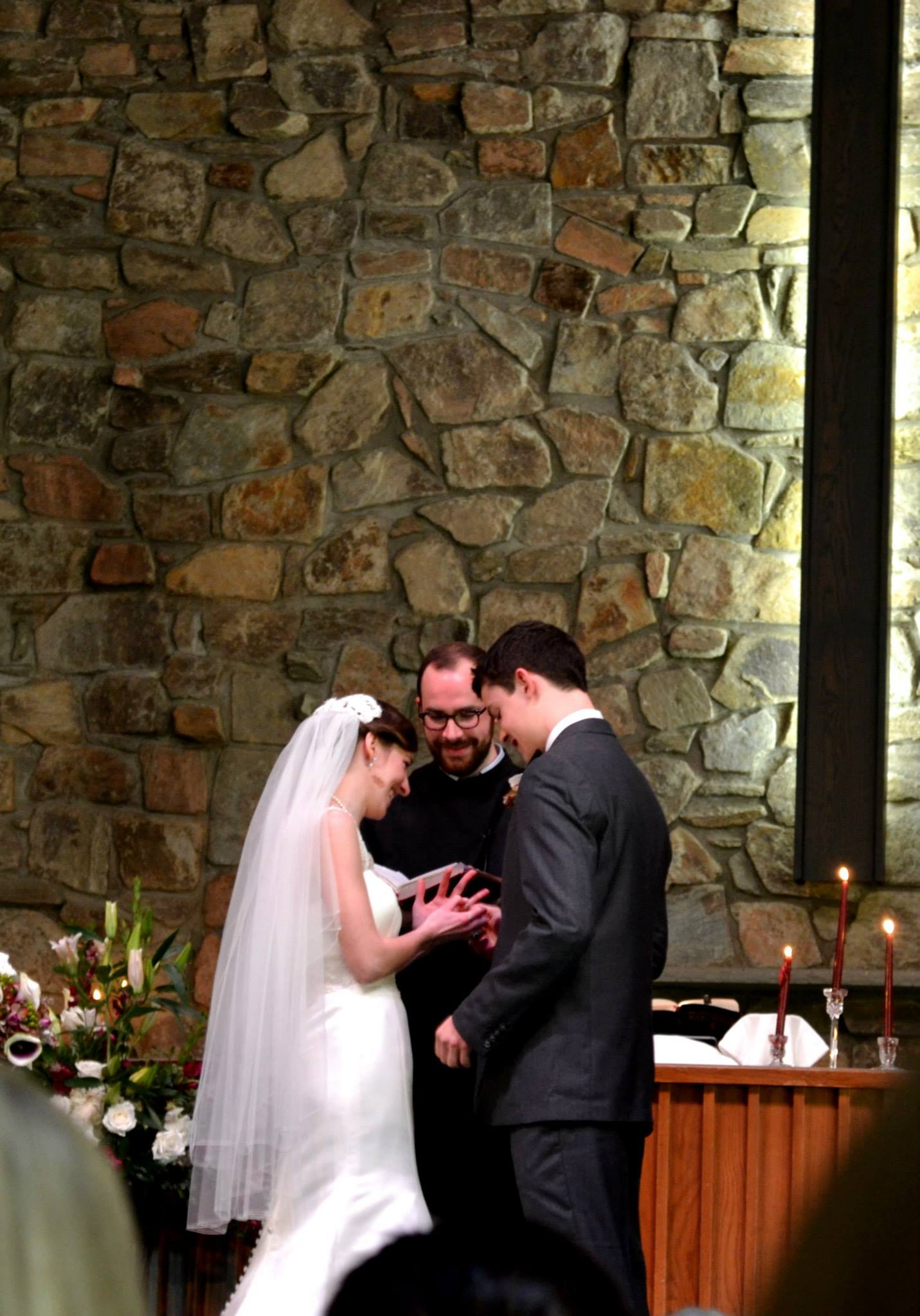
28 years. 28 years ago my parents, JT and Sarah Lynn Mertins, stood in the same position as both of you. Haley, I don’t know if you will remember all of this, but we used to watch their wedding VHS tape when we were growing up. Truly I tell you, it is a miracle that the wedding ceremony happened at all. When we would watch the tape, it appeared as if the cameraman had decided to smother vaseline all over the lens in order to achieve some sort of effect that left the viewers nauseous and confused. As my Aunt Laura made her way up the steps toward the altar she stepped on, and ripped, her dress. My uncle Bill Hanff and a friend stood over by piano the prepared to sing a wonderful rendition of “On the Wings of Love” though the pianist started the song in the wrong key and uncle Bill had to match accordingly. And then there was the hair and the dresses. There must have been enough hair spray in this church to light the whole thing on fire, but somehow, by the grace of God, our mother and father were married on this exact day, in this exact spot, 28 years ago.

Mom and Dad

Mom and Dad

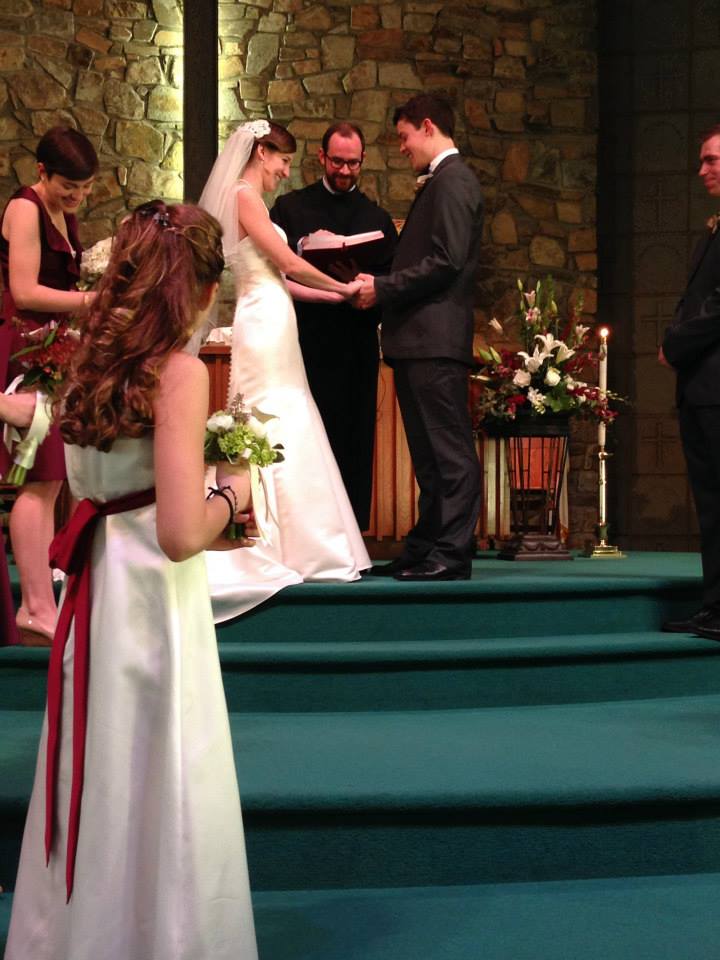
And here we are now, ready for the two of you to enter into the holy state of matrimony. As I have looked back over the totality of your relationship, and all of the little steps that led you to this altar on this day, I am convinced that I will never marry a couple that I know as well as both of you for the rest of my life. So before I continue I want to show you something.

(Turn around, look out at the sanctuary. Gathered together in this room are the people who have made you, you. Family, friends, both the foolish and the fun, but more importantly, when you look out I hope you see faith. So soak up this view for a moment, you rarely get to see anything as glorious as this)
1512792_10202004244841456_869486328_n

Faith, the people gathered together today are indicative of the kind of faith-lives that both of you are living. Everyone here has faith in both of you as individuals, and also as the married couple you are about to become. They have been there for you in every aspect of your lives, and today two families are joining together as a testament to the faith that you have in each other. They say a threefold cord in not quickly broken? Well neither is a one hundred and fifty fold cord.

However, for as much as everyone gathered together in this room are responsible for your relationship, no one can take more credit than God.

When I found out that Matthew was moving to Africa for a year, I knew that the only thing that would be able to sustain your relationship was a resounding faith in the triune God. I know it wasn’t easy. Even with the notebook Matthew left behind, even with the commitment to read through the entire bible while you were apart, even with the advantages of technological communications such as Skype and email, you would not be standing here today unless you had tremendous faith in God, but more importably, you would not be standing here unless God had tremendous faith in you.

One of the things that I love most about you two is that, even with all the planning and the suits and dresses and decorations, today will not be the greatest day of your lives. Both of you strive to discover all of the joy in life and share it with one another. You earnestly love the lives that God has given to you, and you hope to share that love with everyone with ears to hear and eyes to see. Thats what it means when we say, “If we love one another, God lives in us.” The two of you have made a commitment to loving one another so that God abides and manifests himself in the world.

Matthew Logan, I have waited 23 years for a brother, and today I’m finally getting one! You are a remarkable man with compassion, faith, and hope. I have been privileged to watch you grow up, in a way, I’ve seen the way that you create and nurture friendships, I’ve seen the way that you have selflessly served others, and I have seen the many ways that you have committed yourself to my sister. Marriage will not be easy. There will be mornings that you wake up and wonder how such a beautiful woman can drive you so crazy. There will come a time when all the love that Haley can give you will not be enough, but you will never be alone. Beyond the multitudes that have gathered here today, God almighty is with you in all that you do. As a husband, literally, you have been called to love Haley with all that you are, live into the life that God is calling you toward, and to have your relationship shine as a beacon of hope and love to all the world. I have nothing but profound respect, enduring faith, and unending love for you, my brother.

Haley Lynn, precious sister of mine, you are a beautiful woman who has truly come into her own. I have been privileged to watch you mature into your truest self as you now prepare to enter into marriage with Matthew. I love how your willingness to serve others is so central for understanding who you are and what you do. Whether its helping out your students at school, or volunteering your time and energy for church, or helping your idiot brother match his clothing when we were in high school, serving and loving others is what you do. What a blessing you are to all of us, and what a blessing you will be to all the lives you touch in the future. Marriage will not be easy. There will be mornings when you wake up and wonder how such a funny man can drive you so crazy. There will come a time when all the love that Matthew can give you will not be enough, but you will never be alone. Your family, your friends, and your father in heaven are with you in all that you do. As a wife, you have been called to love Matthew with all that you are, to live into the life that God is calling you toward, and to have your relationship shine a beacon of hope and love to all the world. I have nothing but immeasurable respect, enduring hope, and unending love for you, my sister.

Matthew and Haley, God’s love was revealed to all of us through the incarnation in Jesus Christ. In his willingness to take on human flesh, God humbled himself to be just like us, in order to help transform us. God did not mount the hard wood of the cross because we loved him, but instead he came to die and live because he first loved us. Above all things, your marriage should, and will be, a testament to God’s love in the world through the redemptive acts in our Lord Jesus Christ.

In giving yourselves to each other, you are mirroring that great act of God coming to be with us.

And so, as you prepare to take these first steps into wedded life, I call both of you to hold fast to the people that love and support your relationship, hold fast to the faith and hope that you have in one another, but most importantly, hold fast to the good God whose joy knows no bounds, whose grace extends beyond our imaginations, and whose love was made known to all of us in the gift of his Son.
 

904040_10101659784550458_526669923_o

Weekly Devotional – 1/6/14

Devotional:

Isaiah 42.1-4

Here is my servant, whom I uphold, my chosen, in whom my soul delights; I have put my spirit upon him; he will bring forth justice to the nations. He will not cry or lift up his voice, or make it heard in the street; a bruised reed he will not break, and a dimly burning wick he will not quench; he will faithfully bring forth justice. He will not grow faint or be crushed until he has established justice in the earth; and the coastlands wait for his teaching.

picture-1

To live is to change. One of the lost difficult elements in life is the fact that we are constantly in a state of flux while we seek to be still. During the next few weeks, many of us will continue to strive toward our New Year’s Resolutions; maintaining that new diet, exercising regularly, watching less TV, seeking to stay in touch with family and friends. As we all attempt to maintain these disciplines, many of us will fall short and our new habits will come to a halt. Creating new and sustainable practices in life can be quite difficult, and without an incredible amount of discipline and faith, they often fade before they can become routine.

One of the great problems is that as soon as we create a regime, or find a healthy balance of new habits and practices, everything changes. We try to stay healthy only to become sick. We attempt to maintain meaningful relationships only to have people move away, and eventually leave us in death. We hope to hold fast to our careers, to the rhythm that gives us meaning, only to be told one day that we are no longer needed. We strive to drop bad habits only to have them flow back in as soon as the stress becomes insurmountable. To live is to change.

Change is inevitable and inescapable. For all of the preparation we can muster, we can never fully prepare ourselves for the surprises that life throws our way.

In the 42nd chapter of Isaiah, the prophet speaks about the unchanging ways of the Lord. Whereas our lives can never rest in perfect stability, the servant of the Lord will bring forth justice without changing; he will not cry or lift his voice, he will not break a bruised reed, or quench a dimly burning wick. The servant of the Lord will remain steadfast in his willingness to achieve God’s justice in the world.

Christ is that stable root that we can hold fast to when everything else in the world starts to change. As the river of life keeps propelling us forward, Christ is the solid rock upon which we can anchor our hope and faith. If we fail to maintain the new directions of our lives, Christ will still be waiting for us and calling out to say, “I am here. Come to me.”

So, if you feel down over the next few weeks as you see your consistency start to crumble, do not fear. Christ is the solid rock of our lives, willing to wait for us and be the anchor to which we so desperately need to cling. Do not worry about what tomorrow will bring for Christ will be there with open arms, ready to bring you within his embrace. Do not beat yourself up for whatever may come for Christ’s love is unending and all powerful.


To read more about Resolutions and Faith, I strongly recommend Josh’s Luton post on the subject here: http://apprenticeinstitute.org/new-years-resolutions-its-not-too-late/

Weekly Devotional – 12/23/13

Devotional:

Psalm 96.1-4

O sing to the Lord a new song; sing to the Lord, all the earth. Sing to the Lord, bless his name; tell of his salvation from day to day. Declare his glory among the nations, his marvelous works among all the peoples. For great is the Lord, and greatly to be praised. he is to be revered above all gods.

1535751_10202812940587494_483312224_n

I love being a pastor. I love getting to spend time each week contemplating the Word of the Lord, reading from numerous texts, spending time in prayer, and working on a sermon for Sunday. I love getting to go out into the community to visit those who are sick, alone, afraid, or no longer able to attend church. I love representing St. John’s within Staunton through various organizations and events. I love the fact that people feel comfortable enough to spend time with me and share their stories. I love getting to participate in the life of this faith community as a pastor who serves the church and its people. But one of the things that I love most about being a pastor, is the fact that our church has a Preschool.

Every morning (while the school is in session) I make my way down to the classrooms and I try to greet every child and parent that comes in. I visit each room during the day and help the children with their letters, build giant block fortresses, and ask them questions about whatever I can think of. Most of the children “know” who I am, and they call me Pastor, but I believe they think thats my first name. Some of them are often confused by this adult who comes in to play with their toys regularly, and perhaps they see me as a giant kid (which I am).

Last week the Preschool children put on a pageant for their parents and families in our sanctuary. I was blessed to be offered to the role of narrator and I dressed up as a shepherd for my role (the kids were in costume as the various animals from the manger scene). After they had remembered for us the Christmas story, and performed a number of Christmas themed songs, they went to the social hall in order to change out of costume and wait for the parents to join them for a reception. My job was to talk for 5-10 minutes to all the adults so the teachers would have enough time to get everything ready.

Now, bear in mind, that many of the people in attendance that night do not attend any church. Their children are affiliated with a Preschool from a United Methodist Church, but that night might be the only time of the year that they step forth into a sanctuary.

So, I gave a very brief sermon about the meaning of Christmas and the importance for everyone in the room to love their children; not just with presents, but with real and tangible love; caring about what they’re interested in, supporting them throughout their lives, and taking the time to show them they are loved. When it was clear that I had expended my theological and homiletical thoughts, I did what any good Methodist would do, and I picked up my hymnal.

I encouraged everyone to stand and join together with Hymn 246 “Joy to the World” and those people belted their hearts out! I couldn’t believe it. Here I was standing with a bunch of random adults, most of whom do not attend church, and they were singing Joy to the World in harmony and with gusto!

The psalmist writes, “Sing to the Lord a new song; sing to the Lord, all the earth.” For many of us, Christmas Eve is that one day where we get to sing some of our favorite hymns in church: Hark! the Herald Angels Sing, Angels We Have Heard on High, Silent Night, O Come All Ye Faithful, Joy to the World, etc.

Whether church attending or not, whether filled with faith or doubt, whether excited for Christmas or afraid, there is something about singing that allows the truth depth of our souls to break forth into the world. Wherever you are on your faith journey this year, I hope the words and the tunes of your favorite Christmas songs can help to reignite the flame of faith in all of our hearts.

“He rules the world with truth and grace, and makes the nations prove the glories of his righteousness, and wonders of his love, and wonders of his love, and wonders, wonders of his love!”

Merry Christmas!


0070=70

Greatness – Sermon on Luke 1.5-23

Luke 1.5-23

In the days of King Herod of Judea, there was a priest named Zechariah, who belonged to the priestly order off Abijah. His wife was a descendant of Aaron, and her name was Elizabeth. Both of them were righteous before God, living blamelessly according to all the commandments and regulations of the Lord. But they had no children, because Elizabeth was barren, and both were getting on in years. Once when he was serving as priest before God and his section was on duty, he was chosen by lot, according to the custom of the priesthood, to enter the sanctuary of the Lord and offer incense. Now at the time of the incense offering, the whole assembly of the people was praying outside. Then there appeared to him an angel of the Lord, standing at the right side of the altar of incense. When Zechariah saw him, he was terrified; and fear overwhelmed him. But the angel said to him, “Do not be afraid, Zechariah, for your prayer has been heard. Your wife Elizabeth will bear you a son, and you will name him John. You will have joy and gladness, and many will rejoice at his birth, for he will be great in the sight of the Lord. He must never drink wine or strong drink; even before his birth he will be filled with the Holy Spirit. He will turn many of the people of Israel to the Lord their God. With the spirit and power of Elijah he will go before him, to turn their hearts of parents to their children, and the disobedient to the wisdom of the righteous, to make ready a people prepared for the Lord.” Zechariah said to the angel, “How will I know that this is so? For I am an old man, and my wife is getting on in years.” The angel replied, “I am Gabriel. I stand in the presence of God, and I have been sent to speak to you and to bring you this good news. But now, because you did not believe my words, which will be fulfilled in their time, you will become mute, unable to speak, until the day these things occur.” Meanwhile the people were waiting for Zechariah, and wondered at his delay in the sanctuary. When he did come out, he could not speak to them, and they realized that he had seen a vision in the sanctuary. He kept motioning to them and remained unable to speak. When his time of service was ended, he went to his home.


“Do not be afraid, Zechariah, for you prayer has been heard.”

archangel-gabriel-struck-zechariah-mute-1824

And so it came to pass in the days when King Herod ruled Judea, that a priest named Zechariah had his life turned upside down. Now Herod was a terrible king, responsible for countless atrocities, murders, and high levels of corruption. A man with frightening power ruled over a land and a people with such chaos that he dominated the attention of the masses. During his rule, a nobody priest married to a woman named Elizabeth, made his way through life.

Zechariah belonged to the priestly order of Abijah and was regularly responsible for activities around the Temple in Jerusalem. Though Zechariah and Elizabeth lived righteous lives, they had no children and were getting on in years.

One day, a day like any other, Zechariah made his way to the temple in order to perform his regular duties. As was the custom, lots were cast to decide who would enter the sanctuary and offer incense to the Most High God. While countless people gathered outside the walls, Zechariah made his way in to perform a simple task that had been done for as long as he could remember.

This is where the story gets interesting.

1-blake-z-and-angel

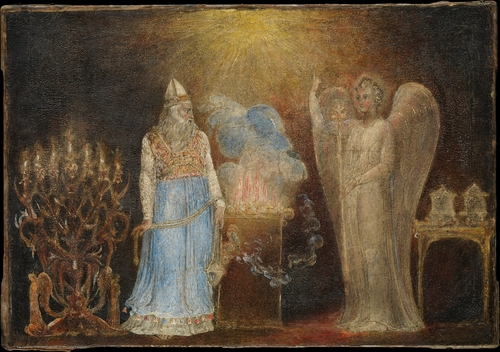
While standing within the closed room, an angel of the Lord appeared to Zechariah. We receive no description of this heavenly messenger in the biblical narrative, but the sight was enough to overwhelm and terrify Zechariah. Let your imaginations conjure up the confrontation with an angel to the degree that you would cower in fear and trembling.

Do not be afraid, Zechariah, for your prayers have been heard. Your wife Elizabeth will bear you a son, and you will name him John. You will be filled with joy and gladness and many will rejoice at his birth, for he will be great in the sight of the Lord. Take care to make sure that he never drinks wine or other strong substances, even before his birth he will be filled with the Holy Spirit. In time, he will turn the people of Israel back to the Lord their God. He will make ready a people prepared for the Lord.

And how does Zechariah react to this momentous declaration? How does he respond to the heavenly messenger carrying news of great joy?

“How will I know this is so? For I am an old man, and my wife is getting on in years.”

It’s moments like these in the scriptures that I wish I could jump into the story and smack some sense into the lives of the people experiencing the glory of God. How will you know this is so Zechariah? You fool! Don’t you know that with God all things are possible? Have you forgotten how he delivered your people from slavery and captivity in Egypt through the Red Sea to the Holy Land? Have you forgotten how the Lord provided a ram in the bushes for Abraham to sacrifice instead of his son? Have you forgotten how David was able to triumph over Goliath because the Lord was with him? Moreover, have you forgotten how many barren women the Lord has provided for? Sarah, Rebekah, Rachel, Hannah. Come on Zechariah, have a little faith. 

The angel responds to Zechariah: I am Gabriel and I stand in the presence of God. I was sent to bring you this good news, but now, because you did not believe my words, you will become mute and unable to speak until these things occur.

So Zechariah made his way out of the temple, stood before the crowds unable to speak, and eventually returned home.

Of course, thats not the end of the story, but we’ll save that for later.

What are we to make of this remarkable episode recorded at the beginning of the Gospel according to St. Luke?

God is at work here in ways familiar to us from the Old Testament: the story contains a casting of lots to make a decision, there is a vision in God’s holy Temple, a divine being appears to pass along a message, there is a promised sign, and a childless couple is given new life.

It is clear that God works in and through the normal avenues of life in the believing and faithful community. The community of faith can fall under the temptation to make God into whatever they desire for worship, but there is an important conviction present at the beginning of this New Testament: the stories of Israel are important, vital, and necessary for understanding how to be used for God’s purposes in the world.

Though this is a story from the past, doesn’t it sound familiar? Just as it is today, some horrible and frightening situation has gripped the people, a power reigns from above in order to control a community. Evil has taken root at the center of life and dominates the attention of the populace. This past week marked the one year anniversary of the shooting at Sandy Hook Elementary school and another shooting took place at a school in Colorado. You need only turn on the news or read a newspaper to be reminded how much fear and violence demands ALL of our attention.

However, in spite of all this fear and damage in the world, just as during the time of Herod, there is another sort of person, quiet, removed, and yet, more important than the powers that rule, men and women who are the core of society and give it the depth of its reality. Then and always there were and are the humble and brilliant men and women in whom the strength of the present and promise of the future lie.

Gabriel tells Zechariah that his son, John, will be great in the sight of the Lord. Sadly, according to the ways of the world, greatness has had its definition confused and reshaped. We have been told that greatness is measured in terms of selfishness rather than service, in terms of material rather than spiritual wealth, in terms of instant gratification rather than hard work and perseverance. But greatness as God sees it, the greatness that John will live into, is about being linked with the eternal purposes of redemption, about being an obedient instrument of God’s peace, and helping others to know and feel love in their lives.

But notice: the greater John will become for God, the more hostility he will arouse in those around him. Doing the will of the Lord, reaching out in love according to discipleship sends ripples through the fabric of what the world deems as “greatness.”

John is to be like the prophets from old: in light of their direct contact and experience of the divine, they drew the messages which burned within them like fire and would not rest until the decrees of God were delivered.

In every age we need the passion of people on fire for God to shout out in prophetic fervor. Our lives are so often filled with the dry wood of dull possibilities that desperately need to be rekindled by the divine spark that often comes through the words and actions of the prophets. We need to have our lives turned around and back to God in order to discover the passion that is waiting for us in our discipleship. The communion between God and the prophet allows for a divine condition to be present and the purposes of God can be realized in the world.

I love the juxtaposition of the story of Zechariah in the temple with Gabriel. It is precisely at the moment when John is being prepared to speak for God, Zechariah is struck mute for his unbelief. The typical, traditional, and tired voice of the priest, is being replaced by the fervent, fantastic, and faithful voice of the prophet.


Worship is at the center of the story. I’ve read it countless times, and heard it discussed and preached on during numerous advent services, but something fresh and new struck me this week about Zechariah’s encounter. I wondered: why was he so surprised and scared? Think about it for just a moment; Zechariah was a priest, well-versed in the stories from old about how God interacted with God’s people, a man who often found himself in the holiest of places performing the works of the Lord. What did he think would happen to him inside that holy space?

Being overwhelmed by the presence of an angel in the sanctuary of the temple is like going to McDonalds, ordering a Big Mac, and being surprised to discover beef between the bread… I mean this is how God works! God shows up, confronts us in the midst of a moment, and calls us to something. It does not need to be grand, and more often than not it occurs in the small silence in a moment we least suspect, but for Zechariah it came in a big way. He was in God’s holy temple confronted by an angelic messenger bringing the good news. So why was he so surprised? And more importantly, why did he doubt the validity of the message?

Our expectations about worship have major impacts on the way we live our lives.

What we believe shapes how we behave.

What to we think will happen to us when we gather in this space? Are we prepared to be confronted by the God who called John to greatness? Are we willing to let God dwell in our hearts and change the way we live in the world? Are we ready to take up our own crosses to follow Jesus. Are we prepared for God to show up in our lives in ways that we cannot expect or anticipate?

Unless we recognize the definitive need for real experiences and methods of discipleship which wake the whole depth of our experience, then what we do in worship will remain, as it did for Zechariah, thin and lacking. Until we prepare ourselves to be surprised by God’s desire to find us where we are, then this holy place will remain, as it did for Zechariah, boring and repetitive. Until we dare to step out into new forms of life and love, hearing the word of the Lord, and letting it become incarnate in the ways we live our lives, then faith will remain, as it did for Zechariah, dwindling and fruitless.

eucharist

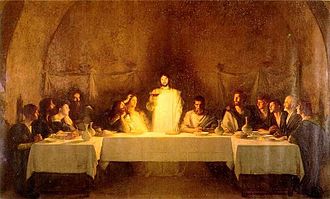
What do we expect will happen when we gather together at Christ’s table? Are we repetitively entering the holy space to burn incense unaware that we are meeting God in all of his holiness? Or are we excited and nervous about the prospect of being welcomed to a table that we have no right to join? Are we so rooted in our habitual worship that we can no longer remember why we join at this table? Or are we prepared to be called forth toward greatness in the world through the redemptive and life-giving properties of God’s presence at his table?

Just as it happened with Zechariah, a heavenly voice might be trying to break out into the world. Perhaps God’s good news is striving to strike forth through the closed circle of our expectations of church, faith, and discipleship. Important for us this morning is to remember that God is always on the move, reaching out to find us and change our lives, that there is always a new message for those with ears to hear. The great need for us is to realize, as Zechariah eventually did, to not be caught up in the limited imagination of what God can do in the world which assumes that the present must always be governed by the past.

zech_eliz_john

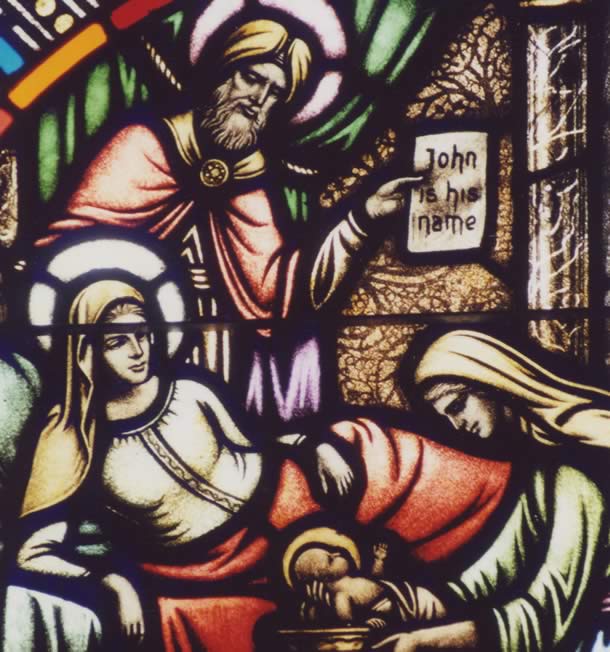
Nine months after Zechariah was struck mute in the temple by Gabriel, his wife Elizabeth gave birth to a baby boy. When it came time to name the child, the family wanted to name him Zechariah after his father, but Elizabeth insisted that it was to be John, and after Zechariah confirmed this with writing on a tablet his mouth was freed. The plague of his disbelief had been wiped away by the miracle of his son’s birth. Now filled with the Holy Spirit Zechariah spoke these great words to his infant son: And you, child, will be called the prophet of the Most High; for you will go before the Lord to prepare his way, to give knowledge of salvation to his people by the forgiveness of their sins. By the tender mercy of our God, the dawn from on high will break upon us, to give light to those who sit in darkness and the shadow of death, to guide our feet into the way of peace.

This is one of the many places that God confronts us in our lives. Through the bread and the wine let us all be moved to live lives worthy of the greatness that God is calling us toward.

Amen.


Weekly Devotional – 12/16/13

Devotional:

Psalm 80.19:

Restore us, O Lord God of hosts; let your face shine, that we may be saved. 


I used to love making fun of my pastors who complained about how much busier they became during advent. It’s not as if they had more on their plates than any other month during the year, but they nevertheless felt overwhelmed by this particular liturgical season.

I now regret making jokes at their expense.

I’m not sure how its possible, because we are not doing more than the ordinary during this time, but I am busier than I have been since I started working at St. John’s in June. I like to think that my newfound busyness stems from the different holiday concerts and Christmas pageants or the shifts for selling Christmas trees or the added time spent decorating the house… but I think it really comes from somewhere else.

country-church-christmas

This season carries with it tremendous joy but also remarkable sadness. Advent helps to prepare us for the coming of the Lord, but often times we fail to prepare ourselves for the onslaught of emotions and old memories that are triggered by this time of anticipation. In the last few weeks I have noticed more tears and tissues in the pews that are the result of the welling up of suppressed emotions that this season breaks forth. For as much as we can be excited about opening gifts together under the tree with a fire roaring in the fire place, for many of us Christmas embodies tremendous pain that is often difficult to ignore.

At the end of the 80th psalm, the psalmist writes, “Restore us, O Lord God of hosts; let your face shine, that we may be saved.” I believe that this psalm is one that we need during this season, perhaps more than any other. We need to feel restored in our lives during this time when old and difficult memories flood our perspective. We need to be reminded of God’s glory that outshines all of the darkness in our lives. We need to sing those familiar hymns, let the tears flow, and remember that God came in the form of our brokenness to dwell and walk with us.

So, as we all make it through this last week of advent, preparing for the great coming of our Lord on Christmas, let us all take the time to live into the brokenness in our lives. Do not ignore the pain that this season often brings. Let it be. But remember that it does not have the final word. God has triumphantly declared that He will make all things new, that we are not defined by our pasts, but instead by the love that God has for each and every single one of us.

Weekly Devotional – 12/9/13

Devotional:

Psalm 146.5-10

Happy are those whose help is the God of Jacob, whose hope is in the Lord their God, who made heaven and earth, the sea, and all that is in them; who keeps faith forever; who executes justice for the oppressed; who gives food to the hungry. The Lord sets the prisoners free; the Lord opens the eyes of the blind. The Lord lifts up those who are bowed down; the Lord loves the righteous. The Lord watches over the strangers; he upholds the orphan and the widow, but the way of the wicked he brings to ruin. The Lord will reign forever, your God, O Zion, for all generations. Praise the Lord!


I love to ask questions. For years I have always been “that guy” at dinner or at a party who can orchestrate the direction of the conversation just by asking a few well placed questions. Depending on the season, or company present, some of my favorite questions include: How did you two meet? What was your favorite halloween costume as a child? What was the last best book you read? All of these questions are geared toward opening up a conversation for all people to respond accordingly. It allows for everyone present to reflect on something and then share it with everyone present. My favorite question to ask during Advent has always been: What was the best Christmas present you ever received?

stxmco001christmas_tree_and_presents1

Its a perfect question. Everyone loves to take a few moments to go through the catalogue in their memory banks of all the presents they received as children, you can detect a positive change in the atmosphere because the memories elicit such joy, and the discussion will continue from that first question toward a full and fruitful conversation.

What was the best Christmas present you ever received? What memories do you have of gathering around the Christmas tree with your family preparing to rip apart the wrapping paper?

I love to ask that question, but recently I’ve begun to wonder whether I should be asking it at all. The celebration of Christmas (according to the ways of the world) has so trumped the theological convictions of Advent that Santa Claus has become frighteningly synonymous with Jesus Christ. Moreover, practices like “The Elf on the Shelf” have led children (and some adults) to grossly misunderstand the depth and breadth of God’s prevenient grace in the world.

When I read from the 146th Psalm I wonder if instead of asking everyone about their favorite present, I should instead ask: “When was the last time you gave food to the hungry?” Or “How are you keeping your faith?”

I know those questions are tougher to swallow, even for me, but I believe they really get at the heart of the Christmas message. How are we living out our faith, particularly during this season of giving? How are we reaching out to those in our community who need to feel the love of Christmas more than anyone else?

So, as we all gather in the shops to find the perfect present, and even as we sit around our perfectly lit and decorated Christmas trees, let us remember the true depth of Christmas. Let us recall that Christ came not to be served but to serve. Let us ask ourselves the difficult and life-changing questions in order that we might live fruitful lives in God’s kingdom.

Weekly Devotional – 12/2/13

Devotional:

Psalm 72.1-7

Give the king your justice, O God, and your righteousness to a king’s son. May he judge your people with righteousness, and your poor with justice. May the mountains yield prosperity for the people, and the hills, in righteousness. May he defend the cause of the poor of the people, give deliverance to the needy, and crush the oppressor. May he live while the sun endures, and as long as the moon, throughout all generations. May he be like rain that falls on the mown grass, like showers that water the earth. In his days may righteousness flourish and peace abound, until the moon is no more.

Youth Band at a Fat Tuesday Celebration

Youth Band at a Fat Tuesday Celebration

When I was in High School I was fortunate to help form a youth band at my home church. A number of us would gather on a weekly basis in the sanctuary playing contemporary Christian music with guitars, bass, drums, and singers. We always had an adult present in order to fulfill the Childcare Protection Policy, but we largely did everything on our own; we picked the music, practiced accordingly, and planned performances throughout the year.

Though I had been attending church my entire life, it was during this period that I began to have a serious appreciation for worship, scripture, and prayer. We would talk about the lyrics of the songs regarding their connection with biblical verses, we debated about how songs should be played in order to indicate the mood of a service, and we began and ended every practice with prayer.

169_1010929764498_9857_n

One of my best friends growing up was a regular for leading prayer at the end of practice. He was often filled with joy (and by the Spirit) and would wave his arms back in forth while we stood hand in hand in a circle. His way of prayer was unlike anything else I had experienced. Whereas many would pray in some sort of elevated way (“Oh Great and Holy Majestic God who knows no bounds, commit thyself to mercy” etc) Will always sounded as if he was talking to another one of his friends. God, for Will, was a constant companion, a trusted friend, and a exciting partner on this journey of life. Will’s prayers were life-giving for all of there because he made God so much more approachable for all of us. Moreover, the prayers were never limited to our specific needs as teenagers, or even as a band, but they flowed over every element of life. Will would pray for the weather (every week), the other people of our church and school, our futures, and justice in the world. He might not know it, but Will taught all of us how to be in relationship with God, and with one another.

The psalmist writes regarding the coming Messiah, “May he be like rain that falls on the mown grass, like showers that water the earth. In his days may righteousness flourish and peace abound, until the moon is no more.” Our relationship with God through Jesus Christ is one that meets us at every moment of our lives, the glorious and the mundane. God confronts us in magnitude and in simplicity. As we continue to shape ourselves into disciples of Jesus Christ, our prayers should always be for the one who falls like rain on the mown grass of our lives.

And so, in this holiday season filled with reunion and sacrifice, remember that Christ is a living presence in your life. When you go to God in prayer, let the words of Psalm 72 help to anticipate God’s coming reign, and our responsibility to live into God’s kingdom of justice on earth here and now. Let us all pray like Will, pray for God to reign abundantly in our hearts so that we might all come within his warm and peaceful embrace.


Cross and Crown – Sermon on Jeremiah 23.1-6 and Luke 23.32-43

Jeremiah 23.1-6

Woe to the shepherds who destroy and scatter the sheep of my pasture! Says the Lord. Therefore thus says the Lord, the God of Israel, concerning the shepherds who shepherd my people: It is you who have scattered my flock, and have driven them away, and you have not attended to them. So I will attend to you for your evil doings, says the Lord. Then I myself will gather the remnant of my flock out of all the lands where I have driven them, and I will bring them back to their fold, and they shall be fruitful and multiply. I will raise up shepherds over them who will shepherd them, and they shall fear nor longer, or be dismayed, nor shall any be missing, says the Lord. The days are surely coming, says the Lord, when I will raise up for David a righteous Branch, and he shall reign as king and deal wisely, and shall execute justice and righteousness in the land. In his days Judah will be saved and Israel will live in safety. And this is the name by which he will be called: “The Lord is our righteousness.”


Luke 23.32-43

Two others also, who were criminals, were led away to be put to death with him. When they came to the place that is called The Skull, they crucified Jesus there with the criminals, one on his right and one on his left. Then Jesus said, “Father forgive them, for they do not know what they are doing.” And they cast lots to divide his clothing. And the people stood by, watching; but the leaders scoffed at him, saying, “He saved others; let him save himself if he is the Messiah of God, his chosen one!” The soldiers also mocked him, coming up and offering him sour wine, and saying, “If you are the King of the Jews, save yourself!” There was also an inscription over him, “This is the King of the Jews.” One of the criminals who were hanged there kept deriding him and saying, “Are you not the Messiah? Save yourself and us!” But the other rebuked him, saying “Do you not fear God, since you are under the same sentence for condemnation? And we indeed have been condemned justly, for we are getting what we deserve for our deeds, but this man has done nothing wrong. Then he said, “Jesus, remember me when you come into your kingdom.” He replied, “Truly I tell you, today you will be with me in Paradise.”


If you are the King of the Jews, save yourself! There was also an inscription over him, “This is the King of the Jews.

The first time I traveled to Guatemala I had no idea what to expect. Sure I had been on previous mission trips to different parts of the United States, but I had yet to serve the church in a truly different environment. Everywhere we traveled there was a sense of excitement in the air because everything was so remarkably fresh. The abundance of colors in the differing marketplaces, the worn and wrinkled faces of the elderly mayans carrying heavy loads, and the mountains scratching across the horizon.

285_1026151305027_4642_n

I had been looking forward to the trip for sometime and when we finally arrived, everything was meeting my expectations. I believed that we were truly serving God’s kingdom by serving our Guatemalan neighbors by building stoves in the indigenous highland areas. I believed that we had something to share with them, not to convert them, but to live out the gospel of Jesus Christ and demonstrate the love of God in the world.

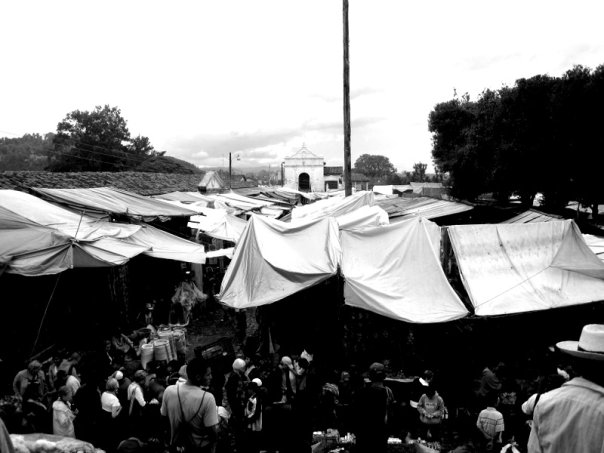
On one of the early days of the trip, our team arrived in the town of Chichicastenango, known for its traditional K’iche’ Mayan culture. It was a pit stop for us on the way to the higher regions, and we were there for lunch and to explore the vast and dense market. Everywhere you turned you were overwhelmed by the sense of time and tradition, as if this place had remained unchanged for the last few centuries. I wandered through the winding streets, peeked in some of the different booths, but really I was just trying to soak up the culture.

6493_1147085688311_6475115_n

At some point, I became lost. I could not see anyone from my group and continued to travel aimlessly throughout the town. I tried to keep it together, not panic, and decided to find a high vantage point in order to get a bearing on my surroundings. I walked until the stones under my feet started to slant upwards and eventually found myself in front of a very old church. The stone steps were covered with Mayans, sitting and sprawling over every space, and I had to weave my way back and forth in order to reach the entrance of the church. Though I should have immediately turned around to look out at the town, something drew me inside.

6493_1147085808314_3679425_n

The church was damp, dark, and devoid of anyone else. The ground felt alive under my feet as it gave way to my weight, the walls were covered with black soot from centuries of fires, and the paintings and decorations had nearly all disappeared from view. The smell of melted wax filled my nostrils as I began to creep closer and closer toward what I imagined was the altar. It was the least church-like church I had ever entered. Without the help of lighting, I stumbled over rickety wooded seats until I finally found myself standing in the front of the church. There poised in front of me was perhaps one of the most pristine sculptures of Christ that I had ever seen. In complete contrast with the rest of the space, this Christ was unblemished, beautiful, and brilliant. Jesus stood elegantly with his robes draped over his shoulders with one hand outstretched with a remarkable golden crown resting on his forehead: Christ the King.


The celebration of Christ the King Sunday is a relatively recent addition to the Christian calendar. The greater church had celebrated the knowledge and image of Christ as king for centuries, but Pope Pius IX officially added to the Christian year in 1925. It took the church 1900 years to need this feast so bad in order to add it to the life of worship. When the first celebration of Christ the King occurred, Mussolini had been in charge of Italy for three years, the maniacal man named Hitler had been out of jail for a year and his Nazi party was growing in popularity, and the United States was preparing for the Great Depression. In such a time, when the world seemed out of control, the church asserted that, nevertheless, Jesus Christ is King of the universe.

This day, this celebration in the life of the church, became the church’s great nevertheless to the godlessness of the world. Despite the rise of dictators, wars, fear, and death, despite the widespread notion that religion was only a “private affair” for individuals, Christ the King asserted that Jesus Christ is the Lord, and he shall reign forever and ever. 

During the celebration of holy mass in the chapel of the Carmelite Monastery 6 members of the OCDS community made promises to the Order.  Dr. Jason Bourgeois and Judy Hawkins professed their temporary vows for 2 years and David Travers, Suzie Megown, Kath

On Christ the King Sunday the Lectionary provides for us scriptures that reflect the “kingliness” of Jesus. The Old Testament scripture from Jeremiah, contains a prophetic word about the coming Messiah: “The days are surely coming, says the Lord, when I will raise up for David a righteous Branch, and he shall reign as king and deal wisely, and shall execute justice and righteousness in the land. In his days Judah will be saved and Israel will live in safety. And this is the name by which he will be called: “The Lord is our righteousness.” Jeremiah reports the Word of the Lord to a people in a time of chaos: there are people who are unworthily leading and scattering God’s sheep. But nevertheless, God will bring about a righteous Branch, a king to rule all things, a king of righteousness.

What do we want out of a king? Someone who will execute justice and righteousness? Someone who has our best interests at heart? Someone who lowers our taxes? Someone who will lead us victoriously into battle?

The Israelites wanted a king like David. They so desired someone to come in the name of the Lord in order to overthrow the powers that be, and take a seat on their appointed throne. To be crowned with glorious gems and rubies, to bring about God’s kingdom on earth with power. What kind of a king do we want?


And he was led away to the place called The Skull with two others, who were criminals. There Jesus was crucified with the criminals, one on his right, the other on his left. With the blood still wet on his hands and feet, Jesus said, “Father, forgive them, for they do not know what they are doing.” those who had gathered to witness his death began to cast lots for his clothing, and people stood by watching, waiting. The leaders began to mock him, “He saved others; let him save himself if he is the Messiah of God, his chosen one!” The soldiers present also mocked him, coming up and offering him sour wine, “If you are the King of the Jews, save yourself!” And there was a sign hung over his head that read, “This is the King of the Jews.”

Crucifixion-PeterGertner

One of the criminals hung next to Christ kept deriding him and saying, “Are you not the Messiah? Save yourself AND us!” But the other criminal rebuked him, saying “Are you not afraid of God, since you are under the same punishment? And we were condemned justly, for we are getting what we deserve for our deeds, but this man has done nothing wrong.” Then he looked to the Christ, “Jesus, remember me when you come into your kingdom.” And Jesus replied, “Truly I tell you, today you will be with me in Paradise.”

That is our King.

When you really get down to it, when you hear Luke’s remembrance of the crucifixion, it is so simple and straightforward. This is in contrast with the flood of feeling-filled poetry, hymns, sermons, and images that have flowed ever since. Our King did not reign in glory according to the expectations of the world. Instead of a long flowing purple robe he was left nearly naked on the cross. Instead of a crown of rubies, diamonds, and gems, he wore a crown of thorns. Instead of a majestic throne inlaid with gold and comfort, Christ reigned from a cross.

The Romans were notorious for using crucifixion as a form of execution for common criminals because it not only warned the public about the crimes against Rome, but it also added shame, pain, and a slow death. Yet somehow, instead of being hung for shame, Jesus Christ was elevated to his throne on the cross.

In that simple moment of hanging for all to see, Christ the King reigned magnificently over God’s kingdom and demonstrated the depth of what it means to be our King. Jesus refused to test God and heed the call of his tormentors to save himself. Three separate times Jesus was mocked to “save himself,” with the one criminal adding, “and us.” In his final moments Jesus does save someone, and that the one he saved was a dying criminal fits perfectly with the greater message of God’s Good News of the world. In Jesus’ dying hour, he continued his ministry: For the Son of man came to seek and to save the lost. That is what it means to be King.


As I stood in that Guatemalan church, I was confronted for the very first time about what it really means to believe that Christ is the King. I was surrounded by decay, desolation, and disregard yet Christ stood before me as the King. In that moment I saw the paradox of the crucifixion, that the King of God’s glory was hung on a cross to die, that Christians in Guatemala can see the world slipping away from them, yet Christ is still King of the universe. I thought I was bringing something with me to Guatemala, that I was carrying God’s message. I believed I was looking for and seeking out God in my own life when God was the one looking for me; waiting to confront me in that dark and empty church.

How remarkable is it that we worship a God who loves us so much that he is continually looking for us, finding us in the differing moments of our lives to remind us who is really in charge? How beautiful is it that our God came in the form of flesh, to be the incarnate Word, and reign from a cross at the place called The Skull? How perfect is it that our King does not meet the expectations of the world, but instead turns the world upside down? How blessed are we that our King reigns not above us, but for us, beside us, and with us?

Today is the last Sunday of the Christian year, we have come to the conclusion of our liturgical calendar. We began with Christ’s birth made our way through his life death and resurrection. We have remembered the stories of the Old Testament where God made covenant with his people to be their God. We have witnessed the tragedies that have occurred in the world, we have lost loved ones, and suffered in our own lives.

Yet, nevertheless, Jesus Christ is King of all things.

christsinai

Jesus Christ, fully God and fully human, brought forth a new age in the life of humanity, ushered in a new kingdom by water and the Spirit, reigned triumphantly from the most unexpected of places. Jesus Christ, Son of Man, came not to be served but to serve and give his life as a ransom for many. Jesus Christ, Son of God, died on a cross for the world so that we might all be reunited and reconciled with God. Jesus Christ, the Holy One, taught us about how to live and love abundantly in God’s Kingdom. Jesus Christ, King of the universe, was resurrected from the grave to share life eternal with us.

Hallelujah! To God be the Glory forever and ever!

Amen.


Weekly Devotional – 11/18/13

Devotional:

Psalm 46.1-3

God is our refuge and strength, a very present help in trouble. Therefore we will not fear, though the earth should change, though the mountains shake in the heart of the sea; though its waters roar and foam, though the mountains tremble with its tumult.


John_Wesley-3

In 1735 John Wesley, the founder of the Methodist renewal movement of the Church of England, made his way from England to the New World having been called to be a minister for the new colony of Georgia. Wesley prayed over this invitation for some time and eventually came to the conclusion: “My chief motive, to which all the rest are subordinate, is the hope of saving my own soul.” Though he had lived a devout life, and was ordained as a deacon in the Anglican Church, he felt that his own soul had yet to be saved.

During the voyage across the Atlantic, Wesley experienced a new kind of faith, one that he had yet to find in his own life. He recorded it as such in his journal: “There was now an opportunity of trying whether they (The German Moravians) were delivered from the spirit of fear, as well as that of pride, anger, and revenge. In the midst of the psalm wherewith their service began, the sea broke over, split the mainsail in pieces, covered the ship, and poured in between the decks, as if the great deep had already swallowed us up. A terrible screaming began among the English. The Germans calmly sung on. I asked one of them afterwards, ‘Was you not afraid?’ He answered, ‘I thank God, no.’ I asked, ‘But were not your women and children afraid?’ He replied mildly, ‘No; our women and children are not afraid to die.’”

This profound experience would follow Wesley throughout the rest of his life, inevitably leading to the discovery of his own profound faith in the God who had faith in him, despite his sinfulness.

The psalmist sings out, “God is our refuge and strength… therefore we will not fear, though the earth should change, though the mountains shake in the heart of the sea; though its waters roar and foam…” That kind of faith is remarkable, one that takes years to cultivate and nurture. Just as Wesley was surprised by the faith of the Moravians on the ship, so too, it is often difficult for us to maintain our faith in the midst of tragedy and fear. Yet, every Sunday the church gathers together to remember our God, to remember that God came in the form of flesh and mounted the hard wood of the cross for us.

So, the next time you’re confronted with the seas and mountains in your life shaking and spilling over remember the faith that God has in you. That time and time again God went after you, to find you, to call you by name, and to embrace you. How would your life change if you had the faith to look at death and suffering in the face and simply remark, “I am not afraid”?

The Magnificent Defeat – Sermon on Genesis 32.22-31

Genesis 32.22-31

The same night he got up and took his two wives, his two maids, and his eleven children, and crossed the ford of the Jabbok. He took them and sent them across the stream, and likewise everything that he had. Jacob was left alone; and a man wrestled with him until daybreak. When the man saw that he did not prevail against Jacob, he struck him on the hip socket; and Jacob’s hip was put out of joint as he wrestled with him. Then he said, “Let me go, for the day is breaking.” But Jacob said, “I will not let you go, unless you bless me.” So he said to him, “What is your name?” And he said, “Jacob.” Then the man said, “You shall no longer be called Jacob, but Israel, for you have striven with God and with humans, and have prevailed.” Then Jacob asked him, “Please tell me your name.” But he said, “Why is it that you ask my name?” And there he blessed him. So Jacob called the place Peniel, saying, “For I have seen God face to face, and yet my life is preserved.” The Sun rose upon him as he passed Penuel, limping because of his hip.

1383606_169741249886845_1520756210_n

Jacob was left alone. He had sent his entire family, all of his possessions, and his future across the Jabbok river. There he was all alone basking in the glow of the sunset, terrified but hopeful for the morning. Jacob had lived a strange life, but nothing would compare to what was about to happen.

Out of nowhere, a strange unnamed man arrived and began to wrestle with Jacob till daybreak. Scripture is rather lacking in details about this epic match, but we can imagine the blood, sweat, and tears that went into this fight. Two men grappling with each other in the bleak conditions of the ancient near east. When it seemed as if one man was finally getting an advantage, the other would return with a defensive move pinning the other one to the ground. This was probably not some glorified hollywood-esque battle, but rather like the ones you used to have with your brother or sister, where no one would relent.

PCH5808

The fight went on throughout the evening, and when the stranger knew that he could not prevail against Jacob, he struck him precisely on the hip socket, knocking it out of joint as they continued to wrestle. Then the stranger in the night said, “Let me go, for the day is breaking.” But Jacob said, “I will not let you go unless you bless me!” So he said to him, “What is your name?” And he said, “Jacob.” Then the man said, “You shall no longer be called Jacob, but Israel, for you have striven with God and with humans, and have prevailed.”

Though already having received a remarkable blessing, a new name, a new identity, Jacob further pushes the man, “Tell me your name!” But the man replied, “Why is it that you ask my name?” And there he blessed him. Jacob would later name the place Peniel (which means face-to-face) saying, “For I have seen God face to face, and yet my life is preserved.” And for the rest of his life, Jacob walked with a limp because of his battle with the man.

What a story! 

Some theologians are convinced that this narrative has received more scholarship than almost any other story from the Old Testament. Yet, last Sunday, when I casually mentioned this narrative to a few people before church, they remarked that they had never heard about it. In our current culture, we can no longer take for granted the amount of scriptural knowledge everyone has in the church. A lot of people will be quick to blame the laity for not reading enough scripture outside of church, but I believe the fault doubly lays with the clergy who are afraid or unwilling to preach on particular texts.

So, if you’ve never heard this story before, or even if its the 100th time you’ve heard a sermon on it, what do you make of it?

It is one heck of a story, but like many passages in scripture, we have read this section in isolation and we are missing the rest of the narrative. If we really want to know what is going on here on the sandy banks of the Jabbok river, we have to go back to the beginning…


Jacob was the son of Isaac and Rebekah (son of Abraham and Sarah). When Rebekah became pregnant with twins she felt a struggling within her womb, and after praying to God, “If it is to be this way, why do I live?” The Lord said to her, “Two nations are in your womb, and two people born of you shall be divided; the one shall be stronger than the other, the elder shall serve the younger.”

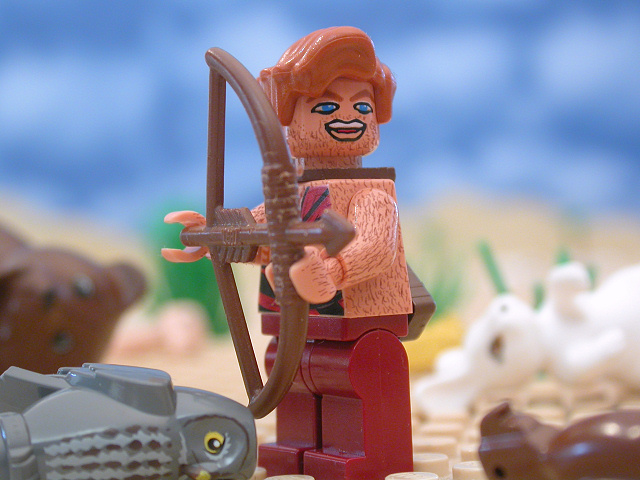
The first born was Esau, red and covered in hair, and later Jacob who came out gripping the heal of his brother; each of them were named after elements regarding their birth (Esau – red // Jacob – one who grabs the heel). When the boys grew up, Esau was a skillful hunter, a man of the field, while Jacob was a quiet man, living in tents. Isaac loved Esau; but Rebekah loved Jacob. 

Esau

Esau

Like most sibling rivalries, Jacob and Esau were combative throughout their lives. You can imagine them as children fighting over simplest little things while the father would side with one, the mother the other.

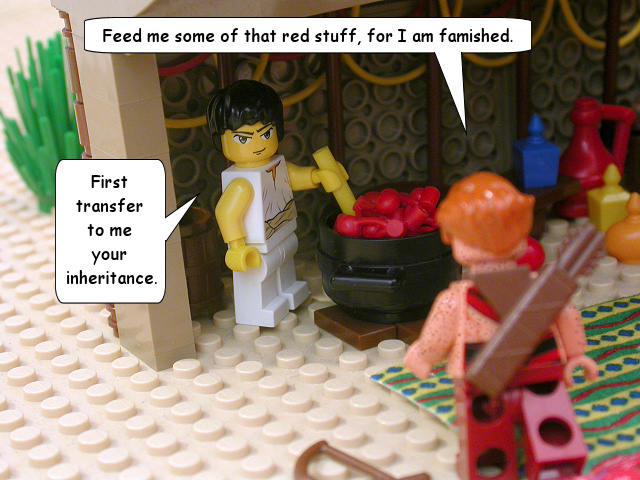
Once, when they were older, Jacob was cooking a stew while Esau came in from the field famished. Esau said to to Jacob, “Let me eat some of that red stuff, for I am famished!” Jacob, the cunning heal-grabber that he was, agreed to give his brother food, in exchange for his birthright, and thus Esau gave up his birth right to his younger brother.

07_gn25_30-31

And then later, when their father Isaac was approaching death, with weakened eyesight, he beckoned for Esau to bring him some wild game in order to bless him before his death. However, when the cunning little heal-grabber found out about this from his mother, he covered himself in fur and deceived his father by pretending to be his brother. Before Jacob had had enough time to even make it away from his father’s tent, Esau returned from the field shocked to discover that Jacob had stolen his blessing.

The heal-grabber had gone too far this time and Esau was furious. He vowed to kill his brother after the death of his father. But Rebekah discover Esau’s plot and sent Jacob away to flee from the inevitable wrath of his twin.

24_gn27_41

Years pass. Esau and Jacob continue to live out their lives apart from one another. When it seemed like Jacob might finally be able to forget his past and his brother, he had a vision which made him realize that he needed to return to the land of his father.

And so, with all his possessions and children and wives Jacob prepared to encounter his brother, unsure of what would happen. However, the little heel-grabber had one trick left up his sleeve; knowing that his brother would surely kill him, Jacob sent ahead of him all his possessions and family in order to appease Esau before their reunion, while thinking to himself, “I may appease him with presents that go ahead of me, and afterwards I shall see his face; perhaps he will accept me.” Therefore his gifts passed on ahead of him, and he stayed behind alone for the night before meeting his brother in the morning.

At this critical moment in his life, at the matrix of what would determine everything forward, spending the night on the border of the Promised land, Jacob struggled with God.

So you see, the story of Jacob wrestling with God is placed perfectly within the greater story of Jacob’s life; while anticipating a frightful reunion with his brother Esau, Jacob must first meet with the dreaded stranger of the night and these two meetings are intimately related to one another.

The story, as we find it in scripture is not explicit about who Jacob actually wrestles with. Is he wrestling with his metaphorical brother? Himself? A stranger of the night? Though arguments abound for many interpretations, it makes most sense to understand the story in such a way that Jacob is wrestling with God

During the night, the cool evening when precision and detail are lacking, the divine antagonist arrives and takes on features of others with whom we all struggle during the day.

What a man this heal-grabber was! He may have been frightened of the coming repercussions of the reconciliation between he and his brother, and he may have been afraid of the almighty Lord, but in the fray he held his own with either one.

This is no ordinary story.

In a way, what Jacob experienced was a magnificent defeat. A defeat because Jacob is left with a limp for the rest of his life, and magnificent in his ability to prevail. From that day forward Jacob limped every day to show others (and remind himself) that there are no untroubled victories with the Holy One. Yet his limp was also a reminder that he had prevailed in this skirmish between humanity and the divine.

It is important to note that this meeting with God, this nighttime wrestling match, did not lead, as we are wont to imagine, to reconciliation, forgiveness, and healing. It resulted in a crippling. There is a dangerous consequence of meeting the divine, resulting in a marking that we will carry throughout the rest of our lives.

And so, when the day broke the stranger left a crippled Jacob, now Israel, limping toward his powerful and vengeful brother.

Can you imagine how he must have felt? Weak after wrestling all night long, afraid of the coming consequences, isolated from all his family and possessions, sand caught in his eyes, clothing ripped, walking across the deserted landscape toward his brother?

When Jacob made his way forward, lessening the space between himself and inevitably, he bowed seven times until he came to his brother.

Like the stranger from the night before Esau rushed forward and grappled his brother to the ground, falling upon his neck. However, instead of punches and scrapes, Esau covered his brother with kisses and tears.

The juxtaposition of the wrestling in the night with Jacob’s reunion with Esau offers us a warning; God will not be taken lightly or easily. There will be no cheap reconciliations. On the way to the affronted brother, Jacob must deal with the crippling and blessing of God.

It is easy to take the story in isolation and make it into a simple lesson: “being a Christian is about wrestling with God. There will be times when we cannot understand what it happening and though we are grappling with the divine in a negative, God will positively hold onto us while refusing to let go.” And though that message is true, there is so much more going on with the greater story.

Don’t we all have a little Jacob in us? At times we’ve all acted like the little heel-grabber, willing to do less to receive more, willing to focus on ourselves alone rather than those around us. And at the same time, don’t we all have a little Esau in us too? At times we’ve felt betrayed, unloved, and hurt, our trust broken from broken relationships. Being Christian is about wrestling with God, but its also so much more. This story in scripture reveals to us how the love of God and the love of brother belong together. We were never meant to be alone, scavenging for ourselves, removed from others. We were all created in the abundant image of the triune God, made out of unified plurality to be in plurality with others.

Like Adam and Eve, like Jacob, like the disciples, and so many other figures from scripture, we want to know the answer to the ultimate question. We want to bridge the gap between us and God. In this passage Jacob wanted to know God’s name, the mystery of heaven and earth, to overcome all the distance. When wrestling, the stranger did not win, but he did not lose either. Jacob gained a great deal, but the depth of God’s being had not been given. The stranger stopped short of giving the ultimate gift – that would have to wait until a cramped night in the crib of a manger in Bethlehem.

In a few moments I will be inviting Isabella Bailey-May Sullivan and her family to come forward and gather around the baptismal font. In Isabella’s baptism she will be incorporated into this body here, to learn about these kinds of stories from scripture, to begin a life of wrestling and reconciling with God. Like Isabella, all of us gathered here have been grafted into the story of Israel through Christ’s death on the cross. We will encounter our brokenness through God’s Word but we will also rejoice in the grace that God gives us in spite of our brokenness.

And so what are we left to make of this heel-grabber and his wrestling match on the banks of the Jabbok? Like Jacob’s wrestling and Isabella’s baptism, when we enter the church we are marking ourselves for the rest of our lives. It is in this place through the worship of the people and the proclamation of the Word that all the Jacobs of the world become reconciled with the Esaus. Its where we can meet one another and God face-to-face and prevail. We might be brought down in a way that we are truly wrestling and we will walk away marked by God. Though we may not walk with a physical limp, we have been struck by the almighty God in a way that we will never be the same again.

And that, is good news.

Amen.