The End of Questions

strangely-warmed-spreaker-header

This week on the Strangely Warmed podcast I speak with Kenneth Tanner about the readings for the 21st Sunday after Pentecost (Deuteronomy 34.1-12, Leviticus 19.1-2, 15-18, 1 Thessalonians 2.1-8, Matthew 22.34-46). Ken pastors the Church of the Holy Redeemer in Rochester Hills, Michigan and is a good friend of the podcast. The conversation covers a range of topics including the role of the theologian-pastor, why we should think about Moses when we think about MLK Jr., thoughts on the awesomeness of the BCP, and why we should spend less time trying to please people. If you would like to listen to the episode or subscribe to the podcast you can do so here: The End of Questions

books-of-common-prayer

Devotional – Psalm 96.1

Devotional:

Psalm 96.1

O sing to the Lord a new song; sing to the Lord, all the earth.

Weekly Devotional Image

I love the so-called “good ol’ hymns.” I love them because I grew up with them, because they remind me of particular people in particular places, and because the theology behind them is remarkable. All I need are the first verses of “Amazing Grace” to draw me to all of the saints that have gone on to glory during my life, or the opening melody of “Jesus Calls Us O’er The Tumult” will bring forth memories of my grandmother humming the tune in her kitchen, or I’ll read through the words of “O Come, O Come, Emmanuel” and it will give me goose-bumps thinking about how Christians have used those words for over a thousand years.

The “good ol’ hymns” are called as such accordingly; they are good and they are old.

In the church today, however, there is a strong temptation to employ something new simply for the sake of being new. Rather than relying on tradition or theology, we’re inclined to pull out the shiny new songs in hopes that they will bring about some sort of change or transformation. And, though many new songs are ripe with good theology, many of them fail in that particular category. New songs can have catchy melodies, and stir up emotional responses, but if the words we proclaim are unfaithful, we have to ask ourselves: “Is this the new song God wants us to sing?”

maxresdefault (5)

Over the last few weeks I’ve been talking with the choir at Cokesbury about new and different ways to praise God through voice and song; but not necessarily with new songs. So, we prayed about it, and on Sunday morning I got out my cajon and started playing along with our pianist to the tune of “I Surrender All.” For what it’s worth: “I Surrender All” was written in 1896 and it has been a favorite of Christians for more than a century. But for us on Sunday morning, it felt new. It felt new because we did not somber along with the verses, we did not say the words devoid of meaning. Instead we passed around a microphone to members of the choir, some over 70 and some under 17, and let them sing the verses as the Spirit led them.

It was beautiful, it was powerful, and it was new.

What songs from the hymnal move you the most? What is it about those particular hymns that resonate with you? How has God used a particular song to speak a new word at a particular moment in your life?

God’s Backside

strangely-warmed-spreaker-header

This week on the Strangely Warmed podcast I speak with Kenneth Tanner about the readings for the 20th Sunday after Pentecost (Exodus 33.12-23, Isaiah 45.1-7, 1 Thessalonians 1.1-10, Matthew 22.15-22). Ken pastors the Church of the Holy Redeemer in Rochester Hills, Michigan and is a good friend of the podcast. The conversation covers a range of topics including how God responds to prayer, reflections on people worshipping the nation more than the living God, why the old hymns are the good hymns, and thoughts about David Bentley Hart’s new translation of the New Testament. If you would like to listen to the episode or subscribe to the podcast you can do so here: God’s Backside 

KT

Devotional – Psalm 106.1

Devotional:

Psalm 106.1

Praise the Lord! O give thanks to the Lord, for he is good; for his steadfast love endures forever.

Weekly Devotional Image

On Sunday morning we will spend most of our worship service confronting the question “Why Do We Pray?” Prayer has been part of what it means to be a disciple of Jesus Christ from the very beginning of the church. Prayer, fundamentally, is about taking time to be with the Lord as well as a desire to change our circumstances. And for as important as it is to talk about why we pray, the question of how we pray is equally worth our time.

When I was a kid I was taught how to pray using the acronym PRAY: Praise – Repent – Ask – Yield. We begin praying by praising God for the marvelous works God has made real in our lives, then we repent and apologize for how we have failed to be the people God has called us to be, then we ask for how we need God to change our present circumstances, and then we conclude by yielding to God’s will. The PRAY way to pray is helpful for setting up a rhythm of what it means to commune with God, but it can also be limiting.

If our prayers follow the same pattern over and over again, we run the risk of no longer meaning what we say, or worse: we say things without realizing what we’re saying. Additionally, the PRAY model can result in us being tempted to ask God to change trite and insignificant things in our lives, instead of the deep reflection on what it means to yield to God’s will being done in our lives.

prayer_2014_02_07-13

Praying through PRAY can be helpful when we no longer know what to say, but some of the best prayers I’ve ever heard (or read) do not follow the model at all. Because, after all, prayer is not about checking off the box; prayer is about learning how to listen to God in the midst of loud and chaotic world.

Sometimes faithful prayer looks less like getting on your knees and clasping your hands together, and more like sitting in a quiet space for five minutes. Sometimes faithful prayer sounds less like all the big adjectives we use in church on Sunday and more like a conversation we have with a friend over the phone. Sometimes faithful prayer is less about following any model or rhythm and more about finding a way that works for us in order to hear what God has to say.

I have friends for whom using crayons in a coloring book is the best way to pray. For others, prayer is at its best when it is the complete absence of any distraction. And still yet for other, the PRAY model is the best way to pray.

The point of prayer is not so much that we have to pray a certain way, but that we do it in the first place.

Many Are Called But Few Are Chosen


strangely-warmed-spreaker-header

This week on the Strangely Warmed podcast I speak with Teer Hardy about the readings for the 19th Sunday after Pentecost (Exodus 32.1-14, Isaiah 25.1-9, Philippians 4.1-9, Matthew 22.1-14). Teer currently serves as an associate pastor at Mt. Olivet UMC in Arlington, VA. The conversation covers a range of topics including what it means to be a “grass” church, how Christians are supposed to read the bible; wedding invitations, and consuming our golden calves. If you would like to listen to the episode or subscribe to the podcast you can do so here: Many Are Called But Few Are Chosen

many-are-called-few-are-chosen

Devotional – Exodus 20.13

Devotional:

Exodus 20.13

You shall not murder.

Weekly Devotional Image

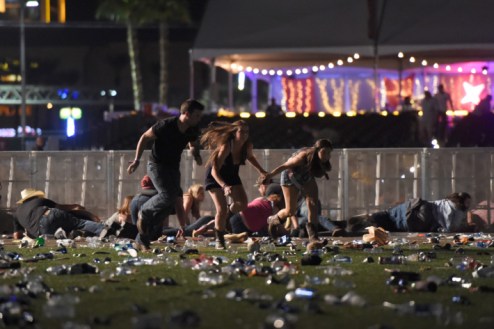
I woke up early this morning so that I could go to the gym before heading over to the church. It was early enough that it was still very dark outside and there were only a handful of cars in the parking lot. When I made it to the workout room I quickly stretched in the corner and then went over to a treadmill to start running. After about 15 minutes I slowly noticed that all the people had stopped using their machines because it became eerily quiet and I looked up at the TV. All of us at the gym were transfixed as we watched the closed captioning scroll across the screen. “Deadly shooting in Las Vegas. 20 dead. 100 plus injured.”

I don’t know how long we stood there like statues, but I remember the first sound I heard was the simple whimpering of a man over on an elliptical.

Throughout the day the reports coming out of Las Vegas have become clearer and more detailed such that, at the time of writing this devotional, 58 people have died and over 500 people were injured in the massacre outside of the Mandalay Bay Casino in Las Vegas, Nevada.

The emotional roller coaster of an event like this can be exhausting. There’s the shock that comes when we attempt to understand how someone could bring such terror and evil into the world. There’s the fear that something like Las Vegas could happen in our own communities. There’s the immense sadness when recognizing the high toll of lives and injuries in such a brief period of time. There’s the anger that percolates within us as we watch the footage of people running for their lives and we heard the gunfire ringing in the background. And, of course, there’s the bewilderment that comes with discovering that this marks the 273rd mass shooting in the United States this year, and today is only the 274th day of the year.

2-mandalay-bay.w710.h473

You shall not murder: four simple words in the middle of Exodus 20; four words that rest at the heart of most major religions; four words that we must not forget.

In the days, weeks, months, and even years ahead the massacre in Las Vegas will be used to manipulate political decisions, it will be used to strike fear into the hearts of individuals, and it will be used as a rallying cry for change. But what happened in Las Vegas cannot be used as a tool, or worse: a weapon, to bring about more violence in the world. Violence will always beget more violence. We, as Christians, are called to pray for those who died, those who are suffering, and those who are afraid. We, as Christians, are called to do all that we can to ensure the wellbeing of the people around us in every way, shape, or form that we can imagine. And we, as Christians, must never forget those four words from Exodus 20: You shall not murder.

The Ten Commandments vs. The Bill of Rights

strangely-warmed-spreaker-header

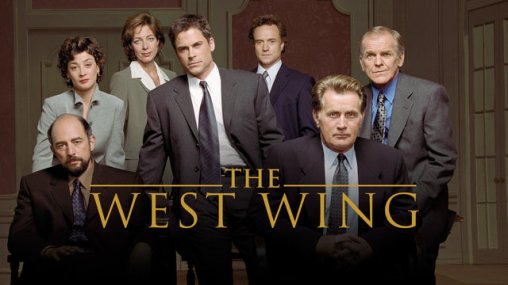
This week on the Strangely Warmed podcast I speak with Teer Hardy about the readings for the 18th Sunday after Pentecost (Exodus 20.1-4, 7-9, 12-20, Isaiah 5.1-7, Philippians 3.4b-14, Matthew 21.33-46). Teer currently serves as an associate pastor at Mt. Olivet UMC in Arlington, VA. The conversation covers a range of topics including why the West Wing was such a good show, the ten commandments becoming our golden calf, suffering, and discipleship. If you would like to listen to the episode or subscribe to the podcast you can do so here: The Ten Commandments vs. The Bill of Rights

TheWestWing-AboutImage-1920x1080-KO

Devotional – Psalm 25.5

Devotional:

Psalm 25.5

Lead me in your truth, and teach me, for you are the God of my salvation; for you I wait all day long.

Weekly Devotional Image

On Friday, at a campaign rally in Alabama, President Trump suggested that any “son of a b!@#$” who kneels during the national anthem should be fired. His comment was made in reference to the growing controversy initiated by the (former) NFL player Colin Kaepernick who last year knelt during the national anthem to protest police shootings of black people. And as more and more players began to join Kaepernick in demonstrating, responses from political figures have garnered a lot of attention including the recent comments from the president.

At both a wedding reception on Saturday evening and in church yesterday I overheard a number of conversations between people about the controversy and battle lines were quickly drawn. On one side there are people who believe those who kneel represent anti-patriotic sentiments and that they are ungrateful for the military. On another side there are people who believe that kneeling in protest is part of the 1st Amendment and therefore is absolutely an American thing to do and that it should be protected.

Witnessing conversations about the American Flag and the responses of professional football players to it reminded me of Stanley Hauerwas concern that most Christians today are moved more by the American Flag than by the cross of Jesus Christ. This is not to say that there is anything wrong with the flag (though it is certainly a more complicated symbol than we often think it is), but the fact that the flag itself generates more response and appears to be more powerful than the cross is something that should give Christians pause.

Bible-and-Flag

It’s one thing for talking heads to ramble about the pros and cons of kneeling during the anthem but it’s another thing entirely when it comes to the realm of the church. These days the church seems to revolve around tweets from the White House more than the revealed Word of God. These days the church appears to spend more of it’s time debating the values of our country’s democracy than our Savior’s teachings and ethics. These days the church seems to believe that our salvation will come from Congress more than from Jesus Christ.

The psalmist wrote, “Lead me in your truth, and teach me, for you are the God of my salvation; for you I wait all day long.” As Christians, our God is the God of salvation, God is the first and the last, and God is the one for whom we wait all day long. Our creeds and our prayers, our hymns and our scriptures, all point to the definitive claim that God is the source of our being and that the cross of Christ is, and forever shall be, the most determinative symbol in our lives.

But sometimes, it doesn’t feel like it.

Instead, in the realm of the church we label one another as liberal or conservative when we’re supposed to see one another as brothers and sisters in Christ. When we have culture wars over things like NFL players kneeling during the national anthem we classify entire groups of people as pro or anti American, we neglect to remember that all of us are children of God. When we are more concerned about how someone responds to the flag than we are about how someone responds to the grace of God, we neglect to be a church that can faithfully say: “Lead me in your truth, and teach me, for you are the God of my salvation.”

God Isn’t Fair

strangely-warmed-spreaker-header

This week on the Strangely Warmed podcast I speak with Lindsey Baynham about the readings for the 17th Sunday after Pentecost (Exodus 17.1-7, Ezekiel 18.1-4, Philippians 2.1-13, Matthew 21.23-32). Lindsey is an elder in the Virginia Annual Conference of the United Methodist Church and currently serves as the Associate Director for Call, Candidacy & Discernment in the Center for Clergy Excellence. The conversation covers a range of topics including the prevalence of complaining, the differences between equality and equity, identity, and whether or not God is fair. If you would like to listen to the episode or subscribe to the podcast you can do so here: God Isn’t Fair

21199453_873285013490_6485396214584115227_o

What’s Right With The Church?

Psalm 145.1-8

I will extol you, my God and King, and bless your name forever and ever. Every day I will bless you, and praise your name forever and ever. Great is the Lord, and greatly to be praised; his greatness is unsearchable. One generation shall laud your works to another, and shall declare your mighty acts. On the glorious splendor of your majesty, and on your wondrous works, I will meditate. The might of your awesome deeds shall be proclaimed, and I will declare your greatness. They shall celebrate the fame of your abundant goodness, and shall sing aloud of your righteousness. The Lord is gracious and merciful, slow to anger and abounding in steadfast love.


People outside the church love to talk about its faults and failures. For instance: Church organizations were able to mobilize and respond to the recent devastation in Texas and Florida before FEMA or the Red Cross, but whenever the Church is in the news it has to do with a failure to keep track on money properly, a scandal involving clergy, or a denomination’s vote on something like homosexuality.

Last week I shared some stories about a recent wedding I presided over, and I told you about how effusive some of the people in attendance were with their praise. There is something strange and mysterious about a wedding that leads people to speak in deeply honest ways. Perhaps it’s the fact that love is in the air, or that reunions are bringing people together, or the free alcohol. However, what I didn’t share with you last week were the negative comments from other people.

“I don’t think you’re gonna have a job much longer preacher. You know the church is dying right?”

            “How can you support a system that is so archaic and out of touch with reality?”

            “You seem like a nice guy but I think the church is more responsible for evil in the world than good.”

It’s easy to pick on people outside of the church who are so harsh and judgmental with their language. It’s easy to pick on them because they’re not here, they don’t know what God is up to, they don’t know what the church is really like.

And for as much as people outside of the church love to talk about its faults and failures, people inside the church might be even worse.

I went to my first clergy meeting for the Alexandria District this week and I was struck by how somber so many of us were. Throughout the time of our gathering there was far more negativity than positivity, and at some point it felt like the whole point of the meeting was to get preachers together to complain about people like you.

            What’s right with the church?

Fotolia_137876364_Subscription_Monthly_M-1080x675

A few years ago I was given a copy of sermon preached by a man named Zig Volskis in 1987, the year before I was born. In it he attempts to answer that very question, “What’s right with the church?” Zig, like me, was frustrated with all of the negativity surrounding the church and instead he wanted to focus on the life-giving elements of the body of Christ that is the church.

Zig preached that as a child he would have responded to the question with: the church bells and music. They both represent the energy and depth of the worshipping community through sounds and communal response. The music of the church reassures the people that God is the one in control, even is the world claims the contrary.

As an adult, Zig claimed that his answer had changed over a career of serving the church for thirty years. He believed the best thing about the church is that it endures. Empires come and go, even church buildings are destroyed by war and exodus, yet the body of Christ always endures. With all its blindness and plundering, for all its inability to faithfully use its enormous resources properly, the church has sought to minister to human needs in thousands of different ways. And, for untold numbers of persons, the helping hand of the church has been a lifesaver.

Zig ended the sermon with a call to those who love the church: make more room for church, bring to the church your best and highest devotion. And to those who are not sure about the church: you will not find perfection here, but come in anyway, and help us make the church better.

And with that he said: Amen.

Over the years I’ve thought a lot about Zig’s sermon, and in particular our willingness to overemphasize the negative rather than addressing the positive. And, I’ll be the first to admit – The church does have problems. From this Cokesbury here in Woodbridge to the great universal church, we have problems because, at its heart, the church is filled with people like us: broken, flawed, sinners.

I could take time to bring up poor management, or fiscal irresponsibility, or personal judgments. We could spend weeks talking about how we’ve failed as a church, we could spend weeks talking about how we need to get better, but in so doing we would fail to recognize all the things that are right with the church.

But the psalmist, and the witness of scripture, chooses to focus on the things that are right. I will extoll the Lord, I will meditate on the goodness of God, I will declare the greatness of God. Every generation will share with those who follow all the splendor and majesty of God.

The psalm we have today is like a hymn, something to be declared by the entire congregation. And if you look at it, and really read through each line, it is so over the top with declarations of God’s glory that it sounds like the kind of love letters middle school students used to leave in each other’s lockers.

The love and praise the psalmist has for God is not something that can remain bottled up and hidden away. There is a quality of God’s grandeur that evokes a response, it pushes us to bring forth our gladdest praise and declare from the rooftops about the mighty works of God.

However, most of us are uncomfortable with wearing our faith on our sleeves. We don’t know quite what to make of religious displays of affection. We can’t even imagine standing up in church to talk about what God has done for us.

This psalm, these words about God, they are an invitation to remember what God has done for us, and shout it out.

I love asking people to tell me about sermons they remember from the past. Such as: Have you ever heard a sermon on Psalm 145? Can you remember the preaching from when you were a kid? Can you even remember what I preached about last week? The truth is that most of us remember very little, myself included!

I think back on what it was like to be raised in the church and I can’t remember any sermon I heard. There are a couple phrases that continue to bounce around the grey matter between my ears, but I don’t remember anything more than that. But you know what I do remember? I remember the people who got up and talked about how the church had changed their lives.

I remember sitting as a child at the altar and listening to a man in a hospital gown talk to us about how the church visited him when he was in the hospital after finding out he had cancer. I remember the woman who wept from the pulpit as she was thanking people for attending her husband’s funeral. I remember the older man who was baptized in front of the whole church who then shared his story about how he lost everything in his life, and then found everything when he started coming to church.

There is a profound power in being reminded, again and again, of what God is doing in the world and in the church. There is something good and right and true about sharing stories of what is right with the church. So that’s exactly what we’re going to do.

Founders-Day-2017-672x330

I’m going to go first, as an example, but then I want to open up this space and this time for you to share what you think is right with the church.

Shortly after I arrived here at Cokesbury, I was working on a sermon in my office when a bunch of people came in through the door and kept walking past without saying a word. I mean I was the new guy and they didn’t even both to check on me. And they call themselves Christians! I found out later they were the Prayer Shawl team, and that they had work to do in the conference room.

I sat in my office for a while, pretending to work, but what I was actually doing was eavesdropping. I wanted to know what they were really up to, I wanted to know what these ladies were really like, I wanted some gossip.

But I was disappointed. Instead their conversation was filled with affirmation for one another, and they worked and worked and worked.

You want to know what I think is right with the church? Our prayer shawl team. They gather together and have created a beautiful community designed to make the community more beautiful. They work to give away everything they’ve created to be a blessing to others. And they do so with abundant joy. Each of their shawls, and all of the squares in our bulletins today are seeds they are casting into the world, and because of their work and God’s grace, those seeds will grow to bear beautiful fruit for God’s kingdom.

So, now its your turn: What’s right with the church?


There are few things in this life more joyful than discovering how our lives are caught up with the great and enduring story of God’s wondrous works. As we share what’s right with the church we discover how connected we are with one another. As we listen to what’s right with the church we rediscover the faith and the fervor of the psalmist within each and every one of us.

So to those who love the church: make more room for it, bring to it your best and highest devotion. And to those who are not sure about the church: you will not find perfection here, but come anyway, and help us make the church better. Amen.