Bonus Sermon – The Bad Shepherd

I try to have my sermons finished by Thursday afternoon before being preached on Sunday. This allows me to truly experience Sabbath on Fridays and forces me to think about the scripture throughout the beginning part of the week rather than procrastinating until the end. But every once in awhile, something will take place during the week that necessitates a sermonic change.

Last Friday morning I woke up, read over the sermon one last time and it just didn’t feel right. With everybody online going crazy about the executive order for religious liberty and the House voting on a bill that would repeal and replace most parts of the Affordable Care Act, I felt like God was calling me to trash what I had written and start over. So I did (You can read that sermon here: “The Politics of the Church.“)

But I had already written an entire sermon and crafted a whole worship service around a central theme! So I asked the congregation to pray for me as I offered the new sermon, written later than usual, outside the normal connections through our whole service. And, because I wrote two sermons last week, I have included the sermon that wasn’t preached below…


Psalm 23

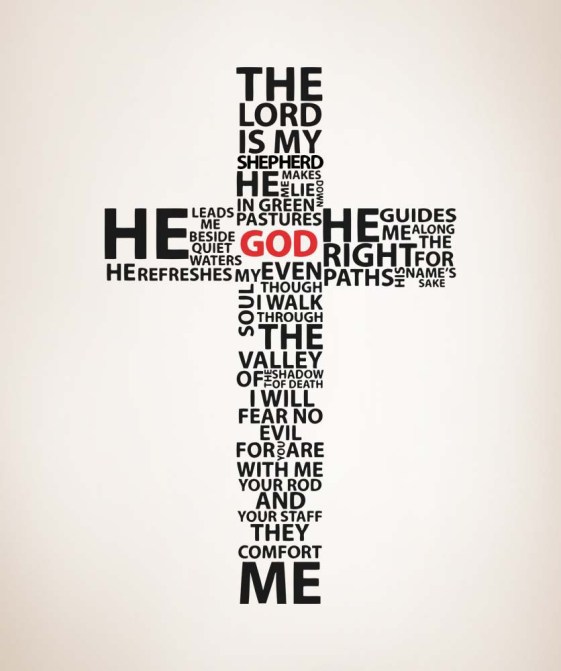
The Lord is my shepherd, I shall not want. He makes me lie down in green pastures; he leads me beside still waters; he restores my soul. He leads me in right paths for his name’s sake. Even though I walk through the darkest valley, I fear no evil; for you are with me; your rod and your staff– they comfort me. You prepare a table before me in the presence of my enemies; you anoint my head with oil; my cup overflows. Surely goodness and mercy shall follow me all the days of my life, and I shall dwell in the house of the Lord my whole life long.
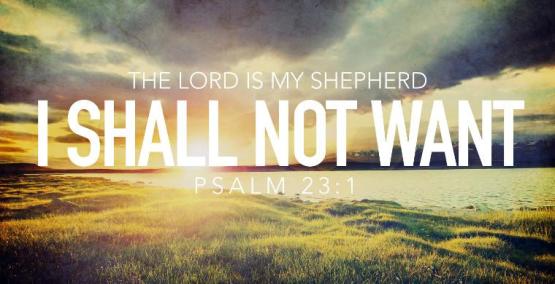
ISHALLNOTWANT


“Pass the wine.” The party was getting on into the wee hours of the morning, and everyone was having a great time. The food was good and plentiful. The wine flowed profusely. The stories kept bubbling forth. “Remember that time we walked into town and everybody just kept staring at us, waiting for something to happen?” “Or what about the day we ate by the beach and talked about the future.” “I’ll never forget the looks on everyone’s faces when we walked out of town that one time and wiped the dirt of our feet.”

It was a great party.

There’s something about the stories and the food and the wine that help blind us from the reality of what is to come. On Thanksgiving we fill our bellies in denial of all the money we are about to spend during the Christmas season. On New Years Eve we clink the champagne in ignorance of all the mistakes we made and we believe that this year will finally be the one we get it all right. On Easter we tell stories about the resurrection in hopes that hope will not fade in the weeks that follow, but the normalcy of life slips in and our hallelujahs don’t have quite the force they did a few weeks ago.

But what did the host think during the party? While the friends were passing around the bottle and giggling with memories of the last few years, what was going through his mind? Was he buzzed with the joy of his compatriots as he walked around the table filling their glasses? Was he nostalgic about all they had been through and in denial of what was going to happen in just a few hours?

Did he think about the words to Psalm 23?

Throughout the gospel narratives Jesus is forever quoting and referring to the Old Testament, and in particular the Psalms. The psalms, it seems, are his prayers. They are familiar and well known and comforting. But while he sat at the table that night, that last night, when he told them the bread was his body and the wine his blood, I wonder if he thought about the 23rd psalm when he looked across the table and into the eyes of his friend Judas: “You prepare a table before me in the presence of my enemies.”

Full disclosure: I don’t enjoy preaching on well-known texts. Give me some obscure passage from Zephaniah or Joel and I will get up here and proclaim it with everything that I’ve got. In fact, I rather enjoy preaching on the passages we don’t know because we can all come to the text with a fresh perspective. But when we read a passage that everyone knows, a passage that we’ve all heard more times than we can count, the challenge becomes that much greater.

Like John 3.16 – For God so loved the world… As soon as the words hit the air most of us immediately wander in our minds to black tape under the eyes of sport figures, scratched notations in bathroom stalls, and college evangelists trying to save souls. And because of this we forget that John 3.16 is part of a much bigger story of Jesus meeting in the late hours with Nicodemus.

Instead, I could randomly flip open the bible, pick any verse, and I think we would receive it better than the well-known texts because we would not bring any of our own baggage to God’s Word.

But today we’ve got one of the most well known, perhaps the most well known passage in all of scripture: Psalm 23.

The Lord is my shepherd, I shall not want.

And already most of you have tuned out whatever I’m about to say. Because the moment we hear these remarkably familiar words, our minds jump back in time to memories of this passage. We start thinking about the last time we read the passage out-loud at a funeral. We remember sitting down on our Grandmother’s lap and hearing her repeat the words without looking in her bible. We are transported back to our childhood Sunday school classrooms where many of us were forced to repeat the psalm, out loud, from memory, in front of our peers.

Perhaps for some of us, the mere mention of the psalm elicits a feeling of joyfulness and peace. We think about the green pastures and the still waters and whatever stress we’ve got going on in our lives starts to fade away.

And maybe for some of us, the mere mention of the psalm elicits a feeling of strange and bizarre reflection. The green pastures and still waters are nice, but why in the world is God preparing tables for us in the presence of our enemies? Our cups are overflowing with many blessings, but why can’t we dwell with the Lord forever, and not just while we’re living?

It is remarkably difficult to approach this text with open eyes because it already means so much to so many of us.

But what did it mean to Jesus?

That night before he gave himself up, the evening of the Last Supper, did he think about the table being prepared before him with an enemy? Did he still believe that his cup overflowed with grace and peace and mercy even though one of his closest disciples was about to betray him for a couple pieces of silver?

In the midst of stress, fear, and anxiety the psalmist offers a strange alternative: the refreshing peace found in the Good Shepherd.

But is the Lord really a good shepherd? Yeah, God will set us down in the green pastures, and will lead us beside the still waters; whatever that means. God takes us down the right paths for his name’s sake, and even though we walk through the valley of the shadow of death, we will fear no evil.

Really? I don’t know about you, but I don’t think I have the kind of faith such that I could walk through a place or a time in my life described as the valley of the shadow of death and not be afraid. I get afraid every time I get a phone call from an older member of the church on their way to the hospital, every time I hear my son fall to the ground with a loud thud, and even when I’m hear at night in the sanctuary and all the lights are off.

And the rod and the staff? Those aren’t meant to be tools of comfort like a quilt or a duvet. Rods and staffs are meant to wring us and knock us back on to the right track when we’ve gone astray. And where does God eventually lead us? To a table prepared just for us in the presence of our enemies.

We love this psalm, we pray it and read it and hear it all the time. But sometimes, God sounds more like a bad shepherd than a good one.

Sometimes we hold it so close that we don’t think about what it really says, or even what it might’ve meant to the one we call the Good Shepherd.

I want to have the faith of the psalmist, I want to be able to look at the darkest valley, and the rod and the staff, and the table filled with my enemies with hope and joy. But this psalm isn’t really about me or us, nor is it about what we think of the Shepherd. It’s a psalm about who God is, and what God does for us, his sheep.

God’s protective power, God’s immense grace, is so great, so unimaginable, that God has the audacity to prepare a table before us in the presence of our enemies. A good shepherd would prepare the table in the presence of our friends and our families; not with the people who want to destroy us. God’s table, provided for us, is not the table we would choose for ourselves. Like a middle school cafeteria, we would rather sit with the people we like than with the bullies eyeing us from across the room.

We read in the psalm that God transforms every situation. But we take that to mean that nothing bad will ever happen to us. A good shepherd, we think, would protect us from every type of evil. But no, our bad shepherd says there will be deathly valleys and enemies galore; the difference is that our shepherd has done something that prevents them from destroying us.

We will absolutely experience hardships, and fear, and stress, but the bad shepherd is with us in the midst of them.

Our shepherd is only a bad shepherd in that we think we know what God should do for us. We abstract this psalm from the reality to which it speaks and make it out to be some kind of shield to protect us from everything in life. What makes our bad shepherd a good shepherd is that our shepherd will never abandon us.

Being a disciple is a way of life that we cannot know outside of being converted to it. For taking up our cross to follow Jesus changes every little thing about the way we live. It means that even though we talk through the valley of the shadow of death, we will fear no evil because Jesus has defeated the very death that casts a shadow in our lives. We cannot live without that fear unless we’ve been converted to a way of life that constitutes knowledge of the bad shepherd who takes care of us.

Sitting down with the very people who hate us is not something we could do without being converted to it. All of us, sinners that we are, would choose the other table. But God in Christ chose to sit down at the table where his betrayer sat, offered him the same bread and cup that we are offered here in church knowing full and well what he was about to do.

Being a Christian is possible only through the grace of God empowering us to follow His Son on the way. We cannot do it on our own accord, and it cannot take place without a radical restructuring of what we know and what we believe. We cannot follow Jesus without sitting at the table, elbow to elbow, with the people who would rather betray us.

And, again, that makes God sound like a pretty bad shepherd. What kind of God would willfully send a child to the table with bullies? What kind of God would use a rod to knock us back into line? What kind of God would ignore the rest of the guests to make sure our cup was overflowing at all times in the middle of a party?

The very same one who was willing to take on our flesh in the incarnation. Our ­bad shepherd really is the good shepherd because Jesus came to live and to die and to live again for the sheep. Christ is the one who makes possible the goodness and mercy that follows us all the days of our lives such that we can sit at the table with hope, because Christ did the same thing for us. Amen.
5132_Psalm_23_Cross-1

Devotional – Matthew 5.23-24

Devotional:

Matthew 5.23-24

So when you are offering your gift at the altar, if you remember that your brother or sister has something against you, leave your gift there before the alter and go; first be reconciled to you brother or sister, and then come and offer your gift.

Weekly Devotional Image

“I want you to write down the name of someone who is currently driving you crazy.” That’s how I chose to begin a sermon more than a year ago. Each bulletin had a blank piece of paper inside, and after writing down the name I asked everyone to crumple it up and hold it in their hands until the end of the sermon.

The sermon was focused on Isaiah 6.1-8 and I talked about how Christians, for centuries, have been called by God to confront conflict. I said that to be faithful is to meet the outcasts where they are and show them love, that to be a disciple means a willingness to forgive people when they have done something wrong, and that to follow Jesus means having the courage to ask for forgiveness when we have done something wrong.

I concluded the sermon by asking everyone to look at the names crumpled up in their hands, and seriously consider making the first move to confront the conflict with that person. I warned everyone that it might not go well, and that it might blow up in our faces, but that the longer the conflict remains, the harder it would be to hear the living God speaking in our lives.

1be9b5bd635fbd64716dbb286ad38d4d

Like a lot of sermons, I preached it and hoped the people of St. John’s took the challenge seriously. Over the next few months I occasionally heard about what happened when certain individuals confronted the conflict in their lives, but a few people told me that it was too hard and they were too afraid to face the person whose name they wrote at the beginning of the sermon.

Jesus, in the Sermon on the Mount, takes the art of reconciliation very seriously: Before you bring a gift to the altar (before you place your tithe in the offering plate during worship) you need to leave; first be reconciled to your brother or sister, and then come back to offer your gift.

I’ve often thought about what this would look like in the middle of a worship service: How would people respond if we told them to leave the church right then and there to be reconciled with the people they are quarreling with before giving their gifts to the church? Would any of them come back the next Sunday? Would anyone walk straight up to me because I’m the person they’re frustrated with?

It is easy to show up to church every week as if we have everything in our lives figured out and squared away, when the truth is that we are quarreling with people in our lives and that we don’t have everything figured out. Church, however, is the place where we learn what it means to be broken, and how God is working through us to put the pieces back together.

So, if we took Jesus’ words seriously, who would we need to reconcile with before we show up to church next Sunday?

Ridiculous Renewal – Sermon on Isaiah 35.1-10

Isaiah 35.1-10

The wilderness and the dry land shall be glad. The desert shall rejoice and blossom; like the crocus it shall blossom abundantly, and rejoice with joy and singing. The glory of Lebanon shall be given to it, the majesty of Carmel and Sharon. They shall see the glory of the Lord, the majesty of our God. Strengthen the weak hands, and make firm the feeble knees. Say to those who are of a fearful heart, “Be strong, do not fear! Here is your God. He will come with vengeance, with terrible recompense. He will come and save you.” Then the eyes of the blind shall be opened, and the ears of the deaf unstopped; then the lame shall leap like a dear, and the tongue of the speechless sing for joy. For waters shall break forth in the wilderness, and streams in the desert; the burning sand shall become a pool, and the thirsty ground springs of water; the haunts of jackals shall become a swamp, the grass shall become reeds and rushes. A highway shall be there, and it shall be called the Holy Way; the unclean shall not travel on it, but it shall be for God’s people; no traveler, not even fools, shall go astray. No lion shall be there, nor shall any ravenous beast come up on it; they shall not be found there, but the redeemed shall walk there. And the ransomed of the Lord shall return, and come to Zion with singing; everlasting joy shall be upon their heads; they shall obtain joy and gladness, and sorrow and sighing shall flee away.

advent_2015_screen


On Christ the King Sunday, the sermon was titled “Not My President.” And before we even started worshipping, more than a few of you made sure I knew your concerns about the impending proclamation. After all, Donald Trump had just procured the necessary electoral college votes to be labeled as president-elect, and people across the country were (and still are) protesting his election with signs saying, “Not My President.” If you were here on Christ the King Sunday, you know that the sermon had very little to do with Mr. Trump, and in fact was all about how grateful we should be that Jesus is not our President.

However, like the good Methodists we are, the sermon was not the pinnacle of our worship that Sunday. You might remember a few lines that I proclaimed from the pulpit, you might even remember one of the hymns we used, but if you sat in the front half of the congregation, I bet the thing you remember most from that service happened during communion.

As always I stood behind the table and I prepared to pray over the bread and the cup. Together we confessed our sins and asked for God to forgive us. We stood up from our pews and shared signs of Christ’s peace with one another. And then I asked God to pour out the Spirit on us gathered together and on the gifts of bread and the cup.

One by one each of you came forward to the front of this sanctuary with hands outstretched to receive the body and the blood of Jesus Christ. One by one I looked each of you in the eye as I tore off a piece of the bread and placed it into your hands. Some of you came up with tears in your eyes. Some of you came up with your eyes focused on the ground, perhaps out of reverence for the precious thing you were about to receive. And some of you came forward with eyebrows askew as if to say, “Who thinks of preaching a sermon about Jesus not being our president?”

The last family to come up for communion sat in the very last pew during worship, and they are connected to the church through our Preschool. Their son is here in the building every week learning about what it means to grow in knowledge, in wisdom, and in love of God. So when his father came up with his hands outstretched I asked if I could offer the bread to his son. The father smiled and said, “Of course.” With his blessing, I knelt down onto the floor and looked at my young friend in the eye and I said, “Owen, this is Jesus.”

To which he smiled, titled his head back slightly, opened his mouth, and waited for me to drop the bread right in.

Without really thinking about it, I took the piece and put it in his mouth, and in response he started chewing while smiling and trying to say, “Thank You Pastor Taylor.”

And I lost it. For whatever reason, I could not contain the laughter that was brewing inside me and I started cracking up. I laughed so hard that I actually snorted. Perhaps it was the seriousness of our service getting flipped upside down by a two year old receiving communion like a little bird from his mother, or maybe it was the smile he offered me while pieces of barely chewed bread were falling out onto the floor, or perhaps it was the little skip in his step while his cheeks were filled like a chipmunk preparing for winter, but I couldn’t stop laughing.

            In that simple and yet profound moment, the desert of our ritualistic liturgy was transformed with blossoms of laughter as other people laughed in response to my snort. In that brief and beautiful moment, God brought this church some much-needed joy.

You see, after spending the better part of two months confronting controversies facing the church and addressing the deep seeded political anger felt in this congregation and across the country, we needed to laugh.

man-jumps-for-joy

Isaiah says the wilderness and the dry land shall be glad. The desert shall rejoice and blossom. The prophet looks to the future and shares the ridiculousness of the renewal that is waiting for God’s people. Like a desert blooming in the middle of a drought, like old and worn out people finding strength in their knees, like tongues of the speechless being filled with words, so will the glory of the Lord transform the world.

In this vision everything is made new from the farthest reaches of creation, to the deepest aspects of our souls. The deserts shall rejoice and blossom, flowers will grow abundantly in the forgotten places, the blind will see, the deaf will hear, and waters will break forth in the wilderness.

God promises transformation and joy. Though not necessarily the transformations and joys we pray for, but ridiculous and redemptive reversals nonetheless. Isaiah sings of liberation, joyful homecomings, and the end of all sorrow and sighing.

Signs of this future of joy will be made manifest in the weak being strengthened, those with feeble knees will stand firm, the fearful will be strong. Those who have long been isolated to the powers of loneliness will be grafted in and never forgotten.

Isaiah sings about the Holy Highway cutting through the wilderness, a way for God’s travelers to move without threat or fear, a place where the people of God’s can sing on their way home.

It sounds a lot like the Garden of Eden, and it sounds a lot like heaven.

But just like last week, Isaiah’s song about the promises of God are not just things that will happen in the distant future; they are part of God’s wonderful and creative reality here and now.

Yet, there are things in this world that hold us back, accidents on the highway of God’s grace, that prevent us from traveling the way to God’s promised salvation. There are chains and bumps that derail us from the pathway to glory: economic fears, political disappointments, spiritual droughts, emotional baggage, relational frustration, and seasonal depression, to name a few. And yet over and over again, whether it’s through a child walking back to his pew with bits of saliva soaked bread falling out of his mouth, or a host of other means, God transforms this world and fills us with joy.

I love to tell stories. From the time we are young children we learn important lessons more through stories and less through object lessons. That’s why scripture is so powerful, and it’s why Jesus used parables to relate the immensity of God to his disciples. This week, in anticipation of this sermon, I emailed a number of you to ask for stories of how God has transformed your life. I wanted to hear about the times that God’s living water broke forth in the midst of an otherwise desert-like existence.

And you did not disappoint.

One of you came to church for years without it really meaning much. It was just the thing you were supposed to do. And on one particular occasion, you were sitting in these pews listening to the choir sing an anthem. There wasn’t anything particularly moving about the words or even the melody, but you found yourself watching the individuals as they were singing and you could tell they meant it. Though you had seen and heard the choir many times, God spoke to you through their faithfulness that fateful day, and since then you have known and experienced the power of God through the music of our church, and through those who provide it.

One of you expressed how narrow-minded and intolerant you used to be. Whether it had to do with politics, or religion, or social status, you judged others unfairly. And then a pastor came to this church named Zig Volskis and he changed everything for you. His spiritual presence and demeanor taught you the importance of asking the right questions, and the importance of being content with answers that pushed you into a new direction. Instead of treating you like a student who needed to be lectured, Zig encouraged you with amazing insights and discernment. And through God working in him, you began to see the Bible not as a book to be consumed, but a life-giving witness to the reality of God.

One of you wrote about recent event whereby you attended a funeral for a man out of guilt because you were afraid that very few people would be in attendance. And yet, when you arrived, there was a line out the door and across the street full of people trying to get into the chapel. You described the experience as a moment through which God made you aware of one of your many sins, your judgment of others based on accomplishments you deemed as worthy, and through it you were transformed to know and believe that everyone has worth, and everyone is sacred.

God transformed the world through the advent of Jesus Christ, and God continues to transform our lives in ways we cannot even anticipate or imagine. The devastated deserts of our souls will once again blossom through a crowded funeral, a faithful pastor, a passionate choir, or a child-receiving communion. God uses people in our lives to change our lives so that we might change other lives.

Isaiah’s song is all about the ridiculous renewal awaiting us, God’s people. That through God’s transformative work, joy will rain down from the skies, and all the scattered promises of the bible will be fulfilled like a dance – the earth will spring forth new life, bodies will be remade, freedoms will be conferred, the city will be reclaimed, joys will erupt from unexpected places, and sorrow and sighing will be banished from the earth.

Isaiah’s song ends with the happy and joyful homecoming of those who have been liberated from the bondage that keeps them from traveling on the Holy Highway. For there is a new way that cuts through desolate deserts and turns them into beautifully blooming fields. God’s people will travel on this path without threat or fear, they will sing with joyful hearts, because the Lord is doing a new thing.

God is not done.

            God is not done with creation and God is not done with us.

            God breaks the chains of our slavery to sin and death.

            God delivers us to places yet unknown.

            God transforms our hopes and dreams into real and tangible experiences.

            God fills the deserts of our souls with living water.

            God blossoms and brings forth new life and opportunities in ways we cannot even imagine.

            God offers unending joy to the redeemed.

            God makes a way where there is no way. Amen.


Kidnapping Santa Claus


Isaiah 11.1-10

A shoot shall come out of the stump of Jesse, and a branch shall grow out of his roots. The spirit of the Lord shall rest on him, the spirit of wisdom and understanding, the spirit of counsel and might, the spirit of knowledge and the fear of the Lord. His delight shall be in the fear of the Lord. He shall not judge by what his eyes see, or decide by what his ears hear; but with righteousness he shall judge the poor, and decide with equity for the meek of the earth; he shall strike the earth with the rod of his mouth, and with the breath of his lips he shall kill the wicked. Righteousness shall be the belt around his waist, and faithfulness the belt around his loins. The wolf shall live with the lamb, the leopard shall lie down with the kid, the calf and the lion and the fatling together, and a little child shall lead them. The cow and the bear shall graze, their young shall lie down together; and the lion shall eat straw like the ox. The nursing child shall play over the hole of the asp, and the weaned child shall put its hand on the adder’s den. They will not hurt or destroy on all my holy mountain; for the earth will be full of the knowledge of the Lord as the waters cover the sea. On that day the root of Jesse shall stand as a signal to the peoples; the nations shall inquire of him, and his dwelling shall be glorious.

advent_2015_screen


One Christmas, many years ago, there was one thing I wanted more than anything else: I wanted to kidnap Santa Claus.

I must’ve been 7 years old when I decided it was time to enter the world of criminal activity and I began plotting my plan. At the time, my bedroom was in the basement just down the hall from the living room and the fireplace where Santa usually entered the house. For months I eagerly anticipated that hallowed night when we would leave out the cookies and the milk, when we would deck ourselves out in matching pajamas, when we would struggle to sleep with the excitement of the morning presents so close at hand, but this time I was going to be ready.

In the days that led up to Christmas, the time we call Advent, I went through every drawer and found items that could be used for my trap. I took every tie and belt that I owned and tied them together in one long rope. It wasn’t quite enough so I started collecting random bits of string I found around the house and added them to my dress clothes accessories. I carefully laid out the entirety of it from my bed, through my room, down the hall, around the corner, and right up to the front of the fireplace.

The key to the whole operation was the last piece attached to the last tie, my plastic Fisher-Price stethoscope. You see, with the stethoscope at the very end, it would functionally wrap around Santa’s ankle so that I could pull from my end in my bedroom and bring ole Saint Nick down to the ground.

And so I practiced. I set up the elaborate trap and forced my little sister to stand by the fireplace while I ran back to my bedroom, got under the covers and pulled as hard as I could. Over and over again I yanked on the line perfecting the angles and the force necessary to bring my prey into captivity. It was perfect. Now of course, my mother was very concerned when she discovered that all of my nice belts and ties were wrapped together and when she asked what I was up to, I replied, “Don’t worry about it.”

On Christmas Eve, we went to church with everyone else and I didn’t listen to a word. All I wanted was to get back to the house and catch the red-dressed man.

Why? Well I’m not entirely sure, but why not? After all, this guy shows up in homes every year and brings overwhelming cheer to so many. I guess I just couldn’t stand all the mystery, I wanted to know what compelled him to do what he did, and I wanted to know what he would say.

And so, after setting out the milk and cookies, after being tucked into bed, I waited until my parents went back upstairs and I set the trap. For minutes, which seemed like hours, I laid in bed with my hand tightly gripping the last belt. My focus was pure and unwavering. I listened for any sound that would indicate the moment to pull, I sniffed the air for the delicious smells of peppermint that accompany those from the North Pole, I held on for the slightest vibrations in response to Santa’s boot falling perfectly into the stethoscope.

            And then I woke up.

Anticipation, expectation, patience, waiting: These are the words we can’t stand during this season we call Advent. Instead, we’d rather know what’s wrapped under the Christmas tree, we have lights hung up on the gutters before Thanksgiving, and we plan our holiday meals weeks in advance. We want to skip right to Christmas morning, and we can’t imagine it any other way.

And who can blame us? Christmas is all about the presents, and the songs, and the lights. The word “Christmas” conjures images of trees, and children ripping through wrapping paper, and squeals of delight. At least, that what Christmas means to the world.

Christmas is actually about Jesus. But with the advent of consumer driven commodities and the need for economic growth, Christmas has become the competition of corporations. Black Friday doesn’t even start on Friday anymore, but at 5pm on Thanksgiving Day. Americans will spend almost as much money on material goods from Thanksgiving to Christmas as we do the rest of the year combined. And we do all this to celebrate a homeless baby born in a stench-filled manger. Or, just take a drive around Staunton at night sometime this week, there used to be mangers and magi in yards, now you’re lucky it you can find a plastic baby Jesus behind Frosty the Snowman, Rudolf the Red-Nosed Reindeer, and giant inflatable renditions of Santa Claus.

Advent, this strange and beautiful season in the life of the church, is all about our re-participation in the season of anticipation, expectation, patience, and waiting.

It’s like planning to kidnap Santa Claus for weeks and dreaming about what might happen. Advent is a time where we are forced to wait, like the Israelites did so long ago, for so long, to find out what would happen. While the world fast-forwards to the next consumer driven holiday, while retailers are already putting out decorations for Valentine’s Day, while the world rushes on and on and on, we wait.

We wait and remember how long God’s people waited for what we have: Jesus the Christ.

A shoot shall come out of the stump of Jesse, and a branch shall grow out of his roots. Peace comes from a stump. Out of something that appears completely and utterly finished, an object that others would gloss over comes the sign of new life – a green sprig.

3f187ee188f77c511fdbb525f08307d2

This is how hope and peace begin – they emerge like a tiny tendril in unexpected places through the least likely of people. Like a child foregoing their Christmas presents so that other might rejoice in the celebration this year; hope and peace appear in this world in strange and beautiful ways.

From the line of David will come a child, and the Spirit of the Lord shall rest upon him, wisdom and understanding, counsel and might, knowledge and fear, will be his. He will not judge by what his eyes see or by what his ears hear, but with righteousness he will transform the world.

For centuries the Israelites waited for a child such as this. While new powers and principalities dominated their very existence, they prayed in anticipation of the Messiah who would come to turn the world upside-down, they proclaimed the faithfulness of the Lord in sending the shoot from the stump, and they dreamed about how reality would change.

In that day, the wolf shall live with the lamb, the leopard shall lie down with the kid, the calf and the lion and the fatling together, and a little child shall lead them.

This is not what the world looks like today. There are no predators and prey lying sweetly together in the fields. Republicans and Democrats are not skipping hand in hand down the main streets of our communities. Children are not content with Christmas trees without presents bursting from the bottom. The protestors at Standing Rock are not dancing around the fires with the leaders of the Dakota Access Pipeline while snow falls from the sky.

2016-09-16-1474044012-2676960-defend_the_sacred

Isaiah’s vision of a child leading the way to peace is strange because it is so different from what the Israelites experienced, and it is so different compared to the terror and brutality and greed that we experience.

We don’t know peace.

            We know fear and violence and pain.

We see the images of fires raging through communities and leveling places like Gatlinburg to the ground. We hear the screams of children in Aleppo on the news as they run from bombs falling out of the sky. We experience the terror of ever-shrinking bank accounts when we feel pressured to fill this particular season with as many material goods as possible.

We are a fearful people. Even today, we are just like the Israelites waiting for a better day, a day of hope, a day of peace.

I failed in my attempt to enter the criminal world by kidnapping Santa Claus because I fell asleep. I was exhausted by the insatiable desire to get precisely what I wanted. Instead of patiently waiting for the mystery, instead of living into the reality of things unseen, I fell asleep on Christmas Eve with a belt tied around my hand.

Peace and hope come from unexpected places. But when we are so consumed by our desires, when we want to skip right to Christmas morning, when our sin stands in the way of God making all things new, we become the ax resting by the roots of the stump. We become the stumbling blocks that prevent God’s peace and hope from reining in this world.

Our desire for an answer to every question propels us into a place where we no longer consider the consequences of our actions.

            Our desire for economic prosperity fuels our inability to remember those who suffer at the hand of our greed.

            Our desire for material fulfillment prevents us from ever being the people God is calling us to be.

In my attempted Christmas Eve kidnapping, I wanted to have control over the one bearing gifts. But God calls us to relinquish our control and seek the will of the Lord.

In life we want answers to all our questions, but God calls us to be the answers to our questions. If we want peace, then we have to become part of the solution, and not part of the problem.

Advent is the time for us to wait and remember. We wait for the Lord and remember our brokenness. We wait for the Lord to do a new thing, and we remember that we are called to be people of peace. We wait and remember that through God’s help, we can destroy the ax that is our sinfulness, and instead we can bear fruit in the kingdom of God.

Isaiah promises the people a future of peace, a time we cannot yet imagine, though it will be so new and strange and wonderful that it will be like predators and prey lying contently with one another. This is a vision of God’s infinite future of reconciliation when we are brought into unity with one another, with creation, and with the Lord.

But’s Isaiah’s vision of a future of peace is also a promise of peace here and now. Peace from a stump. Peace from a baby. Peace from something like a loaf of bread.

            For it is at this table, where bullies and the bullied sit together, where the weak and meek eat with the healthy and wealthy, that we catch a glimpse of the future of peace. This meal, the bread and the cup, are a foretaste of God’s heavenly banquet, this is the place where all divisions end.

God is doing a new thing whenever we feast together. It’s not just that we march up to the front and catch a glimpse of heaven only to return to our pews with thoughts of sugarplums dancing in our heads. No, we come to this table, we are consumed by that which we consume, and we are changed. The meal follows us when we leave, God works in us through the power of the Spirit and we necessarily become the people of peace that God promised so long ago.

Isaiah saw, with eyes wide open, a vision of the kingdom of God that we wait for every Advent. He had a vision of a baby being born into the world in order to transform the world. He saw the glorious dwelling of the Lord made manifest in the least likely of places.

And through this, he had hope. Hope for things yet unseen. Hope for old and backwards assumptions being lost to the sands of time. Hope for new vision and hearing to perceive the world through the power of the Spirit. Hope for peace. Amen.

On The Separation of Church and State

Romans 13.1

Let every person be subject to the governing authorities; for there is no authority except from God, and those authorities that exist have been instituted by God.

John 15.12-19

This is my commandment, that you love one another as I have loved you. No one has greater love than this, to lay down one’s life for one’s friends. You are my friends if you do what I command you. I do not call you servants any longer, because the servant does not know what the master is doing; but I have called you friends, because I have made known to you everything that I have heard from my Father. You did not choose me but I chose you. And I appointed you to go and bear fruit, fruit that will last, so that the Father will give you whatever you ask him in my name. I am giving you these commands so that you may love one another. If the world hates you, be aware that it hated me before it hated you. If you belonged to the world, the world would love you as its own. Because you do not belong to the world, but I have chosen you out of the world – therefore the world hates you.

rethinking

Preachers can fall into the rut of preaching on whatever keeps the congregation pleased; keep them happy and they’ll keep coming back, or something like that. This sermon series is something different. Instead of falling back to the familiar narratives that keep us smiling on our way out of church, we are confronting some of the greatest controversies facing the church. There is a better than good chance that I will say something from this pulpit over the next two months that you won’t agree with, and if that happens I encourage you to stay after worship, join us for lunch, and continue the conversation. We can only grow as Christians in community, and that requires some honesty and humility and dialogue. Today we begin with The Separation of Church and State.

The Church and the State have a long and complicated relationship. Like a number of romantic couples from popular TV shows, think Ross and Rachel, Sam and Diane, Jim and Pam, Luke and Lorelai, and even Kermit and Miss Piggy, the “will they/won’t they” question of their relationships has happened over and over and over again.

It began during the days of Jesus. A wandering and poor Jew developed a following that threatened the power dynamics of the Jewish leadership and the Roman Empire. His actions might have appeared innocuous, feeding the multitudes by the sea, healing the blind, walking on water, but what he said terrified those in power: “The last shall be first and the first shall be last,” sounds the beginning of a call to revolution.

And for living and healing and preaching the way he did, Jesus was nailed to a cross. But three days later he rose from the dead. The Christian church began in the wake of Jesus’ resurrection, the power of the Good News of God’s triumph over death spread throughout the region and small groups gathered together to worship the Lord Jesus Christ. The book of Acts, and Paul’s letters, help us to see how the story traveled and took hold of the communities where it was received. Lives were transformed; the gospel spread, and the kingdom began to become incarnate.

But whatever the church stood for, and whatever the state stood for, was very different.

635716335783776523-1907621126_shutterstock_96065306.imgopt1000x70

Most of what we know about the early church comes from scripture. Which is to say, we know what the church thought about the church. However, we do have some idea of what the state thought about the church. Pliny the Younger was the governor of Pontus (Asia Minor) from 111 to 113 CE. During his rule he wrote to the Roman Emperor Trajan about the Christians in his community in response to their unwillingness to worship the Emperor: “They [the Christians] asserted, however, that the sum and substance of their fault of error had been that they were accustomed to meet on a fixed day before dawn and sing responsively a hymn to Christ as to a god, and to bind themselves by oath, not to some crime, but not to commit fraud, theft, or adultery, not falsify their trust, not to refuse to return a trust when called upon to do so. When this was over, it was their custom to depart and to assemble again to partake of food – but ordinary and innocent food.”

The first Christians were strange, with their singing songs to a man who died on a cross, and sharing bread and wine, and promising to be good and trustworthy. How bizarre. And for nearly 300 years they were persecuted, abused, and killed for following Jesus. The state, Rome, resented the Christians and their weirdness. They refused to bow down to worship the Emperor like everyone else. Instead they believed some guy named Jesus was Lord. And for that, they were punished.

But then things changed.

In the year 312 CE something happened that forever affected the relationship between the church and the state. I cannot overemphasize this point enough; it changed everything. The story goes that emperor Constantine was preparing his troops for a battle against a rebellion from within the empire, and on the night before the battle he had a vision of the Greek letters Chi (X) and a Rho (P) in the sky and the words, “in this sign you will conquer.” From this vision Constantine ordered all of his troops to be marked with the Chi-Rho, which looks like the symbol on the right hand page of your bulletin. Chi and Rho are the first two letters of Christos (the Greek version of “Messiah”). After doing so, Constantine’s army won a decisive victory and he entered Rome shortly thereafter as the undisputed Emperor. The battle gave him complete control of the Western Roman Empire and it paved the way for Christianity to become the dominant faith.

tumblr_static_chi_rho_arrows_small

The very next year Constantine issued the Edict of Milan, which made Christianity an officially recognized and tolerated religion in the Roman Empire. Within a dozen years, he called for the Council of Nicaea, which was the first attempt to attain a consensus in the church through an assembly representing all of Christendom.

From a vision of two Greek letters in the sky, Christians went from being persecuted and murdered, to being part of the state religion.

And now we fast-forward to today, to the United States, to a country founded on the principles of religious freedom, tolerance, and the Separation of Church and State. After centuries of the church and state co-mingling to a frightening degree, the founders decided to move in a different direction. After being persecuted for their different religious convictions they envisioned a new way forward. Recognizing that this place was, and could continue to be, a melting pot of differing ideologies, the forefathers articulated a political system whereby the state could not control religion, nor could religion control the state, and that those two things would find their fullest potential while being completely separated.

Constantine’s vision of conquering under the sign of Christ was over, and the time of secularism began.

Paul, writing to the Christians in Rome, said, “Be subject to the governing authorities.” This is to say, follow the laws of the land, pay your taxes, be good citizens. Paul’s words echo through the centuries and reverberate here in this sanctuary: Do as the country tells you to do. If you’re called to serve in the military, go to war. If its time for a presidential election, vote with your conscience. If the government says there’s a separation of church and state, keep it that way.

And Jesus, speaking to his disciples said, “This is my commandment, that you love one another as I have loved you… If the world hates you, be aware that it hated me before it hated you. If you belonged to the world, the world would love you as its own. Because you do not belong to the world, but I have chosen you out of the world – therefore the world hates you.” Jesus’ words echo through the centuries and reverberate here in this sanctuary: Following me means acting like me.   If people are being persecuted, you are to love them with every fiber of your being. If the government starts belittling people for what they believe, you need to stand up for the oppressed. If you feel called to live like a disciple, prepare yourself to be hated by the world.

These two scriptures from Romans and John contain the tension of what it means to be a Christian in the United States. We constantly wrestle between being subject to the governing authorities and pushing back against the governing authorities. We wrestle between what it means to love the world and what it means to be hated by the world. We, as disciples, live in the world but we are not of the world. We may be citizens of the United States, but our truest citizenship is in heaven.

Years ago there was a civil case raised against an organization for displaying a nativity scene on public property. Because of the separation of Church and State, the concerned citizen believed the nativity scene had to be removed. However, when the matter was brought to trial, the court ruled in favor of the Christian display. The reasoning was that because the nativity scene was next to Rudolph the Red-Nosed Reindeer, Frosty the Snowman, and Santa Claus, it had every right to be there. Christians across the country rejoiced when the matter was settled and celebrated what they thought was a decisive victory for the church.

But was it? Should we celebrate a time when the nativity is one of many signs of the holiday? Or should we savor its sacredness? Do we want the nativity to be the same as holiday cartoons, or do we want it to symbolize the profound incarnation of God in the flesh being born in a manger?

A few years ago there was another civil case raised against a baker for refusing to bake a cake for a gay couple’s wedding. Because of the freedom of religion, the baker believed it was within his right to refuse service to people who went against his religious convictions. The matter went to trial and the judge ruled that the baker unlawfully and illegally discriminated the couple for their sexual orientation. Christians across the country protested when the matter was settled, and vehemently opposed the ruling.

Were they right? Should Christians support the freedom to pick and choose who they serve? Or should they follow the command to love the way Jesus loved? Do we want the church to be connected with the religious liberty that isolates particular people, or do we want to go against the conventions of fanatical Christianity and love people regardless of any particular identity?

The separation of the Church and the State is a good thing because for too long the state controlled the church. The Constantinian revolution was certainly responsible for spreading Christianity across the globe, but it also led to things like the Crusades and the Inquisition. Constantine co-opted the church for the role of government in such a way that it limited the qualities that made Christians strange, and instead made them normative. Gone were the days when people lived by the convictions of Christ, and instead they went to church because that’s what they were expected to do.

But the era of Constantine did not die when our nation was founded. Though we articulate beliefs like the Separation of Church and State, it still says, “in God we trust” on our national currency, children still pledge their allegiance to the flag and country under God every morning before school starts, and we still have many courts where we must place our hands on a bible and are asked, “Do you swear to tell the truth, the whole truth, and nothing but the truth, so help you God?”

So perhaps now is the time, the best time, to recover those qualities that will make the world hate us. Not the qualities of religious bigotry and prejudice that for too long have dominated the state’s view of the church. But the qualities of Christ-like love that drive the state crazy. Like refusing to bow and worship our country and our politicians as if they were gods, and instead worshipping the risen Lord. Like gathering together on a day set apart to hold ourselves accountable to honesty, truthfulness, and peace. Like sitting before a table of ordinary food of bread and wine that becomes the extraordinary gift of body and blood.

We are in the world, but we are not of the world. We might have national citizenship, but our true Lord is Jesus Christ. We are like strangers living in a strange land. Amen.


Controversy Original

An Example – Sermon on Luke 12.32-34

Luke 12.32-34

Do not be afraid, little flock, for it is your Father’s good pleasure to give you the kingdom. Sell your possessions, and give alms. Make purses for yourselves that do not wear out, an unfailing treasure in heaven, where no thief comes near and no moth destroys. For where your treasure is, there your heart will be also.

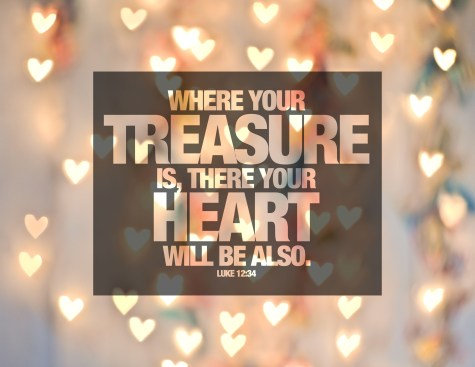
bible-verse-luke-1234-where-your-treasure-is-there-your-heart-will-be-also-2014-for-slideshow


Meanwhile, when the crowds gathered by the thousands to hear him talk, so many in fact that they began to trample on one another, Jesus rose to speak. He warned his disciples against hypocrisy – live honest lives. He instructed them to confess fearlessly – all who earnestly repent will be forgiven. He shared the parable of the rich fool – you can’t take your money to heaven. And then he gave them some final instructions:

“Do not be afraid little sheep! For it is God’s good pleasure to give you the kingdom. Sell your possessions, and give away your money, use your gifts to bless others here and now. For where your treasure it, there your heart will be also.”

Sometimes Christians drive me crazy. You know, the super pious ones who are forever wearing their faith on their sleeves; the ones who stand on the street corners of life blasting off about some passage or another; the ones who come knocking on your door and try to sell you on the gift of eternal life instead of the fires of hell.

Have you ever met or encountered a Christian like that? I can’t help but feel like they are the kinds of Christians that are giving the rest of us Christians a bad name. Jesus never instructed his disciples to act like the people from Westboro Baptist church who are forever picketing the funerals of people whom they believe did not live up to Christ’s expectations. Jesus never called his disciples to be racist or bigoted toward peoples of different nationalities, or race, or creed, or sexual orientation. Jesus never implored the disciples to use fear mongering to convince people to come to church or otherwise be threatened with the fires of eternal punishment. Yet, if you turn on the news, or get online, those are the kinds of Christians we hear about the most; the ones who give the rest of us Christians a bad name.

Like Hillary Clinton proudly claiming to be a Methodist over and over again, and how much her Methodism has shaped her politics. But we know that she has gone back and forth on a number of issues and made untruthful claims when the bible is pretty clear: you shall not bear false witness.

Or like Donald Trump who, when asked about his faith said that he’s never needed to pray for forgiveness and when asked about his favorite scripture was said, “An eye for an eye and a tooth for a tooth.” Except the scripture he was talking about actually goes like this: “You have heard an eye for an eye and a tooth for a tooth. But I say to you, ‘Do not resist an evildoer. But if anyone strikes you on the right cheek, turn the other also.’”

Just once I would like a good Christian to be featured for all to see; someone who has absorbed the Word throughout his or her life and has lived accordingly; someone who believes the good news is so good, that is worth sharing not to fill the pews, but to fill hearts; someone who could stand like an earthly example for the rest of us to catch a glimpse of the ways Jesus calls us to behave.

tumblr_naz1buY4JX1svej5no1_1280

This winter I was asked to be a guest preacher at Augusta Street UMC just down the road. We had a midweek and midday service and I decided to preach about how good it is when we dwell together in unity. The service was well received and we gathered in the social hall after worship for a light lunch. I walked around for a couple minutes until I found an empty chair next to Wilford Kirby who was deeply engrossed in a conversation with someone else.

Elsewhere in the room, United Methodists from all of the churches in our town were sitting with their friends from their churches. Like cliques in a high school, the Central folk were at one table, the Cherryvale folk at another, and so on. But Wilford refused to be subject to this paradigm. He was sitting with the preacher from Augusta Street, though I don’t think he knew that he was the preacher. Because I eavesdropped on the end of their conversation, and the last thing Wilford said to the preacher was: “You should come try out our church on Sundays.”

Anyway, I sat with Wilford and he was quick to make a couple comments about their church facility in comparison with ours, offered a few critiques on how my sermon could have been better, and continued to eat his soup and sandwiches. I had other things to get done that afternoon, so after I finished eating I excused myself and told Wilford that I’d see him in church on Sunday and left.

Not fifteen minutes later was my phone ringing. When I answered all I heard was: “Wilford fell, broke some ribs, on his way to the hospital.”

I immediately turned my car toward the direction of Augusta health and beat the ambulance to the Emergency Department. But because they needed to do some x-rays and have him checked out I wasn’t able to get back, and he didn’t want me to anyway.

The next day I showed up at his house and banged on his door until he slowly made his way to the front of the house and let me in. I should have been a little more compassionate and patient regarding the fact that he was walking around with a few broken ribs, but I wanted to know what happened. I wanted to make sure he was okay. I wanted to pray for him.

And as we sat down in his basement, before I could even open my mouth, he asked me how I was doing, and then went through the list of everyone he had been praying for and wanted updates since he had been out of the loop for a whole day.

Wilford Kirby is the kind of Christian that makes the rest of us Christians look better.

Wilford Kirby is an example to us all about what it means to follow Christ in this life.

Luke, in this passage about our treasures and our hearts, calls for us to put first things first. The things of the Lord are to be the most urgent and pressing priority in every Christian’s life. We are not to be afraid nor are we to succumb to the worldly distractions of wealth that constantly distract us from God’s love and care. There are no wallets, or stock portfolios, or bonds that will not wear out in time. God promises not to fill us with earthly wealth and material possessions, but instead surprises us with the gift of the kingdom.

Receiving this gift, the kingdom, makes us rich beyond our ability to comprehend. But being rich toward God is not about putting sizable sums in the offering plate during worship. What Jesus rejoices in, is our reorientation toward the whole of life as an abundant gift from a generous God – a gift that can be given away with abandon.

Wilford Kirby has given his life to the kingdom, because the kingdom was first given to him.

12347609_912278878848427_5975116725585975318_n

He has easily attended more worship services than anyone in this church over the last three years, including me (and I’m the pastor!). On Sunday mornings Wilford is the first layperson to enter the sanctuary making sure our heat is pumping in the winter, and the AC is on during the summer. He checks the lights for optimum worship participation, and he checks through the bulletins to make sure everything will go smoothly.

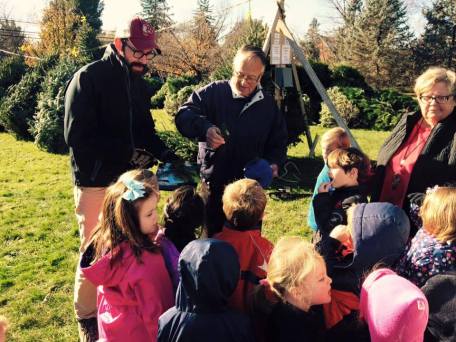
Every winter he sits out in his truck for hours on end waiting for people to come take a peek at our Christmas trees and offer them his assistance. Even though we have a giant sign advertising the times the lot will be open, Wilford believes in being present for the kind of people who ignore signs like those.

He is here an hour before our special services throughout the year like Ash Wednesday, and Good Friday, and Christmas Eve just in case anyone arrives extra early.

He is almost always the first person to show up in my office to find out how someone from our church is doing and how he can be praying for him or her.

For years he has mowed the lawn of our church and took care of the property as a volunteer. He never complained; he never sought recognition; he never wanted praise. I cannot tell you how many times I’ve been sitting in the comfort of my air-conditioned office day-dreaming about God when I’d see Wilford come flying past my window on the lawn mower with a smile hidden underneath his dust-mask.

Wilford has been here for every funeral since I arrived. Even for people he never knew. Yet he always stands in the back greeting people as they walk in, not because he was asked to, not because he was told to, be because he believes it’s the right thing to do.

For where your treasure is, there your heart will be also.

            The greatest treasure that Wilford Kirby has offered this church has been his very life, and he has given it with abandon.

But why? Wilford could be spending his precious time working with other civic organizations trying to make the world better. He could be spending his afternoons on the golf course or relaxing in the comfort of his home. He could use his life to do any number of things, but instead he has given it to this church.

My suspicion is that Wilford has given his life to the church because he knows and has experienced how the kingdom was given to him, and he wants to share that gift with others. He trusts that the Lord will provide. He humbly obeys the commands to love even the unlovable. He has seen first-hand how the kingdom of God can become manifest in other peoples’ lives. He put his treasure in this place because his heart has always been here. He wants other people to be blessed in the ways that he has been blessed. So he shows up. He prays. He cares. He loves. And he is an example to us all.

But that’s not to say that Wilford is perfect; he’s not. There are plenty of Sunday mornings when I finish a service and walk down the center aisle only to see Wilford standing in the back with his arm outstretched and his finger pulling me in as if to say, “Let me offer a suggestion.” Or there have been plenty of times that I’ve heard his footsteps walking down the hallway and I know from the texture of his tempo that he’s coming not to congratulate me on something but to complain about something that has happened in the church. But the thing is, even when Wilford is frustrated or upset it is because he believes our church can be better. He believes that we are part of the kingdom and we can’t be just like any other church. He expects excellence precisely because that’s what God expects from all of us.

Being rich toward God involves a generosity of spirit that opens our perceptions toward God’s generosity. Wilford knows how blessed he is, for the kind of life that he has had, and therefore he knows no other way to live than the way that he does.

Theses words from Jesus first meant for the crowd, and now meant for us, decisively interrupt our lives in this place and on this day calling us to focus not on the demands of the overly scheduled life, but on the Lord who comes in surprising ways to offer comfort, assurance, and love. Through these words we hear Jesus telling us that the time is now to start living a new life, not dictated by the past, but defined by God’s belief in our future. God uses people like us, people like Wilford, to make the kingdom manifest so that lasting joy will come to God’s little flock we call the church.

At this table, where Wilford has come time and time again, we receive the body and blood of Jesus Christ. In this profound moment we are offered the kingdom again even though we do not deserve it. We come forward with hands outstretched remembering this incredible gift that has been given without cost. And by receiving this gift, we cannot help ourselves but live transformed lives.

So come and see that the Lord is good. Feast at this table where heaven and earth are bound together. Join together with Wilford Kirby as he walks to the front to receive the gift of the kingdom once again. And let it change your life like it has changed his. Amen.

Devotional – Luke 10.39

Devotional:

Luke 10.39

She had a sister named Mary, who sat at the Lord’s feet and listened to what he was saying.

Weekly Devotional Image

The last week has been filled with tragedy and senseless violence. A black man was shot and killed by a police officer after selling CDs in front of a convenience store and a black man was shot and killed after a routine traffic stop for a broken taillight. In response to their deaths, 5 law enforcement officers were murdered in Dallas during a peaceful protest and another 7 more were injured. As we talked about all that had taken place over the last week during church yesterday, all anyone could talk about was their inability to get away from the suffering; every time they got online, or turned on their television, they were bombarded with the images of terror and destruction that had taken place across the American landscape.

And honestly, right now, we need to open our eyes to these tragedies. For too long those of us who are too comfortable with our white privilege have neglected to do the Christ-like work of becoming uncomfortable and standing with our black brothers and sisters. For too long those of us who are too comfortable with our white privilege have made the false assumption that this is not our problem. It is.

But to step into this situation, as a Christian, without first sitting and listening at the feet of Jesus will only further the kinds of vitriolic violence that we’ve seen this last week.

As the events transpired in Baton Rouge, Minneapolis, and Dallas countless people jumped to social media to vent their frustrations and quickly condemn those who they believed were responsible. Without taking the time to listen and be still, many of us put up our walls to the people and opinions around us and did everything we could to make sure our voice and our opinion was heard (or read). From the comfort and safety of our computers and cell phones we engaged in social media warfare.

_90345723_mediaitem90345722

To sit and listen to Jesus is a bold and daring thing to do. It requires us to wrestle with differing opinions and perspectives. It challenges us to seek out those who we often miss and stand with them shoulder to shoulder. It implores us to seek unity in the midst of chaos, hope in the midst of terror, and resurrection in the midst of crucifixion.

So today, we pray for the Lord to crucify our prejudices that we might be resurrected into new life in Christ. That instead of rushing to make our opinion heard we might listen, learn, and love. That instead of furthering the fear and hatred, we might respond with grace. That instead of remaining comfortable with our Christianity, we might take uncomfortable steps toward making the kingdom of God manifest here on earth.

The Kingdom of Chaos

Mark 4.30-32

He also said, “With what can we compare the kingdom of God, or what parable will we use for it? It is like a mustard seed, which, when sown upon the ground, is the smallest of all the seeds on earth; yet when it is sown it grows up and becomes the greatest of all the shrubs, and puts forth large branches, so that the birds of the air can make nests in its shade.”

parables

Today marks the second part of our July Sermon Series on The Power of the Parables. A favorite rhetorical device of Jesus’, a parable is a story that illustrates a lesson or principle usually without explanation. They are simple and life-sized with familiar characters and they are supposed to drive us crazy.

Over the centuries the parables have become so watered down through the church that they no longer carry the same weight and punch that they once did. The familiar parables are beloved to us, The Feast, The Mustard Seed, The Prodigal Son, The Good Samaritan, but during the time of Jesus they were frustrating and confusing. During this month we will do our best to recover this sense of strangeness and encounter the power of the parables.


The stories that Jesus tells about the kingdom of God are down to earth, literally. The kingdom is not some esoteric arena in the great by-and-by, but as close as a wedding feast, or a fishing net, or even a mustard bush.

A mustard bush is a strange thing. It develops from the smallest of seeds and grows like a weed choking out everything else. It is the kind of plant that farmers fear. The seeds are so tiny that if they get caught up in a group of others being sowed in a field, it can destroy the planned crop and replace it with mustard bushes.

One of the main points of Jesus’ parables is the fact that they are common stories that nearly everyone can appreciate or picture. But are we, today, familiar with a mustard seed or a mustard bush? I went out on Wednesday to a couple local plant nurseries, and I went to a couple hardware stores, and I found nothing. Not one bag of mustard seeds. Not one single mustard plant.

For the first century Jews and Gentiles this parable was as familiar as could be. Jewish law made it illegal to plant a mustard seed in a garden because they knew it would grow and grow and eventually take over the entire space. But for us today, we only know the mustard we buy in grocery stories. So, perhaps we need a new parable. Maybe we need a new comparison to what the kingdom of God is like. One that still holds true to the reality of a mustard seed but also resonates with our understanding of the world.

Jesus also said, “With what can we compare the kingdom of God, or what parable will we use for it? It is like one of those computer viruses that we receive in an email attachment from our grandmother. At first it seems harmless “Click here to learn the secret to weight-loss” or “Click here to see a video of a monkey playing a piano” and then before we know what hit us it spreads and spreads through our entire computer corrupting every file before sending the same email out to everyone in our address book.

Jesus also said, “With what can we compare the kingdom of God, or what parable will we use for it? It is like the flu, we try to stop it from spreading by receiving flu shots and preventing people from visiting others in the hospital, but once it takes hold it spreads through everything we touch until it reaches the next person and the next person and the next person.

Jesus also said, “With what can we compare the kingdom of God, or what parable will we use for it? It is like a video posted on the Internet of a black man being shot by a police officer during a routine traffic stop. At first we try to scroll past because we know it is too graphic, too awful, too real, but we can’t help ourselves from watching. The longer we watch the more people we think about that need to see the video, we start to think about how the whole world needs to see this injustice so that justice might rain down like water. So we send it out for everyone to see until something changes.

If Jesus showed up in church today and shared any of those parables with us, how would we respond? I’d tell him that he is crazy, that he has no idea how no idea how the church is supposed to work, and that his vision of the kingdom does not match with mine.

Jesus’ parable of the mustard seed is one that confuses and creates frustration precisely because our version of the kingdom is different than the kingdom inaugurated in the life, death, and resurrection of Jesus Christ.

ST. PAUL, MN - JULY 07: A couple hold a sign protesting the killing of Philando Castile outside the Governor's Mansion on July 7, 2016 in St. Paul, Minnesota. Castile was shot and killed the previous night by a police officer in Falcon Heights, MN. (Photo by Stephen Maturen/Getty Images)

The kingdom of God strikes in ways that we almost cannot see, and certainly not in ways that we can expect. Like an idea popping up in the mind, it refuses to be stifled and it begins to spread out through our conversations and our writing. Ideas like “war is wrong” or “homophobia is wrong” or “the indiscriminate killing of black men and women” is wrong. Those ideas spread like wildfire and at some point they cease to be ideas and instead transform into revolutions. The original thought tangles in the mind and heart of the revolution and people become so moved that they are willing to die so long as that original idea will continue to spread.

More often than not, we know what we want the kingdom of God to look like and we know what we want the church to look like. We want clear lines to be drawn so that we know who is in and who is out, what is allowed and what is forbidden, what is black and what is white.

But then Jesus gives us this two-verse parable with the mustard seed – the tiniest symbol of how God is forever invading our ordinary and orderly sense of things. The mustard seed is there in plain sight but hidden by our ignorance. We overlook it in the fields, in the church, in our lives, and then it sprouts into the greatest of all the shrubs.

Since January of this year at least 123 black Americans have been shot and killed by police. This week saw a black man gunned down outside of a convenience store for selling CDs and a black man gunned down during a routine traffic stop for having a broken taillight. The saddest part of these stories is that they have become part of our common vernacular and experience of black culture. For a time we can remember the names of the individuals killed, names like Eric Garner and Michael Brown and Tamir Rice and Freddie Gray, but now the list has grown so long that the names begin to bleed together.

And how do we feel? Are we outraged? Or are we apathetic? Are we disgusted? Or are we disinterested? Are we on fire for change? Or do we want things to stay the same?

And the death of black men and women is a small fraction, or perhaps the mustard seed, of the larger picture of racial inequality in our country.

People of color make up about 30% of the total population in the U.S. but they account for 60% of those who are imprisoned. 1 out of every 3 black men can expect to go to prison at some point in their lifetime. Once convicted, black offenders receive sentences that are nearly 20% longer than white offenders for the same crime.

In preschools across the country black students account for 18% of the total number enrolled but make up 48% of preschoolers with multiple out-of-school suspensions. Preschoolers! In elementary, middle, and high schools across the country, black students are expelled at 3 times the rate of white students.

And 11am on Sunday morning is still, without a doubt, the most segregated hour in the United States.

The kingdom of God is like a mustard seed, the smallest of all the seeds, but when it is planted it grows into the grandest and largest of all the shrubs and puts forth branches so that all the birds of the air can find rest in its shade.

The kingdom of God is not like the kingdom of America where people are still persecuted because of the pigmentation of their skin, where immigrants are treated as second-class citizens, where members of the LGBTQ community are murdered because of their identity; where police are attacked in retaliation for events in other parts of the country.

On Thursday evening, during a peaceful protest in Dallas, Texas, five law enforcement officers were killed and six others were injured. Snipers were set up in strategic elevated areas and sent the downtown area into chaos as bullets continued to fly back and forth. It is unclear what the exact motives of the attack might be, though it is clear that it is somehow connected with the recent shootings of black men in other parts of the country.

Black men and women are shot and killed by the police. Black communities respond in rage and protest. Police are shot and killed by individuals whose anger manifested itself into violence and destruction.

What are we to do? Turn off the television because of the unending violence? Shrug off the waves of death because at least its not happening in Staunton? Fall to our knees in prayer that we might be transformed into a people of peace?

Today we grieve and mourn all the lives lost at the hands of the destructive power of death. We lift up our fists and rail against the prejudices that result in black persecution and police assassination. We demand answers from the Lord for why things like this continue to happen.

People take part in a rally on April 29, 2015 at Union Square in New York, held in solidarity with demonstrators in Baltimore, Maryland demanding justice for an African-American man who died of severe spinal injuries sustained in police custody. AFP PHOTO/Eduardo Munoz Alvarez (Photo credit should read EDUARDO MUNOZ ALVAREZ/AFP/Getty Images)

That’s the power of a parable like the mustard seed; it strikes us as something true whenever we hear it. A detail will emerge that we’ve never thought about and we realize that Jesus is still speaking to us through the story. The power of a parable is its ability to convey a deep and profound truth about Jesus in the midst of our lives today. The power of a parable is its ability to show us that God’s kingdom is strange, unexpected, and beautiful.

The kingdom of God, like the mustard seed, like a viral video, like a revolution, invades the cultivated soil of our certainties and creates something new. Hidden in plain sight, like words of a prayer, the seeds of faith grow in unexpected ways until what we thought we knew is transformed by our invasive and surprising God.

Our lives should transformed by the mustard seed quality of the kingdom of God when it stretches and reaches into every part of our existence and challenges us to be better. Not to pass the buck on to someone else, not to become apathetic to the tragedies of our time, but to be caught up in a revolution of the heart.

The power of the parable of the mustard seed is in the tiniest of seeds leading to a radical change. The mustard seed germinates and stretches out to grab hold of everything in its path. Oh that today the Lord would plant that mustard seed in our hearts, that the kingdom of God might grow and dwell among us, reaching out to everyone in our midst, that we might all believe that black lives matter, that we might believe that violence will only ever beget more violence.

We need that mustard seed. We need it planted deep into the soil of our souls, we need it to be cultivated, and we need it to grow with reckless abandon. We need a revolution of the heart, here and everywhere. Amen.

From Diapers to Diplomas

Psalm 46

God is our refuge and strength, a very present help in trouble. Therefore we will not fear, though the earth should change, though the mountains shake in the heart of the sea; though its waters roar and foam, though the mountains tremble with its tumult. There is a river whose streams make glad the city of God, the holy habitation of the Most High. God is in the midst of the city; it shall not be moved; God will help it when the morning dawns. The nations are in an uproar, the kingdoms totter; he utters his voice, the earth melts. The Lord of hosts is with us; the God of Jacob is our refuge. Come, behold the works of the Lord; see what desolations he has brought on the earth. He makes wars cease to the end of the earth; he breaks the bow, and shatters the spear; he burns the shields with fire. “Be still, and know that I am God! I am exalted among the nations, I am exalted in the earth.” The Lord of hosts is with us; the God of Jacob is our refuge.

graduation-sunday


Kurt Vonnegut Jr. once said that true terror is waking up one day and realizing your High School senior class is running the country. It’s a great quote, and one often used this time of year during graduation speeches. In fact, ten years ago, it was used by one of my friends at the beginning of her address during my graduation from High School: True terror is waking up one day and realizing your High School senior class is running the country.

Time can be terrifying. We, as human beings, are deeply rooted in time and when it feels like its going too fast, it leaves us shaking. It shakes us because we can wake up and wonder where it all went. I feel like I just graduated from High School; I can still remember the uncomfortable polyester graduation gown that created a frightening amount of static electricity. I can still picture the girls wearing too high high heels and attempting to walk across the stage without toppling over, and I can still remember the beginning of the speech and how true those words are.

We change all the time. It’s at the heart of what it means to be human. We’re born, we grow in size and knowledge, we move, we develop, we transform, we graduate from preschool to kindergarten, and then all the sudden we graduate from high school, and then with the blink of an eye our generation is running the country.

Things change, our lives change, our situations change, and when they do, it feels like the earth shakes under our feet.

Upon graduating from preschool we move on to Kindergarten. After a number of years with the same classmates and the familiarity of one school and one program, we have to move on to a new location, with longer hours, with a whole new set of expectations. I can still faintly remember my first day in kindergarten and wondering where to sit, and if anyone was going to sit with me. And the change that takes place for the parents is even more severe!

During the final months of Preschool here at St. John’s, we ask the parents to wait in the parking lot so that the children can get used to walking to their own classroom by themselves. This is one way of preparing them for Kindergarten. And honestly, on that first day, the children bound up and down the hallway without a care in the world, and it is the parents in the parking lot who are undergoing an existential crisis.

I’ve seen tears well up in the eyes of fathers, and mothers nervously pacing back and forth while their children enter into a new realm of being. I imagine they felt like the world was shaking under their feet and they needed something solid to hold on to.

After graduating from high school we go off to college and enter a whole new strange world. We often pack our belongings and start living with a stranger and won’t be home until the first break at Thanksgiving. For the student it is a time of great excitement and opportunity, whereas for the parents it can be downright terrifying. Will they be okay? Will they get enough food to eat? Are they going to be able to make new friends? Who is going to wake them up for class in the morning? Who is going to do their laundry? It shakes the parents to their core to watch their beloved child go from diapers to diploma in a blink of an eye.

Every graduation leads to a time of change and fear; Preschool to Elementary School, High School to College, Singleness to Marriage, Health to Death. We enter these periods of unknown, and that’s what makes us really afraid.

13434733_10154269000690536_1434707530486525089_n

When these changes occurs, when we graduate from one thing to another, we often respond in one of two ways; they either push us closer to God, or farther away.

A young couple has a baby and once the new domestic rhythm is established they realize they have no idea what it means to raise a child to be a decent human being so they start going to church it hopes of answers and direction. Or a recent graduate enters a university and is invited to a worship service filled with people who genuinely care about her well-being and she discovers who she is and whose she is. Or a recent widower listens while the church proclaims his deceased wife’s promised resurrection during the funeral and it gives him the strength to discover God’s love in church.

But change can also push us away. We convince ourselves that we can raise a child without the help of a larger community, we believe there is no place for the church in our lives while we are in college, or we grow cynical toward the words proclaimed when someone we love dies.

The church is bold to proclaim the words of the psalmist, the enduring truth, that even though the earth should change, even though the mountains shake and the seas tremble, even though kindergarten can be overwhelming (for children and parents), though the unknown of college stands like an undefined horizon, even though people die and we grieve till the end of our days, there is a river whose streams make glad the city of God. This city cannot be moved, because God dwells in the city forever.

God is the solid rock upon which we can stand when the world shakes underneath our feet. When we are filled with sorrow and doubt, God is the source of joy and light. While people push us to and fro with differing opinions, God speaks the truth in love. As we receive our identities in the hurtful comments of friends and foes, God tells us that we are beloved.

There is a great comfort that comes in knowledge that even though our lives will change, God will stay the same. That is the great story of scripture; God remains steadfast even when we fall away. In the wilderness journey of Exodus, while the people chose to worship idols and other gods, the Lord remained with them. After David fell into the clutches of sin, God was with him. After the exile, God called the people back to their homes and back to lives of faithfulness. Even after delivering Jesus Christ to the cross to die, God’s arms remained open to all of God’s children.

God stays the same.

psalm-46-1

A few months ago I asked one of our youth who just graduated from high school to share what kind of difference St. John’s has made in her life. Danielle was baptized in this sanctuary, was enrolled in our preschool, and has been in worship nearly every Sunday for 18 years. That kind of commitment to the church shaped her into the remarkably wonderful young woman she is today, and it gives me hope for the role of the church in all of our lives.

This is what she had to say:

“Since I was born, I have been coming to St. John’s UMC. It has always been there for me. Even when I was a small child, and unable to truly comprehend the grace of God, I still had a strong and living faith because of the church. As I grew up, I made many friendships at St. John’s that mean a great deal to me. And honestly, “friendship” doesn’t even do justice to what it has really been like. I grew up with these people, and they took the time to raise me in the faith. Without this church I never would have found God and the power of God’s word. I am blessed because I have a church that loved me the way God calls us to love. Moreover, this church has helped me not only find God, but find myself as well. No matter where I might end up in the future, I will always cherish the memories, family, spiritual growth, and prosperity that I experienced at St. John’s.”

I believe Danielle was able to craft those words because of God working through you. Danielle feels blessed because this church loves her the same way God calls all of us to love: without judgment or assumption, without malice or prejudice. From diapers to diploma, you and the other great saints of this church have nurtured her. You have shown her what it means for God to be our strength and refuge, a very present help in trouble.

When someone from the church died she could have fallen to the temptation of fear and trembling. But you showed up for the funerals, you rejoiced in the promise of salvation, you embodied the hope we have in the Lord who is with us.

When she moved from school to school, while life changed around her each and every day, this place was like the river whose streams mad glad the city of God. Here in this church she learned about the God of creation who brought forth order out of chaos, who called Abraham into a covenanted relationship, who wrestled with Jacob on the banks of the Jabbok river, who delivered the people out of slavery in Egypt, who called prophets and priests to bring the people back, who became incarnate in Jesus Christ and dwelt among us, who died on a cross, who was raised three days later.

Throughout Danielle’s life this church has said every Sunday, “Come, behold the works of the Lord!” Her eyes have been opened to the way God moves in the world, she found her identity as a child of God; she experienced God’s magnificent power and might.

Change can be a terrifying thing. But the God of Abraham, Isaac, and Jacob, the God of Jesus Christ, is our refuge and strength. Because we can do all things through Christ who strengthens us, therefore we will not fear even though our lives change. This church’s work propels a river whose streams make glad the city of God. Through our worship and our work, through our prayers and our presence, through our faith and our fellowship, we remember that God is in the midst of our lives. God will help when a new day dawns. The nation might be in an uproar, kingdoms will totter, but the Lord of hosts is with us.

So come, behold the works of the Lord. God makes wars cease, and peace reign. God makes the weak mighty, and brings down the principalities. God breaks the bonds of slavery, and opens up the doors to freedom. God brings hope to the poor and calls upon the wealthy to serve. God comforts the afflicted and afflicts the comfortable.

Be still and know that God is with us. From diapers to diplomas and even to death, God is with us. Amen.

Devotional – 1 Corinthians 12.7

Devotional:

1 Corinthians 12.7

To each is given the manifestation of the Spirit for the common good.

Weekly Devotional Image

When I was younger, the bishop of the Virginia Annual Conference appointed a Korean man to serve as the pastor of my home church in Alexandria. MJ Kim is a gifted pastor and served the church faithfully during his appointment, though it was challenging. I was too young to understand it at first, but as I matured I started to witness people at the church complain about his accent and heritage. I would hear adults in the narthex express frustration about not understanding what he was saying from the pulpit, or growing tired of hearing anecdotes about Korea. Yet, from my young vantage point, I loved having him as my pastor. His accent was powerful in the pulpit as it continuously reminded me that God is the God of all peoples, and his stories about Korea and growing into his faith were exciting and dynamic.

Year later, after MJ was appointed somewhere else, I was talking with one of the ushers at my home church about all the pastors that had served the church. This particular usher, though kind and faithful, was one of the people who were notorious for complaining about MJ during his time at our church. As we stood together before worship, comparing all of the pastors of the past, the usher sighed deeply and said, “MJ was such a gift. I wish I had appreciated him while he was here.” I stood speechless as this usher had apparently changed his entire perspective around our former pastor and then finally asked what had led to this shift in opinion. His response was simple and to the point: “Sometimes I couldn’t understand him, and sometimes his stories felt so far away, but whenever MJ was in that pulpit, I felt the Spirit with us.”

photo

Paul is quick to remind the church in Corinth that each person is given the manifestation of the Spirit for the common good of the community. While so many of us are quick to judge and complain about the people in the pews next to us, Paul beckons us to see them as gifted and blessed people who can help transform us for the kingdom of God. MJ Kim was indeed a blessing to that church precisely because he was different than most of us; his gift of the Spirit challenged us to be more like Christ every single day of our lives.

How has God blessed you with gifts? What are your strengths for the common good? Are you faithfully using the blessings God has given you to make the community better for everyone? Are you thankful for the people in whom you experience the manifestation of the Spirit? What can you do to contribute to the common good?