The Church Doesn’t Exist To Make A Difference

I’m in my fifth year of full-time ministry and I just received my first piece of anonymous “hate” mail. I use the word “hate” loosely, because at no point in the letter am I threatened or made to feel afraid, but the person clearly hated a sermon of mine and took the time to write a full page with bolded words, underlined sentences, and even a section entirely in the color red.

On Sunday I preached a sermon about why Christians pray and in it I said: “…the missing demographic from the church, the so-called millennial generation, are missing because they (we) have yet to experience the kind of sorrow and fear that leaves people feeling anchorless. It doesn’t have much to do judgments about the relevancy of the church, but more to do with the fact that when someone feels like life is perfect, they don’t see how the church can make a difference. But that’s the thing: the church doesn’t exist to make a difference. The church exists to praise the living God who fills our lives with the kind of joy that sustains us through both the mountains and the valleys we experience. Church isn’t about us. It’s about God. And, to bring it full circle, all of us are in need of the prayer that leads to joy and the joy that leads to prayer, because all of us have something weighing us down… I love asking people if God’s has answered their prayers because the answer is almost always, “Yes.” But, most of the time, we can only see how God has answered our prayers while looking backward. We can only see how God has answered our prayers through the profound reflection on the time we’ve had with a community that has sustained us until we have eyes to see what God has done.”

And today, Wednesday, I received an anonymous letter ripping apart my claim that the Church doesn’t exist to make a difference. Basically, he/she feels that the church is only one of the ways for an individual to experience God in the world, and the the church has failed to take care of people in need, and therefore it’s up to people like the writer to support the needs left unattended in the world through political means and civic organizations.

I wish the person had included their name, or at least a way to respond to their criticism, such that we could have a conversation about the subject. But without any way to do so, I decided to put it up here on the blog in hopes that it reaches him/her:

eternal-mission-church_620

The Church Doesn’t Exist To Make A Difference

We have a book in the United Methodist Church called The Book of Discipline. In it, its paragraph 120 if you’re interested, we have the mission of the church written our plainly for all to read and understand: “The mission of the United Methodist Church is to make disciples of Jesus Christ for the transformation of the world.”

Making disciples is at the heart of what it means to be a United Methodist. I mean, its what Jesus calls the disciples to do at the end of Matthew’s gospel (Go therefore and make disciples…). But making disciples is often confused with filling the pews; it results in having conversations about how to get more people in the building while neglecting to interact and connect with people already in the building, it results in infantile/surface level discipleship, and it results in working for the numbers instead of the kingdom.

And then we have this bit about transforming the world. Is that really our mission? Does the church exist to change the people and the community around us? Should that be our only focus? Does the church exist to make the world a better place?

The church is defined by the sacraments of communion and baptism in order to be a community of peace. The church, therefore, is called not to make the world a better place, but to be the better place God has already made in the world.

Today we are so steeped in the allure and promises of our political ideologies that we often superimpose them onto the church. We look to the mighty and the powerful so that we can learn how to change the world around us. But look at what makes the church the church: Jesus Christ. God is made manifest in the world not through the powerful, not through the expectations of the mighty, but through a baby born in a manger, through wandering Israelites, through tax collectors and fishermen, through a poor rabbi murdered by the state.

The church is already the better place God has made in the world.

But it’s hard for us to believe that.

It’s hard for us to believe that the church is the better place God has made in the world because many of us worship our government, or social programs, the way we once worshipped the Lord. We follow the never-ending political news-cycle like we once checked in on our brothers and sisters in faith. We read and repost articles about local civic organizations as if they are going to bring us salvation that we claim, through the Creed, that Jesus already brought.

Christians in America have played the political game for so long that we can almost no longer differentiate between America and God. Or, at the very least, we assume that if the church is not involved in the work of making the world a better place, than it’s not worth our time and attention.

In scripture, Jesus calls this behavior idolatry.

For far too long we’ve limited our imagination of the church to being the mechanism by which we can develop strategies that can, to put it in political terms, Make America Great Again or Make The World A Better Place. But that is not the task nor is it the mission of the church. The task of the church is to be a community of character that can survive as a witness to the truth.

All of this is not meant to be a critique of civic organizations that work to change the world, nor is it meant to be a critique of policies of the political right or left. Neither is it a denial of the importance of caring for the last, least, and lost in our communities. No, this is about our captivity to the presumption that organizations and political parties determine our lives more than the living God.

Yes, everyone is free to use their money and their time and their talents as they see fit. In our country we worship this freedom to a frightening degree (However, we tend to only relish in our freedom to say and do what we want, and the moment we encounter the other perspective we either cover our ears in anger, or we rush against them with vitriol.). We can try to do what we can to make the world a better and safer place.

But being a Christian is not about (political) freedom or being safe. After all, we Christians worship a crucified God and we seek to be in fellowship with the One who mounted the hard wood of the cross. Following Jesus is all about challenging the presumptions of the world with the truth of the lordship of Christ that often puts us in a place of danger. Following Jesus means believing the greatest freedom and power we’ve ever received did not come from the Declaration of Independence, or from giving money to a group like Kiwanis, but through Jesus Christ who died on a cross.

I do sincerely apologize for making a claim about the church not making a difference in the world. After all, I am a pastor because the church changed my life. But I also recognize that for as much as I want to attribute the difference I have experienced to the church, Jesus is the one who made all the difference.

We spend so much time thinking and living into a strange reality that assumes the church exists to serve the members of the church, or to make the world a better place. But that doesn’t have much to do with Jesus. Any political party and any civic organization can do lots of things to make their members happier and safer and better (at least in terms familiar to the world).

But the church, as the body of Christ, exists to be the better place God has already made in the world. God in Christ transformed the powers and principalities such that the world has been turned upside down. God in Christ captivates our hearts and souls by proclaim who we really are and whose we really are. God in Christ is the one in whom we live and move and have our being. God in Christ has made all the difference.

Devotional – Matthew 16.13

Devotional:

Matthew 16.13

Now when Jesus came into the district of Caesarea Philippi, he asked his disciples, “Who do people say the Son of Man is?”

Weekly Devotional Image

We were walking along the beach on Monday morning in North Myrtle Beach, South Carolina when a young teenage girl kept looking over at us. I had my son Elijah in my arms and my wife Lindsey was standing next to me and we were talking about nothing in particular when the girl shyly walked up to us. Before she opened her mouth I thought maybe she was going to ask us to take her picture, and then for a strange moment I thought she was going to ask to hold Elijah, but then she asked a question, “Excuse me, but do you know who Jesus is?”

In my mind I started to answer the question much like Peter answered: “Jesus is the Messiah, the Son of God.” I thought about scriptural situations to answer the question in as many ways as possible, I thought about famous images of Jesus that I could describe from memory, and I did all of this in my mind before I realized that she was trying to evangelize us.

So, all I said was: “Yeah, I know Jesus. I’m a United Methodist Pastor.” And at that moment I noticed the girl’s father standing off to the side as if to make sure she was doing it the right way. Upon hearing my answer, he walked up to introduce himself as a Nazarene preacher and we had a brief conversation about seminaries and church work.

42in-wide-23in-tall-beach-reach

But as they walked away to find their next victim, all I could think about was what would have happened if I had answered the question differently; what would she have said if my answer was simply, “No”?

Beach evangelism, walking up to a stranger with a question about Jesus, is not a new thing. For decades Christians have used it and other forms as tools to get people “saved.” But simply asking about Jesus as a means to talk about Jesus often results in shallow connections whereas Jesus commanded the disciples to share the good news in such a way that it resulted in the formation of friendships and communities. Or to put it another way: asking about Jesus in order to make disciples is different than living like Jesus so that others will be formed into disciples.

Peter was only able to answer Jesus question after spending years with him ministering to the crowds. Sometimes sharing the good news with other people takes years of living alongside them without trying to insert our faith into their schedules. I know God can work miracles through Christians approaching strangers on the beach, I know that those questions can be the seed that changes someone’s life, but I know that intentionally spending time with others over the long term will do far more for the kingdom than approaching people on the beach that we will never see again.

The Christian Problem With (Nuclear) War

Following Jesus, being disciples of the living God, requires a life of pacifism. It is not just one of the ways to respond to War; it is the way. And yet, pacifism is a privilege of the powerful. It is far too easy to talk about the virtues of a commitment to pacifism from the comfort of the ivory tower that is the United States of America. Or at least it was until world leaders started threatening each other with Thermonuclear War this week…

soldier-peace-logo

Early in the morning on August 6th, 1945 the airfield was still remarkably dark so the commanding officer turned on floodlights for posterity. There were enough people wandering around on the field that the captain had to lean out of the window of the aircraft to direct the bystanders out of the way of the propellers before take off. However, he did have time to offer a friendly wave to photographers before departing.

The flight lasted six hours and they flew through nearly perfect conditions. At 8:15 in the morning they finally arrived directly above their target of Hiroshima and the bomb was released. It fell for 43 seconds before it reached the perfect height for maximum destruction and was detonated.

70,000 people were killed and another 70,000 were injured.

At about the same time the bomb was detonated, President Truman was on the battle cruiser Augusta. When the first report came in about the success of the mission, Truman turned to a group of sailors and said, “This is the greatest thing in history.”

We, as American Christians, have a problem with War. Historically, the early church and Christians did not engage in war – they believed their convictions in following Christ’s commands prevented them from waging violence against others. And, frankly, they were being persecuted and killed at such a rate that they didn’t have time to think about fighting in wars, nor were militaries interested in having Christians fight for them. You know, because of the whole “praying for their enemies” thing.

But then Emperor Constantine came onto the scene, following Jesus Christ turned into Christendom, and everything changed. With Christianity as the state sanctioned religion, Rome could tell its citizens to fight, and they did.

But still, there have always been those who respond to War throughout the church differently. There are Pacifists who believe conflict is unwarranted and therefore should be avoided. There are those who believe in the Just War Theory and that there can be a moral response to war with justifiable force. And still yet there are others who believe in the “Blank Check” model where they are happy to support those in charge of the military without really questioning who they are killing and why.

We might not realize it, but most Americans believe in the “blank check” model, in that our government regularly deploys troops and drones to attack and kill people all over the world (in war zones and other places) and we rarely bat an eye. So long as we feel safe, we are happy to support those leading without question.

img_3715

But as Christians, Jesus commands us to love our enemies and pray for the people who persecute us. Now, to be clear, this is not a nice invitation or even a call to a particular type of ministry. We like imagining the “white, blonde hair, blue eyed” Jesus with open arms who loves us and expects the minimum in return. But more often than not, Jesus commands his disciples to a radical life at odds with the status quo.

“I say to you, ‘Love your enemies and pray for those who persecute you.’ Anybody can respond to love with love, but what good does it do to only love the people who love you. Instead, be perfect as your heavenly Father in perfect.”

            This is our command.

            And it is also our dilemma.

Jesus commands us to love our enemies and love our neighbors. But what are we to do when our enemies are killing our neighbors, or vice versa? Is there really such a thing as a just war? Are we called to remain pacifists even when innocent lives are being taken? Was it okay for us to take boys from Virginia and send them to Vietnam to kill and be killed? Should we send our military to North Korea to kill and be killed?

This is the controversy of War.

peace_war__wallpaper__by_jackth31-d55t58i

War, a state of armed conflict between two groups, is like an addictive drug. It gives people something worth dying and killing for. It often increases the economic wealth and prosperity in our country. It achieves for our nation all that a political ideal could ever hope for: Citizens no longer remain indifferent to their national identity, but every part of the land brims with unified life and activity. There is nothing wrong with America that a war cannot cure.

When the North and South were still economically and relationally divided after the Civil War, it was World War I that brought us back together as one country. When we were deep in the ravages of the Great Depression, it was Word War II that delivered us into the greatest economic prosperity we’ve ever experienced. When we were despondent after our failure in Vietnam (and subsequent shameful treatment of Veterans), the supposed weapons of mass destruction in Iraq gave us every reason to rally behind our country.

But we don’t like talking about death and war – that’s why the least attended worship services during the year are Ash Wednesday and Good Friday when we can do nothing but confront our finitude. But War commands and demands our allegiance, it is the fuel that turns the world, it has been with humanity since the very beginning.

And Jesus has the gall to tell us to love and pray for our enemies.

This week President Trump’s declared that if North Korea continues to provoke the Unites States we will respond with a power the likes of which the world has never seen. And in response to President Trump’s words, Christians on the left and the right have responded with bombastic language (pun intended).

On the right there have been pastors coming out to announce that God has given President Trump the right and the authority to wipe North Korea off the map. And on the left there have been Christian pacifists who have declared that the President is out of his mind and that we are on the brink of annihilation because of his crass words. However, we will never get anywhere near a kingdom of peace if war-hungry Christians use scripture to defend nuclear aggression or if pacifists keep perceiving themselves as superior or entitled. Otherwise the world will become a heap of ashes or people in the military who return from conflict will return as those from Vietnam – to a country that did not understand.

War is complicated and ugly and addictive. It reveals our sinfulness in a way that few controversies can. War illuminates our lust for bloodshed and retribution. War offers a view into our unadulterated obsession with the hoarding of natural resources. War conveys our frightening disregard for the sanctity of human life. War is our sinfulness manifest in machine guns and atomic weapons. War is the depth of our depravity.

Even the word “War” fails to express the sinfulness of the act. We so quickly connect the word “War” with the righteous outcomes of our wars. We believe we fought the Civil War to free the slaves, when in fact it had far more to do with economic disparity. We believe we fought Word War II to save the Jews, when in fact it had more to do with seeking vengeance against the Germans and the Japanese. We believe we went to War in the Middle East with terrorism because of September 11th, but it had a lot to do with long-standing problems and an unrelenting desire for oil.

Can you imagine how differently we would remember the wars of the past if we stopped calling them wars and called them something else? Like World Massacre II, or the Vietnam Annihilation, or Operation Desert Carnage?

On August 6th, 1945, we dropped the first atomic bomb on the city of Hiroshima in order to end the bloodiest war the world had ever seen. With the push of a button we exterminated 70,000 people in an instant, and our president called it the greatest thing in history. Truman was a lifelong Baptist and was supported by the overwhelming majority of American Christians, most of whom expressed little misgiving about the use of the atomic bomb. But that very bomb is the sign of our moral incapacitation and the destruction of our faithful imagination.

For we Christians know, deep in the marrow of our souls, that the “greatest thing in the history of the world” is not the bomb that indiscriminately murdered 70,000 people, but the life, death, and resurrection of Jesus Christ.

Jesus Christ is, and forever will be, the greatest thing in the history of the world because Jesus broke the chains of death and sin and commands us to follow him. Jesus Christ, Son of Man and Son of God, embodied a life of non-violent pacifism that shakes us to the core of our being and convicts our sensibilities.

There is, of course, the privilege of pacifism and its ineffectiveness when combatted by the evil in the world. Pacifism pales in comparison to the immediacy of armed military conflict, but it is the closest example we have to what it means to live like Jesus. And Jesus wasn’t particularly interested in offering us the path of least resistance toward salvation. Instead, he demanded our allegiance.

God in Christ came in order to reconcile the world through the cross. The living God through the Messiah spoke difficult commands and orders to the disciples, things we still struggle with today. But God was bold enough to send his son to die in order to save us, not by storming the Temple with swords and shields, not by overthrowing the Roman Empire and instituting democracy, but with a slow and non-violent march to the top of a hill with a cross on his back.

Devotional – Psalm 145.9

Devotional:

Psalm 145.9

The Lord is good to all, and his compassion is over all that he has made.

 Weekly Devotional Image

I arrived at church this morning mentally prepared for Vacation Bible School. I had read over the “Bible Story Teller” section, I knew where I needed to be and at what time, and I even had the perfect costume picked out: Batman.

However, I had assumed, foolishly, that the other adults would also arrive in some form of superhero costume. So, instead of blending in among a crowd of heroes, I stuck out like a sore thumb. However, when the children arrived (some from the church and some from the community) they were all shocked that the Caped Crusader was making his way around the building.

After our initial assembly time we broke out into age groups and then began making the rounds through the different centers. I made my way to the storyteller room and started teaching all of the children and youth about Samuel anointing a young David. The groups listened to my rendition and appropriately laughed at my silly jokes, they left with a sense that to be a hero in God’s kingdom one needs to have a compassionate heart, and they learned about how God is our true hero.

IMG_2824

Toward the end of the day, in my last bible story session, one of the youth was not as engaged in the others. I tried to include her as much as possible, but there was clearly something distracting her. When we finished, the rest of the youth walked out of the room, but she stayed behind as if to ask a question. Without prompting she lifted up her head and said, “Did you really mean that?” I said, “What do you mean?” She replied, “That God really loves everyone? Even me? You said that God’s love for David is the same as God’s love for eveyrone, and I want to know if that’s true.” And I said the only thing I could say, “Of course it’s true.”

I don’t know what’s going in her life to warrant her isolated behavior, or even her stark wonder at the fact that God could love her, but I am grateful for the opportunity to tell her the truth. As the psalmist says, “The Lord is good to all, and his compassion is over all that he has made.” God’s love and grace and mercy know no bounds. They are for ALL. And all means all!

From the youth who arrived for Vacation Bible School while wrestling with something beyond herself, to the man panhandling on the street corner, to the family sitting in the pews on Sunday morning, God’s love is for ALL.

Sometimes we lose sight of the tremendous extent of God’s love when we encounter people that we cannot love. When we disagree with them, or are angry with them, they feel outside the realm of God’s grace.

And sometimes we lose sight of the tremendous extent of God’s love when we feel like we know longer deserve it. When we really think about how we have sinned, or how we could be better, we feel outside the realm of God’s grace.

Then let us all hear the good news, the best news: The Lord is good to ALL, and his compassion is over ALL that he has made.

Ten Things I Learned From My First Week At A New Church

In United Methodism pastors are subject to appointment and that means we go as the Spirit leads the church. A particular pastor can serve as short as one year in a particular place and some can serve one church for their entire vocation. The point of itinerancy is to be subject to the movement of the Spirit and to go where you can best serve the Lord.

I just finished my first full week as the pastor of Cokesbury UMC in Woodbridge, VA after serving St. John’s UMC in Staunton since 2013. Like all churches, Cokesbury is unique in a number of ways and has been around longer than I’ve been around (and will be here long after I’m gone). Below are ten things I learned from my first week in the new appointment.

IMG_0141

  1. Names Are Important

Of course names are important, but they can mean a whole lot to a whole lot of people during the first week. I did my best to match names to faces as quickly as possible such that when I was serving communion for the first time I was able to call a few people by name as I handed them the body of Christ. After the first service was over, the individuals whom I had called by name all made comments about how valued they felt because I had made the effort to know them. Names are important and learning the names of the people you serve God with is the beginning to a strong ministry.


  1. You’re Not The Only Visitor

On Sunday morning I stood in the parking lot greeting people on their way into church and welcomed them even though I had never been there before. I made a lot of jokes about welcoming people into their own church and when a younger couple walked up I did the same thing. However, it was their very first time at Cokesbury just as much as it was my first time. It was an important lesson to learn before the service because it reminded me not to use “insider language” and therefore made it as welcoming to people as possible whether they’d been in the church every Sunday of their life or if it was their first Sunday.


  1. Prepare To Be Surprised

You can plan a whole worship service and line up all the hymns and the prayers and the liturgist but something will always spring out of nowhere. I hadn’t even made it to the scripture reading when a group of lay leaders brought forth a prepared liturgy to welcome me as the new pastor of the church. At the moment I was so consumed by the feeling that I needed to get everything right that I reeled when the service was taken by other people in order to ask God’s to lead me and guide me in the best ways possible for the church. I needed those words and prayers more than I can describe.


  1. Something Will Go Wrong

Like being surprised, it’s important to remember that something will go wrong. On my first Sunday at St. John’s I completely forgot to give the offering plates to the ushers and they just stood by the altar patiently waiting until one of the choir members waved her hands to get my attention. For my first Sunday at Cokesbury we didn’t have anyone to play music. The long time organist retired the day before I arrived and the back up players were either out of town or don’t know how to read music. So instead of singing along to an organ or a piano or a guitar we did everything acapella and (thanks be to God) we made it through the service.


  1. God Is In The Business Of Doing New Things

Just because the church has done something a certain way, that doesn’t mean it has to continue that way. This can be true on a number of levels from how many committees there are to what kind of songs is the church supposed to sing. For the first service at Cokesbury I tweaked the order of worship around a little bit but biggest change came during communion; instead of allowing the gathered people to tear their own piece of bread from the common loaf I offered a piece to each individual and instructed them to come forward with their hands outstretched in order to recognize the gift they were receiving. I can’t pinpoint the exact moment that I felt led to change it this way but in response to the change in communion many people remarked about how holy it felt and how the experienced the Spirit’s presence in worship. God is in the business of doing new things, some big and some small but all for the glory of the kingdom.

IMG_2769


  1. God Provides

After preaching nearly 250 sermons in once place I was nervous and anxious about preaching to a relatively unknown congregation. I knew what the last church needed to hear and what they were familiar with and what kind of stories would resonate in their heart of hearts. And even though I stressed about the words for the first sermon, God provided the words I needed to hear and the words Cokesbury needed to hear. The sermon came when I remembered that I am not the one called to provide for the church, only God can do that. And when I submitted to God’s will, the right sermon came forth.


  1. A Familiar Face Can Go A Long Way

We had already started worship when I saw one of my oldest friends walk into the back of the sanctuary with her infant daughter. She lives about 30 min away and made the drive down my first Sunday to be there in worship. I cannot convey in words how humbling it was to see her sitting in the back pew and how much it helped me to feel God’s presence in the midst of worship. A familiar face can go a really long way during the first worship service.


  1. Hope Does Not Disappoint

After the first service I showed up at the church every day for work this week and people from the community kept swinging by. Some wanted to ask questions, other wanted to offer advice, but all of them were filled with the hope that comes from the Lord; hope for things unseen; hope for new life and new ministries; hope for resurrection. Their hope in the Lord is infectious and I can’t wait to see what God is going to do next for Cokesbury.


  1. The Church Is Not A Building

One of the strongest ministries of Cokesbury is a weekly flea market that takes place in the parking lot every Saturday morning. I drove over to the church this morning to check it out for the first time and I was overwhelmed by the number of people, and by the interactions between people from the church and people from the community. In my limited ministry experience there are too many programs that feel like “us and them” whereby there is a divide between those who serve and those who are served. But this morning there was no line. Instead I saw conversations and interactions that triumphantly declared the church is not a building!


  1. Christ Is Alive

Christ is alive in the community of Woodbridge, VA and in the community of Cokesbury Church. Whether singing or praying, worshipping or praising, talking or eating, Christ has been fully present in the interactions I’ve had during my first week and is surely alive in this place. Thanks be to God.

The Story (First Sermon for Cokesbury UMC)

Romans 12.1-2

I appeal to you therefore, brothers and sisters, by the mercies of God, to present your bodies as a living sacrifice, holy and acceptable to God, which is your spiritual worship. Do not be conformed to this world, but be transformed by the renewing of your minds, so that you may discern what is the will of God – what is good and acceptable and perfect.

IMG_2767

Years ago there was a young man who was about to embark on his second appointment in the United Methodist Church. He had gone to the right seminary and learned from the best professors. He had served his first church faithfully, but the time had come for him to follow his call at a new church.

However, he didn’t know much about where he was being sent. All he knew was the name, John Wesley UMC, and the location, off in the middle of nowhere Georgia.

For four years the young man had worked hard for his first church, he had made just enough mistakes to know what was right and what was wrong, and when he drove into town with the moving van full of his belongings, he went to the church before he went to the parsonage. Filled with excitement and hope he drove out on the old country road but when he arrived at the right address there was no church. So he doubled back and went down the empty road until he found a very disheveled looking building with the biggest and the most hideous tree he had ever seen blocking the sign and most of the church.

The place needed some work: a new roof, new paint, new everything really. But above all things, it needed to have that tree uprooted. The young pastor stood on the front lawn of the property and the wheels started clicking in his mind… How many people had driven past the building without evening knowing it was a church? How could they let such an ugly tree blemish God’s house? And then he knew what he needed to do.

He got in his car and went back to the parsonage, but instead of unpacking all his belongings and getting settled, he was on a mission for one particular box, the one labeled: chainsaw.

Hours later, with sweat dripping from his brow, the pastor stood proudly on the front lawn with the church now being completely visible from the road. The marquee shined with a new brilliance, the side of the building was available for all to see, and the old gnarled tree was perfectly arranged in neat even logs stacked in the back.

A few days passed and the young pastor continued to day dream about how many more people would be there for his first service simply because the tree was gone. And he was working on his first sermon when the telephone rang; it was the District Superintendent. For a fleeting moment the young pastor thought that maybe the DS was calling to congratulate him for taking the initiative to beautify the church, but the DS said, “I hope you haven’t finished unpacking, because you’re being sent to a different church.

You see: the church was named John Wesley UMC for a reason. Back in the 1730s, John Wesley himself had planted that tree during his mission to the colony of Georgia and the community built a church around the tree to commemorate where the founder of the movement had once served. For centuries the tree stood as a reminder of all the Wesley stood for, the roots were reminiscent of the need for a deep love of the scriptures, and its shade was enjoyed like the mustard bush from the time of our Lord.

And that young, foolish, and brazen pastor had chopped it down to the ground.

download

I haven’t been here long, but I love how we have these open windows in the sanctuary, windows through which we can see the church property. And I want to be clear: no trees have been chopped down since I arrived in town!

Stories are remarkably important. They contain everything about who we were, who we are, and who we can be. Stories held within a community help to shape the ways we interact with one another and how we understand what it means to live in this world. We tell stories all the time to make people laugh, to make people cry, and to teach important lessons about life.

We are the stories we tell. And today we live in a world of competing narratives; people and organizations are constantly bombarding us with information regarding what we are to think and, perhaps even more frighteningly, who we are to be.

We only need to think back to the recent presidential election to see how much it further divided us as a country, we only need to turn on the television to see how violence and anger and fear are separating us as a people, we only need to get online for a brief moment to see how broken this world really is.

Every single day we are thrust into a world that tells us how to think, speak, and act through stories.

But God’s Word, through the apostle Paul, looks out to the world and dismisses all of it. Do not be conformed to this world, but be transformed by the renewing of your minds! Do not let your favorite reality television show dictate how you interact with other people, do not let the news channel send you to the corner to cower in fear, do not let your political proclivities limit your relationships with those who are different from you.

Instead, be transformed by the renewing of your minds. Open your eyes to the wonder and beauty of scripture such that it speaks new and good and true words into your lives. Let the story of God with God’s people wash over your like the waters of baptism such that you can take steps into a new life. Feast on the bread and the cup at this table such that it will bring you to the upper room from long ago and you can hear Jesus speak into your ear: “You are mine and I am thine.”

We are the stories we tell.

When the stories of the world become the only stories we tell then we fail to be the church that God is calling us to be. If who we voted for, or what team we celebrate, or what show we love is more important than the living God, we are no longer the church at all.

Paul proclaims that we can be transformed by the renewing of our minds by telling the story that is our truest story. The story of God in the flesh, of a baby born in a manger, a child who sat at the feet of the teachers, a man who fed the hungry, clothed the naked, healed the sick, a savior who turned the world upside-down, a Messiah who died on a cross, a Hope that broke forth from the tomb three days later.

That is our story.

Two weeks ago I sat down at a Chili’s in Hampton with four people from Cokesbury Church. We introduced ourselves and got to know one another. I asked questions in order to find out what the church was like, and they asked questions to find out whether or not the church would like me.

It was a hope filled conversation as we casted visions about what the church can be. But if you had been with us an hour earlier in the midst of Annual Conference with all of the other United Methodists from Virginia, you would’ve felt the whiplash.

According to the ways of the world, Mainline Protestant Christianity is floundering in the United States, worship attendance is plummeting, and churches are being closed regularly. Christianity has lost its status in the political arena, we are becoming biblically illiterate, and young people are absent from the reality of church. At Conference we went over all the statistics, we learned about how the average age of a member of a United Methodist church is 57. We learned that most churches have attendance that has stayed the same or dropped even when the communities surrounding the churches are growing. And we learned that most people who claim to be part of a United Methodist Church invite another person to worship once every 33 years.

By the standards of the world, the church is between a rock and a hard place.

Well then thanks be to God that Jesus is the solid rock upon which the church stands! Thanks be to God that we don’t need to be conformed to the ways of the world, but instead we get to be transformed by the renewing of our minds! Thanks be to God that the Lord is not in the business of statistics and analytics, God, our God, is in the business of making all things new!

IMG_2768

The story of Cokesbury Church is entering a new chapter. God is breathing new life into this church, and not through a new pastor, but through our willingness to know and believe that God will provide. We can name and claim this because our church story is part of God’s great story.

And at the heart of what it means to be the church is a willingness to learn one another’s stories. We learn one another stories by gathering here for worship, by meeting together to study God’s Word, and by going out to serve the community. We learn one another’s stories so that we can cherish the trees of our foundation while at the same time look to the future with hope because God is doing a new thing.

In time I will come to learn your story. I will discover who you are, what you believe, how you think, and how you act. And in time you will come to learn my story, how I felt called to the ministry, what I believe, how I think, how I act. But in learning one another’s stories we will be doing so much more. In fact, in telling our stories we will discover how we are caught up in God’s great story.

Friends, we are more than the stories of the world. We are more than the statistics and the estimates and the analytics. We are God’s people and this is God’s church!

And this is why we read from the story that is our story. The story of scripture speaks greater truths than simple affirmations or facts. In it we learn about who we are and whose we are.

According to the ways of the world the church is in a difficult place. But I’m not worried about any of that, I’m not worried about anything because my hope is not in me, my hope is not built on the ways of the world; my hope is built on nothing less than Jesus’ blood and righteous. I dare not trust the sweetest frame but wholly lean on Jesus’ name!

Christ is the solid rock upon which this church stands; all other ground is sinking sand.

We can believe in the future of the church because our faith is in almighty God! We are here to share our stories so that we might learn more about God’s story. The ways of the world, the stories competing for our allegiance, will falter and crack and fissure, but God’s story is eternally unshakable.

Do not be conformed to this world, but be transformed by the renewing of your minds! Tell the story that is our story! Remember your truest identity in Christ Jesus. Listen for who you are and whose you are in the Word of God. Remember your baptisms and be thankful. Come to the table and see that the Lord is good. Do not be conformed to this world, but be transformed by the renewing of your minds! Amen.

IMG_2769

We Are The Stories We Tell (Final Sermon at St. John’s UMC)

Romans 12.1-2

I appeal to you therefore, brothers and sister, by the mercies of God, to present your bodies as a living sacrifice, holy and acceptable to God, which is your spiritual worship. Do not be conformed to this world, but be transformed by the renewing of your minds, so that you may discern what is the will of God – what is good and acceptable and perfect.


Years ago there was a young man fresh out of seminary, ready and eager to begin serving his first appoint in the United Methodist Church. He had taken all the right classes, learned from the best professors, and was excited about finally embarking on the ministry he had imagined for so long.

All he knew about his church was the name, John Wesley UMC, and the location, off in the middle of nowhere Georgia.

The young man was so anxious about the appointment that when he first got to town, a few days before his first Sunday, he got in his car and drove straight to the church. But when he arrived at what he thought was the address there was no church, so he doubled back and drove down the empty road until he found a disheveled looking building with the biggest and most unruly tree he had ever seen blocking the marquee and most of the structure.

The church clearly needed work: a new roof, new paint, new everything, it even had a bell tower without a bell. But above all it needed to have the tree uprooted. The young man stood there on the front lawn looking at the tree and the wheels started clicking in his mind… He thought that if he took the tree down, individuals from the community would be able to see the church and the sign from the main road and they might even get a couple extra visitors on his first Sunday.

So instead of going back to the parsonage to unpack all of his belongings and get settled, he went straight to the box with his chain saw and he went back to John Wesley UMC.

Hours later, with sweat dripping down his brow, the young pastor stood proudly in front of the church that was now completely visible from the road with the old gnarled tree perfectly arranged in neat even logs stacked in the back.

A few days passed and the young pastor was sitting in the study at the parsonage preparing his very first sermon in his very first church when the phone rang. It was the District Superintendent and the pastor briefly thought that maybe his boss was calling to congratulate him on the quick work with the tree and the beauty of the totally visible church, but the DS said, “I hope you haven’t finished unpacking yet, because you’re being sent to a different church.

You see: the church was named John Wesley UMC for a reason. Back in the 1730s John Wesley had planted that tree during his mission to the colony of Georgia and the community built a church around the tree to commemorate where the founder of the movement had once served. For centuries the tree stood as a reminder of all that Wesley stood for, the roots were reminiscent of the need for a deep love for the scriptures, and its shade was loved like the mustard bush from the time of Jesus.

And that young, foolish, and brazen pastor had chopped it down to the ground.

open book

Stories are remarkably important. They contain everything about who we were, who we are, and who we can be. Stories held within a community help to shape the ways we interact with one another and how we understand what it means to live in this world. We tell stories to make people laugh, to teach lessons, and to hold dear the most important elements of existence.

Stories are remarkably important. I’ve been saying some version of that sentence in every sermon over the last 4 years. It’s what I started with, and it’s what I’m ending with.

            We are the stories we tell.

By my rough calculations I’ve preached over 250 times while serving St. John’s and written about as many devotionals. I’ve traveled hundreds and hundreds of miles, read countless books, and gone to the hospital enough time that a few of the security guards will wave me into the ER without having to ask who I am.

I’ve gone to more meetings than I ever thought possible, compiled annual budgets I though we could never meet (though we always did), and led bible studies that have addressed almost every book of the bible.

And in all of this, I’ve written close to a million words in four years. Between the sermons and the studies, the devotionals and the prayers, even the chapel times and the epistles, nearly one million words.

All of those million words, in whatever context they appeared, they have been my attempt at saying these words: We are the stories we tell.

I could tell you the story about how the first time I ever walked into this sanctuary it was late in the evening on Good Friday in 2013 and no one could figure out how to turn the lights on. I groped around this room in the dark hoping to have a sense of what it looked like and left none the wiser. I love that story because it became indicative of our time together: rediscovering the light of Christ that burns in our lives.

Or I could tell you the story about how the first time I ever led the Children’s Message during worship I realized that I was closer in age to the kids sitting on the steps than to the vast majority of you folk sitting in the pews. I love that story because it quickly embodied how this church needed to discover it’s multi-generational gifts and people of all different ages have really grown closer together.

Or I could tell you the story about how on my very first Sunday I remembered to do everything except I forgot to give the ushers the offerings plates. It was good for a refreshing laugh that first worship service and I love that story because in it we learned, as a church, to stop worrying about the offering plate and instead we began to believe that the Lord would provide, and the Lord has provided ever since.

We, preachers and laypeople alike, tell stories in order that they might be remembered. We tell children about George Washington and his tree so that they will tell the truth. We tell high school students about political elections from the past so that they might cast informed votes in the future. We tell older adults about what our children have been up to so that they might live a little through them.

We tell stories because we want them to be remembered.

IMG_4133

But recently I was reading a book by Ellen Davis and she believes that a successful sermon is one that isn’t remembered. Sounds strange right? I’ve stood in this pulpit for four years in the hopes that you might actually remember what I said. But after reading that part of her book, I went through the archives and I came across a ton of sermons that I barely remember writing, let alone preaching.

A forgotten sermon is successful because we have to keep showing up Sunday after Sunday to hear again the story that makes us who we are.

If one sermon was capable of proclaiming all that the bible has to tell, all of the life of Jesus Christ, all of God’s glory, all of the fellowship of the Spirit, then we would never come back and our lives would be perfect from then on.

            But that’s not the way our lives work!

The goal of preaching, and of good story telling, is the hope that people won’t remember what you said. The goal should be that the next time someone turns to that part of the Bible it will say a little more to him or her. The purpose of the church, of doing worship week after week, is to give the bible a little more room to shine.

Now, don’t get me wrong… I hope you won’t forget me. I hope you will think back over these last years with fondness. I’m even bold to hope that you might remember some of my sermons. But more than that, I hope when you open up your bibles, the story of God with God’s people shines a light in your life, regardless of whomever the person was that stood in this pulpit.

Because today, the world is full of stories, competing narratives vying for our allegiance. It is almost impossible to go anywhere or do anything without someone or something telling us how we are supposed to understand the world.

And Paul dismisses all of it. Do not be conformed to this world but be transformed by the renewing of your mind. Do not let your favorite reality television show dictate how you understand others, don’t let the news channel send you to the corner to cower in fear, do not let your political proclivities limit your relationship with those who are of a different opinion. Instead, be transformed by the renewing of your minds. Tell the story that is our story! Jesus Christ and him crucified!

Be transformed by the renewing of your mind. God transforms our lives whenever we gather in this place for worship and whenever we tell the story. The story of God in Christ reconciling himself to the World is what transforms us into the very people God is calling us to be.

According to the world, the church is in between a rock and a hard place. Mainline Protestant Christianity is floundering in the United States, people are no longer attending church like they once did, offering plates feel lighter and lighter. Christianity has lost its status in the political arena, we are becoming biblically illiterate, and young people are disappearing from the fabric of church.

The church is between a rock and a hard place.

            Thanks be to God then that Jesus Christ is the solid rock upon which we stand! We don’t have to be conformed to the ways of the world! We get to be transformed by the renewing of our minds by telling the story that is our story!

Jesus does not work according to the ways of the world. He does not say bring me your votes and your mortgages and your perfect families. Jesus says, bring me your burdens and I will bring you rest.

Jesus does not tell us to earn all that we can and save all that we can. Jesus tells us to give away all we can.

Jesus does not say that our religious convictions are private and something to keep to ourselves. Jesus tells us to go tell it on the mountain and share the Good News.

Jesus does not look at our outward appearance and say you’re too fat, or short, or tall, or dumb, or slow, or strange. Jesus looks into our hearts and says, “You are mine and I am thine.

This church, St. John’s, is on the precipice of a great journey; you’re about to receive a new pastor. But at the same time, this is nothing new. This is what the church is! It is the place where disciples gather to hear the story over and over and over again.

The stories of the world will never compare to the actions of God in the world through Jesus Christ. Whether you’re a brother or a sister, mother or father, republican or democrat, rich or poor, old or young, none of those narratives, none of those identities, none of those stories compare with what it means to follow Jesus.

According to the ways of the world the church is in a difficult place. But I’m not worried about any of that, I’m not worried about anything because my hope is not in me, it’s not in Pastor Chuck Cole, my hope is not built on the ways of the world. My hope is built on nothing less than Jesus’s blood and righteousness. Christ is the solid rock upon which this church stands. Jesus Christ is Lord and that means that the ways of the world crumble away when compared to the foundation made manifest in God in the flesh.

We are here in this place to share our stories with one another in order that we might learn more about how we are caught up in God’s great story. The ways of the world are nothing but sinking sand, they falter and flounder, they creak and groan, but God’s story is eternally unshakable.

Be transformed by the renewing of your minds! Remember that Jesus is Lord! Keep the faith! Let the stories of scripture wash over you like the waters of baptism. Feast at this table like the disciples did with Jesus long ago!

            Do not be conformed to this world, but be transformed by the renewing of your minds! To God be the Glory!

word-show-and-tell-clipart

Devotional – Psalm 86.10

Devotional:

Psalm 86.10

For you are great and do wondrous things; you alone are God.

Weekly Devotional Image

Yesterday, while the United Methodist Churches in the Virginia Conference gathered for worship, clergy and lay representatives were at the Hampton Convention Center to hear Bishop Sharma Lewis lead worship. In her sermon she brought together many of the ideas from the weekend of Annual Conference particularly regarding the fact that God is in the business of doing new things. And she concluded with our new ministry focus: “to be disciples of Jesus Christ who are lifelong learners, who influence others to serve.”

But there was another line from her sermon that has been playing over and over in my mind more than any other: “Laity, do not say to your Clergy who bring fresh ideas, ‘But we’ve never done it that way before.’”

I count myself blessed that over the last four years St. John’s has largely responded positively to new ideas. Working together with the leadership of the church has resulted in new ministries and ways to serve the community that have allowed us to accomplish God’s will. But just as we embarked into new territory during my time as the pastor, you (and I really mean you) need to continue to have open eyes and open hearts to the new ideas from your new pastor.

editors-rant

Just because we did something a certain way while I was here does not mean that’s the way you have to do it forever. Frankly, you should probably change almost everything because that would be a better way of allowing the Spirit to move in new and bold ways. And that is what is at the heart of what Bishop Lewis said and at the heart of churches that are currently fruitful; a recognition that new ideas should be embraced because they ultimately come from God.

The psalmist boldly proclaims that God is the one who is great and does wondrous things. Pastors can do good things for their churches, they can help to point to what God is doing in the world, but God is the one doing the things in the world! God is God alone and a church can only be fruitful when it knows and believes that God is the one from whom all blessings flow.

So when you hear about a new idea, whether it comes from your new pastor or even from yourself, know and believe that God is the source of the idea, and prepare yourselves to be surprised by the wondrous majesty of our God who is in the business of doing new things.

I will miss all of you and all of the remarkable things we’ve done together over the last four years, but I am grateful that God will continue to do even more for you in this new chapter of the church’s life.

The Oval Office Of The Universe

Acts 1.6-14

So when they had come together, they asked him, “Lord, is this the time when you will restore the kingdom to Israel?” He replied, “It is not for you to know the times or periods that the Father has set by his own authority. But you will receive power when the Holy Spirit has come upon you; and you will be my witnesses in Jerusalem, in all Judea and Samaria, and to the ends of the earth.” When he had said this, as they were watching, he was lifted up, and a cloud took him out of their sight. While he was going and they were gazing up toward heaven, suddenly two men in white robes stood by them. They said, “Men of Galilee, why do you stand looking up toward heaven? This Jesus, who has been taken up from you into heaven, will come in the same way as you saw him go into heaven.” Then they returned to Jerusalem from the mount called Olivet, which is near Jerusalem, a sabbath day’s journey away. When they had entered the city, they went to the room upstairs where they were staying, Peter, and John, and James, and Andrew, Philip and Thomas, Bartholomew and Matthew, James son of Alphaeus, and Simon the Zealot, and Judas son of James. All these were constantly devoting themselves to prayer, together with certain women, including Mary the mother of Jesus, as well as his brothers.


On Tuesday afternoon I went into the Preschool and sat on the floor of the yellow room with our Preschoolers. In mere minutes I would be walking with them into the sanctuary for their end of year performance and graduation, but for the moment we were sitting crisscross applesauce on the alphabet carpet.

Some of the kids were visibly nervous, rocking back and forth on the floor knees tucked into their chests, others were focused and practicing the words to the songs under their breath, and others were completely oblivious to what we were about to do and instead were making faces at one another and then cackling from the depth of their hilarity.

When I got the signal from our director that the time had come to stand, line up, and make our way into the sanctuary I bounced off the floor and called for attention. I said, “My friends, whose ready to have some fun?!” To which they responded with a conflated and cacophonous scream.

“Well,” I continued, “Before we go upstairs I want everyone to take a deep breath. Good, hold it, now blow it our slowly and listen carefully. I want you all to know that no matter what, this is going to be great, because your families love you, I love you, and Jesus loves you.

One by one they lined up in the hallway in their specific order and just before we started to move one of our boys grabbed me by the pant leg. “But Pastor Taylor, I have a question.” Figuring he needed to use the bathroom or some such thing, I got down on my knees and said, “What is it Keller?” He said, “I know my parents love me because they’re here, and I know you love me because you’re right here, but where’s Jesus?”

I said, “C’mon Keller! We’re seconds away from the program beginning and you want to know where Jesus is?! I don’t have time for this theological nonsense!”

Just kidding. But in the moment I thought about how to answer the question, what would satisfy his longing and curiosity. Where is Jesus?

I thought about placing my one hand on his shoulder and using my other hand to point toward his chest and saying, “Keller, Jesus is in our hearts!”

I thought about grabbing a nearby children’s bible to show him a picture of the Ascension, but of course, children’s bibles only contain stories like Noah’s Ark, Jonah and the Big Fish, and an Easter Sunday that has more to do with budding flowers than a dead man being raised back into life.

So I settled for this: “I’ll tell you where Jesus is after we finish the program.”

jesus-christ-is-lord-by-thomas-hawk

When the disciples came together they asked Jesus, “Are you now going to restore the kingdom to Israel?” After years of listening to parables, watching miracles, and being fed out of nowhere, after encountering their resurrected friend, they still didn’t get it. Jesus replied, “There are some things you are not meant to know. But you will be my witnesses in Jerusalem, in all Judea and Samaria, and even to the ends of the earth.”

When he said this, the disciples watched as he ascended into the sky and a cloud took him out of their sight. And two men in white came by and said, “Men of Galilee, why do you stand with your eyes in the sky?” The disciples returned to Jerusalem and they devoted themselves to prayer while they waited.

The Ascension is important. Sadly, however, it is one of the Sundays that gets lost in the liturgical year and is overshadowed by the likes of Pentecost and Christ the King. This story of what took place 40 days after the first Easter answers our little preschooler’s question about where Jesus is, but it also does so much more.

The Ascension is not about where Jesus is, but where Jesus rules. In the Ascension, Jesus takes his place at the right hand of the Father and becomes the King who rules our lives here and now. In this spectacular moment, a vision that would keep our eyes in the sky, God brings full circle the incarnation that took place in Mary’s womb. God became what we are, and as Jesus returned to the Father the humanity of our existence was brought into the divine.

Far too often we use the Ascension story to explain Christ’s absence from our lives, we use it as the means by which we calm the questions of preschoolers, and comfort those who are in the midst of suffering. But the Ascension loses it’s beauty, majesty, and power when we limit it to the physical location of the Son of God.

When Jesus ascended to the right hand of the Father he received the authority to rule here and now through a particular people called church; people like us.

Today, we throw the word “heaven” around like we throw around the word “love.” We use it as a filler or a descriptor to such a degree that it no longer means anything. And therefore when we say that Jesus ascended into heaven and sitteth at the right hand of God the Father Almighty, we no longer know what we are saying.

In the Ascension, Christ is exalted to the Oval Office of the universe to rule forever and ever.

I use the Oval Office specifically because the Oval Office means something to us, it embodies power and gravitas and even a little bit of fear. It is the place where things get done, where decisions are made that have an effect on our lives, it is where our leader rules.

But of course, our real Leader doesn’t reside in a White House, nor does our Leader work in an Oval Office made by the hands of morals.

Our Lord is Jesus Christ who rules from the Oval Office of the Universe.

qp13YsS

Just as we throw around the term “heaven” today without knowing what we are saying, the same thing happens with “the mission of the church.” Ask any good United Methodist about the mission of the church and they will tell you that we are here to make disciples of Jesus Christ for the transformation of the world. However, the church is already the better place that God has made in the world.

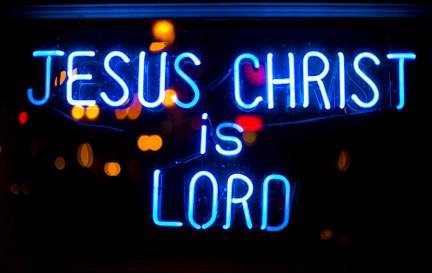
It would seem then, that perhaps the real mission of the church, particularly in the world we live in today, is to reclaim the understanding and belief that Jesus is Lord.

            Because we either live under that reality or we don’t.

After my brief theological conundrum in the basement, I walked up the stairs with the kids and we entered the sanctuary for the program. The kids stood attentively as I welcomed the families and friends, they belted out the songs with such volume that they drowned out the sound system with the backing music, and then we came to the final song.

It’s really simple and it goes like this: “I like to jump every day, I like to jump every day, I like to jump every day because I know He loves me, Jesus loves me, Jesus loves me yeah, yeah, yeah, Jesus loves me, Jesus loves me yeah, yeah, yeah!” And of course, I popped out into the chancel area and jumped with the kids while we were singing. The second time through its all about clapping, so we did that. And then the third time through we sing about dancing, and we did that as well.

While performing with the kids I could hear the parents laughing and clapping along as I made a fool of myself with a bunch of 3, 4, and 5 year olds, but the thing is, they really meant it. The kids threw every bit of themselves into the three verses of that song and they jumped, clapped, and danced with reckless abandon.

After the last song I announced the graduates of the Preschool, those who are going to kindergarten in the fall, and then I dismissed everyone from the sanctuary for a meal in the fellowship hall.

While the families and children were milling about I went to go find Keller to finish our conversation about the location of the Lord. I scanned through all the people and thought about what I might say, what story I could tell, how I could make it intelligible to a 4 year old when I felt another tug at my leg.

Keller was standing there with a huge smile on his face. I said, “Keller, you did a great job and I have my answer for you about where Jesus is.” And he just stood there grinning from ear to ear and said, “I know now Pastor Taylor, I felt him up there when we were dancing!”

2016-05-05-niles-c

Our Christ is a cosmic King who rules and reigns over us. In the ascension Jesus broke forth from the chains of being one of us, among us, into a freedom to rule with authority and power at the right hand of God. We are now his witnesses in Staunton, Augusta County, and to the ends of the earth. As Christians we believe that Christ is with us in the midst of being this strange, wonderful, and beautiful thing called church. Jesus makes himself manifest with us when we break bread, when we pass the peace, when we encounter the stranger, and even when we’re dancing in the sanctuary.

The story of the ascension is transformative for us Christians because in it we recognize our inability to go it alone. The first disciples met together, traveled together, worked together, prayed together, wept together, and rejoiced together, and even danced together all in Christ’s name. Just like them, we need each other’s witness and support, challenge and care, love and grace, to live into the reality that the church is the witness to Jesus Christ.

Jesus reigns from the Oval Office of the Universe at the right hand of God the Father Almighty. But for as much as Jesus sits at the right hand of the Father, Jesus is also with us, the resurrected Christ is the one who makes possible our resurrection, who brings forth reconciliation in our lives, who offers us a story when we have no story, who dances with us, who weeps with us, who is our Lord. Amen.

Can I Get A Witness?

Psalm 66.8-20

Bless our God, O peoples, let the sound of his praise be heard, who has kept us among the living, and has not let our feet slip. For you, O God, have tested us; you have tried us as silver is tried. You brought us into the net, you laid burdens on our backs; you let people ride over our heads; we went through fire and through water; yet you have brought us our to a spacious place. I will come into you house with burnt offerings; I will pay you my vows, those that my lips uttered and my mouth promised when I was in trouble. I will offer to you burnt offerings of fatlings, with the smoke of the sacrifice of rams; I will make an offering of bulls and goats. Come and hear, all you who fear God, and I will tell you what he has done for me. I cried aloud to him, and he was extolled with my tongue. If I had cherished iniquity in my heart, the Lord would not have listened. But truly God has listened; he has given heed to the words of my prayer. Blessed be God, because he has not rejected my prayer or removed his steadfast love from me.


What do you want for your funeral? It’s a strange question, and its one we would rather like to avoid if possible. But have you ever thought about what your funeral might look like? What hymns would you want your family to sing? What scripture has meant the most to you in your life? Do you want people to offer testimonies?

Every time I meet with a family to plan a Service of Death and Resurrection I avoid mentioning a time of testimony. I avoid it for a number of reasons including the fact that testimonies are supposed to be about how God has worked in the life of the person now dead, and that rarely happens, you never know what someone might say when they are invited to speak freely from a pulpit, and sometimes you don’t know whether anyone will get up to say anything at all.

To be clear, a lack of testimonial witness on behalf of the gathered body for worship is not an indication that the person lived a flawed or inconsequential life, it usually has more to do with how uncomfortable many of us are with public speaking.

But every once in awhile the family insists on having it, even when I didn’t bring it up. And every time we have a service and the time comes for the testimony, I invite anyone who would like to speak to come up to the pulpit, I sit down, and I pray that God taps on at least one person to come up and say anything, but I am always prepared to make something up on the spot should the pulpit remain uncomfortably empty.

If I were bolder, if I had more faith, I would just say, “Can I get a witness?” and then I would sit down in comfort knowing that God will provide.

8ff3283513b11bafb0653b3170d7d3b2

In Psalm 66 the faithfulness of God is remembered, offerings on behalf of God’s people are made, and then one lone worshipper offers a witness to all who will listen.

Bless the Lord your God! Let the sound of his praise be heard in this place and in all places. Our God has kept us among the living! What a great God is ours who has tested us, laid burdens on our backs, let people ride over our heads, and delivered us through fire and water. We remember, o people, how God journeyed with the people through the valleys of the shadow of death and brought them to the Promised Land. We remember, o people, how God has been with us in the midst of suffering and carried us through to the other side.

And because of what the Lord has done, we will come into this house with our offerings. We will present our money, and our gifts, and our time. Come and hear, all you who fear God, and I will tell you what he has done for me.

The writer describes in great detail the types of offerings made to the Lord, the physical things brought forth as an act of faith. But it is also about far more than that: God’s faithfulness to the people of Israel, God’s faithfulness to us, is the lens by which we interpret our own lives.

God has listened to the prayers of the psalmist; God has listened to us. And because God has listened we must testify.

Can I get a witness?

14890

Witnessing is a taboo thing in the church these days, or at least in the United Methodist Church. There was a time however when worship was all about testimony, moments when the preacher would step away from the pulpit and let the people of God proclaim the glorious works of God to the rest of the people of God.

But today, we don’t have time for any of this witnessing stuff. We don’t want to make people uncomfortable. We don’t want to evangelize anyone. Professional Christians like pastors are the ones meant to testify.

Or, we might say that we don’t want to talk about our faith because it is a private thing. Which is ridiculous since we can only understand and interpret our faith within the faith community.

Over and over again scripture bombards us with the call to testify, to witness, to our story because that is exactly what the bible is. The bible is the witness to the marvelous works of God.

The psalmist witnesses to the truth of God’s reign because the psalmist has experienced it and cannot be kept from proclaiming it. The psalmist has been so transformed by God that the only way to respond is to tell the stories to everyone with ears to hear.

Can I get a witness?

When we are lost and found by God, that is a worthy beginning to our witness. For it is when we are lost that we are most open to the possibility of being found.

And here’s the thing: Testimony, witnessing to God, is not limited to speech about what God has done. Testimony is speech shaped by what God has done. The psalmist witnessed to the works of the Lord and in so doing allowed others, people like us, to hear and even experience what the writer experienced in God.

We don’t care much for the idea of witnessing any more. It no longer matches up with our modern sensibilities, but telling our story is the means by which we come to understand our own faith. When we do it, when we are brave and bold enough to witness, we don’t simply tell what we have already come to believe… it becomes the means by which we believe.

And that is why we witness, that is why we testify, because in so doing we become the very community God has called us to be.

So, can I get a witness?

Seriously this time, who among us will stand to share what God has done for you?


(Time of congregational testimony)


My testimony:

I’ve shared with you on a number of occasions the ways and means by which God called me to spend the rest of my life doing what I do. You’ve heard about the sidewalk square where I fell to my knees and offered my life to God. You’ve been brought into the narrative of being marched to the front of the church as a teenager and attempting to proclaim God’s Word through my first sermon. But I want to testify to another of God’s marvelous works in my life: God sending me here to you.

I never would’ve picked St. John’s UMC in Staunton, VA. Not because there was anything particularly wrong with the church, I just knew nothing about it. When I walked into the sanctuary that first Sunday morning I only knew about 5 of you, and even then I barely knew you. And yet God called me here.

When Lindsey and I arrived, it was really hard at first. We were a young couple plucked out of our community in Durham, NC and planted here. She couldn’t find work. I didn’t know what it meant to do this work. We didn’t make friends with people in the community. And, whether or not either of us would admit it, I wondered if God had called me to the right place.

And I got up in this pulpit every week to proclaim what God had placed on my heart. I prepared for Bible Study. I visited people in the hospital. I sat on the floor with our preschoolers and told them about the bible.

And slowly, you grafted us into the community. As the weeks and months passed we felt more and more connected to the people in the pews this very morning. We loved you, and you loved us. And suddenly, this church became our family. We wept when you wept; we celebrated when you celebrated.

God sent me here to you. And some might say that God sent me here for a reason, that this church needed me. And that might be true. All churches need pastors for different reasons. But for as much as this church needed me, I needed this church.

I know in my heart of hearts that God sent me here in order to rekindle my faith; after spending years reading about God in seminary it was too easy to be cynical about what the church might be. In coming here I needed to rediscover the wonderful power of God made manifest in a community of love that you can never discover in a book on theology; I needed to re-encounter the One in whom we live and move and have our being. And you provided that for me.

And I know in my heart of hearts that the time has come for God to send me to a new place. But when I got the call about moving, it came without knowing who would be the new pastor at St. John’s. And I’ll be honest, I’ve been nervous about it. I love this church because this church has loved me. And I want it to have a pastor that will love it, and receive love from it, like I have.

And today we can finally announce that the new pastor of St. John’s is Rev. Chuck Cole. When I found out Chuck was coming here I knew that God had answered my prayers: Chuck and I were ordained together last June and have interacted a lot before we knew he was coming here. Chuck and his wife Sarah have four children and they currently live in Covington where Chuck is serving two churches. Chuck is full of love for God’s church and I know that he will love this place, and that you will love him.

What has God done for me? God sent me to a church that listened to me, prayed with me, and loved me in spite of myself.

What has God done for me? God is sending me to a new place and is sending a new pastor to the church that I love to continue the good work of the kingdom.

What has God done for you? Amen.


132-DSC_0211

The Cole Family