Pub(lic) Theology – What’s Right With The Church?

Crackers-Banner-1

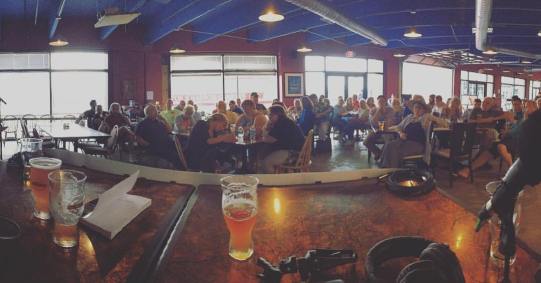
Before the beginning of the Virginia Annual Conference in June, the team from Crackers & Grape Juice hosted a pub theology event at Bull Island Brewing Company in Hampton, Va. The evening was full of good music, good beer, and good conversation. Our guest was the profane and profound Jeffrey Pugh who talked a lot about what it means to be a Christian during the era of Trump. This episode is part two of our Pub Theology event in which we field questions from the crowd. If you would like to subscribe to the podcast or listen to the episode you can do so here: Pub(lic) Theology – What’s Right With The Church? 

19222878_1811269405868344_690887276155292691_o

On the Impossible Possibility of Karl Barth or: Why God is God

Many years ago, Karl Barth was invited to give a lecture on theology during his visit to the United States. After waxing lyrical in his high-pitched Swiss accent, he spent some time answering questions and mingling with those in attendance. A young man who was able to snag a chair in the back mustered up the courage to walk to the front and shake the hand of the man who he believed had changed his life. After waiting and waiting he finally reached out his hand and said, “Professor Barth I want to thank you for all that you’ve done. I’ve read everything you’ve ever written and it has changed my life.” Barth looked inquisitively at the young man, took his hand and said, “Son, not even I have read everything I’ve written.”

barth-bw

Or so I was told long ago. Stories about Barth are like great myths that you can never really prove, but they wonderfully add to what we imagine he was like. That simple story of his interaction with a young man was my first introduction to Karl Barth prior to purchasing my copy of The Epistle to the Romans. From the story, and from my first reading, I quickly learned that to read Barth’s work is work. He held a long time motto that what really matters is “to say the same thing again and again in different words.” This is true of his writing, his preaching, and his influence in the world of theology today.

1101620420_400

In The Epistle to the Romans there is a great passage where Barth juxtaposes the law with faith: “The truly creative act by which men become the children of Abraham, by which stones are transformed into sons, does not lie in the possible possibility of the law, but in the impossible possibility of faith.”[1] His expression of the impossible possibility of faith is one that, I believe, is indicative of Karl Barth’s greater contribution to theology. His writing is some of the most difficult to comprehend but, like Joyce’s Ulysses and Wallace’s Infinite Jest, it will change you.

About a month ago I set out to write a number of reflections on what I consider are some of Barth’s best exegeses from Church Dogmatics. In preparation I pulled out my heavily earmarked and notated copies of the different volumes and dove back into the strange new world of dialectic theology. To do theology dialectically is to think in unresolved contrasts. It means that Barth can write, “God is God” which looks like a sentence that is an explanation, but it actually really does not explain anything at all. Barth, unlike so many theologians, rejected the temptation to explain, and thereby limit, God. Instead, Barth leaves it at “God is God.”

This kind of theology is powerful and it is frustrating. We are so conditioned to expect explanation and clarity that when reading Barth we are left reeling and waiting for the notes to resolve, but they don’t. Like any great jazz improvisationalist, Barth leaves us wanting more because the work of theology is never finished.

Just as it is hard to read Barth, it is hard to write about Barth. When I first read his reflections on Creation, the Tower of Babel, the Doctrine of Election, and the Strange New World within the Bible, it fundamentally changed me as a person and as a Christian. When I returned to those works over the last month I experienced the same excitement of transformation once again but when I opened my computer to write, I stared at a blank screen for a long time. How could I adequately reflect on explaining the unexplainable? How could I limit a 44-page exegesis to a 2,000-word blog post? How could I share my thoughts on something that gives me theological whiplash (in the best way)?

Writing about Barth’s writing is difficult precisely because Barth is impossibly possible.

God is God. Three words that say everything and nothing at the same time. God is God; an impossibly possible statement. To say, “God is God,” is to affirm that we cannot control God. We cannot start with “God is…” and fill in the blank with whatever we want God to be. God is what God is, and we are not. (Hence the instruction to Moses: “Tell them ‘I Am” sent you.”)

249525.501

“God is God” in its frustrating impossible possibility, reminds us that God can only be known through God. This does not mean that God is somehow hidden from creation, or completely unknowable, but that God is revealed to us according to God’s will. We cannot go digging for God throughout the bible, we cannot go out into the peaceful wilderness to find the divine; it is God who finds us. Or, as Barth puts it, “[the grace of God] is like an arrow from the other side of a shore on which we will never set foot, yet it hits us.”[2]

What Barth’s impossibly possible theology sets forth is a theology that is never finished. Like the shorter ending to the gospel according to Mark, we are left in God’s great ellipses. We are now part of God’s great story being told until God makes all things new. There is no end to the work of theology because there is no end to God. Faith, similarly, never concludes because every moment is a new opportunity to be met by God and to be transformed over and over again.


[1] Barth, Karl. The Epistle to the Romans (London: Oxford University Press, 1933), 138.

[2] Ibid., 98.

In or Out? – Karl Barth and the Doctrine of Election

Election is a dirty word in the United Methodist Church. In this particularly problematic political season we like to keep people happy so we generally avoid talking about politics and elections. We want people to think for themselves and pray for the Spirit to guide them in such matters. Otherwise we leave the topic at arms length. However, even more divisive than American Politics has been the church’s response to the Doctrine of Election.

The topic of God’s divine election is one that we often get hung up on in our weekly Bible studies at church. We can be talking about any number of things from scripture when all of the sudden the conversation moves to whether or not God ordained a specific tragedy to occur, or why would a loving God elect some for salvation and some for damnation. Then we tend to travel down the deep rabbit hole in arguments about free will and God’s sovereignty.

To talk about election is to take steps into mystery. We like to have answers to all of our questions, we like things to be neat and orderly, and God often gives us the opposite. Only God, in God’s infinite knowledge and power, could elect certain individuals and only humanity, in our sinfulness and selfishness, could spend centuries arguing about what it means to be part of the elect.

quotescover-JPG-52-300x300

Even on the UMC’s denominational website there is a long essay about whether or not United Methodists believe “once saved, always saved” or can we “lose our salvation.” And in the essay, a good amount of space is spent address Calvin’s so called “TULIP” theological principles (Total Depravity; Unconditional Election; Limited Atonement; Irresistible Grace; and Perseverance of the Saints). For Calvin, God has chosen, based on God’s own criteria, whom to save and whom not to save, long before anyone was born. Moreover, Jesus’ act of “atonement” from the cross is efficacious only for those whom God has elected for salvation.

John Wesley however, influenced by Jacobus Arminius, believed that only God can save and God does so unconditionally for all. There is no pre-selected list in the mind of God about who will be rewarded with salvation and who will be punished with damnation. Instead God’s grace is offered preveniently to all, and humanity has the capacity to respond to this grace. We have the ability (through free will) to reject God’s grace and in so doing we remove ourselves from the equation of salvation.

These types of distinctions about divine election or rejection have been debated throughout the history of the church and have played a primary role in the propagation of the seemingly endless amount of Christian denominations. We disagree about what we believe God is up to with election and therefore we create schisms in the church that result in the mosaic of churches rather than dwelling together in unity.

Karl Barth saw the Doctrine of Election differently.

barth-bw

In Church Dogmatics II.2 Barth sets out to confront what it is that makes one “elect.” He begins with a general answer that those who are elect are elect without reference to their person or in recognition of any special attributes or achievements. There is nothing that one can do to earn their elect status. To be elect is to enter into a way of being that corresponds with election; those who are elect are what they are.

Barth then, in a profound and wonderful excursus, compares the elect and the rejected throughout the Old Testament as a means by which to point at what it means to be elect in Jesus Christ. He begins with the dualism of Cain and Abel from Genesis 4. The difference between the brothers is not based on any prior mark of distinction, but from a decision of God’s concerning them. However, even though one is clearly favored and the other is not, this does not mean that God has abandoned or rejected Cain in the way we so commonly assume. It is true that God does not accept Cain and his family for the murder of his brother, but he is not abandoned by God because of this. Instead he receives the promise that God will protect his life.

1101620420_400

Thus begins a great trajectory throughout the Old Testament of mutually intersecting differences between people. Esau is the older and favorite son of Isaac, but it is Jacob (the younger brother) who receives the birthright and the true blessing. Yet, God does not abandon him. Jacob loves Rachel more than Leah but Leah is the one the Lord makes fruitful. And yet Rachel does not remain barren and eventually gives birth to Joseph. And Joseph, though rejected by his older brothers and sold into slavery is intimately connected with the future of God’s people and the brothers (though treacherous) are not abandoned to the famine but are instead forgiven and brought into the land of Egypt.

The same holds true for the dynamic between Saul and David (Saul is actually blessed far more than David even through the Lord moves the blessing from the former to the latter), and other figures from the Old Testament scriptures. Barth demonstrates again and again that though they appear rejected by the Lord, they are in fact blessed and intimately involved in God’s great story that culminates in Jesus Christ.

And it is here where Barth shines a light on the darkness of our understanding of election. For it is precisely in the person of Jesus Christ that we discover not only the elect but also the reject. “According to His divine nature, Jesus Christ is the (elect) eternal Son who reposed in the bosom of the eternal Father, and who coming thence took our flesh upon Him to be and to offer this sacrifice, for the glory of God and for our salvation, and by taking our place to accomplish our reconciliation to God. But as such and in the accomplishment of this reconciliation He is, necessarily, the Rejected. Like the (scapegoat) He must suffer the sin of many to be laid upon Him, in order that He may bear it away… out into the darkness, the nothingness from which it came to which it alone belongs.”[1] In the humiliation of the cross, Christ was also exalted. In the rejection of the Son on the cross (who cries out ‘My God, my God, why have you forsaken me?”), Christ was also the elect who shares the beauty of reconciliation.

In Christ we discover one who is reject and elect. In the incarnation of God in the flesh we encounter the mystery of what it means to be chosen by God and what it means to respond to that call.

In the one man on the one cross (as reject and elect) we see all of the dualisms of the Old Testament, all of the people who were either elected or rejected. But through the resurrection, all who are either elect or rejected remain in Him, and in Him the Word of God conquered death which shall be proclaimed through eternity.

For Barth, it is not so much that God began the mysterious work of creation with a list of all who will be elected for salvation and all who will be rejected for damnation. Instead, God remains steadfast even with those who move away (by their choice or the Lords – only God knows), God offers the grace forever even if it is rejected over and over again, and God provides the means by which all can be saved through the life, death, and resurrection of Jesus Christ.


[1] Barth, Karl. Church Dogmatics II.2 (Peabody, Massachusetts: Hendrickson Publishers, 2004), 365.

On How To Read Barth or: Why The Tamed Cynic Is Wrong

Back in February of 2013, Jason Micheli (The Tamed Cynic) proposed an invitation to read Karl Barth’s writings over the following two years. Throughout this time Jason periodically reflected on what he read for the whole world to read on his blog. I like Jason a lot. I’ve written about him here on the blog, I’ve used him as an example in a number of sermons and devotionals, and I genuinely believe he is one of the most faithful followers of Jesus I’ve ever known. Because I like Jason, and I grew up listening to his sermons, I like Karl Barth.

barth-bw

Barth is most well known for his writings in the theologically shattering Epistle to the Romans and his dialectical approach in his Church Dogmatics. Reading his work over the last few years has profoundly shaped the way I understand what is means to be a Christian and how to read scripture.

When Jason invited me to start reading Barth from afar I was already familiar with The Epistle to the Romans, I had read sections from Church Dogmatics, and had read a number of his sermons from other compilations (Deliverance to the Captives and The Early Preaching of Karl Barth). Though relatively familiar with Barth’s style and larger project, I was excited to read Jason’s “Tips for Reading Karl Barth”:

  1. Barth is the opposite of the social media, fast food age. Read slow. Barth’s thought frequently unfolds in long clauses and sentences that double back almost like music. It’s better to focus on a page or a long paragraph and understand it than try to read everything I’ve scheduled in the given week.
  2. Barth uses the term “being” a lot. IT’s a freighted philosophical term that would be better translated for you as “character.”
  3. Whenever Barth speaks of the “Word of God” he’s usually referring to Jesus NOT scripture. This will be obvious in the next sections.
  4. The footnotes. Skip over them. You can read them if you want but don’t let them slow you down or intimidate you.


Jason’s “tips” are on point when the daunting task of reading Barth is open on the table. Barth’s Church Dogmatics is divided into fourteen volumes and takes up the entirety of one of my bookshelves. I fully agree with his first three “tips” but I respectfully and wholeheartedly disagree with the fourth: “The footnotes. Skip over them.”

If theology is like jazz, then Barth’s footnotes are his greatest improvisational work over the larger melody.

1101620420_400

Reading Barth is challenging and requires patience. There are times when you will come to the end of a long paragraph and have no recollection of what you just read. There are times that you are sure you know what he is driving at only to have him turn the whole topic upside down and address it from a different angle. But it is in his footnotes (or excurses) that he exegetes the biblical texts that brought him to the conclusions in the rest of the text. The excurses are where Barth does the true work of theology.

For example, in part III.1 The Doctrine of Creation, Barth makes the claim that “Creation is the external basis of the Covenant.” He breaks down arguments for the watchmaker analogy as if God created the Earth like a watch and is not sitting back and watching the hands go round and round and instead posits that God, as the divine creator, created freely in love and is forever bound with creation. This is all good and true, but it is the long excurses on Genesis 1 that the brilliance of Barth’s theology comes to light.

In it he goes through the scripture with a fine-toothed comb and provides reflections on each day of the creation story. He looks at the presence of light and darkness: “The best analogy to the relationship between light and darkness is that which exists between the elected and the rejected in the history of the Bible: between Jacob and Esau; between David and Saul; between Judas and the other apostles. But even this analogy is improper and defective. For even the rejected, even Satan and the demons, are the creation of God.”

He spends a great amount of space analyzing the power of created water and its relevance throughout the entirety of scripture: “The Old Testament ranks a sea voyage with desert-wandering, captivity and sickness as one of the forms of extreme human misery; of the misery from which it is the gracious and mighty will of God, which we cannot extol too highly, to redeem us. It is thus the more note-worthy that the most striking Messianic deeds of Jesus are His walking on the sea in royal freedom, and His commanding the waves and storm to be still by His Word.”

All of this and much more can only be found in the places that Jason suggested skipping over. The more I have read Barth, the more I am convinced that the most important parts to read are his footnotes where he dives deeply into the strange new world of the bible.

Therefore, over the next few weeks, I will be posting reflections on some of my favorite excurses from Church Dogmatics including Barth’s thoughts on Creation, the Tower of Babel, and the Doctrine of Election.

Jason’s proposal to read Barth was a great challenge, and I am grateful for his “tips”, but the ripe fruits of Barth’s work should not be skipped over.

249525.501

God, Stanley Hauerwas, and the Fourth of July

Today our nation celebrates the Fourth of July. Untold sums of people will adorn themselves in red, white, and blue to celebrate the freedoms we hold so dear. It is one of those rare days that entire communities, though regularly separated over things like race and socioeconomic status, will join together to remember how our country got started.

As a Christian, and particularly as a pastor, I often wonder about the celebration of the Fourth of July and what it says about the church. Stanley Hauerwas, the Christian ethicist, has wrestled with it as well. This is what he has to say about this holiday in his sermon titled, “God and the Fourth of July” from his book Disrupting Time: Sermons, Prayers, and Sundries.

Hauerwas

“For Christians, the Fourth of July is not our day. It is not “not our day” because Christians must oppose nationalism, though we should. It is not “not our day” because America is an imperial power whose use of the military is increasingly indiscriminate and disproportionate, though as Christians committed to peace that is a development we must oppose. The fourth is not a problem for us because of what we are against; it is a problem because our desires have been formed by our Lord. We are simply so consumed by the consummation of Christ with his bride, the church, that we find celebrations like the Fourth of July distracting.

“But, the bands and the fireworks are so undeniably entertaining. I am not suggesting we should avoid such entertainment. No, I will not tell you that. However, I will point out that if such entertainment seems more compelling that the celebration of this meal we are about to share together then we have a problem. For in this Eucharist God gives to us the very body and blood of his Son so that our desires will become part of God’s desire of his world. This is the end of all sacrifice, particularly the sacrifices made in the name of nations, so that we can rest in the presence of one another without fear, envy, and violence. In this meal, the beauty of our Lord blazes across the sky, rendering pale all other celebrations. So, come and taste the goodness and the beauty of our God, and, in so consuming, may we be a people who may even be able to enjoy the Fourth without being consumed by it.” – Stanley Hauerwas

bible-american-flag1

As Christians, what are we celebrating when we celebrate our freedom? Is it our freedom from the monarchic rule of England almost 250 years ago? Or are we be celebrating our freedom from the destructive powers of sin? Are we celebrating our freedom to drink beer, have a BBQ, and blow stuff up? Or are we celebrating our freedom from the shadow of death?

The Good, The Bad, and The Ugly (of Annual Conference)

Every year the Virginia Annual Conference of the United Methodist Church meets for holy conferencing. This is an event whereby lay and clergy representatives from the entire conference meet to discuss pertinent matters facing the denomination in our particular geographic locality. Additionally, the Conference has a memorial service for clergy and lay representatives who have died in the previous year, we learn about campaigns and initiatives like “Imagine No Malaria”, we celebrate the licensing, commissioning, and ordination of clergy, and we worship together.

Every Annual Conference is filled with moments of holiness in addition to sinfulness. We are a church of broken people; therefore we fall prey to our own desires and forget to pray for God’s will to be done. At times, our “holy conferencing” brings out the best in us and the worst in us. Below are three categories of experiences I had from last weekend. And let’s go backwards…

2016AClogocolornoflame

The Ugly

After joining together in one voice to proclaim the powerful and dynamic hymn “And Are We Yet Alive” (The traditional first hymn to be used since nearly the beginning of the Methodist movement), we jumped right into the business of Annual Conference: The presentation of the Rules Committee. This makes complete sense of course, we need to re-establish the rules of conference every year before we get to the important stuff, but this year we spent the first 45 minutes of our time as a denomination arguing about the color of our name badges.

Depending on one’s conference relationship, there are areas that are forbidden from being voted upon. For instance: last year I was a provisional elder which meant that I could not vote during the clergy session, or on constitutional amendments. But now that I am “an elder in full connection” I am granted to the right to vote in the clergy session and on constitutional amendments. In order to streamline who can vote on what, different name badge colors were distributed. And this resulted in chaotic responses in the forms of Robert’s Rules of Order. Specific representatives (both lay and clergy) were livid not about their name badge color, but that the conference did not trust them to know what they could and could not vote on. (even though it took ten minutes for the clergy to figure out where they had to sit in order to vote during the clergy session [something we do EVERY year]).

During the name badge debate I was sitting next to a couple that were attending Annual Conference for the very first time. I witnessed them shaking their heads in astonishment and disbelief for most of the 45 minutes and when all was said in done I heard them say, “No wonder people complain about coming to this every year.” What does it say about our church to new people when we can go from a beautiful hymn to an argument about name badge colors in the blink of an eye? What does it say about the future of our denomination when our first priority becomes the color of our name-tags?

Later during the conference a motion was made from the floor to propose a resolution regarding the recent tragedy in Orlando, Florida. The resolution called for all churches in the conference to be in prayer for the victims and their families from the shooting, to pray for the greater LGBTQI community, and to pray for our Muslim brothers and sisters so that they might not be lumped into the violent identity of the shooter. While the majority of the conference voted in favor of the resolution, there were a decisive number of people who vehemently opposed it. We might not think alike about the LGBTQI community or the Muslim community, but the least we can do is pray for them in the midst of such a horrific tragedy. So what does it say about our commitment to loving others the way Jesus commanded while some of us would rather remain silent?

Finally, our conference had the good fortune of hearing the proclaimed Word from Rev. Eun Pa Hong who is the senior pastor of Bupyeong Methodist Church in Incheon, Korea. Rev. Hong is one of the most dynamic leaders in Korean Methodism and under his leadership for the past 35 years his church has grown to include 5,500 people most Sundays. Rev. Hong spoke in his native tongue and was translated into English while he preached. And while I walked around later in the day, I overheard delegates complaining about having to listen to someone speak in Korean. What does it say about our church, when some cannot stand to witness the diversity that makes us who we are? What does it say about our future when we’ve forgotten the most beautiful part of the Pentecost story?


The Bad

The church continues to decline: Lack of new professions of faith, lowering numbers of baptisms, and more churches closing. Or to put it the way I heard someone else reflect on it: “Annual Conference is all about death.” The report of the Conference Statistician offers bleak prospects for the future and causes anxiety for those with eyes to see and ears to hear. At the same time we were reminded over and over again about the power of fear, and how is has limited us as a denomination without offering hope for new vitality. The frightening statistic that the average United Methodist invites someone to church once every 38 years was mentioned on more than one occasion without any examples of how this statistic is being combatted.

Moreover, fears about the recent General Conference were made apparent through muffled conversations, uncomfortable responses to the General Conference report, and the apathy toward institutional change. More than ever, Annual Conference focused one what we have to fear, than what we have to be hopeful about; it felt more like crucifixion, and less like resurrection.


The Good

There is nothing quite like singing together in one voice with thousands of other United Methodists. As Garrison Keillor has noted, singing is part of our DNA. And so, when at the beginning of Annual Conference, thousands of us joined together with those faithful words: “And are we yet alive, and see each others face? Glory and thanks to Jesus give for his almighty grace!” you can’t help but feel the Spirit’s presence. When we mourned the loss of life over the last year, when we sat in profound silence in memory of the victims in Orlando, when we watched as new pastors were licensed, commissioned, and ordained, we felt the Spirit’s presence. Worship is always part of the “good” of Annual Conference. In worship we remember that God is God and we are not. In sermons and prayers and hymns we hear God saying, “Yes!” even though our hearts say “No.” In worship we let our baggage and preconceived notions start to fall away and we truly become Christ’s body redeemed by his blood.

Additionally, we celebrated the fruits that came from our commitment to “Imagine No Malaria,” we rejoiced in new faith communities that are planting seeds of faith across Virginia, and we recognized the 20th anniversary of the Order of the Deacon. All of these events witnessed to our commitment to serve the needs of others and the ways that we are making God’s kingdom manifest here on earth.

On Thursday night, before Annual Conference officially began, a group of United Methodists gathered for Pub Theology led by the minds behind the podcastCrackers & Grape Juice.” We met for an informal conversation about theology, toxic Christianity, and the future of the denomination. During that gathering a number of young people made it clear that they believe in the future of the United Methodist Church even while some of us remain anxious. In their willingness to articulate how their local churches helped nurture them in the faith, their witness blessed us all. Later we heard from voices largely missed at Annual Conference and all of us were reminded about the strange and beautiful diversity of this thing we call “the church.” As I was leaving, a young man told me (with a smile on his face), “This is what Wesley must have felt like when he gathered with his friends.” It doesn’t get a whole lot better than that.

On Saturday evening I was privileged to join an Ordination class of some of the most gifted pastors and deacons I have ever met. We submitted ourselves to the yoke of a stole over our shoulders and covenanted to serve the church with all of our hearts, souls, and minds. I witnessed countless people rise when names were read before the conference and I was reminded about the great communal effort required in identifying effective clergy. In the ordination service I saw the bright future for our church; not in our bureaucratic commitments to Roberts Rules of Order, not in our debates about nametag colors, not in our frightening statistics, but in the local church where the heart of God is revealed each and every day.

I have hope for the future of the United Methodist Church because the new clergy leaders believe in the power of the gospel to radically transform the world. They recognize that the local church is where disciples are formed (not Annual Conference). They see the bread and the cup of communion as our spiritual food necessary for the journey of faith. They have given their lives over to this strange and wondrous calling and will bear fruit for years to come.

But most of all, I have hope for the church because it does not belong to us. It belongs to God. The more we remember that we serve the risen Lord, the more we learn to pray for God’s will and not our own, the more our church will become what God is calling us to be: the body of Christ.


The-Good-The-Bad-The-Ugly

The Top 10 Books I Read In 2015

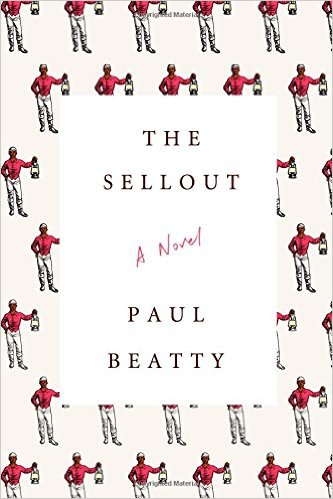
The Sellout by Paul Beatty

51gc1HCCV8L._SX331_BO1,204,203,200_

Without a doubt, The Sellout is one of the most convicting novels I have ever read. Set in south Los Angeles County in an impoverished community with a farm, the story covers racism, comedy, subsistence farming, the Little Rascals, the (in)justice system, and a slew of other subjects. The main character, a black farmer raised by a controversial sociologist, attempts to reinstitute segregation in hopes of giving hope back to the black community. Favorite line: “It’s illegal to yell ‘Fire!’ in a crowded theater, right?” “It is.” “Well, I’ve whispered ‘Racism’ in a post-racial world.”


The Good Lord Bird by James McBride

16171272

McBride’s novel is a fictive retelling of John Brown’s raid on Harpers Ferry in 1859. The narrative follows a young male black child who pretends to be a girl after meeting John Brown in order to avoid hard work and violence. The story is gripping to such a degree that I nearly read the entire thing in one sitting.


The Work of Theology by Stanley Hauerwas

41f8M7-bruL._SY344_BO1,204,203,200_

Hauerwas’ new collection of essays is the closest thing to listening to him lecture at Duke Divinity School. Collected in an all encompassing format, the essays show Hauerwas’ attempt to wrestle with important subjects from how he thinks he learned to think theologically, to how to write a theological sentence, to how to be theologically funny (though other essays are actually funnier than the one on being funny). It is quintessentially Hauerwas and worthy of anyone wanting to know what it means to be theological.


Hear The Wind Sing / Pinball 1970 by Haruki Murakami

41ROXyLUIkL._SX346_BO1,204,203,200_

For years Murakami resisted the demands of publishers and fans for an English version of his debut novels. Written while he owned and operated a jazz bar in Tokyo, he claims that it took him two novels to figure out how to really write, and he describes A Wild Sheep Chase to be his first true novel. However, this year his first two stories were published in English together in one volume. It is clear that Murakami is learning his voice through these narratives, but as an avid fan of his work, is was a joy to see the beginnings of his imagination at play.


Infinite Jest by David Foster Wallace

81KBldResmL

Full disclosure: This was my third attempt to read David Foster Wallace’s masterpiece. The first two times I would get through 50-100 pages and just give up. It is a struggle. With footnotes that propel the story forward but also drive the reader crazy, you have to really work to get through this thing. But if you can, it’s worth it. It is impossible to describe Infinite Jest in a way that does the thing justice, and that’s kind of the point. It is at times comedic, tragic, political, geographical, historic, and absurdist. If you have the time and patience to make it through, it will change the way you look at literature.

Also: the all-too-brief section describing the game of Eschaton is incredible.


The Complete Maus by Art Spiegelman

51b8ECDxvoL._SX351_BO1,204,203,200_

Graphic-novels were a new thing for me this year. I read through all the great Batman works by the likes of Frank Miller, Jeff Loeb, and Alan Moore, but the one graphic-novel that continues to stay in my mind is The Complete Maus. Written and drawn by the son of a holocaust survivor, Maus tells the story of a man’s survival and destruction. Spiegelman’s use of animals to portray human characters makes the story approachable while also making the subject matter completely jarring. Spiegelman’s graphic novel is one that demands to be read in order to remind us of how quickly prejudice can lead to violence.


I Am Radar by Reif Larsen

22571542

Larsen’s follow-up to the incredible debut novel of The Collected Works of T.S. Spivet, is about a black child named Radar Radmanovic born to white parents. While at first the giant novel seems like at attempt to bridge racial tensions, it really avoids the subject altogether. Instead the narrative is about Radar’s father and the way that art can change the soul regardless of whether anyone is there to observe it. Additionally, Larsen’s use of fictive footnotes to books that do not exist draws the reader into a total world within, and outside of, the story.


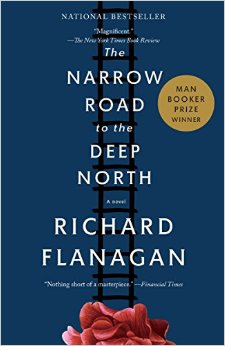
The Narrow Road to the Deep North by Richard Flanagan

41OZaREscvL._SY344_BO1,204,203,200_

Flanagan’s story is not for the faint of heart. There were times that I wanted stop reading because it was just too sad. The novel jumps time periods in Dorrigo Evan’s life from his childhood in Australia, to his love affair as a young soldier, to his work on the Burma Railway as a POW in 1943, to the effects of life after the war. Flanagan resists the temptation to stay with one narrator and shows both sides to every story within the novel, leaving the reader helpless to determine who was right or wrong, or whether we should even use those qualifiers to describe ourselves.


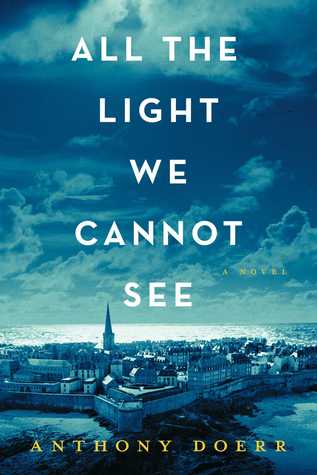
All The Light We Cannot See by Anthony Doerr

18143977

Doerr’s novel deserves all of the strong reviews and awards it received this year. Set before, during, and immediately after World War II it follows a young boy who winds up fighting for the Germans, and a young blind woman struggling to survive in France. As their individual stories eventually come together, the reader beholds a beautiful and haunting novel about what it really takes to “see” the other.


Life After Life / A God In Ruins by Kate Atkinson

9780316230803_p0_v22_s1200x630

9780316176538_custom-20c66e88350e3b9834a1e38695d5f81c09c3c00e-s400-c85

I have collected the two novels as one because they really inform one another. The first portrays a young British woman living through World War II and the many ways that she dies. Every time she comes to the end of her life, whether from a disease or a bomb, the story starts over and the young woman makes minor changes to her life in order to avoid the previous outcome. It is unlike anything else I have read. The second novel follows the girl’s brother as an RAF pilot during the war and his attempts to find a normal life in post-war Europe. Atkinson’s characterization shows an author at the top of her game, and I can’t wait to see what else she puts out in the years to come.


Honorable Mentions:

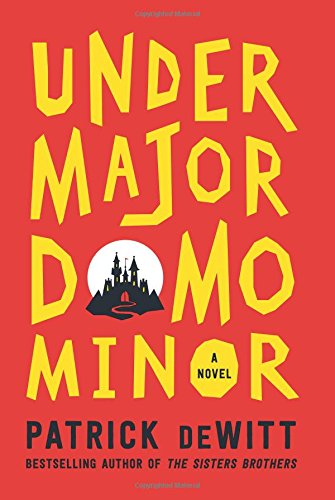
Undermajordomo Minor by Patrick deWitt

51aOAa4VDZL


Two Years Eight Months and Twenty-Eight Nights by Salman Rushdie

9780812998917_custom-8e93c2cc5402d38277230da029ae72df682cf4ef-s400-c85


The Zone of Interest by Martin Amis

20447658


The Arab of the Future: A Graphic Memoir

51+xoeJyomL._SX340_BO1,204,203,200_

Devotional – Romans 7.15

Devotional:

Romans 7.15

I do not understand my own actions. For I do not do what I want, but I do the very thing that I hate. 

Weekly Devotional Image

While I was in seminary I became fascinated with the way particular theologians lived their lives. I would read the great treatises and reflections from the likes of Augustine, Aquinas, Calvin, Luther, Wesley, and Barth and have my mind opened to the great wonders of God’s interaction with creation. Their words became life-giving for me as I found myself persuaded by how they understood the world and their critiques of human behavior. However, for as much as I loved their writing I became frustrated with the ways they lived out their faith. With every wonderful theologian I discovered a dark and dangerous life of sin that appeared incompatible with what they were writing about.

Church Dogmatics

Church Dogmatics

For example: Karl Barth, my theological mentor, wrote the massive collection of Church Dogmatics which have slowly become earmarked and absorbed throughout my brief career in ministry. Barth engaged a new theological perspective focused on the paradoxical nature of divinity while at the same time opposing the rise of the Nazi party and Adolf Hitler in Germany. Barth’s thoughts have greatly shaped my understanding of God and church and I am thankful for his witness to the divine in the realm of theology. But like all Christians, Barth was both a saint and a sinner.

vonk

In 1924 Karl Barth met the young and gifted Charlotte von Kirschbaum after he had been married for 12 years. They quickly hit it off and became enamored with one another to the degree that she was invited to live with the Barths beginning in 1929; a relationship that would last for 35 years. They worked together on Barth’s work and were indispensable to one another while creating the Church Dogmatics. While Barth’s wife, Nelly, took care of the children, he and Charlotte would take semester break vacations together. The relationship caused incredible offense among many of Barth’s friends and colleagues and Barth’s children suffered from the stress of the relationship.

After I learned about Barth’s academic and perhaps physical affair, it was hard for me to respect his writings. The dialectic theology that had been so compelling quickly collected dust on my shelf. It took a long time for me to return to Barth’s work, only after I reflected about the sins in my own life.

Sin is unavoidable. Paul reflected on his journey of faith and the temptation of sin in his letter to the church in Rome: “I do not understand my own actions. For I do not do what I want, but I do the very thing that I hate.” What an incredible reflection on sin. We know, those of us who have been raised in the faith, what not to do. We have been taught how to recognize the sinful temptations in our lives. We want to be good and make the right choices. But sin is unavoidable. We choose they very thing we hate and sin continues to creep into our lives with disastrous consequences.

I wonder how often we reflect on our sinfulness. We might hear about what to avoid from the pulpit or from scripture but do we admit our sins to ourselves? I will freely admit that for me it is far easier to reflect on the good things of my life than to admit my short-comings. Perhaps today is the day that we should join Paul and begin to wrestle with our sins. We can begin by admitting the inner conflict within us and then recognize that, like with Barth, God has come in the form of Christ to redeem even our greatest sins so that we can live into a new life of faith and forgiveness.


Questions: The Old and the New – Sermon on Genesis 11.1-9 & Acts 2.1-4

Genesis 11.1-9

Now the whole earth had one language and the same words. And as they migrated from the east, they came upon a plain in the land of Shinar and settled there. And they said to one another, “Come, let us make bricks, and burn them thoroughly.” And they had brick for stone, and bitumen for mortar. Then they said, “Come, let us build ourselves a city, and a tower with its top in the heavens, and let us make a name for ourselves; otherwise we shall be scattered abroad upon the face of the whole earth.” The Lord came down to see the city and the tower, which mortals had built. And the Lord said, “Look, they are one people, and they have all one language; and this is only the beginning of what they will do; nothing that they propose to do will now be impossible for them. Come, let us go down, and confuse their language there, so that they will not understand one another’s speech.” So the Lord scattered them abroad from there over the face of the earth, and they left off building the city. Therefore it was called Babel, because there the Lord confused the language of all the earth; and from there the Lord scattered them abroad over the face of all the earth.

Acts 2.1-4

When the day of Pentecost had come, they were all together in one place. And suddenly from heaven there came a sound like the rush of a violent wind, and it filled the entire house where they were sitting. Divided tongues, as of fire, appeared among them, and a tongue rested on each of them. All of them were filled with the Holy Spirit and began to speak in other languages, as the Spirit gave them ability.

xlba-00052

Today we continue with our sermon series on “Questions.” After requesting responses from all of you regarding your questions about God, Faith, and the Church, we have, again, come to the time when I attempt to faithful respond to those questions. Last week we looked at what it means to be saved and how we can come to understand it in our own lives. Today we are talking about the relationship between the Old and New Testaments, how can we reconcile the vengefully destructive God of the Old Testament with the loving merciful God of the New.

So, here we go…

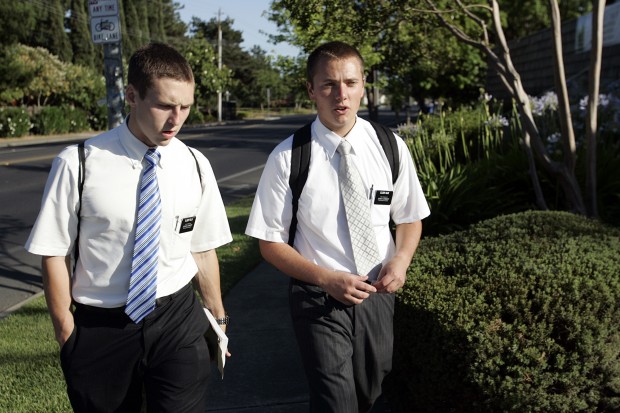
I saw the two representatives walking up and down the street, knocking on the doors of all my neighbors. Sitting at my kitchen counter, I was at home on break from JMU working on a paper for my class called “Jesus and the Moral Life.” As I sat there, Bible and computer spread before me, I eagerly awaited any distraction.

I wondered what organization or church the two men represented. It was clear that whatever they were trying to sell was not working out for them because they were moving quickly between the houses on the other side of the street. I remember trying to focus on my assignment, but my mind wandered regarding the the possibilities of the speech the pair were giving to my neighbors.

When the doorbell finally rang, I sprinted to the front door with my bible in tow.

4fda4bd3327be.preview-620

“Good afternoon sir,” they chimed simultaneously with seemingly forced smiles that almost hurt to witness. “Have you heard about our Lord and Savior Jesus Christ?” I mumbled something in response about being a Christian, but they continued as if I wasn’t really standing there.

“Are you aware of God’s impending destruction of the earth? We have failed to be obedient, and God is surely going to rain down his wrath upon all of us. There will be earthquakes, floods, and famines. Nothing can stop God’s judgement, but we can save you.”

“Tell me more,” I replied.

“Well, Satan and his demons were cast down to earth in 1914 which initiated the End Times. Over the years he has begun to take over human governments in order to create evil on earth. God will come to destroy Satan, and this entire earth with him, but if you join us, God will protect you from his armageddon.”

Now, before I continue, I urge you to remember that I was a young and foolish biblical studies student, convinced that I knew everything there was to know about God, faith, and scripture.

And so, it came to pass that after listening to these two men describe for me the fall of Satan having occurred at the beginning of the 20th century, and their ability to save me from God’s impending destruction, I could no longer contain myself…

“Where does it say that in the Bible?”

“Well, if you look at our pamphlet, it clearly outlines…”

“Where does it say that in the Bible?”

“These charts will show how natural disasters are connected to Satan…”

“Where does it say that in the Bible? I’ve got one right here, and I would love for you to show me where your facts come from.”

At that point they slowly started to step away from the door, thanked me for my time, and continued their evangelistic work to the rest of the neighborhood.

Thinking back upon that interaction, I regret the poor Christian hospitality I showed those two men. I had a predetermined commitment to scripture that blinded me from hearing them out and kindly responding to their interpretive theology. However, I believe the interaction does point to a faulty mode of reading God’s Word that has plagued the church from the beginning.

Marcion was a Christian bishop during the first century. Like many Christians, he saw discrepancies between the actions of God in the Old Testament and during the time of the New Testament. And after wrestling with the differences, Marcion proposed completely rejecting the existence of the God described in the Jewish scriptures, and also argued for omitting the sections of the New Testament that were connected with the Old. Central for Marcion’s edited bible was the idea that the teachings of Jesus were incompatible with the actions of God as found in the Hebrew Scriptures.

After numerous debates, fights, and even scandals Marcion was declared a heretic by the early church fathers and was removed from the church.

Like the two men who came knocking on my door, Marcion (and many others) had a very tunnel-visioned understanding of scripture. If it did not agree with their beliefs, they omitted it, they ignored it, and they taught in spite of it.

Without a doubt, if you read through the stories of the Old and New Testaments you will discover a number of difficulties regarding the actions of God throughout time. Wrestling with these changes has been a part of the church’s history from the very beginning and still takes place today. To fully address these differences it would take numerous sermons series and bible studies, and certainly cannot be fully proclaimed in one sermon. If this is something that you really wrestle with we can talk about doing something in greater detail down the road, but for today’s purposes we can only accomplish so much.

One of the major problems with the inconsistency of scripture is that we tend to view chapters and narratives in isolation. We take one verse from the Old Testament and compare it to one verse in the New. I am thankful for the numbering of chapters and verses for organization, but I believe they have also stratified our understanding of scripture into tiny bits that can be reorganized for our understanding. The Bible is one thing, it is the single story of God with God’s people; it may be divided into two testaments, with numerous chapters and verses regarding a plethora of people and places, but it is nevertheless one unified collection of the living Word for God’s people.
20130115_canon

Rather than reading in isolation, we are called to understand and experience God’s word canonically, which is to say we have to understand each individual narrative in light of the entire saga of scripture. Reading, preaching, and teaching canonically opens our eyes to the many ways that God runs through both testaments like a river; the water may change with the seasons, but the water always moves.

In Genesis 10 we find the story of the tower of Babel. Humanity had one language and had gathered in the plains of Shinar to settle down. There they decided to build a giant tower into the heavens in order to make a name for themselves. God witnessed the construction of this tower, recognized that this was but one domino leading inevitably to a belief that humanity did not need God, so God confused their language and scattered the people over the face of the earth.

In Acts 2 we find the story of the disciples gathered together 50 days after Jesus’ resurrection. While they were all together a great wind came from heaven filling the entire house. All of the disciples were filled with the Holy Spirit and began to speak in other languages.

Babel and Pentecost, two stories, one from the Old Testament, one from the New. These stories are often used in church to make separate points about the identity of God and what it means to be a disciple; Babel demonstrates God’s punishment of humanity for sin and Pentecost shows God’s desire for the gospel to spread amongst all nations and languages. However, they cannot be fully understood without the other. They are not two separate stories describing two different Gods, but are instead part of the greater canonical narrative of how God is God.

Babel contains every bit of the human desire to remain self-reliant and focused on pride. Like the garden, Babel exhibits that same sense of sin whereby humanity believed it no longer needed God. Though the story clearly contains examples of God’s wrath, it also contains an abundance of grace.

In striving to build a city and a tower for themselves, humanity had lost sight of the unity under which they already enjoyed from God. The true sin evident in the story is the arrogance of thinking that humanity must take itself as one takes brick and mortar, and make themselves the lord of history. In violation of the original unity of creation, in humanity’s desire to control its own destiny, the people of Genesis 11 were no longer naturally organized under the great Shepherd, but instead were brought together by the selfish desire to live in ignorance of God’s created order.

God punishes the people gathered together by confusing their language and scattering them over the earth. His wrath is evident, but his grace also lies under the surface. God could have easily used an earthquake or another divine example of control to achieve the punishment. He could have destroyed the tower and everyone in it. But rather than destroying creation, as had been done with Noah and the flood, God merely divides humanity and confuses their language. Instead of raining down death and destruction, God limits the punishment to linguistics.

We discover God’s unyielding grace in the fact that God will continue to be our shepherd regardless of our self-righteousness. God will not abandon us to our own devices but will remain faithful even when we are not.

And remember, the story of Babel does not end in Genesis 10, it continues on throughout the Old Testament and finds reflection in the New. As Christians we are aware that God has more in store for his creation than one isolated story from the past would have us believe. In the person of Jesus Christ the previously divided world finally comes back together. It is in the story of Pentecost that we are reminded again of God’s desire for humanity to rest in unity, not division.

Pentecost tells us about the miracle of the Holy Spirit coming down to help reunite the world in order to fruitfully live into God’s kingdom. God did not abandon the people of Babel, just as God has not abandoned us while we continually act as if we can make through life on our own.

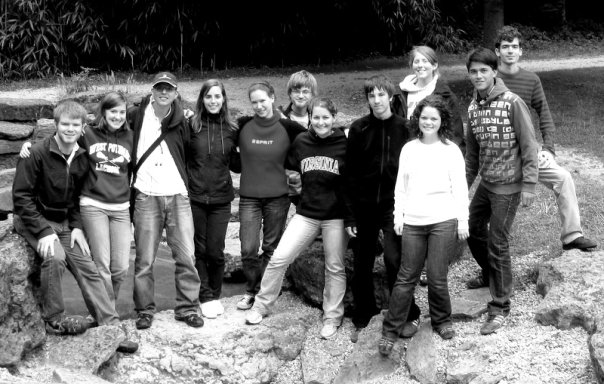
The same year I met the two men who knocked on my door, I took a group of college-age Christians to Taize, an ecumenical monastery in Burgundy, France. We camped for a week on the property, gathering together with 5,000 young Christians three times a day for prayer and reflective hymns. The Christians gathered together that week came from all over the globe, representing nearly every continent. In between the worship services, we met in small groups talking about faith, scripture, and discipleship. When the last day arrived, my group sat together and I asked us to end our week by standing in a circle to pray with each other. I asked everyone to pray the Lord’s prayer together in their native tongue, and then individually pray it so that we could hear what it sounded like. For perhaps the first time in my life, Pentecost became really for me while we prayed together in that field. Though all of us had been divided across the planet we were all brought together by Jesus Christ. Though we had been previously separated we were gathered in unity by the great “I AM.”
6613_1139875468060_4836913_n

Babel and Pentecost are intimately connected but I want to be clear that the relationship between the two testaments is not that God fixes the problems of the Old Testament with the revelations of the New. God did not change himself from wrathful to graceful. The New Testament is not the band-aid for the Old.

Yet, the incarnation of God in the person of Jesus Christ changed everything. The Old Testament tells of God’s interaction with creation and the New Testament inaugurates the event where God came to dwell among us. Jesus Christ is the lens by which we are called to read scripture, both the Old and the New Testament. God’s love of creation is woven into the fabric of scripture, consistently revealed through people like Abraham, Isaac, Jacob, Moses, Isaiah, Jeremiah, Jesus, Mary, Peter, and Paul and places like Egypt, Galilee, Samaria, and Jerusalem.

This is one great cosmic story, a story that begins with God’s creation of all things declaring them good, a story that has no end because it still taking form right now.

So, how do we reconcile the God of the Old Testament with the God of the New Testament? We read scripture knowing that it does not happen in isolation, but can only be understood within the canon of both testaments. 

We read knowing that, like all great things, God is mystery unrevealed until its proper season. We read with faith knowing that God has not abandoned us, though we struggle to find meaning in the shadow of suffering, fear, and doubt, God’s plan for us is greater than we can possibly imagine. We read knowing that God does not choose us because we are good, but because he wants us to be good.

We read scripture in the light of Jesus Christ recognizing that where we find wrath, there is also grace; when we suffer we discover our hope; and when there is death there is also resurrection. Amen.