God Helps

Psalm 121

I lift my eyes to the hills – from where will my help come? My help comes from the Lord who made heaven and earth. He will not let your foot be moved; he who keeps you will not slumber. He who keeps Israel will neither slumber not sleep. The Lord is your keeper; the Lord is your shade at your right hand. The sun shall not strike you by day, nor the moon by night. The Lord will keep you from all evil; he will keep your life. The Lord will keep your going out and your coming in from this time on and forevermore.

A woman was walking down the street one afternoon when all of the sudden the ground fell out beneath her and she fell into a giant sinkhole. After she brushed herself off, she realized that the walls were far too steep to climb out by herself so she began crying out for help.

A doctor was passing by and looked down into the pit when the woman yelled up, “Hey! I’m stuck down here. Can you help me out?”

The doc thought about it for a moment, pulled out a notepad, wrote a prescription, tossed it into the hole and kept walking.

Later, a preacher came walking along and the woman shouted up, “Hey Rev! Please help. I’m stuck down in this hole and I can’t get out!” 

The pastor slowly put his hands together, said a prayer for the woman, and kept walking.

Next, a sweet older woman from the local church walked to the edge and the woman in the pit shouted, “Please help! I’m starting to get desperate down here.”

To which the older lady replied, “Honey, don’t you know that God helps those who help themselves?” And she kept walking.

Finally, a friend of the woman in the hole arrived. “Hey! It’s me down here,” she shouted, “Can you please get me out of here?” And the friend jumped straight down into the pit. The woman said, “You idiot! Now we’re both stuck down here!”

And that’s when the friend said, “Yeah, but I’ve been down here before, and I know the way out.” 

A few years ago the results of a national poll were published and it was discovered that more than 8 out of every 10 Americans think, “God Helps Those Who Help Themselves” is in the Bible. Even more troubling is the fact that more than half of the people who were part of the poll were strongly convinced that is is one of the core messages of scripture!

And it’s not in the Bible!
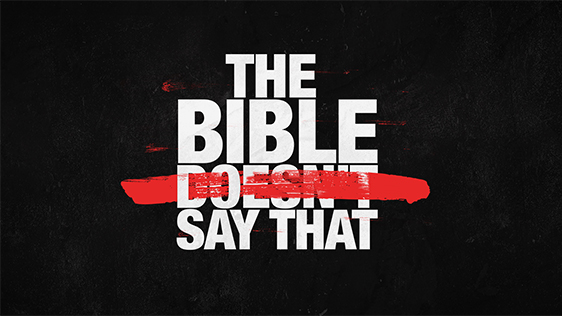
The expression itself is thought to be traced back to Benjamin Franklin in Poor Richard’s Almanac in 1736.

And yet a super majority of Americans (even American Christians) believe it’s straight from the lips of Jesus!

Now, of course, there is a small smidgen of truth to the statement. After all, if we sit around at our dinner tables praying for manna from heaven, we’re probably going to be left empty handed. However, we can eat because God has blessed creation with abundance and the means by which we can procure food for our tables whether its gardens in our yard or employment in order to purchase food.

Likewise, focusing in school, listening and responding to our spouses, nurturing our children, all of these things result in the betterment of our lives because we have worked for them to be better.

However, all of that pales in comparison to how “God Helps Those Who Help Themselves” has been used by Christians to avoid our obligations to help others.

The expression in question has far more to do with capitalism than it does with Christianity. In fact, it’s rather antithetical to the message of scripture as a whole for God is the God of deliverance for a people undeserving.

People like us.

The truth is: some people cannot help themselves.

Period. Full stop.

Societal discrimination, generational poverty, institutional racism, natural disasters, and a host of other problems prevent people from helping themselves.

Some people, in fact most people, are in holes so deep with walls so steep, that there’s no way they’ll ever climb out without help.

Food scarcity is a major problem in our area here in Woodbridge. As long as I’ve been the pastor here we’ve participated in a food distribution program once a month where huge crowds of people show up just to receive food. They will often stand in line in the heat of summer and in the cold of winter for hours at times just for a chance to bring home a grocery store bag’s worth of food.

Our local elementary school, right across the street, has a majority of students who, when schools are actually open, have free or reduced price lunches. And for many of those students its the only reliable food source they have in any given week.

And I lost track a long time ago how many people have stopped by our doors on any given day asking simply for food. Not for money, not for gas, not for anything else but food.

Now, can you imagine what it would be like if, every time someone asked the church for food we responded with, “Um, don’t you know you’re supposed to work on yourself before God will do something for you? How about you come back next week with at least three examples of how you’ve turned your life around before we give you some food? Ok bye!”

And, just for the sake of clarity, food really is everything. A few years ago a national study was published in which countless researchers looked into what were the best things to do in order to increase the education of students across the country. They looked at smaller class sizes, access to newer textbooks, different educational models, and on and on and on. And do you know what they found to be the best indication of increasing education?

Food.

In the end, they discovered, it doesn’t matter whether students have computers, or better textbooks, or smaller class sizes. If they don’t have access to food, none of those things make a difference.

The Church, and I mean the whole big “C” church, cannot shrug off the responsibility to care for the other with the use of yet another trite and cliche non-biblical sentence because God, more often than not, actually commands the people called church to specifically do for the last, least, lost, and little what they can’t for themselves.

Just pick up a Bible sometime, scan through any number of prominent stories from both the Old and New Testaments – it will become quickly clear how the actual biblical truth is that God helps those who CAN’T help themselves.

Leviticus 23.22 – God says, ‘When you harvest your land’s produce, you must not harvest all the way to the edge of your field; and don’t gather every remaining bit of your harvest. Leave these items for the poor and the immigrant; I am the Lord your God.”

It’s as if God is saying, “Look, I know you think these fields belong to you, but they actually belong to me. So quit hoarding up all your food because there are others who need it more than you. My kingdom is bigger than your field.”

Hosea 6:6 – The prophet writes on behalf of God, “I desire faithful love and not sacrifice.”

It’s as if God is saying, “Look, I know you think you’ve got this whole worship thing figured out. That, as long as you do enough good things for your faith, you’re covered. But do you know what I love more than all your singing and all your praising? When you actually put your faith into action and care for the people I care for most.”

James 1.27 – James implores the early church that, “true devotion, the kind that is pure and faultless before God the Father is this: to care for orphans and widows in their difficulty.”

It’s as if God is saying, “Look, remember how I delivered you out of slavery in Egypt, remember how I delivered you out of the bondage to sin and death in Jesus Christ? The kingdom is all about delivering people from a worldly reality into a kingdom reality. The kingdom is all about doing things for people who can’t do them on their own. Get it?”

I could go on and on.

And, you what? I think I will…

Consider Jesus and the feeding of the 5,000. He’s been out teaching and preaching and healing all day in the heat of the sun, and as the day comes to a close the disciples realize that these people need something to eat so maybe it would be better for them to return home.

And what does Jesus say?

“Hey, listen up, uh you all need to start pulling yourselves up by your bootstraps. There are no handouts in the kingdom of God. Thanks for coming out today. Bye.”

Or: “Look, I know you’re hungry, but if I give you fish to eat it will only help you for today. So instead we’re going down to the water and I’m going to teach you how to fish for yourselves.”

No.

Jesus says to his disciples, “You give them something to eat.”

And when they can only rustle up a few loaves of bread and a handful of fish, Jesus miraculously makes it into a meal for 5,000, with leftovers.

Jesus did for the crowds that day what the disciples and the crowds themselves could no do on their own.

Again and again in the New Testament Jesus connects with the brokenness within every community and brings healing.

He sends the abandoned and forgotten back to the villages that disowned them.

He feeds and heals and teaches out of the abundant mercy of God.

Jesus helps people precisely because they cannot help themselves.

I don’t know what you’ve got going on in your life right now, I can’t even see you to know, on your faces, whether this is sinking in at all. 

But maybe, just maybe, you feel like you’re down in a pit – life just won’t let up and you feel overwhelmed and suffocated by worry, fear, and anxiety.

Or perhaps you’ve lost someone you love and every single day is a biting and ringing reminder that you will never get them back.

Or maybe you’re struggling with an addiction that, no matter how hard you try, you just can’t kick it.

We can claw at the walls all we want. We can fashion ladders of self-improvement. We can even make promises to ourselves that tomorrow we will finally become the best versions of ourselves.

But sometimes, the only way out of the hole comes when someone else is willing to jump in and show us the way out.

The psalmist puts it this way: “I lift my eyes to the hills – from where will my help come? My help comes from the Lord who made heaven and earth.”

We lift our eyes to the edge of the pit and we discover, bewilderingly enough, that our help comes from God.

God, in the person of Jesus Christ, is the friend who recklessly jumps into the depths of our despair, who never abandons us even we go off assuming we can do it all on our own (thank you very much), who humbles himself to the humiliating status of humanity just to be born into this broken world of ours.

That’s who comes to help us.

And that’s the whole point.

God helps those who cannot help themselves, and so too we do the same because that’s exactly what God did, and does, for us.

God was born into the world as a fragile child into the deepest pit of fear and terror for a couple all alone in the world.

God went to the margins of society in Christ Jesus sinking lower and lower just to be with the abandoned, neglected, and forgotten.

God chose the broken and the battered to dwell among in order that, in the end, they would be delivered from the miserable estate.

God even went the depth of death just to bring each and every one of us to the other side of salvation. 

And God did and does all of this without cost. 

The grace of God made manifest in Jesus Christ is not something we can earn, buy, or even work for. To put a finer point on it – We cannot help ourselves into grace.

Grace is something done for us and to us.

It jumps into the hole right next to us, and it shows us the way out. Amen.

Everything Happens

Romans 8.28, 31-39

We know that all things work together for good for those who love God, who are called according to his purpose. What then are we to say about these things? If God is for us, who is against us? He who did not withhold his own Son, but gave him for all of us, will he not with him also give us everything else? Who will bring any charge against God’s elect? It is God who justifies. Who is to condemn? It is Christ Jesus who died, yes, who was raised, who is at the right hand of God, who indeed intercedes for us. Who will separate us from the love of Christ? Will hardship, or distress, or persecution, or famine, or nakedness, or peril, or sword? As it is written, “For your sake we are being killed all day long; we are accounted as sheep to be slaughtered.” No, in all these things we are more than conquerors through him who loved us. For I am convinced that neither death, nor life, nor angels, nor rulers, nor things present, nor things to come, nor powers, nor height, nor depth, nor anything else in all creation, will be able to separate us from the love of God in Christ Jesus our Lord.

Everything happens for a reason. We say something like that to bring comfort to people in the midst of uncertainty, or tragedy, or difficult circumstances mostly because we don’t know what else to say. It is a remarkably common expression among Christian-types and it’s not in the Bible.

Years ago I received a phone call that a woman in my church was in her final moments. She had been suffering from a great number of chronic problems for the better part of two decades and most of her family had not expected for her to live as long as she did. We all stood around her bed together praying and sharing those final moments before she died. 

A few days later, on the eve of her funeral, her now widower husband fell down the steps in front of their house after returning from the wake and was rushed to the hospital. He needed a few days to recover and we delayed his wife’s funeral until he was better. Eventually he sat in the pews with surrounded by his family and worshipped with the rest of us as we gave thanks to God for his wife.

After the burial and reception he returned to his now empty house complaining of our tired he was and after he went to bed, he never woke up again.

A husband a wife dead less than a week apart.

When I got the call about his death, having only seen him the day before, I rushed to the house to meet with the family who were still in town from the wife’s funeral. And one by one I watched and listened as every single family member exchanged a version of “everything happens for a reason.” 

“God just needed another angel in heaven.”

“God wanted them to be married in heaven just like they were married on earth.”

“This was all part of God’s plan.”

And the more I heard it the more my blood boiled. But before I had a chance to blurt out something pastors aren’t supposed to say, one of the couple’s daughters beat me to it.

“That’s BS” she stammered.

Though she didn’t use the acronym.

“If this was all part of God’s plan, then why did God take away my Mommy and Daddy so quickly? Why would God do that to me?”

And that’s when the whole room turned to me, the pastor, the so-called expert on God.

So I said, “If there is a reason for everything, if God killed both of them on purpose, then God isn’t worthy of our worship.”

When we throw out trite and cliche sentences like, “everything happens for a reason” it puts all of the responsibility of every single little thing entirely upon God. 

It makes God into a monster.

The author of car crashes, incurable childhood cancers, and unending wars.

And yet, more often than not, it is our go-to expression when we don’t know what else to say. 

If there are two things that we, as human beings, just can’t stand they are mystery and silence. It’s no wonder therefore that when we face a situation that has no explanation we get as far away from mysterious silence as we possibly can by saying something we think is helpful. We both want to have an answer for every question and we want to be able to get out of uncomfortable moments when we don’t know what to say.

The problem with all of that is we think we’re helping someone when we’re actually making things worse.

Anyone who claims that everything happens for a reason are those who believe God wills every single horrific death, every incurable diagnosis, and even something like the Coronavirus. They see and imagine God as some great puppeteer in the sky instituting every possible contingency such that it must be this way at all times no matter what.

And if that’s true, then every rape, every murder, every act of child abuse or neglect, every war, every storm or earthquake, are all part of God’s plan.

To those who believe that is the case, the response from the daughter whose parents died should suffice.

In his book The Doors of the Sea, David Bentley Hart recalls reading an article in the New York Times shortly after the unimaginable tsunami that wrecked South Asia back in 2015. The article was focused on a Sri Lankan father, who, in spite of all his efforts, which included swimming in the rolling sea with his wife and mother-in-law on his back, was unable to save his wife or any of his four children from drowning in the waters. The father recounted the names of his children and then, overwhelmed by his grief, sobbed to the reporter, “my wife and children must have thought, ‘Father is here… he will save us” but I couldn’t do it.”

David Hart wonders, in his book, If you had the chance to speak to the father in the moment of his deepest pain, what would you say? Hart then argues that only idiots would have approached the father with trite and empty theological expressions like: “Sir, your children’s deaths are part of God’s cosmic plan” or “It’s okay this was God’s design” or “Everything happens for a reason.”

Most of us, Hart believes, would have the good sense not to talk like that to the father. And then he takes it one step forward. “And this should tell us something. For if we think is shamefully foolish and cruel to say things in the moment when another’s sorrow is most real and irresistibly painful, then we ought never to say them.”

And to take it one step even further, if we mustn’t say things like that to such a father, then we ought never to say them about God. 

St Paul wrote to the early church in Rome: “We know that all things work together for good for those who love God, who are called according to his purpose.” Which, for many, justifies the desire to say “everything happens for a reason.”

And yet we so often forget that this verse is the beginning of Paul’s big crescendo to one of the texts we use most often at funeral – nothing can separate us from the love of God in Christ Jesus.

What we miss in that profound and powerful declaration is that there are powers and principalities contending against God in this life.

That is, death is something that is trying to separate us from God, but God wins in the end. 

The Good News of Jesus Christ is that death is God’s ancient enemy, whom God has defeated in Christ Jesus, and will ultimately destroy forever in the New Jerusalem. 

That is, to put a fine note on it, the whole point of the Gospel in the first place. 

It would then be nothing but ridiculous for God to delight or even ordain the deaths of those whom he loves for it would run counter to the life, death, and resurrection of Jesus Christ. 

“We know that all things work together for good for those who love God and are called according to his purpose.”

God does not want bad things to happen to us. But bad things do happen in this fallen and fallible world we find ourselves in. We, all of us, make choices we know we shouldn’t and we avoid doing things we know we should. We contribute in ways both big and small to the tremendous suffering in the world. From delighting in being able to purchase a banana whenever we want from the grocery store (a banana that requires low waged work, an absurd amount of fossils fuel, and harmful chemicals to make it to our plate) to texting while we drive (which distracts us from the kid running into the street to grab his wayward basketball) to a great number of other scenarios. 

Some of the suffering of the world is willed, but not by God. It is willed by us in our relentless pursuit of whatever we think we deserve.

And yet a fair amount of suffering in the world exists not because of us or God, things just happen without explanation

And when those things occurs, whether willed by human beings or random events in creation, we do well to close our mouths and rest in the knowledge that God has defeated death.

Does that erase death’s sting here and now? Of course not, death always hurts.

But as Christians, we know how the story ends, we know that those we lose in life will be waiting for us at the Supper of the Lamb surrounded by the great cloud of witnesses that have gone on before us. 

The “for good” that God works to achieve is the proclamation that nothing can ever separate us from the love of God in Christ Jesus. That even in our suffering, even in our deaths, God is with us.

Look, I hear it a lot in my line of work, people showing up at the church or calling me on the phone to ask, “Why is God doing this to me?”

The loss of a child. The loss of a job. The loss of health.

And for as many times as I have heard questions about God’s purposes behind the purposeless moments in life, I’ve heard from just as many people wondering, “What can I possibly say to someone in their suffering, in their loss?”

Sometimes the best thing to say is absolutely nothing. As hard as it might be to sit with someone else in their pain and in their suffering, just listening to them is far better than trying to fill the time with trite and meaningless aphorisms. At the very least, it’s the most faithful thing we can do.

Life is hard and all sorts of things happen without explanation. I know that might not sound very pastoral, but it’s true. Can you imagine how you would feel if you came to the church one morning in your grief or suffering or pain, and you got down on your knees to pray to God when all of the sudden you heard a voice booming from the heavens declaring, “I”M DOING THIS TO YOU ON PURPOSE! THIS IS PART OF MY PLAN!”

If that’s who God is, then God isn’t worthy of our worship.

Thankfully, that’s not who God is. God is whoever raised Jesus from the dead having first raised Israel out of Egypt. God is the author of salvation and not the dictator of death. God is the one who would do everything, and already did, to make sure that nothing, truly nothing, could ever separate us from the his divine love.

Our hope is not contingent on finding reasons to explain everything that happens – instead our hope is built on Christ who shows us in his life, death, and resurrection that God is with us, always. 

And there’s nothing we can do about it. 

For I am convinced, like Paul, that neither death, nor life, nor angels, nor rulers, nor things present, nor things to come, nor powers, nor height, nor depth, nor anything else in all creation, will be able to separate us from the love of God in Christ Jesus our Lord.

That’s the gospel.

Jesus is the reason that even when things happen, we are not abandoned. 

Thanks be to God. Amen.

Don’t Lie

This week on the Strangely Warmed podcast I speak with Kenneth Tanner about the readings for the 9th Sunday After Pentecost [A] (Genesis 32.22-31, Psalm 17.1-7, 15, Romans 9.1-5, Matthew 14.13-21). Ken is the pastor of Holy Redeemer in Rochester, Michigan. Our conversation covers a range of topics including Biblical character identification, new names, God’s marks, pentecostal prayers, divine time, false witness, Pauline anguish, faithful food, better education, and bigger tables. If you would like to listen to the episode or subscribe to the podcast you can do so here: Don’t Lie

Remember Who(se) You Are!

This week on the Strangely Warmed podcast I speak with Kenneth Tanner about the readings for the 8th Sunday After Pentecost [A] (Genesis 29.15-28, Psalm 105.1-11, 45b, Romans 8.26-39, Matthew 13.31-33, 44-52). Ken is the pastor of Holy Redeemer in Rochester, Michigan. Our conversation covers a range of topics including Athanasius’ On The Incarnation, keeping the Cross in Christmas, weddings beds, the canon, family trees, the importance of liturgy, the Romans Argument, buying the whole field, and baking bread. If you would like to listen to the episode or subscribe to the podcast you can do so here: Remember Who(se) You Are!

Buying The Farm

Matthew 13.44-46

The kingdom of heaven is like treasure in a field, which someone found and hid; then in his joy he goes and sells all that he has and buys that field. Again, the kingdom of heaven is like a merchant in search of fine pearls; on finding one pearl of great value, he went and sold all that he had and bought it. 

When I get to heaven, I’m gonna shake God’s hand

Thank him for more blessings than one man can stand

Then I’m gonna get a guitar and start a rock-n-roll band

Check into a swell hotel, ain’t the afterlife grand?

And then I’m gonna get a cocktail, vodka and ginger ale

Yeah, I’m gonna smoke a cigarette that’s nine miles long

I’m gonna kiss that pretty girl on the tilt-a-whirl

‘Cause this old man is goin’ to town

Then as God as my witness, I’m gettin’ back in show business

I’m gonna open a nightclub and call it “The Tree of Forgiveness”

And forgive everybody ever done me any harm

Well, I might even invite a few choice critics, those syphilitic parasitics

Buy ‘em a pint of Smithwick’s and smother ‘em with my charm

Yeah when I get to heaven, I’m gonna take that wristwatch off my arm

What are you gonna do with time after you’ve bought the farm?

Those are some of the lyrics from John Prime’s last recorded song before his recent death. And, I haven’t been able to get them out of my head. For one, the chorus is pretty catchy and I feel just the right amount of naughty for singing about drinking Moscow Mules and smoking cigarettes. But mostly because of the bit about watches in heaven.

I mean, what good is knowing what time it is when you’ve already bought the farm?

Buying the farm, incidentally, is an expression that came into existence around the time of World War II during which the insurance payout on a soldier’s death often afforded the opportunity for a surviving widow to pay out the mortgage on the homestead – ie. Buying the farm.

Jesus says the kingdom of heaven is like treasure hidden in a field which a man found and then subsequently hid again. Jesus, in all of his parabolically paradoxical wonder, does some of his best work in hiddenness, in the not-yet-to-be-understood. 

It’s why the parables leaves us scratching our heads instead of really understanding the subject at hand.

Even the earliest disciples struggled with the stories. After Jesus prophesied his death and resurrection for the third time, not the second nor the first, scripture tells us that the disciples did not understand any of these things, and they did not know what Jesus was talking about.

The mystery of the kingdom, even when its most literal details are all spelled out remains inaccessible to their understanding.

Which means we’re in good company with the disciples.

God is God and we are not.

Or, as the psalmist puts it, “such knowledge is too wonderful for me, it is so high that I cannot attain it.”

But Jesus is hellbent on bringing us closer to the hidden mystery, even if it means we’re none the wiser on the other side.

Ultimately, Jesus says, the mystery of the kingdom is like treasure hidden in a field; it is something worth selling anything we must in order to enjoy having it at all.

Most of the time when we read these two brief parables in tandem with one another, the treasure in the field and the pearl of great price, we think of them as proxies for our individual responses to Jesus’ kingdom. That is, each of us have the ability and the responsibility to go out seeking the kingdom and must be willing to pay whatever price for it. 

But, it’s more than that.

Because the two who are so willing to go and sell everything for the mystery is just as much about the whole church as it is about the individuals within in.

It’s about the church’s relationship to the world in which it finds itself, and how in the world they relate to one another.

Right now, in the midst of a pandemic that is keeping us from gathering in-person with one another, the lines have become more blurred than ever about where the world ends and where the church begins.

And this is Good News.

What makes the advent of our current time such Good News for the church is the reminder that the church is not a club of insiders who happen to have a monopoly on the mystery that is the kingdom made incarnate in Jesus Christ. The church is not about our respective identities, or good behavior, or particular income brackets.

The church is a sign to the world of the mystery by which the light of the world has already shined upon all of creation.

Let me put it another way: For far too long the church has operated as if it’s this specific enclave that has access to salvation that the world does not, that people outside the church have to come inside and be just like us in order to have access to the one we call the Lord.

And there’s some truth to it – “there is no salvation outside the church” is a prevailing theological understanding across the church. But that language implies that everything is already perfect inside these walls and everything is damned outside. It leads churches to believing we are the paragons of virtue, the arbiters of everything that is good and right and true. And therefore we believe that evangelism, whatever it is, is all about making outsiders look like insiders – its all about getting people out there, in here, so that they can look, act, and speak like us.

What that ignores is the fact that the church isn’t full of perfect people – its full of sinners!

But that’s not how we act.

Instead we put up signs about how welcoming we are, and we’re only really welcoming so long as people start assimilating the moment they join the club we happen to call church.

Or we take the latest buzzwords and create slogans for our websites about tolerance, but we don’t tolerate anything outside what we consider worthy.

Or we invite people to church implicitly assuming that it’s our job to fix our friends/neighbors/co-workers so they can have perfect lives just like us!

All of that is false advertising.

It’s like putting a cake in the window of a running store – it only confuses people about what our business really does.

Similarly, whenever we market the church as a bunch of perfect people only getting more perfect, we deceive people as to what we are all about.

Notice – the discoverer of the treasure in the field goes and buys the whole thing. He doesn’t bury the treasure off in the best corner of the lot only to purchase that small portion. He buys the whole thing!

The church doesn’t exist as an a priori negation of the world, nor does it stand off as an exclusive country club for only the best of the best – the church is filled with the world whether we like it or not.

And the sooner we start liking it the better off we’ll be, because without it none of us would cut it.

The church is not perfection here on earth because its filled with a random sampling of all the broken people the world has to offer, the very people for whom Christ died, people wading through the waters of baptism to live in the light of the resurrection recognizing that we deserve not a single beam of it.

Rather than only procuring the best part of the field, the man buys the whole thing complete with sink holes, poison ivy, weeds, and thorny bushes. 

The same then holds true for the church – if we can’t bring ourselves to buy, that is: bring in, every different condition of our condition, the smart and the stupid, the good and the bad, the holy and the unholy, then we can’t even pretend we’re the church at all.

But why all this insistence of the all-ness of the mystery of the kingdom? Why isn’t it just for the choice and select few who maintain moral purity at all times?

Well, in addition to the totality of the field purchased by the parabolic figure, and the willingness of the merchant to sell all he had to buy the pearl, the power of the mystery is hidden in the most universal of all things: death. 

Now, bear with me for a moment: I know we don’t want to have to think about death any more than we already do. Though, I will note that just about every single product in the world is designed and advertised to make us think we can live forever.

But Jesus does his work, his best work, in the mystery of his own death, its in the darkness of a seed buried in the ground or treasure in a field or a man in the tomb, that the world is forever turned upside down. 

And, for what its worth, though Matthew tells us that man bought a field, there’s no reason to think the field wasn’t a farm. And, in the end, we all buy the farm.

Some of us get stupidly rich, some of us get horribly sick, some of us lose people we love, some of us write book, some of us teach others how to read or write books, some of us lose ourselves, and some of us throw it all away because of one foolish mistake, but every last one of us dies in the end.

Every single person, whether Christian or not, whether good or bad, will someday come into possession of the field of death in which Jesus has hidden the treasure of his salvific work.

As has been said from this pulpit on a number of occasions, the kingdom of Heaven will only and forever be populated by forgiven sinners. Hell, whatever it may be, exists only as a courtesy for those who want no part of forgiveness.

The entire world will buy the farm.

And the best news, the Good News, is that we are saved by meeting the Lord in his death. 

Some of us participate in Jesus’ death here and now in the deadening of ourselves in the waters of baptism, whereas others experience it only at the end of their days, but Jesus comes to raise the dead. That’s his mysterious work. And there’s nothing on this earth that can stop him from doing it.

But, that’s not how we often talk, as the church, as Jesus’ body, in the world right now. Instead, we take this profoundly powerful and mysterious Kingdom and make it out as if there are only two types of people in the world – the completely right and the dead wrong.

And, again, the purchaser doesn’t buy only the best looking parts of the field. He procures the whole thing!

Which leads us to the parable of the pearl of great price.

The merchant is looking for something and he knows not quite what he is looking for until he finds it.

Or, perhaps, it finds him.

All of us, in different ways, are merchants of our own desires – shopping day and night for that which we don’t quite know or even understand. 

We adopt the latest culturally relevant habit because we believe it will make us whole.

We go and buy the latest Apple product because we convince ourselves it will finally bring order to the chaos of our lives.

We look for the greener grass over the next hill because surely life must be better than whatever this is.

And then, if the miracle of miracles occurs and people stumble into the church (or online during a streamed service) looking for something, what does the church offer in turn?

Hey, um, here’s the mystery of Jesus Christ all wrapped up nice and neat for you, the in-dwelling or his kingdom, but… if you want any part of it, you’re gonna need to shape up. So, uh, write this down, you need to work on your racism, sexism, classism, ageism, ethnocentrism, STOP USING STYROFOAM, go vegan, gluten free, eat locally, think globally, fight against gentrification, DON’T DRINK SO MUCH, practice civility, mindfulness, inclusiveness, take precautions on dates, keep sabbath, live simply, practice diversity, do a good deed daily, love your neighbors, give more, complain less, make the world a better place, YOU DRINK TOO MUCH.

If people have ever been evangelized by fear mongering or higher ethical stands, they might be converted from something, but not to the Gospel.

I mean, who the hell would sell everything to buy all of that?

That whole list is undoubtedly filled with good things, things that we should probably all work on, but Jesus comes not to make us struggle under the weight of additional expectations. He says, “Come to me all of you with heavy burdens and I will give you rest.

The work of Christ, the hidden mystery of the kingdom, frees us from the sins that shackle us to a world in which we will never really feel home in.

Our home, instead, is in the kingdom. It is the kingdom – a kingdom built on love, freely offered and given to each and every single person past, present, and future, and the only thing anyone ever has to do to have it is buy the farm.

Because purchasing gladly at whatever cost is the heart of these two brief parables.

It is an utterly precious and priceless mystery – something to be enjoyed.

At the very least, there should be smiles in the church, not grimaces. We should be hearing Good News, not bad news. We should relish in our freedom, not in our burdens.

For, Jesus as the mysterious kingdom is already buried and hidden in the world. The church just as the good fortune of sharing that Good News with anyone and everyone whenever we can. Church, at its best, is nothing less that joyful discovering the truth that’s always been there, the truth that meets us where we are, that Jesus has already done for us far more than we could ever do for ourselves.

In the end we don’t have to sell everything we have for the field or for the pearl because, as the old hymn goes, Jesus paid it all.

Therefore, the grace of Jesus Christ is actually free. It’s not expensive, it’s not even cheap, it’s free.

And that’s exactly what makes the Good News so good. Amen. 

In The Weeds

Matthew 13.34-43

Jesus told the crowds all these things in parables; without a parable he told them nothing. This was to fulfill what had been spoken through the prophet: “I will open my mouth to speak in parables; I will proclaim what has been hidden from the foundation of the world.” Then he left the crowds and went into the house. And his disciples approached him, saying, “Explain to us the parables of the weeds of the field.” He answered, “The one who sows the good seed is the Son of Man; the field is the world, and the good seed are the children of the kingdom; the weeds are the children of the evil one, and the enemy who sowed them is the devil; the harvest is the end of the age, and the reapers are angels. Just as the weeds are collected and burned up with fire, so will it be at the end of the age. The Son of Man will send his angels, and they will collect out of his kingdom all causes of sin and all evildoers, and they will throw them into the furnace of fire, where there will be weeping and gnashing of teeth. Then the righteous will shine like the sun in the kingdom of their Father. Let anyone with ears listen!

Contrary to how we often talk about, or even display, Jesus – He was pretty feisty. 

Sure, he sat with the crowds and multiplied the loaves and fishes – He calmed the storm while the disciples cowered in fear – He cured the sick, elevated the marginalized, and sought out the last, least, lost, little, and dead.

But that doesn’t negate how contentious he was.

The Gospels paint a picture of the Messiah man such that we can see how he was eventually done in by the hostility that surrounded him.

It’s all good and well that you fed the crowds Jesus, but why didn’t you rain down manna from heaven for the rest of us?

Thanks for calming the storm out on the sea Jesus, but what about all the other hurricanes and typhoons?

I’m all for making the last first Jesus, but if I’m in a position of power right now you’re not going to take it away from me, are you?

It’s amazing to take a step back from the strange new world of the Bible every once in a while to think about how enthusiastic the crowds were for Jesus. Free meals not withstanding. The parables, what we’ve been focusing on here for the last few weeks, they’re downright confounding, they’re anything but clear, and they don’t paint the prettiest picture of the Kingdom.

And, apparently, this wasn’t anything new, at least according to the Lord.

Matthew tells us here that Jesus spoke in parables, and without a parable he told them nothing. This was to fulfill what had been spoken through the prophet: “I will open my mouth to speak in parables and I will proclaim what has been hidden from the foundation of the world.” 

This is how the Lord works, in mysterious, confusing, and scratch-your-head kind of ways. With stories about a sower scattering seeds, a Father who throws a party for his wayward son, and a field with weeds and wheat.

All of the parables, whether they’re parables of grace or judgment, they all point to God’s strange proclamation that the kingdom is already here, existing under the banners of judgement and grace. It’s not something off in the distant future that we have to wait for or work for. Rather, it’s among us in this present moment, and has been with us, mysteriously, since the foundation of the world.

Of course, the mystery of the kingdom throughout history is the whole point. For, since those days back in the Garden with Adam and Eve, the kingdom has been hidden and only signs of it have broken through (the people Israel, Jesus, the Church, etc.). But it has only been hidden, not absent. 

It is not, “yet to come.”

It is already here in strange and mysterious ways. 

Which leads us, bewilderingly enough, back to the parable of the Weeds and the Wheat.

A brief refresher: A man plants good seeds in his field. But one night, while everyone’s dreaming of sugarplums, an enemy comes and plants weeds among the wheat. When the plants start to grow the servants of the man notice the weeds and ask if they should remove them. But the man says, “Nope, if you take out the weeds you’ll only ruin the wheat. Just wait for the harvest and we’ll get it all sorted out.”

That didn’t sit well enough with the disciples, and perhaps even with some of us today, so only after leaving the crowds and retiring to the house do the disciples pick up the previous, and unending, line of inquiry. “Lord,” they say, “You’ve got some explaining to do. Tell us what the parable of the Weeds really means…

“Fine,” Jesus seems to say. “The story I told wasn’t good enough for you eh? Well how about I explain every little part so it loses its excitement and you all can rest easy. But I should warn you, the more you know, the more you know. And you might not like what you come to know.

“Okay,” Jesus begins, “Check this out: I’m the guy sowing all the good seeds. The field is the whole cosmos, and the good seeds are the people of the kingdom. But the weeds, they are from the evil one, and the evil one is, well, evil. The harvest is the end of the age, and the harvesters are angels. I will send out the angels, and they will collect out of the kingdom all the stumbling blocks and all the indwellers with sin, and they will throw them into the furnace of fire! Then the righteous will shine like the sun in the kingdom. Did you get all of that? Are you happy with the explanation O disciples of mine?”

Are we happy with it?

Maybe we are. We’re pretty decent people after all. Heck, we’re watching a worship service online for God’s sake. We’re not terribly worried about being considered among the weeds. And, frankly, we know so disreputable types who might deserve the furnace.

Or maybe, this doesn’t sit too well with us. We know, in our heart of hearts, that we’re not as good as other people think we are and that, if we were to identify ourselves in the parable, we have more in common with the weeds than the wheat. Does that mean Jesus is going to send the angels to toss us into the fiery abyss?

It’s notable that, having listened to the Lord wax lyrical for an afternoon about sowers, wheat fields, mustard seeds, and yeast, the disciples gather in the house with Jesus and they demand to have the “parable of the weeds” explained to them.

Of all they heard, that’s what they wanted unpacked. And even the way they frame the inquiry, they have managed to turn the parable into something else. No mention of the divine farmer who delights in letting things grow together, no questions about where the farmer sows the wheat, they don’t even ask about the servants and their response to the growing field.

All they heard was a story about weeds.

Jesus delighted in giving those disciples a tale about the confounding relationship between good and evil from the vantage point of the Lord, but all they received was a pigeon-holed story about evil, and only evil. 

Perhaps we should give the disciples some credit. Rather than slinking down in their seats pretending to know exactly what was going on, they had the gall to raise their hands with an, “Excuse me Jesus, I don’t get it.

I like to imagine that when questioned about his parabolic utterances, Jesus responded first to the disciples by saying, “Yep, you really don’t get it.

But that’s not in scripture.

What is in scripture, on the other hand, is Jesus’ apparent willingness to unpack all that he had laid before them, one detail after another. 

Even today, we struggle like those disciples. We don’t understand the church’s relationship to the world, we don’t understand the complex dance between good and evil, we don’t understand what it means to be the wheat anymore than what it means to be the weeds. And if, and that’s a big if, we ever do start to see behind the curtain, if things start to fall into place, it’s a journey toward understanding and never an end in itself.

But it is a tremendous gift to be part of that journey. For, the parables of the kingdom make it rather clear that heaven is not “up there somewhere” but rather it is a kingdom that creates time and takes up space here and now. Jesus speaks through these strange and wild and wonderful stories so that we, those who receive them, might be for the world the reality of the kingdom. 

Sometimes we forget that in Jesus we get to see and hear what countless people had longed to see and hear.

The Lord made flesh, dwelling among us, telling stories about what reality really looks like.

And yet, the reality of Jesus’ explanation still hangs before us, a dreaded fiery catastrophe for those whom the harvesters gather together.

“Just as the weeds are gathered and burned with fire,” Jesus says, “so will it be at the end of the age. The Son of Man will send his angels, and they will gather out of his kingdom all stumbling blocks and doers of iniquity.”

And that is what God will do. The New Jerusalem, the Supper of the Lamb, would be pretty weak if the Lord allowed such stumbling blocks to remain. Evil will be dealt with. It will be vanquished forever and ever. 

The disciples, like us, can’t help but assume that’s their job right here and right now. “Forget letting the angels divide up the weeds in the wheat Jesus! We can start right now! Give us a list of all the unforgivable sins and we’ll sort everyone out for you!”

And, as I’ve said before, we’ve done that kind of work since since the beginning of time an we’re still doing it today. We are quick to find a sin, whatever sin we want, and hold it over one another as the sign of someone’s outside-ness to our inside-ness. We fight to have the Ten Commandments hung in court houses, we keep locking people up for every crime under the sun, we keep putting people on death row, and what have we got to show for it?

When are we finally going to make the world a better place?

Jesus says, in his explanation of the parable, this work doesn’t belong to us. It’s up to him. And for that we should be remarkably thankful. Because not a one of us would cut it as a wheat in the kingdom of heaven. “No one is righteous, no not one,” to steal an expression of Paul’s. There is only one who has lived a life without sin, and he became sin in order that we might be freed from it. He went ahead and nailed every last one of our sins to the cross, past, present, and future. He forgave us from the cross for the worst sin of them all, for trying to kill God.

We, whether we like to admit it or not, are in the weeds – we deserve the furnace. 

I know that sounds a little too fire and brimstone for those of us who are Methodists. After all, we believe we have open hearts, minds, and doors even if everything about our lives scream the contrary.

But we can’t ignore Jesus’ explanation. I mean, we asked for it. 

And the angels will throw them into the furnace of fire. Then the righteous will shine like the sun in the kingdom of their Father. Let anyone with ears listen!

The furnace of fire. That quite an image that Jesus chose. Interestingly, furnace is not a word that occurs in scripture all that much. In fact, it’s rather rare. Jesus uses it here, and he will use it again seven verses from now, and it also shows up, unsurprisingly, in the Book of Revelation.

But there’s one other, very notable, use of the word furnace in the Bible. It happens in Daniel chapter 3. 

Let take a very abbreviated trip into the Old Testament for a moment – The people Israel are living in exile in Babylon having been taken from the Promised Land. King Nebuchadnezzar of the Babylonians catches word that three men (Shadrach, Meshach, and Abednego) are refusing to worship the gods of Babylon and the king orders them to be thrown into the furnace of fire. Where, miracles of miracles, nothing happens to them. 

Moreover, when Nebuchadnezzar looks inside he see another mysterious figure with the three men. The King orders them to be removed from the fiery furnace and he blesses the God of the men he had previous condemned to death.

They are delivered from the fiery furnace and they stand as the righteous in a land of iniquity. It doesn’t take a lot of imagination to picture them glowing from their fiery ordeal standing as a testament to the power of the Lord for salvation.

Jesus says that the weeds will be tossed into the furnace of fire and then the righteous will shine like the sun in the Kingdom of the Lord. 

In the end, the Kingdom will be populated entirely and only by forgiven sinners. That is, all of us. Hell, whatever it may be, exists only as a courtesy for those who don’t want any part of forgiveness. The fire of refining that comes at the end of the age will burn away all the stumbling blocks to the kingdom, it will burn away all iniquity, and the only thing left will be forgiven sinners. Nothing more, less, or else. 

Amen. 

The Church Isn’t Full Of Hypocrites (There’s Always Room For More)

This week on the Strangely Warmed podcast I speak with Matthew Husband about the readings for the 4th Sunday After Pentecost [A] (Genesis 22.1-14, Psalm 13, Romans 6.12-23, Matthew 10.40-42). Matthew is an occupational therapist in Westerville, Ohio. Our conversation covers a range of topics including canonical preaching, the Bible on a bumper sticker, sacrifices, foolish prayers, obedience to grace, singing the faith, baptismal protests, and memorable zingers. If you would like to listen to the episode or subscribe to the podcast you can do so here: The Church Isn’t Full Of Hypocrites (There’s Always Room For More)

Eschatology Junkies

Mark 4.21-29

He said to them, “Is a lamp brought in to be put under the bushel basket, or under the bed, and not on the lampstand? For there is nothing hidden, except to be disclosed; nor is anything secret, except to come to light. Let anyone with ears to hear listen!” And he said to them, “Pay attention to what you hear; the measure you give will be the measure you get, and still more will be given you. For to those who have, more will be given; and from those who have nothing, even what they have will be taken away.” He also said, “The kingdom of God is as if someone would scatter seed on the ground, and would sleep and rise night and day, and the seed would sprout and grow, he does not know how. The earth produces of itself, first the stalk, then the head, then the full grain in the head. But when the grain is ripe, at once he goes in with his sickle, because the harvest has come.”

Look, the Bible is a strange thing.

And God is even stranger.

For, if you ever decide to lift it up and take a stroll through the strange new world of the Bible, its quickly clear that God does so many ungodly things – like not remembering our mistakes and transgressions, erasing the ledger against us, become sin for us. 

The only safe way to come to scripture is by first realizing that we really have no idea what we’re doing.

Which is just another way of saying, God is God and we are not.

And this is perhaps no where better seen than in Jesus’ parables.

They are, without a doubt, some of the most well known bits of the Bible, though just because we know the stories it doesn’t mean we actually know them.

After all, they are told in such a way to destroy every preconceived notion about what we think we know about God such that, after hearing a particular parables, the only thing we can be sure of is that we know less than when it started.

Jesus is far more concerned with telling stories than explaining them.

GK Chesterton, country to how we so desperately want all things explained all the time, once opined that if you tell someone a story and they claim not to understand, tell them again. And, if they say they still don’t understand, give it to them a third time. But from there on, if they still insist they do not understand, the only thing left is to praise them for the one truth they seem to have a grip on: “Yes,” you say, “You are quite correct – you do not understand.”

And leave it at that.

If Jesus wanted things simple, and easy, and therefore accessibly presentable, he would’ve told his tales that way.

But he didn’t.

And not only did he come to preaching paradoxical parables, the gospel writer tell us that he endeavor to speak nothing except in parables!

This Kingdom of Jesus’, whatever think it might look like, is always far more mysterious than any of us can imagine.

Listen: When you buy a new lamp for your living room, do you hide it under the rug or leave it in the closet? Or, do you put it on that nice table next to the couch so it really lights up the room? Hidden things are brought to the surface and secrets are exposed.

Listen: The Kingdom of God is as if someone threw seeds onto the ground and then went to bed. Overnight, the seed produces of itself, and the person has no idea how it happens.

What in the world is Jesus cooking up here? 

The lamp, the light that shines in the darkness, the Good News in a world drowning in bad news, is the Word that comes with the kingdom, namely Jesus. But unless that lamp is set up in such a way to spread light near and far, the light will never be seen. 

Or, to push the parable in its profound direction, if we keep sweeping Jesus under the rug, if we hide him in the closet when no one is looking, if we stand Him on anything other that the story of a world turned upside down, then we really will be stuck in the darkness.

For, the kingdom Jesus embodies, inaugurates, and incarnates, is already here among us. We don’t have to sit around and wait for it, we don’t even have to work for it.

The best thing we can do, really the only thing we can do, is not make Jesus’ job any harder than it already is.

But, for some strange reason (lets call it sin), we believe its our job to do Jesus’ job.

I am bringing you today’s sermon from the midwest where my in-laws live. In fact, I am preaching from my mother-in-law’s art studio.

It took us a long time to drive our here, particularly with a four year old who wouldn’t stop asking the one question you’re not allowed to ask on road trips. And throughout our westward journey, I was confounded by how many theologically infused highway billboards coasted by our windshield.

Some were straight forward with promises of “A Friendly Church Atmosphere” 7 miles ahead at Exit 86.

Others displayed stock photo images of families with children of every ethnic and racial background under a church name just so the observers will know that no matter what they might be like, they can find other people like them at said church. Even though, statistically speaking, churches are some of the most segregated spaces in the country.

But the overwhelming majority of billboards were, to put it mildly, terrifying.

“STOP AND ACCEPT JESUS NOW OR SUFFER THE CONSEQUENCES”

“DO YOU WANT TO BURN FOREVER? CALL THIS NUMBER…”

“AVOID ETERNAL PUNISHMENT WITH THREE SIMPLE WORDS: JESUS IS LORD.” That one was followed by three smiley face emojis.

Almost every churchy sign, with the exception of those with empty promises about welcoming, loving, and tolerating congregations, were predicated on making an action now to insure the future.

That future is what we in the church often call Heaven. And, to our wondering and wandering imaginations, Heaven is often filled with fluffy clouds and pipe cleaner halos, and a whole lot of boredom.

But in Scripture, the thing those signs portend to represent, Heaven is actually a whole lot more like earth. In fact, it is those two things wedded together – the predominant image Jesus uses to describe the kingdom of Heaven is a wedding feast that never stops, a party with food and drink that never ever ends. 

And that kingdom, the kingdom of celebration, is what Jesus says is sown on the earth, lit like a lamp, and never to be hidden under a basket, or a rug, or in the closet. 

Which is just another way of saying, Christianity is less about what happens when you die and more about what’s happening with and in the life you’ve been given.

The kingdom is already done, it is here, it cannot be taken away. It is a lamp set up on a lampstand shining bright for all to see. It dwells in us, among us, and for us. The person of Jesus Christ, kingdom incarnate, has already done for us that which we could not do for ourselves. That is the light in which we live.

And rather than just leaving it right there, Jesus continues with his penchant for parables and proceeds to give yet another illustration of the very points he’s been cooking together. 

Consider the seed that grows without work on the part of the one who threw it to the ground. The kingdom is at hand, planted right here, at work in this world right now. Jesus is sown into all of this and brings about a new reality that shakes the foundations of everything we hold dear.

By his death and resurrection, Jesus, as God in the flesh, reconciles everything, everywhere, to himself. And at the end, when he makes all things new, he makes not just a new Heaven but a new earth, combined and mixed and stuck together forever. 

That is God’s work in Christ, and it happens for us and in spite of us!

Notice: once the person in the parable sows the seed, nothing else is done. The sower goes to bed, wakes up and goes to the grocery store, maybe hits the gym for a quick workout, comes home to make dinner, and goes to bed again. That’s what happens day after day and night after night — all the while, the seed that is the kingdom sprouts and grows in a way that the person simply knows nothing about.

Jesus says the seed bears fruit of itself automatically. The kingdom has been sown into the world among sinners and saints, the best and the worst, the greatest and the least, the perfect and the pitiful, and it will come up a perfect kingdom all by itself

It grows without any help, and when it’s ready in all of its ripeness, that’s when the sickle comes. 

The harvest is made.

And, that sounds nice, but what about all the bad people? Do they get taken up in the harvest as well? What about the person who burned that bridge with us so long ago? What about the people on the news every night that make us clench our fists? What about those we clearly believe are outside the realm of Jesus’ kingdom?

But Jesus doesn’t make distinctions here. The kingdom is ready for harvest and that’s that.

And that might be the most confounding part of this paradoxical set of parables. 

It is confounding to us because every one of us is an eschatology junkie – we are consumed by the idea that, in the end, in the eschaton, wrongs must be set right, that those who are evil must be kicked out of the intertwined new heaven and earth, and that the only way the Kingdom can ever come is if we separate the good from the bad, and the deserving form the undeserving, and the saints from the sinners. 

Notice, in the kingdoms of earth, our favorite solutions to problems are knocking people down a peg or two, locking them up behind bars, and – if all else fails, getting them out of the game forever with the death penalty. 

We set up systems (powers and principalities) all in the name of law and order, but in the end they keep the poor poor and the rich rich. They lift the mighty even higher, and bring the low even lower. They, to put it simply, make the world a better place by making it better for certain people and far worse for everyone else.

Remember: it was law and order that nailed Jesus to the cross – church and state working together for the common good to keep suppressed that which they disagreed with.

Which, isn’t too far of a stretch from how we’re still living. 

To bring it full circle – we think its all up to us. We believe we have been so elected by God to be the great arbiters of morality and justice and goodness all while the world continues to go down the drain. We come up with all these “great ideas” on how to fix everything when, even if we do take a step forward, it doesn’t take long before we fall tumbling back. 

The kingdom grows, Jesus tells us, because the kingdom has already been sown into the ground. It grows of itself in its own time and, above all, we don’t know how! Any and all the bright ideas we might have of making the world a better place, about how to fix everything we think is broken, how to make people more holy and faithful and good and honest and true, will always and everywhere fall short of what God in Christ has already done and is forever doing. 

This has been proven again and again throughout history because if the kingdom could have been made to grow perfectly in this world by our own bright ideas, it would have sprouted up all over the place and there would never be anything bad on the news at night. 

But it never did and it never will. 

Except, except, in a mysterious way that will always be outside of our moralizing and addiction to knowing how everything should be happening.

We might be obsessed with the end as we see it, but Jesus, in this parable, reminds us that the end is in his hands, and so too is the present. The kingdom is already here, it is made manifest among and within people like us – it is happening and we know not how. 

For a people hell bent on having explanations for everything, that’s bad news.

But for those who live in Jesus’ kingdom, there’s nothing better. Amen.

The Sower Reconsidered

Matthew 13.18-23

Hear then the parable of the sower. When anyone hears the word of the kingdom and does not understand it, the evil one comes and snatches away what is sown in the heart; this is what was sown on the path. As for what was sown on rocky ground, this is the one who hears the word and immediately receives it with joy; yet such a person has no root, but endures only for a while, and when trouble or persecution arises on account of the word, that person immediately falls away. As for what was sown among thorns, this is the one who hears the word, but the cares of the world and the lure of wealth choke the word, and it yields nothing. But as for what was sown on good soil, this is the one who hears the word and understands it, who indeed bears fruit and yields, in one case a hundredfold, in another sixty, and in another thirty.

Listen: Jesus went for a walk by the sea, but there were so many people clamoring to see him, to catch a glimpse of the walking talking Messiah, that he had to get into a boat, and push off from the shore in order to address everyone. 

And he said, “There was a guy with a bunch of seeds, and everywhere he went he tossed them all over the place. Some of the seeds feel on the open ground and the birds came and ate them. Some other seeds landed among the rocks where there wasn’t much soil and after they sprang up the sun scorched them away. Still yet some other seeds fell among the thorns, and the thorns grew and choked them out. Finally, some seeds fell on good soil and they brought forth grain, a whole lot of it. Let anyone you can hear me listen!”

That’s it.

The whole parable.

The disciples, rightly confused, confront the living Lord with a, “Um, JC, what’s going on?”

He then drops the hammer with, “Listen to me for a hot second you fools. I’m letting you in on the mystery, the hidden things, of the kingdom. But for the people on the outside, I’m giving it to them in parables.”

Which apparently wasn’t enough for the ragtag group of followers, so Jesus unpacks the parable of the Sower for his inner circle.

If anyone hears the Word, and doesn’t understand, the devil comes and snatches it up – this is what was sown on the path.

If anyone receives it with joy, but without roots, then it only lasts a little while and then they fall away.

If anyone hears it, but cares more about the world, then they will yield nothing.

If anyone hears it and trusts it, then they will produce a great yield of fruit.

Jesus’ explanation, as we often describe it, actually doesn’t reduce a complex story into something simple. Instead, it takes an already puzzling narrative and drives it in the direction of extremely difficult interpretations.

It’s one of those parables we preachers types might prefer if Jesus had just left it to dangle out there so we could put whatever spin we want on it.

But that’s not the way Jesus rolls.

More often that not, even though Jesus explains the parable we’re asked by people like me to imagine that Jesus is the divine sower, the seeds are his scriptures, and that we are those with the varying soils.

And maybe that’s true, Jesus’ own explanation trends in that direction, but it honestly doesn’t make much sense. After all, throughout the New Testament, the “Word of the Kingdom” doesn’t refer to a collection of texts that are often collecting dust on our respective bookshelves. The Word of the Kingdom is Jesus himself, the divine Word become incarnate in the world.

That might not seem like much, but it means that the Sower in Jesus’ story is God the Father. Jesus, then, since he is the Word, is the seed sown across creation. Which, in the end, means Jesus has already and literally been sown everywhere in the entirety of the cosmos without any cooperation or consent on the part of the soil.

Do we like that?

When we well-meaning Christians read from Jesus’ parables, we tend to read ourselves into the stories and believe their ultimately all about us.

But the parables aren’t about us, they’re about Jesus and the kingdom he came and comes to inaugurate.

And this kingdom is radically different from everything we think we know.

It’s a kingdom of grace – a kingdom of crucifixion, of scandal, of upside down understanding.

The central figure of the parables, if there is one at all, is the messianic madman who is the divine seed of forgiveness given away like its going out of style and who never stops going after the last, least, lost, little, and even the dead.

Jesus points to and is himself the mysterious kingdom, who comes to tell scandalous stories, die a scandalous death, and be raised again to fill all with his scandalous grace.

But, back to the Sower.

The Sower goes and scatters seeds everywhere, always, and for all. 

No one, at any time or any place, no matter how good they are or bad they are, no matter how wrong or right they are, is left out of the scope of this agriculturally theological revolution. The differing soils are just that, different. They cover all people and there is no one to whom they do not apply.

And that’s scandalous.

Immediately we think something must surely be wrong here. Because, Jesus can’t really be for all, despite what all of our well-meaning church signs might say.

What about bad people?

What about people who don’t believe?

What about the people who just get on our nerves all the time?

Are we sure that we want to follow this Jesus guy who is so willing to give away the kingdom for nothing?

Right here, in his waxing lyrical, Jesus doesn’t sound quite like the smart and serious teacher setting the guidelines for his followers that we often imagine him to be.

Instead, Jesus sounds like someone who knows he just said something offensive and is determined to drive the point home again and again and again. 

Even so, the Sower is also very mysterious. I mean, who does he think he is going around tossing seeds everywhere? Don’t we go to church to learn about how to be good, how to have the right kind of soil for Jesus?

Nope.

Consider a seed – a seed is disproportionately tiny in comparison with it ultimately produces. Jesus is like a seed? Wouldn’t it be better if Jesus were like a thunderclap or a bolt of lightning? 

A seed is only good and it can only do anything worth anything when its buried in the ground hidden from view.

Like Jesus buried in the tomb.

It’s only after its covered with dirt, only after its abandoned to its own fate, that the seed bears fruit.

Remember: Jesus as the seeded Word, is despised, rejected, abandoned, betrayed, and left in the ground. And yet, his entire overturning of the cosmos takes place like a seed – it happens in the dark, like a mystery, something that no one gets to witness.

And maybe you’re thinking, “That’s all good and fine, but what does it have to do with me? What about my soil? What am I supposed to do?”

Well, sorry to be the bearer of the best news of all, we don’t have to do much of anything. 

Regardless of whatever kind of soil we might have, or we think we have, God is going to get what God wants.

Think about the seeds sown on the road, the seeds eaten by the birds. That sounds pretty terrible right? Jesus even says that the birds are like the devil coming in and snatching up the divine Word.

But do you know what happens when seeds get eaten by birds?

They’re deposited somewhere else, only this time with fertilizer, if you get what I’m saying. 

The Word, like a seed, still works on its own terms and not at all by what we think we can do to it.

Think about the seeds sown in the other locations like the rocky ground, the thorns, or even the good soil – the seed does it’s job – it springs up!

The seed works whether or not it lands on the good soil.

We, however, almost always lean toward another, though not in the text, meaning. “Sure,” we say, “The Lamb of God has taken away the sins of the world.” But then we immediately jump into conversations about all the things people need to do to activate Jesus in their lives. 

You’ve got to accept him as your Lord and Savior!

You’ve got to lays your sins up at the altar!

You’ve got to invite Jesus into your heart!

If that’s how it all works, if the onus is completely on us, then it’s simply unmitigated Bad News. 

If our salvation is up to us, then the seed might as well not really have been sown in the first place.

Because, in the end, we can’t do much of anything to our soil – whatever form it might be. 

Every week I stand in this place and I talk about how God gathers us together, how God proclaims God’s Word to us, and then we respond to it. The truth behind all that is our response, if it ever amounts to anything, pales in comparison to what God did, what God does, and what God will do. 

And that’s the best news of all.

It’s Good News, really Good News, because nobody, not the devil, not the world, not the flesh, not even ourselves can take us away from the Lord that refuses to let us go. 

We can, of course, squirm and kick and complain and make things all the more messy. But if God really is the God of Scripture, the great divine Sower, then there is no way we will ever find ourselves anywhere other than being reconciled and forgiven over and over and over again.

Think about it – even the good soil, the best soil with all the right nutrients, does nothing to the seed for it to bear fruit. The soil simply receives the Word called Jesus, trusts it, and then fruit comes from it. It’s not that the good soil has the responsibility to make the right choices or the proper proclamations or maintain moral purity, rather the only thing the good soil has to do is make sure it gets out of the way of the seed doing its seed thing.

Or, to put it another way, we do respond to the good work done for us and to us and in us, but our only real response is to not screw it up, to not make Jesus’ job harder than it already is.

The seed is sown regardless of the soil it lands on. Which means the seed is not sown in order to force us into making better choices, or to punish us for all our bad choices. The seed is sown simply and yet powerfully to bear fruit among us, within us, for us, and often in spite of us.

In the end, the seed that is Christ is sown to bring us home, back to the Sower’s house, to be part of the grain that becomes the bread of life at the Supper of the Lamb.

Jesus gets what Jesus wants.

The only problem occurs when we get in his way.

And we sure love to get in His way.

Take, for instance, all the social media posts I’ve seen over the last few weeks, lambasting Christians for posting about “Black Lives Matter.” I had more than a few people assure me that the only proper and faithful and Christian response to the present (and longstanding) crisis is to affirm “All Lives Matter.”

But that’s, literally, getting in the way of Jesus.

You know, the Good Shepherd who, in another parable, leaves behind ALL the other sheep in order to go off after the one in danger, the one in need.

Or, consider all the countless pictures of white Jesus that are put up in homes and in sanctuaries. Those images that make white people like me feel comfortable knowing that my Savior is just like me.

That’s getting in the way of Jesus.

Jesus was a first century carpenter turned rabbi who spent his entire earthly life living in the Middle East! He didn’t look like me in the least.

Or, finally, think about all the people lamenting the riots and the protests for not witnessing to the practice of Christian non-violence. The whole, “Why can’t we all just get along?” And “This isn’t what Jesus would’ve wanted.”

Well, do you remember what happened to Jesus? He was nailed to a tree for the things he said, for rioting inside the temple and flipping tables over, and showing up for the people we otherwise would ignore.

We are blessed because Jesus continues to be sown all over creation, bearing fruit we couldn’t on our own. 

We are blessed because Jesus won’t give up on us even when everything seems like he should.

We are blessed because, no matter what our soil looks like, Jesus delights in making something of our nothing. Amen. 

Uncomfortable

Matthew 13.1-13

That same day Jesus went out of the house and sat beside the sea. Such great crowds gathered around him that he got into a boat and sat there, while the whole crowd stood on the beach. And he told them many things in parables, saying: “Listen! A sower went out to sow. And as he sowed, some seeds fell on the path, and the birds came and ate them up. Other seeds fell on rocky ground, where they did not have much soil, and they sprang up quickly, since they had no depth of soil. But when the sun rose, they were scorched; and since they had no root, they withered away. Other seeds fell among thorns, and the thorns grew up and choked them. Other seeds fell on good soil and brought forth grain, some a hundredfold, some sixty, some thirty. Let anyone with ears listen!” Then the disciples came and asked him, “Why do you speak to them in parables?” He answered, “To you it has been given to know the secrets of the kingdom of heaven, but to them it has not been given. For to those who have, more will be given, and they will have an abundance; but from those who have nothing, even what they have will be taken away. The reason I speak to them in parables is that ‘seeing they do not perceive, and hearing they do not listen, nor do they understand.’”

https://w.soundcloud.com/player/?url=https%3A//api.soundcloud.com/tracks/835967350&color=%23ff5500&auto_play=false&hide_related=false&show_comments=true&show_user=true&show_reposts=false&show_teaser=true Think and Let Think · Uncomfortable

Jesus wasn’t a very good storyteller.

Forgive me Lord, but it’s true.

Stories are supposed to have a beginning, middle, and end.

Stories are supposed to easily teach us something about ourselves we didn’t know until the story told us who we are. 

Stories are supposed to be approachable, repeatable, and memorable. 

Jesus’ stories, we call them parables, are certainly memorable – but not for the right reasons. Mark and Matthew tell us that Jesus said nothing except in parables. 

And, the more we enter the strange new world of the Bible, the more we realize that Jesus himself was a parable – the storyteller become the story. 

We often forget, in the ivory towers of our own design, that Jesus was killed for telling the kind of stories he told. Most of them are wildly unfair, they raise up the lowly and bring down the mighty, they give the whole kingdom away for nothing, and mostly, they make us uncomfortable.

If he were a better story teller, the stories would’ve made a little more sense, people would’ve walked away knowing exactly what he was trying to say, and certainly no one would’ve killed him for them.

But they did.

We did.

Most sermons, not stories, do their best to explain something. They take a particular text, wave it around for awhile, and then in the end declare, “Hear now the meaning of the scripture… this is how you can apply it to you daily life…”

But Jesus, you know the Lord, rarely explains anything.

Instead, he tells stories.

That Jesus speaks in parables is a reminder that he desired not to explain things to our satisfaction, but to call attention to the unsatisfactoriness of all our previous explanations and understandings.

In other words, Jesus’ parables are designed to pop every circuit breaker in the minds of the listeners.

Including us.

Up until this point in the gospel story, that is, up until he tells the watershed parable of the sower, Jesus has been pretty content with walking and talking and healing and doing whatever went against the grain of what people were expecting. They had their own ideas about what the Messiah would do, and Jesus didn’t give a flip about what they were hoping for.

And it was pretty low key until this parable, because from this point forward, Jesus cranks it up to eleven.

It’s as if, having done the whole ministry thing for awhile, he says to himself, “They haven’t understood much of this kingdom stuff, so I might as well capitalize on it. Maybe I should starting thinking up particular examples of how profoundly the true messianic kingdom differs from what the people are looking for.”

Listen: Jesus went for a walk by the sea, but there were so many people clamoring to see him, to catch a glimpse of the walking talking Messiah, that he had to get into a boat, and push off from the shore in order to address everyone. And he said, “There was a guy with a bunch of seeds, and everywhere he went he tossed them all over the place. Some of the seeds feel on the open ground and the birds came and ate them. Some other seeds landed among the rocks where there wasn’t much soil and after they sprang up the sun scorched them away. Still yet some other seeds fell among the thorns, and the thorns grew and choked them out. Finally, some seeds fell on good soil and they brought forth grain, a whole lot of it. Let anyone you can hear me listen!”

That’s it.

The whole parable.

Just about every sermon I’ve ever read or heard on the parable of the sower retells the story, as I just did, and then asks people to consider what kind of soil they think they have. Which implies the preacher believes he or she knows exactly what Jesus is up to with this one. Moreover, they make it out as if, had they been there, they would’ve known what it all really means.

The truth of the matter, however, is that if any of us had been part of the original Jesus crew, we would’ve walked away scratching our heads. 

It’s no wonder, then, that the disciples’ reactions was one of, “Um.. JC, are you alright? You’re talking in parables again, and we can’t understand what you’re trying to say, and frankly, some of us are getting a little uncomfortable?”

“Hey,” Jesus says, “Listen to me for a hot second. I’m letting you in on the mystery, the hidden things, of the kingdom. But for the people on the outside, I’m giving it to them in parables.”

And we, if we were those disciples, want to say, “Jesus. That don’t make no sense.”

His response about the hiddenness of the kingdom, about certain things being weird and uncomfortable, it’s like Jesus is saying, “Okay, if you can get it through your thick skulls that my kingdom works in a mystery, you will have more understanding. But if you don’t get that, if you can’t handle the weirdness and the discomfort and not knowing every little thing, then none of it will ever make a bean’s worth of sense.”

There’s a way to take all of this as if Jesus is telling us we better get shaped up with our understanding of God or he’s going to zap us into oblivion. Or, to use the language of the parables, we better get our soil in order lest we run the risk of the seeds get stolen, scorched, or suffocated. 

We, then, could hold a story like this one over the heads of Christians and non-Christians alike until they shape up how we want them to.

We could even employ this parable as the means by which we determine who’s on the inside and who’s on the outside.

But, that’s not what Jesus does. 

Jesus sees the obtuseness all around him. 

He witness the unlikelihood that anyone will ever get a glimmer of the mystery, let a lone a grip on it.

Hence he ends here by saying, “Seeing, they do not perceive, and listening they do not understand.”

Now, I know some of you have looked ahead of the scripture reading and noted that Jesus then goes straight into explaining the parable, but we’ll get there next week. 

For now, I want us to rest in the discomfort of not having all the answers, of seeing without perceiving and listening without understanding.

There’s a summer camp outside of Boston in which, every summer, students are bussed in to confront the complications of race. 

On the first night, the students are asked to separate into their respective races to discuss how they have experienced their own race with others of similar situations. 

The Latinx kids go into one room, the Black kids in other, there’s a room for the Asian kids, and finally one last room for the White kids.

For many of the students, the sharing on that first night is radically life-changing. For many of them, it’s the first opportunity they’ve had to share what its like to be viewed by others through a racial lens, what’s its like to have a prejudice dictate who they are, what it’s like to not be like everyone else.

The counselors then bring all the students back into one group, and each of the races are given a chance to stand in front of everyone else and share their truth. One by one they lift up how horribly they’ve been treated, or what they really want people to know about them, or how much it hurts to hear certain slurs.

Last summer, there was only one white student who attended the camp. With each passing year, the truths spoken to White about the white-ness has resulted in less and less white people attending. But there was one young white woman there, and when she stood in front of the entire camp she said, “I want to continuously challenge white supremacy in white spaces, and that will be uncomfortable for me. But I want to be uncomfortable; I am willing to give up my comfort.”

Later, the black students stood and proclaimed their truth.

“Stop touching my hair just because you don’t know what it feels like.”

“We deserve to be paid the same as white people.”

“Just because you say you have black friends doesn’t mean you’re not racist.”

But there was one black girl on stage who couldn’t stop thinking about what the young white girl had said. And so, when it was her turn to speak she said, “When white people talk about what they’re ‘willing to give up’ it implies that they are fine sharing a little bit of what they have but they’re going to be fine. It’s not about what you’re willing to give up, it’s what you have to give up. You have to really be uncomfortable. You have to give up what you think belongs to you simply because of the way you look.”

The young white girl immediately started crying and left the room.

A counselor went after her, consoled her, explained that it can’t easy being the only white person in the room, and the girl looked up and said, “Yeah, but this is how people of color feel every day. I guess you really do learn the most when you’re uncomfortable.”

So much of what Christianity, what the church, has become is focused on making people comfortable; how to tell people about Jesus without ever stepping on any toes. 

The fire of Pentecost, the one that sent the disciples tumbling into the streets can be found more in our national protests than in our sanctuaries on Sunday mornings.

Parables are supposed to make us uncomfortable. Whether our soil is rocky, thorny, or barren. 

Hear the Good News: The Sower never stops sowing. The Sower doesn’t stop to take stock of the condition of our condition before offering the grace we so desperately need. The Sower just keeps throwing it all over the place until something comes of our nothing.

Remember: When Mary encountered Jesus at the empty tomb she mistook him for the gardener. And what do good gardeners do? They till the soil, they weed out the thorns, they remove the rocks, they do whatever it takes to make the best soil possible. 

And that work is uncomfortable. 

We, in spite of all our good works, have shut our eyes and closed our ears. We’ve settled for milk toast sermons and milk toast churches. We like hearing about the kingdom so long as it doesn’t require anything for us. 

It’s like we’re wandering around deaf and blind.

Fortunately for us, Jesus likes nothing better than healing the blind and opening the ears of the deaf. 

We disciples of Jesus may not be that brightest candles in the box, but at least we know a true story when we hear one.

In this story of a reckless Sower we are reminded, yet again, that God is not removed in some far off place content to leave us to our own devices. God’s kingdom is happening, it’s happening right now! Open your eyes! Open your ears! 

And here’s the best news of all: Even if we refuse to see and hear, Jesus is gonna open our eyes and ears anyway. 

And it’s probably going to be uncomfortable. Amen.