Sinners, Outcasts, and the Poor

John 4.3-10

But he had to go back through Samaria. So he came to a Samaritan city called Sychar, near the plot of ground that Jacob had given to his son Joseph. Jacob’s well was there, and Jesus, tired out by his journey, was sitting by the well. It was about noon. A Samaritan woman came to draw water, and Jesus said to her, “Give me a drink.” (His disciples had gone to the city to buy food.) The Samaritan woman said to him, “How is it that you, a Jew, ask a drink of me, a woman of Samaria?” (Jews do not share things in common with Samaritan.) Jesus answered her, “If you knew the gift of God, and who it is that is saying to you, ‘Give me a drink,’ you would have asked him, and he would have given you the living water.”

kathleen-mcguffin-rivers-of-living-water-at-arts-alive


If you want to know about Jesus, this is the story to read. We can read about his remarkable birth in a manger in Bethlehem, we can read about him feeding the multitudes by the sea, we can even read about him turning water into wine, but this little episode by the well is quintessential Jesus.

At the time, Jews avoided Samaritans. If they had to travel from the northern area of Galilee to the southern area of Jerusalem, most Jews would go hours or days out of their way to avoid passing through the region of Samaria that separated the two. Like Apartheid in South Africa or segregation in the United States, the people were separated in all things. This kind of negative and polarized relationship between the groups of people had gone on for centuries to the point where, even though they had many things in common, they believed the divide was irreparable.

And yet Jesus shows up in this Samaritan city, and under the heat of the sun at noon, he goes to the well to rest. While resting, a Samaritan woman came to draw water, and Jesus said, “Give me a drink.”

In this simple moment, a lot is going on. To begin, the unnamed woman coming to the well at the hottest part of the day is strange. Most women would have gone to the well early in the morning when it was still cool outside. The well was the area for local gossip and fellowship; it was a site for the community. And she came to the well all alone. We learn later in the scripture that she had gone from one man to another, and was now living with a man who was not her husband. It doesn’t take a lot of imagination to picture why she was separated from the other Samaritan woman, it doesn’t take a lot of imagination to picture how lonely she must have felt, and it doesn’t take a lot of imagination to picture what the people in the village would have called her: “sinner.”

The woman could not believe that this Jewish man was speaking to her, a Samaritan woman. And Jesus responds by saying, “If you knew the gift of God, and who it is that is saying to you, ‘Give me a drink,’ you would have asked him, and he would have given you the living water.

Jesus loves sinners. Here in this little story by the well we confront Jesus’ love for the marginalized, and his belief in the inherent worth of all people. When we imagine the depth of her thirst for acceptance, and the relief of the living water offered to her without cost, it compels us to ask: Do we see all people as children of God? Or do we see them as society sees them – sinners, outcasts, and poor?

Water bucket being raised from a well

There is a church in Virginia that is located right across the street from a major university. For years they have explored numerous ways to get “the young people to come to church” but they have continued to decline. They thought that by offering lectures on the importance of abstinence, or the effects of excessive drinking, or how to be political and faithful, droves of the coming generations would fill the pews on Sunday mornings.

Next to the church is a row of college housing that becomes loud and filled with debauchery on the weekends. Even though the church parking lot has numerous signs saying: “Church Parking Only” certain members were known for driving by on Saturday evenings with the explicit purpose of calling the tow company to have the party goers’ cars removed.

On one particular Friday evening, while one of the committees was meeting in the social hall, a loud and sinful party was happening right across the parking lot. The members, though tasked with discussing something like the new color for the parlor, focused their time and effort on how to fix the problem next door. They finally decided to march across the parking lot and demand that the college students stop their partying and remove their cars from the parking lot.

As they knocked and knocked on the doors the sound of their knuckles disappeared into the thundering boom of the bass and they decided they had had enough and they called the police.

With satisfied smiles across their faces, the committee stood proudly in the parking lot while tow trucks removed the vehicles, and while the police escorted those who were too young to be legally drinking in handcuffs to their cruisers.

And they still wonder why no young people attend church.

Notice: in the episode with Jesus by the well he does not say to the woman, “I know you’re a sinner, and you need to be punished for your sins.” He does not call the religious authorities for her transgressions against the law. And he does not stand by with a smug look on his face when he confronts her sinful past. Instead he says, “I can offer you living water.”

There is another church in Virginia that is located right across the street from another major university. Like the first church they struggled to get the college age population to attend their church, they struggled with the sinful behavior that was happening so close, and they wondered how they could be Jesus for these young people. One night, after a steady stream of weeks when empty beers cans were found every Sunday morning on the lawn, the pastor and a group of leaders gathered in the church to pray for the community and prayerfully discern how to move forward. They contemplated calling the police, they weighed the outcome of going over to the house and knocking on the door, but an older woman suggested that they go to the Greek life council and ask how they could help.

When the president of one of the fraternities heard their question, he laughed in response and said jokingly, “If you want to help us… we could use some food and a place to hang out in the middle of the night after a party.” Without missing a beat the same older woman from the church said, “Okay. What time?”

The following weekend, a group of faithful volunteers arrived at the church at midnight and fired up their grills. They cooked hot dogs and hamburgers, set up bean bags in the social hall, and placed signs on the lawn welcoming any college student in, regardless of inebriation, for free food. The first night only a handful of students bravely entered with puzzled looks on their faces in regard to a church that was not condemning them for their behavior, but was just trying to offer food and fellowship. But over the following weeks, more and more people arrived in the social hall every weekend thankful for the love they were experiencing.

And the strangest thing started to happen. On Sundays, when church members arrived for worship, the lawn was free of empty beers can, and though some members came in with bags under their eyes, they were thrilled to discover that many of the students who had sat on the bean bags with hamburgers in their hands the night before were sitting in the pews next to them on Sunday morning.

Who are the Samaritans to us? Our church is not located next to a large university where partying behavior can be experienced through empty beer cans on our front lawn, but there are plenty of people that we want to avoid or ignore. Many of us find that the longer we’re Christian, the more likely it is that all our friends are Christians too. Following Jesus however, means building relationships with people outside the church. We, like Jesus, are called to encounter the Samaritans and show them the love of Christ, whether they ever come to church or not.

Samaritans, therefore, are the people we ignore or avoid. That neighbor who insists on letting his dog use our lawn as a toilet; that coworker who incessantly complains about everything wrong with the business without doing anything about it; that in-law who tells us how to raise our family; that homeless man who sits on the corner of the street asking for money; that college student who plays the music in his car way too loud; that woman who has gone from man to man without finding love.

Where can we find them? We don’t have a well on the front lawn of our church, and frankly it is nearly impossible to discover our Samaritans at church. They, like the college students with churches right across the street, will not come to us; we have to go to them. We can find them in the communal spaces of life: our workplaces, our neighbors, our families. Remember that Jesus did not wait in Galilee for the Samaritans to come to him; he left the comfort and convention of the day and went to meet them where they were.

How can we give them living water? We don’t have to bring a bottle of water to everyone that exists outside of the church to share with them the love of Jesus, but’s that’s not necessarily a bad place to start. That one church found that by offering food and fellowship to their local community of college students they were offering the living water that is the love of Jesus. When we host our community cook-outs on our front lawn we are offering living water to the community through bouncy houses and free food. But finding the Samaritans in our lives, and offering them living water should be a regular occurrence and not just a once a year activity.

We give Samaritans living water by loving them no matter what. Instead of wagging our fingers in judgment against their sins or strange ways, we open our ears and listen to their struggles. Instead of looking down on others and trying to fix their problems, we share with them the crazy truth that we are broken just like them. Instead of ignoring people and leaving them to their own devices, we find them where they are and offer them the living water.

This great and powerful story is a reminder, now and always, that people who are nobodies to us are usually somebodies in the eyes of Jesus. The people we ignore are often the ones Jesus would seek out. The people we would deem sinners are the ones Jesus would spend time with.

We often think of God and Church in these big and sweeping images. We read about God’s overpowering magnificence and we experience God’s presence in majestic churches like this one. So we ask: Can a little thing like a cup of cool water, like a cheeseburger in the middle of the night, like an invitation to worship, offered in love, be the beginning of a salvation journey? The answer is yes; and we will never know what the living water can transform until we meet the Samaritan where they are and offer it in the first place. Amen.

Devotional – Psalm 32.5

Devotional:

Psalm 32.5

Then I acknowledged my sin to you, and I did not hide my iniquity; I said, “I will confess my transgressions to the Lord,” and you forgave the guilt of my sin.

Weekly Devotional Image

There is a shop in Alexandria, VA called “The Variety Store” that truly contains a variety of items. Some of my earliest memories are of walking up and down all the aisles with my mother struggling to take in all the strange things I was seeing. There was an aisle full of ribbons, an aisle of ceramic dinnerware, an aisle of candy, and much more. It was a treat to witness the enormity of “The Variety Store” as a child, though it feels a lot smaller now than it did then.

Once, when my mother brought me into the store for some light shopping, I made my way to the toy aisle and just stood in awe of everything. And, as was my custom, I picked up a yellow smiley-face bouncy ball and bounced it all around the store with my her while she collected her items for purchase. We went through all the necessary aisles, my mother waited in line to pay for everything she found, and then we got in the car to go home. All in all, it was a relatively uneventful journey to the store until I put my hand into my pocket and discovered the bouncy ball. I can remember my entire disposition changing in an instant when I realized that I (accidentally) stole the yellow smiley-face bouncy ball.

ar120274857936808

For the next few minutes, which felt like hours, it burned a whole in my pocket as I walked around my house. Were the police on their way to arrest me for shoplifting? How severely was my Mother going to punish me for stealing a plastic ball that cost a quarter? The fear I experienced was palpable and when I finally mustered up the courage to confess my transgressions to my mother I’m sure that I was in tears.

But the strangest thing happened: As I explained my predicament, and I confessed my wrongdoing, the fear and terror faded away. My mother’s calm demeanor and response comforted me as she forgave me for what happened. Even when we returned to the store and I handed the smiley-face bouncy ball back over to the cashier I experienced forgiveness in a way that I would never forget.

When we can muster up the courage to confront and acknowledge our sins, it relieves us from the burden that comes with the weight of sin. When we have those opportunities to express our shortcomings to one another and to God it allows us to start moving in the right direction in discipleship. This week, let us take time to properly and faithfully acknowledge our sins to God, let us repent our transgressions, and let us rejoice in the forgiveness of our sins.

Devotional – Psalm 51.1

Devotional:

Psalm 51.1

Have mercy on me, O God, according to your steadfast love; according to your abundant mercy blot out my transgressions.

Weekly Devotional Image

When I am asked to preside over a wedding, I take full advantage of the opportunity to share the beauty of God’s love. During pre-marital counseling I encourage couples to find a bible verse that relates to their relationship, we discuss what it looks like to pray for our spouse, and we use God’s love as a lens by which we view the love we have for our partner. During the actual wedding ceremony I am unashamedly open about God’s love being at the center of this relationship, and that only with God’s power can all couples live in harmony and peace with one another.

This past Saturday I stood before a gathered community outside under the hot sun for a wedding. With sweat beading on my forehead I shared reflections on the joy of marriage and how God plays an integral role in all of our relationships. I used stories from the couple’s history in order to make the homily approachable, and I even included a number of lines from famous movies because the groom is a self-avowed movie buff. (For example: “Enjoy this time because life moves pretty fast, and if you don’t stop to look around once in a while, you could miss it” –Ferries Bueller’s Day Off)

11781683_10153086252896267_3300763643978016391_n

Following the ceremony I was mingling among the wedding guests when a young woman approached me and said, “I wish my pastor was like you.” Startled by the compliment, I asked her to explain and she described how her pastor “never connects the scripture with regular life” and that she leaves church feeling like she “listened to a lecture.” Our conversation continued for a few minutes, and before we went our separate ways she asked where I was a pastor and told me that she would be joining the church for worship sometime soon.

As I stood there taking in the complimentary conversation, feeling affirmed in my words, and hopeful about a new person coming to church, I was struck with the sensation that I had lost my focus. I let myself get puffed up by her kinds words and I recognized that I selfishly wanted her and her family to start attending the church I serve. I like the idea that she wanted to come to the church because of me. It only took a few words to stroke my ego to such a degree that I forgot my place in the kingdom.

So before she had a chance to walk away and disappear into the crowd I asked her to do me a favor and I said, “Before you come to St. John’s, I think you need to pray for the pastor you have. Maybe God wants you to help him grow and learn what it means to serve your church rather than leaving to just try something different.”

The psalmist calls for God to “blot out my transgressions.” In our daily prayers we thank God for our blessings, and we ask God to intervene in our lives and in the lives of others, but rarely do we pray for God to make us clean, to rid us of our selfishness and false pride. This week, let us take time to be honest about our sinfulness, pray for God to transform us, and begin taking steps into a new way of life.

Reality Check – Sermon on Psalm 4

Psalm 4

Answer me when I call, O God of my right! You gave me room when I was in distress. Be gracious to me, and hear my prayer. How long, you people, shall my honor suffer shame? How long will you love vain words, and seek after lies? But know that the Lord has set apart the faithful for himself; the Lord hears when I call to him. When you are disturbed, do not sin; ponder it on your beds, and be silent. Offer right sacrifices, and put your trust in the Lord. There are many who say, “O that we might see some good! Let the light of your face shine on us, O Lord!” You have put gladness in my heart more than when their grain and wine abound. I will both lie down and sleep in peace; for you alone, O Lord, make me lie down in safety.

sleep_in_peace_lg

He was resting in the bed when I entered the room. Like many people suffering from a terminal illness, the living room had been reimagined as a bedroom with medical equipment spread throughout the space. The older man’s son stood next to me, trying not to cry while he watched his dad sleeping in the bed. The son gently nudged his father to wake up and introduced me as the young seminary intern. He then left us alone.

After his son left the room, the older man sat up from his bed with a smile that left me feeling disoriented. I could see his physical discomfort, but there was a sense of joy and peace that emanated from his whole person to anyone around. Unsure how to begin our conversation, I just sat there trying to come up with something, when he interrupted my thoughts by saying, “Taylor, this cancer has been the best thing that ever happened to me.

Rev. Willie Mac Tribble was dying of a brain tumor. He had spent the majority of his life serving as a United Methodist Pastor in the North Georgia Conference. He had pastored 10 different churches during his 40-year career, but now he was stuck in his living room talking to a young seminarian about his life and ministry. Though simple movements sent lightning bolts of pain throughout his body, and he was nearing the end of his life, he claimed that his suffering had been a blessing.

Psalm 4 is often overlooked in the life of faithfulness, but it conveys the depth of what it means to rely on the Lord and have the right perspective. Upon first inspection we might label it as an evening psalm, something to be prayed before our heads hit the pillows: I will both lie down and sleep in peace; for you alone, O Lord, make me lie down in safety. It sounds like a prayer that we hope the leaders of our community would utter up to God recognizing they have endured shame for the betterment of the people. It is selfless, hopeful, and faithful. 

Yet, this psalm is not just for a particular set of people with a specific set of problems, but it is a psalm for all of us, worthy to be prayed throughout our lives.

prayer-slide

Psalm 4 begins by addressing the Lord:

God, when I start praying, please listen and answer me. I know that you are the Lord of my life, and you are with me in all things, but I need you presence now.

In the past you provided for me when I was in need. You placed words on my tongue when I was speaking, you sent the right people into my life when I was lonely, and you provided food from the earth when I was hungry. So Lord, be gracious yet again and listen to me as I pray.

The psalmist then moves to address the people who no longer trust God:

How long will all you people fall short of you potential? Why do you continue to love words that puff up, that make you sound better than you are, that inflate your ego and self-perception? How long will you believe all the lies that surround you? Why are you so transfixed by the rumors and drama? Remember this: the Lord has set us apart to be a holy people who pursue holiness. The Lord listens when we call to him. 

When life is full of disappointment and regret, when you feel like nothing is going your way and the floor is crumbling underneath, when you experience loneliness and fear, do not sin. Instead of venting and taking out your frustrations on other people, ponder your circumstances and be silent. Give up the things that are tearing you down, and put your trust in the Lord. 

Too many people only believe and keep faith when everything is going right in their lives. They only praise the Lord when they are successful, and the minute something becomes derailed they blame the Lord first before looking at themselves. Too many prayers are based upon: “Lord, if you do this for me, I will turn my life around, or I’ll start going to church.”

We are at the peak of our faithfulness when we recognize the gladness the Lord has placed in our hearts more than when all the material things of life abounded. We do well to recognize the Lord’s blessing in all things and trust that God is with us. Because it is only with a deep trust and confidence in the Lord that we can sleep in peace, for the Lord is the one who brings us comfort in our rest.

Why are all of us here this morning? I count it as nothing short of a miracle that God continues to gather people together every week for worship. But the fact that people choose to spend their time doing something like this will always surprise me. With all the competing narratives in our world, we decided to come here to participate in an ancient practice of letting the Lord reorient our lives.

Why are we here? Perhaps the best answer to that question is this: we want to hear something true. All of us are constantly bombarded by the facts of the life, and the subsequent denial of those facts. We wake up feeling sore and then we watch a commercial about a cream that can make all of our pain go away. We struggle through relationship after relationship and then we get invited to an online dating service that promises to find us a companion for life. We wrestle with children who neglect to pay attention at home and school, and a friend tells us about the magic pill that will calm our children, and make them into who they are supposed to be.

And then we come to church and we hear the truth. We learn about our sinfulness and how we need to be better. But through the church there are no cheap fixes, there’s no pill or simple prayer that can turn everything around. Discovering our sinfulness and seeking holiness requires a lifetime of work.

Yet, here we are. I have to believe that even though the life of discipleship is remarkably difficult, we are here because we believe it is worth it. We are here because we hear the words of Psalm 4 and we know that it is speaking something new and truthful into our very lives on this very day.

Church, at its best, is the arena of reality checks. Whether we want to admit it or not, this is the time when we face the truth: The unrighteous often flourish, and the faithful are usually ridiculed and ignored. In fact, godliness tends to make suffering inevitable. Psalm 4 speaks to the deep truth of what it means to follow Christ: if we really act like the Christians we claim to be, we will be persecuted for our discipleship.

So here is the deep reality check of Psalm 4: True happiness and faithfulness is often found in the least likely of places. We imagine that the wealthy and powerful are joyful but what they have cannot make them happy and sleep in peace. It never ceases to amaze me, but I regularly discover happiness in places I would never imagine: hospitals and funerals. The people who are in the midst of pain and suffering are somehow renewing their own lives. They are the ones who are proving that they can face life’s harshness and still stand fast. There is an inner glow in the heart of a disciple who can show such faith in the midst of something so tragic.

Taylor” he said, “this cancer has been the best thing that ever happened to me. For the first time in years people have been anxious to come visit with me. For decades I served as a pastor and was surrounded by people, but since I retired I have never been so lonely in my life. Yet now, my sons and daughter, who used to just call once in awhile, have been driving to see me on a regular basis. I’ve had old confirmands and church members from past seek me out since my diagnosis. Friends from long ago have reached out through letters, phone calls, and even visits. I am ashamed that, for the first time in my life, I am thankful for living at all.

Mac’s faith was not grounded in simple and straightforward theological claims, but was instead rekindled by the recognition of how blessed his life really was. It is so sad that it often takes a profound loss or an unwavering diagnosis to make us appreciate what we have, but for Mac it made all the difference. He recognized the true gladness in his heart, even in the midst of suffering, because God’s love was being poured down upon him during the final days of his life. He could only claim his cancer as the best thing to happen, because he understood that death is not the end, and that God will take care of us when we die.

This room is full of sinners and maybe that’s exactly why we are here. While the world tells us to forget our mistakes and press forward, the church calls us to look upon our short-comings and repent. While we seek to find fulfillment in relationships and passions, the church challenges us to remember that only the Lord can provide wholeness. While we strive to ignore that annoying co-worker, and push off our children’s problems onto someone else, the church tells us to love one another and take responsibility.

This is one of the only places left that actually challenges us with the truth. 

I stand at the front door every Sunday and I see all the sinners gather for worship. I see the broken relationships, the arguments between friends, the bad blood that continues to boil over, the resentments and frustrations, the prejudices and failures. And we stand and sit, we praise and pray, and then the chief sinner of us all gets to stand at the front and talk about what God is still doing in our lives.

My friends, we can’t wait for something bad to happen before we begin to appreciate what we have. If we base our happiness around material success, then we will never feel truly fulfilled. If Psalm 4 is speaking something to us today, it’s to start giving thanks for what we have, and seeking out those whom God has placed in our lives.

But if we’re not at that point, then we can at least begin with prayer. Maybe like the psalmist we can commune with the Lord before we go to sleep, or perhaps we can go to God the moment we awake in the morning. It does not matter how we pray, but that we pray in the first place because prayer leads to trust, a trust in the Lord that even when we die, it will not be the end. Amen.

tumblr_mr2oiqKjz01r1c0cto1_500

Devotional – Psalm 25.7

Devotional:

Psalm 25.7

Do not remember the sins of my youth or my transgressions; according to your steadfast love remember me, for your goodness’ sake, O Lord! 

Weekly Devotional Image

When I was in seminary Will Willimon used to talk a lot about how strange it was to serve communion to the parishioners of his church when he truly knew what was going on in their lives. He told a story once about how he was asked by the police to help settle a domestic dispute between some of his parishioners. Apparently the couple would have a big brawl and fight every spring and the police were used to the annual fight and debauchery. Will did his best to bring about a calm solution but he was shocked to discover the couple sitting in the pews the following morning, as if nothing happened.

Since the beginning of the church broken families, miserable relationships, and struggling sinners have gathered at the table and received the body and blood of Christ. What became important for Will was the understanding that he was not the one to judge their pasts, but that Christ “invites to his table all who love him, who earnestly repent of their sin, and seek to live in peace with one another.”

bread-and-wine

Some of the most precious conversations I have on a regular basis are with people who have not been to church in a very long time, or they have never entered a church at all; everything is new, exciting, and mysterious. I remember in particular a Sunday evening during college when a number of my friends, including non-church goers, came to support me when I preached at a local church. They listened carefully to the sermon, struggled to sing along with the songs, but when it was time for communion they sat there stunned. I motioned for them to go up to the front, if they felt comfortable, but they looked at me as if they were unworthy. In their faces I could tell that even though they did not fully grasp the significance of the table, they held a respect for it and were worried that the sins of their youth negated their invitation to receive the body and blood. In my life there have been few moments as wonderful as when I was able to look at my friends and tell them that they were invited, that God loved them no matter what they had done, and that God goodness knows no bounds.

It is an incredible thing that God does not judge us by the sins of our youth or the transgressions of our pasts, but remembers us according to God’s steadfast love. As we prepare to take steps into a new week, let us give thanks to the God whose love is beyond all things, to the God who remembers us for who we truly are, to the God whose table is always open.

Devotional – Matthew 18.21-22

Devotional:

Matthew 18.21-22

Then Peter came and said to him, “Lord, if another member of the church sins against me, how often should I forgive? As many as seven times?” Jesus said to him, “Not seven times, but, I tell you, seventy-seven times.

Weekly Devotional Image

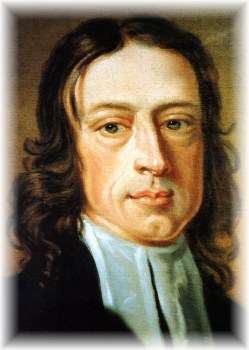
In October of 1735 John Wesley and his brother Charles left England and sailed to Savannah, Georgia where John would be the minister in the newly formed Savannah parish. Part of his religious upbringing had already instilled a desire for holiness of heart and life and Wesley believed that his new appointment provided a wonderful opportunity to hone his craft and enrich his faith. During his time serving as the pastor attendance at the church services steadily increased though he was disappointed by the lack of lived-out faith outside of worship.

John Wesley

John Wesley

Even with the growth in worship, many in the community disliked Wesley’s high church background and it proved to be a continual element of controversy. During this same time Wesley began to fall in love with the young and beautiful Sophia Hopkey. They courted for a period of time but after a brief visit to preach the Good News to the local Native Americans, Wesley was remarkably disappointed to discover that Sophia had married William Williamson. Wesley was devastated by the news and took out his frustration in a rather inappropriate way; he denied Sophia communion during church services.

Wesley, of course, had “reasons” to justify his actions (he believed that her zeal for living out her Christian faith had declined and he followed the guidelines from the Book of Common Prayer in prohibiting her sacramental participation) but he was also fueled by his heartache and anger in withholding the bread and wine. It quickly became quite the controversy and legal action was taken against Wesley eventually leading to him fleeing the colony and returning to England.

One of the highest, and most difficult, callings of Christian disciples is to forgive. When confronted with the question of forgiveness in the community Peter ventured forth the idea of forgiving someone seven times when Christ augmented the proposal to seventy-seven or seventy times seven times. Forgiveness, it would seem, is not something to be measured and checked off the list, but instead something that is deeply entrenched within the life of the community. Wesley let his personal feelings get the better of him, and he foolishly barred a young woman from Christ’s table. Christians, both clergy and lay, are called to the difficult task of everlasting forgiveness, even when it hurts.

Is there someone that you are still holding a grudge against? Who do you need to forgive in your life?

Red With Envy – Sermon on Genesis 25.29-34

Genesis 25.29-34

Once when Jacob was cooking a stew, Esau came in from the field, and he was famished. Esau said to Jacob, “Let me eat some of that red stuff, for I am famished!” (Therefore he was called Edom.) Jacob said, “First sell me your birthright.” Esau said, “I am about to die; of what use is a birthright to me?” Jacob said, “Swear to me first.” So he swore to him, and sold his birthright to Jacob. Then Jacob gave Esau bread and lentil stew, and he ate and drank, and rose and went his way. Thus Esau despised his birthright.

rh-jacobandesau_dsc_0091

There was a man who lived a perfect life. For years he did his very best to maintain the commandments of God, love his family, tithe to his local United Methodist Church, serve on the Trustees Committee, and volunteer as a coach for local little league sports. Everyone knew him, and everyone liked him. He was charismatic and hardworking, personality traits that would come to reward him when he started his own business.

He was a shrewd business man who seemed to be able to predict the rise and fall of the stock market, quickly amassing a vast sum of money that he would then reinvest in the right companies. Yet, even with his vast wealth, he never overdid it with his community. He was humble and thrifty, fitting in with everyone else even though he was wealthier than anyone he knew.

As his life progressed he found success in nearly every direction. His company continued to expand and produce wealth, his family was the ideal example of love and compassion, and he had a strong relationship with his church. Near the end of his days God appeared to him one morning in his office. The Lord said, “Do not be afraid! You have lived a wonderful and virtuous life. I don’t usually do this, but I’m going to make an exception for you; when you die you can bring a briefcase of whatever you want to heaven. So think about it while you still can, and I’ll see you soon.”

During the final weeks of the man’s life he thought deeply about what to bring with him to heaven, and when the time came he was confident with his decision.

Standing on the clouds of heaven, right beside the pearly gates the man was thrilled to see St. Peter ready to greet him and let him into paradise. “Welcome” St. Peter began, “we have been waiting for you. But if I’m being honest I can’t wait to see what you brought to heaven! God doesn’t make a deal like that with just anyone and we have been so curious to see what you brought!” The man smiled and proudly passed his briefcase over to St. Peter. As he opened the case he discovered six perfectly polished gold bars that glowed in the light of heaven.

“Interesting choice,” St. Peter said, “but we’ve already got plenty of pavement here.”

1019greed

Greed. Our current economic downturn is often attributed the vice of greed, having grown out of control. For many of us, we’re not exactly sure how this actually happened, but we are ready to believe that we are suffering because some became too greedy. Greed has no limits or shame; while CEOs make millions and millions in bonuses, regular people are stuck in debt, unsure of the future, starving for work, and afraid of the consequences of others’ greed.

Greed is seductive and always waiting in the recesses of our minds. It is something that tempts all of us, whether we like to admit it or not. Just like the hypothetical virtuous man who lived an incredible life, he failed to appreciate the goodness of God’s kingdom when he brought gold bars to heaven. We so desperately cling to the materialism of our world that we are unable to imagine a life without greed.

Have you ever heard a sermon about greed? The fact that we do not hear about this particular topic seems strange considering how prominent the temptation of greed is considered to be one of the greatest threats for Christians.

Jesus says you cannot serve God and wealth (Matthew 6.24). Paul suggests that the love of money is the root of all evil leading some to walk away from the faith (1 Timothy 6.10). James is very blunt about the folly of greed: “Those conflicts and disputes among you, where do they come from? Do they not come from your cravings that are at war within you? You want something and do not have it; so you commit murder. And you covet something and cannot obtain it; so you engage in disputes and conflicts” (James 4.1-2)

blessed_are_the_rich_time_cover_2006

Time and time again scripture frustrates our conceptions about the world: If we are Christian and wealthy or if we desire to have wealth, we have a problem. 

Greed, however, is not limited to monetary gain alone. Greed sits at the root of most of our sins. We become greedy for wealth, power, position, place, people, and programs. We want more than our fair share. We desire the most for the least effort.

Jacob and Esau were born in conflict with one another.

The first born was red and covered with hair so they named him Esau, which means Red. The second born came out with his hand gripping Esau’s heel so they named him Jacob, which means heel-grabber. Esau would grow to become a mighty warrior, skillful hunter, and a man of the field whereas Jacob was a quiet man, living in tents. Isaac loved Esau and Rebekah loved Jacob.

So it came to pass one day that while Jacob was cooking a meal, Esau came in from the field completely famished. “Let me have some of that red stuff, because I am starving!” Esau said to Jacob. So Jacob replied, “Sure, I’d be happy to, but first sell me your birthright.” “Are you serious, I am about to die from hunger; what good is my birthright to me now?” “Swear to it” said Jacob. And so Esau swore to his younger brother and traded his birthright for some bread and lentil stew. When Esau finished eating he rose and went away and began to despise his birthright.

Who is the greedy one from our scripture? 

Esau’s greed is evident and obvious. Rather than trust in the Lord’s provision, Esau’s vision was limited to the present and he wanted immediate gratification for his desires. In order to satisfy his appetite, Esau’s greed became so powerful that he was willing to give away his future for the present moment. 

We are a generation of busy people, consistently fighting a battle to determine what to give up and what to continue. When our plates become too full with responsibilities we plan to remove that which is unnecessary and no longer life-giving. So many people give up the important things of life to pursue something that is meaningless because we are consumed by our present needs rather than steadfast in our trust of the Lord. Many of us are tempted to ignore our baptismal identifies when we see someone in need, we are tempted to disown our family, friends, and children when they do something wrong. We are often tempted to sell out for something less than what we are truly worth.

Esau’s greed is obvious because it is so similar with our greed. Forgetting the long-term cost, we are quick to serve our sinful desires and natures right here and right now. What do I have to do to make more money as soon as possible? What do I have to do to get that girl at school to like me? We are captivated by the fast sprint rather than the patient marathon.

Pastors love to chastise Esau for so quickly releasing his birthright, and use him as an example for what not to do. But what about Jacob? Jacob who used crooked and deceitful ways to steal his brother’s birthright. He was no doubt the promised one, but that doesn’t necessarily forgive him for taking advantage of his brother’s need.

Jacob’s greed is subtle and relentless. Instead of offering his brother some food out of kindness he is always looking out for number one. Later in the story, after Esau threatens to kill his brother, Jacob is willing to give away all his animals, wives, and children just so that he might save his own neck. Jacob was blinded by the greed of power, to draw to himself everything he could by whatever means necessary, even letting his brother starve.

We are a generation of individualists who are taught from infancy the importance of a capitalistic world view. When we see ourselves at the bottom of the food chain we are willing to do whatever it takes to amass power. So many people will go against their values, morals, and ethics in an instant, purely to make our lives a little better. Many of us are tempted to forget who we are and whose we are because we have forgotten the true meaning behind “the first will be last and the last will be first.”

Jacob’s greed is apparent when we realize how similar it is with our own. Consumed with our lives alone, we ignore the needs of others when they prevent us from getting what we want. Why would I give my money to the church when I am the one who earned it? Why should I be responsible for helping to poor when they should be the ones helping themselves? We are captivated by our solitary vision of the world rather than seeing the world through the eyes of Christ.

Years ago I was preparing to help lead a team of youth on a mission trip to Guatemala. We would be serving the needs of the indigenous Mayans in the highlands for a week by building stones, playing with children, and planting trees. In order to go on the trip, as a youth, you had to regularly participate in youth group and fundraising. Throughout the year there were numerous opportunities to plug into the regular programming and this requirement helped to foster strong bonds and fellowship before we left the country.

There was a man at the church whose daughter wanted to attend the trip but had not participated in any of the youth activities, nor was she part of the fundraising. Her father believed that these requirements were frivolous and he was going to beat the system.

One morning he arrived at church and walked straight to the pastor’s office with a smile on his face. He held up a substantial check that he was willing to give to the church with the following stipulations: I will give this money if it directly goes to the mission trip to Guatemala, and if it guarantees my daughter a space on the trip.

Greed. I’m sure that the man felt he was doing a great thing for the church and indeed for the kingdom of God, after all here he was willing to give of his own money to help others in need. Yet, don’t you see how similar he was to Jacob and Esau? Rather than encouraging his daughter to give of her time through participation in youth group and fundraising he, like Esau, wanted immediate results for the minimal effort. Yet at the same time he was willing to challenge the church and, like Jacob, was willing to have his needs met at any cost while foregoing the need of others.

Greed is mighty and powerful. It seduces us and tells us that we are the most important beings in the universe. It fuels our desire for gratification in ways that are even beyond our imaginations.

Yesterday I arrived at our church to do some pre-marital counseling only to discover the church had been broken into and my office door had been kicked in. With a knot in my stomach I walked into my office: all of the drawers had been opened, most of my paperwork examined and scattered. Thankfully nothing seemed to be missing which furthered the mystery of the break-in. I don’t know who did it. I don’t know what they were looking for. But I’m sure that they were fueled by greed.

Jesus, thanks be to God, calls us to a different life. Less is more. We are not the center of the universe, God is. We have more than we will ever need because God’s love and grace abound and our cups runneth over.

In order to break free from the slavery of greed we begin by acknowledging it in our lives, in whatever forms it presents itself. It’s easy to point out the greed in others, but now we have the challenge of looking inward at our greed. We may succeed in our fight against greed only when we learn to trust God for our needs, when we see the world the way that God sees us, and when we are prepared to give our lives for others because Christ gave his for us.

Amen.

Devotional – Romans 7.15

Devotional:

Romans 7.15

I do not understand my own actions. For I do not do what I want, but I do the very thing that I hate. 

Weekly Devotional Image

While I was in seminary I became fascinated with the way particular theologians lived their lives. I would read the great treatises and reflections from the likes of Augustine, Aquinas, Calvin, Luther, Wesley, and Barth and have my mind opened to the great wonders of God’s interaction with creation. Their words became life-giving for me as I found myself persuaded by how they understood the world and their critiques of human behavior. However, for as much as I loved their writing I became frustrated with the ways they lived out their faith. With every wonderful theologian I discovered a dark and dangerous life of sin that appeared incompatible with what they were writing about.

Church Dogmatics

Church Dogmatics

For example: Karl Barth, my theological mentor, wrote the massive collection of Church Dogmatics which have slowly become earmarked and absorbed throughout my brief career in ministry. Barth engaged a new theological perspective focused on the paradoxical nature of divinity while at the same time opposing the rise of the Nazi party and Adolf Hitler in Germany. Barth’s thoughts have greatly shaped my understanding of God and church and I am thankful for his witness to the divine in the realm of theology. But like all Christians, Barth was both a saint and a sinner.

vonk

In 1924 Karl Barth met the young and gifted Charlotte von Kirschbaum after he had been married for 12 years. They quickly hit it off and became enamored with one another to the degree that she was invited to live with the Barths beginning in 1929; a relationship that would last for 35 years. They worked together on Barth’s work and were indispensable to one another while creating the Church Dogmatics. While Barth’s wife, Nelly, took care of the children, he and Charlotte would take semester break vacations together. The relationship caused incredible offense among many of Barth’s friends and colleagues and Barth’s children suffered from the stress of the relationship.

After I learned about Barth’s academic and perhaps physical affair, it was hard for me to respect his writings. The dialectic theology that had been so compelling quickly collected dust on my shelf. It took a long time for me to return to Barth’s work, only after I reflected about the sins in my own life.

Sin is unavoidable. Paul reflected on his journey of faith and the temptation of sin in his letter to the church in Rome: “I do not understand my own actions. For I do not do what I want, but I do the very thing that I hate.” What an incredible reflection on sin. We know, those of us who have been raised in the faith, what not to do. We have been taught how to recognize the sinful temptations in our lives. We want to be good and make the right choices. But sin is unavoidable. We choose they very thing we hate and sin continues to creep into our lives with disastrous consequences.

I wonder how often we reflect on our sinfulness. We might hear about what to avoid from the pulpit or from scripture but do we admit our sins to ourselves? I will freely admit that for me it is far easier to reflect on the good things of my life than to admit my short-comings. Perhaps today is the day that we should join Paul and begin to wrestle with our sins. We can begin by admitting the inner conflict within us and then recognize that, like with Barth, God has come in the form of Christ to redeem even our greatest sins so that we can live into a new life of faith and forgiveness.


Devotional – Romans 6.22

Devotional:

Romans 6.22

But now that you have been freed from sin and enslaved to God, the advantage you get is sanctification. The end is eternal life. 

Weekly Devotional Image

Over the past few years our church has made a concerted effort to welcome first time visitors to worship with radical hospitality. I stand outside and introduce myself to anyone here for the first time, we have greeters waiting by the entrance to the sanctuary, we send around a pew pad to gather addresses/phone numbers to follow up with people later, and we give away a travel coffee mug with our name, address, and phone number. All of these things are done in a hospitable way in order to demonstrate our love for others, and our desire to continually share the message of the Lord with them.

welcome-first-time-visitor

Some churches go far above and beyond what we do to entice first time visitors to return; I have heard of churches that give away bags of candy, others welcome visitors with coupons to local restaurants, still others give away books, DVDs, and further promotional material. Some churches have committees dedicated to training members on how to speak to first time visitors and invite them to return for another aspect of church life. In the last few years “radical hospitality” has been a major focus of the mainline and non-denominational churches to retain worship numbers.

radical-hospitality-2-web

Yet, sometimes, when I read scripture I am reminded of how unappealing Christianity can be. When Christ went ou among the multitudes he did not say: “here is some promotional material about what our movement is doing, we hope to see you next week!” Instead he brought people into his fold with some of the worst PR I have ever read: “let the dead bury the dead; but as for you, go and proclaim the kingdom of God… whoever loves father or mother more than me is not worthy of me; and whoever loves son or daughter more than me is not worthy of me… whoever wishes to be great among you must be your servant, and whoever wishes to be first among you must be slave of all…”

I fear that today we attempt to make the gospel so appealing that, according to the ways of the world, we water it down. It is a joyous and wonderful thing to have been freed from the power of sin, but we must not forget that we are now enslaved to God. The advantage of discipleship is our own sanctification and eternal life but it comes at a cost. Christianity is not some other wonderful way of thinking about life, it is a demanding and difficult call to live radically transformed lives where the ways of God are more important than the ways of the world.

So, this week I challenge us to reflect on our faith and the ways that we try to share it with others. Are we inviting people to church because it makes us feel good, because a full sanctuary looks better than an empty one? Or are we willing to admit the paradox that being enslaved to God is is the most wonderful and powerful thing we can do with our lives?

The Temptation of Temptation – Sermon on Genesis 2.15-17, 3.1-7

Genesis 2.15-17, 3.1-7

The Lord God took the man and put him in the garden of Eden to till it and keep it. And the Lord God commanded the man, “You may freely eat of every tree of the garden; but of the tree of the knowledge of good and evil you shall not eat, for in the day that you eat of it you shall die.

Now the serpent was more crafty than any other wild animal that the Lord God had made. He said to the woman, “Did God say, ‘You shall eat from any tree in the garden’?” The woman said to the serpent, “We may eat of the fruit of the trees in the garden; but God said, ‘You shall not eat of the fruit of the tree that is in the middle of the garden, nor shall you touch it, or you shall die.’” But the serpent said to the woman, “You will not die; for God knows that when you eat of it your eyes will be opened, and you will be like God, knowing good and evil.” So when the woman saw that the tree was good for food, and that it was a delight to the eyes, and that the tree was to be desired to make one wise, she took of its fruit and ate; and she also gave some to her husband, who was with her, and he ate. Then the eyes of both were opened, and they knew that they were naked; and they sewed fig leaves together and made loincloths for themselves.

tree_of_life

The Lord God commanded the man, “You may freely eat of every tree of the garden; but of the tree of the knowledge of good and evil you shall not eat, for in the day that you eat of it you shall die.”

In the entire range of the world’s writings, it would be immensely difficult to locate any passage so brief that has had such immense influence on human thought. I have heard this scripture preached upon countless times, I can remember learning about it in confirmation class years ago, and I can vividly remember struggling with the text as I attempted to explain it to pre-school age children during a particular Vacation Bible School. The story of Eden is so well known and discussed that even most self-affirmed “non-religious” people can even explain what took place in the Garden. 

This passage has been debated, ripped apart, examined, micromanaged, and exegeted for centuries. Generations of Christians have dwelt upon these verses unlike any others to explain the introduction of sin into the world through the one man, Adam.

07-04-012

I know a family that had it all together. The husband and wife always sat next to one another in church, fingers wrapped together as they listened to the sermons week after week. The children were all attractive, known in the community for their well-behaved manners, regular fixtures on the honor roll at school. Because of their wide interests and pursuits the family was known throughout many of the segmented areas of the community; sports, music, drama, politics, faith, etc. On the surface they were that perfect family. Others families would often hold them up on a pedestal and compare their own flawed family to this ideal one. Why can’t my children work harder like theirs? Why don’t our parents love us as much as theirs do?

What no one realized, was that underneath the exposed public appearance, the family was about to fall apart. I don’t know all the details about what happened leading up to the great schism, I don’t know who was to blame for the many rumors than began to spread around town, but I do know that it began with the husband.

He felt unfulfilled. There was a constant nagging sensation that he deserved more than what he had. Though he had that ideal wife, and the ideal children, with the ideal house, and the ideal job, he believed he deserved more.

Thats when a younger woman appeared in his life. He knew that it was wrong to flirt with her, he knew that it was wrong to lie to his wife about spending time with her, but he did it anyway. As time went on, casual get-togethers became more frequent, the conversations moved from flirting to romance, and soon they were engaged in an affair.

I don’t know if this is true, but I imagine that late at night, when laying awake in his bed he would rationalize what he had done: If she makes me happy how can it be wrong to be with her? I deserve her love. I deserve this kind of happiness in my life.

Eventually he could no longer continue to live the lie. He told his wife what he was doing, without remorse he left her and the children, and started a new life.

Europe_a_Prophecy,_copy_D,_object_1_(Bentley_1,_Erdman_i,_Keynes_i)_British_Museum

In the beginning God created the heavens and the earth. He gave meaning to existence, brought forth light and life, and populated the earth with his creations. The paramount of this creative work were our first parents, Adam and Eve, made in God’s image. They were given everything they needed: life, land, food, companionship, and purpose. At the beginning of our scripture this morning Adam and Eve were content with all they needed, but they did not have everything. 

Enter the serpent; crafty and wise. He said to Eve, “Did God tell you that you could eat from every tree in the garden?” and she replied, “Of course we may eat the fruit of the trees in the garden, but God told us not to eat the fruit of the tree in the middle of the garden, not even to touch it, because if we do we will die.” But then the serpent said, “Surely you will not die! God knows that when you eat of that tree your eyes will be opened, and you will be like God, knowing good and evil.” At that moment Eve saw the tree in a new light, she believed that it was good for food, a delight to the eyes, and that it would make her wise. So, she took the fruit from the tree and ate, gave some to Adam who also ate, and their eyes were opened. For the first time they realized they were naked and they sewed fig leaves together and made loincloths for themselves.

Real temptation is never an offer to fall, but instead it comes as an offer to rise. Notice: the question was not, “Do you wish to be like the serpent?” but instead, “Do you want to be like God?” The truest forms of temptation are indications of strength, not weakness. We are not tempted to do what we cannot do, but what is within our power. The greater our strength, the greater the temptation.

This is how the seductions of sin and temptation present themselves: Want to know a little bit more about life? Want to be a little bit greater than you are already?

The serpent of life, the deepest part of our imaginations, plays on our condition and places the seed of doubt: I know this is wrong, but if the fruit of it is good, what sense can there be in not enjoying it? The way the serpent tempted our first parents in the garden comes to us still this very day, presenting us the idea that we can know better than God.

Reinhold Niebuhr once asked, “Do we belong to God, or do we belong to the devil? We most certainly belong to God, but we are in danger of becoming the devil by imagining that we are God.” That is true temptation at its most frightening degree; you can be like God! In our pride and lust for power, we begin to define our own understanding of good and evil. We become masters of rationalization for the sins and the wrongs we commit.

Thats what happened to the man from that perfect family. Its what happens to each of us when the temptation of temptation dangles before us. We rationalize ourselves out of making the right choice. We instantly become the center of our own universe, our own god; we become the only thing we worship.

And its not just us. This has been going on throughout the entirety of human history, particularly through what has been revealed in scripture. When God told Adam and Eve not to eat from the tree of knowledge of good and evil, they reached out for the dangling fruit and consumed it. When God commanded the wandering Israelites to have no others gods before him, they created their own golden calf and began to worship themselves instead. When Jesus called Peter to follow him, Peter was quick to deny Jesus three times as he was being led to the cross. When temptation strikes, it hits us in the very core of our beings, and once it enters the realm of possibility it can be dangerous and evenly deadly.

But the fact remains that we live in a universe which God controls, not us. When God gave each of us the breath of life to exist in this world, to live, laugh, and love, he did not intend that we should take over the school and change the expectations to suit ourselves.

Temptation will confront us whether we ask for it or not, it hangs out like fruit begging to be plucked and consumed. In order to confront our temptations we are called to recognize that we live in a created world where we must accept reality and not believe that we can indulge in every single wayward fantasy. There are some things in life that we are not to have, some prizes we shall not win, and some ambitions that the grace of God will not let us gratify. When our consciences tells us, as it told Adam and Eve, that some particular temptation is not for us, we do well to not rationalize our curiosity or our appetite into an justification for reaching out to take it.

We live in a risky world full of temptations. Some of us are strong enough on our own to resist the constant bombardment of sinful choices, but most us will give into temptation when it appears before us. As Christian disciples we recognize that God means for us to grow in this difficult world, surrounded by influences clamoring for our allegiance. Our call is to not shift our responsibility onto someone or something else, but to make our own creative choices for the good.

Oscar Wilde said, “I can resist everything except temptation.” Many people act as if no one could reasonably be supposed to resist temptation. Temptation is a present element in every life and it comes to everyone. But it is possible to confront our temptation and not yield to their alluring powers. Just because a choice exists, that doesn’t give us reason for choosing the wrong one.

In my experience, one of the best ways to resist the temptation of temptation is to speak them aloud and confess them to our trusted friends or loved ones. The cost of this honesty is a remarkable amount of vulnerability. To confess our weaknesses requires a fundamentally strong trust with others.

So, confession time. One of my greatest temptations is to believe that I deserve this. That somehow I have been blessed with such an incredible community, church, and vocation because I have earned it. That the reason so many new people have been coming to church is because of ME. Now on some level this is true, I have worked hard to be where I am, but there is a remarkable temptation to believe that I have achieved this all on my own. There is a power that comes with the pulpit, a tempting power to become the center of my own universe, to preach myself, to be the shining example for all of you to follow.

The truth, however, is that I am called to proclaim Jesus Christ, and him alone. I am a flawed and weak creature, guilty of sin and falling short of God’s glory. I want all of you to know about this temptation in my life, so that in speaking it aloud I might confront it, and that by making it known all of you can help me battle against it.

For some of us, though, speaking aloud a temptation is too difficult. The amount of vulnerability required to admit a temptation is so staggering that we cannot even imagine sharing it with someone else. Thats okay. There is another way that we can begin to address our temptations. Before sharing it with someone else, we do well to admit our temptations to ourselves. 

WoodFire

In each of your bulletins you will find a blank piece of paper. I encourage you to take it out, and in the next few moments prayerfully consider the temptations in your lives; the true and deep temptations that you wrestle with. Write one of them down on that piece of paper. Admit the temptation to yourself so that you can begin to resist it. When our service ends this morning there will be a fire (in a fire pit) on the front lawn of the church. Throw your confession of temptation into the fire. Let God take that temptation from you. Let the God who was revealed in Jesus Christ, help carry your burden. Watch you paper burn in the fire knowing that God is with you in this life, walking beside you, loving you in spite of your temptations.

(Pause to write down the temptations)

My friends, here we are taking our first steps into the season of Lent. This liturgical journey is always tough. But it gives us an opportunity to confront the different sins and temptations in our lives. Over the next six weeks we can begin to reconcile our broken relationship with God, with others, and with creation. As you prepare to leave from this place, watch your temptation burn in the fire. Repent and believe the Good News of Jesus Christ. Witness the flame of the Holy Spirit consume that temptation in your life knowing that nothing will ever separate you from the love of God in Jesus Christ our Lord.

Amen.