Stuck In The Bushes

Romans 5.12-21

Therefore, just as sin came into the world through one man, and death came through sin, and so death spread to all because all have sinned – sin was indeed in the world before the law, but sin is not reckoned when there is no law. Yet death exercised dominion from Adam to Moses, even over those whose sins were not like the transgression of Adam, who is a type of the one who was to come. But the free gift is not like the trespass. For if the many died through the one man’s trespass, much more surely have the grace of God and the free gift in the grace of the one man, Jesus Christ, abounded for the many. And the free gift is not like the effect of the one man’s sin. For the judgment following one trespass brought condemnation, but the free gift following many trespasses brings justification. If, because of the one man’s trespass, death exercised dominion through that one, much more surely will those who receive the abundance of grace and the free gift of righteousness exercise dominion in the life through the one man, Jesus Christ. Therefore just as one man’s trespass led to condemnation for all, so one man’s act of righteousness leads to justification and life for all. For just as by the one man’s disobedience the many were made sinners, so by the one man’s obedience the many will be made righteous. But law came in, with the result that the trespass multiplied; but where sin increased, grace abounded all the more, so that, just as sin exercised dominion in death, so grace might also exercise dominion in death, so grace might also exercise dominion through justification leading to eternal life through Jesus Christ our Lord.

I take a lot of pride in my ability to communicate with people of different age groups. On any given week I will spend time explaining theology to five year olds in our preschool, fifteen year olds in our youth group, 50 year olds in our bible study, and then the rest of you on Sunday morning. It is definitely a challenge taking ideas from the likes of Paul and proclaiming them in a way that can be appreciated for the here and now for the young and old.

But sometimes, I fail.

Like the time I tried to address the moral and ethical dilemmas of Capital Punishment to our youth group one night, to the times I’ve tried to proclaim the strange complexity of confronting our finitude on Ash Wednesday to our preschoolers, to the times I’ve told some of our much older adults that one must have the faith of a child to inherit the kingdom of God.

Communicating the gospel, sharing the Good News, is a challenge, and I definitely failed once when we were on our mission trip to West Virginia a couple summers back. Picture it, if you can: It is hotter than blazes outside, and I’m stuck in a tiny kitchen surrounded by teenagers who would rather be instagramming and snap chatting one another than cleaning a floor or painting a ceiling. And it was silent.

So I did what I do: I started asking questions…

“What’s your favorite story from the bible?”

One of our boys immediately said something about David defeating Goliath. The Davidic story will forever rest in the hearts of prepubescent boys who struggle with how rapidly the girls are growing while they remain the same.

A boy from another church said, “Well, I kinda like the one about, you know, Jesus feeding people?” while saliva poured out of his mouth as he stared at the cooler in the corner filled with our lunches.

A girl from a different church said, “I’ve always been rather captivated by Jesus turning water into wine at the wedding at Cana in Galilee.” To which I made a mental note to bring this up with her youth group later in the evening. No sensible teenage girl should be thinking about water turning into wine, and certainly not when Jesus has anything to do with it.

We went on and on, and then it was my turn to answer. “Well” I said, “It’s not my favorite story, but I’ve always loved this little detail at the beginning of the bible, in the book of Genesis. Adam and Eve were placed in the Garden of Eden with a choice. They could choose to live in perfect harmony with God and God’s creation, with each other, free from sin and free from death. But Adam and Eve made the wrong choice, they wanted to be like God, and as soon as they tasted the fruit from the tree of knowledge of Good and Evil, their eyes were opened, and they knew they were naked.

“But here’s the part that gets me every time. Almost as soon as they sin, they heard the sound of God walking in the garden and they both sprinted for the bushes. But God called out, ‘Where are you Adam? Where are you Eve?’ After waiting for a few moments, Adam popped his little head out of the bushes, and told God that he was hiding because he was naked and afraid.”

To which God said, ‘Who told you that you were naked?’

“Isn’t that hilarious?” – The teenagers had all stopped working while I was sharing the story, and now they were all staring at me with eyebrows askew. I could hear the paint dripping off their brushes onto the floor as if even the crickets were too concerned to chirp. One of the boys finally broke the silence to say, “Um… I don’t think it’s very funny. If I were naked and God came looking for me, I’d run for the bushes too!”

Do we know this old, old, story? Do we know what sin is? Do we know what happened to Adam and Eve in the Garden of Eden?

What kind of stories and habits and beliefs do we want to pass on to the coming generations? I feel like I am forever hearing about the good ol’ days when “we knew our bibles” and “we would’ve gone to school with snow like this when I was a kid” and “we entertained ourselves with our imaginations and not a screen in our pockets.”

Do we wish that things could go back to the way they were? Are we worried about the future that we are handing to our children?

We can talk and talk about what we want to pass on, what we hope to engender, but if we don’t know our story, if we don’t know where we came from, how in the world can we even hope to take a step in the right direction?

tumblr_nfzluvor3q1sk7sreo1_500

Just as sin came into the world through one man… Paul assumes that we know the story, that we know the details of the Garden. He does not waste lines in his letter rehashing the characters and the questions, he gets right to the point: Sin came into the world through Adam and Eve. They, and therefore we, broke the covenant with God. The transition from God’s rule to the rule of sin and death came into the world because of our rebellious and disobedient desires.

This is our condition. There is no going back. Fear and shame and anger and disappointment are our lives. We are, in a sense, stuck in the bushes for good, hoping that God will not come looking for us.

We are in the bushes. And Lent is a great time to ask the question: Why? Which of the commandments have we broken? Did we work on the Sabbath? Have we hated our mothers or our fathers? Did we covet something that did not belong to us? An object, a job, or God forbid, a person?

How would we respond if we heard God walking toward us in the middle of our sin? We, like Adam and like that boy on the mission trip, would run for the bushes.

Paul assumes that we know the story of Adam and Eve in the Garden because it is OUR story! Adam’s sin is our sin, and it not only divided us from God, but also brought death into the world, which spread like a disease. This is Paul’s point, and he says it in these few verses over and over again.

We are trapped in sin and death and we are stuck in the bushes. That’s the story of the Garden. Is this what we want to pass on?

Truly I tell you, we cannot know who we are to be, if we do not know our story. This inexhaustible, unexplainable, indescribable moment from the beginning is who we are. It is the story of how the life of order fell into disorder. But, thanks be to God, it is not the end of the story.

Adam brought the entirety of humanity down, down to the depths of death and destruction. Jesus, however, is the new way who is able to create a new humanity.

The promise of a good and remade and hopeful future comes from the old story that is forever new. The story of our death, and then the death that freed us from sin and death.

In Jesus Christ our stories are made new; God, as the author of salvation, takes up the pen and starts a new chapter through the life, death, and resurrection of his son. This is the story that those who are coming, the one who will follow us, need to hear. This is the story we need to share. We need to pray for the courage to shout this story from the rooftops as if our lives depended on it, because they do.

The only way to victory, the way to upend what was done in the Garden, is through the cross. We might think of a different way, a more efficient and less taxing way, but the way of the cross is the WAY that Christ defeated death.
08687e2b32757ff3722238f19cd727cd

But this is not an easy story to tell. The message and value of the cross comes with a cost. It is difficult, it is selfless, and frankly it is un-American. Today, we would rather surround the young with lessons that teach very different values: get the job, earn as much as you can, find the right spouse, buy the car, lose the weight, invest in the right companies, bring 2.5 children into the world, purchase the perfect house, and you will be free and life will be perfect.

That’s the story we tell. And it’s a lie! It’s all a lie! None of these things can give life. They cannot give us the identity and purpose and hope we so desire. The job will change, the money will disappear, the spouse will grow old, the body will too, the companies will falter, the car will rust, the children will not listen; Sin and Death corrupt them all.

But there is nevertheless Good News, there is a way out of the bondage that was brought into the world by the one we call Adam. We are freed through the one we call Christ.

We are stuck in the bushes of our own sin and shame. But Christ comes to us in the Garden of our own demise without a question, but a call. Jesus does not ask us who told us we were sinning, Jesus says follow me. Follow me to Galilee, follow me to Gethsemane, follow me to Calvary.

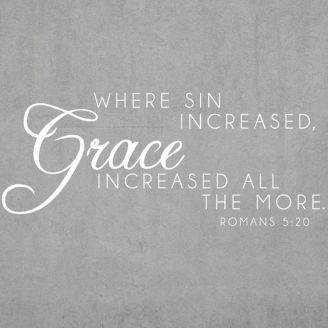
Jesus is the way and the truth and the life. Sin has increased in this world and in our lives, but God’s grace in Jesus Christ has abounded all the more.

The story, our story, began in the Garden, but it did not end there. It continued through the strange and wild wilderness in the days of Abraham, weaved through the journey to Egypt and back again in Jacob and Joseph. It rose through the power of David and Solomon, and fell through the failure of God’s people worshipping idols. It danced through the prophets who remained faithful to the Lord, it endured droughts and famines, it saw suffering and sadness. It connected the lives of the powerful with the powerless, it brought down the high and lifted up the lowly.

It was born again in a manger in a small town called Bethlehem; it trudged through the towns of Galilee and sailed over the sea. It walked through the streets of Jerusalem and turned over the tables at the Temple. It was dragged before the council and the ruling elite. It was marched up to a hill and nailed to a cross. It was silent in a tomb for three days. And it broke free from the chains of sin and death.

That is the story. It is a story worth telling over and over again; because in it we discover who we are and whose we are. In it we see ourselves stuck in the bushes being beckoned by Jesus to follow him. And in it we realize that it is not just a story, nor even our story, but THE story. Amen.

 

romans_feature-01

The Elephant In The Room

Romans 5.1-11

Therefore, since we are justified by faith, we have peace with God through our Lord Jesus Christ, through whom we have obtained access to this grace in which we stand; and we boast in our hope of sharing the glory of God. And not only that, but we also boast in our sufferings, knowing that suffering produces endurance, and endurance produces character, and character produces hope, and hope does not disappoint us, because God’s love has been poured into our hearts through the Holy Spirit that has been given to us. For while we were still weak, at the right time Christ died for the ungodly. Indeed, rarely will anyone die for a righteous person – though perhaps for a good person someone might actually dare to die. But God proves his love for us in that while we still were sinners Christ died for us. Much more surely then, now that we have been justified by his blood, will we be saved through him from the wrath of God. For if while we were reconciled to God through the death of his Son, much more surely, having been reconciled, will we be saved by his life. But more than that, we even boast in God through our Lord Jesus Christ, through whom we have now received reconciliation.


Sometimes I’ll be running at the gym, or walking the dog, or just sitting in my office when an idea will pop into my head. The idea starts like seed and then it germinates throughout my mind into sermon topics and bible studies and blog posts. The idea grows and grows and before it disappears into the gray matter of my brain I make sure to write it down.

And, (would you believe it?) an idea is coming to me right now! But I don’t have any paper up here so I need you all to write this stuff down (seriously).

Okay, we are justified by faith, God’s faith in us. That’s what we talked about last week. And because we are justified by faith, we have peace with God through Jesus. And, I mean, not only that, but we are bold to boast of God’s grace in our worst moments, because we know that our suffering leads to endurance, and endurance leads to character, and character leads to hope.

Yeah, that’s good.

We arrive at hope because God’s love has been poured into our hearts through the Spirit. And we know that God loves us because while we were still weak, Christ died for the ungodly. Right? Like, how often will someone die for a righteous person? Though, I guess for a good person someone might actually dare to die. But God proves his love to us in that while we were sinners Christ died for us!

Still with me?

Okay, and its even more than that, now that we have been justified by Christ’s blood we will be saved from the wrath of God. Through Jesus’ death we were reconciled back to God, and through Jesus’ life we will be saved! This is worth boasting about!

Did you get all of that?

Let me try to simplify in case I lost any of you: We are justified by God’s faith in us. Suffering leads to endurance, endurance to character, and character to hope. We arrive at this hope because we know God loves us. And we know God loves us because Christ died for us while we were yet sinners…

domain117

Paul is hard to take from the pulpit. Give me one of the stories of Jesus’ healings, or any of the parables; they preach themselves. Sometimes I even think it would be better to just read the scripture and not preach anything at all. But with Paul it takes on a new and strange and difficult dimension. Paul, in his letter to the Romans, writes in a form of rhetoric almost lost to the sands of time. In our current age of 140 character tweets from our President, frenetic television shows, and fast-paced YouTube videos, we no longer have the minds, nor the time to hear Paul’s theology.

A theology that was probably dictated to someone else to write down while Paul was thinking it up.

You can almost hear that in the reading can’t you? It’s like he remembered something from a few sentences back and wants to clarify it.

The Epistle to the Romans is not a perfectly crafted sermon meant for pulpit proclamation. Instead, it’s practical theology dictated from the greatest missionary the world has ever known.

Paul begins this section by addressing suffering; it’s the part of the passage that is most often mentioned. And he’s not just talking about some esoteric understanding of suffering. Paul is talking from experience! At the time of this letter, Paul was not a young, pre-maturely balding, healthy pastor standing in a pulpit telling his worn and suffering congregation to keep their chins up. No, this is entirely different. Paul suffered for the gospel, was arrested and persecuted, and yet he continued on. That’s why he can say that suffering leads to hope. For Paul it’s not a false and empty promise, it’s what he has experienced.

And then we come to the section about dying for others.

maxresdefault (3)

Dying for others, for one’s country, for our families, these stories captivate our hearts and our emotions. The thought of all the firefighters courageously rushing into the World Trade Center buildings on September 11th, or the countless volunteers who went to the other side of the world to fight in World War II, or just hearing about a mother who sacrifices herself to save her children, these stories really pull our heart strings.

But here, in Paul’s letter to the Romans, this is even more radical than any of those stories. We have to try to put aside the emotional waves of grief and reverence for the stories of modern sacrifice for one’s friends, family, or country. Paul does not say that Jesus died for his friends or his family or even his country.

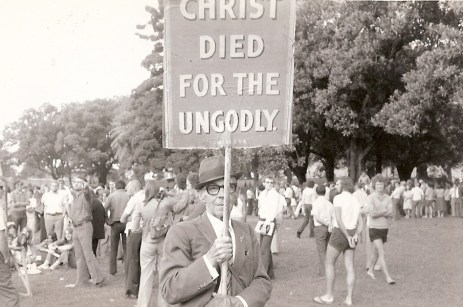
            Christ died for the ungodly!

Paul says that Christ died for us while we were his enemies!

Talk about an elephant in the room… While we were yet sinners, Christ died for us. We hear it in Romans, we hear it every time we come to the table for communion, but do we believe it?

We don’t like talking about sin, we good Christian folk. We want to hear about love, peace, joy, hope, and happiness.

Only the converted, those whose lives have been truly captivated by Christ, think of themselves as sinners. Others won’t have anything to do with it. That, my friends, is why we so seldom read from Paul’s letters in worship; we don’t like the idea of ourselves as sinners, as ungodly.

“Preacher, can’t you just give us a little more grace and love from the pulpit? Nobody wants to come to church to hear about sins!” And yet, we enjoy reading in the gossip columns and watching TMZ to learn about other people’s sins, but that’s their problem.

We don’t like admitting our shortcomings, our faults, and our helplessness. We reject that gospel and substitute our own, one we talked about a couple weeks ago. We’d rather believe the American gospel: God helps those who help themselves. Actually, Paul tells us quite the opposite: When we could not help ourselves, when we were stuck in the shadow of sin, Christ died for us.

73d8be39b92edf6031d5a129be633895

In our current age of tweets, twenty-minute TV shows, and traffic filled websites, we want everything compartmentalized as much as possible. Instead of reading a newspaper we want a short and brief email every morning that tells us only what we need to know. Instead of buying the latest hit book and spending an afternoon in our favorite chair, we read a summary online so we can talk about it with our friends. And instead of coming to church for an hour a week to experience the presence of God, people read the sermon online and check off the box on the Christian list of to-dos.

We, whether we admit it or not, are consumed by a desire to compress as much as possible into something as small as possible. Paul completely rejects this desire and notion that we can limit the gospel to any particular sentence or paragraph. The Gospel, the Good News, is nothing less than the life, death, and resurrection of Jesus Christ, Son of Man, and Son of God.

But, if we cannot resist the temptation, if we have to have something small, something we can keep with us at all times to know what the gospel is, this might work: While we were still sinners, Christ died for the ungodly.

            This is crazy stuff people! Our Lord and Savior, the one in the stained glass window behind me, he died for the ungodly!

Who is the ungodliest person you can think of right now? I know some of you will immediately think of the members of ISIS who are terrorizing regions under their control. Others of you will immediately think of the leaders in North Korea who are trying their best to develop nuclear weapons of mass destruction. Some of you might think of Donald Trump and the seemingly endless Executive Orders streaming out of the Oval Office these days. Some of you might even be thinking about the person sitting in the pew next to you.

If it’s too hard to think of someone ungodly, just think about one person you’re angry with right now…

Jesus died for that person. Whoever you’re thinking of, whoever that completely backwards and horrible and disappointing person is that’s bouncing around in your mind right now, Jesus died for them.

That’s the real elephant in the room. Jesus died precisely for the sort of person that would crucify him and mock him while they were doing it. People like us.

These things we call faith and discipleship are not very religious in the sense of being pretty and easy to handle. They are not something we can carry around in our pockets during the week only to show up when we need them. The cross of Christ is far too offensive to be religious.

The cross and the death of Christ shatter our expectations given to us by the world. They, in all their strangeness, reorient us back toward the radical nature of God’s love. The offensive and scandalous cross is our paradoxical hope and joy. Because in and through the cross, God did something that none of us would do.

            As the old hymn goes, the immortal God hath died for me.

God’s love in Christ is so comprehensive and so bewildering that it is able to wash away even the greatest of sins.

We started this sermon with a dictation, an imaginative way to reimagine the writing of Paul’s letter to the Romans. If you wrote down anything I hope you wrote this: While we were yet sinners God died for the ungodly, for us.

Now I want you to write down the name of the person you thought of just a moment ago, the person who you’re angry with. Write his or her name at the top as if you meant to send this letter to them.

Now you know that I’m going to ask you to send it. And I know that you probably won’t. You won’t for the same reason I wouldn’t; it’s offensive and it’s uncomfortable. We won’t send this affirmation of God’s unnerving love to someone else because it would force us into an area we’d rather avoid; we don’t want to come off as too evangelistic, or too churchy. We don’t want to admit our sin.

Can you imagine the shock on the person’s face if they received your dictated letter from the adapted words of the apostle Paul? Can you picture how bewildered they would be by something Christians say all the time? Can you imagine how it would change the way you look at them for the rest of your days?

While we were still weak, Christ died for the ungodly. In our weakness we reject the challenge to confront our sins and we reject the forgiving nature of God’s love for the world. We forget that Christ died for our shame and our sin and our sadness. We forget that Christ died for our disappointment and our degenerate derelictions and our deficiencies. We forget that Christ died for us and for the people whose names’ are at the top of our letters.

And yet Christ still died for us! What wondrous love in this that that caused the Lord of bliss to bear the dreadful curse for my soul! To God and to the Lamb who is the great I am, we shall sing! And when from death we’re free, and through eternity, we shall sing.

For while we were yet sinners, Christ died for us.

Amen.

Open Hearts. Open Minds. Open Doors.

Romans 4.1-5, 13-17

What then are we to say was gained by Abraham, our ancestor according to the flesh? For if Abraham was justified by works, he has something to boast about, but not before God. For what does the scripture say? “Abraham believed God, and it was reckoned to him as righteousness.” Now to one who works, wages are not reckoned as a gift but as something due. But to one who without works trusts him who justifies the ungodly, such faith is reckoned as righteousness. For the promise that he would inherit the world did not come to Abraham or to his descendants through the law but through the righteousness of faith. If it is the adherents of the law who are to be the heirs, faith is null and the promise is void. For the law brings wrath; but where there is no law, neither is there violation. For this reason it depends on faith, in order that the promise may rest on grace and be guaranteed to all his descendants, not only to the adherents of the law but also to those who share the faith of Abraham (for he is the father of all of us, as it is written, “I have made you the father of many nations”) – in the presence of the God in whom he believed, who gives life to the dead and calls into existence the things that do not exist.


There are many many many versions of Christianity. And not just denominations like Presbyterians, Episcopalians, and Baptists; even within something like the United Methodist Church there is a great myriad of ideas about what it means to be the church. For instance: There are 7 UMCs in Staunton, and we could all use the same text on Sunday morning, and just about everything else would be completely different from one another.

But the one thing that might unite all churches, almost more than baptism or communion, is a desire to appear as welcoming and inclusive as possible.

All you need to do is check a church website, or bulletin, or marquee and you can find a self-made description that says something like: we are an open, friendly, inclusive, and welcoming church. Or just try asking someone about their church and you’re likely to hear: “we love everybody!”

In the United Methodist Church, we like to say we have open hearts, open minds, and open doors.

37807

What a righteous slogan.

Inclusivity, being open, they’re quite the buzzwords these days. Rather than appearing at all judgmental, we want people to know that we accept all people. Rather than seeming prejudiced, we want everyone to know that they are welcome. Rather than looking at people based on their outward appearance, we want to the world to know that we care about the content of one’s character.

But the truth is, there are a great number of people who have been ignored, if not rejected, by congregations claiming to be inclusive (including our own).

A couple weeks ago I preached a sermon on the mission of the church. I made the claim that instead of being consumed by a desire to fill the pews, instead of trying to make the world a better place, the church is called to be the better place that God has already made in the world. And as the better place, church should be the one place where no one is ever lonely. I must’ve said that last part no less than three times from the pulpit.

And when we finished worship, most of us walked up the stairs to the Social Hall for a time of food and fellowship. Like we usually do, a long line was formed and one by one we filled our plates and sat down.

The time difference between proclaiming the sermon and sitting down to eat could not have been more than 30 minutes. And yet there was a young family who were here with us in worship for the very first time, who sat alone in our social hall the entire time. And there was an older gentleman, who has served the needs of this church longer than I’ve been alive, who sat by himself for nearly the entire time.

It is not possible for any church, even St. John’s, to be “inclusive” of everyone. And not necessarily for the reasons we might think. We might not judge others for the stereotypical ways often publicized about the church like being homophobic, or racist, or elitist (though there is plenty of that). No, we also reject others for mental illness, politically different or incorrect views, or for poor social skills and status.

We reject people for all sorts of reasons.

Years ago, when I first entered seminary, I went on a bike ride with some friends to another house full of seminarians. We represented the great mosaic of mainline protestant Christianity and we quickly began addressing why each of us was attracted to the particular church we would serve in the future. The Episcopalian talked about her love of the Book of Common Prayer and being united with Christians all over the world who say the exact same words whenever they get together. The Baptist talked about the beauty of believer’s baptism and getting to bring adults into God’s flock.

One of the Methodists, me, talked about the wonder of God’s prevenient grace, a love that is offered to all without cost or judgment. But then I went on to express my chief disappointment: Our slogan of open hearts, open minds, open doors. I joked about how many Methodist churches regularly lock their doors, how many of them are filled with people whose minds are already made up about God and others, and how many of them have people with hearts that have no desire to be open to the strange new reality of God’s kingdom.

To be honest, I got pretty fired up about it. After all, it was the beginning of seminary and I was trying to show off.

But I meant what I said. Our slogan is something we can strive for, but it is not a fair description of who we are. There will always be a newcomer who sits in a pew by herself without anyone coming over to say hello. There will always be a family that risks being ostracized by coming to church only to being judged from afar. There will always be sermon series that make people feel like they are not welcome into the fold of God’s grace.

So I went on and on about this until I looked at the other Methodist whose face had turned bright red. “Is everything okay?” I asked. He paused and then said, “My Dad was on the committee at General Conference that created our slogan. I think it’s the best thing about the United Methodist Church.”

We have a slogan, a nice and pretty slogan that we should strive for, but oftentimes we fall short. When we fall short, we do so because of sin. Sin captivates us in a way that makes it virtually impossible for any church to “unconditionally accept” everyone who comes through the door.

We judge others based on physical and outward appearance. We make assumptions about families for a myriad of reasons. We shake our heads in disgust about couples that do not fit the normative mold that society has established.

And we should be cautious about advertising or describing ourselves as such. We might think we’re righteous enough to live by the slogan, we can even hope for it, but we are far from it.

Only Jesus, the one in whom we live and move, is capable of a truly open heart, open mind, open door ministry because Jesus was God in the flesh. Jesus was righteous.

But what about Abraham? Paul uses this part of his letter to the Romans to use Abraham as an example of righteousness. Abraham was the one who was called to leave the land of his ancestors and family to go where God called him. Abraham was the one in whom the covenant between God and God’s people was made. Abraham was the one who was promised to become the father of many nations. Abraham was the one who believed God and it was reckoned to him as righteousness.

Should we follow Abraham’s example? Would that make us more inclusive and righteous? Could we keep our slogan of open hearts, open minds, open doors?

Here’s the thing: Abraham did nothing to earn this honor and distinction from God. As Paul puts it, Abraham has no ground for boasting.

Whenever we read about the story of Abraham, whether in worship or in a bible study, he is often lauded for his journey into the unknown, for his faith and steadfast commitment to the Lord, and for his perseverance through suffering and tribulation. But his relationship with God, his faith being reckoned as righteousness, is only possible because of God’s faith in him. Abraham is righteous because God called him and empowered him to go into a strange new world.

Abraham, rather than being the perfect model for inclusivity and righteousness and faithfulness, is an example of a justified sinner. Abraham is one of many unlikely individuals whom God reshapes for God’s purposes. Abraham is chosen not because of anything he has done, but because of God who can do anything.

God is the one who worked in and through Abraham’s life, and not the other way around. Abraham does not justify himself, or transform himself, or redeem himself. That’s what God does.

And the same holds true for us today.

open_hearts_logo

We can have the perfect advertising campaign, with our slogan in big capital letters, but that does not redeem our sinful actions and behaviors. We might think we are righteous and that we are “color-blind” or “LGBTQ affirming” or “economically transparent” but we are nevertheless sinners in need of God’s grace and forgiveness. We can even leave the church doors unlocked all week long, but we will still be broken and in need of God’s redeeming love.

This passage, this beautiful piece of theology from Romans, is about more than the example of Abraham and why we need to have faith. Paul’s emphasis is on the fact that God made Abraham righteous. That God has freely poured out grace on the ungodly, people like us. And that God’s gift of Jesus Christ to us and to the world is grossly unmerited and undeserved, and yet it is given to us.

She came to church pretty regularly but she kept to herself. She’d sit off at the end of a pew and keep her head down so as not to attract too much attention. Whenever it was time to sing, she would stand up with everyone else but her voice never made it higher than a whisper. When it came time to say the Lord’s Prayer she would properly bow her head and mouth the words. But whenever the congregation was invited to the front to receive communion, she never left her seat.

young-woman-praying-in-church

Most of the church was preoccupied with thoughts about their own sins or about where they would eat lunch after the service to notice the woman who remained in her pew while they were feasting on the body and the blood. But the pastor noticed.

After a couple months he caught her after church, and wanted to know why she participated in almost every part of worship, but not in communion. She said, “I don’t feel like I deserve it.”

That, my friends, is the whole point. We don’t deserve it. You don’t, and I don’t. None of us have earned God’s salvation, there’s no list of things we can check off in order to get into heaven. This bread and this cup, the cross and the empty tomb, they are unmerited and undeserved gifts from God to us.

We cannot have a church that is open hearts, open minds, and open doors because we are already in it. Our presence, our sinfulness, makes it impossible to be a totally inclusive community.

Only Christ, only God, only the Spirit have open hearts, open minds, open doors. Only the triune God opens up the floodgates of grace to wash away our sins. Only the triune God opens up our eyes to view others without judgment or wrath or fear or anger. Only the triune God opens the doors of the church to the faithful community, to feast at the table that gives us a foretaste of heaven on earth.

Only the triune God gives life to the dead and calls into existence the things that do not exist. To God be the glory. Amen.


romans_feature-01


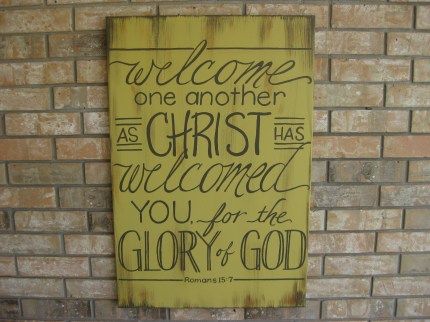
Too Busy To Welcome – Advent Homily on Romans 15.7

Romans 15.7

Welcome one another, therefore, just as Christ has welcomed you, for the glory of God.

too-busy-for-christmas-1

When Bob Sharp was sent to Marquis Memorial, I know that he was welcomed because it didn’t take long for the church to paint his office burgundy and gold in honor of his dedicated devotion to the Washington Redskins.

When Courtney Joyner started at St. Paul’s, I know she was welcomed because she is a triple-threat: She can sing, she can jam, and she can preach.

When John Benson first preached at Augusta Street, I know he was welcomed because his people haven’t stopped shouting “Amen!” since his first sermon.

When Won Un showed up at Central, I know he was welcomed because their entire church community has developed an affinity for Kimchi and they know that if they can’t find Won on a nice day, it’s because he’s out riding his bike.

When Janet Knott arrived at Jollivue, I know she was welcomed because she preaches with gifts, and who doesn’t love presents?

When Clayton Payne began at Cherryvale, I know he was welcomed because people keep showing up week after week even though he keeps preaching the same sermon over and over again.

When Bryson Smith was appointed to St. Paul’s, I know he was welcomed because they know if the sermon falls flat, he can always sing a solo and get the people to shout “Praise the Lord!” and “Mercy!”

When Sarah Locke was sent to Christ, I know she was welcomed because people started showing up in her kitchen while she was still unpacking boxes. I know that because I was there!

I know the United Methodist churches of Staunton are a welcoming bunch because you have so warmly welcomed your pastors. But I wonder, do we welcome everyone to our churches in the same way we welcome the pastor when he or she first arrives? Do you really welcome one another just as Christ welcomed us?

When I arrived in Staunton, Won and I got together and thought it seemed about time to resurrect the Lenten and Advent luncheons. We were not here when they used to happen and so we were able to tweak the schedule and the organization a little bit. Important for us was the shifting of host churches and guest speakers so that everyone got a chance to welcome, and every preacher got a chance to preach.

Fun fact: As of Christmas day, I will have preached in every single United Methodist Church in Staunton. And it only took me three and a half years!

Anyway, we got the Lenten luncheons started again, and the first time I was invited to preach we were gathering at Central UMC. At the time, I was young and naive, and I thought it would be a good idea to wear my Carharrt Overalls when I preached from the pulpit in order to really drive home the message. Maybe you were there. Maybe you even remember some of the things I said.

I poured out my heart and soul from the pulpit at Central UMC and I did my best to make the people of St. John’s as proud as possible. Afterwards, during lunch, after the tenth or so person made a comment about my attire, an older woman came up to me and asked if we could talk (I won’t say which church she was from).

So we moved to the corner of the social hall, and she gingerly placed her hand on my shoulder and said, “I understand that you’re new to town you might be looking for a church home, so we’d love to have you join us for worship on Sunday.”

I remember just standing there stunned. I mean, it was a kind gesture for her to invite me to church (particular when the average person in a United Methodist Church invites someone to worship once every 33 years). But going to another church on Sunday is impossible.

She welcomed me, but she didn’t listen to me. I suspect that she was more concerned with having people in the pews, than with knowing who the people are in the pews.

Welcome one another, therefore, just as Christ welcomed you, for the glory of God.

How did Jesus welcome? Well, he certainly didn’t wait for people to just show up because he was having a service on a Wednesday afternoon, or a Sunday morning, or even on Christmas Eve. Jesus welcomed others by showing up in their lives, he met them where they were and ministered to them in terms and in ways they could understand. He told stories that connected with their daily living, stories about the soil and the birds of the air. He welcomed them in the midst of their suffering and isolation. He welcomed the very people who would abandon him to a table without cost.

At St. John’s we have a Preschool and I spend time every week leading the kids in what we call chapel time. I’ll take a lesson from scripture and try to rework it in ways that can understand and apply to their life.

Last week, after practicing the Christmas pageant for what felt like the thousandth time, I set up a small table near the altar and I invited the kids to come sit and listen. The thirty minutes prior to chapel time were filled with pushing and tripping and laughter and debauchery, but when they sat down around the table I started speaking in a soft voice, and they all started to listen.

I said, “My friends, I have something I want to share with you. This is bread and grape juice, but it is about to me much more than that. For this is a gift that Jesus gives to us. Some of you might do this in your church on Sundays, and whenever we sit at the table we are remembering Christ’s love for us. At this table, all of us are welcome no matter what. So let’s pray… God thank you for loving us so much that you welcome us no matter what we’ve done and no matter who we are. I pray that you would pour out your Spirit on us and make us more like Jesus so we can love others. Amen.”

And then one by one I called them by name, I gave each of them a piece of the bread, they dipped it into the cup, and the received communion.

Unlike us, the preschoolers have the benefit of not rushing around through this season of Advent endlessly crossing items off our to-do lists. Unlike us, the preschoolers don’t feel burdened by the tyranny of things and can sit quietly for a moment to receive a gift better than anything under the tree.

It often happens around this time of year that we feel too busy to welcome. We become more concerned with the wrapping paper and the ornaments and appearance of things than with the welcoming love of the Lord who was born into an unwelcoming town. When our sanctuaries fill up with more people than usual on Christmas Eve we are more often burdened by making sure everything is in the right place, than we are by making sure we are in the right place to welcome and be welcomed by the Lord.

And it is at the meal, the Lord’s Supper, the thing that most of us do on the first Sunday of the month, where we learn what it really means to welcome like Jesus. For Jesus is the one inviting you to the table, not merely hoping that you will show up to fill an empty place in a pew, but earnestly and truly yearning for your presence. You are invited because you are unique, you are wonderful, and you are a child of God. There is a place for you at the table no matter what.

Can you imagine what our churches would really look like if we welcomed others as Christ welcomed us?

Amen.

Devotional – Romans 15.7

Devotional:

Romans 15.7

Welcome one another, therefore, just as Christ has welcomed you, for the glory of God.

Weekly Devotional Image

It is hard to welcome one another, until we ourselves know what it means to be welcomed. We can imagine what we need to do and how we need to behave, we can get out the best silverware and the matching dinner sets, we can fill everyone’s cups to the brims, but until we have experienced being welcomed, we will struggle to welcome others.

I spent the last week in Orlando, Florida with my in-laws for the Thanksgiving holiday. They were forced to practice a new type of welcoming and hospitality because they hosted their 7-month old grandson for the first time. In addition to the normal preparations for people visiting, they had to procure a stroller, pack-n-play, diapers, wipes, and an assortment of other necessary items. Moreover, they had to adjust their schedules to the sleeping habits of our son and reorient all of their plans around his general disposition and mood.

And while we sat around the dinner table on Thanksgiving I was struck by how welcomed I felt throughout the week. They could have made assumptions about what we needed and then acted on it, but instead they approached us and asked what they could do to help. They could have become quickly frustrated with Elijah changing their plans but they adapted and made us feel comfortable. They could have expected us to change to fit into their way of life, but instead they changed to fit into ours.

img_9511

One of the most brilliant aspects of the Advent season is our anticipation of the way God fit into our way of life by taking on flesh and being born as a baby in a manger. Rather than giving up on humanity’s inability to repent and turn back to God, God comes down and meets us where we are. God, in Christ, welcomes us into the kingdom of God by connecting with us in ways that we can perceive and understand.

The same holds true for the life of the church, and for us as individual Christians. We welcome one another just as Christ welcomed us, for the glory of God. When we encounter those for whom the church is a strange new world, we don’t just wait for them to “catch up,” instead we adapt our ways to meet them where they are. When we welcome people into our homes for food and fellowship, we don’t dominate the conversation with whatever we want, instead we seek to invite all present to shape what we talk about. When we discover new people sitting in the pews near us, we don’t make quick judgments about who they are based on their appearance, instead we remember how the Lord welcomed us and we do the same toward others.

On Suicide

Isaiah 43.1-2

But now thus says the Lord, he who created you, O Jacob, he who formed you, O Israel: Do not fear, for I have redeemed you; I have called you by name, you are mine. When you pass through the waters, I will be with you; and through the rivers, they shall not overwhelm you; when you walk through fire you shall not be burned, and the flame shall not consume you.

Romans 8.35-39

Who will separate us from the love of Christ? Will hardship, or distress, or persecution, or famine, or nakedness, or peril, or sword? As it is written, “For your sake we are being killed all day long; we are accounted as sheep to be slaughtered.” No, in all these things we are more than conquerors through him who loved us. For I am convinced that neither death, nor life, nor angels, nor rulers, nor things present, nor things to come, nor powers, nor height, nor depth, nor anything else in all creation, will be able to separate us from the love of God in Christ Jesus our Lord.

suicide


It was 2003 and I was a freshman in High School. And like most High School freshman, I spent many an evening on my computer typing to my friends on Instant Messenger. This was long before Facebook’s wild popularity, Twitter’s terse communication style was far away from coming into reality, and none of us even had cameras on our cell phones. But night after night we would sit in front of our computer screens typing away about what we thought were the most important things in the entire world.

One night in the spring, I waited for my parents to go to bed and then I snuck downstairs to get back on the computer. Most of the conversations were frivolous and limited by the speed at which our fingers could move over the keyboard. I can’t remember what the topic was that evening, but I do remember a new box appearing on the screen that changed everything.

At the time, my best friend was dating a girl and things were less than perfect. They fought about all kinds of stupid things and were the epitome of every high school relationship cliché. She, the girlfriend, was the one who sent me a message that night. All it said was, “We got in a really bad fight, he told me he was going to kill himself, and I don’t know what to do.

Suicide is ugly. It leaves families and friends reeling in whiplash, it creates guilt and unanswered questions, and it produces feelings of morbidity and fear.

Suicide is controversial in the church for a number of reasons. Many churches and Christians believe that suicide is ultimately sinful and worthy of eternal damnation. To have suicidal thoughts is to not have enough faith. Some pastors will even refuse to preside over funerals for those who have committed suicide.

If you look through the entirety of scripture, both Old and New Testaments, you will not find a passage that condemns suicide. None of the prophets, or priests, or kings have anything to say about suicide or what happens to those who commit suicide. However, Augustine (an important theologian from the early church) read the commandment “thou shall not kill” as a prohibition against suicide. And from Augustine’s reflection on the topic, suicide became the black sheep of sins in the church.

For a thousand years, suicide was a mortal sin and an affront against God’s goodness. Those who committed suicide were treated as criminals and refused Christian burials. By the 1500s those who attempted suicide were excommunicated by the church and were punished by the civil authorities.

And still today, suicide carries an awful stigma in the realm of the church and is one that is either referred to with eternal damnation or complete silence.

            That silence, the utter and complete darkness of a topic that is remarkably relevant for our time and reflection, is a controversy worth confronting.

According to the Center for Disease Control (CDC), on average, one person dies by suicide in the state of Virginia every 8 hours. It is the 11th leading cause of death in our state, and it is the 2nd leading cause of death for people ages 10-34.

Among high school students across the country, 17% seriously considered suicide in the last 12 months. And 8% attempted suicide one or more times in the last year.

If you’re like me, you tend to think about young people being the most susceptible to suicide attempts, but suicide rates are actually highest among people middle aged and older, by a lot. In fact, middle aged and older adults are nearly twice as likely to commit suicide as young people.

And right now, suicide has surged to its highest levels in thirty years.

yqecn1ygjymjb3igsiev

When I received that message on my computer back at the beginning of high school, I grabbed my things and was out the door before I even had a chance to really think about what I was doing. All I knew was that my friend would not just make an empty threat about suicide like that, and I had to do something about it. So I grabbed my bicycle out of the garage and I started riding as fast as I possibly could in the middle of the night. He lived a couple miles away and when I screeched into his driveway I was drenched in sweat.

I dumped the bike right there and I ran to the front door and started banging with my fist and I started yelling. Within a minute his parents were coming down the stairs in their pajamas with tired and angry looks on their faces. When they opened the door and saw me standing and sweating in the dark they were utterly bewildered and then I told them why I was there.

We immediately went to check on him in his bedroom, but he wasn’t there. We searched the house from top to bottom and we finally found him in the basement. He was sitting on the couch with tears in his eyes and he had just swallowed an entire bottle of ibuprofen.

They wound up taking him to the hospital and had his stomach pumped. They sat there and held their son while he cried and cried. And they saved his life.

Suicide is not the way any human life should end. The church, this church, has an obligation to see that all persons are grafted into a community of love and are cared for in the midst of isolation, depression, and despair.

Life is a gift, plain and simple. It is a gift from God and therefore we are called to be good stewards of this gift: our lives and the lives of others.

We cannot ignore this topic as if it has nothing to do with us. The statistics confront us with a stark reality about the prevalence of suicide in our culture. With the advent of the Internet and instant communication, young people are being bullied and attacked at a degree that few of us can even fathom. With an economy that moves up and down like a roller coaster, people in the middle of life are undergoing identity crises and are wondering how they can provide for their families. Older people who receive a grim diagnosis or the loss of a spouse struggle to justify living with such a horrible outlook for the days ahead.

We know that we are supposed to be present for and with one another, like being there for friends and family at a moment of tragedy. We rarely know what to say on such occasions, but we know we should be there. We, above all things, are called to be present for others in the midst of suffering and loneliness and depression that often lead to the contemplation of suicide. To be part of the faithful community requires us to be for one another.

i_m_fine_by_black_avenger-d60mqnl

We live because life is a gift. We are not our own creators. We Christians are the people who must learn to live by the fact that life is a gift. We therefore can live each and every day not as a survival technique, but through recognizing that each and every day is an opportunity to live and love in the service of our Lord.

When we talk about suicide, we say it is “the taking of one’s life.” But even the way we talk about suicide shows how much a problem we have with it. Our lives are not our own. As the Lord says through the Prophet Isaiah: “Do not fear, for I have redeemed you; I have called you by name and you are mine.” We belong to the Lord and to one another. God tells us to not be afraid because God will be with us as we pass through the waters, and the rivers of life shall not overwhelm us, we shall not be burned by the fires of frustration. Not because they won’t hurt or be terrifying, but because we belong to the Lord and the Lord is with us.

If we’re here in the sanctuary this morning, we have some sense of this in our lives. We know that God is with us, we feel God’s presence in this place and we know that we are not alone. It is through encountering the divine love of God in worship that we are given the strength to be God’s presence for others who sink under the waters of life and who feel burned by the world. It is our charge to be shaped and called by God’s love and to reach out to those who contemplate ending their days. We have the challenge of showing all people, even those who see no value to their lives, how our lives are not defined by what we have done with them, but by what God will do with them.

Six months after my friend had his stomach pumped, he attempted to commit suicide again. This time he did it with a hose running from his exhaust pipe into his car. But his little brother heard the car door close and it woke him up, and then he woke up his parents. In the strange and quiet time of the darkness of night they pulled their son out of the car and they got him help. It took a long time for him to move on. It took counselors and therapists, it took friends and family, it took the power of God’s grace to show him that his life could get better, that there was hope for the future, that there was something worth living for. And because people in his life were brave enough to confront his suicide attempts, he still lives today.

But there will always be some that we cannot reach. There will be people who feel so suffocated by the weight of the world that they will make that dreadful decision to end the life that God’s has given to them. And for them, for those who will die by their own hand, what will happen to them? For centuries the church saw suicide as an unpardonable sin, something that eternally damns those who do it. Will God abandon them for making such a choice? Will God refuse to love the people who felt no love in their lives? Will the God of mercy punish them until the end of time?

           No. In all these things we are more than conquerors through him who loved us. For I am convinced that neither death, nor life, nor angels, nor rulers, nor things present, nor things to come, nor powers, nor height, nor depth, nor anything else in all creation, will be able to separate us from the love of God in Christ Jesus our Lord. Amen.


Controversy Original

The Story (Chapter 2) – Sermon on Romans 12.1-8

Romans 12.1-8

I appeal to you therefore, brothers and sisters, by the mercies of God, to present your bodies as a living sacrifice, holy and acceptable to God, which is your spiritual worship. Do not be conformed to this world, but be transformed by the renewing of your minds, so that you may discern what is the will of God – what is good and acceptable and perfect. For by the grace given to me I say to everyone among you not to think of yourselves more highly than you ought to think, but to think with sober judgment, each according to the measure of faith that God has assigned. For as in one body we have many members, and not all the members have the same function, so we, who are many, are one body in Christ, and individually we are members of one another. We have gifts that differ according to the grace given to us: prophecy, in proportion to faith; ministry, in ministering; the teacher, in teaching; the exhorted, in exhortation; the giver, in generosity; the leader, in diligence; the compassionate, in cheerfulness.

Do-not-conform-daily-devotional-by-pocket-fuel-Romans-12

Years ago there was a young man, fresh out of seminary, ready to begin serving his very first church. He had taken all the appropriate classes in school, learned from the right professors, and had been prayed over by the bishop. With eager anticipation he had packed his bags and headed out to begin his first appointment to John Wesley UMC somewhere in Georgia. The young man was so anxious and filled with joy that he could hardly contain himself when he arrived that first day, so before he unpacked any of his belongings, he drove by the new church.

He got in the car and went to the listed address, but he saw no church. When he turned around he drove to the address again and realized why he had missed it the first time; there was one of the oldest and most decrepit looking trees he had ever seen stretching all over the ground with roots exposed and the sign (plus the building) were mostly covered by its long branches. The young pastor sat in his car looking at the tree and he couldn’t believe a church would let something so ugly block the beauty of the building.

Before he knew it, he had gone back to the parsonage to unpack his chainsaw, and promptly cut down the tree that was blocking the church. With sweat on his brow, he took a step back and admired his work: the sign and building were now completely visible from the road, and he thought that perhaps a few extra people might be in church on Sunday morning.

A few days later, as the young pastor sat in the study of the parsonage preparing his first sermon, the local District Superintendent called: “I hope you haven’t finished unpacking yet,” he said, “because you’re being reappointed.

You see, the church was named John Wesley UMC for a reason. John Wesley himself had planted that tree more than 200 years ago while he was in that community. The gathered people decided to build a church right where the tree had been planted in honor of the man who started a revolution, and that young pastor had chopped it down.

renew-your-mind

Stories are remarkably important. They contain and convey everything about who we were, who we are, and who we can be. Stories held within a community help to shape the ways we interact with one another, and how we obtain the collective memories of the past. We tell stories to make people laugh, to teach lessons, and remember the important elements of life.

Today, we live in a world of competing narratives. Every television station, and every website, are vying for out allegiance and attention. We are consistently bombarded with information attempting to tell us who we are, what we need, and where we are going.

We live during a time when more people recognize the golden arches of McDonald’s than they do the cross of Jesus Christ. We live during a time when people spend more time arguing about where they can see the best fireworks on the Fourth of July than they worry about children in their community who have no food to eat. We live during a time when we would rather store up our treasures on earth, than give our gifts to the church.

Right now the world is telling us what is important, and our ears have a difficult time discerning between the world, and the Lord.

The apostle Paul wrote about the world to the church in Rome and convicted their hearts: Do not be conformed to this world, but be transformed by the renewing of your minds. Do not listen to the people who try to define you and limit your abilities. Do not diminish God’s ability to radically transform your life and the world around you. Read your bibles. Pray your prayers. Listen to the wisdom of the past. Open your eyes to the beauty of the future. Do not think you are better than anyone else, but give God thanks for placing you within your community.

We are all different and this is worth celebrating! God’s has blessed each of us with unique gifts worthy of use for the kingdom. Some are made for teaching, or preaching, others have the gift of prayer and presence, others have been blessed with financial resources, and still yet others have been given the gift of patience in discernment. Whatever your gift, use it for the kingdom so that we might bear fruit in the world.

Do not conform to this world but be transformed by the renewing of your minds. When we gather together for worship we are retelling God’s great story so that our lives can be transformed. When we are in this place we reject conformity to the world’s expectations. When we proclaim the Word of God, our minds are being renewed again and again.

A few weekends ago thousands of Methodists throughout Virginia gathered together in Roanoke to discern God’s will for our denomination. We prayed over pertinent matters and voted accordingly, we honored those who had gone on to glory over the last year, and we ordained new pastors for the work of ministry. Annual Conference is a time of celebration, but it also a time of facts.

According to the ways of the world, the church is floundering. People are no longer regularly attending worship, tithing is starting to disappear, and many church buildings are being closed each year. Christianity has lost its status in the political arena, we are becoming biblically illiterate, and young people are largely absent from worship.

At Annual Conference this year we discussed a number of statistics affecting the church, but one really stood out to me:

The average person in a United Methodist Church invites someone to worship once every 38 years.

The world tells us that we are nearly defeated. That we’ve got to start pulling out all the stops to get people into our buildings. We have to be willing to do whatever it takes to get people sitting in the pews. We need to cut down the trees that are blocking the church building from the street. We need to abandon the past in order to embrace the future.

I say thanks be to God that we don’t have to conform to the ways of the world but get to be transformed by the renewing of our minds! While others might shrink and wail in fear regarding those types of statistics, imagine what would happen if we embraced them and saw them as an opportunity for transformation? How would our church start to look if we began creating our own vitality through a life-giving invitation to discover the Lord in community? What would it take to embrace the trees and traditions of church to reclaim the story that has already changed the world?

do-not-conform-redfish-donotconform-margherita-anna-mulas

For those of you with remarkably gifted memories, you will no doubt have noticed that everything we have done in worship today, from the opening greeting to the selection of hymns, from the scripture reading to the words of this sermon, is an almost exact replica of what we did two years ago during my first Sunday at St. John’s.

It brings me nothing but joy to look out from this pulpit and to see how much we have changed in our short time together. Our worship attendance has grown. Our weekly offering has grown. Our commitment to spiritual disciplines has grown. Our willingness to sacrifice for God’s kingdom has grown. Our faith and trust in the Lord has grown. St. John’s, through its prayers and practices, has begun to positively affect those kinds of statistics that frighten the world.

But we can do more.

We can do more because the words of worship today are just as relevant as they were two years ago. With a continued commitment to prayer our church can grow in its vitality. With a consistent connection to the Word our church can grow in its faith. With a calm composure compared to the world our church can grow in effectiveness.

When we retell the story we are transformed by the renewing of our minds. We don’t have worship just to catch up with our friends from the community, checking in on the events of life. Church isn’t just about making sure that we give one hour a week to God. Church is about transformation in our lives and in the lives of others.

When was the last time we invited someone to church? Has it been 38 years? And, as someone put it this week, if we don’t have anyone to invite to church, we are not spending time with the right people.

When was the last time we prayed about the money we give to church? Have we grown content with the same offering each week, or do we really recognize how much God has given to us, and how much more we can give back to God?

When was last time we felt transformed by the renewing of our minds? Are we so consumed by the ways of the world that we no longer trust the Lord?

The stories of scripture, from Genesis to Revelation, help to shape the way we live. They are more than just facts and histories, they are the living Word of God’s actions with God’s people. The stories speak greater truths than any news program or TV bulletin, they convey more than any tweet could ever contain, and they provide transformation for the disciples of Jesus Christ.

If we neglect to embrace the stories for the power they contain, then we are cutting down the great trees of tradition in our midst.

As we embark on our third year together I have some goals for our church, both personal and communal:

1) We grow in faithfulness by giving time everyday to God in prayer. This does not mean that we have to start every morning with our hands twisted together and our heads bowed low, but that at least once a day we take a moment to thank God for our blessings. We can do it before a meal, or in our cars on our way to work. How we pray is not as important as praying in the first place. So, we grow in faithfulness by giving time everyday to God in prayer.

2) We grow in attendance by inviting people to discover the love of God. This does not mean that we need to start knocking on doors and trying to convince people to come to St. John’s, but that we open our eyes to what God has done for us and embrace a culture of sharing that kind of love with others. We can do it by inviting our friends to try worship out with us on Sunday morning, or talking with them about what God has shared with us through this place. So, we grow in attendance by inviting people to discover the love of God.

3) We grow in stability by offering our gifts and talents to the Lord. This does not mean that we need to start a capital campaign or initiate a pledge drive, but that we see our lives as gifts and give back so that others can be blessed as well. We can do it by giving more when the offering plate comes around on Sunday morning, or by offering some of our God given talents for the betterment of this church in the kingdom. So, we grow in stability by offering our gifts and talents to the Lord.

According to the ways of the world the church is in a difficult place. We are told that we don’t have enough time to pray every day, we are reminded of the discomfort that comes with trying to invite others to worship, and we are bombarded with the fear about giving money and gifts back to God. But I’m not worried about any of that, and I’m not worried about anything because my hope is not in me, my hope is not in the ways of the world, but my hope is built on nothing less than Jesus Christ.

Christ is the solid rock upon which this church stands, comforting, nurturing, and sustaining us in all we do.

We can believe in the future of our church, we can share the story of the Lord, we can pray with every fiber of our being, we can invite others to experience God’s love, and we can give with glad and generous hearts because our faith is in almighty God!

The Lord is reminding us today, and everyday, “Do not be conformed to this world, but be transformed by the renewing of your minds.” Amen.

Living in Harmony – Sermon on Romans 12.9-18

We tried something different in church this week. Instead of the typical ~15 sermon, I broke the church up into 6 groups (each bulletin contained a number between 1-6) and sent them to different rooms throughout the building. Below I have included the directions for the group leaders in addition to the questions used for discussion. After the groups had spent a significant amount of time together, I invited them back into the sanctuary for a brief homily to connect the scripture with our activity.

get_to_know_your_audience

Living in Harmony

Directions for Group Leaders:

Thank you for agreeing to help facilitate conversation during worship. Below you will find step-by-step instructions to guide each group through their time together. In light of your willingness to help lead I will share with you the reason for our activity, but I ask that you do not share it with your group: Many of us attend church on a regular basis, we see the same familiar faces, and yet we don’t have an intimate knowledge about those we call our brothers and sisters in Christ. Each group will be asking and answering questions in order to learn more about our community. My hope is that we will begin to know more about one another than just where everyone sits in the sanctuary. The quality of the answers should be emphasized over quantity. I would rather you only get to one of the questions and really learn about each other than getting to answer all of them without really soaking up the answers.

  1. Reread the following scripture to set up the activity:
    1. Romans 12.9-18
    2. Let love be genuine; hate what is evil, hold fast to what is good; love one another with mutual affection; outdo one another in showing honor. Do not lag in zeal, be ardent in spirit, serve the Lord. Rejoice in hope, be patient in suffering, persevere in prayer. Contribute to the needs of the saints; extend hospitality to strangers. Bless those who persecute you; bless and do not curse them. Rejoice with those who rejoice, weep with those who weep. Live in harmony with one another; do not be haughty, but associate with the lowly; do not claim to be wiser than you are. Do not repay anyone evil for evil, but take thought for what is noble in the sight of all. If it is possible, so far as it depends on you, live peaceably with all. 
  2. Ask everyone to share their name.
  3. Say: “For the next 15-20 minutes we will be speaking casually with one another about our interests. This is not going to be a densely theological conversation about “the last time you experienced God’s presence” or “sharing moments of great sinfulness from your lives.” Instead it will be focused on what makes you, you. By no means is this mandatory, and if there is a question that you do not want to answer, all you have to say is “pass” and let it move on to the next person. However, if you can answer the questions, it will allow for greater growth and fruitfulness in our church and in our community.
  4. Below are a list of questions to ask of the group. You may read one aloud and then ask everyone to respond in a circle, or at random (the choice is yours). I have written more questions than you will probably be able to answer in the time allowed but that’s okay. I trust you to know what questions are working and which ones need to be left behind. Emphasis should be placed on giving everyone ample time to respond so that everyone will learn a little bit about everyone else. If a natural conversation begins in response to an answer please allow it to continue so long as it fits with the general nature of the activity. However, if someone becomes long-winded please ask them to conclude so that we can move on to the next person.
  5. Questions:
    1. What was the last good movie you saw (on TV or in the Theaters) and why?
    2. What is your “go-to” restaurant in Staunton, and what do you usually order?
    3. What is one of your most memorable birthday presents? How did you feel when you opened it?
    4. If you could have one super-power what would it be, and why?
    5. If you could recommend one book for all of your friends to read, what book would it be and why?
    6. When was the last time you felt pure joy and what were the circumstances behind it?
    7. When you were a child what did you want to be when you grew up?
    8. What is your favorite thing to do in the summer and why?
    9. If they made a movie of your life, which actor would you want to play you?
    10. If you could have an endless supply of any food, what would you get?
    11. Who is your hero (a parent, celebrity, writer, etc.) and why?
    12. What is one thing that you are extremely proud of?
    13. If you had a time machine, where and when would you travel?
    14. If you could have a conversation with one person from the entire history of the world, who would it be and why?
    15. If you had an entire vacation paid for, where would you go and why?
    16. What do you think is the greatest invention from your lifetime and why?
  6. Wrapping Up
    1. At 11:50 we need everyone back in the sanctuary. When your group comes to a time that naturally allows for a conclusion I ask that you pray the following words out loud, and then lead your group back to the sanctuary:
      1. Prayer: “Almighty God, you know us and have called us by name. In the midst of this community, we give you thanks for everyone in this group. We praise you for providing interests, opinions, and observations. We pray, Lord, that you might instill in each of us the beauty of community. Give us the strength to live in harmony with one another, and allow us to be people who can extend hospitality toward strangers. Amen. 

Screen-shot-2012-09-28-at-12.39.31-PM1

Homily:

I have wanted to do this activity since I arrived at St. John’s. We do such a good job at welcoming and connecting with one another on Sunday mornings, and during other church activities, but I’m not sure how well we really know one another.

I once knew a man who said the loneliest times in his life occurred at 11am every Sunday morning when he was sitting in our packed sanctuary. For years he was a regular worshipper, and for year no one bothered to reach out; no one knew his name, where he was from, or what was going on in his life. Ever since I was appointed here I thought about breaking us into groups to combat the exact type of loneliness that man described.

I waited and waited and then last week something happened that made me realize how desperately we needed to do what we just did.

Our secretary discovered a man standing in our parking lot in the middle of the afternoon and approached to ask if there was anything she could help with. Without intending to, the man began to cry. He said, “I lost my wife a few months ago and today would have been our 49th wedding anniversary. 49 years ago we were standing in this church with hope for the future. These last few months have been the loneliest in my life.

I don’t want to be part of a church that does not know about a man’s 49th wedding anniversary. I don’t want our sanctuary to be the loneliest place on Sunday mornings. We did not ask and answer the questions today to just learn superficial facts about one another; we did so with the hope that these facts would spark new and lasting relationships. This church should be the place where we combat the terrible forces of loneliness. Amen.


Devotional – Romans 12.9

Devotional:

Romans 12.9

Let love be genuine; hate what is evil, hold fast to what is good;

Weekly Devotional Image

By 1743 the “Methodist” movement within the Church of England was taking off and growing considerably. John Wesley was suddenly responsible for checking in with the numerous societies he had helped to establish in order to continually encourage them in their faith and love. On one such occasion (in February of 1743) Wesley traveled to Newcastle to check on a particular society and was dismayed to discover a lax of discipline within the group.

Though harsh by our modern standards, Wesley examined every member of the society and found it necessary to expel 64 people from the group for the following offenses: “2 for cursing and swearing, 2 for habitual Sabbath-breaking, 17 for drunkenness, 2 for retailing spirituous liquors, 3 for quarreling and brawling, 1 for beating his wife, 3 for habitual and willful lying, 4 for railing and evil speaking, 1 for idleness and laziness, and 29 for lightness and carelessness” (Heitzenrater, Wesley and the People Called Methodists, 138). The offenses were so grave that Wesley believed it was detrimental for the whole if these offenders remained.

Within the week Wesley wrote what we now know as the General Rules. The terms of membership were simple: “a desire to flee the wrath to come, and to be saved from their sins.” But in order to continue in the society, members were required to live out their faith by, “First, By doing no harm, … Second, By doing good, … Thirdly, By attending all the ordinances of God.” (ibid.) These General Rules became foundational for the Methodist movement that eventually led to the creation of the contemporary United Methodist Church.

6a00d8348e805369e2014e5f5f2a3c970c-500wi

Paul wrote to the church in Rome a similarly simple list about what it means to be in Christ: “let love be genuine; hate what is evil, hold fast to what is good.” These principles of Christian discipleship are like the compass of our faith, guiding us to new and continual life in Christ. Wesley truly believed in renewing the Church of England by creating a standard by which the Christians could dedicate their lives. Faith, for him, was serious and worth working hard for. Today we are responsible for renewing our faith through discipleship and our commitment to love God and neighbor.

How do you live out your faith? Has following Jesus become boiled down to showing up for church once a week? Do you follow any guidelines or responsibilities for discipled-living on a daily basis?

Perhaps today we are all being called to a life of dedicated and disciplined faithfulness by simply letting our love be genuine, hating what is evil, and holding fast to what is good.

Devotional – Romans 12.2

Devotional:

Romans 12.2

Do not be conformed to this world, but be transformed by the renewing of your minds, so that you may discern what is the will of God – what is good and acceptable and perfect.

Weekly Devotional Image

“Taylor,” he began, “I have been attending worship at United Methodists churches nearly every Sunday since I was a child and I have never heard anyone preach on the texts you chose this month.” We were sitting in the church social hall after worship yesterday afternoon when a member of our church made it known that he was still learning something new and church and growing in his discipleship. Georgeanna Driver, one of our members who passed away last week, made a similar comment two weeks ago about not knowing that story (Elisha and the she-bears) was even in the bible. It has been exciting and thrilling over the last three weeks to challenge peoples’ perspective on what the Word of the Lord can still speak into our lives today, even stories we might otherwise choose to ignore.

tumblr_mdhatd0Ybh1qhmhdfo1_500

When I was at Duke for seminary our Dean, Dr. Richard Hays, reminded us that the responsibility of the Christian is to be constantly transformed by the renewing of our minds. Etched in the marble archway leading into the chapel, Romans 12.2 is a relevant reminder for students of God’s Word but even more so for the people who have been called to follow Christ. In today’s world/society it is too easy to remain complacent with our understanding of faith and overreact when a new person/idea challenges our faith. In stark contrast Jesus was regularly pushing his disciples into new territory with understandings about the kingdom of God.

What we do as Christians is primarily about God, and only secondarily about us. We gather on Sunday’s to hear the Word of the Lord and then live it out in the world. Worship is that time that helps in the transformation and renewal of our minds so that we may discern God’s will for our lives, rather than be conformed to the ways of the world.

Outside of worship we can be transformed through the reading of scripture. Try opening your Bible to a book or a chapter you’ve never read (or haven’t read in a long time), read a set number of verses, and then pray over them. Ask yourself: what might God be saying to me through these words today?

The Word of God is alive and speaking anew everyday, we need only the faith to hear it and live it out.