Holy Perspective – Sermon on 1 Samuel 16.1-3

1 Samuel 16.1-13
The Lord said to Samuel, “How long will you grieve over Saul? I have rejected him from being king over Israel. Fill your horn with oil and set out; I will send you to Jesse the Bethlehemite, for I have provided for myself a king among his sons.” Samuel said, “How can I go? If Saul hears of it, he will kill me.” And the Lord said, “Take a heifer with you, and say, ‘I have come to sacrifice to the Lord.’ Invite Jesse to the sacrifice, and I will show you what you shall do; and you shall anoint for me the one whom I name to you.” Samuel did what the Lord commanded, and came to Bethlehem. The elders of the city came to meet him trembling, and said, “Do you come peaceably?” He said, “Peaceably; I have come to sacrifice to the Lord; sanctify yourselves and come with me to the sacrifice.” And he sanctified Jesse and his sons and invited them to the sacrifice. When they came, he looked on Eliab and thought, “Surely the Lord’s anointed is now before the Lord.” But the Lord said to Samuel, “Do not look on his appearance or on the height of his stature, because I have rejected him; for the Lord does not see as mortals see; they look on the outward appearance, but the Lord look on the heart.” Then Jesse called Abinadab, and made him pass before Samuel. He said, “Neither has the Lord chosen this one.” Then Jesse made Shammah pass by. And he said, “Neither has the Lord chosen this one” Jesse made seven of his sons pass before Samuel, and Samuel said to Jesse, “The Lord has not chosen any of these.” Samuel said to Jesse, “Are all your sons here?” And he said, “There remains yet the youngest, but he is keeping the sheep.” And Samuel said to Jesse, “Send and bring him; for we will not sit down until he comes here.” He sent and brought him in. Now he was ruddy, and had beautiful eyes, and was handsome. The Lord said, “Rise and anoint him; for this is the one.” Then Samuel took the horn of oil, and anointed him in the presence of his brothers; and the spirit of the Lord came mightily upon David from that day forward. Samuel then set out and went to Ramah.

tumblr_mepr3lSwsV1qhmhdfo1_500

One of the things I enjoy most about meeting with couples, and talking about weddings, is the invitation I offer for them to pick a particular scripture for their weddings. Now, I always have backups prepared just in case they are unable to come to a consensus or if they are just unfamiliar with God’s Word. But most of the time, they are willing to look around for something.

Many couples will choose the oft-mentioned 1 Corinthians 13 passage: Love is patient; love is kind; love is not envious or boastful or arrogant or rude. It does not insist on its own way; it is not irritable or resentful; it does not rejoice in wrongdoing, but rejoices in truth. It bears all things, believes all things, hopes all things, endures all things.

f6eedeff4528177d8b277fa10ab88ccf

Others will pick something along the lines of the regularly misinterpreted Ephesians 5 passage: Wives be subject to your husbands as you are to the Lord. Or that great passage from Ruth: “Where you go I will go, where you stay I will stay, your people will be my people, your God my God. Where you die I will die.”

The scripture that a couple chooses for their wedding can be quite revealing. It helps to demonstrate where their priorities are, what they expect out of marriage, and frankly, what they want to hear the pastor talk about.

So, you can imagine my surprise, when a couple recently asked me to use the scripture from today for their wedding. Preparing to enter wedded bliss, they didn’t want to hear about love, or marriage, but instead they wanted to hear about Samuel anointing David…
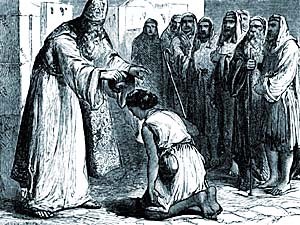
David & Samuel

The people of Israel had demanded a king from their God. For too long they had wandered about without leadership and they cried out for a leader they could follow. Reluctant to provide a human and fallible leader for a people that were supposed to be following their Lord, Saul eventually became king.

Handsomer and taller than any other man in the land, it quickly became clear that Saul was not the right one to rule the nation. He listened to his own heart rather than the Lord, and God eventually rejected him.

Thats where our story begins today. Samuel was sent to see Jesse the Bethlehemite, for the Lord has provided a king among his sons. The prophet took a heifer with him to cover his true actions from the vengeful Saul who might’ve killed him upon discovery.

After arriving, the elders met Samuel with fear and trembling. Turbulent events had always come in the wake of Samuel’s life and the people were responding appropriately. Great men and women always seem to stir up trouble wherever they travel. (It might be worth rediscovering this today in our own faith lives; too often has it been supposed that the role of church is to give all of us peace of mind. Truly I tell you, the greatest churches and sermons are those that challenge us to be better and do more than we already are)

So Samuel begin to evaluate all of Jesse’s sons; first Eliab, then Abinadab, than Shammah, and eventually all of Jesse’s sons had stood before the prophet. But the Lord spoke to Samuel and said, “Do not look on his appearance or on the height of his statue, because I have rejected him; for the Lord does not see as mortals see; they look on the outward appearance, but the Lord looks on the heart.”

Samuel was caught up with outward appearances. It’s like whenever I go to Alexandria to visit my grandmother, there is always a bowl of skittles out on her coffee table. I love skittles. On the outside the skittles always look delicious, the problem is that I don’t know whether they were put out that day, or six months ago. If you’ve never experienced it, trust me, you would rather have fresh skittles. The point being, you cannot tell how they will taste from the surface.

Anyway, the Lord had promised Samuel that one of Jesse’s sons would be the king, yet the Lord had passed over each one. “Are all of your sons here?” Samuel asked Jesse. “Well, there remains the youngest, but he is keeping the sheep.” David was beckoned away from his shepherding duties and brought before the prophet. He was ruddy and had beautiful eyes. The Lord commanded Samuel to anoint this boy, for he was the one. So Samuel took the horn of oil, anointed David in the presence of his brothers, and the spirit of the Lord came mightily upon David from that day forward.

I prepared for the wedding like I have for all the others, I had counseling sessions with the couple, I talked about the major issues that most couples confront once joining together, but the whole time 1 Samuel 16 hung in the back of my head. What was I going to do with the text during the ceremony? How in the world could I proclaim love and wedded bliss in the midst of David being anointed by Samuel.

I was at a shop here in Staunton when I saw a bumper sticker that illuminated the text for me. The bumper sticker said, “Marriage: betting someone half your stuff that you’ll love them forever.” In reading that, I realized what the world sees in marriage is not what God sees. We, myself included, look on marriage and all things with mortal eyes, but the Lord looks on the heart.

All of the sudden 1 Samuel 16 became the perfect wedding scripture! The Lord does not look on our cooly color coordinated outfits, not our perfect hair, not the precise flower arrangements, God looks on the heart. God does not concern himself with the pomp and circumstance of weddings but instead looks at the intentionality of the two being brought together. God does not get caught up with the minor details of all the rights words and ceremony, but cares about the love within two people sharing a life together.

On the outside, marriage looks like it can be sustained by love alone, it appears like a gamble of half of your things, it seems to be a simple agreement to live together. When we look at marital relationships through mortals eyes, we are limited to the surface appearance and we forget to look on the heart.

Marriage is a beautiful and strange thing. Like Samuel pouring oil over David’s head, it can become uncomfortable and weird. At its best, marriage is loving someone knowing that they will not be the same person tomorrow. Its entering into a dance that will evolve over the years with different tempos and time signatures. Marriage is about the inward heart and disposition of two people coming together to share this remarkable thing we call life.

The Lord looks on the heart. This, after all, was a perfect wedding scripture. As I stood before the happy couple, presiding over their marital vows I could tell that their intentions were clear, they were not caught up in all the outside elements, but were committing to their marital covenant together.

In as much as this text fit perfectly for the couple, I believe that it stands as a light in the darkness for churches and Christians today. The Lord looks on the heart – How sad is it then that most human judgments about people are almost always superficial? Those who are physically attractive have many easy advantages in life, while others, by their very appearance, seem to be severely regarded by others.

David was noted by Samuel as being handsome, with beautiful eyes, but he was still one of the least likely candidates to be anointed by the Lord. While his brothers were older and more mature, David was still young and off in the fields tending the sheep. Rather incredibly, while God anointed David to become king, he would have to mature and go through many trials and tribulations before his role would come to fruition. He would have to battle against the mighty Goliath, avoid Saul’s spear in the royal court, and flee for his life hiding in caves before he could event mount the throne of Israel.

In many ways, God ordains each of us, anoints all of our heads, for certain tasks and graces in the world. Some may have occurred already, and many more lie ahead of each of you in your futures.

God does not call the attractive and the strong to bring about his will on earth, he is not caught up with our outward appearance and physical requirements. God is concerned, above all, with our hearts, with our intentions, with our hopes.

logo

This past week, the Christian organization World Vision made national news. World Vision is a humanitarian agency dedicated to working with children, families, and their communities worldwide to reach their full potential by tackling the causes of poverty and injustice. Like many other similarly focused organizations, it can operate primarily under the radar and achieve a lot of good in the world. That was, until this past week.

In a public statement issued on Monday, the organization announced that it would begin hiring Gay Christians in legal same sex marriages. Prior to the announcement World Vision required all of its employees to maintain heterosexual practices within marriage to be considered for employment. The new policy was described as symbolic not of compromise, but of Christian unity, with the hope that it would inspire unity among other Christians as well.

After a remarkable amount of public outrage by evangelical Christians, and a significant amounts of threats regarding withdrawal of funding for the organization, World Vision reversed its decision to hire Gay christians in same sex marriages.

In only 48 hours, one of the most open, vulnerable, and incredible acts by a Christian group, devoted to helping sponsor children in need, was reversed. The mission of World Vision, the good that they do in the world, was immediately overshadowed by their hiring policy.

I don’t know what to think about all of this. I don’t know if any of the decisions have been right or wrong. What I do know is that a significant number of people who were being helped and saved by an organization were almost put in jeopardy because an agency aspired for greater Christian unity. It would seem to me, that regardless of opinion, the majority of the response was far more focused on the outward appearance of an organization, rather than their heart and intentionality.

I want to be clear that I’m not trying to say that one side was right, or that one side was wrong, but merely question how far we fallen from the idea that God looks on the heart. Every week we gather in this place to affirm our faith in the God who loves us when we don’t love back, that God listens when we run out of words, and that he desires us to be one in the Spirit when it seems as if we cannot agree on anything.

The Lord said to Samuel, and I believe the Lord is still saying to all of us: “Do not look on appearances or on height, do not look on political ideologies or past deeds, do not judge others lest ye be judged; for the Lord does not see as mortals see; they look on outward appearance, but the Lord looks on the heart.”

How do you look at others in your life? Are you caught up with outward appearances, judging others before you have an opportunity to really learn their story? Do you see the world through mortals eyes, or do you look at the world the way that God looks at us?

This is a tough Word for us to hear today. God called Samuel to look on David through God’s eyes, with holy perspective. We, in the same way, are called to radically love one another, sacrifice for the body of Christ, and be one in the Spirit with holy perspective. It is not easy, and we cannot do it on our own.

So, may God bless us enough to open our eyes to see the world, and one another, the way that God sees us. Amen.

 

Open My Eyes That I May See

If You Knew… – Sermon on John 4.5-15

John 4.5-15
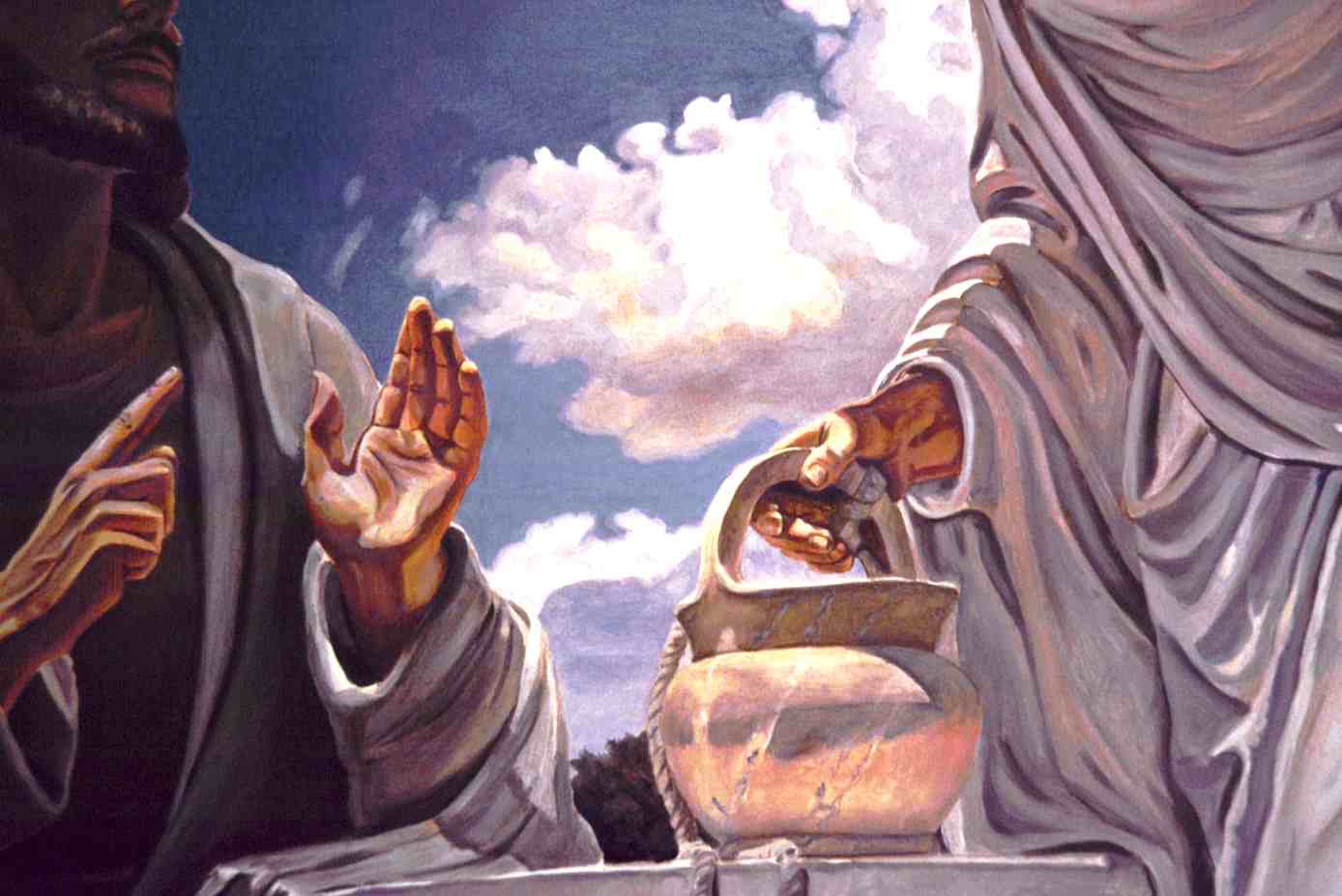
So he came to a Samaritan city called Sychar, near the plot of ground that Jacob had given to his son Joseph. Jacob’s well was there, and Jesus, tired out by his journey, was sitting by the well. It was about noon. A Samaritan woman came to draw water, and Jesus said to her, “Give me a drink.” (His disciples had gone to the city to buy food.) The Samaritan woman said to him, “How is it that you, a Jew, ask a drink of me, a woman of Samaria? (Jews do not share things in common with Samaritans.) Jesus answered her, “If you knew the gift of God, and who it is that is saying to you, ‘Give me a drink,’ you would have asked him, and he would have given you living water.” The woman said to him, “Sir, you have no bucket, and the well is deep. Where do you get that living water? Are you greater than our ancestor Jacob, who gave us the well, and with his sons and his flocks drank from it?” Jesus said to her, “Everyone who drinks of this water will be thirsty again, but those who drink of the water that I will give them will never be thirsty. The water that I give them will become in them a spring of water gushing up to eternal life.” The woman said to him, “Sir, give me this water, so that I may never be thirsty or have to keep coming here to draw water.”

Woman-at-the-Well-ii-100070

Jesus answered her, “If you knew the gift of God, and who it is that is saying to you, ‘Give me a drink,’ you would have asked him, and he would have given you living water.”

In the heat of the day, with the sun held straight above, Jesus was resting by a well. He was tired from his recent journey, traveling around Galilee healing the sick, feeding the hungry, and now here he was, sweating under the sun in the middle of Samaria. He had sent his disciples into the local city of Sychar to procure some food and was enjoying some “me-time” by the well when a woman appeared.

Now, you might not know this, but Jesus definitely did; nobody goes to the well at noon. Its too hot out around lunch time when the sun strikes the ground. Most people went either in the cool of the evening of the cool of the morning. At those times the local wells were bustling with women, gossiping about the coming and goings in town, while taking care of retrieving water and washing clothes.

So, at this most bizarre time, a Samaritan woman made her way to the well where Jesus was resting. “Give me a drink” Jesus asked. But the Samaritan woman replied, “Why are you, a Jew, asking me, a woman from Samaria, for something to drink.” You see, at the time Jews did not share anything in common with the Samaritans, let alone using the same cup or even really speaking to one another. Jesus replied, “If you knew the gift of God, and who it is that is saying to you, ‘Give me a drink,’ you would have asked him, and he would have given you living water.”

header-livingwater

The woman pondered this for a moment and then said, “Sir, you have no bucket, and the well is deep. Where do you get that living water. Are you greater than Jacob, who gave us this well, and his sons and animals that drank from it?” Sensing that she was missing the point Jesus tried again to explain, “Everyone who drinks of this water will be thirsty again, but those who drink the water that I will give them will never be thirsty. The water that I give them will become in them a spring of water gushing up to eternal life.”

Leather_bucket_of_a_well


Believing that she finally understood what this strange bearded man was saying, the woman said to him, “Sir, give me some of that water, so that I may never be thirsty or have to keep coming here to drink water.”

Sometimes, no matter how much explaining, no matter how many metaphors you use, no matter how many illustrations, people will not get the point. During the heat of the day, that strange time to draw water, Jesus revealed the depth of his ministry to this unnamed woman and she doesn’t get it. Jesus’ words “If you knew…” are perfect for describing the situation. If she knew who she was talking to, if only she knew what living water was, If she knew then she would have understood. But living water is not necessarily an easy thing to grasp.

I love this story. Its filled with so many wonderful details that could each become their own sermons. For instance, I love the fact that Jesus was tired. Many of us are tired within our lives. A tired Christ therefore must understand what its like to feel this way, as no one else ever could, Jesus could perceive the struggle in the woman by the well just like he knows our struggles. In that small, seemingly insignificant detail we discover that Christ is with us, because he is like us. Its Christ’s humanity that brings him down to us, and in his divinity that we are brought to him.

Another detail: The woman approaches Jesus, but he makes the first step that opens this great story: “Give me a drink.” There is no shadow of a doubt that what draws most people to Jesus is not so much what he gives us as what he asks. We are moved and drawn toward Christ because he looks on us to help, offering us a share in this thing called the kingdom of God. So the unnamed woman is reeled in with this simple request.

Another detail: After a short debate about the historical prohibitions about a Jew and Samaritan interacting with one another, Jesus declares and offers his “living-water,” Though he repeats his description numerous times, the woman misunderstands. How often are we presented with an aspect of the Gospel, perhaps for our entire lives, and we still never really understand what its all about?

So, what is the point of the story? Is there one? Are we supposed to walk away from this feeling Christ’s living water gushing up from within us? Are we supposed to offer Christ’s living water to our friends and family?

In many ways, the focus of the narrative rests in the fact that Jesus, as a Jew, is in enemy territory. The most substantial detail is in the fact that he offers the living water to the least likely of persons: female, Samaritan, we discover later that she was a frequent object of the men in town, the focus of gossip, and isolated from everyone else. It was to the least of these that Jesus attempts to reconcile the divided nations of Samaria and Israel.

One of my professors loved to tell a story about his roommate from college. They were going to school in South Carolina during the height of the Civil Rights movement when my professor’s friend decided to travel to Washington DC in order to participate in a Civil Rights March. Upon returning back to school, the friend relayed what had happened during the trip:

He described that everything was about as normal as you could imagine. he arrived, met up with the people he needed to, marched where he was supposed to, handed out flyers. By the time it was over he was exhausted while waiting for his plane to bring him home. As he sauntered onto the airplane, he sat down in my seat and, you’ll never believe this, he was sitting next to Martin Luther King Jr.
It was the craziest thing. He had gone all the way to DC and here he was, sitting on an airplane, next to his hero.

martin_luther_king_jr-_and_lyndon_johnson_large

“So,” my professor asked, “what happened?!” Well, he got so nervous, and he was sweating, and fidgeting, and rehearsing what he might say, but there was a small problem: Martin Luther King Jr. was asleep. I mean what was he going to do? Wake up the leader of the Civil Rights movement? So he just waited, sitting there, staring at him, watching him sleep. After the flight had nearly reached its destination, he finally opened his eyes. “Dr. King I don’t know what to say. You are my hero. I just traveled all the way to DC to help march for Civil Rights, you are such an inspiration, I am so impressed with…” “Thank you. God Bless.” he interrupted, seemingly ending the conversation. But the young man was undeterred. “Dr. King you don’t understand, you have changed my life, you have opened my eyes to the many opportunities that are not available to others… “I appreciate your kind words son.” Dr King interrupted again. However he was was not finished, “Dr. King, you don’t understand. My father is a racist. I left home because of him and his prejudice. He offered to pay for my college, but I have cut all ties with him. We have not exchanged a word in years because of his racial bigotry.” At this point Dr. King’s eyes widened, he turned his body to face this young college student and he reached out and grabbed him by the collar, “You have got to love your father. Whether he’s racist or not, loving him is the only thing you can do.” And with that he let go, closed his eyes, and promptly fell back asleep. It was at that moment that my professor’s roommate realized that Dr. Martin Luther King Jr. really was a prophet, beyond all expectation and assumption.

Woman at the Well

In the story of the woman at the well, Jesus began to reconcile a very old, and very real division between the Jews and the Samaritans. The whole story is about religious tensions and a church which sought to overcome them in the first few centuries. Though portrayed as a simple interaction between two individuals at a well under the heat of the sun, the narrative has major religious implications for us, even today. Just like with Nicodemus, the conversations points to something great and profound that will change the way that we interact in the world.

The gospel, in all its magnificence, is incarnational in its ability to use everyday realities to convey a deeper sense of the divine.

But here’s the problem: when we confront a text such as this we tend to think of it it in large grandiose terms; Jesus reconciled the Jews and Samaritans. There is no church unfamiliar with ancient and large divisions within people: Catholic and Protestant, Jew and Christian, Faithful and Faithless. But, like the man on the airplane learned, sometimes the reconciliation needs to occur much closer to home. 

When Jesus met the woman at the well, he offered the beginning of a new life to the least likely of candidates. Before him stood an unnamed woman, a Samaritan, a polygamist, a focus of gossip, and a isolated individual. The first reconciliation did not take place at a theological council, or a political rally, but it happened face-to-face.

At-the-well

I would venture to guess, that in all of our lives we have “a woman at the well.” He or she might not be as obvious as the character in our narrative today, but we all know someone who has been ostracized from the group. Whether its that kid that everyone else makes fun of at school, or that politically opposed neighbor you have living down the street, or maybe its someone within your own family. Its sad considering how easy it is for us to cut ties with people around us as if their hearts and souls were just another commodity for us to examine, purchase, and then throw away.

Martin Luther King Jr. sat on a plane next to a young college student and reminded him that the truest forms of Christian living happen at home, within our own families and friends.

Jesus, our Savior, sat at the well and in the simplest of conversations help to re-establish a woman’s life. With simple questions and the beginning of a friendly relationship he gave her the kind of identity that she had lost in her life. He provided her with one of the greatest gifts the world has ever known: he gave her a sense of worth.

“If you knew” was Jesus’ great rebuttal to her ignorant question. How much of our lives are wasted and could be reignited by that little phrase? If you knew that man who stands on the corner every Tuesday morning has nobody else in the world and needs a friend; If you knew that in your own family there is someone who has lost their identity and needs to rediscover a sense of worth; If you knew that your son or daughter wants to reconnect even if you don’t; If you knew that the stranger asking for a drink was actually Jesus; would you do it?

Jesus calls us to love one another. Not just the people we worship with, not just the people who make us feel comfortable, but the last the least, and the lost. Where is the woman at the well in your life? How will you greet her the next time you meet?
Amen.

Nicodemus and Sidewalk Chalk – Sermon on John 3.1-17

John 3.1-17

Now there was a pharisee named Nicodemus, a leader of the Jews. He came to Jesus by night and said to him, “Rabbi, we know that you are a teacher who has come from God; for no one can do these signs that you do apart from the presence of God.” Jesus answered him, “Very truly, I tell you, no one can see the kingdom of God without being born from above.” Nicodemus said to him, “How can anyone be born after having grown old? Can one enter a second time into the mother’s womb and be born?” Jesus answered, “Very truly, I tell you, no one can enter the kingdom of God without being born of water and Spirit. What is born of the flesh is flesh, and what is born of the Spirit is spirit. Do not be astonished that I said to you, ‘You must be born from above.’ The wind blows where it chooses, and you hear the sound of it, but you do not know where it comes from or where it goes. So it is with everyone who is born of the Spirit.” Nicodemus said to him, “How can these things be?” Jesus answered him, “Are you a teacher of Israel, and yet you do not understand these things? Very truly, I tell you, we speak of what we know and testify to what we have seen; yet you do not receive our testimony. If I had told you about earthly things and you do not believe, how can you believe if I tell you about heavenly things? No one has ascended into heaven except the one who descended from heaven, the Son of Man. And just as Moses lifted up the serpent in the wilderness, so must the Son of Man be lifted up, that whoever believes in him may have eternal life. For God so loved the world that he gave his only Son, so that everyone who believes in him may not perish but may have eternal life. Indeed, God did not send the Son into the world to condemn the world, but in order that the world might be saved through him.

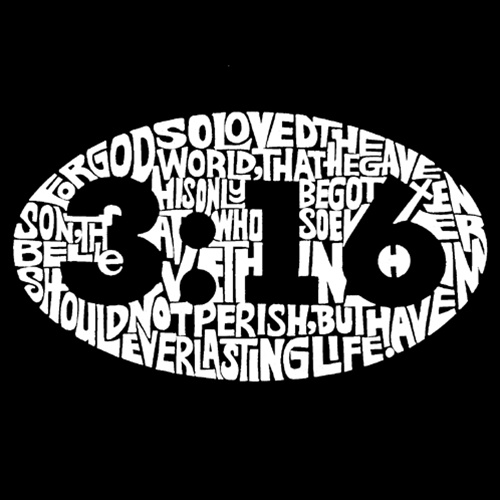
john-3-16

For God so loved the world that he gave his only Son, so that everyone who believes in him may not perish but have eternal life.

There was a pharisee named Nicodemus and he came to visit Jesus at night. As a leader of the Jews it was probably best to visit Jesus under the cover of darkness, and when they met together Nicodemus began to ask Jesus about all he had seen and heard. “Teacher, it is clear to us that you have come from God because no one can perform the signs that you do apart from the presence of God.” “You’re absolutely right,” Jesus replied, “No one can see the kingdom of God without being born from above.”

“Now wait a minute Jesus, how can anyone be born after having grown old? Can someone re-enter their mother’s womb and be born?” Jesus calmly answered, “Listen Nicodemus, no one can enter the kingdom of God without being born of water and Spirit. What is born of the flesh is flesh, and what is born of the Spirit is spirit. Do not be surprised that I told you that you had to be born from above. You know very well that the wind blows where it chooses, you hear the sound of it, but you do not know where it comes from or where it goes. So it is with everyone who is born of the Spirit.”

“But Jesus how can these things be?!” “Nicodemus, are you a teacher of Israel, and yet you do not understand these things? If I had told you about earthly things you would’ve believed,  but now I talk to you about heavenly things and you do not believe. No one has ascended into heaven expect the one who descended from heaven, the Son of Man. Just as Moses lifted up the serpent in the wilderness, so must the Son of Man be lifted up, that whoever believes in him may have eternal life. For God so loved the world that he gave his only Son, so that everyone who believes in him may not perish but have eternal life. Indeed, God did not send the Son into the world to condemn the world, but in order that the world might be saved through him.”

Nicodemus_Jesus

Last week we looked at one of the most well known stories from the Old Testament: Adam and Eve in the Garden. Today I could not help myself from proclaiming one of the most well known New Testament scriptures: John 3:16. In the entire biblical canon, both the Old and New Testaments, there must be few, if any, scriptures that have been so remarkably loved by so many as this text. It is simple and to the point. It opens up endless possibilities. It embodies the hope of all Christians. It is beautiful and appealing. It begins with the beginning and stretches into the far reaches of eternity. It proclaims that which is most fundamental to our faith: that God loves us. 

But the scripture today is about so much more than just that one isolated verse. I am thrilled that so many of us have memorized John 3:16, but we cannot forget about the inquisitive soon-to-be disciple named Nicodemus.

What do you make of this pharisee who came to see Jesus in the middle of the night?


On Tuesday morning, after gathering with the UMW, I made my way outside onto our back parking lot. After months of cold weather, with mounds of snow continually piling up, the Pre-School was finally able to play outside again. Now, let me be clear: I am just like those children. Having been cooped up in this church all winter I was just as, if not more, excited to run around and play outside. The children all had their plastic cars and bikes, some were running around in circles, others were using the fake gas pump to fill up the cars, (capitalism at its finest) when I saw a box of sidewalk chalk.

sidewalk-chalk

I silently made my way to the middle of the black top with the biggest piece of chalk that I could find and I began to draw. Without saying a word, or drawing attention to myself, the children began to congregate around me in a large circle. “Pastor Taylor, what are you drawing?” I heard one them mutter behind me, and I replied, “You’ll see in a moment.” As I stepped back the children moved with me, and there on the blacktop was a giant head with a wide open mouth. Why? I have no idea, but its what I drew. And without really understanding what I was doing I told the children that I was going to jump in the mouth of this mystery person made out of chalk. If I had said that to any of you, you would have thought that I lost my marbles. But with the children, they believed me, they looked into my soul, and some of them even begged me not to do it. But there I stood crouched with my hands at my side, and I jumped in. Of course I acted as if I was falling in and some of the children laughed, and when I was done, I encouraged some of them to jump in. There was a moment when the first girl stepped forward to the edge of the face. As I saw her prepare to jump in I realized she was unsure of what would happen to her. While rocking her hands back and forth I could see the sense of wonder and imagination brewing within her as she jumped right in.

Thats what Nicodemus was like. Jesus is known for having said that whoever does not receive the kingdom of God like a child shall not enter it. Nicodemus had a childlike and inquisitive faith. When confronted with the man of many wonders, Nicodemus wanted to jump right in to learn more about this new kingdom. While his contemporaries scoffed at the new teaching, Nicodemus’ imagination allowed him to see deeply into the truth of Jesus.

The other leaders of the synagogues were already muttering with irritated resentment regarding this so-called teacher who was beginning to develop a following. They disagreed with his strange ways, his strange teaching, and his strange disregard for authority. Nicodemus, however, felt there was indeed something strange about Jesus, but it could not be dismissed so easily. To Nicodemus, God was still speaking through people, and to his ears there was something in this new proclamation worth considering.

So, under the cover of night, Nicodemus went to learn more. He wanted to see for himself, he desired to hear from the man himself, to question and to learn. Instead of giving into the rumors, Nicodemus wanted to base his understanding on first hand experience. He could not settle for hearing about the man, but instead needed to jump straight into the abyss of the Son of Man.

In his willingness to question Christ we discover that Nicodemus was a great man who possessed enviable qualities. While suffocated by the surrounding culture and religions assumptions and expectations, he somehow managed to exhibit an open-mindedness that broke the chains of religious limitation. 

Moreover, Nicodemus is one of the best examples of discipleship. By the end of the gospel account Peter will have denied Jesus in a shameful panic, the rest of the disciples will have scattered or run off into hiding. For all practical purposes, the story had come to a close. But Nicodemus, this strange pharisee from our story today, openly stood forth as one of Jesus’ only remaining friends. Nicodemus dared to risk the punishment of superiors, the resentment of his peers, by paying the last loving rites to the dead body of Jesus that would have been treated as trash by anyone else.

Nicodemus is an understatedly important figure in the Gospel for us in the life of the church. He is so familiar to us, because he is just like us. He asked the kind of questions that many of us would have asked, had we been there with our Lord.

If you take a step back from the account, what Jesus was talking about sounds impossible. How can someone be born anew? Jesus simply responds to our misunderstanding and confusion; its not about being physically reborn as a child, but about being born anew in such a way that you can reorient your life. We must be born anew. Our prayer and our hope should be rooted in the desire to be recreated. Make me another kind of being from what I am. Renew a steadfast spirit within me. Create in me a clean heart. Do all this, O God, so that I can lead a different life. 

The whole point of the gospel is that God can achieve the impossible. Just as God can raise Jesus from the dead, God can achieve the impossible with you and me. And he does it! We see it happening in other peoples lives, our wayward friends who reorient their lives for the better. We have experienced it on some measure in our own lives however small or large. How does God change us? Ah, says Jesus, that is part of the great mystery. The wind comes who knows how, cleansing, refreshing, and then before we know it, its gone.

For God all things are possible. We can be born anew. We can find a new orientation for our lives no matter how young or old we may be. But even greater than this, is the promise of eternal life.

Jesus ends his conversation with Nicodemus with the, now famous, “for God so loved the world that he gave his only Son, that whoever believes in him may have eternal life.”

Martin Luther, the great protestant reformer once said, “If I were as our Lord God, and these vile people were as disobedient as they are now, I would knock the whole world to pieces!” We consistently make a mockery of God’s love by continually disobeying his commands, and by ceasing to love others as we love ourselves. How can God love us when we ruin everything he created including ourselves?

God loves us, because God is love. God loves the world; his foolish, blundering, wayward, and sin sick world. This love utterly breaks through our foolish conceptions of what love means and is; God’s love runs out to lengths that sounds incredible to our human ears because we could never return that same love.

god-god-is-love-lord-love-the-greatest-love-of-all-favim

God is like that remarkable parent who continues to love a child through all the wrong decisions and failures. Picking them up from the police station, driving them back to rehab, sitting with them night after night helping with homework, loaning them money when they fall on hard times. The only difference being that when our love for our children fails, his love for us remains steadfast.

God proves his love toward us by doing all that God can do, and giving all that God can give to help us; stretching himself even to sacrifice his only Son, and hold back nothing.

Thats what Nicodemus learned from his time with Jesus. That in the impossible mystery of God’s created order, God’s love knows no bounds, was made manifest in Christ’s death on the cross for you and for me and for the whole world.

Let us all strive to live like Nicodemus. Let our faith be inquisitive and exciting. Let us all prepare to jump into the unknown, to fearlessly step into a relationship with the triune God, and above all remember that great scripture: God so loved the world that he gave his only Son, so that everyone who believes in him may not perish but have eternal life. To God be the Glory.

Amen.


The Temptation of Temptation – Sermon on Genesis 2.15-17, 3.1-7

Genesis 2.15-17, 3.1-7

The Lord God took the man and put him in the garden of Eden to till it and keep it. And the Lord God commanded the man, “You may freely eat of every tree of the garden; but of the tree of the knowledge of good and evil you shall not eat, for in the day that you eat of it you shall die.

Now the serpent was more crafty than any other wild animal that the Lord God had made. He said to the woman, “Did God say, ‘You shall eat from any tree in the garden’?” The woman said to the serpent, “We may eat of the fruit of the trees in the garden; but God said, ‘You shall not eat of the fruit of the tree that is in the middle of the garden, nor shall you touch it, or you shall die.’” But the serpent said to the woman, “You will not die; for God knows that when you eat of it your eyes will be opened, and you will be like God, knowing good and evil.” So when the woman saw that the tree was good for food, and that it was a delight to the eyes, and that the tree was to be desired to make one wise, she took of its fruit and ate; and she also gave some to her husband, who was with her, and he ate. Then the eyes of both were opened, and they knew that they were naked; and they sewed fig leaves together and made loincloths for themselves.

tree_of_life

The Lord God commanded the man, “You may freely eat of every tree of the garden; but of the tree of the knowledge of good and evil you shall not eat, for in the day that you eat of it you shall die.”

In the entire range of the world’s writings, it would be immensely difficult to locate any passage so brief that has had such immense influence on human thought. I have heard this scripture preached upon countless times, I can remember learning about it in confirmation class years ago, and I can vividly remember struggling with the text as I attempted to explain it to pre-school age children during a particular Vacation Bible School. The story of Eden is so well known and discussed that even most self-affirmed “non-religious” people can even explain what took place in the Garden. 

This passage has been debated, ripped apart, examined, micromanaged, and exegeted for centuries. Generations of Christians have dwelt upon these verses unlike any others to explain the introduction of sin into the world through the one man, Adam.

07-04-012

I know a family that had it all together. The husband and wife always sat next to one another in church, fingers wrapped together as they listened to the sermons week after week. The children were all attractive, known in the community for their well-behaved manners, regular fixtures on the honor roll at school. Because of their wide interests and pursuits the family was known throughout many of the segmented areas of the community; sports, music, drama, politics, faith, etc. On the surface they were that perfect family. Others families would often hold them up on a pedestal and compare their own flawed family to this ideal one. Why can’t my children work harder like theirs? Why don’t our parents love us as much as theirs do?

What no one realized, was that underneath the exposed public appearance, the family was about to fall apart. I don’t know all the details about what happened leading up to the great schism, I don’t know who was to blame for the many rumors than began to spread around town, but I do know that it began with the husband.

He felt unfulfilled. There was a constant nagging sensation that he deserved more than what he had. Though he had that ideal wife, and the ideal children, with the ideal house, and the ideal job, he believed he deserved more.

Thats when a younger woman appeared in his life. He knew that it was wrong to flirt with her, he knew that it was wrong to lie to his wife about spending time with her, but he did it anyway. As time went on, casual get-togethers became more frequent, the conversations moved from flirting to romance, and soon they were engaged in an affair.

I don’t know if this is true, but I imagine that late at night, when laying awake in his bed he would rationalize what he had done: If she makes me happy how can it be wrong to be with her? I deserve her love. I deserve this kind of happiness in my life.

Eventually he could no longer continue to live the lie. He told his wife what he was doing, without remorse he left her and the children, and started a new life.

Europe_a_Prophecy,_copy_D,_object_1_(Bentley_1,_Erdman_i,_Keynes_i)_British_Museum

In the beginning God created the heavens and the earth. He gave meaning to existence, brought forth light and life, and populated the earth with his creations. The paramount of this creative work were our first parents, Adam and Eve, made in God’s image. They were given everything they needed: life, land, food, companionship, and purpose. At the beginning of our scripture this morning Adam and Eve were content with all they needed, but they did not have everything. 

Enter the serpent; crafty and wise. He said to Eve, “Did God tell you that you could eat from every tree in the garden?” and she replied, “Of course we may eat the fruit of the trees in the garden, but God told us not to eat the fruit of the tree in the middle of the garden, not even to touch it, because if we do we will die.” But then the serpent said, “Surely you will not die! God knows that when you eat of that tree your eyes will be opened, and you will be like God, knowing good and evil.” At that moment Eve saw the tree in a new light, she believed that it was good for food, a delight to the eyes, and that it would make her wise. So, she took the fruit from the tree and ate, gave some to Adam who also ate, and their eyes were opened. For the first time they realized they were naked and they sewed fig leaves together and made loincloths for themselves.

Real temptation is never an offer to fall, but instead it comes as an offer to rise. Notice: the question was not, “Do you wish to be like the serpent?” but instead, “Do you want to be like God?” The truest forms of temptation are indications of strength, not weakness. We are not tempted to do what we cannot do, but what is within our power. The greater our strength, the greater the temptation.

This is how the seductions of sin and temptation present themselves: Want to know a little bit more about life? Want to be a little bit greater than you are already?

The serpent of life, the deepest part of our imaginations, plays on our condition and places the seed of doubt: I know this is wrong, but if the fruit of it is good, what sense can there be in not enjoying it? The way the serpent tempted our first parents in the garden comes to us still this very day, presenting us the idea that we can know better than God.

Reinhold Niebuhr once asked, “Do we belong to God, or do we belong to the devil? We most certainly belong to God, but we are in danger of becoming the devil by imagining that we are God.” That is true temptation at its most frightening degree; you can be like God! In our pride and lust for power, we begin to define our own understanding of good and evil. We become masters of rationalization for the sins and the wrongs we commit.

Thats what happened to the man from that perfect family. Its what happens to each of us when the temptation of temptation dangles before us. We rationalize ourselves out of making the right choice. We instantly become the center of our own universe, our own god; we become the only thing we worship.

And its not just us. This has been going on throughout the entirety of human history, particularly through what has been revealed in scripture. When God told Adam and Eve not to eat from the tree of knowledge of good and evil, they reached out for the dangling fruit and consumed it. When God commanded the wandering Israelites to have no others gods before him, they created their own golden calf and began to worship themselves instead. When Jesus called Peter to follow him, Peter was quick to deny Jesus three times as he was being led to the cross. When temptation strikes, it hits us in the very core of our beings, and once it enters the realm of possibility it can be dangerous and evenly deadly.

But the fact remains that we live in a universe which God controls, not us. When God gave each of us the breath of life to exist in this world, to live, laugh, and love, he did not intend that we should take over the school and change the expectations to suit ourselves.

Temptation will confront us whether we ask for it or not, it hangs out like fruit begging to be plucked and consumed. In order to confront our temptations we are called to recognize that we live in a created world where we must accept reality and not believe that we can indulge in every single wayward fantasy. There are some things in life that we are not to have, some prizes we shall not win, and some ambitions that the grace of God will not let us gratify. When our consciences tells us, as it told Adam and Eve, that some particular temptation is not for us, we do well to not rationalize our curiosity or our appetite into an justification for reaching out to take it.

We live in a risky world full of temptations. Some of us are strong enough on our own to resist the constant bombardment of sinful choices, but most us will give into temptation when it appears before us. As Christian disciples we recognize that God means for us to grow in this difficult world, surrounded by influences clamoring for our allegiance. Our call is to not shift our responsibility onto someone or something else, but to make our own creative choices for the good.

Oscar Wilde said, “I can resist everything except temptation.” Many people act as if no one could reasonably be supposed to resist temptation. Temptation is a present element in every life and it comes to everyone. But it is possible to confront our temptation and not yield to their alluring powers. Just because a choice exists, that doesn’t give us reason for choosing the wrong one.

In my experience, one of the best ways to resist the temptation of temptation is to speak them aloud and confess them to our trusted friends or loved ones. The cost of this honesty is a remarkable amount of vulnerability. To confess our weaknesses requires a fundamentally strong trust with others.

So, confession time. One of my greatest temptations is to believe that I deserve this. That somehow I have been blessed with such an incredible community, church, and vocation because I have earned it. That the reason so many new people have been coming to church is because of ME. Now on some level this is true, I have worked hard to be where I am, but there is a remarkable temptation to believe that I have achieved this all on my own. There is a power that comes with the pulpit, a tempting power to become the center of my own universe, to preach myself, to be the shining example for all of you to follow.

The truth, however, is that I am called to proclaim Jesus Christ, and him alone. I am a flawed and weak creature, guilty of sin and falling short of God’s glory. I want all of you to know about this temptation in my life, so that in speaking it aloud I might confront it, and that by making it known all of you can help me battle against it.

For some of us, though, speaking aloud a temptation is too difficult. The amount of vulnerability required to admit a temptation is so staggering that we cannot even imagine sharing it with someone else. Thats okay. There is another way that we can begin to address our temptations. Before sharing it with someone else, we do well to admit our temptations to ourselves. 

WoodFire

In each of your bulletins you will find a blank piece of paper. I encourage you to take it out, and in the next few moments prayerfully consider the temptations in your lives; the true and deep temptations that you wrestle with. Write one of them down on that piece of paper. Admit the temptation to yourself so that you can begin to resist it. When our service ends this morning there will be a fire (in a fire pit) on the front lawn of the church. Throw your confession of temptation into the fire. Let God take that temptation from you. Let the God who was revealed in Jesus Christ, help carry your burden. Watch you paper burn in the fire knowing that God is with you in this life, walking beside you, loving you in spite of your temptations.

(Pause to write down the temptations)

My friends, here we are taking our first steps into the season of Lent. This liturgical journey is always tough. But it gives us an opportunity to confront the different sins and temptations in our lives. Over the next six weeks we can begin to reconcile our broken relationship with God, with others, and with creation. As you prepare to leave from this place, watch your temptation burn in the fire. Repent and believe the Good News of Jesus Christ. Witness the flame of the Holy Spirit consume that temptation in your life knowing that nothing will ever separate you from the love of God in Jesus Christ our Lord.

Amen.

Clean Hearts – Homily for Ash Wednesday on Psalm 51.1-12

Psalm 51.1-12

Have mercy on me, O God, according to your steadfast love; according to your abundant mercy blot out my transgressions. Wash me thoroughly from my iniquity, and cleanse me from my sin. For I know my transgressions, and my sin is ever before me. Against you, you alone, have I sinned, and done what is evil in your sight, so that you are justified in your sentence and blameless when you pass judgment. Indeed, I was born guilty, a sinner when my mother conceived me. You desire truth in the inward being; therefore teach me wisdom in my secret heart. Purge me with hyssop, and I shall be clean; wash me, and I shall be whiter than snow. Let me hear joy and gladness; let the bones that you have crushed rejoice. Hide your face from my sins, and lot out all my iniquities. Create in me a clean heart, O God, and put a new and right spirit within me. Do not cast me away from your presence, and do not take your holy spirit from me. Restore to me the joy of your salvation, and sustain in me a willing spirit.

Ash_Wednesday

You are dust, and to dust you shall return.

For the last thousand years, these words have been traditionally used for this particular day. A priest or pastor will place a finger in the ashes, making the sign of the cross on a forehead, while whispering the words “You are dust, and to dust you shall return.”

These are frightening words. We have gathered today to be reminded of our own finitude, to mark the beginning of our forty day observance of Lent, to engage in a period of prayer and fasting. This is a solemn event in the life of our liturgical church, for today we are being asked to think about our own mortality.

When I was in seminary one of my professors told me that the hardest thing about being a pastor is that I have to remind people that they are dying when everything and everyone else tries to claim the contrary. I have been given the unenviable task of proclaiming the true and deep message of Ash Wednesday; we are dust, and to dust we shall return.

Most of us tempted to believe that we are invincible and that life will never catch up with us. We are tempted to believe that death isn’t real. Countless commercials and products are advertised with the sole purpose of prolonging our inevitable end. Even here in church, we spend so much time talking about the joy and hope of God in the resurrection from the dead, that we fail to spend adequate time reminding ourselves of our own finality.

Today, as we take our first steps into Lent with the ashes on our foreheads, we are like the psalmist who cried out, “Have mercy on me, O God, according to your steadfast love… wash me thoroughly from my iniquity, and cleanse me from my sin.” This is a time for us to deeply reflect on the ways that we can be better, the relationships to reconcile, and the new habits to cultivate. Lent is less about giving something up, and more about reorienting yourself back to God in order to use this life that has been given to you. Our desire is for God to create in us clean hearts and to put a new and right spirit within us. We have been given the greatest gift, the gift of life. The question we need to ask ourselves is this, “What are we doing with that great gift?”

In our narthex there is a plaque hanging on the wall in honor of Zig Volskis, a beloved former pastor of St. John’s. On the plaque you will find these words: “So teach us to count our days that we may gain a wise heart” (Psalm 90.12). Life is a fleeting and precious thing, one that we should not take for granted. Let us all learn to count our days, to reflect on our many blessings, rejoice in the gift of life and let our lives be fruitful for those around us.

Death is a frightening thing. Contemplating our finitude and celebrating it in worship is by far one of the strangest things we do as a church. But in the end, we do it so that we may gain wiser hearts, so that God might sustain us in the midst of our sinful lives, and above all so that we can appreciate the sacrifice of Christ on the cross and the glory of the resurrection. Let God use this Lenten season to help create in us clean hearts.

ash-wednesday-1-590x421

My friends, you are dust, and to dust you shall return. For the next forty days we will rest in the shadow of the cross, but remember this, the glory of the resurrection outshines everything, even death. 

Amen.


Mountains and Valleys – Sermon on Mark 9.2-8

Mark 9.2-8

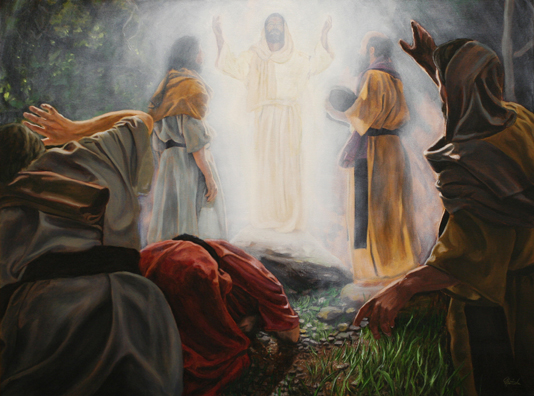
Six days later, Jesus took with him Peter and James and John, and led them up a high mountain apart, by themselves. And he was transfigured before them, and his clothes became dazzling white, such as no one on earth could bleach them. And there appeared to them Elijah with Moses, who were talking with Jesus. Then Peter said to Jesus, “Rabbi, it is good for us to be here; let us make three dwellings, one for you, one for Moses, and one for Elijah.” He did not know what to say, for they were terrified. Then a cloud overshadowed them, and from the cloud there came a voice. “This is my Son, the Beloved; listen to him!” Suddenly when they looked around, they saw no one with them any more, but only Jesus.

the-transfiguration

And he was transfigured before them, and his clothes became dazzling white, such as no one on earth could bleach them.

Six days later. An innocuous beginning to our scripture today. In order to properly experience the depth of the transfiguration, we have to go back six days in the life of Jesus and his disciples. Before hiking the mountain with the inner circle of Peter, James, and John, Jesus asked the disciples about his identity. “Who do people say that I am?” “Well Jesus, some call you John the Baptist, and others call you Elijah or one of the prophets.” “Okay, but who do you say that I am?” Peter answered, “You are the Christ, the Messiah.

Jesus then immediately taught his disciples about his impending death, and predicted his resurrection for the first time; “The Son of Man must undergo great suffering, and be rejected by the elders, the chief priests, and the scribes, and be killed, and after three days rise again.” Peter, the great representative for the rest of the disciples, the great representative for all of us, pulled Jesus aside and began to rebuke him for making such claims: “the messiah cannot be rejected by the elders and be killed Jesus, thats not what a messiah is supposed to do.”

Jesus quickly stopped Peter in his tracks, “Get behind me Satan! For you are setting your mind not on divine things but on human things.”

And so, six days later, perhaps when the disciples needed a reinforcement of faith after such a strange episode, the inner circle was invited by Jesus to the top of a mountain. I can imagine their wavering faith as they slowly walked along the path, unable to comprehend the new understanding of what it meant for their Lord to be the Messiah.

In the cool of the morning, with the dew still hanging in the air, Jesus was transfigured before the disciples. His clothes became dazzling white beyond human comprehension. And there, on either side of Jesus appeared Elijah and Moses. Then Peter said aloud, perhaps while cowering in fear, “Rabbi, it is good for us to be here; let us make three dwellings, one for you, one for Moses, and one for Elijah.” Suddenly, a cloud overshadowed them, and from the cloud there came a great voice: “This is my Son, the Beloved; listen to him!” And when they looked around, they saw no one with them anymore, but only Jesus.

4, Example 2a, The Saviour's Transfiguration, an early-15th century icon from the Tretyakov Gallery, attributed to Theophanes the Greek

Today, we celebrate Transfiguration Sunday. In the life of Jesus the Transfiguration was a defining moment that would come to determine the course of his mission to the world. From this point forward the trajectory of Jesus and his disciples was set toward Jerusalem. For the modern church, Transfiguration Sunday is celebrated immediately before Ash Wednesday and the beginning of Lent. Just as the Transfiguration trained the disciples’ eyes to the coming death and resurrection of Jesus, so too we are training ourselves to make our way through the coming forty days of Lent preparing for the celebration of Easter.

What do you think of this story? It has forever been a favorite of mine for many reasons. What does the appearance of Elijah and Moses mean for the disciples and Jesus? What must it have felt like to be there with Peter, James, and John to have witnessed Jesus transfigured before them? How powerful and enveloping was the cloud and God’s voice declaring Jesus as his Beloved? A whole sermon series could be devoted to these 7 verses. However, today we are going to focus on Peter’s peculiar request to build three dwellings on top of the mountain.

Peter is both frightened and ignorant. Within the last week he had made the stunning confession of Jesus as the Christ and then he was connected with the likes of Satan and commanded to move behind Jesus. Like many Christians, Peter was willing to go wherever Christ called him, though that didn’t necessarily mean he understood everything that was going on. This event had to have been remarkable for the three disciples present. In a brilliant fashion Jesus was validated as the Son of God. In spite of the shock regarding his own suffering and approaching death, this transfiguration confirmed him as the Lord’s anointed, the beloved Son.

Perfectly timed as a reinforcement for the disciples’ faith, particularly in the wake of Peter’s movement between perfection and ignorance, Peter responds to this glorious moment with the desire to build three dwellings. Behind his words was the need to prolong the experience. Who among us would not want to stay up there on the mountaintop with the transfigured Jesus flanked by Moses and Elijah? This was a moment high worth; the true, embodied, and illuminated understanding of Jesus. It was an experience that any of us would have liked to make permanent. However, life is not made up of mountaintops alone, for every glorious mountain there is a equally draining valley. It was good for Peter to experience the transfiguration, but it was NOT good for him to try and prolong the experience. Life must continue to move on.

A few months ago I was blessed with the opportunity to preside over my first wedding. Brian and Sarah are a delightful couple and I was thrilled with the invitation to join them together in marriage. The wedding went off without a hitch, well thats not exactly true, I had to remind the nervous father of the bride to stand with her until he gave her away, and then I had to direct him to sick back down after he had finished. Nevertheless, when it came time for the homily, I stood before Brian and Sarah, remarking about the sanctity of marriage and the role that God plays in all of our unions. I ended the homily with something I tell all couples preparing for marriage:

1175334_605087304526_1820722616_n

“From this point forward your individual stories are coming together. I want to tell you something that most will try to claim the contrary. Today will NOT be the happiest day of your lives. If you limit the joy of what you can experience in marriage to this one particular Saturday afternoon, it will cease to be organic and life-giving but instead repetitive and dull. You have an incredible story in front of you, one that has yet to be written, you are traveling as strangers into a strange land. There will be countless mountains and valleys and so much of your horizon is still beautifully unwritten.

Like Peter, many of us want to desperately hold on to those “transfigured” moments of our lives. We want to experience events where we get a little slice of heaven, but as soon as they fall in our laps we are often unwilling to let them go. The excitement of Christmas is often replaced by the anxiety and dull atmosphere of January. The beauty of a newborn baby is quickly rivaled by the long nights of crying and wailing. The joy of summer break from school flies by too quickly and before we know it we are sitting in a new classroom surrounded by unfamiliar faces. Life is made up of both mountains and valleys. Neither one can, nor should, last forever.

shenandoah-blue-ridge_2014_600x450

Transfigured moments are all around us, particularly here in worship. Worship is supposed to be a shining hour, high and lifted up, an event where the glory of God the Father, Son, and Spirit shines radiantly throughout our space. Like the disciples gathered on the mountain, worship is supposed to surround us like a cloud when Jesus and his revelation of God are made known to each of us. Worship, when done well, produces a glow unlike anything else on earth. Worship, beauty, joy, love; all of these are those wonderful transfigured moments that surround us daily. A life that has no transfigured hours of worship is poor, no matter how rich and decadent the elements may be.

So, just think for a moment, imagine the many areas in which the mood of Peter, when he said, “Lets just stay here” blocks the possibilities of life. Life cannot just be one big wedding celebration, nor can it be replaying our favorite song over and over and over again, nor can it be a endless worship service here at St. John’s. Whether we like it or not, we cannot stay on top of the mountain forever, we have to move and go on to new experiences of life, faith, and understanding.

As the disciples grew closer and closer to their Lord, his words and proclamations became increasingly difficult to understand and follow. While making their way to the inevitable result of Jerusalem, the disciples needed to hear Jesus. The voice from the cloud echoed out, “listen to him!” and I can think of no better words for all us to hear this morning.

When I was 16, standing on the sidewalk along Ft. Hunt road in Alexandria, Virginia on a cold and dark December evening my life was forever changed. I am a product of “listening to him.” I stand before you as the pastor serving this church because I was enveloped in that strange cloud of God’s grace, without a big booming voice, without particular words, and yet I somehow knew that I could do nothing with my life other than serving the church. My life has been filled with mountaintop experiences, some of them on literal mountain tops, but there have also been deep and seemingly endless valleys.

And so, what are to make of us this Transfiguration? That day when he took the three disciples to the mountainside to pray, his countenance was modified, his clothing was aflame. Two men appeared, Moses and Elijah came. Lost in the cloud a voice, have no fear, we draw near, lost in a cloud, a sign, Son of Man turn your ear.

We are just like those disciples standing on the mountainside with Jesus. We are given glimpses of heaven regularly in our lives. We are blessed to be showered with transfigured moments if we have eyes to see and ears to hear. However, life must be made of both mountains and valleys. Like the disciples we are called to listen to Jesus when the time comes to re-enter the reality of life. We have the privilege of listening to Jesus and having his words become incarnate in the ways that we live our lives.

lord__s_supper_by_bclary-d37hhzp

If you want to truly experience a transfigured moment in your life, look no further than this table with the gifts of bread and wine. This banquet that has been prepared for you and me is an encounter with the divine, it is a little slice of heaven for us. This is our mountaintop, that incredible and glorious moment when Jesus’ true radiance shined in a way unlike anything else on earth. In this communion we are brought into union with the triune God, we are nourished with the grace of God for our journeys of faith. 

So, as we prepare to feast at Christ’s table, remember that we cannot stay on the mountain forever. We will depart from this place and enter the world filled with the body and the blood. Listen to him in the valleys of life knowing that we are always going on to something new and wonderful. Let us all strive to be transfigured and delight in God’s will, walking in his ways forever. God is with us at the wedding receptions and in the hospital waiting rooms, God is with us when we fall and love and when we lose our jobs. God is with us when we cradle new-born children for the first time and when they leave us to begin their own lives. God is with us on the highest mountains and in the deepest valleys. Listen to him.

Amen.


But I Say…2 – Sermon on Psalm 119.33-40 & Matthew 5.43-48

Psalm 119.33-40

Teach me, O Lord, the way of your statutes, and I will observe it to the end. Give me understanding, that I may keep your law and observe it with my whole heart. Lead me in the path of your commandments, for I delight in it. Turn my heart to your decrees, and not to selfish gain. Turn my eyes from looking at vanities; give me life in your ways. Confirm to your servant your promise, which is for those who fear you. Turn away the disgrace that I dread, for your ordinances are good. See, I have longed for your precepts; in your righteousness give me life.

Matthew 5.43-48

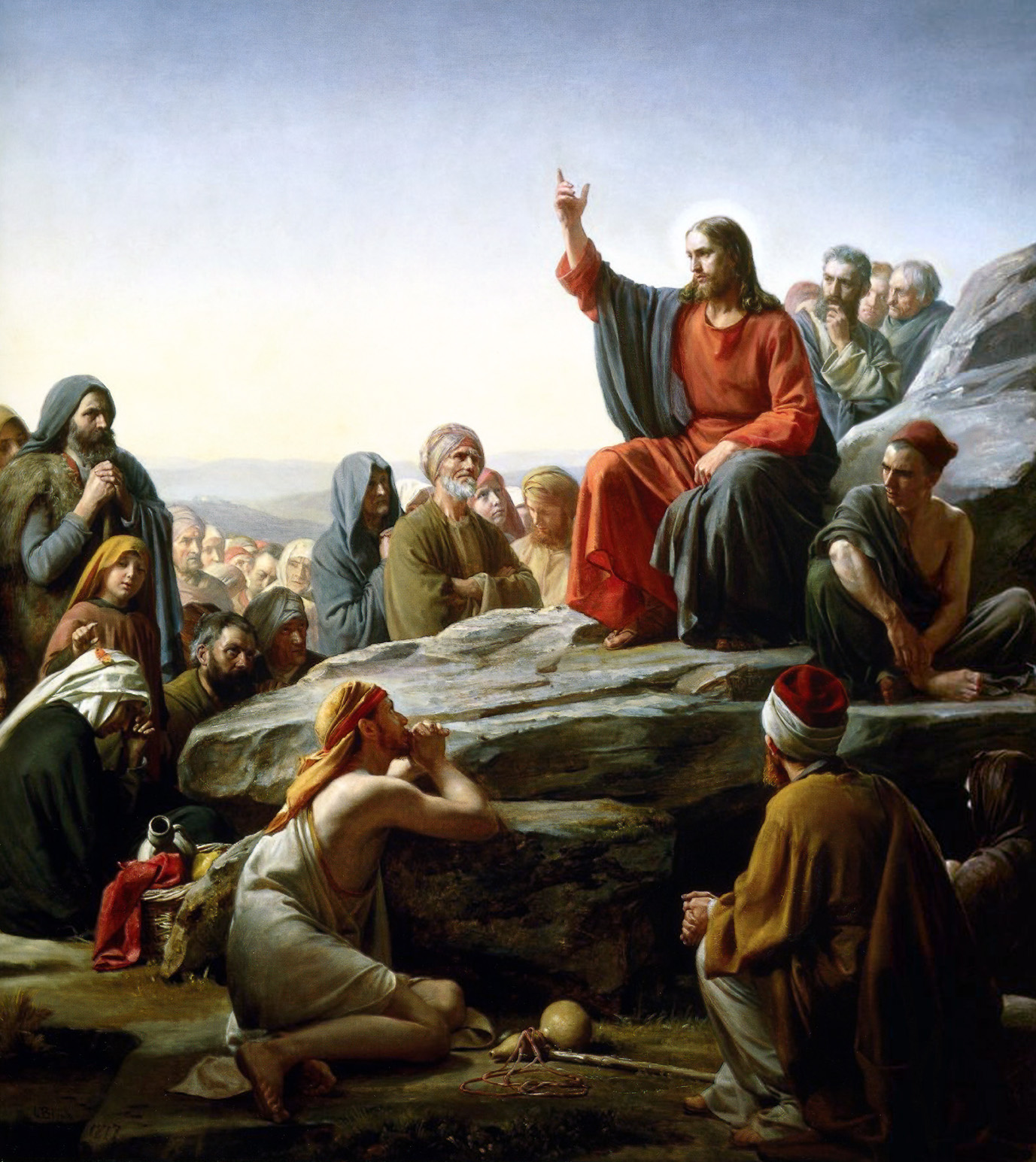
“You have heard that it was said, ‘You shall love your neighbor and hate your enemy.’ But I say to you, Love your enemies and pray for those who persecute you, so that you may be children of your Father in heaven; for he makes his sun rise on the evil and on the good, and sends rain on the righteous and on the unrighteous. For if you love those who love you, what reward do you have? Do not even tax collectors do the same? And if you greet only your brothers and sister, what more are you doing than others? Do not even the Gentiles do the same? Be perfect, therefore, as your heavenly Father is perfect.

257760778642631661_Ag9PBVg2_c

Be perfect, therefore, as your heavenly Father is perfect.

Annual Conference is that one time of the year that all the diehard Methodists get together for a weekend of facts, faith, and fellowship. Representatives from each church gather in an effort to discuss contemporary issues facing the church, learn from various speakers, and celebrate the ordination and retirement of particular clergy.

A few summers ago, while serving a church outside of Detroit, Michigan, I was invited to attend the Detroit Annual Conference session. I listened to members of the conference debate whether or not to give more money to fight against malaria in Africa, how to address concerns over our pension system, and arguments about what it means to pray for physical healing in the church. Toward the end of the session, we came to my favorite part of every Annual Conference, The Service of Ordination. People, young and old alike, who felt the call of God on the lives to pursue a life of ministry, folk who have worked and sacrificed for years to be standing in front of all the people, were preparing to be commissioned and ordained for work in the church.

Detroit Annual Conference

Detroit Annual Conference

As the small group of adults stood shoulder to shoulder on the stage I wondered about their backgrounds, where they might be appointed, and what kind of ministerial careers they would have. Dressed in their robes, the candidates prepared to answer the traditional Wesleyan questions that thousands of Methodist clergy have had to answer over the last two centuries.

“Have you faith in Christ?”

The candidates definitively responded with a resounding “Yes!”

“Do you believe in the ordinances of the United Methodist Church?”

“Yes!”

“Are you going on to perfection?” 

Most of the responses we completely in sync, except for one woman toward the end. Instead of answering like her fellow peers, she shook her head as if to say no, while her voice said yes. 

YES

YES

Be perfect, therefore, as your heavenly father is perfect.

For that one clergy candidate, achieving perfection was something that she was clearly unsure about. I imagine that she understood her own fallibility, her sinfulness, as preventing her from ever being perfect. Moreover she probably thought that only Christ could be perfect and that it would never be possible for her.

Be perfect, therefore, as your heavenly father is perfect.


Here we are again, caught up in Jesus’ Sermon on the Mount. It was hard enough that he told his disciples to not lose their tempter, to not lust, and to renounce the right to retaliate; but now Jesus is instructing us to love those who hate and harm us. Really? Jesus is like that boss or parent that knowingly give us a list of things to do that we can never accomplish. Why does Jesus expect the impossible from those who follow him?

Using the same formula that we talked about last week, Jesus establishes the current expectations of the law and then he enhances them: “You have heard that it was said, ‘You shall love your neighbor and hate your enemy.’ But I say to you, Love you enemies and pray for those who persecute you, so that you may be the children of your Father in heaven; for he makes his sun rise on the evil and the good, and sends rain on the righteous and the unrighteous. For if you love those who love you, what reward do you have? Do not even tax collectors do the same? And if you greet only your brothers and sisters, what more are you doing than others? Do not even the Gentiles do the same? Be perfect, therefore, as your heavenly Father is perfect.”

Two important questions arise from Jesus’ declaration: Who is my enemy?; Why am I supposed to love them? 

Enemy number 1: Those who are evil. Anyone who takes advantage of the weak, anyone who promotes violence in power struggles, and anyone who exhibits evil in the world is my enemy. They are the ones who actively seek to work against God’s love and kingdom in the world. They are the people who participate in destructive tendencies toward others and are fans of violence, subjugation, and selfishness.

Enemy number 2: My friends and family. In many ways, some of our greatest enemies are those who are closest to us. Our friends and family are the ones who set expectations for what our lives are supposed to look like. They are the ones who know whether or not we are living up to our potential. They see our truest sides, they know about our weaknesses, they remember our history. When we create walls between ourselves and those who are close to us, we often do so because we are afraid of being too vulnerable with them, we fear what they can do to us.

Enemy number 3: Ourselves. I am my own worst enemy. I am the commander of my life. I am responsible for the choices and decisions I make. I know my own weaknesses better than anyone else, I hold myself to a standard that, when not met, leaves me feeling down and blue. I have more power than I should regarding the hearts, minds, and souls of so many people in my life, and if I abuse that power, I become an even greater enemy than anyone else in my life.

When we hear that Jesus calls us to love and pray for our enemies we do well to not relegate our enemies to far away and distant peoples. Our worst enemies might be sitting here with us in church this morning. We all have enemies in ways, that sometimes, we cannot even imagine. That neighbor who always trims your bushes, or that acquaintance who always takes advantage of your hospitality, or that stranger who belittles people at the supermarket are just as much our enemies as those who bring and promote terror across the world. For the Christian, the words neighbor and enemy are synonymous and are remarkably far reaching.

And Jesus tells us to love them, and to pray for them.

So, why? Why are we supposed to love those who hate and persecute us? Why does Jesus call us to love the people who often make our lives miserable?

We are not called to love them in order to change them. Thats not the point. Certainly the conversion of an enemy to a trusted friend can be the result of our discipleship and call to love, but it is not necessary, nor should it be our motivation for loving our enemies. Love is not a weapon or a tool. Genuine love has not ulterior motive; its purpose is simply to benefit the one being loved, regardless of the response. We are called to love unconditionally.

If you love someone, enemy or not, in order to change them, they will never change. Our love for others should not come with baggage but must be the same as the free and unconditional love and grace that comes to us from God.

We love others because God first loved us. Elsewhere in the world, it is normal to return love for love and hate for hate. Christians who do no more than this fade into the background of life. They cannot be the light of the world and salt of the earth.

Love your enemies and pray for those who persecute you so that you may be children of your Father in heaven. This kind of love is less about feelings and more about actions. For the early Christians to love the Roman oppressor or the face slapping persecutor was not about having “warm and fuzzy feelings” but to react in a positive way. I know that we have been trained to think of love as a feeling, particularly in the wake of Valentine’s day, but love is something you DO. That why Jesus calls his disciples to go the extra mile and turn the other cheek; physical embodiments of love for our enemies. Whatever else you can do to love your enemy, Jesus leaves it up to our imaginations as to how we can do so. Our love for others is called to be abnormal, above and beyond what the world would be satisfied with.

In addition to the embodiment, the DOING, of love, we are also called to pray for our enemies. You have heard it said that if you do this its enough, well to Jesus we can always do more, we can always be better. Loving our enemies is one thing, it is difficult and taxing, but praying for our enemies is another thing altogether.

love-your-enemies_dvd.original

Praying for our enemies requires us to seriously attempt to see them from God’s point of view. The sun rises on the evil and the good, and God sends rain on the righteous and the unrighteous. We cannot truly pray for our enemies without acknowledge our common humanity; our enemies have been created in the image of God, just as we were. And no matter how bad they are, no matter how nefarious, no matter how sinful, nothing can ever erase God’s image from their lives, nor from ours.

The call to pray for our enemies is like being a parent who can earnestly say to their child, “I love you, but I don’t like what you’re doing.” Praying for our enemies will always fall short unless we remember that God love us just as much as our enemies. Seeing them in the light of God’s love is the first step toward loving them, and praying for them.

So, is this even possible? Are we capable of loving and praying for our enemies? Can we be perfect? If we try to do it on our own, it is impossible. Only by the grace of God, only with God’s help, can we heed Jesus’ call to love and pray for our enemies. Truly I tell you, this is one of the most difficult aspects of being a Christian. We are called to an impossible life, if we try to do it on our own. Christ is not asking us to simply “like” everybody, but rather to act and pray in love toward those we like and those we do not like.

Be perfect, therefore, as your heavenly Father is perfect. 

At our Lectionary Bible Study this week, we sat in one of the Sunday school rooms and read this text out loud. As usual, many of the comments and questions were quite profound leading toward a greater understanding of the text for all of us. As we were coming to the end of our time together, Betty Hairfield offered a story regarding this idea of perfection.

Years ago, while Betty was in college, she began worshipping at a United Methodist Church because it was closer to campus than the denomination she grew up with. One day Betty was told about the question of perfection that all ministerial candidates were asked about. Like the woman who shook her head while saying “yes,” Betty kept the words close to her heart and she began to understand the depth of the question: “Are you going on to perfection?” For Betty, this was a transformative moment. If perfection is not our goal, then whats the point? Why should we continue to worship a God who loves unless we try to live better lives. That realization, that question of perfection, is what led Betty to join the United Methodist Church.

We are not called to be content with the mediocrity of discipleship but instead we are called to live radical and abnormal lives. Like the psalmist we need to pray for God’s wisdom and grace to be the kind of people who can change the world. We need to strive to be better than good, to live into the new reality that Jesus established with his life, death, and resurrection. Love and pray for those who are evil, for your friends and family, and for yourselves!

Are we going on to perfection? Yes, but only with God’s help.

Amen.

But I Say… – Sermon on Matthew 5.21-26

Matthew 5.21-26

You have heard that it was said to those of ancient times, ‘You shall not murder’; and ‘whoever murders shall be liable to judgment. ‘But I say to you that if you are angry with a brother or a sister, you will be liable to judgment; and if you insult a brother or sister, you will be liable to the council; and if you say, ‘You fool,’ you will be liable to the hell of fire. So when you are offering your gift at the altar, if you remember that your brother or sister has something against you, leave your gift there before the altar and go; first be reconciled to your brother and sister, and then come and offer your gift. Come to terms quickly with your accuser while you are on they way to court with him, or your accuser may hand you over to the judge, and the judge to the guard, and you will be thrown into prison. Truly I tell you, you will never get out until you have paid the last penny.


Unless your righteousness exceeds that of the scribes and the Pharisees, you will never enter the kingdom of heaven.

Lets assume that all of us are here this morning because we want to be good people. We see what our lives look like on a daily basis, and we recognize Sunday mornings as opportunities to better ourselves, to hear about the kind of people we are supposed to be.

Lets also assume that we are already fairly decent people. I mean look at us. We are sitting here in church on Sunday morning, thats certainly doing better than the people who are still sleeping in at home, curled up under their soft and warm blankets.

som05_calvinandhobbes_ch870114

Becoming a better person is what Christianity is all about, isn’t it? One of the main functions of any religion is to be shaped and molded into something greater than we currently are. This journey of faith is aimed at reconstructing ourselves so that we might resemble Jesus in the way that we live in the world.

But, the trouble for us who know a little bit about Jesus is that we know it was the good people, the scribes and the Pharisees, the ones who obeyed all the laws, the ones who, like us, showed up for worship on time, the people who gave fervently to the temple, who remained faithful to their spouses, who loved the Lord their God with all their heart, who knew all the scriptures, who walked humbly with God, those people were the ones who eventually yelled, “Crucify him!” 

What drove them to such disregard for the Messiah who walked among them? What could have made them move from strict religious adherence, to crowds thirsty for punishment?Well, one answer is the scripture that we have today.

We find Jesus here in the middle of the Sermon on the Mount. Let me set up the trajectory: Jesus was born in Bethlehem, escaped to Egypt with Mary and Joseph, returned to Nazareth, was baptized by his cousin John in the river Jordan, was cast into the wilderness by the Spirit to be tempted by the devil for 40 days and nights, began his Galilean ministry, called his first disciples, and then gave his Sermon on the Mount.

This sermon marks the beginning of Jesus’ mission to God’s people. The words of the sermon will come to dictate who Jesus will serve, how he will share God’s grace with the people, and why he was dragged to the cross.

The Sermon on the Mount Carl Bloch, 1890

The sermon begins like all good sermons, Jesus jumps right to the point: Blessed are the poor in spirit, for theirs is the kingdom of heaven. Blessed are those who mourn, for they will be comforted. Blessed are the meek, for they will inherit the earth, and so forth.

With the people no doubt scratching their heads regarding whatever this inversion of the world’s dynamics was supposed to mean, Jesus moves forward, “You all are the salt of the earth, you are the light of the world. Do not think that I have come to abolish the law or the prophets; I have come not to abolish but to fulfill.”

The sermon concludes with Jesus’ reinterpretation of the Mosaic ten commandments, which is where our scripture begins today:

You have heard it that it was said to those of ancient times, ‘You shall not murder’; and ‘whoever murders shall be liable to judgment.’ But I say to you that if you are angry with a brother or a sister, you will be liable to judgment; and if you insult a brother or a sister, you will be liable to the council; and if you say, ‘You fool’ you will be liable to the hell of fire.

What a sermon this is shaping out to be.

Jesus’ teaching is stricter than the law itself. He will go on to proclaim do not get angry, do not lust, do not swear, do not seek revenge, and do not hate your enemy. He takes the law and make it even harder to obey.

Under the old law only murder and other extreme offenses were guilty of death, but under Jesus’ understanding angry temper is to be similarly judged. And he doesn’t stop there! Even those who would call others, “stupid” or “fool” are worthy of judgment by the court.

For Jesus, anger is just as bad as murder. Killing is not done by knives, and guns, and fists alone, but by the angry words muttered between friends, or the casual indifference between classmates that often makes people feel less than human.

Jesus looked out at the crowd and saw people worthy of love. His sermon is not just a message for Christians to follow regarding other Christians, but its a call to recognize the inherent value in all people. In Jesus’ day there was a custom of placing a large gold coin beneath the mainmast of most sailing vessels. For those who knew, this meant that even a wreck had value. Jesus recognized that value in all people, and called those with ears to hear to a life of grace, mercy, and love toward all people everywhere.

“You have heard it was said to those of ancient times… but I say to you…” Thats a classic Jesus move. It is possible to be so good, and right all the time, that you are wrong. You can be so religious that you miss the point of religion. Legalistic adherence to the law can begin to overshadow the importance of love and grace in your daily living. Overvaluing the law can lead to a faith that is cold, calculated, dry, and dull instead of a faith that is warm, wide, fun, and forgiving.

Jesus continues, “So when you are offering your gift at the altar (when you decide to place your offering in the plate) if you remember that your brother or sister has something against you, leave your gift there before the altar and go; first be reconciled to your brother and sister, and then come and offer your gift. Come to terms quickly with your accuser while you are on the way to court with him, or your accuser may hand you over to the judge, and the judge to the guard, and you will be thrown into prison. Truly I tell you, you will never get out until you have paid the last penny.

A professor of mine in seminary told a story about a church in Africa that took this command quite seriously. Every Sunday morning the people would make their way to the church located in the middle of the village. Some with sleep still in their eyes would drag their lethargic bodies down the dusty road, continuing the same march they made every week.

At the bottom of the steps leading into the small sanctuary, the local pastor would be smiling from ear to ear greeting everyone as they came forward, however the doors would remain locked. The crowd would grow and grow until everyone from the village was present, anxiously waiting outside the church.

“Look around you,” the preacher’s voice would echo, “who do you need to reconcile with? Who have you betrayed since last we met? Go and find your brothers and sisters, make peace with one another. Until you do, these doors will remain locked.

For the next twenty minutes, all of the African congregants would slowly make their way throughout the crowds searching for those who they had wronged, and who had wronged them. Now this wasn’t a town where you could just stand around and pretend that everything had been perfect since last Sunday. Everyone knew everyones’ business. That meant that they truly had to make peace with the collective church. Without the reconciliation, the people had no business entering the church to worship God. Only after the pastor was satisfied that everyone had been merciful with one another, were the doors opened and worship continued.

Some might say that Jesus’ command that someone should leave their gift at the altar to reconcile with his brother or sister is a depreciation of worship; however, it is actually an exaltation of worship. Just as it happened for that African church, God sees our inmost motives, and we are called to worship God in truth. If we have baggage with others in the community, we mock God by coming before the altar instead of first reconciling ourselves with others. God is concerned with our lives and our worship; we cannot ignore one while participating in the other.

I thought about doing something radical this morning. After reading the scripture for Sunday, and remembering the story from my professor, I wondered what it would have been like to stand outside those doors preventing all of you from entering today. But, after having shoveled at the parsonage and the church the last few days in the cold, I thought better of it. Nevertheless, what would our worship in this place look like, if first we made peace with those in the pews, rather than anonymously continuing down our faith journeys all alone?

1531994_199633020231001_10668999_o

What Jesus presented to the crowd, what Jesus presents to us this morning is not so much a new law to be strictly observed, but instead a new way of living our lives. Jesus makes his point dramatically in order for a change of heart to take place.

Jesus is here with us this morning, addressing us as he did to that crowd so long ago: You already know that you are forbidden to murder anyone, but now I’m telling you that you are forbidden to become angry with anyone. Call someone a fool and you’ll be worthy of punishment. Do you truly want to be good? Don’t just keep the law like the “good” Christians, go beyond the law.

Challenge yourselves to be greater than following guidelines and lists. Strive to love those around you to such a degree that the world will be transformed into the kingdom of God.

As a professor of mine once said, we are so accustomed to coming to a church like this and, if we should struggle and stumble with a passage like this one, it usually takes no more than 15 minutes for a skillful preacher, using the skills of story-telling, diversion, and trite formulaic expressions to explain it away. To reassure all of us that a nice person like Jesus never would have had a reason to say something tough to good people like us.

I know of no way to do that with this text. No amount of pop-psychology or narratival reductionism can remove the true message of Jesus’ words. The tougher the text, the more likely  it was to have come straight from the lips of Jesus. Being a Christian is no easy thing. It requires us to love greatly, and to forgive deeply.

Now more than ever we need to reclaim the high call of Jesus’ sermon. Young people today find and seek validation in their peers and parents that, when not offered, leads to self-destructive habits. Just think of the cases of bullying that have recently dominated significant media attention. Words and actions are powerful things. We often do not realize how powerful we can be with our words, and how destructive we can be if we are not careful.

Love is the key to all the commands of scripture, particularly Jesus’ sermon on the mount.

holy-life-tiles

Today, Jesus’ sermon is as hard to swallow as it was 2,000 years ago. You have heard that it was said to those of ancient times, “Do this and don’t do that,” but what Jesus says to us is to do more, go beyond the law, strive for something incredible, work for the kingdom, let God’s Word be incarnate in your lives, imagine a more graceful and purposeful life, seek out the last, least, and lost, be better than good, be holy as your heavenly father is holy.

Amen.


(I am thankful for Will Willimon’s sermon “Being Good” for inspiring parts of the above message)


To Fear, Or Not To Fear – Sermon on Psalm 112 and Mark 6.45-51

Psalm 112

Praise the Lord! Happy are those who fear the Lord, who greatly delight in his commandments. Their descendants will be mighty in the land; the generation for the upright will be blessed. Wealth and riches are in their houses, and their righteousness endures forever. They rise in darkness as a light for the upright; they are gracious, merciful, and righteous. It is well with those who deal generously and lend, who conduct their affairs with justice. For the righteous will never be moved; they will be remembered forever. They are not afraid of evil tidings; their hearts are firm, secure in the Lord. Their hearts are steady, they will not be afraid; in the end they will look in triumph on their foes. They have distributed freely, they have given to the poor; their righteousness endures forever; their horn is exalted in honor. The wicked see it and are angry; they gnash their teeth and melt away; the desire of the wicked comes to nothing.

Mark 6.45-51

Immediately he made his disciples get into the boat and go on ahead to the other side, to Bethsaida, while he dismissed the crowd. After saying farewell to them, he went up on the mountain to pray. When evening came, the boat was out on the sea and he was alone on the land. When he saw that they were straining at the oars against an adverse wind, he came towards them early in the morning, walking on the sea. He intend to pass them by. But when they saw him walking on the sea, they thought it was a ghost and cried out; for they all saw him and were terrified. But immediately he spoke to them and said, “Take heart, it is I; do not be afraid.” Then he got into the boat with them and the wind ceased. And they were utterly astonished.


Happy are those who fear the Lord. “Take heart, it is I; do not be afraid.”

It happened in a small town in a small United Methodist Church. A single mother was struggling to raise her two boys who were the talk of the town. At 10 and 12 years of age, the two brothers were often responsible for any of the “accidents” in town. They regularly vandalized certain buildings, were known for shoplifting candy from the local 7-11, and would ding-dong-ditch any house they could find.

Yet, on Sunday morning, there they were sitting on either side of their mother in church. The boys would politely greet the minister when they walked in, sat quietly, but during the sermon they loved to make farting sounds while the preacher paused in a sermon.

They were trouble.

Now because the mother was raising the boys all alone, many of the people in the community that wanted to do something about the two boys, felt that it wasn’t their place; that mother had enough on her plate.

This type of behavior went on for some time. The boys would continue their antics, driving people crazy, until one day when the mother had had enough.

The pastor at the local United Methodist Church was a young man fresh from seminary; he thought he had it all figured out. For weeks he had wanted to call out those two boys from the pulpit in the middle of a sermon, but he thought better of it, he would look down on that poor mother and let it go.

So it came to pass that the mother called the young minister. “Preacher,” she barked into the telephone, “I want you to strike the fear of God into my boys. This has got to stop.”

“It will be my absolute pleasure,” The preacher replied.

The following Sunday, after worship, the minister invited the two young boys toward his office, leaving one to sit outside while the other sat on the hot seat in the office.

In order to achieve some sort of repentance from the boys, the preacher thought about teaching them that God is always present, and therefore sees everything. This, he hoped, would teach them to behave better.

With the first brother sitting across the office table, the preacher began his lesson. “Where is God?”

No response.

“Where is God?!”

The boy began to fidget.

“Where is God!?!”

The lack of response was beginning to irritate the pastor.

“I want you to answer me right now, where is God?!?!”

And with that the boy jumped from his seat and hightailed it out of the office, grabbed his brother, and bolted for the parking lot.

“Whats going on?” The one brother asked the other.

“We’re in real trouble this time. God’s gone missing, and they think we had something to do with it!”


The psalmist writes, “Praise the Lord! Happy are those who fear the Lord, who greatly delight in his commandments.” I have always found this verse a little strange considering the fact that whenever God shows up in the Bible, whenever God humbles himself to speak with one of his creatures, the first thing he usually says is, “Do not be afraid.”

fear

In Mark’s gospel we learn about a time when the disciples got into a boat to go to Bethsaida. After dismissing the crowd, Jesus went up on the mountain to pray, leaving his disciples alone on the boat. When Jesus came down he saw how the disciples were straining against the wind so he did what the Son of God would do, he walked on the water out toward the boat. He intended to pass them by, but when they saw him walking on the water they were utterly terrified, they thought it was a ghost and cried out. But immediately Jesus spoke to them across the water, “Take heart, it is I; do not be afraid.” Then he got into the boat with them and the wind ceased.

Yet, in Psalm 112, we hear about the blessedness of those who fear the Lord. To fear the Lord means that your heart is steady. If our hearts are fixed on evil, we shall become evil. If our hearts are fixed inwardly, we shall become ridiculously selfish. If our hearts are fixed upon things and possessions, we will become overwhelming materialist. All around us, perhaps even some of us, are failing because our minds and hearts are no longer steady, because our hearts are no longer fixed on the right thing.

So the psalmist calls out, blessed are those who fear the Lord. Fear comes to all of us, to the bravest as well as the cowardly. Fear comes to the faithful and to the faithless. Fear can be a good thing, it warns us to keep our eyes peeled for the danger that might lurk just around the corner. Fear teaches us to respect our elders, teachers, and bosses. Fear reminds us of our finitude. However, to be mindful of fear is one thing, to be constantly panic stricken is another.

A good friend of mine, raised in the church and pursuing a call to ministry, was once invited to a spiritual retreat at the cusp of high-school. For a long weekend, hundreds of young Christians would gather together in small groups to talk about the temptations of the world, how to keep the faith, and what it meant to walk with Jesus throughout their teenage years. They would also spend time as a large group worshiping, they would sing along to the contemporary Christian rock band, they would walk forward to receive communion together, and they would all reverently bow their heads to pray.

On the last night of the conference, at the final worship service, at the height of the concluding sermon, the fire alarm went off. The ushers and facilitators rushed everyone out of the building, yelling at the kids to hurry up as they struggled to find their peers. My friend was rushed through one of the hallways, forced around dark corners, until he found himself standing outside in the parking lot.

Spread throughout the area were life boats, and throngs of the young Christians were climbing aboard. My friend, unsure of what was going on, ran forward to the closest boat, grabbed hold of a rope and tried to swing himself on when the fire alarm stopped and a voice cried out over the megaphone: “Take a look around you, there are not enough spaces in the life boats for everyone. Have you accepted Jesus Christ as your personal Lord and Savior?”

Fear can be a tool, but it can also warp and manipulate us. My friend refused to enter a church for years after that incident because of the way the people at his retreat attempted to manipulate his faith through fear. That is not the kind of fear that the psalmist calls blessed.

The disciples were on the boat, the wind was against them and they were having problems crossing on to the over side. They were doing their best to follow Jesus’ commands, yet the world was not matching their expectations. They must’ve felt tired and abandoned out there all alone; why had Jesus asked them to do this? Where was he when they really needed him? Somehow, though stricken with overwhelming fear, the disciples saw Jesus walking on the water while calling out, “Take heart, it is I; do not be afraid.”

When fear was the most appropriate response to the present circumstances, Jesus triumphantly declared, “Do not be afraid.” In the many chaotic moments of our lives, when bashed by the waves of the world, Jesus continues to call out to us, “Do not be afraid.” Christ is there with us on the rocky boats of life’s circumstances, God listens to our prayers, and the Holy Spirit moves through everyone of us to help transform this world into God’s kingdom.

The disciples, the Israelites who sang Psalm 112, and all of us are not called to be motivated by fear, but instead motivated by love. The disciples did not leave everything to follow their God because he had promised them hard days and suffering, though that often comes if we take faith seriously, but instead they were offered a new way of living. Those who do not want to be afraid are those who have decided to see the world through the lens of faith, to be free from the tyranny of the world. People without fear are those who are fully open to the troubles and the needs of their fellow human beings. They, as the psalmist writes, rise in the darkness as a light for the upright, they are gracious, merciful and righteous. Their hearts are secure and firm in the Lord, they will not be afraid because they know the Lord is with them.

Fearing the Lord, as the psalmist writes, means loving the Lord. Loving God enough to realize that God wants to us to love one another, to strive for justice, to celebrate peace, to take faith seriously, but not take ourselves too seriously. Those who cannot sigh with others in the midst of suffering, and laugh a little bit about themselves are the ones who will be controlled by their fear.

There has been plenty of fear used throughout the history of the church, perhaps today more than ever. Churches have become professionals with motivation by fear. If you don’t tithe, if you don’t believe, if you don’t commit to prayer, etc. Right now, what we need more than fear is a little bit of laughter, we need some joy, we need to rediscover the happiness that the church contains for those who want to follow Jesus Christ.

I like to imagine that later in Jesus’ ministry, or perhaps after the resurrection, the disciples would be together joking about the old times. “Do you remember that time Jesus went into the temple and over turned all the tables!? How crazy was that?” “Or when he asked us to go find him a donkey to ride on into Jerusalem? What a character!” “Or what about that time we were all shaking with fear on the boat and Jesus calmed the wind like that *snap* what a night that was.”

laughing_jesus

Laughter, joy, and excitement must have been a part of the disciples journey through faith.

Thats why I started the sermon with a funny story about two young boys running out of a church. Until we can laugh together about the excitement of faith, then the fear of God will remain what many people get out of church.

Happy are those who fear the Lord, because they realize that God’s love is incredible. We fear God’s love because we recognize that we do not deserve it. We fear God for welcoming us into this journey when we have so little to contribute. We fear God for inviting us into a place to be loved, when we feel unlovable.

We have too often settled for the motivation of fear in church. Can you imagine what the church could look like if instead of gathering to hear about what we must do to change in our lives, we gathered out of joy and excitement and laughter?

Blessed are those who fear the Lord, who greatly delight in his commandments.

Let us all recover that sense of happiness and delight in our faith journeys. Let us be motivated by the good God who calls us by name to laugh, live, and love. Let us rekindle the flame of faith in our lives to be utterly astonished by the God who came to die, and live, for us.

Fear not, for God is with you.

Amen.

434035811_640

On Real Religion – Sermon on Micah 6.1-8

Micah 6.1-8

Hear what the Lord says: Rise, plead your case before the mountains, and let the hills hear your voice. Hear, you mountains, the controversy of the Lord, and you enduring foundations of the earth; for the Lord has a controversy with his people, and he will contend with Israel. “O my people, what have I done to you? In what have I wearied you? Answer me! For I brought you up from the land of Egypt, and redeemed you from the house of slavery; and I sent you Moses, Aaron, and Miriam. O my people, remember now what King Balak of Moab devised, what Balaam son of Beor answered him, and what happened from Shittim to Gilgal, that you may know the saving acts of the Lord.” “With what shall I come before the Lord, and bow myself before God on high? Shall I come before him with burnt offerings, with calves a year old? Will the Lord be pleased with thousands of rams, with ten thousands of rivers of oil? Shall I give my firstborn for my transgression, the fruit of my body for the sin of my soul?” He has told you, O mortal, what is good; and what does the Lord require of you but to do justice, and to love kindness, and to walk humbly with your God?

4944299081_d37e065a78_z

What does the Lord require of you but to do justice, and to love kindness, and to walk humbly with your God?

Pastor, preacher, reverend; titles that I’m still not used to. After only having served this church for seven months, it never ceases to amaze me how many people in the community already identify me through my vocation. I will be sitting at the Bistro downtown ready to order dinner with Lindsey when the waitress begins by asking, “What can I get for you reverend?” Or when I’m sitting behind my computer at Coffee On The Corner my coffee is accompanied with a “here you go preacher.”

Its my own fault really. I love to tell people what I do. Whenever I meet someone new in town, I’m always eager to share with them my excitement at having been appointed to St. John’s.

This past week, I was visiting one of my favorite shops downtown (that will remain nameless) when I was greeted with the familiar title: Pastor. The owner and I have a fairly decent relationship and our conversation flows smoothly whenever we’re together. As he was ringing me up, we exchanged the regular pleasantries, talking about the cold weather and other such things, until he asked me about the church. I told him about how remarkably forgiving many of the congregants are regarding my sermons, and how thankful I am for their willingness to join me in this adventure we call “church.” Thats when the conversation got serious.

“Well, I’m happy you’re enjoying it,” He said, “But church is just not the thing for me.”

Aside: I almost never ask anyone about church, and yet, people always bring up their attendance, or lack their of, in conversations.

By his tone and inflection, it was clear that he wanted to say more about the subject, so I inquired as to why church is not the thing for him.

“I used to go all the time,” he began. “I’ve popped around between different denominations, I was even an elder for a little while, but about ten years ago I lost faith in the church. We were doing all the right things, we had hundreds of people in worship every Sunday but we never did anything for the community. Everything the church did was so inwardly focused. Debates about the wallpaper, the type of bread for communion, and timing for Sunday services dominated all of our conversations. Whenever I tried to raise a need within the community that the church could meet it was brushed aside as being insignificant. Finally, at a council meeting, I could no longer contain myself. After years of watching this “perfect church” ignore the desperate needs of the people outside the building, I stood up in the front of the leadership and declared, “I think when Jesus said, ‘Feed my sheep,’ he really meant to feed his sheep.” I have not been to a church since.”


In the sixth chapter of Micah, the prophet relays God’s controversy with his people. “O my people, what have I done to you? In what way have I wearied you? Answer me! For I brought you up from the land of Egypt, and redeemed you from the house of slavery, and I sent you Moses, Aaron, and Miriam. O my people, remember now what King Balak of Moab devised, what Balaam son of Beor answered him, and what happened from Shittim to Gilgal, that you may know the saving acts of the Lord.”

At that time in Israel’s history, the people had grown weary and bored with their God. They were just going through the motions when it came to worshipping the good God who had been at the center of their very lives for so long.

How could they have become bored with God? He had delivered the people from their oppressors, raised up mighty leaders, sent truthful prophets, and brought all the people to a full awareness of his righteousness. Yet, they had forsaken him. They lived immersed in the love of God, yet were blind to much, if not most, of it.

Micah then describes “real religion” as opposed to the ways to Israelites were behaving: “With what shall I come before the Lord, and bow myself before God on high? Shall I come before him with burnt offerings, with calves a year old? Will the Lord be pleased with thousands of rams, with ten thousands of rivers of oil? Shall I give my firstborn for my transgression, the fruit of my body for the sin of my soul? He has told you, O mortal, what is good. and what does the Lord require of you but to do justice, and to love kindness, and to walk humbly with your God?

Micah presents the simple essentials of real religion in a verse that has taken its place among the most favored of scripture. What does the Lord require of you but to do justice, love kindness, and to walk humbly with your God? Real religion is predicated on the lived reality of discipleship that changes everything.

God made it known to the Israelites the proper and good response to their Lord. The people are required to practice justice, to seek equality between themselves and others; to love kindness, to maintain a loyal commitment to God and others; and to walk humbly with their God, to live transformed lives conformed to the image of God. Real religion is a journey of faith working by love leading to holiness of heart and life.

So, where are we with God? Have we grown tired and weary of the God we have come to worship? Are we attending church, practicing our faith, and loving others out of obligation or excitement? What do we think the Lord requires of us?

Is our relationship with God determined by our attendance at church, coming to worship at 11am every Sunday, singing a couple hymns, hearing scripture read aloud, and listening to a 15 minute sermon? Are we simply going through the motions of faith, or does our faith shape the way we act outside of this building?

During the time of Micah, God no longer wanted the sacrifice of animals, burnt offerings, and rivers of oil. Instead he wanted what he already showed to be good: justice, kindness, and humility.

And when we read that list of what God does not want, it makes the threefold expectation seem easy. The real demands of God however, are both moral and spiritual, and the proper worship of God is a life obedient to them. Without justice, kindness, and humility, any of our practices in church can wound our faith. Instead of creating worthy habits for life, we appear to be bargaining with God to take something less than he actually wants of us. If our faith can be compartmentalized into one hour a week, if our faith is limited to church worship alone, than we desperately need to hear Micah’s word.

Like the ancient Israelites, we live and die immersed in the love of God. Yet, how often are we blind to much, if not most, of it?

Micah begged the people to exhibit true faith, true worship, and true morality that will come to completion in true behavior. What we believe shapes how we behave. 

However, proper morality is not a substitute for religion. Its not just about “being a good person.” Outward conduct is essential for the life of faith, but it always depends on the inward character that is shaped by the gathering community of faith.

Justice, kindness, and humility might sound easy and comfortable to those who have never tried them, but the overwhelming truth is that these three practices are far more costly than thousands of rams, ten thousands of rivers of oil, or a more contemporary allusion might be that truly practicing justice, kindness, and humility will always be harder than giving numerous possessions away in order to somehow appease God.

If this church takes seriously our commitment to forming disciples of Jesus Christ for the transformation of the world, then we need learn to translate mercy into our regular daily deeds through a close, nurturing, and personal journey of faith with God. The Lord demands our lives, our love, our trust, and our loyalty.

When driving around Staunton, it is nearly impossible to miss the cacophony of churches scratched across the landscape. In my life, I have never lived in a place with so many steeples. In fact, during one of my first weeks here someone told me that Staunton has more churches per capita than anywhere in the United States. I have no idea how to confirm whether or not this is true, but I wouldn’t be surprised if it is.

In my short time here I have created relationships with some of the other clergy in town; I’ve gone out to lunch, initiated a lectionary based breakfast group, and shared numerous cups of coffee. Do you know what the first question is almost every time I meet a different pastor? “How many people do you have in worship?”

This week, while reading over Micah, I realized that getting asked about worship attendance is close to what the Israelites must have felt when someone asked, “how many rams did you sacrifice this week, how many river of oil did you present to God?”

Really? Of all the things that we could possibly talk about, the first question is always about church attendance. I wonder why we aren’t talking about ways that we can practice justice, love kindness, and walk humbly with God.

Why are we all so consumed with the numbers instead of planning ways to serve our community? And I’ll admit that I am certainly guilty of this practice. When I am asked about worship, I proudly respond about the growth of our church and the warm and inviting atmosphere that one encounters when walking through the door. But I have to be reminded too, I have to ask myself, ‘What does the Lord require?’ Does God want us to grow this church and fill it to the brim to the point where we no longer know who we are worshipping with? Or is God calling us to do justice, to love kindness, and walk humbly? Not that they are mutually exclusive, but until our focus is more on living our faith, rather than filling our building, our building will never be filled.

So, how can we practice justice as individuals and as a church? We can open our eyes to the needs of our community. We can seek out the last, least, and lost, to give them the one true gift worth sharing: love. We can stand up against the small and large injustices that occur everyday, whether its an unfair judgement in the work place, or racist comments, or belittling words between spouses. We can practice justice by living out our faith in the world.

How can we love kindness as individuals and as a church? We can initiate relationships with strangers knowing that God has done the same for us. We can show our love to our families and friends by making the extra phone call to just say “Hi.” We can truly greet one another when we gather in worship, not just the same people we talk with every week, but particularly those who are still strangers to us. We can show our loving kindness but living out our faith in the world.

How can we walk humbly with our God? We can recognize that God is not only concerned with our religious rituals, but calls for us to live out faith beyond these walls. We can admit that we have, and will continue to, fall short of God’s glory. We can find salvation and redemption through our faith in God, and God’s faith in us. We can come forward to the table and receive the bread and wine humbly, knowing that we have done nothing to deserve it. We can walk humbly with our God by living out our faith in the world.

What does the Lord require of us? To do justice, to love kindness, and to walk humbly with God.

Amen.