Long Live The Revolution!

Romans 8.12-17

So then, brothers and sisters, we are debtors, not to the flesh, to live according to the flesh – for if you live according to the flesh, you will die; but if by the Spirit you put to death the deeds of the body, you will live. For all who are led by the Spirit of God are children of God. For you did not receive a spirit of slavery to fall back into fear, but you have received a spirit of adoption. When we cry, ‘Abba! Father!’ it is that very Spirit bearing witness with our spirit that we are children of God, and if children, then heirs, heirs of God and joint heirs with Christ – if, in fact, we suffer with him so that we may also be glorified with him.


I love going home to visit family. There is just something special about visiting the old haunts and showing off a baby to make me really nostalgic for the past. Last week Lindsey and I spent some time up in Alexandria with my family, and it felt like nothing, and everything, had changed. For instance: When I went to the grocery store I bumped into a couple people I used to go to church with, but then when I drove out on Route 1 all the old buildings were gone and were replaced with town homes. Time, like a river, moves and though it looks the same, everything changes.

But perhaps the thing I enjoy most about going home is spending time with my grandmothers; Gran and Omi, both of whom are now great-grandmothers to Elijah. I know I’m biased, but I do have the best grandmothers in the world. One represents all the good southern hospitality that Petersburg, VA has ever had to offer and the other represents the refined qualities of old Europe with her charm and presence. They could not be more different from one another, and yet they are incredibly close.

Anyway, whenever I head home, whether it’s for a day or a week, I always plan on swinging by both of their homes unannounced. And last week was no exception.

Both visits were similar – we had the usual chit chat, we caught up on all the other family members, we shared stories about Staunton, and then we watched Elijah crawl all over the place. During our time together we learned about different health concerns, new aches and pains, and were unable to confront the reality that one day, perhaps not for some time, but nevertheless one day, they will no longer be here.

Each visit ended with both of them asking us to stay longer, while Elijah fussed for food or for a nap. And both visits ended with the exact same words from both of my grandmothers: “I just wish I had something to give you.” To which one looked around the room as if to give us something off the coffee table, and the other went upstairs and literally took a painting off the wall and put it in our hands.

I just wish I had something to give you.

“When we cry, ‘Abba! Father!’ it is that very Spirit bearing witness with our spirit that we are children of God, and if children, then heirs, heirs of God and joint heirs with Christ.”

Inheritance, being an heir, is always a complex matter. I wish it wasn’t true, but I’ve helped families prepare for funerals when more of the conversation around the table was focused on who was receiving what than what hymns or scripture would their now dead loved one want in their Service of Death and Resurrection. At the moment when a family needs to be together almost more than ever, they were already marking the territory of their hopeful inheritance.

Most of the time, we can’t choose what we inherit. Our parents or grandparents might think something has special significance for us, and therefore leave that item for us in the will, but rare are the times that we get to declare what we shall receive.

And there are others things that we have no choice about inheriting. We get the good and the bad, the responsibility and the privilege, the shame and the pride.

Frankly, three of things that determine our lives more than anything else come to us without a choice at all: We do not choose the family we are born into, we do not choose the color of our skin, and we do not choose the economic status of our families. We inherit all three without any action of our own, and those three things set us on a trajectory that we can rarely alter.

And of course there are things we inherit through the sands of time that we’d rather erase; like the celebrities who get their DNA tested for television shows about genealogy only to discover that their ancestors were part of the Nazi regime, or were slave owners, or participated in the near-eradication of the indigenous peoples in this country.

Inheritance is a complicated and confusing thing. Are we nothing more than the genes and the history we inherit? Can we break from the tyranny of expectation and what it means to be an heir? Who are we really?

St. Paul says that we are children and heirs of God!

Our inheritance, unlike that which we receive from our families, is totally different from anything that has ever existed. Moths and rust do not corrupt it; thieves cannot break in and steal it. It cannot be lost in the fall of the stock market, or burned in the night, or taken by the government in the so-called death tax.

Our inheritance is our hope while everything else appears to fail. It promises a future when we cannot imagine there being anything left for us in this life.

            It is nothing short of the glory of the Lord.

However, and this is a big however, there is more to this inheritance than smiles and rainbows and resurrection. It comforts AND it afflicts.

We receive something so remarkable and inexplicable as heirs with Christ, but it also comes with a cost. Receiving this gift puts at risk our financial security, our reputation, our social position, our friends, our family, our everything.

This is the revolution of faith.

o-REVOLUTION-FIST-facebook

We are fellow heirs with Jesus Christ, we shall receive resurrection, but we also suffer with the Lord.

The time is coming, and is indeed here, when the mighty will be brought low and the lowly will be raised high. Seek ye first the kingdom of God and do not put your trust in things that will fade away with the blowing of the wind. You need only faith the size of a mustard seed. Ask you shall receive. Those who lose their lives for the sake of the gospel will live.

Have you ever heard anything more revolutionary in your lives?

Everything about our existence changes with the inheritance of the Lord: Our finances change when we realize that all we receive first comes from the Lord. Our families change when we realize that all who do the will of God are our mothers, fathers, brothers, and sisters. Our worldviews change when we realize that God is contending against the powers and principalities here and now.

All that we held so near and dear before will wash away when the tide of life comes in. Moths will eat away at the fabric of our perspectives, thieves will steal the wealth that we think determines everything, but there is one thing that endures forever: Jesus Christ.

This is nothing short of revolutionary. And to be honest, it’s gotten a lot of people killed throughout the centuries, including the One in whom we lie and move.

That’s one of the things we struggle to remember, here in our comfortable Christianity; Jesus was a revolutionary. He was not killed for loving too much. He was killed for calling into question who was really in charge, for confronting the elite about not taking care of the poor and the marginalized, and for telling the truth.

Jesus was a revolutionary and calls us to join the revolution.

            But here in Staunton, we don’t feel very revolutionary.

We like what we have: good schools, perfectly manicured lawns, children that come home to visit, vacations, golf courses, solid retirement portfolios. We can’t imagine being called to leave our families, or go to prison, or even lose our lives for the sake of the gospel. Why do we need to risk anything when we already have everything we want?

We, the people who have this remarkable inheritance through the Lord, can take all kinds of risks that the rest of the world fears. We know where all of our gifts really come from and that we can give them away, we know that our time is a fleeting and precious thing that we can give away, we know that even our lives are worth giving away because they were first given to us.

We can, and should, be reckless with our lives because we can afford to be. We’ve been given the greatest inheritance in the history of the world. Why aren’t we doing anything with it?

There was an uncle who had amassed a great fortune throughout his life, he started his own business and invested wisely, but had no children to leave his wealth to. However, he did have a couple nieces and nephews who patiently waited with baited breath for him to die so they could reap the benefits of the inheritance. While they should have been committing themselves to their educations and their careers, they just daydreamed about what they would do with the money as soon as their uncle died.

And then he did.

The siblings all met with the family lawyer after the funeral, trying their best to appear mournful while hiding smiles of utmost glee. The lawyer took his time reading through the important legal jargon until he came to the inheritance: To my nieces and nephews I leave… they gripped the leather chairs with anticipation… my library.

“Library?” they all thought silently though one of them accidentally shouted it out loud. “What about our money?!?!”

They all left in a storm of rage angered beyond belief, but the youngest nephew waited behind, and he signed for the inheritance library, and gave the lawyer the address of his house.

For days he unpacked box after box of books and started stacking them wherever he could. It began feeling like the books were becoming the new wallpaper, and for years they just sat their collecting dust. And the longer they remained, the more the man resented the books.

His life continued on, he got married, had a few kids, got divorced, lost the job, and started spending all his time at home. As he aged he felt like the books were there to taunt him, mocking him from every corner. And then one day, it a fit of built-up rage, he ran to the nearest stack, grabbed the top-most book and threw it across the room.

WHAM! The hardback left a perfect rectangular indentation in the wall from the force of the throw while the aging man breathed heavily with his hands clenched tightly together. He then slowly walked over to the wall to pick up the remaining remnants of the book to throw them away when he noticed something strange on the floor: a couple $100 bills.

It only took a moment, the slightest measure of time, before he realized what he had just discovered. The missing fortune of his uncle was in the library of books, hidden in between the covers, hundreds of thousands of dollars.

Revolution

When we cry, ‘Abba! Father!’ it is that very Spirit bearing witness with our spirit that we are children of God, and if children, then heirs, heirs of God and joint heirs with Christ – if, in fact, we suffer with him so that we may also be glorified with him.

We are joint heirs with Christ, and have received an everlasting inheritance that is our present and future glory! Are we letting this inheritance gather dust on the bookshelves of our lives? Do we know what we’ve received?!

God is bold and generous with reckless abandon to the point of giving his only begotten Son so that we might have eternal life. God is concerned with the cries of the needy and plight of the marginalized. God brings down the mighty and raises the lowly.

And so should we.

            Long live the revolution! Amen.

Devotional – 1 Timothy 6.10

Devotional:

1 Timothy 6.10

For the love of money is a root of all kinds of evil, and in their eagerness to be rich some have wandered away from the faith and pierced themselves with many pains.

Weekly Devotional Image

In the United Methodist Church we spend a lot of time every fall preparing for Charge Conference. Charge Conference is an annual meeting in the life of the church where we evaluate where we’ve been and where we’re going, we discuss challenges and new approaches, and we vote on things like the budget and pastoral compensation.

Paying pastors is one of those things in the life of the church that we like to handle quickly and then move on to a different subject. Frankly, whenever we talk about money we want to address it as fast as possible and then get back to “doing church.” Money makes us uncomfortable.

On some level this is a good thing. We know that Paul writes to Timothy about the love of money being a root of all kinds of evil. Or we can think about a time when the fear regarding finances sent the church in a frightening direction. Or we can reflect on how the love of money has reshaped a relationship with a friend or with someone in our family.

tithe

However, money and wealth is one of the things that Jesus talks about more than anything else, and we have slowly removed it from our common experiences in the life of the church.

On the Virginia Conference website for the United Methodist Church there is a page dedicated to the bishop. On that particular page anyone can find narrative information about our bishop, but there is also a link to what is called the “Appointment Workbook.” If you click on the link you will have access to a list of all the pastors in the Virginia Conference, how long they served, how many new people are attending their churches, how much their churches are required to pay in apportionments, what percentage of the apportionments have they paid, AND their annual compensation. This is good and important information for the life of the church, but the fact that the entire list of pastors is not organized by name, or region, or new disciples, but by salary, shows how we have wandered away from the faith.

Paul warns us about the love of money in our individual lives and in the community of the church. When we become so consumed by the pursuit of money whether we are a teacher, or a doctor, or a denomination, we fall captive to the evil the sends us wandering away from the faith. As Christians, our ultimate call is to grow in our faith and Christlikeness, not in our annual salary.

An Example – Sermon on Luke 12.32-34

Luke 12.32-34

Do not be afraid, little flock, for it is your Father’s good pleasure to give you the kingdom. Sell your possessions, and give alms. Make purses for yourselves that do not wear out, an unfailing treasure in heaven, where no thief comes near and no moth destroys. For where your treasure is, there your heart will be also.

bible-verse-luke-1234-where-your-treasure-is-there-your-heart-will-be-also-2014-for-slideshow


Meanwhile, when the crowds gathered by the thousands to hear him talk, so many in fact that they began to trample on one another, Jesus rose to speak. He warned his disciples against hypocrisy – live honest lives. He instructed them to confess fearlessly – all who earnestly repent will be forgiven. He shared the parable of the rich fool – you can’t take your money to heaven. And then he gave them some final instructions:

“Do not be afraid little sheep! For it is God’s good pleasure to give you the kingdom. Sell your possessions, and give away your money, use your gifts to bless others here and now. For where your treasure it, there your heart will be also.”

Sometimes Christians drive me crazy. You know, the super pious ones who are forever wearing their faith on their sleeves; the ones who stand on the street corners of life blasting off about some passage or another; the ones who come knocking on your door and try to sell you on the gift of eternal life instead of the fires of hell.

Have you ever met or encountered a Christian like that? I can’t help but feel like they are the kinds of Christians that are giving the rest of us Christians a bad name. Jesus never instructed his disciples to act like the people from Westboro Baptist church who are forever picketing the funerals of people whom they believe did not live up to Christ’s expectations. Jesus never called his disciples to be racist or bigoted toward peoples of different nationalities, or race, or creed, or sexual orientation. Jesus never implored the disciples to use fear mongering to convince people to come to church or otherwise be threatened with the fires of eternal punishment. Yet, if you turn on the news, or get online, those are the kinds of Christians we hear about the most; the ones who give the rest of us Christians a bad name.

Like Hillary Clinton proudly claiming to be a Methodist over and over again, and how much her Methodism has shaped her politics. But we know that she has gone back and forth on a number of issues and made untruthful claims when the bible is pretty clear: you shall not bear false witness.

Or like Donald Trump who, when asked about his faith said that he’s never needed to pray for forgiveness and when asked about his favorite scripture was said, “An eye for an eye and a tooth for a tooth.” Except the scripture he was talking about actually goes like this: “You have heard an eye for an eye and a tooth for a tooth. But I say to you, ‘Do not resist an evildoer. But if anyone strikes you on the right cheek, turn the other also.’”

Just once I would like a good Christian to be featured for all to see; someone who has absorbed the Word throughout his or her life and has lived accordingly; someone who believes the good news is so good, that is worth sharing not to fill the pews, but to fill hearts; someone who could stand like an earthly example for the rest of us to catch a glimpse of the ways Jesus calls us to behave.

tumblr_naz1buY4JX1svej5no1_1280

This winter I was asked to be a guest preacher at Augusta Street UMC just down the road. We had a midweek and midday service and I decided to preach about how good it is when we dwell together in unity. The service was well received and we gathered in the social hall after worship for a light lunch. I walked around for a couple minutes until I found an empty chair next to Wilford Kirby who was deeply engrossed in a conversation with someone else.

Elsewhere in the room, United Methodists from all of the churches in our town were sitting with their friends from their churches. Like cliques in a high school, the Central folk were at one table, the Cherryvale folk at another, and so on. But Wilford refused to be subject to this paradigm. He was sitting with the preacher from Augusta Street, though I don’t think he knew that he was the preacher. Because I eavesdropped on the end of their conversation, and the last thing Wilford said to the preacher was: “You should come try out our church on Sundays.”

Anyway, I sat with Wilford and he was quick to make a couple comments about their church facility in comparison with ours, offered a few critiques on how my sermon could have been better, and continued to eat his soup and sandwiches. I had other things to get done that afternoon, so after I finished eating I excused myself and told Wilford that I’d see him in church on Sunday and left.

Not fifteen minutes later was my phone ringing. When I answered all I heard was: “Wilford fell, broke some ribs, on his way to the hospital.”

I immediately turned my car toward the direction of Augusta health and beat the ambulance to the Emergency Department. But because they needed to do some x-rays and have him checked out I wasn’t able to get back, and he didn’t want me to anyway.

The next day I showed up at his house and banged on his door until he slowly made his way to the front of the house and let me in. I should have been a little more compassionate and patient regarding the fact that he was walking around with a few broken ribs, but I wanted to know what happened. I wanted to make sure he was okay. I wanted to pray for him.

And as we sat down in his basement, before I could even open my mouth, he asked me how I was doing, and then went through the list of everyone he had been praying for and wanted updates since he had been out of the loop for a whole day.

Wilford Kirby is the kind of Christian that makes the rest of us Christians look better.

Wilford Kirby is an example to us all about what it means to follow Christ in this life.

Luke, in this passage about our treasures and our hearts, calls for us to put first things first. The things of the Lord are to be the most urgent and pressing priority in every Christian’s life. We are not to be afraid nor are we to succumb to the worldly distractions of wealth that constantly distract us from God’s love and care. There are no wallets, or stock portfolios, or bonds that will not wear out in time. God promises not to fill us with earthly wealth and material possessions, but instead surprises us with the gift of the kingdom.

Receiving this gift, the kingdom, makes us rich beyond our ability to comprehend. But being rich toward God is not about putting sizable sums in the offering plate during worship. What Jesus rejoices in, is our reorientation toward the whole of life as an abundant gift from a generous God – a gift that can be given away with abandon.

Wilford Kirby has given his life to the kingdom, because the kingdom was first given to him.

12347609_912278878848427_5975116725585975318_n

He has easily attended more worship services than anyone in this church over the last three years, including me (and I’m the pastor!). On Sunday mornings Wilford is the first layperson to enter the sanctuary making sure our heat is pumping in the winter, and the AC is on during the summer. He checks the lights for optimum worship participation, and he checks through the bulletins to make sure everything will go smoothly.

Every winter he sits out in his truck for hours on end waiting for people to come take a peek at our Christmas trees and offer them his assistance. Even though we have a giant sign advertising the times the lot will be open, Wilford believes in being present for the kind of people who ignore signs like those.

He is here an hour before our special services throughout the year like Ash Wednesday, and Good Friday, and Christmas Eve just in case anyone arrives extra early.

He is almost always the first person to show up in my office to find out how someone from our church is doing and how he can be praying for him or her.

For years he has mowed the lawn of our church and took care of the property as a volunteer. He never complained; he never sought recognition; he never wanted praise. I cannot tell you how many times I’ve been sitting in the comfort of my air-conditioned office day-dreaming about God when I’d see Wilford come flying past my window on the lawn mower with a smile hidden underneath his dust-mask.

Wilford has been here for every funeral since I arrived. Even for people he never knew. Yet he always stands in the back greeting people as they walk in, not because he was asked to, not because he was told to, be because he believes it’s the right thing to do.

For where your treasure is, there your heart will be also.

            The greatest treasure that Wilford Kirby has offered this church has been his very life, and he has given it with abandon.

But why? Wilford could be spending his precious time working with other civic organizations trying to make the world better. He could be spending his afternoons on the golf course or relaxing in the comfort of his home. He could use his life to do any number of things, but instead he has given it to this church.

My suspicion is that Wilford has given his life to the church because he knows and has experienced how the kingdom was given to him, and he wants to share that gift with others. He trusts that the Lord will provide. He humbly obeys the commands to love even the unlovable. He has seen first-hand how the kingdom of God can become manifest in other peoples’ lives. He put his treasure in this place because his heart has always been here. He wants other people to be blessed in the ways that he has been blessed. So he shows up. He prays. He cares. He loves. And he is an example to us all.

But that’s not to say that Wilford is perfect; he’s not. There are plenty of Sunday mornings when I finish a service and walk down the center aisle only to see Wilford standing in the back with his arm outstretched and his finger pulling me in as if to say, “Let me offer a suggestion.” Or there have been plenty of times that I’ve heard his footsteps walking down the hallway and I know from the texture of his tempo that he’s coming not to congratulate me on something but to complain about something that has happened in the church. But the thing is, even when Wilford is frustrated or upset it is because he believes our church can be better. He believes that we are part of the kingdom and we can’t be just like any other church. He expects excellence precisely because that’s what God expects from all of us.

Being rich toward God involves a generosity of spirit that opens our perceptions toward God’s generosity. Wilford knows how blessed he is, for the kind of life that he has had, and therefore he knows no other way to live than the way that he does.

Theses words from Jesus first meant for the crowd, and now meant for us, decisively interrupt our lives in this place and on this day calling us to focus not on the demands of the overly scheduled life, but on the Lord who comes in surprising ways to offer comfort, assurance, and love. Through these words we hear Jesus telling us that the time is now to start living a new life, not dictated by the past, but defined by God’s belief in our future. God uses people like us, people like Wilford, to make the kingdom manifest so that lasting joy will come to God’s little flock we call the church.

At this table, where Wilford has come time and time again, we receive the body and blood of Jesus Christ. In this profound moment we are offered the kingdom again even though we do not deserve it. We come forward with hands outstretched remembering this incredible gift that has been given without cost. And by receiving this gift, we cannot help ourselves but live transformed lives.

So come and see that the Lord is good. Feast at this table where heaven and earth are bound together. Join together with Wilford Kirby as he walks to the front to receive the gift of the kingdom once again. And let it change your life like it has changed his. Amen.

Why We Do What We Do: Give – Sermon on Luke 12.22-34

Luke 12.22-34

He said to his disciples, “Therefore I tell you, do not worry about your life, what you will eat, or about your body, what you will wear. For life is more than food, and the body is more than clothing. Consider the ravens: they neither sow nor reap, they have neither storehouse nor barn, and yet God feeds them. Of how much more value are you than the birds! And can any of you by worrying add a single hour to your span of life? If then you are not able to do so small a thing as that, why do you worry about the rest? Consider the lilies, how they grow: they neither toil nor spin; yet I tell you, even Solomon in all his glory was not clothed like one of these. But if God so clothes the grass of the field, which is alive today and tomorrow is thrown into the oven, how much more will he clothe you – you of little faith! And do not keep striving for what you are to eat and what you are to drink, and do not keep worrying. For it is the nations of the world that strive after all these things, and your Father know that you need them. Instead, strive for his kingdom, and these things will be given to you as well. Do not be afraid, little flock, for it is your Father’s good pleasure to give you the kingdom. Sell your possessions, and give alms. Make purses for yourselves that do not wear out, an unfailing treasure in heaven, where no thief comes near and no moth destroys. For where your treasure is, there you heart will be also.

church

The receiving line following worship is vastly underrated. A lot of people make their way out of the sanctuary as quickly as possible, whereas others will wait in line just to ask that one question that popped up during the service. It never ceases to amaze me that some of the most profoundly theological and spiritual moments that take place at St. John’s happen in that line after worship on Sunday mornings.

This month’s sermon series “Why We Do What We Do” has its roots in those conversations. Week after week I will hear some of you wonder about the purpose of an acolyte carrying in the flame for worship, or you ask about the value and importance of having a time for offering and collection, or you question why we talk so much about bible study, or you remark about how difficult it is to pray. If you’ve ever left church with a question on your heart and mind, this sermon series is for you.

Today we will explore why we give.

I was in my final year of seminary when my friend asked me to preach at his church. He had labored for the past few years as a full time student and full time pastor at the same time and needed someone to fill-in. He had received tickets to a Carolina Panthers football game, though I was forbidden from telling his church that’s where he was instead of with them on a Sunday morning for worship.

When Lindsey and I arrived at the tiny United Methodist Church in the middle of nowhere North Carolina, I was a little nervous about leading worship for a congregation that I had never met, but I figured God would show up even if my sermon fell flat. The sanctuary was tiny, with white walls and bright florescent lights hanging from the ceiling, there was a cross above the altar that was draped with an American flag, and it was so quiet that I was worried we had arrived at the wrong church.

However, the lay leader was waiting by the door and greeted us as if we were first-time visitors, only to later realize that I was supposed to be the pastor for the day. He quickly led me into the sanctuary, gave me a quick and grand tour, and then informed me that he was the head usher, liturgist, organist, and treasurer.

From what I remember the service went well, though most of the congregation was utterly bewildered by my academic deconstruction of a prophecy from the book of Daniel (something I thankfully gave up doing that day), and there was an infant who wailed the entire service. I like to think that she loved my preaching so much that it drove her to tears.

When the service ended, I finally had a chance to actually look around at the sanctuary and I noticed a list on the wall behind the pulpit of the hymns for the day, the offering brought in last week, and the deficit regarding the annual budget. There in big numbers for everyone to see was how far away they were from keeping up with their plan, and it was a staggering amount.

On my way out I thanked the lay-leader/usher/organist/treasurer for the opportunity to preach and asked why they felt the need to display their deficit for everyone to see every Sunday. I’ll never forget how casually he shrugged his shoulders and said, “Guilt is the only way to get them to give.

page44_picture0_1338615554

Talking about giving, and in particular financial giving is about as awkward as it gets in the church. Money, in general, is one of the taboo subjects of normal conversations. We don’t ask how much someone makes in a year, even if we are curious. We avoid asking for financial help because it means admitting too much vulnerability. But then if we take the taboo subject of money, and put it together with religion (or the church) we have the double whammy of things we’re not supposed to talk about.

After all, money and religion are personal and private subjects aren’t they? What I do with my money and what I do with my faith should be of no concern to anyone else other than myself…

To talk about giving in the church, to address the subject of why we give, we have to get personal. It would be shameful for me to stand here each and every week calling for the gathered body to give their gifts to God if I, myself, was afraid to talk about my own giving. If we want to be a church of gifts, then we must first be a church of vulnerability and then conversion.

Before I became a pastor, I rarely gave to the church. I have vivid memories of sitting in church throughout my adolescence, and feeling waves of guilt as I passed the offering plate over my lap to whomever else was in the pew. It helped that I was a teenager and had no money to give in the first place but the guilt was still there.

By the time I made it to college and seminary, I still attended church but rarely gave to the church. I certainly volunteered my time, led mission trips, and taught bible studies, but giving money to the church was not on my radar.

Then I was appointed here to St. John’s. Now that I had a steady income, Lindsey and I decided to start tithing to the church, and honestly it was really hard. We are a young married couple with debt to the federal government for paying for my seminary education, and we are going to have a baby in April. Yet, we covenanted with God and one another to give 10%. In the first months it was harder than I thought. I would find myself thinking about those thousands of dollars that I could be spending on other things, but we got into the habit and we kept giving.

blog.the.offering

My conversion toward giving did not happen in a big shiny moment, but was a gradual transformation. The more I gave, the longer the habit continued, the easier it became, and my perspective started to change.

Instead of imagining what I could’ve have done with the money I gave to church, I started to tangibly witness and experience what the money I gave was doing for the church and the kingdom.

Giving to the church requires a conversion; it is built on a vision where we recognize how our blessings can be used to bless others. We are not called to give to St. John’s out of guilt, but out of generosity.

As John Wesley once said: “Having, first, gained all you can, and, secondly saved all you can, then give all you can.

We are called to give because we have a shared vision and are invited into the mission of God through the church. Even a seemingly small act of generosity can grow into something far beyond what we could ever ask or imagine – The creation of a community of love in this world. If we act generously, we are helping God build the kingdom here on earth.

However, we should not be expected to give, or feel inclined to give without knowing why or to what we are giving. To just stand before you and say “give give give” prevents us from developing strong relationship with the people and programs we serve. So here are just three aspects of what our church does with our gifts:

At St. John’s we believe in providing meaningful, fruitful, and life changing worship every week of the year. We plan months ahead, connect messages with the music, and look for imaginative ways to respond to God’s love in the world. This means that we have to keep our sanctuary in the best shape possible for the worship of God, and use the great gifts of all involved in the church to make it happen. As a church we regularly welcome first-time visitors to discover God’s love through this place and help to develop professions of faith in Jesus Christ.

At St. John’s we believe in nurturing those in the midst of their faith journeys. We spend a significant amount of time and resources to help disciples grow in the faith and love of God and neighbor. We have numerous classes and opportunities to study God’s Word, but one of the most profound things we offer is weekly Chapel Time to our Preschoolers. Not only do we help to provide a wonderful facility for them to learn and grow, but we also welcome them into this sanctuary every week to learn about God, Jesus, and the Holy Spirit. The Preschoolers discover how much God loves them, and they take those stories home to the families and subsequently teach them about God’s love.

And at St. John’s we believe in witnessing to our faith in service beyond ourselves. We strive to serve those in need through a mosaic of opportunities in order to be Christ’s body for the world. For the first time in a long time we have paid our Apportionments in full to benefit the greater church, and the world. Some of that money goes to pay for clergy healthcare, some of it goes to domestic and international benevolences funds, and a number of other places. Moreover, we are able to provide a tremendous amount of financial resources to SACRA (Staunton-Augusta Church Relief Association) who then distribute the money to acute needs in the local community.

thumb

We give from our blessings to bless others. Whether it’s the people in the pews next to us who gather for worship, the preschoolers who gather to be nurtured and educated, or the countless people in the local and global community who need our help. We give out of generosity, because so much has been given to us.

However I don’t want to make it sound as if giving is the easiest thing in the world, because it does require sacrifice. Living a spiritual life of generosity requires a change of heart, a conversion. It might happen in a moment, or throughout a lifetime of faith, but when the transformation occurs, we become people of generosity.

We all have blessings to offer. Some of us have been blessed by God with incredibly lucrative careers and vocations, God has clothed us with more splendor than Solomon and all his temples, and we can give back to God through our financial giving. Some of us have been blessed by God with powerful relationship skills, God has given us personalities that bring out the best in others, and we can give back to God through our willingness to serve others. And God has blessed all of us with the gift of time, which is the most precious thing we can ever offer to the church and others.

Are we grateful for what God has done for us through this place? Do we appreciate all the blessings we have receiving throughout our lives? Do we want to bless others as we have been blessed?

We give because we have a common yearning for God’s kingdom to reign on earth, and when we give we join a new communion with the people of God. We give because it is the way by which we live out our love toward the church and our brothers and sisters in faith. We give because God first gave to us.

Where our treasure is, there are hearts will be also. Amen

The Talent Show – Sermon on Matthew 25.14-30

Matthew 25.14-30

“For it is as if a man, going on a journey, summoned his slaves and entrusted his property to them; to one he gave five talents, to another two, to another one, to each according to his ability. Then he went away. The one who had received the five talents went off at once and traded with them, and made five more talents. In the same way, the one who had the two talents made two more talents. But the one who had received the one talent went off and dug a hole in the ground and hid his master’s money. After a long time the master of those slaves came and settled accounts with them. then the one who had received the five talents came forward, bringing five more talents, saying, ‘Master, you handed over to me five talents; see, I have made five more talents.’ His master said to him, ‘Well done, good and trustworthy slave; you have been trustworthy in a few things, I will put you in charge of many things; enter into the joy of your master.’ And the one with the two talents also came forward, saying, ‘Master, you handed over to me two talents; see, I have made two more talents.’ His master said to him, ‘Well done, good and trustworthy slave, you have been trustworthy in a few things, I will put you in charge of many things; enter into the joy of your master.’ Then the one who had received the one talent also came forward, saying ‘Master, I knew that you were a harsh man, reaping where you did not scatter seed; so I was afraid, and I went and hid your talent in the ground. Here you have what is yours.’ But his master replied, ‘You wicked and lazy slave! You knew, did you, that I reap where I did not sow, and gather where I did not scatter? Then you ought to have invested my money with the bankers, and on my return I would have received what was my own interest. So take the talent from him, and give it to the one with the ten talents. For to all those who have, more will be given, and they will have an abundance; but from those who have nothing, even what they have will be taken away. As for this worthless slave, throw him into the outer darkness, where there will be weeping and gnashing of teeth.’

Burying-His-Talent

I have an idea. We are going to start things off in the sermon a little differently this morning. Instead of sitting patiently and attentively while I spout off about theological ideas and anecdotes, we are going to do an activity…

In the parable of the talents, the master gives to the first slave five talents, the second slave two talents, and to the third slave he gives one talent. During the time of Christ, a talent was worth more than fifteen years of wages for a daily laborer; therefore this was a tremendous amount of money. So, here’s our activity: I want us to imagine that we are the modern equivalent of the master’s slaves, and we are going to discuss what we are going to do with the talents. If you’re sitting in the front third of the sanctuary I want you to imagine that the master has given you $50,000. In the middle third I want you to imagine that the master has given you $20,000. And the back third I want you to imagine that the master has given you $10,000. (If you remember anything from worship today, let it be this: It pays to sit near the front!) Anyway, I would like you to break up into groups of three or four and discuss what you would do with the money for the benefit of the kingdom of God. Begin.

Okay. The master would like to know what you are planning to do with his talents…

Of course, in the parable things work out a little differently. The master has decided to go on a great journey, and entrusts an incredible amount of money to three of his slaves. He provides them with five talents, two talents, and one talent, to each according to his ability. After the master leaves the five talent slave goes off and works hard with his talents and makes five more. Likewise the two talent slave goes off and works hard to earn two more talents. However the one talent slave went off and dug a hole in the ground to hide his master’s money.

The master returns and is greatly thrilled with the first two slaves. He rewards their trustworthy and hardworking nature by placing them in charge of many things, and then invites them into the joy of their master. But with the one talent slave, the master is very disappointed. The third slave was afraid of his master and saw that he was harsh, so he hid the talent in the ground. To which the master replies, “You wicked and lazy slave! You knew, did you, that I reap where I did not sow, and gather where I did not scatter? Then you ought to have invested my money with the bankers, and on my return I would have received what was my own interest.” The master takes away the one talent and orders the slave to be thrown into the outer darkness where there will be weeping and gnashing of teeth.

Out of all the parables that Jesus shared with his disciples, this one has probably been more abused and misused than any other. Once any parable is abstracted from the proclamation of the kingdom, misreading is inevitable. Jesus shared a story about a shepherd who goes after the one sheep that is missing – God rejoices in seeking out those who are lost, even if they appear insignificant. Jesus tells another story about a young man who squanders his inheritance and comes back to his father begging to be welcomed as a slave and the father throws a great banquet for the return of the prodigal – God, though harsh, is a loving, reconciling, and forgiving presence.

Parable Definition

The parable of the talents however, has been twisted around to fit the arguments of many pastors and theologians throughout the centuries. For instance, this passage has been cited, in prosperity gospel churches, as a defense for why God wants us to become wealthy; God blesses us money so that we can make more money! Additionally this scripture has been used to claim that the poor are poor because of their own faults and problems, God gave them all the opportunities in the world to become rich, but they failed to pull themselves up by their boot straps and make something of themselves.

Jesus is not using this parable to recommend to his followers that we should work hard, make all the money we can, to give all we can. Instead, the story is a judgment against those who think they deserve what they earned, and a judgment against those who do not know how precious is the gift that they have been given.

The slaves did nothing to earn their five, two, and one talents. They were given as gifts! What becomes crucial is how they regarded the gifts and what they did with them.

A professor of mine in seminary named Stanley Hauerwas is widely regarded as a radical ethicist in the church. He has made some stunning proposals throughout his career about the need for the church to be the church and reclaim a sense of its radical nature in order to return to its mission for the kingdom of God.

Stanley Hauerwas

Stanley Hauerwas

He argued that we, as pastors, should never perform funerals in funeral homes because the services of death and resurrection should always take place where baptisms happen. He argued that we, as pastors, should never marry strangers off the street but take the time to know them intimately before bringing them together in holy marriage. He argued that we, as pastors, should remove American Flags from sanctuaries because the flag’s presence blurs the line between what our country expects of us, and what God requires of us. But one of the strangest proposals he ever made has to do with money and the church.

When we receive new members we often have them stand up here in front of the church like Tom and Linda will do a little bit later and take vows of membership. They promise to serve the church with their time and gifts for the glory of God. We then applaud them and shake their hands after the service.

Hauerwas believes that we should add a new requirement to membership. Whenever we receive new members, they should stand in front of the entire gathered body and announce how much money they earn in a calendar year… (pause for dramatic emphasis)

“Hi, I’m Taylor Mertins. Born and raised in Alexandria, Virginia, I am a transplant to the Staunton region and I really enjoy the pace of life here. I serve as a pastor in the United Methodist Church and I make $36,500 a year.”

His reasoning behind this is two-fold: It would allow the church to have greater transparency regarding the wealthy during times of need. If everyone knows who the bigger earners are, they can seek them out when someone in the community is in dire straits, or if the church needs immediate help with something.

It would also allow the church to recognize the great gaps of wealth within the local congregation regarding the rich and the poor. When a family joins that make very little during the year, it would allow us to know who it is that we can truly help by consolidating our resources. We, as Americans, do such a good job at trying to cover up our socioeconomic status that we are blind to those who are in need in the pews next to us. 

What do you think? Should we adopt his plan here at St. John’s?

I’m not so sure. I understand his idea on principle, but I believe that it would result in us abusing one another and it would prevent us from viewing everyone as part of the body of Christ. If you discovered that one of the humble women in the church was a millionaire wouldn’t you treat her differently? If you discovered that one of the men who appears very wealthy has no money at all, wouldn’t you treat him differently?

Yet, at the same time, I really like Hauerwas’ idea. It would push us to be more vulnerable with one another about what we have to offer, and what we need. So I’m going to offer a slightly different proposal. What if, when we received new members, we required them to share their talents with us?

00024924_h

Jesus’ parable of the talents uses money, but in the big picture it has nothing to do with money at all. God, as the master, has given each of us unique abilities and talents that we have been tasked to use in the world for the kingdom. To some he has given more talents than to others, which is to say the hand is not the foot, nor is the arm like the leg, in the body of Christ. Yet everyone has been blessed with some talent that is beautiful, wonderful, and incredibly important. 

Jesus’ disciples are called to do the work that Jesus has given us to do — work as simple and hard as learning to tell the truth and learning to love our enemies. Such work is the joy that our master invites us to share with him.

The slaves that earned more with their talents did so because they worked with what they had. No effort is made to describe how the slaves doubled their talents, but that they worked hard with the talents the master had given them. However the one talent slave rationalizes his failure to do anything with the talent entrusted to him by blaming the master! How often are we guilty of the same thing? —Blaming God for the failures that are indeed our fault.

Since the beginning of the church is has been a routine for Christians to excuse themselves by protesting that their gifts are too modest to be significant. How can little ole me possibly do anything for God’s kingdom?

Let me assure each of you of the contrary: You have been given gifts, wonderful and unique talents, that are begging to be used in the church for the world, and in the world for the church. You might not recognize them as such, you might feel insecure about whatever they are, but God has endowed you with the gifts so that they can be used. If you hide them inwardly, if you dig a hole in the ground, you fail to make good on the investment that God has made in you.

Jesus insists, through the parable, that the talents that God has provided us are to be used and implemented to their full ability. Christian discipleship is not something that we can just hope our pastors or churches can carry us through, but instead requires hard work. It demands that we take a good look at our lives and talents and ask how we can put them to use for God’s kingdom.

What talents do you see in your life? Are you a teacher who has the gift of sharing the Good News of God’s Word with others? A carpenter who has the gift to repair and shape shelters for others? A prayer warrior who has the gift to pray for our church, our community, and our world? A financially savvy individual who has the gift of helping others learn how to manage and invest their money? A nurse or doctor who has the gift of healing and presence?

I see a church full of Christians who have gifts that God has given.

Church should be like a great talent show where we share with others what God has given us, so that we can them employ those gifts for the kingdom. What are you doing with your talents?

Amen.

Red With Envy – Sermon on Genesis 25.29-34

Genesis 25.29-34

Once when Jacob was cooking a stew, Esau came in from the field, and he was famished. Esau said to Jacob, “Let me eat some of that red stuff, for I am famished!” (Therefore he was called Edom.) Jacob said, “First sell me your birthright.” Esau said, “I am about to die; of what use is a birthright to me?” Jacob said, “Swear to me first.” So he swore to him, and sold his birthright to Jacob. Then Jacob gave Esau bread and lentil stew, and he ate and drank, and rose and went his way. Thus Esau despised his birthright.

rh-jacobandesau_dsc_0091

There was a man who lived a perfect life. For years he did his very best to maintain the commandments of God, love his family, tithe to his local United Methodist Church, serve on the Trustees Committee, and volunteer as a coach for local little league sports. Everyone knew him, and everyone liked him. He was charismatic and hardworking, personality traits that would come to reward him when he started his own business.

He was a shrewd business man who seemed to be able to predict the rise and fall of the stock market, quickly amassing a vast sum of money that he would then reinvest in the right companies. Yet, even with his vast wealth, he never overdid it with his community. He was humble and thrifty, fitting in with everyone else even though he was wealthier than anyone he knew.

As his life progressed he found success in nearly every direction. His company continued to expand and produce wealth, his family was the ideal example of love and compassion, and he had a strong relationship with his church. Near the end of his days God appeared to him one morning in his office. The Lord said, “Do not be afraid! You have lived a wonderful and virtuous life. I don’t usually do this, but I’m going to make an exception for you; when you die you can bring a briefcase of whatever you want to heaven. So think about it while you still can, and I’ll see you soon.”

During the final weeks of the man’s life he thought deeply about what to bring with him to heaven, and when the time came he was confident with his decision.

Standing on the clouds of heaven, right beside the pearly gates the man was thrilled to see St. Peter ready to greet him and let him into paradise. “Welcome” St. Peter began, “we have been waiting for you. But if I’m being honest I can’t wait to see what you brought to heaven! God doesn’t make a deal like that with just anyone and we have been so curious to see what you brought!” The man smiled and proudly passed his briefcase over to St. Peter. As he opened the case he discovered six perfectly polished gold bars that glowed in the light of heaven.

“Interesting choice,” St. Peter said, “but we’ve already got plenty of pavement here.”

1019greed

Greed. Our current economic downturn is often attributed the vice of greed, having grown out of control. For many of us, we’re not exactly sure how this actually happened, but we are ready to believe that we are suffering because some became too greedy. Greed has no limits or shame; while CEOs make millions and millions in bonuses, regular people are stuck in debt, unsure of the future, starving for work, and afraid of the consequences of others’ greed.

Greed is seductive and always waiting in the recesses of our minds. It is something that tempts all of us, whether we like to admit it or not. Just like the hypothetical virtuous man who lived an incredible life, he failed to appreciate the goodness of God’s kingdom when he brought gold bars to heaven. We so desperately cling to the materialism of our world that we are unable to imagine a life without greed.

Have you ever heard a sermon about greed? The fact that we do not hear about this particular topic seems strange considering how prominent the temptation of greed is considered to be one of the greatest threats for Christians.

Jesus says you cannot serve God and wealth (Matthew 6.24). Paul suggests that the love of money is the root of all evil leading some to walk away from the faith (1 Timothy 6.10). James is very blunt about the folly of greed: “Those conflicts and disputes among you, where do they come from? Do they not come from your cravings that are at war within you? You want something and do not have it; so you commit murder. And you covet something and cannot obtain it; so you engage in disputes and conflicts” (James 4.1-2)

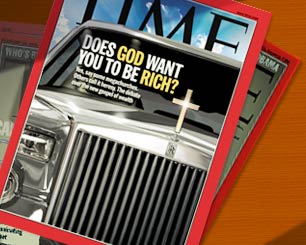
blessed_are_the_rich_time_cover_2006

Time and time again scripture frustrates our conceptions about the world: If we are Christian and wealthy or if we desire to have wealth, we have a problem. 

Greed, however, is not limited to monetary gain alone. Greed sits at the root of most of our sins. We become greedy for wealth, power, position, place, people, and programs. We want more than our fair share. We desire the most for the least effort.

Jacob and Esau were born in conflict with one another.

The first born was red and covered with hair so they named him Esau, which means Red. The second born came out with his hand gripping Esau’s heel so they named him Jacob, which means heel-grabber. Esau would grow to become a mighty warrior, skillful hunter, and a man of the field whereas Jacob was a quiet man, living in tents. Isaac loved Esau and Rebekah loved Jacob.

So it came to pass one day that while Jacob was cooking a meal, Esau came in from the field completely famished. “Let me have some of that red stuff, because I am starving!” Esau said to Jacob. So Jacob replied, “Sure, I’d be happy to, but first sell me your birthright.” “Are you serious, I am about to die from hunger; what good is my birthright to me now?” “Swear to it” said Jacob. And so Esau swore to his younger brother and traded his birthright for some bread and lentil stew. When Esau finished eating he rose and went away and began to despise his birthright.

Who is the greedy one from our scripture? 

Esau’s greed is evident and obvious. Rather than trust in the Lord’s provision, Esau’s vision was limited to the present and he wanted immediate gratification for his desires. In order to satisfy his appetite, Esau’s greed became so powerful that he was willing to give away his future for the present moment. 

We are a generation of busy people, consistently fighting a battle to determine what to give up and what to continue. When our plates become too full with responsibilities we plan to remove that which is unnecessary and no longer life-giving. So many people give up the important things of life to pursue something that is meaningless because we are consumed by our present needs rather than steadfast in our trust of the Lord. Many of us are tempted to ignore our baptismal identifies when we see someone in need, we are tempted to disown our family, friends, and children when they do something wrong. We are often tempted to sell out for something less than what we are truly worth.

Esau’s greed is obvious because it is so similar with our greed. Forgetting the long-term cost, we are quick to serve our sinful desires and natures right here and right now. What do I have to do to make more money as soon as possible? What do I have to do to get that girl at school to like me? We are captivated by the fast sprint rather than the patient marathon.

Pastors love to chastise Esau for so quickly releasing his birthright, and use him as an example for what not to do. But what about Jacob? Jacob who used crooked and deceitful ways to steal his brother’s birthright. He was no doubt the promised one, but that doesn’t necessarily forgive him for taking advantage of his brother’s need.

Jacob’s greed is subtle and relentless. Instead of offering his brother some food out of kindness he is always looking out for number one. Later in the story, after Esau threatens to kill his brother, Jacob is willing to give away all his animals, wives, and children just so that he might save his own neck. Jacob was blinded by the greed of power, to draw to himself everything he could by whatever means necessary, even letting his brother starve.

We are a generation of individualists who are taught from infancy the importance of a capitalistic world view. When we see ourselves at the bottom of the food chain we are willing to do whatever it takes to amass power. So many people will go against their values, morals, and ethics in an instant, purely to make our lives a little better. Many of us are tempted to forget who we are and whose we are because we have forgotten the true meaning behind “the first will be last and the last will be first.”

Jacob’s greed is apparent when we realize how similar it is with our own. Consumed with our lives alone, we ignore the needs of others when they prevent us from getting what we want. Why would I give my money to the church when I am the one who earned it? Why should I be responsible for helping to poor when they should be the ones helping themselves? We are captivated by our solitary vision of the world rather than seeing the world through the eyes of Christ.

Years ago I was preparing to help lead a team of youth on a mission trip to Guatemala. We would be serving the needs of the indigenous Mayans in the highlands for a week by building stones, playing with children, and planting trees. In order to go on the trip, as a youth, you had to regularly participate in youth group and fundraising. Throughout the year there were numerous opportunities to plug into the regular programming and this requirement helped to foster strong bonds and fellowship before we left the country.

There was a man at the church whose daughter wanted to attend the trip but had not participated in any of the youth activities, nor was she part of the fundraising. Her father believed that these requirements were frivolous and he was going to beat the system.

One morning he arrived at church and walked straight to the pastor’s office with a smile on his face. He held up a substantial check that he was willing to give to the church with the following stipulations: I will give this money if it directly goes to the mission trip to Guatemala, and if it guarantees my daughter a space on the trip.

Greed. I’m sure that the man felt he was doing a great thing for the church and indeed for the kingdom of God, after all here he was willing to give of his own money to help others in need. Yet, don’t you see how similar he was to Jacob and Esau? Rather than encouraging his daughter to give of her time through participation in youth group and fundraising he, like Esau, wanted immediate results for the minimal effort. Yet at the same time he was willing to challenge the church and, like Jacob, was willing to have his needs met at any cost while foregoing the need of others.

Greed is mighty and powerful. It seduces us and tells us that we are the most important beings in the universe. It fuels our desire for gratification in ways that are even beyond our imaginations.

Yesterday I arrived at our church to do some pre-marital counseling only to discover the church had been broken into and my office door had been kicked in. With a knot in my stomach I walked into my office: all of the drawers had been opened, most of my paperwork examined and scattered. Thankfully nothing seemed to be missing which furthered the mystery of the break-in. I don’t know who did it. I don’t know what they were looking for. But I’m sure that they were fueled by greed.

Jesus, thanks be to God, calls us to a different life. Less is more. We are not the center of the universe, God is. We have more than we will ever need because God’s love and grace abound and our cups runneth over.

In order to break free from the slavery of greed we begin by acknowledging it in our lives, in whatever forms it presents itself. It’s easy to point out the greed in others, but now we have the challenge of looking inward at our greed. We may succeed in our fight against greed only when we learn to trust God for our needs, when we see the world the way that God sees us, and when we are prepared to give our lives for others because Christ gave his for us.

Amen.