Devotional – Mark 1.28

Devotional:

Mark 1.28

At once his fame began to spread throughout the surrounding region of Galilee.

Weekly Devotional Image

In a place the size of Staunton, you quickly begin to recognize people all over town. It only took six months for trips to the grocery store to extend in length because there was a good chance I would run into someone that I knew and a conversation would naturally develop. Moreover, when your vocation includes serving the general public, people begin to talk about you with friends and family outside the context of church.

For instance: There was the time I was playing drums in a band concert at Gypsy Hill park when a stranger introduced himself and asked if I was “the strange pastor who carried a giant cross around Staunton.” Or there was the time that I was helping out at another United Methodist Church when a stranger introduced herself and asked if I was “the young pastor who made the youth do all sorts of strange things during worship” (and promptly walked away as soon as I confirmed her suspicions!). Or there are the numerous times when I am somewhere in town and a random person will say: “Oh, I’ve heard all about you and the things you’re doing at St. John’s” and I can never tell whether or not that is a good thing.

Gossip

Frankly, you don’t have to be in a place like Staunton for words and gossip to spread around like wild-fire; people thrive on receiving and sharing information that excites and dramatizes individuals in the local community. Many of us are guilty of perpetuating this cycle whenever we begin a conversation with: “Did you hear about ______?” or “Can you believe what ________ did?” Sometimes we sadly choose to focus on the dramatic successes and misfortunes of others so that we don’t have to confront the reality of what is actually happening to us in our lives.

Before the end of Mark’s first chapter, words and stories about Jesus have begun to spread all over Galilee; He called the first disciples, He cleansed a man with an unclean spirit, He healed Peter’s mother from her fever, and He cured many who were sick with various diseases and cast out many demons. Jesus recognized that he would have to be publicly active in his willingness to proclaim God’s Good News through his words and actions.  He went out to find people in order to bring about God’s will on earth. Important for us to remember is the fact that Jesus did not let all the rumors prevent him for doing his ministry on earth.

Wherever you live and whatever you have done, there is a good chance that people are probably talking about you in a way that is spreading your “fame” (for better or worse) in the community. Remember this: In God’s eyes you are defined by what you do for the kingdom and not by what people say about you. Therefore, let us be people of courage who do not let the words of the World break us down, but instead firmly root our hope in faith in the one whose fame continues to spread throughout the world: Jesus Christ.

Actions > Words – Sermon on Mark 1.14-20

Mark 1.14-20

Now after John was arrested, Jesus came to Galilee, proclaiming the good news of God, and saying, “The time is fulfilled, and the kingdom of God has come near; repent, and believe in the good news.” As Jesus passed along the Sea of Galilee, he saw Simon and his brother Andrew casting a net into the sea – for they were fisherman. And Jesus said to them, “Follow me and I will make you fish for people.” And immediately they left their nets and followed him. As he went a little farther, he saw James son of Zebedee and his brother John, who were in their boat mending the nets. Immediately he called them; and they left their father Zebedee in the boat with the hired men, and followed him.

montana-fly-fishing-3

When did I last share my faith with someone?” The paper with the question stretched across my lap in the parlor. I had been meeting with a discipleship circle once a month for a year. Our typical routine is to gather, celebrate communion together, engage in a short devotional, and then ask some of the traditional Wesleyan questions as a group. For instance one of the questions is: “Do I pray about the money I spend?” We would then take turns going around in a circle and answering the question honestly, and practice being vulnerable as we seek to grow in love of God and neighbor.

The evening began with a simpler question: “Did the bible live in me today?” Some of the answers were beautiful, some were simple, and others stretched the definition of living out God’s Word. But then it was my turn to draw one of the random questions from the bag, and I read the words out slowly and deliberately: “When did I last share my faith with someone?” All eyes in the room fell on me to answer the question.

To be honest: I hate that question. I hate how Christians have overemphasized the importance of evangelism to the point of events such as the Crusades and the Inquisition. I hate how sharing faith has been boiled down into trying to make other people into Christians. I hate the flyers I find in public bathrooms, and the desperate pleas for people to accept Jesus Christ as their personal Lord and Savior or face eternal damnation. Yet, there I sat and it was my turn to respond.

I began: “I last shared my faith on Sunday when I was speaking from the pulpit. We had a number of people here in worship and as I preached, I shared my faith.” The room was silent, and it was clear my answer did not satisfy the group. “That doesn’t count” one of them muttered, “answer it truthfully.

I shivered and felt ashamed because I realized that I could not remember the last time I shared my faith outside the context of serving as a pastor.

Following Jesus means sacrifice and bringing others to him. Simon and Andrew were in the middle of fishing, participating in their careers, when Jesus called them to fish for people. They left their nets, which is to say they left their ways of life, to follow this strange and compelling man. So too, James and John were mending their nets when Jesus called them to follow and they left it all behind. The life of discipleship for them, and for us, is not easy; it requires a commitment unlike anything else, and it will cost us our very lives. 

As I sat before my friends and peers with the question weighing heavily upon me, I began to wonder: If I believe Jesus is the light of the world, that God is the author of salvation, that the Holy Spirit gives me life, then why am I so afraid to share that with others?

I left the meeting that night with a heavy heart. The conversation had moved to a new direction but I kept replaying the question in my head over and over again. Had I grown content with just assuming that people will keep showing up to church on Sunday mornings? Or am I willing to be a fisher for people?

I made a promise to myself in the car that night: For the next two weeks I was going to take nothing for granted and I was going to explore fishing for people; I was going to share my faith with others.

Mcdonalds-90s-logo.svg

Two days later I was sitting in a McDonalds in Orange, VA. I had wandered around in the cold while Lindsey was busy with a visit and decided to warm myself up under the glow of the golden arches. The place was packed. Friends and families took up the majority of the seating, and though I wanted to just grab my soda and sit alone with a book, I remembered the promise I made and began searching the joint. Near a television that was showing reports on CNN I discovered a middle aged man sitting all alone with a Big Mac, fries, and an extra large Coke. I sat down beside him, and though I felt the Holy Spirit pushing me to speak with him, I couldn’t figure out where to start. A few awkward moments passed until I blurted out, “How’s your dinner?” The man slowly looked up from his food and shrugged his shoulders. “It’s McDonalds” he said, as if returning my question with a question. Again, I was at a loss for what to do next, but he decided to pick up the conversation. He motioned toward the television:

“What do you make of all these terrorist attacks in Europe?”

“I think it’s terrible, and I will never understand how people believe that death can accomplish what they want.”

“If we catch them, how do you think they should be punished?”

“I guess they should be charged, and put in prison if found guilty. Maybe they’ll even turn their lives around.”

“If I had it my way, I’d string ‘em up in the center of town for everyone to see while they suffer and are killed for what they’ve done.”

At this point I should have just stopped talking and gone back to my book, but I couldn’t help myself. I should have at least thought about what I was about to say, before I said it:

“You know, a group of people once hung a man on a tree to die for a crime that he did not commit, just so everyone could witness his suffering.”

“Oh really? Who was that?”

His name was Jesus.

The rest of our time together at McDonalds was filled with silence. Did I share my faith with him? I think so, but sometimes people aren’t in a place to hear it and respond.

This is the view from an airplane.

Later that night I was in line to board an airplane with Lindsey as we were preparing to make our way to visit her parents in Florida. Due to an oversight with the airline, they overbooked our flight and bumped one of us to first class. I pleaded with my wife to take the ticket, to enjoy the flight from the comfort of high society, but (like the true disciple she is) she insisted that I take the upgrade and stretch out my legs.

I had never been in first class before and was excited and nervous about the experience. When I found my seat I discovered that I would be sitting next to a man who was already watching an episode of South Park on the screen in front of him, jovially chuckling to himself. I got comfortable, and while the rest of the common people were entering the plane, a stewardess came by to take our drink order. I said that I was fine and went back to my book when my seat-mate looked at me like I was an idiot and said, “Son, getting a drink is the best part of flying first class!” and proceeded to order a Jack-and-Coke.

Four Jack-and-Cokes later we were in the air and I had my laptop open and my bible in my lap when the man leaned over to talk. I thought, “this time the person is coming to me” and I quickly prayed that God might give me something to say.

“What are you working on?”

“It’s a sermon for Sunday; I’m a pastor.”

“Well then, what are you reading?”

“It’s the Bible?”

“What do you think of it? Any good?” (Like he was asking about a John Grisham novel)

It’s the living Word of God for the people of God.

He paused and looked as if he was trying to figure out if I was serious or not, and slowly brought his headphones back to his ear, and drink to his mouth.

Did I share my faith with him? I think so, but sometimes people aren’t in a place to hear it and respond.

monkimage.php

Lindsey wasn’t feeling well when we returned from Florida so we decided to hit the Minute-Clinic at Walmart to find out if she needed a prescription or not. Remembering that she so graciously volunteered for me to ride in First Class, I thought it only appropriate that I drive and stay with her during the appointment. The waiting area was rather crowded, so I saw Lindsey to her seat and decided to sit on a bench outside of the room. I had a book with me and was looking forward to some light reading when I noticed a very disheveled man sitting on the bench all alone.

His mullet was knotted and unkempt. His smell was palpable from a few paces away. His clothes were stained and ill-fitting. His skin was blotchy and unhealthy. And I knew that I needed to share my faith with him. 

Unlike the previous two attempts I did not feel the pressure of the Spirit nagging me to do something, and I did not have a bible with me to spark a conversation, so instead I just decided to be myself, rather than someone else.

I introduced myself and sat down. He kept staring off into the distance, clearly focused on other things and remained unfazed by my presence.

Do you mind if I ask you a question?

He shrugged as if to say “I don’t care”

How are you doing?

He slowly turned his head to look at the stranger sitting next to him and he began to answer the question. I learned about how he and his wife had fallen on hard times and could no longer purchase anything other than food. He shared with me his own personal frustrations with not being able to provide for his family. He talked about how people are so blind to the needs of others in our community because they just assume that everyone is fine. He vented about employment opportunities and the lack of fairness in the hiring process because businesses are only looking to hire people who think and look just like themselves. And he told me that he was at Walmart so that his wife could walk around the store and feel like she was shopping even though they would be going home empty handed.

The conversation went on and on and I let the man speak, I let him go wherever he needed, and I just sat there and listened. When the time came his wife found us sitting on the bench and he told me that it was time to go. I could tell that he was in a better place than he was before the conversation, perhaps because he was finally able to get some of his worries off his chest, and before he left he turned around to shake my hand and said, “Thanks for listening -nobody else does.

Did I share my faith with him? I think so, but sometimes our actions speak louder than our words.

I don’t know for sure what compelled the first four disciples to drop their nets and follow Jesus, but I imagine it had a lot to do with his actions. Jesus loved to eat among the poor and the outcast, he loved to seek out the last and the lost, and he was known for listening to people in the midst of their trials and tribulations.

Sharing our faith is a difficult task because it requires us to be vulnerable and step into situations that might blow up in our faces. It implies a willingness to believe that faith is something so important and life-giving that it is worth sharing no matter what. Sharing our faith means we have to start acting like Jesus outside the walls of church to meet people where they are and listen.

When was the last time you shared your faith with someone? Amen

Devotional: Mark 1.4

Devotional:

Mark 1.4

John the baptizer appeared in the wilderness, proclaiming a baptism of repentance for the forgiveness of sins. 

5a41c986c792a4cfdb6fa2be67b9c637

I had been waiting at the garage for longer than I had hoped. I had neglected to take the car in for an inspection during the month of November, and I was running the risk of receiving a ticket for my negligence. I was prepared to speak with my hypothetical police officer about the numerous demands on clergy during Advent, but every time I made the list of excuses in my head, the more pitiful they became. Only after Christmas was I willing to finally bite the bullet and wait for my car to be inspected.

I thought it would be a quick in-and-out appointment, but I continued to sit in the waiting room while my car was being checked out. After thirty minutes, I saw my car coming out of the garage and was re-parked right outside the window. However, when I approached the cashier, she informed me that I still needed to wait. The time passed idly by while I made small talk with the other customers about being a pastor in town and the recent arrival of the holidays, but the repair shop neglected to call my name even while my car was parked outside with a new inspection sticker clearly placed on the front window. I tried to be as patient as possible, but when I could no longer take it I went back to the cashier and explained the situation, to which she apologized for making me wait for nothing, and handed me my keys. She explained that the paperwork had been lost in the shuffle and asked if there was anything she could do. I laughed to myself and then said, “It’s okay, I’m a pastor and I’m supposed practice what I preach, including patience.”

FamilyForgive

After church yesterday afternoon, my wife and I were enjoying lunch at a local pizza shop when she brought up the familiar topic of practicing what I preach. The sermon had been about forgiveness and the need to act on the words that we so faithfully pray in the Lord’s Prayer every week, and it was clear the Lindsey wanted to explore the topic further. She spoke in a way that halted and haunted me: “Taylor, you kept talking about our need to forgive. Is there anyone that you need to forgive? Or better yet, do you think there’s anyone out there who might be wrestling with whether or not to forgive you?”

John appeared proclaiming a baptism of repentance for the forgiveness of sins. It is too easy, particularly from my side of the pulpit, to neglect the need to repent for my faults, and forgive others around me. It is even harder to open my eyes to the fact that there might be people who have not forgiven me for something I have done. As we take our first steps into 2015, let it be the year we actually practice what we preach. Let us strive to be people of patience, forgiveness, and repentance. Let us be brave with our love, and seek to be truly reconciled with everyone around us.

Devotional – Mark 1.7

Devotional:

Mark 1.7

He proclaimed, “The one who is more powerful than I is coming after me; I am not worthy to stoop down and untie the thong of his sandals.”

Weekly Devotional Image

I was in the middle of a short homily when I started worrying about whether or not the water would be too cold for the baptism. You never can tell how a child will react to the living water; some laugh as if it is tickling them while it trickles down their hair, some scream in fear as the cold water seeps into their clothing, and others remain stupefied by a grown man wearing a long white dress pouring water onto their head. I stood in front of the local community hoping that this baptism would go smoothly, rather than be remembered for the blood curdling cries during the sacrament.

I had picked the beginning of Mark’s gospel for my baptismal homily; John baptizing Jesus in the Jordan. I love the text because it is concise and too the point while remaining profoundly theological. I shared with gathered body John’s ability to bring in the crowds for the repentance of their sins out in the wilderness when Sawyer began to squirm around in his mother’s arms. Without really thinking about what I was doing, I walked over to the family in their pews, reached for Sawyer, picked him up, and continued preaching. For a few moments I continued with whatever I was saying but it felt as if everyone had disappeared and Sawyer and I were the only ones remaining in the sanctuary. I was unsure why I had felt God push me to pick him up, but as I held him close I felt the words of John come alive for me: “I am not worthy to stoop down and untie the thong of his sandals.” Here I was holding a precious baby boy, who kept smiling as he stared at the hair growing on my face and I was struck by his preciousness. When I baptized him with the living water I felt unworthy to do what I was doing, and then became profoundly thankful for God’s presence in that beautiful moment.

10505419_827338247305732_338805337312225694_n

Through the waters of baptism Sawyer, and all of us, experienced a new beginning. Like the event of John baptizing Jesus in the Jordan, everything would be different from that moment forward. We covenanted to raise Sawyer in the faith, to pray fervently for him, and to be abundantly present for him in times of need. The church is at its best when we make good on the promises we make to the children we baptize, something I look forward to participating in during Sawyer’s life.

In this season of Advent we are reminded of the new beginning that took place in Bethlehem in a manger. Moreover, in our baptisms we had the privilege of being incorporated into God’s cosmic story to be God’s children. While we prepare for Christmas, I encourage all of you to be thankful for your baptisms, and remember that God came in the form of a baby, just like Sawyer, to dwell among us.


Interrupted Salvation – Sermon on Mark 5.21-43

Mark 5.21-43

When Jesus had crossed again in the boat to the other side, a great crowd gathered around him; and he was by the sea. Then one of the leaders of the synagogue named Jairus came and, when he saw him, fell at his feet and begged him repeatedly, “My little daughter is at the point of death. Come and lay your hands on her, so that she may be made well, and live.” So he went with him. And a large crowd followed him and pressed in on him. Now there was a women who had been suffering from hemorrhages for twelve years. She had endured much under many physicians, and had spent all that she had; and she was no better, but rather grew worse. She had heard about Jesus, and came up behind him in the crowd and touched his cloak, for she said, “If I but touch his clothes, I will be made well.” Immediately her hemorrhage stopped; and she felt in her body that she was healed of her disease. Immediately aware that power had gone forth from him, Jesus turned about in the crowd and said, “Who touched my clothes?” And his disciples said to him, “You see the crowd pressing in on you; how can you say, ‘Who touched me?’” He looked all around to see who had done it. But the woman, knowing what had happened to her, came in fear and trembling, fell down before him, and told him the whole truth. He said to her, “Daughter, your faith has made you well; go in peace, and be healed of your disease.” While he was still speaking, some people came from the leader’s house to say, “Your daughter is dead. Why trouble the teacher any further?” But overhearing what they said, Jesus said to the leader of the synagogue, “Do not fear, only believe.” He allowed no one to follow him except Peter, James, and John, the brother of James. When they came to the house of the leader of the synagogue, he saw a commotion, people weeping and wailing loudly. When he had entered, he said to them, “Why do you make a commotion and weep? The child is not dead but sleeping.” And they laughed at him. Then he put them all outside, and took the child’s father and mother and those who were with him, and went in where the child was. He took her by the hand and said to her, “Talitha cum,” which means, “Little girl, get up!” And immediately the girl got up and began to walk about (she was twelve years of age). At this they were overcome with amazement. He strictly ordered them that no one should know this, and told them to give her something to eat.

hemorrhagingwoman 6-26-12

This Sunday marks the conclusion of our sermon series on Women of Faith. Over the last few weeks we have focused on women from the Old Testament who lived our their faith in such a way that it continues to speak to us in our faith journeys. The point has been to explore some of the great females from scripture, particularly those who are not regularly mentioned from the pulpit. We began by looking at Rahab the harlot before the fall of Jericho and talked about how our pasts do not define our lives. Last week we looked at Deborah and Jael from Judges and talked about how women are powerful and being faithful is complicated. Today we conclude by looking at the unnamed hemorrhaging woman from Mark 5. So, here we are, may God bless out time together as we look at one more woman with profound faith.

The loneliness is getting unbearable. She lives in Staunton, has a full time job, while also maintaining the aspects of home life. Her husband largely ignores her, never asks about her day, and expects dinner and the laundry to have been taken care of by the time he gets home. The children are involved in such a high number of activities throughout town that she can barely keep track of who is supposed to be where and when. Though she won’t admit it to anyone, her life feels empty, as if its being drained from her slowly and decisively.

Twice a day she finds herself driving up and down Augusta street and whenever she passes St. John’s she struggles to keep her eyes glued ahead. She has admired the witty marquee in the past, and she feels something drawing her to the building, but church is the last thing she wants in her life.

For months this goes on, and every time she passes she catches herself glancing more and more at our building. She sees the children during preschool walking on the front lawn looking for insects and leaves for projects, she observes the Christmas tree sales with families giggling as they explore the various options, she witnesses a number of older adults laughing manically as they fall down the 18 ft. inflatable slide during the Community Cook-Out. On certain Sundays she finds herself getting in the car and driving to the parking lot but she never leaves the vehicle; she can’t explain why she’s here and she’s too afraid to come inside.

One morning, when the emptiness and loneliness has become so frighteningly palpable she drives to St. John’s on a typical Sunday and bravely makes her way from the car to the sanctuary. She hopes against hope that something incredible can happen here.

But we’re in the middle of something else, worship has already started and I’m up here in the pulpit going on and on about the grace of God, or the service has yet to start but most of us are greeting our friends and asking them about their weekends, or worship is already over but most of us are solidifying plans for lunch. We might not even notice the woman who risked it all to be here with us.

—————————

Jesus was beckoned by Jairus, the leader of the synagogue, to come and heal his daughter. “Please Lord. My little daughter is at the point of death. Come and lay your hands on her, so that she may be made well and live.” So Jesus, doing his Jesus thing, went with Jairus to heal his daughter. Like worship on a Sunday morning, Jesus going to heal someone is typical and part of his routine. He is prepared to meet the young girl and heal her as he has done so many times before.

However, on the way to Jairus’ house a strange thing happens. A woman who had been suffering from hemorrhages for twelve years, who had been isolated from her family and community, sees the Messiah that she had heard so much about. Building up her courage she stepped forward, reached out her hand and touched his clothes, hoping that it would cure her. And immediately she felt in her body that she had been healed. But Jesus will not leave it at that; feeling the power go out from him he turns to the crowd and demands to know who touched his clothes. With fear and trembling the woman stepped forward and told Christ the whole truth, and he responded by saying “Daughter, your faith has made you well; go in peace, and be healed of your disease.”

healing-of-the-woman-thumb-300x3861

Jesus was interrupted on his journey to heal Jairus’ daughter by a hemorrhaging woman, and in so doing the young girl died at home. He took too much time with the other woman’s problems, and now an innocent girl has passed away when Jesus could have done something about it.

—————————

The woman sits in one of the pews of our church alone and afraid to speak to anyone. She has never been in a church before and so much of what we are doing is strange and bizarre to her. She is thankful for the bulletin directing her to the hymnal with tunes she has never heard, and prayers that she has never uttered. Most of it means nothing to her but she continues to worship with the hope that something will help. 

Our service ends and she follows the people around her as they file out toward the back of the sanctuary. She keeps her head low and whispers thank you as I shake her hand, I thank her for being with us today, and she walks out, perhaps never to return again. She came looking for something life-changing, hoping for something to heal her and make her well, and all she got was a strange youth message, a mediocre sermon, and more loneliness.

—————————

When Jesus arrived at Jairus’ house, even with the young girl dead, Jesus comforts the father, “Do not fear, only believe. Your daughter is not dead but sleeping.” And the people in the house laughed at him, but he put them all outside and took Jairus and the child’s mother and went to the girl. He took her by the hand and said to her, “Little girl, get up!” and she immediately got up and began to walk around, hungry for something to eat.

Jesus allowed the interruption in the street by the unnamed woman knowing that he would be able to still make it to Jairus’ house and bring about the healing and salvation that was needed. He might have been content with merely allowing her to touch his clothing and be healed but he took the extra time for personal touch and contact.

—————————

When the woman comes to St. John’s we could happy with letting her experience worship on her own, free to return to the life of loneliness and emptiness, but if we are to act like Christ we have to go one step farther. The terrible disease of loneliness is something that we have the power to fight against, we just have to be open to interrupted salvation.

Mark 5 is an incredible reminder for all of us, for the teachers who are so often interrupted by students, parents harried by the demands of their children, and even preachers that are stopped while working on a sermon, that interruptions are important. Someone once said, “You know… my whole life I have been complaining that my work was constantly interrupted, until I discovered that my interruptions were my work.

I was having lunch on Thursday with a clergy friend, talking about the ways that we are trying to serve our churches, when a man casually mentioned something about his cancer and we invited him to join us for lunch. He interrupted our conversation to share with us his struggles and fears. I was preparing for worship two weeks ago, running around the building just trying to make sure that everything would be ready, when Steve Wisely scared me half to death. He interrupted me in the midst of my work to tell me that his father, Russ, was dying. Every Sunday I stand at the back of the church, thanking all of you for being with us in worship when I am often dealt a hard and frightening truth about someone’s struggles, I am interrupted while doing my job with a difficult diagnosis, a struggling marriage, or a lonely woman.

What do we do with our interruptions? When the stranger arrives at church, sitting alone in the pew near us while we are in the middle of a conversation, how do we respond? Are we content with introducing ourselves, shaking hands, and then going back to our routine, or do we act like Christ and take the extra step to offer them not only a smile, but wholeness? When your child struggles with a decision in their life, do you offer a few bits of wisdom, or do you drop what you are doing to demonstrate that you deeply love them? Do you see interruptions as interruptions, or do you see them as opportunities for salvation?

That woman with the hemorrhage has more faith than I’ll ever have. She, in the deep recesses of fear and disappointment, reached out to the Lord with the hope of receiving something so improbable, that we would mock it today. Her faith is so real and palpable because she lived it out, she took those frightening steps to the Lord and believed that he could do something incredible with, through, and for her.

That unnamed woman who arrives at our church and sits in her car unsure of whether to enter has more faith than I’ll ever have. Though deeply rooted in the fear of her own loneliness and emptiness, she bravely enters the church with the hope that the Lord, with the people inside, can do something so improbable that we often ignore it. Her faith is so real and palpable because she lives it out, she takes those humbling steps to the sanctuary and believes that the God of Christ can do something incredible through us for her.

Showing up to church is wonderful. When it becomes part of the routine of life it begins to habituate us toward a new understanding of discipleship where we can truly act as Christians without having to overthink what we are doing.

But believing that God can actually do something for you, that the church can bring about a sense of salvation in your life is what faith is really all about. 

The woman walks out the main doors and makes her way toward the parking lot. Frustrated by her foolishness in believing that the church could actually change anything about her circumstances she is surprised when she hears a person hurrying up behind her. Someone from St. John’s, one of you, tries to catch up with her to apologize for not introducing yourself earlier. You tell her that you saw her sitting by herself and you felt God pushing you to do something more and you ask if she would like to get a cup of coffee sometime this week, just so that you can get to know her better. “I would love that” she says with a shy smile.

The final few steps to her car are filled with the brightness of hope, something she has not experienced for a long time. Still smiling from the invitation she hears a soft voice, as light as the wind, “Daughter, your faith has made you well.

Amen.

With Buttocks Uncovered – Sermon on Isaiah 20.1-6 & Mark 14.51-52

Isaiah 20.1-6

In the years that the commander-in-chief, who was sent by King Sargon of Assyria, came to Ashdod and fought against it and took it – at that time the Lord had spoken to Isaiah son of Amoz, saying, “Go, and loose the sackcloth from your loins and take your sandals off your feet,” and he had done so, walking naked and barefoot. Then the Lord said, “Just as my servant Isaiah has walked naked and barefoot from three years as a sign and a portent against Egypt and Ethiopia, so shall the king of Assyria lead away the Egyptians as captives and the Ethiopians as exiles, both the young and the old, naked and barefoot, with buttocks uncovered, to the shame of Egypt. And they shall be dismayed and confounded because of Ethiopia their hope and of Egypt their boast. In that day the inhabitants of this coastland will say, ‘See, this is what happened to those in whom we hoped and to whom we fled for help and deliverance from the king of Assyria! And we, how shall we escape?’ “

Mark 14.51-52

And a certain young man was following him, wearing nothing but a linen cloth. They caught hold of him, but he left the linen cloth and ran off naked.

081910-barefeet

This morning we conclude our sermon series on Strange Stories from Scripture. As I have mentioned previously, this series came to fruition through a desire to proclaim some of the more bizarre texts in church, particularly those that are rarely discussed. There is a wealth of biblical treasure just waiting to be uncovered; this series is our attempt to begin unearthing some of the great moments from the Bible. Our first week we talked about a young man named Eutychus who fell asleep while Paul was preaching, last week we learned about the incident with Elisha and the she-bears, today we conclude by looking at the prophet Isaiah’s naked faith.

Prayer

The Lord spoke to Isaiah son of Amoz, saying, “Go, and loose the sackcloth from your loins and take your sandals off your feet, “ and he had done so, walking naked and barefoot.

On the outside it looks like your typical chapel: painted white with a perfectly trimmed and manicured lawn. When Sunday morning comes the parishioners lazily make their way to the pews in order to prepare their hearts and minds for worship. Located in Ivor, Virginia worship attendance has steadily increased over the last few years as the church has taken very seriously its commitment to “come as you are.” No judgments are made as people enter the sanctuary, they see one another as God’s children, and the community has benefited from this focused ministry.

Whitetail Chapel rests as an example for other churches. They continue to serve the Lord their God with all their hearts, minds, and souls, while other churches are just trying to figure out how to stay open. The people who attend the church are excited and jazzed up about their faith, and are known for their willingness to invite anyone they meet to attend.

If any of you were privileged enough to attend one Sunday I believe that it would be a tremendous experience. The preaching would open your hearts to God’s kingdom in the world, the fellowship with other parishioners would cement your importance and vitality to the body of Christ, and you would have a new vision of what the church can be.

However, even with all these accolades, I am positive that the one thing you would remember most about attending Whitetail Chapel is the fact that they worship in the nude…

whitetailresort04

Those in attendance in worship do not have to worry about finding something special to wear on Sunday mornings because they strut their stuff in their birthday suits. “Come as you are,” indeed. When asked about why they choose to worship in the nude, the pastor replied, “Some of Jesus’ most important moments happened when he was naked: he was born naked, he died naked, and when he arose he lefts his clothes in the tomb so that he could be naked. If God made us that way, how can that be wrong?”

Some churches take the ministry of the prophet Isaiah a little too seriously.

During a time of revolt, when the people began to act our against the imperial ruling of Assyria, the prophet Isaiah was called to do something very dramatic. Ashdod, a city of strength, began the internal campaign against Assyria and urged for support from the surrounding nations including Judah with the promise that Egyptian and Ethiopian forces would soon come to help. As is common throughout scripture, and even in our lives today, the will and desire of the people did not match up with the ways of the Lord.

The Lord spoke to the prophet Isaiah, “Go, and loose the sackcloth from your loins and take your sandals off your feet,” and he did so, and began to walk around naked and barefoot. For three years Isaiah rid himself of the clothing and footwear that he had grown accustomed to and continued to embody, nakedly, the calling of the Lord.

December-Series-Image

Then the Lord said, “Just as my servant Isaiah has walked naked and barefoot for three years as a sign and a portent against Egypt and Ethiopia, so shall the king of Assyria lead away the Egyptians as captives and the Ethiopians as exiles, both the young and the old, naked and barefoot, with buttocks uncovered. And when that day comes to pass the inhabitants of the land will say, ‘See, this is what happened to those in whom we hoped and to whom we fled for help and deliverance from the king of Assyria! And we, how shall we escape?’”

During the timespan of the revolt, Isaiah walked around naked to symbolize the captivity that would soon overtake Egypt and Ethiopia, thus warning his people not to trust these allies nor join in the rebellion.

I know we’ve talked about some strange stories recently: A young man falls asleep under the warm glow of lanterns during a late night church service, only to fall out a window, die, and then be brought back to life. A young bald prophet overreacts to a group of young hoodlums and curses them in the name of the Lord to which 2 females bears maul 42 of the young men from the crowd. But today’s reading takes the cake for one of the strangest examples of faith in the bible.

From our modern sensibilities we find it difficult to imagine and believe that a prophet of the Lord, particularly one like Isaiah, would ever do something such as this. Certainly today, no members of the contemporary church would expose themselves to such embarrassing tactics.

This week, in preparation for the sermon, I asked a simple question of the Christians in my life: What’s the craziest thing you’ve ever done for your faith? At first I heard nothing, a fearful sign that perhaps we are not pushing the boundaries for our faith, but eventually some people began to respond. One woman on twitter said, “I took a sabbatical, packed up all my “stuff,” became homeless, and traveled the world for a year following Jesus daily. My mother answered with, “I received Ecoli poisoning while on a mission trip to Guatemala.” And still yet another man said that he had to spend two and a half years in prison before figuring out that God loved him, and had a plan for him.

The craziest thing I have ever done for my faith was carry our confirmation cross over my shoulder throughout Staunton on Good Friday. I arrived at the church around noon, picked up our cross, and began walking. For 3 hours I explored our town by foot with the hope of marking our hallowed day and reminding those in Staunton what Christ did for us. I will freely admit that part of my desire was to upset people, to disrupt the common expectations of a normal Friday afternoon, and to challenge the vision of the church simply being a place where you gather for one hour every week.

IMG_1279

However, I will also admit that I was being selfish while carrying the cross around Staunton. I know that I felt led and called to do so by God, but I recognize that it was something I had been thinking about for a long time, and looking forward to for a number of years. Some small part of me desired that people would recognize that I was the one carrying the cross.

Notice however that the prophet Isaiah had a complete lack of self-consciousness. He was a man with a mission and did not hesitate to accept scorn or derision in following his duty. When the Lord called upon Isaiah to do something bizarre and strange, he did not wait for awhile and weigh the pros and cons of his calling. He did not wait to see if any other opportunities came knocking at his door. He did not fret over what his reputation would look like after his prophetically naked embodiment. Instead, he immediately stripped off his clothing and began to do what the Lord required.

The counter to our story this morning takes place at the end of the scene in the Garden of Gethsemane. Jesus has already been arrested and is being brought to Pilate for questioning, the disciples have all fled for their own safety, when the captors discover a young man who was following them. Wearing nothing but a linen cloth the young man continued to follow Christ even after his closest friends had abandoned him, but when the guards caught hold of him, he left the linen cloth and ran off naked.

The young man was sharing in the experience of Jesus. Even when the disciples had left, the young man remained. Yet when the calling got too dangerous, he was ready to run off completely naked. It seems to make sense for the young man and the disciples to flee in order to preserve their own lives, but the followers of Christ are called to lose life for the sake of Jesus and the Gospel.

The nude dude from Mark’s gospel is naked and afraid. Isaiah, in stark contrast, is naked and prophetic. Rather than run away from the situation, instead of merely looking out for his life alone, Isaiah was willing to go to extreme measures in order to warn God’s people against putting too much faith in the other nations, rather than the almighty God.

Even with this dramatic and captivating imagery from the life of Isaiah, I believe we can ask about Isaiah’s effectiveness. Remember: we’re talking about a man who walked around naked and barefoot for three years. Isaiah, to all the people, must have appeared crazy and deranged. He must’ve looked like one of those people we are often tempted to ignore in our lives, people who are so zealous and outspoken to the degree that we can pretend they do not exist. But he did what the Lord required.

Even with all the dramatic and captivating elements of our worship service, I believe we can ask about the church’s effectiveness. I am comfortably standing behind a protective barrier surrounded by people who chose to be here this morning. In worship we are caught up and part of the body of Christ who willingly woke up this morning, who decided to come to church, and who yearned to hear God’s Word spoken.

Isaiah’s ministry confronted the fundamental elements of peoples’ lives, he shook everything up with his prophetic vision, and left them with something they would never forget.

Proclaiming the Word of the Lord is not something that can be left up to church worship and preachers alone. This space is sacred for us to gather and be reinvigorated for living out our faith until next Sunday. True transformative ministry takes place out there.

Isaiah’s actions, his willingness to remain naked and barefoot for three years to protect God’s people, ought to shame us into wanting to do more and live out our faith in strong and incredible ways. If we are passionate for Christ to be known, for the kingdom of God to reign, then we must ask how far we are willing to go for our faith.

Not let me be very, very, very clear: I am not saying that we need to loose the sackcloth from our loins and take the sandals off our feet. I am not saying that we need to roam around the hills of Staunton naked and barefoot for the next three years. That was Isaiah’s calling, not ours.

But if Isaiah was willing to go that far for his Lord, how far are we willing to go? Perhaps this morning we are being poked and prodded to be naked with our faith, to be vulnerable with those around us about what the Lord has done for and through us.

What would it look like this week if you asked one person if you could tell them about your faith? Who would you share your faith with? I’m not talking about trying to save someone, or trying to tell them the whole story of both the Old and New Testaments. But what if you sat down and told them what God has down for your life?

I know that for some of us to share our faith in that way would be very uncomfortable. We might rather walk around naked and barefoot for three years than sit down and be vulnerable and open about how God has changed us. 

But if God could save his people from making a terrible alliance through Isaiah, if God could save us from death through Christ on the cross, just imagine what God can do through you.

Amen.

The End Has No End – Easter Sermon on Mark 16.1-8

Mark 16.1-8

When the sabbath was over, Mary Magdalene, and Mary the mother of James, and Salome brought spices, so that they might go and anoint him. And very early on the first day of the week, when the sun had risen, they went to the tomb. They had been saying to one another, “Who will roll away the stone for us from the entrance to the tomb?” When they looked up, they saw that the stone, which was very large, had already been rolled back. As they entered the tomb, they saw a young man, dressed in a white robe, sitting on the right side; and they were alarmed. But he said to them, “Do not be alarmed; you are looking for Jesus of Nazareth, who was crucified. He has been raised; he is not here. Look, there is the place where they laid him. But go, tell his disciples and Peter that he is going ahead of you to Galilee; there you will see him, just as he told you.” So they went out and fled from the tomb, for terror and amazement had seized them; and they said nothing to anyone, for they were afraid.

resurrection-bonnie-bruno

In the cool of the morning, when everything seems perfect and still, the three women made their way to the tomb. They were carrying spices to anoint his body and as they walked the sun began to rise and the dew held gently to the plants and flowers along the path. I imagine the women, still in shock from the crucifixion, walking silently in a single file line, all caught up in their own thoughts; “Why did he have to die?” “Where have all the other disciples gone?” “I’ve seen him save so many others, but why not himself?

At some point, however, a conversation began between them, “Who will roll away the stone for us at the entrance to the tomb?” Yet, when they arrived, the large stone had already been rolled back. Perhaps with fear already beginning to brew within their hearts, they entered the tomb to discover a young man, dressed in white, sitting off to the side; and they were afraid. The stood shaking before the young man when he said, “Do not be afraid; you are looking for Jesus of Nazareth, who was crucified. He has been raised; he is not here. Look there is the place where they laid him. But go, tell his disciples and Peter that he is going ahead of you to Galilee; there you will see him, just as he told you.” Immediately the women went out and fled from the tomb, running for their lives, because fear and amazement had seized them; and they said nothing to anyone, for they were afraid.

women-arriving-at-the-tomb_he_qi_1999

Easter is, without a doubt, my favorite day of the year. Growing up I used to look forward to the Easter Egg hunts, the gathering for a meal at my grandmother’s house, and singing those great hymns in church. At home, Easter was a big deal. The church was always immaculately decorated with lilies and flowers of all colors, the women wore their favorite spring dresses, and the men even dared to wear ties with splashes of color. During the week leading up to Easter a large tomb would be placed on the church’s front lawn so that from Good Friday to Easter Sunday two men dressed as Roman Centurions would guard the tomb as people drove by. I remember with great joy the year I was finally tall enough to wear one of the costumes and stand out front.

169_1010929804499_155_n

One year, the pastor called me before Easter and asked for my help with the Sunrise service. “Taylor, we are going to have our sunrise service on the lawn. I want you to get here before anyone else, dressed as the angel in the tomb. There will be a fog machine in there and when I say the words “He is Risen” I want you to turn it on, so that when the time comes you will exit the tomb and tell all of the people gathered that Christ has risen and gone on to Galilee before them and so on.”

I was so excited. I arrived at the tomb while it was still dark outside, clothed in white with angel’s wings attached to my back. I knelt down in the tomb and waited. I could hear people gathering outside, exchanging pleasant Easter greetings as the sun began to rise. When the sermon started I patiently waited by the Fog machine, and when I heard the words, “He is Risen” I turned it on.

The only problem was, I turned it on too early. The tomb, being small and closed, filled with smoke rather rapidly. I tried as hard as I could but I began to cough and feel claustrophobic. I can only imagine what it looked like to the people outside: a make-shift tomb that coughed and had smoke billow out from the sides.

Without the help of light I could no longer see anything as I was covered with the thick smoke, when finally the pastor knocked on the tomb and I came out. Instead of a glorious angel glowing in white robes proclaiming the resurrection of the Lord, I tumbled out of the tomb, slipped in the mud, coughed a number of times, forgot my lines, made up something about the glories of God our king, and then quickly jogged off the lawn toward the church building. I was so nervous that in ruining the sunrise service, everyone would have laughed at me and the spectacle I had made, but the truth is, they all just stared at me with bewilderment and fear.

The story of Easter is one that we tell year after year. For centuries this story among all the others is the one that has so captivated the hearts, minds, and souls of Christians. Whether proclaimed from an elegant pulpit, or with the fumbling of an angel covered in smoke, this is a message that can both excite and terrify. The beauty of the story is in the details that open our eyes to the magnificence of God’s resurrected Son, and what it means for us.

We begin with the women who show how love does not end with death. Whereas the other disciples had abandoned the great mission to serve their Lord, these three women loved Jesus beyond the end. They marched to the location of the tomb with heavy hearts, but hearts that still loved the one that had died.

They question how they can enter the tomb with the stone still blocking the entrance. Their question is not answered by earthly means, no one gathers at the entrance to roll the stone away for them. But God had an answer; God always has an answer to the impossible. When they arrive, the stone has been rolled away.

7028203zoomed

Inside they are frightened to discover a young man dressed in white who uttered three of the most powerful words to have ever been spoken: “He is risen!” Everything that followed after this proclamation, the church of Acts, the growth of Christianity throughout the centuries, even all of you gathered here this morning bear witness to the power and transformation of the resurrection itself.

Without the resurrection, all of this is meaningless. If Jesus did not break forth from the grave, if he did not return in the flesh to share bread with his friends, if he does not appear with us through the Holy Spirit than he would have died like any other human. The resurrection changed, and changes, everything.

Christ broke out of the tomb, he destroyed the chains of death, and turned the world upside down. We cannot limit what God can do, not even in death. The women’s fear is therefore perhaps the most appropriate response to this immeasurably Good News.

The tomb was empty and the body gone. This is completely contrary to what the women expected, and anticipated. The resurrection is something totally and utterly new, something all-together without precedent, something that stuns and shocks and stupefies with its inexplicable power.

The angel tells the women, “look, there is the place where they laid him. But go, tell his disciples and Peter that he going ahead of you to Galilee; there you will see him, just as he told you.” Jesus has gone before his friends and disciples to the familiar Galilee of ordinary life. For centuries people have met God in the routine of life, our God is one on the move continually searching and waiting for us. God cannot be confined to the tomb of our limited expectations, but breaks forth in an exciting and dynamic way, out there on the move, reaching the hearts and minds of countless people. Our lives have been illumined by the triune God who lived and died and lived again.

So the women went out and fled from the tomb, for terror and amazement had seized them; and they said nothing to anyone, for they were afraid. What a very strange way to end the Gospel. The news of God’s great resurrection caused the women to run away as fast as they could from the scene in fear. Many people have debated about whether or not this is the true ending, because it doesn’t feel like one. Maybe the last page of Mark’s gospel was accidentally ripped out, or he died before he could finish it. Maybe this is just an unfinished story.

However, I believe there is something profoundly wonderful about this conclusion of the story, precisely because it has no end. The Gospel of Jesus Christ, the Son of God, is always unfinished. There is an unwritten page left for each of us to write, to record the many glorious and joyful things that Jesus has done for and through us. 

2b8baa26a479d6fd19ef0caaa3e988a1

I love this ending because the end has no end! Like the women at the tomb, the young man in white has called us to look on the places where we have buried those whom we love and recognize that the end has no end. We await our joyful reunion with all who have gone on to glory because Christ’s resurrection has become our promised resurrection. God’s story is not over because we have now become characters in the narrative. We take up where Mark’s gospel stops.

Can you imagine anything more wonderful than this? Can you imagine anything more perfect or beautiful than the resurrection of the dead? Can you imagine what joy springs forth from this immeasurably gracious gift? Actually we can scarcely begin to imagine it, for it does not come from our imaginations, but from God almighty.

My friends, today we are gripped with joy and fear. God has exceeded all of our expectations by raising his Son from the dead. God has opened up a new realm of understanding, God has defeated death, God has made himself available to you and me, God has not left us to wander through life alone but is with us in everything that we do.

At this table we get a heavenly foretaste of whats to come. Here at the table we meet God and one another through the bread and the wine. This fellowship is but the beginning of our eternal relationship and participation with God. This table is where heaven and earth meet. This table is where we discover the depth of the resurrection, here we see Christ’s sacrifice and recognize that it has been done for us.

Easter isn’t perfect. For some, it creates more questions than it provides answers. For the women at the tomb it was scary and astonishing. For the church folk gathered together when I bumbled out of the fake tomb it was strange and bizarre. Easter can both excite and terrify. After all, we’re talking about the incarnate God being resurrected from the dead. Easter is all about shattering our expectations of how the world works. Easter is the incredible moment where everything changed forever. Easter is the event the opened up an entirely new realm of possibilities for God’s creation. Easter is about God making all things new.

Where are you in your life right now? Are you looking for a little more clarity about what your world is supposed to look like? Has life lost the wonderful spark that used to bring a smile to your face everyday? Are you afraid of what tomorrow might bring?

Then let the resurrection shine brilliantly in your life today. Open your eyes to the incredible wonders of God’s actions in the world. Hear the story of Christ’s resurrection and believe that this has been made possible for you, no matter who you are, no matter what you’ve done, and no matter what you will do.

Jesus came alive so that we could come alive. Don’t let Easter just be a day that you look forward to, let it be something you experience right now.

What we read today is the end of Mark’s gospel, but the resurrection means that the end has no end. That is the Good News.

He is risen! Hallelujah!


Believing Is Seeing – Good Friday Homily on Mark 15.33-39

Mark 15.33-39

When it was noon, darkness came over the whole land until three in the afternoon. At three o’clock Jesus cried out with a loud voice, “Eloi, Eloi, lema sabachthani?” which means, “My God, my God, why have you forsaken me?” When some of the bystanders heard it, they said, “Listen, he is calling for Elijah.” And someone ran, filled a sponge with sour wine, put it on a stick, and gave it to him to drink, saying, “Wait, let us see whether Elijah will come to take him down.” Then Jesus gave a loud cry and breathed his last. And the curtain of the temple was torn in two, from top to bottom. Now when the centurion, who stood facing him, saw that in this way he breathed his last, he said, “Truly this man was God’s Son!”

CrucifixionBaloghWeb

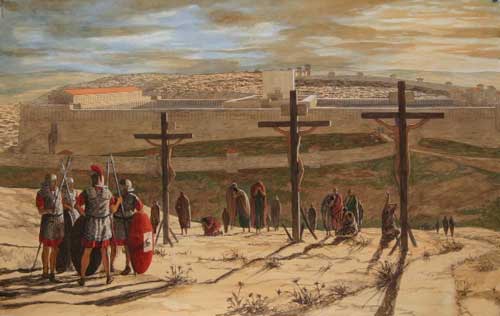
This is a day unlike any other. In the entire history of the world there has been nothing quite like what we remember today, and there will never be anything quite like it in the future. Millions upon millions of people have been killed unjustly and prematurely; but only this death has to do with the salvation of the world.

Look around at those who have gathered together with you tonight. Most people, of course, are not here. They are out doing what they do on any ordinary Friday night – dancing, drinking, eating, driving, laughing, loving. It has always been like this…

When Jesus was marched up to the place called Golgotha, which means the skull, most people did not even notice. Crucifixion was such a common activity that people were conditioned to avert their gaze from the bodies hanging on crosses. Many people were preoccupied with their own problems, which might help to explain why Jesus was so abandoned by his closest friends.

So, on this strange night, a night unlike any other, we gather together to remember the death of a man who was, and is, God in the flesh.

dogcollar

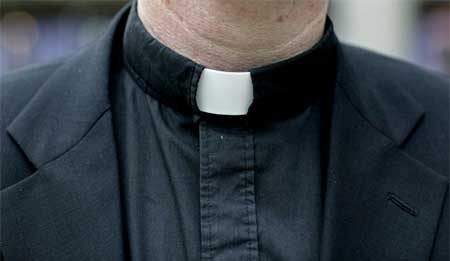
All week long I have been wearing my clerical collar. I know this might seem like a fairly Catholic thing to do, but it is traditional for all clergy to wear such things. For years I have been warned by other pastors about the dangers of wearing this collar: “No matter wear you go, people will assume that they can talk to you about all their problems.” “You can never prepare yourself for all the glares you will receive.” “It is a relic of the past, if you want to connect to people of today, ditch the collar and find something contemporary.” For me, I simply wanted to wear it this week to mark the occasion of Holy Week, and on another level I wanted to wear something that would force me to act like a Christian in public. You can’t get away with cutting in line at the grocery store when you’re dressed like this.

So I initially chose to wear it this week to honor this special time in the life of the church, but it slowly became an experiment here in Staunton. After hearing all of the stories about what this collar can bring in terms of interactions in the community, I was excited to see what might happen. I had plenty to do this week, but whenever I had the chance, I would go somewhere publicly; I worked on a sermon at a coffee shop, played drums for the Stonewall Brigade band, went to Walmart, the Staunton mall, Food Lion, I walked up and down Beverley street. I went everywhere that I could think of.

I was anxious about all the conversations and judgments people might make of my appearance, but I went out anyway. And you’ll never believe what happened… nothing.

I walked around this whole town and I received absolutely no response about my appearance. No one asked me about it, no one pointed and whispered, no one even looked at it. Now I know I’m not the best looking guy, but I’m used to people tat least taking a glance my way occasionally; its something we all do out of habit. But for the last few days I have felt largely invisible.

IMG_1279

So I decided to take it one step forward… Today, at noon, I arrived at church to begin carrying our cross all around Staunton. The cross that the confirmands so diligently decorated and created dug into my shoulders as I departed from the church and walked toward downtown. I walked from the church to Beverley Street, went up both hills on either side, and eventually made my way back toward the north end of town. I walked for two hours, and you know what happened? Nothing. 

Now, of course, walking with a 8 ft long cross will gather attention, I noticed a handful of people driving and walking who began to stare at the object on my back, but the moment I smiled, made eye contact, or waved, they diverted their attention to something else. Two couples actually switched what side of the road they were walking down in order to avoid my trajectory. For two hours I walked in silence and contemplation, every greeting I uttered was met with a blank stare, and just like with the clergy collar, I felt invisible this afternoon.

That was until I was standing next to a man waiting at the light by the library. I noticed that he kept looking at my cross, back to the ground, back to the cross, and back to the ground. Finally I heard him mutter, but loud enough for me to hear, “Jesus H. Christ.” To which I replied, “Actually its Taylor C. Mertins, but thanks for the compliment.” He did not think it was as funny as I did.

While walking across the lawn to put the cross back in the sanctuary I began to wonder if this is what Jesus felt like when he carried his cross. I wonder if what was most tragic was not the fact that he died, but that he died without anyone really caring or noticing. How strange that God chose to save us in this way, in the death of his Son abandoned by his friends on a cross.

Today, as it was in the time that Jesus died, many of us believe that we need not look at the cross at all. Here in our sanctuary all we have is this tiny cross on the altar. Many of us are far more familiar with the idea that, “God so loved the world, that everyone who believes in him may not perish but have eternal life.” In that verse we are told not to look, but merely to believe.

We so desperately want to skip over the suffering of Friday and jump straight to the glory of Sunday. Thats why more people attend church on Mother’s Day than Maundy Thursday and Good Friday combined. The cross is a harsh message. We want to divert our attention away from it. We want to hear good news. We want to laugh in church. We want to walk out feeling better about ourselves and the world. 

Yet, to ignore Christ’s death on the cross is to be tempted to believe that we are no longer in danger. But my friends, even Christ’s death does not mean we get to escape death, but only that even in death we will not be abandoned by God.

Looking on the cross and believing God are inseparable. Perhaps we have grown so accustomed to seeing the Christian cross that we now largely ignore it. Or we really know what the cross means so when we see it we, like the contemporaries of Christ, avert our gaze. But, Christ died on the cross. He hung up there for hours. He cried out to God. He suffered. He died.

This good Friday we are called to open our eyes to what Christ did, to look on the cross and live, to realize that believing is seeing.

How very strange of God to save us in this way, and how much stranger that we are to look on Jesus’ death if we are to have life.

Amen

creative stuff 020 - Copy


To Fear, Or Not To Fear – Sermon on Psalm 112 and Mark 6.45-51

Psalm 112

Praise the Lord! Happy are those who fear the Lord, who greatly delight in his commandments. Their descendants will be mighty in the land; the generation for the upright will be blessed. Wealth and riches are in their houses, and their righteousness endures forever. They rise in darkness as a light for the upright; they are gracious, merciful, and righteous. It is well with those who deal generously and lend, who conduct their affairs with justice. For the righteous will never be moved; they will be remembered forever. They are not afraid of evil tidings; their hearts are firm, secure in the Lord. Their hearts are steady, they will not be afraid; in the end they will look in triumph on their foes. They have distributed freely, they have given to the poor; their righteousness endures forever; their horn is exalted in honor. The wicked see it and are angry; they gnash their teeth and melt away; the desire of the wicked comes to nothing.

Mark 6.45-51

Immediately he made his disciples get into the boat and go on ahead to the other side, to Bethsaida, while he dismissed the crowd. After saying farewell to them, he went up on the mountain to pray. When evening came, the boat was out on the sea and he was alone on the land. When he saw that they were straining at the oars against an adverse wind, he came towards them early in the morning, walking on the sea. He intend to pass them by. But when they saw him walking on the sea, they thought it was a ghost and cried out; for they all saw him and were terrified. But immediately he spoke to them and said, “Take heart, it is I; do not be afraid.” Then he got into the boat with them and the wind ceased. And they were utterly astonished.


Happy are those who fear the Lord. “Take heart, it is I; do not be afraid.”

It happened in a small town in a small United Methodist Church. A single mother was struggling to raise her two boys who were the talk of the town. At 10 and 12 years of age, the two brothers were often responsible for any of the “accidents” in town. They regularly vandalized certain buildings, were known for shoplifting candy from the local 7-11, and would ding-dong-ditch any house they could find.

Yet, on Sunday morning, there they were sitting on either side of their mother in church. The boys would politely greet the minister when they walked in, sat quietly, but during the sermon they loved to make farting sounds while the preacher paused in a sermon.

They were trouble.

Now because the mother was raising the boys all alone, many of the people in the community that wanted to do something about the two boys, felt that it wasn’t their place; that mother had enough on her plate.

This type of behavior went on for some time. The boys would continue their antics, driving people crazy, until one day when the mother had had enough.

The pastor at the local United Methodist Church was a young man fresh from seminary; he thought he had it all figured out. For weeks he had wanted to call out those two boys from the pulpit in the middle of a sermon, but he thought better of it, he would look down on that poor mother and let it go.

So it came to pass that the mother called the young minister. “Preacher,” she barked into the telephone, “I want you to strike the fear of God into my boys. This has got to stop.”

“It will be my absolute pleasure,” The preacher replied.

The following Sunday, after worship, the minister invited the two young boys toward his office, leaving one to sit outside while the other sat on the hot seat in the office.

In order to achieve some sort of repentance from the boys, the preacher thought about teaching them that God is always present, and therefore sees everything. This, he hoped, would teach them to behave better.

With the first brother sitting across the office table, the preacher began his lesson. “Where is God?”

No response.

“Where is God?!”

The boy began to fidget.

“Where is God!?!”

The lack of response was beginning to irritate the pastor.

“I want you to answer me right now, where is God?!?!”

And with that the boy jumped from his seat and hightailed it out of the office, grabbed his brother, and bolted for the parking lot.

“Whats going on?” The one brother asked the other.

“We’re in real trouble this time. God’s gone missing, and they think we had something to do with it!”


The psalmist writes, “Praise the Lord! Happy are those who fear the Lord, who greatly delight in his commandments.” I have always found this verse a little strange considering the fact that whenever God shows up in the Bible, whenever God humbles himself to speak with one of his creatures, the first thing he usually says is, “Do not be afraid.”

fear

In Mark’s gospel we learn about a time when the disciples got into a boat to go to Bethsaida. After dismissing the crowd, Jesus went up on the mountain to pray, leaving his disciples alone on the boat. When Jesus came down he saw how the disciples were straining against the wind so he did what the Son of God would do, he walked on the water out toward the boat. He intended to pass them by, but when they saw him walking on the water they were utterly terrified, they thought it was a ghost and cried out. But immediately Jesus spoke to them across the water, “Take heart, it is I; do not be afraid.” Then he got into the boat with them and the wind ceased.

Yet, in Psalm 112, we hear about the blessedness of those who fear the Lord. To fear the Lord means that your heart is steady. If our hearts are fixed on evil, we shall become evil. If our hearts are fixed inwardly, we shall become ridiculously selfish. If our hearts are fixed upon things and possessions, we will become overwhelming materialist. All around us, perhaps even some of us, are failing because our minds and hearts are no longer steady, because our hearts are no longer fixed on the right thing.

So the psalmist calls out, blessed are those who fear the Lord. Fear comes to all of us, to the bravest as well as the cowardly. Fear comes to the faithful and to the faithless. Fear can be a good thing, it warns us to keep our eyes peeled for the danger that might lurk just around the corner. Fear teaches us to respect our elders, teachers, and bosses. Fear reminds us of our finitude. However, to be mindful of fear is one thing, to be constantly panic stricken is another.

A good friend of mine, raised in the church and pursuing a call to ministry, was once invited to a spiritual retreat at the cusp of high-school. For a long weekend, hundreds of young Christians would gather together in small groups to talk about the temptations of the world, how to keep the faith, and what it meant to walk with Jesus throughout their teenage years. They would also spend time as a large group worshiping, they would sing along to the contemporary Christian rock band, they would walk forward to receive communion together, and they would all reverently bow their heads to pray.

On the last night of the conference, at the final worship service, at the height of the concluding sermon, the fire alarm went off. The ushers and facilitators rushed everyone out of the building, yelling at the kids to hurry up as they struggled to find their peers. My friend was rushed through one of the hallways, forced around dark corners, until he found himself standing outside in the parking lot.

Spread throughout the area were life boats, and throngs of the young Christians were climbing aboard. My friend, unsure of what was going on, ran forward to the closest boat, grabbed hold of a rope and tried to swing himself on when the fire alarm stopped and a voice cried out over the megaphone: “Take a look around you, there are not enough spaces in the life boats for everyone. Have you accepted Jesus Christ as your personal Lord and Savior?”

Fear can be a tool, but it can also warp and manipulate us. My friend refused to enter a church for years after that incident because of the way the people at his retreat attempted to manipulate his faith through fear. That is not the kind of fear that the psalmist calls blessed.

The disciples were on the boat, the wind was against them and they were having problems crossing on to the over side. They were doing their best to follow Jesus’ commands, yet the world was not matching their expectations. They must’ve felt tired and abandoned out there all alone; why had Jesus asked them to do this? Where was he when they really needed him? Somehow, though stricken with overwhelming fear, the disciples saw Jesus walking on the water while calling out, “Take heart, it is I; do not be afraid.”

When fear was the most appropriate response to the present circumstances, Jesus triumphantly declared, “Do not be afraid.” In the many chaotic moments of our lives, when bashed by the waves of the world, Jesus continues to call out to us, “Do not be afraid.” Christ is there with us on the rocky boats of life’s circumstances, God listens to our prayers, and the Holy Spirit moves through everyone of us to help transform this world into God’s kingdom.

The disciples, the Israelites who sang Psalm 112, and all of us are not called to be motivated by fear, but instead motivated by love. The disciples did not leave everything to follow their God because he had promised them hard days and suffering, though that often comes if we take faith seriously, but instead they were offered a new way of living. Those who do not want to be afraid are those who have decided to see the world through the lens of faith, to be free from the tyranny of the world. People without fear are those who are fully open to the troubles and the needs of their fellow human beings. They, as the psalmist writes, rise in the darkness as a light for the upright, they are gracious, merciful and righteous. Their hearts are secure and firm in the Lord, they will not be afraid because they know the Lord is with them.

Fearing the Lord, as the psalmist writes, means loving the Lord. Loving God enough to realize that God wants to us to love one another, to strive for justice, to celebrate peace, to take faith seriously, but not take ourselves too seriously. Those who cannot sigh with others in the midst of suffering, and laugh a little bit about themselves are the ones who will be controlled by their fear.

There has been plenty of fear used throughout the history of the church, perhaps today more than ever. Churches have become professionals with motivation by fear. If you don’t tithe, if you don’t believe, if you don’t commit to prayer, etc. Right now, what we need more than fear is a little bit of laughter, we need some joy, we need to rediscover the happiness that the church contains for those who want to follow Jesus Christ.

I like to imagine that later in Jesus’ ministry, or perhaps after the resurrection, the disciples would be together joking about the old times. “Do you remember that time Jesus went into the temple and over turned all the tables!? How crazy was that?” “Or when he asked us to go find him a donkey to ride on into Jerusalem? What a character!” “Or what about that time we were all shaking with fear on the boat and Jesus calmed the wind like that *snap* what a night that was.”

laughing_jesus

Laughter, joy, and excitement must have been a part of the disciples journey through faith.

Thats why I started the sermon with a funny story about two young boys running out of a church. Until we can laugh together about the excitement of faith, then the fear of God will remain what many people get out of church.

Happy are those who fear the Lord, because they realize that God’s love is incredible. We fear God’s love because we recognize that we do not deserve it. We fear God for welcoming us into this journey when we have so little to contribute. We fear God for inviting us into a place to be loved, when we feel unlovable.

We have too often settled for the motivation of fear in church. Can you imagine what the church could look like if instead of gathering to hear about what we must do to change in our lives, we gathered out of joy and excitement and laughter?

Blessed are those who fear the Lord, who greatly delight in his commandments.

Let us all recover that sense of happiness and delight in our faith journeys. Let us be motivated by the good God who calls us by name to laugh, live, and love. Let us rekindle the flame of faith in our lives to be utterly astonished by the God who came to die, and live, for us.

Fear not, for God is with you.

Amen.

434035811_640

Questions: I Believe; Help My Unbelief! – Sermon on Mark 9.14-24 & Ephesians 2.8-9

Mark 9.14-24

When they came to the disciples, they saw a great crowd around them, and some scribes arguing with them. When the whole crowd saw him, they were immediately overcome with awe, and they ran forward to greet him. He asked them, “What are you arguing about with them?” Someone from the crowd answered him, “Teacher, I brought you my son; he has a spirit that makes him unable to speak; and whenever it seizes him, it dashes him down; and he foams and grinds his teeth and becomes rigid; and I asked your disciples to cast it out, but they could not do so.” He answered them, “You faithless generation, how much longer must I be among you? How much longer must I put up with you? Bring him to me.” And they brought the boy to him. When the spirit saw him, immediately it convulsed the boy, and he fell on the ground and rolled about foaming at the mouth. Jesus asked the father, “How long has this been happening to him?” And he said, “From childhood. It has often cast him into the fire and into the water, to destroy him; but if you are able to do anything, have pity on us and help us.” Jesus said to him, “If you are able! — All things can be done for the one who believes.” Immediately the father of the child cried out, “I believe; help my unbelief!”

Ephesians 2.8-9

For by grace you have been saved through faith, and this is not your own doing; it is the gift of God – not the result of works, so that no one may boast.

xlba-00052

Today we begin the first part of our sermon series on “Questions.” After requesting responses from all of you regarding your questions about God, Faith, and the Church, we have come to the time where I attempt to faithfully respond to those questions. Today we are talking about faith, being saved, and doubt. So, here we go…

In 1962 one of the greatest theological minds of the 20th century visited the United States on a lecture tour. Karl Barth was a product of Western Theology who actively spoke against the Nazi regime rejecting their un-Christian allegiance to Adolf Hitler. His writing and influence spread throughout the world to a degree beyond his expectation.

So during the early 1960’s Barth found himself in his later years, touring around the American landscape lecturing to young, and old, Christians about the importance of God being God.

Karl Barth is my theological hero – his books line my shelves and I believe he put forth a remarkable understanding of scripture.

Karl Barth

Karl Barth

However, Barth is remarkably difficult to understand and was very longwinded in his writing. He was once approached by a young theologian declaring, “Professor Barth, you’re my hero! I’ve read everything you’ve ever written!” To which Barth replied, “Son, I haven’t even read everything I’ve written.”

Karl Barth, intellectual and as difficult to understand as any theologian I’ve ever read, lectured at Princeton, the University of Chicago, and Union Theological Seminary. After one such lecture, no doubt filled with theologisms beyond the capacity of comprehension, a young man bravely decided to ask a question.

Now, at the time, evangelical theology was beginning to take off in the United States. Churches pushed for “personal relationships with Jesus Christ.” Altar calls were all the rage. And everyone wanted to know when you got saved.

The young man, with his hand shaking in the air, waited to ask his question. I imagine that Barth was getting tired of answering the foolish questions from the audience but decided to offer one final answer. “Son, what is your question?”

“Well professor Barth, I was wondering, when were you saved?”

The young man, obviously caught up with the personal stories of individuals who accepted Jesus Christ in their hearts, moments where folk learned that they were saved, wanted to know when Barth had discovered this momentous occasion in his own life.

After responding to questions about the ineffability of God, the diminishing role of the third member of the Trinity, and the self unveiling to humanity of the God who cannot be discovered by humanity simply through its own intuition, Barth was finally asked a question with a simple answer.

“Hmm, when was I saved? Oh yes, thats easy, it was… 2,000 years ago on the cross.”

“How will I know when I’m saved?” A question I have heard time and time again. When will I know, with assurance, that heaven is my everlasting reward? How will I be able to tell that I have been saved and what happens if I ever have doubts later on, will I still go to heaven?

In many churches, being “saved” is equated with a moment when an individual accepts Jesus Christ as their “personal Lord and Savior.” We look at it as a check-off list, an accomplishment to be met in order to go to heaven. A time when they let their old self die, in order to be clothed in Christ forevermore. This often takes form in an altar call, that moment after the sermon when a preacher stands right where I am, calling out to the congregation, calling out for those who feel the call of God on their lives to come forward during the final hymn to give their lives to Jesus Christ. Sometimes it takes place in baptism, when water is used to cleanse a child or an adult from their broken ways and save them. Sometimes it takes place in the bread and wine of communion, nourishing someone’s faith in a way previously unexperienced.

In many places, being “saved” like this is worth celebrating as a rebirth, a reawakening of the soul, a definitive shift in the life of a Christian. Some of my friends celebrate their “saved” birthday every year with a cake and presents. And even though some of those people are dear to me, and even though I can trace back to a moment in my life where I committed my life to Christ, I still wonder about what it really means to be saved.

This is what I do know: The saving of anyone is something which is not within our power, but only of God. No one can be saved – by virtue of what he/she can do. Everyone can be saved — by virtue of what God can do.

After coming down from the transfiguration on the mountaintop, Jesus met back up with the disciples only to be surprised to see them arguing with scribes. Upon arrival the crowd surrounded him overcome with awe. Someone from the group stepped forward, “Teacher, I brought you my son; he has a spirit that makes him unable to speak, it makes him seize up and crash to the ground. I asked your disciples to cast it out, but they were unable.” Jesus then responded to everyone present, “You faithless generation, how much longer must I be among you? How much longer must I put up with you? Bring the boy to me.”

So the crowd brought the boy forward but he immediately began to convulse when in the presence of the Lord and he rolled on the floor foaming at the mouth. Jesus asked the father, “How long has this been happening to him?” “Its been happening since childhood,” the father responded, “but if you are able to do anything, have pity on us and help us.”

Jesus then responded, “If you are able! — All things can be done for the one who believes.” Immediately the father of the child cried out, “I believe; help my unbelief!”

unbelief

I believe; help my unbelief! The father’s reply demonstrates for us the nature of faith. It seems so paradoxical and contradictory, yet, how often has that father’s cry been the prayer on our lips? The father has shown a bit of faith by approaching Jesus in the first place, yet the move stemmed from desperation rather than confidence; “if you can do anything” shows his doubt and his faith at the same moment. The father holds his disbelief and faith in tandem with one another.

Haven’t we all had moments where, like the father, we can hold both our faith and disbelief at the same time? Periods in our life where we know that God loves us, yet our doubts begin to percolate at the same time. Perhaps confronted with a disappointment we call out to God  begging to know his ways, wondering if he’s even listening at all, yet we still call out to God. Like the father we take our burdens to God, we have enough faith to go that far, faith the size of a mustard seed, but then we struggle and limp along unsure of what God can do.

Prayer does not work like magic. Prayer is not a manipulation of God to get what we want. God does not simply grant all of our requests when we kneel and bow before him. That puts far too much power on our side of the equation. Like “knowing” we are saved because “we” have accepted Christ, it puts the burden on us to accomplish something that we cannot do on our own. If salvation can be decided on our acceptance of Christ as Lord, then God would never have had to come in the form of flesh, die on the cross, and then be raised from the dead. Prayer is more like wrestling alone in the middle of the night with a God who refuses to let go.

God is the one who saves us through Jesus Christ, God is the one who healed that father’s son through Jesus Christ. Prayer and accepting Christ is not magic, yet we are always called to pray, like that father, for more faith. We pray for more faith as trust in God’s love, grace, and power so that God in Christ can work his healing power and presence through Christ in our lives.

The story of the man bringing his son to Christ is powerful for all of us gathered here, because like that father we are fallen people incapable to saving ourselves and our loved ones. This story offers us a great glimpse of God’s glory: All things are possible to those who believe. But even greater than that is the fact that beyond our faith or prayers, God is the source of healing and salvation in our lives. Jesus is the one who calls us to brings our burdens to him, we are not left alone to try and save ourselves.

So, how do we know when we are saved? What does it mean to be saved? Are we allowed to doubt?

I like Barth’s answer to that young man, “I was saved 2,000 years ago on the cross.” I like his answer because its true and it puts the power of salvation back on God’s side of the equation. We cannot save ourselves by virtue of our own devices, but it is only God who can save us. Yet, there is something remarkably powerful about accepting Christ at the same time. Barth’s response is appropriate, but it still misses a fundamental element of what it means to follow Christ.

If being “saved” can be compartmentalized to that moment on a cross 2,000 years ago, then there is little need for us to follow Jesus in the present. Without a commitment to change our lives in accordance with the kingdom, discipleship falls to pieces. When we come to know Jesus Christ in our hearts, when we have that moment, whether its at the altar during one of our favorite hymns, or in the water of baptism, perhaps in the wine and bread of communion, its not so much they we are accepting God, but more the fact that for the first time we are realizing that God has had us the whole time. 

Faith, at its purest and deepest form, is not about “letting God into your heart” but discovering that God has been there the whole time. Being saved is not about making a choice to become a Christian, but a willingness to let God be the Lord of our lives, and not the other way around. Doubts are not something to be feared and dismissed, but to be embraced and wrestled with. Even after John Wesley felt the assurance of God’s love in his life when his heart was strangely warmed, his doubts crept back in within days.

Faith is that great dance between us and God, faith is knowing and unknowing, faith is being able to cry out “I believe; help my unbelief!”

Thats exactly why we need elements of worship such as baptism and communion. We need patterns and practices that remind us of that great event where Christ died and was risen, that incredible moment where we were saved, but we also need food and habits for our faith journeys. We need to know that we have been saved by grace through faith, not by our own doing, but by the gift of God. Yet at the same time we have to hold the mystery of salvation like the father did, we have to recognize that we continually need Christ to be the one from whom all blessings flow, we need Christ to hear our prayers and grow our faith, we need Christ to be our Lord, not just in the past but in every moment of our lives. You have been saved, and are continuing to be saved everyday.

I believe; help my unbelief!” is our confession of faith in the God who continues to breathe new life and new faith into all of us.

In a few moments we will celebrate the two great sacraments of our church. Hattie Myles Markham will be brought forth to the water to be baptized in the name of the Father, and the Son, and the Holy Spirit. She will be incorporated into God’s kingdom through the redemptive power of the trinity. And likewise all of us will then be invited to feast at Christ’s table letting the bread and the wine nourish our souls.

Here we find the gospel, in baptism and communion we find the good news of God in the world. No matter what you do, God will never love you any more, and no matter what you do God will never love you any less. God so loved the world that he gave his only son so that everyone who believes in him might not perish but have eternal life. Nothing can ever separate you from the love of God in Jesus Christ. Jesus Christ mounted the hard wood of the cross to save you and me from having to try and save ourselves. Salvation is here. Thanks be to God.

Amen.