Devotional – Jeremiah 31.14

Devotional:

Jeremiah 31.14

I will give the priests their fill of fatness, and my people shall be satisfied with my bounty.

Weekly Devotional Image

I still feel full. More than Thanksgiving, the days following Christmas are filled with such bounty that I never stop feeling full. Family and friends gathering together require an abundance of delectable foods, an assortment of particular presents, and time for catching up with stories and laughter. The wake of Christmas leaves me reminded of how much my “cup runneth over” with a tremendous number of blessings.

Our house was recently filled with family for the holiday and it was when I was cleaning up wrapping paper and doing the dishes that I was struck with how much God has blessed us. The crumbled bits of paper and the empty plates signified, more than the actual gifts and food, how much God has provided for us. Each ripped wrapping paper and each plate conveyed the fullness that we received from one another, leaving us stuffed for days to come.

When the Israelites were exiled from their homeland, God promised that they would be returned and would rejoice. Everything would be turned upside down after a great period of suffering; young women will dance, the men shall be merry, mourning will turn into joy, and sorrow will be replaced with gladness. Even the priests will be given their fill of fatness (something I can connect with right now) while God’s people will be satisfied with God’s bounty. The time after Christmas reminds me of the great promise that God made to the people regarding their exile, and the promise God made good on when Jesus was born in Bethlehem. In Jesus the fullness of God was pleased to dwell. Similarly, we are reminded of the great gift of Christ through the gifts of family, friends, food, and gifts during the season of Christmas.

Be-Present

However, we must be careful to not let the presents overshadow the value of presence. There is a great temptation to so deeply root ourselves in the tangible and material that we neglect to value the beauty of being. The great gift God gave was not so much that he provided a fleshly human being, but instead provided a human to dwell among us, to stand by our sides, to hear our prayers, to know our weakness, and to love us in spite of it all. You could wake up on Christmas morning and open every earthly thing you’ve ever wanted and it would still pale in comparison to the gift of God humbling himself to the form of a slave to truly be Emmanuel, God with us.

As we prepare to take steps in 2015 let us remember that the gift of presence outweighs the gift of presents, let us look to the ways that Jesus came for us to learn how to be there for others, and let us be truly thankful people for all the things that make us full.

Cross and Crown – Sermon on Jeremiah 23.1-6 and Luke 23.32-43

Jeremiah 23.1-6

Woe to the shepherds who destroy and scatter the sheep of my pasture! Says the Lord. Therefore thus says the Lord, the God of Israel, concerning the shepherds who shepherd my people: It is you who have scattered my flock, and have driven them away, and you have not attended to them. So I will attend to you for your evil doings, says the Lord. Then I myself will gather the remnant of my flock out of all the lands where I have driven them, and I will bring them back to their fold, and they shall be fruitful and multiply. I will raise up shepherds over them who will shepherd them, and they shall fear nor longer, or be dismayed, nor shall any be missing, says the Lord. The days are surely coming, says the Lord, when I will raise up for David a righteous Branch, and he shall reign as king and deal wisely, and shall execute justice and righteousness in the land. In his days Judah will be saved and Israel will live in safety. And this is the name by which he will be called: “The Lord is our righteousness.”


Luke 23.32-43

Two others also, who were criminals, were led away to be put to death with him. When they came to the place that is called The Skull, they crucified Jesus there with the criminals, one on his right and one on his left. Then Jesus said, “Father forgive them, for they do not know what they are doing.” And they cast lots to divide his clothing. And the people stood by, watching; but the leaders scoffed at him, saying, “He saved others; let him save himself if he is the Messiah of God, his chosen one!” The soldiers also mocked him, coming up and offering him sour wine, and saying, “If you are the King of the Jews, save yourself!” There was also an inscription over him, “This is the King of the Jews.” One of the criminals who were hanged there kept deriding him and saying, “Are you not the Messiah? Save yourself and us!” But the other rebuked him, saying “Do you not fear God, since you are under the same sentence for condemnation? And we indeed have been condemned justly, for we are getting what we deserve for our deeds, but this man has done nothing wrong. Then he said, “Jesus, remember me when you come into your kingdom.” He replied, “Truly I tell you, today you will be with me in Paradise.”


If you are the King of the Jews, save yourself! There was also an inscription over him, “This is the King of the Jews.

The first time I traveled to Guatemala I had no idea what to expect. Sure I had been on previous mission trips to different parts of the United States, but I had yet to serve the church in a truly different environment. Everywhere we traveled there was a sense of excitement in the air because everything was so remarkably fresh. The abundance of colors in the differing marketplaces, the worn and wrinkled faces of the elderly mayans carrying heavy loads, and the mountains scratching across the horizon.

285_1026151305027_4642_n

I had been looking forward to the trip for sometime and when we finally arrived, everything was meeting my expectations. I believed that we were truly serving God’s kingdom by serving our Guatemalan neighbors by building stoves in the indigenous highland areas. I believed that we had something to share with them, not to convert them, but to live out the gospel of Jesus Christ and demonstrate the love of God in the world.

On one of the early days of the trip, our team arrived in the town of Chichicastenango, known for its traditional K’iche’ Mayan culture. It was a pit stop for us on the way to the higher regions, and we were there for lunch and to explore the vast and dense market. Everywhere you turned you were overwhelmed by the sense of time and tradition, as if this place had remained unchanged for the last few centuries. I wandered through the winding streets, peeked in some of the different booths, but really I was just trying to soak up the culture.

6493_1147085688311_6475115_n

At some point, I became lost. I could not see anyone from my group and continued to travel aimlessly throughout the town. I tried to keep it together, not panic, and decided to find a high vantage point in order to get a bearing on my surroundings. I walked until the stones under my feet started to slant upwards and eventually found myself in front of a very old church. The stone steps were covered with Mayans, sitting and sprawling over every space, and I had to weave my way back and forth in order to reach the entrance of the church. Though I should have immediately turned around to look out at the town, something drew me inside.

6493_1147085808314_3679425_n

The church was damp, dark, and devoid of anyone else. The ground felt alive under my feet as it gave way to my weight, the walls were covered with black soot from centuries of fires, and the paintings and decorations had nearly all disappeared from view. The smell of melted wax filled my nostrils as I began to creep closer and closer toward what I imagined was the altar. It was the least church-like church I had ever entered. Without the help of lighting, I stumbled over rickety wooded seats until I finally found myself standing in the front of the church. There poised in front of me was perhaps one of the most pristine sculptures of Christ that I had ever seen. In complete contrast with the rest of the space, this Christ was unblemished, beautiful, and brilliant. Jesus stood elegantly with his robes draped over his shoulders with one hand outstretched with a remarkable golden crown resting on his forehead: Christ the King.


The celebration of Christ the King Sunday is a relatively recent addition to the Christian calendar. The greater church had celebrated the knowledge and image of Christ as king for centuries, but Pope Pius IX officially added to the Christian year in 1925. It took the church 1900 years to need this feast so bad in order to add it to the life of worship. When the first celebration of Christ the King occurred, Mussolini had been in charge of Italy for three years, the maniacal man named Hitler had been out of jail for a year and his Nazi party was growing in popularity, and the United States was preparing for the Great Depression. In such a time, when the world seemed out of control, the church asserted that, nevertheless, Jesus Christ is King of the universe.

This day, this celebration in the life of the church, became the church’s great nevertheless to the godlessness of the world. Despite the rise of dictators, wars, fear, and death, despite the widespread notion that religion was only a “private affair” for individuals, Christ the King asserted that Jesus Christ is the Lord, and he shall reign forever and ever. 

During the celebration of holy mass in the chapel of the Carmelite Monastery 6 members of the OCDS community made promises to the Order.  Dr. Jason Bourgeois and Judy Hawkins professed their temporary vows for 2 years and David Travers, Suzie Megown, Kath

On Christ the King Sunday the Lectionary provides for us scriptures that reflect the “kingliness” of Jesus. The Old Testament scripture from Jeremiah, contains a prophetic word about the coming Messiah: “The days are surely coming, says the Lord, when I will raise up for David a righteous Branch, and he shall reign as king and deal wisely, and shall execute justice and righteousness in the land. In his days Judah will be saved and Israel will live in safety. And this is the name by which he will be called: “The Lord is our righteousness.” Jeremiah reports the Word of the Lord to a people in a time of chaos: there are people who are unworthily leading and scattering God’s sheep. But nevertheless, God will bring about a righteous Branch, a king to rule all things, a king of righteousness.

What do we want out of a king? Someone who will execute justice and righteousness? Someone who has our best interests at heart? Someone who lowers our taxes? Someone who will lead us victoriously into battle?

The Israelites wanted a king like David. They so desired someone to come in the name of the Lord in order to overthrow the powers that be, and take a seat on their appointed throne. To be crowned with glorious gems and rubies, to bring about God’s kingdom on earth with power. What kind of a king do we want?


And he was led away to the place called The Skull with two others, who were criminals. There Jesus was crucified with the criminals, one on his right, the other on his left. With the blood still wet on his hands and feet, Jesus said, “Father, forgive them, for they do not know what they are doing.” those who had gathered to witness his death began to cast lots for his clothing, and people stood by watching, waiting. The leaders began to mock him, “He saved others; let him save himself if he is the Messiah of God, his chosen one!” The soldiers present also mocked him, coming up and offering him sour wine, “If you are the King of the Jews, save yourself!” And there was a sign hung over his head that read, “This is the King of the Jews.”

Crucifixion-PeterGertner

One of the criminals hung next to Christ kept deriding him and saying, “Are you not the Messiah? Save yourself AND us!” But the other criminal rebuked him, saying “Are you not afraid of God, since you are under the same punishment? And we were condemned justly, for we are getting what we deserve for our deeds, but this man has done nothing wrong.” Then he looked to the Christ, “Jesus, remember me when you come into your kingdom.” And Jesus replied, “Truly I tell you, today you will be with me in Paradise.”

That is our King.

When you really get down to it, when you hear Luke’s remembrance of the crucifixion, it is so simple and straightforward. This is in contrast with the flood of feeling-filled poetry, hymns, sermons, and images that have flowed ever since. Our King did not reign in glory according to the expectations of the world. Instead of a long flowing purple robe he was left nearly naked on the cross. Instead of a crown of rubies, diamonds, and gems, he wore a crown of thorns. Instead of a majestic throne inlaid with gold and comfort, Christ reigned from a cross.

The Romans were notorious for using crucifixion as a form of execution for common criminals because it not only warned the public about the crimes against Rome, but it also added shame, pain, and a slow death. Yet somehow, instead of being hung for shame, Jesus Christ was elevated to his throne on the cross.

In that simple moment of hanging for all to see, Christ the King reigned magnificently over God’s kingdom and demonstrated the depth of what it means to be our King. Jesus refused to test God and heed the call of his tormentors to save himself. Three separate times Jesus was mocked to “save himself,” with the one criminal adding, “and us.” In his final moments Jesus does save someone, and that the one he saved was a dying criminal fits perfectly with the greater message of God’s Good News of the world. In Jesus’ dying hour, he continued his ministry: For the Son of man came to seek and to save the lost. That is what it means to be King.


As I stood in that Guatemalan church, I was confronted for the very first time about what it really means to believe that Christ is the King. I was surrounded by decay, desolation, and disregard yet Christ stood before me as the King. In that moment I saw the paradox of the crucifixion, that the King of God’s glory was hung on a cross to die, that Christians in Guatemala can see the world slipping away from them, yet Christ is still King of the universe. I thought I was bringing something with me to Guatemala, that I was carrying God’s message. I believed I was looking for and seeking out God in my own life when God was the one looking for me; waiting to confront me in that dark and empty church.

How remarkable is it that we worship a God who loves us so much that he is continually looking for us, finding us in the differing moments of our lives to remind us who is really in charge? How beautiful is it that our God came in the form of flesh, to be the incarnate Word, and reign from a cross at the place called The Skull? How perfect is it that our King does not meet the expectations of the world, but instead turns the world upside down? How blessed are we that our King reigns not above us, but for us, beside us, and with us?

Today is the last Sunday of the Christian year, we have come to the conclusion of our liturgical calendar. We began with Christ’s birth made our way through his life death and resurrection. We have remembered the stories of the Old Testament where God made covenant with his people to be their God. We have witnessed the tragedies that have occurred in the world, we have lost loved ones, and suffered in our own lives.

Yet, nevertheless, Jesus Christ is King of all things.

christsinai

Jesus Christ, fully God and fully human, brought forth a new age in the life of humanity, ushered in a new kingdom by water and the Spirit, reigned triumphantly from the most unexpected of places. Jesus Christ, Son of Man, came not to be served but to serve and give his life as a ransom for many. Jesus Christ, Son of God, died on a cross for the world so that we might all be reunited and reconciled with God. Jesus Christ, the Holy One, taught us about how to live and love abundantly in God’s Kingdom. Jesus Christ, King of the universe, was resurrected from the grave to share life eternal with us.

Hallelujah! To God be the Glory forever and ever!

Amen.


Dear Archer and Abram… – Sermon on Jeremiah 29.1, 4-14

(Preached at St. John’s UMC on 9/29/13)

Jeremiah 29.1, 4-14

“These are the words of the letter that the prophet Jeremiah sent from Jerusalem to the remaining elders among the exiles, and to the priests, the prophets, and all the people, whom Nebuchadnezzar had taken into exile from Jerusalem to Babylon.

It said: Thus says the Lord of hosts, the God of Israel, to all the exiles whom I have sent into exile from Jerusalem to Babylon: Build houses and live in them; plants gardens and eat what they produce. Take wives and have sons and daughters; take wives for your sons, and give your daughters in marriage, that they may bear sons and daughters; multiply there, and do not decrease. But seek the welfare of the city where I have sent you into exile, and pray to the Lord on its behalf, for in its welfare you will find your welfare. For thus says the Lord of hosts, the God of Israel: Do not let the prophets and the diviners who are among you deceive you, and do not listen to the dreams that they dream, for it is a lie that they are prophesying in my name; I did not send them, says the Lord. For thus says the Lord: Only when Babylon’s seventy years are completed will I visit you, and I will fulfill to you my promise and bring you back to this place. For surely I know the plans I have for you, says the Lord, plans for your welfare and not for harm, to give you a future with hope. Then when you call upon me and come and pray to me, I will hear you. When you search for me, you will find me; if you seek me with all your heart, I will let you find me, says the Lord, and I will restore your fortunes and gather you from all the nations and all the places where I have driven you, says the Lord, and I will bring you back to the place from which I sent you in exile.”

photo (4)

The year was 594 BC, and everything was falling apart.

The prophet Jeremiah had seen it all. Coming from a village from the small tribe of Benjamin, he had been called by God and given the unenviable task of being appointed over nations and kingdoms, to pluck and pull down, to destroy and overthrow, to build and to plant (Jer. 1.10).

Babylon was growing stronger and stronger, while Judah was growing weak from internal turmoil. By the time the year 594 had come around, most of the Israelites had been exiled to Babylon, removed from their precious promised land.

In the midst of particular unrest in Jerusalem, Jeremiah learned of similar frustrations among the exiles in the foreign land. More specifically, Jeremiah learned that false prophets were claiming that the exiles would soon be going home had provoked the unrest. However, God’s plan for the exiled Israelites would have to take place on God’s time.

prophet-jeremiah

In the year 594, with unrest brewing in Babylon, Jeremiah sent a letter to the exiles against their false hope for an early return.

For our sermon today I have decided to try something different. In many ways, the letter Jeremiah wrote to his fellow Jews living in a foreign land, speaks to the no longer dominant Christians today living in our culture.

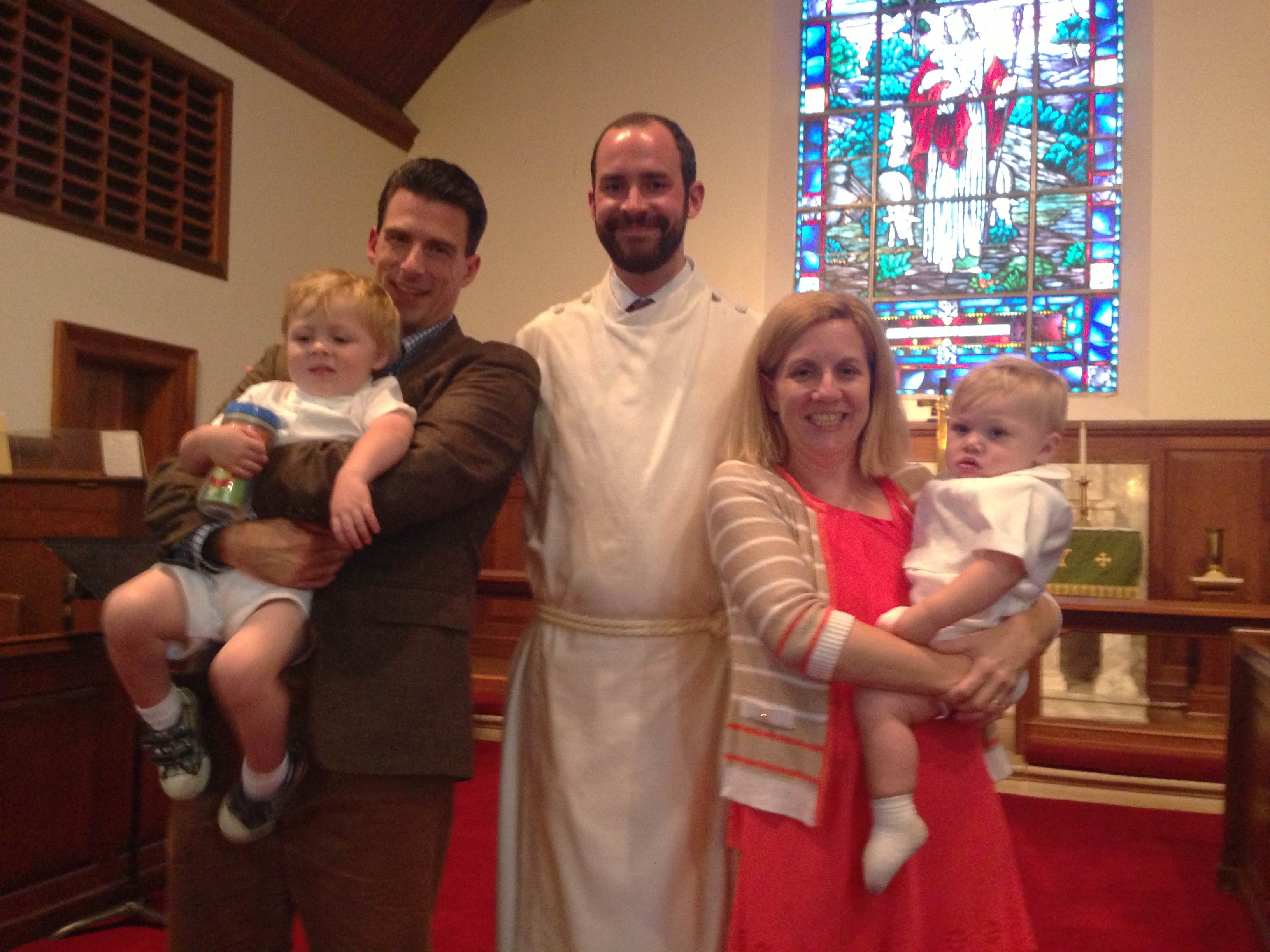
This sermon has been prepared as a letter, using Jeremiah’s epistle as a template, written for both Archer and Abram Pattie, the two young boys who will be baptized later in the service. I hope however, that you will notice that this letter is not just for them, but also for all of us…

Dear Archer and Abram,

Build houses and live in them; plant gardens and eat what they produce… But seek the welfare of the city where I have sent you into exile, and pray to the Lord on its behalf, for in its welfare you will find your welfare.

Today is the day that you are welcomed into God’s church through baptism. All of us have gathered together to witness this incredible event, prayerfully waiting and watching for the water to be poured over your heads. We are all here because we love you, because we are committing ourselves to you, and because we have been down your path before.

But, it won’t be easy.

The world today is an entirely differently place than it used to be. 50 years ago, this church was packed with people filling up nearly every single pew. Most of the restaurants, businesses, movie theaters, were all closed on Sunday because it was expected that we maintained Sabbath and reverence for holy worship. When you went out in public you could expect to see families together in prayer, the bible and its wonderful scriptures were a part of daily living often being read from the dining room table, and churches were growing and growing.

Today, you two are being baptized into a church that no longer fits that mold. Instead of the glory days of Jerusalem, you are entering into a time where the church feels like it is in Babylonian captivity.

The church and the world have changed but that’s a good thing! You are privileged to grow up in a church that no longer has to fit the expectations of the world, but gets to instead meet the expectations of almighty God.

Grow up in this community. Dig deep roots. Make friends. Play sports. Study Hard. Take advantage of the opportunities around you. Spend time with people who do not look like you, do not talk like you, and do not act like you; learn about yourself from them. But remember one thing: God’s kingdom is not of this world. You are being welcomed into a new family that is defined by its love of God and neighbor and therefore you are part of something so much bigger and so much greater than yourselves. Rejoice in what you have here, and hold fast to the love of God that will shower down on you every single day.

Do no let prophets and the diviners who are among you deceive you, and do not listen to the dreams that they dream, for it is a lie that they are prophesying in my name; I did not send them.

Archer and Abram, growing up will be tough. There are going to be people, and corporations, and television shows, and politicians, and advertisements, and all sorts of other false prophets that will try to tell you about the world. Every time you turn around you will be force-fed new information about how you are supposed to see, feel, believe, and understand everything. You will be told about the importance of maintaining your individuality and allegiances to the powers around you: Truly I tell you Caesar can come in all shapes and sizes.

They will try to fill holes and spots and negativity in your lives with all sorts of garbage.

False prophets will always tell you exactly what you want to hear: If you take this weight loss pill you will have the body of your dreams, if you drive this car your neighbors will respect and admire you, if you invest enough money in our company you will never have to worry about finances again…

The only one who can ever make you whole, the only one who will every truly love you, no matter what, is the triune God.

False prophets and diviners will try to label you and help you create your own identity on their terms. But today they can never compare to your new identity in Jesus Christ. Today you are being baptized in the name of the Father, Son, and Holy Spirit. Today you are becoming God’s children and nothing, nothing, can ever compare to that. We, the church, are here to help nurture you in your discipleship, we will take vows of love and commitment to help mold you in the faith, so that you will always remember that nothing, nothing, will ever separate you from the love of God in Jesus Christ.

For surely I know the plans I have for you, says the Lord, plans for your welfare and not for harm, to give you a future with hope.

Archer and Abram, God has a plan for both of you. From the very beginning it was God who breathed the breath of life into both of you, you were each uniquely created in the image of God. Many have claimed over the centuries that being made in the image of God means we have rational thought, or an imagination, but today I am telling you that being made in the image of God means that you were both created to be in community.

God’s plans for you include growing up in a place like this, feeling the love of God through your brothers, sisters, mothers, and fathers in Christ. God wants us to be here for you, and you to be here for us.

Things will get tough in your lives. There will be moments when it feels like God does not have a plan for you, that all you see and feel and hear is anything but your welfare. But God will always be there. This church will always be there. Because of our baptismal commitments to you we will always wait with open arms ready to help you, nurture you, believe in you, and support you in everything you go through.

Many years after Jeremiah sent his letter, after Israel had fallen captive to foreign nations, after Rome had laid siege to great Jerusalem, there was little hope. But one remarkable night, God came and dwelt among us in the flesh and became hope incarnate. God walked through the streets in Jesus Christ teaching about the kingdom, healing the sick, feeding the hungry, and bringing people into fellowship with one another. When our love failed, when we crucified Jesus on the cross, God’s love remained steadfast and the hope that we have always waited for became real and tangible in the resurrection.

In the beginning of our faith, when Christianity was still a budding movement there was pain and fear and frustration. Many people died for the faith that is now being passed on to you, but you will probably never be required to die for your faith. More likely, you will be given the dilemma, or opportunity, to summon up the courage to react against an injustice at the grocery store, or speak up for the voiceless in an argument, or love someone who is so unlovable. It will not be large and it will not be grand, but it will be good enough. Remember who you are, and whose you are.

20130929_114851        20130929_114826

God has a plan for you, a plan for your welfare, to give you a future with hope. There is something greater than this world; there is something more powerful than we can imagine, something brighter than the sun, and lovelier than the moon. It is your future, your future with hope because God loved you enough to die on the cross.

Then when you call upon me and come and pray to me, I will hear you. When you search for me, you will find me; if you seek me with all your heart, I will let you find me.

Archer and Abram, God is the one who lets us come to him with our requests and he hears and answers them. God’s gracious will to hear us, to know us, and to love us in prayer is the basis of the covenant that will take place in the waters of your baptism. God’s love is so superior, so majestic, and so clear that it makes our prayers immediately necessary.

God is ready for us to call on him. By living into a new reality, one that is shaped by prayer and scripture, by seeking God with our whole hearts, by practicing justice and loving-kindness we will find God with you.

We do not keep God locked up in this church, you do not have to be sitting in the pews or singing in the choir loft to find God. All you have to do is call upon him. When you search for God, you will find him. You will find God in the wonderment of creation, in the perfectly pitched harmonic notes of a song, in the warmth of the fire in the winter, in the hug of your mother when you make it home, in all sorts of places because God is always there.

Today you are being wrapped up into God’s great cosmic story. When you open the Bible you will now discover that it is not just some story about some people from the past but it is the very story of your lives. We are all here to rejoice with you today.

Sincerely,

Rev. Taylor Mertins


Nearly 2,500 years ago Jeremiah wrote a letter of truth to his friends in exile. He warned that things would not turn around immediately, that they would have to persevere through tough times before God would bring them home. This letter continues to live on for all of us today. The false diviners will continue try to make sense of the world for us, we will continue to feel like a strange people in a strange land, but God has plans for us.

God wants us to love each other in the same way that he first loved us. God wants us to wrap Archer and Abram up in love to teach them the stories of scriptures and how to be in communion with the divine. And above all, God wants us to know that no matter what we are loved.

Amen.

photo (5)

The Power of Words – Sermon on Jeremiah 1.4-10

Jeremiah 1.4-10

“Now the word of the Lord came to me saying, “Before I formed you in the womb I knew you, and before you were born I consecrated you; I appointed you a prophet to the nations.” Then I said, “Ah, Lord God! Truly I do not know how to speak, for I am only a boy.” But the Lord said to me, “Do not say, ‘I am only a boy’; for you shall go to all to whom I send you, and you shall speak whatever I command you. Do not be afraid of them, for I am with you to deliver you, says the Lord.” Then the Lord put out his hand and touched my mouth; and the Lord said to me, “Now I have put my words in your mouth. See, today I appoint you over nations and over kingdoms, to pluck up and to pull down, to destroy and to overthrow, to build and to plant.”

prophet-jeremiah

The Power of Words 

Words are powerful. The perfectly timed phrase or expression can carry more meaning and accomplish more than just about anything else. From the pulpit they carry even greater value because they are so connected with the Word of the Lord. At their best words can be used in a fruitful way, demonstrating the kind of building-up that the bible often refers to, in order than we can affirm one another in love. At their worst, words can be used in a destructive way, hurting those around us, and ignoring the truth of God’s role in the world.

On January 30th, 1933, Adolf Hitler became the democratically elected chancellor of Germany. This was the beginning of the Third Reich. Germany, the land that had produced the likes of Bach, Goethe, Durer was now being led by a man who consorted with criminals and was often seen carrying around a dog whip in public. Hitler was known for using his words in public propaganda for destructive purposes. Some of you here this morning can remember how the world shuddered when this began to take place.

Two days after Hitler was elected, a twenty-six year old theologian name Dietrich Bonhoeffer gave a radio address throughout the German nation. The speech was titled “The Younger Generation’s Altered Concept of Leadership.” Though the talk was itself highly philosophical, it constructively argued against the type of leadership that Hitler would use for the next twelve years, inevitably leading a nation and half the world into a nightmare of violence and misery.

Dietrich Bonhoeffer

Dietrich Bonhoeffer

Bonhoeffer spent a significant portion of his speech discussing the differences between a true leader, and the Fuhrer. He used his words in a calm and collected way, appreciating the power they held: A true leader must know the limitations of his/her authority. The good leader serves others and leads others to maturity. He puts them above himself, as a good parent does with a child, wishing to lead that child to someday be a worthy parent. Another word for this type of leadership is discipleship. “Only when we see that leadership is a penultimate authority in the face of an ultimate, indescribable authority, in the face of the authority of God, has the real situation been reached. The individual is responsible before God.”

Before Bonhoeffer could finish, the speech was cut off. Only two days after Hitler’s election, the Nazis were suppressing this young man who spoke out against the type of leadership that would come to define Germany over the coming decade.

What we find in the first chapter of Jeremiah is an encounter between the human and the divine. We discover how powerful words can be through God’s call. As the divine Word, God is a genuine and invisible otherness when compared to Jeremiah. During this particular encounter the word of the Lord came to Jeremiah and the prophet meets in faith the God who meets him through the Word.

“Jeremiah! Before I formed you in your mother’s womb, I knew you, and before you were born I consecrated you; I appointed you a prophet to the nations.” Then Jeremiah said, “Ah, Lord God! You cannot expect me to speak! I am only a boy.” But the Lord responded, “Do not say ‘I am only a boy’; for you shall go to all whom I send you, and you shall speak whatever I command you. Do not be afraid of them, for I am with you to deliver you.”

In his Word, God does not deliver a course of lectures on dogmatic theology, He does not submit the content of a creed of a confession of faith, and he does not even produce a perfectly prepared three-point sermon. Instead He makes himself accessible to us. An exchange takes place here in scripture that is beyond any analogy in the sphere of rational thinking. Instead, we have here a simple encounter, just like one between any two people, where God makes Himself available and known through relationship.

Jeremiah’s experience guides him into boundary, toward his own finitude, being reminded of his humanity, as over and against God. Jeremiah’s encounter is a reminder for us that we are not God. God is wholly other when compared with his creation. When Jeremiah meets God, his personality sinks away into the background; he feels his words being replaced by the Word of God. When we truly encounter the depth and beauty of the triune God, everything about us begins to sink away as well.

It is no wonder therefore why Jeremiah evades the commission of God. “Surely you can’t use me God, for I am only a boy.” Jeremiah protests because he is overwhelmed and intimidated by the call to set aside priests, princes, and people to become a prophet to the nations. He was afraid to proclaim the Word of God, which would go beyond the comprehension of his time.

This isn’t in scripture, but I can imagine God’s full response to Jeremiah’s evasion: “have you not seen and have you not heard what I have done with mere people? Have you forgotten the stories of Abraham, Isaac, and Jacob? What about Moses and Joshua? David was but a boy when I had him defeat the Philistines. Solomon became the wisest king to rule the nation All of the prophets, the judges, the priests? This isn’t about you Jeremiah, this is about what I am going to do through you.”

Recoiling from a divine appointment is common throughout scripture. It only takes a moment to remember Moses standing in the heat of the burning bush and then turning his face away because he was afraid to look at God.

The theologian Paul Tillich once said: “we always desire to escape God… People of all kinds, prophets and reformers, saints and atheists, believers and unbelievers, have the same experience.” It is safe to say that a person who has never tried to flee God has never experienced the truth of who God is.

God dismisses Jeremiah’s excuse; Young or old, learned or uninformed, handsome or ugly, none of things matter to God because they all pertain to our own self-centeredness: my powers, my status, my desire to have reality on my terms. Because of the power in God’s Word Jeremiah does not react in silence, nor does he step aside to let someone else take his place, instead he steps into the situation, which has in a way stepped into him. He responds to the encounter of God, feels the Word of the Lord placed on his lips, and is prepared to do God’s work.

From this point forward Jeremiah will not go forth on his own terms; God will send him, and he will move according to God’s will. It is because of God working in and through Jeremiah that he will be able to speak and act in the specific situations as they arise. The encounter has changed Jeremiah so that he will be able to narrate God’s plucking up and planting again. Jeremiah will speak the truth of the Word of God regardless of whether or not they are agreeable to his youth, ambitions, moods, or self-examination.

            It is only when it is made plainly clear to Jeremiah that the point at issue has nothing to do with his own abilities or the extent of his talents that the truth of God’s reign is made abundant and it becomes possible for Jeremiah to become a messenger.

            Like Jeremiah, the young German theologian Dietrich Bonhoeffer felt the call of God to proclaim the Word. Things became very difficult for Bonhoeffer after he made that first radio address. As the German nation descended into Fuhrer worship with the German church emphasizing politics more than theology, he struggled with how to be authentic to the Word of God as a pastor and a theologian. He trained young pastors through an underground seminary at Finkenwalde and preached about remaining faithful and obedient to God before anything else. As it became harder and harder for him to proclaim the good news in Germany, Bonhoeffer learned that war imminent and was frightened about being conscripted into the army.

dBonhoeffer

Bonhoeffer was a committed pacifist and was adamantly opposed to the Nazi regime, therefore he would never swear an oath to Hitler nor fight in his army. However, to refuse this would be a capital offense. It was at this time that Bonhoeffer accepted a position at Union Theological Seminary in New York. While in the United States Bonhoeffer had somewhat of a Jeremiah experience, because even though he had the freedom to run away from his calling in Germany, Bonhoeffer realized that his responsibility was to God with the German people. Just as God would pluck up and replant the Israelites in Jeremiah’s time, Bonhoeffer knew that the German nation would have to be destroyed in order for it to be fruitful once again. And so Bonhoeffer returned to Germany on the last scheduled steamer to cross the Atlantic before the war.

Upon arriving back in Germany, Bonhoeffer’s desire to speak powerful words against the Third Reich resulted in him being forbidden to speak publically starting in 1940 and he had to regularly report his activities to the police. Within a year he was forbidden to print or publish. And on April 5th, 1943, ten years after making his radio address, Bonhoeffer was arrested by the Gestapo for his continual Anti-Nazi remarks and involvement with the Abwehr’s plot to undermine Hitler’s regime.

            He remained in prison for two years, able to write letters and theology that were smuggled out by sympathetic guards.

0800697030h


Though he remained hopeful for the end of the war and his eventual release, he was condemned to death in April of 1945. He was killed by hanging just two weeks before the United States liberated the camp where he was being held. Before his execution, Bonhoeffer was led away as he was concluding his final Sunday service and said to one of his fellow prisoners: “This is the end – for me the beginning of life.”[1]

            I fear that whenever we hear stories of people like Jeremiah or Bonhoeffer we regard them as a special kind of people, set apart for the work God ordained for them. And to be quite honest, it is very unlikely that anyone of us in this room will ever be imprisoned, or suffer, for our Christian identity. But we are all called to be Jeremiahs and Bonhoeffers in our commitment to following Jesus Christ. Just like those two prophets God has formed us, consecrated us, and placed the Word on our lips.

            There is a power in words that we regularly underestimate. The way that we often talk about other behind their backs carries with it a great destructive energy. When we ignore the truth of our interconnected as the body of Christ in this place by speaking poorly of one another does a disservice to the God who formed you from the womb. Our words are powerful, use them wisely.

            So too, there is a power in the words that we use to affirm and address one another in love; By caring for and reaching out to those around us we continue to live out the kind of fruitful lives that God has always envisioned for us. This church is called to be a place where we understand the power of our Words and use them appropriately.

            Do not be afraid of this power that God has given to you. Jeremiah and Bonhoeffer did not go in their own strength and neither do you. They did not speak on their own authority and neither do you. God is our strength and our authority. “I am with you to deliver you, says the Lord.” The thoughts of our selfish lives can be cast away to the side so that we can assume the proper posture as messengers of God. As Paul wrote to the Galatians “Yet not I, but Christ working in me” (Gal. 2.20).

            Throughout their lives both Jeremiah and Bonhoeffer saw the collision of powers in the world. What defined them was their ability to see God’s decisive acts in history, remembering that God is the true authority over all things in spite of the powers that dominated their cultures. Jeremiah and Bonhoeffer were ordinary people. They were just like us. They were living their lives, expecting everything to be fine when God put something on their lips to say. Hearing and responding to the Word of God is a difficult thing, but God is always speaking and our response to that Word will define us as a people of faith, hope, and love.

            Do not be afraid to speak the truth, for the Lord is with you.

Amen.


[1] Bethge, Eberhard. Dietrich Bonhoeffer: A Biography (Fortress Press, 2000), 927.