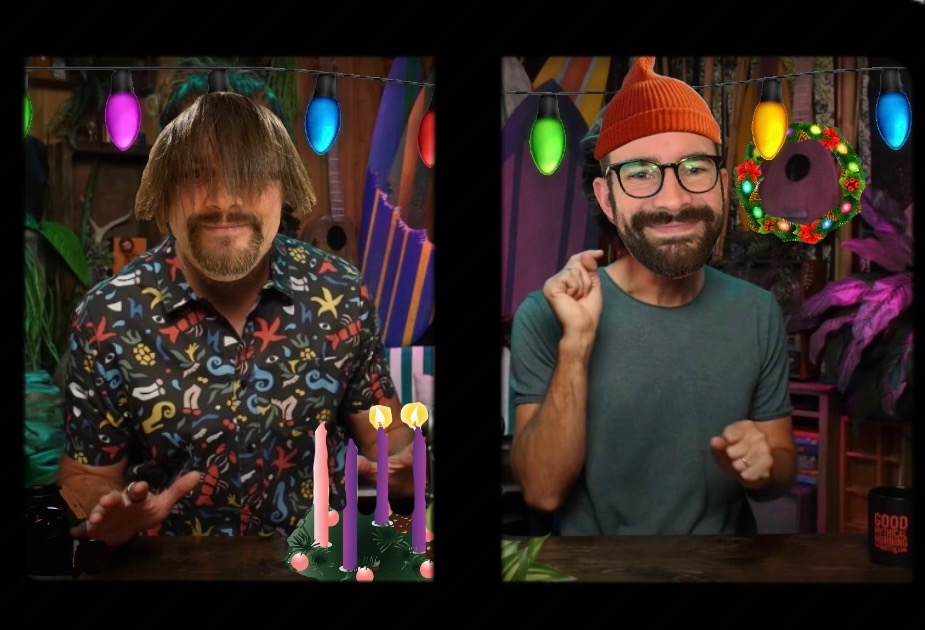
This week on the Strangely Warmed podcast I speak with Drew Colby about the readings for the Fourth Sunday of Advent [A] (Isaiah 7.10-16, Psalm 80.1-7, 17-19, Romans 1.1-7, Matthew 1.18-25). Drew is the lead pastor of Grace UMC in Manassas, VA. Our conversation covers a range of topics including Christmas gifts, The Alabama Shakes, ghosts, signs, weariness, keeping the cross in Christmas, the bread of tears, salvation, epistolary preaching, grace, belonging, Sam Wells, prophecy, and The Mother of God. If you would like to listen to the episode or subscribe to the podcast you can do so here: The Obstinance of God
The wilderness and the dry land shall be glad, the desert shall rejoice and blossom; like the crocus it shall blossom abundantly, and rejoice with joy and singing. The glory of Lebanon shall be given to it, the majesty of Carmel and Sharon. They shall see the glory of the Lord, the majesty of our God. Strengthen the weak hands, and make firm the feeble knees. Say to those who are of a fearful heart, “Be strong, do not fear! Here is your God. He will come with vengeance, with terrible recompense. He will come and save you.” Then the eyes of the blind shall be opened, and the ears of the deaf unstopped; then the lame shall leap like a deer, and the tongue of the speechless sing for joy. For waters shall break forth in the wilderness, and streams in the desert; the burning sand shall become a pool, and the thirsty ground springs of water; the haunt of jackals shall become a swamp, the grass shall become reeds and rushes. A highway shall be there, and it shall be called the Holy Way; the unclean shall not travel on it, but it shall be for God’s people; no traveler, not even fools, shall go astray. No lion shall be there, nor shall any ravenous beast come up on it; they shall not be found there, but the redeemed shall walk there. And the ransomed of the Lord shall return, and come to Zion with singing; everlasting joy shall be upon their heads; they shall obtain joy and gladness, and sorrow and sighing shall flee away.
It’s a thing that takes place, more often than I would like. Someone wanders into my office and before long they say, “Why did this happen?”
Why do Russian forces continue to attack civilians in Ukraine, killing innocents daily?
Why did my cells mutate into a cancer that is trying to kill me?
Why would my husband hurt me so much?
Those are worthy Advent questions.
Why?
We’ve got the lights and the cocoa, some of us already have presents wrapped under the tree and are putting together the menu for when the relatives arrive. We’ve got all this other stuff going on and yet we know that not all is as it ought to be.
Even if you feel like you’ve got it all figured out, spend one minute watching the nightly news and you are likely to be bombarded with stories and images of all that is wrong with this world.
Why is this world so broken? What can we, the church, say about all the sorrow, the waste, the vengefulness that populates the evening news and keeps us awake at night?
John the Baptist had the same questions. Sure, he prepared the way out in the wilderness, he called for the baptism for the repentance of sins, he talked about the One to follow. But his talk was incendiary, downright revolutionary, according to the powers and the principalities, and it got him locked up.
And from prison John starts to wonder about his cousin Jesus. “He sure seems like the Messiah. He walks like the Messiah, he talks like the Messiah. And yet, where is all the grand and Messianic stuff to inaugurate this time? Why isn’t Jesus more like me?”
So John sends word by way of his disciples, “Hey cuz, are you the real deal? Or are we to wait for another?”
And Jesus, in typical Jesus fashion, responds in his own weird way. He says to his own disciples, “Tell my cousin what you have seen and heard: the blind see, the lame walk, the deaf hear, the poor have good news.”
Jesus, notably, quotes the prophet Isaiah, the very text we read this morning. A text from 700 years before Jesus arrived on the scene and John got locked up.
Jesus is saying to John, by way of his disciples, that he is, indeed, the One to come and the time has already arrived. “The kingdom is breaking in, J the B, you’ve set your sights too low. You want to defeat the empire called Rome. Well, I’ve come to vanquish the empire of sin and death. It’s already begun because I am here. I am the kingdom in the flesh.”
This proclamation, this promise, of the blind seeing, the lame walking, the deaf hearing, it’s a recurring theme in scripture. Isaiah has a glimpse of it. Jesus preaches on it in his first sermon. The disciples witness it.
It’s the ministry of divine inversion. It’s no different than Isaiah talking about streams in the desert and the hills being brought low. The work of the Lord makes a way where there is no way.
And yet, Jesus’ answer to his cousin, his pointing to the work made manifest in the flesh, is somewhat incomplete. The rugged Advent faith compels us to admit that something is amiss. Yes, Jesus did heal a few blind people, but only a few. Yes, he did feed the hungry and cure the sick. But how many?
The signs of the in-breaking kingdom, the work of the Lord then and now, is left undone.
That’s the strange tension of Advent – of living between the already but not yet, of being stuck in the time being.
The kingdom of God is mysterious.
Mysteries are fundamentally unsatisfying. We are not content to rest under the shadow of the unexplained. So we bring our expectations and questions to Jesus over and over again, not unlike John did from behind bars, and Jesus, more often than not, gives us mystery.
Preachers like me are always looking for stories, these moments of impact where the Gospel hits us in the heart. And sometimes the stories arrive from unexpected places.
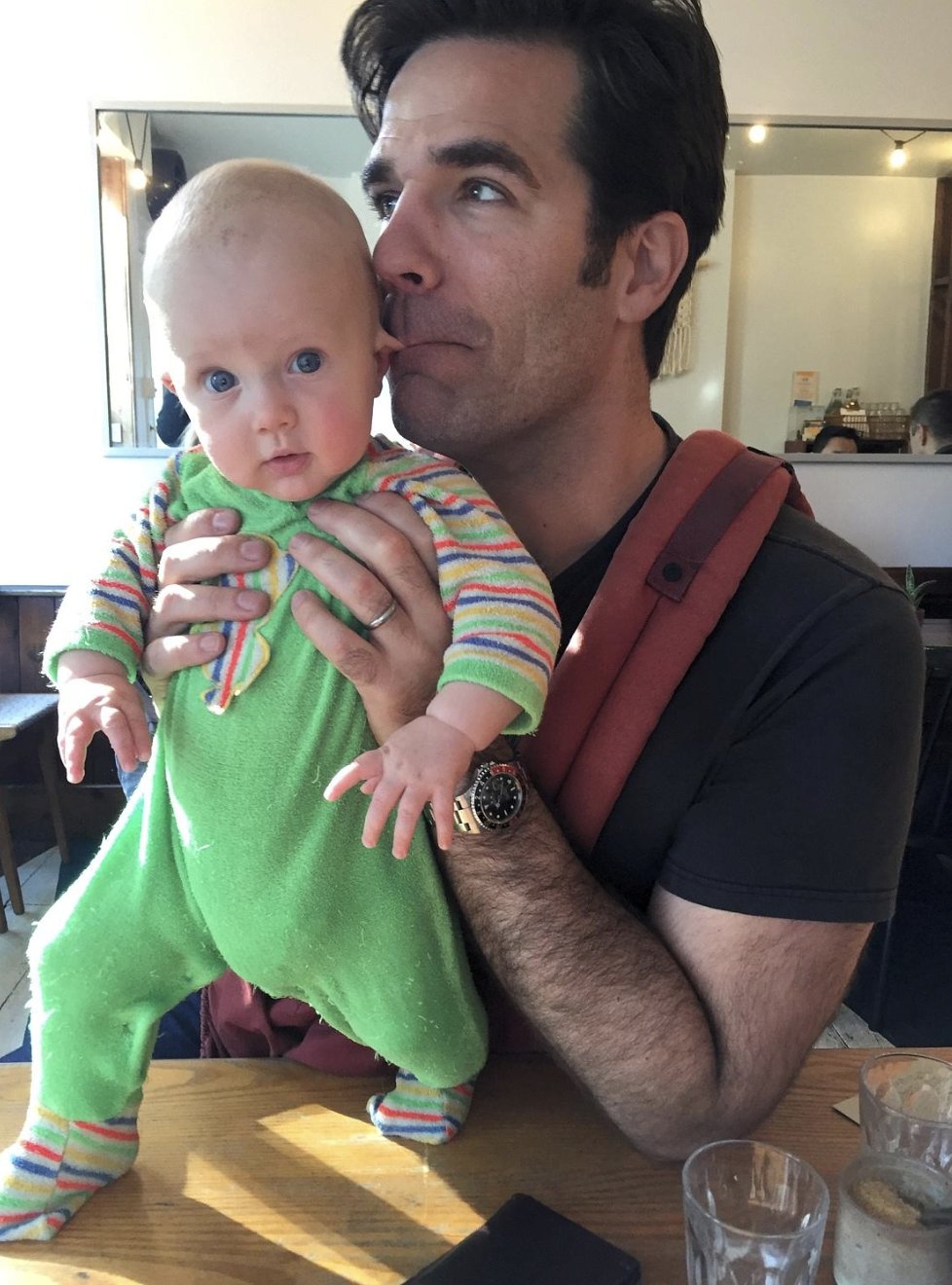
Rob Delaney is an actor and comedian, known for bit parts in various films and a short-lived British series titled Catastrophe. He’s made a career out of making people laugh. And this week Delaney has been making the day-time and late-night tv circuit promoting his new memoir titled A Heart That Works. The title comes from a song lyric: A heart that hurts, is a heart that works.
That’s a strange title for a memoir from a comedian.
The book tells of Delaney’s experience of profound loss and pain. His third son, named Henry, around the time of this 1st birthday got sick. Very sick. It took a long time to figure out what was going on, and they eventually discovered that Henry had a brain tumor. He had extremely invasive surgery and chemotherapy that left him disabled. After a year and a half of time in and out of the hospital, the tumor returned and he died.
When asked about why Delaney chose to write the memoir, again and again he has responded, “I wanted to return to humanity, and I didn’t know how other than to write about it.”
And so, day after day, Delaney has sat down for interview after interview, being forced to relive something that no one should ever have to experience.
And this week, while sitting down for a conversation on CBS, Delaney interrupted the program and looked across the table to Gayle King and said, “Gayle, you came up to me this morning before we came out here in front of the cameras and you hugged me, and asked me genuine questions, and you cried. You offered me a beautiful and human response. And I want you to know it’s the best thing that’s happened to me in days.”
Gayle King, unflappable Gayle King, stared back at him with this bewildered look and said, “How can that be the best thing?”
And Delaney said, “You had a genuine response. I don’t want people to ask these perfunctory questions, and say ‘Oh, your grief,’ and then move on as if nothing happened. I want people to cry. My boy is dead. I won’t hold him again. I hold him in my heart and I think about him all the time. But you had a response like that and that was like water to me in the desert. It was beautiful.”
“It was like water in the desert.” The prophet Isaiah speaking through a comedian, on CBS.
And what makes that interaction even all the more extraordinary, is that Delaney is an atheist. Except, later in the week, this time while on The Late Show with Stephen Colbert, Delaney was pushed by the host to reflect on what his grief has done to him and he said, “It’s a big problem for me that, as an atheist, my faith organ has been growing in the years after my son’s death.”
Water in the desert.
We tend to treat grief like a plague. We stay away from it. We close our doors to it. And if we have it, we do whatever we can to get rid of it. But you know, grief is actually good.
Grief is just unexpressed love. Grief is how love perseveres.
It’s Advent. It’s that time of year when we pull our the greenery and we sing the songs and we light the candles. Today, the pink candle is lit. It’s Gaudete Sunday, rejoice, the Sunday for joy, pink is the liturgical color for joy. It’s a bit odd, I think, that we keep lighting this pink candle year after year.
Because, how can we be joyful in a time like this?
How can someone like Rob Delaney be joyful?
Grief is like a hole that cannot be filled no matter how hard we try. No number of presents can make up for the pain that we too often encounter in this life. And yet we are bold to light that candle.
We light it not as a denial of the harsh realities of life, but because joy is something that is done to us.
Joy is what happens when we dare to trust the Lord to do for us that which we cannot do on our own.
Joy is what happens when we are able to look at what we have, and had, and know that all of it, the good and the bad, came as a gift. Something rather than nothing.
Joy is what happens whenever we encounter water in the midst of the deserts of our grief.
When we weep with others, or even rejoice with others, does it fix everything? Does it set everything right?
What good is a cup of water in the desert? It doesn’t get rid of the desert!
And yet, the mystery of God’s activity in the world is that even the tiniest signs of faithfulness and love and mercy and hope are the pointers to the glory that will come when the Lord comes to make all things new.
The hope of Advent, of all time really, is possible precisely because what we have now is not all there is. We have these lights, and prayers, and songs because the point us to the greater reality that beats upon our lives ever day: God loves us, and this is not the end.
I don’t know if this was the sermon you expected to hear this morning. I can assure you, this is not the sermon I thought I would be preaching at the beginning of the week. And yet, we worship the God of the unexpected. The God who provides water in the desert. The God who lifts the valleys up and brings the mountains low. The God who takes on flesh to dwell among us. The God who mounts the hard wood of the cross for us. The God who breaks forth from the empty tomb and returns to us.
The proclamation of the gospel is that God comes to us in the brokenness of our health, in the shipwreck of our family lives, in the loss of all possible peace of mind, even in the thick of our sins. God, oddly, saves us in our disasters, not from them.
Isaiah says the redeemed of the Lord shall return, and come to Zion with singing; everlasting joy shall be upon their heads; they shall obtain joy and gladness, and sorrow and sighing shall flee away.
That is God’s promise to us. And until it comes to fruition, the least and the best we can do, is be water in the desert for others. Amen.
This week on the Strangely Warmed podcast I speak with Drew Colby about the readings for the Third Sunday of Advent [A] (Isaiah 35.1-10, Psalm 146.5-10, James 5.7-10, Matthew 11.2-11). Drew is the lead pastor of Grace UMC in Manassas, VA. Our conversation covers a range of topics including the film Spirited, seasonal food/drinks, Cage The Elephant, Fleming Rutledge, Advent themes, the glory of the Lord, grief, radical goodness, divine agency, narrative theology, patience, Love Actually, and water in the desert. If you would like to listen to the episode or subscribe to the podcast you can do so here: The Gospel Is A Promise
A shoot shall come out from the stump of Jesse, and a branch shall grow out of his roots. The spirit of the Lord shall rest on him, the spirit of wisdom and understanding, the spirit of counsel and might, the spirit of knowledge and the fear of the Lord. His delight shall be in the fear of the Lord. He shall not judge by what his eyes see, or decide by what his ears hear; but with righteousness he shall judge the poor, and decide with equity for the meek of the earth; he shall strike the earth with the rod of his mouth, and with the breath of his lips he shall kill the wicked. Righteousness shall be the belt around his waist, and faithfulness the belt around his loins. The wolf shall live with the lamb, the leopard shall lie down with the kid, the calf and the lion and the fatling together, and a little child shall lead them. The cow and the bear shall graze, their young shall lie down together; and the lion shall eat straw like the ox. The nursing child shall play over the hole of the asp, and the weaned child shall put its hand on the adder’s den. They will not hurt or destroy on all my holy mountain; for the earth will be full of the knowledge of the Lord as the waters cover the sea. On that day the root of Jesse shall stand as a signal to the peoples; the nations shall inquire of him, and his dwelling shall be glorious.
“I’m going to keep this short.”
That’s an incredible way to start a speech, or even a sermon.
And 99% of the time, it isn’t true.
To start with such a declaration puts people at ease because they’ve been duped into thinking they only have to pay attention a little. For, brevity leads to clarity, doesn’t it?
“I’m going to keep this short,” is usually the prelude to a lot of pontificating that often leaves us no wiser than when we began.
It’s usually an indication that whatever follows wasn’t thought through, and is usually off the cuff.
Which, in a place like this, is a bad idea. Who knows what kind of random theological riff-raff might come forth from a short stump speech.
And, to be clear, I’m not railing against the strange promise of a short declaration just because Fred Sistler started his sermon that way last week.
I would never do something like that.
I’m a Christian!
Stump speeches. They are a regular occurrence in the political fabric of our reality. They trace back to the 19th century during which politicians would go about from town to town “stumping” – offering brief highlights on what they planned to do in office should they get elected, usually with key words and phrases that they repeated over and over and over again.
A stump speech is like having one sermon and using it week after week.
And, of course, the “stump” part of “stumpspeech” comes from the practice of standing on a tree stump to get high enough for better visibility and greater oration.
Other stumpy items from the 19th century included tables, chairs, and even whiskeybarrels.
John Wesley, founder of the Methodist movement, rather famously stood on his father’s gravestone in order to proclaim the gospel since he was no longer welcome to preach in churches.
I, myself, prefer preaching from a ladder.
But even here, right in the middle of the chancel area, slightly elevated, this is somewhat of an ecclesial stump where I, and plenty others, have stumped for Jesus.
We might call it our sanctified stump for salvation.
And stump speeches, though often short and repetitive, really can make all the difference in the world. Sometimes all it takes is one story, one word even, for the skies to open up, and all of God’s grace comes pouring down.
When the Good News actually sounds like good news, it changes everything.
Even us.
My former professor Stanley Hauerwas is known for his stump speeches. He has these recurring quotes and proclamations that he goes back to over and over again. I remember a classmate asking him why he said the same thing so many times, and he said, “Because they’re true.”
Some years ago, while lecturing in Scotland, using those same stumpy proclamations, Dr. Hauerwas was asked to preach at the cathedral of Edinburgh. Massive building with a huge pulpit, hardly a stump. The pulpit there is so large, in fact, that it has its own staircase that the preacher has to ascend in order to preach. And, when the appointed time arrived, Hauerwas marched up the stairs but right before he made it to the top, he heard a small door close behind him as well as a key turning in the lock.
Hauerwas, bewildered by the turn of events, demanded to know what was happening, when someone on the other side of the pulpit door said, “It’s a tradition in this church, dating back to the days of the Reformation. We lock the preacher in the pulpit, and we keep the preacher there until they give us the Gospel.”
Stumping for Jesus.
And yet, a stump is no glorious thing.
A stump, after all, is only possible if a tree has been chopped down. Stumps are signs of death.
By the time the prophet Isaiah rolls around, the Davidic kingdom is nothing but a stump. All the promise, all the hope, all the dreams had fizzled out. The holy city was sacked again and again, people were sent to live in exile. There was no bright hope for tomorrow.
And Isaiah says, “A shoot shall come out from the stump of Jesse, and a branch shall grow out of his roots!”
How strange. It’s as if the prophet has lost his ever-loving mind. He looks out on failed promises, idolatry, ruin, and yet he sees something more.
Feeling stumped is, sadly, all too familiar for God’s people even today, particularly during Advent. We might rejoice in memories from years ago, but we know that things can never really be like they once were. We might sit comfortably in these pews, but there’s a better than good chance that we’re also feeling the anxiety that is all to common during this season. We might sing the songs, and purchase the presents, and drive around looking at lights, but that doesn’t automatically make this the most wonderful time of the year.
We know what it means to be stumped, to feel as if nothing good is left.
And what do we do when we’re stumped? To whom do we turn? What relief can we find?
Netflix with the never ending assortment of holiday movies that follow the exact predictable formula over and over? Discounts at the ABC store? Scrolling through instagram seeing perfect people with their perfect lives?
Kurt Vonnegut once opined that no one should read beauty magazines because they will only make us feel ugly.
The same could be said of Instagram.
And yet, when Isaiah sees the stump, he sees hope! The roots are still pulling nutrients from the soil, a new shoot will sprout forth bringing life and life abundant. The new shoot from Jesse’s stump is the promise that God isn’t done with God’s people.
That’s what happens when you worship the God of impossible possibility, even stumps can bring about something new.
And that something new is a person.
Listen – the Spirit will rest upon him and he will know the fear of the Lord. He will even delight in his fear! He will come with judgment and righteousness and he will make all things right.
Sounds pretty good. This new shoot will be the difference maker, a warrior. But what strange weapons! He shall slay the enemy with the Word, not with swords. He will destroy all opponents with the Spirit, not by slaying. He will wear a belt of righteousness for the battle, not Batman’s belt with gadgets and gizmos aplenty.
And with the victory comes even stranger results! The wolf will live with the lamb, the calf and the lion and the fatling together. The cow and bear shall graze. And a little child shall lead them.
Everything about this proclamation is unexpected. The line of David is nothing but a stump, forsaken and dead. And yet, from it the ruler of the cosmos will come. Animals that have no business being together shall live in peace. And a child shall lead them.
It sounds so good and so perfect. And yet, 700 years after Isaiah’s announcement, John the Baptist arrives on the scene, preparing the way of the Lord, announcing a baptism for the repentance of sins. He calls the religious elite broods of vipers because they have lost sight of Isaiah’s vision.
John says, “Even now the ax is lying at the root of the trees!”
The stump of Jesse, the ax at the roots. John and Isaiah together see a reality that no one else does. They see the sign of the time. “On that day the root of Jesse shall stand as a signal to the peoples.”
What is the sign?
Have you ever wondered what became of the tree that was chopped down in order to make the stump? Have you ever seen the connection between Isaiah’s proclamation and John’s declaration?
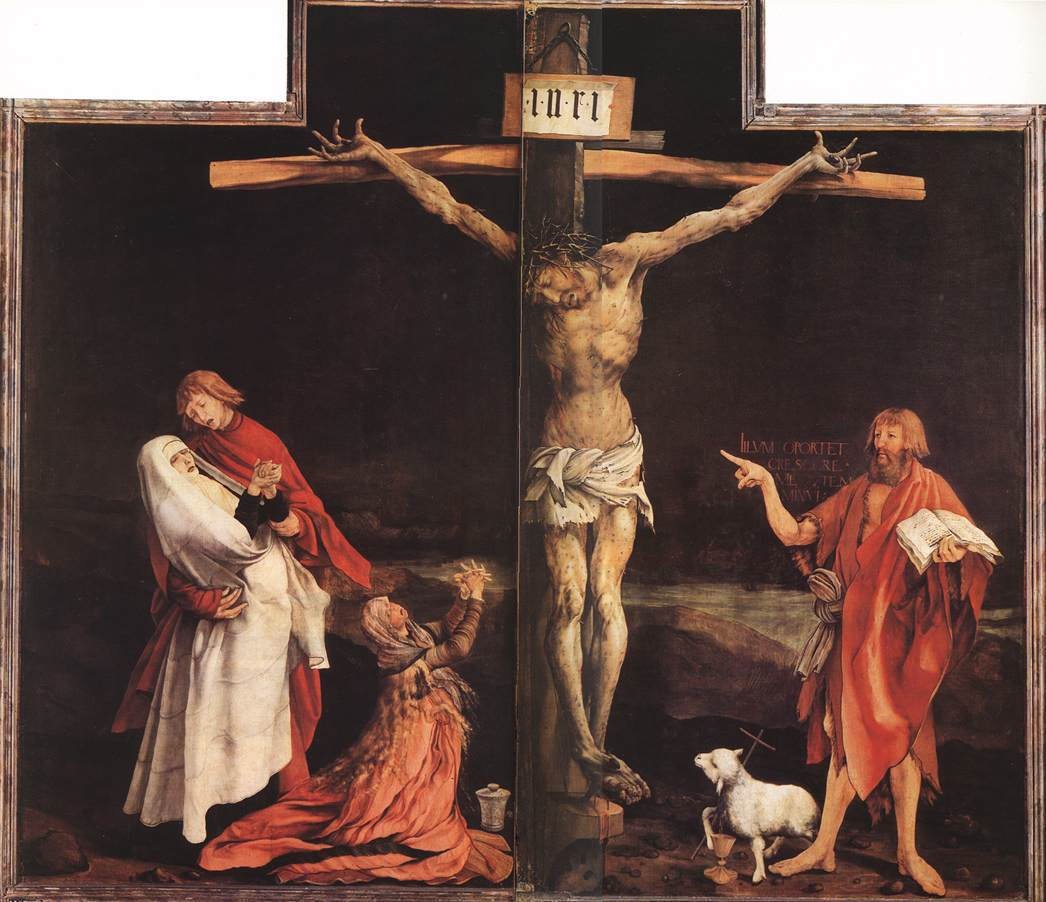
The stump is only possible because a tree was brought down. And do you know what we did with the tree? We nailed Jesus to it.
The root of Jesse is the cross. It stands on a hill far away, the emblem of suffering and shame. And it is glorious.
Some will say, this time of year, that we need to keep Christ is Christmas. Sure. That’s fine. But if we’re going to keep Christ in Christmas, we should also consider what it might mean to keep the Cross in Christmas.
It’s Advent. This is the time of year when we hear the most difficult, demanding, bad news to ever be called good – The Cross. Every Advent we have our worlds’ rocked, tables turned, foundations shaken, demons put to rot, and dead dreams brought back to life.
All things are possible in Advent because we worship the God of impossible possibly. The God who delights in upending all of our expectations of how the world is supposed to work.
Jesus really is the reason for the season, as is his cross. And lest we domesticate the Lord to mere flannel graphs and perfectly manicured manger scenes, Jesus was and is still so provocative that the powers and principalities are forever trying to shut him up. But nothing can stop Jesus. He’s going to say and do things that change everything.
Not even the cross can stop him.
In fact, the cross is our salvation. It’s a stump that brings forth new life. That’s why we can call it glorious.
Therefore, whenever someone stands in this place and stumps for Jesus, we are called to do exactly that – We point to Jesus Christ, the pioneer and perfecter of our faith, the shoot from the stump of Jesse, the one who makes a way where there is no way.
The promise of Advent is that no matter what stumps us in this life, God is going to get what God wants. Predator and prey will dwell together. Peace will reign. And a child will lead us.
The promise of Advent is that Jesus is the shoot, the branch that grows into a cruciform tree bearing the fruit that is salvation because Jesus is always stumping on our behalf, even when it costs him his life.
The promise of Advent is that new life always starts in the dark, whether in the womb or the tomb, whether underground or the lost being found; new life starts in the dark.
Therefore, the next time you encounter a stump, take a good look at it, because you may be looking at your salvation. Amen.
A shoot shall come out from the stump of Jesse, and a branch shall grow out of his roots. The spirit of the Lord shall rest on him, the spirit of wisdom and understanding, the spirit of counsel and might, the spirit of knowledge and the fear of the Lord. His delight shall be in the fear of the Lord. He shall not judge by what his eyes see, or decide by what his ears hear; but with righteousness he shall judge the poor, and decide with equity for the meek of the earth; he shall strike the earth with the rod of his mouth, and with the breath of his lips he shall kill the wicked. Righteousness shall be the belt around his waist, and faithfulness the belt around his loins. The wolf shall live with the lamb, the leopard shall lie down with the kid, the calf and the lion and the fatling together, and a little child shall lead them. The cow and the bear shall graze, their young shall lie down together; and the lion shall eat straw like the ox. The nursing child shall play over the hole of the asp, and the weaned child shall put its hand on the adder’s den. They will not hurt or destroy on all my holy mountain; for the earth will be full of the knowledge of the Lord as the waters cover the sea. On that day the root of Jesse shall stand as a signal to the peoples; the nations shall inquire of him, and his dwelling shall be glorious.
When I worked as the on-call chaplain at Duke University Hospital, I would receive pages from patients who wanted a visit, and it was almost always because they received bad news. Upon arrival, we would read scripture, and share prayers, and go through tissues, but then I would have to leave to go to the next room and the next patient.
And it came to pass, after a particularly rough shift, I felt a deep desire for something comforting after so much discomfort. So I did what any enterprising young seminarian would do, I flocked to YouTube. At first I thought watching clips of comedians would cure my despair, but it was fleeting. Next, I considered blooper reels from famous television shows, but they only provided a brief salve. But then I stumbled across something that actually made a difference: cute videos of animals becoming friends.
There’s something almost miraculous about watching a monkey play with a dog, or a cat cuddling with a kangaroo, that left me changed on the other side.
Thousands of years ago, Isaiah provided a vision to the people Israel of a time in which various animals will dwell together as a sign of God’s grace. What we wait for this Advent season, is nothing short of the miracle of a rewritten cosmos where despair is vanquished forever.
If you have time today, I encourage you to spend some time on YouTube looking at cute videos of animals together. Oddly enough, those videos are a foretaste of God’s kingdom come.
I’ve long held that the mere writing of a sermon, words on a page, don’t actually make it much of anything. A sermon is only a sermon when it is proclaimed among and for God’s people within the context of worship. The prayers, music, and even presence of individuals make the sermon what it is because the Holy Spirit delights in making the words proclaimed from the pulpit God’s words for us.
And so, I have a sermon that is not really a sermon. I prayed over these words and put them together for the first Sunday of Advent, but became sick prior to Sunday morning and never actually preached them. Oddly enough, I am grateful that I didn’t preach this sermon because Isaiah’s insistence on God’s people beating swords into ploughshares, and my take on what that might mean today, was sure to upset quite a few in the pews. And yet, if we believe the church lives according to God’s future in the present, then perhaps every Sunday is an opportunity to proclaim the radical audacity of our hope in the God “who shall come to judge between the nations.”
Anyway, here’s the text and “sermon”…
–
Isaiah 2.1-5
The word that Isaiah son of Amoz saw concerning Judah and Jerusalem. In days to come the mountain of the Lord’s house shall be established as the highest of the mountains, and shall be raised above the hills; all the nations shall stream to it. Many peoples shall come and say, “Come, let us go up to the mountain of the Lord, to the house of the God of Jacob; that he may teach us his ways and that we may walk in his paths.” For out of Zion shall go forth instruction, and the word of the Lord form Jerusalem. He shall judge between the nations, and shall arbitrate for many peoples; they shall beat their swords into plowshares, and their spears into pruning hooks; nation shall not lift up sword against nation, neither shall they learn war any more. O house of Jacob, come, let us walk in the light of the Lord!
We begin at the end.
7 centuries before the Advent of Christ, before the little town of Bethlehem hosted the heavenly host, before the little Lord Jesus laid down his sweet head, the prophet Isaiah saw a word.
What an interesting turn of phrase.
The prophet doesn’t see a vision, he doesn’t hear a word, he sees the word.
In the days to come, the mountain of the Lord’s house shall be established as the highest of the mountains and all people will stream to it. A king will come and teach the ways of the Lord, the instruction will command the attention of the masses.
And what does this king teach?
An eye for an eye!
Pull yourself up by your bootstraps!
Life’s hard, get a helmet!
No.
The king will teach the way of peace. He will come to judge the living and the dead. And, in judgment, the people will beat their swords into ploughshares, their spears into pruning hooks. Their weapons of war will become instruments of agriculture.
Nation shall not lift up sword against nation, neither shall they learn war anymore.
Even if you’ve never read from the prophet Isaiah, you’ve probably heard these words before. Or, perhaps better put, you’ve seen them, or some version of them.
We’re familiar with these words because they have captivated the imaginations of the faithful for generations, just think of the famous images during protests against the Vietnam war and all the people who placed flowers inside the barrels of guns.
And, interestingly, this prophetic proclamation from Isaiah is engraved in large letters on the wall directly across the street from the United Nations. There they rest, day after day, mocking our feeble attempts to make peace while we continue to lift up our swords against one another.
Kelly Latimore Icon
Isaiah sees the word about the days to come. He does not know when, or even how, these things will come to fruition, but the prophet catches a glimpse behind the curtain of the cosmos and he seeds the end.
It’s a bit odd that we begin at the end. Today, after all, is the first Sunday of Advent, the beginning of a new year and we start with the conclusion. But, then again, it’s only right for us to do so because we are Easter people, we’re stuck squarely between the already but the not yet.
There’s a through line in the Gospels, frankly the whole of the strange new world of the Bible, about time. We sees these words about the past, the present, and the future, and it’s not altogether clear which ones are which. And yet, if there is a persistent proclamation, it is that we belong not to this age, but to the age to come. That’s why Paul can write in his letter to the church in Rome, do not be conformed to this world, but be transformed by the renewing of your minds.
We are a people out of time. We live in the future because we know that the tomb is empty.
But the future we live in its not a future that we bring to fruition.
There’s a temptation, every time Advent rolls around, for us to feel like it’s our responsibility to make the world come out right; that its up to us to make the word Isaiah sees real.
To use language from Stanley Hauerwas, we play at waiting this time of year. Advent, after all, is all about patience isn’t it. And yet, for us, it isn’t. We can’t help but make ourselves the main character of the story. We rejoice in this language of getting back to God, of climbing back up the mountain, of making the world a better place.
But, when was the last time we left church jazzed up to turn our swords into ploughshares, or transform our guns into garden shovels?
Did you know that there are more guns in this country than human beings?
The word Isaiah sees is not predicated on us finally getting everything good enough that we can be good enough for God. In fact, its quite the opposite. The end is made possible only as we come to grips with our badness and how badly we need someone to do for us, and to us, that which we cannot do on our own.
Isaiah sees swords turned into ploughshares, a people willing to relinquish their forms of control for forms of sustenance, a people of peace. The strange new world of the Bible is filled with impossible possibilities just like that. The Lord will bring the hills low, and raise the valleys up. The Lord will make the last first, and the first last. The Lord turns a sign of death (the cross), into the sign of life (salvation).
The end is not yet. We Easter people are oddly stuck living in the time of Advent. We exist in the time in between, the time being as Auden put it. We make it through this mortal life waiting and hoping for things not yet seen.
That’s why we sing of the hopes and fears of all the years. We know not all is as it should be, but we also know that the future is coming, and his name is Jesus.
“Building a better future for our children.” I saw that on a sign recently. And I hear those kind of words all the time. Here at church. The PTA. On the news. And, it’s a worthy sentiment. What can we do now to ensure a better and brighter future for the coming generations?
The only problem is, we are not creating the future, and certainly not a better one.
We know what we should and shouldn’t do, and for some reason we refuse to change.
It’s been almost ten years since the Sandy Hook Elementary School shooting. 20 children between the ages of 6 and 7, plus 6 adults were murdered. I remember being glued to the television and feeling this raw hopelessness in my heart. And yet, I also remember thinking, “This is so bad, we’re definitely going to make sure these types of things will never happen again.”
But we didn’t.
In just the last two weeks we’re seen horrific shootings in Charlottesville and Colorado Springs. Awful. And we just keep going forward as if nothing happened. We’ve become numb to the violence that we are.
And, sadly, I had to go back and edit this sermon because in between writing it, and preaching it this morning, there was another mass shooting at a Walmart in Chesapeake.
These reports keep coming out, year after year, about how we have a problem with guns in this country. There are too many and the access is too easy. But we do nothing.
We were at the pediatrician’s office a few weeks back, patiently waiting. Talking about living into the Advent season, waiting and waiting and waiting. And what is there to do when you’re waiting in a doctor’s office? You start reading all the random posters on the wall.
Here’s the proper amount of medicine for a 6 year old. Here’s an example of a healthy diet for a ten year old. On and on.
But then I saw a word, a poster on the wall that chilled me to my core:
“Firearms are now the number one cause of death for children in the United States.”
We are not making a better future.
But, thankfully, the future is coming to us. From God.
God is creating our future and that future is our only hope. If it were left up to us, we would continue on paths that lead to destruction. But it is not God’s will that anyone should perish.
Isaiah sees a word that is staggering. Weapons turned into tools for food. People gathering at the mountain. And judgment.
We don’t do well with that word. It sits heavy on our hearts.
But the day of judgment that Isaiah sees is ultimately a day of hope, not of despair. It is a day of restoration, not doom. It is a day of judgment when sin will be no more.
That’s why we pray to God for help.
We need help that is outside of us. We need something done to us. We need this because we’ve had plenty of opportunities to change ourselves, to make things better, and the world keeps going down the toilet.
No wonder God had to send God’s son into the world. We need all the help we can get.
God is in the business of making all things new; yesterday, today, and forever. And the church, as Christ’s body in the world, is not some social club or gathering that provides a distraction from all that is wrong in the world. Instead, the church exists to call a thing what it is. Or, in other words, the church exists to tell the truth.
Advent starts in the dark. It always has and it always will. The texts, the hymns, the prayers, they all beckon our attention to the way things are knowing that that not all is as it should be. It is the season of honesty about who we are, but more importantly whose we are.
We are not making a better future but, as the church, we live according to God’s future in the present. We live, oddly enough, by grace. We practice trust and honesty and forgiveness in the midst of a time in which those things sound like fairytales.
The church is God’s weird and wild story for a time and place that is desperate for a new narrative, albeit one that runs completely counter to everything else in the world.
One day God is going to get what God wants. Swords will be beat into plowshares, guns will be melted into garden shovels. Peace will reign. O church, let us walk in the light of the Lord!
This week on the Strangely Warmed podcast I speak with Drew Colby about the readings for the Second Sunday of Advent [A] (Isaiah 11.1-10, Psalm 72.1-7, 18-19, Romans 15.4-13, Matthew 3.1-12). Drew is the lead pastor of Grace UMC in Manassas, VA. Our conversation covers a range of topics including ASMR, lectionary cycles, spaghetti with maple syrup, The Muppets Christmas Carol, fear, the word of judgment, righteousness, ecclesial harmony, the magic of music, apple trees, the central advent character, and prophetic insanity. If you would like to listen to the episode or subscribe to the podcast you can do so here: Stumped
The word that Isaiah son of Amoz saw concerning Judah and Jerusalem. In days to come the mountain of the Lord’s house shall be established as the highest of the mountains, and shall be raised above the hills; all the nations shall stream to it.
I’m a stickler for liturgical purity. That is, I feel very strongly about following the liturgical calendar because God’s time is not our time. Therefore, while the community still rests in the comforts of Thanksgiving this Sunday, we’ve already changed the colors in the sanctuary and shifted our theological mood – it’s Advent!
Advent is the great beginning of the Christian year during which we stand firmly between the already, but not yet. We explore the scriptures of the Israelites awaiting the Messiah, while also looking forward to the time when Christ returns to make all things new.
And yet, Advent for me started weeks ago. For as much as I might complain about the stores dragging out Christmas paraphernalia prior to Halloween, we decorate our house way in advance. We do so out of a practical concern since I am busier at this time of year than any other with various church responsibilities, but also because, as Christians, we’re always living in Advent – Advent is who we are.
When the prophet Isaiah paints a picture of the Lord’s house being raised higher than any hill, I think of the joy of the neighborhoods filled with twinkling lights in celebration of the culmination of this season. They provide a different light among times of darkness. However, even the brightest house pales in comparison to the light of the Lord that changes everything.
This Advent, let us rest in between the times, giving thanks for what God has done while also anticipating God making all things new, even us.
This week on the Strangely Warmed podcast I speak with Drew Colby about the readings for the First Sunday of Advent [A] (Isaiah 2.1-5, Psalm 122, Romans 13.11-14, Matthew 24.36-44). Drew is the lead pastor of Grace UMC in Manassas, VA. Our conversation covers a range of topics including Handel’s Messiah, Chicago, Advent themes, the house of the Lord, church attendance, Fleming Rutledge, hopes and fears, worldly preferences, divine peace, Good Mythical Morning, progress, and Dietrich Bonhoeffer. If you would like to listen to the episode or subscribe to the podcast you can do so here: Does Anybody Really Know What Time It Is?
This week on the Strangely Warmed podcast I speak with Mikang Kim about the readings for the 23rd Sunday After Pentecost [C] (Isaiah 65.17-25, Isaiah 12, 2 Thessalonians 3.6-13, Luke 21.5-19). Mikang is the pastor of Epworth UMC on the Eastern Shore of Virginia. Our conversation covers a range of topics including itinerancy, the prophet Isaiah, pandemic preaching, joy, skepticism, Pauline discomfort, deadly sins, apocalyptic imagery, ecclesial hatred, and the difference Christ makes. If you would like to listen to the episode or subscribe to the podcast you can do so here: Chosen By The Word






 think and let think