Jesus Said What? – A Thanksgiving Sermon on John 6.25-35

(preached at Cherryvale UMC in Staunton, VA on 11/27/13)

John 6.25-35

When they found him on the other side of the sea, they said to him, “Rabbi, when did you come here?” Jesus answered them, “Very truly, I tell you, you are looking for me, not because you saw signs, but because you are your fill of the loaves. Do not work for the food that perishes, but for the food that endures for eternal life, which the Son of Man will give you. For it is on him that God the Father has set his seal.” Then they said to him, “What must we do to perform the works of God? Jesus answered them, “This is the work of God, that you believe in him whom he has sent” So they said to him, “What sign are you going to give us then, so that we might see it and believe you? What work are you performing? Our ancestors ate the manna in the wilderness; as it is written, ‘He gave them bread from heaven to eat.’” Then Jesus said to them, “Very truly, I tell you, it was not Moses who gave you the bread from heaven, but it is my Father who gives you the true bread from heaven. For the bread of God is that which comes down from heaven and gives life to the world.” They said to him, “Sir, give us this bread always.” Jesus said to them, “I am the bread of life. Whoever comes to me will never be hungry, and whoever believes in me will never be thirsty.”

Jesus said to them, “I am the bread of life. Whoever comes to me will never be hungry, and whoever believes in me will never be thirsty.”

00029400_h

After miraculously feeding 5,000 people, the crowd stayed on the other side of the sea. Though they had been properly fed by the Word, the loaves, and the fishes, when they discovered that this miracle man was nowhere to be found, they got into the boats and went to Capernaum looking for Jesus.

When they finally caught up with him on the other side, they called out, “Teacher, where did you come from?!?” Jesus responded, “Very truly, I tell you, you are looking for me for the wrong reasons, you came here not looking for signs, but because I gave you enough to eat yesterday. Do not work for the food that spoils, but instead for the food that endures for eternal life, which the Son of Man will give you. For it is on him that God the Father has set his seal.”

“Okay, okay, so what do we have to do in order to perform the works of God?

Jesus answered simply, “This is the work of God, that you believe in him whom he has sent.”

“Well, who do you think you are Jesus of Nazareth? What sort of sign are you going to perform? Why should we listen to you? How can you prove what you are saying to us? Sure, yesterday you fed all of us, made something out of nothing, but so did Moses in the wilderness. Why should we turn away from him, to you?”

“Very truly, I tell you, it wasn’t Moses who gave you the bread from heaven, the manna, but it is my Father who gives you the true bread from heaven. For the bread of God is that which comes down from heaven and gives life to the world.”

“Now Jesus that sounds pretty good to us, we would like some of that bread!”

jeswelcom

“No, you don’t get it. I AM THE BREAD OF LIFE. Whoever comes to me will never be hungry, and whoever believes in me will never be thirsty.”

One of the great paradoxes of what it means to be Christian, is that we already know the end of the story while we’re stuck in the middle of it. Because we read from God’s word in order to remember the mighty acts of God in the world, we are all well versed on what happens in conclusion. Therefore it becomes nearly impossible for us to imagine the depth and meaning of these narratives in and of themselves.

Try with me, if you can, to imagine that you are there among the crowd. Yesterday you were blown away by this nothing of a man who made something out of nothing. As you stood in line with your stomach rumbling, you were given more fish and bread than you had ever seen in your life. Now, you were so hungry that you ate until your stomach was about to explode, (just like many of us will do tomorrow…) and the next day, the miracle man was gone. As your hunger started to creep back up, you agreed with those around you to go looking for this Jesus.

So here you are, gathered together to hear him speak once again. Some of the people in the front challenged him about Moses’ miracle in the wilderness, something about Manna, but you just want him to provide some more food. So as Jesus begins to describe this true bread from heaven that gives life to the world, your mouth begins to water. You imagine a glowing loaf cooked perfectly, warm and moist on the inside, with just enough crust on the outside. You join the chorus around you, “Give us some of that bread Jesus! We want that always!” And Jesus responds, “I am the bread of life.”

For us, the temptation to jump to the end of the story is great. We hear “bread of life” and we think about Holy Communion, we think about the last supper that Jesus shared with his disciples, we think about the crucifixion and the resurrection. And though it is important to know the end of the story, we’re not there yet.

I imagine that many who had gathered together that day were very confused. “What did he say? He’s the bread of life? What in the world could that mean?”

They don’t get it. The crowds that had witnessed Jesus’ miracle the day before knew exactly what they wanted, but thats not what Jesus is offering.

Today too many of us give the impression that numbers and popularity and packed pews are all important and sufficient in themselves. Many churches seem willing to accept people on any terms, if only they will come at all. How interesting is it then, that Christ would only accept the crowds on his terms, and would not want them upon any others. It hurt and frustrated him that they were merely interested in his ability to provide an easing of material difficulties or an increase in their comforts. “You came to me only for the chance of loaves and fish.”

8105338460_5b6fa706bf_z

Similarly, in our contemporary culture people are hugely interested in the by-products of Christianity, but hardly at all in Christianity itself. Crowds of folk are constantly looking for whatever they can get out of church and worship. They are primarily interested in the kind of faith that will give them bread and fish, bigger homes, shorter hours, better health, happier families. Today Christ looks into the depth of our hearts and triumphantly declares, “there are far better and more satisfying things within your reach than you have realized.”

The whole exchange begins with an accusation by Jesus regarding the crowds’ overwhelming desire and interest in full stomachs, instead of the power of theologically oriented signs. Jesus proposes to give them enduring food and not the kind they consumed the day before. The exchange then elicits a question from the crowd about the “works of God” which Jesus reduces to one, namely belief; belief “in him whom he has sent.”

What is belief? What does belief mean for each of you? Are we called to believe in God, in Jesus Christ, in the Holy Spirit? Is belief about accepting the bible as truth? Can we boil down our belief to something like the Apostles’ Creed?

Often times belief in Christian living is compartmentalized into believing that God simply exists.

The kind of belief that Jesus talks about with the crowds in John 6 is a different kind of belief. Belief is more than mental affirmation, belief is a world view, belief is a paradigm shift, belief is about a redefinition of reality.

What we believe, shapes how we behave.

Everything about what we do begins with belief; we believe in Jesus Christ and the things for which he stands, the way and the truth and the life he teaches us, the God whom he reveals to us, the grace and faith he came to offer us, the victory over death which he makes possible even for the least likely of us, the kingdom of God that he inaugurates for us. 

Okay Jesus, you want us to believe, to drop everything, to change our lives, to pick up our own crosses, to follow you. But why? Moses fed us with the manna in the wilderness, what can your belief offer us?

Moses was Moses, a mighty servant and steward of the Lord. Yet what Moses gave to the wandering Israelites was not the bread from heaven; it is God the Father who gives you the bread from heaven, and that is being offered to you this day. What Moses provided, rather what God provided through Moses, was merely food. What Jesus offers the crowd is the almighty God.

Tomorrow, millions will gather together with friends and family to celebrate the wonderful holiday of Thanksgiving. Crowds will develop in all of the airports, the roads will be filled with traffic, and kitchens will be teaming with individuals trying to concoct the perfect mashed potato – turkey – gravy – cranberry – stuffing combination of all time. After exchanging pleasant and cliche reflections on what we are most thankful for this year, most of us will partake to ridiculous degrees on the food set before us. Mountains of mashed potatoes will be eroded with rivers of gravy. Quarries of cranberry salad will rival seas of stuffing.

A-Thanksgiving-meal-has-at-least-3000-calories

Perhaps most frightening is the fact that within 24 hours, we can go from thanking God for all the blessing in our lives, to fighting one another at Best Buy in order to purchase something to fill our insatiable appetite.

ap_black_friday_21_dm_121123_wg

We know what we want, but thats not what Jesus is offering.

I like to think that, as the church, we have matured from our fragile days of discipleship in the first century. I like to believe that because we know the end of the story, we are better prepared to heed Jesus’ call to a life in the kingdom. I like to imagine that, as moderns, we are ready to take up our crosses in brilliant fashion and follow Jesus into glory.

But the truth is, we are still standing in that crowd asking Jesus for the bread.

We struggle so desperately to find meaning in our lives through failed relationships, the accumulation of material possessions, and vocational discernment. We hear the word of the Lord in scripture, and then quickly fall back away into the shadow of our lives. We thank God for our families and then bicker and fight as if they were not precious gifts in our lives.

Just as He did that day in the crowd, Christ looks out to all of us this thanksgiving season and offers us something more fulfilling than anything else. “I am the bread of life, whoever comes to me will never be hungry, and whoever believes in me will never be thirsty.”

“I am the bread of life”; search throughout the scriptures, I challenge you to find something equally simple and profound in summarizing the Good News. This the gospel of Jesus Christ at its very finest! How ample in its sweep, how generous in its description, how impossible to evade. This is a passage to which we can all cling in the darkest moments in our lives. With this one sentence we discover an everlasting hope that will endure all things.

“I am the bread of life”; Jesus Christ is as important to us as the very food we eat. Indeed, Christ is more important to us than food. No amount of food or drink or any material thing will ever fill us the way that Christ does. Through the bread of life that Christ offers we receive strength to live out our faith, we are sustained and nurtured and loved in all things.

“I am the bread of life”; The triune God is an end to all the craving and discontent in our lives. The bread of life roots our identities in the one from whom all blessings flow, the maker in whom we live and move and have our being.

lord__s_supper_by_bclary-d37hhzp

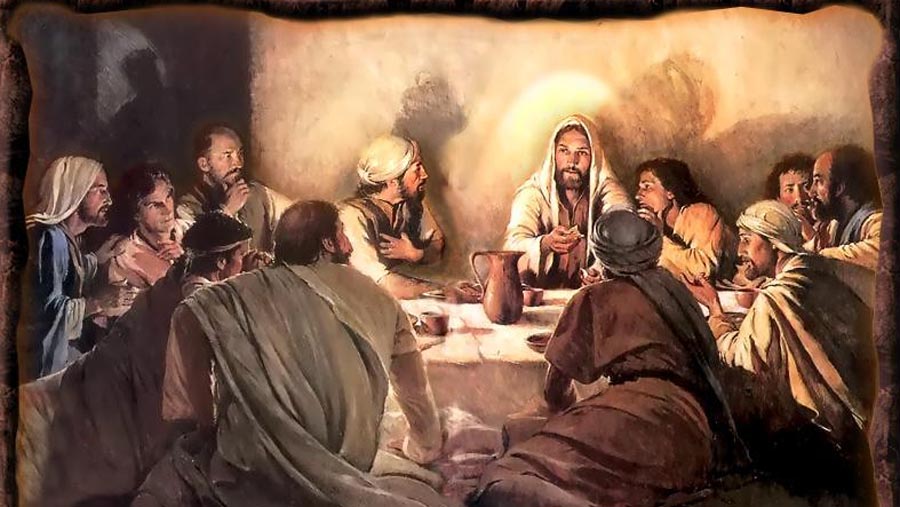
In a few moments all of you will be invited to Christ’s table to partake of him through the bread and the wine. Just as Jesus stood before the crowd to proclaim his identity as the bread of life, Jesus once gathered with his disciples to remember the stories of God in the world and share one final meal.

What are you thankful for this year? How have you been trying to fill the voids in your life? If you want to be filled, if you want to find a sustenance in your life, if you desire to have your life transformed, if you need to be made whole, if you want to discover purpose and faithfulness in your life, if you desire to know God, if you hope to find peace in your lives, then come. Come to Christ’s table. Feast on the true bread from heaven, believe in Jesus Christ, and be filled by the Spirit.

Amen.

00029400_h

Apocalypse When? – Sermon on Luke 21.5-19

Luke 21.5-19

When some were speaking about the temple, how it was adorned with beautiful stones and gifts dedicated to God, he said, “As for these things that you see, the days will come when not one stone will be left upon another; all will be thrown down.” They asked him, “Teacher, when will this be, and what will be the sign that this is about to take place?” And he said, “Beware that you are not led astray; for many will come in my name and say, ‘I am he!’ and, ‘The time is near!’ Do not go after them. When you hear of wars and insurrections, do not be terrified; for these things must take place first, but the end will not follow immediately.” Then he said to them, “Nation will rise against nation, and kingdom against kingdom; there will be great earthquakes, and in various places famines and plagues; and there will be dreadful portents and great signs from heaven. But before all this occurs, they will arrest you and persecute you; they will hand you over to synagogues and prisons; and you will be brought before kings and governors because of my name. This will give you an opportunity to testify. So make up your minds not to prepare your defense in advance, for I will give you words and a wisdom that none of your opponents will be able to withstand or contradict. You will be betrayed even by parents and brothers, by relatives and friends; and they will put some of you to death. You will be hated by all because of my name. But not a hair on your head will perish. By your endurance you will gain your souls.


            The disciples have gathered together with Jesus. They’ve probably shared some bread, fish, and wine while sitting around and talking about the latest news from Galilee and the recent happenings in Jerusalem. Peter, ever extraverted, decides to change the conversation to the majesty of the temple: “Oh how lovely it was, adorned with remarkable stones and the gifts dedicated to God. Have you ever seen such gold in your lives?” The other disciples nod in approval, while Jesus remained silent. Bartholomew furthers Peter’s claim: “The temple of God is indeed a witness to God’s majesty in the world. Only the God of Abraham, Isaac, and Jacob could have such a place!” They all begin to agree with one another, affirming the glory and might of their God, the God of Israel, worthy of such a temple.

            But then, in sharp contrast to their excited exclamations, Jesus speaks up, “All of these things that you see, the temple in all its glory, the days will come when not one of these stones will be left upon another; all of them will be thrown down.

            The disciples have been around Jesus long enough to know that when he says something like this, its important to pay attention. “But how could this be?” they wondered; the temple was a sign of God’s glory. So then one of the disciples, perhaps Peter, asked on behalf of the whole group, “Teacher, when will this be, and what will be the sign that this is about to take place?”

apocalypse-when

            What a question. Its stories like this one that help to remind me how similar we all are to the disciples. Because that question is the same one I would’ve asked. Okay Jesus, things are going to get rough, when? What will happen to let us know that this is about to take place?

            How appropriate and funny is it that Jesus’ first warning about the apocalypse is directed toward the would-be-prophets who predict the end of the world? Just within my lifetime I can think of a number of examples of the self-affirmed prophets who claim to know the exact date of the approaching end of the world. And even though Jesus has clearly warned us against them, when they come forth with their predictions, they never fail to get a hearing, media presence, and air time.

61786025


And people listen to them! Droves of people go to the bank and withdraw their life savings, bunkers are dug and filled with emergency supplies, and some even take their own lives rather than accept the coming doom and gloom predicted by these would-be prophets. Jesus looks out at his disciples, and therefore every one of us, and declares, “Beware that you are not led astray; for many will come in my name and say, ‘I am he,’ and, ‘The time is near!’ Do not go after them.

            There always seems to be some other form of allegiance in the world that appears better than what we learn to live into from God’s Word. Some affiliation more fruitful, some path through the trials of life that seems more certain and secure. We would rather rely on reason than faith. We would prefer to deal with material possessions than with spiritual growth. The tragedy of the history of God and God’s people is that we have continually been a people running off like that, generation after generation, in pursuit of other, perhaps easier, gods.

            After this first warning, Jesus continues his diatribe regarding the eschaton: “When you hear of wars and insurrections, do not be terrified; for these things must take place first, but the end will not follow immediately. Nation will rise against nation, and kingdom against kingdom; there will be great earthquakes, and in various places famine and plagues; and there will be dreadful portents and great signs from heaven. But before all this occurs, they will arrest you and persecute you; they will hand you over to synagogues and prisons; and you will be brought before kings and governors because of my name.”

tumblr_lxqyysSSQ61qlvp8so1_500

            I have often heard non-Christians remark about how easy it is to be Christian. Those with a limited knowledge of what it means to be a faithful people often charge the church as being a means of escape from the harsh realities of the world. “It must be so easy to be Christian, you don’t have to worry about what really goes on in the world, just waiting for your heavenly reward.” However, in sharp contradiction to these claims Jesus very bluntly puts forth how very difficult it is, and will be, to be Christian. In a way, being Christian, is in some sense, an escape, not our of life, but right into the depth of it; from meaningless into meaning, from futility into purpose, from bondage into freedom.

            The Good News of Jesus Christ has always been paradoxical in its ability to disturb the ways of the world. Those with privilege look on it with suspicion, those with power look at it with disappointment. The Jewish leaders were shaken by it and fearful. Rome outlawed it. The first disciples all suffered persecution and condemnation. Jesus did not get killed for loving too much, but for turning the world upside down; for changing the perspective of what it means to be first and last, for defeating death, and removing power from the powerful.

            “This will give you an opportunity to testify. So make up your minds not to prepare your defense in advance, for I will give you words and a wisdom that none of your opponents will be able to withstand or contradict.”

            When Jesus addresses the disciples, describing for them the very trials and tribulations that they were to face he makes it clear that these are the hours of opportunity. When the world shouts No, the church responds with a resounding Yes!

            Our faith is not a creed, not a way of thinking about life, not 5 steps to make a better you; it is the I and Thou of a God who calls us by name, addresses us, seeks us, a moment of meeting, the time for hearing and becoming. Our faith is about confronting the problems of the world, living into them, and transforming the world for God’s kingdom. The Bible, God, and our faith is never on pause. The time is now!

            What Jesus describes in this passage is what we often call the apocalypse. What kinds of images come to your mind when you think about the apocalypse? Death? Destruction? Zombies? Though these are the popular images often associated the apocalypse, apocalypse deals with a revelation, which discloses the realm of God behind the world of historical and interpretable events.

            Timing is important when we talk about revelation from God. What Jesus describes, the events surrounding the suffering of his followers will happen in the future. There will come a time when Christians are called to testify to their faith when everything around them will argue the contrary. The apocalypse is coming in the future.

            However, most of the events that Jesus described took place within the 1st century of the church. The temple was destroyed in 70 AD, the disciples were called before synagogues and governors to witness to their faith. They were rejected by the world and suffered because of their association with Jesus Christ. Nations rose against nations and wars took place. The apocalypse happened in the past.

            What becomes real for us today, though, is that God’s revelation, the apocalypse, is happening right now! What Jesus described in his apocalyptic descriptions helps to show how what is going on is mixed with what is really going on. Events set in the larger context of God’s purposes in the world. We have been caught up in God’s great cosmic victory and therefore we are surrounded by symbols, signs, and mysterious elements regarding what is really taking place. As strange as this may seem to us as enlightened, modern, and rational people, it is a dramatic witness to the tenacity of faith and hope among the people of God.

            “You will be betrayed even by parents and brothers, by relatives and friends; and they will put some of you to death. You will be hated by all because of my name. But not a hair on your head will perish. By your endurance you will gain your souls.”

            How easy is it to be Christian? Apparently, its not. What is at stake for us in this passage is the commitment and call to be faithful witnesses under unusual stress and frustration. For us, here in Staunton, it might be hard to imagine suffering for our Christian identities. But faithfulness and endurance under threat and disapproval (and even penalty of death) are the qualities of discipleship during the time of witnessing. Disciples, and that means all of us here, are not exempt from suffering. If there is any doubt of this period of testing and testimony is still present, you need only look to what recently happened in the Philippines, or the dozens of Christians who were recently executed in North Korea for having Bibles, or the suffering of members within this church right now. Some of you might know of the suffering within the church, perhaps its even happening to you, just look around.

            Jesus’ address to the disciples regarding the apocalypse, the revelation of God, calls us to reflect on our own discipleship. I have been told again and again that if people are not complaining about me in the church I serve, than I am not doing my job. Being Christian implies a willingness to be pushed into the discomfort of discipleship in order to live into the new reality that Christ initiated with his death on the cross.

            Are we almost Christians? Are we content to arrive on Sunday mornings in order to go back to work on Monday without any change in our lives? Are we comfortable with seeing all of the suffering around us and letting it pass by our vision without stopping to question why? Are we ready to witness God’s kingdom transform the world without our participation?

            Or are we fully Christian? Have we felt the love of God in our hearts and we are ready to respond to that love with our commitment to faithfulness? Do we sit in the shadow of the cross while awaiting the glory of the resurrection? Are we ready to witness to the goodness of God even amidst our own suffering?

            I love the question the disciples ask: “When is this going to happen?” But there’s another question I feel compelled to ask: “Why is it going to happen?” If our Christian lives are comfortable and easy, perhaps we’re not doing enough. If the amount of suffering the first disciples went through was part of God’s revelation, then maybe we should be going far enough to disrupt the powers of the world. What would it take for us to believe so fervently, that we would live such faithful lives worthy of persecution from those around us?

            We have to know that what Christ is talking about is the end. And we have to know with equal knowledge that it is also the beginning. That the God of grace and glory is bent on rescuing his own from the misery that finds us in life, and continually working toward that salvation. That God is committed to saving us with the Good News according to Christ, and eagerly doing it by means of every life that will give itself away to him and his kingdom.

            Teacher, when will this be, and what will be the sign that this is about to take place? The apocalypse, the revelation of God, is now.

            Amen.

God of the Living – Sermon on Luke 20.27-38

Luke 20.27-38

Some Sadducees, those who say there is no resurrection, came to him and asked him a question, “Teacher, Moses wrote for us that if a man’s brother dies, leaving a wife but no children, the man shall marry the widow and raise up children for his brother. Now there were seven brothers; the first married, and died childless; then the second and the third married her, and so in the same way all seven died childless. Finally the woman also died. In the resurrection, therefore, whose wife will the woman be? For the seven had married her.” Jesus said to them, “Those who belong to this age marry and are given in marriage; but those who are considered worthy of a place in that age and in the resurrection from the dead neither marry nor are given in marriage. Indeed they cannot die anymore, because they are like angels and are children of God, being children of the resurrection. And the fact that the dead are raised Moses himself showed, in the story about the bush, where he speaks of the Lord as the God of Abraham, the God of Isaac, and the God of Jacob. Now he is God not of the dead, but of the living; for to him all of them are alive.”


The Sadducees know exactly what they’re doing. They are not standing before Jesus truly desiring an answer to their question. They are not like the student whose paper is no longer decipherable because they have used their entire eraser while trying to answer a question. They are in Jesus’ presence for the purpose of embarrassment. Their aim is to argue, frustrate, and force Jesus into a particular way of thinking. The question that formed on their lips is not genuine. They are simply attempting to bait Jesus with one of their classic “what if” questions, a question on which their minds were settled long ago.

Haven’t all of us resorted to this kind of questioning at some point? The militarist asks the pacifist, “what if someone was attempting to rob you and your family, would you fight back?” or the child asks the mother, “what if the world ended tomorrow, would you really make me do my homework tonight?” or the skeptic asks the believer, “what if there is no God, would you still pray?”

“So, Jesus, Moses wrote for us about how to handle a situation if a married man dies without producing children. The wife is to remarry one of her brothers-in-law in order to have a child. But, what if this happened, and a woman remarried 7 brothers and never had any children with them, who would she be married to in the resurrection?”

resurrection


I knew a man who had a wonderful family life. He was a pastor, occasionally moved throughout his conference, but he had established roots in certain parts of the state. He enjoyed his work, but he loved coming him to his wife and children every afternoon. It was when everything seemed perfect that tragedy struck; his wife was killed in a car accident. In the wake of her death, the children were old enough to take care of themselves and when the pastor returned to work he no longer had the energy to serve the local church and so he retired. It was not for a lack of conviction or faith, but the loss of his wife struck him so deeply that he felt it would be irresponsible to try and serve others.

Time passed. The wound from his wife’s death remained open. He mourned. But after awhile he started to find a different rhythm in this new time of his life. The seasons passed and even though he still missed her, he was taking steps toward finding joy again.

He met his second wife later in life through mutual friends. It was clear that they had a connection but neither realized how deeply they cared for one another. When they married it was a joyous celebration and they spent the following decade together.

I got to know the husband and wife in their later years, visiting with them, hearing their story, and breaking bread together. They were meant for each other, and I don’t just mean finishing each others sentences kind of thing. They were adorable in their connection, in their refusal to be separated, and in their faithfulness when the former pastor developed a brain tumor.

I was unable to attend the funeral but I received a phone call from the new widow that evening. Through the abundant tears landing on the telephone I was barely able to make out her words but I could tell that something was worse than the emotions that come with attending the funeral service for your spouse. “I just don’t know what to think, Taylor,” she said while sobbing, “Today, during the service, my step-daughter, my husband’s daughter from his first marriage, delivered part of the eulogy. She stood before that crowded church and lamented the loss of her Daddy. But before she finished, she looked up in the air and said, ‘I’m so happy that Dad is back together with Mom now.”

I was silent.

“What does that mean about me?” she continued. “What will happen when I die? Will he be waiting for me?”

How could anyone speak into that situation? What could you say to help fill the void that her husband left, while remaining faithful to the God who has faith in us.

For a few moments I waited silently on the phone unsure of what to say. But then I remembered that Jesus had been asked a similar question…


Jesus was asked a question that would’ve typically elicited a pastoral response. After all, this story comes toward the end of Luke’s gospel; Jesus has already traveled all over Galilee proclaiming the Good News, healing the sick, feeding the hungry, and pastorally caring for his flock everywhere that he traveled. His answer to the Sadducee’s question is important and vital to our lives not only as Christians but also to all people who reflect on life and death.

Jesus begins his response to the Sadducees’ loaded question rather directly: “People who belong to this age marry and are given in marriage, but to those who are considered worthy of a place in that age and in the resurrection from the dead neither marry not are given in marriage. Indeed they cannot die because they are like angels and are children of God being children of the resurrection.”

In this first part of his response Jesus pointed out the inappropriateness of their question. There is a difference between this age, and the age to come. In this present age the reality of death makes marriage and the perpetuation of life essential. In order to continue the cycle of life, new lives need to be brought into the world. However, in the age to come, in the resurrection, death will be no more, death will die, and those who are blessed enough to attain the resurrection will be as children of God. There is no marriage in the resurrection because it is no longer needed, God’s purposes for life after life after death will be so glorious and inexplicably remarkable that marriage will be no more. 

heaven

There is a difference here between what we commonly imagine about heaven and life after death regarding the immortality of the soul and the resurrection. Many would have us believe that to be Christian means that we have immortal souls, but there is an important distinction between immortality and resurrection. Immortality is based on a doctrine of human nature that denies death; resurrection is based on a doctrine of God which says that even though we die, God gives life to the dead.

In the second part of his response Jesus relies on the teaching of Moses to help undermine the question from the Sadducees. The Sadducees believed that a teaching, belief, practice, or habit was not authentic unless it could be found in the Pentateuch, the first five books of the Bible, the so-called “Mosaic Law.” They would search through those books and unless it was there, it was not relevant or viable for their faith. So Jesus draws on the teaching of Moses, particularly the incident of the burning bush, to further defend his answer.

Do you remember the story? Moses, a shepherd for his father-in-law Jethro is out in the wilderness tending the flock. In the midst of his work he is confronted by a bush that is burning, but the flames refuse to consume the bush. In this interplay between human and the divine Moses is commissioned by God to deliver God’s people, the Israelites, out of slavery in Egypt to the Promised Land. Reluctant to undertake such a task, Moses questions, “Who am I to say sent me?” And God responded, “Tell them I AM sent you, I am the God of Abraham, of Isaac, and of Jacob.”

So when Jesus responds to the Sadducees he remembers this story for them. God is not a God of the dead, but of the living. What we do in the here and now is important, and God will take care of us when our time comes. You may think of Abraham, Isaac, Jacob, and Moses as being dead, but God is their God, they are alive through him.

The Sadducees, in their strict conformity to their theological persuasion were unable to comprehend that standing before them was God in the flesh, that Jesus himself was the Word, the new law, and the new covenant. He not only brought a new teaching, but he himself was the new teaching.

Just as during the time of Jesus’ interaction with the Pharisees, there has been confusion over the implications of the resurrection throughout the history of the church. Resurrection has often been understood in one of two ways: Experientially or Eschatologically.  (bear with me here)

An experiential resurrection would allow for all of us here to achieve a newness in our lives in the here and now on earth; “we have been raised to new life in Jesus Christ.” An eschatological resurrection would mean that God will give life to our bodies after we die to live and reign in the new heaven and the new earth; “Behold I am making all things new.”

What is important for us, what Christ conveyed to that crowd of doubters, is that both of these resurrections contain truth. There is a beauty in the experiential resurrection that we discover when we find ourselves caught up in the mission of God and there is an indescribable fulfillment in the eschatological resurrection that will come when God makes all things new.

Last-Judgment-(Fra-Angelico)-774816


So I stood there silent on the other end of the phone while the new widow cried out of frustration and fear. “What does that mean about me?” she pleaded “What will happen when I die?”

I took a deep breath before speaking into her reality.

“I don’t know whether or not this will bring you peace right now, but a long time ago somebody asked Jesus a really similar question about marriage in the resurrection. I can never tell you for sure what will happen, but I can tell you what Jesus says. In the next life, in the resurrection, there will be no marriage. God will wrap us up in such a way that marriage will no longer be necessary to convey the deep sense of love and connection that it does in this realm. Your husband will not be married to anyone but we will all belong to one another. I know that right now this probably isn’t the most helpful or pastoral response, but isn’t there something beautiful about the fact that when we go on to greater glory we will all be equal before everyone?”


The way Jesus confronted the question of the Sadducees is so relevant for us today as people of grace who contemplate both life and death. What will happen to us in the resurrection? Who will be belong to? Many of these questions trouble us because we are so desperately clinging to the material world here and now. In our families, marriage, and relationships we find fulfillment and purpose. If we lose someone that we root our identity in, what happens in the age to come?

God will take care of us. God will lead us through the loss of our loved ones and hold them within his warm embrace until that time that all the saints will be reunited; not as brothers, sisters, husbands, wives, but as children of God. 

Jesus’ response to the Sadducees is the way that God responds to our questions – not with answers which flatter us, or make the world simpler than it really is, but with his life given for us, that we might more fully give our lives to him.

As we prepare to go forth into the world remember that God is with you in the mundane and in the radiant. God is with you in life and in death, in marriage and divorce, in fear and joy. God is with us in all things here now and forevermore; he is not a God of the dead but a God of the living.

Amen.


Three Envelopes – Sermon on Luke 17.1-6

Luke 17.1-6

Jesus said to his disciples, “Occasions for stumbling are bound to come, but woe to anyone by whom they come! It would be better for you if a millstone were hung around your neck and you were thrown into the sea than for you to cause one of these little ones to stumble. Be on your guard! If another disciple sins, you must rebuke the offender, and if there is repentance, you must forgive. And if the same person sins against you seven times a day, and turns back to you seven times and says, “I repent,” you must forgive.” The apostles said to the Lord, “Increase our faith!” The Lord replied, “If you had faith the size of a mustard seed, you could say to this mulberry tree, ‘Be uprooted and planted in the sea,’ and it would obey you.

Jesus says, “If another disciple sins, you must rebuke the offender, and if there is repentance, you must forgive.”

photo-006

On his very first Sunday at his very first church, a young pastor was appropriately nervous. He tried to make sure all the elements of worship had been taken care of: enough ushers to take up the offertory, a volunteer to lead the children’s message, and a witty (but to the point) sermon that helps to convey the gospel. All things considered the service went very well and the congregation was remarkably kind in the comments immediately following worship. “Maybe this isn’t going to be so hard after all,” the young reverend thought.

And so, after ditching his robe in the office, he locked up the building and made his way into the parking lot. There standing beside an old pick up truck was an older man who seemed more worn and tired than his vehicle. “Great” the pastor thought, “I haven’t even been here for one Sunday and I’ve got people out in the parking lot waiting for something.”

The older man walked quickly across the lot with determination and stopped right in front of the novice preacher. “I know I’m not supposed to do this,” he grumbled, “but I’m the pastor that you’re replacing. I’m not here to tell you what to do, or to warn you about certain people, or even what to preach about. I just wanted you to know that in your office desk I have placed three envelopes numbered accordingly. You look like your fresh out of seminary, so you probably wont even need them. But, just in case: If things ever get really tough open the first envelope.” And with that he turned around, got in the truck, and drove off never to be seen again.

three-envelopes

The first nine months in the church went by like a breeze. This was the honeymoon period that the new pastor had heard about in seminary. The laity were quick to volunteer, and excited about the prospects of starting new programs and opportunities. Church attendance grew a little, but more importantly it did not decline. And the best of all, people were getting along with one another! There was no bickering, no gossip behind closed doors, no confrontations. The young man thought he had it made!

But then, as if it happened over night, everything fell apart. Disagreements about the nursery led to many volunteers no longer attending church, frustrations with the facilities led to disgruntled shufflings during the worship services, and the chair of the church council resigned because his chili did not win during the church chili cook-off. Try as he might, the new pastor could not change anything. He attempted to have meetings with individuals and groups to help create reconciliation, he added more communion services, and he prayed fervently for the church but nothing worked.

One day, while working in his office, he came across the three letters from the former pastor. Seeing as how he was quickly running out of ideas, he presently opened envelope number one and found these words from the former pastor: “I’m so sorry that its come to this. If you have opened the first envelope things have become fairly tumultuous. My advice: Blame it all on me. I’m long gone and most of those people will never see me again. Blame me from the pulpit, in conversations, wherever you see fit and I promise, things will get better.”

Though initially nervous, the young pastor was thrilled to discover that it actually worked. He got up in the pulpit the following Sunday and preached a condemning sermon about the former pastor. “All this fighting, all these disagreements… they’re his fault! He didn’t love you enough, he didn’t pray enough, and he didn’t proclaim the gospel well enough.”

And it worked! People started loving one another again. Attendance picked back up. And there was a positive buzz in the worship space every Sunday morning. However, within a few months, they were back to their same fights and disagreements. It seems that the plan had worked, but it was only a temporary fix for a much bigger problem.

The young pastor then decided it was time for envelope number two: “Blame it all on them! I know this sounds crazy but try it. Show them the error of their ways, that their sins have blinded them from the gospel, and they need to repent. Trust me, things will get better.”

The following Sunday the young pastor stood in the pulpit and preached the most fire and brimstone sermon the church had ever heard. People were quaking in the pews, afraid that the floors would open up, pulling them to the deep pit below. They were confronted with their sinfulness and everyone left in silence.

Again, for whatever reason it worked! The pastor was so thrilled with his ability to so quickly turn his congregation around and make them a people of love rather than hate.

But it was not to be. Before too long they were back to their familiar shenanigans, arguing about Christmas tree sales and Spaghetti dinners, ignorant of the needs of one another, and generally displeased with all things church.

Feeling nearly defeated, the young pastor held on to a smidgen of hope while cradling the third and final envelope. “This one has to work” he thought, “this is my last chance.” And so, upon opening the letter, these were the words he found: “start preparing three envelopes.”

______

Sadly, over the last century, this is how church has been played out in a lot of communities, particularly those of the United Methodist persuasion. Doing church often feels more like a roller coaster ride than a community sustained by love and forgiveness. Fights break about between congregants, arguments over scheduling and planning dominate most conversations, and old grudges are sustained throughout decades. Moreover, pastoral changes occur in an almost rhythmic fashion when things become particularly tough and a congregation is given the opportunity to start all over again.

Jesus-Picture-Last-Supper-With-Disciples-Painting

In our scripture this morning, Jesus paints a very different picture of what it means to be the body of Christ…

Jesus said to his disciples, “Arguments, disagreements, fights, they’re all bound to come, but don’t you dare be the ones to bring about these problems! It would be better for you if your feet were cemented in a bucket and you were thrown into the lake, than for you to be the cause of this frustration! Pay attention! If someone in the church sins, you must confront them, and if there is repentance, you must forgive. Even if that same person bothers you seven times a day, and turns back seven time to apologize, you must forgive.” Then the apostles responded to their Lord, “Please increase our faith!” But Christ responded, “If you even have a smidgen of faith, faith the size of a mustard seed, you could say to all the trees in your yard, “be uprooted and thrown into the sea,” and they would obey you.”

Now, I think all of here can sympathize with the people who look at Jesus and see only a noble teacher, or only the bearer of ethics, or only a political revolutionary. After all, who Jesus was, what he was trying to accomplish, was far from self-evident. There were people who stood in Jesus’ midst and said, “Truly this is God’s son,” but there appear to be more people who said, “this guy is nuts!” (Willimon, Collected Sermons, 206)

Did you hear what Jesus said to his disciples? “It would be better for you if a millstone were hung around your neck and you were thrown into the sea than for you to cause one of these little ones to stumble.” Really Jesus?

As I’ve remarked on another occasion, there are many passages in scripture that are never read aloud in church, and this is one of them. It makes sense to me why its not part of the lectionary: Jesus is pretty upfront about what it means to be in community, the ramifications of such, and how it gets played out.

Time and time again Jesus said things we wish he had not. I’m not sure of the full ramifications of “hate your mother” or “go and sell everything and give to the poor,” or “turn the other cheek”… Well, to be honest, I do know what he meant when he said those things, but I don’t like it! For most of us, it isn’t that we’ve listened to Jesus and found him perplexing; it’s that we’ve listened to him and found him to be too difficult. (Willimon, Collected Sermons, 207)

Contrary to the church in the story I started with, Jesus calls his community to enter into confrontation, when necessary, while being prepared to forgive. Jesus’ followers are not to stand at a distance from the sinner, observing from safety, but are instead called to actively seek the sinner’s restoration. Rather than being a community where everything is solved from the pulpit, the community of faith according to Christ is one that is lived out between the pews.

Far too often have churches relied on blaming someone or something to solve the surface level problems. Though it was an exaggeration, many churches do in fact function under new leadership by destroying the former pastor. Similarly, many pastors stand in the power of the pulpit casting a shadow across the entire congregation saying you are wrong and I am right. Neither of these practices accomplishes anything, other than a pastor having to start writing his or her own three letters.

One of the ways that we can live into the type of community Christ called us into, rather than one of our own devices, it to remember our Wesleyan roots. John Wesley, and his Methodist movement, always emphasized the responsibility of Christian believers to discipline one another. As the movement spread and Methodist societies/groups began to sprout up, Wesley implored them to begin their weekly meetings by asking each other: “What known sins have you committed since our last meeting?” or “How is it with you soul?”

The Wesleyan movement was largely successful because of this type of practice. Rather than church simply being a thing to do, Wesley rediscovered the importance of living in a community that held one another accountable to the gospel of our Lord.

Now let me be clear, though Wesley had the right point, I’m not advocating for us to greet each other with “so Ken, what sins did you commit this week?” every Sunday. However, I believe we need to reclaim Christ’s call for us to love one another so deeply that we become genuinely concerned with the well being of our brothers and sisters in Christ.

Sometimes this type of faithfulness and forgiveness feels impossible. To continually love someone so deeply in spite of his or her shortcomings is not easy. Yet, with God all things are possible. God raised a man from the dead. Even our small faith cancels out the impossible; our faith lays hold of the God with whom nothing is impossible, and it is God who empowers the life of discipleship. All it takes is a smidgen, the tiniest amount, of faith to give rise to practices even more extraordinary than we can possibly imagine.

Therefore to do this, to follow Christ’s call from the scripture today is not in any way extraordinary; rather, it is simply part of the daily life of those whose lives are oriented around the majesty and mercy of God.

We are NOT a church of three envelopes! Look around the sanctuary, no literally look around at those in worship, we are all brothers and sisters in Christ, we are the fellow disciples that Christ speaks to from the scripture today. Living the way that Christ has prepared for us will be difficult, but our faith, even at its weakest moments, is enough to sustain us as a whole. There might be people in this sanctuary who frustrate you, who get under your skin, and bother you tremendously. There might be people who are bringing down those around them and causing them to stumble. There might be people here that you have never said a word to. Our church is the place where we have the freedom to speak the truth toward one another out of love, the type of place where we forgive when repentance is present even if someone sins seven times against us a day.

communion_elements

In a few moments all of you will be invited to Christ’s table to receive his body and blood. This celebration encompasses for us the entirety of what it means to be Christ’s church. We all fall short of God’s glory and he still waits for us with open arms, beckoning us to join him at the table. As brothers and sisters in Christ we are privileged to nurture one another in faith, to respond with repentance when confronted with our shortcomings, and to be forgiven and continuously reconciled unto one another.

So as we prepare to feast together, remember that living in a community of faith and repentance was so important to Christ that, for him, it was worth dying for.

Amen.

(preached at St. John’s UMC on 10/6/13)

Dear Archer and Abram… – Sermon on Jeremiah 29.1, 4-14

(Preached at St. John’s UMC on 9/29/13)

Jeremiah 29.1, 4-14

“These are the words of the letter that the prophet Jeremiah sent from Jerusalem to the remaining elders among the exiles, and to the priests, the prophets, and all the people, whom Nebuchadnezzar had taken into exile from Jerusalem to Babylon.

It said: Thus says the Lord of hosts, the God of Israel, to all the exiles whom I have sent into exile from Jerusalem to Babylon: Build houses and live in them; plants gardens and eat what they produce. Take wives and have sons and daughters; take wives for your sons, and give your daughters in marriage, that they may bear sons and daughters; multiply there, and do not decrease. But seek the welfare of the city where I have sent you into exile, and pray to the Lord on its behalf, for in its welfare you will find your welfare. For thus says the Lord of hosts, the God of Israel: Do not let the prophets and the diviners who are among you deceive you, and do not listen to the dreams that they dream, for it is a lie that they are prophesying in my name; I did not send them, says the Lord. For thus says the Lord: Only when Babylon’s seventy years are completed will I visit you, and I will fulfill to you my promise and bring you back to this place. For surely I know the plans I have for you, says the Lord, plans for your welfare and not for harm, to give you a future with hope. Then when you call upon me and come and pray to me, I will hear you. When you search for me, you will find me; if you seek me with all your heart, I will let you find me, says the Lord, and I will restore your fortunes and gather you from all the nations and all the places where I have driven you, says the Lord, and I will bring you back to the place from which I sent you in exile.”

photo (4)

The year was 594 BC, and everything was falling apart.

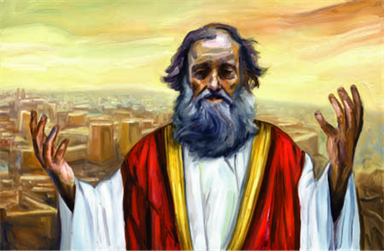
The prophet Jeremiah had seen it all. Coming from a village from the small tribe of Benjamin, he had been called by God and given the unenviable task of being appointed over nations and kingdoms, to pluck and pull down, to destroy and overthrow, to build and to plant (Jer. 1.10).

Babylon was growing stronger and stronger, while Judah was growing weak from internal turmoil. By the time the year 594 had come around, most of the Israelites had been exiled to Babylon, removed from their precious promised land.

In the midst of particular unrest in Jerusalem, Jeremiah learned of similar frustrations among the exiles in the foreign land. More specifically, Jeremiah learned that false prophets were claiming that the exiles would soon be going home had provoked the unrest. However, God’s plan for the exiled Israelites would have to take place on God’s time.

prophet-jeremiah

In the year 594, with unrest brewing in Babylon, Jeremiah sent a letter to the exiles against their false hope for an early return.

For our sermon today I have decided to try something different. In many ways, the letter Jeremiah wrote to his fellow Jews living in a foreign land, speaks to the no longer dominant Christians today living in our culture.

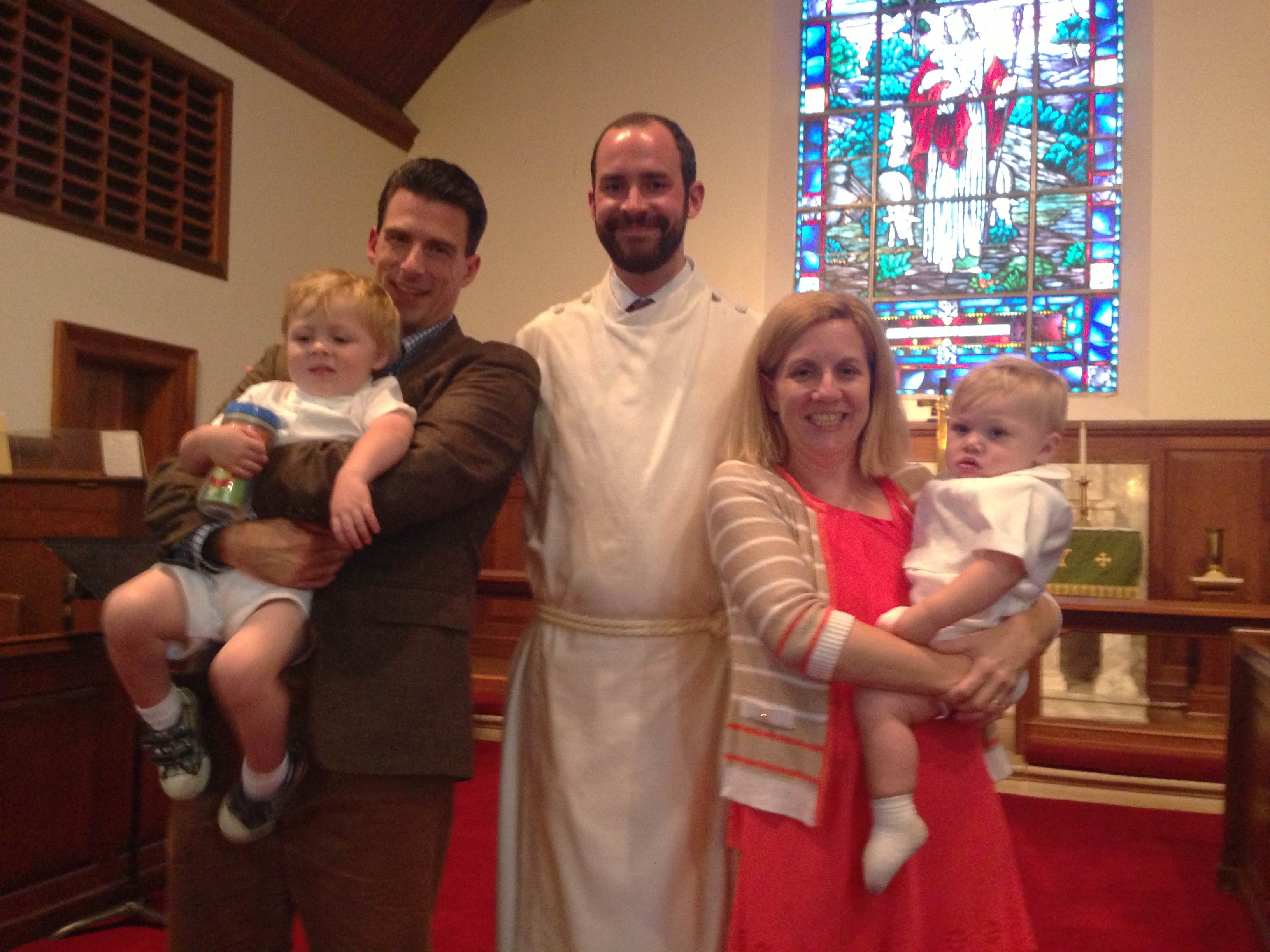
This sermon has been prepared as a letter, using Jeremiah’s epistle as a template, written for both Archer and Abram Pattie, the two young boys who will be baptized later in the service. I hope however, that you will notice that this letter is not just for them, but also for all of us…

Dear Archer and Abram,

Build houses and live in them; plant gardens and eat what they produce… But seek the welfare of the city where I have sent you into exile, and pray to the Lord on its behalf, for in its welfare you will find your welfare.

Today is the day that you are welcomed into God’s church through baptism. All of us have gathered together to witness this incredible event, prayerfully waiting and watching for the water to be poured over your heads. We are all here because we love you, because we are committing ourselves to you, and because we have been down your path before.

But, it won’t be easy.

The world today is an entirely differently place than it used to be. 50 years ago, this church was packed with people filling up nearly every single pew. Most of the restaurants, businesses, movie theaters, were all closed on Sunday because it was expected that we maintained Sabbath and reverence for holy worship. When you went out in public you could expect to see families together in prayer, the bible and its wonderful scriptures were a part of daily living often being read from the dining room table, and churches were growing and growing.

Today, you two are being baptized into a church that no longer fits that mold. Instead of the glory days of Jerusalem, you are entering into a time where the church feels like it is in Babylonian captivity.

The church and the world have changed but that’s a good thing! You are privileged to grow up in a church that no longer has to fit the expectations of the world, but gets to instead meet the expectations of almighty God.

Grow up in this community. Dig deep roots. Make friends. Play sports. Study Hard. Take advantage of the opportunities around you. Spend time with people who do not look like you, do not talk like you, and do not act like you; learn about yourself from them. But remember one thing: God’s kingdom is not of this world. You are being welcomed into a new family that is defined by its love of God and neighbor and therefore you are part of something so much bigger and so much greater than yourselves. Rejoice in what you have here, and hold fast to the love of God that will shower down on you every single day.

Do no let prophets and the diviners who are among you deceive you, and do not listen to the dreams that they dream, for it is a lie that they are prophesying in my name; I did not send them.

Archer and Abram, growing up will be tough. There are going to be people, and corporations, and television shows, and politicians, and advertisements, and all sorts of other false prophets that will try to tell you about the world. Every time you turn around you will be force-fed new information about how you are supposed to see, feel, believe, and understand everything. You will be told about the importance of maintaining your individuality and allegiances to the powers around you: Truly I tell you Caesar can come in all shapes and sizes.

They will try to fill holes and spots and negativity in your lives with all sorts of garbage.

False prophets will always tell you exactly what you want to hear: If you take this weight loss pill you will have the body of your dreams, if you drive this car your neighbors will respect and admire you, if you invest enough money in our company you will never have to worry about finances again…

The only one who can ever make you whole, the only one who will every truly love you, no matter what, is the triune God.

False prophets and diviners will try to label you and help you create your own identity on their terms. But today they can never compare to your new identity in Jesus Christ. Today you are being baptized in the name of the Father, Son, and Holy Spirit. Today you are becoming God’s children and nothing, nothing, can ever compare to that. We, the church, are here to help nurture you in your discipleship, we will take vows of love and commitment to help mold you in the faith, so that you will always remember that nothing, nothing, will ever separate you from the love of God in Jesus Christ.

For surely I know the plans I have for you, says the Lord, plans for your welfare and not for harm, to give you a future with hope.

Archer and Abram, God has a plan for both of you. From the very beginning it was God who breathed the breath of life into both of you, you were each uniquely created in the image of God. Many have claimed over the centuries that being made in the image of God means we have rational thought, or an imagination, but today I am telling you that being made in the image of God means that you were both created to be in community.

God’s plans for you include growing up in a place like this, feeling the love of God through your brothers, sisters, mothers, and fathers in Christ. God wants us to be here for you, and you to be here for us.

Things will get tough in your lives. There will be moments when it feels like God does not have a plan for you, that all you see and feel and hear is anything but your welfare. But God will always be there. This church will always be there. Because of our baptismal commitments to you we will always wait with open arms ready to help you, nurture you, believe in you, and support you in everything you go through.

Many years after Jeremiah sent his letter, after Israel had fallen captive to foreign nations, after Rome had laid siege to great Jerusalem, there was little hope. But one remarkable night, God came and dwelt among us in the flesh and became hope incarnate. God walked through the streets in Jesus Christ teaching about the kingdom, healing the sick, feeding the hungry, and bringing people into fellowship with one another. When our love failed, when we crucified Jesus on the cross, God’s love remained steadfast and the hope that we have always waited for became real and tangible in the resurrection.

In the beginning of our faith, when Christianity was still a budding movement there was pain and fear and frustration. Many people died for the faith that is now being passed on to you, but you will probably never be required to die for your faith. More likely, you will be given the dilemma, or opportunity, to summon up the courage to react against an injustice at the grocery store, or speak up for the voiceless in an argument, or love someone who is so unlovable. It will not be large and it will not be grand, but it will be good enough. Remember who you are, and whose you are.

20130929_114851        20130929_114826

God has a plan for you, a plan for your welfare, to give you a future with hope. There is something greater than this world; there is something more powerful than we can imagine, something brighter than the sun, and lovelier than the moon. It is your future, your future with hope because God loved you enough to die on the cross.

Then when you call upon me and come and pray to me, I will hear you. When you search for me, you will find me; if you seek me with all your heart, I will let you find me.

Archer and Abram, God is the one who lets us come to him with our requests and he hears and answers them. God’s gracious will to hear us, to know us, and to love us in prayer is the basis of the covenant that will take place in the waters of your baptism. God’s love is so superior, so majestic, and so clear that it makes our prayers immediately necessary.

God is ready for us to call on him. By living into a new reality, one that is shaped by prayer and scripture, by seeking God with our whole hearts, by practicing justice and loving-kindness we will find God with you.

We do not keep God locked up in this church, you do not have to be sitting in the pews or singing in the choir loft to find God. All you have to do is call upon him. When you search for God, you will find him. You will find God in the wonderment of creation, in the perfectly pitched harmonic notes of a song, in the warmth of the fire in the winter, in the hug of your mother when you make it home, in all sorts of places because God is always there.

Today you are being wrapped up into God’s great cosmic story. When you open the Bible you will now discover that it is not just some story about some people from the past but it is the very story of your lives. We are all here to rejoice with you today.

Sincerely,

Rev. Taylor Mertins


Nearly 2,500 years ago Jeremiah wrote a letter of truth to his friends in exile. He warned that things would not turn around immediately, that they would have to persevere through tough times before God would bring them home. This letter continues to live on for all of us today. The false diviners will continue try to make sense of the world for us, we will continue to feel like a strange people in a strange land, but God has plans for us.

God wants us to love each other in the same way that he first loved us. God wants us to wrap Archer and Abram up in love to teach them the stories of scriptures and how to be in communion with the divine. And above all, God wants us to know that no matter what we are loved.

Amen.

photo (5)

Dietrich Bonhoeffer on Separation

As a devotional practice I have been reading through Dietrich Bonhoeffer’s Letters & Papers From Prison….

dietrich-bonhoeffer-2

In one of his letters from the Tegel prison (written on Christmas Eve 1943) Dietrich Bonhoeffer wrote to Eberhard  and Renate Bethge (Renate was Bonhoeffer’s niece and Eberhard was a student of Bonhoeffer’s at the underground seminary in Finkenwalde) regarding their imminent separation on account of the war.

As I read through Bonhoeffer’s suggestions regarding their separation I realized how applicable they are for anyone disconnected regardless of romantic affection. Considering that I have not seen any of my friends from divinity school since graduation in May, I thought Bonhoeffer’s words are particularly fruitful for anyone who is missing someone at the moment:

First: nothing can make up for the absence of someone whom we love, and it would be wrong to try and find a substitute; we must simply hold out and see it through. That sounds very hard at first, but at the same time it is a great consolation, for the gap, as long as it remains unfilled, preserves the bonds between us. It is nonsense to say that God fills the gap; he doesn’t fill it, but on the contrary, he keeps it empty and so helps us to keep alive out former communion with each other, even at the cost of pain.

Secondly: the dearer and richer our memories, the more difficult the separation. But gratitude changes the pangs of memory into tranquil joy. The beauties of the past are borne, not as a thorn in the flesh, but as a precious gift in themselves. We must take care not to wallow in our memories or hand ourselves over to them, just as we do not gaze all the time at a valuable present, but only at special times, and apart from these keep it simply as a hidden treasure that is ours for certain. In this way the past gives us lasting joy and strength.

Thirdly: times of separation are not a total loss or unprofitable for our companionship, or at any rate they need not be so. In spite of all the difficulties that they bring, they can be the means of strengthening fellowship quite remarkably.

Fourthly: I’ve learnt here especially that the facts can always be mastered, and that difficulties are magnified out of all proportion simply by fear and anxiety. From the moment we wake until we fall asleep we must commend other people wholly and unreservedly to God and leave them in his hands, and transform our anxiety for them into prayers on their behalf: With sorrow and with grief… God will not be distracted.

-Dietrich Bonhoeffer

Bonhoeffer, Dietrich. Letters & Papers From Prison (New York: Macmillan Publishing, 1972), 176-177.