On Not Looking Like A Pastor

Stanley Hauerwas is known for telling his seminary students that they should never marry couples off the street and they should never do a funeral in a funeral home. His instructions to soon-to-be-pastors can sound a bit harsh the first time around but they are worthy commands.

Pastors should not preside over funerals in funeral homes because we are supposed to have Services of Death and Resurrection in the same place that baptisms take place. Our life with God begins in baptism, and finds its new beginning in our death; those two things should not be separated.

However, in my time as a pastor I’ve done a handful of funerals in funeral homes simply because the family was afraid of the cost of having the funeral home transport the body/urn and they were overwhelmed by the total cost to begin with.

But the prohibition to never marry someone off the street is one that I have taken very seriously.

In our current culture, the divorce rate is creeping above 50% which means that by the time I retire from ministry, there’s a chance that half of the marriages I presided over will have already come to an end. This terrifies me.

In response to the continually growing trend of separations and divorces, I have made a concerted effort to spend as much time with couples before their wedding so that whether I knew them before their request or not, they will not be strangers by the time I stand with them by the altar. I insist on having a minimum of three pre-marital counseling sessions and I reserve the right to not perform the marriage if I feel either something is wrong, or that I am not the one to bring them together.

Of all the questions that I ask, (and I do ask a lot) the one that makes couples the most uncomfortable is not the question about sex, or even how they handle money, but about why they want me to perform the wedding. And I don’t mean me personally, but why do they want it to be a religious service.

I ask this question because it is a lot easier (and cheaper) to drive down to the local courthouse and be married by a justice of the peace. There’s no premarital counseling involved, there’s no need to have a packed room full of people and for a liturgy. So, why have a religious ceremony?

Last night I was having a pre-martial counseling session with a couple whose wedding is coming up, and upon asking the question the soon-to-be husband very honestly answered that he is suspicious of organized religion, that my involvement has less to do with his choice than with the family’s choice, but that in the end he wanted it to be religious (and wanted me to do it) because I don’t seem like a normal pastor.

IMG_2758

Drinking Methodist “Champagne” at the Easter Sunrise Service

I hear that kind of thing all the time. I’ll be at a local coffee shop working on a sermon when someone will strike up a conversation and when it moves to the topic of employment, and they learn I’m a United Methodist pastor, they’ll say something like “Are you sure?”

Or I’ll be at a party with mutual friends and when I’m introduced, as a pastor from a nearby church, people will always hide their beer cans or glasses of wine behind their back until they see that I am holding one as well.

Or when I drop off my son at day care after months of learning about the teachers and other parents I’ll be wearing a clergy collar and someone will ask me if it’s a joke.

I, apparently, don’t look, sound, or act like a pastor.

And I think this is a good thing.

I think it is a good thing precisely because of what Dr. Hauerwas taught me: Never marry people off the street. When I am invited into the intimacy that is shared between two people prior to their wedding, when I can have real and vulnerable conversations with them about the sanctity of marriage and God’s ultimate role in it, I can break down these strange stereotypes about what a pastor is supposed to look and sound like.

Being myself, rather than having a presumed pastor-like personality, helps to show the world that Christians (and the church) are not what the world makes of us. We Christians are not all like the Westboro Baptists who are forever picketing certain events, nor are we all like the gay-shaming ultra-conservatives who belittle people for their identity, nor are we all like the quiet, antiquated, and archaic pastors from television shows and movies.

We, Christians and Pastors alike, are more than how the world portrays us. We are broken people who are in need of grace. We are faithful people filled with the joy of the Spirit. We are hopeful people who believe the church is the better place God has made in the world.

So I am grateful for not appearing like a pastor. I am grateful because I believe it will help me help others to see what the grace of God has done for me.

Devotional – Matthew 6.28-29

Devotional:

Matthew 6.28-29

Consider the lilies of the field, how they grow; they neither toil nor spin, yet I tell you, even Solomon in all his glory was not clothed like one of these.

Weekly Devotional Image

In a few hours I will gather with members of the community for a Service of Death and Resurrection for one of St. John’s long-time members, Gracie Jackson. During my first two months serving at St. John’s (almost 4 years ago), I tried to visit as many people as possible from the church community, particularly those who could no longer attend worship on Sundays. I want them to know that the church still cared about them and that they were in our prayers regardless of their presence.

Throughout those first months I was welcomed into a great number of homes and learned so much about Staunton and the impact St. John’s has had throughout the decades. One of my first visits was to the Jackson home where I sat and talked with Lenard and Gracie Jackson. But we didn’t sit for long. Instead, they wanted to give me the grand tour including the basement workshop and the green house in the backyard. There were plants everywhere but one in particular was striking and unlike anything I had seen before. Lenard explained that it was a Night-Blooming Cereus, and like the name implies, it only blooms at night. At the time, I casually mentioned my interest in the plant and we continued the door.

However, a couple days later Gracie told Lenard that he HAD to invite me over to witness the Night-Blooming Cereus in all it’s glory. (Lenard recently told me that in his life there were always two ways to doing things, and both of them were Gracie’s!). So at 10pm Lindsey and I drove over to the Jackson house and the four of us sat in their living room in our pajamas patiently waiting for the plant to do its magic.

When the right time arrived, we huddled in the green house with the dark sky coming through the windows and the cactus bloomed right in front of us. It produced the most exquisite scent and filled the room with its glory. And in that moment I was struck by the holy space we were sharing and was reminded of Jesus’ words from Matthew 6: “Consider the lilies of the field, how they grow; they neither toil nor spin, yet I tell you, even Solomon in all his glory was not clothed like one of these.”

6e7f0caa6dfe8f6541d5babc77c32ecf

That Night-Blooming Cereus was one of the most spectacular things I have ever seen and I never would’ve experienced if it weren’t for Gracie’s insistent invitation. Similarly, our faith is something that is offered to us as an invitation. We can read all about the Lord in Scripture, we can pray privately on our own time, but when we share our faith with another person it can bloom in the most exquisite of ways.

I am so remarkably grateful for the time I got to spend with Gracie, and for the many ways she embodied God’s grace for me.

Devotional – Job 19.23-25

Devotional:

Job 19.23-25

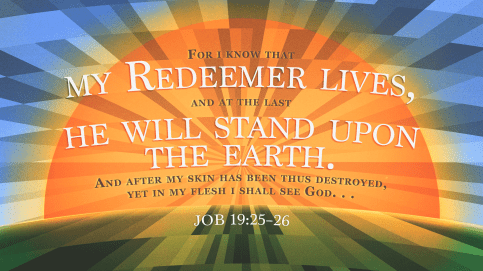
O that my words were written down! O that they were inscribed in a book! O that with an iron pen and with lead they were engraved on a rock forever! For I know that my Redeemer lives, and that at the last he will stand upon the earth.

Weekly Devotional Image

Last Thursday, while my wife, son, and I were visiting family in Alexandria, I received a phone call about one of St. John’s long-time members having died. Ruth Cassidy joined the church weeks after it formally began back in 1954 and while it was still meeting in a basement down the road. Ruth was easily one of the kindest people I ever had the chance to spend time with, and she will be greatly missed by our church community, and by her family.

A couple years ago I received a phone call about Ruth’s husband Howard, and it was clear that he was close to the end of his life. And so, I made my way over to their retirement home and when I walked into the room Ruth was sitting next to her husband, she was lovingly holding his hand in hers, and he had just taken his final breath. I, not wanting to intrude on the holiness of the moment, slowly started to back away but Ruth insisted on me sitting down with her on the couch. She immediately started asking me questions about my family and St. John’s and I was still in a state of shock; I was overwhelmed by the totality of the moment, and the fact that Howard had literally just died. Ruth continued to ask me questions, but I wanted to acknowledge what had just happened. It took a couple minutes, but I finally mustered the courage to ask: “Ruth, are you okay? I mean, Howard just died…”

She looked right into my eyes, smiled, and said, “Oh, everything is fine; I know where he really is.”

Rarely have I encountered such faith, such hope, and such love as what I regularly experienced through Ruth Cassidy. Like the biblical character of Job, she had an assurance about the way things really are. In that holy and profound moment immediately after her husband died, I could almost hear the words of scripture floating in the room with us: “I know that my Redeemer lives, and that at the last he will stand upon the earth.”

job-19-25-26

Ruth’s assurance, her blessed assurance, was one worthy of our emulation.

Do you know that your Redeemer lives? What words or thoughts would you want to engrave on a rock forever? Can you feel the Holy Spirit moving and breathing into your life? Are you filled with an assurance about who you are and whose you are?

O that my words were written down and engraved forever! I know that my Redeemer lives! And that at the last he will stand upon the earth!

The End Of The Beginning – Ash Wednesday

Genesis 3.19

By the sweat of your face you shall eat bread until you return to the ground, for out of it you were taken; you are dust, and to dust you shall return.

If you’re here in this place, with these people, on this occasion right now, you are blessed. You are blessed because you understand, you grasp, what the church is really all about. We are a people called church, who follow Jesus and take upon ourselves the sins of the world.

However, we don’t take upon the sins of the world in the way Jesus did. We are told to take up our own crosses, but we don’t drag them up to a place called The Skull, and we don’t wait for people to nail us to them. We take upon the sins of the world in confession, a confession that God is our judge and has every right to be. Because we have failed to be the people God has called us to be over and over and over again.

The United Methodist Church has a document to help us whenever we gather together. The Book of Worship outlines the ways to serve the Lord for just about every occasion, including funerals.

The Service of Committal is brief and is reserved for the graveside. And in our Book of Worship you can find these directions for clergy: “Stand at the head of the coffin and while facing it, cast earth upon it as it is lowered into the grave. The pastor then says, ‘Almighty God, into your hands we commend your son/daughter, in sure and certain hope of resurrection to eternal life through Jesus Christ our Lord. This body we commit to the ground, earth to earth, ashes to ashes, dust to dust.’”

The last time I did a graveside burial, I held the Book of Worship in my hands like I’ve done too many times before, I read the all too familiar words, and when it came time to cast dirt upon the coffin, I couldn’t find any. I frantically looked at the area around the hole, and they had covered it with a frighteningly sharp bright green carpet of AstroTurf. So I bent down in my robe onto my knees, and I started ripping up the perfectly manicured grass on the edge of the fabricated lawn. I needed some dirt. I needed to dirty this pristine and picturesque committal service because death is ugly and disruptive. I clawed the ground and threw the grass to the side until I scraped enough bare earth with my hands to have a solid mound to drop onto the coffin.

It was a holy thing.

dirt-placeholder

I took my dirt covered hands and placed them on the coffin, I prayed the words from the Book of Worship, and then I slowly walked away giving the family time to grieve before leaving. And just as I began backing away, the funeral director motioned for the pall bearers to come forward. But they did not bend down to the hole in the ground I had just revealed. No, they took roses, the boutonnieres, from their lapels and laid them silently on the recently dirt covered coffin.

It is, of course, much nicer to throw roses than dirt. But like almost everything in the tradition of the church regarding worship, the dirt has important theological significance.

I wound venture to guess that many Christians, though they hear the words about ashes to ashes and dust to dust at funerals and at Ash Wednesday services, they have no idea where those words come from. But you do. You know where they come from because you just heard it. It is the final announcement from God to Adam and Eve as they are kicked out of the Garden of Eden.

By the sweat of your face you shall eat bread until you return to the ground, for out of it you were taken; you are dust, and to dust you shall return.

            For us humans, this is the end of the beginning.

Much has been made about the Genesis story of eating from the tree of knowledge of Good and Evil. The slithering serpent who manipulates Eve’s desire; Eve’s treachery through inviting Adam to join her in the prohibited act; Adam hiding his shame and nakedness from God when the Lord returns to the Garden. And its all pretty harsh.

By this act sin was brought into the world. Because of our ancestors’ choice, we were banished from the paradise of God’s created order and were punished. Women must suffer through childbirth. Humans must work and sweat over the earth in order to glean enough produce to survive. Families are torn apart by an individual’s choice that has ramifications far greater than they can ever imagine.

And then we come to a place like this to have ashes smeared across our foreheads in an effort to remember what happened long ago, and what will happen to all of us one day.

We will die.

But we’re content with spending the rest of our days prettying everything that we can. We bring roses to place on the coffins at graveyards. Politicians bump up statistics to make things appear better than the actually are. We do our best to cover our scars, both physical and emotional, as if they were never there. And some churches spend Ash Wednesday not in sanctuaries confessing their sins with their brothers and sisters in faith, but in their parking lots presenting “Ashes to God with a cup of Joe.”

We would rather cover the harsh realities of truth than look at them in the eye.

God’s pronouncement to Adam and Eve, that terrifying moment when they were expelled and told that they will suffer until they return to the ground, that strange and all too familiar expression you are dust and to dust you shall return, they strike fear in the hearts of us mortals.

Sometimes its good to be afraid because it reminds us what a tremendous blessing it is to be alive at all. Sometimes its good to get down on our knees and confess our sins before the Lord because it reminds us that we are not God. And sometimes we need to catch a glimpse of ourselves in the mirror on Ash Wednesday to remember who we are, and whose we are.

This day, this Ash Wednesday, is a moment for us to confess our sins, and for all the sins of the people who are not here. We bow our heads and are adorned with a sign of death, not just as a reminder to us and to others that we will die, but that God will not let death be the final Word.

And here is the hope, my brothers and sisters, the hope we need on a day like today. We know how the story ends. We know that the pronouncement at the edge of the Garden was not the final word. We know the final word is not suffering, nor death, nor dirt, nor even dust. We know that the final Word is Jesus Christ.

The ashes that will soon be on our skin are not our crosses to bear, but Christ’s who carried it to The Skull and was nailed to it for the world. Jesus Christ is God’s greatest and final Word because in him the fullness of the Lord was pleased to dwell. In Him the sin of Adam and Eve were reconciled unto the Lord. In Him we are brought back into the dwelling of God’s grace where the light always shines in the darkness.

So wear the ashes with fear and trembling, let them dirty your lives a little bit, but also remember the hope that has been available to us in the one who hung on the cross, and rose again. Amen.

maxresdefault-2

God Won’t Give You More Than You Can Handle

Mark 2.1-5

When he returned to Capernaum after some days, it was reported that he was at home. So many gathered around that there was no longer room for them, not even in front of the door; and he was speaking the word to them. Then some people came, bringing to him a paralyzed man, carried by four of them. And when they could not bring him to Jesus because of the crowd, they removed the roof above him; and after having dug through it, they let down the mat on which the paralytic lay. When Jesus saw their faith, he said to the paralytic, “Son, your sins are forgiven.”


On the day of the funeral, everything felt too familiar. The pews were filling up with the same people who were here the week before, the same family was waiting in the narthex, and our organist was even playing some of the same music as people were walking in.

I stood right here in front of the gathered congregation and asked everyone to stand for the family. Leading the profession were two daughters who were about to bury their father after burying their mother the week before. Their grief and pain and anger were palpable as they slowly walking down the center aisle, and everyone watched them as they passed.

And we did what we do for a service of death and resurrection. We prayed. We opened up the hymnals and proclaimed God’s faithfulness through song. We listened. We grieved. We cried.

As we finished, I watched the pallbearers stand up and surround the coffin. With hands shaking in nervousness and fear they carried their friend’s body out of the church and put him in the hearse.

And we did what we do when travel to a cemetery. We got in our cars and turned on our hazard lights. We followed one another through the streets of Staunton. We watched cars slow down and pull over out of respect for what we were doing. We drove. We listened. We grieved. We cried.

After arriving at the cemetery, I watched the same pallbearers carry the coffin to the grave over uncertain soil. With sweat perspiring on their foreheads they lowered their friend to the ground and stood beside the family.

And we did what we do by the graveside. We prayed. We listened. We placed dirt on the coffin. We said what we needed to say. We listened. We grieved. We cried.

After the final “Amen” I waited by the grave with a few others, making sure the family was comforted. I overheard familiar and charming anecdotes about the man we just gathered to bury. I witnessed family members reach out to one another for the first time in many years. I saw a lot of tissues filled with tears wadded up in clenched fists.

And then I saw something I’ll never forget. A man, unknown to me, walked right over to one of the daughters devastated by the loss of both her parents. He placed his hand on her shoulder and said, “Don’t worry, God won’t give you more than you can handle.” And with that he turned around and walked away.

God won’t give you more than you can handle.

635787512482303409305489483_29f1979c65db2aa1627169bad37391df-imgopt1000x70

I’m sure that all of us here have heard this statement, or some form of it, in our lives. It is part of that trite and cliché Christian-lingo that we use to fill uncomfortable silences when we don’t know what else to say. And it’s not true.

Let’s start with the beginning: God won’t give you… We’ve talked about it with every sermon of this series so far; God doesn’t give us our sufferings. God is not some sadist who delights in our trials and tribulations. God is not some architect of divine destruction. God is not sitting up in heaven plotting away about what terrible things to send for us to handle.

Can you imagine going to a devastated neighborhood in Chicago to families whose sons have been killed by gunfire and saying, “Don’t worry God won’t give you more than you can handle”?

Can you imagine going to a young mother recently diagnosed with breast cancer and saying, “Don’t worry, God won’t give you more than you can handle”?

Can you imagine going to the millions of people in this country who are terrified of losing their healthcare coverage in the next few months and saying, “Don’t worry, God won’t give you more than you can handle?”

God did not kill those families’ sons, God did not give that woman breast cancer, and God is not responsible for the arguments about whether or not to eradicate the Affordable Care Act.

Sometimes, we say things like “God won’t give you more than you can handle” because we don’t know what else to say. We encounter the shadow of suffering that is so suffocating we don’t know how to respond. So instead, we will that awful void with awful words. And we make God into a monster.

The problem is that when we use trite and cliché words like the ones we are confronting this morning, we imply that God chooses to make people suffer.

Jesus, God incarnate, had been on the road for a while, going from town to town, synagogue to synagogue, proclaiming the Good News, teaching about the kingdom of God, and healing those on the margins of society. Word about his ministry spread pretty vast, and he returned to Capernaum for a few days, perhaps to rest. But so many people knew where he was that they surrounded his house and Jesus spoke the Word to them.

Some friends heard about what was happening, so they went to their paralyzed friend and carried him on a mat to Jesus. When they could not bring him to the Messiah because of the crowd, they carried him to the roof, dug through the ceiling, and lowered their friend to Jesus. And when Jesus saw the faith of the friends, he looked at the paralytic and said, “Son, your sins are forgiven.”

What a strange and beautiful story. Friends with such profound faith were willing to carry their friend, and dig through a roof, just so he could encounter the living God.

I often wonder about the tradition of pallbearers at funerals. Did it start of out a practical necessity? Is there strong theological purpose behind it? Is it a unique Christian behavior?

But on the day I buried a husband after burying his wife the week before, the day I saw a man dismissively respond to the daughter’s suffering, I saw the connection between pallbearers, and the friends who carried the paralytic to Jesus.

When we cannot handle what’s happening in our lives, we need people who can carry us, and the ones we love, to Jesus.

We will face adversity in our lives. We will experience hardships. We, or someone we love, may struggle with debilitating depression or suicidal thoughts or grief so heavy it feels like someone is sitting on our chest. We might give in to the temptation of an addiction and lose contact with the people we need most. We may fall into a pit of financial debt that feels impossible to climb out of.

If we are like most human beings, at some point we will absolutely face things that are more than we can handle.

So here’s a corrective. It’s not that God won’t give you more than you can handle, but that God will help you handle all that you’ve been given.

6fa0c8a00d809d23761dfaa71b6b542a

This acknowledges that trials and tribulation will occur in our lives, and it promises that when we go through the muck and grime of life, God will be present.

When we’re walking through hard times, whether they were given to us by the random chance of life, or they’re a result of our own brokenness, or they’re signs of our captivity to the powers and principalities, it’s okay and good to admit, “I can’t handle this by myself, and I need help.” There are times when we need a doctor, or a therapist to carry us. More often, we need family, friends, pastors, neighbors, and brothers and sisters in our church family to come alongside us to carry us through.

God does not give us more than we can handle. God gives us Jesus Christ so that we can handle what life gives us.

For a lot of people, what happened on Friday in Washington DC was more than they could handle. Whether it was the pent up frustration with the political rhetoric that overflowed over the last 18 months, or witnessing a billionaire place his hands on Abraham Lincoln’s bible, or experiencing the great swing of the pendulum from one political ideology to another, it felt overwhelming. Some responded with violent protests and destroyed shop windows and attacked the police. Others responded with peaceful demonstrations making sure their voices were not stomped out among all the shouting debauchery. There were the political talking heads offering their opinions about who was right and who was wrong. There were smug smiles and there were frightening frowns. The inauguration, for some, was more than they could handle.

For others, the last eight years has been more than they could handle. Whether it was the constant feeling like the country was slipping out of their fingers, or the realization that the American dream is not what it once was, or the rise of oppositional and divisive voices, it felt overwhelming. Some responded with protests and boycotts of particular institutions, others responded by focusing inwardly and praying for change, and still yet others waited patiently for a new direction. For eight years there were plenty of talking heads offering their unsolicited opinions about who was right and who was wrong. The last eight years, for some, was more than they could handle.

Some say the time has come for all of us to just get along. A couple weeks ago I even told you that we, as a church, should have a collective New Year’s resolution to be more kind.

Kindness and getting along are good and nice. But there are people around us, people in our lives, who need more than kindness and getting along. There are people desperately clinging to the hope of their healthcare coverage completely unsure of what it about to happen. There are people who are hopeless when confronting their joblessness and economic futures. There are people shaking and quaking about their faith and whether or not they are going to be forced to register themselves because they wear a particular piece of cloth on their heads. There are people who see police officers as enemies and not community protectors.

There are people in our community; there are people in our church, who have more than they can handle right now.

We need people, like the friends who carried the paralytic to Jesus, to carry others who have more than they can handle. We need people who can look us in the eye and tell us we have a problem. We need people who will call their friends every night just to get them through a profound period of loss. We need people like all the women who marched in solidarity all across the world yesterday. We need people with eyes wide open to the horrible suffering of the people around us so that it does not go on unnoticed. We need people who are unafraid of the consequences for questioning the status quo. Right now, we need people who are brave enough to carry us to Jesus. Amen.


dumb-things-christians-say-sermon-series-idea

Devotional – Psalm 23

Devotional:

Psalm 23.1

The Lord is my shepherd, I shall not want.
Weekly Devotional Image

I’ve done a lot of funerals. In my short time as a pastor I have presided over more services of death and resurrection than baptisms and weddings combined. And every funeral, much like every baptism and wedding, is contextual and different. Some families come in with a service already planned out in their minds with specific hymns and scriptural texts, and some families come in with their eyes glossed over and have no idea what they want the funeral to look like. I’ve read scripture from the recently deceased’s bible, I’ve been handed a tear stained eulogy to read aloud because the emotional strain was too high, and I’ve even been asked to sing a solo during a service. But one thing that has united every single funeral I’ve participated in has been the reading of Psalm 23.

Unlike other readings during funeral services, we print out the entirety of the 23rd Psalm in bold in the bulletins. When the time comes, I ask everyone gathered together to read the beloved words out loud and as we take a collective breath we begin, “The Lord is my shepherd, I shall not want…” An amazing thing happens when this psalm is read out loud in the context of grief and loss. You can audibly hear the anxiety in the air as the first words are read aloud; people read at different tempos and take breaths at different moments. But as the psalm progresses, so do the voices. It is as if the entire congregation, through the psalm, is able to take a collective breath of fresh air and release a profound sigh of comfort. The 23rd Psalm is a beautiful reminder of the powerful presence of the Lord in the midst of death, and encourages those of us who remain to live as faithfully as the person we have gathered to remember.

This week, no matter what we have going on, let us take a moment to faithfully proclaim the words to the 23rd Psalm with the knowledge that even after we’re gone, people will use these words to mark our Services of Death and Resurrection:


Psalm 23

The Lord is my shepherd, I shall not want. He makes me lie down in green pastures; he leads me beside still waters; he restores my soul. He leads me in right paths for his name’s sake. Even through I walk through the darkest valley, I fear no evil; for you are with me; your rod and your staff – they comfort me. You prepare a table before me in the presence of my enemies; you anoint my head with oil; my cup overflows. Surely goodness and mercy shall follow me all the days of my life, and I shall dwell in the house of the Lord forever.


h6bg5t5

Devotional – Revelation 1.8

Devotional:

Revelation 1.8

“I am the Alpha and the Omega,” says the Lord God, who is and who was and who is to come, the Almighty.

Weekly Devotional Image

Services of Death and Resurrection are sacred moments in the life of the church. For a brief time we gather together in our grief, we praise God for the life of a friend or family member, and then we proclaim the hope of the resurrection. Dozens of people will fill the pews, some of who have not entered a church in years, and sing those beautiful hymns like “In the Garden” and “Blessed Assurance.”

As a pastor, it is a humbling thing to be tasked with leading the services and preaching a faithful word about God’s love and the life of the dead. I try to find the right stories and scriptures that shed light on the individual and pray for God to speak through my words so that they resonate with God’s Word. I try to lead the service in such a way that we can experience tears and laughter. And I try to ensure that the experience is one of profound holiness.

Yesterday, after concluding a Service of Death and Resurrection for a long-time member of St. John’s UMC, I gathered in the social hall with friends and family for a reception. Like a high school reunion, I saw groups of people gathered together to share stories and offer condolences. I spent some time wandering about the room in order to check on the members of the immediate family when someone stuck out his hand and asked to speak with me. I had never met the man before but he explained his connection to the man that had died and he thanked me for my words. He described his fear of funerals because they always remind him that death will come for him one day as well. But then he said, “However, my favorite thing about funerals is the fact that I learn so much more about a person I thought I knew so well.”

revelation1-8-web

Funerals do teach us so much more about the people we love. We hear from friends and family members willing to offer witness to the particular life and often we hear a pastor who is able to share a new vision of the life of someone close to us. It is in our willingness to listen that we discover something new.

Whenever I perform a funeral I am re-struck by the scripture: “I am the Alpha and the Omega.” I have said it before groups of people more times than I can count, but each time it reinforces the fact that I still have so much more to learn about God. Every day is a new opportunity to open up scripture, pray deeply to the divine, and discover the Lord’s work in other people. Similarly, it brings me great comfort to know that God is the beginning and the end, that our lives are gifts from God and that death is not the end.

This week, let us take time to learn more about the people in our lives and to learn more about the God of life. Maybe it means picking up the phone and calling a dear friend, or opening up our bibles to read a familiar passage. Maybe it means praying for the people in our local and global community, or listening for God’s still soft voice in the words of a hymn. Whatever we do, let us do so with the hope of learning more about one another and our Lord who is the beginning and the end.

Devotional – Ephesians 4.29

Devotional:

Ephesians 4.29

Let no evil talk come out of your mouths, but only what is useful for building up, as there is need, so that your words may give grace to those who hear.

Weekly Devotional Image

A few weeks ago Gwen Hammer, a wonderful member of St. John’s, came into my office with a gift. She and her family had been on vacation and she said they found something I “just had to have.” So with eager anticipation and excitement I opened up the package to discover one of the funniest signs I’ve ever read, a sign that is now hanging in my office for everyone to see: “Live your life so that the preacher won’t have to lie at your funeral.”

Whenever I meet with families and friends to prepare for a funeral, I hear wonderful stories about the person who has died. Without having to ask questions, I quickly learn about what it was like to grow up with the person, how they met their spouse, what it meant to them to be a parent, and a slew of other details. I hear the funny stories that have been told and retold countless times at family gatherings. I start to see how God’s grace developed in the person’s life and led them to live the way they did.

IMG_0264

But at some point, stories pop up that I would not want to share from the pulpit; disappointments regarding a grudge that was never settled, failures to communicate what was really happening, and frustrations over choices with larger implications. I always do my best to sit and listen patiently, knowing that it is important for the friends and family to experience their grief in different ways. But when it comes time to craft the words that will be shared at the funeral, I do my best to include the truth about the person’s life, while emphasizing the details that help to build up the community of faith.

Paul wrote to the church in Ephesus about what it means to live in community: “Let no evil come out of your mouths, but only what is useful for building up, as there is need, so that your words may give grace to those who hear.” As human beings we tend to emphasize and remember our problems, but as Christians we are called to speak in a way that benefits the people around us. In our everyday lives we have opportunities to share kind words toward others such as complimenting their work or affirming their character. Whatever we can do to live in such a way that we build others up, rather than breaking them down, will allow us to fully live into God’s kingdom.

This week, let us speak in such a way that our words may give grace to those who hear, and live in such a way so that the preacher won’t have to lie at our funeral.

Ready To Die – Sermon on 2 Samuel 1.17-27

2 Samuel 1.17-27

David intoned this lamentation over Saul and his son Jonathan. (He ordered that the Song of the Bow be taught to the people of Judah; it is written in the Book of Jashar.) He said: Your glory, O Israel, lies slain upon your high places! How the mighty have fallen! Tell it not in Gath, proclaim it not in the streets of Ashkelon; or the daughters of the Philistines will rejoice, the daughters of the uncircumcised will exult. You mountains of Gilboa, let there be no dew or rain upon you, nor bounteous fields! For there the shield of the mighty was defiled, the shield of Saul, anointed with oil no more. From the blood of the slain, from the fat of the mighty, the bow of Jonathan did not turn back, nor the sword of Saul return empty. Saul and Jonathan, beloved and lovely! In life and in death they were not divided; they were swifter than eagles, they were stronger than lions. O daughters of Israel, weep over Saul, who clothed you in crimson, in luxury, who put ornaments of gold on your apparel. How the mighty have fallen in the midst of battle! Jonathan lies slain upon you high places. I am distressed for you, my brother Jonathan; greatly beloved were you to me; your love to me was wonderful, passing the love of women. How the mighty have fallen, the weapons of war perished!

maassen_resurrection_sml

Funerals are strange, difficult, and at times, beautiful. I usually receive the phone call from someone in the family, or from a funeral home, that someone has died and they were hoping that I would preside over the service. No matter who the person is, I am immediately filled with sadness knowing that someone, anyone, is now gone. Regardless of my personal connection to the individual, there is a sense of loss that comes with death and not even I can avoid it.

But then I have to get to work. I have to take that grief and hold it for a moment while I help others properly grieve their loss. I have to balance the proper amount of mourning with hope, sadness with peace, and death with resurrection.

When I receive that first phone call I have to start taking care of the logistics: Where will the funeral take place and when? Do they want someone to play the organ? Are they hoping for a particular soloist? Does anyone from the family want to speak on behalf of the dead? And only after the plans are made can we begin talking about the person, making sure that I know everything I can in order to properly proclaim their life, death, and resurrection.

Most of the time funerals take place in the middle of the day in the middle of the week. Friends and family have to take time off from work, or take their children out of school, in order to attend the service. Yet, funerals are not meant for immediate friends and family alone. The entire community of faith is called to witness to the life of those who have died so that we can continue to live out their witness regardless of how well we knew them, or not.

So, this morning, as I mentioned before, we are doing something a little different. A few weeks ago one of our church members named Dick Dickerson passed away. He had only been coming for a few years, but he was a staple in worship. He always sat in the back of the church on the right side, he flirted with every female that crossed his path, and he was incredibly sweet.

When I found out that his family would be having a private service in Kentucky at a later date I knew that we still needed to do something here in order to say goodbye. I knew that we needed to praise God for putting Dick in our lives. And I knew that we were going to have our own little funeral for him on a Sunday morning.

Dick Dickerson

Dick Dickerson

Dick Dickerson called me “honey.” I know that this might’ve bothered other young pastors, but to me it was endearing and precious. I would walk over to visit Dick next door at Brightview/Baldwin Park and the moment I entered his room he would always say something like “Come on honey and sit down with me.” For months I cherished this identification, it made me feel special that Dick felt so connected to me. It was only later that I learned he called most of the people in his life “honey”!

My wife Lindsey would stop by to say hello before a church service started and he would hug her while calling her “honey,” Grace Daughtrey would smile and politely nod her head as he greeted her with a “good morning honey,” and even Marshall Kirby would start to blush when Dick would refer to his Sunday driver as “honey.”

Dick Dickerson was a man of profound love, who deeply appreciated all that God had given him from the very beginning till the very end.

Dick grew up in Kentucky with a family in the midst of financial struggles. Living through the depression was, as he put it, one of the hardest things to witness. But at some point there was a family in the community who saw Dick’s potential, and they brought him under their wing and helped to provide for his education. He always maintained a connection with his biological family, but in his quasi-adoptive family he saw the Christian commitment to loving others, something that would affect the rest of his life.

Dick was a man of stories, stories that shaped his life and the lives of others. When he served as a quartermaster in Patton’s army during World War II he used to offer whisky to his fellow soldiers so long as they affirmed the beliefs of the Republican party. He told me that at the beginning of the war most of his friends were Democrats, but by the time they got home (and enjoyed the whisky) they had become staunch conservatives!

He, unlike others who served in World War 2, was ready and willing to share reflections on his experiences precisely because he did not want anyone to have to experience what he did. He often told a story about an evening that took place in the middle of the war on Christmas Eve when he found himself resting for the night in a bombed out church building. He could remember the wax dripping from the candles, the hole in the roof letting in the tiniest of snowflakes, and all the soldiers huddling together for warmth.

He asked a question of the men that night that he only later attributed to the Holy Spirit. He asked if the men wanted to pray for anything. One soldier prayed for his family back home, another prayed for warmer weather, but one of the youngest said something that would stay with Dick the rest of his life: “I seem to remember Jesus saying something about praying for our enemies, so tonight I would like to pray for the men we’re fighting against. I pray that God would be with them as He is with us.” Dick said that while other men might have grown angry or dismissed the prayer, all of the men joined together in that tiny church on Christmas eve, and prayed for their enemies.

Prayer was at the heart of Dick Dickerson’ life. He spent most of his free time going through a list of people that he lifted up to the Lord and regularly invited me to join him in his prayers. He once told me that prayer was the only thing that got him through the war, and that prayer was the only thing that kept him together once he returned home.

Dick lived a wonderful and blessed life. He married his sweetheart Mildred, had two children, and eventually began working for Madison College in Harrisonburg. Dr. Dickerson, as he was known to his students, made himself available to everyone all all times because he saw the value in other people. Whether in the classroom or at home, you knew that he would make time for you no matter what.

I spent a lot of time with Dick over the last two years, we talked about a great number of things, but the one thing we talked about the most was death. In fact during our very first and our very last conversations he said the same thing to me: “Honey, I’m ready to die.

In the beginning of 2 Samuel we have a song that David wrote in memory of Saul and Jonathan. After giving their lives for the Lord and the people, David called the nation to weep for their loss: “O how the mighty have fallen.” In life David and Saul were seemingly opposed, but in the experience their death David wept and mourned.

ProgramPage_MightyFallen

Many of us take the people in our lives for granted. We grow so accustom to their presence and persistence, that we rarely think about what life would be like without them. It is only when someone is truly gone that we can really appreciate what they always meant to us. It happened to David after Saul died. It happened to the disciples during those three days before Jesus rose again. And it has happened to me with nearly every person that I have buried while I have served this church.

But friends, resurrection comes into its fullest meaning when we lose someone we love.

Can you imagine the exultation the disciples experienced when they saw their Lord again after he broke free from the chains of death? Can you picture the joy on their faces when they were able to sit again with their teacher and friend? Can you imagine how David would have felt if he knew that one day someone from his family tree would eventually hang in a tree for the sins of the world so that we could all rise again in the resurrection?

Dick Dickerson was ready to die because he trusted the Lord. His trust was evident in our many conversations, and in is interactions with others, but it was most present while he prayed at this altar.

Dick rarely missed a communion Sunday. Even while his bone cancer was spreading throughout his body, he would make the long and slow journey to the front of this sanctuary to pray on his knees to the Lord. After feasting on the body and the blood, Dick would lay all the worries of his life out for the Lord, he would pray for God’s forgiveness over his sins, and he would thank the Almighty for surrounding him at every moment throughout his blessed life.

Are we ready to die? Every death in this church community is a constant reminder that the bell will toll for us all, and that tomorrow is never guaranteed. Are we ready to die? What kind of faith would it take to be ready to give our lives over to the Lord?

Dick Dickerson certainly had that kind of faith, a faith born out of prayer, presence, and praise, a kind of faith shaped by World War 2, and a kind of faith made real through the witness of Christ’s church.

lord__s_supper_by_bclary-d37hhzp

As we prepare to take steps toward this altar, to feast at Christ’s table, we do well to remember all who have gone before us to eat and pray. We remember Dick Dickerson and his willingness to lift us up. We remember the saints before us, in our midst, and those who will come after and discover God’s grace in a moment like this. And we remember that Jesus came to die so that we would all live, so that death would be defeated, so that the resurrection would be offered to us all.

So, thanks be to God for the great gift at this table and for the life of Dick Dickerson, a man who lived by faith, prayed with every fiber of his being, and was ready to die. Amen.

10 Things I Learned From My Second Year Of Ministry

Last year my friend, peer, colleague, and theological-hero Jason Micheli (The Tamed Cynic) asked me to write a post on ten things I learned my first year of ministry. Next week marks the beginning of my third year as a United Methodist pastor so I decided to write another post on ten things I learned during year two.

10872995_835432513146512_7937253830158410370_o

1.       The Church Is Huge

How do you measure the size of a church? Is the church as large as the Sunday worship attendance? The membership role? Throughout the last two years I have realized that the church is almost always larger than I think it is. I’ll be out somewhere with my wife when a stranger will ask if I am the pastor of St. John’s. Between our preschool and missional involvement, the community of faith (also known as the church) has connections with people all over the place. It is always important for me to remember that I have been called to serve the needs of the community, which is usually larger than I think it is.

2.       Praying Is As Important As Breathing

The Bishop for the Virginia Annual Conference, Young Jin Cho, is known for saying “No spiritual vitality, no vital congregations.” And he’s right. Prayer, and other spiritual disciples, are immensely important for the work of ministry and the local church. I strive to begin every morning in the sanctuary with time dedicated to prayer. If I neglect this discipline it has a negative impact on the rest of my day. Like feeling short of breath, I am not as active nor am I as attuned to the Spirit’s work in my midst. Regular prayer is as important to discipleship as breathing is to living.

3.       Collaboration > Competition

There are a lot of churches in the community I serve (I can see four different steeples from my front yard). I have heard on a number of occasions that there are more churches in Staunton per capita than anywhere in the United States. I have no way to confirm whether or not this is true, but just driving around town leads me to believe that it could be true. Over the last two years I have had the privilege of working with other pastors to help live into the kingdom of God here on earth. When we work in collaboration, and stop seeing each other as competition, we participate in Jesus final prayer: “I in them and you in me, that they may become completely one, so that the world may know that you have sent me and have loved them even as you have loved me.” (John 17.23) If the church wants to thrive, then we need to realize that we are all in this together, regardless of our denominational affiliations.

4.       Weddings Are Hard

Compared to some of my colleagues I have done a high number of weddings during my short time in ministry. At the age of 27 I meet a lot of people who are nearing their wedding and I am often asked to officiate. I love celebrating the covenant of marriage, but it can be very hard. What an average person experiences during a wedding is a beautiful thing, but it requires a tremendous amount of planning and work to go well. Not only do I have to take the time to meet with the couple ahead of time for premarital counseling, but I want to make sure that I give them all that I can to make their day worthy of God’s blessing. The metaphor of a shepherd with sheep finds its fullest meaning during weddings when I feel like I am primarily a people-mover. Weddings are great, but they can be hard.

5.       Funerals Are Harder

I once heard a pastor say, “I would take a funeral over a wedding any day.” That comment confused me when I heard it for the first time, and still confuses me to this day. During my first year of ministry no one passed away within the community of faith, and I therefore was not required to preside over a funeral. During my second year of ministry I had 14 funerals. Most of the people had lived long and full lives, but that does not diminish the amount of grief that our community has experienced over the last year. It is such a privilege to be invited into the midst of such uncertainty in people’s lives, but it is also incredibly difficult. I spend a tremendous amount of time preparing for every funeral because I believe in the incredible importance of celebrating every life, death, and resurrection.

6.       Trust Happens

Over the last two years I have lost track of how many times I have heard someone say, “You’re the first person I’ve ever shared that with.” It happens on a regular basis that an individual will come to my office, share a vulnerable story, and then slowly realize that they had never shared that with anyone. Regardless of what I say of Sunday mornings, or even how I pray, people trust the office of pastor. There is an acceptance of confidentiality and a comfort of confession that takes place in my office that I am rarely prepared for. Trust happens all the time and it is at the heart of what it means to be in relationship with others.

7.       Change Happens

11070416_10203768021631999_8256385505868925548_n

Just because something worked the first year, it doesn’t mean that it will work the second. And just because something failed the first year, it doesn’t mean that it won’t succeed during the second. For example: During my first Good Friday I carried a cross on my shoulder through the greater Staunton community and received almost no response. People avoided me on the streets, averted their eyes, and acted as if I was invisible. This year I did the same thing on Good Friday and people would not stop talking to me! People wanted to know what I was doing, offered to pray with me, and I even shared the story of Jesus with a woman who started crying when she saw me on the street. Change happens in ministry and that is a good thing! If doing church was just about maintaining the status quo year after year, we would cease to be fruitful for God’s kingdom.

8.       I Am My Own Worst Enemy

I know of few vocations where someone has to produce something on such a regular basis and is met with immediate feedback. In two years I have written and preached more than 104 sermons. Every Sunday, within 30 minutes of preaching, everyone lines up to shake my hand and tell me what they thought. I have discovered that the sermons I worried about the most are the ones that were the most life-giving to the congregation, and the sermons I was most confident about meant very little to the gathered body. I am my own harshest critic when it comes to ministerial responsibilities and I have to constantly remind myself of who I am, and whose I am. If I put too much weight on my inner-monologue, I neglect to remember that I am working for the kingdom, and not for myself.

9.       Numbers Are Important [And Dangerous]

Every week churches in United Methodism are required to log their statistical data and send it along to the conference. Though I actively worry about how the measuring of statistical data is negatively affecting God’s church, it is important because numbers represent people. Whether we like to admit it or not, Jesus commanded his disciples to “go and make disciples.” If we are serious about being disciples of Jesus Christ, then we have to be willing to go outside of our comfort zones to welcome people into our church and help to grow the kingdom. However, even though numbers are important, they are also dangerous. I have caught myself, on a number of Sunday mornings, counting the number of heads in worship before the opening hymn. And sometimes I let that number have too much of an impact of what takes place after the opening hymn (both positively and negatively). Doing ministry is about living in the tension between growing the vineyard, and nurturing the vines. Numbers are important, but they are also dangerous.

10.   I Still Have The Best Job In The World

Stanley Hauerwas once said that “doing ministry is like being nibbled to death by ducks.” There are days in ministry that affirm his comment, but most of the time it is the greatest job in the world. Where else could I spend time deep in God’s Word? What job would give me the opportunity to preside over something as precious as the water dripping on a child’s head in baptism or breaking off a piece of bread for a faithful disciple? What vocation would bring me to the brink of life and death on such a regular basis? It is a privilege to serve God’s kingdom as the pastor of St. John’s and more rewarding than I could have ever imagined.