Ephesians 2.1-10
You were dead through the trespasses and sins in which you once lived, following the course of this world, following the ruler of the power of the air, the spirit that is now at work among those who are disobedient. All of us once lived among them in the passions of our flesh, following the desires of flesh and senses, and we were by nature children of wrath, like everyone else. But God, who is rich in mercy, out of the great love with which he loved us, even when we were dead through our trespasses, made us alive together with Christ – by grace you have been saved – and raised us up with him and seated us with him in the heavenly places in Christ Jesus, so that in the ages to come he might show the immeasurable riches of his grace in kindness toward us in Christ Jesus. For by grace you have been saved through faith, and this is not your own doing; it is the gift of God – not the result of works, so that no one may boast. For we are what he has made us, created in Christ Jesus for good works, which God prepared beforehand to be our way of life.

Our series on “Back to the Basics” continues this morning by looking at the topic of salvation. We started this series in light of the fact that many of us are deeply rooted in our faith, but some of the basics have perhaps become so routined that we no longer understand what they mean. We began with a call to return to the basics, then we looked at the Ten Commandments and today we are talking about salvation. Here we go.
My friend Josh loved the Christian camp. Every summer he looked forward to returning to the familiar space with young people all growing in their faith. From tubing on the lake, to hiking around the compound, and even just praying at night with his friends, the camp was a place unlike any other; at camp he could be fully Christian without the world judging him for his discipleship.
By the time I met Josh, camp was long in the past though he remembered most of it fondly. Having never gone to a specifically Christian camp I was fascinated by the idea of being immersed in an intentional faith community with other young people and I regularly asked him questions about his experiences. After all, it was at camp where he met his future wife, and it was years later that he made a scavenger hunt at the camp in order to propose.
As a young Christian my faith was largely formed and nurtured by my home church. I was blessed to grow up around a number of people who took their commitment to raising me in the faith seriously. Josh, however, learned a lot about what it meant to be Christian from the counselors at camp, which, like many things, can be a blessing and a curse.
The young adult counselors embodied how you could still be cool and Christian. They made faith so appealing because they regularly demonstrated what God had done for them in their lives. They made efforts to make faith approachable and were able to share the love of God with campers every summer.
Yet, some of them deeply believed it was their chief responsibility to save others and did whatever they could to make that happen.
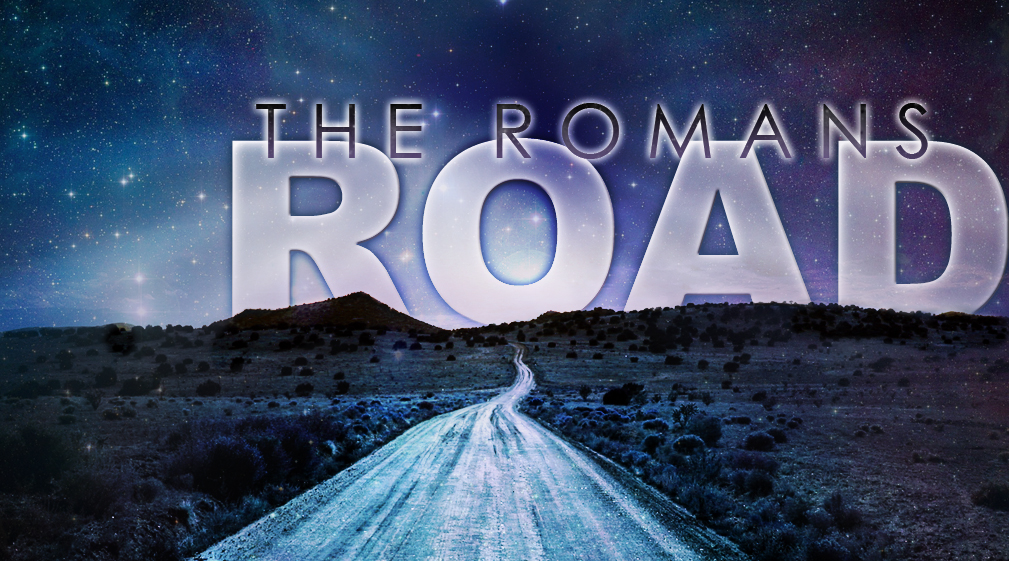
It would come at the end of an incredible week of building new relationships and ideas when one of the counselors who begin talking about the Roman Road and I imagine it went something like this:
“Have you accepted Jesus Christ as your personal Lord and Savior? Your life might feel pretty good right now, you might have a kind family and some nice friends, but what about your eternal life? Do you want to spend life after death burning in the fires of hell? Or do you want to be saved?
“Imagine that you are standing on the edge of a cliff. Being a good person isn’t enough to save you. You can see salvation on the other side of the divide, but the only way you can get there is through Jesus Christ. Try to picture the cross being a bridge for you to safely get to the other side. You have the power to decide your everlasting fate. What’s it going to be?”

When Josh explained these experiences to me I could sense the amount of manipulation that went into the dialogues. As the summers passed at camp, the conversations remained the same only the stakes became higher: What are you doing to save the people around you? Have you explained the Roman Road to your friends?
My friends, we are now alive though we were dead. Until the great gift of God in Jesus Christ we existed like lifeless bodies wandering around. Part of this came to be because we were guilty of sinfulness though we were also victims of our environment – people and organizations who told us we can save ourselves. But God, rich in mercy, saved us.
In the early church they did not spend their time going around trying to convince people with the Roman Road argument. They did not waste time going through the in and outs of theological proofs of Christ’s divinity and resurrection. Instead the church pointed at itself to prove the miracle. Want to know about death, the cross, and the resurrection? Here they are.
The budding Christian community grew not because it’s leaders were particularly articulate in their ability to save others through words, but because they believed in the Lordship of Jesus Christ. With the new family that was created in community they experienced a new kind of life with God at the core, a new opportunity that came with the Spirit.
While the early disciples went throughout their surrounding regions, their cries of evangelism did not begin with “Save yourselves!” Instead they, like Ephesians, triumphantly declared, “God saved you, come live your new life!”
If we are anything we are a people of resurrection. Not a country club of like-minded individuals, not a political organization, not a club of devoted fans, but a people of resurrection.
Since the time of Christ, those who followed him have found new life, resurrected life, with God. New life has come by many ways – repenting for the wrongs of our lives, being forgiven by God and our friends, experiencing an assurance of the eternal dimension of God’s love and care, and by a number of other life events, even hearing about the Roman Road from camp counselors. However, we must be careful when putting too much emphasis on our power in salvation. Yes, God has opened the door and we must be the ones to walk through it, but the greater act came in the opening of the door and not our power to go through it.
Resurrected life is something that will come when Jesus returns but we can also experience it here and now. Whenever I’m asked about miracles I can quickly describe some of the incredible things I have witnessed, events I attribute to God’s grace. But some of the most powerful miracles, to me, are right here in our midst. I can look out from this pulpit and see people’s lives who have been turned around through Christ’s love. I see and remember stories about things that have happened to you, sinful desires that suffocated your ability to live fully, when God offered you a new resurrected life.
I heard someone once describe their days as lifeless. They went through the familiar motions but it all felt repetitious, pointless, and directionless. This went on and on until someone invited them to a church community. Suddenly people began to care about him without knowing anything about him or his past. It was like he was being seen and treated through God’s perspective. Through a simple invitation and a new opportunity he felt resurrected from the dead, and began living again.
Salvation is not about receiving a perfect grade that allows us to make the cut into God’s heavenly kingdom. Who among us fulfills all of the laws from the Old and New Testaments? Loving our enemies, turning the other cheek, giving away our possessions? Even the greatest commandment to love God and neighbor with our hearts, souls, minds, and strengths is incredibly difficult.
If salvation was about getting the right grade, I’m sad to say that most of us would be failing. It’s as if the closer we get to visions of God’s glory, the more we realize our unholiness.
We pray to God before our meals and while we look out on the feast before us we are reminded of the many who have no food to eat. We kneel in a makeshift structure in Guatemala being served food by people who have nothing in terms of our materiality but have faith that we could never imagine. We sit on the stoops of a front porch in West Virginia after painting all day and we realize we could be doing so much more.
We were dead through the sins of our lives and we have been victims of our environment. The good news amidst this unholiness is that, by the grace of God, we have been saved. That through God’s incredible act of selflessness, our sinfulness has been forgiven.
Not a forgiveness as a nice plus added to a grade for our performance as Christians, but forgiveness as a completely unearned gift – a gift extended to a prodigal son who squandered his inheritance, a gift extended to a tax collector who only cared about himself, a gift extended to a thief who hung on a cross to die, a gift extended to you, or to me.
By grace we have been saved.
Grace is like friendship. Josh, the one who shared with me his experiences of Christian camp, is my best friend and was the best man at my wedding. I did nothing to earn his friendship. If it had been initiated over an exchange of goods (I will be your friend if you do this for me) it would never have become the true friendship that it is today. Friendship, and I mean true friendship, is an act of faith. Learning to trust the other knowing that they could hurt you.
I know that Josh will be there for me at a moment’s notice. He will listen to me and do whatever he can to help. I also know that he doesn’t expect anything in return. That is the meaning of true friendship; a willingness to give because the well-being of someone else matters more to you than your own. My friendship with Josh is an act of faith, but one that I am remarkably thankful for.
Salvation, for us, is the beginning of a covenant of friendship between us and God; between the divine and a sinner. Grace is another way of describing an incredible love story between God and his creation.
We cannot save ourselves. We cannot save other people. No matter what the commercials, advertisements, and camp counselors tell us. Only the Lord has the power to save. Thanks be to God that he came in the form of flesh in Jesus Christ to open up the gates of heaven to people like us.Thanks be to God that we are not called to save others, but merely help them to see what God has already done, and continues to do, in their lives.
We were dead but have been made alive through the greatest gift ever given. The question for us, then, should not be, “Am I saved?” Instead we should be asking, “What am I doing with this resurrected life?”
Amen.




 think and let think