Devotional – Psalm 107.1

Devotional:

Psalm 107.1

O give thanks to the Lord, for he is good; his steadfast love endures forever. 

Weekly Devotional Image

“I’m post-racial” he said. “I am color blind to racial differences and I have no prejudices.” At the time we were discussing racial inequality in Durham, North Carolina (a still very pertinent topic) and the man claimed that if more people could see the world the way he did, everything would be fixed. He proudly claimed his lack of prejudice for anyone with ears to hear but I had a hard time taking him seriously. I did not know him well enough to begin arguing against his so called “prejudice free lifestyle” so I decided to let him him wax lyrical about himself. However, while he continued to go on and on, a friend muttered next to me under his breath, “Show me someone without prejudice, and I’ll show you a liar.”

One of the hardest tasks of following Jesus Christ is to try to live without prejudices precisely because many of us aren’t aware of how deeply rooted our prejudices are. We may think that we are “color blind” or that we relate to people who are different from us in religion, sexual orientation, or political persuasions, but in many circumstances our involuntary thoughts, uncensored words, and knee-jerk reactions often demonstrate that our prejudices are still there.

If we’re driving in our cars and we see two women holding hands walking down the side-walk, what are our first thoughts? If we are at a restaurant and we witness a black woman and a white man kissing one another across the table, how do we immediately respond? If we’re flipping through news channels and come across a political campaign of a different perspective, how do we initially react?

diversity-hands1-400x266-copy

Strangers, anyone who is unlike us, stir up fear and discomfort. They break down our sense of security and well being by simply being “different.” We can puff ourselves up all we want with claims of living with a post-whatever lifestyle, but most of us, if we’re honest, are prejudice in ways big and small, seen and unseen.

As Christians, we give thanks to the Lord for he is good. Only when we learn to fully believe that God loves each of us unconditionally and see others as equally loved can we begin to behave according to God’s goodness. The great variety in the world is a sign of God’s immense wonder and beauty. Living with a non-judgmental frame of mind is exceptionally difficult, but it is worth working toward.

This week, while we continue to journey through the season of Lent, let us admit our own prejudices. When we have those knee-jerk reactions toward those who are different from us, let us immediately go to the Lord in prayer and ask for Him to create in us clean hearts so that we might become people of love rather than prejudice.

Devotional – Matthew 18.21-22

Devotional:

Matthew 18.21-22

Then Peter came and said to him, “Lord, if another member of the church sins against me, how often should I forgive? As many as seven times?” Jesus said to him, “Not seven times, but, I tell you, seventy-seven times.

Weekly Devotional Image

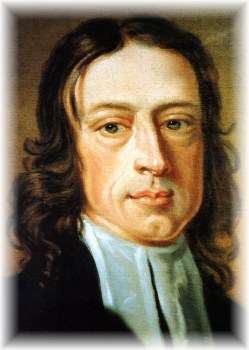
In October of 1735 John Wesley and his brother Charles left England and sailed to Savannah, Georgia where John would be the minister in the newly formed Savannah parish. Part of his religious upbringing had already instilled a desire for holiness of heart and life and Wesley believed that his new appointment provided a wonderful opportunity to hone his craft and enrich his faith. During his time serving as the pastor attendance at the church services steadily increased though he was disappointed by the lack of lived-out faith outside of worship.

John Wesley

John Wesley

Even with the growth in worship, many in the community disliked Wesley’s high church background and it proved to be a continual element of controversy. During this same time Wesley began to fall in love with the young and beautiful Sophia Hopkey. They courted for a period of time but after a brief visit to preach the Good News to the local Native Americans, Wesley was remarkably disappointed to discover that Sophia had married William Williamson. Wesley was devastated by the news and took out his frustration in a rather inappropriate way; he denied Sophia communion during church services.

Wesley, of course, had “reasons” to justify his actions (he believed that her zeal for living out her Christian faith had declined and he followed the guidelines from the Book of Common Prayer in prohibiting her sacramental participation) but he was also fueled by his heartache and anger in withholding the bread and wine. It quickly became quite the controversy and legal action was taken against Wesley eventually leading to him fleeing the colony and returning to England.

One of the highest, and most difficult, callings of Christian disciples is to forgive. When confronted with the question of forgiveness in the community Peter ventured forth the idea of forgiving someone seven times when Christ augmented the proposal to seventy-seven or seventy times seven times. Forgiveness, it would seem, is not something to be measured and checked off the list, but instead something that is deeply entrenched within the life of the community. Wesley let his personal feelings get the better of him, and he foolishly barred a young woman from Christ’s table. Christians, both clergy and lay, are called to the difficult task of everlasting forgiveness, even when it hurts.

Is there someone that you are still holding a grudge against? Who do you need to forgive in your life?

Devotional – Matthew 18.15

Devotional:

Matthew 18.15

If another member of the church sins against you, go and point out the fault when the two of you are alone. If the member listens to you, you have regained that one.

Weekly Devotional Image

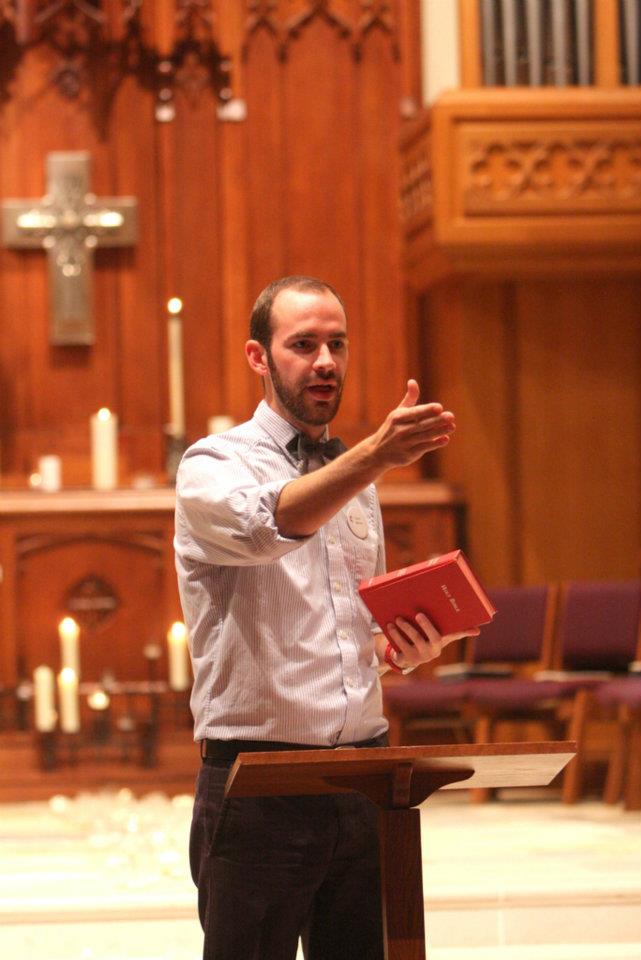
During our weekly lectionary discussion group, after reading Matthew 18, Leah Pack questioned the group in attendance about whether or not any of us has had an experience of someone from the church confronting us in order to point out our faults. After all, pointing out the faults of a fellow church member is something Jesus charged his disciples to do. While the group pondered particular moments from their church lives, I shared with them one of my experiences.

Preaching in Birmingham

Preaching in Birmingham

I had been helping serve at a church in Birmingham, Michigan for most of the summer. My responsibilities included visiting the hospitals, preaching, teaching, leading worship, and regular committee attendance. It was a particularly rewarding summer for me, and helped me identify my own strengths and weaknesses for ministry. Throughout my internship I met with the Seminary Committee who helped to provide the necessary information for my journey and offer advice and feedback regarding my work. On my last evening in Birmingham the committee shared their final evaluations for the summer and wished me well on my ministerial journey; the group was incredibly gracious and kind with their reflections.

As we prepared to leave the church that night one of the older gentlemen from the committee asked to speak with me privately before we left. “You are so full of it,” he began, “I watched you all summer long, and you might’ve fooled everyone else but you can’t fool me. You are one of the most arrogant and self-righteous young men I have ever met.” And with that he left me alone in the room; his words piercing deep in my soul.

I learned later that the man had a very difficult time watching a young person speak with such confidence from the pulpit on a regular basis and that, for him, was a sign of arrogance. Nevertheless, his words have stayed with me ever since that particular evening a few summers ago. Though I may not completely agree with him regarding his judgment of my faults, it was helpful (though painful) to hear him speak his mind. It has helped me to be mindful of the ways I come off as a pastor to others in ways than I could not previously imagine.

One of the highest callings of discipleship is a willingness to confront others when they are at fault. However it is important to remember that we are not called to judge them, but instead speak the truth in love about ways others have wronged us, and how we can reconcile broken relationships.

How have you confronted others who have faulted you? Has anyone pointed out your faults? Let us be truthful people who are kind with our words and courageous in our faith.


Barefoot Basics – Sermon on Exodus 3.1-6

Exodus 3.1-6

Moses was keeping the flock of his father-in-law Jethro, the priest of Midian; he led his flock beyond the wilderness, and came to Horeb, the mountain of God. There the angel of the Lord appeared to him in a flame of fire out of a bush; he looked, and the bush was blazing, yet it was not consumed. Then Moses said, “I must turn aside and look at this great sight, and see why the bush is not burned up.” When the Lord saw that he had turned aside to see, God called to him out of the bush, “Moses, Moses!” And he said, “Here I am.” Then he said, “Come no closer! Remove the sandals from your feet, for the place on which you are standing is holy ground.” He said further, “I am the God of your father, the God of Abraham, the God of Isaac, the God of Jacob.” And Moses hid his face, for he was afraid to look at God.

HolyGround_web

I love churches. I’m not sure when my affection for worship spaces began, but for as long as I can remember I have always loved Christian buildings. Whenever I travel somewhere new, and have an opportunity to explore a local church – I do so.

The first time I went to Guatemala, while all my friends were bargaining with the local artisans for a blanket, or a sweater, or a bowl, I found myself walking around the village peaking in on the churches. When I was younger I would arrive early for youth band at my home church just so I could walk around the building, sit in the different pews, and even stand up in the pulpit to pretend I was the preacher. In fact, when I came to St. John’s for the first time, Good Friday evening of 2013, I was introduced to the Staff-Parish Relations Committee, and when they inquired if there was anything I needed to know about the church, I asked to see the sanctuary.

When I enter a church for the first time, I have made it a habit to walk to the front near the altar, kneel on the floor, and pray. Sometimes the prayers have been about the safety of the mission trip, or for God to bless the people and preacher who call this space home, or even for God to bless me with a church of such beauty in the future.

One summer, when I was provided the opportunity to lead a group of college students to Taize, France, I found myself walking with my friends and exploring the local town. Between the three daily worship services with 5,000 other twenty-somethings, we had the freedom to do as we pleased, so we hiked around Burgundy, France.
1934569_1139874788043_6304071_n

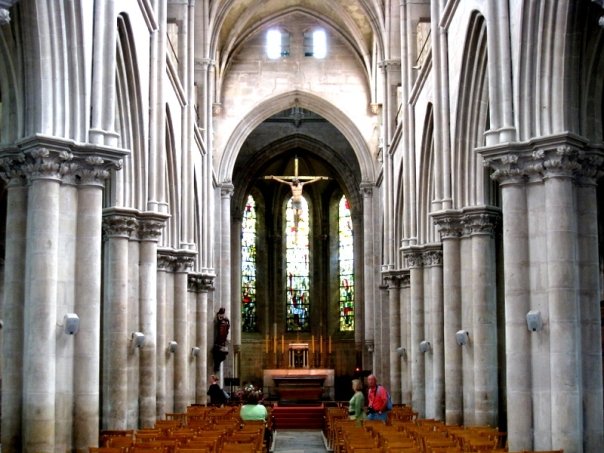
When we entered the small chapel, I was overcome by its opulence. The stained glass was filled with such vibrant colors, letting in just the right amount of light through the scenes of scripture. The crucifix at the front had a triumphant Christ hanging on the cross above the altar. The pews were made of well-worn wood that conveyed a deep sense of time and care. While my friends examined the fine details of the space I walked to the front, fell to my knees, and I prayed.

I must have been there for some time, because when I opened my eyes it took them a moment to readjust to the light. Below my knees, I noticed some writing on the marble stones that made up the floor. While my eyes began to focus on the crude letters, I was gripped with a sense of fear and awe – the floor was made of old gravestones.

With all the beauty surrounding me on the walls, and ceiling, with an altar worthy of a king, and a pulpit raised high in the air, I neglected to notice the most sacred and holy element of the church. The floor and foundation of the worship space was made possible through the saints that have gone on before us, a constant and beautiful reminder that this was holy ground.

Burning bush 1

Just like every other day, Moses was tending to the flock. The morning was typical, calm, and cool with the dew hanging on the leaves while Moses walked along the path. Perhaps while walking in the still silence, Moses thought back upon his life, and what had led him here. He had grown up around the inner circle of Pharaoh’s cohort, raised by the princess as her own, but when he saw an Egyptian beating a Hebrew he could not contain his rage and committed murder. Moses fled from the comfort, power, and prestige of Egypt because he was afraid. He eventually settled in Midian and married Zipporah, the daughter of Jethro the priest.

Moses was tending the flock that belonged to his father-in-law when he led them beyond the wilderness and came to Horeb (“wasteland”), the mountain of God. Walking along the path, filled with thoughts form the past, Moses discovered a bush on fire, and even though it was blazing, it was not consumed. Rather than continue on his journey, Moses turned aside to look at the great sight, to see why the bush was not being burned up. Then God called out from the bush, “Moses, Moses!” And he replied, “Here I am.” The Lord commanded Moses to stay put, and remove the sandals from his feet, for the place where he was standing was holy ground. “I am the God of your father, the God of Abraham, the God of Isaac, the God of Jacob.” And Moses hid his face, for he was afraid to look at God.

It was just an ordinary, everyday journey for Moses. A normal routine with no “religious” intentions. He was not going out to seek the perfect modern preacher or guru to learn about what God was calling him to do with his life, he was not sitting in the great temple of Jerusalem, he was just doing his job.

God chose the mountain in the wilderness as the place of revelation and change for Moses’ life. The encounter took place far and away from the sights and sounds of the religious community, this holy moment takes place in the least likely of situations and locations.

A burning bush appeared in the wasteland, but the fire did not consume it. Moses was not frightened away from the bush, nor was he repelled by the sight of something strange, but instead he was drawn toward it. His curiosity propelled him forward, not for religious reasons, but because it was unknown.

God, the God of Abraham, Isaac, and Jacob, loves to make use of human curiosity for his own purposes. Curiosity often leads to discovery, new life, and new vision.

Moses was the one who ran away from familiarity into the unknown. He had left behind his family and calling in Egypt because he feared for his life. He escaped to the place of Midian, found a wife, and a new calling and was settled. It happened in the ordinary and mundane moment of routined life that Moses was jolted into a new reality.

God is the one with the initiative in the situation. Moses was not begging on his knees for God to enter his life, instead it is God who confronts Moses and calls him to a task.

We gather in this space for worship with expectations. We come to church to sing, to pray, to live, to love, and to encounter the living God. It is our hope and belief that in so doing we will come into contact with the divine in such a way that we can be filled and transformed for the coming week. However, if the story of Moses and the burning bush is to come alive for us today, then we must prepare ourselves to be encountered by the living God when we least suspect it.

wedding-11

Years ago, Zig Volskis was preparing to preside over a wedding for a beautiful couple. He had done the necessary pre-marital counseling, he had met with the families to discuss the needs of the wedding ceremony, frankly- he had taken care of everything he needed to for the wedding to be perfect. Like with all weddings he stood at the front with the wonderful couple and began to speak about the holy covenant of marriage, of Christ’s role in bringing two people together as one, and the responsibility to live into this new identity with faithfulness.

Zig had done a lot of weddings. He knew that at some point the bride would start crying, and if he really worked it, the the groom would cry as well. He knew that some of the people in the congregation no longer believed in marriage, but believed in the young people enough to show up. He had done enough weddings to know the routine. But this was to be no ordinary wedding…

I can’t do this,” the bride blurted without warning. Zig, the great pastor that he was, immediately took over the situation, escorting the young woman out the congregation to have a serious conversation. Thinking that it might just be wedding jitters and nervousness, he invited the young woman to speak. “I can’t do this,” she said, “I’ve had my doubts, of course. But it just hit me right before we walked in. We were waiting for my grandmother to arrive and she was running late. The longer we waited, the more angry my fiancee became. When she finally made it he began yelling at her for ruining this moment, for making us wait on her. The entire time I walked down the aisle and saw him standing at the front, I realized for the first time, that I was making a terrible mistake.” So Zig re-entered the sanctuary, and as calmly as possible, informed everyone that the wedding would no longer take place.

God shows up in the most unexpected times and places. In the midst of a beautiful wedding ceremony the Spirit moved in such a way to give a dose of reality to a young bride about the mistake she was about to make. In the midst of a cold December evening when I was sixteen, God brought me down to my knees and propelled me on a path toward church ministry. In the midst of a leading a flock God appeared in the burning bush to call Moses into something difficult and holy.

I knew a pastor who, every Sunday morning, would kick off his shoes at the back of the sanctuary before entering during the opening hymn. When I finally asked him about this strange practice he casually replied, “this is holy ground.” I think he was right; this space, the inside of our sanctuary, this room where we gather to meet the living God is holy ground. But I also think he was wrong; the ground is only holy because of God’s appearance, not because we say it is.

I love worship, and I love churches. I have had some incredible moments in my life where I have heard a preacher proclaim words from a pulpit as if he or she was speaking to me, and to me alone. I have been in the middle of singing a hymn only to realize that tears were flowing down my face because of the depth and beauty of a God who could love me in spite of my sinfulness. I have prayed at the altar after receiving communion and experienced even just a foretaste of what God’s kingdom is all about. But some of the most transformative and life-giving moments of my life have taken place when I least suspected them, in places far removed from the religious center of the church.

Being called by God into a new life is not something that applies only to clergy, nor is it something that happens exclusively in worship. We are all called in one way or another to live faithful lives for God’s kingdom, whether we are clergy or lay, teachers or students, engineers or musicians, writers or mathematicians. We are given incredible opportunities to respond to God’s calling in manifold ways in our daily lives by loving our neighbors as ourselves, by asking the hard questions that other people are afraid to mutter, by looking at the world through Christ’s perspective.

We are not abandoned and left alone. We see how God is really gracious toward us in the fact that God confronts us in his incredible holiness. The fact that God does not permit his people, the righteous, or the church to perish, means that He refuses to let us go our own way when we act and behave as if we were people who do not need to hear the Good News.

We stand on holy ground, here at church and out in the world, confronted by the Holy One, who searches deep into our souls and knows what we think, what we feel, and what we believe. God cannot allow us to wander off and be left to our own perspectives, but meets us in the ordinary, when we least expect it, and calls us by name: Moses, Moses; Taylor, Taylor, etc.

When God confronts you in the midst of life, how will you respond? Will you continue your journey and ignore the unexpected call? Or will you say, “Here I am”?

Amen.

Devotional – Romans 12.9

Devotional:

Romans 12.9

Let love be genuine; hate what is evil, hold fast to what is good;

Weekly Devotional Image

By 1743 the “Methodist” movement within the Church of England was taking off and growing considerably. John Wesley was suddenly responsible for checking in with the numerous societies he had helped to establish in order to continually encourage them in their faith and love. On one such occasion (in February of 1743) Wesley traveled to Newcastle to check on a particular society and was dismayed to discover a lax of discipline within the group.

Though harsh by our modern standards, Wesley examined every member of the society and found it necessary to expel 64 people from the group for the following offenses: “2 for cursing and swearing, 2 for habitual Sabbath-breaking, 17 for drunkenness, 2 for retailing spirituous liquors, 3 for quarreling and brawling, 1 for beating his wife, 3 for habitual and willful lying, 4 for railing and evil speaking, 1 for idleness and laziness, and 29 for lightness and carelessness” (Heitzenrater, Wesley and the People Called Methodists, 138). The offenses were so grave that Wesley believed it was detrimental for the whole if these offenders remained.

Within the week Wesley wrote what we now know as the General Rules. The terms of membership were simple: “a desire to flee the wrath to come, and to be saved from their sins.” But in order to continue in the society, members were required to live out their faith by, “First, By doing no harm, … Second, By doing good, … Thirdly, By attending all the ordinances of God.” (ibid.) These General Rules became foundational for the Methodist movement that eventually led to the creation of the contemporary United Methodist Church.

6a00d8348e805369e2014e5f5f2a3c970c-500wi

Paul wrote to the church in Rome a similarly simple list about what it means to be in Christ: “let love be genuine; hate what is evil, hold fast to what is good.” These principles of Christian discipleship are like the compass of our faith, guiding us to new and continual life in Christ. Wesley truly believed in renewing the Church of England by creating a standard by which the Christians could dedicate their lives. Faith, for him, was serious and worth working hard for. Today we are responsible for renewing our faith through discipleship and our commitment to love God and neighbor.

How do you live out your faith? Has following Jesus become boiled down to showing up for church once a week? Do you follow any guidelines or responsibilities for discipled-living on a daily basis?

Perhaps today we are all being called to a life of dedicated and disciplined faithfulness by simply letting our love be genuine, hating what is evil, and holding fast to what is good.

Ten Things I Learned My First Year of Ministry

I recently celebrated the completion of my first year of ministry for St. John’s UMC in Staunton, VA.  Throughout my first year I experienced numerous mountaintop experiences as well as deep spiritual valleys. I baptized infants and adults into the body of Christ, I presided over the table and shared the body and blood with the people of God, I brought couples into holy matrimony, and I gave witness to the life and death of faithful Christians. I have learned a lot and am continuing to grow. Below are 10 of the biggest lessons I learned from my first year in ministry.

stained-glass-569x379

1. Every Church Is Different 

I was blessed to grow up (theologically) under the tutelage of great mentors in Dennis Perry and Jason Micheli. Until I left for college I worshipped at Aldersgate UMC for the majority of my life and had very little experience outside of my home church. I learned very quickly throughout seminary, and particularly while serving at St. John’s, that all churches are different. What I preached at Aldersgate would never work at St. John’s and vice versa. Every church has its own context and collective narrative that must be learned before the rhythm of worship and preaching can begin to be fruitful for both the pastor and the congregation. It takes time, but it is time well spent to learn the story of the people.


2. Being New Can Go A Long Way

When I was commissioned last summer I became the youngest pastor in the Virginia Annual Conference and would become the youngest pastor to serve at St. John’s since 1955. The church had grown accustomed to their pastors retiring from this appointment and were excited to receive a new and fresh-from-seminary pastor. Being new has gone a long way. I have been given certain freedoms to explore different ways of worship, teaching, and discipleship purely because I am still new to this. The laity have been particularly forgiving of my preaching because, I hope, they recognize that I am continuing to learn our collective narrative every Sunday from the pulpit. The atmosphere in church has been exciting over the last year which has encouraged our members to invite others to worship, something that all churches need in order to share the Good News.


3. It Can Be Lonely

Jason Micheli has previously written about the loneliness he experienced in his first church because there were very few people around his age. In a similar way  my wife and I have had a difficult time in Staunton meet and making new friends outside of church. Part of this stems from the fact that there are simply not very many young people in Staunton. However it is challenging to make friends outside of the church when some people immediately put up a wall when they learn that I am a pastor. It is remarkably important to maintain friendships that began in, and before, seminary but it is challenging when the geographic divide makes it difficult to stay in touch. All pastors need community; their church and people outside of it.


4. Committee Meetings Are Hard

Seminary cannot prepare you for committee meetings. I was never asked to serve on a committee before I became a pastor so I had to quickly learn the functions of each and their patterns of serving the church without any prior experience. Though the Book of Discipline outlines the roles of the committees, every church lives out these responsibilities in different ways. There have been many nights where I come home thrilled about the direction of the church I serve, and other nights where I have felt defeated by what had taken place during a committee meeting. It is so important to remember that all of this, doing church and being the body of Christ for the world, it about God and not myself.


5. It’s Important To Be Involved In The Community

When I met with the SPRC for the first time I asked what they wanted most from their pastor. The collective response was that they wanted a pastor who would be known in the community. I made a concerted effort to make that come true during my first year. For example: I have been quick to introduce myself to people in town as the pastor of St. John’s, I joined the Stonewall Brigade Band (performing continuously since 1855!) and play drums with them every Monday night as we perform free concerts in Gypsy Hill Park, and I sent hand written letters to the immediate community surrounding the church introducing myself and asking if there was anything I could do for them. The church is not just the people who gather on Sunday mornings; we are intricately connected with the people in the community. It is therefore important to establish a presence within the community outside of the church.


6. My Vision Is Not The Same Thing As The Church’s Vision

I have come up with a lot of new ideas over the last year and a number of them have become very fruitful for our church. Recently however, I have begun to realize that my vision is not necessarily synonymous with the church’s vision. The people of St. John’s have been doing church a lot longer than I have; they have an established wisdom about what can and can’t work for our faith community. It has been good for me to lead with a passionate vision, but then at other times it has been even better for me to take a step back and let the lay leadership’s vision guide us.


7. Workaholism Is Just One Step Away

Every church has many needs from the pastor: visiting the shut-ins, preparing and leading worship on a weekly basis, ordering the church, etc. Though many might assume that being a pastor is a one-hour-a-week job, it is so much more than that. As someone who is regularly at the church facility there are a number of other jobs that I never imagined would be regular parts of my ministry. I have been a plumber, carpenter, Preschool teacher, preacher, mower, snow-shoveler, counselor, teacher, accountant, therapist, etc. For pastors there is a temptation to let the needs of the church dictate every aspect of your life. It is vitally important to maintain a regular sabbath and share the responsibilities of church with the body of Christ.


8. Less And Less People Know Their Bibles

I often take for granted how much scripture is known by the people of church. There are, of course, the prayer warriors and bible study leaders who know their bibles better than I do, but over the last year there have been a number of experiences that had demonstrated a staggering amount of biblical illiteracy. For example: One Sunday I casually mentioned Jacob wrestling with the angel on the banks of the Jabbok river with a bible study class when they all looked up at me and one of them said, “that’s definitely not in the bible.” Or after preaching about the last supper and then going through the entire communion liturgy a longtime church member said, “I never knew that what we do with communion comes from the Jesus’ last supper!” As the greater church looks to the future of the Christian faith we need to be particularly careful about how we return to a love of the bible and nurture scripturally shaped imaginations.


9. Reading Makes For Better Preaching

Soon after arriving in Staunton I had more free time on my hands than I had initially anticipated. I was able to make all my visits, have the sermon written by Wednesday and take care of my other responsibilities which freed me for having time to read from both the bible and theological works. By the time the fall rolled around I found myself incredibly busy and lost the time to read outside of what I needed on a weekly basis; my preaching suffered during this time. I relied too heavily on commentaries and personal anecdotes because my own faith walk was suffering under the weight of weekly ministry. Only when I had come to a realization of the way my work was affecting my faith was I able to re-focus and re-prioritize in such a way that I found time to feed my soul outside of my regular responsibilities. We become better writers and better preachers by actively reading and responding to God’s Word beyond the weekly sermon or lesson in our lives.


10. I Have The Best Job In The World

A professor of mine from seminary once said, “If you can do anything else outside of ministry then stop right now. Ministry can be one of the least rewarding vocations: spiritually, monetarily, and socially. But if you can’t do anything else, which is to say if you feel so called to ministry that you can’t do anything else, then it will be the most rewarding thing you’ll ever do.” For some this was a big wake up call and a few eventually dropped out of school, but for me it only refueled my fire. And he was right. Ministry is the greatest job in the world. Where else could I spend my time deep in God’s Word? What job would give me the ability to preside over something as precious as the water dripping on a child’s head in baptism or offering the gift of bread and wine to the weary travelers of faith? It is a privilege to serve God’s kingdom as the pastor of St. John’s UMC and more rewarding than I could have ever imagined.


(Originally written for the Tamed Cynic blog)

Devotional – Romans 6.22

Devotional:

Romans 6.22

But now that you have been freed from sin and enslaved to God, the advantage you get is sanctification. The end is eternal life. 

Weekly Devotional Image

Over the past few years our church has made a concerted effort to welcome first time visitors to worship with radical hospitality. I stand outside and introduce myself to anyone here for the first time, we have greeters waiting by the entrance to the sanctuary, we send around a pew pad to gather addresses/phone numbers to follow up with people later, and we give away a travel coffee mug with our name, address, and phone number. All of these things are done in a hospitable way in order to demonstrate our love for others, and our desire to continually share the message of the Lord with them.

welcome-first-time-visitor

Some churches go far above and beyond what we do to entice first time visitors to return; I have heard of churches that give away bags of candy, others welcome visitors with coupons to local restaurants, still others give away books, DVDs, and further promotional material. Some churches have committees dedicated to training members on how to speak to first time visitors and invite them to return for another aspect of church life. In the last few years “radical hospitality” has been a major focus of the mainline and non-denominational churches to retain worship numbers.

radical-hospitality-2-web

Yet, sometimes, when I read scripture I am reminded of how unappealing Christianity can be. When Christ went ou among the multitudes he did not say: “here is some promotional material about what our movement is doing, we hope to see you next week!” Instead he brought people into his fold with some of the worst PR I have ever read: “let the dead bury the dead; but as for you, go and proclaim the kingdom of God… whoever loves father or mother more than me is not worthy of me; and whoever loves son or daughter more than me is not worthy of me… whoever wishes to be great among you must be your servant, and whoever wishes to be first among you must be slave of all…”

I fear that today we attempt to make the gospel so appealing that, according to the ways of the world, we water it down. It is a joyous and wonderful thing to have been freed from the power of sin, but we must not forget that we are now enslaved to God. The advantage of discipleship is our own sanctification and eternal life but it comes at a cost. Christianity is not some other wonderful way of thinking about life, it is a demanding and difficult call to live radically transformed lives where the ways of God are more important than the ways of the world.

So, this week I challenge us to reflect on our faith and the ways that we try to share it with others. Are we inviting people to church because it makes us feel good, because a full sanctuary looks better than an empty one? Or are we willing to admit the paradox that being enslaved to God is is the most wonderful and powerful thing we can do with our lives?

How Did You Two Meet? – Pentecost Sermon on Acts 2.1-13

Acts 2.1-13

When the day of Pentecost had come, they were all together in one place. And suddenly from heaven there came a sound like a rush of a violent wind, and it filled the entire house where they were sitting. Divided tongues, as of fire, appeared among them, and a tongue rested on each of them. All of them were filled with the Holy Spirit and began to speak in other languages, as the Spirit gave them ability. Now there were devout Jews from every nation under heaven living in Jerusalem. And at this sound the crowd gathered and was bewildered, because each one heard them speaking in the native language of each. Amazed and astonished, they asked, “Are not all these who are speaking Galileans? And how is it that we hear, each of us, in our own native language? Parthians, Medes, Elamites, and residents of Mesopotamia, Judea and Cappadocia, Pntus and Asia, Phyrgia and Pamphylia, Egypt and the parts of Libya belonging to Cyrene, and visitors from Rome, both Jews and proselytes, Cretans and Arabs – in our own languages we hear them speaking about God’s deeds of power.” All were amazed and perplexed, saying to one another, “What does this mean?” But others sneered and said, “They are filled with new wine.”

Acts 2:1-4. When the day of Pentecost came. Pastel & pen. 26 May 2012.

I had spent an entire week with countless young Christians from all over the world at a monastery in Burgundy, France. For most weeks during the summer, Taize attracts upwards of 5,000 young Christians dedicated to exploring their faith through prayer, service, and singing. Waking up in a tent every morning, I would trudge across the dew filled grass passing neon tents filled with 20-somethings snoring away as the sun came up over the horizon. Each little campsite held clues as to the nationality of the residents: the occasional German flag, a water bottle covered in French writing, an abandoned tee-shirt with a hispanic wrestler flexing on the front, I even saw a cricket bat one morning. As the crowds made their way to the sanctuary, it was impossible to eavesdrop or understand what anyone was talking about because no one was speaking English.

Just past the interior door to the incredibly large sanctuary, there were buckets filled with hymnals organized by language. On our first morning I was surprised to discover that there were more “English” hymnals left in the buckets than any others, because Americans were part of the minority of the gathered body.

Taize Altar

Taize Altar

We sat on the floor surrounded by other young people who were still half asleep fumbling through our hymnals before the service began. Suddenly, up at the front of the massive building, a simply lit sign displayed three numbers “312” and as if we were being controlled by a single operator we all flipped our pages to the corresponding hymn. Without any musical accompaniment, without any choral direction, the hymn began. I, of course, sang the hymn in English as the words were displayed on the page, but when I made my way to the end of the song, everyone continued singing. We were not told how many times to repeat the hymn, but it went on and on until in ended naturally at the same moment. It was unlike anything I had ever experienced. When I had finally caught on to the rhythm of our singing, I closed my eyes and began to hear all of the other voices singing faithfully in their native tongue. Without a doubt, that moment as I sat on the floor of a enormous sanctuary in France, was the closest I have ever been to experiencing the day of Pentecost in my own life.


The community of faith had recently witnessed Jesus’ ascension into heaven and then retreated to the upper room in Jerusalem to devote themselves to patience and prayer. For ten days they waited, as they had been told to do, waiting for something to happen. We are given very little in Acts about what they did those ten days but we do know that rather than taking matters into their own hands, instead of getting organized and venturing forth with pamphlets about “what God can do for YOU”, they waited for God to make the next move.

The day of Pentecost, what we celebrate and remember today here in church, was the first big thing to happen to the disciples after Jesus had left them. Like the start of any life or story, the beginning has major ramifications for how the rest will turn out. Just as with Jesus’ birth in the manger in Bethlehem to a virgin, so too the details surrounding the birth of the church would come to define the rest of the story for Jesus’ followers.

CELPentecost[1]

As the morning broke, while the disciples were all together in one place, an eruption of sounds and a wind from heaven filled the entire house. Things were coming loose and breaking open, new realities were taking shape, and the life of discipleship was changed forever. The wind swirled around the gathered people, the same wind which on the very first morning swept across the dark waters and brought order out of chaos. The wind of Genesis was again bringing something new to life.

Divided tongues, as of fire, appeared among them and each of them were filled with the Holy Spirit and began to speak in other languages, as the Spirit gave them ability. What a strange and profound moment this must have been! After days of waiting in prayer God had showed up and quickly put things into action. Though the Spirit brought order out of chaos in Genesis, this must have felt like the opposite. I imagine the disciples running about within the house exclaiming great things in languages they themselves had never heard before. Something this incredible and inexplicable could not be contained to one house alone, and a crowd quickly gathered and was bewildered by the indescribable moment.

Jews from all over had gathered in Jerusalem when this took place and they began to hear these nobody disciples speaking in the native languages of all the people. Amazed by this, they questioned how it was possible, and quickly decided to blame it on an excessive use of alcohol.

The crowd’s demand for an answer was a cue for one of the disciples to stand and speak. And who, among the disciples, could have imagined that Peter would have been the one to do so? Peter is the first, the very first to lift up his voice and proclaim proudly and faithfully the word that he was unable to when Jesus had been arrested. The man who had been so quick to deny Christ three times, is the one who stepped forward to share the glory of God’s kingdom with all who questioned this miracle.

Peter preached a sermon, he shared the story of God in Christ, all by the power of the Spirit: “listen to what I have to say: Jesus of Nazareth, a man attested to you by God with deeds of power, winds, and signs that God did through him among you, and you yourselves know — this man, who was handed over to be crucified and killed, was raised by God, having been freed from death because it was impossible for him to be held in its power…” Peter told the story that he had witnessed and thus helped give birth to the church that we now participate in today.


I have been here at St. John’s for almost a year. The last twelve months have been filled with changes, excitement, new life, and joy. I give glory to God for sending me to a place with such faithful people who have helped me to see God in new and wonderful ways, while also allowing me to do the same. 

I knew that, upon arrival, one of the most important things I could do would be to learn the collective story of the church. I have met with many of you to learn about your lives and your stories in such a way that I could learn about our community that gathers here for worship. When I meet with couples I almost always ask the same question: How did you two meet? I ask this question because how two people met says a considerable amount about their relationship, and most people love to tell that particular story.

I can tell you with joy this morning, that many of you met in wonderful and joyful ways. I have had the privilege to hear about a couple who met on a Greyhound bus traveling to Radford, VA over 65 years ago. We have a couple who met at a brewery when the young woman complimented the young man on his beard. Or there’s the couple who met in a spousal grief group after having both been divorced. We even have a couple who met here in church and the boy asked his brother to the get the number of the girl so he could ask her out later.

I love asking how a couple met because people can tell the story with all the important details. They can remember the outfits they were wearing, the weather outside, and the other people who were present. They can describe with vivid clarity that first smile they saw, or the way their fingers felt when they wove them together for the first time. And frankly, I love asking the question because it is hilarious to watch men and women argue about the details of a meeting from their own perspectives.

(Photo Credit: Jill Nicole Photography)

(Photo Credit: Jill Nicole Photography)

But sometimes I think about the gospel story and I wonder how that connects us. I freely admit that when I ask couples about how they met I am not expecting anyone to start talking about Moses or Abraham or the Holy Spirit. But the Gospel story is one that we should know just as well. Many of you have been attending church for your whole lives, and even those of you who have recently started to attend, have heard the story of God in Christ week in and week out. The story that we find in scripture is inescapable because it is ours. 

I ask people about who they met because it teaches me about whom they are. It helps to reveal parts and aspects of personality that would otherwise remain hidden, it sheds light on what brings people joy and how they connect with others. But in the same way, the Gospel is who we are. It is as much a part of our personalities and joy and interconnected as the story about how we met our spouses.

When Peter stood in front of the crowd on the day of Pentecost he told the story of God in the world through Jesus, his friend and Lord. With confidence and bravery he proclaimed the same story that we tell here in church every week. We should know the story that Peter shared, we should be able to tell it with the same clarity and detail and faithfulness. Imagine how powerful the gospel story would be, if you knew it and believed it and experienced it in the same way you met your spouse.

The gospel is something worth sharing. I don’t mean in the sense that you should start knocking on people’s doors to ask: “Have you heard about our Lord and Savior Jesus Christ?” But I want to question our willingness to keep telling this wonderful and life-giving story.

After all, how would anyone know whether or not you’re a Christian?

Maybe you wear a cross around your neck, or you pray before your meals at restaurants, or you tell people about what fun activities are going on at your church… But seriously, how would anyone know if you’re a Christian?

We can tell the story of God’s interaction in the world through ways that are both faithful and fruitful. Like those first disciples the Holy Spirit has been poured on to us in such a way that we are now filled with the Spirit and have been given gifts. The disciples were given the power to speak in numerous languages in order to convey the gospel to the multitudes. Today we have been given the power to meet people where they are in order to be Christ’s body for the world.

Imagine the next time someone started to tell you about a recent tragedy, you responded by asking to pray for them. Or the next time you hear about a family thats having a difficult time adjusting to a new life in Staunton, you invite them over for dinner out of kindness rather than expectation. Or the next time you believe that someone has been treated unjustly, you speak up for them rather than expect someone else to do it. And when you’re asked why you have done these things, answer truthfully and confidently: “I am a disciple of Jesus.”

The Spirit that empowered those disciples still empowers us. Like the cacophony of languages that were all singing to the Lord at Taize, we are called to raise our voices, to go public with the good news. As we see with the way Peter proclaimed the story on behalf of the church, we also have something to say, we need only the courage to stand up, open our mouths, and begin.

Amen.

Devotional – 1 Peter 5.6

Devotional:

1 Peter 5.6

Humble yourselves therefore under the mighty hand of God, so that he may exalt you in due time. 

Weekly Devotional Image

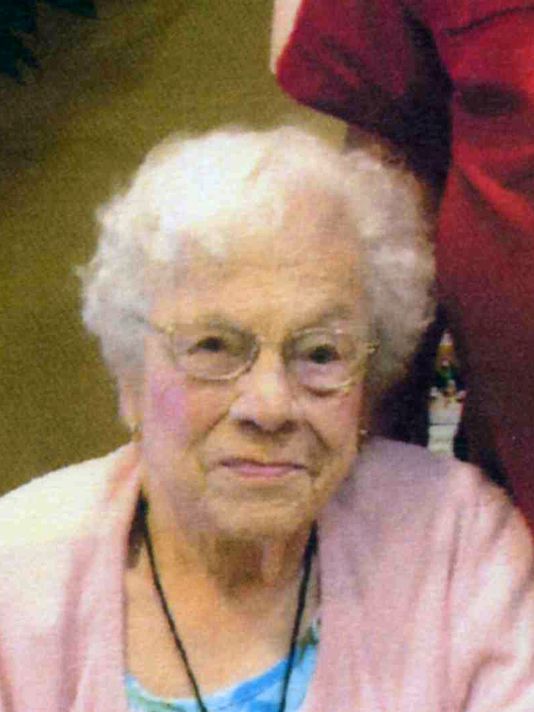
I got the phone call on Thursday afternoon letting me know that Mrs. Betty Lancaster had passed away. Sitting on my couch at the parsonage I realized that I have been at St. John’s for nearly a year and this phone call meant that I was going to preside over my first funeral. I got to the Lancaster’s room at Brightview Baldwin Park as quickly as I could and I sat with the grieving family as they accepted the fact that Betty was gone.

Betty Lancaster

Betty Lancaster

Over the weekend I met with the family on different occasions learning more about the kind of life Betty lived in order that I might do justice to her life during the funeral service on Monday afternoon. The family shared with me particular stories about her life; her love to travel, her expertise in the kitchen, and her dedication to instilling important family values. I heard about how she and Ray met on a Greyhound bus on their way to Radford/Blacksburg, and how their marriage of 63 years began in a service station here in Staunton when a clerk from the court met with them to preside over their martial vows.

I made phone calls to a few of Betty’s friends that still live in the community who confirmed the family’s belief that she was one incredible woman, ready to do whatever it took for others. The more I learned about her life, the more I wished I had been able to spend more time with her myself. 

But the one thing that stuck out among all the other details was a simple comment that Ray made as soon as I made it to his room after Betty died. Sitting in his chair, barely looking up from his lap, he softly said, “To us, Betty was always a star, but she never went in for all the glitz and the glamour.

submission-to-God-500x333

Humility is a lost art in our current culture. With the need and the drive to outshine everyone else (whether for employment, college applications, or just selfish desire) we no longer appreciate the importance of remaining modest. Life, at times, seems like one giant competition where we have to make sure that we come in first place. However, the kingdom of God is not like the world we live in. Instead of cutthroat competition dominating everything we do, we are called to humble ourselves under the mighty hand of God, so that he may exalt us in due time. In life we will have opportunities to shine for God, but we must remember that when we do our best, we do so for the kingdom of God and not ourselves.

The call of discipleship today is to live like Betty Lancaster did, which is to say we are called to live like Christ did; ready to listen, prepared to love, and humble in all that we do.

Devotional – Psalm 130.1-2

Devotional:

Psalm 130.1-2
Out of the depths I cry to you, O Lord. Lord, hear my voice! Let your ears be attentive to the voice of my supplications!

Weekly Devotional Image

The church service went as well as could be expected. The small gymnasium was perfect for the contemporary service setting and most of the chairs were occupied. Like a lot of contemporary services, it began with a succession of three or four songs all focused on praising the glory of God; some of the lyrics included phrases such as: “Your love never fails,” “He’s been so good, so so good to me, Jesus,” and “you are amazing God!” Immediately following the collection of praise songs, there was a time of welcome, a brief reading from scripture, and then a focused sermon with images and themes being displayed on two screens hung from the ceiling.

I don’t remember much about the sermon except for the refrain: “God loves you no matter what!” The preacher’s perfectly executed contemporary outfit (Black Tee-Shirt with Blue Jeans) was matched with a consistently dynamic smile throughout the message. I wanted some of whatever he was having.

4050-rote worship.630w.tn.jpg

After another dose of positive and uplifting music to close out the service, we were all dismissed to re-enter the world. I stood in the back watching the people neatly file out of the gymnasium, observing sporadic examples of fellowship between people. In the corner I noticed an older woman, clearly frustrated with something, and trying to vent her frustrations to those around her. When it became clear that no one was listening to her, I walked over to ask if something was wrong. “I can’t stand services like this!” she nearly shouted, “Its just too happy!” And with that she threw her complimentary coffee in the trash, and left the building.

Have you ever felt that way in worship? Have you noticed the abundance of smiling faces in worship, discovered the overwhelmingly uplifting nature of some hymns, all brought together with a happy and positive sermon delivered with three primary points? Have you ever felt suffocated by the amount of joy that some worship services attempt to produce?

Christian discipleship is not a blindly happy-go-lucky journey. There should be more time and focus in worship devoted to the suffering that is present in each of our lives (however small or large). The psalmist writes, “Out of the depth I cry to you, O Lord. Lord, hear my voice!” Sometimes, the most appropriate form of worship is clenching your fists and shouting out those same words.

So, do not be conformed to the ways of so many churches that appear to say that happiness is a requirement for discipleship. If you are deep in one of the valleys of life right now, I encourage you to cry out to God. If you are on one of the mountaintops of life right now, open your eyes to the needs of those around you, and make God’s presence known through your actions.