With Buttocks Uncovered – Sermon on Isaiah 20.1-6 & Mark 14.51-52

Isaiah 20.1-6

In the years that the commander-in-chief, who was sent by King Sargon of Assyria, came to Ashdod and fought against it and took it – at that time the Lord had spoken to Isaiah son of Amoz, saying, “Go, and loose the sackcloth from your loins and take your sandals off your feet,” and he had done so, walking naked and barefoot. Then the Lord said, “Just as my servant Isaiah has walked naked and barefoot from three years as a sign and a portent against Egypt and Ethiopia, so shall the king of Assyria lead away the Egyptians as captives and the Ethiopians as exiles, both the young and the old, naked and barefoot, with buttocks uncovered, to the shame of Egypt. And they shall be dismayed and confounded because of Ethiopia their hope and of Egypt their boast. In that day the inhabitants of this coastland will say, ‘See, this is what happened to those in whom we hoped and to whom we fled for help and deliverance from the king of Assyria! And we, how shall we escape?’ “

Mark 14.51-52

And a certain young man was following him, wearing nothing but a linen cloth. They caught hold of him, but he left the linen cloth and ran off naked.

081910-barefeet

This morning we conclude our sermon series on Strange Stories from Scripture. As I have mentioned previously, this series came to fruition through a desire to proclaim some of the more bizarre texts in church, particularly those that are rarely discussed. There is a wealth of biblical treasure just waiting to be uncovered; this series is our attempt to begin unearthing some of the great moments from the Bible. Our first week we talked about a young man named Eutychus who fell asleep while Paul was preaching, last week we learned about the incident with Elisha and the she-bears, today we conclude by looking at the prophet Isaiah’s naked faith.

Prayer

The Lord spoke to Isaiah son of Amoz, saying, “Go, and loose the sackcloth from your loins and take your sandals off your feet, “ and he had done so, walking naked and barefoot.

On the outside it looks like your typical chapel: painted white with a perfectly trimmed and manicured lawn. When Sunday morning comes the parishioners lazily make their way to the pews in order to prepare their hearts and minds for worship. Located in Ivor, Virginia worship attendance has steadily increased over the last few years as the church has taken very seriously its commitment to “come as you are.” No judgments are made as people enter the sanctuary, they see one another as God’s children, and the community has benefited from this focused ministry.

Whitetail Chapel rests as an example for other churches. They continue to serve the Lord their God with all their hearts, minds, and souls, while other churches are just trying to figure out how to stay open. The people who attend the church are excited and jazzed up about their faith, and are known for their willingness to invite anyone they meet to attend.

If any of you were privileged enough to attend one Sunday I believe that it would be a tremendous experience. The preaching would open your hearts to God’s kingdom in the world, the fellowship with other parishioners would cement your importance and vitality to the body of Christ, and you would have a new vision of what the church can be.

However, even with all these accolades, I am positive that the one thing you would remember most about attending Whitetail Chapel is the fact that they worship in the nude…

whitetailresort04

Those in attendance in worship do not have to worry about finding something special to wear on Sunday mornings because they strut their stuff in their birthday suits. “Come as you are,” indeed. When asked about why they choose to worship in the nude, the pastor replied, “Some of Jesus’ most important moments happened when he was naked: he was born naked, he died naked, and when he arose he lefts his clothes in the tomb so that he could be naked. If God made us that way, how can that be wrong?”

Some churches take the ministry of the prophet Isaiah a little too seriously.

During a time of revolt, when the people began to act our against the imperial ruling of Assyria, the prophet Isaiah was called to do something very dramatic. Ashdod, a city of strength, began the internal campaign against Assyria and urged for support from the surrounding nations including Judah with the promise that Egyptian and Ethiopian forces would soon come to help. As is common throughout scripture, and even in our lives today, the will and desire of the people did not match up with the ways of the Lord.

The Lord spoke to the prophet Isaiah, “Go, and loose the sackcloth from your loins and take your sandals off your feet,” and he did so, and began to walk around naked and barefoot. For three years Isaiah rid himself of the clothing and footwear that he had grown accustomed to and continued to embody, nakedly, the calling of the Lord.

December-Series-Image

Then the Lord said, “Just as my servant Isaiah has walked naked and barefoot for three years as a sign and a portent against Egypt and Ethiopia, so shall the king of Assyria lead away the Egyptians as captives and the Ethiopians as exiles, both the young and the old, naked and barefoot, with buttocks uncovered. And when that day comes to pass the inhabitants of the land will say, ‘See, this is what happened to those in whom we hoped and to whom we fled for help and deliverance from the king of Assyria! And we, how shall we escape?’”

During the timespan of the revolt, Isaiah walked around naked to symbolize the captivity that would soon overtake Egypt and Ethiopia, thus warning his people not to trust these allies nor join in the rebellion.

I know we’ve talked about some strange stories recently: A young man falls asleep under the warm glow of lanterns during a late night church service, only to fall out a window, die, and then be brought back to life. A young bald prophet overreacts to a group of young hoodlums and curses them in the name of the Lord to which 2 females bears maul 42 of the young men from the crowd. But today’s reading takes the cake for one of the strangest examples of faith in the bible.

From our modern sensibilities we find it difficult to imagine and believe that a prophet of the Lord, particularly one like Isaiah, would ever do something such as this. Certainly today, no members of the contemporary church would expose themselves to such embarrassing tactics.

This week, in preparation for the sermon, I asked a simple question of the Christians in my life: What’s the craziest thing you’ve ever done for your faith? At first I heard nothing, a fearful sign that perhaps we are not pushing the boundaries for our faith, but eventually some people began to respond. One woman on twitter said, “I took a sabbatical, packed up all my “stuff,” became homeless, and traveled the world for a year following Jesus daily. My mother answered with, “I received Ecoli poisoning while on a mission trip to Guatemala.” And still yet another man said that he had to spend two and a half years in prison before figuring out that God loved him, and had a plan for him.

The craziest thing I have ever done for my faith was carry our confirmation cross over my shoulder throughout Staunton on Good Friday. I arrived at the church around noon, picked up our cross, and began walking. For 3 hours I explored our town by foot with the hope of marking our hallowed day and reminding those in Staunton what Christ did for us. I will freely admit that part of my desire was to upset people, to disrupt the common expectations of a normal Friday afternoon, and to challenge the vision of the church simply being a place where you gather for one hour every week.

IMG_1279

However, I will also admit that I was being selfish while carrying the cross around Staunton. I know that I felt led and called to do so by God, but I recognize that it was something I had been thinking about for a long time, and looking forward to for a number of years. Some small part of me desired that people would recognize that I was the one carrying the cross.

Notice however that the prophet Isaiah had a complete lack of self-consciousness. He was a man with a mission and did not hesitate to accept scorn or derision in following his duty. When the Lord called upon Isaiah to do something bizarre and strange, he did not wait for awhile and weigh the pros and cons of his calling. He did not wait to see if any other opportunities came knocking at his door. He did not fret over what his reputation would look like after his prophetically naked embodiment. Instead, he immediately stripped off his clothing and began to do what the Lord required.

The counter to our story this morning takes place at the end of the scene in the Garden of Gethsemane. Jesus has already been arrested and is being brought to Pilate for questioning, the disciples have all fled for their own safety, when the captors discover a young man who was following them. Wearing nothing but a linen cloth the young man continued to follow Christ even after his closest friends had abandoned him, but when the guards caught hold of him, he left the linen cloth and ran off naked.

The young man was sharing in the experience of Jesus. Even when the disciples had left, the young man remained. Yet when the calling got too dangerous, he was ready to run off completely naked. It seems to make sense for the young man and the disciples to flee in order to preserve their own lives, but the followers of Christ are called to lose life for the sake of Jesus and the Gospel.

The nude dude from Mark’s gospel is naked and afraid. Isaiah, in stark contrast, is naked and prophetic. Rather than run away from the situation, instead of merely looking out for his life alone, Isaiah was willing to go to extreme measures in order to warn God’s people against putting too much faith in the other nations, rather than the almighty God.

Even with this dramatic and captivating imagery from the life of Isaiah, I believe we can ask about Isaiah’s effectiveness. Remember: we’re talking about a man who walked around naked and barefoot for three years. Isaiah, to all the people, must have appeared crazy and deranged. He must’ve looked like one of those people we are often tempted to ignore in our lives, people who are so zealous and outspoken to the degree that we can pretend they do not exist. But he did what the Lord required.

Even with all the dramatic and captivating elements of our worship service, I believe we can ask about the church’s effectiveness. I am comfortably standing behind a protective barrier surrounded by people who chose to be here this morning. In worship we are caught up and part of the body of Christ who willingly woke up this morning, who decided to come to church, and who yearned to hear God’s Word spoken.

Isaiah’s ministry confronted the fundamental elements of peoples’ lives, he shook everything up with his prophetic vision, and left them with something they would never forget.

Proclaiming the Word of the Lord is not something that can be left up to church worship and preachers alone. This space is sacred for us to gather and be reinvigorated for living out our faith until next Sunday. True transformative ministry takes place out there.

Isaiah’s actions, his willingness to remain naked and barefoot for three years to protect God’s people, ought to shame us into wanting to do more and live out our faith in strong and incredible ways. If we are passionate for Christ to be known, for the kingdom of God to reign, then we must ask how far we are willing to go for our faith.

Not let me be very, very, very clear: I am not saying that we need to loose the sackcloth from our loins and take the sandals off our feet. I am not saying that we need to roam around the hills of Staunton naked and barefoot for the next three years. That was Isaiah’s calling, not ours.

But if Isaiah was willing to go that far for his Lord, how far are we willing to go? Perhaps this morning we are being poked and prodded to be naked with our faith, to be vulnerable with those around us about what the Lord has done for and through us.

What would it look like this week if you asked one person if you could tell them about your faith? Who would you share your faith with? I’m not talking about trying to save someone, or trying to tell them the whole story of both the Old and New Testaments. But what if you sat down and told them what God has down for your life?

I know that for some of us to share our faith in that way would be very uncomfortable. We might rather walk around naked and barefoot for three years than sit down and be vulnerable and open about how God has changed us. 

But if God could save his people from making a terrible alliance through Isaiah, if God could save us from death through Christ on the cross, just imagine what God can do through you.

Amen.

God’s Garden – Sermon on Matthew 13.24-30, 36-43

Matthew 13.24-30, 36-43

He put before them another parable: “The kingdom of heaven may be compared to come one who sowed good seed in his field; but while everybody was asleep, an enemy came and sowed weeds among the wheat, and then went away. So when the plants came up and bore grain, then the weeds appeared as well. And the slaves of the householder came and said to him, ‘Master, did you not sow good seed in your field? Where, then, did these weeds come from?’ He answered, ‘An enemy has done this.’ The slaves said to him, ‘Then do you want us to go and gather them?’ But he replied, ‘No; for in gathering the weeds you would uproot the wheat along with them. Let both of them grow together until the harvest; and at harvest time I will tell the reapers, Collect the weeds first and bind them in bundles to be burned, but gather the wheat into my barn.’” Then he left the crowds and went into the house. And his disciples approached him, saying, “Explain to us the parable of the weeds of the field.” He answered, “The one who sows the good seed is the Son of Man; the field is the world, and the good seed are the children of the kingdom; the weeds are the children of the evil one, and the enemy who sowed them is the devil; the harvest is the end of the age, and the reapers are angels. Just as the weeds are collected and burned with fire, so it will be at the end of the age. The Son of Man will send his angels, and they will collect out of his kingdom all causes of sin and all evildoers, and they will throw them into the furnace of fire, where there will be weeping and gnashing of teeth. Then the righteous will shine like the sun in the kingdom of their Father. Let anyone with ears listen!

wheat180708_03

The best sermons reflect their scripture. If you preach on a Psalm then the sermon should be poetic and prayerful. If you preach on a genealogy then sermon should be historic and cover the breadth and trajectory of time. If you preach on a narrative, then the sermon should contain stories to help enlighten the scriptural narrative. And if you preach on a parable, then the sermon should leave people scratching their heads on their way out of church.

Jesus put before his disciples yet another parable: The kingdom of heaven is like a gardener who planted good seeds in his field. However, while others were sleeping someone else came and planted weeds among the wheat. So when the plants began to grow the weeds appeared with the wheat.

The workers of the garden were confused and worried, “Master, what kind of seeds did you plant? Where did all these weeds come from? Would you like us to go out and remove the weeds from the field?” But the gardener replied, “No; if you remove all of the weeds you would uproot the wheat along with them. Instead, let both of them grow together until the harvest.

Parables are strange things. They are often found on the lips of Jesus, told in such a way that a point of a lesson can be illustrated from the narrative. For those of us familiar with Jesus’ parables we might think of the Prodigal Son or the Good Samaritan or The Mustard Seed. In the parables, Jesus uses a simple and memorable story to convey a deeper and important theological point. He refers to common and everyday things that can find connection with the crowds as he shares with them the beauty and mystery of God.

Though told with a simple style, parables often left the disciples scratching their heads while Jesus addressed the crowds. In our scripture today it was only when they retired to the house that the disciples were finally given the opportunity to ask Jesus what this parable was all about.

The gardener is the Son of Man; the field is the world, and the good seeds are the children of God; the weeds are the children of the evil one, and the enemy who planted them is the devil; the harvest is the end of the age, and the reapers are angels.

The beauty of the parable, its mysterious quality, has been explained and presented to the disciples succinctly and clearly. 

wheat

This morning we are going to do things a little differently. Instead of just standing up here proclaiming the Word, instead of just sitting our there absorbing the Word, we are going to live it out in our worship. 

Let us pretend that this sanctuary is God’s Garden and all of us are the crops. At first we are planted by the Son of Man and are nurtured in this place to grow into disciples of Christ. Whereas a true garden needs sunlight and water, we are sustained through the Word of God and through the Bread and Wine of communion. As we make it through the weeks, months, and years we continue to grow into our faith and become the beautiful wheat of the field. So, as you are able, would you please demonstrate this growth by standing up.

As any good gardener I am now going to inspect our crops… It is clear that we have some incredible wheat this morning!

Leah Pack! I see your growth and am reminded of your dedication to our lectionary bible study, feeding those who are in need at the free clinic, and your willingness to visit those from our church community.

Marshall Kirby! I see your stature and it is definitely clear that you are strong in your faith! I am reminded of your willingness to serve the needs of our church through your leadership with the men’s club, your stupendous diction while reading the scriptures for worship, and your chiseled muscles from years of Christmas tree sales.

Grace Daughtrey! Though still young and maturing into a wonderful wheat it is clear that you are full of faith. I see you standing and I am reminded of your challenging questions during confirmation, your desire to serve our church by carrying in the light of Christ for worship, and the future of our church as you blossom into a remarkable Christian.

Brothers and sisters we have a garden full of God’s wheat, full of faith and trust! To God be the glory! (You may be seated)

But you know, the more I think about it, maybe I wasn’t looking at God’s crops close enough…

Leah Pack, for as strong as your faith looks on the outside I know that you become frustrated with others in the community who do not live out the tough calls of our faith, I know that sometimes you wish you could ignore certain parts of the bible. Leah I’m sorry to say this, but when I look closer it seems that you appear more like a weed than a wheat (Remove Leah from the pew and bring her to the front).

Marshall Kirby, who could argue with your faith? But I know that sometimes you listen to the voices of the world more than the voice of God and you might be too weedy for our garden. (Remove Marshall and bring him to the front)

And Grace, sweet sweet Grace, still so young in your faith, I know that there are times when you would rather sleep than come to church. I’m not sure we can let you stay in our garden (remove Grace and bring her to the front).

I quickly see two things for us to learn from the pruning of God’s Garden:

Before too long I’m sure that we would be able to find a sin in every person sitting in the pews this morning, and eventually we would have to remove all of the weeds. We might have good days, even months, or perhaps years where we can fully live into our discipleship of Jesus Christ, loving God and neighbor, serving the needs of the community, but all of us eventually fall short of His glory. We look at someone and we lust for what they have, we lie to protect ourselves, we love our possessions more than God; whatever the sin is we quickly move from being one of God’s wheat to one of God’s weeds.

God’s Garden is imperfect. Even with all of the proper nurturing, good preaching, splendid teaching, and holy eating, it will never be enough to prevent us from sinning. We can have mountaintop experiences here at church but before long we are tempted to fall back into the familiar rhythms of evil. On the outside we want to look like God’s perfect crop of wheat, fully matured, and ready to be harvested for the kingdom, but in reality, when we look inwardly, we see that all of us at some point or another appear more like one of the weeds in God’s Garden.

The other element of this Garden that strikes at our hearts this morning is that we are not the ones who are called to judge. Lets pretend for just a moment, if we can, that Leah, Marshall, and Grace truly were weeds within this community of faith. Can you imagine what would happen to us if we uprooted them? 

Leah has taught so many over the years about the way God has interacted with God’s creation. If we removed Leah, all of her students in the ways of faith, myself included, would begin to wonder what this thing called faith was all about. At some point many of the people connected to Leah’s life would stop coming to church at all when they realized that she was the one who embodied the love of God for them and their lives. Without Leah being here, they would miss getting to experience God’s grace.

Marshall lives out his discipleship everyday. He it absolutely committed to following Christ here at St. John’s and in the community. Even with his big and tough exterior, he is one of the sweetest men I have ever met. If we removed Marshall, our community would suffer. All of us that have been encouraged by Marshall over the years would lose our sense of identity when he is no longer able to affirm our worth. Without Marshall being here, many of us would miss getting to witness God’s grace.

Grace sees the world the way that God wants us to see one another. Without judgments, without preconceptions, without fear, Grace loves the people around her with a pure heart. Even though Grace is very much a part of the church right now, she also embodies for many of us the hope of the church in the future. If we removed Grace, our vision would suffer. All of us that have been touched by her singing, or her discipleship, or even just her smiles, would no longer see the joy of worship and faith. Grace gives us the hope for committing ourselves to the ways of God. Without Grace being here, we would fail to enjoy God’s grace.

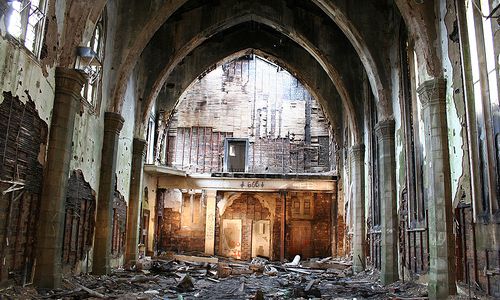
church

I’m sure that God’s Garden would suffer if any of them were removed, and I am sure that God’s Garden would wither and disappear if any of us were removed. We are not the gardener, that role can only belong to the triune God. When we look out on the abundance of produce in this church we are called to see one another the way God sees us, as the great grains of discipleship.

In Jesus’ parable of the wheat and the weeds there is a tremendous emphasis on patience: let them both grow together until the harvest. Our church is made up of sinners and saints, weeds and wheat, and God has called us to grow in faith with one another. As we make our way through the years of communal living, we must be patient with one another.

On the surface level, Jesus’ parable can sound frightening and even disconcerting. The idea of the weeds being gathered at the harvest to be thrown in the fire scares me. But when I look out on God’s Garden here in our church, I am reminded that this is a story all about grace. In the strange world of the parable, in the strange world of being a Christian today, God prohibits our separation and calls us to live in love.

In the strange world of faith it may even be possible for weeds to become wheat.

Thanks be to God that Jesus Christ is the risen Lord who sows the good seed that becomes the church. Thanks be to God that we are nurtured and fed by the Word and the Spirit growing everyday in our fruitfulness for the kingdom and one another. Thanks be to God that we have been raised in faith, surrounded by such a wonderful community of witnesses, and rooted in the deep and rich soil of God’s grace.

Be patient with one another. Do not judge by outward appearance, or inward behavior. Look around at God’s Garden this morning and see the good seed that is growing, see the wheat of faith, see your fellow disciples that will one day shine like the sun in the kingdom of their Father!

Amen.

Devotional – Romans 6.22

Devotional:

Romans 6.22

But now that you have been freed from sin and enslaved to God, the advantage you get is sanctification. The end is eternal life. 

Weekly Devotional Image

Over the past few years our church has made a concerted effort to welcome first time visitors to worship with radical hospitality. I stand outside and introduce myself to anyone here for the first time, we have greeters waiting by the entrance to the sanctuary, we send around a pew pad to gather addresses/phone numbers to follow up with people later, and we give away a travel coffee mug with our name, address, and phone number. All of these things are done in a hospitable way in order to demonstrate our love for others, and our desire to continually share the message of the Lord with them.

welcome-first-time-visitor

Some churches go far above and beyond what we do to entice first time visitors to return; I have heard of churches that give away bags of candy, others welcome visitors with coupons to local restaurants, still others give away books, DVDs, and further promotional material. Some churches have committees dedicated to training members on how to speak to first time visitors and invite them to return for another aspect of church life. In the last few years “radical hospitality” has been a major focus of the mainline and non-denominational churches to retain worship numbers.

radical-hospitality-2-web

Yet, sometimes, when I read scripture I am reminded of how unappealing Christianity can be. When Christ went ou among the multitudes he did not say: “here is some promotional material about what our movement is doing, we hope to see you next week!” Instead he brought people into his fold with some of the worst PR I have ever read: “let the dead bury the dead; but as for you, go and proclaim the kingdom of God… whoever loves father or mother more than me is not worthy of me; and whoever loves son or daughter more than me is not worthy of me… whoever wishes to be great among you must be your servant, and whoever wishes to be first among you must be slave of all…”

I fear that today we attempt to make the gospel so appealing that, according to the ways of the world, we water it down. It is a joyous and wonderful thing to have been freed from the power of sin, but we must not forget that we are now enslaved to God. The advantage of discipleship is our own sanctification and eternal life but it comes at a cost. Christianity is not some other wonderful way of thinking about life, it is a demanding and difficult call to live radically transformed lives where the ways of God are more important than the ways of the world.

So, this week I challenge us to reflect on our faith and the ways that we try to share it with others. Are we inviting people to church because it makes us feel good, because a full sanctuary looks better than an empty one? Or are we willing to admit the paradox that being enslaved to God is is the most wonderful and powerful thing we can do with our lives?

Eyes On The Sky – Sermon on Acts 1.6-14

Acts 1.6-14

So when they had come together, they asked him, “Lord, is this the time when you will restore the kingdom to Israel?” He replied, “It is not for you to know the times or periods that the Father has set by his own authority. But you will receive power when the Holy Spirit has come upon you; and you will be my witnesses in Jerusalem, in all Judea and Samaria, and to the ends of the earth.” When he had said this, as they were watching, he was lifted up, and a cloud took him out of their sight. While he was going and they were gazing up toward heaven, suddenly two men in white robes stood by them. They said, “Men of Galilee, why do you stand looking up toward heaven? This Jesus, who has been taken up from you into heaven, will come in the same way as you saw him go into heaven.” Then they returned to Jerusalem from the mount called Olivet, which is near Jerusalem, a sabbath day’s journey away. When they had entered the city, they went to the room upstairs where they were staying, Peter, and John, and James, and Andrew, Philip and Thomas, Bartholomew and Matthew, James son of Alphaeus, and Simon the Zealot, and Judas son of James. All there were constantly devoting themselves to prayer, together with certain women, including Mary the mother of Jesus, as well as his brothers.

MenofGalilee

I was sitting in the congregation at Trinity United Methodist Church in Lexington, VA for my first district event as a pastor. The room was filled, as you would expect, with older Christians (lay and clergy) dedicated to the kingdom of God as made manifest in the UMC. We listened to our District Superintendent discuss the challenges facing the church in our contemporary period and how similar they are to the problems that John Wesley faced in England when he initiated the Methodist movement of scriptural holiness.

All of the districts that make up our Annual Conference are required to gather annually for the purposes of restoring our souls for the adventure of doing church, and to discuss business matters as they pertain to our locality. Reports are filed annually for our review and approval as well as a new budget that needs to be considered by the body of Christ gathered together.

As far as I was concerned, the budget appeared fine. Sure, there were a few minor changes; some programs needed more money, and some programs had been receiving too much without being fruitful for the church. The only noticeable and significant change was found regarding the budgetary needs for “district youth.” I can’t remember the exact figures but it was a noticeable decline in funding for the young people of the district.

One representative present noticed this significant change and decided to make it abundantly clear to everyone how upset she was that the money had been decreased. She said, “I want to know why we lowered the district youth budget. The youth are the future of the church, and if we don’t invest in the them, the church will disappear.

youth

A worthy comment, don’t you think?

Our District Superintendent then calmly responded to her comment: “I appreciate what you are saying. We do need to invest in our youth. But I want to be clear about something; the youth are not the future of the church, they are very much a part of the church right now. The mentality that “the youth are the future of the church” prevents us from treating them as the church in the present. We will gladly restore money to the youth district budget, but for the last few years we have done nothing with and for them. I would love to hear ideas about what we can do right now for them, and then we can responsibly apply money to the District Youth.”

youth-ministry

After Jesus’ resurrection, he spent 40 days with his beloved disciples speaking about the kingdom of God. This forty day period was a great pause in the dynamic actions of God in the world; after the resurrection but before the day of pentecost, Christ had fellowship with his brothers and sisters to teach them about the coming days of ministry and service.

When they had come together after Jesus had completed his teaching, some of the disciples asked the question that was still on everyone’s mind: “Lord, is this the time that you will restore the kingdom to Israel?” Even after the resurrection, they were so caught up in the drama of Roman occupation that their vision of God’s kingdom was limited to political ramifications alone. So Jesus did what all great teachers do, he ignored their question: “It is not for you to know the times or periods that God has set by his own authority. But you will receive power when the Holy Spirit comes and you will be my witnesses in Jerusalem, in all Judea and Samaria, and to the ends of the earth.” When he had finished saying this, he was lifted up toward heaven and a cloud took him out of the disciples presence.

ascension

The disciples stood transfixed, as any of us would have, with their eyes on the sky, perhaps held is disbelief. Suddenly two men in whites robes appeared and said, “Why do you stand looking up toward heaven? This Jesus who has been taken up to heaven will return in the same way” So, the disciples returned to Jerusalem and devoted themselves to prayer.

Jesus made three promises to his disciples before he ascended into heaven: the gift of the Holy Spirit would come, they would spread their witness to the ends of the earth, and Jesus himself would eventually return. They had been given a job to do before he left: wait for the Spirit in Jerusalem and then spread the gospel, but when he was lifted up the disciples stood paralyzed with the eyes on the sky. Can you blame them? Jesus had come back from the grave, resurrected and clothed in the glory of God to teach them about the kingdom, and now he had left again. Their friend and Lord had departed, entrusting the future of the church and the kingdom to this group of uneducated, poor, and often ignorant community.

While standing with their necks craned backwards two men appear to remind the disciples of their purpose, a reminder that we need to hear as well: “Why are you looking up to the heavens?” You have a job to do. There is work to be done.

When the woman stood up to question the budget as the District Conference I could understand where she was coming from. Reducing the money from the youth budget sounds like a bad thing to do. But her notion of “youth as the future of the church” is just like the disciples stuck with their eyes on the sky. One of the greatest problems facing the present church is our inability to see the present. We become so consumed with the future of the church that we lose sight of our mission right here and now. 

It astounds me how often people ask me about the future of the church. And I don’t mean what the church will be doing next year. People want to know the long term hope for the church of the distant future. The questions I hear are regularly oriented to a future that is beyond our ability to grasp or imagine: Where are all the young people? How can we convince the millennials to attend church? How can we build 250 churches in the next 30 years? …

This is how many of us live our lives, consumed by the distant future of all things, not just the church: we think about the next war, the next financial rise or decline, the future of democracy in America and abroad, the survival of the “perfect” family model of a husband, wife, 2.5 children, a dog, and a white picket fence. We no longer look at the horizon, instead we want to look over the mountains and imagine the great fields and grasses beyond our vision.

Jesus, however, was of a different mind. Begin now! Get your eyes out of the sky and start focusing on the present. Right here and now our task is to transform the present by witnessing to Christ, to the kingdom, and to his Word. This is not to say that we are forbidden from planning for the future; we can, but not at the expense of the present. Do not worry about tomorrow, for tomorrow will bring worries of its own. Today’s trouble is enough for today.

When the angels reproved the disciples for their transfixed gaze on the heavens, how did the disciples respond? They waited and and they prayed.

In an age of activism and instant gratification, we would expect the disciples to something a little more “useful” than wait and pray. We would expect them to meet together in different committees to implement action plans like: creating contemporary worship services. To ask questions such as:“how can we build 250 churches in the next thirty years?” or “how can we convince the young people to start coming to church?” Yet, when they were told to witness to the ends of the earth, when they were tasked with spreading the Word of the Lord, their first response was prayer. While the world was ready to keep spinning, to forget about the political problem that was squashed when they crucified Jesus, ready to get back to life as usual, the disciples met in the upper room and devoted themselves to prayer.

Gathering to wait and pray are often depicted as the two primary actives of a faithful church. It amazes me how far I, and we, have fallen from this blueprint. When the church encounters a crisis we treat it as such and we immediately implement plans and programs to fix it. When I am asked about how I intend to get more people to start attending church, people want to know what I’m going to change in order to make church appealing immediately. Imagine, if you can, how people would react if, after they asked the question, I responded, “I should pray about it.

tumblr_lkmfiz50eV1qesq39o1_500

We don’t want to wait. We want things to happen immediately. Thats why people still ask, whenever I introduce myself as the Pastor of St. John’s, “how many people do you have in worship?” We want numbers, and figures, and diagrams, and growth, and tangible results as soon as possible. Christ, on the other hand, wants patience and prayer.

Waiting and praying is a heavy burden for those of us caught up in the technically impatient world of the present. We live in an age of instant everything, and so many want the church to be exactly the same way. One of the toughest tasks that will face us as a church, and I really mean us, the people of St. John’s, will be to be a people of prayer, when the world expects us to be a people of instant results.

In life, all things come and go. Where there is life there is always death, where there is love there is loss, where there is hope there is sorrow, where there is joy there is pain. So too, Jesus came to be with his people, and then he left; he ascended into heaven. Sometimes, not always, but sometimes there is an unrecognized good that comes with the going.

Jesus wants persons, not puppets. We are not here to be controlled by the great puppet master in the sky who moves us to where we are supposed to go. Instead Jesus has left us to be his body for the world, to be true and full persons who are prepared to go and be witnesses to the ends of the earth. Sometimes we have to be left on our own to really learn who we are, and whose we are.

A parent can never be there for every single thing their child ever does. If they were, the child would never learn how to grow, blossom, and mature into their true nature. A boss can never oversee everything their employees do, otherwise the business would lack the great imaginative capabilities of numerous minds, rather than a solitary and isolated vision. A pastor can never lead as a perfect disciple for everyone else to follow, because all pastors are like everyone else, sinners who have fallen short of the glory of God.

Christ ascended into heaven so that the church could become his body for the world, so they we could become his witnesses in Jerusalem, in all Judea and Samara, and to the ends of the earth.

So, how do we begin? How do we live into this call that Christ has placed on our lives? How can we start being his body for the world and have a vibrant and life-giving church?

We begin by waiting and praying.

Like the disciples, we need to be patient before we jump into “fixing” all of the “problems” that we see. Imagine a church that prayed fervently for the needs of our faith community in the hope of meeting the needs of so many on a regular basis. Imagine what this place would look like if we spent the first fifteen minutes of worship every Sunday in silence, waiting and praying to the God who calls us and knows us by name. Imagine what our family lives would look like if we spent five minutes with our children praying for them and their friends every morning before they left for school. Imagine a faith life where we prayed not just for what we want, but for the needs and hopes of the people who bother us the most.

It would be strange. For many it would be uncomfortable. Waiting and praying are no longer natural habits for the people who live in the world today. We have become so habituated into expecting “instant everything” that we rarely relish in the joy that is patience and prayer.

Today, let us become a people of waiting and prayer. As we take the steps to this table we are reminded that even though Jesus ascended to heaven, he never really left us. For he is here with us in the bread and the wine. He becomes manifest in our lives when we participate in his kingdom on earth. Do not let yourselves be burdened by the worries of the future, instead let us all get our eyes out of the sky and start doing the work of the Lord here and now, work that begins with prayer.

On Real Religion – Sermon on Micah 6.1-8

Micah 6.1-8

Hear what the Lord says: Rise, plead your case before the mountains, and let the hills hear your voice. Hear, you mountains, the controversy of the Lord, and you enduring foundations of the earth; for the Lord has a controversy with his people, and he will contend with Israel. “O my people, what have I done to you? In what have I wearied you? Answer me! For I brought you up from the land of Egypt, and redeemed you from the house of slavery; and I sent you Moses, Aaron, and Miriam. O my people, remember now what King Balak of Moab devised, what Balaam son of Beor answered him, and what happened from Shittim to Gilgal, that you may know the saving acts of the Lord.” “With what shall I come before the Lord, and bow myself before God on high? Shall I come before him with burnt offerings, with calves a year old? Will the Lord be pleased with thousands of rams, with ten thousands of rivers of oil? Shall I give my firstborn for my transgression, the fruit of my body for the sin of my soul?” He has told you, O mortal, what is good; and what does the Lord require of you but to do justice, and to love kindness, and to walk humbly with your God?

4944299081_d37e065a78_z

What does the Lord require of you but to do justice, and to love kindness, and to walk humbly with your God?

Pastor, preacher, reverend; titles that I’m still not used to. After only having served this church for seven months, it never ceases to amaze me how many people in the community already identify me through my vocation. I will be sitting at the Bistro downtown ready to order dinner with Lindsey when the waitress begins by asking, “What can I get for you reverend?” Or when I’m sitting behind my computer at Coffee On The Corner my coffee is accompanied with a “here you go preacher.”

Its my own fault really. I love to tell people what I do. Whenever I meet someone new in town, I’m always eager to share with them my excitement at having been appointed to St. John’s.

This past week, I was visiting one of my favorite shops downtown (that will remain nameless) when I was greeted with the familiar title: Pastor. The owner and I have a fairly decent relationship and our conversation flows smoothly whenever we’re together. As he was ringing me up, we exchanged the regular pleasantries, talking about the cold weather and other such things, until he asked me about the church. I told him about how remarkably forgiving many of the congregants are regarding my sermons, and how thankful I am for their willingness to join me in this adventure we call “church.” Thats when the conversation got serious.

“Well, I’m happy you’re enjoying it,” He said, “But church is just not the thing for me.”

Aside: I almost never ask anyone about church, and yet, people always bring up their attendance, or lack their of, in conversations.

By his tone and inflection, it was clear that he wanted to say more about the subject, so I inquired as to why church is not the thing for him.

“I used to go all the time,” he began. “I’ve popped around between different denominations, I was even an elder for a little while, but about ten years ago I lost faith in the church. We were doing all the right things, we had hundreds of people in worship every Sunday but we never did anything for the community. Everything the church did was so inwardly focused. Debates about the wallpaper, the type of bread for communion, and timing for Sunday services dominated all of our conversations. Whenever I tried to raise a need within the community that the church could meet it was brushed aside as being insignificant. Finally, at a council meeting, I could no longer contain myself. After years of watching this “perfect church” ignore the desperate needs of the people outside the building, I stood up in the front of the leadership and declared, “I think when Jesus said, ‘Feed my sheep,’ he really meant to feed his sheep.” I have not been to a church since.”


In the sixth chapter of Micah, the prophet relays God’s controversy with his people. “O my people, what have I done to you? In what way have I wearied you? Answer me! For I brought you up from the land of Egypt, and redeemed you from the house of slavery, and I sent you Moses, Aaron, and Miriam. O my people, remember now what King Balak of Moab devised, what Balaam son of Beor answered him, and what happened from Shittim to Gilgal, that you may know the saving acts of the Lord.”

At that time in Israel’s history, the people had grown weary and bored with their God. They were just going through the motions when it came to worshipping the good God who had been at the center of their very lives for so long.

How could they have become bored with God? He had delivered the people from their oppressors, raised up mighty leaders, sent truthful prophets, and brought all the people to a full awareness of his righteousness. Yet, they had forsaken him. They lived immersed in the love of God, yet were blind to much, if not most, of it.

Micah then describes “real religion” as opposed to the ways to Israelites were behaving: “With what shall I come before the Lord, and bow myself before God on high? Shall I come before him with burnt offerings, with calves a year old? Will the Lord be pleased with thousands of rams, with ten thousands of rivers of oil? Shall I give my firstborn for my transgression, the fruit of my body for the sin of my soul? He has told you, O mortal, what is good. and what does the Lord require of you but to do justice, and to love kindness, and to walk humbly with your God?

Micah presents the simple essentials of real religion in a verse that has taken its place among the most favored of scripture. What does the Lord require of you but to do justice, love kindness, and to walk humbly with your God? Real religion is predicated on the lived reality of discipleship that changes everything.

God made it known to the Israelites the proper and good response to their Lord. The people are required to practice justice, to seek equality between themselves and others; to love kindness, to maintain a loyal commitment to God and others; and to walk humbly with their God, to live transformed lives conformed to the image of God. Real religion is a journey of faith working by love leading to holiness of heart and life.

So, where are we with God? Have we grown tired and weary of the God we have come to worship? Are we attending church, practicing our faith, and loving others out of obligation or excitement? What do we think the Lord requires of us?

Is our relationship with God determined by our attendance at church, coming to worship at 11am every Sunday, singing a couple hymns, hearing scripture read aloud, and listening to a 15 minute sermon? Are we simply going through the motions of faith, or does our faith shape the way we act outside of this building?

During the time of Micah, God no longer wanted the sacrifice of animals, burnt offerings, and rivers of oil. Instead he wanted what he already showed to be good: justice, kindness, and humility.

And when we read that list of what God does not want, it makes the threefold expectation seem easy. The real demands of God however, are both moral and spiritual, and the proper worship of God is a life obedient to them. Without justice, kindness, and humility, any of our practices in church can wound our faith. Instead of creating worthy habits for life, we appear to be bargaining with God to take something less than he actually wants of us. If our faith can be compartmentalized into one hour a week, if our faith is limited to church worship alone, than we desperately need to hear Micah’s word.

Like the ancient Israelites, we live and die immersed in the love of God. Yet, how often are we blind to much, if not most, of it?

Micah begged the people to exhibit true faith, true worship, and true morality that will come to completion in true behavior. What we believe shapes how we behave. 

However, proper morality is not a substitute for religion. Its not just about “being a good person.” Outward conduct is essential for the life of faith, but it always depends on the inward character that is shaped by the gathering community of faith.

Justice, kindness, and humility might sound easy and comfortable to those who have never tried them, but the overwhelming truth is that these three practices are far more costly than thousands of rams, ten thousands of rivers of oil, or a more contemporary allusion might be that truly practicing justice, kindness, and humility will always be harder than giving numerous possessions away in order to somehow appease God.

If this church takes seriously our commitment to forming disciples of Jesus Christ for the transformation of the world, then we need learn to translate mercy into our regular daily deeds through a close, nurturing, and personal journey of faith with God. The Lord demands our lives, our love, our trust, and our loyalty.

When driving around Staunton, it is nearly impossible to miss the cacophony of churches scratched across the landscape. In my life, I have never lived in a place with so many steeples. In fact, during one of my first weeks here someone told me that Staunton has more churches per capita than anywhere in the United States. I have no idea how to confirm whether or not this is true, but I wouldn’t be surprised if it is.

In my short time here I have created relationships with some of the other clergy in town; I’ve gone out to lunch, initiated a lectionary based breakfast group, and shared numerous cups of coffee. Do you know what the first question is almost every time I meet a different pastor? “How many people do you have in worship?”

This week, while reading over Micah, I realized that getting asked about worship attendance is close to what the Israelites must have felt when someone asked, “how many rams did you sacrifice this week, how many river of oil did you present to God?”

Really? Of all the things that we could possibly talk about, the first question is always about church attendance. I wonder why we aren’t talking about ways that we can practice justice, love kindness, and walk humbly with God.

Why are we all so consumed with the numbers instead of planning ways to serve our community? And I’ll admit that I am certainly guilty of this practice. When I am asked about worship, I proudly respond about the growth of our church and the warm and inviting atmosphere that one encounters when walking through the door. But I have to be reminded too, I have to ask myself, ‘What does the Lord require?’ Does God want us to grow this church and fill it to the brim to the point where we no longer know who we are worshipping with? Or is God calling us to do justice, to love kindness, and walk humbly? Not that they are mutually exclusive, but until our focus is more on living our faith, rather than filling our building, our building will never be filled.

So, how can we practice justice as individuals and as a church? We can open our eyes to the needs of our community. We can seek out the last, least, and lost, to give them the one true gift worth sharing: love. We can stand up against the small and large injustices that occur everyday, whether its an unfair judgement in the work place, or racist comments, or belittling words between spouses. We can practice justice by living out our faith in the world.

How can we love kindness as individuals and as a church? We can initiate relationships with strangers knowing that God has done the same for us. We can show our love to our families and friends by making the extra phone call to just say “Hi.” We can truly greet one another when we gather in worship, not just the same people we talk with every week, but particularly those who are still strangers to us. We can show our loving kindness but living out our faith in the world.

How can we walk humbly with our God? We can recognize that God is not only concerned with our religious rituals, but calls for us to live out faith beyond these walls. We can admit that we have, and will continue to, fall short of God’s glory. We can find salvation and redemption through our faith in God, and God’s faith in us. We can come forward to the table and receive the bread and wine humbly, knowing that we have done nothing to deserve it. We can walk humbly with our God by living out our faith in the world.

What does the Lord require of us? To do justice, to love kindness, and to walk humbly with God.

Amen.

Why Does Baptism Matter? – Sermon on Mark 1.1-11

(Preached at St. John’s UMC on 8/18/2013. Immediately following the sermon we responded to the proclaimed Word through participating in a Baptismal Remembrance)

Mark 1.1-11

“The beginning of the good news of Jesus Christ, the Son of God. As it is written in the prophet Isaiah, “See, I am sending my messenger ahead of you, who will prepare your way; the voice of the one crying out in the wilderness: ‘Prepare the way of the Lord, make his paths straight.’” John the baptizer appeared in the wilderness, proclaiming a baptism of repentance for the forgiveness of sins. And people from the whole Judean countryside and all the people of Jerusalem were going out to him, and were baptized by him in the river Jordan, confessing their sins. Now John was clothed with camel’s hair, with a leather belt around his waist, and he ate locusts and wild honey. He proclaimed, “The one who is more powerful than I is coming after me; I am not worthy to stoop down and untie the thong of his sandals. I have baptized you with water; but he will baptize you with the Holy Spirit. In those days Jesus came from Nazareth of Galilee and was baptized by John in the Jordan. And just as he was coming up out of the water, he saw the heavens torn apart and the Spirit descending like a dove on him. And a voice came from heaven, “You are my Son, the Beloved; with you I am well pleased.”

baptism-of-christ-1483

 Why Does Baptism Matter?

            He sat silently in his office staring at the phone. Minutes passed and the moonlight continued to spill across his desk until he mustered up the courage to dial the number. The man was well respected in the community, owned the local hardware store, and he was a good Christian who regularly attended the local Methodist church. For years he had listened to pastors preach from the bible, he had helped as an usher for longer than he could remember, and felt that he was fulfilling his Christian obligations. That was until 6th months previous when the preacher talked about baptism from the pulpit. Now the man had heard this sermon before: “Baptism is our way of being incorporated in the body of Christ, into the church. We baptize in the name of the Father and the Son and the Holy Spirit because Jesus commanded us to.” He had heard the message time and time again and frankly he didn’t see the point, if he was doing everything else the bible said he needed to, why should he get baptized?

For whatever reason he could not stop thinking about that sermon in the coming days, weeks, and months. His mind began to wander at work and at church. He neglected his obligations to perform usher duties and eventually he stopped attending church all together. The pastor had known for years that the man was not baptized, and had made a point to bring it up with him after Sunday services when they would shake hands. This went on for sometime until he eventually gave up. So when he received a phone call late one night with the man’s fervent breath on the other end of the phone, baptism was the furthest thing from his mind. So he gathered his belongings and rushed to the hardware store.

“I can’t describe it Reverend,” the man said while keeping his eyes affixed to the ground. “I never understood it, the whole baptism thing. I mean I’ve seen you up there with babies and grown men and women pouring water over their heads and I’ve always wondered: what’s the point?” The preacher scratched at his dropping eyelids and kept listening. “The problem is, I don’t understand it, but for whatever reason I know that its time for me to be baptized. I’ve been siting here all night alone and God told me its time.” “That’s fantastic!” the pastor responded, “we can have your baptism at the beginning of the service on Sunday.” “No” he said, “we’ve got to do it right now. I’ve waited far too long.”

“The beginning of the good news of Jesus Christ, the Son of God.” So begins the gospel according to St. Mark. This particular gospel is unique because it is short, direct, and unreserved in its descriptions of the life of Jesus Christ. When we discover Jesus in Mark’s gospel we are getting the real deal, nothing watered down, just straight up good news. Of the four, it’s my favorite. I love how Jesus confronts his disciples, and us, throughout the pages with their inability to recognize who he is. They witnesses miracles, healing, teachings, and divine interventions yet they continually stumble while trying to follow their Lord.

So here we are at the beginning. Mark begins by announcing that this is the beginning of the good news in order to remind the reader that, like the book of Genesis (which also means beginning), God is about to start something new. Just like God calmed the chaos in the first moments of creation, God will definitively change the world through coming in the form of Jesus Christ.

John the Baptizer, the camel hair-wearing cousin of Jesus, is out in the wilderness preaching about a baptism of repentance for the forgiveness of sins. People from all over the place start going out to him, from the Judean countryside and even some Jerusalemites. They all gather at the edge of the river Jordan and are baptized by John confessing their sins. Mark even gives us the details about John’s outfit and eating habits; at first it might seem like insignificant details, or facts that just add to the craziness of this man in the wilderness, but this is important. John is clothed in the attire of a prophet, different from everyone else. And here he is as a prophet calling the nation of Israel to repentance through a symbolic cleansing.

John is achieving something remarkable; he has succeeded in bringing a wayward people toward repentance and thus reorienting their lives in such a way as to be acceptable to God. So as the people gather on the banks of the water John addresses them: “There is someone coming after me, he is far more powerful. You think I’ve done something great? This guy coming later, I’m not even worthy to untie the straps of his sandals. Yes, I have baptized all of you with water, but he will baptize you with the Holy Spirit!”

And it came to pass in those days that Jesus came from Nazareth of Galilee and was baptized by John in the Jordan. And immediately as he was coming up from the water, he saw the heavens torn apart and the Spirit descending upon him like a dove. And a tremendous voice came from the heavens saying, “You are my Son, the Beloved; with you I am well pleased.”

Why does baptism matter? This is a question often flung around in churches and denominational disputes. If we do all of the things that the bible asks of us, why do we need to be cleansed by the waters of baptism? Why do we need to baptize babies? Have they truly sinned when they are only weeks old? Why would an unbaptized participating Christian need to participate in this sacrament?

Baptism matters because we are who God says we are.

When we examine the beauty of Jesus’ baptism as recorded in the gospel of Mark we get a glimpse of what God does with each one of us when we’re baptized: The Holy Spirit, a new creation, we are named.

Before the baptism even takes place John announces what Jesus will do: He will baptize you with the Holy Spirit. Within Jesus’ life the Spirit is present in abundance: The Spirit descends on Jesus at his baptism (1.9) and drives him into the wilderness to be tempted (1.12). Jesus casts our demons by the power of the Holy Spirit (3.22) and promises his disciples that the Holy Spirit will tell them what to say when they are brought to trial (13.11). We are baptized with the same Spirit that abided with Jesus throughout his life.

And immediately coming up from the water, he saw the heavens ripped apart. In other translations it says “he saw the heaven parting” (NKJV) or “he saw heaven open up” (New Life Version) but the Greek says: εἶδεν σχιζομένους τοὺς οὐρανοὺς literally, “he saw the heavens being ripped apart.” The use of the word σχιζομένους is particularly important considering the imagery that is attached with it. The word appears only one other time in the entirety of Mark: it is used to describe the Temple curtain being ripped apart at the moment Jesus died on the cross. In both circumstances what had been long sealed is suddenly flung open. This is the signal of a new creation, whatever was has been changed for good. God has ripped apart the heavens to declare Jesus as “the Beloved.” Every time we baptize, whenever someone is in Jesus Christ, there is a new creation.

In might seem paradoxical, but, in no Gospel is the humanity of Jesus more apparent, nor his divine authority more striking. In this one moment in Mark 1 all three members of the Godhead, Father, Son, and Holy Spirit are present with one another affirming both Jesus’ divinity and humanity.

God names Jesus in the baptism; his identity is forever sealed. For us today, the baptism of believers also establishes our identities. Jesus is who God says he is. So also we are who God says we are; in Christ Jesus we are the sons and daughters of God as Paul writes in the letter to the Galatians: “for as many of you as were baptized into Christ have put on Christ” (Gal 3.26).

Last year, 40% of United Methodist Churches did not have a new profession of faith. Nearly half of our churches did not welcome a new person into the beauty of what it means to be the body of Christ. This number is perhaps higher than we might anticipate because many of us were baptized as children and only become true disciples/members later in life in confirmation or a personal profession of faith. But when we encounter the truth of God’s holy Word in Mark 1 we are to be held accountable to our own baptisms. What we have here, this church, the Word of God, the sacraments, the relationships, they are worth sharing with the world. They are greater than any treasure on earth because they sustain, they nurture, and they are eternal.

The text of Jesus’ baptism meets us where we are and allows us to encounter the Lord in the emptiness of our own lives. We get to hear the voice of a rough yet incredible prophet named John who calls all of us to turn around and accept the greater baptism of a risen Lord. It encourages us to experience Christ in a powerful and personal way. It gives us the space to start again and find newness in our lives.

And so there, huddled in the twilight of the hardware store, two grown men knelt on the faded carpet. The preacher took water from an ordinary coffee cup and ran it through his fingers, “Holy Spirit, bless this gift of water, use it to wash away his sin, clothe him in righteousness throughout his life, that, dying and being raised with Christ, he may share in the final victory.” And with three slow movements of his hand onto the man’s head, “I baptize you in the name of the Father, and the Son, and the Holy Spirit.”

Most of the time that we think about baptism we picture the perfect family standing at the front of the church with their baby in white, a clumsy pastor trying to hold the child and say all of the right words, and smiles and happiness throughout the congregation.

778-baptism-one


Most of the time that we witness baptisms we think its all about that baby or that family up at the front, but truly I tell you baptism has little to do with us, and everything to do with God. As one of my pastors once said, “Baptism is God’s way of saying yes to us.” You might’ve been baptized as a baby, or chose to later in life, or maybe you’re not even baptized but when the water is poured over someone’s head it is all about God. In that moment God names us, he declares triumphantly: “you are my child.”

God exists neither next to us nor merely above us, but rather with us, by us and, most important of all, for us. He is our God not only as Lord but also as father, brother, friend; this relationship is seen so clearly in Jesus’ baptism, and every time someone is incorporated through water into the body of Christ. What a great God we have, the one who created the heavens and the earth, entered into covenant with his servant Abraham, wrestled Jacob on the banks of the Jabbok, called Moses from the burning bush, delivered his people Israel from captivity, sustained the nation through the judges and prophets, anointed the kings to lead his people, became incarnate in Jesus Christ, saved the world by dying on a cross, and was resurrected three days later.

Why does baptism matter? It matters because we are who God says we are: his children.

Amen.

Lord, Teach Us To Pray – Sermon on Luke 11.1-13

Luke 11.1-13

He was praying in a certain place, and after he had finished, one of his disciples said to him, “Lord, teach us to pray, as John taught his disciples.” He said to them, “When you pray, say: Father, hallowed be your name. Your kingdom come. Give us each day our daily bread. And forgive us our sins, for we ourselves forgive everyone indebted to us. And do not bring us to the time of trial.” And he said to them, “Suppose one of you has a friend, and you go to him at midnight and say to him, ‘Friend, lend me three loaves of bread; for a friend of mine has arrived and I have nothing to set before him.’ And he answers from within, ‘Do not bother me; the door has already been locked, and my children are with me in bed; I cannot get up and give you anything.’ I tell you, even though he will not get up and give him anything because he is his friend, at least because of his persistence he will get up and give him whatever he needs. So I say to you, Ask, and it will be given you; search, and you will find; knock, and the door will be opened for you. For everyone who asks receives, and everyone who searches finds, and for everyone who knocks the door will be opened. Is there anyone among you who, if your child asks for a fish, will give a snake instead of a fish? Or if the child asks for an egg, will give a scorpion? If you then, who are evil, know how to give good gifts to your children, how much more will the heavenly Father give the Holy Spirit to those who ask him!”

39347_1409537169434_1007347_n

A few years ago I was given the opportunity to lead an adult mission trip to Guatemala, (nearly identical to the one Lindsey went on 2 weeks ago). It would be my responsibility to help organize the trip, make sure we had all the proper preparations taken care of, and then lead the adults while in the country. I was 19 years old at the time, and all of the adults on the trip were closer in age to my parents. “Stressed” doesn’t even come close to describing the way I felt between organizing the trip and making sure we all arrived in the country. I mean this in the best possible way, but that trip was the first time I really experienced what its like to be a shepherd herding sheep.

We had been in Guatemala for 24 hours when it was time for us to make the long bus journey to the village where we would be working. I don’t know whether it was the restlessness that accompanies an impending workweek, or if I just had trouble sleeping, but I woke up before anyone else and I walked around the town of Panajachel on the banks of lake Atitlan. By the time I made it back to our little bungalows I thought I was still the only person awake, so I made my way back to my room before breakfast. Because I was leading the trip in tandem with my home pastor, we had been assigned to the same room, and I quietly crept in so as to not wake him up. When I finally pushed the door open I saw something that stopped me in the doorway.

Jason was kneeling on the cold hard ground with his bible open on the bed praying out loud. I froze in the doorway because I had known Jason for 5 years and I had never seen him pray outside of Sunday worship. I could not hear everything he was saying, but it was one of the most beautiful things I had ever witnessed. And standing there in the doorway, watching my pastor pray on his knees, I felt convicted. In that moment I could not remember the last time I had talked to God.

38744_1412672047804_1769592_n

“Lord, teach us to pray.” On the lips of the unnamed disciple, this is one of the most revealing moments of the gospel according to Luke. From this one desire, this simple request regarding prayer, we get to take a step into the strange new world of the bible and hear Jesus speak from within the depth of his being: When you pray, say: Father, hallowed be your name. Your kingdom come. Give us each day our daily bread. And forgive us our sins, for we ourselves forgive everyone indebted to us. And do not bring us to the time of trial.”

How often have we wanted to ask Jesus the same exact thing? I can tell you, that as someone in the ministry, the only question I hear more often than “what will happen to me when I die?” is “how am I supposed to pray? Clearly this is something that gets at the heart of what it means to be a follower of Jesus Christ because even the original disciples wanted to know how to pray. In the same way that my pastor Jason’s prayer moved me to want to learn to pray, Jesus exemplified the importance of prayer for his disciples.

Throughout the gospel, Jesus is frequently in prayer and it carries an incredibly important image. At his baptism: “Now when all the people were baptized, and when Jesus also had been baptized and was praying, the heaven was opened (Lk. 3.21). As he made his way throughout Galilee “he went to the mountain to pray; and he spent the night in prayer to God. And when day came, he called his disciples and chose twelve of them, whom he also named apostles (Lk. 6.12-13). Before Peter’s confession of Jesus as the Christ, Jesus had been praying alone, with only the disciples near him (Lk. 9.18). Jesus, Peter, John, and James were heading up the mountain to pray when Jesus was magnificently transfigured in the midst of praying (Lk. 9.28-29). The importance of prayer in the life of Jesus Christ was significant enough that even his disciples, who were with him constantly, wanted to learn more about the role it played in his life. “Lord, teach us to pray.”

So our Lord looked out at his disciples and said, “When you pray, say: Father”

Father. Notice: Jesus does not pile adjectives on top of each other, its not O Great and mighty most wonderful eternal and almighty God. Instead he simply encourages his disciples to say, “Father.” This word alone helps to signify how this prayer can be both personal and communal. The disciples are to call God “Father” in an intimate and connected way while at the same time recognizing that they have one “Father” to which they can pray together. By beginning with “Father” Jesus is inviting his followers to share in his own prayer life, hoping that they will approach God in the same way that he does.

As the prayer develops it is continually a prayer of a community, “hallowed be your name. Your kingdom come. Give us each day our daily bread.” The plural language, mixed with the intimacy of the relationship with God, allows for this to be a prayer done in a communal gathering, or alone. It remarkably conveys the depth of mystery involved in a community of faith while affirming the desire for God’s kingdom on earth. Whether you pray alone every night before you fall asleep, or if the only time you pray is on Sunday mornings in church, you are connected to God, God’s people, and God’s creation

“And forgive us our sins, for we ourselves forgive everyone indebted to us. And do not bring us to the time of trial.” There is a subtle difference in the prayer at this point as compared to the one from the Gospel according to Matthew, which we say together every week. Instead of “forgive us our trespasses, as we forgive those who have trespassed against us,” Luke tells us that Jesus taught the disciples to seek God’s forgiveness of their sins as we forgive those who are indebted to us. Jesus is concerned with the way that we relate to God, one another, and to God’s creation. When we pray we are not isolated beings stratified from those around us, but we are personally connected with God through our brothers and sisters in Christ. According to Jesus, prayer is supposed to accomplish communal fellowship in such a way that we are not hindered when gathering as the body of Christ. This means that if we take seriously the words of prayer that Jesus taught us, we can’t ignore those sitting with us in worship, and everyone within the greater community.

Jesus concludes his prayer for the disciples by using a little parable to help explain true perseverance in prayer. Through the story of the friend asking for three loaves of bread in the middle of the night, we learn that prayer is to be continually asking, seeking, and knocking. “Ask, and it will be given to you; search, and you will find; knock, and the door will be opened for you.” Prayer is a learned experience, one that is continually cultivated. Prayer is not simply a release of feelings toward God, but a disciplined habit that influences the way we live our lives.

About a year ago, I was making regular visits to the shut-ins from a church in Durham, North Carolina. Every week I found myself sitting with all sorts of people learning about their pasts, and experiencing discipleship in new and exciting ways. Though most of my visits were often filled with excited dialogue there was one particular lady who never spoke. In fact, after meeting with her son, I discovered that she had not talked with anyone for some time. Whenever I saw her we would sit together, I would tell her about all the things happening at church, and I would eventually spend most of the time reading scripture. Her son was almost always with us in the room, and always politely thanked me for coming over but made it clear that there was nothing to be done. One afternoon, after reading from the Gospel according to Mark, I decided to try something new. I began to sing one of my favorite hymns: “Lord, I want to be a Christian in my heart, in my heart, Lord I want to be a Christian in my heart.” By the time I was halfway through the second verse I noticed that she started to move her head back and forth, and as I lowered my singing voice I noticed that she was humming along with me. I looked across the room to her son, and with tears in his eyes he started singing with us. This was the first time, in a long time, that he saw his mother communicating.

Before I left, the three of us held hands for prayer and when I started to say “Our Father, who art in heaven,” she joined us and said the words that Jesus taught his disciples.

It never ceases to amaze me how deeply profound our prayers can be. For that woman it was the hymns and the prayers of church life that stuck with her. They had helped to shape the life she led, and then helped to reunite her with her son that afternoon. When prayer becomes habitual in our lives, when communicating with God becomes part of who we are, our lives will be turned back to the one in whom we live, and move, and have our being.

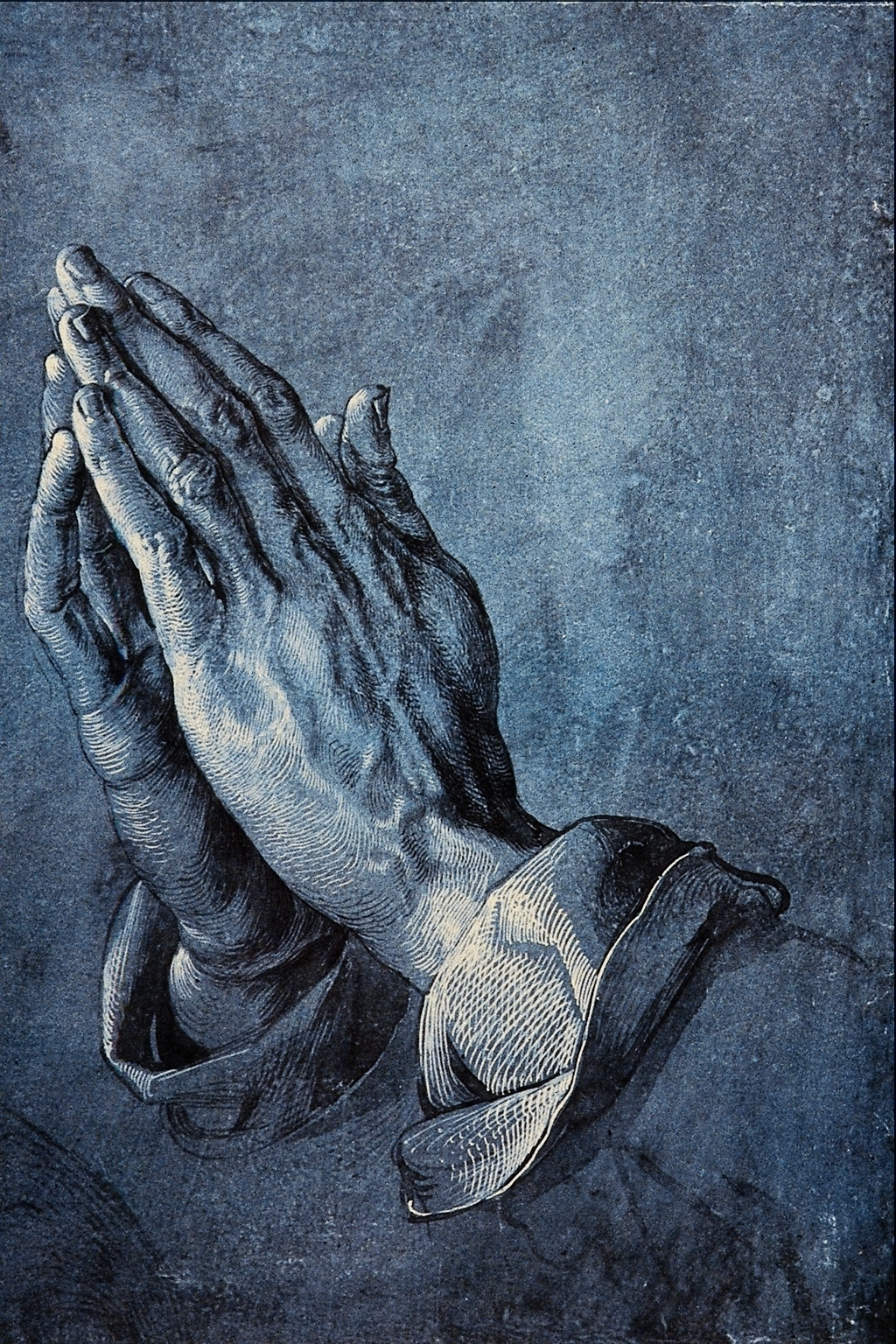
Praying_Hands_-_Albrecht_Durer

My Christian hero, the Swiss theologian Karl Barth once said: “To clasp the hands in prayer is the beginning of an uprising against the world.” When we follow Jesus and allow prayer to shape our lives like it shaped his, we will begin to stand against the ways of the world. Prayer refocuses our perspective on the ways of God so that the kingdom can remain manifest among us. Learning to pray is much more than just learning a prayer, and we cannot simply learn to pray by learning to say specific words, but the repetition of such words are part of the discipline of prayer. Sometimes we don’t realize it, but every time we read the words of scripture we are praying. Every time we sing the words from our hymnal we are praying. Every time we greet others around us in love we are praying. Living a life of prayer is not easy, but it is more fruitful than we can possibly imagine.

Jesus’ own prayer life was obviously important to the disciples, and should be important to us. We learn from Luke 11 that prayer is about bringing to God our deepest needs and most perplexing trials and tribulations. Prayer is about waiting there in the midst of unknowing for light, love, and strength from the God who made each one of us. Prayer is the recognition and presentation of our lives before him as a holy and living sacrifice. Prayer is the understanding that true Christian living depends not so much on what we do and say, but rather what we allow God to do in and through us. Lord, teach us to pray.

Amen.