Devotional – 1 Thessalonians 5.20-21

Devotional:

1 Thessalonians 5.20-21

Do not despise the words of the prophets, but test everything; hold fast to what is good. 

Weekly Devotional Image

“But that’s the way we’ve always done it.” This is perhaps one of the most common phrases used throughout regular church life. Whenever someone has a new idea or a suggestion, a vision for the future, or even just a simple dream, it is not uncommon for someone to say “But that’s the way we’ve always done it.” After all, the church has been doing some of the same things for centuries: we break bread with one another and partake in communion, we celebrate Advent and Easter, we pray the Lord’s Prayer together. However, one of the things that makes the church truly vibrant is our willingness to experiment, to test everything, and seek new ways to interact with God’s grace.

1500783_745594572119178_99851182_o

There is a church outside of Durham, North Carolina that celebrates Christmas Eve in a local barn. While other Christians are sitting in the warmth of their sanctuaries, listening to the beautiful message of a baby being born into the world, this church stands together in the frigid cold, singing hymns through chattering teeth, while the stench of animals wafts throughout the barn. I can imagine the first time someone brought up the idea for barn-worship, only to be met with “but we’ve always had Christmas Eve in the sanctuary!” Somehow or another the vision became a reality and it is now integral to the life of the community. The barn-yard service has given a new dimension and depth to the Christmas message to people who had become numb to the repetitious practices of the past. Through the willingness of someone to test the system, to propose a radically new idea, the message of God’s love in Jesus Christ has been spread to a group of people who otherwise might’ve have missed the Good News.

There is a church in Virginia that has a bluegrass band come to the sanctuary to play their Christmas Eve music. After years of hearing the same hymns from the organ, the pastor proposed a new musical style to relight the flame of faith. Though some were enraged by this new idea, it brought in an entirely new set of people who previously saw the church as a lifeless congregation. The bluegrass service is now one of the most highly attended during the year primarily because of the new musical genre. Through the willingness of someone to test the system, to propose a radically new idea, the message of God’s love in Jesus Christ has been spread to a group of people who otherwise might’ve have missed the Good News.

Paul encouraged the church in Thessalonica to “test everything” by what was good for the people. If something in your life has become flat and lifeless, let it go and seek something new. The beauty of church comes from our willingness to experience God’s wonder in a myriad of different ways.

This advent season, I encourage you to “test” and explore your faith in vibrant ways. Seek out opportunities to catch a new glimpse of God’s glory from the people around you. And remember to hold fast to the good so that others might see the Good News through you.

The Talent Show – Sermon on Matthew 25.14-30

Matthew 25.14-30

“For it is as if a man, going on a journey, summoned his slaves and entrusted his property to them; to one he gave five talents, to another two, to another one, to each according to his ability. Then he went away. The one who had received the five talents went off at once and traded with them, and made five more talents. In the same way, the one who had the two talents made two more talents. But the one who had received the one talent went off and dug a hole in the ground and hid his master’s money. After a long time the master of those slaves came and settled accounts with them. then the one who had received the five talents came forward, bringing five more talents, saying, ‘Master, you handed over to me five talents; see, I have made five more talents.’ His master said to him, ‘Well done, good and trustworthy slave; you have been trustworthy in a few things, I will put you in charge of many things; enter into the joy of your master.’ And the one with the two talents also came forward, saying, ‘Master, you handed over to me two talents; see, I have made two more talents.’ His master said to him, ‘Well done, good and trustworthy slave, you have been trustworthy in a few things, I will put you in charge of many things; enter into the joy of your master.’ Then the one who had received the one talent also came forward, saying ‘Master, I knew that you were a harsh man, reaping where you did not scatter seed; so I was afraid, and I went and hid your talent in the ground. Here you have what is yours.’ But his master replied, ‘You wicked and lazy slave! You knew, did you, that I reap where I did not sow, and gather where I did not scatter? Then you ought to have invested my money with the bankers, and on my return I would have received what was my own interest. So take the talent from him, and give it to the one with the ten talents. For to all those who have, more will be given, and they will have an abundance; but from those who have nothing, even what they have will be taken away. As for this worthless slave, throw him into the outer darkness, where there will be weeping and gnashing of teeth.’

Burying-His-Talent

I have an idea. We are going to start things off in the sermon a little differently this morning. Instead of sitting patiently and attentively while I spout off about theological ideas and anecdotes, we are going to do an activity…

In the parable of the talents, the master gives to the first slave five talents, the second slave two talents, and to the third slave he gives one talent. During the time of Christ, a talent was worth more than fifteen years of wages for a daily laborer; therefore this was a tremendous amount of money. So, here’s our activity: I want us to imagine that we are the modern equivalent of the master’s slaves, and we are going to discuss what we are going to do with the talents. If you’re sitting in the front third of the sanctuary I want you to imagine that the master has given you $50,000. In the middle third I want you to imagine that the master has given you $20,000. And the back third I want you to imagine that the master has given you $10,000. (If you remember anything from worship today, let it be this: It pays to sit near the front!) Anyway, I would like you to break up into groups of three or four and discuss what you would do with the money for the benefit of the kingdom of God. Begin.

Okay. The master would like to know what you are planning to do with his talents…

Of course, in the parable things work out a little differently. The master has decided to go on a great journey, and entrusts an incredible amount of money to three of his slaves. He provides them with five talents, two talents, and one talent, to each according to his ability. After the master leaves the five talent slave goes off and works hard with his talents and makes five more. Likewise the two talent slave goes off and works hard to earn two more talents. However the one talent slave went off and dug a hole in the ground to hide his master’s money.

The master returns and is greatly thrilled with the first two slaves. He rewards their trustworthy and hardworking nature by placing them in charge of many things, and then invites them into the joy of their master. But with the one talent slave, the master is very disappointed. The third slave was afraid of his master and saw that he was harsh, so he hid the talent in the ground. To which the master replies, “You wicked and lazy slave! You knew, did you, that I reap where I did not sow, and gather where I did not scatter? Then you ought to have invested my money with the bankers, and on my return I would have received what was my own interest.” The master takes away the one talent and orders the slave to be thrown into the outer darkness where there will be weeping and gnashing of teeth.

Out of all the parables that Jesus shared with his disciples, this one has probably been more abused and misused than any other. Once any parable is abstracted from the proclamation of the kingdom, misreading is inevitable. Jesus shared a story about a shepherd who goes after the one sheep that is missing – God rejoices in seeking out those who are lost, even if they appear insignificant. Jesus tells another story about a young man who squanders his inheritance and comes back to his father begging to be welcomed as a slave and the father throws a great banquet for the return of the prodigal – God, though harsh, is a loving, reconciling, and forgiving presence.

Parable Definition

The parable of the talents however, has been twisted around to fit the arguments of many pastors and theologians throughout the centuries. For instance, this passage has been cited, in prosperity gospel churches, as a defense for why God wants us to become wealthy; God blesses us money so that we can make more money! Additionally this scripture has been used to claim that the poor are poor because of their own faults and problems, God gave them all the opportunities in the world to become rich, but they failed to pull themselves up by their boot straps and make something of themselves.

Jesus is not using this parable to recommend to his followers that we should work hard, make all the money we can, to give all we can. Instead, the story is a judgment against those who think they deserve what they earned, and a judgment against those who do not know how precious is the gift that they have been given.

The slaves did nothing to earn their five, two, and one talents. They were given as gifts! What becomes crucial is how they regarded the gifts and what they did with them.

A professor of mine in seminary named Stanley Hauerwas is widely regarded as a radical ethicist in the church. He has made some stunning proposals throughout his career about the need for the church to be the church and reclaim a sense of its radical nature in order to return to its mission for the kingdom of God.

Stanley Hauerwas

Stanley Hauerwas

He argued that we, as pastors, should never perform funerals in funeral homes because the services of death and resurrection should always take place where baptisms happen. He argued that we, as pastors, should never marry strangers off the street but take the time to know them intimately before bringing them together in holy marriage. He argued that we, as pastors, should remove American Flags from sanctuaries because the flag’s presence blurs the line between what our country expects of us, and what God requires of us. But one of the strangest proposals he ever made has to do with money and the church.

When we receive new members we often have them stand up here in front of the church like Tom and Linda will do a little bit later and take vows of membership. They promise to serve the church with their time and gifts for the glory of God. We then applaud them and shake their hands after the service.

Hauerwas believes that we should add a new requirement to membership. Whenever we receive new members, they should stand in front of the entire gathered body and announce how much money they earn in a calendar year… (pause for dramatic emphasis)

“Hi, I’m Taylor Mertins. Born and raised in Alexandria, Virginia, I am a transplant to the Staunton region and I really enjoy the pace of life here. I serve as a pastor in the United Methodist Church and I make $36,500 a year.”

His reasoning behind this is two-fold: It would allow the church to have greater transparency regarding the wealthy during times of need. If everyone knows who the bigger earners are, they can seek them out when someone in the community is in dire straits, or if the church needs immediate help with something.

It would also allow the church to recognize the great gaps of wealth within the local congregation regarding the rich and the poor. When a family joins that make very little during the year, it would allow us to know who it is that we can truly help by consolidating our resources. We, as Americans, do such a good job at trying to cover up our socioeconomic status that we are blind to those who are in need in the pews next to us. 

What do you think? Should we adopt his plan here at St. John’s?

I’m not so sure. I understand his idea on principle, but I believe that it would result in us abusing one another and it would prevent us from viewing everyone as part of the body of Christ. If you discovered that one of the humble women in the church was a millionaire wouldn’t you treat her differently? If you discovered that one of the men who appears very wealthy has no money at all, wouldn’t you treat him differently?

Yet, at the same time, I really like Hauerwas’ idea. It would push us to be more vulnerable with one another about what we have to offer, and what we need. So I’m going to offer a slightly different proposal. What if, when we received new members, we required them to share their talents with us?

00024924_h

Jesus’ parable of the talents uses money, but in the big picture it has nothing to do with money at all. God, as the master, has given each of us unique abilities and talents that we have been tasked to use in the world for the kingdom. To some he has given more talents than to others, which is to say the hand is not the foot, nor is the arm like the leg, in the body of Christ. Yet everyone has been blessed with some talent that is beautiful, wonderful, and incredibly important. 

Jesus’ disciples are called to do the work that Jesus has given us to do — work as simple and hard as learning to tell the truth and learning to love our enemies. Such work is the joy that our master invites us to share with him.

The slaves that earned more with their talents did so because they worked with what they had. No effort is made to describe how the slaves doubled their talents, but that they worked hard with the talents the master had given them. However the one talent slave rationalizes his failure to do anything with the talent entrusted to him by blaming the master! How often are we guilty of the same thing? —Blaming God for the failures that are indeed our fault.

Since the beginning of the church is has been a routine for Christians to excuse themselves by protesting that their gifts are too modest to be significant. How can little ole me possibly do anything for God’s kingdom?

Let me assure each of you of the contrary: You have been given gifts, wonderful and unique talents, that are begging to be used in the church for the world, and in the world for the church. You might not recognize them as such, you might feel insecure about whatever they are, but God has endowed you with the gifts so that they can be used. If you hide them inwardly, if you dig a hole in the ground, you fail to make good on the investment that God has made in you.

Jesus insists, through the parable, that the talents that God has provided us are to be used and implemented to their full ability. Christian discipleship is not something that we can just hope our pastors or churches can carry us through, but instead requires hard work. It demands that we take a good look at our lives and talents and ask how we can put them to use for God’s kingdom.

What talents do you see in your life? Are you a teacher who has the gift of sharing the Good News of God’s Word with others? A carpenter who has the gift to repair and shape shelters for others? A prayer warrior who has the gift to pray for our church, our community, and our world? A financially savvy individual who has the gift of helping others learn how to manage and invest their money? A nurse or doctor who has the gift of healing and presence?

I see a church full of Christians who have gifts that God has given.

Church should be like a great talent show where we share with others what God has given us, so that we can them employ those gifts for the kingdom. What are you doing with your talents?

Amen.

Devotional – Leviticus 19.18

Devotional:

Leviticus 19.18

You shall not take vengeance or bear a grudge against any of your people, but you shall love you neighbor as yourself: I am the Lord. 

Weekly Devotional Image

A few weeks ago I found myself sitting at a table in a buffet style restaurant surrounded by other Methodist clergy from the local district. We had been called to meet that morning to discuss challenges facing the local church and a group of us had decided to get lunch immediately following the gathering. With mounds of mashed potatoes, fried chicken, and gravy spread out between us, we began to converse and enjoy one another’s company.

For a little while we talked about the meeting and some of the comments from our peers. Later on we talked about the change in season and how beautiful it was starting to look in the valley. But, as with all clergy gatherings, the conversation moved toward a discussion of metrics:

“How many did you have in worship last Sunday?”

“Is you church paying their apportionments?”

“Are you receiving any new visitors?”

These questions drive me crazy. The commodification of the church is sinful temptation that many Christians, particularly clergy, cannot resist. I was sitting with my peers, fellow shepherds for the kingdom of God, when a string of questions immediately put up divisions between us. Instead of viewing one another as colleagues and peers, we saw competition and comparison. The questions were divisive, but the answers were even worse:

“We hit 130 most Sundays.”

“We’re not even close to paying our apportionments, we can barely keep the lights on.”

“We’ve had a lot of young families start to try out our church.”

We could have spent a wonderful time of food and fellowship discussing different ways to be Christ’s body for the world, we could’ve prayed for our peers and their ministries. However, our lunch was focused on numbers and many of us left either feeling defeated about our dying church, or high and mighty about our growing church.

church-numbers

For the budding nation of Israel, God was insistent on calling them to work together and not bear grudges against any of the people; “you shall love your neighbor as yourself.” In a sense they needed to know they they were in this together and to stop putting up walls between themselves. Similarly, we all fall to the temptation of holding grudges against people in our lives, and in particular with those who are closest to us. Clergy often compare their churches and ministries with their peers and forget that they are all working for God’s kingdom. Others will compare their marriages, jobs, children, salaries, families, etc. with the people around them instead of loving their neighbors as themselves.

Who are you holding a grudge against because of numbers? Which neighbor, friend, or family member do you need to start loving as you love yourself?

What’s Right With The Church? – Sermon on Philippians 4.1-9

Philippians 4.1-9

Therefore, my brothers and sisters, whom I love and long for, my joy and crown, stand firm in the Lord in this way, my beloved. I urge Euodia and I urge Syntyche to be of the same mind in the Lord. Yes, and I ask you also, my loyal companion, help these women, for they have struggled beside me in the work of the gospel, together with Clement and the rest of my co-workers, whose names are in the book of life. Rejoice in the Lord always; again I will say, Rejoice. Let your gentleness be known to everyone. The Lord is near. Do not worry about anything, but in everything by prayer and supplication with thanksgiving let your requests be made known to God. And the peace of God, which surpasses all understanding, will guard your hearts and your minds in Christ Jesus. Finally, beloved, whatever is true, whatever is honorable, whatever is just, whatever is pure, whatever is pleasing, whatever is commendable, if there is any excellence and if there is anything worthy of praise, think about these things. Keep on doing the things that you have learned and received and heard and seen in me, and the God of peace will be with you.

right with church

What’s right with the church? Easy sermon topic… I thought. I was having lunch with a some friends a few days ago when I casually mentioned the theme for our worship service this week, and shared with them my desire to accentuate the positive aspects of communal Christianity. I realized that this sermon was going to be very difficult to write when I asked them to share their ideas about what the church is doing right, and the table remained silent for an uncomfortable amount of time. What’s right with the church?

Two weeks ago Sue Volskis walked into my office before our lectionary bible study and in addition to the crossword puzzles that she so graciously gives to me, she handed over a manuscript. The title read: “What’s Right With The Church; a sermon by Zig Volskis; May 17, 1987.” She had been going through some of Zig’s things and found a sermon about the state of the church that he had preached the year before I was born. Whatever I had planned to do for the rest of the afternoon was placed on the back burner and I dove straight into his writing.

It is a beautiful sermon, and I wish that I could have been there to hear it in person. Instead of focusing on all the negative elements of church life, of which there are plenty, Zig dedicated the sermon to looking at the positive and life-giving elements of the body of Christ that is the church.

Zig proclaimed that as a child he would have responded to his question with the church bells and music. They both represented the energy and depth of the worshipping community through sounds and music. The music of church reassured the people that God was the one in control, even if the world claimed the contrary.

As an adult, Zig claimed that his answer had changed over a career of serving the church for thirty years. The first and foremost thing that is right about the church is that it endures! Empires come and go, churches are destroyed by war and exodus, yet the body of Christ endures.  With all its blindness, and plundering, for all its refusal to use its enormous resources, the church, nevertheless, has sought to minister to human need in a thousand different ways. And for untold numbers of persons the helping hand of the church has been a life-saver.

Zig ended the sermon with a call to those who love the church: make more room for it, bring to it your best and highest devotion. And to those who are not sure about the church: you will not find perfection here, but come in anyway, and help us make it better. There are so many things right about the church that the things that are wrong don’t really matter that much anyway. Amen.

On Monday morning I read through our scripture lesson for today, part of Paul’s letter to the church in Philippi, and I kept hearing Zig’s words in my mind. Paul, like Zig, could have listed all of the things wrong with the church and then implore the people to be better. He could’ve listed their sins and talked about the importance of temperance and self-control. But he didn’t. Like Zig, Paul instead calls the people to focus on the goodness in their church lives. Let your gentleness be known through your living. Remember that the Lord is near, and don’t worry about the trivial moments of life but instead go to the Lord in prayer and the peace of God will guard your minds and souls. Whatever is true, whatever is honorable, whatever is just, whatever is pure, whatever is pleasing, whatever is commendable, if there is any excellence and if there is anything worthy of praise, think about these things.

This is not a call to ignore the negative, nor is it a command to turn a blind eye to the problems of church. Paul is instead offering the church a way of understanding the world through the beauty and joy of what church can be.

Take it from a young pastor – there are plenty of problems in the church; from here at St. John’s to the global church. Churches are broken because they are filled with broken people. I could stand up here this morning and outline the depth of our depravity, I could talk to you about the problems facing the Middle East, we could talk about the Ebola Crisis, I could share with you the remarkably inappropriate comments I heard other clergy make this week about homosexuality. We could spend our church service focusing on all the negative but we already do enough of that.

whats-right-with-the-church-576x180

It is nearly impossible to turn on the television, open a newspaper, or get online without being bombarded with the problems of the world. And if the media is so inclined to mention something about the church is it almost always a controversy or a reminder of our brokenness.

So today, I want us to be different from the world. I want to follow Zig’s example, which is to say I want to follow Paul’s example, and talk about what’s right with the church.

I never had a choice about being a Christian. There was a never a time in my life where my family was not part of the church. Some of my earliest memories are of Church services, living nativities, and sitting at the altar during children’s messages.

As a kid I would have answered the question by saying the church is fun! Where else do we get to spend time on a weekly basis hearing about the incredible stories of God with God’s people? Where else will adults make fools of themselves for the sake of sharing the Good News with young people? For me the church has always been fun and I therefore had no reason to choose something else to do. The continued presence of the church in my life, and its influence over my actions and decisions, is a reminder that (unlike the popular American perspective) the choices made for us and in spite of us are often of more lasting consequences than the choices made by us (Willimon, What’s Right With The Church, 35-36). We like to think that we choose God, when in fact God is the one who chooses us.

What’s right with the church? The church is the place where people discover and live-into the reality that God has gone looking for them. I might experience God in the middle of the woods, or in the loving embrace of a friend, but church is the place where I learn the language to articulate those experiences. My eyes are opened by the church regarding how to experience God in this place, and in the world. The community of faith proclaims the Word so that we can absorb it, and live it out in the world. The people who gather as Christ’s body reach out to us in love through God’s will to call us in.

As I got older I might’ve answered the question by saying that the church’s music is awesome! Whether singing the incredible hymns from the hymnal, or wailing on the drums during a contemporary worship service, I have always loved church music. The words and tunes that we rely on every week articulate the faith of scripture and the value it plays in our lives.

I love those moments when I find myself whistling a tune, or mumbling through the lyrics of a song only to realize that it fits perfectly with my present moment. Sometimes the music of church gets the better of me and my emotions runneth over. Some of you might not realize it, but I stand behind this pulpit when I sing the hymns, so that, just in case I start crying, none of you will see it.

The music of our church is awesome because it can bring us to tears, bring smiles to our faces, reignite the flame of faith, and give us goosebumps. I love the music of church because it is so unlike the music we hear Monday through Saturday; it encourages us in our faith.

While in seminary I might’ve answered the question by saying the church is a radically alternative community. This place in unlike anything else you can experience. The church at its best is a place where everyone can belong regardless of anything else in your life.

Paul calls the church “a colony of heaven.” We are like an island of one kingdom in the midst of another. We exist communally because we could not survive on our own, we need others to help us stay accountable to the grace that God has poured on our lives. We work through our faith and live together in harmony as an alternative community where the world, for us, has been turned upside down.

We are a strange group of people who are more focused on others than ourselves, we believe the first will be last and the last will be first. In this alternative community we are habituated by love for love. In baptism we take vows to raise children in love and faith, in marriage we take public vows to help the new couple remain accountable to God and one another, in funerals we offer honest and truthful words about someone’s life, death, and promised resurrection.

But if you asked me today, right now, “What’s right with the church?” My answer would be: it’s incarnational. In the incarnation God took on our human flesh in Jesus Christ to be both fully God and fully human. Our church is incarnational. We gather together to hear the Word of the Lord and let it become flesh in the ways we live our lives.

Incarnational_2

The church is the fundamental location for discovering and receiving the peace of God. This peace is something that is beyond my ability to describe with words, but it is a peace that the world cannot give; money cannot by it, nor can we earn it through social positioning. The peace of God comes from God as a gift, peace which surpasses all understanding. It is a comfort that soothes every fiber of our being, while at the same time electrifies our existence into something new, bold, and incredible. In church we confront the living God who first breathed life into us, who walks along the paths of understanding with us side-by-side, and will stay with us no matter what.

The incarnational church refuses to be moved by the expectations of the world, and instead remains committed to the love of God in our daily lives. We who have been Christians for any reasonable amount of time can remember others who have lived before us a life that was full of incarnational joy, people who heard the Word and let it become flesh in their lives. We are better, stronger, and fuller Christians for having known and watched such fellow disciples. And now we have the same opportunity to be a source of incarnational joy and life to others with whom we come in contact.

What’s right with the church?

In spite of its obvious corruptions and imperfections, it is the church that reminds us about the love of God that will not let us go, as it points us toward the true home of our souls.

So, let me say to you who love the church: make more room for it, bring to it your best and highest devotion. Pray fervently for its renewal and commitment toward being Christ’s body in the world.

And let me say to you who are not so sure about the church: You will not find perfection here, but come in anyway, and help us make it better. Help us open our eyes to the way the living God is moving and speaking in the world so that we can continue to be the body of Christ for the world.

There are so many things right about the church that the things that are wrong don’t really matter that much anyway.

Amen.

Authorized for What? – Sermon on Matthew 21.23-32

Matthew 21.23-32

When he entered the temple, the chief priests and the elders of the people came to him as he was teaching, and said, “By what authority are you doing these things, and who gave you this authority?” Jesus said to them, “I will also ask you one question; if you tell me the answer, then I will also tell you by what authority I do these things. Did the baptism of John come from heaven, or was it of human origin?” And they argued with one another, “If we say, ‘From heaven,’ he will say to us, ‘Why then did you not believe him?’ But if we say, ‘Of human origin,’ we are afraid of the crowd; for all regard John as a prophet.” So they answered Jesus, “We do not know.” And he said to the, “Neither will I tell you by what authority I am doing these things. “What do you think? A man had two sons; he went to the first and said, ‘Son, go and work in the vineyard today.’ He answered, ‘I will not’; but later he changed his mind and went. The father went to the second and said the same; and he answered, ‘I go, sir’; but he did not go. Which of the two did the will of his father?” They said, “The first.” Jesus said to them, “Truly I tell you, the tax collectors and the prostitutes are going into the kingdom of God ahead of you. For John came to you in the way of righteousness and you did not believe him, but the tax collectors and the prostitutes believed him; and even after you saw it, you did not change your minds and believe him.”

446190966_640

Jesus does what Jesus wants. He has gone all over Galilee proclaiming the Good News, bringing sight to the blind, and healing to the sick. He has fed the multitudes miraculously, walked on water, and calmed the storm. He entered the holy city of Jerusalem on the back of a derelict donkey, charged into the temple and drove out the money-lenders while overturning the tables. Radical and revolutionary, Jesus does what he wants, and now the chief priests and the elders want to stop him in his tracks.

“Who in the world do you think you are? Who gave you the authority to do these things?” Of course, “these things,” refer to him cleansing the temple, curing the blind and lame, feeding the hungry, providing for the poor, listening to the weak, and giving hope to the hopeless. The question has been posed to Jesus before, but never has the question been more ominous; Jesus is in enemy territory and those asking the question will constitute the court that will later sentence him to death by crucifixion.

What gives you the right to come in here and tell us how we are supposed to understand the world?” They do not really want an answer to their question. Instead, they are seeking an opportunity to trap Jesus by means of his response. So Jesus does what he wants: He ignores their question for the moment and proposes a counter-question that they too cannot answer without getting in trouble.

“I will ask you a question; if you tell me the answer, then I will also tell you by what authority I do these things. Did the baptism of John come from heaven, or was it of human origin?” The chief priests and the elders argue among themselves about how they can answer. This is a classic Catch-22; “If we say his baptism was from heaven then Jesus will ask why we did not believe him and have him beheaded, and if we say it was an earthly thing the crowds will revolt against us because they all regard John as a prophet.” Caught in a dilemma of their own making, they recognize that there is no way they can answer the question without putting themselves in a worse position, so they answer with the answer that students have relied on for centuries, “We do not know.”

I imagine then, that Jesus smiled while saying, “neither will I tell you by what authority I am doing these things.”

Rev. Dr. Warren Smith

Rev. Dr. Warren Smith

When I was in seminary a professor named Warren Smith led my class through the great wonders of Church History. We studied some of the greatest theologians and mapped the various trajectories of theological positions that have brought our church through the centuries. After a semester of heavy reading and writing, Dr. Smith ended his final lecture with a story…

When he was a young pastor he was appointed to a church fresh out of seminary and did his best to proclaim the Word, serve those in need, and live into God’s kingdom on earth. For months the church listened deeply to his sermons and prayers, and grew in their love of God and neighbor. However, there was one older woman who never spoke to Dr. Smith after worship. She would sit patiently in her pew, unaffected by his words and gestures, and would return to the parking lot without saying a word to the young pastor. That was the typical routine until one Sunday she made her way in the receiving line following church.

Who do you think you are?” she began. “To come into this church and tell us how to live our lives. I have been a Christian longer than you have been alive. What could you possibly teach me about what it means to follow Christ?” And with that, she left.

Her words struck deep in Dr. Smith’s soul. Was she right? What could he possibly teach someone who had been following the Lord for decades when he had just graduated from seminary? Dr. Smith however, is not one to go gently into the night.

The following Sunday, Dr. Smith made his way to the pulpit and began to preach with words that resonated throughout the sanctuary: “I know I may look young from this pulpit. I know that some of you might be concerned with my ability to preach and teach in this church considering my age. But when I stand in this pulpit I AM 4,000 YEARS OLD. I speak with the great cloud of witnesses that have gone before me. I am equipped by the Holy Spirit to proclaim the Good News of Christ because the Lord is with me even to the end of the age.”

“So too,” he said to my class, “remember that you have been authorized to do incredible things and you are older than you think.”

When Dr. Smith’s authority was challenged he responded by recalling the great tradition of the living Word that is brought forth into new life on a regular basis. He looked back in order to look forward. He validated his responsibility by acknowledging his earthly youth while at the same time affirming his divine wisdom through the Holy Spirit.

When Jesus’ authority was challenged by the chief priests and the elders he responded with an unanswerable question, and then with a parable. The parable becomes the lens by which they can see their error and envision a proper understanding of God’s reign in the world.

What do you think? There was a man with two sons. He went to the first and asked him to work in the vineyard. The first son refuses, but later he changed his mind and went to work in the field. The father went to the second son and asked him to work in the field as well. The second son agrees to work, but never went to the vineyard. Which of these two sons did the will of his father?

The chief priests and elders respond in unison, “the first.” It is obvious that even though the son refused to work, the fact that he did, in the end, is far better than the son who agrees to work and never enters the vineyard. Jesus then uses the parable to draw the unmistakable conclusion that they, the chief priests and elders, are the second son who has failed to do the father’s will. “The tax collectors and the prostitutes are going into the kingdom of God ahead of you. John came in the way of righteousness and you did not believe him, but they did. Even after you saw what he did, you did not change your minds and believe. You preach and preach, but you never practice the words you proclaim.

Jesus responding with a parable is typical of the gospels, and helpful for bringing about new understanding. He uses a story in order to open up the kingdom of God to show that it works in a way that is approachable and livable.

What do you think of the parable? In your faith journey do you feel like the first brother? Was there a time that you rejected the calling of God on your life, refused to believe, only to find yourself caught up in the grace of God and working in the vineyard of the kingdom? Is your faith vibrantly alive and fruitful?

Or do you feel like the second brother? Was there a time that your faith was so alive that you were willing to say “yes yes” to God’s call on your life only to find yourself apathetic to the work of the church in the kingdom? Is your faith stagnant and fruitless?

use-me

Individually, we can respond to God’s call in faithful ways by reaching out to others in our community and letting God’s love abound in their lives through our actions. But collectively, as a church, it can be quite difficult to be Christ’s body for the world.

This week I met with a handful of other Methodist clergy from the valley and we discussed our local churches, some of the challenges facing our congregations, and the fruit that has come forth during our time of service. We talked about new ministry ideas that might help share the Good News with people in our communities while also affirming the many challenges of being the church for the world today. But, to be honest, most of the conversation was a time for the leaders to complain about the lack of enthusiasm in their churches, their inability to see the call of the church and the mission of God in the world. At one point a friend of mine shook his head and said softly, “It can be so depressing to hear that most of our churches are far more concerned with maintenance, than mission.

One of the hardest things to admit, as a church, is that we are more often like that second son than the first. After all, here we are sitting in the vineyard, preparing to go out to harvest the grapes. But as Christians, we can become blind to what God is doing in the world around us. How sad is it that “church work” can quickly degenerate into conversations about maintaining our building, with no excitement about what God’s living Word and grace are doing in our community? How sad is it that the majority of our conversations and budget are focused on making sure that the church will still be here next Sunday instead of focusing on the renewal of the church and the formation of disciples of Jesus Christ for the transformation of the world? Like the second brother we say that we are going to work in the vineyard, but instead of harvesting grapes we spend our time rearranging the stones along the path. 

I’ll admit that our church is changing, we are slowly moving away from the maintenance model and are becoming lively and excited about the ways we can be Christ’s body for the world. We are no longer content with just being a building where people can sit together on a Sunday morning. A church is not a building. A church is the work of the people for the vineyard, for the kingdom.

Jesus was authorized by his father in heaven to do the will of God on earth. To overturn the tables in the temple, to call out the leaders of the people for their hypocrisy and limited vision, to seek out the last, least, and lost, to bring them a sense of wholeness, to feed the hungry, to clothe the naked, to make disciples.

In the same way, Christ has authorized us to be his body for the kingdom of God. Today we have the remarkable responsibility of acting like God’s son, and the first son from the parable; even when we doubt our responsibility to the mission of God we are needed in the vineyard.

What are we doing as a church? Are we giving our tithes and offerings to God so that the church will stay open, so that we can hear an articulate and thoughtful 15 minute sermon every week. Are we content with letting our discipleship look like maintenance?

What are we doing as Christians? Are we radical people who believe that God continues to do amazing things in the world? Do we hope and pray for God’s will to really be done here on earth among us?

We have been authorized to do great and wonderful things in the world. Let us remember and believe that the Lord will provide, that nothing will ever separate us from God’s love, and that we have been called to work in the vineyard.

Amen.

Interrupted Salvation – Sermon on Mark 5.21-43

Mark 5.21-43

When Jesus had crossed again in the boat to the other side, a great crowd gathered around him; and he was by the sea. Then one of the leaders of the synagogue named Jairus came and, when he saw him, fell at his feet and begged him repeatedly, “My little daughter is at the point of death. Come and lay your hands on her, so that she may be made well, and live.” So he went with him. And a large crowd followed him and pressed in on him. Now there was a women who had been suffering from hemorrhages for twelve years. She had endured much under many physicians, and had spent all that she had; and she was no better, but rather grew worse. She had heard about Jesus, and came up behind him in the crowd and touched his cloak, for she said, “If I but touch his clothes, I will be made well.” Immediately her hemorrhage stopped; and she felt in her body that she was healed of her disease. Immediately aware that power had gone forth from him, Jesus turned about in the crowd and said, “Who touched my clothes?” And his disciples said to him, “You see the crowd pressing in on you; how can you say, ‘Who touched me?’” He looked all around to see who had done it. But the woman, knowing what had happened to her, came in fear and trembling, fell down before him, and told him the whole truth. He said to her, “Daughter, your faith has made you well; go in peace, and be healed of your disease.” While he was still speaking, some people came from the leader’s house to say, “Your daughter is dead. Why trouble the teacher any further?” But overhearing what they said, Jesus said to the leader of the synagogue, “Do not fear, only believe.” He allowed no one to follow him except Peter, James, and John, the brother of James. When they came to the house of the leader of the synagogue, he saw a commotion, people weeping and wailing loudly. When he had entered, he said to them, “Why do you make a commotion and weep? The child is not dead but sleeping.” And they laughed at him. Then he put them all outside, and took the child’s father and mother and those who were with him, and went in where the child was. He took her by the hand and said to her, “Talitha cum,” which means, “Little girl, get up!” And immediately the girl got up and began to walk about (she was twelve years of age). At this they were overcome with amazement. He strictly ordered them that no one should know this, and told them to give her something to eat.

hemorrhagingwoman 6-26-12

This Sunday marks the conclusion of our sermon series on Women of Faith. Over the last few weeks we have focused on women from the Old Testament who lived our their faith in such a way that it continues to speak to us in our faith journeys. The point has been to explore some of the great females from scripture, particularly those who are not regularly mentioned from the pulpit. We began by looking at Rahab the harlot before the fall of Jericho and talked about how our pasts do not define our lives. Last week we looked at Deborah and Jael from Judges and talked about how women are powerful and being faithful is complicated. Today we conclude by looking at the unnamed hemorrhaging woman from Mark 5. So, here we are, may God bless out time together as we look at one more woman with profound faith.

The loneliness is getting unbearable. She lives in Staunton, has a full time job, while also maintaining the aspects of home life. Her husband largely ignores her, never asks about her day, and expects dinner and the laundry to have been taken care of by the time he gets home. The children are involved in such a high number of activities throughout town that she can barely keep track of who is supposed to be where and when. Though she won’t admit it to anyone, her life feels empty, as if its being drained from her slowly and decisively.

Twice a day she finds herself driving up and down Augusta street and whenever she passes St. John’s she struggles to keep her eyes glued ahead. She has admired the witty marquee in the past, and she feels something drawing her to the building, but church is the last thing she wants in her life.

For months this goes on, and every time she passes she catches herself glancing more and more at our building. She sees the children during preschool walking on the front lawn looking for insects and leaves for projects, she observes the Christmas tree sales with families giggling as they explore the various options, she witnesses a number of older adults laughing manically as they fall down the 18 ft. inflatable slide during the Community Cook-Out. On certain Sundays she finds herself getting in the car and driving to the parking lot but she never leaves the vehicle; she can’t explain why she’s here and she’s too afraid to come inside.

One morning, when the emptiness and loneliness has become so frighteningly palpable she drives to St. John’s on a typical Sunday and bravely makes her way from the car to the sanctuary. She hopes against hope that something incredible can happen here.

But we’re in the middle of something else, worship has already started and I’m up here in the pulpit going on and on about the grace of God, or the service has yet to start but most of us are greeting our friends and asking them about their weekends, or worship is already over but most of us are solidifying plans for lunch. We might not even notice the woman who risked it all to be here with us.

—————————

Jesus was beckoned by Jairus, the leader of the synagogue, to come and heal his daughter. “Please Lord. My little daughter is at the point of death. Come and lay your hands on her, so that she may be made well and live.” So Jesus, doing his Jesus thing, went with Jairus to heal his daughter. Like worship on a Sunday morning, Jesus going to heal someone is typical and part of his routine. He is prepared to meet the young girl and heal her as he has done so many times before.

However, on the way to Jairus’ house a strange thing happens. A woman who had been suffering from hemorrhages for twelve years, who had been isolated from her family and community, sees the Messiah that she had heard so much about. Building up her courage she stepped forward, reached out her hand and touched his clothes, hoping that it would cure her. And immediately she felt in her body that she had been healed. But Jesus will not leave it at that; feeling the power go out from him he turns to the crowd and demands to know who touched his clothes. With fear and trembling the woman stepped forward and told Christ the whole truth, and he responded by saying “Daughter, your faith has made you well; go in peace, and be healed of your disease.”

healing-of-the-woman-thumb-300x3861

Jesus was interrupted on his journey to heal Jairus’ daughter by a hemorrhaging woman, and in so doing the young girl died at home. He took too much time with the other woman’s problems, and now an innocent girl has passed away when Jesus could have done something about it.

—————————

The woman sits in one of the pews of our church alone and afraid to speak to anyone. She has never been in a church before and so much of what we are doing is strange and bizarre to her. She is thankful for the bulletin directing her to the hymnal with tunes she has never heard, and prayers that she has never uttered. Most of it means nothing to her but she continues to worship with the hope that something will help. 

Our service ends and she follows the people around her as they file out toward the back of the sanctuary. She keeps her head low and whispers thank you as I shake her hand, I thank her for being with us today, and she walks out, perhaps never to return again. She came looking for something life-changing, hoping for something to heal her and make her well, and all she got was a strange youth message, a mediocre sermon, and more loneliness.

—————————

When Jesus arrived at Jairus’ house, even with the young girl dead, Jesus comforts the father, “Do not fear, only believe. Your daughter is not dead but sleeping.” And the people in the house laughed at him, but he put them all outside and took Jairus and the child’s mother and went to the girl. He took her by the hand and said to her, “Little girl, get up!” and she immediately got up and began to walk around, hungry for something to eat.

Jesus allowed the interruption in the street by the unnamed woman knowing that he would be able to still make it to Jairus’ house and bring about the healing and salvation that was needed. He might have been content with merely allowing her to touch his clothing and be healed but he took the extra time for personal touch and contact.

—————————

When the woman comes to St. John’s we could happy with letting her experience worship on her own, free to return to the life of loneliness and emptiness, but if we are to act like Christ we have to go one step farther. The terrible disease of loneliness is something that we have the power to fight against, we just have to be open to interrupted salvation.

Mark 5 is an incredible reminder for all of us, for the teachers who are so often interrupted by students, parents harried by the demands of their children, and even preachers that are stopped while working on a sermon, that interruptions are important. Someone once said, “You know… my whole life I have been complaining that my work was constantly interrupted, until I discovered that my interruptions were my work.

I was having lunch on Thursday with a clergy friend, talking about the ways that we are trying to serve our churches, when a man casually mentioned something about his cancer and we invited him to join us for lunch. He interrupted our conversation to share with us his struggles and fears. I was preparing for worship two weeks ago, running around the building just trying to make sure that everything would be ready, when Steve Wisely scared me half to death. He interrupted me in the midst of my work to tell me that his father, Russ, was dying. Every Sunday I stand at the back of the church, thanking all of you for being with us in worship when I am often dealt a hard and frightening truth about someone’s struggles, I am interrupted while doing my job with a difficult diagnosis, a struggling marriage, or a lonely woman.

What do we do with our interruptions? When the stranger arrives at church, sitting alone in the pew near us while we are in the middle of a conversation, how do we respond? Are we content with introducing ourselves, shaking hands, and then going back to our routine, or do we act like Christ and take the extra step to offer them not only a smile, but wholeness? When your child struggles with a decision in their life, do you offer a few bits of wisdom, or do you drop what you are doing to demonstrate that you deeply love them? Do you see interruptions as interruptions, or do you see them as opportunities for salvation?

That woman with the hemorrhage has more faith than I’ll ever have. She, in the deep recesses of fear and disappointment, reached out to the Lord with the hope of receiving something so improbable, that we would mock it today. Her faith is so real and palpable because she lived it out, she took those frightening steps to the Lord and believed that he could do something incredible with, through, and for her.

That unnamed woman who arrives at our church and sits in her car unsure of whether to enter has more faith than I’ll ever have. Though deeply rooted in the fear of her own loneliness and emptiness, she bravely enters the church with the hope that the Lord, with the people inside, can do something so improbable that we often ignore it. Her faith is so real and palpable because she lives it out, she takes those humbling steps to the sanctuary and believes that the God of Christ can do something incredible through us for her.

Showing up to church is wonderful. When it becomes part of the routine of life it begins to habituate us toward a new understanding of discipleship where we can truly act as Christians without having to overthink what we are doing.

But believing that God can actually do something for you, that the church can bring about a sense of salvation in your life is what faith is really all about. 

The woman walks out the main doors and makes her way toward the parking lot. Frustrated by her foolishness in believing that the church could actually change anything about her circumstances she is surprised when she hears a person hurrying up behind her. Someone from St. John’s, one of you, tries to catch up with her to apologize for not introducing yourself earlier. You tell her that you saw her sitting by herself and you felt God pushing you to do something more and you ask if she would like to get a cup of coffee sometime this week, just so that you can get to know her better. “I would love that” she says with a shy smile.

The final few steps to her car are filled with the brightness of hope, something she has not experienced for a long time. Still smiling from the invitation she hears a soft voice, as light as the wind, “Daughter, your faith has made you well.

Amen.

Devotional – Philippians 1.27

Devotional:

Philippians 1.27

Only, live your life in a manner worthy of the gospel of Christ, so that, whether I come and see you or am absent and hear about you, I will know that you are standing firm in one spirit, striving side by side with one mind for the faith of the gospel.

Weekly Devotional Image

“Church Shopping” is a phenomenon in the contemporary church that I have not quite wrapped my head around. Oftentimes when a family, or an individual, moves to a new community they will try out a number of churches, regardless of denomination, until they find one that fits with their understanding of the way church is supposed to be. They will use their own rubrics and check-lists in order to determine whether the church is a good fit; Was I genuinely greeted and welcomed to church? Is the church full of people around my stage of life? Was the worship authentic and life-giving?

60_ChurchShopping_1_1139x541

In Staunton I have been struck by the more particular phenomenon of “Pastor Shopping.” When we have new visitors that become regular attendees I often ask them, in preparation for membership, where they came from and how they arrived at St. John’s. More often than I would like to admit, many of the responses have to do with a disagreement or a frustration with a pastor from their last church: He walked around too much while he preached; She wore blue jeans during worship; He doesn’t preach from the Bible; etc.

I will admit that there are plenty of churches that are detrimental to Christians’ faith. Pastors and congregations sometimes lose sight of the Gospel and become so inwardly focused that they forget to proclaim the Good News of Christ. However, I also believe that as Christians we have the responsibility to “stand firm in one spirit” with our brothers and sisters in Christ at our churches. The fact that so many are willing to leave a faithful community, after years of shared discipleship, because they disagree with a pastor is a frightening reality for the contemporary church.

It is my hope that if we have people at St. John’s who do not agree with what I preach, or how I lead, that they would be faithful enough to share their frustrations with me, and strive to continually serve “side by side for the faith of the gospel.” If we continue to commodify the church, which is to say if we make it into something that people can pick and choose like they pick and choose a cereal brand, then we will continue to have churches that are filled with people who are not challenged in their faith journeys.

Whether I’m your pastor or not, have you shared your thoughts and concerns with your pastor? Are you lovingly honest with them about their preaching? Have you prayed for them?

Perhaps today is the day that we can begin living our lives in a manner worthy of the gospel of Christ with our pastors, with our families, and with our brothers and sister in Christ.

Devotional – Matthew 18.21-22

Devotional:

Matthew 18.21-22

Then Peter came and said to him, “Lord, if another member of the church sins against me, how often should I forgive? As many as seven times?” Jesus said to him, “Not seven times, but, I tell you, seventy-seven times.

Weekly Devotional Image

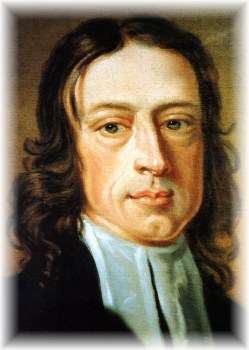
In October of 1735 John Wesley and his brother Charles left England and sailed to Savannah, Georgia where John would be the minister in the newly formed Savannah parish. Part of his religious upbringing had already instilled a desire for holiness of heart and life and Wesley believed that his new appointment provided a wonderful opportunity to hone his craft and enrich his faith. During his time serving as the pastor attendance at the church services steadily increased though he was disappointed by the lack of lived-out faith outside of worship.

John Wesley

John Wesley

Even with the growth in worship, many in the community disliked Wesley’s high church background and it proved to be a continual element of controversy. During this same time Wesley began to fall in love with the young and beautiful Sophia Hopkey. They courted for a period of time but after a brief visit to preach the Good News to the local Native Americans, Wesley was remarkably disappointed to discover that Sophia had married William Williamson. Wesley was devastated by the news and took out his frustration in a rather inappropriate way; he denied Sophia communion during church services.

Wesley, of course, had “reasons” to justify his actions (he believed that her zeal for living out her Christian faith had declined and he followed the guidelines from the Book of Common Prayer in prohibiting her sacramental participation) but he was also fueled by his heartache and anger in withholding the bread and wine. It quickly became quite the controversy and legal action was taken against Wesley eventually leading to him fleeing the colony and returning to England.

One of the highest, and most difficult, callings of Christian disciples is to forgive. When confronted with the question of forgiveness in the community Peter ventured forth the idea of forgiving someone seven times when Christ augmented the proposal to seventy-seven or seventy times seven times. Forgiveness, it would seem, is not something to be measured and checked off the list, but instead something that is deeply entrenched within the life of the community. Wesley let his personal feelings get the better of him, and he foolishly barred a young woman from Christ’s table. Christians, both clergy and lay, are called to the difficult task of everlasting forgiveness, even when it hurts.

Is there someone that you are still holding a grudge against? Who do you need to forgive in your life?

This Is NOT Appropriate For Church – Sermon on Joshua 2.1-14

Joshua 2.1-14

Then Joshua son of Nun sent two men secretly from Shittim as spies, saying, “Go, view the land, especially Jericho.” So they went, and entered the house of a prostitute whose name was Rahab, and spent the night there. The king of Jericho was told, “Some Israelites have come here tonight to search out the land.” Then the king of Jericho sent orders to Rahab, “Bring out the men who have come to you, who entered your house, for they have come only to search out the whole land.” But the woman took the two men and hid them. Then she said, “True, the men came to me, but I did not know where they came from. And when it was time to close the gate at dark, the men went out. Where the men went I do not know. Pursue them quickly, for you can overtake them.” She had, however, brought them up to the roof and hidden them with the stalks of flax that she had laid out on the roof. So the men pursued them on the way to the Jordan as far as the fords. As soon as the pursuers had gone out, the gate was shut. Before they went to sleep, she came up to them on the roof and said to the men: “I know that the Lord has given you the land, and that dread of you has fallen on us and that all the inhabitants of the land melt in fear before you. For we have heard how the Lord dried up the water of the Red Sea before you when you came out of Egypt, and what you did to the two kings of the Amorites that were beyond the Jordan, to Sihon and Og, whom you utterly destroyed. As soon as we heard it, our hearts melted, and there was no courage left in any of us because of you. The Lord your God is indeed God in heaven above and on earth below. Now then, since I have dealt kindly with you, swear to me by the Lord that you in turn will deal kindly with my family. Give me a good sign of faith that you will spare my father and mother, my brothers and sisters, and all who belong to them, and deliver our lives from death.” The men said to her, “Our life for yours! If you do not tell this business of ours, then we will deal kindly and faithfully with you when the Lord gives us the land.”

Today we begin our Sermon Series on Women of Faith. Last Advent I asked all of you to submit questions or topics for preaching that you have always wanted to hear about from the pulpit. I received so many questions and comments that I was unable to address all of them during our January series on Questions, so I decided to save this particular series for later. It was incredible for me to discover how many of you wanted to hear about the women from scripture. I remember one card said, “I hear there are these great women from the Bible, but no one ever preaches on them.” So, here we are, may God bless our time together as we explore dynamic and feminine faith.

6-rahab1

Sometimes we read stories from the bible that are not appropriate for church. A few weeks ago we did just that as we remembered Elisha and the she-bears, and Isaiah getting naked for three years. Every once and a while we come across that passage that is so daring and vulgar that we would rather ignore it, and most of all, we would not read it aloud in church.

Rahab the harlot. A woman of ill-repute. From the Red Light district becomes the savior for a few spies.

Why in the world would God use her to save his people? Rahab the harlot? I mean I would understand if God chose Rahab the UMW president, or Rahab the Sunday School teacher, but Rahab the prostitute? This is not appropriate for church.

Moses has died. He led his people to the brink of the Promised Land, and handed over God’s people to Joshua. Joshua in turn takes care of the nomadic nation and sends spies ahead of them to survey the land and, in particular, Jericho.

Two men, hand-picked by their leader, sneak their way into the city, and as it sometimes happens to young men close to the edge of death, they arrive at Rahab’s place in the bad part of town.

The king catches wind that some spies had entered the city and he sent his own men to capture them. When the foot-soldiers arrive at Rahab’s place, she listens to their questions, and she lies! Perhaps as only women of the night can do, she peaked from behind the door, offered that dynamite smile, and said with confidence, “Sure, there were two Jewish guys here earlier, but they paid for everything, and went on their way. I’m sure if you start after them right now, you’ll be able to catch them.

While the king’s men traveled down the road, sure their bounty was just ahead of them, Rahab returned to the roof where she had hidden the Hebrews. She explains that she had heard of the mighty acts of their God, how they were delivered from Egypt, and defeated their enemies. In return for saving their lives, she asks for them to repay the favor when they return to Jericho to destroy the city.

I can imagine what some of you are thinking right now: Seriously Taylor? You told us you were going to preach on women of faith and this is who you picked for us? Rahab? She’s a conniving and lying harlot! 
god-heard-rahab1

However, the Old and New Testaments are filled with saintly characters who have both enviable and regrettable characteristics. Noah gets drunk and passes out naked after landing the Ark, King David lusts after Bathsheba and plots to have her husband killed, Peter denies Christ three times after his arrest. What becomes important, what sets them apart, is that God wants them to do something holy, not that they were holy to begin with.

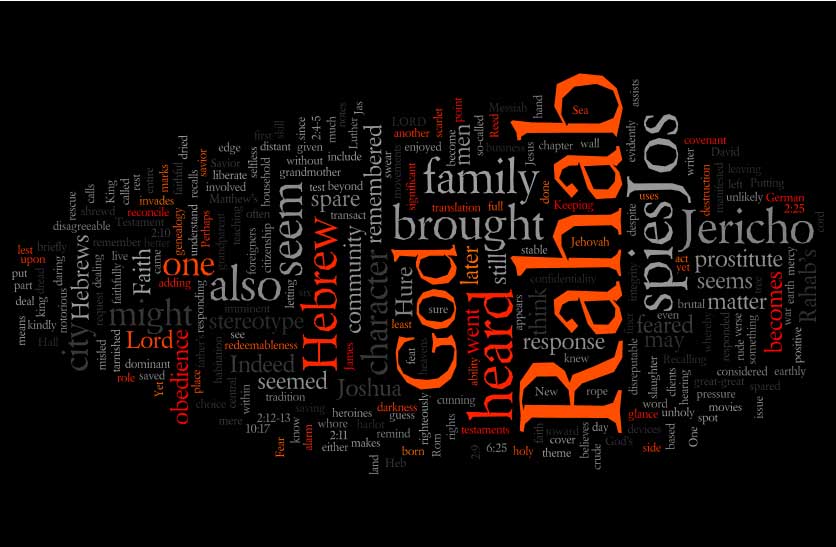
Rahab, full of faith, heard about how the Lord delivered his people, and Rahab believes and embraces God as supreme. Her declaration and acts of salvation towards the spies are more than actions and words; she is worshipping the Almighty. Even with her scandalous background, something not appropriate for church, Rahab experienced the greatest wonder of all – God’s limitless love and power to use and save the least likely of people. 

After church last week Lindsey and I left Staunton and we traveled to Alexandria to be with my family. Not only were we planning to enjoy the Labor Day holiday, but we were going to surprise one of my grandmothers for her 81st birthday.

I love my grandmother tremendously. Ever since I was a child she has referred to me as “precious lamb of Jesus Christ,” she has been there for every major moment of my life, and still shouts out with great joy every time I call her or visit her.

On Monday evening, after surprising her, we sat around my parents’ dining room table to enjoy a home cooked meal and celebrate my Gran. One of the more wonderful qualities that I inherited from her is the ability to ask questions that lead to conversation. I began with: “I want everyone to go around the table and share a story about Gran that brings you joy or made you laugh.

My mother told the story about how when she was a child, my grandmother would dress up like a waitress, sit my mother and her friends down at the table, and would take their order for lunch. The options were obviously limited, but it made the girls feel special, and I can just imagine them giggling as my grandmother scribbled away the orders for Grilled Cheese sandwiches.

I told the story about how my grandmother was always trying to teach us something new. When I was quite young, she used to require my sisters and I to learn a new word from the dictionary whenever we stayed the night at her house. The only word I can remember learning was “Taxidermy.” But not only were we required to learn a new word, but we had to use it in a sentence when our parents returned! I can only imagine the kind of sentence I came up with when I was 8 years old with the word taxidermy in it!

189334_3821512455734_514614209_n

But my favorite story is the one that Lindsey told. Gran had come over for dinner one night while we were all together, and when the evening came to a close she could not find her keys anywhere. We searched all over that house; taking off the couch cushions, crawling on the carpets while sweeping our hands, we even emptied out the trashcan just in case. But as it would happen, the keys were nowhere to be found. I eventually drove her home in my own car and used the spare key to let her into her house, with the hope of finding her car key sometime soon. Thirty minutes later my grandmother called. “I was just getting ready for bed,” she said, “and wouldn’t you know it, but I found my keys in my bosom!

Some things are not appropriate for church.

While I sat there listening to the hilarious stories from my grandmother’s life I was struck with the sensation of awe and love. My grandmother has embodied, for me, a life of faith and dedication, one that I try to emulate daily. But I also realized, that I know nothing negative about her. In my experience, coupled with all the stories I have heard, everything about her life is positive. Yet I know that she could not have lived a perfect life. That, like me, she has sinned, she has fallen short of God’s glory, she has made mistakes, she has regrets.

Everyone has something from their past that they are not proud of. What I believe Rahab, and my grandmother, have to teach us this morning is that we are not defined by the mistakes and shortcomings and judgements from the past.

By the time the New Testament was written, Rahab is remembered among the ancestors of Jesus (Matthew 1.5), regarded as an example of living faith (Hebrews 11.31), and justified by her works (James 2.25). By the time I was born my Grandmother had become the sweet woman full of life and laughter that I have always experienced. Whatever they did in the past matters little to the Lord. He did not judge them for their lives, but called them to respond to the grace poured out on their lives.

Can you imagine how strong Rahab’s belief and faith must have been? To sell her body the way she did, to be powerless and insignificant, and then she grabbed hold of her own destiny and lived faithfully. Two strangers had appeared that night, just like everyone else that walked through her doors, but her fear and faith propelled her into hiding them. She saw an opportunity to change her life, to save the lives of her family, and she did so.

Rahab, thinking of all that she had heard about the Lord, lied to the king’s men and came to terms with the spies. She refused to let her status and place in life limit her power for saving others. She was convinced that the city would fall at the hands of the Hebrews, but she was not simply motivated by fear; she was profoundly impressed with the news and strength of the God of Israel. “The Lord your God is indeed God in heaven above and on earth below.”

Her profession might not be appropriate for church, but her faithfulness is something we can all admire.

If you take a moment to look around the sanctuary, what do you see? Do you see perfect couples sitting shoulder to shoulder, hand in hand? Do you see loving families with children all sitting neatly in their pews? Do you see men and women who are full of faith and grace, capable of love and mercy? Do you see grandparents who adore their grandchildren?

I see a church full of Rahabs. I see people sitting in the pews with pasts they would prefer to remain hidden and untouched. I see families that are broken and full of disappointment. I see careers that have floundered, former decisions that have derailed lives, and regrets about choices that changed everything.

The beauty of the church is that it is full of Rahabs, people like you and me, that have been brought together to be the body of Christ for the world. The immense wonder and joy of the church is that in spite of our dark pasts we have been called to a brilliant present. That like Rahab we can become saintly by responding to the tasks and call that God places on our lives.

If we kept out everything that was not appropriate for church, then we would have an empty building. All of us, with our brokenness and disappointments, with our sins and temptations, have moments from our lives that are not appropriate for this place. However, that is precisely why we are here.

God’s sees us, knows us, calls us by name, and recognizes our potential in spite of our faults. God looks on all the Rahabs of the world, people like us, and beckons us to the Table, to the feast that we do not deserve simply because he loves us.

Look around at one another my friends, do not cast the first stone in judgement, do not sit high and look down on your brothers and sisters in faith. Instead, rejoice; give thanks to the Lord of heaven and earth who loves you, the God who calls on harlots to be helpers, sinners to be saints, and Christians to act like Christ.

Amen.

Devotional – Matthew 18.15

Devotional:

Matthew 18.15

If another member of the church sins against you, go and point out the fault when the two of you are alone. If the member listens to you, you have regained that one.

Weekly Devotional Image

During our weekly lectionary discussion group, after reading Matthew 18, Leah Pack questioned the group in attendance about whether or not any of us has had an experience of someone from the church confronting us in order to point out our faults. After all, pointing out the faults of a fellow church member is something Jesus charged his disciples to do. While the group pondered particular moments from their church lives, I shared with them one of my experiences.

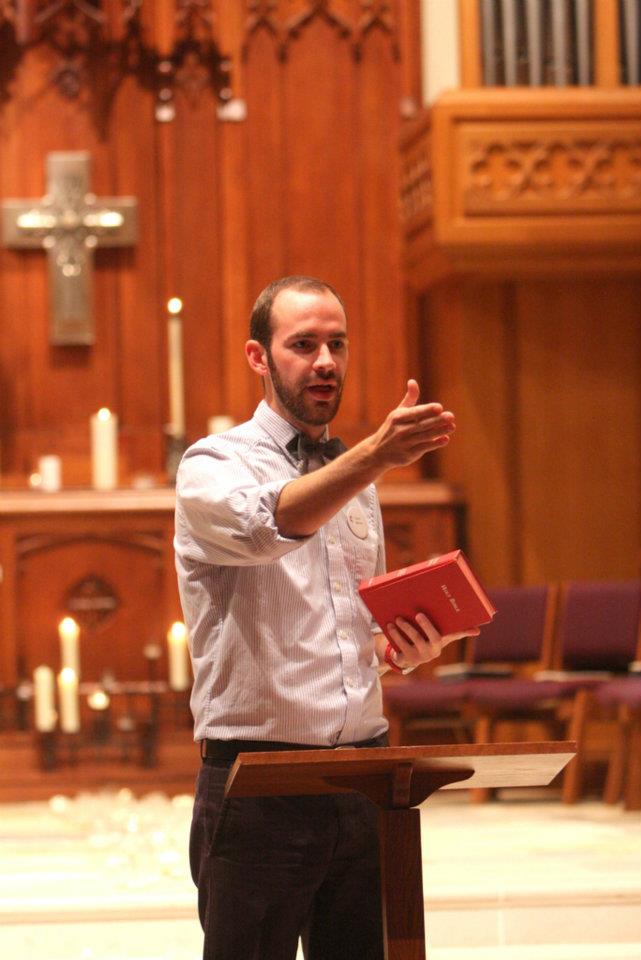
Preaching in Birmingham

Preaching in Birmingham

I had been helping serve at a church in Birmingham, Michigan for most of the summer. My responsibilities included visiting the hospitals, preaching, teaching, leading worship, and regular committee attendance. It was a particularly rewarding summer for me, and helped me identify my own strengths and weaknesses for ministry. Throughout my internship I met with the Seminary Committee who helped to provide the necessary information for my journey and offer advice and feedback regarding my work. On my last evening in Birmingham the committee shared their final evaluations for the summer and wished me well on my ministerial journey; the group was incredibly gracious and kind with their reflections.

As we prepared to leave the church that night one of the older gentlemen from the committee asked to speak with me privately before we left. “You are so full of it,” he began, “I watched you all summer long, and you might’ve fooled everyone else but you can’t fool me. You are one of the most arrogant and self-righteous young men I have ever met.” And with that he left me alone in the room; his words piercing deep in my soul.

I learned later that the man had a very difficult time watching a young person speak with such confidence from the pulpit on a regular basis and that, for him, was a sign of arrogance. Nevertheless, his words have stayed with me ever since that particular evening a few summers ago. Though I may not completely agree with him regarding his judgment of my faults, it was helpful (though painful) to hear him speak his mind. It has helped me to be mindful of the ways I come off as a pastor to others in ways than I could not previously imagine.

One of the highest callings of discipleship is a willingness to confront others when they are at fault. However it is important to remember that we are not called to judge them, but instead speak the truth in love about ways others have wronged us, and how we can reconcile broken relationships.

How have you confronted others who have faulted you? Has anyone pointed out your faults? Let us be truthful people who are kind with our words and courageous in our faith.