From Diapers to Diplomas

Psalm 46

God is our refuge and strength, a very present help in trouble. Therefore we will not fear, though the earth should change, though the mountains shake in the heart of the sea; though its waters roar and foam, though the mountains tremble with its tumult. There is a river whose streams make glad the city of God, the holy habitation of the Most High. God is in the midst of the city; it shall not be moved; God will help it when the morning dawns. The nations are in an uproar, the kingdoms totter; he utters his voice, the earth melts. The Lord of hosts is with us; the God of Jacob is our refuge. Come, behold the works of the Lord; see what desolations he has brought on the earth. He makes wars cease to the end of the earth; he breaks the bow, and shatters the spear; he burns the shields with fire. “Be still, and know that I am God! I am exalted among the nations, I am exalted in the earth.” The Lord of hosts is with us; the God of Jacob is our refuge.

graduation-sunday


Kurt Vonnegut Jr. once said that true terror is waking up one day and realizing your High School senior class is running the country. It’s a great quote, and one often used this time of year during graduation speeches. In fact, ten years ago, it was used by one of my friends at the beginning of her address during my graduation from High School: True terror is waking up one day and realizing your High School senior class is running the country.

Time can be terrifying. We, as human beings, are deeply rooted in time and when it feels like its going too fast, it leaves us shaking. It shakes us because we can wake up and wonder where it all went. I feel like I just graduated from High School; I can still remember the uncomfortable polyester graduation gown that created a frightening amount of static electricity. I can still picture the girls wearing too high high heels and attempting to walk across the stage without toppling over, and I can still remember the beginning of the speech and how true those words are.

We change all the time. It’s at the heart of what it means to be human. We’re born, we grow in size and knowledge, we move, we develop, we transform, we graduate from preschool to kindergarten, and then all the sudden we graduate from high school, and then with the blink of an eye our generation is running the country.

Things change, our lives change, our situations change, and when they do, it feels like the earth shakes under our feet.

Upon graduating from preschool we move on to Kindergarten. After a number of years with the same classmates and the familiarity of one school and one program, we have to move on to a new location, with longer hours, with a whole new set of expectations. I can still faintly remember my first day in kindergarten and wondering where to sit, and if anyone was going to sit with me. And the change that takes place for the parents is even more severe!

During the final months of Preschool here at St. John’s, we ask the parents to wait in the parking lot so that the children can get used to walking to their own classroom by themselves. This is one way of preparing them for Kindergarten. And honestly, on that first day, the children bound up and down the hallway without a care in the world, and it is the parents in the parking lot who are undergoing an existential crisis.

I’ve seen tears well up in the eyes of fathers, and mothers nervously pacing back and forth while their children enter into a new realm of being. I imagine they felt like the world was shaking under their feet and they needed something solid to hold on to.

After graduating from high school we go off to college and enter a whole new strange world. We often pack our belongings and start living with a stranger and won’t be home until the first break at Thanksgiving. For the student it is a time of great excitement and opportunity, whereas for the parents it can be downright terrifying. Will they be okay? Will they get enough food to eat? Are they going to be able to make new friends? Who is going to wake them up for class in the morning? Who is going to do their laundry? It shakes the parents to their core to watch their beloved child go from diapers to diploma in a blink of an eye.

Every graduation leads to a time of change and fear; Preschool to Elementary School, High School to College, Singleness to Marriage, Health to Death. We enter these periods of unknown, and that’s what makes us really afraid.

13434733_10154269000690536_1434707530486525089_n

When these changes occurs, when we graduate from one thing to another, we often respond in one of two ways; they either push us closer to God, or farther away.

A young couple has a baby and once the new domestic rhythm is established they realize they have no idea what it means to raise a child to be a decent human being so they start going to church it hopes of answers and direction. Or a recent graduate enters a university and is invited to a worship service filled with people who genuinely care about her well-being and she discovers who she is and whose she is. Or a recent widower listens while the church proclaims his deceased wife’s promised resurrection during the funeral and it gives him the strength to discover God’s love in church.

But change can also push us away. We convince ourselves that we can raise a child without the help of a larger community, we believe there is no place for the church in our lives while we are in college, or we grow cynical toward the words proclaimed when someone we love dies.

The church is bold to proclaim the words of the psalmist, the enduring truth, that even though the earth should change, even though the mountains shake and the seas tremble, even though kindergarten can be overwhelming (for children and parents), though the unknown of college stands like an undefined horizon, even though people die and we grieve till the end of our days, there is a river whose streams make glad the city of God. This city cannot be moved, because God dwells in the city forever.

God is the solid rock upon which we can stand when the world shakes underneath our feet. When we are filled with sorrow and doubt, God is the source of joy and light. While people push us to and fro with differing opinions, God speaks the truth in love. As we receive our identities in the hurtful comments of friends and foes, God tells us that we are beloved.

There is a great comfort that comes in knowledge that even though our lives will change, God will stay the same. That is the great story of scripture; God remains steadfast even when we fall away. In the wilderness journey of Exodus, while the people chose to worship idols and other gods, the Lord remained with them. After David fell into the clutches of sin, God was with him. After the exile, God called the people back to their homes and back to lives of faithfulness. Even after delivering Jesus Christ to the cross to die, God’s arms remained open to all of God’s children.

God stays the same.

psalm-46-1

A few months ago I asked one of our youth who just graduated from high school to share what kind of difference St. John’s has made in her life. Danielle was baptized in this sanctuary, was enrolled in our preschool, and has been in worship nearly every Sunday for 18 years. That kind of commitment to the church shaped her into the remarkably wonderful young woman she is today, and it gives me hope for the role of the church in all of our lives.

This is what she had to say:

“Since I was born, I have been coming to St. John’s UMC. It has always been there for me. Even when I was a small child, and unable to truly comprehend the grace of God, I still had a strong and living faith because of the church. As I grew up, I made many friendships at St. John’s that mean a great deal to me. And honestly, “friendship” doesn’t even do justice to what it has really been like. I grew up with these people, and they took the time to raise me in the faith. Without this church I never would have found God and the power of God’s word. I am blessed because I have a church that loved me the way God calls us to love. Moreover, this church has helped me not only find God, but find myself as well. No matter where I might end up in the future, I will always cherish the memories, family, spiritual growth, and prosperity that I experienced at St. John’s.”

I believe Danielle was able to craft those words because of God working through you. Danielle feels blessed because this church loves her the same way God calls all of us to love: without judgment or assumption, without malice or prejudice. From diapers to diploma, you and the other great saints of this church have nurtured her. You have shown her what it means for God to be our strength and refuge, a very present help in trouble.

When someone from the church died she could have fallen to the temptation of fear and trembling. But you showed up for the funerals, you rejoiced in the promise of salvation, you embodied the hope we have in the Lord who is with us.

When she moved from school to school, while life changed around her each and every day, this place was like the river whose streams mad glad the city of God. Here in this church she learned about the God of creation who brought forth order out of chaos, who called Abraham into a covenanted relationship, who wrestled with Jacob on the banks of the Jabbok river, who delivered the people out of slavery in Egypt, who called prophets and priests to bring the people back, who became incarnate in Jesus Christ and dwelt among us, who died on a cross, who was raised three days later.

Throughout Danielle’s life this church has said every Sunday, “Come, behold the works of the Lord!” Her eyes have been opened to the way God moves in the world, she found her identity as a child of God; she experienced God’s magnificent power and might.

Change can be a terrifying thing. But the God of Abraham, Isaac, and Jacob, the God of Jesus Christ, is our refuge and strength. Because we can do all things through Christ who strengthens us, therefore we will not fear even though our lives change. This church’s work propels a river whose streams make glad the city of God. Through our worship and our work, through our prayers and our presence, through our faith and our fellowship, we remember that God is in the midst of our lives. God will help when a new day dawns. The nation might be in an uproar, kingdoms will totter, but the Lord of hosts is with us.

So come, behold the works of the Lord. God makes wars cease, and peace reign. God makes the weak mighty, and brings down the principalities. God breaks the bonds of slavery, and opens up the doors to freedom. God brings hope to the poor and calls upon the wealthy to serve. God comforts the afflicted and afflicts the comfortable.

Be still and know that God is with us. From diapers to diplomas and even to death, God is with us. Amen.

Too Blessed To Be Stressed – Sermon on Ephesians 6.10-20

Ephesians 6.10-20

Finally, be strong in the Lord and in the strength of his power. Put on the whole armor of God, so that you may be able to stand against the wiles of the devil. For our struggle is not against enemies of blood and flesh, but against the rulers, against the authorities, against the cosmic powers of this present darkness, against the spiritual forces of evil in the heavenly places. Therefore take up the whole armor of God, so that you may be able to withstand on that evil day, and having done everything, to stand firm. Stand therefore, and fasten the belt of truth around your waist, and put on the breastplate of righteousness. As shoes for your feet put on whatever will make you ready to proclaim the gospel of peace. With all of there, take the shield of faith, with which you will be able to quench all the flaming arrows of the evil one. Take the helmet of salvation, and the sword of the Spirit, which is the word of God. Pray in the Spirit at all times in every prayer and supplication. To that end keep alert and always persevere in supplication for the saints. Pray also for me, so that when I speak, a message may be given to me to make known with boldness the mystery of the gospel, for which I am an ambassador in chains. Pray that I may declare it boldly, as I must speak.

too-blessed-to-be-stressed

Friends, I want to share with you the secret of being too blessed to be stressed. Have you felt yourself crumbling over the demands of life? Are you frustrated with your children and their inability to actually listen? Are you worried about your loss of independence? Well then, this sermon is for you.

I know that it might seem impossible to get to a place where being blessed wipes away all the stress of our lives, but we can do it!

Here are my top five tips on how to be too blessed to be stressed:

1) Walk away from the problems! Life is too short to worry about other people. When you start to feel that stress bubbling in your gut, just walk away. We are not our brothers’ keepers. We don’t need to let other people bring us down with their worries, so just walk away.

2) Read or watch something funny! Laughter is the cure to stress. The purpose of life is to be happy all the time, so it is time for us to start embracing the hilarity of life. Instead of complaining and being stressed, we need to turn on our TVs to that witty sitcom and let the laughter loose.

3) Stop procrastinating! Seize the day. Don’t put off to tomorrow what can be done today. Avoid procrastination and stress will disappear.

4) Give your money to church! You just have to plant that little seed, and you will be rewarded one hundred-fold. Money is the root of all evil, but the point of life is to prosper. If you give you money to church, you will start to receive even more blessings than you can imagine. Give your money to the church, and you will really be too blessed to be stressed.

5) Praise the stress away! Give thanks in the midst of your troubles and peace will start to slip right in. Just look at your problems and say to yourselves, “I am thankful for this” and everything will change. But what if your too stressed to even say a praise? Try holding your arms out to your side and take in deep breath, and as you breathe out, slowly lower your arms. Once you pushed out all the air, breathe in and out 5 times in quick suggestion. I would check with your doctor before trying this, because it might not be safe for everyone, but it sure works for me!

If you follow my five easy tips, you will be too blessed to be stressed!

7b839f659cabce0fbe9c4eafa477161b

Ok, let’s be real for a moment. Everything I just said, from the praising your stress away, to breathing in and out in repetition, I stole from other sermons. In just a quick search on the internet I found a seemingly limitless amount of prosperity-gospel sermons aimed at ridding stress, by being blessed. From the likes of Joel Osteen and others, I created a list of five bits of advice that I had found that guarantee to turn your life around.

Here’s the problem: All these promises of wealth, health and happiness by following a simple list, a guaranteed better life by blind faith, do not resonate with scripture.

The praise service had been hitting all the marks. The band was in sync, people had their hands up in the air thanking the Lord, and a few were even dancing in front of their fold out chairs. The gymnasium had been transformed into a space of worship, and they were quickly running out of room.

The sermon was delivered with a never ending smile, encouraging people to look on the sunny side side, celebrate successes, and praise God in all time in all places. Coffee was passed around to all the worshippers, and whether it was the caffeine or not, people were jazzed up for God.

Following the service, as was customary, the preacher waited by the door and shook hands with people as they exited. His smile had remained bright and white from the sermon throughout the whole service, and was now shining upon families as they departed. However, one woman paced back in forth at the back of the line before finally throwing up her hands and walking out.

Worried that he had done something wrong, that pastor apologized to the couple in front of him and chased the woman out the door. “Ma’am,” he shouted as she stormed off to her car, “Don’t forget to praise God!

She stopped dead in her tracks on the asphalt, made a quick 180, walked right up to the preacher, and put her finger up to his nose. “I’ve had it up to here with you and all your silly happiness and praise. I can’t stand coming to a church that won’t let me be angry.

As Christians, and as human beings, we are often told to “go with the flow” “chill out” and “relax” but Paul’s words to the church in Ephesus are a reminder to stand firm. Not with antiquated and backwards beliefs, but firm in our convictions. That woman stomped out of worship because her life was in shambles, and the preacher was telling her to be joyful and praise God. In not so many words he was telling her that being a Christian is easy, and requires us to be happy 24-7-365.

Paul’s words to the church were unpopular. We would rather hear from the prosperity preachers, and the praise preachers, that tell us how easy life can be if we only have faith in God, if we only “walk away from the problems”, if we only give our money to church.

Friends, being a Christian is not popular, nor is it easy.

Paul’s words are still unpopular because they are a challenge to such a secular society, particularly the one we live in.

Be strong in the Lord in the strength of his power. Put on the whole armor of God. There will come times when the wiles of the devil tempt us at the very heart of our being. Our truest struggles are not against enemies of blood and flesh, but against rulers, and authorities that strive for injustice at every turn.

Following Christ means standing firm in defense of justice and love. Taking up our crosses means that we will suffer for the love of God, and if we are too blessed to be stressed, then we are not working hard enough for the Kingdom.

So, take up the whole armor of God and stand firm. God has provided us with the power of truth, righteousness, peace, faith, salvation, the Spirit, and prayer. These are our tools to work against the evils of our world, we shall adorn them over our bodies for our lives, and we can remain steadfast in our convictions.

If we walk away from the problems of life, then we are not following Jesus’ command to minister to the last, least, and lost. Ignoring the stresses and injustices of life means that we are not loving our neighbors as ourselves.

If we give our money to church with the expectation that it will solve all of our problems, it will not! The offering plate of worship in not a cash register for a commodified exchange. We give as a response to God’s goodness, not as an expectation of blessing in return.

And if we try to praise the stress away, if we only want to hear about the joy, then we will continue to ignore the truth of reality and what it means to really follow Jesus.

Put on the whole armor of God because you will need it.

For a long time being Christian was just what everyone did. Most people were born into Christian families and went to the same church their whole lives without ever giving it a second thought. We lived in a Christian culture.

Interestingly enough, today following Christ means being counter-cultural. Imagine how strange a thing it is that we come back week after week to learn about being humble and risking unpopularity. We hear stories about how suffering and ridicule, if not worse, are part of our identity.

I like to joke that Jesus could use some new PR, because the stuff church offers doesn’t sell. There are no quick fixes and simple schemes. There are no “five easy steps to happiness.” Even in during Jesus ministry, the crowds grew to an incredible degree, but by the end, he was all alone marching up the hill with a cross on his back.

Jesus speaks to us through the words of scripture today calling us to be counter-cultural, to stand firm in the strength of God’s power.

“I am too blessed to be stressed” is such a strange thing for a Christian to claim. Having faith implies struggle. Discipleship is a journey filled with wonder, joy, and hardship.

This is the kind of thing that we are bold to proclaim. That God came in the form of Christ to walk among the people and turn the world upside-down. That Christ offered stories and commands that help to shape our lives so that we can shape others. That Jesus went to the very limit of his life dedicated to the profound power of love and it got him killed on a cross. That three days later he rose from the grave, defeated death, and offered salvation to the world.

maxresdefault

We are not too blessed to be stressed. If we are anything we are too blessed to be content. When we remember all that God was willing to do for us and for the world, it ignites a desire in our hearts to start transforming the world. When we feel God’s love in our lives through a friend, we are given the strength to do the same for someone else. When we break down and raise our clenched fists in the air at God, when we pray from the depth of our being, God shows up and starts to reorient our lives through change.

We are too blessed to be content. The world is full of rulers, authorities, cosmic powers of darkness, and spiritual forces of evil. God has blessed us to stand firm against the injustices of life and say “no more!” We will not sit idly by while the world tells people they have no value, we will not participate in a system that perpetuates economic disparity, we will not give in to the evil powers of prejudice and presumption.

We say, “no more!” and we clothe ourselves with the whole armor of God and we go marching against the evils of the world. We wear the belt of truth and open our eyes to what is really going on. We strap on the breast plate of righteousness and live according to love rather than hate. We put on shoes that allow us to get on the move and declare the gospel of peace. We brandish the shield of faith, holding on to the promises of God. We adorn our heads with the helmet of salvation, hold the sword of the Spirit, and we persevere in prayer.

We say “no more!” to the rulers, and the authorities, and the cosmic powers of darkness because we are too blessed to be content. Amen.

Devotional – 1 Kings 3.5

Devotional:

1 Kings 3.5

At Gibeon the Lord appeared to Solomon in a dream by night; and God said, “Ask what I should give you.”

Weekly Devotional Image

When I go on mission trips, I love asking youth a familiar set of questions. For instance: After a few days of cold-cut sandwiches for lunch at our work sites, I always ask them to share what would be their ideal meal. In a matter on minutes, strangers become best friends over their intense bonds with the likes of Gummi Bears, Big Macs, Snickers Ice Cream Bars, etc.

Occasionally I will ask them to share their favorite movie or book, and I always wind up asking about their favorite story from the bible. The questions are a mechanism by which conversations will begin to flow, but it also helps to create friendships over shared interests with people that never imagined they could be friends.

A few weeks ago while I was serving with a mission team in McDowell County, WV I asked the group one of my go-to questions: “If a Genie offered to grant you one wish, what would you wish for?” Some of the answers were hysterical: “I would ask for a swimming pool full of chocolate syrup” “Definitely a basketball court as my bedroom” and “french fries; lots and lots of french fries.” The question got the conversation flowing and we all began to debate the merits of our particular wishes compared with the wishes of our peers.

genie

Later on that afternoon, while we were cleaning up our tools before heading back to our main site, one of the younger boys from my crew approached me with a strange look on his face. He stood next to me for what felt like a long time before he finally spoke. “I’ve been thinking about your question, you know the one about the Genie, and I finally got my answer: I would wish to be more patient.” In all the quick responses to the initial Genie question, I neglected to ask this young man what he would wish for, and when he finally shared his answer, it hit me deep in my soul.

After his father David died, Solomon was approached by the Lord and was offered anything he wanted. Solomon, though given the opportunity to request anything in the world, asked for wisdom. That young boy on the mission trip, rather than being led by selfish desires for wealth and power, told me that what he really wanted was patience.

When we go to God in prayer, what do we ask for? Are we treating God like a Genie who will give us our greatest wishes? Or are we seeking the Lord’s power to help shape us into the disciples God knows we can be?

Stranger In A Strange Land – Sermon on Ezekiel 17.22-24

Ezekiel 17.22-24

Thus says the Lord God: I myself will take a sprig from the lofty top of a cedar; I will set it out. I will break off a tender one from the topmost of its young twigs; I myself will plant it on a high and lofty mountain. On the mountain height of Israel I will plant it, in order that it may produce boughs and bear fruit, and become a noble cedar. Under it every kind of bird will live; in the shade of its branches will nest winged creatures of every kind. All the trees of the field shall know that I am the Lord. I bring low the high tree, I make high the low tree; I dry up the green tree and make the dry tree flourish. I the Lord have spoken; I will accomplish it.

stranger-in-a-strange-land

During my first year of college I felt like a stranger in a strange land. I grew up in a family that believed in sitting together for dinner every night. I was raised in a church that took the baptismal vows seriously and helped me pursue my vision of ministry. I had friends that supported my belief systems, and wanted me to be happy. I was strongly rooted in my home, and when I left I felt like I was wandering around without a map.

In the beginning, college was completely unlike home. Instead of eating with my family, I was lucky to eat a meal in the dining hall with anyone. Instead of a supportive church, I tried out a number of campus ministries that made it clear that if I wasn’t converting my heathen classmates I had no business being a part of their group. Instead of friends that loved me, I had surface level connections that were based on a system of consumerism more than genuine friendship.

The things I had grown to love (the comforts, the familiarity, and the rhythms) were gone and I felt like a stranger in a strange land.

Imagine, if you can, the prophet Ezekiel sitting by the river among the exiles. They had been taken from their homeland, uprooted, and planted in a new place. Families were separated, homes were lost, and they no longer knew how to worship their Lord. But the Lord continued to call prophets to proclaim the truth, even in the midst of the unknown.

Ezekiel, a prophet to the exiles, declared what the Lord had said. The Lord will take a branch from the full top of a cedar tree and will set it apart. Then the Lord will break off one of the most tender pieces of the young twigs and plant in on a high and grand mountain. The Lord will plant this piece so that it would produce boughs and bear fruit and become a noble tree unlike any other. Under it, in the protection of its shade, every kind of bird will live and find comfort.

All the rest of the trees will know what the Lord has done. Because the Lord brings low the high tree, and makes the low tree grow. The Lord dries up the green tree, and helps the dry tree flourish. The Lord has spoken, and he will do it.

The message is beautiful and hopeful. The poetic language of God’s creation helps us to imagine a mighty cedar giving life and shade to all who are in need. We can almost smell the scent of the cedar wafting through the air as we hear the words. We are reminded of God’s great power in upsetting normal expectations.

But when we remember who the words were for, when we remember the exiles in captivity, the passage becomes all the more powerful.

The remaining faithful had been carried off into captivity in Babylon. Their suffering was great and their questions were many. “Why has the Lord abandoned us?” “When will we return to the great city of Jerusalem?” “Where is the Lord in the midst of our suffering?”

The foundations of their religion were laid waste by a rampaging army. Those who survived would have witnessed the destruction of the temple, they would have smelled the burnt scrolls in the air, they would have heard the screams of fear and suffering.

The new home of Babylon brought subjection, and powerlessness. The people were small in number, weak in strength, and limited in faith.

They were strangers in a strange land.

Yet, in all of the great stories from scripture, a small people, of little account and worth, are the ones chosen by God to do something incredible. Though insignificant by the world’s standards, they were extraordinary in the eyes of God.

In the midst of the unknown, while their fear was real and palpable, Ezekiel shared this tender message from the Lord. I, the Lord your God, am the one who turns things upside down. I will have the final say about what it going on in your lives. You see the powers around you and you believe they have prevailed, but I will make things new, I will plant the seed that gives shade to the tired, strength to the weak, and life to the dead.

Today we are celebrating our graduates, those who have mastered their present set of educational expectations and are moving on to new horizons.

We have graduates from high school that will be entering the new area of the university. We have graduates with Bachelor’s and Master’s degrees that will be entering the new area of the so-called “working world.”

In a few minutes they will stand before the congregation and we will pray for God’s blessing on them in all that they do. But before we send them off, we need to help open their eyes to the truth.

Soon, and very soon, you will feel like strangers in a strange land. No matter how confident you feel taking the next steps in your life, there will be things that happen that shake the very foundation of what you know and believe. You will encounter new and strange ideas. You will miss your friends, and your family, and hopefully your church.

Moments will come that you will ask the same kinds of questions that the exiles did in Babylon: “Why has the Lord abandoned me?” “When will things get back to normal?” “Where is God in the midst of all this?

So, this message from the Lord through Ezekiel is meant for you as much as it was meant for them. God’s message of love and presence and growth is directed to you in a time of new beginnings and uncertainty. Whether you are about to start at a new school or a new job, let these words be comforting and full of life.

The Lord God almighty took a sprig, a tiny and powerless little thing, and planted him in a place called Bethlehem. He grew up as the son of a carpenter and was ignored by most people until he started to give shade to all the birds of the air, when he started inviting the multitudes into the kingdom of God. Through his words and actions Jesus Christ gave hope to the hopeless, strength to the weak, and life to the dead. Through him the people began to know and experience the love of God and the world was turned upside down.

Ezekiel17.24-660x371

Doesn’t all of this sound familiar? The Lord will plant a new tree… just like the sower who goes into the field… just like a tiny mustard seed become the greatest of all the plants. The Lord will make high the low tree and make low the high tree… just like the first shall be last and the last shall be first… just like the poor being welcomed into the kingdom of God and the religious elite were left scratching their heads.

This kind of inversion has been part of God’s great cosmic plan all along and we are still being swept up in it. The Lord calls on the strangers in a strange land to give hope for the world. The Lord uses the weak and least of these to show how the great tree of life in Jesus Christ gives shade and comfort to all of God’s children.

To those who are about to embark on something new: take heart and know that the Lord is with you. Even when you feel lost and alone, you are not. We, the gathered people, are praying for you and will continue to so long as we have life. But more importantly the Lord has faith in you to do incredible things, to help continually turn the world upside down.

To those who remain: look upon these graduates with hope. Because just as the Lord planted Jesus Christ to be a source of hope, the Lord is about to do the same thing with all of them. He will scatter them like seeds in the earth, he will nurture them through the power of his Spirit, and they will stretch out their arms to the world and will be a source of light in the darkness. Wherever they are planted, they will bear fruit for the world.

During my first year of college I felt like a stranger in a strange land. I wanted to cry out to the Lord like one of the lost exiles in Babylon. I felt abandoned, I felt alone, and I felt afraid. Weeks passed and nothing changed, my relationships started to suffer, and I started putting in the minimal amount of effort necessary in my classes. But it was also when I really learned how to pray.

I didn’t read about it in some book about faith, but I read about it in the book of faith. I looked for the times that Jesus prayed. It helped put things in perspective about what I was going through. It didn’t change my circumstances, but it changed me.

Because true prayer is not about asking God to fix something. True prayer is the gutsy willingness to let God be God in your life. So I gave it over, I prayed less like myself and more like Jesus, I prayed for God’s will to be done in my life instead of for my life to get better. But it did.

When we really pray, its not important what we say, but that we let God have time to speak. Prayer is far more about listening than it is about speaking. Prayer is not listing what we want, but a risk of being exposed to what God wants.

Prayer really changes things, and sometimes what prayer changes is us.

prayer-changes-me

So, whether we are about to embark on a new experience in a new place or we are still spreading our roots here in Staunton; whether we are confident in our faith, or filled to the brim with doubt; whether we feel surrounded by discipled witnesses, or feel completely alone. We are all strangers in a strange land.

As Christians we are called to see the world through the resurrection which means we will never feel comfortable where we are. We love our enemies and turn the other cheek. We offer a tenth of our income and pray for the weak. We listen for the Lord and lift up the meek. Being Christian is about living in the tension between what the world explains and what the Lord proclaims.

But with prayer, by taking time to be holy, we start to see the world turned upside down, we experience the beauty of God’s kingdom, and we find rest in the shade of God’s great cedar tree: Jesus Christ. So let us pray:

O Lord, let your will be done, nothing more, nothing less, nothing else.

O Lord, let your will be done, nothing more, nothing less, nothing else.

O Lord, let your will be done, nothing more, nothing less, nothing else.

Amen.

The Problem With Families Today – Sermon on Mark 3.20-30

Mark 3.20-30

And the crowd came together again, so that they could not even eat. When his family heard it, they went out to restrain him, for people were saying, “He has gone out of his mind.” And the scribes who came down from Jerusalem said, “He has Beelzebul, and by the ruler of the demons he casts out demons.” And he called them to him, and spoke to them in parables, “How can Satan cast out Satan? If a kingdom id divided against itself, that kingdom cannot stand. And if a house is divided against itself, that house will not be able to stand. And if Satan has risen up against himself and is divided, he cannot stand, but his end has come. But no one can enter a strong man’s house and plunder his property without first tying up the strong man; then indeed the house can be plundered. Truly I tell you, people will be forgiven for their sins and whatever blasphemies they utter; but whoever blasphemes against the Holy Spirit can never have forgiveness, but is guilty of an eternal sin” – for they had said, “He has an unclean spirit.”

process

What a strange story. Jesus has been going around healing people and listening to their stories, he has called the twelve disciples together and announced what their ministry will be, and now so many people have gathered together to see this incredible man, that they couldn’t even eat. And what happens? His family catches wind of the crowds gathering and they go out to stop Jesus because they thought he was going out of his mind.

But then the scribes from Jerusalem arrive and accuse him of having a demon. Does this passage sound bizarre to you? Beelzebub? Satan? Demons?

Jesus hears the accusations and then responds in parables, furthering the confusion of the crowds and modern readers: “How can Satan cast out Satan? If a kingdom is divided against itself, that kingdom cannot stand. If someone entered the house of a rich man, they would not be able to steal anything unless the man was first tied up. Truly, people will be forgiven their sins and doubts, but anyone who ignores what the Holy Spirit is doing will be guilty of an eternal sin.”

What? I don’t know about you, but when I come across passages like this I am often left scratching my head about what Jesus is saying. I read words like Beelzebub and Satan and I can’t help myself from questioning the text. I read about Jesus’ family appearing to restrain him and I can’t help but agree with them; maybe Jesus has lost his mind.

Who can blame them for trying to get him under control? If not out of fear for his life, at least to remove their own embarrassment for what he was doing and saying. We all have a need to uphold our reputations amidst the crowds of life and if a family member starts going out and proclaiming strange things, it might reflect poorly on us.

A few summers ago I had the opportunity to attend the Detroit Annual Conference session in Michigan. For a few days, clergy and lay representatives gathered together to worship the Lord, pray for the renewal of the church, and vote on pertinent matters affecting the denomination.

When I arrived the assembly was debating whether or not secretaries should be allowed to keep handguns in the church offices to protect themselves. Later that afternoon they argued about the bishop sending a letter to the President Obama about whether or not unmanned drones should be allowed to fly over the Upper Peninsula.

When the evening rolled around, I was invited by a colleague to attend the “Young Adult” gathering. I thought that sounded splendid after spending what felt like eternity with a bunch of blue-haired Methodists, so I quickly made my way to the basement of a nearby building. I assumed the designation “Young Adult” meant that I would be spending time with people in their mid-twenties to early-thirties, but it was just a bunch of high-schoolers and myself. Nevertheless I had a wonderful time with the group as we talked and prayed together for the future of the church.

That night I had one of the most powerful conversations of my life with a 16 year old boy named Sam. After introducing ourselves to one another, Sam informed me that this was his 8th Annual Conference in a row. He came for the first time when he was 8 years old and had come back every summer. I immediately thought he was crazy! Annual Conference, for me, can be a life-giving endeavor while at the same time a constant reminder of the brokenness of our church. But he wasn’t crazy. He was faithful.

I saw in his eyes a sincerity about the value of conferencing so I asked him to explain what it meant to him. He said, “Going to church every week has done a lot to help me grow in faith, but being around the same people all the time just kind of felt boring. But when I come here, I encounter thousands of Methodist from all over Michigan who have given their lives to Jesus, I sing with the faithful remnant and our voices echo like the angels in heaven, I discover that I am part of something so much bigger than myself.”

I was stunned. While I felt apathetic and cynical about Annual Conference, this young man had discovered, and grabbed hold of, what it could be.

Our conversation continued and he told me that about a year prior he started wrestling with a call to ordained ministry. How perfect – here I was a young seminarian responding to the call of God on my life and I had the opportunity to share this moment with a faithful and clearly gifted young man.

But I’ll never become a pastor.” He said.

“What are you talking about?” I nearly shouted. “In just a few minutes you have articulated a deeper faith than many Christians I know. You have all the potential in the world to be a gifted pastor. Are you worried about how much it will cost? The conference can help you out. Are you worried about how much work it will take? God will give you the strength to make it through.”

No” he sighed. “I’m gay.

I’m gay and I’m open about it. I am not ashamed of who I am and how God made me. But I also know that if I’m openly gay I can never become a pastor in the United Methodist Church.

I was speechless. This young man felt so committed to the church that he had attended Annual Conference eight years in a row, and yet he knew that same church believed there was something wrong with him. I didn’t know what to say in return. How could he be sitting with me in the midst of all this denominational stuff knowing what the denomination believed?

In reaction to my silence he continued, “When I told my family, they disowned me, told me I was wrong and that I had lost my mind. But my church… they welcomed me just as I am. My church has become my new family. But that same church says I can never become a pastor and that who I am is incompatible with Christian teaching.

racism_sexism_homophobia

The story of Jesus with the crowds is a strange one. We hear about demons and Beelzebub and Satan and we immediately wonder what it means. But Satan does not necessarily mean a person with horns and a bifurcated tail, but the name does represent a demonic power that attempts to divide us from the Lord. Satan is anything that separates us from doing what is right, and good, and true.

The powers of Satan, demonic powers that capture our attention cause us to hurt ourselves, others, and our relationship with God.

There is the demonic power of Racism – which tells us to believe and act as if one group’s pigmentation or cultural values are superior to another.

There is the demonic power of Patriarchy – which tells us that men should dominate women.

There is the demonic power of Materialism – which tells us that the accumulation of wealth and goods will bring us everything we need to be happy.

And there is the demonic power of Homophobia – which tells us that anything outside of male-female relationships is an abomination.

Whether or not we believe that Satan is a real person acting in our midst is not as important as recognizing our captivity to powers of evil signified by Satan, powers that continue to affect our lives everyday.

Regrettably, churches are often the focal arena where these powers take hold: hostility, fear, and anger boil over between groups debating the value of human beings. Yet, through the story of Jesus with the crowds, we learn that the powers of Satan must be recognized and confronted if we are to truly experience the incredible love of God.

Jesus’s family tried to stop him. Just like a racist white mother tries to stop her daughter from going on a date with a black man. Just like a homophobic father berates his son for holding hands with another boy. Just like a liberal college student chastises his parents for being too conservative. Jesus’ family tried to stop him. Sam’s family tried to stop him too.

Living out our faith means discovering a new solidarity with ALL of God’s people; all of humanity. Jesus bids us to cry with those who are suffering and rejoice with those who feel free to live their lives as they are. Jesus asks us to look on the people around us who are different from us and love them because they are different from us.

peace-love-no-violence-no-homophobia-no-sexism-no-racism

Whether we admit it or not, we are products of our families and culture. We might believe in the idea of equality, but we grow hesitant because we were cultured into things like racism, and homophobia, and materialism, and sexism. We were taught by the people around us, not because they were evil, but because they were caught captive to the same evil powers that are desperately seeking our allegiances.

The problem with families today is that we don’t challenge ourselves enough to be better. Jesus was not against his family, but he saw them as a challenge to the kind of community and kingdom he was preparing. Today we still face the challenge of how our families prevent us from seeing one another the way God see us: equal.

Wrestling with the powers of the world is difficult. The story of Jesus being accused of having a demon is not easy to handle. Learning about a young man who loves the church in spite of it’s declaration about his identity is sad.

But they also remind us of the great possibilities for hope, love, and recreation in God’s kingdom. They help us to see the moments where we can become better, opportunities for us to dig deeper in our faith, and occasions to say “Yes” to the wonder of God’s kingdom while saying “No” to the backwards values of the past.

Jesus Christ, Lord of lords and King of kings, came into the world to turn it upside down, to show us the way the truth and the life, and to create a new family where ALL are welcome. And all means ALL. Amen.

no-homophobia

Crucified Faith – Lenten Homily on John 14.1-7

John 14.1- 7

“Do not let your hearts be troubled. Believe in God, believe also in me. In my Father’s house there are many dwelling places. If it were not so, would I have told you that I go to prepare a place for you? And if I go and prepare a place for you, I will come again and will take you to myself, so that where I am, there you may be also. And you know the way to the place where I am going.” Thomas said to him, “Lord, we do not know where you are going. How can we know the way?” Jesus said to him, “I am the way, and the truth, and the life. No one comes to the Father except through me. If you know me, you will know my Father also. From now on you do know him and have seen him.”

image

Jesus is the way, and the truth, and the life.

I know a lot of people who want the greatest amount of reward for the least amount of effort. They have a faulty perception about how much they deserve based on how much they work.

Its like the guy who lets his grass grow and grow until you can barely see his porch because he only wants to have to mow it once. Or like the woman I recently saw at Food Lion who was using every single finger and both elbows to carry all of her bags to the car instead of making multiple trips. Or like the foolish pastor (cough *Me* cough) who believes that so long as he picks a scripture and prays about it, that God will give him a sermon to preach that will having people jumping and shouting “Amen!”

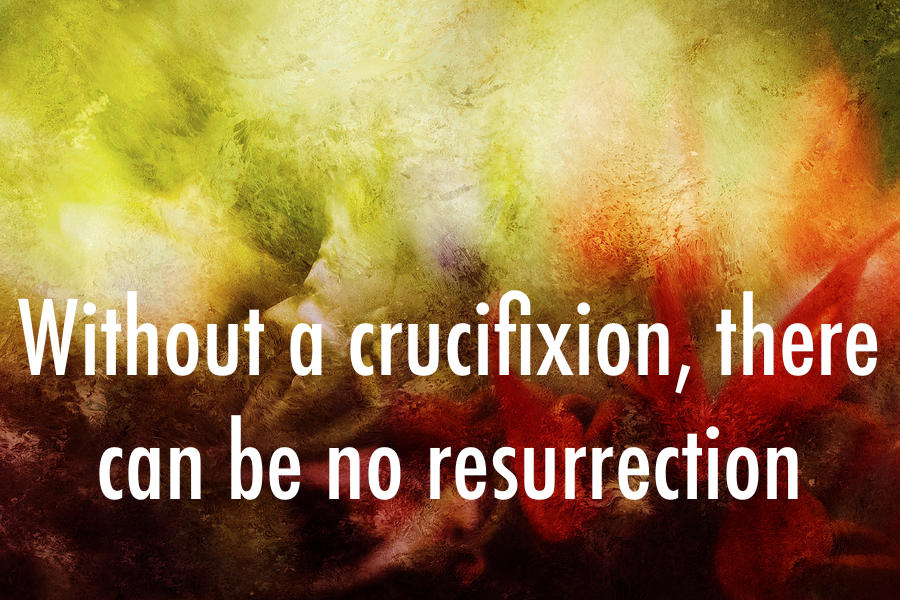
Sadly, I have come across a number of people (even myself at times) who want God without Jesus. We believe on some level that so long as we show up to church, and live a decent life, that we are doing all that the Lord would have us to do. We want salvation without suffering. We want love without expectations. We want resurrection without crucifixion.

Jesus is the way, and the truth, and the life. No one comes to the Father except through him.

way

The disciples are confused. Jesus tells them that he will go and prepare a place for them because there are many rooms in his Father’s house and they know where he is going. Then Thomas asks the question that all the other disciples are thinking: “Lord, we do not know where you are going. How can we know the way?” Jesus responds with hopeful and frightening words: I am the way.

The destiny in store for Jesus is likewise laid up for his friends, and for us. Those who want to save their life will lose it. If we want to experience the presence of God here and now, we can only do so by following the way, by following Jesus.

Sam Wells, the former dean of Duke Chapel, was appointed to a new church, and wanted to experience every single aspect of its mission. For the first few months he spent a couple of days each week going through the ins and outs of the church as if he was not the pastor; He toured the preschool like a prospective parent with a three-year old; He went to weekly prayer services and sat in the back like a stranger might if they randomly walked in off the street; He stood in line at the food pantry and patiently waited for his turn to receive some food.

One of the last things he needed to experience was the homeless shelter. He had heard that it was frequently attended because they gave out the best food and had the nicest provisions and he wanted to see it with his own eyes and taste it with his own tongue. So, for a few days before the experience, he stopped showering and shaving, he found some of his oldest and rattiest clothes, and prepared to spend a night with others in the basement of the building.

He began by waiting outside in line with everyone else. He tried to keep a low profile, but most of the people spotted his costume immediately. For whatever reason they welcomed him into their little group anyway and spent most of the night talking and learning about one another. He asked about their pasts and what had led them to where they were, most of them had normal lives until some unforeseen circumstance sent them out to the streets.

However, before the night ended one of the men shared an important perspective with the pastor. “We don’t come here for the food or for the warmth,” he said, “we come here because this is the only place where we can be with other people like us. Sure the food and shelter is nice, but the community is what we really need.

I don’t think Sam would necessarily put it this way, but I believe he encountered the living God in those homeless men and women precisely because he was acting like Jesus. I don’t think Sam actively went out with the hope that he could walk around like Jesus, but in meeting the people where they were he followed the way that Christ set up for us.

Sometimes the hardest part of being a Christian is recognizing that we cannot have resurrection without crucifixion. More often than not we need to crucify a part of our lives before we can meet and encounter the living God.

Maybe we need to crucify our false assumptions about the poor and how they wind up living on the streets. Perhaps we need to crucify our ridiculous prejudices toward people who are of a different sexual orientation. Maybe we need to crucify our faulty self-perceptions. Perhaps we need to crucify our selfish desires to crave our passions. Maybe we need to crucify a program in our church that is no longer giving life to anyone involved. Perhaps we need to crucify our willingness to hold on to a grudge from the distant past. Maybe we need to crucify our love and obsession with money.

Jesus is the way and we have been given the precious opportunity to follow him, even to the cross. If we want to encounter the living God, we can only do so by crucifying our brokenness and seeking out ways to be resurrected here and now. Amen.

Devotional – Psalm 25.4

Devotional:

Psalm 25.4

Make me to know your ways, O Lord; teach me your paths. 

Weekly Devotional Image

The air was pure and undisturbed. It was early enough that most of the neighbors were still asleep and the dog and I were the only ones about to roam the neighborhood. Snow covered everything in sight and I hesitated before taking my first step; until my foot hit the snow, all was still and smooth.

IMG_1949

When I typically walk our dog (Tennessee), in the mornings, we follow the same path. She has to hit the familiar spots and soak up all the smells, and only when we’ve gone everywhere on that path, is she ready to return home for food. The routine is repeated each day and I know that we both fall into the familiar rhythms each morning. And, if I ever forget something, Tennessee is quick to remind me with a quick bark or nudge.

Today, however, as soon as we hit the snow, everything changed. The familiar path was covered under inches of powder and Tennessee was so excited to walk that she began running in circles. I struggled to get her to the familiar spots while she was far more concerned with shoving her nose into the deep snow and turning to look at me as if saying, “This white stuff is awesome!”

10950725_10203503805826769_1322183989877696279_n

When it became clear that the familiar and routined walk was not going to take place, I decided to give in to her newfound excitement and began running around with her in the snow. Between shoveling mounds of snow up into the air, and Tennessee running around in circles, we were both quickly out of breath and at least one of us was laughing. By the time we returned to the parsonage it no longer mattered whether she hit all the same spots like most mornings; for us we simply enjoyed God’s creation in the beautiful snow.

The familiar routines of life often bring us stability and comfort: we wake up and drink the same coffee and read from the same sections of the newspaper; we listen to the same radio station while making the same commute to work; we pray the same prayers over meals with our family. Routines are important because they help to habituate us into faithful and fruitful patterns (We say the Lord’s Prayer every week in church because it helps to shape our lives around the Lord to whom we pray). However, life is not always so neat and tidy.

Changing the typical routines and patterns of life help to prepare us for the days when unforeseen circumstances change our plans. Taking the dog on different paths helps her, and her walker, to experience God’s creation in new environments. Learning to pray in different ways helps to keep our faith alive in new and vibrant ways. We need not wait for a snow day to change our rhythms and patterns; new opportunities are available every single day.

As we all prepare to take our first steps into the season of Lent, let us pray for God to reveal new paths in our lives. Let us see this season as an opportunity to rediscover that which makes our discipleship so exciting: a loving God whose paths are always open for new discoveries.

Divine Irony – Sermon on Exodus 2.1-10

Exodus 2.1-10

Now a man from the house of Levi went and married a Levite woman. The woman conceived and bore a son; and when she saw that he was a fine baby, she hid him three months. When she could hide him no longer she got a papyrus basket for him, and plastered it with bitumen and pitch; and she put the child in it and placed it among the reeds on the bank of the river. His sister stood at a distance, to see what would happened to him. The daughter of Pharaoh came down to bathe at the river, while her attendants walked beside the river. She saw the basket among the reeds and sent her maid to bring it. When she opened it, she saw the child. He was crying, and she took pity on him. “This must be one of the Hebrews’ children,” she said. Then his sister said to Pharaoh’s daughter, “Shall I go and get a nurse from the Hebrew women to nurse the child for you?” Pharaoh’s daughter said to her, “Yes.” So the girl went and called the child’s mother. Pharaoh’s daughter said to her, “Take this child and nurse it for me, and I will give you your wages.” So the woman took the child and nursed it. When the child grew up, she brought him to Pharaoh’s daughter, and she took him as her son. She named him Moses, “because,” she said, “I drew him out of the water.”

newjudaicia4

Can you imagine what was going through the mother’s mind when she placed her little son in the papyrus basket? Can you see her tears flowing down on to the boy who would change the course of history because she was forbidden to let him live?

Everything had changed in Egypt. Joseph had been sold into slavery but saved the Egyptian people by storing up food for the coming famine. He was widely respected and his people were held in safety because of his actions. But eventually a new king arose over Egypt and he did not know Joseph. He feared the Israelites, their power, and their numbers.

The Israelites quickly went from being a powerful force within another nation, to a group of subjugated slaves who feared for their lives. They were forced to work in hard service in every kind of field labor, they were oppressed and belittled, and their family lives were slowly brought into jeopardy. Pharaoh commanded the Hebrew midwives to kill all the males born to Hebrew women, but when they resisted, he changed the decree so that “every boy that is born to the Hebrews shall be thrown into the Nile, but every girl shall live.

Once a prosperous and faithful people, the Israelites had lost everything. Yet, even in the times of greatest distress, people continue to live and press forward… A Levite man married a Levite woman and she conceived and bore a son. When he was born and she saw that he was good, she kept him hidden for three months. But a time came when she could no longer hide the child and she found herself making a basket to send her baby boy into the Nile.

Kneeling on the banks of the river, she kissed her son goodbye, placed him in the crude basket, and released him to the unknown. The boy’s sister, who was allowed to live in this new regime, sat along the dunes and watched her baby brother float down the river toward where a group of women we beginning to gather.

Exodus-Chapter-2-The-Child-Moses-on-the-Nile

Pharaoh’s daughter saw the basket among the reeds, and when she opened it she saw the boy, and took pity on him. She recognized that he was one of the Hebrew boys but she was compelled to be compassionate toward him. The sister, with a stroke of genius, realized that she had the opportunity to save her brother and stepped forward from her hiding place to address the princess. “Shall I go and find a nurse from the Hebrew woman to nurse the child for you?” Pharaoh’s daughter said to the young slave, “Yes.” So the girl went and found her mother, the mother of the child she had just released into the Nile, and brought her to the princess. Pharaoh’s daughter charged her, “Take this child and nurse it for me, and I will give you your wages for doing so.” So the mother received back her own son and nursed him. However, when the child grew up, she brought him back to Pharaoh’s daughter, and she adopted him as her son, and she called him Moses because “I drew him out of the water.”

This story about the birth and the childhood of Moses is one of the most familiar texts from the Old Testament. It has just the right amount of suspense, intrigue, serendipity, divine irony, human compassion, intervention, and it concludes with a happy ending. Moses’ birth has captivated faithful people for millennia and offers hope even amidst the most hopeless situations.

One of the greatest pastors I have ever known serves a new congregation in Northern Virginia. Jason Micheli has inspired countless Christians to envision a new life of faithfulness previously undiscovered. He played a pivotal role in my call to ministry, we have traveled on countless mission trips together, he presided over Lindsey’s and my wedding, but above all he is my friend.

1934842_1140098793643_1336612_n

Jason and his wife Ali embody, for me, what a Christian relationship looks like. They support one another in their different ventures without overstepping their boundaries, they challenge each other to work for a better kingdom, and they believe in the Good News.

For a long time Jason and Ali knew that they wanted to adopt a child and they traveled to Guatemala when Gabriel was 15 months old to bring him home. As a young pastor and lawyer, Jason and Ali had busy schedules that were filled with numerous responsibilities that all dramatically changed the moment Gabriel entered their lives. They went from understanding and responding to the rhythms of one another to having a 15 month old living with them, a child who they were responsible for clothing, feeding, nurturing, and loving. I know that the first months must have been tough, but Ali and Jason are faithful people, they made mistakes and learned from them, they loved that precious child, and they continued to serve the needs of the community the entire time.

Jason and Gabriel

Jason and Gabriel

A year and a half later, just when the new patterns of life were finally becoming second nature, a lawyer who helped them find Gabriel contacted them. There was another family in the area who had adopted a 5 year old Guatemalan boy named Alexander, but they no longer wanted him. The lawyer recognized that Jason and Ali had recently adopted a child but wanted to find out if they would adopt another. However, the lawyer explained that this 5 year-old was supposedly very difficult, his adoptive family was ready to get rid of him, and he didn’t speak any English. Jason and Ali had a choice: lift this child out of the Nile, or let him continue to float down the river?

The story of Moses’ adoption by the Egyptian princess is filled with irony:

Pharaoh chose the Nile as the place where all Hebrew boys would be killed, and it became the means of salvation for the baby Moses.

The unnamed Levite mother saves her precious baby boy by doing precisely what Pharaoh commanded her to do.

The daughters of the Hebrews are allowed to live, and they are the one who subvert the plans of the mighty Pharaoh.

A member of the royal family, the Pharaoh’s daughter, ignores his policy, and saves the life of the one who will free the Hebrew people and destroy the Egyptian dynasty.

The Egyptian princess listens to the advice of the baby’s sister, a young slave girl.

The mother gets paid to do exactly what she wants to do most of all.

The princess gives the baby boy a name and in so doing says more than she could possibly know. Moses, the one who draws out, will draw God’s people out of slavery and lead them to the Promised Land.

Divine Irony! God loves to use the weak and the least to achieve greatness and change the world. God believes in using the low and despised to shame the strong and the powerful. God, in scripture and in life, works through people who have no obvious power and strengthens them with his grace.

How fitting that God’s plan for the future and the safety of the Hebrew children rests squarely on the shoulders of a helpless baby boy, a child placed in a basket, an infant released into the unknown. How fitting that God promised to make Abraham, a childless man with a barren wife, a father of more nations than stars in the sky? How fitting that God chose to deliver Noah from the flood on an ark, and young Moses from death in a basket floating on a river? God inverts the expectations of the world and brings about new life and new opportunities through the most unlikely of people and situations.

Jason and Ali prayed and prayed about the five-year old Guatemalan boy named Alexander. What would happen to them if they brought him into their lives? Everything was finally getting settled with Gabriel and they believed they had their lives figured out. They had planned everything perfectly, yet they we now being asked about bring a completely unknown, and perhaps devastating, element into their lives.

What would you have done? If you knew that there was a child, even with an unknown disposition, that was being abandoned by his adoptive family how would you react? Would you respond with open arms?

Alexander is now 11, soon to turn 12, and is without a doubt one of the most mature and incredible human beings I have ever met. After Jason and Ali met him for the first time they knew that God was calling them to bring him into their family, to love him with all that they had, and they responded like the faithful people they are, with open arms.

Jason, Ali, Alexander, and Gabriel

Jason, Ali, Alexander, and Gabriel

When Alexander arrived at Jason and Ali’s home, he came with the clothes on his back and nothing else. A five year old Guatemalan boy with little English was dropped off at their home; I can’t even imagine what it must have felt like for him. Yet, Jason and Ali brought him into their family and they never looked back. 

In the beginning, they had to sleep with him in his bed night after night, in attempts to comfort him and let him know that they were never going to leave him. That no matter what he did, no matter how far he fell, there was nothing that would ever separate their love for him. For a child that had been passed from person to family to family, Alexander had no roots, he had little comfort, and he had not experienced love.

Jason and Ali stepped into his life just as Alexander stepped into theirs. Perhaps filled with fear about what the future would hold for their little family Jason and Ali’s faithfulness shines brilliantly through the life of a young man named Alexander who I believe can, and will, change the world.

I imagine that for some time Jason and Ali believed that they, like Pharaoh’s daughter, had drawn Alexander out of the river of abandoned life. But I know that now when they look back, when they think about that fear of the unknown, they realize that Alexander was the one who drew them out of the water into new life. Divine Irony. 

In the story of Moses’ adoption out of the Nile, God is never mentioned. There are no divine moments when God appears on the clouds commanding his people to do something incredible, there are no decrees from a burning bush (not yet at least), and there are no examples of holy power coming from the heavens. Yet, God is the one working in and through the people to preserve Moses’ life and eventually the life of God’s people. God, like a divine conductor, orchestrates the music of life with changing movements and tempos that bring about transformation in the life of God’s people.

I believe that most of you, if not all of you, would take up a new and precious child into your lives. Whether you feel that you are too young, too old, too poor, too broken, you would accept that child into your family and raise it as your own. We are people of compassion, we are filled with such love that we can do incredible and beautiful things.

But it becomes that much harder when you look around and understand what we have become through baptism. Every child, youth, or adult, that it baptized into the body of Christ has been lifted out of the Nile of life into a new family. The people in the pews have truly become your brothers and sister in the faith through God’s powerful baptism. The Divine Irony is that we might feel we are called to save the people in church, when in fact they might be the ones called to save us. 

The story of Moses’ birth and childhood is beloved. It contains just enough power to elicit emotional responses from those of us lucky enough to know the narrative. It is a reminder of God’s grace and love through the powerful and the powerless. But above all it is a reminder that like a great and loving parent, Moses has been taken into the fold of God’s merciful love and grace. That we, through our baptisms and commitments to being disciples of Jesus Christ, have been brought out of the frightening waters of life into the adoptive love and care of God almighty. That we, though unsure of our future and plans, are known by the God of beginning and end.

Just as Jason and Ali held Alexander every evening, just as Pharaoh’s daughter cradled Moses in her arms, we have a God who loves us, who holds us close, and will never let us go. 

Amen.


Gabriel and Alexander in 2009

Gabriel and Alexander in 2009

Devotional – Isaiah 55.10-11

Isaiah 55.10-11

For as the rain and the snow come down from heaven, and do not return there until they have watered the earth, making it bring forth and sprout, giving seed to the sower and bread to the eater, so shall my word be that goes out from my mouth; it shall not return to me empty, but it shall accomplish that which I purpose, and succeed in the thing for which I sent it. 

Weekly Devotional Image

In church life we love to talk about “planting seeds of faith.” I have heard countless professors, theologians, pastors, and Christian leaders all convey something akin to “you never know how the seeds you plant might grow into beautiful lives of faith.” The point being that we must choose our words carefully because they contain enormous power; at times our words can help nurture someone in their faith, and at other times our words can destroy someone’s faith.

Dick Dickerson, a beloved man in our congregation, once told me a story about a particular Christmas Eve that he experienced while fighting in World War II. Dick had spent the previous days at the front lines frightened for his life and for the lives of his friends. Through the bitter cold they continued to push forward into enemy territory unsure of what they would discover. Without realizing it they serendipitously found themselves sleeping in the comfort of a church sanctuary on Christmas Eve enjoying a welcome reprieve from the fighting.

Dick describes that evening with vivid details: the wax from the candles spilling over onto the wooden pews, the hole in the roof letting in the tiniest snow flakes, and the huddled soldiers staying close to one another for warmth. Though he cannot explain what prompted him to speak up, he asked the young military men around him whether they would like to pray for anything. To him he seemed like the right thing to do on Christmas eve while gathered in a church sanctuary, regardless of the circumstances. One soldier prayed for his family and friends back home, another prayed for the weather to warm up, and another prayed for his fellow comrades in the fight against oppression.

The praying went on for sometime, but after a rather long pause one of the youngest soldiers spoke up: “I seem to remember Jesus saying something about praying for our enemies,” he began, “so tonight I would like to pray for the men we’re fighting against, I pray that God would be them as He is with us.” Upon hearing this man’s words Dick was worried that an argument or fight would break out between the men but he was surprised to discover that everyone was silent with their heads bowed down. With tears beginning to form in his eyes he joined his brothers and prayed for his enemies.

raining-on-yellow-daisies-natural-selection-craig-tuttle

God’s Word is mysterious, strange, and powerful. There are times when we hear or read something from scripture that will not become relevant or real for us until a later time. But like the prophet Isaiah said, “my word will not return to me empty, but it will accomplish that which I purpose.” The scriptures from both the Old and New Testaments are life-giving; they are like the blessed rain that fall from the sky in order to give new life from the earth.

Today let us all reflect on the ways that God’s Word has affected our lives.

Let us ask ourselves: What scriptures have transformed the way we see the world?

Weekly Devotional – 1/6/14

Devotional:

Isaiah 42.1-4

Here is my servant, whom I uphold, my chosen, in whom my soul delights; I have put my spirit upon him; he will bring forth justice to the nations. He will not cry or lift up his voice, or make it heard in the street; a bruised reed he will not break, and a dimly burning wick he will not quench; he will faithfully bring forth justice. He will not grow faint or be crushed until he has established justice in the earth; and the coastlands wait for his teaching.

picture-1

To live is to change. One of the lost difficult elements in life is the fact that we are constantly in a state of flux while we seek to be still. During the next few weeks, many of us will continue to strive toward our New Year’s Resolutions; maintaining that new diet, exercising regularly, watching less TV, seeking to stay in touch with family and friends. As we all attempt to maintain these disciplines, many of us will fall short and our new habits will come to a halt. Creating new and sustainable practices in life can be quite difficult, and without an incredible amount of discipline and faith, they often fade before they can become routine.

One of the great problems is that as soon as we create a regime, or find a healthy balance of new habits and practices, everything changes. We try to stay healthy only to become sick. We attempt to maintain meaningful relationships only to have people move away, and eventually leave us in death. We hope to hold fast to our careers, to the rhythm that gives us meaning, only to be told one day that we are no longer needed. We strive to drop bad habits only to have them flow back in as soon as the stress becomes insurmountable. To live is to change.

Change is inevitable and inescapable. For all of the preparation we can muster, we can never fully prepare ourselves for the surprises that life throws our way.

In the 42nd chapter of Isaiah, the prophet speaks about the unchanging ways of the Lord. Whereas our lives can never rest in perfect stability, the servant of the Lord will bring forth justice without changing; he will not cry or lift his voice, he will not break a bruised reed, or quench a dimly burning wick. The servant of the Lord will remain steadfast in his willingness to achieve God’s justice in the world.

Christ is that stable root that we can hold fast to when everything else in the world starts to change. As the river of life keeps propelling us forward, Christ is the solid rock upon which we can anchor our hope and faith. If we fail to maintain the new directions of our lives, Christ will still be waiting for us and calling out to say, “I am here. Come to me.”

So, if you feel down over the next few weeks as you see your consistency start to crumble, do not fear. Christ is the solid rock of our lives, willing to wait for us and be the anchor to which we so desperately need to cling. Do not worry about what tomorrow will bring for Christ will be there with open arms, ready to bring you within his embrace. Do not beat yourself up for whatever may come for Christ’s love is unending and all powerful.


To read more about Resolutions and Faith, I strongly recommend Josh’s Luton post on the subject here: http://apprenticeinstitute.org/new-years-resolutions-its-not-too-late/