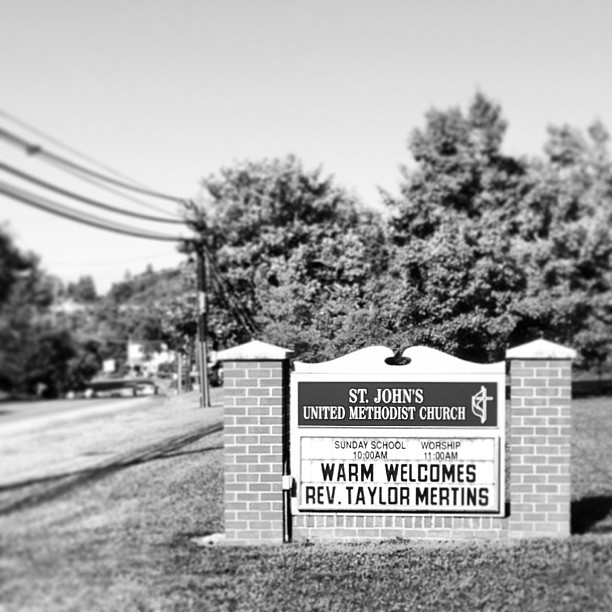
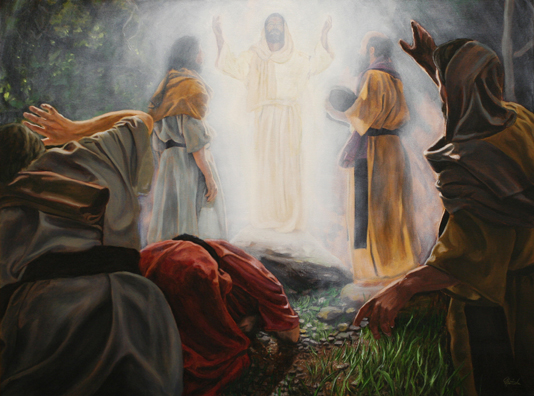
Yes!

Psalm 16

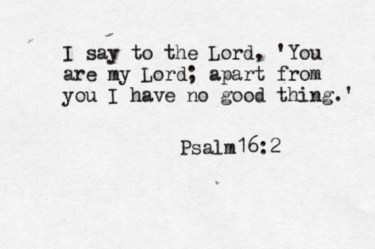
Protect me, O God, for in you I take refuge. I say to the Lord, “You are my Lord; I have no good apart from you.” As for the holy ones in the land, they are the noble, in whom is all my delight. Those who choose another god multiply their sorrows; their drink offerings of blood I will not pour out or take their names upon my lips. The Lord is my chosen portion and my cup; you hold my lot. The boundary lines have fallen for me in pleasant places; I have a goodly heritage. I bless the Lord who gives me counsel; in the night also my heart instructs me. I keep the Lord always before me; because he is at my right hand, I shall not be moved. Therefore my heart is glad, and my soul rejoices; my body also rests secure. For you do not give me up to Sheol, or let your faithful one see the pit. You show me the path of life. In your presence there is fullness of joy; in your right hand are pleasures forevermore.

Romans 12.2

Do not be conformed to this world, but be transformed by the renewing of your minds, so that you may discern what is the will of God – what is good and acceptable and perfect.

Screen Shot 2016-06-20 at 3.19.17 PM


Years ago there was a young man, fresh out of seminary, ready to start serving at his first appointment. He had taken all of the right classes, learned from gifted professors, and even volunteered in the local community. After he finished packing his bags, he loaded up the car and made his way to John Wesley UMC. The novice pastor was anxious and excited about what the church would be like, so before he unpacked any of his belongings he drove out to the church property.

He found the location on the map, went to the listed address, but there was no church to be found. So he turned around and drove to the spot once again only to discover that the church was blocked by the oldest and most decrepit looking tree he had ever seen. The roots were stretching all over the property and the leaves blocked the building and the marquee from being visible on the road.

He couldn’t believe it! No wonder he had heard that church attendance had decreased over the last few years! The young pastor was convinced that if only people could see the church from the road, it would grow and grow and grow.

So, before unpacking any of his important belongings, before even working on his first sermon, the young pastor unpacked his chainsaw and went back to the church. It took him most of the afternoon, but by the time he was finished the tree was gone, the sign and church were visible from the road, and he just knew that the church pews would be filled to the brim on Sunday.

A few days later, as he sat in the study of his parsonage crafting the words for his first message, the local District Superintendent called: “I hope you haven’t finished unpacking yet,” he said, “because you being reappointed.”

You see, the church was called John Wesley UMC for a reason: nearly two hundred years earlier a man named John Wesley had planted that tree while he was in the community. The gathered people decided to build a church right where the tree had been planted in honor of the man who planted the seeds that started our church, and that young pastor had chopped it down.
Apart

I keep the Lord always before me; because he is at my right hand, I shall not be moved,” says the Psalmist. What kind of faith would we have to have to be able to faithfully affirm these words? “The Lord is my chosen portion and my cup; you hold my lot. The boundary lines have fallen for me in pleasant places… You show me the path of life.” Who do you imagine speaking when you hear these words? Perhaps you picture one the great prophets from the Old Testament like Elijah, and Isaiah, and Jeremiah speaking about their faith, or maybe you immediately connect these words with a saint from your life, or perhaps you recall one of the wonderful pastors who served this church in the past.

I want to be able to faithfully proclaim these words, I want my life to reflect the kind of trust and assurance present in the psalm, I want to say “yes” to God over and over, but the problem is, I usually say “no.”

That, in a sense, is the great story of scripture. God offers us a path, he offers us a way, he offers us a “yes” and we respond by saying “no.” I have given you everything you will ever need here in the Garden of Eden; your lives will be perfect forever so long as you don’t eat from the tree of knowledge of Good and Evil. “No thanks God, we know what we’re doing and we’d rather try the fruit.”

I will deliver you out of the bondage of slavery in Egypt and bring you to the Promised Land. Follow my servant Moses, adhere to my commands, and everything will be wonderful. “No thanks God, we’d rather go back to Egypt, at least we had food there.”

I will make of you a great nation, you will grow in prosperity, but you must not worship any other gods instead of me. Listen to the prophets, give heed to my Word, and you will have life. “No thanks God, it’s easier to worship a golden calf and ask for prosperity than it is to live a life according to your law.”

Take up your cross and follow me, give of yourself to those who are suffering, pray for your enemies, worship the Lord, believe in the Good News. “No thanks Jesus, we’d rather hang you on a cross than start living our lives for other people.”

In scripture, whenever people stubbornly say “no” to the will of God, God declares, “Yes.” Like a parent with a child, it happens over and over. And this paradoxical relationship between God and God’s people bleeds out from scripture into our lives even today. God starts calling us to live a new kind of life through the words of a friend, through a profound experience, and maybe even through a sermon and we think “No thanks Lord, I know better.”

God calls us to sacrifice our time and money, to gather regularly for worship and be transformed, to believe in the power of grace and mercy, and we say, “No thanks God. I’ve got better things to do.”

God says to a young pastor, “I am calling you to comfort the afflicted, and afflict the comfortable. Preach the Good News. Serve the last, least, and lost. Plant seeds of faith. Remember the tradition that brought you here.” And he says, “No thanks God. I know what I’m doing, and I’m gonna chop down that tree.”

The truest and most faithful words we can ever pray, are words that we pray every week in church: “Thy will be done.” Those words are at the very heart of what it means to be Christian: submitting ourselves to the will of the Lord. And even though they are the truest and most faithful words we can ever pray, and even though we say them every week, they are the hardest to live by.

9a3fe6cd2bab9347a651e8f1ed86951c

Today marks the beginning of our 4th year together in ministry. And, I have to admit, I didn’t want to come here. I was utterly convinced that I needed to be an associate pastor at a different church right after seminary. I even contacted all the churches in Virginia hiring associates that year and had scheduled interviews. But then the Lord decided this is where I was supposed to be. I knew what I wanted, I knew where I thought I should be, and I was pretty nervous about coming here. Even though I continued to pray, “thy will be done,” I was really saying “my will be done.”

And, I’ve come to find out, that some of you didn’t want me to come here. Members of the staff-parish relations committee wanted a younger pastor to come to St. John’s, but one with experience. They wanted some new and fresh energy, but definitely not someone right out of seminary. And one of you told me that they first time I walked into the church, all you could think was, “he’s a baby.” But God sent me to you. You knew what you wanted, you knew what kind of pastor the church needed, and then I showed up. Even though many of you were praying, “thy will be done,” you were really saying, “my will be done.”

It happens with pastors being appointed to churches, it happens when we start wrestling with a call to a different career, it happens when children enter the picture and new priorities erupt, it happens when someone proposes a new way forward. My will be done versus thy will be done.

In the great battle of “No” and “Yes” in scripture, the final movement came in the cross and the tomb. God’s people continually rebelled against God’s love time and time again, even to the point of delivering God’s son to the cross. But after the three days of silence that followed the crucifixion, God declared the final and triumphant “Yes” in the resurrection of his Son, Jesus Christ.

Because of the good news of the resurrection, the final “Yes” to every “No” we’ve ever offered, we are reminded of God’s unwavering faithfulness in every circumstance. Even when we push back against the will of God, the Lord’s love remains. We say that in baptism we have died with Christ and therefore we have already seen the worst. Since we have also been raised with him in his resurrection from the dead, we can live in confidence that God has already saved us from all that might destroy us, even death. Because of the resurrection, because of Easter, we can be people who actually pray those hard and beautiful words, “thy will be done,” and mean it.

Last week I gathered with thousands of other United Methodists from across the Virginia Conference for the Service of Ordering Ministry. For the last three years I have worked on demonstrating my effectiveness in ministry, which culminated in being ordained as a full elder. I made my way up to the front of the arena with my two pastoral mentors and Lindsey with Elijah, I knelt before the bishop and the conference, and I was ordained. While each ordinand knelt they were invited to choose a particular section of scripture to be displayed on the screens for everyone to see. I chose Romans 12.2: “Do not be conformed to this world, but be transformed by the renewing of your minds, so that you may discern what is the will of God – what is good and acceptable and perfect.”

Those words were the first we ever shared together in worship 3 years ago, and they have come to define the ministry to which all of us are called. And as I felt the bishop’s hands upon my head, I thought about those words from Romans and I was overwhelmed by the Spirit’s persistent reminder, through YOUR faithfulness, I have seen the path of life. I felt convicted by the deep and profound truth that this is not a one-way relationship whereby I teach you, or I pray for you, or that I share God with you. Thanks be to God that we are in this beautiful and messy thing called church together.

Every week WE gather in this place to be transformed by the renewing of OUR minds. Through OUR worship we have worked to discern what is the will of God – what is good and acceptable and perfect.

            We are becoming the kind of people who can faithfully say, “the Lord is our chosen portion and our cup.” The communal Christian experiencing here, is about choosing Jesus again and again and again. It is about coming back to the Lord knowing that he will welcome us. It is about hearing God’s triumphant “Yes!” even when we want to say “No!”

And right now, the world wants us to believe that we have every reason to say “No.” Annual Conference is a reminder of the death that is possible in the church, we hear about all the churches closing this year, we learn about the lack of new and younger generations attending church, and we are reminded of the most frightening statistic of all: The average United Methodist invites someone to church once every 38 years.

But that doesn’t have to be our story. Desiring our will to be done is what got the church to this point in the first place. Can you imagine what would happen if we actually lived by the words “thy will be done”?

The time has come for us to declare “yes!” to the will of God. “Yes Lord, we know that through you all things are possible.” “Yes Lord, crucify our hearts so that they might be resurrected to your glory.” “Yes Lord, convict our souls to invite someone we know to experience your love here at St. John’s!” “Yes Lord, remind of our baptisms and of who we really are.” “Yes Lord, fill us with your Spirit till all shall see Christ living in us.” “Yes Lord, give us the grace and strength to take up our crosses and follow you.” “Yes Lord, let thy will be done!” Amen.

Devotional – Jonah 3.2

Devotional:

Jonah 3.2

“Get up, go to Nineveh, that great city, and proclaim to it the message that I tell you.”

Weekly Devotional Image

The phone buzzed while I was still asleep. I fumbled with it as I attempted to read the number in the dimly lit room when I discovered that it was from an unfamiliar zip code. On any other morning I might’ve just ignored the call and let it go to voicemail, but for some reason I answered it and began with a sleep-ish “Good Morning.”

“Good morning to you!” the too bright voice on the other end began, “Taylor, I am the District Superintendent from the Staunton District in Virginia. I know you were thinking about pursuing an appointment as an associate pastor, but the bishop and cabinet have prayed over you and we believe that you gifts and graces fit best with a church in Staunton. You are being appointed as the pastor of St. John’s UMC. Have you ever heard of it?”

In a matter of seconds I had gone from resting soundly in a bed, to learning where I would be serving for the next few years. I remember rapidly thinking: “Staunton? Have I ever been there? I know it’s south of Harrisonburg, but that’s about it. Did they just tell me that I’m going to be pastoring by myself? What are the people like? What if they don’t like me? etc.”

preach-word

After finishing the conversation, and making sure that I wasn’t dreaming, I looked up the church online. I used google maps to see what it looked like from the sky and from the road. I used the church website to learn about all the pastors who had served in the past and what the church was currently focused on. I used local newspaper archives to see if the church had been in the news. A few weeks later I got in the car and drove to Staunton just to see what the church looked like from the outside and what the surrounding community was like so that I could see if I  could picture myself there.

God said to Jonah, “Get up, go to Nineveh, that great city, and proclaim to it the message that I tell you.” Staunton is definitely not my Nineveh, but I can relate to the feeling of unease that Jonah had regarding his divine message; Going to a strange city with the task of proclaiming God’s Word is a frightening thing. How will the people respond? Will they hear what God is saying and believe? I still feel that uncomfortable feeling each week as I take the steps up into the pulpit and pray before the sermon begins.

Jonah was tasked with sharing a message with the people in a way that is similar to pastors preaching from pulpits. Similarly, all of us are given opportunities to share God’s message with the people around us: You might see someone alone at work and feel God pushing you to check on them. Perhaps you’ve been putting off a phone call to your son or daughter about how you want your relationship to change. Maybe you’ve been praying for a friend to start coming to church and now is the time to put your prayers into action by inviting them to come with you.

We all have difficult things to share with others around us. We can run away from the Ninevehs in our life like Jonah did or we can be brave and walk into the situations that God has given us a message to proclaim. The choice is ours.

The Advent of Paul – Sermon on Acts 9.1-9

Acts 9.1-9

Meanwhile Saul, still breathing threats and murder against the disciples of the Lord, went to the high priest and asked him for letters to the synagogues at Damascus, so that if he found any who belonged to the Way, men or women, he might bring them bound to Jerusalem. Now as he was going along and approaching Damascus, suddenly a light from heaven flashed around him. He fell to the ground and heard a voice saying to him, “Saul, Saul, why do you persecute me?” He asked, “Who are you, Lord?” The reply came, “I am Jesus, whom you are persecuting. But get up and enter the city, and you will be told what you are to do.” The men who were traveling with him stood speechless because they heard the voice but saw no one. Saul got up from the ground, and though his eyes were open, he could see nothing; so they led him by the hand and brought him to Damascus. For three days he was without sight, and neither ate nor drank.

paul-road-to-damascus

Today we continue with our Advent Sermon Series on “New Beginnings.” These few weeks of Advent are integral to the life of our church community in the sense that we are preparing our hearts, minds, and souls for the coming of God in Christ on Christmas day. We began with Abram being called to go to a strange land, and then we looked at Samuel being called by name in the temple. Today we continue by looking at the Advent of Paul.

Most pastors love to talk. They spend their Sundays standing before the gathered people proclaiming the Word of God with the hope of it becoming incarnate. It takes hours of preparation, study, and prayer to craft a sermon and many pastors find excitement and fulfillment when they are speaking. Whether they are preaching from a pulpit, leading a bible study, or huddling together in prayer, words are at the foundation of what we do.

Most pastors love to talk, and when you get a group of us together, sometimes the talking never stops…

I was at Licensing School, a required element to become a Pastor in the United Methodist Church, but frankly it could’ve happened at any clergy gathering. The routine is typical, everyone tries to size one another up based upon appearances, we try to guess what kind of churches are represented; Is this their first career, second, or third? What kind of call story do they have? Did she have all that gray hair before she became a pastor? We are usually forced to sit with people who we have yet to meet and then comes the ice breaker questions that will hopefully move us from strangers to friends.

The familiar questions focus on our ability to share our call narrative. I like to call it the elevator speech. In the time that it takes you to get from the lobby to the top floor, can you share how God has called you to ministry?

Here is my elevator speech:

“Born and raised as a United Methodist in Alexandria, VA, I began wrestling with a call to ministry when I was in high school. There were a number of formative experiences that led me to believe that God was calling me to ordained ministry including: being the crew chaplain for a Boy Scout High Adventure trip in Philmont, New Mexico, creating and leading a youth band for my home church, and helping to organize a weekly youth bible study. However, my awareness of the call truly came into focus when one of my dear friends died in a car accident right before Christmas. As we mourned her death I found myself comforting those around me with words that were not my own, and one night I was pulled to my knees on the sidewalk along Ft. Hunt Road to pray. I prayed and prayed and when I stood up, I knew there was nothing else in my life that I could do other than proclaim the Word of the Lord through ministry.

I have had to tell it so many times that I have learned how to include just the right amount of details in just the right amount of time.

For others, this process can take multiple elevator rides. They go on and on about the ways God has called them, and when I was at Licensing School I learned a lot about the people I would be serving with for the rest of my life.

You call that a call story? My husband left me right before the cancer came back. My children had grown up and moved off to different places with their own families and I was all alone. I went to support groups, and tried to keep a positive attitude but nothing was working. It was then that I accepted Jesus Christ as my personal Lord and Savior and put my whole trust in his grace. Later, when I beat the cancer, Jesus told me to become a pastor and share the Good News like he had done with me.”

You call that a call story? I was killing more brain cells than Paul was killing Christians when God called me to a new life in Jesus Christ. The bottle was my bible. Jose Cuervo and Jim Beam were my best friends and were with me through the important moments of life, though I could never remember any of them. It was deep in the trenches of one of my worst benders that Jesus told me it was time to live a new life, that he had a mission for me, and I haven’t had a drink since.”

These call stories went on and on with every new story going deeper and farther than the last. The more I sat and listened, the more I realized that I was doing the same thing, and that we were trying to “out-Paul” one another.

Now, don’t get me wrong — I love the story of Paul on the road, but sadly, we have too often used it to judge what Christianity is supposed to look like.

Flannery O’Connor, the American writer, once said “I reckon the Lord knew that the only way to make a Christian out of that one was to knock him off his horse!” Her statement gets at the heart of the matter for Paul’s conversion, but oddly enough there is no horse in the story.

But that helps to show how “well” we think we know the story. It has been told so many time in such a variety of ways. Most of the art depicting this scene has Paul falling off his horse, when this is a detail missing from the scripture. Regardless of equine presence, the story is one that captivates us even today.

The first detail we learn about Paul is that he was a young man who watched over the garments of those who stoned Stephen. But he was not just any young man, not just an innocent bystander. He not only approved of Stephen’s death, but also led a violent persecution of the budding Christian community.

Paul was enemy number one to the church, and God would turn his life around to become evangelist number one.

While he was threatening and murdering the disciples of God, Paul went to the high priest and asked for letters to the synagogues in Damascus, so that if he found any Christians on the way, he might bring them bound to Jerusalem. He was not just a concerned citizen, Paul was an active go-getter against the subversive community, willing to go above and beyond his duty.

It was on the way to Damascus that a light from heaven flashed around him. He fell to the ground and heard a voice saying, “Saul, Saul, why do you persecute me?” He asked, “Who are you, Lord?” The reply came, “I am Jesus, whom you are persecuting. But get up and enter the city, and you will be told what you are to do.” Paul’s companions that were traveling stood speechless because they heard the voice but saw no one. After being helped up from the ground Paul could see nothing, so his friends had to guide him the rest of the way to Damascus.

UnappLightGod

Some have subjected this story to psychological reflection about the inner-turmoil bubbling within Paul’s soul regarding his willingness to kill Christians. They see the Damascus road experience as an inward struggle that results in a changed life.

However, the details of the narrative argue the contrary. This is not an account of what was going on within Paul, but rather a story about a man who was encountered by something outside of himself. Conversion has to do with being approached by God, and being changed in the process of the encounter.

Paul was helpless and totally dependent on others after encountering Christ on the road. God, meanwhile, spoke with a disciple named Ananias in Damascus. He was commanded to go and meet the man from the road, Paul from Tarsus, lay hands on him so that he might recover his sight. Ananias hesitated knowing the kind of wrath and destruction that Paul had brought on his fellow Christians, but the Lord insisted “Go, for he is an instrument whom I have chosen to bring my name before Gentiles, and kings, and before the people of Israel; I myself will show him how much he must suffer for the sake of my name.

So Ananias went and laid his hands on Paul to restore his sight. Paul was then filled with the Holy Spirt, was baptized, and regained his strength. Through the power of God made manifest in Ananias, Paul went from being an enemy to being a brother; his life was completely turned around.

When pastors get together we can attempt to “out-Paul” one another. We strive to substantiate our call stories by comparing it with the one who was confronted on the road to Damascus. I have seriously heard people begin their stories with, “It was like I was on my own road to Damascus when God called me to a new life…” This story has become the prototype for many Christians, and we use it as a lens by which we judge others’ calls to different forms of discipleship.

This is a problem.

It is a problem because we forget that the radical kind of change worked in Paul is something that Christ does, not us. Sometimes we become so concerned with the desire to convert others that we foolishly put all of the responsibility on our shoulders when God is the true agent of change. We can show people the door of faith, but God is the one who gives them the strength to walk through it.

It is also a problem because it is not universal. The story of Paul on the road to Damascus is wonderful and miraculous, but it should not lead us to conclude that every conversion is basically the same.

Different people come to Jesus along different routes. When we consider the wealth of conversion stories from scripture, in addition to the tales of fellow Christians in our lives, it become self-evident that God calls individuals according to his will, not a singular story by which all others should be judged. Paul was called in a way that was proportionate to the life he was living – he needed to be knocked down in order to start a new life. But not all of us have lived like Paul. 

The one thing that is universal regarding the story of Paul on the road is that meeting God changes the way we see everything. When we encounter the divine we become dependent on those already versed in the faith, we need Ananiases to help guide and nurture us when our vision has been turned upside down.

God met Paul on the road to Damascus and changed his life forever. God brought me down to my knees on a cold December evening when I was sixteen years old and changed my life forever. God spoke through Gabriel to a virgin named Mary about her bringing a baby into the world which changed her life forever.

Paul’s story is a great. It is full of beautiful details and demonstrates God’s power to change lives. But his story is not the only one. The Old and New Testaments are filled with stories about people whose lives were changed by God in incredible ways. Our church is filled with people who have encountered the good God in ways that are beyond our imaginations.

Whenever we meet God, whether through a particularly poignant moment, the reading of scripture, or the deep thoughts of prayer we embark on a new beginning. Like Paul, everything gets changed and we see the world a little more clearly, we see God’s grace manifest through the friends and family around us and we realize the deepest truth about Christmas – that God does not leave us to our own devices. Amen.

Authorized for What? – Sermon on Matthew 21.23-32

Matthew 21.23-32

When he entered the temple, the chief priests and the elders of the people came to him as he was teaching, and said, “By what authority are you doing these things, and who gave you this authority?” Jesus said to them, “I will also ask you one question; if you tell me the answer, then I will also tell you by what authority I do these things. Did the baptism of John come from heaven, or was it of human origin?” And they argued with one another, “If we say, ‘From heaven,’ he will say to us, ‘Why then did you not believe him?’ But if we say, ‘Of human origin,’ we are afraid of the crowd; for all regard John as a prophet.” So they answered Jesus, “We do not know.” And he said to the, “Neither will I tell you by what authority I am doing these things. “What do you think? A man had two sons; he went to the first and said, ‘Son, go and work in the vineyard today.’ He answered, ‘I will not’; but later he changed his mind and went. The father went to the second and said the same; and he answered, ‘I go, sir’; but he did not go. Which of the two did the will of his father?” They said, “The first.” Jesus said to them, “Truly I tell you, the tax collectors and the prostitutes are going into the kingdom of God ahead of you. For John came to you in the way of righteousness and you did not believe him, but the tax collectors and the prostitutes believed him; and even after you saw it, you did not change your minds and believe him.”

446190966_640

Jesus does what Jesus wants. He has gone all over Galilee proclaiming the Good News, bringing sight to the blind, and healing to the sick. He has fed the multitudes miraculously, walked on water, and calmed the storm. He entered the holy city of Jerusalem on the back of a derelict donkey, charged into the temple and drove out the money-lenders while overturning the tables. Radical and revolutionary, Jesus does what he wants, and now the chief priests and the elders want to stop him in his tracks.

“Who in the world do you think you are? Who gave you the authority to do these things?” Of course, “these things,” refer to him cleansing the temple, curing the blind and lame, feeding the hungry, providing for the poor, listening to the weak, and giving hope to the hopeless. The question has been posed to Jesus before, but never has the question been more ominous; Jesus is in enemy territory and those asking the question will constitute the court that will later sentence him to death by crucifixion.

What gives you the right to come in here and tell us how we are supposed to understand the world?” They do not really want an answer to their question. Instead, they are seeking an opportunity to trap Jesus by means of his response. So Jesus does what he wants: He ignores their question for the moment and proposes a counter-question that they too cannot answer without getting in trouble.

“I will ask you a question; if you tell me the answer, then I will also tell you by what authority I do these things. Did the baptism of John come from heaven, or was it of human origin?” The chief priests and the elders argue among themselves about how they can answer. This is a classic Catch-22; “If we say his baptism was from heaven then Jesus will ask why we did not believe him and have him beheaded, and if we say it was an earthly thing the crowds will revolt against us because they all regard John as a prophet.” Caught in a dilemma of their own making, they recognize that there is no way they can answer the question without putting themselves in a worse position, so they answer with the answer that students have relied on for centuries, “We do not know.”

I imagine then, that Jesus smiled while saying, “neither will I tell you by what authority I am doing these things.”

Rev. Dr. Warren Smith

Rev. Dr. Warren Smith

When I was in seminary a professor named Warren Smith led my class through the great wonders of Church History. We studied some of the greatest theologians and mapped the various trajectories of theological positions that have brought our church through the centuries. After a semester of heavy reading and writing, Dr. Smith ended his final lecture with a story…

When he was a young pastor he was appointed to a church fresh out of seminary and did his best to proclaim the Word, serve those in need, and live into God’s kingdom on earth. For months the church listened deeply to his sermons and prayers, and grew in their love of God and neighbor. However, there was one older woman who never spoke to Dr. Smith after worship. She would sit patiently in her pew, unaffected by his words and gestures, and would return to the parking lot without saying a word to the young pastor. That was the typical routine until one Sunday she made her way in the receiving line following church.

Who do you think you are?” she began. “To come into this church and tell us how to live our lives. I have been a Christian longer than you have been alive. What could you possibly teach me about what it means to follow Christ?” And with that, she left.

Her words struck deep in Dr. Smith’s soul. Was she right? What could he possibly teach someone who had been following the Lord for decades when he had just graduated from seminary? Dr. Smith however, is not one to go gently into the night.

The following Sunday, Dr. Smith made his way to the pulpit and began to preach with words that resonated throughout the sanctuary: “I know I may look young from this pulpit. I know that some of you might be concerned with my ability to preach and teach in this church considering my age. But when I stand in this pulpit I AM 4,000 YEARS OLD. I speak with the great cloud of witnesses that have gone before me. I am equipped by the Holy Spirit to proclaim the Good News of Christ because the Lord is with me even to the end of the age.”

“So too,” he said to my class, “remember that you have been authorized to do incredible things and you are older than you think.”

When Dr. Smith’s authority was challenged he responded by recalling the great tradition of the living Word that is brought forth into new life on a regular basis. He looked back in order to look forward. He validated his responsibility by acknowledging his earthly youth while at the same time affirming his divine wisdom through the Holy Spirit.

When Jesus’ authority was challenged by the chief priests and the elders he responded with an unanswerable question, and then with a parable. The parable becomes the lens by which they can see their error and envision a proper understanding of God’s reign in the world.

What do you think? There was a man with two sons. He went to the first and asked him to work in the vineyard. The first son refuses, but later he changed his mind and went to work in the field. The father went to the second son and asked him to work in the field as well. The second son agrees to work, but never went to the vineyard. Which of these two sons did the will of his father?

The chief priests and elders respond in unison, “the first.” It is obvious that even though the son refused to work, the fact that he did, in the end, is far better than the son who agrees to work and never enters the vineyard. Jesus then uses the parable to draw the unmistakable conclusion that they, the chief priests and elders, are the second son who has failed to do the father’s will. “The tax collectors and the prostitutes are going into the kingdom of God ahead of you. John came in the way of righteousness and you did not believe him, but they did. Even after you saw what he did, you did not change your minds and believe. You preach and preach, but you never practice the words you proclaim.

Jesus responding with a parable is typical of the gospels, and helpful for bringing about new understanding. He uses a story in order to open up the kingdom of God to show that it works in a way that is approachable and livable.

What do you think of the parable? In your faith journey do you feel like the first brother? Was there a time that you rejected the calling of God on your life, refused to believe, only to find yourself caught up in the grace of God and working in the vineyard of the kingdom? Is your faith vibrantly alive and fruitful?

Or do you feel like the second brother? Was there a time that your faith was so alive that you were willing to say “yes yes” to God’s call on your life only to find yourself apathetic to the work of the church in the kingdom? Is your faith stagnant and fruitless?

use-me

Individually, we can respond to God’s call in faithful ways by reaching out to others in our community and letting God’s love abound in their lives through our actions. But collectively, as a church, it can be quite difficult to be Christ’s body for the world.

This week I met with a handful of other Methodist clergy from the valley and we discussed our local churches, some of the challenges facing our congregations, and the fruit that has come forth during our time of service. We talked about new ministry ideas that might help share the Good News with people in our communities while also affirming the many challenges of being the church for the world today. But, to be honest, most of the conversation was a time for the leaders to complain about the lack of enthusiasm in their churches, their inability to see the call of the church and the mission of God in the world. At one point a friend of mine shook his head and said softly, “It can be so depressing to hear that most of our churches are far more concerned with maintenance, than mission.

One of the hardest things to admit, as a church, is that we are more often like that second son than the first. After all, here we are sitting in the vineyard, preparing to go out to harvest the grapes. But as Christians, we can become blind to what God is doing in the world around us. How sad is it that “church work” can quickly degenerate into conversations about maintaining our building, with no excitement about what God’s living Word and grace are doing in our community? How sad is it that the majority of our conversations and budget are focused on making sure that the church will still be here next Sunday instead of focusing on the renewal of the church and the formation of disciples of Jesus Christ for the transformation of the world? Like the second brother we say that we are going to work in the vineyard, but instead of harvesting grapes we spend our time rearranging the stones along the path. 

I’ll admit that our church is changing, we are slowly moving away from the maintenance model and are becoming lively and excited about the ways we can be Christ’s body for the world. We are no longer content with just being a building where people can sit together on a Sunday morning. A church is not a building. A church is the work of the people for the vineyard, for the kingdom.

Jesus was authorized by his father in heaven to do the will of God on earth. To overturn the tables in the temple, to call out the leaders of the people for their hypocrisy and limited vision, to seek out the last, least, and lost, to bring them a sense of wholeness, to feed the hungry, to clothe the naked, to make disciples.

In the same way, Christ has authorized us to be his body for the kingdom of God. Today we have the remarkable responsibility of acting like God’s son, and the first son from the parable; even when we doubt our responsibility to the mission of God we are needed in the vineyard.

What are we doing as a church? Are we giving our tithes and offerings to God so that the church will stay open, so that we can hear an articulate and thoughtful 15 minute sermon every week. Are we content with letting our discipleship look like maintenance?

What are we doing as Christians? Are we radical people who believe that God continues to do amazing things in the world? Do we hope and pray for God’s will to really be done here on earth among us?

We have been authorized to do great and wonderful things in the world. Let us remember and believe that the Lord will provide, that nothing will ever separate us from God’s love, and that we have been called to work in the vineyard.

Amen.

The Tent Peg of Doom – Sermon on Judges 4.4-9

Judges 4.4-9

At that time Deborah, a prophetess, wife of Lappidoth, was judging Israel. She used to sit under the palm of Deborah between Ramah and Behtel in the hill country of Ephraim; and the Israelites came up to her for judgment. She sent and summoned Barak son of Abinoam from Kedesh in Naphtali, and said to him, “The Lord, the God of Israel, commands you, ‘Go, take position at Mount Tabor, brining ten thousand from the tribe of Naphtali and the tribe of Zebulun. I will draw out Sisera, the general of Jabin’s army, to meet you by the Wadi Kishon with his chariots and his troops; and I will give him into your hand.’” Barak said to her, “If you go with me, I will go; but if you will not go with me, I will not go.” And she said, “I will surely go with you; nevertheless, the road on which you are going will not lead to your glory, for the Lord will sell Sisera into the hand of a woman.” Then Deborah got up and went with Barak to Kedesh.

Jael and Sisera

Today marks the second part of our Sermon Series on Women of Faith. Throughout the last year or so I have been excited to hear questions in, and outside of, church regarding the role women play in both the Old and New Testaments. This series is focused on exploring some of the great women of faith from the Bible, particularly those who are not regularly mentioned from the pulpit. So, here we are, may God bless our time together as we explore two more women with dynamic and powerful faith.

Deborah was a judge over Israel. She had a wide range of responsibilities with her position; deciding controversies, announcing verdicts, and implementing judgments. For her to have been given, and honored with, this responsibility is exceptionally rare for a woman in the Old Testament. Moreover, she is remembered as one of the finest rulers: she is sought out for her counsel, she is referred to as a prophetess and mother of Israel, she boldly proclaims the Word of the Lord, and there are no controversies surrounding her rule.

The Israelites are once again in bondage in their own land, and they beg God to deliver them from oppression. For the past 20 years the people have suffered under the vicious hand of Jabin and his general Sisera. The Lord then moved Deborah to call upon Barak, an Israelite general, to go to war with 10,000 men against the mighty Sisera. Barak, however, is reluctant to do so, even with the promise of the Lord’s presence, he knows the kind of weaponry and army that Sisera has, and feels that this might be a suicide mission. Barak refuses to go to war unless Deborah goes with him. 

One of the great generals of God’s people is afraid to follow the Lord’s command unless a woman goes with him.

So Deborah agrees to travel with Barak but warns him that the battle will not bring him glory, because the Lord will deliver the evil Sisera into the hands of a woman.

Thats where out scripture reading ends for the day, but of course that is not the end of the story. If you keep reading Judges 4 you learn that Barak summoned the 10,000 warriors and traveled to Mount Tabor. When Sisera learned of Barak’s movement he called out all his chariots of iron and all of his troops to go to war. The battle ensues and the Lord threw Sisera and all his army into a panic before the Israelites. Sisera retreated from the battle, but the entirety of his army fell at the hand of Barak and the Israelites.

Sisera fled to a nearby village and was met by a woman named Jael outside of her tent. She implored him to come inside where she would hide him and take care of him. In the tent she covered him with a rug and offered him milk to drink. After he fell asleep she took a tent peg in one hand and a hammer in the other, went softly to Sisera, and drove the tent peg into his temple, until it went down into the ground and he died. Only later did Barak arrive in the village surprised to discover that Sisera had been killed, still stuck to the ground by the tent peg.

It would seem to me, therefore, that the message from our scripture today is to be very careful about accepting invitations into the tents of strange women, particularly if they have extra tent pegs lying around.

I offer this in the name of the Father, the Son, and the Holy Spirit. Amen…


Just kidding.

What a crazy and awesome story. It plays out like a movie; Barak is told that he will receive no glory but he heads into battle anyway. Deborah promises him that the Lord will deliver Sisera into the hands of a woman, and we assume that means the Lord will hand the evil general over to Deborah.

The scene then shifts from the giant battlefield to the interior of a small tent with the candles burning in the corner. Perhaps still nursing his wounds from the battle Jael offers Sisera comfort and safety. Under the warmth of the carpet, filled with the cool milk from the caring woman, Sisera drifted off to sleep.

When suddenly Jael drives the tent peg through his skull leaving his lifeless body stuck to the ground like a tent in a wind storm.

So what are we to make of these dynamic women of faith, both Deborah and Jael? What do they teach us about our faith today?

we_can_do_it___remastered_by_thedrifterwithin-d56rqh1

Women are powerful.

The story begins with Deborah and Barak, the female is obviously stronger than the male. As I mentioned before, the assumption of leadership by a woman is extraordinary during this time and something that we should not overlook. Deborah is a priestess and a judge over God’s people, she contained insight, perspective, and knowledge far beyond the average person, and held an awareness of the movements of God’s spirit. Though it is not written in scripture, she appears to be a woman of prayer, regularly in communion with the divine, someone who let her faith lead her, rather than the other way around.

Deborah was not the domestic type of woman that so many women are made out to be today. Yes she was married, but she committed herself to God’s people, to helping, guiding, leading, and shaping them. She was not relegated to a sphere of domicile power, but was intimately involved in the lives of others, respected for her wisdom, and sought after for judgment. It is no small thing that when she tells Barak to fight for God’s people, he was unwilling to do so without her. Women are powerful, and therefore deserve more respect than is often given. 

Without Deborah, Barak would never have had the confidence and courage to lead the army into battle. This is not the same thing as “behind every great man is an even greater woman.” Deborah was a great woman. Her role was not to make men look better, or stay hidden at home to take care of other responsibilities, she was a profound individual full of power and glory, one who stands as an example for how we should view women today.

In ministry women are still facing challenges to be taken seriously and respected in their vocation. In saddens me to hear stories from my female peers who are often neglected and ignored because they are women. Too often I hear about church attendance declining significantly on the Sundays that the female pastor is slated to preach, or funeral directors refusing to believe that a female pastor has been called to proclaim someone’s life, death, and resurrection, or men making inappropriate comments to women in the ministry.

In particular I can remember receiving a page from one of my female colleagues at Duke University Hospital that a patient wanted a different pastor to visit. The patient was an older woman who had recently arrived and when I entered her room I wanted to find out why she needed a different chaplain. Had my friend said something inappropriate? Did she offend the woman laying in the hospital bed? The patient’s response was simple and sweeping: “Women are not meant to be pastors!

Deborah stands in stark contrast to the negative perspectives of women in ministry, and outside of service in the church. Women can be, and are, just as powerful as men. They can live and lead like Deborah with power, respect, and wisdom. We just need to have our eyes opened to the ways that God would have us see one another, neither male nor female, but made one in Jesus Christ.

In addition to the call to see women in a new light, the stories of Deborah and Jael remind us that having faith is complicated. We cannot compress what we believe into a tweet or an announcement on the marquee in front of church. The Good News cannot be compartmentalized onto a bumper sticker or a tee-shirt logo. Our faith is dynamic, organic, and complicated.

Jael striking Sisera dead with a tent peg is a frightening end to an otherwise typical story in the Old Testament. It had astounded faithful people for centuries; even John Wesley expressed his ethical qualms about Jael’s murderous actions in Judges 4 and wondered if this was divinely inspired, or written by someone who was subject to mistake.

However, God’s ways are sometimes like that; they are beyond explanation and justification. Considering the calls to love our neighbor and turn the other cheek, this story from Judges 4 seems contradictory compared with Christ’s commands in the New Testament. Yet we affirm this as God’s Word, that even in this story we receive an element of God’s ways with God’s people.

God, in scripture and in life, works in ways that surprise us. God delivers the people from the murderous Sisera with a tent peg from a deceitful woman. God calls a young shepherd to defeat the mighty Goliath and lead his people, only to fall to the temptation of lust in Bathsheba. God saved the two spies who entered Jericho through a harlot named Rahab who hid them on her roof. And God chose to save all of us through a carpenter who was nailed to the cross.

We affirm many things about God through worship. But one of the things that we neglect to mention, is that God is strange. God’s ways are not our ways. We cannot, and should not, presume to know why God does what God does. 

1010170_10200106510816517_20363525_n

A year and a half ago, I thought I was supposed to be an associate pastor at one of the larger churches in the Virginia Conference. After going straight from college to seminary and then into the ministry I believed it might be a good thing for me to follow under the leadership of a seasoned senior pastor who could help me learn the most fruitful ways of doing church. Knowing that I was going to propose to Lindsey, and hoping she would say yes, I figured that working in a larger area would give her a greater opportunity for finding a job in social work. I had it all planned out in my head, exactly how I would follow God’s call on my life.

And then I received a phone call: “Taylor, we’re taking your name off the associate list. We believe that your gifts and graces fit best with serving as the pastor of St. John’s United Methodist Church in Staunton, Virginia. The bishop has appointed you, and we are praying for your ministry.”

As a 25 year old coming straight out of seminary, I never imagined that this would be the church that I was serving. I thought that I had it all figured out.

But God’s ways are not my ways. Our God loves to surprise us and save us in ways that we cannot imagine. I’m still trying to work out why God chose to send me here, but every day that I serve as the pastor of this church is a constant reminder that I am exactly where I am supposed to be. Because whether you know it or not, you have saved me in ways that I cannot even begin to describe.

Women are powerful and being faithful is complicated. Deborah and Jael remind us that the ways of the world are not the ways of God. That we are called to a new perspective on how to view one another: male-female, black-white, gay-straight, young-old, we are all God’s children full of value and worth. That God works in ways that are unexplainable and bizarre, calling people like you and me to serve our community side-by-side.

I’ll admit that its frightening and disconcerting, but sometimes God needs a tent peg to jolt, shock, and knock some sense into us.

Amen.

Barefoot Basics – Sermon on Exodus 3.1-6

Exodus 3.1-6

Moses was keeping the flock of his father-in-law Jethro, the priest of Midian; he led his flock beyond the wilderness, and came to Horeb, the mountain of God. There the angel of the Lord appeared to him in a flame of fire out of a bush; he looked, and the bush was blazing, yet it was not consumed. Then Moses said, “I must turn aside and look at this great sight, and see why the bush is not burned up.” When the Lord saw that he had turned aside to see, God called to him out of the bush, “Moses, Moses!” And he said, “Here I am.” Then he said, “Come no closer! Remove the sandals from your feet, for the place on which you are standing is holy ground.” He said further, “I am the God of your father, the God of Abraham, the God of Isaac, the God of Jacob.” And Moses hid his face, for he was afraid to look at God.

HolyGround_web

I love churches. I’m not sure when my affection for worship spaces began, but for as long as I can remember I have always loved Christian buildings. Whenever I travel somewhere new, and have an opportunity to explore a local church – I do so.

The first time I went to Guatemala, while all my friends were bargaining with the local artisans for a blanket, or a sweater, or a bowl, I found myself walking around the village peaking in on the churches. When I was younger I would arrive early for youth band at my home church just so I could walk around the building, sit in the different pews, and even stand up in the pulpit to pretend I was the preacher. In fact, when I came to St. John’s for the first time, Good Friday evening of 2013, I was introduced to the Staff-Parish Relations Committee, and when they inquired if there was anything I needed to know about the church, I asked to see the sanctuary.

When I enter a church for the first time, I have made it a habit to walk to the front near the altar, kneel on the floor, and pray. Sometimes the prayers have been about the safety of the mission trip, or for God to bless the people and preacher who call this space home, or even for God to bless me with a church of such beauty in the future.

One summer, when I was provided the opportunity to lead a group of college students to Taize, France, I found myself walking with my friends and exploring the local town. Between the three daily worship services with 5,000 other twenty-somethings, we had the freedom to do as we pleased, so we hiked around Burgundy, France.

1934569_1139874788043_6304071_n

When we entered the small chapel, I was overcome by its opulence. The stained glass was filled with such vibrant colors, letting in just the right amount of light through the scenes of scripture. The crucifix at the front had a triumphant Christ hanging on the cross above the altar. The pews were made of well-worn wood that conveyed a deep sense of time and care. While my friends examined the fine details of the space I walked to the front, fell to my knees, and I prayed.

I must have been there for some time, because when I opened my eyes it took them a moment to readjust to the light. Below my knees, I noticed some writing on the marble stones that made up the floor. While my eyes began to focus on the crude letters, I was gripped with a sense of fear and awe – the floor was made of old gravestones.

With all the beauty surrounding me on the walls, and ceiling, with an altar worthy of a king, and a pulpit raised high in the air, I neglected to notice the most sacred and holy element of the church. The floor and foundation of the worship space was made possible through the saints that have gone on before us, a constant and beautiful reminder that this was holy ground.

Burning bush 1

Just like every other day, Moses was tending to the flock. The morning was typical, calm, and cool with the dew hanging on the leaves while Moses walked along the path. Perhaps while walking in the still silence, Moses thought back upon his life, and what had led him here. He had grown up around the inner circle of Pharaoh’s cohort, raised by the princess as her own, but when he saw an Egyptian beating a Hebrew he could not contain his rage and committed murder. Moses fled from the comfort, power, and prestige of Egypt because he was afraid. He eventually settled in Midian and married Zipporah, the daughter of Jethro the priest.

Moses was tending the flock that belonged to his father-in-law when he led them beyond the wilderness and came to Horeb (“wasteland”), the mountain of God. Walking along the path, filled with thoughts form the past, Moses discovered a bush on fire, and even though it was blazing, it was not consumed. Rather than continue on his journey, Moses turned aside to look at the great sight, to see why the bush was not being burned up. Then God called out from the bush, “Moses, Moses!” And he replied, “Here I am.” The Lord commanded Moses to stay put, and remove the sandals from his feet, for the place where he was standing was holy ground. “I am the God of your father, the God of Abraham, the God of Isaac, the God of Jacob.” And Moses hid his face, for he was afraid to look at God.

It was just an ordinary, everyday journey for Moses. A normal routine with no “religious” intentions. He was not going out to seek the perfect modern preacher or guru to learn about what God was calling him to do with his life, he was not sitting in the great temple of Jerusalem, he was just doing his job.

God chose the mountain in the wilderness as the place of revelation and change for Moses’ life. The encounter took place far and away from the sights and sounds of the religious community, this holy moment takes place in the least likely of situations and locations.

A burning bush appeared in the wasteland, but the fire did not consume it. Moses was not frightened away from the bush, nor was he repelled by the sight of something strange, but instead he was drawn toward it. His curiosity propelled him forward, not for religious reasons, but because it was unknown.

God, the God of Abraham, Isaac, and Jacob, loves to make use of human curiosity for his own purposes. Curiosity often leads to discovery, new life, and new vision.

Moses was the one who ran away from familiarity into the unknown. He had left behind his family and calling in Egypt because he feared for his life. He escaped to the place of Midian, found a wife, and a new calling and was settled. It happened in the ordinary and mundane moment of routined life that Moses was jolted into a new reality.

God is the one with the initiative in the situation. Moses was not begging on his knees for God to enter his life, instead it is God who confronts Moses and calls him to a task.

We gather in this space for worship with expectations. We come to church to sing, to pray, to live, to love, and to encounter the living God. It is our hope and belief that in so doing we will come into contact with the divine in such a way that we can be filled and transformed for the coming week. However, if the story of Moses and the burning bush is to come alive for us today, then we must prepare ourselves to be encountered by the living God when we least suspect it.

wedding-11

Years ago, Zig Volskis was preparing to preside over a wedding for a beautiful couple. He had done the necessary pre-marital counseling, he had met with the families to discuss the needs of the wedding ceremony, frankly- he had taken care of everything he needed to for the wedding to be perfect. Like with all weddings he stood at the front with the wonderful couple and began to speak about the holy covenant of marriage, of Christ’s role in bringing two people together as one, and the responsibility to live into this new identity with faithfulness.

Zig had done a lot of weddings. He knew that at some point the bride would start crying, and if he really worked it, the the groom would cry as well. He knew that some of the people in the congregation no longer believed in marriage, but believed in the young people enough to show up. He had done enough weddings to know the routine. But this was to be no ordinary wedding…

I can’t do this,” the bride blurted without warning. Zig, the great pastor that he was, immediately took over the situation, escorting the young woman out the congregation to have a serious conversation. Thinking that it might just be wedding jitters and nervousness, he invited the young woman to speak. “I can’t do this,” she said, “I’ve had my doubts, of course. But it just hit me right before we walked in. We were waiting for my grandmother to arrive and she was running late. The longer we waited, the more angry my fiancee became. When she finally made it he began yelling at her for ruining this moment, for making us wait on her. The entire time I walked down the aisle and saw him standing at the front, I realized for the first time, that I was making a terrible mistake.” So Zig re-entered the sanctuary, and as calmly as possible, informed everyone that the wedding would no longer take place.

God shows up in the most unexpected times and places. In the midst of a beautiful wedding ceremony the Spirit moved in such a way to give a dose of reality to a young bride about the mistake she was about to make. In the midst of a cold December evening when I was sixteen, God brought me down to my knees and propelled me on a path toward church ministry. In the midst of a leading a flock God appeared in the burning bush to call Moses into something difficult and holy.

I knew a pastor who, every Sunday morning, would kick off his shoes at the back of the sanctuary before entering during the opening hymn. When I finally asked him about this strange practice he casually replied, “this is holy ground.” I think he was right; this space, the inside of our sanctuary, this room where we gather to meet the living God is holy ground. But I also think he was wrong; the ground is only holy because of God’s appearance, not because we say it is.

I love worship, and I love churches. I have had some incredible moments in my life where I have heard a preacher proclaim words from a pulpit as if he or she was speaking to me, and to me alone. I have been in the middle of singing a hymn only to realize that tears were flowing down my face because of the depth and beauty of a God who could love me in spite of my sinfulness. I have prayed at the altar after receiving communion and experienced even just a foretaste of what God’s kingdom is all about. But some of the most transformative and life-giving moments of my life have taken place when I least suspected them, in places far removed from the religious center of the church.

Being called by God into a new life is not something that applies only to clergy, nor is it something that happens exclusively in worship. We are all called in one way or another to live faithful lives for God’s kingdom, whether we are clergy or lay, teachers or students, engineers or musicians, writers or mathematicians. We are given incredible opportunities to respond to God’s calling in manifold ways in our daily lives by loving our neighbors as ourselves, by asking the hard questions that other people are afraid to mutter, by looking at the world through Christ’s perspective.

We are not abandoned and left alone. We see how God is really gracious toward us in the fact that God confronts us in his incredible holiness. The fact that God does not permit his people, the righteous, or the church to perish, means that He refuses to let us go our own way when we act and behave as if we were people who do not need to hear the Good News.

We stand on holy ground, here at church and out in the world, confronted by the Holy One, who searches deep into our souls and knows what we think, what we feel, and what we believe. God cannot allow us to wander off and be left to our own perspectives, but meets us in the ordinary, when we least expect it, and calls us by name: Moses, Moses; Taylor, Taylor, etc.

When God confronts you in the midst of life, how will you respond? Will you continue your journey and ignore the unexpected call? Or will you say, “Here I am”?

Amen.

With Buttocks Uncovered – Sermon on Isaiah 20.1-6 & Mark 14.51-52

Isaiah 20.1-6

In the years that the commander-in-chief, who was sent by King Sargon of Assyria, came to Ashdod and fought against it and took it – at that time the Lord had spoken to Isaiah son of Amoz, saying, “Go, and loose the sackcloth from your loins and take your sandals off your feet,” and he had done so, walking naked and barefoot. Then the Lord said, “Just as my servant Isaiah has walked naked and barefoot from three years as a sign and a portent against Egypt and Ethiopia, so shall the king of Assyria lead away the Egyptians as captives and the Ethiopians as exiles, both the young and the old, naked and barefoot, with buttocks uncovered, to the shame of Egypt. And they shall be dismayed and confounded because of Ethiopia their hope and of Egypt their boast. In that day the inhabitants of this coastland will say, ‘See, this is what happened to those in whom we hoped and to whom we fled for help and deliverance from the king of Assyria! And we, how shall we escape?’ “

Mark 14.51-52

And a certain young man was following him, wearing nothing but a linen cloth. They caught hold of him, but he left the linen cloth and ran off naked.

081910-barefeet

This morning we conclude our sermon series on Strange Stories from Scripture. As I have mentioned previously, this series came to fruition through a desire to proclaim some of the more bizarre texts in church, particularly those that are rarely discussed. There is a wealth of biblical treasure just waiting to be uncovered; this series is our attempt to begin unearthing some of the great moments from the Bible. Our first week we talked about a young man named Eutychus who fell asleep while Paul was preaching, last week we learned about the incident with Elisha and the she-bears, today we conclude by looking at the prophet Isaiah’s naked faith.

Prayer

The Lord spoke to Isaiah son of Amoz, saying, “Go, and loose the sackcloth from your loins and take your sandals off your feet, “ and he had done so, walking naked and barefoot.

On the outside it looks like your typical chapel: painted white with a perfectly trimmed and manicured lawn. When Sunday morning comes the parishioners lazily make their way to the pews in order to prepare their hearts and minds for worship. Located in Ivor, Virginia worship attendance has steadily increased over the last few years as the church has taken very seriously its commitment to “come as you are.” No judgments are made as people enter the sanctuary, they see one another as God’s children, and the community has benefited from this focused ministry.

Whitetail Chapel rests as an example for other churches. They continue to serve the Lord their God with all their hearts, minds, and souls, while other churches are just trying to figure out how to stay open. The people who attend the church are excited and jazzed up about their faith, and are known for their willingness to invite anyone they meet to attend.

If any of you were privileged enough to attend one Sunday I believe that it would be a tremendous experience. The preaching would open your hearts to God’s kingdom in the world, the fellowship with other parishioners would cement your importance and vitality to the body of Christ, and you would have a new vision of what the church can be.

However, even with all these accolades, I am positive that the one thing you would remember most about attending Whitetail Chapel is the fact that they worship in the nude…

whitetailresort04

Those in attendance in worship do not have to worry about finding something special to wear on Sunday mornings because they strut their stuff in their birthday suits. “Come as you are,” indeed. When asked about why they choose to worship in the nude, the pastor replied, “Some of Jesus’ most important moments happened when he was naked: he was born naked, he died naked, and when he arose he lefts his clothes in the tomb so that he could be naked. If God made us that way, how can that be wrong?”

Some churches take the ministry of the prophet Isaiah a little too seriously.

During a time of revolt, when the people began to act our against the imperial ruling of Assyria, the prophet Isaiah was called to do something very dramatic. Ashdod, a city of strength, began the internal campaign against Assyria and urged for support from the surrounding nations including Judah with the promise that Egyptian and Ethiopian forces would soon come to help. As is common throughout scripture, and even in our lives today, the will and desire of the people did not match up with the ways of the Lord.

The Lord spoke to the prophet Isaiah, “Go, and loose the sackcloth from your loins and take your sandals off your feet,” and he did so, and began to walk around naked and barefoot. For three years Isaiah rid himself of the clothing and footwear that he had grown accustomed to and continued to embody, nakedly, the calling of the Lord.

December-Series-Image

Then the Lord said, “Just as my servant Isaiah has walked naked and barefoot for three years as a sign and a portent against Egypt and Ethiopia, so shall the king of Assyria lead away the Egyptians as captives and the Ethiopians as exiles, both the young and the old, naked and barefoot, with buttocks uncovered. And when that day comes to pass the inhabitants of the land will say, ‘See, this is what happened to those in whom we hoped and to whom we fled for help and deliverance from the king of Assyria! And we, how shall we escape?’”

During the timespan of the revolt, Isaiah walked around naked to symbolize the captivity that would soon overtake Egypt and Ethiopia, thus warning his people not to trust these allies nor join in the rebellion.

I know we’ve talked about some strange stories recently: A young man falls asleep under the warm glow of lanterns during a late night church service, only to fall out a window, die, and then be brought back to life. A young bald prophet overreacts to a group of young hoodlums and curses them in the name of the Lord to which 2 females bears maul 42 of the young men from the crowd. But today’s reading takes the cake for one of the strangest examples of faith in the bible.

From our modern sensibilities we find it difficult to imagine and believe that a prophet of the Lord, particularly one like Isaiah, would ever do something such as this. Certainly today, no members of the contemporary church would expose themselves to such embarrassing tactics.

This week, in preparation for the sermon, I asked a simple question of the Christians in my life: What’s the craziest thing you’ve ever done for your faith? At first I heard nothing, a fearful sign that perhaps we are not pushing the boundaries for our faith, but eventually some people began to respond. One woman on twitter said, “I took a sabbatical, packed up all my “stuff,” became homeless, and traveled the world for a year following Jesus daily. My mother answered with, “I received Ecoli poisoning while on a mission trip to Guatemala.” And still yet another man said that he had to spend two and a half years in prison before figuring out that God loved him, and had a plan for him.

The craziest thing I have ever done for my faith was carry our confirmation cross over my shoulder throughout Staunton on Good Friday. I arrived at the church around noon, picked up our cross, and began walking. For 3 hours I explored our town by foot with the hope of marking our hallowed day and reminding those in Staunton what Christ did for us. I will freely admit that part of my desire was to upset people, to disrupt the common expectations of a normal Friday afternoon, and to challenge the vision of the church simply being a place where you gather for one hour every week.

IMG_1279

However, I will also admit that I was being selfish while carrying the cross around Staunton. I know that I felt led and called to do so by God, but I recognize that it was something I had been thinking about for a long time, and looking forward to for a number of years. Some small part of me desired that people would recognize that I was the one carrying the cross.

Notice however that the prophet Isaiah had a complete lack of self-consciousness. He was a man with a mission and did not hesitate to accept scorn or derision in following his duty. When the Lord called upon Isaiah to do something bizarre and strange, he did not wait for awhile and weigh the pros and cons of his calling. He did not wait to see if any other opportunities came knocking at his door. He did not fret over what his reputation would look like after his prophetically naked embodiment. Instead, he immediately stripped off his clothing and began to do what the Lord required.

The counter to our story this morning takes place at the end of the scene in the Garden of Gethsemane. Jesus has already been arrested and is being brought to Pilate for questioning, the disciples have all fled for their own safety, when the captors discover a young man who was following them. Wearing nothing but a linen cloth the young man continued to follow Christ even after his closest friends had abandoned him, but when the guards caught hold of him, he left the linen cloth and ran off naked.

The young man was sharing in the experience of Jesus. Even when the disciples had left, the young man remained. Yet when the calling got too dangerous, he was ready to run off completely naked. It seems to make sense for the young man and the disciples to flee in order to preserve their own lives, but the followers of Christ are called to lose life for the sake of Jesus and the Gospel.

The nude dude from Mark’s gospel is naked and afraid. Isaiah, in stark contrast, is naked and prophetic. Rather than run away from the situation, instead of merely looking out for his life alone, Isaiah was willing to go to extreme measures in order to warn God’s people against putting too much faith in the other nations, rather than the almighty God.

Even with this dramatic and captivating imagery from the life of Isaiah, I believe we can ask about Isaiah’s effectiveness. Remember: we’re talking about a man who walked around naked and barefoot for three years. Isaiah, to all the people, must have appeared crazy and deranged. He must’ve looked like one of those people we are often tempted to ignore in our lives, people who are so zealous and outspoken to the degree that we can pretend they do not exist. But he did what the Lord required.

Even with all the dramatic and captivating elements of our worship service, I believe we can ask about the church’s effectiveness. I am comfortably standing behind a protective barrier surrounded by people who chose to be here this morning. In worship we are caught up and part of the body of Christ who willingly woke up this morning, who decided to come to church, and who yearned to hear God’s Word spoken.

Isaiah’s ministry confronted the fundamental elements of peoples’ lives, he shook everything up with his prophetic vision, and left them with something they would never forget.

Proclaiming the Word of the Lord is not something that can be left up to church worship and preachers alone. This space is sacred for us to gather and be reinvigorated for living out our faith until next Sunday. True transformative ministry takes place out there.

Isaiah’s actions, his willingness to remain naked and barefoot for three years to protect God’s people, ought to shame us into wanting to do more and live out our faith in strong and incredible ways. If we are passionate for Christ to be known, for the kingdom of God to reign, then we must ask how far we are willing to go for our faith.

Not let me be very, very, very clear: I am not saying that we need to loose the sackcloth from our loins and take the sandals off our feet. I am not saying that we need to roam around the hills of Staunton naked and barefoot for the next three years. That was Isaiah’s calling, not ours.

But if Isaiah was willing to go that far for his Lord, how far are we willing to go? Perhaps this morning we are being poked and prodded to be naked with our faith, to be vulnerable with those around us about what the Lord has done for and through us.

What would it look like this week if you asked one person if you could tell them about your faith? Who would you share your faith with? I’m not talking about trying to save someone, or trying to tell them the whole story of both the Old and New Testaments. But what if you sat down and told them what God has down for your life?

I know that for some of us to share our faith in that way would be very uncomfortable. We might rather walk around naked and barefoot for three years than sit down and be vulnerable and open about how God has changed us. 

But if God could save his people from making a terrible alliance through Isaiah, if God could save us from death through Christ on the cross, just imagine what God can do through you.

Amen.

Hairs, Prayers, and Bears (Oh My!) – Sermon on 2 Kings 2.23-25

Strange Stories from Scripture Part 2

2 Kings 2.23-25

He went up from there to Bethel; and while he was going up on the way, some small boys came out of the city and jeered at him, saying, “Go away, baldhead! Go away, baldhead!” When he turned around and saw them, he cursed them in the name of the Lord. Then two she-bears came out of the woods and mauled forty-two of the boys. From there he went on to Mount Carmel, and then returned to Samaria.

091812_elisha

This morning we continue with the second part of our sermon series on Strange Stories from Scripture. As I mentioned last week, the drive for our sermon series comes from the wealth of scriptural treasure begging to be preached, in addition to my desire to not fall into a rut of preaching the same, favorite, and familiar texts over and over. Last week we talked about the fate of a young man named Eutychus who fell asleep during church. Today we are exploring the story of Elisha and the she-bears.


And while he was going up on the way, some small boys came out of the city and jeered at him, saying, “Go away, baldhead! Go away, baldhead!”

In my opinion, this is one of the most troubling passages in all of scripture. I can look into both the Old and New Testaments and find scriptures that challenge my faith, passages that require me to pray for understanding and discernment, there are even passages that I would rather ignore than affirm from a place such as this, but there are few stories as dramatic and frightening as the one we have read this morning.

While Elisha was on his way to Bethel, sweating under the heat of the sun, some young boys came out from the city ahead of him and began to make fun of him. “Get outta here baldy! We don’t want you and your shiny head around us!” Perhaps he tried to ignore them at first, but when the taunting became so distracting and loud, Elisha turned around to face the crowd of young boys and cursed them in the name of the Lord. As if on cue, two mama bears came barreling out of the woods and mauled 42 of the boys. From there Elisha continued on his journey to Mount Carmel, and then he returned to Samaria.

pucktoon64

Before we can even begin to address what happened on the road we need to go back, we need to get a larger picture of the story.

Elisha followed the reign of the prophet Elijah. Elijah is remembered for bringing a widow’s son back to life, for finding God in the sheer silence, and for confronting idol worshippers. Elijah was a favorite prophet for the New Testament writers who often drew the connection between the prophetic life of Elijah and the messianic life of Christ.

At the end of Elijah’s time Elisha followed him to the Jordan and watched him ascend on a whirlwind into heaven after having received a share of Elijah’s spirit. Elisha took up Elijah’s ministry, he literally took Elijah’s mantle with him, and continued to be a messenger and example of God’s Word for the people.

The story of Elisha and the she bears is one of the first things that took place during Elisha’s time as a prophet. As a young and novice messenger, he is making his way to Bethel and other parts of the land to bring the people back to their Lord.

What do you make of this passage? Is it one that you, like me, would rather ignore and pass over? Does it challenge your understanding of God and the role of the prophets? 

For centuries theologians, scholars, pastors, and Christian-disciples have attempted to make sense of this story; they have worked hard to explain what is really going on.

I could begin by telling you that there is more at work in this story than appears on the surface. In Hebrew, the designation for the “small boys” is more akin to “young men” and more particularly young men who do not want the prophet coming to their town to tell them what they have done wrong.

I could continue by showing you that, though Elisha was bald, he was in fact probably only 25 or 26 when this transpired; he was my age when he was taunted for being bald and cursed the young men!

Similarly the point can be made that the harmless teasing was in fact very troubling. They were not merely making fun of his shiny head but were denying his prophetic ability. After taking up his former prophet’s mantle, Elisha was being accosted; in so doing the crowd of young men was not only attacking a young prophet but denouncing the Lord as well.

Moreover I could share with you the simple fact that Elisha did not call out the she bears, he just pronounced judgment on the demonstrators and God decided the form of response. And even when the bears came out of the woods they did not kill 42 of the young men, they simply mauled them. Perhaps God was using the bears in a way that none of the young men would perish, but so that they would all be punished.

Yet, even with all these new details, the story still troubles me.

As I prepared for the sermon this week I consulted numerous commentaries on 2 Kings and I was shocked to discover some of the reflections regarding this passage.

One commentary claimed that Elisha was not the kind of man to summon bears from the woods. The “irreverence, lawlessness, and hoodlumism of youth are sure to result in moral disaster.” The bears function as symbols of the punishment that overtakes vicious behavior. It went on to state that the boys in the story are the prototype for thousands of youth today. Only if they are educated at home, in school, and in church will they be able to avoid the punishment of the Lord that will surely come in one form or another. (The Interpreters Bible, vol. 3)

Another commentary made the same point, but in a shorter and more direct way: Rich and poor, high and low, young and old, ALL must be punished for their transgressions… (Word Biblical Commentary, vol. 12)

I went on to consult numerous sermons on the passage and was frightened to discover that most of them, few that they are, articulate a theology that the kids got what they deserved. They might have all ended by saying, “our children, your children, will wind up like those boys because we have failed to train them as polite young people. We need to bring our children to church, and encourage them to bring their friends, so that we can shape their future to avoid the bears of God’s wrath.”

Breathe.

I am now going to do what many of my professors warned me about in seminary, I am going to preach against this text.

Whereas many scholars, pastors, and Christians believe that the children are at fault, (I agree, they are) I believe that Elisha is just as at fault for his quick curse of the bullying boys.

In 2007 Duke University did a study and found that 85% of seminary graduates leave the ministry within five years and 90% flee before retirement. Many of these pastors that run away from the ministry never return to church. (Read more here: Keeping Your Pastor)

With the rise in expectations of pastoral ministry, coupled with dying churches and lowered pay, its no wonder that many pastors abandon their flock. When many churches are running on financial fumes, while also expecting their pastors to continually go above and beyond their call, the result is a collection of pastors who are burned out and have lost sight of the Lord and their calling.

ynk22

I imagine the Elisha felt a lot like ministers in the first few years of their appointments. After all, Elisha found himself following in the steps of the renown and powerful prophet Elijah who no doubt cast a great shadow for the young prophet. Most of the people would be evaluating this young man based on the actions of his predecessors.

This wasn’t something that Elisha inherited but was called into. He could have remained a farmer, tending to the plows with the oxen, but instead he was called out of his life into something new, strange, and at times, terrible.

As a bright-eyed and bushy-tailed prophet, Elisha had everything to prove. And here in 2 Kings 2 Elisha find himself at the beginning of his ministry filled with passion for the Lord when a crowd of youngsters attack him for that very call.

I think that Elisha’s pride got the better of him when he was walking to Bethel. Unlike the Son of Man who would one day tell his disciples to turn the other cheek and love those who persecute you, Elisha immediately cursed the youngsters and they were mauled.

If this story is about what it means to be a prophet who speaks the Word of the Lord, then I would argue that the biggest take away is that we must be very careful with our prayers. God listens to our prayers and He answers them, sometimes in ways that we do not want and sometimes in ways that we do not expect. Be careful what you pray for.

When I arrived at this church I felt very much like what I imagine Elisha felt like at the beginning of his prophetic ministry. I was following in the footsteps of countless pastors who have shaped and nurtured this congregation into what it is today. I recognize that I will always live in the shadow of the likes of Fletcher Swink, Zig Volskis, and Patricia Meadows.

I sat in my office the week before my first sermon and thought about everything I had to live up to. I stewed over what my reputation would be at this place. I over-analyzed every word and sentence for that sermon, fearing how I might be received. 

I stood in this pulpit over a year ago, afraid of how all of you would respond. And, if I’m being honest, I stand here this morning still consumed by thoughts of what you think about these words, my delivery, and the connections with scripture.

Being a pastor is, at times, terrifying. Many weeks pass when I feel like I did not get enough done. There have been a number of Saturday nights that I lay awake in bed rehearsing in my head what I will be saying on Sunday. I have had many tough conversations with families, couples, and individuals about the sins in their lives. There have been countless visits when I wonder if I have actually helped at all.

And its when I reflect on all of these elements of ministry, that I realize how difficult it must have been to be Elisha. I begin to understand why he was so quick to curse those young men who spoke against his calling.

And the more I think about it, the more I see connections not only between Elisha and pastors, but also between Elisha and all of us.

How quick are we to curse those who speak against us? How inclined are we to forget our discipleship the minute our calling is called into question?

I know of an older gentleman who had not exchanged a word with one of his sons in years because of a foolish argument they had in the past. I know a woman who refuses to shop at certain stores in our town because of the color of some of the employees. I know neighbors that never wave or acknowledge one another because one of them went to Virginia Tech and the other went to UVA.

In today’s world it is too easy to put a tremendous amount of pressure on ourselves to shine brightly in the darkness. We set goals for ourselves that are lofty and unreachable. We expect greatness from our lives and the lives around us on a daily basis.

When we get caught up in the expectations of the world that we place on ourselves, we fall into the trap of quickly cursing others around us. When we fail, we jump to blame someone else. When we miss the mark we can come up with a list of excuses faster than we can come up with better solutions.

Being a pastor is hard, but being a disciple is harder. We are called to walk in the world as prophets, seeing this created place through God’s eyes. We have the unenviable task of reaching out to the last and the least and the lost. We have been baptized into a new order where the world has been turned upside down.

When we are accosted for out faith, when we are judged for our Christian allegiance, it will manifest itself in different forms. 

Elisha was made fun of for being bald.

You might be attacked for praying in public, for wearing a cross around your neck. You might be made fun of for offering up your gifts and tithes to a place like the church. You might be judged for praying to a God who often responds in silence.

But nevertheless, we are not called to respond to these threats by cursing on enemies. We have been commanded to love them.

What a crazy and wonderful thing it is to be a disciple of Jesus Christ. Amen.

Devotional – Psalm 133.1

Devotional:

Psalm 133.1

How very good and pleasant it is when kindred live together in unity!

Weekly Devotional Image

I prayed all week for the weather to cooperate. We had been planning the Community Cook-Out for weeks and the weather forecast kept pointing toward tremendous amounts of rain to fall during the scheduled event. As a church we had already procured a considerable amount of food, dedicated volunteers, and three bouncy houses. Yet, as the days passed and we came closer to the celebration, I became worried that it would not take place at all.

10556430_266797316847904_6460753775368326310_n

After many prayers, Saturday came and the weather wound up being perfect for the Cook-Out! The clouds provided a cool atmosphere for the children to play on the bouncy houses and allowed for us to celebrate on the lawn without having to worry about too much sunshine or rain. When people began to arrive for the event I prayed and thanked God for providing such a wonderful day for our community and was thrilled for our church to serve the folk of our neighborhood.

I spent most of the afternoon grilling more hamburgers and hot-dogs than I could possibly count. Every time I thought I could take a break, more people arrived and lined up for food! From my vantage point I was given a clear line of sight of everyone and all of the activities that were taking place: children (and adults) playing on the bouncy houses, families sitting at tables while enjoying food and fellowship, young people lining up to have their faces painted, frisbees and footballs being thrown through the air, and conversations taking place between people who had never met. While standing behind the grill I was overcome with a sense of wonder at how our church was living out its call to participate in God’s kingdom by being the body of Christ for the world.

10304431_10204425795911698_6731480664290185266_n

The psalmist wrote “how very good and pleasant it is when kindred live together in unity!” During our Cook-Out we had different people from all over the community present to join together in fellowship: parents and families from the pre-school, neighbors who attend different church, friends who do not attend church at all, and people from St. John’s. As we enjoyed the afternoon together I was given a glimpse of how wonderful and joyous it can be when a neighborhood lives in unity; I experienced Christ’s presence through the conversations and outpouring of love between strangers.

This week let us all seek opportunities to live together in unity. Let us look for those around us who are still strangers and do whatever we can to foster new friendships.

How can you live out Psalm 133 this week?

Mountains and Valleys – Sermon on Mark 9.2-8

Mark 9.2-8

Six days later, Jesus took with him Peter and James and John, and led them up a high mountain apart, by themselves. And he was transfigured before them, and his clothes became dazzling white, such as no one on earth could bleach them. And there appeared to them Elijah with Moses, who were talking with Jesus. Then Peter said to Jesus, “Rabbi, it is good for us to be here; let us make three dwellings, one for you, one for Moses, and one for Elijah.” He did not know what to say, for they were terrified. Then a cloud overshadowed them, and from the cloud there came a voice. “This is my Son, the Beloved; listen to him!” Suddenly when they looked around, they saw no one with them any more, but only Jesus.

the-transfiguration

And he was transfigured before them, and his clothes became dazzling white, such as no one on earth could bleach them.

Six days later. An innocuous beginning to our scripture today. In order to properly experience the depth of the transfiguration, we have to go back six days in the life of Jesus and his disciples. Before hiking the mountain with the inner circle of Peter, James, and John, Jesus asked the disciples about his identity. “Who do people say that I am?” “Well Jesus, some call you John the Baptist, and others call you Elijah or one of the prophets.” “Okay, but who do you say that I am?” Peter answered, “You are the Christ, the Messiah.

Jesus then immediately taught his disciples about his impending death, and predicted his resurrection for the first time; “The Son of Man must undergo great suffering, and be rejected by the elders, the chief priests, and the scribes, and be killed, and after three days rise again.” Peter, the great representative for the rest of the disciples, the great representative for all of us, pulled Jesus aside and began to rebuke him for making such claims: “the messiah cannot be rejected by the elders and be killed Jesus, thats not what a messiah is supposed to do.”

Jesus quickly stopped Peter in his tracks, “Get behind me Satan! For you are setting your mind not on divine things but on human things.”

And so, six days later, perhaps when the disciples needed a reinforcement of faith after such a strange episode, the inner circle was invited by Jesus to the top of a mountain. I can imagine their wavering faith as they slowly walked along the path, unable to comprehend the new understanding of what it meant for their Lord to be the Messiah.

In the cool of the morning, with the dew still hanging in the air, Jesus was transfigured before the disciples. His clothes became dazzling white beyond human comprehension. And there, on either side of Jesus appeared Elijah and Moses. Then Peter said aloud, perhaps while cowering in fear, “Rabbi, it is good for us to be here; let us make three dwellings, one for you, one for Moses, and one for Elijah.” Suddenly, a cloud overshadowed them, and from the cloud there came a great voice: “This is my Son, the Beloved; listen to him!” And when they looked around, they saw no one with them anymore, but only Jesus.

4, Example 2a, The Saviour's Transfiguration, an early-15th century icon from the Tretyakov Gallery, attributed to Theophanes the Greek

Today, we celebrate Transfiguration Sunday. In the life of Jesus the Transfiguration was a defining moment that would come to determine the course of his mission to the world. From this point forward the trajectory of Jesus and his disciples was set toward Jerusalem. For the modern church, Transfiguration Sunday is celebrated immediately before Ash Wednesday and the beginning of Lent. Just as the Transfiguration trained the disciples’ eyes to the coming death and resurrection of Jesus, so too we are training ourselves to make our way through the coming forty days of Lent preparing for the celebration of Easter.

What do you think of this story? It has forever been a favorite of mine for many reasons. What does the appearance of Elijah and Moses mean for the disciples and Jesus? What must it have felt like to be there with Peter, James, and John to have witnessed Jesus transfigured before them? How powerful and enveloping was the cloud and God’s voice declaring Jesus as his Beloved? A whole sermon series could be devoted to these 7 verses. However, today we are going to focus on Peter’s peculiar request to build three dwellings on top of the mountain.

Peter is both frightened and ignorant. Within the last week he had made the stunning confession of Jesus as the Christ and then he was connected with the likes of Satan and commanded to move behind Jesus. Like many Christians, Peter was willing to go wherever Christ called him, though that didn’t necessarily mean he understood everything that was going on. This event had to have been remarkable for the three disciples present. In a brilliant fashion Jesus was validated as the Son of God. In spite of the shock regarding his own suffering and approaching death, this transfiguration confirmed him as the Lord’s anointed, the beloved Son.

Perfectly timed as a reinforcement for the disciples’ faith, particularly in the wake of Peter’s movement between perfection and ignorance, Peter responds to this glorious moment with the desire to build three dwellings. Behind his words was the need to prolong the experience. Who among us would not want to stay up there on the mountaintop with the transfigured Jesus flanked by Moses and Elijah? This was a moment high worth; the true, embodied, and illuminated understanding of Jesus. It was an experience that any of us would have liked to make permanent. However, life is not made up of mountaintops alone, for every glorious mountain there is a equally draining valley. It was good for Peter to experience the transfiguration, but it was NOT good for him to try and prolong the experience. Life must continue to move on.

A few months ago I was blessed with the opportunity to preside over my first wedding. Brian and Sarah are a delightful couple and I was thrilled with the invitation to join them together in marriage. The wedding went off without a hitch, well thats not exactly true, I had to remind the nervous father of the bride to stand with her until he gave her away, and then I had to direct him to sick back down after he had finished. Nevertheless, when it came time for the homily, I stood before Brian and Sarah, remarking about the sanctity of marriage and the role that God plays in all of our unions. I ended the homily with something I tell all couples preparing for marriage:

1175334_605087304526_1820722616_n

“From this point forward your individual stories are coming together. I want to tell you something that most will try to claim the contrary. Today will NOT be the happiest day of your lives. If you limit the joy of what you can experience in marriage to this one particular Saturday afternoon, it will cease to be organic and life-giving but instead repetitive and dull. You have an incredible story in front of you, one that has yet to be written, you are traveling as strangers into a strange land. There will be countless mountains and valleys and so much of your horizon is still beautifully unwritten.

Like Peter, many of us want to desperately hold on to those “transfigured” moments of our lives. We want to experience events where we get a little slice of heaven, but as soon as they fall in our laps we are often unwilling to let them go. The excitement of Christmas is often replaced by the anxiety and dull atmosphere of January. The beauty of a newborn baby is quickly rivaled by the long nights of crying and wailing. The joy of summer break from school flies by too quickly and before we know it we are sitting in a new classroom surrounded by unfamiliar faces. Life is made up of both mountains and valleys. Neither one can, nor should, last forever.

shenandoah-blue-ridge_2014_600x450

Transfigured moments are all around us, particularly here in worship. Worship is supposed to be a shining hour, high and lifted up, an event where the glory of God the Father, Son, and Spirit shines radiantly throughout our space. Like the disciples gathered on the mountain, worship is supposed to surround us like a cloud when Jesus and his revelation of God are made known to each of us. Worship, when done well, produces a glow unlike anything else on earth. Worship, beauty, joy, love; all of these are those wonderful transfigured moments that surround us daily. A life that has no transfigured hours of worship is poor, no matter how rich and decadent the elements may be.

So, just think for a moment, imagine the many areas in which the mood of Peter, when he said, “Lets just stay here” blocks the possibilities of life. Life cannot just be one big wedding celebration, nor can it be replaying our favorite song over and over and over again, nor can it be a endless worship service here at St. John’s. Whether we like it or not, we cannot stay on top of the mountain forever, we have to move and go on to new experiences of life, faith, and understanding.

As the disciples grew closer and closer to their Lord, his words and proclamations became increasingly difficult to understand and follow. While making their way to the inevitable result of Jerusalem, the disciples needed to hear Jesus. The voice from the cloud echoed out, “listen to him!” and I can think of no better words for all us to hear this morning.

When I was 16, standing on the sidewalk along Ft. Hunt road in Alexandria, Virginia on a cold and dark December evening my life was forever changed. I am a product of “listening to him.” I stand before you as the pastor serving this church because I was enveloped in that strange cloud of God’s grace, without a big booming voice, without particular words, and yet I somehow knew that I could do nothing with my life other than serving the church. My life has been filled with mountaintop experiences, some of them on literal mountain tops, but there have also been deep and seemingly endless valleys.

And so, what are to make of us this Transfiguration? That day when he took the three disciples to the mountainside to pray, his countenance was modified, his clothing was aflame. Two men appeared, Moses and Elijah came. Lost in the cloud a voice, have no fear, we draw near, lost in a cloud, a sign, Son of Man turn your ear.

We are just like those disciples standing on the mountainside with Jesus. We are given glimpses of heaven regularly in our lives. We are blessed to be showered with transfigured moments if we have eyes to see and ears to hear. However, life must be made of both mountains and valleys. Like the disciples we are called to listen to Jesus when the time comes to re-enter the reality of life. We have the privilege of listening to Jesus and having his words become incarnate in the ways that we live our lives.

lord__s_supper_by_bclary-d37hhzp

If you want to truly experience a transfigured moment in your life, look no further than this table with the gifts of bread and wine. This banquet that has been prepared for you and me is an encounter with the divine, it is a little slice of heaven for us. This is our mountaintop, that incredible and glorious moment when Jesus’ true radiance shined in a way unlike anything else on earth. In this communion we are brought into union with the triune God, we are nourished with the grace of God for our journeys of faith. 

So, as we prepare to feast at Christ’s table, remember that we cannot stay on the mountain forever. We will depart from this place and enter the world filled with the body and the blood. Listen to him in the valleys of life knowing that we are always going on to something new and wonderful. Let us all strive to be transfigured and delight in God’s will, walking in his ways forever. God is with us at the wedding receptions and in the hospital waiting rooms, God is with us when we fall and love and when we lose our jobs. God is with us when we cradle new-born children for the first time and when they leave us to begin their own lives. God is with us on the highest mountains and in the deepest valleys. Listen to him.

Amen.