Devotional – Acts 2.42

Devotional:

Acts 2.42

They devoted themselves to the apostles’ teaching and fellowship, to the breaking of bread and the prayers.

Weekly Devotional Image

“Why don’t you offer the prayer?” This is one of my favorite questions to ask in order to make someone uncomfortable when they least suspect it. I’ll be out at dinner, or some sort of communal function, and the moment right before the host inevitably asks me (as the pastor) to pray, I’ll lean over to someone and say, “Why don’t you offer the prayer?”

The question is often met with a blank expression that quickly morphs into terror. Some people feel like they can’t say no when a pastor asks them to do something so they start to pray; others begin to quake under the anxiety of publically praying though they muster something together; and others just sit there silently waiting (and perhaps praying) for me to start saying something instead.

But the more I’ve done this, the more I’ve realized how harmful it can be. And not just on an interpersonal level regarding the manipulation of the pastor over and against a lay person, but also because it leaves people feeling like they have to be able to make up a prayer and offer it on the spot in order to be a Christian.

Spontaneous and extemporaneous prayers can be difficult and problematic things. Instead of sitting silently and listening for the Spirit we often fill the void with our own words that may have nothing to do with what it means to pray in the first place. We assume that praying has to be original and new every time it happens, but it was not so for the first Christians.

lightstock_4192_small_diana_hapsari

In the wake of Pentecost, the new coverts “devoted themselves to the apostles’ teaching and fellowship, to the breaking of bread and the prayers.” Notice the definite article: the prayers. They were given prayers to pray and this is entirely different than assuming that everyone can and should be able to make up their own prayers on the spot.

It is a great gift in the church to have prayers from the saints, to be able to look back and use the words that have been used so many times (and will continue to be used long after we’re gone) because sometimes we don’t have the right words to pray. Rather than struggling to come up with something on our own we can use the words from the Psalms, or reach for the Book of Common Prayer, or even read the words from a beloved hymn. Those words are our prayers, they are the prayers, and they have been given to us. Thanks be to God for providing the words of prayer when we cannot find them on our own.

Babbling Grace – Karl Barth and Genesis 11.1-9

Professors in seminary can make all the difference. Some can call you into the strange new world of the bible through their passionate lectures and you will never be able to look at scripture the same way again. Some can refers to moments of history in the church that decisively reshape the way you understand the church today. And still yet others can turn your entire understanding of the kingdom of God upside down through just a few lines in one lecture.

Stanley Hauerwas is one of those professors.

Hauerwas

In 2013, I had the good fortune of participating in his last ethics class before he retired. In it, he did his best to make us Christians more Christian. By highlighting problems that the church is facing, and has faced for a long time, he helped to provide a better grammar for what it means to be a Christian in the world.

During one of his lectures on the remarkable importance of the gathering community, he briefly mentioned a sermon he once wrote on the story of the Tower of Babel from Genesis 11. At the time, the story of Babel was one that I remembered from my youth; the pictures we drew of people attempting to build a tower to God, the lesson it conveys about why there are so many languages on the earth. But I honestly hadn’t thought about it having much to do with my life as a Christian.

Dr. Hauerwas said, “The divisions at Babel are healed and reconciled at Pentecost. The language divisions were still present, but within the gathered communal identity of the church was a common Lord in Jesus Christ. Pentecost was a new day of creation, not unlike those we read about at the beginning of Genesis.”

In just a few sentences, Hauerwas jumped from Genesis 11 to Acts 2 and it blew my mind. Now it seems so obvious, that the Lord would bring together God’s people through the power of the Holy Spirit therefore redeeming what had happened at Babel. But when Hauerwas connected them in that lecture, it was like I was given a new lens by which I could read scripture.

For a time I attributed this new way of thinking and reading to Dr. Hauerwas, and it was only later that I realized he got it from Karl Barth.

barth-bw

In Church Dogmatics III.4 Karl Barth uses the story of the Tower of Babel to evaluate the problem of nationhood in the modern period. For Barth, Babel contains every bit of the human desire to remain self-reliant and focused on pride, which has resulted in our divisions as a species. It is a story, not unlike Adam and Eve’s first sin, that reminds us of the brokenness in our world.

I have always seen Babel as a kind of means by which we can teach a lesson to children or young Christians about the dangers of pride. I have seen Babel as a shadow of what the church is supposed to be. But for Barth, Genesis 11 is all about grace.

Barth is quick to note that, “A Christian people is one in which heathenism and national egoism are broken, judged, and purified by the Spirit of Christ… As we are warned in Genesis 11, rebellion against God leads to the forceful disintegration rather than the organic development of national identities.”[1] Babel should frighten us, as a people, about what happens when we rebel against the Lord to such a degree, but the story is about much more than the Lord’s “punishment” at the end.

The Tower of Babel, for Barth, contains elements of both divine wrath and divine blessing. The story begins with: “Now the whole earth had one language and the same words” (Gen. 11.1). As a unified people, they settled into the land of Shinar and decided to use bricks to make themselves a city and a tower, “otherwise we shall be scattered abroad upon the face of the whole earth” (Gen. 11.2-4). In response to this, the Lord goes down to examine the city and tower and eventually confuses humanity’s language to remind them of the divide between Creator and creature.

Tower_of_babel

Barth immediate questions the supposed sin within the story: What is inherently wrong with building a city or a tower? The constructions of such objects were not completed against God; attempts at civilization are never formally wrong.[2] For Barth, the thing itself, the object built, is not the fault but rather when a people want to create something for themselves in order to reach an attempted equality with God there lays the sin. The depth of humanity’s sin is the “arrogance of thinking that man himself can and must take himself as he takes the brick and mortar, and make himself the lord of his history, constituting the work of providence of his own work.”[3]

In light of humanity’s over-determined arrogance, God must respond with punishment. If God let humanity build the tower to completion, just as if God had let Adam and Eve stay in the Garden after eating of the tree of knowledge of good and evil, humanity would further perpetuate itself as a sinful people. The scattering of the nations at the end of the story is an example of God’s divine wrath, and usually where I would let the story finish, but for Barth (and Hauerwas) we cannot understand Babel without the rest of the Bible.

Barth sees grace at Babel through, of all things, Jesus’ parable of the sower: “The constant sowing of the seed of the divine Word will always find soil even if there is no true harvest in one place. Even in this passage we must not fail to see the Gospel in this sense. Even in the terrible decree of v. 7 (“Come let us go down, and confuse their language there, so that they will not understand one another’s speech.”) we must not miss His grace.”[4]

Important for Barth’s understanding of God’s grace in his exegesis is the fact that God could have easily used an earthquake or another divine miracle to achieve God’s condemnation. But rather than destroying creation, as had been done through the flood in Genesis 7, God merely divides humanity and confuses their language. Instead of raining destruction upon humanity, God limits the punishments to linguistics.

Additionally, God does not abandon humanity to their own devices even after their construction. Regardless of the self-righteousness employed by humanity, God will remain faithful even when we are not. Babel could have been the end of the relationship between the Creator and the creature, but God remained steadfast.

Morever, Barth’s final move regarding the babbling grace of Genesis 11 comes in the recognition that, as Christians, we are aware that God has more in store for his creatures than the end of the story in Genesis; we know what happens at Pentecost. What transpires at the end of the Babel narrative is not the ultimate decree on the matter but rather, “only a penultimate word, and that the curves of the separated ways are so ordered in advance that they will finally come together again.”[5] Here is where Barth shines the light of God’s glory the brightest: even though the main emphasis of the Tower of Babel in on how the separation and division of people was right (at the time), God’s original desire is for humanity to be in unity.

For Barth, we cannot read Genesis 11 outside of, or in spite of, Acts 2. These two different stories, separated by thousands of years, though different in form and content, contain the beginning and the next step of God’s action toward creation. God intended for humanity to remain in unity, and through our own self-righteousness were have rejected the divine unity for our own division. And yet, according to Barth, we are to remain grateful to God’s out-pouring of grace which simultaneously remaining discontent until there is a total reunification of God’s creation.

1101620420_400

Barth, time and time again throughout Church Dogmatics, refuses to read particular texts as isolated witnesses. To read the bible is to read it canonically. Narratives from different places help to inform one another and the Old Testament reads into the New just as much as the New reads into the Old. Babel and Pentecost are connected. Eden and Revelation are connected. David and Jesus are connected. Exodus and Acts are connected. And so on.

As Christians reading scripture, we have the benefit of knowing how the story “ends.” We know that in the person of Jesus Christ the previously divided nations have come together. In the Holy Spirit of Acts 2 the conclusion of Genesis 11 takes place: “The miracle of Pentecost tells the us how the decision is take to look and break out from the nations to the one people of God, how the divine disposition of Genesis 11 is rightly understood as a teleological divine purpose, and how it is recognized in the form of the corresponding orientation from the near to the distant, the narrower sphere to the wider.”[6]

Barth’s reading of scripture, and in particular his exegetical work in the excurses of Church Dogmatics has directly influenced the work of Stanley Hauerwas and a whole mosaic of theologians over the last century. To be a Christian is to read, and to read well; to look for the connections from book to book; to identify the thread that God pulls through seemingly unrelated stories; to see ourselves as characters in God’s great narrative.

And for Barth, the story of Babel is not one for us to leave for children’s Sunday School rooms and flannel-graphs. It is one that we must read with conviction knowing full and well how the story ends. Just as with the construction of Babel, humanity still consistently places brick after brick of our own presumed infallibility in direct contradiction to the One in whom we live and move and have our being. Barth’s work reminds us that we have divided ourselves against God’s original and good intentions, and to complete the end of the story we must take seriously God’s mighty acts in Jesus Christ, desiring for humanity to one day be made perfectly one.


[1] Barth, Karl. Church Dogmatics III.4. (Peabody, Massachusetts: Hendrickson Publishers, 2004), 306.

[2] Ibid., 314.

[3] Ibid., 314.

[4] Ibid., 316.

[5] Ibid., 317.

[6] Ibid., 323.

Devotional – Acts 2.2

Devotional:

Acts 2.2

And suddenly from heaven there came a sound like a rush of a violent wind, and it filled the entire house where they were sitting.

Weekly Devotional Image

By the time we arrived at the hospital at 10 pm, my wife had been experiencing contractions for more than 12 hours and they encouraged her to walk around the unit in order to speed up labor. We walked in a circle around the labor and delivery unit at the hospital, taking breaks every few minutes to let a contraction pass, when it started to really sink in that we were about to have a baby. Perhaps it was the professional photographs of newborns adorned on every conceivable wall, or maybe it was the audible hum of all the medical machinery, or maybe it was the cry of babies from the nursery, but the time had definitely come for us to enter into the strange arena of parenthood.

When 7am rolled around, it was time for Lindsey to start pushing. With every breath and grimace the last nine months of preparation flew through my mind. I thought about finding out she was pregnant and the joy of sharing the news with our families. I remembered standing in front of the entire congregation and announcing that we would be adding another member to our flock. I thought about all the items we purchased for the nursery. I thought about the well-worn and earmarked edition of What To Expect When You’re Expecting sitting on the table next to our bed. I remembered all of the tips and tools we were taught in our birthing class (and promptly forgot all of them). And before I knew it, Lindsey had given birth to our son Elijah Wolf and the doctor placed him on her chest.

IMG_1105

The moment will forever remain etched in my memory as I watched Lindsey wrap her arms around Elijah and spoke the first words he ever heard: “We love you.” Like the disciples sitting together on the day of Pentecost, it felt like a gust of wind swept through the delivery room and filled the entire area. The sounds of the doctor and nurses disappeared, the anxiety had evaporated, and it felt like the Holy Spirit was circling our son and us. While my eyes filled with tears, Lindsey continued to nurture Elijah with her sweet voice when he opened his eyes for the first time, stared deep into his mother’s gaze, lifted out his arms, and placed his fingertips on her lips.

The Holy Spirit is with us always: In our delivery rooms and at our dinner tables, in our conversations and with our prayers, in our relationships and in our churches. I have experienced the Spirit’s presence over the last nine months in your willingness to surround Lindsey and I in your prayers. Thank you.

During the next few weeks, as Lindsey and I settle into parental rhythms with Elijah, I will continue to keep all of you in my thoughts and prayers. Until we are reunited in worship, I encourage you to look for those sacred moments when the Spirit shows up, and give thanks.

_SP19221

We Are The Church – Pentecost Sermon on Acts 2.43-47

This Pentecost we celebrated the outpouring of the Holy Spirit by handing over our worship service to the youth. The following sermon was proclaimed by Clinton Fitzgerald & Danielle Hammer.

Acts 2.43-47

Awe came upon everyone, because many wonders and signs were being done by the apostles. All who believed were together and had all things in common; they would sell their possessions and goods and distribute the proceeds to all, as any had need. Day by day, as they spent much time together in the temple, they broke bread at home and ate their food with glad and generous hearts, praising God and having the goodwill of all the people. And day by day the Lord added to their number those who were being saved.

Pentecost-2015

Clinton: Would you please pray with us?

Danielle: May the words of our mouths, and the meditations of our hearts, be acceptable in thy sight, O Lord, our Rock and our Redeemer. Amen.

Clinton: Honestly, preaching a sermon on Youth Sunday, on Pentecost, is really intimidating. For years, I have sat in this sanctuary and listened to countless people describe what it means to be faithful in the world, and now I am one of those people. What does it even mean to preach in the first place? Why do we gather in a place such as this week after week? We spend so much time talking about what the church should be doing, that we rarely talk about what the church is in the first place.

Danielle: Yet here we are. For one reason or another God has called us to be here in this place on this day. We have faith that regardless of what we say, the Lord will use our words in spite of ourselves to share something life-giving with everyone in worship. Which makes preaching all the more strange: Clinton and I are here to tell you what God is saying to us this day. We are both far more used to being the ones sitting in the pews, than being the ones standing in the pulpit, but we’re going to preach anyway.

Clinton: When Taylor asked us to preach, we suspected that he had something up his sleeve, but if you want to know the truth… he’s just lazy and wanted to spend this Sunday listening from the pews.

Danielle: We’re not even really sure if he’s cut-out for this whole “being a pastor thing.” We’ve heard him preach a lot of sermons and offer a lot of prayers… we keep praying for him to get better, but he kinda just does the same thing every week. The poor guy always looks so nervous while he rocks back and forth from one foot to the other while he’s preaching.

Clinton: And have you noticed that he never really knows what to do with his hands? They kind of wander all over the pulpit, and sometimes it looks like the pulpit is the only thing holding him up at all. But hopefully, with enough prayer, we can make him into a good pastor one day.

Danielle: Emphasis on “hopefully”

Clinton: Anyway, we’re not here to bash Taylor. Even if it is fun to make fun of him.

Danielle: We are here to proclaim what it means to be the church, what it means to celebrate Pentecost, and explore how we can be better disciples in the world. In preparation for this sermon, Taylor began polling certain people within the church about why they come to church.

Clinton: Many of the adults had wonderful responses to his question. They described how much they love coming to a sanctuary on Sunday mornings that has such beautiful stained glass windows. Others said that the minute they saw the exposed wood in the sanctuary they knew they would worship here for the rest of their lives.

Danielle: Some of the adults went on and on about how much they loved knowing that we sing traditional hymns in a traditional service. They described how the words of the old hymns reconnect them with the Lord and so long as the church used the hymnal, it would be the church for them. Others shared reflections about how St. John’s has always put an emphasis on prayer in worship. They attend and support this church because they believe in the importance of communing with the Lord.

Descent-of-the-Holy-Spirit-at-Pentecost

Clinton: Pretty good responses. But did you notice something missing? Taylor didn’t even notice until he started asking the youth what we love about St. John’s. The adults all described physical and worshipful aspects of our church whereas the youth focused primarily on the people. Now, don’t get us wrong, we like the way this church looks, and we like the things we do in worship. But we love this church because of you.

Danielle: In Sunday School last week, this is how some of us described our love for St. John’s: I love coming to this place because it is God’s house. Sometimes we don’t take the time to pray in our own lives, but the people here encourage me to be a better Christian during the week when we’re apart. I love the fellowship with others. When we read the bible on our own we often have questions that we can’t answer on our own, but here, in this community, I know I have people that can help me.

Clinton: I love this church because the people give me strength. I have a hard time standing up for what is right, but when I’m here I learn that God gives me all the strength I need to be faithful. All of the people here are so nice, how could I not love it? They notice me, they care about me, they ask me questions about what’s going on in my life, they make me feel important and significant. I love the people and how they care about me.

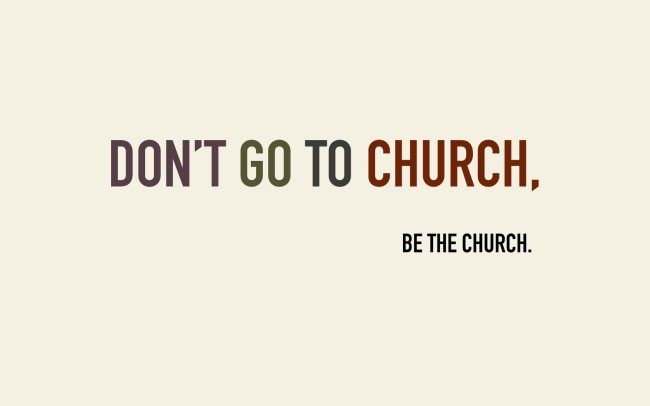
Danielle: What is the church? The church is the body of Christ for the world, which means we are the church! We could have the most beautiful building in the world, we could have the best music in the world every Sunday, but without people, this church would be nothing. Shepherds are nothing without their sheep, and churches are nothing without their people.

Clinton: Personally speaking, St. John’s has played a pivotal role in my life, from the moment I was baptized till right now. I have seen how we support each other through trials and tribulations. Our church is one that, rather than raising our voices or becoming defensive, sits back and listens in the midst of questions and challenges. We leave room for God’s light to shine through us so that we may be more compassionate Christians.

Danielle: While the world continues to spin with competing narratives and organizations vying for our attention, this church with it’s love, support, and community continues to amaze us. In Acts chapter 2, when we learn about the birth of the church, there are no descriptions about the size of sanctuaries, they don’t talk about the order of worship for Sunday mornings, they don’t list out what hymns should be used at what time. It’s all about the people, God’s people, spending time together.

be-the-church-650

Clinton: Awe came upon everyone, because many wonders and signs were being done by the apostles. Every Sunday we confront the same kind of wonders and signs the first apostles’ witnessed. We see friends and family who have carried us through the hard moments. We see people who have left their failures of the past to discover new lives in Christ.

Danielle: All who believed were together and had all things in common. We share our life experiences at St. John’s. Whether talking in the narthex or on the front lawn or during the passing of the peace, we share what we can with one another. They would sell their possessions and goods and distribute the proceeds to all, as any had need. When we pass the plates for the offering, we are redistributing our goods so that those who are in need will receive.

Clinton: Day by day, as they spent time together in the temple, they broke bread at home and ate their food with glad and generous hearts. Throughout our lives we have seen this church change with new people coming, and old friends going on to be with the Lord. When we spend our time together, when we break bread and feast during communion, we are living into the reality of what it means to be the church today.

Danielle: And day by day, the Lord added to their number those who were being saved. You might not know it, or even believe it, but each of you have contributed to our mission to be God’s church. Whether this is the first time you’ve entered our doors, or you’ve been coming here your whole life, when we are together, we are the church. Through our relationships with the people in the pews next to us, we become Christ’s body for the world.

Clinton: Danielle and I are who we are because of the tremendous witness this church has been to Christ’s love. We love this building and we love Sunday mornings, but what we really love are the people. We give God thanks for putting you in our lives, and putting us in yours.

Danielle: It is truly a blessing to be standing here before all of you proclaiming God’s Word this day. But it is an even greater privilege to know that we are the church together. We offer this to you in the name of the Father, the Son, and the Holy Spirit, One God now and forever. Amen.

Devotional – Acts 10.44

Devotional

Acts 10.44

While Peter was still speaking, the Holy Spirit fell upon all who heard the word. 

Weekly Devotional Image

It happens all the time. I’ll be preaching from the pulpit, or leading a bible study, or praying for a family when someone responds later by quoting back something I said, only I never said it. The sermon will be about the importance of loving our neighbors, and someone will bring  up our “obviously similar” political persuasions while we shake hands after the service. The bible study will move through the book of James and the challenge of being wealthy and Christian, and someone will later thank me for my comments about “sinful multi-national corporations.” I’ll be in a hospital room praying with a family for God’s will to be done, when someone will later attribute the cure to my wishing for a miracle.

In ministry, and in life, something happens between our lips and another person’s ears that we can never prepare for or predict. For as much time as pastors put into their sermons/bible studies/prayers it is a remarkable thing that we often lose control over what we say. The exact moment the words leave our lips they wrench themselves free from our dominion and take on a life of their own. The consequences of this lack of control can be both destructive and life-giving.

Occasionally someone will hear something in the sermon/lesson/prayer (that was never said) and it leads to a divisive and frightening argument. The narthex conversations following worship can be nerve-racking because you never know what to expect. But, more often than not, people hear something in the sermon/lesson/prayer (that was never said) and it gives greater glory to God than I could ever do with my own words. People will open up and confess they believed the words were meant for them alone and they experienced God’s abundant presence speaking into their lives.

let-go-let-god-blog

Preaching is meant to be a conversation. The pastor stands at the front speaking words about the reality of God and they pick up subtle clues regarding responses: the occasional head nod and the rare audible “amen.” But they also deeply rely on the comments made after the service regarding the proclamation. Just as the Spirit fell upon all who heard the word from Peter, the Spirit shows up in worship, in bible studies, and in hospital rooms reigniting words, rearranging them, and helping them to sink deeply into people’s lives.

It is hard to relinquish control over something as precious as a sermon, but then again the sermon never belongs to me in the first place; it belongs to God.

This week let us take time to really listen to the people in our lives and engage in conversation with them. Let us give thanks to God for providing the power of the Holy Spirit to actually make something out of our words in spite of us. And let us have the courage to be honest with all the pastors in our lives about what they say and what it means to us.

The Advent of Paul – Sermon on Acts 9.1-9

Acts 9.1-9

Meanwhile Saul, still breathing threats and murder against the disciples of the Lord, went to the high priest and asked him for letters to the synagogues at Damascus, so that if he found any who belonged to the Way, men or women, he might bring them bound to Jerusalem. Now as he was going along and approaching Damascus, suddenly a light from heaven flashed around him. He fell to the ground and heard a voice saying to him, “Saul, Saul, why do you persecute me?” He asked, “Who are you, Lord?” The reply came, “I am Jesus, whom you are persecuting. But get up and enter the city, and you will be told what you are to do.” The men who were traveling with him stood speechless because they heard the voice but saw no one. Saul got up from the ground, and though his eyes were open, he could see nothing; so they led him by the hand and brought him to Damascus. For three days he was without sight, and neither ate nor drank.

paul-road-to-damascus

Today we continue with our Advent Sermon Series on “New Beginnings.” These few weeks of Advent are integral to the life of our church community in the sense that we are preparing our hearts, minds, and souls for the coming of God in Christ on Christmas day. We began with Abram being called to go to a strange land, and then we looked at Samuel being called by name in the temple. Today we continue by looking at the Advent of Paul.

Most pastors love to talk. They spend their Sundays standing before the gathered people proclaiming the Word of God with the hope of it becoming incarnate. It takes hours of preparation, study, and prayer to craft a sermon and many pastors find excitement and fulfillment when they are speaking. Whether they are preaching from a pulpit, leading a bible study, or huddling together in prayer, words are at the foundation of what we do.

Most pastors love to talk, and when you get a group of us together, sometimes the talking never stops…

I was at Licensing School, a required element to become a Pastor in the United Methodist Church, but frankly it could’ve happened at any clergy gathering. The routine is typical, everyone tries to size one another up based upon appearances, we try to guess what kind of churches are represented; Is this their first career, second, or third? What kind of call story do they have? Did she have all that gray hair before she became a pastor? We are usually forced to sit with people who we have yet to meet and then comes the ice breaker questions that will hopefully move us from strangers to friends.

The familiar questions focus on our ability to share our call narrative. I like to call it the elevator speech. In the time that it takes you to get from the lobby to the top floor, can you share how God has called you to ministry?

Here is my elevator speech:

“Born and raised as a United Methodist in Alexandria, VA, I began wrestling with a call to ministry when I was in high school. There were a number of formative experiences that led me to believe that God was calling me to ordained ministry including: being the crew chaplain for a Boy Scout High Adventure trip in Philmont, New Mexico, creating and leading a youth band for my home church, and helping to organize a weekly youth bible study. However, my awareness of the call truly came into focus when one of my dear friends died in a car accident right before Christmas. As we mourned her death I found myself comforting those around me with words that were not my own, and one night I was pulled to my knees on the sidewalk along Ft. Hunt Road to pray. I prayed and prayed and when I stood up, I knew there was nothing else in my life that I could do other than proclaim the Word of the Lord through ministry.

I have had to tell it so many times that I have learned how to include just the right amount of details in just the right amount of time.

For others, this process can take multiple elevator rides. They go on and on about the ways God has called them, and when I was at Licensing School I learned a lot about the people I would be serving with for the rest of my life.

You call that a call story? My husband left me right before the cancer came back. My children had grown up and moved off to different places with their own families and I was all alone. I went to support groups, and tried to keep a positive attitude but nothing was working. It was then that I accepted Jesus Christ as my personal Lord and Savior and put my whole trust in his grace. Later, when I beat the cancer, Jesus told me to become a pastor and share the Good News like he had done with me.”

You call that a call story? I was killing more brain cells than Paul was killing Christians when God called me to a new life in Jesus Christ. The bottle was my bible. Jose Cuervo and Jim Beam were my best friends and were with me through the important moments of life, though I could never remember any of them. It was deep in the trenches of one of my worst benders that Jesus told me it was time to live a new life, that he had a mission for me, and I haven’t had a drink since.”

These call stories went on and on with every new story going deeper and farther than the last. The more I sat and listened, the more I realized that I was doing the same thing, and that we were trying to “out-Paul” one another.

Now, don’t get me wrong — I love the story of Paul on the road, but sadly, we have too often used it to judge what Christianity is supposed to look like.

Flannery O’Connor, the American writer, once said “I reckon the Lord knew that the only way to make a Christian out of that one was to knock him off his horse!” Her statement gets at the heart of the matter for Paul’s conversion, but oddly enough there is no horse in the story.

But that helps to show how “well” we think we know the story. It has been told so many time in such a variety of ways. Most of the art depicting this scene has Paul falling off his horse, when this is a detail missing from the scripture. Regardless of equine presence, the story is one that captivates us even today.

The first detail we learn about Paul is that he was a young man who watched over the garments of those who stoned Stephen. But he was not just any young man, not just an innocent bystander. He not only approved of Stephen’s death, but also led a violent persecution of the budding Christian community.

Paul was enemy number one to the church, and God would turn his life around to become evangelist number one.

While he was threatening and murdering the disciples of God, Paul went to the high priest and asked for letters to the synagogues in Damascus, so that if he found any Christians on the way, he might bring them bound to Jerusalem. He was not just a concerned citizen, Paul was an active go-getter against the subversive community, willing to go above and beyond his duty.

It was on the way to Damascus that a light from heaven flashed around him. He fell to the ground and heard a voice saying, “Saul, Saul, why do you persecute me?” He asked, “Who are you, Lord?” The reply came, “I am Jesus, whom you are persecuting. But get up and enter the city, and you will be told what you are to do.” Paul’s companions that were traveling stood speechless because they heard the voice but saw no one. After being helped up from the ground Paul could see nothing, so his friends had to guide him the rest of the way to Damascus.

UnappLightGod

Some have subjected this story to psychological reflection about the inner-turmoil bubbling within Paul’s soul regarding his willingness to kill Christians. They see the Damascus road experience as an inward struggle that results in a changed life.

However, the details of the narrative argue the contrary. This is not an account of what was going on within Paul, but rather a story about a man who was encountered by something outside of himself. Conversion has to do with being approached by God, and being changed in the process of the encounter.

Paul was helpless and totally dependent on others after encountering Christ on the road. God, meanwhile, spoke with a disciple named Ananias in Damascus. He was commanded to go and meet the man from the road, Paul from Tarsus, lay hands on him so that he might recover his sight. Ananias hesitated knowing the kind of wrath and destruction that Paul had brought on his fellow Christians, but the Lord insisted “Go, for he is an instrument whom I have chosen to bring my name before Gentiles, and kings, and before the people of Israel; I myself will show him how much he must suffer for the sake of my name.

So Ananias went and laid his hands on Paul to restore his sight. Paul was then filled with the Holy Spirt, was baptized, and regained his strength. Through the power of God made manifest in Ananias, Paul went from being an enemy to being a brother; his life was completely turned around.

When pastors get together we can attempt to “out-Paul” one another. We strive to substantiate our call stories by comparing it with the one who was confronted on the road to Damascus. I have seriously heard people begin their stories with, “It was like I was on my own road to Damascus when God called me to a new life…” This story has become the prototype for many Christians, and we use it as a lens by which we judge others’ calls to different forms of discipleship.

This is a problem.

It is a problem because we forget that the radical kind of change worked in Paul is something that Christ does, not us. Sometimes we become so concerned with the desire to convert others that we foolishly put all of the responsibility on our shoulders when God is the true agent of change. We can show people the door of faith, but God is the one who gives them the strength to walk through it.

It is also a problem because it is not universal. The story of Paul on the road to Damascus is wonderful and miraculous, but it should not lead us to conclude that every conversion is basically the same.

Different people come to Jesus along different routes. When we consider the wealth of conversion stories from scripture, in addition to the tales of fellow Christians in our lives, it become self-evident that God calls individuals according to his will, not a singular story by which all others should be judged. Paul was called in a way that was proportionate to the life he was living – he needed to be knocked down in order to start a new life. But not all of us have lived like Paul. 

The one thing that is universal regarding the story of Paul on the road is that meeting God changes the way we see everything. When we encounter the divine we become dependent on those already versed in the faith, we need Ananiases to help guide and nurture us when our vision has been turned upside down.

God met Paul on the road to Damascus and changed his life forever. God brought me down to my knees on a cold December evening when I was sixteen years old and changed my life forever. God spoke through Gabriel to a virgin named Mary about her bringing a baby into the world which changed her life forever.

Paul’s story is a great. It is full of beautiful details and demonstrates God’s power to change lives. But his story is not the only one. The Old and New Testaments are filled with stories about people whose lives were changed by God in incredible ways. Our church is filled with people who have encountered the good God in ways that are beyond our imaginations.

Whenever we meet God, whether through a particularly poignant moment, the reading of scripture, or the deep thoughts of prayer we embark on a new beginning. Like Paul, everything gets changed and we see the world a little more clearly, we see God’s grace manifest through the friends and family around us and we realize the deepest truth about Christmas – that God does not leave us to our own devices. Amen.

Strange Stories from Scripture: Bored To Death (Almost) – Sermon on Acts 20.7-12

Acts 20.7-12

On the first day of the week, when we met to break bread, Paul was holding a discussion with them; since he intended to leave the next day, he continued speaking until midnight. There were many lamps in the room upstairs where we were meeting. A young man named Eutychus, who was sitting in the window, began to sink off into a deep sleep while Paul talked still longer. Overcome by sleep, he fell to the ground three floors below and was picked up dead. But Paul went down, and bending over him took him in his arms, and said, “Do not be alarmed, for his life is in him.” Then Paul went upstairs, and after he had broken bread and eaten, he continued to converse with them until dawn; then he left. Meanwhile they had taken the boy away alive and were not a little comforted.

SAMSUNG

This morning marks the beginning of our three part sermon series on Strange Stories from Scripture. Part of our series was born out of the immense treasure that is begging to be discovered from God’s Word in addition to the fact that it is too easy to fall into a rut with preaching the same and familiar texts over and over. Today we are talking about the fate of a young man who was bored to death (almost).


A young man named Eutychus, who was sitting in the window, began to sink off into a deep sleep while Paul talked longer. Overcome by sleep, he fell to the ground three floors below and was picked up dead.

When I have the opportunity to attend different church services, a very rare occurrence since becoming a pastor, I usually sit toward the front on the right hand side. I am of the persuasion that sitting toward the front helps the worshipper with their ability to participate fully in the service. Yet, I know that others have very different opinions on where they should sit for worship.

When I was in North Carolina, I worshipped for a long time at Duke Memorial United Methodist Church. I, like many of you, sat in nearly the exact same spot every Sunday. I grew accustomed to seeing the same heads in front of me, and the voices surrounding me during the hymns, to the degree that where I sat played a pivotal role in my worship experience. 

One Sunday morning I was surprised to discover a Duke undergraduate student sitting in my spot. I can vividly recall the wave of emotions I felt seeing someone encroaching on my sanctuary territory, but I eventually gave in and sat down next to the young man. He had all the markings of a polite and proper gentleman: his outfit had been perfectly ironed, not a wrinkle in sight, his hair was parted to the side, and he sat with precise posture. I attempted to introduce myself before the service started by I was interrupted by the beginning notes of the organ prelude.

As we made our way through the service, offering up our prayers to God, singing hymns, and reading scripture I took little notice of the young man to my left and genuinely enjoyed our morning service. However, about midway through the sermon I began to notice a sudden change in my neighbor’s disposition. Out of the corner of my eye I witnessed him participating in the age old “my-head-keeps-drooping-down-while-I’m-trying-to-stay-awake.

mr-bean-asleep

While our pastor weaved through the beauties of scripture, this young man was doing everything he could think of to stay awake: he scratched his eyes, stretched his back, and even slapped his own cheek. However, nothing was helping. His head would continue to fall down only to be slingshotted back into position every minute or so.

At this point I was so distracted by the young man that I became worried for him. What if the pastor notices him sleeping and calls him out during the sermon? What if he begins to snore and everyone starts to look at us? What if he actually fell asleep and his head crashed on the pew in front of us? So I did what any good Christian would do…

Hey bud,” I whispered while tapping on his shoulder. He quickly woke up and abruptly turned to stare at me. “If you put your hands like this (hands in the form of prayer) you can rest your head between them on the pew in front of us, you can catch some Zs and everyone will think you’re praying. If you start to snore I’ll nudge you.” With a smile he slapped me on the back and declared, a little too loudly, “thanks Bro!” and promptly fell back asleep.

Falling asleep in church can have dire consequences. What happened to Eutychus that night should be a fair warning for us about what happens when we fall asleep. Paul had come into town and would be leaving the next day. This night time gathering was the last and best opportunity for him to share the Word of the Lord with the people. It happened on the first day of the week, Sunday, when the people joined together to break bread.

This is the first reference to breaking bread as a community since the day of Pentecost in Acts 2; the budding Christian community has begun to sustain one another through the presence of God as experienced through the bread and the cup.

Paul had limited time to discuss the Good News with the church so he continued to speak until midnight. There were many lamps in the room upstairs helping to illuminate the space as Paul conveyed the depth and wonder of God with the people. A young man named Eutychus, which means “lucky,” was sitting in the window while Paul preached from the front of the room. Before too long his eyes began to feel heavy, the warmth of the lamps inviting him to rest his eyes, when he sank into a deep sleep as Paul continued to speak.

44_Ac_20_02_RG

Eutychus fell three stories from the window and was picked up dead. Paul immediately went down, bent over the young man and took him into his arms and said, “Do not be alarmed, for his life is in him.” And then Paul went back to the room upstairs and after breaking bread with his brothers and sisters, he continued to speak with them until dawn. Meanwhile the people had taken the boy away alive and were greatly comforted.

Oftentimes when we talk about the church during the time of Acts, and when we talk about our responsibility to be the church for the world, we compartmentalize the message of faith to going out of our comfort zones, opening our doors, and appealing to unbelievers. Yet this story is a sobering reminder that Christians are called to persevere through many trials, requiring the task of worship to comfort weary travelers on the journey of faith. Paul takes the time to gather with God’s people, break bread, proclaim the Word, and encourage them in faith.

Preaching is that opportunity to teach and enable disciples to discern between true and false gospels, authentic tradition, and how God’s Word continues to speak living and life-giving words into our lives today.

Even if we have the most wonderful and dedicated lives of service, we are weak without the revealed Word of God resonating deep into our souls. Watered-down, inarticulate and unexamined beliefs lead to weak disciples.

What do you want from a sermon?

preach-word

Do you want to be affirmed in your faith? Listen to words about scripture that leave you patting your back for having done a good job? Do you want to be challenged to live a better life through the proclamation of a sermon? What is it that you hope for from someone like me when I stand in the pulpit. Do you want to be kept awake? Do you want something to think about until next Sunday?

Preaching at its finest is, as Paul understood it, that remarkable time when God’s Word becomes incarnate again in our lives. We take the time to sit and listen to the incredible ways that God’s speech speaks something new and fresh in our lives. Preaching is about encouragement, challenge, love, hope, faith, recollection, and dedication. On that evening in Troas the preacher for the day went on a bit too long and it resulted in a young man falling to his apparent death from a window. What can I do to keep you awake to the faith that God has in you?

What do you want to discover in the breaking of bread?

Hands breaking open a baguette --- Image by © Beau Lark/Corbis

Paul was with the gathered church to proclaim the Word and break bread. When we gather together on the first Sunday of the month for communion, what do you want to find? Do you want to walk up to the front feeling unworthy of the gift with your head hung low? Are you hopeful for a feeling of complete joy as you dip the bread into the cup to partake in this heavenly meal?

Communion is that remarkable time when the divine and human come into contact. We come to the table to feast on Christ’s body and blood remembering what Christ did for us and for his disciples that last incredible evening. We partake of this spiritual food that sustains us for our journeys of faith. We break bread and in so doing we join together with all the saints that came before us and will follow after us.

Why do you come to church?

worship

This perhaps is the most important question for us to answer as a worshipping community. Why do we get together to do this week after week? Are we here to check up on old friends, hoping to hear about all the new and wonderful things going on in the community? Do we do church because it is what our parents did and they taught us to do the same thing?

When we hear words proclaimed in this place, when we break bread and gather at the table, God is made known to us. Much like the time when Jesus walked on the road to Emmaus with his disciples, they did not know that he was with them. It was only after he interpreted the scriptures and broke bread with them that their eyes were opened to his presence among them. We gather as Christ’s body to proclaim his Word and feast at his table so that God might become known among us. 

The church today has found itself in a strange place. Unlike the past when preachers and pastors had to worry about maintaining perfect, articulate, and sound theology (fearful of sounding heretic), today one of the greatest challenges facing the church is the ethos of boredom.   Instead of being caught up in the fear of making someone upset or angry because of something in a sermon, the contemporary church faces the incredible task on fighting against boredom, and in particular, being bored to death, at least spiritually.

In the last few weeks I have had a number of Christians from other churches in our community come to meet with me in order to vent their complaints about other pastors. “He doesn’t preach from the Bible!” “She moves too much when she preaches!” “His sermons no longer mean anything to me!” When doing church becomes boring we risk losing people, not just the young, to the temptation of falling asleep to the incredible glories of God.

If we come to church expecting it to be more like a funeral, a boring drab of an excuse to remember and anticipate God’s acts in the world, then it will remain as such. But that crazy night so long ago when Paul went on preaching until the late hours of the night, the gathered people might’ve expected their worship to turn into a funeral, yet Paul confidently broke bread, ate, continued to proclaim, and the boy was presented as alive.

The words and acts of the discipled life rehabilitates the church and the community. It brings us back to life, and transforms us from a fearful little group of people who keep our faith to ourselves to a incredible group of prophets who are able to confront the world’s ways and declare the words that Paul shouted, “there is life!”

There is life in our worship! We have encountered the living God who breathes and moves through us. We sing the hymns of our faith with resounding voices to declare the ways of God. We pray the words of our hopes, our joys, and our concerns by lifting them up to the Lord. We are called to feast at the table like all the apostles and disciples before us to be filled with the grace of God.

Is church boring you to death, or is it offering you life?

Amen.

How Did You Two Meet? – Pentecost Sermon on Acts 2.1-13

Acts 2.1-13

When the day of Pentecost had come, they were all together in one place. And suddenly from heaven there came a sound like a rush of a violent wind, and it filled the entire house where they were sitting. Divided tongues, as of fire, appeared among them, and a tongue rested on each of them. All of them were filled with the Holy Spirit and began to speak in other languages, as the Spirit gave them ability. Now there were devout Jews from every nation under heaven living in Jerusalem. And at this sound the crowd gathered and was bewildered, because each one heard them speaking in the native language of each. Amazed and astonished, they asked, “Are not all these who are speaking Galileans? And how is it that we hear, each of us, in our own native language? Parthians, Medes, Elamites, and residents of Mesopotamia, Judea and Cappadocia, Pntus and Asia, Phyrgia and Pamphylia, Egypt and the parts of Libya belonging to Cyrene, and visitors from Rome, both Jews and proselytes, Cretans and Arabs – in our own languages we hear them speaking about God’s deeds of power.” All were amazed and perplexed, saying to one another, “What does this mean?” But others sneered and said, “They are filled with new wine.”

Acts 2:1-4. When the day of Pentecost came. Pastel & pen. 26 May 2012.

I had spent an entire week with countless young Christians from all over the world at a monastery in Burgundy, France. For most weeks during the summer, Taize attracts upwards of 5,000 young Christians dedicated to exploring their faith through prayer, service, and singing. Waking up in a tent every morning, I would trudge across the dew filled grass passing neon tents filled with 20-somethings snoring away as the sun came up over the horizon. Each little campsite held clues as to the nationality of the residents: the occasional German flag, a water bottle covered in French writing, an abandoned tee-shirt with a hispanic wrestler flexing on the front, I even saw a cricket bat one morning. As the crowds made their way to the sanctuary, it was impossible to eavesdrop or understand what anyone was talking about because no one was speaking English.

Just past the interior door to the incredibly large sanctuary, there were buckets filled with hymnals organized by language. On our first morning I was surprised to discover that there were more “English” hymnals left in the buckets than any others, because Americans were part of the minority of the gathered body.

Taize Altar

Taize Altar

We sat on the floor surrounded by other young people who were still half asleep fumbling through our hymnals before the service began. Suddenly, up at the front of the massive building, a simply lit sign displayed three numbers “312” and as if we were being controlled by a single operator we all flipped our pages to the corresponding hymn. Without any musical accompaniment, without any choral direction, the hymn began. I, of course, sang the hymn in English as the words were displayed on the page, but when I made my way to the end of the song, everyone continued singing. We were not told how many times to repeat the hymn, but it went on and on until in ended naturally at the same moment. It was unlike anything I had ever experienced. When I had finally caught on to the rhythm of our singing, I closed my eyes and began to hear all of the other voices singing faithfully in their native tongue. Without a doubt, that moment as I sat on the floor of a enormous sanctuary in France, was the closest I have ever been to experiencing the day of Pentecost in my own life.


The community of faith had recently witnessed Jesus’ ascension into heaven and then retreated to the upper room in Jerusalem to devote themselves to patience and prayer. For ten days they waited, as they had been told to do, waiting for something to happen. We are given very little in Acts about what they did those ten days but we do know that rather than taking matters into their own hands, instead of getting organized and venturing forth with pamphlets about “what God can do for YOU”, they waited for God to make the next move.

The day of Pentecost, what we celebrate and remember today here in church, was the first big thing to happen to the disciples after Jesus had left them. Like the start of any life or story, the beginning has major ramifications for how the rest will turn out. Just as with Jesus’ birth in the manger in Bethlehem to a virgin, so too the details surrounding the birth of the church would come to define the rest of the story for Jesus’ followers.

CELPentecost[1]

As the morning broke, while the disciples were all together in one place, an eruption of sounds and a wind from heaven filled the entire house. Things were coming loose and breaking open, new realities were taking shape, and the life of discipleship was changed forever. The wind swirled around the gathered people, the same wind which on the very first morning swept across the dark waters and brought order out of chaos. The wind of Genesis was again bringing something new to life.

Divided tongues, as of fire, appeared among them and each of them were filled with the Holy Spirit and began to speak in other languages, as the Spirit gave them ability. What a strange and profound moment this must have been! After days of waiting in prayer God had showed up and quickly put things into action. Though the Spirit brought order out of chaos in Genesis, this must have felt like the opposite. I imagine the disciples running about within the house exclaiming great things in languages they themselves had never heard before. Something this incredible and inexplicable could not be contained to one house alone, and a crowd quickly gathered and was bewildered by the indescribable moment.

Jews from all over had gathered in Jerusalem when this took place and they began to hear these nobody disciples speaking in the native languages of all the people. Amazed by this, they questioned how it was possible, and quickly decided to blame it on an excessive use of alcohol.

The crowd’s demand for an answer was a cue for one of the disciples to stand and speak. And who, among the disciples, could have imagined that Peter would have been the one to do so? Peter is the first, the very first to lift up his voice and proclaim proudly and faithfully the word that he was unable to when Jesus had been arrested. The man who had been so quick to deny Christ three times, is the one who stepped forward to share the glory of God’s kingdom with all who questioned this miracle.

Peter preached a sermon, he shared the story of God in Christ, all by the power of the Spirit: “listen to what I have to say: Jesus of Nazareth, a man attested to you by God with deeds of power, winds, and signs that God did through him among you, and you yourselves know — this man, who was handed over to be crucified and killed, was raised by God, having been freed from death because it was impossible for him to be held in its power…” Peter told the story that he had witnessed and thus helped give birth to the church that we now participate in today.


I have been here at St. John’s for almost a year. The last twelve months have been filled with changes, excitement, new life, and joy. I give glory to God for sending me to a place with such faithful people who have helped me to see God in new and wonderful ways, while also allowing me to do the same. 

I knew that, upon arrival, one of the most important things I could do would be to learn the collective story of the church. I have met with many of you to learn about your lives and your stories in such a way that I could learn about our community that gathers here for worship. When I meet with couples I almost always ask the same question: How did you two meet? I ask this question because how two people met says a considerable amount about their relationship, and most people love to tell that particular story.

I can tell you with joy this morning, that many of you met in wonderful and joyful ways. I have had the privilege to hear about a couple who met on a Greyhound bus traveling to Radford, VA over 65 years ago. We have a couple who met at a brewery when the young woman complimented the young man on his beard. Or there’s the couple who met in a spousal grief group after having both been divorced. We even have a couple who met here in church and the boy asked his brother to the get the number of the girl so he could ask her out later.

I love asking how a couple met because people can tell the story with all the important details. They can remember the outfits they were wearing, the weather outside, and the other people who were present. They can describe with vivid clarity that first smile they saw, or the way their fingers felt when they wove them together for the first time. And frankly, I love asking the question because it is hilarious to watch men and women argue about the details of a meeting from their own perspectives.

(Photo Credit: Jill Nicole Photography)

(Photo Credit: Jill Nicole Photography)

But sometimes I think about the gospel story and I wonder how that connects us. I freely admit that when I ask couples about how they met I am not expecting anyone to start talking about Moses or Abraham or the Holy Spirit. But the Gospel story is one that we should know just as well. Many of you have been attending church for your whole lives, and even those of you who have recently started to attend, have heard the story of God in Christ week in and week out. The story that we find in scripture is inescapable because it is ours. 

I ask people about who they met because it teaches me about whom they are. It helps to reveal parts and aspects of personality that would otherwise remain hidden, it sheds light on what brings people joy and how they connect with others. But in the same way, the Gospel is who we are. It is as much a part of our personalities and joy and interconnected as the story about how we met our spouses.

When Peter stood in front of the crowd on the day of Pentecost he told the story of God in the world through Jesus, his friend and Lord. With confidence and bravery he proclaimed the same story that we tell here in church every week. We should know the story that Peter shared, we should be able to tell it with the same clarity and detail and faithfulness. Imagine how powerful the gospel story would be, if you knew it and believed it and experienced it in the same way you met your spouse.

The gospel is something worth sharing. I don’t mean in the sense that you should start knocking on people’s doors to ask: “Have you heard about our Lord and Savior Jesus Christ?” But I want to question our willingness to keep telling this wonderful and life-giving story.

After all, how would anyone know whether or not you’re a Christian?

Maybe you wear a cross around your neck, or you pray before your meals at restaurants, or you tell people about what fun activities are going on at your church… But seriously, how would anyone know if you’re a Christian?

We can tell the story of God’s interaction in the world through ways that are both faithful and fruitful. Like those first disciples the Holy Spirit has been poured on to us in such a way that we are now filled with the Spirit and have been given gifts. The disciples were given the power to speak in numerous languages in order to convey the gospel to the multitudes. Today we have been given the power to meet people where they are in order to be Christ’s body for the world.

Imagine the next time someone started to tell you about a recent tragedy, you responded by asking to pray for them. Or the next time you hear about a family thats having a difficult time adjusting to a new life in Staunton, you invite them over for dinner out of kindness rather than expectation. Or the next time you believe that someone has been treated unjustly, you speak up for them rather than expect someone else to do it. And when you’re asked why you have done these things, answer truthfully and confidently: “I am a disciple of Jesus.”

The Spirit that empowered those disciples still empowers us. Like the cacophony of languages that were all singing to the Lord at Taize, we are called to raise our voices, to go public with the good news. As we see with the way Peter proclaimed the story on behalf of the church, we also have something to say, we need only the courage to stand up, open our mouths, and begin.

Amen.

Eyes On The Sky – Sermon on Acts 1.6-14

Acts 1.6-14

So when they had come together, they asked him, “Lord, is this the time when you will restore the kingdom to Israel?” He replied, “It is not for you to know the times or periods that the Father has set by his own authority. But you will receive power when the Holy Spirit has come upon you; and you will be my witnesses in Jerusalem, in all Judea and Samaria, and to the ends of the earth.” When he had said this, as they were watching, he was lifted up, and a cloud took him out of their sight. While he was going and they were gazing up toward heaven, suddenly two men in white robes stood by them. They said, “Men of Galilee, why do you stand looking up toward heaven? This Jesus, who has been taken up from you into heaven, will come in the same way as you saw him go into heaven.” Then they returned to Jerusalem from the mount called Olivet, which is near Jerusalem, a sabbath day’s journey away. When they had entered the city, they went to the room upstairs where they were staying, Peter, and John, and James, and Andrew, Philip and Thomas, Bartholomew and Matthew, James son of Alphaeus, and Simon the Zealot, and Judas son of James. All there were constantly devoting themselves to prayer, together with certain women, including Mary the mother of Jesus, as well as his brothers.

MenofGalilee

I was sitting in the congregation at Trinity United Methodist Church in Lexington, VA for my first district event as a pastor. The room was filled, as you would expect, with older Christians (lay and clergy) dedicated to the kingdom of God as made manifest in the UMC. We listened to our District Superintendent discuss the challenges facing the church in our contemporary period and how similar they are to the problems that John Wesley faced in England when he initiated the Methodist movement of scriptural holiness.

All of the districts that make up our Annual Conference are required to gather annually for the purposes of restoring our souls for the adventure of doing church, and to discuss business matters as they pertain to our locality. Reports are filed annually for our review and approval as well as a new budget that needs to be considered by the body of Christ gathered together.

As far as I was concerned, the budget appeared fine. Sure, there were a few minor changes; some programs needed more money, and some programs had been receiving too much without being fruitful for the church. The only noticeable and significant change was found regarding the budgetary needs for “district youth.” I can’t remember the exact figures but it was a noticeable decline in funding for the young people of the district.

One representative present noticed this significant change and decided to make it abundantly clear to everyone how upset she was that the money had been decreased. She said, “I want to know why we lowered the district youth budget. The youth are the future of the church, and if we don’t invest in the them, the church will disappear.

youth

A worthy comment, don’t you think?

Our District Superintendent then calmly responded to her comment: “I appreciate what you are saying. We do need to invest in our youth. But I want to be clear about something; the youth are not the future of the church, they are very much a part of the church right now. The mentality that “the youth are the future of the church” prevents us from treating them as the church in the present. We will gladly restore money to the youth district budget, but for the last few years we have done nothing with and for them. I would love to hear ideas about what we can do right now for them, and then we can responsibly apply money to the District Youth.”

youth-ministry

After Jesus’ resurrection, he spent 40 days with his beloved disciples speaking about the kingdom of God. This forty day period was a great pause in the dynamic actions of God in the world; after the resurrection but before the day of pentecost, Christ had fellowship with his brothers and sisters to teach them about the coming days of ministry and service.

When they had come together after Jesus had completed his teaching, some of the disciples asked the question that was still on everyone’s mind: “Lord, is this the time that you will restore the kingdom to Israel?” Even after the resurrection, they were so caught up in the drama of Roman occupation that their vision of God’s kingdom was limited to political ramifications alone. So Jesus did what all great teachers do, he ignored their question: “It is not for you to know the times or periods that God has set by his own authority. But you will receive power when the Holy Spirit comes and you will be my witnesses in Jerusalem, in all Judea and Samaria, and to the ends of the earth.” When he had finished saying this, he was lifted up toward heaven and a cloud took him out of the disciples presence.

ascension

The disciples stood transfixed, as any of us would have, with their eyes on the sky, perhaps held is disbelief. Suddenly two men in whites robes appeared and said, “Why do you stand looking up toward heaven? This Jesus who has been taken up to heaven will return in the same way” So, the disciples returned to Jerusalem and devoted themselves to prayer.

Jesus made three promises to his disciples before he ascended into heaven: the gift of the Holy Spirit would come, they would spread their witness to the ends of the earth, and Jesus himself would eventually return. They had been given a job to do before he left: wait for the Spirit in Jerusalem and then spread the gospel, but when he was lifted up the disciples stood paralyzed with the eyes on the sky. Can you blame them? Jesus had come back from the grave, resurrected and clothed in the glory of God to teach them about the kingdom, and now he had left again. Their friend and Lord had departed, entrusting the future of the church and the kingdom to this group of uneducated, poor, and often ignorant community.

While standing with their necks craned backwards two men appear to remind the disciples of their purpose, a reminder that we need to hear as well: “Why are you looking up to the heavens?” You have a job to do. There is work to be done.

When the woman stood up to question the budget as the District Conference I could understand where she was coming from. Reducing the money from the youth budget sounds like a bad thing to do. But her notion of “youth as the future of the church” is just like the disciples stuck with their eyes on the sky. One of the greatest problems facing the present church is our inability to see the present. We become so consumed with the future of the church that we lose sight of our mission right here and now. 

It astounds me how often people ask me about the future of the church. And I don’t mean what the church will be doing next year. People want to know the long term hope for the church of the distant future. The questions I hear are regularly oriented to a future that is beyond our ability to grasp or imagine: Where are all the young people? How can we convince the millennials to attend church? How can we build 250 churches in the next 30 years? …

This is how many of us live our lives, consumed by the distant future of all things, not just the church: we think about the next war, the next financial rise or decline, the future of democracy in America and abroad, the survival of the “perfect” family model of a husband, wife, 2.5 children, a dog, and a white picket fence. We no longer look at the horizon, instead we want to look over the mountains and imagine the great fields and grasses beyond our vision.

Jesus, however, was of a different mind. Begin now! Get your eyes out of the sky and start focusing on the present. Right here and now our task is to transform the present by witnessing to Christ, to the kingdom, and to his Word. This is not to say that we are forbidden from planning for the future; we can, but not at the expense of the present. Do not worry about tomorrow, for tomorrow will bring worries of its own. Today’s trouble is enough for today.

When the angels reproved the disciples for their transfixed gaze on the heavens, how did the disciples respond? They waited and and they prayed.

In an age of activism and instant gratification, we would expect the disciples to something a little more “useful” than wait and pray. We would expect them to meet together in different committees to implement action plans like: creating contemporary worship services. To ask questions such as:“how can we build 250 churches in the next thirty years?” or “how can we convince the young people to start coming to church?” Yet, when they were told to witness to the ends of the earth, when they were tasked with spreading the Word of the Lord, their first response was prayer. While the world was ready to keep spinning, to forget about the political problem that was squashed when they crucified Jesus, ready to get back to life as usual, the disciples met in the upper room and devoted themselves to prayer.

Gathering to wait and pray are often depicted as the two primary actives of a faithful church. It amazes me how far I, and we, have fallen from this blueprint. When the church encounters a crisis we treat it as such and we immediately implement plans and programs to fix it. When I am asked about how I intend to get more people to start attending church, people want to know what I’m going to change in order to make church appealing immediately. Imagine, if you can, how people would react if, after they asked the question, I responded, “I should pray about it.

tumblr_lkmfiz50eV1qesq39o1_500

We don’t want to wait. We want things to happen immediately. Thats why people still ask, whenever I introduce myself as the Pastor of St. John’s, “how many people do you have in worship?” We want numbers, and figures, and diagrams, and growth, and tangible results as soon as possible. Christ, on the other hand, wants patience and prayer.

Waiting and praying is a heavy burden for those of us caught up in the technically impatient world of the present. We live in an age of instant everything, and so many want the church to be exactly the same way. One of the toughest tasks that will face us as a church, and I really mean us, the people of St. John’s, will be to be a people of prayer, when the world expects us to be a people of instant results.

In life, all things come and go. Where there is life there is always death, where there is love there is loss, where there is hope there is sorrow, where there is joy there is pain. So too, Jesus came to be with his people, and then he left; he ascended into heaven. Sometimes, not always, but sometimes there is an unrecognized good that comes with the going.

Jesus wants persons, not puppets. We are not here to be controlled by the great puppet master in the sky who moves us to where we are supposed to go. Instead Jesus has left us to be his body for the world, to be true and full persons who are prepared to go and be witnesses to the ends of the earth. Sometimes we have to be left on our own to really learn who we are, and whose we are.

A parent can never be there for every single thing their child ever does. If they were, the child would never learn how to grow, blossom, and mature into their true nature. A boss can never oversee everything their employees do, otherwise the business would lack the great imaginative capabilities of numerous minds, rather than a solitary and isolated vision. A pastor can never lead as a perfect disciple for everyone else to follow, because all pastors are like everyone else, sinners who have fallen short of the glory of God.

Christ ascended into heaven so that the church could become his body for the world, so they we could become his witnesses in Jerusalem, in all Judea and Samara, and to the ends of the earth.

So, how do we begin? How do we live into this call that Christ has placed on our lives? How can we start being his body for the world and have a vibrant and life-giving church?

We begin by waiting and praying.

Like the disciples, we need to be patient before we jump into “fixing” all of the “problems” that we see. Imagine a church that prayed fervently for the needs of our faith community in the hope of meeting the needs of so many on a regular basis. Imagine what this place would look like if we spent the first fifteen minutes of worship every Sunday in silence, waiting and praying to the God who calls us and knows us by name. Imagine what our family lives would look like if we spent five minutes with our children praying for them and their friends every morning before they left for school. Imagine a faith life where we prayed not just for what we want, but for the needs and hopes of the people who bother us the most.

It would be strange. For many it would be uncomfortable. Waiting and praying are no longer natural habits for the people who live in the world today. We have become so habituated into expecting “instant everything” that we rarely relish in the joy that is patience and prayer.

Today, let us become a people of waiting and prayer. As we take the steps to this table we are reminded that even though Jesus ascended to heaven, he never really left us. For he is here with us in the bread and the wine. He becomes manifest in our lives when we participate in his kingdom on earth. Do not let yourselves be burdened by the worries of the future, instead let us all get our eyes out of the sky and start doing the work of the Lord here and now, work that begins with prayer.