Weekly Devotional – 10/21/2013

Devotional:

Luke 18.9-14

He also told this parable to some who trusted in themselves that they were righteous and regarded others with contempt: ‘Two men went up to the temple to pray, one a Pharisee and the other a tax-collector. The Pharisee, standing by himself, was praying thus, “God, I thank you that I am not like other people: thieves, rogues, adulterers, or even like this tax-collector. I fast twice a week; I give a tenth of all my income.” But the tax-collector, standing far off, would not even look up to heaven, but was beating his breast and saying, “God, be merciful to me, a sinner!” I tell you, this man went down to his home justified rather than the other; for all who exalt themselves will be humbled, but all who humble themselves will be exalted.’


There was a couple I knew growing up who had it all together, or at least it seemed like they did on the surface. They were in church every Sunday morning, sitting together holding hands, with children flanking them on either side sitting attentively. They attended the Wednesday night dinners, participated in bible studies, and volunteered for celebratory programs.

family of four on grass with hands up

However, on one particular Sunday morning I saw them out in the parking lot, before church, yelling at one another. I was shocked: not only were these two some of the best members of the church, but they were yelling so loud that many congregants were parking on the other side of the lot just to avoid them. Yet, 45 minutes later there they were standing in line with their palms outstretched ready to receive communion. They were surrounded by people who had seen them fighting in the parking lot, but they still came forward to receive the body and the blood.

I am often guilty of thinking I have to have it all together before I pray, before I read scripture, or before I arrive at church. Like the Pharisee in Jesus’ parable I tend to focus on all of the things I have done correctly. But, when I enter church thinking I’ve got it all worked out, I leave feeling empty, as if something is missing. Though I was perplexed by the juxtaposition of the fighting couple standing at the altar of God, I realized that we are all just like them, in different ways.

I think that this parable Jesus told is all about prayer and about the way we enter into a church on Sunday mornings (or any other day of the week). Jesus tells his disciples that there are two types of people who come to church – Pharisees and Tax collectors. Depending on the week, or the time of year, we are one or the other most of the time. There are times when we walk into the house of God, ready to worship as good bible-believing Christians, Pharisees of the 21st century. We are so pleased with ourselves for following all the rules and behaving appropriately all the time. And sometimes we go home after church with an emptiness because we were so full before we arrived. But there are other times when we enter the house of God as tax-collectors, needing everything, afraid, lost, full of doubt, and return home with more than we ever dared to ask in the first place.

So, the next time you prepare to worship, or to pray to God, know that sometimes we fail and sometimes we succeed. We all carry with us a lot of baggage and, occasionally, we are unaware of it. There will be sermons that you get nothing out of, a hymn that does not resonate deep in your heart, and a bible study that you already know all the answers to. But, there will come a time when you enter into prayer empty, afraid, and hopeless; a time when you do not have all the answers; a time when all you have left to say is “Lord, have mercy on me, a sinner!” And God will be there waiting.

Weekly Devotional – 10/14/2013

Devotional:

Psalm 119.103-105

How sweet are your words to my taste, sweeter than honey to my mouth! Through your precepts I get understanding; therefore I hate every false way. Your word is a lamp to my feet and a light to my path.

Adjusting to life in Staunton has been incredible! The pace of life is a welcome relief from the hustle and bustle that I have experienced in other places. I look forward to my regular trips to Food Lion because I know I will inevitably run into someone from church and we will be able to catch up between the ketchup. Additionally, Lindsey and I have fallen in love with the culture here in town. There are so many great restaurants, used bookstores, and a movie theater that always has an open seat!

Recently, I have found myself engaging in conversations with people about the latest book I read (Hard-boiled Wonderland and the End of the World by Haruki Murakami), the latest meal I had at a local restaurant (Pepperoni Pizza from Shenandoah Pizza), and the latest movie I saw (Gravity). It amazes me how so much of our conversations are about the wonderful things we experience and how we want to share them with others; we hope that they can derive as much pleasure from the activities as we did.

Haruki Murakami

Haruki Murakami

Gravity

Gravity


Now, think of something you did recently that was great, perhaps a delectable meal, or an incredible movie, or an exciting novel. Did you tell anyone about it? Did you share your experiences?


If those things were good for our lives, why are we so afraid to talk about the Good News?

I’ll be the first to admit that talking about a book or a meal is a lot easier than sharing the gospel, particularly with a stranger. But, when I really think about it, God has done far more for my life than any movie or meal ever has.

The psalmist writes, “How sweet are your words to my taste, sweeter than honey to my mouth!” (Psalm 119.103) Part of what it means to live out are faith in the world, is to soak up the delectable qualities of God’s word, and then be ready to share the good news with those around us. This doesn’t mean that we need to be bible-carrying evangelists ready to knock on every door on our street. But if God’s Word has been sweeter than honey in your life, isn’t it worth sharing with those around us?

So, the next time that you start sharing an experience with someone, remember that God’s Word has been a light for our feet and a lamp for our paths, that it has sustained us through the valleys and celebrated with us on the mountaintops, that it is our story.

Prepare To Be Surprised – Sermon on 2 Kings 5.1-15

2 Kings 5.1-15

Naaman, commander of the army of the king of Aram, was a great man and in high favor with his master, because by him the Lord had given victory to Aram. The man, though a mighty warrior, suffered from leprosy. Now the Arameans on one of their raids had taken a young girl captive from the land of Israel, and she served Naaman’s wife. She said to her mistress, “If only my lord were with the prophet who is in Samaria! He would cure him of his leprosy.” So Naaman went in and told his lord just what the girl from the land of Israel had said. And the king of Aram said, “Go then, and I will send along a letter to the king of Israel.” He went, taking with him ten talents of silver, six thousand shekels of gold, and ten sets of garments. He brought the letter to the king of Israel, which read, ‘When this letter reaches you, know that I have sent you my servant Naaman, that you may cure him of his leprosy.” When the king of Israel read the letter, he tore his clothes and said, “Am I God, to give death or life, that this man sends word to me to cure a man of his leprosy? Just look and see how he is trying to pick a quarrel with me.” But when Elisha the man of God heard that the king of Israel had torn his clothes, he sent a message to the king, “Why have you torn your clothes? Let him come to me, that he may learn that there is a prophet in Israel.” So Naaman came with his horses and chariots, and halted at the entrance of Elisha’s house. Elisha sent a messenger to him, saying, “Go, wash in the Jordan seven times, and your flesh shall be restored and you shall be clean.” But Naaman became angry and went away, saying, “I thought that for me he would surely come out, and stand and call on the name of the Lord his God, and would wave his hand over the spot, and cure the leprosy! Are not Abana and Pharpar, the rivers of Damascus, better than the waters of Israel? Could I not wash in them, and be clean?” He turned and went away in a rage. But his servants approached and said to him, “Father, if the prophet has commanded you to do something difficult, would you not have done it? How much more, when all he said to you was, ‘Wash, and be clean’?” So he went down and immersed himself seven times in the Jordan, according to the word of the man of God; his flesh was restored like the flesh of a young boy, and he was clean. Then he returned to the man of God, he and all his company; he came and stood before him and said, “Now I know that there is no God in all the earth except in Israel; please accept a present from your servant.”

Prayer

Have you ever gone looking for God? Maybe your church or your prayer life was no longer cutting it, and you thought about actively seeking out the God who you used to meet in the sanctuary.

For a long time, I made it my duty to help other people find God.

I would help organize trips to domestic or foreign locations, often leading youth and adults into uncomfortable situations so that they could live out the calling of the gospel by serving their neighbors.

Whether you lead a group to Winchester, Virginia or Xela, Guatemala the paradigm remains basically the same: Take a group of people out of their comfort zone, encourage them to serve others through physical means, participate in theological reflection and fellowship, and return home a changed individual.

I have been blessed to see wealthy American men weep in the arms of poor Guatemalan women after working for a week in a remote village, I have seen privileged teenagers play in the destroyed and desolate streets of New Orleans with other children who had lost everything. I have seen college-age Christians sing and chant hymns fervently with their eyes closed after having not stepped foot in a church in years.

Desktop

All of these trips were fantastic and were remarkably important for the people who participated. The only problem was, after returning home, it only took a few weeks to fall back into the same routine as if nothing had actually happened. In fact I’ve seen nearly the same thing occur after a group does a Bible study for months: as soon as they finish, they are on fire for Christ, but within a few weeks, that fervor has disappeared. The thought usually goes something like, “I did what I could but I can only do so much” “I tried to keep the fire alive, but I have other responsibilities” “I know this is what Christ wants me to do, but it’s too hard.”

We often engage in these activities expecting to experience God on our terms, only to return back to life the same as before…

Many, many years ago, a foreign warrior named Naaman had it all. He had the favor of his king, he was consistently victorious on the battlefield, and he had power. He was the kind of guy that you hated in high school. The proverbial quarterback of the football team, straight-A student, the guy who had everything just fall into his lap easily. But Naaman had a big problem: he was a leper. Covered in this invasive skin condition, there was nothing he could do to rid himself of the suffering.

The CEO of the huge multinational corporation can get the best table at any restaurant in town without even calling for a reservation, but his son is in rehab for an addiction to heroin. The famous and celebrated writer travels the world to give lectures and presentations – but he’s an alcoholic. The beautiful actress can turn every man’s head, but she dreads the lights and cameras in case they show an unflattering angle. The envied mother in the community has perfect children that never get in trouble but she weeps every night out of her loneliness and depression.

In every life there is a “but.” What’s yours?  Naaman was a successful military man in great favor with the king, but he was a leper.

However, one day, an unnamed completely insignificant Israelite, the quiet girl who always sat in the shadows, the one whose name no one could remember said the obvious: “Naaman, all you have to do is visit the prophet in Samaria, he can cure your leprosy.”

Why Naaman listened to this woman, we will never know, but he gathered his treasures and traveled to visit the king of Israel. After an embarrassing episode, where it is clearly apparent that Naaman does not know the way God works because he seeks healing from the king rather than the prophet, Elisha invites Naaman to his home so that he will learn there is a prophet in Israel.

The scene that follows is remarkably comical. Naaman comes in full regalia, with an impressive entourage, and gifts galore: ten talents of silver, six thousand shekels of gold, and ten sets of garments. He stands proudly before the house of the prophet but he does not even get invited inside. Instead, Elisha sends out a messenger to instruct the officer to wash seven times in the Jordan River.

Naaman is incensed! “This so called ‘prophet’ doesn’t even have the decency to come greet me? And then he is so bold as to claim that his river is mightier than ours?” So Naaman went away in a rage.

But, just as before with the unnamed woman, some unnamed servants approach Naaman, “If the prophet had commanded something difficult, would you not have done it? How much more, when all he said to you was, ‘Wash, and be made clean’?” And so Naaman went down to the Jordan and immersed himself seven times and his flesh was restored.

de-saussure-elisee-et-naaman

Before returning to his homeland, Naaman went to Elisha and proclaimed, “Now I know that there is no God in all the earth except in Israel!”

Like many people who go out seeking to find God, Naaman knew how it was supposed to work. However, the scripture today confirms Naaman’s lack of understanding when interacting with the divine. First, he brings all of his treasures to the king of Israel assuming that he would have the power to cleanse him. Second, he arrives at Elisha’s home expecting to be regarded as the dignified warrior he is, only to be slighted by Elisha’s lack of welcome.

Like Naaman, so many of us go out expecting to find God on our terms and in the ways we want.

If we travel to an impoverished part of the country, or if we go visit a remote village on the other side of the planet we will surely find God. If we sweat in the mud all day long for our brothers and sister we will be blessed by God almighty for our actions. Yet, like Naaman, we cannot meet God on our own terms, but it is God who meets us.

What takes place here with Naaman is the way the Bible often deals with God. The extraordinary arises within the ordinary. The heavenly breaks out amid the earthly. What we tend to view as ordinary and plain, the Bible wants to depict as the realm of God’s amazing work among us.

Elisha, and all the other prophets from the Old Testament have something that we have lost in the church these days. They have freedom from the society around them. They are not blown about by the winds of doctrine or expectation, they are not captive to special interest groups, they do not follow all the latest fads, they do not unquestionably serve the latest liberal or conservative agenda. They serve, rather, their living God – that God who is on the move toward the establishment of the kingdom on earth.  – They hear God and follow him accordingly; this gives them the freedom from all the voices of this world and from every ideology that would capture them for its own selfish purposes. They meet God in the ordinary ways of life, respond to the call, and are transformed.

The healing of Naaman is one remarkable story. God takes an enemy of his chosen people and restores him to good health. In spite of the antagonism between two seemingly opposed people, God interrupts Naaman’s life in order to bring about a revelation.

Naaman was healed, but in what way? Yes, there is the physical healing, by washing himself seven times in the Jordan Naaman loses the leprosy that had so plagued him, but there was something else more powerful going on here in the story.

In this narrative Naaman learns about humility and encounters the living and active God. It is not the kings, nor the warrior, in the story who understand the ways of God, but it is through the unnamed servants that Naaman comes to experience the divine. It was through humbly following the commands of his servants that Naaman found cleansing in the muddy waters of the Jordan, but more importantly he found new life in a God that meets us in the ordinary.

What is your “but”? What is your excuse for not letting God meet you where you are? When we meet the triune God it would seem that it happens without regard for being rich or poor. Perhaps even more dramatically God extends his mercy, and works out his plans through the unnamed people in our lives, the ones we so often overlook in our day-to-day living.

Somewhere in your life, God is calling you away from the distraction that you are so rooted in. Perhaps God has been using someone to bear a word of hope for your leprosy, for your “but”. Maybe its your mother who you have neglected to call for the last few months that just wants to tell you that God loves you. Maybe it’s the homeless man on Beverly Street who muttered “Thank God” under his breath when you gave him a dollar. Maybe it’s the co-worker who doesn’t treat you with enough respect or your own child who drives you mad when they neglect to clean their room or do their homework. It might be someone who you are jealous of, or threatened by.

Our scripture today boldly declares that God is the one looking for you. If you want to meet God, then you don’t have to go off on some mountaintop, or move to some sort of spiritual summit. You just have to let yourself go, like Naaman, and be willing to let God take over and ready for the changes in your life.

Be prepared to be surprised. When you meet the unnamed person that God is using to address your leprosy, it will almost inevitably offend you in some way, just as Naaman was furious over Elisha’s lack of decorum. The message will cut deep into your life by way of its simplicity, or its unexpectedness, and it will occur in a way that only you will be able to comprehend.

When God comes to meet us where we are, it does not occur through overwhelming theatrics, flashing lights and great booming sounds. God does not meet us where we expect him to, but rather through simple things:

Yesterday morning I stood here right in front of the altar with my cousin Devin. Devin is currently part of a confirmation class in Alexandria, VA at Aldersgate UMC regularly learning more about faith, God, and the Bible. At the end of this confirmation period, Devin will kneel before his home congregation and will be welcomed as a member into the church. But, Devin has not been baptized, and baptism is a requirement for confirmation.

Devin and I talked and he made it clear to me that he wanted me to be the one to baptize him. So after a conversation regarding the importance of the sacrament of baptism, about what it will mean for him and his life, I welcomed Devin to come here for the weekend and be baptized.

So there we stood yesterday, with the muted overcast light coming through the “I am the good shepherd” stained glass window lighting up the altar. I ran my fingers through the cold water talking to Devin about the glorious ways that God has interacted with his people through water over the centuries. And as I held the water in one hand, and Devin in my other, I said, “Devin, many years ago Jesus gathered at the Jordan River and was baptized by his cousin John. In the same way Jesus calls all of us to be baptized in order to be brought into his body, the church.”
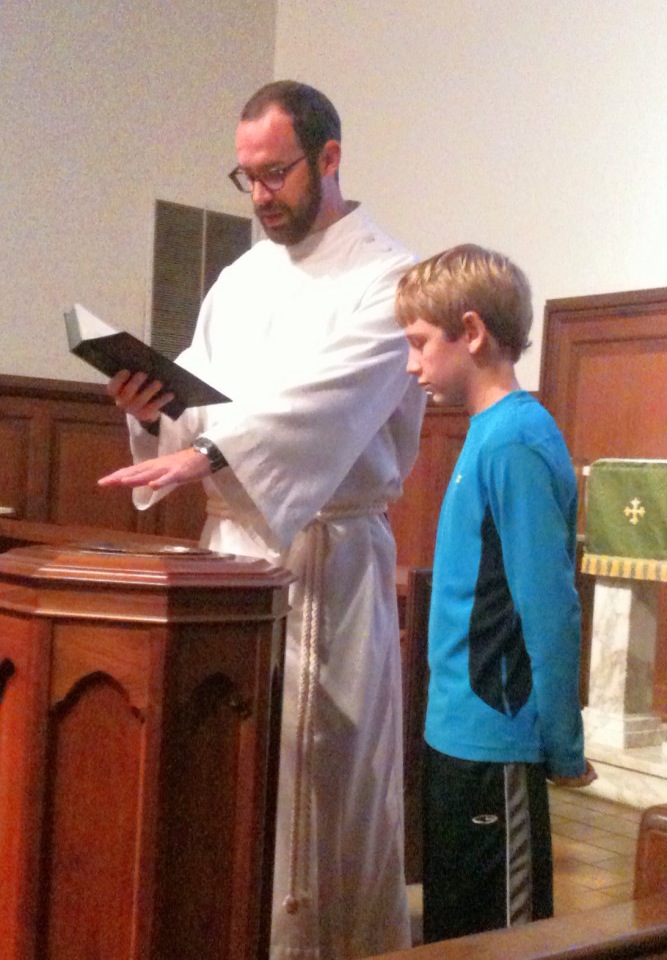
1373497_10151926400772840_183143865_n

I stood there for perhaps just a moment frozen in my own words. As I looked down at his blonde head I realized that just as John baptized his cousin, here I was, blessed to be doing the same thing to my cousin.

God confronted me in that moment. In a solitary blink of time I was flooded with the knowledge that the Jordan River where Jesus was baptized is the same river where Naaman was cleansed of his leprosy. That I was standing before almighty God baptizing my cousin in the same way that John baptized his. It was not grand: the sky did not open up with the Sun beating down on us, no trumpets were heard blaring from heaven, and the wind did not blow through the building. But it was perfect, because in that moment God met us in the ordinary: through the simple water and words of baptism.

water2

God does not meet us where we expect him to, but through the ordinary rather than the extraordinary. God meets us in the proclamation of his Word, in the remembrance of a man named Naaman who walked down to the Jordan River, and through a young man’s baptism on a rainy Saturday morning.

What is God calling you to? Where has God been trying to meet you?

Prepare to be surprised.

Amen.

(preached at St. John’s UMC on 10/13/13)

Three Envelopes – Sermon on Luke 17.1-6

Luke 17.1-6

Jesus said to his disciples, “Occasions for stumbling are bound to come, but woe to anyone by whom they come! It would be better for you if a millstone were hung around your neck and you were thrown into the sea than for you to cause one of these little ones to stumble. Be on your guard! If another disciple sins, you must rebuke the offender, and if there is repentance, you must forgive. And if the same person sins against you seven times a day, and turns back to you seven times and says, “I repent,” you must forgive.” The apostles said to the Lord, “Increase our faith!” The Lord replied, “If you had faith the size of a mustard seed, you could say to this mulberry tree, ‘Be uprooted and planted in the sea,’ and it would obey you.

Jesus says, “If another disciple sins, you must rebuke the offender, and if there is repentance, you must forgive.”

photo-006

On his very first Sunday at his very first church, a young pastor was appropriately nervous. He tried to make sure all the elements of worship had been taken care of: enough ushers to take up the offertory, a volunteer to lead the children’s message, and a witty (but to the point) sermon that helps to convey the gospel. All things considered the service went very well and the congregation was remarkably kind in the comments immediately following worship. “Maybe this isn’t going to be so hard after all,” the young reverend thought.

And so, after ditching his robe in the office, he locked up the building and made his way into the parking lot. There standing beside an old pick up truck was an older man who seemed more worn and tired than his vehicle. “Great” the pastor thought, “I haven’t even been here for one Sunday and I’ve got people out in the parking lot waiting for something.”

The older man walked quickly across the lot with determination and stopped right in front of the novice preacher. “I know I’m not supposed to do this,” he grumbled, “but I’m the pastor that you’re replacing. I’m not here to tell you what to do, or to warn you about certain people, or even what to preach about. I just wanted you to know that in your office desk I have placed three envelopes numbered accordingly. You look like your fresh out of seminary, so you probably wont even need them. But, just in case: If things ever get really tough open the first envelope.” And with that he turned around, got in the truck, and drove off never to be seen again.

three-envelopes

The first nine months in the church went by like a breeze. This was the honeymoon period that the new pastor had heard about in seminary. The laity were quick to volunteer, and excited about the prospects of starting new programs and opportunities. Church attendance grew a little, but more importantly it did not decline. And the best of all, people were getting along with one another! There was no bickering, no gossip behind closed doors, no confrontations. The young man thought he had it made!

But then, as if it happened over night, everything fell apart. Disagreements about the nursery led to many volunteers no longer attending church, frustrations with the facilities led to disgruntled shufflings during the worship services, and the chair of the church council resigned because his chili did not win during the church chili cook-off. Try as he might, the new pastor could not change anything. He attempted to have meetings with individuals and groups to help create reconciliation, he added more communion services, and he prayed fervently for the church but nothing worked.

One day, while working in his office, he came across the three letters from the former pastor. Seeing as how he was quickly running out of ideas, he presently opened envelope number one and found these words from the former pastor: “I’m so sorry that its come to this. If you have opened the first envelope things have become fairly tumultuous. My advice: Blame it all on me. I’m long gone and most of those people will never see me again. Blame me from the pulpit, in conversations, wherever you see fit and I promise, things will get better.”

Though initially nervous, the young pastor was thrilled to discover that it actually worked. He got up in the pulpit the following Sunday and preached a condemning sermon about the former pastor. “All this fighting, all these disagreements… they’re his fault! He didn’t love you enough, he didn’t pray enough, and he didn’t proclaim the gospel well enough.”

And it worked! People started loving one another again. Attendance picked back up. And there was a positive buzz in the worship space every Sunday morning. However, within a few months, they were back to their same fights and disagreements. It seems that the plan had worked, but it was only a temporary fix for a much bigger problem.

The young pastor then decided it was time for envelope number two: “Blame it all on them! I know this sounds crazy but try it. Show them the error of their ways, that their sins have blinded them from the gospel, and they need to repent. Trust me, things will get better.”

The following Sunday the young pastor stood in the pulpit and preached the most fire and brimstone sermon the church had ever heard. People were quaking in the pews, afraid that the floors would open up, pulling them to the deep pit below. They were confronted with their sinfulness and everyone left in silence.

Again, for whatever reason it worked! The pastor was so thrilled with his ability to so quickly turn his congregation around and make them a people of love rather than hate.

But it was not to be. Before too long they were back to their familiar shenanigans, arguing about Christmas tree sales and Spaghetti dinners, ignorant of the needs of one another, and generally displeased with all things church.

Feeling nearly defeated, the young pastor held on to a smidgen of hope while cradling the third and final envelope. “This one has to work” he thought, “this is my last chance.” And so, upon opening the letter, these were the words he found: “start preparing three envelopes.”

______

Sadly, over the last century, this is how church has been played out in a lot of communities, particularly those of the United Methodist persuasion. Doing church often feels more like a roller coaster ride than a community sustained by love and forgiveness. Fights break about between congregants, arguments over scheduling and planning dominate most conversations, and old grudges are sustained throughout decades. Moreover, pastoral changes occur in an almost rhythmic fashion when things become particularly tough and a congregation is given the opportunity to start all over again.

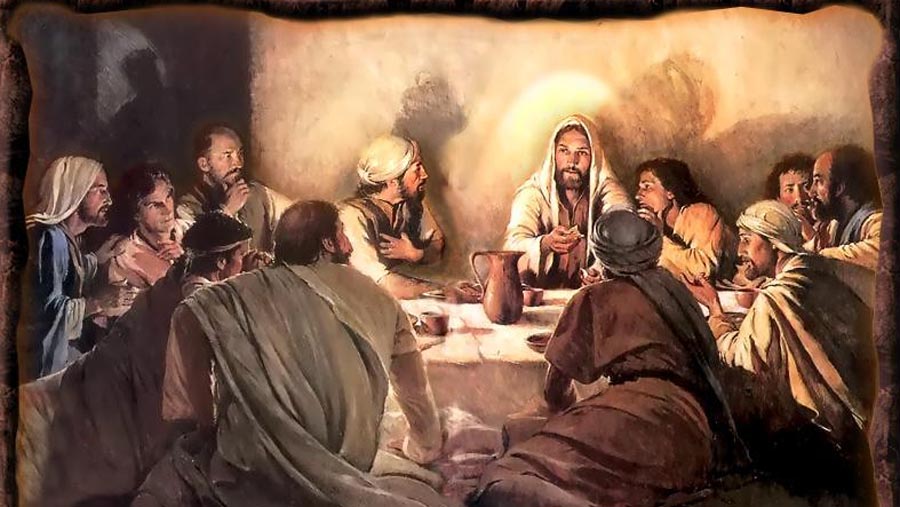
Jesus-Picture-Last-Supper-With-Disciples-Painting

In our scripture this morning, Jesus paints a very different picture of what it means to be the body of Christ…

Jesus said to his disciples, “Arguments, disagreements, fights, they’re all bound to come, but don’t you dare be the ones to bring about these problems! It would be better for you if your feet were cemented in a bucket and you were thrown into the lake, than for you to be the cause of this frustration! Pay attention! If someone in the church sins, you must confront them, and if there is repentance, you must forgive. Even if that same person bothers you seven times a day, and turns back seven time to apologize, you must forgive.” Then the apostles responded to their Lord, “Please increase our faith!” But Christ responded, “If you even have a smidgen of faith, faith the size of a mustard seed, you could say to all the trees in your yard, “be uprooted and thrown into the sea,” and they would obey you.”

Now, I think all of here can sympathize with the people who look at Jesus and see only a noble teacher, or only the bearer of ethics, or only a political revolutionary. After all, who Jesus was, what he was trying to accomplish, was far from self-evident. There were people who stood in Jesus’ midst and said, “Truly this is God’s son,” but there appear to be more people who said, “this guy is nuts!” (Willimon, Collected Sermons, 206)

Did you hear what Jesus said to his disciples? “It would be better for you if a millstone were hung around your neck and you were thrown into the sea than for you to cause one of these little ones to stumble.” Really Jesus?

As I’ve remarked on another occasion, there are many passages in scripture that are never read aloud in church, and this is one of them. It makes sense to me why its not part of the lectionary: Jesus is pretty upfront about what it means to be in community, the ramifications of such, and how it gets played out.

Time and time again Jesus said things we wish he had not. I’m not sure of the full ramifications of “hate your mother” or “go and sell everything and give to the poor,” or “turn the other cheek”… Well, to be honest, I do know what he meant when he said those things, but I don’t like it! For most of us, it isn’t that we’ve listened to Jesus and found him perplexing; it’s that we’ve listened to him and found him to be too difficult. (Willimon, Collected Sermons, 207)

Contrary to the church in the story I started with, Jesus calls his community to enter into confrontation, when necessary, while being prepared to forgive. Jesus’ followers are not to stand at a distance from the sinner, observing from safety, but are instead called to actively seek the sinner’s restoration. Rather than being a community where everything is solved from the pulpit, the community of faith according to Christ is one that is lived out between the pews.

Far too often have churches relied on blaming someone or something to solve the surface level problems. Though it was an exaggeration, many churches do in fact function under new leadership by destroying the former pastor. Similarly, many pastors stand in the power of the pulpit casting a shadow across the entire congregation saying you are wrong and I am right. Neither of these practices accomplishes anything, other than a pastor having to start writing his or her own three letters.

One of the ways that we can live into the type of community Christ called us into, rather than one of our own devices, it to remember our Wesleyan roots. John Wesley, and his Methodist movement, always emphasized the responsibility of Christian believers to discipline one another. As the movement spread and Methodist societies/groups began to sprout up, Wesley implored them to begin their weekly meetings by asking each other: “What known sins have you committed since our last meeting?” or “How is it with you soul?”

The Wesleyan movement was largely successful because of this type of practice. Rather than church simply being a thing to do, Wesley rediscovered the importance of living in a community that held one another accountable to the gospel of our Lord.

Now let me be clear, though Wesley had the right point, I’m not advocating for us to greet each other with “so Ken, what sins did you commit this week?” every Sunday. However, I believe we need to reclaim Christ’s call for us to love one another so deeply that we become genuinely concerned with the well being of our brothers and sisters in Christ.

Sometimes this type of faithfulness and forgiveness feels impossible. To continually love someone so deeply in spite of his or her shortcomings is not easy. Yet, with God all things are possible. God raised a man from the dead. Even our small faith cancels out the impossible; our faith lays hold of the God with whom nothing is impossible, and it is God who empowers the life of discipleship. All it takes is a smidgen, the tiniest amount, of faith to give rise to practices even more extraordinary than we can possibly imagine.

Therefore to do this, to follow Christ’s call from the scripture today is not in any way extraordinary; rather, it is simply part of the daily life of those whose lives are oriented around the majesty and mercy of God.

We are NOT a church of three envelopes! Look around the sanctuary, no literally look around at those in worship, we are all brothers and sisters in Christ, we are the fellow disciples that Christ speaks to from the scripture today. Living the way that Christ has prepared for us will be difficult, but our faith, even at its weakest moments, is enough to sustain us as a whole. There might be people in this sanctuary who frustrate you, who get under your skin, and bother you tremendously. There might be people who are bringing down those around them and causing them to stumble. There might be people here that you have never said a word to. Our church is the place where we have the freedom to speak the truth toward one another out of love, the type of place where we forgive when repentance is present even if someone sins seven times against us a day.

communion_elements

In a few moments all of you will be invited to Christ’s table to receive his body and blood. This celebration encompasses for us the entirety of what it means to be Christ’s church. We all fall short of God’s glory and he still waits for us with open arms, beckoning us to join him at the table. As brothers and sisters in Christ we are privileged to nurture one another in faith, to respond with repentance when confronted with our shortcomings, and to be forgiven and continuously reconciled unto one another.

So as we prepare to feast together, remember that living in a community of faith and repentance was so important to Christ that, for him, it was worth dying for.

Amen.

(preached at St. John’s UMC on 10/6/13)

Dear Archer and Abram… – Sermon on Jeremiah 29.1, 4-14

(Preached at St. John’s UMC on 9/29/13)

Jeremiah 29.1, 4-14

“These are the words of the letter that the prophet Jeremiah sent from Jerusalem to the remaining elders among the exiles, and to the priests, the prophets, and all the people, whom Nebuchadnezzar had taken into exile from Jerusalem to Babylon.

It said: Thus says the Lord of hosts, the God of Israel, to all the exiles whom I have sent into exile from Jerusalem to Babylon: Build houses and live in them; plants gardens and eat what they produce. Take wives and have sons and daughters; take wives for your sons, and give your daughters in marriage, that they may bear sons and daughters; multiply there, and do not decrease. But seek the welfare of the city where I have sent you into exile, and pray to the Lord on its behalf, for in its welfare you will find your welfare. For thus says the Lord of hosts, the God of Israel: Do not let the prophets and the diviners who are among you deceive you, and do not listen to the dreams that they dream, for it is a lie that they are prophesying in my name; I did not send them, says the Lord. For thus says the Lord: Only when Babylon’s seventy years are completed will I visit you, and I will fulfill to you my promise and bring you back to this place. For surely I know the plans I have for you, says the Lord, plans for your welfare and not for harm, to give you a future with hope. Then when you call upon me and come and pray to me, I will hear you. When you search for me, you will find me; if you seek me with all your heart, I will let you find me, says the Lord, and I will restore your fortunes and gather you from all the nations and all the places where I have driven you, says the Lord, and I will bring you back to the place from which I sent you in exile.”

photo (4)

The year was 594 BC, and everything was falling apart.

The prophet Jeremiah had seen it all. Coming from a village from the small tribe of Benjamin, he had been called by God and given the unenviable task of being appointed over nations and kingdoms, to pluck and pull down, to destroy and overthrow, to build and to plant (Jer. 1.10).

Babylon was growing stronger and stronger, while Judah was growing weak from internal turmoil. By the time the year 594 had come around, most of the Israelites had been exiled to Babylon, removed from their precious promised land.

In the midst of particular unrest in Jerusalem, Jeremiah learned of similar frustrations among the exiles in the foreign land. More specifically, Jeremiah learned that false prophets were claiming that the exiles would soon be going home had provoked the unrest. However, God’s plan for the exiled Israelites would have to take place on God’s time.

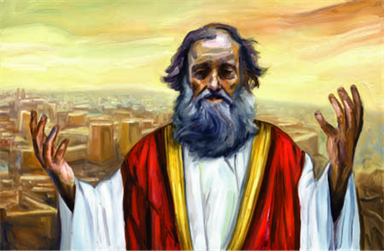
prophet-jeremiah

In the year 594, with unrest brewing in Babylon, Jeremiah sent a letter to the exiles against their false hope for an early return.

For our sermon today I have decided to try something different. In many ways, the letter Jeremiah wrote to his fellow Jews living in a foreign land, speaks to the no longer dominant Christians today living in our culture.

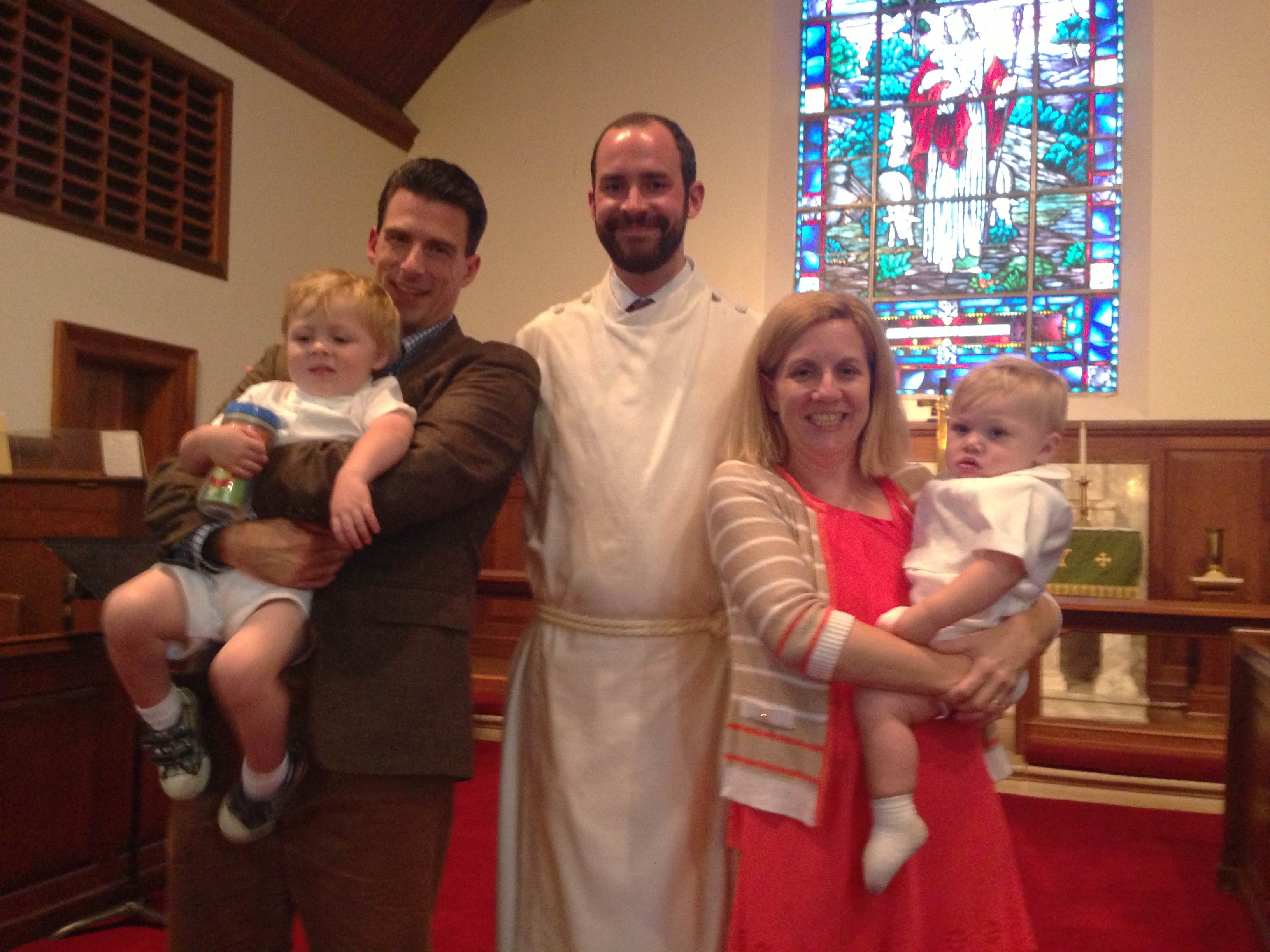
This sermon has been prepared as a letter, using Jeremiah’s epistle as a template, written for both Archer and Abram Pattie, the two young boys who will be baptized later in the service. I hope however, that you will notice that this letter is not just for them, but also for all of us…

Dear Archer and Abram,

Build houses and live in them; plant gardens and eat what they produce… But seek the welfare of the city where I have sent you into exile, and pray to the Lord on its behalf, for in its welfare you will find your welfare.

Today is the day that you are welcomed into God’s church through baptism. All of us have gathered together to witness this incredible event, prayerfully waiting and watching for the water to be poured over your heads. We are all here because we love you, because we are committing ourselves to you, and because we have been down your path before.

But, it won’t be easy.

The world today is an entirely differently place than it used to be. 50 years ago, this church was packed with people filling up nearly every single pew. Most of the restaurants, businesses, movie theaters, were all closed on Sunday because it was expected that we maintained Sabbath and reverence for holy worship. When you went out in public you could expect to see families together in prayer, the bible and its wonderful scriptures were a part of daily living often being read from the dining room table, and churches were growing and growing.

Today, you two are being baptized into a church that no longer fits that mold. Instead of the glory days of Jerusalem, you are entering into a time where the church feels like it is in Babylonian captivity.

The church and the world have changed but that’s a good thing! You are privileged to grow up in a church that no longer has to fit the expectations of the world, but gets to instead meet the expectations of almighty God.

Grow up in this community. Dig deep roots. Make friends. Play sports. Study Hard. Take advantage of the opportunities around you. Spend time with people who do not look like you, do not talk like you, and do not act like you; learn about yourself from them. But remember one thing: God’s kingdom is not of this world. You are being welcomed into a new family that is defined by its love of God and neighbor and therefore you are part of something so much bigger and so much greater than yourselves. Rejoice in what you have here, and hold fast to the love of God that will shower down on you every single day.

Do no let prophets and the diviners who are among you deceive you, and do not listen to the dreams that they dream, for it is a lie that they are prophesying in my name; I did not send them.

Archer and Abram, growing up will be tough. There are going to be people, and corporations, and television shows, and politicians, and advertisements, and all sorts of other false prophets that will try to tell you about the world. Every time you turn around you will be force-fed new information about how you are supposed to see, feel, believe, and understand everything. You will be told about the importance of maintaining your individuality and allegiances to the powers around you: Truly I tell you Caesar can come in all shapes and sizes.

They will try to fill holes and spots and negativity in your lives with all sorts of garbage.

False prophets will always tell you exactly what you want to hear: If you take this weight loss pill you will have the body of your dreams, if you drive this car your neighbors will respect and admire you, if you invest enough money in our company you will never have to worry about finances again…

The only one who can ever make you whole, the only one who will every truly love you, no matter what, is the triune God.

False prophets and diviners will try to label you and help you create your own identity on their terms. But today they can never compare to your new identity in Jesus Christ. Today you are being baptized in the name of the Father, Son, and Holy Spirit. Today you are becoming God’s children and nothing, nothing, can ever compare to that. We, the church, are here to help nurture you in your discipleship, we will take vows of love and commitment to help mold you in the faith, so that you will always remember that nothing, nothing, will ever separate you from the love of God in Jesus Christ.

For surely I know the plans I have for you, says the Lord, plans for your welfare and not for harm, to give you a future with hope.

Archer and Abram, God has a plan for both of you. From the very beginning it was God who breathed the breath of life into both of you, you were each uniquely created in the image of God. Many have claimed over the centuries that being made in the image of God means we have rational thought, or an imagination, but today I am telling you that being made in the image of God means that you were both created to be in community.

God’s plans for you include growing up in a place like this, feeling the love of God through your brothers, sisters, mothers, and fathers in Christ. God wants us to be here for you, and you to be here for us.

Things will get tough in your lives. There will be moments when it feels like God does not have a plan for you, that all you see and feel and hear is anything but your welfare. But God will always be there. This church will always be there. Because of our baptismal commitments to you we will always wait with open arms ready to help you, nurture you, believe in you, and support you in everything you go through.

Many years after Jeremiah sent his letter, after Israel had fallen captive to foreign nations, after Rome had laid siege to great Jerusalem, there was little hope. But one remarkable night, God came and dwelt among us in the flesh and became hope incarnate. God walked through the streets in Jesus Christ teaching about the kingdom, healing the sick, feeding the hungry, and bringing people into fellowship with one another. When our love failed, when we crucified Jesus on the cross, God’s love remained steadfast and the hope that we have always waited for became real and tangible in the resurrection.

In the beginning of our faith, when Christianity was still a budding movement there was pain and fear and frustration. Many people died for the faith that is now being passed on to you, but you will probably never be required to die for your faith. More likely, you will be given the dilemma, or opportunity, to summon up the courage to react against an injustice at the grocery store, or speak up for the voiceless in an argument, or love someone who is so unlovable. It will not be large and it will not be grand, but it will be good enough. Remember who you are, and whose you are.

20130929_114851        20130929_114826

God has a plan for you, a plan for your welfare, to give you a future with hope. There is something greater than this world; there is something more powerful than we can imagine, something brighter than the sun, and lovelier than the moon. It is your future, your future with hope because God loved you enough to die on the cross.

Then when you call upon me and come and pray to me, I will hear you. When you search for me, you will find me; if you seek me with all your heart, I will let you find me.

Archer and Abram, God is the one who lets us come to him with our requests and he hears and answers them. God’s gracious will to hear us, to know us, and to love us in prayer is the basis of the covenant that will take place in the waters of your baptism. God’s love is so superior, so majestic, and so clear that it makes our prayers immediately necessary.

God is ready for us to call on him. By living into a new reality, one that is shaped by prayer and scripture, by seeking God with our whole hearts, by practicing justice and loving-kindness we will find God with you.

We do not keep God locked up in this church, you do not have to be sitting in the pews or singing in the choir loft to find God. All you have to do is call upon him. When you search for God, you will find him. You will find God in the wonderment of creation, in the perfectly pitched harmonic notes of a song, in the warmth of the fire in the winter, in the hug of your mother when you make it home, in all sorts of places because God is always there.

Today you are being wrapped up into God’s great cosmic story. When you open the Bible you will now discover that it is not just some story about some people from the past but it is the very story of your lives. We are all here to rejoice with you today.

Sincerely,

Rev. Taylor Mertins


Nearly 2,500 years ago Jeremiah wrote a letter of truth to his friends in exile. He warned that things would not turn around immediately, that they would have to persevere through tough times before God would bring them home. This letter continues to live on for all of us today. The false diviners will continue try to make sense of the world for us, we will continue to feel like a strange people in a strange land, but God has plans for us.

God wants us to love each other in the same way that he first loved us. God wants us to wrap Archer and Abram up in love to teach them the stories of scriptures and how to be in communion with the divine. And above all, God wants us to know that no matter what we are loved.

Amen.

photo (5)

Family and Faith: Others – Sermon on Matthew 12.46-50

(The concluding sermon in a three part series on Family and Faith. Preached at St. John’s UMC on 9/22/2013)

Matthew 12.46-50

While he was still speaking to the crowds, his mother and his brothers were standing outside, wanting to speak to him. Someone told him, “Look, your mother and your brothers are standing outside, wanting to speak to you.” But to the one who had told him this, Jesus replied, ‘”Who is my mother, and who are my brothers?” And pointing to this disciples, he said, “Here are my mother and my brothers! For whoever does the will of my Father in heaven is my brother and sister and mother.”

family_praying_hands

Families of faith – part 3. We began by looking at the role of God within the family- we talked about how our individual relationships with God extend out toward others around us including our family, and we left with the challenge to encounter God through scripture and regular prayer. Last week we were challenged by Paul’s description of the Household code in his letter to the church in Ephesus, we pondered over the problematic interpretations of hierarchical family structures throughout the centuries, and we left with the challenge to submit to one another out of reverence for Christ.

Today we conclude our sermon series on Faith and Family. We have already covered the first two primary aspects of Christian families: God and the family unit itself. And now we come to the end by addressing the role others play in families of faith.

Matthew perfectly paints the picture for us.

Jesus has been speaking with the crowds for some time about an assortment of things: The metaphor of a tree and its fruit, a comparison of the sign of Jonah to the resurrection, and warnings against the return of an evil spirit.

Everyone is gathered tightly together, inspired by the words. Here we have Jesus at his very best, teaching with his disciples. This is where they belong, nestled together, perhaps sharing some bread and wine, daydreaming about the kingdom of God.

And then someone told him, “Look, Jesus, your mother and your brothers are standing outside, wanting to speak to you.” There is no hesitation on Jesus’ side, no spared moment to contemplate his action, he simply questions to the one who interrupted: “Who is my mother, and who are my brothers?” And with the simple gesture of his hands toward the disciples in the room he continued, Here are my mother and brothers! For whoever does the will of my Father in heaven is my brother and sister and mother!”

bricktestament

bricktestament1

Have you heard this story before? It’s fantastic, clear, straightforward, and it contains its own simple message: Whoever does the will of God is your new family. I love passages like this one because it does not require preaching; it preaches itself!

In the first century, this story was one of the most widely quoted in early Christian literature. People loved to share this little anecdote about the new family in Christ because wherever the Gospel was received, families were divided, and those cut off from their blood relatives found immense comfort in the knowledge that they now belonged to Jesus’ true family. However, as the centuries passed, Christianity became the dominant faith, it went from being a movement to an organization, and it was an expectation for people to be Christian.

This story lacks the same luster that it held in the beginning because being Christian is no longer considered revolutionary, its more like a club or civic group. Today, commitment to Christian faith may still result in alienation from family members, like it did in the first few centuries, but for different reasons: in our time family members might reject the Christians in their midst because they cannot comprehend or tolerate such a waste of time or talent. Some of you have perhaps experienced someone in your own family or social group dismiss you for being a Christian, but chances are this hasn’t happened. However I would venture to guess that everyone here can think of a person that has treated you differently, even just once, for being part of a community of faith.

I’ve felt called to the ministry since I was 16, and the seed itself was planted long before that. When I shared it with my family they embraced this revelation in my life and have done everything in their power to support it. My friends and church affirmed my call and rejoiced in my own discovery. Passages like this one from Matthew always sounded nice, but I already had my Christian family in addition to my church family.

Years later, when I was in college, I got a phone call from my grandfather. He spent most of his years living either in France or Florida so I had a very minor relationship with him, and when he called to say that he was coming to visit I was elated. I planned my whole week around his arrival and took care of all of my assignments early so that I could spend as much time with him as possible.

I remember picking him up from his hotel and showing him all around campus before we made our way to the restaurant. Our conversation flowed so easily and I soaked up every detail. It was turning into the kind of night that I had prayed and hoped for.

After ordering our food, he looked up from his folded menu and said something that I will never forget: “Taylor, I think going into the ministry is a waste of your time.”

What was Jesus’ family doing outside when they called for him? What did they want to speak to him about? Did his mother and brothers think he was crazy and want to stop him? Probably! We’re talking about Jesus here. You know the guy who helped some fishermen bring in the biggest haul of their lives only to tell them to leave it on the shore and follow him. The guy who made just as many enemies as he made disciples everywhere he traveled. The guy who questioned authority, walked on water, ate and drank with the poor and the outcast.

If he were my brother I would’ve tried to stop him too!

bricktestament2

Everything Jesus did carried with it a hint of disruption. You say you need to stay behind to bury your father, I say let the dead bury the dead (Matthew 8.22). You want to know what to do to inherit eternal life? Sell all of your possessions and give to the poor (Mark 10.21). I could go on, but the point is: following Jesus requires us to make significant changes in our lives.

Rather counter-culturally, Jesus calls his disciples his new family as a replacement for the traditional family. This is not a rejection of his biological family, but an extension of the family unit to those beyond blood relation.

In the church today we carry on this practice through the sacrament of baptism and the reception of members. When we baptize individuals in the faith we are welcoming them into a new family where everyone that gathers is connected with everyone else.

That means when you look around this morning at the congregation you are not just sitting with neighbors and fellow Stauntonians, but you are with your brothers, sisters, mothers, fathers, sons, daughters, aunts, uncles, and cousins. All who gather in the name of the Lord to worship and do the will of God are the new family (for better of worse).

This passage strikes forth to combat loneliness in the world. We’ve all lost someone in our lives, and this place, this church, is where we come to rediscover what it means to be together. It is also particularly meaningful to those who have been liberated from an emotional slavery to dysfunctional families and can now find a new family in the church.

Last week more than sixty people gathered together in our fellowship hall for a murder mystery spaghetti dinner. Everything had been taken care of. We advertised it appropriately, gathered plenty of donations, and set up the room beautifully. A team of us gathered the night before to make sure all the food was prepared and ready to go. The day of the dinner came, and many volunteers arrived early to put everything in the right place and when everything started we could all breathe a sigh or relief.

We made it through the first two acts of the play, and after praying, everyone lined up to receive their gourmet spaghetti. I was enjoying myself in the kitchen, helping as I could, when some guest barged in, “Um, there’s somebody outside to see the pastor.”

“Right now?” I thought to myself. I mean we’re in the middle of serving all of these people dinner, they paid for this, and now somebody needs me. And so I reluctantly made my way out of the kitchen and into the fellowship hall.

Standing in the doorframe was a homeless man who had seen the sign out front and the cars in the parking lot and decided to come in. At first I felt like everyone in the room had their eyes on that disheveled man, everyone sitting quietly looking at him, but then I realized that many of the eyes were on me wondering, “what’s the pastor going to do?”

After speaking together in the hallway, I collected a container of food for him, asked if he would like to stay and eat with us, but he expressed his desire to keep walking. I made my way to the door with him, shook his hand, asked if there was anything more we could do, and wished him well.

As I stood there in the doorway, one foot in the church and one on the brick walk way, I considered my position. I could hear my church family behind me upstairs in the fellowship hall eating and laughing together, while watching this homeless man walk away from the building. Who is my brother?

What Jesus offered his disciples, what he still offers each and every one of us is a new family. Jesus called all of us to this church and this way of life in order to live into the kingdom of God on earth. Some might consider our participation in the church as irrelevant or a waste of time but its not. We are here to be Christ’s body for the world. That means we have to learn a new language and a way of thinking. It means that when a homeless man walks into our fellowship hall he is our brother!

We sit at a remarkable moment in time. For perhaps the first time in centuries Christianity no longer carries with it the air of gravitas that it once held. Sunday mornings are now recognized as a time to sleep in more than the time to be reverently present in worship. Though the majority of Americans still identify their faith in God through Jesus Christ, the church is losing its role in the political arena and churches are struggling to fill their worship spaces.

Many people look at the changes to the role of the church in the world and they see failure. I see opportunity.

We have the opportunity to discover what has and always is the case – that the church, including the people called by God, embodies a social alternative that the world cannot know on its own terms. Perhaps because we are finally being seen again as counter-cultural we are free to be faithful in a way that makes being Christian today an exciting and life giving adventure.

Many people today do not understand the church. It’s why people like my grandfather consider my vocation a waste of time. Our responsibility to Christ’s church is not to describe the world in a way that makes sense, but rather to change lives, to be re-formed in light of the stunning declarations of the gospel.

Families of faith contain three important priorities: God, the family itself, and others. When Jesus was asked about the greatest commandment he responded by calling his disciples to love the Lord their God with all their heart, soul, mind, and strength, and to love their neighbors as themselves. If we want to cultivate families of faith we need to learn how to maintain these three important areas of our lives: God, our family, and others.

One of ways we can live out our calling to maintain relationships with others is to simply go out and be Christ for the world. It means being willing to open our eyes to the suffering and tragedies around us and no longer ignore them. We can continue to bring donations to the church, bags of food and clothing, but to really live out our Christian identity we have to follow Christ and be radical people committed to the kingdom.

I know my grandfather loves me, and that precisely why he wanted to stop me. Just like Jesus’ mother and brothers he was no doubt concerned about what I was going to do with my life. And frankly he just did not understand. But nothing can ever compare with the importance of following Christ. It is my prayer that we all live everyday to the fullest potential of our baptismal identity ready to be a strange people in a strange land, willing to invite the lost and lonely into our space to feel the warmth and love of God, and eager to go out into the world to serve one another.

Jesus asks: Who is my mother and who are my brothers?

You are.

Amen.

Dietrich Bonhoeffer on Separation

As a devotional practice I have been reading through Dietrich Bonhoeffer’s Letters & Papers From Prison….

dietrich-bonhoeffer-2

In one of his letters from the Tegel prison (written on Christmas Eve 1943) Dietrich Bonhoeffer wrote to Eberhard  and Renate Bethge (Renate was Bonhoeffer’s niece and Eberhard was a student of Bonhoeffer’s at the underground seminary in Finkenwalde) regarding their imminent separation on account of the war.

As I read through Bonhoeffer’s suggestions regarding their separation I realized how applicable they are for anyone disconnected regardless of romantic affection. Considering that I have not seen any of my friends from divinity school since graduation in May, I thought Bonhoeffer’s words are particularly fruitful for anyone who is missing someone at the moment:

First: nothing can make up for the absence of someone whom we love, and it would be wrong to try and find a substitute; we must simply hold out and see it through. That sounds very hard at first, but at the same time it is a great consolation, for the gap, as long as it remains unfilled, preserves the bonds between us. It is nonsense to say that God fills the gap; he doesn’t fill it, but on the contrary, he keeps it empty and so helps us to keep alive out former communion with each other, even at the cost of pain.

Secondly: the dearer and richer our memories, the more difficult the separation. But gratitude changes the pangs of memory into tranquil joy. The beauties of the past are borne, not as a thorn in the flesh, but as a precious gift in themselves. We must take care not to wallow in our memories or hand ourselves over to them, just as we do not gaze all the time at a valuable present, but only at special times, and apart from these keep it simply as a hidden treasure that is ours for certain. In this way the past gives us lasting joy and strength.

Thirdly: times of separation are not a total loss or unprofitable for our companionship, or at any rate they need not be so. In spite of all the difficulties that they bring, they can be the means of strengthening fellowship quite remarkably.

Fourthly: I’ve learnt here especially that the facts can always be mastered, and that difficulties are magnified out of all proportion simply by fear and anxiety. From the moment we wake until we fall asleep we must commend other people wholly and unreservedly to God and leave them in his hands, and transform our anxiety for them into prayers on their behalf: With sorrow and with grief… God will not be distracted.

-Dietrich Bonhoeffer

Bonhoeffer, Dietrich. Letters & Papers From Prison (New York: Macmillan Publishing, 1972), 176-177.

Family and Faith: Family – Sermon on Ephesians 5.21-6.4

(preached at St. John’s UMC on 9/15/2013)

Ephesians 5.21-6.4:

Be subject to one another out of reverence for Christ. Wives, be subject to your husbands as you are to the Lord. For the husband is the head of the wife just as Christ is the head of the church, the body of which he is the Savior. Just as the church is subject to Christ, so also wives ought to be, in everything, to their husbands. Husbands, love your wives, just as Christ loved the church and gave himself up for her, in order to make her holy by cleansing her with the washing of water by the word, so as to present the church to himself in splendor, without a spot or wrinkle or anything of the kind – yes, so that she may be holy and without blemish. In the same way, husbands should love their wives as they do their own bodies. He who loves his wife loves himself. For no one ever hates his own body, but he nourishes and tenderly cares for it, just as Christ does for the church, because we are members of his body. “For this reason a man will leave his father and mother and be joined to his wife, and the two will become one flesh.” This is a great mystery, and I am applying it to Christ and the church. Each of you, however, should love his wife as himself, and a wife should respect her husband. Children, obey your parents in the Lord, for this is right. “Honor your father and mother” – this is the first commandment with a promise: “so that it may be well with you and you may live long on the earth.” And, fathers, do not provoke your children to anger, but bring them up in the discipline and instruction of the Lord.

Families of faith – part 2. Last week we looked at the role of God within the family; we talked about how our relationships with God extend out toward others, and we left with the challenge to encounter God through his Word and prayer. Today we are focusing on the family unit itself, and what it means to be a Christian family.

family_praying_hands

Have you ever heard of the lectionary? It is a great tool. Many churches and pastors use it to help orient and guide their worship throughout the year. It is a three-year cycle of scripture lessons that allows a community to make its way through the length of the Bible. At its best it forces us, and by us I mean me, to examine different parts of scripture and apply them on a weekly basis. However, at its worst it prevents us from encountering the most troubling verses in scripture because they are conveniently absent from the lectionary.

One of the other options is coming up with an authentic and exciting sermon series. A pastor or a church picks a topic, finds scripture to go along with the message and BOOM! God’s Word breathes new life from the pulpit. At its best it allows us, and by us I mean me, to speak toward and about specific issues within the community and really get at the heart of contemporary Christianity. However at its worst, sermon series reinforce the distancing of difficult texts from being proclaimed in church.

As I was putting together the sermon for this week I kept thinking about the scripture that Pam just read, the so-called “house-hold” code from Ephesians, and I was thankful that I wasn’t going to preach on that text. Its too difficult, filled with ancient patriarchal balderdash that has no place in the modern church. So instead I looked for easier passages, you know something nice from the psalms or proverbs, and maybe a narrative from the New Testament about a mother and her son, but the more I tried to pray and write, the further I felt from God’s Word. And, as the Holy Spirit is apt to do, I was pushed toward preaching on the Ephesians passage precisely because it is so difficult.

I remember once being at a magnificent wedding. The beautiful bride made her way elegantly down the center aisle to her sweetly crying soon to be husband. I can remember the groom, with excited anticipation, nervously rocking back and forth on his heels. The church was decorated perfectly, all the guests sitting with smiles on their faces, women crying, and men pretending not to cry; a truly wonderful wedding.

orlando-wedding-collage

And there was the pastor, standing before the bride and groom and all of us ready to give his homily. He probably said something about love: love is patient; love is kind; it bears all things, believes all things, hopes all things, endures all things (1 Corinthians 13.4, 7). And then all of the sudden he started quoting Ephesians: “Wives, be subject to your husbands as you are to the Lord. For the husband is the head of the wife just as Christ is the head of the church.”

I cringed.

He went on, waxed lyrically about the sanctity of marriage and the different roles the bride and the groom were to play and he ended with this: “John your job is to love your wife, and Sally your job is to respect your husband.”

I have a hard time with the text from Ephesians, or at least the way it has been used throughout the centuries to reinforce gender and sex divisions. It passages like this one that have kept women from being independent, from defining their own future, and even from standing in the pulpit. It puts forth a blueprint not only for marriage but also for simple for male-female interactions that defines the role of the woman versus the role of the man.

“Wives, be subject to your husbands as you are to the Lord. For the husband is the head of the wife just as Christ is the head of the church, the body of which he is the Savior. Just as the church is subject to Christ, so also wives ought to be, in everything, to their husbands.”

I have heard men use these words to continually suppress their wives and other women throughout the church in such an embarrassing way that I have always been afraid to preach from this text.

But then I realized something.

Most people skip over verse 21: “Be subject to one another out of reverence for Christ.”

There can be no doubt that Paul had the patriarchal family order as the backdrop in his letter because he knew no other. But the beginning of the passage touches on something that shines forth an incredible beauty within the family dynamic: Be subject to one another out of reverence for Christ.

The virtue of submission is not popular in our contemporary period. Our desire for freedom and individuality makes the practices of submitting to one another appear obsolete or even negative. Maintaining equality is too important to allow for people to submit themselves to each other. In a way, though, Christianity is committed to the doctrine of human equality in a deeper sense than the ways of the world. It’s not just about an equal playing field, but instead more about submissiveness on every side within a family.

The good news of mutual submission within a Christian family is inseparable from true love. Loving one another means accepting that other as a person, as a “you” and not an “it.” In marriage, in family, in church, and in life a person is never a mere object. We are created in the beautiful image of God, with our own desires and powers for being in relationship with one another, free to say yes and no.

(Photo Credit: Jill Nicole Photography)

(Photo Credit: Jill Nicole Photography)

When Paul addresses and calls the church in Ephesus to submit to one another out of reverence for Christ its all about reciprocity! – It does not merely call upon the less powerful to submit, it equally charges the more powerful to act with gentleness toward and concern for those around them.

When we read the rest of the passage in Ephesians, the description of the household codes for Christians, we need to keep the very first verse at the forefront of our minds – Be subject to one another out of reverence for Christ.

Think about your own families for just a moment, your marriages, your children, and your parents. In living out your Christian identity as a family have you given yourself to others out of love for Christ? How might all of our families look and feel different if we first address one another selflessly in order to mirror what Christ did for us.

Paul writes: Husbands, love your wives, just as Christ loved the church and gave himself up for her, in order to make her holy by cleansing her with the washing of the water by the word. Love your wives. This does not just mean, tell her she looks pretty, buy her flowers every once in awhile, let her hold the remote control for the television. It means loving your partner with self-sacrificial care, “just as Christ loved the church and gave himself for her.” The Christian family is so much more than love, its about sacrifice, trust, reliability, about laying down yourself for the other person out of submissiveness. And wives this goes for you too, Christian marriage and family requires us to enter into this kind of covenant together. This does not just mean, iron his shirts, cook dinner, or let him hold the remote control for the television. How many of us really love our families in the way that Christ loved the church, enough to mount the hard wood of the cross? Love is easy; what you do after love is the hard part.

And children! You’re part of this too. – Honor your father and mother because you are promised that it may be well with you and you may live long on the earth. You are called to submit yourselves to your parents out of reverence for Christ! But parents are also supposed to do the same toward you…

A household in which moral chaos rules, is a tragedy for a child. Adjusting to adult life is never easy. Think about this with me – Can a greater blessing come to a child than to see father and mother in penitent prayer? Realizing that Dad and Mom themselves are sinners! Mom and Dad confessing. When done appropriately penitence on the parents’ side will not rob the parent of their authority within the family. It will instead place obedience within a larger framework of Christian living. Just imagine what it would look like to you if you saw your mother and father on either side of you in the pew, praying and asking for forgiveness for the ways they have fallen short. How would you respond?

In our culture today, we need more than an “educational system” to help our children because secular education will not suffice. We can no longer rely on the school system to teach children everything they need to learn in order to more fully live in the world. Similarly, children need to have the space and freedom to speak the truth against us when we make mistakes because we are always growing and learning what it means to be Christian in the world. There must be admonition of the Lord.


Having a Christian family is only really possible when it mirrors the inclusive grace of the kind of love that is the supreme gift of the Holy Spirit in Jesus Christ.


I think what bothered me most about hearing that preacher during the wedding wasn’t that he used the passage from Ephesians, but how he interpreted it. There was a very clear separation of roles from the man and the woman – love and respect. However, Christian family life can no longer fit into the blueprint that is established in these verses (and they could never fit into them during the first century either).

Families today are no longer made up of only a husband and wife, 2.2 children, a dog and cat, and a white picket fence. Many children today grow up in families with only one mother, or just one father, or their raised by their grandparents, or they have two dads, or two moms, or they’re raised by adopted parents. There are stay-at-home dads as well as stay-at-home moms. Some couples choose not to have kids, and some are incapable. Those families exist not because of a blueprint that they are trying to match, but instead because they are born out of love and submissiveness to one another.

Calls for submission are on all sides – husband to wife and wife to husband – children to parents and parents to children. In our modern world, family life places demands upon mutual subjection greater than ever before.

Be subject to one another out of reverence for Christ. Living into the calling of a Christian family can no longer take place in the form of fitting into an ideal shape or box; Raising and being part of a family is tough. We are not commanded to have complete separate and isolated roles, but are instead invited to mirror the love and life of Christ in the way that we live and love others! Christ is the solid rock upon which we stand, the great and almighty “I AM”, the one in whom we live and move and have our being, the incarnate deity, the beginning and the end.

Be subject to one another out of reverence for Christ.

Amen.

Family and Faith: God – Sermon on Proverbs 3.1-8 & Ephesians 4.1-6

(Preached at St. John’s UMC on 9/8/2013. I am indebted to Will Willimon’s sermon “Don’t Think For Yourself” for inspiring parts of the following sermon (Willimon, Will. The Collected Sermons of William H. Willimon (Louisville: John Knox Press, 2010), 123-127.))


Proverbs 3.1-8

My child, do not forget my teaching, but let your heart keep my commandments; for length of days and years of life and abundant welfare they will give you. Do not let loyalty and faithfulness forsake you; bind them around your neck, write them on the tablet of your heart. So you will find favor and good repute in the sight of God and of people. Trust in the Lord with all your heart, and do not rely on your own insight. In all your ways acknowledge him, and he will make straight your paths. Do not be wise in your own eyes; fear the Lord, and turn away from evil. It will be a healing for your flesh and a refreshment for your body.

Ephesians 4.1-6

I therefore, the prisoner of the Lord, beg you to lead a life worthy of the calling to which you have been called, with all humility and gentleness, with patience, bearing with one another in love, making every effort to maintain the unity of the Spirit in the bond of peace. There is one body and one Spirit, just as you were called to the one hope of your calling, one Lord, one faith, one baptism, one God and Father of all, who is above all and through all and in all.


Is that really written in Proverbs? Trust in the Lord with all your heart, and do not rely on your own insight? I was always taught to think for myself. Haven’t we been told to do that all of our lives? We can assign you the right books, we can help you get into college, we can show you the door, but you’re the one who has to walk through it. Think for yourself! We can teach you all about God, politics, or even healthy eating habits, but freedom is important, make your own choices.

Be independent, employ your true freedom; create your own way of life. Go out and get your hands dirty, lose yourself in something beyond yourself, fight for something worth fighting for but above all think for yourself. What a perfect bumper sticker for our culture. All I need to get through this world is me, my thoughts, my opinions, and my beliefs.

When I read through our scripture for today it made me think about a time I was helping a church in Michigan. Now this church was HUGE. While I was attending the services there were easily over 1000 people in worship on Sundays between their multiple services. You could choose between different styles of worship and at different times, you could choose between preachers and types of sermons. When I started helping out, there were five pastors on the staff each working in a different area within the church. They offered activities every week from Bible Studies, to service opportunities, to Yoga classes. In fact the first week I was there I served on a panel to discuss the theological virtues of the hit series The Hunger Games for concerned parents and parishioners. They had a lot going on.

IMG_0839

Even though on the surface it seemed like everything was great at the church, there was something missing. There was basically no one in their 20s attending the church. Now, perhaps they assumed that because I was 24 I could explain this phenomenon they decided to give me the results of their recent questionnaire to make sense of it all. The church had recently done a massive survey of the congregation, the community, and members who had left the church. They asked all the typical questions: Has you attendance increased or decreased over the last year? Why or why not? Do you prefer to receive information from phone calls, text messages, mail, or email? Etc. But what they were really trying to discover was why none of the young people were in attendance.

What I discovered surprised me, and I believe it greatly reflects our current culture, and the scriptures for today.

Indeed, the 20-30 year age group was the lowest number for attending church, but they did not need to use a questionnaire to discover that fact. Do you know what surprised me the most? The largest group to decrease in attendance over the last year was the 45-55 year age group. Why?

As far as I can tell here is the common cycle for church attendance: A lot of people grow up in the church, when they go off to college they stop attending until the get married, have kids, realize they have no idea what they’re doing and so they start attending again. This cycle has been true for many people that I have met in my life but there is a newer trend developing. A significant portion of parents stop attending church once their children leave for college. That’s why they went back in the first place, they went back for their kids, and now that they’ve grown up, there’s no reason for them to keep attending. So that child comes back home for the first time, maybe at thanksgiving break: “Hey Mom and Dad, what time are we leaving for church tomorrow?” “Oh honey, we haven’t been recently, but I guess we can go tomorrow…

think-for-yourself

Think for yourself. Isn’t that what we want for our children, for our friends, for our families? We don’t want to push people too far, no indoctrination, we want everyone to be free to do anything they want… but thinking for ourselves, only for ourselves, often gets us in trouble. Thinking for ourselves has led to the current situation in Syria where we spend days and weeks debating whether or not to drop strategic bombs, thinking for ourselves has led to the growing number of impoverished people across the world and even in our own neighborhoods, thinking for ourselves has led to great numbers of people no longer attending church because they can handle life on their own…

God speaks to us through the writer of Proverbs: “My child, do not forget my teaching, but let your heart keep my commandments; for length of days and years of life and abundant welfare they will give you.” Paul similarly speaks to us in his letter to the Ephesians: “I therefore, the prisoner of the Lord, beg you to lead a life worthy of the calling to which you have been called, with all humility and gentleness, with patience, bearing with one another in love, making every effort to maintain the unity of the Spirit in the bond of peace. There is one body and one Spirit, just as you were called to the one hope of your calling, one Lord, one faith, one baptism, one God and Father of all, who is above all and through all and in all.”

In many ways, God is pleading through these verses: Do not think just for yourself. Think beyond yourself. I know that sounds drastic and remarkably contradictory when compared to the American dream, but to be followers of Jesus Christ requires us to orient ourselves and our thinking toward God, and not the other way around.

God begins by addressing us as we truly are: his children. We all have one heavenly Father who is above all and through all and in all. God has called us to lead worthy lives with humility and gentleness, patience and bearing with one another in love.

Being a part of this church community carries with it the responsibility to remember God’s teachings, and to keep his commandments. During the time of the Old Testament the Israelites were taught to remember and keep God’s commands: Deuteronomy 6.4-9: “Hear, O Israel: The Lord is our God, the Lord alone. You shall love the Lord your God with all your heart, and with all your soul, and with all your might. Keep these words that I am commanding you today in your heart. Recite them to your children and talk about them when you are at home and when you are away, when you lie down and when you rise. Bind them as a sign on your hand, fix them as an emblem on your forehead, and write them on the doorposts of your house and on your gates.” Remember these words, because they are an alternative for the world’s desire to isolate us from one another; They calls us to be in unity as a body. They call us to remember. We can maintain our individuality but we must not lose sight of our interconnectedness as the body of Christ. It’s important for us to remember how unique each of us are, but we are all in this together.

Instead of commanding us to think for ourselves, God calls us to keep his words! Teach them to your children and your friends. Live out your vocation as a Christian in your actions, words, and deeds. Trust in the Lord with all of your heart, soul, mind and strength. Do not rely on your own insight, do not think for yourself alone, do not be wise in your own eyes, fear the Lord and turn away from evil.

Where God sits in your life will extend to people outside of you. When you keep his words and live out you’re calling as Christians your families and your friends will notice. Be holy just as God is holy…

When I discovered the decrease in attendance of parents whose children had grown up, I was surprised, but it made so much sense. Think about what it says to those around you when you decide that church is no longer a priority, what it says when God is no longer at the center of your life? Our words and behavior are powerful things, not just for ourselves but also for those around us.

I met a man once, perhaps you know someone just like him. He lived a good life, came to church at Christmas and Easter, and made it through day after day by relying on himself. Sure his family was a little dysfunctional, but whose isn’t? His kids had grown up, went off to college, and had little contact with their father. He assumed everything was normal until one day, out of the blue, one of his friends invited him to a group that met before work hours at the church to pray and enjoy coffee together. He went, reluctantly, sat in the back, and kept his head down. But the more he attended the meetings, the more he started to notice little changes in his life. After reaching a certain comfort level with the other men he started to share his own prayer concerns, his own questions about the bible, and even his own disappointments in his life. His prayer life grew outside of the group and he began to regularly commune with God.

When I met him, he had been attending the group for five years; he told me that his entire disposition toward life had been transformed. He spoke with his children regularly, he found pleasure in his career, and above all he had discovered his relationship with God. “It changed everything,” he told me, “praying like this, reading scripture, opening up. It changed my work, it changed my family, but most importantly it changed me. I realized that I’m not going through life all on my own and its not up to me to do everything; God is with us.”

family_praying_hands

Families of Faith: that’s the title of this sermons series. What does it mean today to be a family of faith. One of the greatest joys of being part of a family of faith, like this church, is realizing that we have been freed from the burden of having to always and constantly think for and care for ourselves alone.

Can you imagine how truly freeing that is? Have you ever experienced that kind of relief in your lives? Having a relationship with God does not guarantee that everything will be completely turned around like the man that I met, but it can at least bring newness and a sense of peace previously undiscovered.

Families of faith contain three important priorities: God, the family itself, and others, but it must first begin with God. By heeding the words of scripture from Proverbs and Ephesians, we can teach and remind our family and friends the commandments that were first handed to us. If we write the love of God on the tablet of our hearts it will be conveyed to the people around us.

One of the ways that we can live out our relationship with God in the family is to reclaim our commitment to reading scripture and having a regular prayer life. When I was growing up the only time we ever prayed as a family was before meals, and we certainly never read the bible aloud. How can we convey faith to our children, our parents, or our friends? Unlike the families that leave their children and friends to “think for themselves” in isolation we can show how wonderful it is to trust in the Lord. It is my hope that starting this week we can all start to read a little more and pray a little more and maybe, just maybe, we’ll start to see the fruitful value of these practices in our lives.

Trusting in the Lord and not relying on our own insight is a challenge because the world has always been telling us to think for ourselves. However, there is one body and one Spirit, one Lord, one faith, one baptism, one God and Father of all, who is above all and through all and in all.

What a great God we have: the one who freed us from the loneliness of the world.

Amen.