The Tent Peg of Doom – Sermon on Judges 4.4-9

Judges 4.4-9

At that time Deborah, a prophetess, wife of Lappidoth, was judging Israel. She used to sit under the palm of Deborah between Ramah and Behtel in the hill country of Ephraim; and the Israelites came up to her for judgment. She sent and summoned Barak son of Abinoam from Kedesh in Naphtali, and said to him, “The Lord, the God of Israel, commands you, ‘Go, take position at Mount Tabor, brining ten thousand from the tribe of Naphtali and the tribe of Zebulun. I will draw out Sisera, the general of Jabin’s army, to meet you by the Wadi Kishon with his chariots and his troops; and I will give him into your hand.’” Barak said to her, “If you go with me, I will go; but if you will not go with me, I will not go.” And she said, “I will surely go with you; nevertheless, the road on which you are going will not lead to your glory, for the Lord will sell Sisera into the hand of a woman.” Then Deborah got up and went with Barak to Kedesh.

Jael and Sisera

Today marks the second part of our Sermon Series on Women of Faith. Throughout the last year or so I have been excited to hear questions in, and outside of, church regarding the role women play in both the Old and New Testaments. This series is focused on exploring some of the great women of faith from the Bible, particularly those who are not regularly mentioned from the pulpit. So, here we are, may God bless our time together as we explore two more women with dynamic and powerful faith.

Deborah was a judge over Israel. She had a wide range of responsibilities with her position; deciding controversies, announcing verdicts, and implementing judgments. For her to have been given, and honored with, this responsibility is exceptionally rare for a woman in the Old Testament. Moreover, she is remembered as one of the finest rulers: she is sought out for her counsel, she is referred to as a prophetess and mother of Israel, she boldly proclaims the Word of the Lord, and there are no controversies surrounding her rule.

The Israelites are once again in bondage in their own land, and they beg God to deliver them from oppression. For the past 20 years the people have suffered under the vicious hand of Jabin and his general Sisera. The Lord then moved Deborah to call upon Barak, an Israelite general, to go to war with 10,000 men against the mighty Sisera. Barak, however, is reluctant to do so, even with the promise of the Lord’s presence, he knows the kind of weaponry and army that Sisera has, and feels that this might be a suicide mission. Barak refuses to go to war unless Deborah goes with him. 

One of the great generals of God’s people is afraid to follow the Lord’s command unless a woman goes with him.

So Deborah agrees to travel with Barak but warns him that the battle will not bring him glory, because the Lord will deliver the evil Sisera into the hands of a woman.

Thats where out scripture reading ends for the day, but of course that is not the end of the story. If you keep reading Judges 4 you learn that Barak summoned the 10,000 warriors and traveled to Mount Tabor. When Sisera learned of Barak’s movement he called out all his chariots of iron and all of his troops to go to war. The battle ensues and the Lord threw Sisera and all his army into a panic before the Israelites. Sisera retreated from the battle, but the entirety of his army fell at the hand of Barak and the Israelites.

Sisera fled to a nearby village and was met by a woman named Jael outside of her tent. She implored him to come inside where she would hide him and take care of him. In the tent she covered him with a rug and offered him milk to drink. After he fell asleep she took a tent peg in one hand and a hammer in the other, went softly to Sisera, and drove the tent peg into his temple, until it went down into the ground and he died. Only later did Barak arrive in the village surprised to discover that Sisera had been killed, still stuck to the ground by the tent peg.

It would seem to me, therefore, that the message from our scripture today is to be very careful about accepting invitations into the tents of strange women, particularly if they have extra tent pegs lying around.

I offer this in the name of the Father, the Son, and the Holy Spirit. Amen…


Just kidding.

What a crazy and awesome story. It plays out like a movie; Barak is told that he will receive no glory but he heads into battle anyway. Deborah promises him that the Lord will deliver Sisera into the hands of a woman, and we assume that means the Lord will hand the evil general over to Deborah.

The scene then shifts from the giant battlefield to the interior of a small tent with the candles burning in the corner. Perhaps still nursing his wounds from the battle Jael offers Sisera comfort and safety. Under the warmth of the carpet, filled with the cool milk from the caring woman, Sisera drifted off to sleep.

When suddenly Jael drives the tent peg through his skull leaving his lifeless body stuck to the ground like a tent in a wind storm.

So what are we to make of these dynamic women of faith, both Deborah and Jael? What do they teach us about our faith today?

we_can_do_it___remastered_by_thedrifterwithin-d56rqh1

Women are powerful.

The story begins with Deborah and Barak, the female is obviously stronger than the male. As I mentioned before, the assumption of leadership by a woman is extraordinary during this time and something that we should not overlook. Deborah is a priestess and a judge over God’s people, she contained insight, perspective, and knowledge far beyond the average person, and held an awareness of the movements of God’s spirit. Though it is not written in scripture, she appears to be a woman of prayer, regularly in communion with the divine, someone who let her faith lead her, rather than the other way around.

Deborah was not the domestic type of woman that so many women are made out to be today. Yes she was married, but she committed herself to God’s people, to helping, guiding, leading, and shaping them. She was not relegated to a sphere of domicile power, but was intimately involved in the lives of others, respected for her wisdom, and sought after for judgment. It is no small thing that when she tells Barak to fight for God’s people, he was unwilling to do so without her. Women are powerful, and therefore deserve more respect than is often given. 

Without Deborah, Barak would never have had the confidence and courage to lead the army into battle. This is not the same thing as “behind every great man is an even greater woman.” Deborah was a great woman. Her role was not to make men look better, or stay hidden at home to take care of other responsibilities, she was a profound individual full of power and glory, one who stands as an example for how we should view women today.

In ministry women are still facing challenges to be taken seriously and respected in their vocation. In saddens me to hear stories from my female peers who are often neglected and ignored because they are women. Too often I hear about church attendance declining significantly on the Sundays that the female pastor is slated to preach, or funeral directors refusing to believe that a female pastor has been called to proclaim someone’s life, death, and resurrection, or men making inappropriate comments to women in the ministry.

In particular I can remember receiving a page from one of my female colleagues at Duke University Hospital that a patient wanted a different pastor to visit. The patient was an older woman who had recently arrived and when I entered her room I wanted to find out why she needed a different chaplain. Had my friend said something inappropriate? Did she offend the woman laying in the hospital bed? The patient’s response was simple and sweeping: “Women are not meant to be pastors!

Deborah stands in stark contrast to the negative perspectives of women in ministry, and outside of service in the church. Women can be, and are, just as powerful as men. They can live and lead like Deborah with power, respect, and wisdom. We just need to have our eyes opened to the ways that God would have us see one another, neither male nor female, but made one in Jesus Christ.

In addition to the call to see women in a new light, the stories of Deborah and Jael remind us that having faith is complicated. We cannot compress what we believe into a tweet or an announcement on the marquee in front of church. The Good News cannot be compartmentalized onto a bumper sticker or a tee-shirt logo. Our faith is dynamic, organic, and complicated.

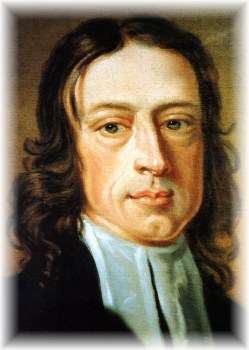
Jael striking Sisera dead with a tent peg is a frightening end to an otherwise typical story in the Old Testament. It had astounded faithful people for centuries; even John Wesley expressed his ethical qualms about Jael’s murderous actions in Judges 4 and wondered if this was divinely inspired, or written by someone who was subject to mistake.

However, God’s ways are sometimes like that; they are beyond explanation and justification. Considering the calls to love our neighbor and turn the other cheek, this story from Judges 4 seems contradictory compared with Christ’s commands in the New Testament. Yet we affirm this as God’s Word, that even in this story we receive an element of God’s ways with God’s people.

God, in scripture and in life, works in ways that surprise us. God delivers the people from the murderous Sisera with a tent peg from a deceitful woman. God calls a young shepherd to defeat the mighty Goliath and lead his people, only to fall to the temptation of lust in Bathsheba. God saved the two spies who entered Jericho through a harlot named Rahab who hid them on her roof. And God chose to save all of us through a carpenter who was nailed to the cross.

We affirm many things about God through worship. But one of the things that we neglect to mention, is that God is strange. God’s ways are not our ways. We cannot, and should not, presume to know why God does what God does. 
1010170_10200106510816517_20363525_n

A year and a half ago, I thought I was supposed to be an associate pastor at one of the larger churches in the Virginia Conference. After going straight from college to seminary and then into the ministry I believed it might be a good thing for me to follow under the leadership of a seasoned senior pastor who could help me learn the most fruitful ways of doing church. Knowing that I was going to propose to Lindsey, and hoping she would say yes, I figured that working in a larger area would give her a greater opportunity for finding a job in social work. I had it all planned out in my head, exactly how I would follow God’s call on my life.

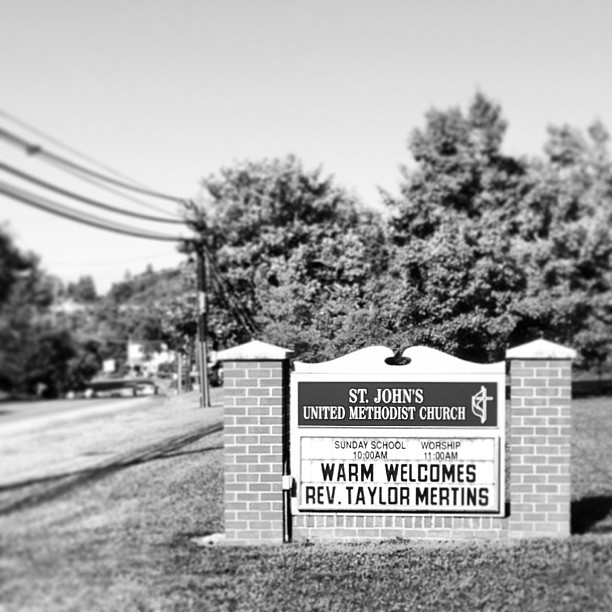
And then I received a phone call: “Taylor, we’re taking your name off the associate list. We believe that your gifts and graces fit best with serving as the pastor of St. John’s United Methodist Church in Staunton, Virginia. The bishop has appointed you, and we are praying for your ministry.”

As a 25 year old coming straight out of seminary, I never imagined that this would be the church that I was serving. I thought that I had it all figured out.

But God’s ways are not my ways. Our God loves to surprise us and save us in ways that we cannot imagine. I’m still trying to work out why God chose to send me here, but every day that I serve as the pastor of this church is a constant reminder that I am exactly where I am supposed to be. Because whether you know it or not, you have saved me in ways that I cannot even begin to describe.

Women are powerful and being faithful is complicated. Deborah and Jael remind us that the ways of the world are not the ways of God. That we are called to a new perspective on how to view one another: male-female, black-white, gay-straight, young-old, we are all God’s children full of value and worth. That God works in ways that are unexplainable and bizarre, calling people like you and me to serve our community side-by-side.

I’ll admit that its frightening and disconcerting, but sometimes God needs a tent peg to jolt, shock, and knock some sense into us.

Amen.

Devotional – Philippians 1.27

Devotional:

Philippians 1.27

Only, live your life in a manner worthy of the gospel of Christ, so that, whether I come and see you or am absent and hear about you, I will know that you are standing firm in one spirit, striving side by side with one mind for the faith of the gospel.

Weekly Devotional Image

“Church Shopping” is a phenomenon in the contemporary church that I have not quite wrapped my head around. Oftentimes when a family, or an individual, moves to a new community they will try out a number of churches, regardless of denomination, until they find one that fits with their understanding of the way church is supposed to be. They will use their own rubrics and check-lists in order to determine whether the church is a good fit; Was I genuinely greeted and welcomed to church? Is the church full of people around my stage of life? Was the worship authentic and life-giving?

60_ChurchShopping_1_1139x541

In Staunton I have been struck by the more particular phenomenon of “Pastor Shopping.” When we have new visitors that become regular attendees I often ask them, in preparation for membership, where they came from and how they arrived at St. John’s. More often than I would like to admit, many of the responses have to do with a disagreement or a frustration with a pastor from their last church: He walked around too much while he preached; She wore blue jeans during worship; He doesn’t preach from the Bible; etc.

I will admit that there are plenty of churches that are detrimental to Christians’ faith. Pastors and congregations sometimes lose sight of the Gospel and become so inwardly focused that they forget to proclaim the Good News of Christ. However, I also believe that as Christians we have the responsibility to “stand firm in one spirit” with our brothers and sisters in Christ at our churches. The fact that so many are willing to leave a faithful community, after years of shared discipleship, because they disagree with a pastor is a frightening reality for the contemporary church.

It is my hope that if we have people at St. John’s who do not agree with what I preach, or how I lead, that they would be faithful enough to share their frustrations with me, and strive to continually serve “side by side for the faith of the gospel.” If we continue to commodify the church, which is to say if we make it into something that people can pick and choose like they pick and choose a cereal brand, then we will continue to have churches that are filled with people who are not challenged in their faith journeys.

Whether I’m your pastor or not, have you shared your thoughts and concerns with your pastor? Are you lovingly honest with them about their preaching? Have you prayed for them?

Perhaps today is the day that we can begin living our lives in a manner worthy of the gospel of Christ with our pastors, with our families, and with our brothers and sister in Christ.

Devotional – Matthew 18.21-22

Devotional:

Matthew 18.21-22

Then Peter came and said to him, “Lord, if another member of the church sins against me, how often should I forgive? As many as seven times?” Jesus said to him, “Not seven times, but, I tell you, seventy-seven times.

Weekly Devotional Image

In October of 1735 John Wesley and his brother Charles left England and sailed to Savannah, Georgia where John would be the minister in the newly formed Savannah parish. Part of his religious upbringing had already instilled a desire for holiness of heart and life and Wesley believed that his new appointment provided a wonderful opportunity to hone his craft and enrich his faith. During his time serving as the pastor attendance at the church services steadily increased though he was disappointed by the lack of lived-out faith outside of worship.

John Wesley

John Wesley

Even with the growth in worship, many in the community disliked Wesley’s high church background and it proved to be a continual element of controversy. During this same time Wesley began to fall in love with the young and beautiful Sophia Hopkey. They courted for a period of time but after a brief visit to preach the Good News to the local Native Americans, Wesley was remarkably disappointed to discover that Sophia had married William Williamson. Wesley was devastated by the news and took out his frustration in a rather inappropriate way; he denied Sophia communion during church services.

Wesley, of course, had “reasons” to justify his actions (he believed that her zeal for living out her Christian faith had declined and he followed the guidelines from the Book of Common Prayer in prohibiting her sacramental participation) but he was also fueled by his heartache and anger in withholding the bread and wine. It quickly became quite the controversy and legal action was taken against Wesley eventually leading to him fleeing the colony and returning to England.

One of the highest, and most difficult, callings of Christian disciples is to forgive. When confronted with the question of forgiveness in the community Peter ventured forth the idea of forgiving someone seven times when Christ augmented the proposal to seventy-seven or seventy times seven times. Forgiveness, it would seem, is not something to be measured and checked off the list, but instead something that is deeply entrenched within the life of the community. Wesley let his personal feelings get the better of him, and he foolishly barred a young woman from Christ’s table. Christians, both clergy and lay, are called to the difficult task of everlasting forgiveness, even when it hurts.

Is there someone that you are still holding a grudge against? Who do you need to forgive in your life?

This Is NOT Appropriate For Church – Sermon on Joshua 2.1-14

Joshua 2.1-14

Then Joshua son of Nun sent two men secretly from Shittim as spies, saying, “Go, view the land, especially Jericho.” So they went, and entered the house of a prostitute whose name was Rahab, and spent the night there. The king of Jericho was told, “Some Israelites have come here tonight to search out the land.” Then the king of Jericho sent orders to Rahab, “Bring out the men who have come to you, who entered your house, for they have come only to search out the whole land.” But the woman took the two men and hid them. Then she said, “True, the men came to me, but I did not know where they came from. And when it was time to close the gate at dark, the men went out. Where the men went I do not know. Pursue them quickly, for you can overtake them.” She had, however, brought them up to the roof and hidden them with the stalks of flax that she had laid out on the roof. So the men pursued them on the way to the Jordan as far as the fords. As soon as the pursuers had gone out, the gate was shut. Before they went to sleep, she came up to them on the roof and said to the men: “I know that the Lord has given you the land, and that dread of you has fallen on us and that all the inhabitants of the land melt in fear before you. For we have heard how the Lord dried up the water of the Red Sea before you when you came out of Egypt, and what you did to the two kings of the Amorites that were beyond the Jordan, to Sihon and Og, whom you utterly destroyed. As soon as we heard it, our hearts melted, and there was no courage left in any of us because of you. The Lord your God is indeed God in heaven above and on earth below. Now then, since I have dealt kindly with you, swear to me by the Lord that you in turn will deal kindly with my family. Give me a good sign of faith that you will spare my father and mother, my brothers and sisters, and all who belong to them, and deliver our lives from death.” The men said to her, “Our life for yours! If you do not tell this business of ours, then we will deal kindly and faithfully with you when the Lord gives us the land.”

Today we begin our Sermon Series on Women of Faith. Last Advent I asked all of you to submit questions or topics for preaching that you have always wanted to hear about from the pulpit. I received so many questions and comments that I was unable to address all of them during our January series on Questions, so I decided to save this particular series for later. It was incredible for me to discover how many of you wanted to hear about the women from scripture. I remember one card said, “I hear there are these great women from the Bible, but no one ever preaches on them.” So, here we are, may God bless our time together as we explore dynamic and feminine faith.

6-rahab1

Sometimes we read stories from the bible that are not appropriate for church. A few weeks ago we did just that as we remembered Elisha and the she-bears, and Isaiah getting naked for three years. Every once and a while we come across that passage that is so daring and vulgar that we would rather ignore it, and most of all, we would not read it aloud in church.

Rahab the harlot. A woman of ill-repute. From the Red Light district becomes the savior for a few spies.

Why in the world would God use her to save his people? Rahab the harlot? I mean I would understand if God chose Rahab the UMW president, or Rahab the Sunday School teacher, but Rahab the prostitute? This is not appropriate for church.

Moses has died. He led his people to the brink of the Promised Land, and handed over God’s people to Joshua. Joshua in turn takes care of the nomadic nation and sends spies ahead of them to survey the land and, in particular, Jericho.

Two men, hand-picked by their leader, sneak their way into the city, and as it sometimes happens to young men close to the edge of death, they arrive at Rahab’s place in the bad part of town.

The king catches wind that some spies had entered the city and he sent his own men to capture them. When the foot-soldiers arrive at Rahab’s place, she listens to their questions, and she lies! Perhaps as only women of the night can do, she peaked from behind the door, offered that dynamite smile, and said with confidence, “Sure, there were two Jewish guys here earlier, but they paid for everything, and went on their way. I’m sure if you start after them right now, you’ll be able to catch them.

While the king’s men traveled down the road, sure their bounty was just ahead of them, Rahab returned to the roof where she had hidden the Hebrews. She explains that she had heard of the mighty acts of their God, how they were delivered from Egypt, and defeated their enemies. In return for saving their lives, she asks for them to repay the favor when they return to Jericho to destroy the city.

I can imagine what some of you are thinking right now: Seriously Taylor? You told us you were going to preach on women of faith and this is who you picked for us? Rahab? She’s a conniving and lying harlot! 

god-heard-rahab1

However, the Old and New Testaments are filled with saintly characters who have both enviable and regrettable characteristics. Noah gets drunk and passes out naked after landing the Ark, King David lusts after Bathsheba and plots to have her husband killed, Peter denies Christ three times after his arrest. What becomes important, what sets them apart, is that God wants them to do something holy, not that they were holy to begin with.

Rahab, full of faith, heard about how the Lord delivered his people, and Rahab believes and embraces God as supreme. Her declaration and acts of salvation towards the spies are more than actions and words; she is worshipping the Almighty. Even with her scandalous background, something not appropriate for church, Rahab experienced the greatest wonder of all – God’s limitless love and power to use and save the least likely of people. 

After church last week Lindsey and I left Staunton and we traveled to Alexandria to be with my family. Not only were we planning to enjoy the Labor Day holiday, but we were going to surprise one of my grandmothers for her 81st birthday.

I love my grandmother tremendously. Ever since I was a child she has referred to me as “precious lamb of Jesus Christ,” she has been there for every major moment of my life, and still shouts out with great joy every time I call her or visit her.

On Monday evening, after surprising her, we sat around my parents’ dining room table to enjoy a home cooked meal and celebrate my Gran. One of the more wonderful qualities that I inherited from her is the ability to ask questions that lead to conversation. I began with: “I want everyone to go around the table and share a story about Gran that brings you joy or made you laugh.

My mother told the story about how when she was a child, my grandmother would dress up like a waitress, sit my mother and her friends down at the table, and would take their order for lunch. The options were obviously limited, but it made the girls feel special, and I can just imagine them giggling as my grandmother scribbled away the orders for Grilled Cheese sandwiches.

I told the story about how my grandmother was always trying to teach us something new. When I was quite young, she used to require my sisters and I to learn a new word from the dictionary whenever we stayed the night at her house. The only word I can remember learning was “Taxidermy.” But not only were we required to learn a new word, but we had to use it in a sentence when our parents returned! I can only imagine the kind of sentence I came up with when I was 8 years old with the word taxidermy in it!

189334_3821512455734_514614209_n

But my favorite story is the one that Lindsey told. Gran had come over for dinner one night while we were all together, and when the evening came to a close she could not find her keys anywhere. We searched all over that house; taking off the couch cushions, crawling on the carpets while sweeping our hands, we even emptied out the trashcan just in case. But as it would happen, the keys were nowhere to be found. I eventually drove her home in my own car and used the spare key to let her into her house, with the hope of finding her car key sometime soon. Thirty minutes later my grandmother called. “I was just getting ready for bed,” she said, “and wouldn’t you know it, but I found my keys in my bosom!

Some things are not appropriate for church.

While I sat there listening to the hilarious stories from my grandmother’s life I was struck with the sensation of awe and love. My grandmother has embodied, for me, a life of faith and dedication, one that I try to emulate daily. But I also realized, that I know nothing negative about her. In my experience, coupled with all the stories I have heard, everything about her life is positive. Yet I know that she could not have lived a perfect life. That, like me, she has sinned, she has fallen short of God’s glory, she has made mistakes, she has regrets.

Everyone has something from their past that they are not proud of. What I believe Rahab, and my grandmother, have to teach us this morning is that we are not defined by the mistakes and shortcomings and judgements from the past.

By the time the New Testament was written, Rahab is remembered among the ancestors of Jesus (Matthew 1.5), regarded as an example of living faith (Hebrews 11.31), and justified by her works (James 2.25). By the time I was born my Grandmother had become the sweet woman full of life and laughter that I have always experienced. Whatever they did in the past matters little to the Lord. He did not judge them for their lives, but called them to respond to the grace poured out on their lives.

Can you imagine how strong Rahab’s belief and faith must have been? To sell her body the way she did, to be powerless and insignificant, and then she grabbed hold of her own destiny and lived faithfully. Two strangers had appeared that night, just like everyone else that walked through her doors, but her fear and faith propelled her into hiding them. She saw an opportunity to change her life, to save the lives of her family, and she did so.

Rahab, thinking of all that she had heard about the Lord, lied to the king’s men and came to terms with the spies. She refused to let her status and place in life limit her power for saving others. She was convinced that the city would fall at the hands of the Hebrews, but she was not simply motivated by fear; she was profoundly impressed with the news and strength of the God of Israel. “The Lord your God is indeed God in heaven above and on earth below.”

Her profession might not be appropriate for church, but her faithfulness is something we can all admire.

If you take a moment to look around the sanctuary, what do you see? Do you see perfect couples sitting shoulder to shoulder, hand in hand? Do you see loving families with children all sitting neatly in their pews? Do you see men and women who are full of faith and grace, capable of love and mercy? Do you see grandparents who adore their grandchildren?

I see a church full of Rahabs. I see people sitting in the pews with pasts they would prefer to remain hidden and untouched. I see families that are broken and full of disappointment. I see careers that have floundered, former decisions that have derailed lives, and regrets about choices that changed everything.

The beauty of the church is that it is full of Rahabs, people like you and me, that have been brought together to be the body of Christ for the world. The immense wonder and joy of the church is that in spite of our dark pasts we have been called to a brilliant present. That like Rahab we can become saintly by responding to the tasks and call that God places on our lives.

If we kept out everything that was not appropriate for church, then we would have an empty building. All of us, with our brokenness and disappointments, with our sins and temptations, have moments from our lives that are not appropriate for this place. However, that is precisely why we are here.

God’s sees us, knows us, calls us by name, and recognizes our potential in spite of our faults. God looks on all the Rahabs of the world, people like us, and beckons us to the Table, to the feast that we do not deserve simply because he loves us.

Look around at one another my friends, do not cast the first stone in judgement, do not sit high and look down on your brothers and sisters in faith. Instead, rejoice; give thanks to the Lord of heaven and earth who loves you, the God who calls on harlots to be helpers, sinners to be saints, and Christians to act like Christ.

Amen.

Devotional – Matthew 18.15

Devotional:

Matthew 18.15

If another member of the church sins against you, go and point out the fault when the two of you are alone. If the member listens to you, you have regained that one.

Weekly Devotional Image

During our weekly lectionary discussion group, after reading Matthew 18, Leah Pack questioned the group in attendance about whether or not any of us has had an experience of someone from the church confronting us in order to point out our faults. After all, pointing out the faults of a fellow church member is something Jesus charged his disciples to do. While the group pondered particular moments from their church lives, I shared with them one of my experiences.

Preaching in Birmingham

Preaching in Birmingham

I had been helping serve at a church in Birmingham, Michigan for most of the summer. My responsibilities included visiting the hospitals, preaching, teaching, leading worship, and regular committee attendance. It was a particularly rewarding summer for me, and helped me identify my own strengths and weaknesses for ministry. Throughout my internship I met with the Seminary Committee who helped to provide the necessary information for my journey and offer advice and feedback regarding my work. On my last evening in Birmingham the committee shared their final evaluations for the summer and wished me well on my ministerial journey; the group was incredibly gracious and kind with their reflections.

As we prepared to leave the church that night one of the older gentlemen from the committee asked to speak with me privately before we left. “You are so full of it,” he began, “I watched you all summer long, and you might’ve fooled everyone else but you can’t fool me. You are one of the most arrogant and self-righteous young men I have ever met.” And with that he left me alone in the room; his words piercing deep in my soul.

I learned later that the man had a very difficult time watching a young person speak with such confidence from the pulpit on a regular basis and that, for him, was a sign of arrogance. Nevertheless, his words have stayed with me ever since that particular evening a few summers ago. Though I may not completely agree with him regarding his judgment of my faults, it was helpful (though painful) to hear him speak his mind. It has helped me to be mindful of the ways I come off as a pastor to others in ways than I could not previously imagine.

One of the highest callings of discipleship is a willingness to confront others when they are at fault. However it is important to remember that we are not called to judge them, but instead speak the truth in love about ways others have wronged us, and how we can reconcile broken relationships.

How have you confronted others who have faulted you? Has anyone pointed out your faults? Let us be truthful people who are kind with our words and courageous in our faith.


Barefoot Basics – Sermon on Exodus 3.1-6

Exodus 3.1-6

Moses was keeping the flock of his father-in-law Jethro, the priest of Midian; he led his flock beyond the wilderness, and came to Horeb, the mountain of God. There the angel of the Lord appeared to him in a flame of fire out of a bush; he looked, and the bush was blazing, yet it was not consumed. Then Moses said, “I must turn aside and look at this great sight, and see why the bush is not burned up.” When the Lord saw that he had turned aside to see, God called to him out of the bush, “Moses, Moses!” And he said, “Here I am.” Then he said, “Come no closer! Remove the sandals from your feet, for the place on which you are standing is holy ground.” He said further, “I am the God of your father, the God of Abraham, the God of Isaac, the God of Jacob.” And Moses hid his face, for he was afraid to look at God.

HolyGround_web

I love churches. I’m not sure when my affection for worship spaces began, but for as long as I can remember I have always loved Christian buildings. Whenever I travel somewhere new, and have an opportunity to explore a local church – I do so.

The first time I went to Guatemala, while all my friends were bargaining with the local artisans for a blanket, or a sweater, or a bowl, I found myself walking around the village peaking in on the churches. When I was younger I would arrive early for youth band at my home church just so I could walk around the building, sit in the different pews, and even stand up in the pulpit to pretend I was the preacher. In fact, when I came to St. John’s for the first time, Good Friday evening of 2013, I was introduced to the Staff-Parish Relations Committee, and when they inquired if there was anything I needed to know about the church, I asked to see the sanctuary.

When I enter a church for the first time, I have made it a habit to walk to the front near the altar, kneel on the floor, and pray. Sometimes the prayers have been about the safety of the mission trip, or for God to bless the people and preacher who call this space home, or even for God to bless me with a church of such beauty in the future.

One summer, when I was provided the opportunity to lead a group of college students to Taize, France, I found myself walking with my friends and exploring the local town. Between the three daily worship services with 5,000 other twenty-somethings, we had the freedom to do as we pleased, so we hiked around Burgundy, France.

1934569_1139874788043_6304071_n

When we entered the small chapel, I was overcome by its opulence. The stained glass was filled with such vibrant colors, letting in just the right amount of light through the scenes of scripture. The crucifix at the front had a triumphant Christ hanging on the cross above the altar. The pews were made of well-worn wood that conveyed a deep sense of time and care. While my friends examined the fine details of the space I walked to the front, fell to my knees, and I prayed.

I must have been there for some time, because when I opened my eyes it took them a moment to readjust to the light. Below my knees, I noticed some writing on the marble stones that made up the floor. While my eyes began to focus on the crude letters, I was gripped with a sense of fear and awe – the floor was made of old gravestones.

With all the beauty surrounding me on the walls, and ceiling, with an altar worthy of a king, and a pulpit raised high in the air, I neglected to notice the most sacred and holy element of the church. The floor and foundation of the worship space was made possible through the saints that have gone on before us, a constant and beautiful reminder that this was holy ground.

Burning bush 1

Just like every other day, Moses was tending to the flock. The morning was typical, calm, and cool with the dew hanging on the leaves while Moses walked along the path. Perhaps while walking in the still silence, Moses thought back upon his life, and what had led him here. He had grown up around the inner circle of Pharaoh’s cohort, raised by the princess as her own, but when he saw an Egyptian beating a Hebrew he could not contain his rage and committed murder. Moses fled from the comfort, power, and prestige of Egypt because he was afraid. He eventually settled in Midian and married Zipporah, the daughter of Jethro the priest.

Moses was tending the flock that belonged to his father-in-law when he led them beyond the wilderness and came to Horeb (“wasteland”), the mountain of God. Walking along the path, filled with thoughts form the past, Moses discovered a bush on fire, and even though it was blazing, it was not consumed. Rather than continue on his journey, Moses turned aside to look at the great sight, to see why the bush was not being burned up. Then God called out from the bush, “Moses, Moses!” And he replied, “Here I am.” The Lord commanded Moses to stay put, and remove the sandals from his feet, for the place where he was standing was holy ground. “I am the God of your father, the God of Abraham, the God of Isaac, the God of Jacob.” And Moses hid his face, for he was afraid to look at God.

It was just an ordinary, everyday journey for Moses. A normal routine with no “religious” intentions. He was not going out to seek the perfect modern preacher or guru to learn about what God was calling him to do with his life, he was not sitting in the great temple of Jerusalem, he was just doing his job.

God chose the mountain in the wilderness as the place of revelation and change for Moses’ life. The encounter took place far and away from the sights and sounds of the religious community, this holy moment takes place in the least likely of situations and locations.

A burning bush appeared in the wasteland, but the fire did not consume it. Moses was not frightened away from the bush, nor was he repelled by the sight of something strange, but instead he was drawn toward it. His curiosity propelled him forward, not for religious reasons, but because it was unknown.

God, the God of Abraham, Isaac, and Jacob, loves to make use of human curiosity for his own purposes. Curiosity often leads to discovery, new life, and new vision.

Moses was the one who ran away from familiarity into the unknown. He had left behind his family and calling in Egypt because he feared for his life. He escaped to the place of Midian, found a wife, and a new calling and was settled. It happened in the ordinary and mundane moment of routined life that Moses was jolted into a new reality.

God is the one with the initiative in the situation. Moses was not begging on his knees for God to enter his life, instead it is God who confronts Moses and calls him to a task.

We gather in this space for worship with expectations. We come to church to sing, to pray, to live, to love, and to encounter the living God. It is our hope and belief that in so doing we will come into contact with the divine in such a way that we can be filled and transformed for the coming week. However, if the story of Moses and the burning bush is to come alive for us today, then we must prepare ourselves to be encountered by the living God when we least suspect it.

wedding-11

Years ago, Zig Volskis was preparing to preside over a wedding for a beautiful couple. He had done the necessary pre-marital counseling, he had met with the families to discuss the needs of the wedding ceremony, frankly- he had taken care of everything he needed to for the wedding to be perfect. Like with all weddings he stood at the front with the wonderful couple and began to speak about the holy covenant of marriage, of Christ’s role in bringing two people together as one, and the responsibility to live into this new identity with faithfulness.

Zig had done a lot of weddings. He knew that at some point the bride would start crying, and if he really worked it, the the groom would cry as well. He knew that some of the people in the congregation no longer believed in marriage, but believed in the young people enough to show up. He had done enough weddings to know the routine. But this was to be no ordinary wedding…

I can’t do this,” the bride blurted without warning. Zig, the great pastor that he was, immediately took over the situation, escorting the young woman out the congregation to have a serious conversation. Thinking that it might just be wedding jitters and nervousness, he invited the young woman to speak. “I can’t do this,” she said, “I’ve had my doubts, of course. But it just hit me right before we walked in. We were waiting for my grandmother to arrive and she was running late. The longer we waited, the more angry my fiancee became. When she finally made it he began yelling at her for ruining this moment, for making us wait on her. The entire time I walked down the aisle and saw him standing at the front, I realized for the first time, that I was making a terrible mistake.” So Zig re-entered the sanctuary, and as calmly as possible, informed everyone that the wedding would no longer take place.

God shows up in the most unexpected times and places. In the midst of a beautiful wedding ceremony the Spirit moved in such a way to give a dose of reality to a young bride about the mistake she was about to make. In the midst of a cold December evening when I was sixteen, God brought me down to my knees and propelled me on a path toward church ministry. In the midst of a leading a flock God appeared in the burning bush to call Moses into something difficult and holy.

I knew a pastor who, every Sunday morning, would kick off his shoes at the back of the sanctuary before entering during the opening hymn. When I finally asked him about this strange practice he casually replied, “this is holy ground.” I think he was right; this space, the inside of our sanctuary, this room where we gather to meet the living God is holy ground. But I also think he was wrong; the ground is only holy because of God’s appearance, not because we say it is.

I love worship, and I love churches. I have had some incredible moments in my life where I have heard a preacher proclaim words from a pulpit as if he or she was speaking to me, and to me alone. I have been in the middle of singing a hymn only to realize that tears were flowing down my face because of the depth and beauty of a God who could love me in spite of my sinfulness. I have prayed at the altar after receiving communion and experienced even just a foretaste of what God’s kingdom is all about. But some of the most transformative and life-giving moments of my life have taken place when I least suspected them, in places far removed from the religious center of the church.

Being called by God into a new life is not something that applies only to clergy, nor is it something that happens exclusively in worship. We are all called in one way or another to live faithful lives for God’s kingdom, whether we are clergy or lay, teachers or students, engineers or musicians, writers or mathematicians. We are given incredible opportunities to respond to God’s calling in manifold ways in our daily lives by loving our neighbors as ourselves, by asking the hard questions that other people are afraid to mutter, by looking at the world through Christ’s perspective.

We are not abandoned and left alone. We see how God is really gracious toward us in the fact that God confronts us in his incredible holiness. The fact that God does not permit his people, the righteous, or the church to perish, means that He refuses to let us go our own way when we act and behave as if we were people who do not need to hear the Good News.

We stand on holy ground, here at church and out in the world, confronted by the Holy One, who searches deep into our souls and knows what we think, what we feel, and what we believe. God cannot allow us to wander off and be left to our own perspectives, but meets us in the ordinary, when we least expect it, and calls us by name: Moses, Moses; Taylor, Taylor, etc.

When God confronts you in the midst of life, how will you respond? Will you continue your journey and ignore the unexpected call? Or will you say, “Here I am”?

Amen.

Divine Irony – Sermon on Exodus 2.1-10

Exodus 2.1-10

Now a man from the house of Levi went and married a Levite woman. The woman conceived and bore a son; and when she saw that he was a fine baby, she hid him three months. When she could hide him no longer she got a papyrus basket for him, and plastered it with bitumen and pitch; and she put the child in it and placed it among the reeds on the bank of the river. His sister stood at a distance, to see what would happened to him. The daughter of Pharaoh came down to bathe at the river, while her attendants walked beside the river. She saw the basket among the reeds and sent her maid to bring it. When she opened it, she saw the child. He was crying, and she took pity on him. “This must be one of the Hebrews’ children,” she said. Then his sister said to Pharaoh’s daughter, “Shall I go and get a nurse from the Hebrew women to nurse the child for you?” Pharaoh’s daughter said to her, “Yes.” So the girl went and called the child’s mother. Pharaoh’s daughter said to her, “Take this child and nurse it for me, and I will give you your wages.” So the woman took the child and nursed it. When the child grew up, she brought him to Pharaoh’s daughter, and she took him as her son. She named him Moses, “because,” she said, “I drew him out of the water.”

newjudaicia4

Can you imagine what was going through the mother’s mind when she placed her little son in the papyrus basket? Can you see her tears flowing down on to the boy who would change the course of history because she was forbidden to let him live?

Everything had changed in Egypt. Joseph had been sold into slavery but saved the Egyptian people by storing up food for the coming famine. He was widely respected and his people were held in safety because of his actions. But eventually a new king arose over Egypt and he did not know Joseph. He feared the Israelites, their power, and their numbers.

The Israelites quickly went from being a powerful force within another nation, to a group of subjugated slaves who feared for their lives. They were forced to work in hard service in every kind of field labor, they were oppressed and belittled, and their family lives were slowly brought into jeopardy. Pharaoh commanded the Hebrew midwives to kill all the males born to Hebrew women, but when they resisted, he changed the decree so that “every boy that is born to the Hebrews shall be thrown into the Nile, but every girl shall live.

Once a prosperous and faithful people, the Israelites had lost everything. Yet, even in the times of greatest distress, people continue to live and press forward… A Levite man married a Levite woman and she conceived and bore a son. When he was born and she saw that he was good, she kept him hidden for three months. But a time came when she could no longer hide the child and she found herself making a basket to send her baby boy into the Nile.

Kneeling on the banks of the river, she kissed her son goodbye, placed him in the crude basket, and released him to the unknown. The boy’s sister, who was allowed to live in this new regime, sat along the dunes and watched her baby brother float down the river toward where a group of women we beginning to gather.

Exodus-Chapter-2-The-Child-Moses-on-the-Nile

Pharaoh’s daughter saw the basket among the reeds, and when she opened it she saw the boy, and took pity on him. She recognized that he was one of the Hebrew boys but she was compelled to be compassionate toward him. The sister, with a stroke of genius, realized that she had the opportunity to save her brother and stepped forward from her hiding place to address the princess. “Shall I go and find a nurse from the Hebrew woman to nurse the child for you?” Pharaoh’s daughter said to the young slave, “Yes.” So the girl went and found her mother, the mother of the child she had just released into the Nile, and brought her to the princess. Pharaoh’s daughter charged her, “Take this child and nurse it for me, and I will give you your wages for doing so.” So the mother received back her own son and nursed him. However, when the child grew up, she brought him back to Pharaoh’s daughter, and she adopted him as her son, and she called him Moses because “I drew him out of the water.”

This story about the birth and the childhood of Moses is one of the most familiar texts from the Old Testament. It has just the right amount of suspense, intrigue, serendipity, divine irony, human compassion, intervention, and it concludes with a happy ending. Moses’ birth has captivated faithful people for millennia and offers hope even amidst the most hopeless situations.

One of the greatest pastors I have ever known serves a new congregation in Northern Virginia. Jason Micheli has inspired countless Christians to envision a new life of faithfulness previously undiscovered. He played a pivotal role in my call to ministry, we have traveled on countless mission trips together, he presided over Lindsey’s and my wedding, but above all he is my friend.

1934842_1140098793643_1336612_n

Jason and his wife Ali embody, for me, what a Christian relationship looks like. They support one another in their different ventures without overstepping their boundaries, they challenge each other to work for a better kingdom, and they believe in the Good News.

For a long time Jason and Ali knew that they wanted to adopt a child and they traveled to Guatemala when Gabriel was 15 months old to bring him home. As a young pastor and lawyer, Jason and Ali had busy schedules that were filled with numerous responsibilities that all dramatically changed the moment Gabriel entered their lives. They went from understanding and responding to the rhythms of one another to having a 15 month old living with them, a child who they were responsible for clothing, feeding, nurturing, and loving. I know that the first months must have been tough, but Ali and Jason are faithful people, they made mistakes and learned from them, they loved that precious child, and they continued to serve the needs of the community the entire time.

Jason and Gabriel

Jason and Gabriel

A year and a half later, just when the new patterns of life were finally becoming second nature, a lawyer who helped them find Gabriel contacted them. There was another family in the area who had adopted a 5 year old Guatemalan boy named Alexander, but they no longer wanted him. The lawyer recognized that Jason and Ali had recently adopted a child but wanted to find out if they would adopt another. However, the lawyer explained that this 5 year-old was supposedly very difficult, his adoptive family was ready to get rid of him, and he didn’t speak any English. Jason and Ali had a choice: lift this child out of the Nile, or let him continue to float down the river?

The story of Moses’ adoption by the Egyptian princess is filled with irony:

Pharaoh chose the Nile as the place where all Hebrew boys would be killed, and it became the means of salvation for the baby Moses.

The unnamed Levite mother saves her precious baby boy by doing precisely what Pharaoh commanded her to do.

The daughters of the Hebrews are allowed to live, and they are the one who subvert the plans of the mighty Pharaoh.

A member of the royal family, the Pharaoh’s daughter, ignores his policy, and saves the life of the one who will free the Hebrew people and destroy the Egyptian dynasty.

The Egyptian princess listens to the advice of the baby’s sister, a young slave girl.

The mother gets paid to do exactly what she wants to do most of all.

The princess gives the baby boy a name and in so doing says more than she could possibly know. Moses, the one who draws out, will draw God’s people out of slavery and lead them to the Promised Land.

Divine Irony! God loves to use the weak and the least to achieve greatness and change the world. God believes in using the low and despised to shame the strong and the powerful. God, in scripture and in life, works through people who have no obvious power and strengthens them with his grace.

How fitting that God’s plan for the future and the safety of the Hebrew children rests squarely on the shoulders of a helpless baby boy, a child placed in a basket, an infant released into the unknown. How fitting that God promised to make Abraham, a childless man with a barren wife, a father of more nations than stars in the sky? How fitting that God chose to deliver Noah from the flood on an ark, and young Moses from death in a basket floating on a river? God inverts the expectations of the world and brings about new life and new opportunities through the most unlikely of people and situations.

Jason and Ali prayed and prayed about the five-year old Guatemalan boy named Alexander. What would happen to them if they brought him into their lives? Everything was finally getting settled with Gabriel and they believed they had their lives figured out. They had planned everything perfectly, yet they we now being asked about bring a completely unknown, and perhaps devastating, element into their lives.

What would you have done? If you knew that there was a child, even with an unknown disposition, that was being abandoned by his adoptive family how would you react? Would you respond with open arms?

Alexander is now 11, soon to turn 12, and is without a doubt one of the most mature and incredible human beings I have ever met. After Jason and Ali met him for the first time they knew that God was calling them to bring him into their family, to love him with all that they had, and they responded like the faithful people they are, with open arms.

Jason, Ali, Alexander, and Gabriel

Jason, Ali, Alexander, and Gabriel

When Alexander arrived at Jason and Ali’s home, he came with the clothes on his back and nothing else. A five year old Guatemalan boy with little English was dropped off at their home; I can’t even imagine what it must have felt like for him. Yet, Jason and Ali brought him into their family and they never looked back. 

In the beginning, they had to sleep with him in his bed night after night, in attempts to comfort him and let him know that they were never going to leave him. That no matter what he did, no matter how far he fell, there was nothing that would ever separate their love for him. For a child that had been passed from person to family to family, Alexander had no roots, he had little comfort, and he had not experienced love.

Jason and Ali stepped into his life just as Alexander stepped into theirs. Perhaps filled with fear about what the future would hold for their little family Jason and Ali’s faithfulness shines brilliantly through the life of a young man named Alexander who I believe can, and will, change the world.

I imagine that for some time Jason and Ali believed that they, like Pharaoh’s daughter, had drawn Alexander out of the river of abandoned life. But I know that now when they look back, when they think about that fear of the unknown, they realize that Alexander was the one who drew them out of the water into new life. Divine Irony. 

In the story of Moses’ adoption out of the Nile, God is never mentioned. There are no divine moments when God appears on the clouds commanding his people to do something incredible, there are no decrees from a burning bush (not yet at least), and there are no examples of holy power coming from the heavens. Yet, God is the one working in and through the people to preserve Moses’ life and eventually the life of God’s people. God, like a divine conductor, orchestrates the music of life with changing movements and tempos that bring about transformation in the life of God’s people.

I believe that most of you, if not all of you, would take up a new and precious child into your lives. Whether you feel that you are too young, too old, too poor, too broken, you would accept that child into your family and raise it as your own. We are people of compassion, we are filled with such love that we can do incredible and beautiful things.

But it becomes that much harder when you look around and understand what we have become through baptism. Every child, youth, or adult, that it baptized into the body of Christ has been lifted out of the Nile of life into a new family. The people in the pews have truly become your brothers and sister in the faith through God’s powerful baptism. The Divine Irony is that we might feel we are called to save the people in church, when in fact they might be the ones called to save us. 

The story of Moses’ birth and childhood is beloved. It contains just enough power to elicit emotional responses from those of us lucky enough to know the narrative. It is a reminder of God’s grace and love through the powerful and the powerless. But above all it is a reminder that like a great and loving parent, Moses has been taken into the fold of God’s merciful love and grace. That we, through our baptisms and commitments to being disciples of Jesus Christ, have been brought out of the frightening waters of life into the adoptive love and care of God almighty. That we, though unsure of our future and plans, are known by the God of beginning and end.

Just as Jason and Ali held Alexander every evening, just as Pharaoh’s daughter cradled Moses in her arms, we have a God who loves us, who holds us close, and will never let us go. 

Amen.


Gabriel and Alexander in 2009

Gabriel and Alexander in 2009

Devotional – Romans 12.9

Devotional:

Romans 12.9

Let love be genuine; hate what is evil, hold fast to what is good;

Weekly Devotional Image

By 1743 the “Methodist” movement within the Church of England was taking off and growing considerably. John Wesley was suddenly responsible for checking in with the numerous societies he had helped to establish in order to continually encourage them in their faith and love. On one such occasion (in February of 1743) Wesley traveled to Newcastle to check on a particular society and was dismayed to discover a lax of discipline within the group.

Though harsh by our modern standards, Wesley examined every member of the society and found it necessary to expel 64 people from the group for the following offenses: “2 for cursing and swearing, 2 for habitual Sabbath-breaking, 17 for drunkenness, 2 for retailing spirituous liquors, 3 for quarreling and brawling, 1 for beating his wife, 3 for habitual and willful lying, 4 for railing and evil speaking, 1 for idleness and laziness, and 29 for lightness and carelessness” (Heitzenrater, Wesley and the People Called Methodists, 138). The offenses were so grave that Wesley believed it was detrimental for the whole if these offenders remained.

Within the week Wesley wrote what we now know as the General Rules. The terms of membership were simple: “a desire to flee the wrath to come, and to be saved from their sins.” But in order to continue in the society, members were required to live out their faith by, “First, By doing no harm, … Second, By doing good, … Thirdly, By attending all the ordinances of God.” (ibid.) These General Rules became foundational for the Methodist movement that eventually led to the creation of the contemporary United Methodist Church.

6a00d8348e805369e2014e5f5f2a3c970c-500wi

Paul wrote to the church in Rome a similarly simple list about what it means to be in Christ: “let love be genuine; hate what is evil, hold fast to what is good.” These principles of Christian discipleship are like the compass of our faith, guiding us to new and continual life in Christ. Wesley truly believed in renewing the Church of England by creating a standard by which the Christians could dedicate their lives. Faith, for him, was serious and worth working hard for. Today we are responsible for renewing our faith through discipleship and our commitment to love God and neighbor.

How do you live out your faith? Has following Jesus become boiled down to showing up for church once a week? Do you follow any guidelines or responsibilities for discipled-living on a daily basis?

Perhaps today we are all being called to a life of dedicated and disciplined faithfulness by simply letting our love be genuine, hating what is evil, and holding fast to what is good.

With Buttocks Uncovered – Sermon on Isaiah 20.1-6 & Mark 14.51-52

Isaiah 20.1-6

In the years that the commander-in-chief, who was sent by King Sargon of Assyria, came to Ashdod and fought against it and took it – at that time the Lord had spoken to Isaiah son of Amoz, saying, “Go, and loose the sackcloth from your loins and take your sandals off your feet,” and he had done so, walking naked and barefoot. Then the Lord said, “Just as my servant Isaiah has walked naked and barefoot from three years as a sign and a portent against Egypt and Ethiopia, so shall the king of Assyria lead away the Egyptians as captives and the Ethiopians as exiles, both the young and the old, naked and barefoot, with buttocks uncovered, to the shame of Egypt. And they shall be dismayed and confounded because of Ethiopia their hope and of Egypt their boast. In that day the inhabitants of this coastland will say, ‘See, this is what happened to those in whom we hoped and to whom we fled for help and deliverance from the king of Assyria! And we, how shall we escape?’ “

Mark 14.51-52

And a certain young man was following him, wearing nothing but a linen cloth. They caught hold of him, but he left the linen cloth and ran off naked.

081910-barefeet

This morning we conclude our sermon series on Strange Stories from Scripture. As I have mentioned previously, this series came to fruition through a desire to proclaim some of the more bizarre texts in church, particularly those that are rarely discussed. There is a wealth of biblical treasure just waiting to be uncovered; this series is our attempt to begin unearthing some of the great moments from the Bible. Our first week we talked about a young man named Eutychus who fell asleep while Paul was preaching, last week we learned about the incident with Elisha and the she-bears, today we conclude by looking at the prophet Isaiah’s naked faith.

Prayer

The Lord spoke to Isaiah son of Amoz, saying, “Go, and loose the sackcloth from your loins and take your sandals off your feet, “ and he had done so, walking naked and barefoot.

On the outside it looks like your typical chapel: painted white with a perfectly trimmed and manicured lawn. When Sunday morning comes the parishioners lazily make their way to the pews in order to prepare their hearts and minds for worship. Located in Ivor, Virginia worship attendance has steadily increased over the last few years as the church has taken very seriously its commitment to “come as you are.” No judgments are made as people enter the sanctuary, they see one another as God’s children, and the community has benefited from this focused ministry.

Whitetail Chapel rests as an example for other churches. They continue to serve the Lord their God with all their hearts, minds, and souls, while other churches are just trying to figure out how to stay open. The people who attend the church are excited and jazzed up about their faith, and are known for their willingness to invite anyone they meet to attend.

If any of you were privileged enough to attend one Sunday I believe that it would be a tremendous experience. The preaching would open your hearts to God’s kingdom in the world, the fellowship with other parishioners would cement your importance and vitality to the body of Christ, and you would have a new vision of what the church can be.

However, even with all these accolades, I am positive that the one thing you would remember most about attending Whitetail Chapel is the fact that they worship in the nude…

whitetailresort04

Those in attendance in worship do not have to worry about finding something special to wear on Sunday mornings because they strut their stuff in their birthday suits. “Come as you are,” indeed. When asked about why they choose to worship in the nude, the pastor replied, “Some of Jesus’ most important moments happened when he was naked: he was born naked, he died naked, and when he arose he lefts his clothes in the tomb so that he could be naked. If God made us that way, how can that be wrong?”

Some churches take the ministry of the prophet Isaiah a little too seriously.

During a time of revolt, when the people began to act our against the imperial ruling of Assyria, the prophet Isaiah was called to do something very dramatic. Ashdod, a city of strength, began the internal campaign against Assyria and urged for support from the surrounding nations including Judah with the promise that Egyptian and Ethiopian forces would soon come to help. As is common throughout scripture, and even in our lives today, the will and desire of the people did not match up with the ways of the Lord.

The Lord spoke to the prophet Isaiah, “Go, and loose the sackcloth from your loins and take your sandals off your feet,” and he did so, and began to walk around naked and barefoot. For three years Isaiah rid himself of the clothing and footwear that he had grown accustomed to and continued to embody, nakedly, the calling of the Lord.

December-Series-Image

Then the Lord said, “Just as my servant Isaiah has walked naked and barefoot for three years as a sign and a portent against Egypt and Ethiopia, so shall the king of Assyria lead away the Egyptians as captives and the Ethiopians as exiles, both the young and the old, naked and barefoot, with buttocks uncovered. And when that day comes to pass the inhabitants of the land will say, ‘See, this is what happened to those in whom we hoped and to whom we fled for help and deliverance from the king of Assyria! And we, how shall we escape?’”

During the timespan of the revolt, Isaiah walked around naked to symbolize the captivity that would soon overtake Egypt and Ethiopia, thus warning his people not to trust these allies nor join in the rebellion.

I know we’ve talked about some strange stories recently: A young man falls asleep under the warm glow of lanterns during a late night church service, only to fall out a window, die, and then be brought back to life. A young bald prophet overreacts to a group of young hoodlums and curses them in the name of the Lord to which 2 females bears maul 42 of the young men from the crowd. But today’s reading takes the cake for one of the strangest examples of faith in the bible.

From our modern sensibilities we find it difficult to imagine and believe that a prophet of the Lord, particularly one like Isaiah, would ever do something such as this. Certainly today, no members of the contemporary church would expose themselves to such embarrassing tactics.

This week, in preparation for the sermon, I asked a simple question of the Christians in my life: What’s the craziest thing you’ve ever done for your faith? At first I heard nothing, a fearful sign that perhaps we are not pushing the boundaries for our faith, but eventually some people began to respond. One woman on twitter said, “I took a sabbatical, packed up all my “stuff,” became homeless, and traveled the world for a year following Jesus daily. My mother answered with, “I received Ecoli poisoning while on a mission trip to Guatemala.” And still yet another man said that he had to spend two and a half years in prison before figuring out that God loved him, and had a plan for him.

The craziest thing I have ever done for my faith was carry our confirmation cross over my shoulder throughout Staunton on Good Friday. I arrived at the church around noon, picked up our cross, and began walking. For 3 hours I explored our town by foot with the hope of marking our hallowed day and reminding those in Staunton what Christ did for us. I will freely admit that part of my desire was to upset people, to disrupt the common expectations of a normal Friday afternoon, and to challenge the vision of the church simply being a place where you gather for one hour every week.

IMG_1279

However, I will also admit that I was being selfish while carrying the cross around Staunton. I know that I felt led and called to do so by God, but I recognize that it was something I had been thinking about for a long time, and looking forward to for a number of years. Some small part of me desired that people would recognize that I was the one carrying the cross.

Notice however that the prophet Isaiah had a complete lack of self-consciousness. He was a man with a mission and did not hesitate to accept scorn or derision in following his duty. When the Lord called upon Isaiah to do something bizarre and strange, he did not wait for awhile and weigh the pros and cons of his calling. He did not wait to see if any other opportunities came knocking at his door. He did not fret over what his reputation would look like after his prophetically naked embodiment. Instead, he immediately stripped off his clothing and began to do what the Lord required.

The counter to our story this morning takes place at the end of the scene in the Garden of Gethsemane. Jesus has already been arrested and is being brought to Pilate for questioning, the disciples have all fled for their own safety, when the captors discover a young man who was following them. Wearing nothing but a linen cloth the young man continued to follow Christ even after his closest friends had abandoned him, but when the guards caught hold of him, he left the linen cloth and ran off naked.

The young man was sharing in the experience of Jesus. Even when the disciples had left, the young man remained. Yet when the calling got too dangerous, he was ready to run off completely naked. It seems to make sense for the young man and the disciples to flee in order to preserve their own lives, but the followers of Christ are called to lose life for the sake of Jesus and the Gospel.

The nude dude from Mark’s gospel is naked and afraid. Isaiah, in stark contrast, is naked and prophetic. Rather than run away from the situation, instead of merely looking out for his life alone, Isaiah was willing to go to extreme measures in order to warn God’s people against putting too much faith in the other nations, rather than the almighty God.

Even with this dramatic and captivating imagery from the life of Isaiah, I believe we can ask about Isaiah’s effectiveness. Remember: we’re talking about a man who walked around naked and barefoot for three years. Isaiah, to all the people, must have appeared crazy and deranged. He must’ve looked like one of those people we are often tempted to ignore in our lives, people who are so zealous and outspoken to the degree that we can pretend they do not exist. But he did what the Lord required.

Even with all the dramatic and captivating elements of our worship service, I believe we can ask about the church’s effectiveness. I am comfortably standing behind a protective barrier surrounded by people who chose to be here this morning. In worship we are caught up and part of the body of Christ who willingly woke up this morning, who decided to come to church, and who yearned to hear God’s Word spoken.

Isaiah’s ministry confronted the fundamental elements of peoples’ lives, he shook everything up with his prophetic vision, and left them with something they would never forget.

Proclaiming the Word of the Lord is not something that can be left up to church worship and preachers alone. This space is sacred for us to gather and be reinvigorated for living out our faith until next Sunday. True transformative ministry takes place out there.

Isaiah’s actions, his willingness to remain naked and barefoot for three years to protect God’s people, ought to shame us into wanting to do more and live out our faith in strong and incredible ways. If we are passionate for Christ to be known, for the kingdom of God to reign, then we must ask how far we are willing to go for our faith.

Not let me be very, very, very clear: I am not saying that we need to loose the sackcloth from our loins and take the sandals off our feet. I am not saying that we need to roam around the hills of Staunton naked and barefoot for the next three years. That was Isaiah’s calling, not ours.

But if Isaiah was willing to go that far for his Lord, how far are we willing to go? Perhaps this morning we are being poked and prodded to be naked with our faith, to be vulnerable with those around us about what the Lord has done for and through us.

What would it look like this week if you asked one person if you could tell them about your faith? Who would you share your faith with? I’m not talking about trying to save someone, or trying to tell them the whole story of both the Old and New Testaments. But what if you sat down and told them what God has down for your life?

I know that for some of us to share our faith in that way would be very uncomfortable. We might rather walk around naked and barefoot for three years than sit down and be vulnerable and open about how God has changed us. 

But if God could save his people from making a terrible alliance through Isaiah, if God could save us from death through Christ on the cross, just imagine what God can do through you.

Amen.

Devotional – Romans 12.2

Devotional:

Romans 12.2

Do not be conformed to this world, but be transformed by the renewing of your minds, so that you may discern what is the will of God – what is good and acceptable and perfect.

Weekly Devotional Image

“Taylor,” he began, “I have been attending worship at United Methodists churches nearly every Sunday since I was a child and I have never heard anyone preach on the texts you chose this month.” We were sitting in the church social hall after worship yesterday afternoon when a member of our church made it known that he was still learning something new and church and growing in his discipleship. Georgeanna Driver, one of our members who passed away last week, made a similar comment two weeks ago about not knowing that story (Elisha and the she-bears) was even in the bible. It has been exciting and thrilling over the last three weeks to challenge peoples’ perspective on what the Word of the Lord can still speak into our lives today, even stories we might otherwise choose to ignore.

tumblr_mdhatd0Ybh1qhmhdfo1_500

When I was at Duke for seminary our Dean, Dr. Richard Hays, reminded us that the responsibility of the Christian is to be constantly transformed by the renewing of our minds. Etched in the marble archway leading into the chapel, Romans 12.2 is a relevant reminder for students of God’s Word but even more so for the people who have been called to follow Christ. In today’s world/society it is too easy to remain complacent with our understanding of faith and overreact when a new person/idea challenges our faith. In stark contrast Jesus was regularly pushing his disciples into new territory with understandings about the kingdom of God.

What we do as Christians is primarily about God, and only secondarily about us. We gather on Sunday’s to hear the Word of the Lord and then live it out in the world. Worship is that time that helps in the transformation and renewal of our minds so that we may discern God’s will for our lives, rather than be conformed to the ways of the world.

Outside of worship we can be transformed through the reading of scripture. Try opening your Bible to a book or a chapter you’ve never read (or haven’t read in a long time), read a set number of verses, and then pray over them. Ask yourself: what might God be saying to me through these words today?

The Word of God is alive and speaking anew everyday, we need only the faith to hear it and live it out.