The Tyranny of Titles – A Christmas Pageant Homily

Matthew 18.1-5

At that time the disciples came to Jesus and asked, “Who is the greatest in the kingdom of heaven?” He called a child, whom he put among them, and said, “Truly I tell you, unless you change and become like children, you will never enter the kingdom of heaven. Whoever becomes humble like this child is the greatest in the kingdom of heaven. Whoever welcomes one such child in my name welcomes me.”

img_2120

A father was with his four year old daughter last Christmas, and it was the first time she ever asked what the holiday meant. He explained that Christmas is all about the birth of Jesus, and the more they talked the more she wanted to know about Jesus so he bought a kid’s bible and read to her every night. She loved it.

They read the stories of his birth and his teachings, and the daughter would ask her father to explain some of the sayings from Jesus, like “Do unto others as you would have them do unto you.” And they would talk about how Jesus teaches us to treat people the way we want to be treated. They read and they read and at some point the daughter said, “Dad, I really like this Jesus.”

Right after Christmas they were driving around town and they passed by a Catholic Church with an enormous crucifix out on the front lawn. The giant cross was impossible to miss, as was the figure that was nailed to it. The daughter quickly pointed out the window and said, “Dad! Who’s that?”

He realized in that moment that he never told her the end of the story. So he began explaining how it was Jesus, and how he ran afoul of the Roman government because his message was so radical and unnerving that they thought the only way to stop his message was to kill him, and they did.

The daughter was silent.

A few weeks later, after going through the whole story of what Christmas meant, the Preschool his daughter attended had the day off in celebration of Martin Luther King Jr. The father decided to take the day off as well and treat his daughter to a day of play and they went out to lunch together. And while they were sitting at the table for lunch, they saw the local newspaper’s front-page story with a picture of Martin Luther King Jr. on it. The daughter pointed at the picture and said, “Dad! Who’s that?”

“Well,” he began, “that’s Martin Luther King Jr. and he’s the reason you’re not in school today. We’re celebrating his life. He was a preacher.”

And she said, “for Jesus?!”

The father said, “Yeah, for Jesus. But there was another thing he was famous for; he had his own message and said you should treat everyone the same no matter what they look like.”

She thought about it for a minute and said, “Dad, that sounds a lot like do unto others as you would have them do unto you.”

The dad said, “Yeah, I never thought about it like that but it’s just like what Jesus said.”

The young girl was silent again for a brief moment, and they she looked up at her dad and said, “Did they kill him too?”

img-wallpapers-christmas-eve-omohit-158401

Kids get it. They make the connections that we’re supposed to make. And even though 2016 has been a rough year with the political rhetoric and partisanship at its worst, and all the culturally significant individuals we lost (David Bowie, Leonard Cohen, Prince, Gene Wilder, John Glenn, etc.), and with the migration of refugees from the Middle East to Europe at the highest levels since the Second World War… our preschoolers have had a tremendous year.

Today, we adults live under the tyranny of titles. We want to label individuals based on a crazy assortment of criterion. He’s a Republican, she’s a Democrat, that family is poor, that family is rich, that woman is black, that man is Hispanic, that couple is gay, that couple is straight.

But the Preschoolers who gather in our basement don’t see the world and one another the way we see the world and one another.

Instead they see each other as Cruz, and Hadley, and Charlie, and Ellie Rose, and Owen, and Maddie, and Graham, and Henry. They, unlike us, do not view the world through the cynical lens that so many of us have adopted over the years. They, unlike us, see the world like Jesus.

Like that little girl with her father, they understand the cost of discipleship in a way that few us can.

I’ve been here long enough to have spent a lot of time thinking about what the Preschool should be teaching the children. I’ve had consultations with the teachers about curricula and paradigms. I’ve even met with some of you to discuss the growth and transformation of your children in response to the nurture and education they receive in the basement.

I’m guilty of the same cynicism that treats young people like objects to be molded in a factory to come out prepared for the world. When Jesus is the one who calls us not to make children into adults, but to change adults into children.

This Christmas, I have a challenge for you. Instead of being consumed by the desire to transform your little ones to fit into one of the labels of society, try to let them transform you. Try to look at the world the way they do. Try to love one another the way they do.

For it is on Christmas that we celebrate the birth of God in the flesh, born as a baby in a manger to a young couple all alone in the world. God did not come to change the world through political power or through economic wealth or through militaristic might. God changed the world through a baby, not unlike the ones we are celebrating with tonight. Amen.

Let’s Talk About Doubt – Sermon on Isaiah 7.10-16

Isaiah 7.10-16

Again the Lord spoke to Ahaz, saying, Ask a sign of the Lord your God; let it be deep as Sheol or high as heaven. But Ahaz said, I will not ask, and I will not put the Lord to the test. Then Isaiah said: “Hear then, O house of David! Is it too little for you to weary mortals, that you weary my God also? Therefore the Lord himself will give you a sign. Look, the young woman is with child and shall bear a son, and shall name him Immanuel. He shall eat curds and honey by the time he knows how to refuse the evil and choose the good. For before the child knows how to refuse the evil and choose the good, the land before whose two kings you are in dread will be deserted.”


What a strange promise. The Lord will give you a sign. Look, the young woman is with child and shall bear a son, and shall name him Immanuel. The promise sounds nice and sweet, after all its part of a lot of the hymns we sign during this time of year. We read these verses and our minds immediately jump to the manger scene with Mary and Joseph carefully cradling the baby Jesus with the animals remaining perfectly quiet and still. But this promise is made to a particular person in a particular moment, and that’s what makes it strange.

At the time of Isaiah’s proclamation, forces were gathering and attempting to attack and invade Jerusalem. The King, Ahaz, is deeply afraid. And it is in the midst of his fear that God offers the King a sign, any sign that he wants, let it deep as hell or high as heaven. God offers Ahaz any sign he wants so that the king will remember to trust the Lord. Ahaz, appearing quite faithful, says he will not put the Lord to the test (the same thing Jesus says during the temptations in the wilderness), but the Lord ignores Ahaz and proclaims the coming sign nonetheless.

So it is while King Ahaz is shaking in his boots, while troops are gathering at the gates, that he receives a sign of God’s promised presence: A young woman will bear a son named Emmanuel.

Now, let’s be real for a moment: God’s promise of a baby is weird. And it’s rather ambiguous. God does not say, “I will destroy the invading forces with terrible violence” nor does the Lord promise that Ahaz will survive. Instead, God says that a baby is coming to save the world.

I don’t know about you, but Christmas, to me, always seems full of happy go lucky faith without any doubt or questions. Lights are hung up on all the houses, people tune their radios to the Christmas stations, and parents want their children to behave themselves in the Christmas pageants.

But doubts and questions are there, perhaps just barely below the surface of the façade we wear around during these weeks we call Advent.

doubt

Do we doubt? Are we allowed to? What happens to us if we do? More than a few of us will be sitting in the pews on Christmas Eve singing Joy to World and celebrating the Christ-child while we’re really wondering what it means to believe.

King Ahaz doubted. While surrounded by enemies, and offered a miracle by God, he insists on not putting God to the test. This might sound really faithful, but God offers something incredible and Ahaz turns it down. His pious response is more a dismissal of the Lord being able to actually help.

Moses doubted. When the Lord asked him to go and deliver the people from the tyranny of Egypt, Moses quickly listed off the excuses for why he shouldn’t be the one to go.

Jeremiah doubted. When the Lord called him to be a prophet to God’s people his response was quick, “I am only a boy! Surely I can’t speak on your behalf”

Jonah doubted. When the Lord commanded him to travel to Nineveh he traveled in the opposite direction in order to avoid what he had been asked to do.

Zechariah doubted. When the Lord spoke to him and told him that his wife was going to become pregnant he did not believe the Lord could perform such a miracle.

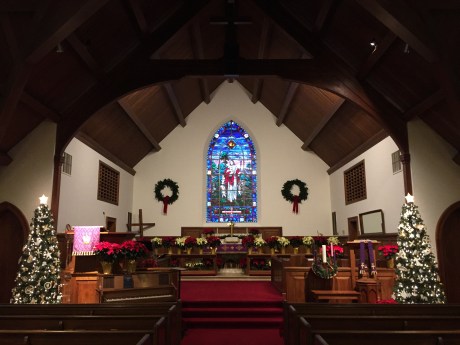
John Wesley doubted. You know, the guy in the stained glass window right there. He was asked to go travel to a strange place called Georgia and preach the Good News but he did not have faith. And when he told his superiors about it, they said, “Preach faith until you have it; and then, because you have it, you will preach faith.”

Even Jesus doubted, though only for a moment. When he found himself all alone and nailed to the hard wood of the cross, he cried out, “My God, my God, why have you forsaken me?”

Sometimes we feel like if we have doubts it is the complete opposite of having faith. In fact, many leave the church whenever that first doubt starts to creep in and they begin to wonder about the truth and promises of God’s Word.

I know more people than I can count who, at some point, were devout and faithful followers of Jesus Christ. And all it took was a little dose of the dirty word for their faithfulness to crumble. Was there really a virgin birth? Did Jesus really walk on water and feed the 5,000 and bring sight to the blind? Does God really care about our individual lives? Did God really raise Jesus from the dead?

Their entire discipleship hinged on the answer to one of those questions, and when they could not find an answer that was satisfying, they left.

I have friends from seminary who felt called to the ministry but have since left the church because a professor told them something like, “Moses didn’t write the first five books of the bible.” Or “Paul did not write the epistle to the Hebrews.” Or “Some of the psalms attributed to David were not written by David.”

            Doubt is such a dirty word. For a long time it has been shunned from the church and treated like a mortal sin. It has been seen as a weakness. But doubting is often a sign that our faith has a pulse, that it is alive and well and exploring and searching.

            Doubt and faith are not opposites.

            You can’t really have one without the other.

We’re now going to try something a little different, something a little strange, and frankly it might not work. But I’m going to leave this pulpit and come down to you and we’re going to talk about our doubts. Now the point of this is not for you to say something like, “I have trouble believing the virgin birth” and then have me completely remove your doubts with some sort of speech. No, the point of this is for us to be vulnerable and intentional with one another, for us to connect as a community of faith around the fact that we have doubts, but that God is big enough to handle our doubts.

So, what are your doubts?

This week, as I was scrolling through the seemingly endless cycle of news from around the world, I read about Russia’s apparent involvement in the democratic election cycle of the United States, and I read about Apple’s struggle to provide Bluetooth compatible headphones in time for Christmas consumers, and I read and read and read.

But then I saw a picture that still haunts me. In the image, a man and a woman are walking through the city Aleppo, Syria. The woman’s face is covered and her husband is cradling their baby in his arms, while holding up an IV bag that’s running down into the bundle of swaddling clothes.

            I’ll admit that what I should have been struck by most was the violence in the background and the terror in their posture, but what struck me the most was how much it reminded me of Mary, Joseph, and the baby Jesus.

A man carries a child with an IV drip as he flees deeper into the remaining rebel-held areas of Aleppo, Syria December 12, 2016. REUTERS/Abdalrhman Ismail

Over 250,000 people have died in Syria as a result of their civil war, most of them innocent civilians. And while we fret over the incoming president-elect and whether or not consumer goods will arrive on time, modern Marys and jaded Josephs are doing everything they can to protect their babies.

And it makes me doubt. I read the statistics, I see the photos, and I want to know where God is in the midst of all this. How can the God who knows us by name and has counted the hairs on our heads rest easy while innocent men, women, and children are dying at a rate we can barely fathom?

And while this is happening across the world, Christians in our country are worried about Muslims and are seriously considering instituting a registration of all Muslims. And do you know what’s happening in Aleppo? Christians and Muslims are serving shoulder to shoulder pulling children from rubble, consolidating food and resources to share with as many as possible, and are the remaining sources of light in a city under the shadow of death.

I doubt God’s presence in the midst of something as terrible as what’s happening in Aleppo, but then I have hope when I read about Christians and Muslims working together to bring joy to people who feel no joy.

And so I live in this tension between faith and doubt. We all do. We vacillate between the two like a frenetic sphere in a pinball machine. We doubt and we trust. We break down under the tyranny of violence and are built back up by the very nature of love. We weep for the world and its destructive desires, and are comforted by the God who came down to take on our flesh. We lift up our clenched fists in frustration to the sky, and we hear God speak in the still small voice: “Lo, I am with you always.”

Faith and doubt; you can’t have one without the over. Amen.


doubt

Devotional – Psalm 80.3

Devotional:

Psalm 80.3

Restore us, O God; let your face shine, that we may be saved.

Weekly Devotional Image

On Sunday mornings I drive to church hours before worship so that I can properly prepare. I always begin in the sanctuary by praying by the altar and then I pray over every single pew. After I feel like have spent enough time with the Lord I will make sure the doors are unlocked and the heat is working before I step up into the pulpit to preach my sermon to an empty sanctuary. I will go through the sermon line by line and make any changes necessary before printing off the final version.

Yesterday morning I was standing in the pulpit and preaching to an empty sanctuary when I heard a soft voice say, “Hello?” My first instinct was to look up in case God was telling me to make a change to the sermon, but it was actually someone who walked into the church through the main office door. When I went to shake his hand in the hallway it was clear that he had been outside for a long time because he had very red cheeks and he kept bringing his hands up to his mouth to blow on his fingers. He explained that he was homeless and was walking down the street when he felt the need to walk into the church. He told me about various life situations that led him to where he currently is and then I invited him in the sanctuary so that we could sit down and talk some more.

I motioned for him to join me in one of the front pews and asked him to continue. But he didn’t. Instead, his eyes rapidly filled with tears and he wept. I sat stunned and unsure if I had said something wrong, and then asked him if everything was okay. He said, “I can’t remember the last time I saw a Christmas tree.”

Colorful holiday lights background, defocused

What I had neglected to think about was the overwhelming sense of joy that was radiating through our seemingly countless poinsettias and our perfectly adorned and lit Christmas trees; a sense of joy that was in sharp dissonance with what the man has experienced recently.

We talked some more and I learned all about his life, and when it felt like the conversation was coming to an end I asked how I could help him, or how the church could help him. To which he responded, “Honestly, I was just cold and lonely. All I wanted was to warm up and have some company. Thank you.” After that, we prayed together, shook hands, and he left.

This strange season of Advent is one that often leaves us filled with joy, but it can also be a time of deep sorrow. Instead of fondly remembering presents under the tree, we might remember our parents fighting and yelling at one another. Instead of recalling the smells of a delicious Christmas dinner, we might feel suffocated by the sadness of another Christmas without someone we love. Instead of humming the familiar hymns with a twinkle in our eyes, we might not even remember the last time we saw a Christmas tree.

The psalmist cries out: “Restore us, O God; let your face shine, that we may be saved.” O that the Lord would make his face to shine upon all of us through the lights of a Christmas tree, and give us the hope and the joy and the peace we so desperately need this time of year.

Ridiculous Renewal – Sermon on Isaiah 35.1-10

Isaiah 35.1-10

The wilderness and the dry land shall be glad. The desert shall rejoice and blossom; like the crocus it shall blossom abundantly, and rejoice with joy and singing. The glory of Lebanon shall be given to it, the majesty of Carmel and Sharon. They shall see the glory of the Lord, the majesty of our God. Strengthen the weak hands, and make firm the feeble knees. Say to those who are of a fearful heart, “Be strong, do not fear! Here is your God. He will come with vengeance, with terrible recompense. He will come and save you.” Then the eyes of the blind shall be opened, and the ears of the deaf unstopped; then the lame shall leap like a dear, and the tongue of the speechless sing for joy. For waters shall break forth in the wilderness, and streams in the desert; the burning sand shall become a pool, and the thirsty ground springs of water; the haunts of jackals shall become a swamp, the grass shall become reeds and rushes. A highway shall be there, and it shall be called the Holy Way; the unclean shall not travel on it, but it shall be for God’s people; no traveler, not even fools, shall go astray. No lion shall be there, nor shall any ravenous beast come up on it; they shall not be found there, but the redeemed shall walk there. And the ransomed of the Lord shall return, and come to Zion with singing; everlasting joy shall be upon their heads; they shall obtain joy and gladness, and sorrow and sighing shall flee away.

advent_2015_screen


On Christ the King Sunday, the sermon was titled “Not My President.” And before we even started worshipping, more than a few of you made sure I knew your concerns about the impending proclamation. After all, Donald Trump had just procured the necessary electoral college votes to be labeled as president-elect, and people across the country were (and still are) protesting his election with signs saying, “Not My President.” If you were here on Christ the King Sunday, you know that the sermon had very little to do with Mr. Trump, and in fact was all about how grateful we should be that Jesus is not our President.

However, like the good Methodists we are, the sermon was not the pinnacle of our worship that Sunday. You might remember a few lines that I proclaimed from the pulpit, you might even remember one of the hymns we used, but if you sat in the front half of the congregation, I bet the thing you remember most from that service happened during communion.

As always I stood behind the table and I prepared to pray over the bread and the cup. Together we confessed our sins and asked for God to forgive us. We stood up from our pews and shared signs of Christ’s peace with one another. And then I asked God to pour out the Spirit on us gathered together and on the gifts of bread and the cup.

One by one each of you came forward to the front of this sanctuary with hands outstretched to receive the body and the blood of Jesus Christ. One by one I looked each of you in the eye as I tore off a piece of the bread and placed it into your hands. Some of you came up with tears in your eyes. Some of you came up with your eyes focused on the ground, perhaps out of reverence for the precious thing you were about to receive. And some of you came forward with eyebrows askew as if to say, “Who thinks of preaching a sermon about Jesus not being our president?”

The last family to come up for communion sat in the very last pew during worship, and they are connected to the church through our Preschool. Their son is here in the building every week learning about what it means to grow in knowledge, in wisdom, and in love of God. So when his father came up with his hands outstretched I asked if I could offer the bread to his son. The father smiled and said, “Of course.” With his blessing, I knelt down onto the floor and looked at my young friend in the eye and I said, “Owen, this is Jesus.”

To which he smiled, titled his head back slightly, opened his mouth, and waited for me to drop the bread right in.

Without really thinking about it, I took the piece and put it in his mouth, and in response he started chewing while smiling and trying to say, “Thank You Pastor Taylor.”

And I lost it. For whatever reason, I could not contain the laughter that was brewing inside me and I started cracking up. I laughed so hard that I actually snorted. Perhaps it was the seriousness of our service getting flipped upside down by a two year old receiving communion like a little bird from his mother, or maybe it was the smile he offered me while pieces of barely chewed bread were falling out onto the floor, or perhaps it was the little skip in his step while his cheeks were filled like a chipmunk preparing for winter, but I couldn’t stop laughing.

            In that simple and yet profound moment, the desert of our ritualistic liturgy was transformed with blossoms of laughter as other people laughed in response to my snort. In that brief and beautiful moment, God brought this church some much-needed joy.

You see, after spending the better part of two months confronting controversies facing the church and addressing the deep seeded political anger felt in this congregation and across the country, we needed to laugh.

man-jumps-for-joy

Isaiah says the wilderness and the dry land shall be glad. The desert shall rejoice and blossom. The prophet looks to the future and shares the ridiculousness of the renewal that is waiting for God’s people. Like a desert blooming in the middle of a drought, like old and worn out people finding strength in their knees, like tongues of the speechless being filled with words, so will the glory of the Lord transform the world.

In this vision everything is made new from the farthest reaches of creation, to the deepest aspects of our souls. The deserts shall rejoice and blossom, flowers will grow abundantly in the forgotten places, the blind will see, the deaf will hear, and waters will break forth in the wilderness.

God promises transformation and joy. Though not necessarily the transformations and joys we pray for, but ridiculous and redemptive reversals nonetheless. Isaiah sings of liberation, joyful homecomings, and the end of all sorrow and sighing.

Signs of this future of joy will be made manifest in the weak being strengthened, those with feeble knees will stand firm, the fearful will be strong. Those who have long been isolated to the powers of loneliness will be grafted in and never forgotten.

Isaiah sings about the Holy Highway cutting through the wilderness, a way for God’s travelers to move without threat or fear, a place where the people of God’s can sing on their way home.

It sounds a lot like the Garden of Eden, and it sounds a lot like heaven.

But just like last week, Isaiah’s song about the promises of God are not just things that will happen in the distant future; they are part of God’s wonderful and creative reality here and now.

Yet, there are things in this world that hold us back, accidents on the highway of God’s grace, that prevent us from traveling the way to God’s promised salvation. There are chains and bumps that derail us from the pathway to glory: economic fears, political disappointments, spiritual droughts, emotional baggage, relational frustration, and seasonal depression, to name a few. And yet over and over again, whether it’s through a child walking back to his pew with bits of saliva soaked bread falling out of his mouth, or a host of other means, God transforms this world and fills us with joy.

I love to tell stories. From the time we are young children we learn important lessons more through stories and less through object lessons. That’s why scripture is so powerful, and it’s why Jesus used parables to relate the immensity of God to his disciples. This week, in anticipation of this sermon, I emailed a number of you to ask for stories of how God has transformed your life. I wanted to hear about the times that God’s living water broke forth in the midst of an otherwise desert-like existence.

And you did not disappoint.

One of you came to church for years without it really meaning much. It was just the thing you were supposed to do. And on one particular occasion, you were sitting in these pews listening to the choir sing an anthem. There wasn’t anything particularly moving about the words or even the melody, but you found yourself watching the individuals as they were singing and you could tell they meant it. Though you had seen and heard the choir many times, God spoke to you through their faithfulness that fateful day, and since then you have known and experienced the power of God through the music of our church, and through those who provide it.

One of you expressed how narrow-minded and intolerant you used to be. Whether it had to do with politics, or religion, or social status, you judged others unfairly. And then a pastor came to this church named Zig Volskis and he changed everything for you. His spiritual presence and demeanor taught you the importance of asking the right questions, and the importance of being content with answers that pushed you into a new direction. Instead of treating you like a student who needed to be lectured, Zig encouraged you with amazing insights and discernment. And through God working in him, you began to see the Bible not as a book to be consumed, but a life-giving witness to the reality of God.

One of you wrote about recent event whereby you attended a funeral for a man out of guilt because you were afraid that very few people would be in attendance. And yet, when you arrived, there was a line out the door and across the street full of people trying to get into the chapel. You described the experience as a moment through which God made you aware of one of your many sins, your judgment of others based on accomplishments you deemed as worthy, and through it you were transformed to know and believe that everyone has worth, and everyone is sacred.

God transformed the world through the advent of Jesus Christ, and God continues to transform our lives in ways we cannot even anticipate or imagine. The devastated deserts of our souls will once again blossom through a crowded funeral, a faithful pastor, a passionate choir, or a child-receiving communion. God uses people in our lives to change our lives so that we might change other lives.

Isaiah’s song is all about the ridiculous renewal awaiting us, God’s people. That through God’s transformative work, joy will rain down from the skies, and all the scattered promises of the bible will be fulfilled like a dance – the earth will spring forth new life, bodies will be remade, freedoms will be conferred, the city will be reclaimed, joys will erupt from unexpected places, and sorrow and sighing will be banished from the earth.

Isaiah’s song ends with the happy and joyful homecoming of those who have been liberated from the bondage that keeps them from traveling on the Holy Highway. For there is a new way that cuts through desolate deserts and turns them into beautifully blooming fields. God’s people will travel on this path without threat or fear, they will sing with joyful hearts, because the Lord is doing a new thing.

God is not done.

            God is not done with creation and God is not done with us.

            God breaks the chains of our slavery to sin and death.

            God delivers us to places yet unknown.

            God transforms our hopes and dreams into real and tangible experiences.

            God fills the deserts of our souls with living water.

            God blossoms and brings forth new life and opportunities in ways we cannot even imagine.

            God offers unending joy to the redeemed.

            God makes a way where there is no way. Amen.


Devotional – James 5.8

Devotional:

James 5.8

You also must be patient. Strengthen your hearts, for the coming of the Lord is near.

Weekly Devotional Image

Christmas pageants require patience. Christmas pageants for preschoolers require particularly profound patience. Every year the students of St. John’s Preschool spend time each day during the season of Advent practicing and rehearsing their lines for their annual Christmas pageant. We always have a Mary and a Joseph who carefully hold a baby doll in their hands as they sit patiently toward the front. We always have a couple Wisemen who are forever beating each other with gold, frankincense, and myrrh. And we have an assorted collection of barnyard animals including mice, sheep, cows, and at least one donkey.

Today I gathered with the children in the sanctuary and, as the defacto narrator, I led them through the pageant from beginning to end. When our shyer students walked up to the microphone I was ready to feed them their line and when our gregarious students walked up to the microphone I covered my ears in anticipation of them belting out their one line proclamation.

Meanwhile, a father of one of our students was in the preschool preparing Christmas trees for each of the classrooms. The hope was that after practicing, the children would return to their rooms with the surprise of cheer waiting for them in the form of a tree and then they could decorate each tree as they saw fit.

christmas-trees

When we finished the pageant, I walked with the children to their rooms and as soon as they saw the Christmas trees they went berserk. Our pretend shepherds were jumping up and down while our animals were spinning around in circles and even Mary and Joseph were screaming with joy. I did my best to calm them and then we sat on the floor to talk about the trees and how the relate to the Christmas story. I began with what I thought was a rather innocuous question: “Why do we celebrate Christmas?” To which one of our three year olds shouted out, “TO GET PRESENTS!!!”

Advent is a season of patience. While others want to jump straight to Christmas morning, while our preschoolers salivate over wrapped boxes under the tree, we strive to patiently wait for the coming of the Lord. This is the season of strengthening our hearts so that we might be prepared to receive the gift of the Christ-child with unadulterated joy (like the preschoolers) while also remembering the real present is God’s presence with us.

Kidnapping Santa Claus


Isaiah 11.1-10

A shoot shall come out of the stump of Jesse, and a branch shall grow out of his roots. The spirit of the Lord shall rest on him, the spirit of wisdom and understanding, the spirit of counsel and might, the spirit of knowledge and the fear of the Lord. His delight shall be in the fear of the Lord. He shall not judge by what his eyes see, or decide by what his ears hear; but with righteousness he shall judge the poor, and decide with equity for the meek of the earth; he shall strike the earth with the rod of his mouth, and with the breath of his lips he shall kill the wicked. Righteousness shall be the belt around his waist, and faithfulness the belt around his loins. The wolf shall live with the lamb, the leopard shall lie down with the kid, the calf and the lion and the fatling together, and a little child shall lead them. The cow and the bear shall graze, their young shall lie down together; and the lion shall eat straw like the ox. The nursing child shall play over the hole of the asp, and the weaned child shall put its hand on the adder’s den. They will not hurt or destroy on all my holy mountain; for the earth will be full of the knowledge of the Lord as the waters cover the sea. On that day the root of Jesse shall stand as a signal to the peoples; the nations shall inquire of him, and his dwelling shall be glorious.

advent_2015_screen


One Christmas, many years ago, there was one thing I wanted more than anything else: I wanted to kidnap Santa Claus.

I must’ve been 7 years old when I decided it was time to enter the world of criminal activity and I began plotting my plan. At the time, my bedroom was in the basement just down the hall from the living room and the fireplace where Santa usually entered the house. For months I eagerly anticipated that hallowed night when we would leave out the cookies and the milk, when we would deck ourselves out in matching pajamas, when we would struggle to sleep with the excitement of the morning presents so close at hand, but this time I was going to be ready.

In the days that led up to Christmas, the time we call Advent, I went through every drawer and found items that could be used for my trap. I took every tie and belt that I owned and tied them together in one long rope. It wasn’t quite enough so I started collecting random bits of string I found around the house and added them to my dress clothes accessories. I carefully laid out the entirety of it from my bed, through my room, down the hall, around the corner, and right up to the front of the fireplace.

The key to the whole operation was the last piece attached to the last tie, my plastic Fisher-Price stethoscope. You see, with the stethoscope at the very end, it would functionally wrap around Santa’s ankle so that I could pull from my end in my bedroom and bring ole Saint Nick down to the ground.

And so I practiced. I set up the elaborate trap and forced my little sister to stand by the fireplace while I ran back to my bedroom, got under the covers and pulled as hard as I could. Over and over again I yanked on the line perfecting the angles and the force necessary to bring my prey into captivity. It was perfect. Now of course, my mother was very concerned when she discovered that all of my nice belts and ties were wrapped together and when she asked what I was up to, I replied, “Don’t worry about it.”

On Christmas Eve, we went to church with everyone else and I didn’t listen to a word. All I wanted was to get back to the house and catch the red-dressed man.

Why? Well I’m not entirely sure, but why not? After all, this guy shows up in homes every year and brings overwhelming cheer to so many. I guess I just couldn’t stand all the mystery, I wanted to know what compelled him to do what he did, and I wanted to know what he would say.

And so, after setting out the milk and cookies, after being tucked into bed, I waited until my parents went back upstairs and I set the trap. For minutes, which seemed like hours, I laid in bed with my hand tightly gripping the last belt. My focus was pure and unwavering. I listened for any sound that would indicate the moment to pull, I sniffed the air for the delicious smells of peppermint that accompany those from the North Pole, I held on for the slightest vibrations in response to Santa’s boot falling perfectly into the stethoscope.

            And then I woke up.

Anticipation, expectation, patience, waiting: These are the words we can’t stand during this season we call Advent. Instead, we’d rather know what’s wrapped under the Christmas tree, we have lights hung up on the gutters before Thanksgiving, and we plan our holiday meals weeks in advance. We want to skip right to Christmas morning, and we can’t imagine it any other way.

And who can blame us? Christmas is all about the presents, and the songs, and the lights. The word “Christmas” conjures images of trees, and children ripping through wrapping paper, and squeals of delight. At least, that what Christmas means to the world.

Christmas is actually about Jesus. But with the advent of consumer driven commodities and the need for economic growth, Christmas has become the competition of corporations. Black Friday doesn’t even start on Friday anymore, but at 5pm on Thanksgiving Day. Americans will spend almost as much money on material goods from Thanksgiving to Christmas as we do the rest of the year combined. And we do all this to celebrate a homeless baby born in a stench-filled manger. Or, just take a drive around Staunton at night sometime this week, there used to be mangers and magi in yards, now you’re lucky it you can find a plastic baby Jesus behind Frosty the Snowman, Rudolf the Red-Nosed Reindeer, and giant inflatable renditions of Santa Claus.

Advent, this strange and beautiful season in the life of the church, is all about our re-participation in the season of anticipation, expectation, patience, and waiting.

It’s like planning to kidnap Santa Claus for weeks and dreaming about what might happen. Advent is a time where we are forced to wait, like the Israelites did so long ago, for so long, to find out what would happen. While the world fast-forwards to the next consumer driven holiday, while retailers are already putting out decorations for Valentine’s Day, while the world rushes on and on and on, we wait.

We wait and remember how long God’s people waited for what we have: Jesus the Christ.

A shoot shall come out of the stump of Jesse, and a branch shall grow out of his roots. Peace comes from a stump. Out of something that appears completely and utterly finished, an object that others would gloss over comes the sign of new life – a green sprig.

3f187ee188f77c511fdbb525f08307d2

This is how hope and peace begin – they emerge like a tiny tendril in unexpected places through the least likely of people. Like a child foregoing their Christmas presents so that other might rejoice in the celebration this year; hope and peace appear in this world in strange and beautiful ways.

From the line of David will come a child, and the Spirit of the Lord shall rest upon him, wisdom and understanding, counsel and might, knowledge and fear, will be his. He will not judge by what his eyes see or by what his ears hear, but with righteousness he will transform the world.

For centuries the Israelites waited for a child such as this. While new powers and principalities dominated their very existence, they prayed in anticipation of the Messiah who would come to turn the world upside-down, they proclaimed the faithfulness of the Lord in sending the shoot from the stump, and they dreamed about how reality would change.

In that day, the wolf shall live with the lamb, the leopard shall lie down with the kid, the calf and the lion and the fatling together, and a little child shall lead them.

This is not what the world looks like today. There are no predators and prey lying sweetly together in the fields. Republicans and Democrats are not skipping hand in hand down the main streets of our communities. Children are not content with Christmas trees without presents bursting from the bottom. The protestors at Standing Rock are not dancing around the fires with the leaders of the Dakota Access Pipeline while snow falls from the sky.

2016-09-16-1474044012-2676960-defend_the_sacred

Isaiah’s vision of a child leading the way to peace is strange because it is so different from what the Israelites experienced, and it is so different compared to the terror and brutality and greed that we experience.

We don’t know peace.

            We know fear and violence and pain.

We see the images of fires raging through communities and leveling places like Gatlinburg to the ground. We hear the screams of children in Aleppo on the news as they run from bombs falling out of the sky. We experience the terror of ever-shrinking bank accounts when we feel pressured to fill this particular season with as many material goods as possible.

We are a fearful people. Even today, we are just like the Israelites waiting for a better day, a day of hope, a day of peace.

I failed in my attempt to enter the criminal world by kidnapping Santa Claus because I fell asleep. I was exhausted by the insatiable desire to get precisely what I wanted. Instead of patiently waiting for the mystery, instead of living into the reality of things unseen, I fell asleep on Christmas Eve with a belt tied around my hand.

Peace and hope come from unexpected places. But when we are so consumed by our desires, when we want to skip right to Christmas morning, when our sin stands in the way of God making all things new, we become the ax resting by the roots of the stump. We become the stumbling blocks that prevent God’s peace and hope from reining in this world.

Our desire for an answer to every question propels us into a place where we no longer consider the consequences of our actions.

            Our desire for economic prosperity fuels our inability to remember those who suffer at the hand of our greed.

            Our desire for material fulfillment prevents us from ever being the people God is calling us to be.

In my attempted Christmas Eve kidnapping, I wanted to have control over the one bearing gifts. But God calls us to relinquish our control and seek the will of the Lord.

In life we want answers to all our questions, but God calls us to be the answers to our questions. If we want peace, then we have to become part of the solution, and not part of the problem.

Advent is the time for us to wait and remember. We wait for the Lord and remember our brokenness. We wait for the Lord to do a new thing, and we remember that we are called to be people of peace. We wait and remember that through God’s help, we can destroy the ax that is our sinfulness, and instead we can bear fruit in the kingdom of God.

Isaiah promises the people a future of peace, a time we cannot yet imagine, though it will be so new and strange and wonderful that it will be like predators and prey lying contently with one another. This is a vision of God’s infinite future of reconciliation when we are brought into unity with one another, with creation, and with the Lord.

But’s Isaiah’s vision of a future of peace is also a promise of peace here and now. Peace from a stump. Peace from a baby. Peace from something like a loaf of bread.

            For it is at this table, where bullies and the bullied sit together, where the weak and meek eat with the healthy and wealthy, that we catch a glimpse of the future of peace. This meal, the bread and the cup, are a foretaste of God’s heavenly banquet, this is the place where all divisions end.

God is doing a new thing whenever we feast together. It’s not just that we march up to the front and catch a glimpse of heaven only to return to our pews with thoughts of sugarplums dancing in our heads. No, we come to this table, we are consumed by that which we consume, and we are changed. The meal follows us when we leave, God works in us through the power of the Spirit and we necessarily become the people of peace that God promised so long ago.

Isaiah saw, with eyes wide open, a vision of the kingdom of God that we wait for every Advent. He had a vision of a baby being born into the world in order to transform the world. He saw the glorious dwelling of the Lord made manifest in the least likely of places.

And through this, he had hope. Hope for things yet unseen. Hope for old and backwards assumptions being lost to the sands of time. Hope for new vision and hearing to perceive the world through the power of the Spirit. Hope for peace. Amen.
The 10 Best Albums of 2016

I listen to a lot of music. Between running at the gym, sermon preparation, and a host of other activities, I am constantly sifting through new albums throughout the year. Below is my list of the top 10 albums that were released in 2016.


10. Wilco – Schmilco

Wilco’s tenth studio album is filled with the stuff that makes Wilco Wilco. Tweedy’s twangy vocals, smooth harmonies, and poetic verses easily solidified this as one of my most listened to albums throughout the year.


9. White Denim – Stiff

I started listening to White Denim during my freshman year of college and I have looked forward to each of their releases ever since. Though not as enthralling as their earlier albums “Exposition” and “Fits”, “Stiff” moves and grooves from beginning to end. Part of what keeps bringing me back to White Denim is their relentless desire to blend genres into solid music.


8. Hiss Golden Messenger – Heart Like a Levee

Hailing from Durham, North Carolina, Hiss Golden Messenger’s “Heart Like a Levee” is like listening to Megafaun’s best songs on one album. The use of blues and folk rhythms allow the record to come through warm and inviting while also staying true to the form with melancholy when necessary.


7. Big Thief – Masterpiece

Adrianne Lenker’s voice haunts me. From the fragility of the song Paul to the emphatic harmonies on Masterpiece she has clearly found her calling.


6. Car Seat Headrest – Teens of Denial

Will Toledo has recorded A LOT of music (some from the backseat of his car; hence the name). With the release of “Teens of Denial” Toledo has started to receive critical acclaim and he deserves it. This albums contains a lot of honesty which is ironic considering 2016 is being called the year of “post-truth”.


5. Angel Olsen – MY WOMAN

Olsen’s 2014 “Burn Your Fire for No Witnesses” is easily one of my favorite albums of the decade, and she followed it with a solid collection of songs on “MY WOMAN”. Though not as haunting as the simple strumming and singing from her previous album, her songwriting has matured and kicks with force. Her vibrato still lingers between my ears whenever I hear the songs Sister and Woman.


4. Explosions in the Sky – The Wilderness

Without a doubt, I listened to “The Wilderness” while writing sermons more than any other album this year. The musical project of a bunch of friends from Austin, Texas, Explosions in the Sky is one of the most contemplative and moving post-rock bands I’ve ever heard.


3. Frankie Cosmos – Next Thing

Greta Kline’s sweet voice rings through on each song of “Next Thing” and was one of the biggest surprises (for me) of 2016. I bought the album on a whim after hearing about it on All Songs Considered and I kept coming back to it throughout the year.


2. A Tribe Called Quest – We Got It From Here… Thank You 4 Your Service

The most needed album of 2016.


1. Andrew Bird – Are You Serious 

Maybe it’s because I became a father this year, and Andrew Bird’s recent step in fatherhood shaped the album, but “Are You Serious” was my favorite album of the year. From beginning to end every song drips with the flavor that has comes to define Bird’s music: haunting harmonies, moving melodies, winsome whistling, etc.


Honorable Mentions:

Kyle Morton – What Will Destroy You

Chris Forsyth & The Solar Motel Band – The Rarity of Experience

Ray LaMontagne – Ouroboros

Radiohead – A Moon Shaped Pool


180098_54_news_hub_156656_656x500


Devotional – Romans 15.7

Devotional:

Romans 15.7

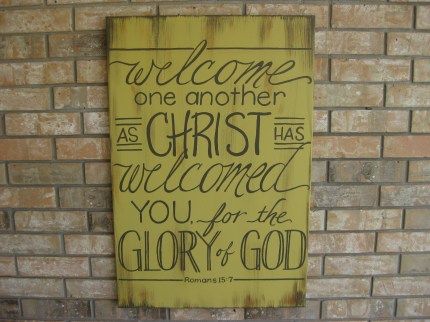
Welcome one another, therefore, just as Christ has welcomed you, for the glory of God.

Weekly Devotional Image

It is hard to welcome one another, until we ourselves know what it means to be welcomed. We can imagine what we need to do and how we need to behave, we can get out the best silverware and the matching dinner sets, we can fill everyone’s cups to the brims, but until we have experienced being welcomed, we will struggle to welcome others.

I spent the last week in Orlando, Florida with my in-laws for the Thanksgiving holiday. They were forced to practice a new type of welcoming and hospitality because they hosted their 7-month old grandson for the first time. In addition to the normal preparations for people visiting, they had to procure a stroller, pack-n-play, diapers, wipes, and an assortment of other necessary items. Moreover, they had to adjust their schedules to the sleeping habits of our son and reorient all of their plans around his general disposition and mood.

And while we sat around the dinner table on Thanksgiving I was struck by how welcomed I felt throughout the week. They could have made assumptions about what we needed and then acted on it, but instead they approached us and asked what they could do to help. They could have become quickly frustrated with Elijah changing their plans but they adapted and made us feel comfortable. They could have expected us to change to fit into their way of life, but instead they changed to fit into ours.

img_9511

One of the most brilliant aspects of the Advent season is our anticipation of the way God fit into our way of life by taking on flesh and being born as a baby in a manger. Rather than giving up on humanity’s inability to repent and turn back to God, God comes down and meets us where we are. God, in Christ, welcomes us into the kingdom of God by connecting with us in ways that we can perceive and understand.

The same holds true for the life of the church, and for us as individual Christians. We welcome one another just as Christ welcomed us, for the glory of God. When we encounter those for whom the church is a strange new world, we don’t just wait for them to “catch up,” instead we adapt our ways to meet them where they are. When we welcome people into our homes for food and fellowship, we don’t dominate the conversation with whatever we want, instead we seek to invite all present to shape what we talk about. When we discover new people sitting in the pews near us, we don’t make quick judgments about who they are based on their appearance, instead we remember how the Lord welcomed us and we do the same toward others.

Devotional – Philippians 4.7

Philippians 4.7

And the peace of God, which surpasses all understanding, will guard your hearts and your minds in Christ Jesus.

Weekly Devotional Image

How do you think people would respond if there was something that, if consumed once a week, would improve mental and physical health and reduce mortality by 20-30% over a 15-year period? What if this miraculous elixir was in reach of millions of people in America and research has proven that it truly does make a tremendous difference in the lives of people who consume it? How quickly do you think it would become the most popular remedy in the country?

Last week, under the “Breaking News” tab on USA Today Online, was a story detailing the availability of this particular product and the research to back up the claims. And, believe it or not, the “miracle drug” is regular church attendance.

Generic Background Image

After 20 years of research, a group of colleagues from Harvard University published their work suggesting that regularly attending religious services brings about better physical and mental health. Regarding physical health, the researchers claim that, “Adults who attend a service at least once a week versus not at all have been shown to have significantly lower risk of dying over the next decade and a half.” Beyond physical health, participating in regular worship leads to “greater optimism and lower rates of depression.”

After reading the article, one would think that every house of worship would be filled to the brim every weekend!

However, the article begs the question: Why do people worship?

Do we gather together because we want the physical and mental health benefits? Are we so consumed by the fear of death that we will sit in uncomfortable pews once a week just so we can live longer? Do we understand and value worship the same we that we understand and value the prescriptions in our medicine cabinets?

Or, do we worship because in worship we encounter the living God? Are we so consumed by the love of God that we cannot understand a way of life without gathering together once a week? Have we been transformed by the Lord who knows us and calls us by name?

The peace of God, which surpasses all understanding, will guard our hearts and our minds in Christ Jesus. We encounter the peace of God whenever we gather together, whenever we proclaim God’s Word, whenever we respond to that Word, and whenever God’s sends us into the world to be the light that shines in the darkness.

Worship, though apparently beneficial for our mental and physical health, is not about what we get out of it. Instead, worship is about what God gets out of us.

Not My President


Colossians 1.11-20

May you be made strong with all the strength that comes from his glorious power, and may you be prepared to endure everything with patience while joyfully giving thanks to the Father, who has enabled you to share in the inheritance of the saints in the light. He has rescued us from the power of darkness and transferred us into the kingdom of his beloved Son, in whom we have redemption, the forgiveness of sins. He is the image of the invisible God, the firstborn of all creation; for in him all things in heaven and on earth were created, things visible and invisible, whether thrones or dominions or rulers or powers – all things have been created through him and for him. He himself is before all things, and in him all things hold together. He is the head of the body, the church; he is the beginning, the firstborn from the dead, so that he might come to have first place in everything. For in him all the fullness of God was pleased to dwell, and through him God was pleased to reconcile to himself all things, whether on earth or in heaven, by making peace through the blood of the cross.

not-my-president-anti-trump-protesters-900


A year ago today I stood in this pulpit and preached about how God’s kingdom is not of this world. I used Pilate’s interrogation of Jesus (“Are you the King of the Jews?” “You say that I am…”) to juxtapose the world’s expectations against God’s expectations. The sermon ended with a staccato’d refrain that emphasized the kingship of Jesus and our allegiance to his kingdom.

I said:

The world tells us to gain all we can.

            Jesus tells us to give all we can.

            The world tells us to seek vengeance.

            Jesus tells us to seek forgiveness.

            The world tells us to destroy our enemies.

            Jesus tells us to love our enemies.

            The world tells us we are the center of the universe.

            Jesus tells us that God is the center of all things.

            The world tells us to ignore the weak.

            Jesus tells us that the meek shall inherit the earth.

            The world tells us that death is the end.

            Jesus tells us that death is the beginning.

I didn’t think it at the time, but it was a pretty political sermon. After all, making the claim that Christ is our King is a political statement. But what I didn’t anticipate was how the words from that sermon would play out over the next 365 days.

We’re told not to mix politics with religion. Political opinions and religious beliefs are supposed to be kept in the private sphere, they are things we can think about on our own time but the world has no right to interfere with either.

Except the world interferes with both all the time. We hear about things like the Christian Coalition, and the need for Christians to take back the Supreme Court, and I even get emails asking about what the church is going to do regarding local school board decisions.

We hear that the church is not supposed to be political. We shouldn’t endorse particular candidates or platforms. We shouldn’t tell people how to vote, or even to vote at all. The church can’t be political in the sense that it can’t be Republican or Democrat, but the church itself is a politic. To be part of the church, to be part of the body of Christ, implies that our worldview is changed and therefore everything else changes as well.

Like many Sundays throughout the liturgical year, this one has a special focus and significance. However, Christ the King Sunday is a more recent addition to the Christian calendar. Whereas Christians have celebrated the likes of Maundy Thursday and Pentecost for a long time, Christ the King was only established as official day in the church in 1925. It took the church 1900 years to need this day the same way that we need it now.

In 1925, Mussolini had been head of Italy for 3 years, a loud insurrectionist in Germany named Hitler had been out of jail for a year and his Nazi party was rapidly growing in power, and the entire world was suffering under the weight of a Great Depression.

Yet, despite the rise of autocratic dictators, despite the lack of economic opportunities, despite the strange and uncomfortable silence between two World Wars, Christ the King asserted, and still does, that Jesus Christ is Lord and he shall reign forever and ever.

Throughout the last Christian year from Christ the King to Christ the King, we’ve read from Genesis to Revelation, we’ve encountered the living God in the stories from Creation to Redemption, we’ve been transformed by the Word of the God becoming incarnate in the way we live our lives…. And all of this, all of the Sundays, all of the sermons, all of the scriptures, have pointed to one thing: Jesus Christ is Lord.

That’s the thing about Christians, for us everything starts and ends with Jesus. In his letters Paul addresses this strange and beautiful quality of Jesus over and over again. And rather than trying to accommodate Jesus to the ways of the world, Paul calls for all Christians to put Christ first. Yet, Christ is the King of a Kingdom that is so different, and so far from what we’re comfortable with, that putting Jesus first is difficult.

In Jesus’ kingdom the rules and the ruler are different. All assumptions about what is important, and who we are to be, and what we are to care about, have been changed.

It’s like being deported to a strange new land where everyone else is speaking a strange language. It takes time to learn the lingo, and adapt to the habits of the people around us. It’s not a simple matter of fitting Jesus into our present way of thinking, nor is it just giving an hour of our week to worship in a church. We don’t fit Jesus into our lives; Jesus fits us into his.

We are the ones transferred, moved, and deported from one kingdom to another. We move from the kingdom of consumption to the kingdom of communion; from the kingdom of popularity to the kingdom of poverty; from the kingdom of destruction to the kingdom of deliverance; from the kingdom of competition to the kingdom of cooperation.

Everything about what we think we know and understand changes in the kingdom of God, because Christ is King.

USA ELECTION AFTERMATH

The last two weeks have been particularly tumultuous in our country: Economically disenfranchised people are fearful about the potential of losing their health care coverage, while some devastated Democrats are calling for the murder of Donald Trump. Muslims are being threatened with a registration much like the Jews were forced to register in Germany prior to World War II, while Trump voters are being physically assaulted across the national landscape. Immigrants are cowering in fear over whether or not they’re going to be deported, while countless protestors are flooding the streets of cities and the pages of social media with the declaration: Not My President.

Some are berating and demeaning the crowds for their rejection of Donald Trump as their president as if this is the first time people have rejected the president-elect in the United States. It was only sixteen years ago that tee-shirts and bumper stickers were mass produced with pictures of George W. Bush accompanied by the words: Not My President. It was only 8 years ago that Confederate flags were waved during protests after Barack Obama won the election and people were chanting: Not My President.

Thank God Jesus is not our president.

For if Jesus were our president we would have had to pick him to lead us, and we never would have picked him to lead us. We would never willingly elect someone who told us that the first will be last and the last will be first. We would never willingly elect someone who told us to sell all of our possessions and give the proceeds to the poor. We would never willingly elect someone who told us to open up all the borders and let all the refugees in. We would never willingly elect someone who spent so much time with the riff-raff of society.

If Jesus were our president he would be a product of the world rather than a product of God’s incarnation. He would have to make promises to the rich in order to maintain economic stability. He would have to compromise with other world leaders who treat their citizens like dirt. He would have to second-guess the stories he told out of fear that he would not be re-elected in the future.

If Jesus were our president he would have to make us promises that he could never keep, instead of being the glue that keeps all of us together. He would have to take sides in political debates and ostracize entire communities. He would have to brag about the stability of the union rather than name the brokenness that is keeping us from becoming who God is actually calling us to be. He would have to order the extermination of particular individuals and communities in order to keep our country safe.

Thank God Jesus is not our president. Jesus is our King. And instead of electing him, he elected us.

The kingdom Jesus rules is not of this world and it forces us to confront how broken our world really is. Jesus, as our king, subverts the powers and principalities and shows us a new way.

In this broken and flawed world, we see and know God because we see and know Jesus. Jesus is the image of the invisible, the very beginning of everything in creation. Jesus is before all things, and in him all things hold together.

When we encounter things that appear diametrically opposed, things like Republicans and Democrats, Christ is the glue that holds it all together. Through the blood of his death, the blood that was poured out for the world, we encounter the “other” as brother and the “stranger” as “sister.” All the worldly things that seek to divide us are broken down by the glory of the cross that seeks to bring peace and reconciliation rather than division and destruction.

807586_1

It is not an easy thing to be a Christian, to worship Christ as King. We need the strength of God to endure everything with patience while giving thanks to the Father, because we cannot do discipleship on our own. But when Christ becomes first in our lives, when every Sunday is like Christ the King Sunday, when we realize that we a part of a strange new kingdom, everything else starts to change.

Our King does not build walls to keep people out, nor does our king require the registration of different communities under the auspices of “safety.” Our King invites all to the table to discover the power and love of his grace.

Our King does not call for his followers to take up the sword to wipe out political opposition. Our King forgave the people who delivered him to the cross.

Our King does not pander to us with empty promises in order to procure our allegiance. Our King meets us where we are with a simple invitation saying, “follow me.”

Nearly 100 years ago, Christians all across the world needed the first Christ the King Sunday. They needed a Sunday set apart to reflect on how the Lordship of Christ outshines even the most powerful of dictators and the most devastating of depressions.

Today, we need it just as much. We need Christ the King Sunday because it helps to remind us that Jesus’ kingdom is not of this world. It forces us to confront the strange reality of our King being nailed to a cross for the people of his kingdom. It reminds us that peace comes through his sacrifice, a sacrifice that we remember at this table.

Do not be conformed to the ways of this world, but be transformed by the bread and the cup at the Lord’s Table. Instead of consuming the politics and priorities of the world, be consumed by the grace of God made manifest is Jesus Christ. Reject the powers and principalities that seek to undo God’s creation, and kneel before the true King: Jesus Christ. Amen.