God, Stanley Hauerwas, and the Fourth of July

Today our nation celebrates the Fourth of July. Untold sums of people will adorn themselves in red, white, and blue to celebrate the freedoms we hold so dear. It is one of those rare days that entire communities, though regularly separated over things like race and socioeconomic status, will join together to remember how our country got started.

As a Christian, and particularly as a pastor, I often wonder about the celebration of the Fourth of July and what it says about the church. Stanley Hauerwas, the Christian ethicist, has wrestled with it as well. This is what he has to say about this holiday in his sermon titled, “God and the Fourth of July” from his book Disrupting Time: Sermons, Prayers, and Sundries.

Hauerwas

“For Christians, the Fourth of July is not our day. It is not “not our day” because Christians must oppose nationalism, though we should. It is not “not our day” because America is an imperial power whose use of the military is increasingly indiscriminate and disproportionate, though as Christians committed to peace that is a development we must oppose. The fourth is not a problem for us because of what we are against; it is a problem because our desires have been formed by our Lord. We are simply so consumed by the consummation of Christ with his bride, the church, that we find celebrations like the Fourth of July distracting.

“But, the bands and the fireworks are so undeniably entertaining. I am not suggesting we should avoid such entertainment. No, I will not tell you that. However, I will point out that if such entertainment seems more compelling that the celebration of this meal we are about to share together then we have a problem. For in this Eucharist God gives to us the very body and blood of his Son so that our desires will become part of God’s desire of his world. This is the end of all sacrifice, particularly the sacrifices made in the name of nations, so that we can rest in the presence of one another without fear, envy, and violence. In this meal, the beauty of our Lord blazes across the sky, rendering pale all other celebrations. So, come and taste the goodness and the beauty of our God, and, in so consuming, may we be a people who may even be able to enjoy the Fourth without being consumed by it.” – Stanley Hauerwas

bible-american-flag1

As Christians, what are we celebrating when we celebrate our freedom? Is it our freedom from the monarchic rule of England almost 250 years ago? Or are we be celebrating our freedom from the destructive powers of sin? Are we celebrating our freedom to drink beer, have a BBQ, and blow stuff up? Or are we celebrating our freedom from the shadow of death?

On Reading Sermons Online

I preach from a manuscript in the pulpit every Sunday. During the week I carefully craft the words that will be proclaimed and I humbly pray that the Lord will show up through, and even in spite of, my sermons. Personally, preaching from a manuscript allows me to articulate how I believe the Lord continues to speak through scripture without going off on tangents in the middle of the proclamation. Because I use manuscripts, I have a copy of every sermon I’ve ever preached from the first one as a teenager at Aldersgate UMC in Alexandria, VA to the one I preached at St. John’s UMC in Staunton, VA last Sunday.

By my cursory calculations I have preached over 200 times including Sunday sermons, special occasions, funerals, and weddings. Each of these sermons contain, on average, 2,000 words, which added together, comes to about 400,000 words on God’s holy Word. With the exception of funerals, all of these sermons are available to read online at any time via www.ThinkandLetThink.com

And the sad thing is, more people read my sermons online than come to worship on Sundays.

onlinesermons

I spent some time today going over the data points and statistics for the blog and I realized that on any given day nearly twice as many people read my sermon from Sunday than were in attendance in worship. Moreover, if the number of people who read the blog every week attended church on Sunday, I would be leading one of the larger churches in the entire Virginia Conference of the UMC.

I want to be clear that I am humbled by this kind of readership and I hope what I have posted has been fruitful for the people who view this blog. But I also want to be clear about another thing: reading a sermon online is not a substitute for gathering in worship.

Throughout the last century, the American Protestant Church has elevated the role of the sermon to the highest of worship elements. Just look at any bulletin on Sunday morning and the whole service usually builds up to the proclamation, and then people are sent home. More than prayers, and hymns, and God forbid the Eucharist, the sermon has come to define what it means to worship.

On one hand, sermons are important. They are the moment in worship whereby the Word of the Lord is proclaimed in a new and exciting way and becomes incarnate in the way that we live out what we hear. But the sermon is unintelligible without the rest of the service. The prayers and the hymns and the silences are what lend light to the words striving to resonate with God’s Word. What we preachers offer from the pulpit mean little, if not nothing, without the other parts of the worship experience.

Additionally, the sermon should not be the pinnacle of worship, but instead one of the integral parts that make the totality of worship life giving and fruitful. To equate all of worship with a sermon prevents the Holy Spirit from moving among the people in such a way that they can respond to God’s great word. To equate all of worship with a sermon implies that our words about God are more important than God’s Word about us. To equate all of worship with a sermon makes the preacher the focus of the worship rather than almighty God.

I am grateful that thousands of people have read this blog over the last few years. I am hopeful that the words found here have given life and meaning to the people who read them. But more than that, I hope these words have inspired people to gather with other Christians at least once a week. What we do, and who we are, is made incarnational in the practice of worship, not by reading sermons online.

Startup Stock Photos

The Good, The Bad, and The Ugly (of Annual Conference)

Every year the Virginia Annual Conference of the United Methodist Church meets for holy conferencing. This is an event whereby lay and clergy representatives from the entire conference meet to discuss pertinent matters facing the denomination in our particular geographic locality. Additionally, the Conference has a memorial service for clergy and lay representatives who have died in the previous year, we learn about campaigns and initiatives like “Imagine No Malaria”, we celebrate the licensing, commissioning, and ordination of clergy, and we worship together.

Every Annual Conference is filled with moments of holiness in addition to sinfulness. We are a church of broken people; therefore we fall prey to our own desires and forget to pray for God’s will to be done. At times, our “holy conferencing” brings out the best in us and the worst in us. Below are three categories of experiences I had from last weekend. And let’s go backwards…

2016AClogocolornoflame

The Ugly

After joining together in one voice to proclaim the powerful and dynamic hymn “And Are We Yet Alive” (The traditional first hymn to be used since nearly the beginning of the Methodist movement), we jumped right into the business of Annual Conference: The presentation of the Rules Committee. This makes complete sense of course, we need to re-establish the rules of conference every year before we get to the important stuff, but this year we spent the first 45 minutes of our time as a denomination arguing about the color of our name badges.

Depending on one’s conference relationship, there are areas that are forbidden from being voted upon. For instance: last year I was a provisional elder which meant that I could not vote during the clergy session, or on constitutional amendments. But now that I am “an elder in full connection” I am granted to the right to vote in the clergy session and on constitutional amendments. In order to streamline who can vote on what, different name badge colors were distributed. And this resulted in chaotic responses in the forms of Robert’s Rules of Order. Specific representatives (both lay and clergy) were livid not about their name badge color, but that the conference did not trust them to know what they could and could not vote on. (even though it took ten minutes for the clergy to figure out where they had to sit in order to vote during the clergy session [something we do EVERY year]).

During the name badge debate I was sitting next to a couple that were attending Annual Conference for the very first time. I witnessed them shaking their heads in astonishment and disbelief for most of the 45 minutes and when all was said in done I heard them say, “No wonder people complain about coming to this every year.” What does it say about our church to new people when we can go from a beautiful hymn to an argument about name badge colors in the blink of an eye? What does it say about the future of our denomination when our first priority becomes the color of our name-tags?

Later during the conference a motion was made from the floor to propose a resolution regarding the recent tragedy in Orlando, Florida. The resolution called for all churches in the conference to be in prayer for the victims and their families from the shooting, to pray for the greater LGBTQI community, and to pray for our Muslim brothers and sisters so that they might not be lumped into the violent identity of the shooter. While the majority of the conference voted in favor of the resolution, there were a decisive number of people who vehemently opposed it. We might not think alike about the LGBTQI community or the Muslim community, but the least we can do is pray for them in the midst of such a horrific tragedy. So what does it say about our commitment to loving others the way Jesus commanded while some of us would rather remain silent?

Finally, our conference had the good fortune of hearing the proclaimed Word from Rev. Eun Pa Hong who is the senior pastor of Bupyeong Methodist Church in Incheon, Korea. Rev. Hong is one of the most dynamic leaders in Korean Methodism and under his leadership for the past 35 years his church has grown to include 5,500 people most Sundays. Rev. Hong spoke in his native tongue and was translated into English while he preached. And while I walked around later in the day, I overheard delegates complaining about having to listen to someone speak in Korean. What does it say about our church, when some cannot stand to witness the diversity that makes us who we are? What does it say about our future when we’ve forgotten the most beautiful part of the Pentecost story?


The Bad

The church continues to decline: Lack of new professions of faith, lowering numbers of baptisms, and more churches closing. Or to put it the way I heard someone else reflect on it: “Annual Conference is all about death.” The report of the Conference Statistician offers bleak prospects for the future and causes anxiety for those with eyes to see and ears to hear. At the same time we were reminded over and over again about the power of fear, and how is has limited us as a denomination without offering hope for new vitality. The frightening statistic that the average United Methodist invites someone to church once every 38 years was mentioned on more than one occasion without any examples of how this statistic is being combatted.

Moreover, fears about the recent General Conference were made apparent through muffled conversations, uncomfortable responses to the General Conference report, and the apathy toward institutional change. More than ever, Annual Conference focused one what we have to fear, than what we have to be hopeful about; it felt more like crucifixion, and less like resurrection.


The Good

There is nothing quite like singing together in one voice with thousands of other United Methodists. As Garrison Keillor has noted, singing is part of our DNA. And so, when at the beginning of Annual Conference, thousands of us joined together with those faithful words: “And are we yet alive, and see each others face? Glory and thanks to Jesus give for his almighty grace!” you can’t help but feel the Spirit’s presence. When we mourned the loss of life over the last year, when we sat in profound silence in memory of the victims in Orlando, when we watched as new pastors were licensed, commissioned, and ordained, we felt the Spirit’s presence. Worship is always part of the “good” of Annual Conference. In worship we remember that God is God and we are not. In sermons and prayers and hymns we hear God saying, “Yes!” even though our hearts say “No.” In worship we let our baggage and preconceived notions start to fall away and we truly become Christ’s body redeemed by his blood.

Additionally, we celebrated the fruits that came from our commitment to “Imagine No Malaria,” we rejoiced in new faith communities that are planting seeds of faith across Virginia, and we recognized the 20th anniversary of the Order of the Deacon. All of these events witnessed to our commitment to serve the needs of others and the ways that we are making God’s kingdom manifest here on earth.

On Thursday night, before Annual Conference officially began, a group of United Methodists gathered for Pub Theology led by the minds behind the podcastCrackers & Grape Juice.” We met for an informal conversation about theology, toxic Christianity, and the future of the denomination. During that gathering a number of young people made it clear that they believe in the future of the United Methodist Church even while some of us remain anxious. In their willingness to articulate how their local churches helped nurture them in the faith, their witness blessed us all. Later we heard from voices largely missed at Annual Conference and all of us were reminded about the strange and beautiful diversity of this thing we call “the church.” As I was leaving, a young man told me (with a smile on his face), “This is what Wesley must have felt like when he gathered with his friends.” It doesn’t get a whole lot better than that.

On Saturday evening I was privileged to join an Ordination class of some of the most gifted pastors and deacons I have ever met. We submitted ourselves to the yoke of a stole over our shoulders and covenanted to serve the church with all of our hearts, souls, and minds. I witnessed countless people rise when names were read before the conference and I was reminded about the great communal effort required in identifying effective clergy. In the ordination service I saw the bright future for our church; not in our bureaucratic commitments to Roberts Rules of Order, not in our debates about nametag colors, not in our frightening statistics, but in the local church where the heart of God is revealed each and every day.

I have hope for the future of the United Methodist Church because the new clergy leaders believe in the power of the gospel to radically transform the world. They recognize that the local church is where disciples are formed (not Annual Conference). They see the bread and the cup of communion as our spiritual food necessary for the journey of faith. They have given their lives over to this strange and wondrous calling and will bear fruit for years to come.

But most of all, I have hope for the church because it does not belong to us. It belongs to God. The more we remember that we serve the risen Lord, the more we learn to pray for God’s will and not our own, the more our church will become what God is calling us to be: the body of Christ.
 

The-Good-The-Bad-The-Ugly

The Top 10 Books I Read In 2015

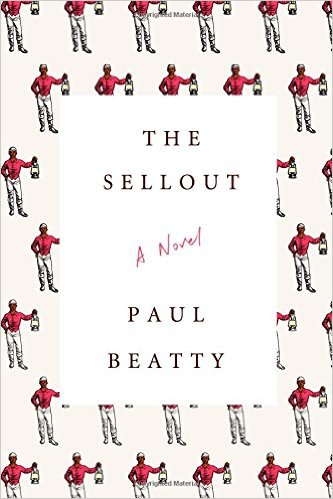
The Sellout by Paul Beatty

51gc1HCCV8L._SX331_BO1,204,203,200_

Without a doubt, The Sellout is one of the most convicting novels I have ever read. Set in south Los Angeles County in an impoverished community with a farm, the story covers racism, comedy, subsistence farming, the Little Rascals, the (in)justice system, and a slew of other subjects. The main character, a black farmer raised by a controversial sociologist, attempts to reinstitute segregation in hopes of giving hope back to the black community. Favorite line: “It’s illegal to yell ‘Fire!’ in a crowded theater, right?” “It is.” “Well, I’ve whispered ‘Racism’ in a post-racial world.”


The Good Lord Bird by James McBride

16171272

McBride’s novel is a fictive retelling of John Brown’s raid on Harpers Ferry in 1859. The narrative follows a young male black child who pretends to be a girl after meeting John Brown in order to avoid hard work and violence. The story is gripping to such a degree that I nearly read the entire thing in one sitting.


The Work of Theology by Stanley Hauerwas

41f8M7-bruL._SY344_BO1,204,203,200_

Hauerwas’ new collection of essays is the closest thing to listening to him lecture at Duke Divinity School. Collected in an all encompassing format, the essays show Hauerwas’ attempt to wrestle with important subjects from how he thinks he learned to think theologically, to how to write a theological sentence, to how to be theologically funny (though other essays are actually funnier than the one on being funny). It is quintessentially Hauerwas and worthy of anyone wanting to know what it means to be theological.


Hear The Wind Sing / Pinball 1970 by Haruki Murakami

41ROXyLUIkL._SX346_BO1,204,203,200_

For years Murakami resisted the demands of publishers and fans for an English version of his debut novels. Written while he owned and operated a jazz bar in Tokyo, he claims that it took him two novels to figure out how to really write, and he describes A Wild Sheep Chase to be his first true novel. However, this year his first two stories were published in English together in one volume. It is clear that Murakami is learning his voice through these narratives, but as an avid fan of his work, is was a joy to see the beginnings of his imagination at play.


Infinite Jest by David Foster Wallace

81KBldResmL

Full disclosure: This was my third attempt to read David Foster Wallace’s masterpiece. The first two times I would get through 50-100 pages and just give up. It is a struggle. With footnotes that propel the story forward but also drive the reader crazy, you have to really work to get through this thing. But if you can, it’s worth it. It is impossible to describe Infinite Jest in a way that does the thing justice, and that’s kind of the point. It is at times comedic, tragic, political, geographical, historic, and absurdist. If you have the time and patience to make it through, it will change the way you look at literature.

Also: the all-too-brief section describing the game of Eschaton is incredible.


The Complete Maus by Art Spiegelman

51b8ECDxvoL._SX351_BO1,204,203,200_

Graphic-novels were a new thing for me this year. I read through all the great Batman works by the likes of Frank Miller, Jeff Loeb, and Alan Moore, but the one graphic-novel that continues to stay in my mind is The Complete Maus. Written and drawn by the son of a holocaust survivor, Maus tells the story of a man’s survival and destruction. Spiegelman’s use of animals to portray human characters makes the story approachable while also making the subject matter completely jarring. Spiegelman’s graphic novel is one that demands to be read in order to remind us of how quickly prejudice can lead to violence.


I Am Radar by Reif Larsen

22571542

Larsen’s follow-up to the incredible debut novel of The Collected Works of T.S. Spivet, is about a black child named Radar Radmanovic born to white parents. While at first the giant novel seems like at attempt to bridge racial tensions, it really avoids the subject altogether. Instead the narrative is about Radar’s father and the way that art can change the soul regardless of whether anyone is there to observe it. Additionally, Larsen’s use of fictive footnotes to books that do not exist draws the reader into a total world within, and outside of, the story.


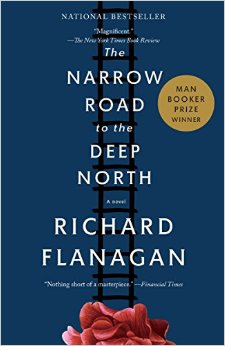
The Narrow Road to the Deep North by Richard Flanagan

41OZaREscvL._SY344_BO1,204,203,200_

Flanagan’s story is not for the faint of heart. There were times that I wanted stop reading because it was just too sad. The novel jumps time periods in Dorrigo Evan’s life from his childhood in Australia, to his love affair as a young soldier, to his work on the Burma Railway as a POW in 1943, to the effects of life after the war. Flanagan resists the temptation to stay with one narrator and shows both sides to every story within the novel, leaving the reader helpless to determine who was right or wrong, or whether we should even use those qualifiers to describe ourselves.


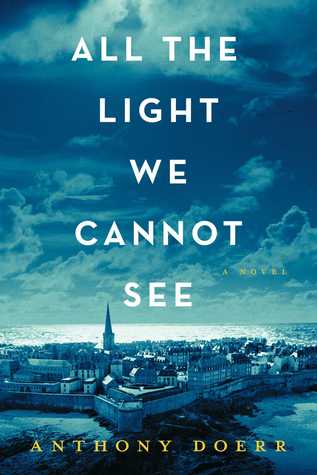
All The Light We Cannot See by Anthony Doerr

18143977

Doerr’s novel deserves all of the strong reviews and awards it received this year. Set before, during, and immediately after World War II it follows a young boy who winds up fighting for the Germans, and a young blind woman struggling to survive in France. As their individual stories eventually come together, the reader beholds a beautiful and haunting novel about what it really takes to “see” the other.


Life After Life / A God In Ruins by Kate Atkinson

9780316230803_p0_v22_s1200x630

9780316176538_custom-20c66e88350e3b9834a1e38695d5f81c09c3c00e-s400-c85

I have collected the two novels as one because they really inform one another. The first portrays a young British woman living through World War II and the many ways that she dies. Every time she comes to the end of her life, whether from a disease or a bomb, the story starts over and the young woman makes minor changes to her life in order to avoid the previous outcome. It is unlike anything else I have read. The second novel follows the girl’s brother as an RAF pilot during the war and his attempts to find a normal life in post-war Europe. Atkinson’s characterization shows an author at the top of her game, and I can’t wait to see what else she puts out in the years to come.


Honorable Mentions:

Undermajordomo Minor by Patrick deWitt

51aOAa4VDZL


Two Years Eight Months and Twenty-Eight Nights by Salman Rushdie

9780812998917_custom-8e93c2cc5402d38277230da029ae72df682cf4ef-s400-c85


The Zone of Interest by Martin Amis

20447658


The Arab of the Future: A Graphic Memoir

51+xoeJyomL._SX340_BO1,204,203,200_

10 Things I Learned From My Second Year Of Ministry

Last year my friend, peer, colleague, and theological-hero Jason Micheli (The Tamed Cynic) asked me to write a post on ten things I learned my first year of ministry. Next week marks the beginning of my third year as a United Methodist pastor so I decided to write another post on ten things I learned during year two.

10872995_835432513146512_7937253830158410370_o

1.       The Church Is Huge

How do you measure the size of a church? Is the church as large as the Sunday worship attendance? The membership role? Throughout the last two years I have realized that the church is almost always larger than I think it is. I’ll be out somewhere with my wife when a stranger will ask if I am the pastor of St. John’s. Between our preschool and missional involvement, the community of faith (also known as the church) has connections with people all over the place. It is always important for me to remember that I have been called to serve the needs of the community, which is usually larger than I think it is.

2.       Praying Is As Important As Breathing

The Bishop for the Virginia Annual Conference, Young Jin Cho, is known for saying “No spiritual vitality, no vital congregations.” And he’s right. Prayer, and other spiritual disciples, are immensely important for the work of ministry and the local church. I strive to begin every morning in the sanctuary with time dedicated to prayer. If I neglect this discipline it has a negative impact on the rest of my day. Like feeling short of breath, I am not as active nor am I as attuned to the Spirit’s work in my midst. Regular prayer is as important to discipleship as breathing is to living.

3.       Collaboration > Competition

There are a lot of churches in the community I serve (I can see four different steeples from my front yard). I have heard on a number of occasions that there are more churches in Staunton per capita than anywhere in the United States. I have no way to confirm whether or not this is true, but just driving around town leads me to believe that it could be true. Over the last two years I have had the privilege of working with other pastors to help live into the kingdom of God here on earth. When we work in collaboration, and stop seeing each other as competition, we participate in Jesus final prayer: “I in them and you in me, that they may become completely one, so that the world may know that you have sent me and have loved them even as you have loved me.” (John 17.23) If the church wants to thrive, then we need to realize that we are all in this together, regardless of our denominational affiliations.

4.       Weddings Are Hard

Compared to some of my colleagues I have done a high number of weddings during my short time in ministry. At the age of 27 I meet a lot of people who are nearing their wedding and I am often asked to officiate. I love celebrating the covenant of marriage, but it can be very hard. What an average person experiences during a wedding is a beautiful thing, but it requires a tremendous amount of planning and work to go well. Not only do I have to take the time to meet with the couple ahead of time for premarital counseling, but I want to make sure that I give them all that I can to make their day worthy of God’s blessing. The metaphor of a shepherd with sheep finds its fullest meaning during weddings when I feel like I am primarily a people-mover. Weddings are great, but they can be hard.

5.       Funerals Are Harder

I once heard a pastor say, “I would take a funeral over a wedding any day.” That comment confused me when I heard it for the first time, and still confuses me to this day. During my first year of ministry no one passed away within the community of faith, and I therefore was not required to preside over a funeral. During my second year of ministry I had 14 funerals. Most of the people had lived long and full lives, but that does not diminish the amount of grief that our community has experienced over the last year. It is such a privilege to be invited into the midst of such uncertainty in people’s lives, but it is also incredibly difficult. I spend a tremendous amount of time preparing for every funeral because I believe in the incredible importance of celebrating every life, death, and resurrection.

6.       Trust Happens

Over the last two years I have lost track of how many times I have heard someone say, “You’re the first person I’ve ever shared that with.” It happens on a regular basis that an individual will come to my office, share a vulnerable story, and then slowly realize that they had never shared that with anyone. Regardless of what I say of Sunday mornings, or even how I pray, people trust the office of pastor. There is an acceptance of confidentiality and a comfort of confession that takes place in my office that I am rarely prepared for. Trust happens all the time and it is at the heart of what it means to be in relationship with others.

7.       Change Happens

11070416_10203768021631999_8256385505868925548_n

Just because something worked the first year, it doesn’t mean that it will work the second. And just because something failed the first year, it doesn’t mean that it won’t succeed during the second. For example: During my first Good Friday I carried a cross on my shoulder through the greater Staunton community and received almost no response. People avoided me on the streets, averted their eyes, and acted as if I was invisible. This year I did the same thing on Good Friday and people would not stop talking to me! People wanted to know what I was doing, offered to pray with me, and I even shared the story of Jesus with a woman who started crying when she saw me on the street. Change happens in ministry and that is a good thing! If doing church was just about maintaining the status quo year after year, we would cease to be fruitful for God’s kingdom.

8.       I Am My Own Worst Enemy

I know of few vocations where someone has to produce something on such a regular basis and is met with immediate feedback. In two years I have written and preached more than 104 sermons. Every Sunday, within 30 minutes of preaching, everyone lines up to shake my hand and tell me what they thought. I have discovered that the sermons I worried about the most are the ones that were the most life-giving to the congregation, and the sermons I was most confident about meant very little to the gathered body. I am my own harshest critic when it comes to ministerial responsibilities and I have to constantly remind myself of who I am, and whose I am. If I put too much weight on my inner-monologue, I neglect to remember that I am working for the kingdom, and not for myself.

9.       Numbers Are Important [And Dangerous]

Every week churches in United Methodism are required to log their statistical data and send it along to the conference. Though I actively worry about how the measuring of statistical data is negatively affecting God’s church, it is important because numbers represent people. Whether we like to admit it or not, Jesus commanded his disciples to “go and make disciples.” If we are serious about being disciples of Jesus Christ, then we have to be willing to go outside of our comfort zones to welcome people into our church and help to grow the kingdom. However, even though numbers are important, they are also dangerous. I have caught myself, on a number of Sunday mornings, counting the number of heads in worship before the opening hymn. And sometimes I let that number have too much of an impact of what takes place after the opening hymn (both positively and negatively). Doing ministry is about living in the tension between growing the vineyard, and nurturing the vines. Numbers are important, but they are also dangerous.

10.   I Still Have The Best Job In The World

Stanley Hauerwas once said that “doing ministry is like being nibbled to death by ducks.” There are days in ministry that affirm his comment, but most of the time it is the greatest job in the world. Where else could I spend time deep in God’s Word? What job would give me the opportunity to preside over something as precious as the water dripping on a child’s head in baptism or breaking off a piece of bread for a faithful disciple? What vocation would bring me to the brink of life and death on such a regular basis? It is a privilege to serve God’s kingdom as the pastor of St. John’s and more rewarding than I could have ever imagined.

“A Stick, A Carrot & String”

In preparation for Holy Week…

mewithoutyou – “A Stick, A Carrot & String”

The horse’s hay lay beneath His head our Lord was born to a manger bed, that all whose wells run dry could drink of his supply.

To keep Him warm the sheep drew near, so grateful for His coming here: You come with news of grace, come to take my place!

The donkey whispered in His ear: Child, in thirty-some-odd years, You’ll ride someone who looks like me (untriumphantly).

While the cardinals warbled a joyful song: He’ll make right what man made wrong, bringing low the hills, that the valleys might be filled!

Then Child, asked the birds, well, aren’t they lovely words we sing? The tiny Baby lay there without saying anything.

As a distance stood a mangy goat with crooked teeth and a matted coat, weary eyes and worn, chipped & twisted horns.

Thinking: Maybe I’ll make friends some day with the cows in the pens and the Rambouillet, but for now I’ll keep away – I got nothin’ smart to say.

But there’s a sign on the barn in Cabbagetown: “WHEN THE RAIN PICKS UP AND THE SUN GOES DOWN, SINNERS COME INSIDE! WITH NO MONEY, COME AND BUY. NO CLEVER TALK NOR GIFT TO BRING REQUIRES OUR LOWLY, LOVELY KING. COME YOU EMPTY-HANDED, YOU DON’T NEED ANYTHING.

And the night was cool and clear as glass with the sneaking snake in the garden grass, as Deep cried out to Deep, the disciples fast asleep.

And the snake perked up when he heard You ask: If You’re willing that this cup might pass we could find our way back home, maybe start a family all our own… but does not the Father guide the Son? Not my will but Yours be done! What else here to do? What else me but You?

And the snake who’d held the world, a stick, a carrot and a string, was crushed beneath the Foot of Your not wanting anything.

Ten Things I Learned My First Year of Ministry

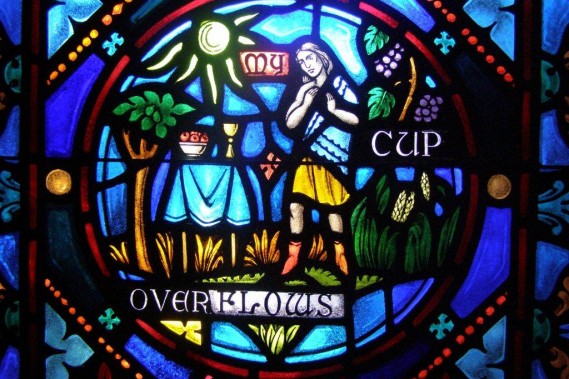
I recently celebrated the completion of my first year of ministry for St. John’s UMC in Staunton, VA.  Throughout my first year I experienced numerous mountaintop experiences as well as deep spiritual valleys. I baptized infants and adults into the body of Christ, I presided over the table and shared the body and blood with the people of God, I brought couples into holy matrimony, and I gave witness to the life and death of faithful Christians. I have learned a lot and am continuing to grow. Below are 10 of the biggest lessons I learned from my first year in ministry.

stained-glass-569x379

1. Every Church Is Different 

I was blessed to grow up (theologically) under the tutelage of great mentors in Dennis Perry and Jason Micheli. Until I left for college I worshipped at Aldersgate UMC for the majority of my life and had very little experience outside of my home church. I learned very quickly throughout seminary, and particularly while serving at St. John’s, that all churches are different. What I preached at Aldersgate would never work at St. John’s and vice versa. Every church has its own context and collective narrative that must be learned before the rhythm of worship and preaching can begin to be fruitful for both the pastor and the congregation. It takes time, but it is time well spent to learn the story of the people.


2. Being New Can Go A Long Way

When I was commissioned last summer I became the youngest pastor in the Virginia Annual Conference and would become the youngest pastor to serve at St. John’s since 1955. The church had grown accustomed to their pastors retiring from this appointment and were excited to receive a new and fresh-from-seminary pastor. Being new has gone a long way. I have been given certain freedoms to explore different ways of worship, teaching, and discipleship purely because I am still new to this. The laity have been particularly forgiving of my preaching because, I hope, they recognize that I am continuing to learn our collective narrative every Sunday from the pulpit. The atmosphere in church has been exciting over the last year which has encouraged our members to invite others to worship, something that all churches need in order to share the Good News.


3. It Can Be Lonely

Jason Micheli has previously written about the loneliness he experienced in his first church because there were very few people around his age. In a similar way  my wife and I have had a difficult time in Staunton meet and making new friends outside of church. Part of this stems from the fact that there are simply not very many young people in Staunton. However it is challenging to make friends outside of the church when some people immediately put up a wall when they learn that I am a pastor. It is remarkably important to maintain friendships that began in, and before, seminary but it is challenging when the geographic divide makes it difficult to stay in touch. All pastors need community; their church and people outside of it.


4. Committee Meetings Are Hard

Seminary cannot prepare you for committee meetings. I was never asked to serve on a committee before I became a pastor so I had to quickly learn the functions of each and their patterns of serving the church without any prior experience. Though the Book of Discipline outlines the roles of the committees, every church lives out these responsibilities in different ways. There have been many nights where I come home thrilled about the direction of the church I serve, and other nights where I have felt defeated by what had taken place during a committee meeting. It is so important to remember that all of this, doing church and being the body of Christ for the world, it about God and not myself.


5. It’s Important To Be Involved In The Community

When I met with the SPRC for the first time I asked what they wanted most from their pastor. The collective response was that they wanted a pastor who would be known in the community. I made a concerted effort to make that come true during my first year. For example: I have been quick to introduce myself to people in town as the pastor of St. John’s, I joined the Stonewall Brigade Band (performing continuously since 1855!) and play drums with them every Monday night as we perform free concerts in Gypsy Hill Park, and I sent hand written letters to the immediate community surrounding the church introducing myself and asking if there was anything I could do for them. The church is not just the people who gather on Sunday mornings; we are intricately connected with the people in the community. It is therefore important to establish a presence within the community outside of the church.


6. My Vision Is Not The Same Thing As The Church’s Vision

I have come up with a lot of new ideas over the last year and a number of them have become very fruitful for our church. Recently however, I have begun to realize that my vision is not necessarily synonymous with the church’s vision. The people of St. John’s have been doing church a lot longer than I have; they have an established wisdom about what can and can’t work for our faith community. It has been good for me to lead with a passionate vision, but then at other times it has been even better for me to take a step back and let the lay leadership’s vision guide us.


7. Workaholism Is Just One Step Away

Every church has many needs from the pastor: visiting the shut-ins, preparing and leading worship on a weekly basis, ordering the church, etc. Though many might assume that being a pastor is a one-hour-a-week job, it is so much more than that. As someone who is regularly at the church facility there are a number of other jobs that I never imagined would be regular parts of my ministry. I have been a plumber, carpenter, Preschool teacher, preacher, mower, snow-shoveler, counselor, teacher, accountant, therapist, etc. For pastors there is a temptation to let the needs of the church dictate every aspect of your life. It is vitally important to maintain a regular sabbath and share the responsibilities of church with the body of Christ.


8. Less And Less People Know Their Bibles

I often take for granted how much scripture is known by the people of church. There are, of course, the prayer warriors and bible study leaders who know their bibles better than I do, but over the last year there have been a number of experiences that had demonstrated a staggering amount of biblical illiteracy. For example: One Sunday I casually mentioned Jacob wrestling with the angel on the banks of the Jabbok river with a bible study class when they all looked up at me and one of them said, “that’s definitely not in the bible.” Or after preaching about the last supper and then going through the entire communion liturgy a longtime church member said, “I never knew that what we do with communion comes from the Jesus’ last supper!” As the greater church looks to the future of the Christian faith we need to be particularly careful about how we return to a love of the bible and nurture scripturally shaped imaginations.


9. Reading Makes For Better Preaching

Soon after arriving in Staunton I had more free time on my hands than I had initially anticipated. I was able to make all my visits, have the sermon written by Wednesday and take care of my other responsibilities which freed me for having time to read from both the bible and theological works. By the time the fall rolled around I found myself incredibly busy and lost the time to read outside of what I needed on a weekly basis; my preaching suffered during this time. I relied too heavily on commentaries and personal anecdotes because my own faith walk was suffering under the weight of weekly ministry. Only when I had come to a realization of the way my work was affecting my faith was I able to re-focus and re-prioritize in such a way that I found time to feed my soul outside of my regular responsibilities. We become better writers and better preachers by actively reading and responding to God’s Word beyond the weekly sermon or lesson in our lives.


10. I Have The Best Job In The World

A professor of mine from seminary once said, “If you can do anything else outside of ministry then stop right now. Ministry can be one of the least rewarding vocations: spiritually, monetarily, and socially. But if you can’t do anything else, which is to say if you feel so called to ministry that you can’t do anything else, then it will be the most rewarding thing you’ll ever do.” For some this was a big wake up call and a few eventually dropped out of school, but for me it only refueled my fire. And he was right. Ministry is the greatest job in the world. Where else could I spend my time deep in God’s Word? What job would give me the ability to preside over something as precious as the water dripping on a child’s head in baptism or offering the gift of bread and wine to the weary travelers of faith? It is a privilege to serve God’s kingdom as the pastor of St. John’s UMC and more rewarding than I could have ever imagined.


(Originally written for the Tamed Cynic blog)

Ordination – A Reflection on Interviewing for the UMC

In the next few weeks, a number of United Methodist seminarians will sit before their respective Board of Ordained Ministry to determine whether or not they are prepared for, or effective in, ministry. The interviews can be a terrifying process; for years these students have studied diligently and now they are being asked to demonstrate their ability to articulate their theology. After going before the Virginia Conference’s Board last year, I have been asked by a number of friends/peers to reflect on the journey and offer advice. Below I have copied my response to one such friend. Though the the reflections are largely geared toward those interested in ministry, I believe they also function to help encourage theological reflection in all forms of Christian discipleship.

bom


1) Prepare yourself to be surprised. For as much as our fellow peers have gone through the ringer of these interviews, you can never prepare yourself for EVERY question. There will come a moment that you are asked to respond and you will be completely lost for a moment because you never though they would have asked that question. So, (heres the advice part) do NOT try to just memorize particular answers to particular questions. Most of these people have read through more papers than they can count and they’ve heard all the same answers over and over. Calm yourself and let your answers be more organic than regimented. Instead of answering everything in three points (or through every avenue of the so-called “Wesleyan Quadrilateral”) try instead to relate it to YOUR experience of God in the world. The committee will then know that you are answering from Truth rather than truth. Be God’s Yes and No to the world at the same time. (which is to say: be dialectical, without confusing the committee members)


2) Scripture scripture scripture. If there is any technique or trick to help with the interviews, its to read the bible before you go. It will rest in the fabric of your being as a well from which you can draw the living water of theological and liturgical reflection. When possible, use examples from scripture to answer any of the questions you are asked. Not only will it demonstrate your commitment to the Word, but it will also show how you have a scripturally shaped imagination. For example: you might not be familiar with terrible suffering in your own life, but the lives remembered from the biblical corpus certainly have and they can be your examples to answer the questions.


3) Be Methodist (but not too Methodist). Use Wesley’s life and teaching to inform your answers, but don’t isolate yourself to ONLY thinking in a Wesleyan way. We have all been trained by a wide variety of theologians, we’ve read from the greats in church history, and we’ve experienced churches beyond the UMC. Ecumenism is not just some idealistic practice, but should instead be one of the great aims of the church. Use sources outside of your church family to answer questions, yet make sure they match up with the Theological and Doctrinal Standards of our faith.


4) Baptism, Eucharist, Sacraments (Oh MY!) – Sacramental theology is at the heart of what it means to be Christian (particularly United Methodist). Though some sacramental functions have been downplayed in the contemporary church they were CENTRAL to Wesley’s approach. Also, sacraments are what separates the laity from the clergy; they are our responsibility to maintain and provide for the people.


5) Remember: you are intimidating. (I mean this as a compliment) Most of the people in your interviews (in fact, probably all of them) will be older than you, and have a lesser theological education. You will do well to remember this. As a young and confident person, you will be viewed with suspicion by some members of the committee (I wish this wasn’t the case, but it is). Show a command of the material, but don’t overdo it. One of the things I’ve heard from a lot of our peers in different conferences was that the committees were bothered with their lack of translation between seminary and the normalcy of church life. They want to hear what you have to say IN A WAY THAT THEY CAN UNDERSTAND. For example: for as much as I love Barth, be very careful with his language and conceptions of God. They will mean little to the members on the committees.


6) Pray. Seriously. Pray before you interview. Pray between each committee room. Remember why you’re doing this and for whom (The answer is God)


7) Materials can be important. Bring your papers with you, but don’t anchor yourself to them. You might be asked to clarify a specific response that you wrote. If this is the case, don’t worry about what you wrote, but carefully respond to their question in the moment. They want to give you as many chances as they can to clarify what you mean.


8) Take your time. Before jumping to answer their questions, make sure you know what they’re asking. If they’re unclear, ask them to rephrase. Better for you to get the question right before you give a wrong answer.


9) Be humble. I know you will have an answer to every question, but showing that you still have room for growth will go a long way in reaching the hearts of the committee members. I remember being asked about death and instead of just throwing out a response I said something to the effect of “You know, thats a really difficult question. Death is one of those many things that we do not have a black and white answer to, death is something caught up in the mystery of God. Its hard for me to respond to hypothetical responses regarding death, but I can tell you that scripture says…” Owning up to the fact that you don’t have all the answers reinforces the reasons that Jesus had to come in the first place. If we had it all figured out, we never would’ve needed God to come in flesh to die, and live, for us.


10) Be yourself. Be authentic to who you are. If you’re pushed out of your comfort zone by a question, make them know they have done so. If you feel like your integrity might be compromised by giving them the answer they want to hear, rather than the one you believe, I say be true to yourself more than them. (this is debatable regarding the question) However, in my experience, they would rather see YOU answer the question as YOU perceive and understand rather than handing them over the perfectly crafted three sentence response they have been hearing all day. Theology is alive. New ideas and concepts and faith-struggles occur everyday. If we only reuse the same theologies over and over than we will never grow as a church, and the kingdom of God will remain tacit, fruitless, and stale. The Church needs imagination now, perhaps more than ever before.

1013431_4988882970842_513748431_n

Weekly Devotional – 11/18/13

Devotional:

Psalm 46.1-3

God is our refuge and strength, a very present help in trouble. Therefore we will not fear, though the earth should change, though the mountains shake in the heart of the sea; though its waters roar and foam, though the mountains tremble with its tumult.


John_Wesley-3

In 1735 John Wesley, the founder of the Methodist renewal movement of the Church of England, made his way from England to the New World having been called to be a minister for the new colony of Georgia. Wesley prayed over this invitation for some time and eventually came to the conclusion: “My chief motive, to which all the rest are subordinate, is the hope of saving my own soul.” Though he had lived a devout life, and was ordained as a deacon in the Anglican Church, he felt that his own soul had yet to be saved.

During the voyage across the Atlantic, Wesley experienced a new kind of faith, one that he had yet to find in his own life. He recorded it as such in his journal: “There was now an opportunity of trying whether they (The German Moravians) were delivered from the spirit of fear, as well as that of pride, anger, and revenge. In the midst of the psalm wherewith their service began, the sea broke over, split the mainsail in pieces, covered the ship, and poured in between the decks, as if the great deep had already swallowed us up. A terrible screaming began among the English. The Germans calmly sung on. I asked one of them afterwards, ‘Was you not afraid?’ He answered, ‘I thank God, no.’ I asked, ‘But were not your women and children afraid?’ He replied mildly, ‘No; our women and children are not afraid to die.’”

This profound experience would follow Wesley throughout the rest of his life, inevitably leading to the discovery of his own profound faith in the God who had faith in him, despite his sinfulness.

The psalmist sings out, “God is our refuge and strength… therefore we will not fear, though the earth should change, though the mountains shake in the heart of the sea; though its waters roar and foam…” That kind of faith is remarkable, one that takes years to cultivate and nurture. Just as Wesley was surprised by the faith of the Moravians on the ship, so too, it is often difficult for us to maintain our faith in the midst of tragedy and fear. Yet, every Sunday the church gathers together to remember our God, to remember that God came in the form of flesh and mounted the hard wood of the cross for us.

So, the next time you’re confronted with the seas and mountains in your life shaking and spilling over remember the faith that God has in you. That time and time again God went after you, to find you, to call you by name, and to embrace you. How would your life change if you had the faith to look at death and suffering in the face and simply remark, “I am not afraid”?

Weekly Devotional – 11/11/13

Devotional:


2 Thessalonians 3.6-

Now we command you, beloved, in the name of our Lord Jesus Christ, to keep away from believers who are living in idleness and not according to the tradition that they received from us.


He had attended church throughout his life, but his faith was basically idle. He listened to the sermons, put money in the offering plate when it came by, and even attended a few bible studies. However, the extent of his belief, participation, and discipleship was lacking. It was clear that nothing excited him about church and he was simply attending because it was the “right thing” to do.

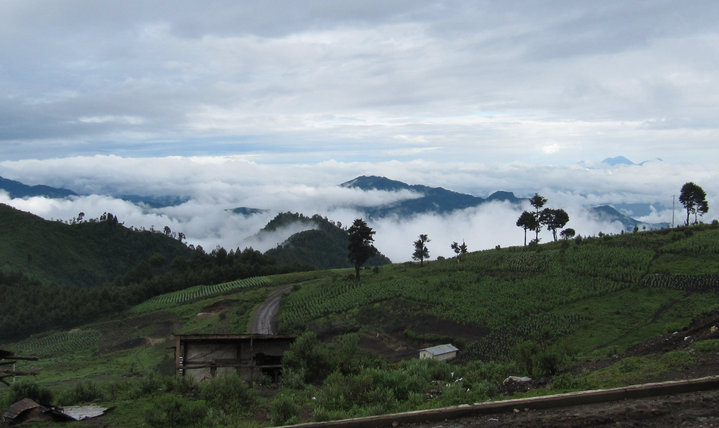
The pastor took notice of this and decided to invite the young man on a mission trip to build stoves for indigenous Mayans in the highlands of Guatemala. Though perhaps initially reluctant, the young man thought it might be a nice little vacation and he would get to work on his spanish.

37663_1409538169459_2274604_n

For 5 days he was worked to the bone. The food and coffee were often cold, the air was too thin for proper working conditions, he kept finding dried cement between his fingers, and he was perpetually exhausted. But something happened. Something changed within his disposition while in that remote village of the Highlands; his faith caught on fire. Though he felt run down by the physically exhaustion, for the first time in his live his faith was no longer idle. He was working for the kingdom of God and (as if the blindfold had been removed from his eyes) he began to see the importance, joy, and depth of what it means to be a disciple of Jesus Christ.

Paul wrote to the church in Thessalonica regarding the idleness present in the worshipping church. Clearly, there were people that were not participating to the degree that Paul would have liked and their behavior was detrimental to the greater church. While reading his words about isolating the idle believers it seems too drastic and definitely unchristian. Though it is perhaps extreme, the point that Paul makes is remarkably important: Christianity is dependent on the character of its disciples. If idleness is present throughout the church, the excitement and joy of what it means to the be the body of Christ for the world will disappear. Paul encouraged the Christians in Thessalonica to keep away from idle believers, but perhaps what we really need to do is help build up their faith, invite them to participate in ways that will light their faith on fire, so that the kingdom can become real for them.

So, if you know someone idle in their faith, reach out to them. Invite them to participate in new and exciting ways. Help them to see the glory and joy of what it means to be a follower of Jesus Christ.

If you feel that your faith is idle, find ways to engage in the local church. How can you serve those in need? Where can you be Christ’s body for others? What would it take to set your faith ablaze?

Faith is only faith when it is being practiced.