Devotional – Psalm 32.5

Devotional:

Psalm 32.5

Then I acknowledged my sin to you, and I did not hide my iniquity; I said, “I will confess my transgressions to the Lord,” and you forgave the guilt of my sin.

Weekly Devotional Image

There is a shop in Alexandria, VA called “The Variety Store” that truly contains a variety of items. Some of my earliest memories are of walking up and down all the aisles with my mother struggling to take in all the strange things I was seeing. There was an aisle full of ribbons, an aisle of ceramic dinnerware, an aisle of candy, and much more. It was a treat to witness the enormity of “The Variety Store” as a child, though it feels a lot smaller now than it did then.

Once, when my mother brought me into the store for some light shopping, I made my way to the toy aisle and just stood in awe of everything. And, as was my custom, I picked up a yellow smiley-face bouncy ball and bounced it all around the store with my her while she collected her items for purchase. We went through all the necessary aisles, my mother waited in line to pay for everything she found, and then we got in the car to go home. All in all, it was a relatively uneventful journey to the store until I put my hand into my pocket and discovered the bouncy ball. I can remember my entire disposition changing in an instant when I realized that I (accidentally) stole the yellow smiley-face bouncy ball.

ar120274857936808

For the next few minutes, which felt like hours, it burned a whole in my pocket as I walked around my house. Were the police on their way to arrest me for shoplifting? How severely was my Mother going to punish me for stealing a plastic ball that cost a quarter? The fear I experienced was palpable and when I finally mustered up the courage to confess my transgressions to my mother I’m sure that I was in tears.

But the strangest thing happened: As I explained my predicament, and I confessed my wrongdoing, the fear and terror faded away. My mother’s calm demeanor and response comforted me as she forgave me for what happened. Even when we returned to the store and I handed the smiley-face bouncy ball back over to the cashier I experienced forgiveness in a way that I would never forget.

When we can muster up the courage to confront and acknowledge our sins, it relieves us from the burden that comes with the weight of sin. When we have those opportunities to express our shortcomings to one another and to God it allows us to start moving in the right direction in discipleship. This week, let us take time to properly and faithfully acknowledge our sins to God, let us repent our transgressions, and let us rejoice in the forgiveness of our sins.

Unity in the UMC

Psalm 133

How very good and pleasant it is when kindred live together in unity! It is like the precious oil on the head, running down upon the beard, on the beard of Aaron, running down over the collar of his robes. It is like the dew of Hermon, which falls on the mountains of Zion. For there the Lord ordained his blessing, life forevermore.

12495241_10153458160651297_8700736706336599235_n

I love meeting people in our community and introducing myself as a pastor for the United Methodist Church. I love doing this because I never know what people will say in return.

“Oh, you must be that pastor who encouraged his church to start wearing hardhats to worship because God has a knack for tearing down walls…”

“No, you’re thinking of Clayton Payne at Cherryvale UMC.”

“Oh, you must be the pastor who loves shouting things like ‘Mercy!’ and ‘Praise the Lord!’ in the pulpit”

“No, you’re thinking of Bryson Smith at St. Paul’s UMC

“Oh, you must be the pastor who is forever mentioning apple butter and its many uses and applications.”

“No, you’re thinking of Sarah Locke at Christ UMC.”

“Oh, you must be the pastor who is absolutely obsessed with the Washington Redskins and even had the office painted burgundy and gold.”

“No, you’re thinking of Bob Sharp from Marquis Memorial UMC. Though I wish my office looked like his.”

“Oh, you must be the pastor who loves using objects in sermons, like handing out mirrors for people to remember the need to shine Jesus’ light.”

“No, you’re thinking of Janet Knott at Jollivue UMC.”

“Oh, well you don’t look Korean…”

“No, you’re thinking of Won Un at Central UMC.”

“Oh, you must be the pastor everyone raves about with a particular gift for preaching, handsome features, and can get congregations to shout ‘Amen!’ with feeling.”

(Sigh) “No, you’re thinking of John Benson at Augusta Street UMC.

“Oh, well then who are you?”

All of us pastors, and all of our churches are known for a variety of things. We’re known for our community engagement: Fish Fries, Apple Days, and Christmas Tree Sales. We’re known for the ways that our pastors like to preach and pray. We are known for a variety of things. We are known for how different we are from one another.

But the one thing I wish all people in Staunton knew about the United Methodist Church is that we love and worship the living God.


How very good and pleasant it is when kindred live together in unity!

The psalmist is right. We all know, on some level, the beauty of a community in unity. When we are working in one accord, when we harmonize with one another, it is very good and pleasant. But then we grimace at the way the psalmist talks about the beauty of unity. Can you imagine what would happen if I pulled John Benson up to the front of the sanctuary and poured extra virgin olive oil all over his head? And what is it about heavy dew that it supposed to elevate the blessing of unity?

Well, in the world of the psalmist, oil and dew were signs of God’s blessing. Like manna in the wilderness and the anointing of the prophets, these images speak to something greater at work than mere mortals. Yet, we are so removed from the time of the psalmist that these images no longer carry the weight they once did. Perhaps we need a new way of imagining the beauty of unity in community.

About a year ago, we started putting plans together for a community wide Trunk-or-Treat. Many of our churches had participated in some sort of Halloween celebration over the last few years, but we began imagining how much of an impact we could have if we worked together.

By the time October came around, all of the pieces were set and we were ready to host the Trunk-or-Treat at Gypsy Hill Park. On the day of the event I arrived super-early with hopes of setting the area up and organizing volunteers. We really had no idea how many people would show up but we were prepared for whatever would happen.

We handed out extra candy to all of the trunks, we set up safe areas for children to wander around, and we passed out orange vests to volunteers. The whole afternoon honestly felt like a whirlwind as we were trying to get everything together.

At the height of our preparations I noticed a small family off to the side of the parking lot watching us run around. They must’ve been standing there for ten minutes when I finally walked over to introduce myself.

What are you all doing?” the mother asked while keeping her three young boys close.

I said, “We’re calling it a Trunk-or-Treat, it’s a safe way to celebrate Halloween. We’ll be finished setting up in about an hour and we’d love it if you’d come through.” And with that she smiled shyly smiled and left the park.

Hours later, after 3,500 people came through the Trunk-or-Treat I was exhausted. Some of the last families were making their way through the few trunks that still had candy when I noticed the small family from earlier standing by the edge of the lot. The boys were not wearing costumes, but each of them held a bag full of candy with huge grins across their faces. I started walking over to find out if they had enjoyed themselves, but as I got closer I realized that even though the children were smiling, the mother was crying.

Is everything okay?” I asked.

With a wipe of her sleeve she tried to cover her tears and then said, “My boys have never had a Halloween before. All these people gave them candy and talked to us and asked us questions and they don’t even know us. You invited us to come earlier and you don’t even know us.

I replied, “You’re right. I don’t know you. But God does. And God loves you.

12182395_10204873871677559_710633466728393275_o (1)

How very good and pleasant it is when kindred live together in unity. It is like a mother all on her own, trying to raise her boys, who is treated with love and dignity by a strange community called the church. It is like the tears of a young mother rolling down her cheeks in recognition that she is not alone, and that she is loved no matter what.

How very good and pleasant it is when kindred live together in unity. It is like a group of people striving to be Christ’s body for the world through acts of grace and mercy. It is like volunteers giving out candy to countless children for no other reason than the fact that they too are children of God.

How very good and pleasant it is when kindred live together in unity. It is like a church that no longer treats other churches as competition, but instead sees them as brothers and sisters in Christ. It is like a group of people who believe that need trumps greed, that there can be unity in community, and that by the power of God’s grace the world can be transformed.

How very good and pleasant it is when kindred live together in unity. Amen.

Devotional – Psalm 63.3

Devotional:

Psalm 63.3

Because your steadfast love is better than life, my lips will praise you.
Weekly Devotional Image

When we saw the article in the newspaper we knew we had to do something; the local Valley Mission was in desperate need of items for young children and babies. They were thankful for all of the food and adult clothing they had received over the years, but what they really needed were diapers, toys for toddlers, and an assortment of other items.

Two couples at St. John’s are currently pregnant and we decided to harness the excited energy the church is feeling about new life and channel it into blessing the children at the mission. For weeks we have talked about the items needed during worship, we have sent out email reminders, and it has been an integral part of our prayers. Yesterday was the conclusion of the “baby shower” drive and we encouraged everyone to bring their items into the social hall and enjoy some food and fellowship as we prayed over the items before dropping them off.

Honestly, when we make pleas like this from the pulpit, they can often fall flat. It’s not that the congregation is unwilling to bless others; it just falls in among the many needs the community faces. When we hear about how much someone needs something on a weekly basis, it is very easy to just assume that someone else will take care of it.

Therefore, when I entered the social hall after worship yesterday and saw the tremendous amount of items donated I was shocked: Diapers were falling off the tables, crayons and coloring books were stacked on the floor, baby clothes were neatly arranged, in addition to all the other things that were brought in. It was a holy moment seeing all of the material that had been generously donated to bless others.

IMG_0783

When we can connect a need with something tangible, (when we see pregnant women in the sanctuary and imagine how badly other people might need baby supplies) it encourages a profound generosity within us. When we can remember how badly we needed those types of items for our children, it encourages us to do more than usual. When we can truly proclaim that God’s steadfast love has changed our lives, it encourages us to use our lips and our lives to change others.

God’s steadfast love is revealed in the people around us. Whenever we need something and a friend steps up to help out, that is God’s love in action. But God’s steadfast love is also revealed in scripture through the life, death, and resurrection of his Son Jesus Christ. This week, as we continue on the way that leads to life, let us look for ways to act like Jesus so that others may experience God’s steadfast love through us.

Return to the Lord – Ash Wednesday Homily

Joel 2.12-17

Yet even now, says the Lord, return to me with all your heart, with fasting, with weeping, and with mourning; rend your hearts and not your clothing. Return to the Lord, your God, for he is gracious and merciful, slow to anger, and abounding in steadfast love, and relents from punishing. Who knows whether he will not turn and relent, and leave a blessing behind him, a grain offering and a drink offering for the Lord, your God? Blow the trumpet in Zion; sanctify a fast; call a solemn assembly; gather the people. Sanctify the congregation; assemble the aged; gather the children, even infants at the breast. Let the bridegroom leave his room, and the bride her canopy. Between the vestibule and the altar let the priests, the ministers of the Lord, weep. Let them say, “Spare your people, O Lord, and do not make your heritage a mockery, a byword among the nations. Why should it be said among the people, ‘Where is their God?’”

Ash_Wednesday (1)


While I was growing up, I remember being jealous off all the Christians with ashes on their foreheads every year. I grew up in a church that did not celebrate Ash Wednesday and so it always came as sort of a shock when I would get to school on a Wednesday morning and a whole bunch of people were walking around with smudges on their skin. Part of my jealously stemmed from the fact that they were excused from being on time in the morning and got to miss part of a class. But the depth of my envy came from the fact that they stood out for what they believed.

Of course, at the time, I had no idea what the crosses stood for or why they used ashes, I just thought they looked cool. I can vividly recall the feeling of spiritual inadequacy I experienced because I felt like, even though I went to church every week, I would never compare with the Ash Wednesday Christians. For years I witnessed their piety and was jealous.

When I finally got to an age and a church that celebrated Ash Wednesday, and I sat down in front of a pastor like all of you are doing right now, I was shocked by the words I heard: “You are dust, and to dust you shall return.

12711025_10205393920598457_5324242656613500482_o

For centuries Christians like you and I have gathered to mark the beginning of Lent with this solemn and holy service. Lent is a season set apart for renewal and repentance. Lent is a time for us to confront our brokenness. Lent is a time to give thanks for our blessings and stop taking them for granted.

These ashes convey our willingness to confront mortality. We hear, “You are dust, and to dust you shall return” as a reminder that the bell will toll for us all. This moment is a public witness to our need to return to the Lord.

The prophet Joel describes our need for repentance and renewal through the voice of the Lord: “Return to me with all your heart, with fasting, with weeping, and with mourning. Return to me, for I am gracious and merciful, slow to anger, and abounding in steadfast love.”

We know not when our days will end, and because of this we need to embrace each and every day for the gift that it is. I’m not saying we should spend the next 40 days contemplating death every single moment, but instead this season should be a time filled with gratitude for all of our blessings.

Ashes are a reminder for all of us, young and old alike, that life is precious. Because when we hear the words, and when we feel ashes crossed against our foreheads, we confront our limited time on earth. These ashes should prevent us from moving through each day without reflection, they should caution us against rehashing the old arguments and frustrations, they should shock us into giving thanks right here and right now.

God encourages us to use this season, a time that begins right now, as an opportunity to return to the Lord with our hearts, with outwards signs like fasting, praying, and reading. Take this time and embrace the gift that it is by doing things like reconcile with people that you have been arguing with, open up your bibles and discover the richness of God’s Word, and resist the temptation to believe that you are invincible.

I’ve been a pastor long enough now to have placed ashes on individual’s foreheads and then eventually place dirt on their coffins as they are lowered into the ground. I have stood in this sanctuary and made the sign of the cross with ashes on people who have returned to the dust from whence they came. So take this sign, take these ashes, and make good with the life you’ve been given. Stop taking your blessings for granted. Love one another. Give thanks for what you have. And return to the Lord. Amen.


How Can We Be Biblically Wise?

1 Kings 3.5-12

At Gibeon the Lord appeared to Solomon in a dream by night; and God said, “Ask what I should give you.” And Solomon said, “You have shown great and steadfast love to your servant my father David, because he walked before you in faithfulness, in righteousness, and in uprightness of heart toward you; and you have kept for him this great and steadfast love, and have given him a son to sit on his throne today. And now, O Lord my God, you have made your servant king in place of my father David, although I am only a little child; I do not know how to go out or come in. And your servant is in the midst of the people whom you have chosen, a great people, so numerous they cannot be numbered or counted. Give your servant therefore an understanding mind to govern your people, able to discern between good and evil; for who can govern this your great people?” It pleased the Lord that Solomon had asked this. God said to him, “Because you have asked this, and have not asked for yourself long life or riches, or for the life of your enemies, but have asked for yourself understanding to discern what is right, I now do according to your word. Indeed I give you a wise and discerning mind; no one like you has been before you and no one like you shall arise after you.”

xlba-00052

This morning we conclude our sermon series on Questions. After polling most of you about your queries regarding faith, scripture, and the church, I compiled three of the most prevalent questions: What Are Angels? What Does The Bible Say About Divorce? And How Can We Be Biblically Wise? Though there are no simple, black and white, answers to any of these questions, we have strived during this series to bring clarity to our wonder. This morning we finish with “How Can We Be Biblically Wise?”


Three men were trapped on a deserted island. During the months of their stranded captivity they learned to rely on one another for survival. Without entertainment, they told each other stories and grew very close together. Each day one of them was responsible for making minor repairs to their shelter, one was tasked with scavenging for food, and the last one had to comb the beaches for anything helpful that might’ve washed up.

One particularly beautiful morning, the third man was walking along the beach when he discovered a strangely colored bottle sticking up in the sand. He quickly procured it with his other discoveries and brought them all back to the shelter. Later that night, while they were looking through all the goodies from the beach, one of the men accidently rubbed the bottle and a genie popped right out!

Because there were three men present, the genie explained that he could grant each of them one wish, rather than giving each of them three wishes. The first man wasted no time and declared, “I miss my family and I wish that I could be back with them!” The genie snapped his finger and poof; the man disappeared.

The second man thought for a moment and said, “You know, I was engaged before I got trapped on this island, I wish I was back with my fiancé.” The genie snapped his finger and poof; the man disappeared.

The third man was now alone with the genie and he thought long and hard about his wish. After all, it’s not like you run into a genie everyday. So he stood there with the genie thinking about all of the things he could wish for when he causally said, “Geez, I wish my friends were back here to help me make my wish.”

Be careful what you wish for…

Solomon was young, inexperienced, and about to rule the kingdom when God showed up in one of his dreams. Almost like a genie, the Lord asks Solomon to make a wish. And, like a preacher in a bad sermon, Solomon over-explains his wish: “God, you were great and loving to my father David because he walked before you in faithfulness, righteousness, and in uprightness of heart. Throughout his years you kept your great and steadfast love for him, and now you have given him a son to sit on his throne; you gave him me. But God, I am only a little child, and I don’t know the first thing about taking care of others. I am in the midst of the people you have chosen, a great people, so numerous they cannot be counted. So Lord, if I can ask for anything, give me an understanding mind to govern your people, able to discern between what is good and what is evil. Give me wisdom.

the_god_kind_of_wisdom_std_t_nv

It pleased the Lord to hear Solomon wish for wisdom. God then replied to Solomon in his dream: “Solomon, because you have asked for wisdom, and have not asked for yourself long life or riches, or for the life of your enemies, but have asked to be able to discern what is right, I now do according to your word. Indeed, I will give you a wise and discerning mind; no one like you has been for you and no one like you shall arise after you.”

Of all the things Solomon could’ve requested: wealth, prosperity, and military victory… He chose wisdom. As a young ruler of God’s chosen people he selflessly asked for the knowledge to lead God’s people in the ways that lead to life.

Godly wisdom, or biblical wisdom, pleases the Lord when it is not self-serving, but other serving. Solomon’s desire for wisdom, because it was for the betterment of others, is what inclined the Lord to dispense it generously. It is in our willingness to use wisdom for others that we begin to experience God’s grace in the world around us.

Fred Craddock is widely regarded as one of the greatest preachers in recent history. His command of scripture is evident in his sermons and he captivated anyone with ears to hear. But before he became a great preacher, he was a normal Christian just like you and me.

During the height of the Civil Rights movement, Craddock found himself driving across the country. He was making his way through northern Mississippi early one morning and needed to stop for a cup of coffee and some food. He found a no name diner in the middle of a town and made his way in for breakfast. It was early enough in the morning that Craddock was alone in the diner with the cook and he ordered his food and coffee. While he was sitting at the counter, a black man entered and sat down a couple stools away and ordered a coffee. The cook turned around and said, “Get out! We don’t serve your kind here!”

The man patiently responded, “My money is just as good as his” while pointing at Craddock. But the cook continued to point at the door and said, “The sign says ‘Whites Only’ so get out before I put you out!

The black man sighed and slowly removed himself from the stool and the diner.

Craddock continued to finish his meal, paid, and left. But right before he was about to get back in his car, in that still and quiet morning moment, he heard a rooster crow in the distance.

Are any of you feeling chills? Some of us will immediately understand the significance of this moment: Craddock, after sitting and witnessing the racism and bigotry mere feet away from him, realized that he had just denied Jesus as Peter did right before his crucifixion. But some of us did not catch the meaning; we did not have an emotional response to the conclusion of Craddock’s little narrative. If we missed the power of the rooster crowing in the distance, it is because we are unfamiliar with the ways God works in the world.

I had a number of you request, for this sermon series, that I preach about biblical wisdom. I can summarize the whole answer to the question in one sentence: “How can we be biblically wise?” “By reading our bibles!”

Image of an old Holy Bible

If Craddock was not as familiar with scripture as he was, he easily could’ve entered his car after hearing the rooster crow, and would have missed the power of what God was trying to communicate to him. God used a particular moments to speak large and powerful words to Craddock and God does the same thing in our lives. But if we are not familiar with the ways God has communicated in the past, then we will probably miss the ways God is trying to speak to us right now.

To be biblically wise implies a willingness to bring our souls into alignment with God’s ways. Yet we, as broken and flawed people, have a propensity to become out of alignment with God’s ways. To reorient ourselves, to turn back to the ways of God, we do so by reading scripture.

If we’re here in this sanctuary then we are already on the right path. It was only a few minutes ago that God’s Word was read to us in this place. By taking the time to listen to scripture in a sanctuary we are taking the first steps down the path that will bring us back to the kind of wisdom God desires for us.

But just coming to church is not enough.

We can do some incredible things in this space on Sunday morning, we can re-enter the strange new world of the bible, we can see ourselves in the biblical characters of the past, we can learn about how God uses things like roosters to shock us in the midst of our lives, but it is not enough.

One of the things that Christian people do, is read the bible. The bible is completely unlike any other book that we might read. Any of us can pick up a piece of literature and say, “This is a nice story.” However, the bible is not “a story’, it is “our story”. Our lives began with Adam, Noah, Abraham, and Moses. Our history goes back to the very beginning. When we read these stories, whether in church or in our daily lives, these stories are about our family.

A strange thing happens when we start reading our bibles and to see them as the living Word of God. When we get to the point where we can let the Holy Spirit bring us inside scripture we begin to really recognize it as our story. Suddenly all of these bizarre and exciting figures from the past look us in the eyes and we recognize our own reflections. We begin to see that we are like them and they are like us.

God is speaking to us all the time. Though not necessarily as the big booming voice we often see portrayed in movies and stories. God uses things like people, scripture, and even roosters to speak the truth into our lives. We can listen all we want, but until we are willing to become a people of the book, then God’s words will fall on deaf ears.

If we want to be biblically wise, we have to read our bibles. Amen.


Devotional – Isaiah 43.1

Devotional

Isaiah 43:1

But now thus says the Lord, he who created you, O Jacob, he who formed you, O Israel: Do not fear, for I have redeemed you; I have called you by name, you are mine.

Weekly Devotional Image

Names are important. Ever since my wife became pregnant we have discussed possible names for the baby arriving this spring. We have experimented with family names as well as biblical names. We have searched online for popular baby names (in order to avoid them). We’ve even gone so far as too imagine how possible names could be used to make fun of the child in the future.

Names are intimate and help to demonstrate how connected we are with one another. For instance, most of us can remember a time and the feeling of guilt that comes when we cannot remember the name of someone we supposed to know. When we call one another by name we are entering in a privileged moment of connectivity with another human being.

This morning, while the preschoolers were entering the school for the first time since breaking for the holidays, I stood by the door and welcomed each of them. I got down on my knees to look at most of them on a level plane and asked about their Christmas presents and celebrations. It was a joyful time as we all reconnected.

shutterstock_97916309

One of the last children to arrive was a new student about to begin his first day. Unlike the other kids, this was a completely new and strange experience. All around him were the friendships that have started this year and he stood all by himself. Because I had the chance to meet his parents before this morning, I knew who he was and bent down to greet him by name. The shy young boy looked up at me and started to beam as he declared, “You know me?!”

Within minutes he was in his new classroom playing with new friends. All of the nerves were gone and were replaced with the joy of playing with blocks at 9 o’clock in the morning. Such is the power of being called by our names.

Many of us wrestle with our own identities. We wonder about who we are and what we are being called to do. Yet, God knows who we are and calls us by name. The kind of joy that our new preschool student felt this morning is available to us when we recognize how God has called us and knows us. Sometimes it happens in the words of a hymn we sing in church, sometimes it happens in a devotional we read to start our day, and sometimes it happens in the still small silence of our prayers. God knows us. God loves us. God calls us by name.

This week, let us look for the moments when God calls us, let us rejoice in the knowledge of whom we belong to, and let us give thanks for all of the blessings that God has given us.

Praise The Lord!

Psalm 150

Praise the Lord! Praise God in his sanctuary; praise him in his mighty firmament! Praise him for his mighty deeds; praise him according to his surpassing greatness! Praise him with trumpet sound; praise him with lute and harp! Praise him with tambourine and dance; praise him with strings and pipe! Praise him with clanging cymbals; praise him with loud clashing cymbals! Let everything that breathes praise the Lord! Praise the Lord!

00033674_h


I am a creature of habit. I like routines, I like order, and I like preparation. I asked Lindsey to give me three examples of how I am a creature of habit and her response was: “only three?” I like my coffee a certain way, I enjoy sitting in a particular chair to read books, and I have rhythms for most of the events in my life. Sundays are no exception.

Most Sundays I arrive here in the sanctuary hours before some of you are even awake. Of course I start with the practical things like turning on the lights and unlocking the doors, but then I make my way back to the sanctuary to prepare for worship. First I pray on my knees from the third pew on the right hand side and confess where I have fallen short and how I have sinned. I pray for God’s forgiveness, and ask God to show up in my words in worship, even if I don’t deserve it. I then make my way up to the altar and praise God for the mighty acts revealed in scripture and in my life.

When I turn around I walk down the center aisle and I pray over every single pew asking for God to turn them into avenues of connection rather than walls of division. My hand touches every pew and I pray for God transform all of the people who will inhabit them through our worship.

From the Narthex I pray for the ways that we greet people on their way into the church, and I even go out onto the front lawn to give thanks for Staunton, and ask for God to send to us all who need to feel God’s love.

All in all it takes some time to prayerfully prepare for worship, but it’s worth it. When I finish praying, I make my way into the pulpit and read over the bulletin one last time. I check to make sure that the theme of worship is present throughout the entire worship service and, before I read my sermon out loud, I pull out my hymnal.

Like I said, I am a creature of habit. Every Sunday before any of you get here, I pray in this sanctuary and I sing through the hymns by myself. When I’m alone in the church I can belt out the hymns without the deep sighs from our organist Rick in response to me not keeping the pitch, I can let my emotions get the best of me without being judged by some of you from the pews, and I can just be myself up here jamming.

One Sunday, after going through my whole prayer routine, I stood up in the pulpit and looked at the bulletin to the hymn number for “Have Thine Own Way, Lord.” And I did what I always do. And I got really into it: (sing Have Thine Own Way)

Of course, when I sing, I often close my eyes and just let the words flow. So here I was singing from the top of the lungs from the pulpit, and you can imagine my surprise and terror when I finished the last note and someone shouted, “sounds okay from back here!

A visitor to the church had arrived hours early, walked in through the narthex, picked up a bulletin, and sat down in the farthest back pew, and was listening to my solo. I stood up here in shock without knowing what to say and I fumbled through trying to explain myself when the man raised his hand to stop me and said, a little too sarcastically, “I’m sure other pastors do this kind of stuff all the time.”

I am a creature of habit and, even though I was embarrassed that one morning, I still sing all the hymns before you get here. Singing the hymns and reading over the lyrics is incredibly important, because when we sing from this hymnal, we are articulating our faith. When we sing from this hymnal we are reentering the world of scripture. When we sing from this hymnal we are praising the Lord.

So let’s go to that hymn that I embarrassingly belted from the pulpit; number 382 Have Thine Own Way, Lord. (Sing together.)

Is this a familiar tune for you? Can you remember singing it when you were younger? Maybe you’ve heard the version that Johnny Cash performed. This is a beautiful hymn. The words quote Jeremiah 18.6 about clay in the potter’s hand. The tune is easy to follow and the theology behind it is great: It is an honest and prayerful desire for God’s will to be done in our lives.

I have always enjoyed singing this hymn, but when I learned the story behind the hymn it became that much more precious. If you look to the bottom left hand corner of the page, you will see that Adelaide Pollard wrote the hymn in 1902. The story goes that Adelaide was going through a rough period in her life and was unsuccessful in raising enough funds to make a trip to Africa for missionary work. In the depth of her struggle, she went to a tiny prayer meeting one night for the local community. She listened to person after person make their prayer requests for medical issues, material possessions, and a slew of other things when an old woman stood up to make her prayer request. Bucking with the trend of the evening the old woman simply said, “Have thine own way with me, Lord.” Impressed by the faith of the old woman, Adelaide went home that night and wrote the words to the hymn.

Psalm 150, the final one of the entire psalter, compels us to praise the Lord through music. Praise God with trumpets, lutes, harps, tambourines, dance, strings, pipes, and cymbals. Toward the beginning of the hymnal, we can find John Wesley’s directions for singing, that pair so well with Psalm 150:

“Above all sing spiritually. Have an eye to God in every word you sing. Aim at pleasing him more than yourself, or any other creature. In order to do this attend strictly to the sense of what you sing, and see that your heart is not carried away with the sound, but offered to God continually; so shall your singing be such as the Lord will approve here, and reward you when he cometh in the clouds of heaven.”

So we are going to follow the words of Psalm 150 and the words of John Wesley, we are going to praise the Lord. I would like all of us to take out our hymnal and turn to our favorite song. When you find the one you love shout out the number and we will sing the first verse. (We’ll probably do this for five hymns) Together we will praise the Lord. And as we do, take the time to soak up the words and the let the tune flow over you so that the Lord will approve our singing and reward us when God comes in the clouds of heaven. Amen.

Devotional – Isaiah 9.2

Devotional

Isaiah 9.2

The people who walked in darkness have seen a great light; those who lived in a land of deep darkness – on them light has shined.
Weekly Devotional Image

When I was preparing my Christmas Eve sermon last year, I was struck by the importance of God’s light shining in the darkness. During the weeks leading up to Christmas I read over the differing texts, and explored different hymns, but the image of God’s light stayed at the forefront of my mind. So when it came time to conclude my thoughts on God’s greatest gift from the pulpit, this is what I said:

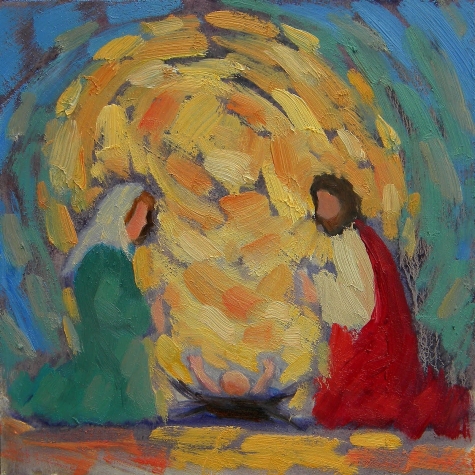
“For me, Christmas is at it’s realest when we light our candles as we sing Silent Night. Some of my earliest memories are standing in a dark sanctuary on Christmas Eve while people around me are singing. In mere minutes the darkness is replaced by a brilliant light, made remarkable by the God who took on our flesh to dwell among us, to be God with us.

Jesus is the light of the world who shines in the darkness. Whatever that darkness might look like for you, whether it be an uncertain future, fears about your children, frustrating family members, the loss of a loved one, a heavy diagnosis, or the lack of love in your life, Jesus stands in stark contrast as the one who brings the light into our lives.

_the_holy_family__nativity_scene___another_commiss_f6de659b784c8c14ecc1ee8b95fa4fa8

Christmas Eves always mean the most and convey the most when we feel the depth of the darkness. Because new life always starts in the dark. Whether it is a seed in the ground, a baby in the womb, or Jesus in the tomb, new life starts in the dark.

At the end of our service we will turn out all the lights, from the one candle, the Christ candle, we will light all others as we sing Silent Night. As we do so let us open our eyes the different forms of darkness in our lives and give thanks to the light of the world who shines in the darkness.

It will feel like Christmas in the room, when we hear the familiar words that have been sung for centuries exclaiming the great joy of the newborn king.

It will feel like Christmas in the room, when we gather as God’s table to feast on the bread of life and drink from the cup of salvation.

It will feel like Christmas in the room, when we see the light of Christ shining in one another.”

It is my hope and prayer that no matter where you are, or who you’re with, God’s light will shine in your lives. Merry Christmas.

The Gifts of God – Peace

Micah 5.2-5a

But you, O Bethlehem of Ephrathah, who are the one of the little clans of Judah, from you shall come forth for me one who is to rule in Israel, whose origin is from of old, from ancient days. Therefore he shall give them up until the time when she who is in labor has brought forth; then the rest of his kindred shall return to the people of Israel. And he shall stand and feed his flock in the strength of the Lord, in the majesty of the name of the Lord his God. And they shall live secure, for now he shall be great to the ends of the earth; and he shall be the one of peace.


IMG_8605-5843

The children looked perfect in their Christmas pageant costumes. One by one they entered the chancel area in preparation for proclaiming their individual lines. The shepherds came first, watching over their sheep. Then the animals of the manger came forth, including a cow, a bird, and a mouse. They all made it to their spots and sat perfectly still as a donkey, Mary, and Joseph walked up to the microphone and exclaimed that a baby would soon be born, but they would need to find a place to stay.

Then the angelic cherubs boldly walked down the center aisle in the dark each holding an electric candle. The lead angel walked up to the microphone and frightening declared: “Do not be afraid! I bring joy to everyone!” The wise men and a camel followed the star to the manger where they presented the baby Jesus with their gifts of gold, frankincense, and myrrh.

I had the best vantage point of the entire production from up here in the pulpit. I could see all of the children with their costumes and I could also look out at the faces of all the parents, families, and friends that had gathered for this spectacular performance. I was honestly beaming while I stood up here on Tuesday evening because the kids had all done such a great job, they all nailed their lines, and were standing perfectly still in their spots.

Except for one of our shepherds.

Throughout the weeks of practice we had purposely withheld the shepherd staffs from the children knowing full and well that they would play with them too much. And during the actual performance most of them were being wonderful, but one of the shepherds could not overcome the desire to do something.

At first he just twirled the staff around in his hands like trying to start a fire on the carpet. Later, he swung it from side to side like a microphone at a rock and roll concert. I tried my best to whisper powerfully for him to stop, and though he would for a moment or two, he would then start up with something new.

As we were nearing the end of the performance, nearly all of the characters and animals from the manger scene were in place; the little shepherd grabbed his staff and started lifting it into the air. I, of course, immediately thought of Moses lifting up his staff in the wilderness to strike the rock for water. I, of course, immediately thought of how theological our young shepherd was being as he lifted the staff into the air, but then I realized he was about to bash somebody on the top of the head!

Breaking character from the pulpit, I quickly reached down and stopped the staff in mid arch. My eyes went down the shaft of the staff to the little hand, to the arm, to the face of the young shepherd, and instead of seeing a repentant and apologetic look; he had the biggest and proudest grin on his face.

IMG_0610

We lean toward violence. From Preschoolers picking up shepherd staffs, to fights in high school, to international and political disagreements, we lean toward violence. There is a power that comes with violence and demonstrates our importance and opinion. Violence has been at the forefront of some of the most important historical moments in the entirety of human existence and still captivates our attention. The movies that make the most money, the stories that garner the most attention, the moments we can’t tear our eyes away from usually contain violence.

As I have found myself saying too often from this pulpit: just turn on the TV or get online and you will be immediately bombarded with the violence in the world and the local community. Even this season of Advent and preparation for the holidays tends to bring out the worst in us. We have short tempers with the people ahead of us in line while we are buying gifts. We mutter inappropriate comments about drivers that are just driving too slowly. And we secretly expect to receive as many good gifts as we give.

Our lives and the world are filled with aggression, anger, and violence.

Yet, the prophet tells us about the one who will come with peace.

Micah spoke during a time of considerable unrest. The situation was grim with corrupt political leaders. There were fearful enemies on the horizon. Internal disputes were pinning people against one another. (Sound familiar?) And while the people saw no hope, Micah saw the promise of peace. Micah looked beyond the present circumstances, he looked beyond the news headlines and the talking heads, he looked beyond the broken and tarnished community to what God was promising to do.

From the little town of Bethlehem will come one who will rule the world. From a back road town of insignificance will come the one who will lead his flock in the way that leads to life and peace.

Many of us have a hard time imaging that an impressive hero can come from such a small town and such a fragile beginning. We, instead, look to politicians and presidents, magistrates and ministers, to fix all of our problems. But from the words of scripture this morning, Micah is jumping up and down and waving his arms to move us in an entirely different direction. He is pointing not at the towering leaders of the world on CNN. He is not drawing us to the political buildings in Washington DC. Instead he is pushing us to a small, out of the way, little place called Bethlehem.

55f81b353eaa23507d83b12e70adb998

Jesus is the one of peace, the one who comes as a light in the darkness, the one who will stand and lead like a shepherd. Jesus came from humble beginnings and changed the world.

One of the things that the bible loves to show us is that true power and peace often comes from unexpected people in unexpected places. Many of us have heard the Christmas story so many times that we are desensitized to the insignificance of Bethlehem in the most significant story ever told.

Yet, important babies that change the world can be born just about anywhere. Bethlehem is proof of that. Every baby has the potential to help remind us of the way that leads to peace. Jesus is proof of that.

This week, our little neck of the woods made national news. A local geography teacher landed in the hot seat for an assignment where her students were required to copy a text in Arabic from the Quran. The purpose was to demonstrate the beauty and power of calligraphy and, in a sense, teach students to appreciate people who have differing beliefs and opinions. However, when a particular parent found out that the text in Arabic said, “There is no god but Allah. Muhammad is the messenger of Allah” everything came to a head.

In the days that followed, a community meeting was held at a local church for concerned parents who were outraged by the assignment. Augusta County rightly started to step up security measures in order to maintain the peace, but the longer the situation percolated the more frightening it became. On Thursday morning there were armed guards at Riverheads elementary school. And on Thursday afternoon, every student in Augusta County was ordered to leave their respective school and the buildings were to go on lockdown. Lastly, Friday’s classes were completely canceled.

Augusta County received so many threats by phone and mail that they believed they could not guarantee the safety of their students and decided to cancel an entire day of school.

There are so many facets to the story that we don’t have enough time to address all of them, but suffice it to say, it is sad. It is a sad that a teacher did not take the time to re-evaluate what text she was having the students copy. It is sad that an entire community responded immediately out of fear and hatred. It is sad that such a tremendous amount of people were filled with rage to the point that Augusta County had to cancel school. It is sad.

While Fox News picked up the story for the nation to learn about what was going on here, I felt God’s Word calling me to listen to the Bethlehem-like voices. Instead of reading news article after news article from talking heads, I went to the local youth of our community and listened.

This is what one of them said: “Religion is not the problem. Religion does not breed terrorism. Ignorance breeds terrorism. Lack of education breeds terrorism. Failure to see the world around you breeds terrorism. Incompetence breeds terrorism. The inability to accept one’s wrongs breeds terrorism. The inability to connect and empathize and understand your fellow human beings is what breeds terrorism.”

I don’t know how to fix or change what happened in Augusta County this week, but if we continue to treat everyone who is different from us with nothing but suspicion and fear, then we have lost our connection to the one who comes in peace. If we make the self-righteous assumption that everyone should look like us, think like us, and talk likes us, then we have stopped following Jesus.

For too long we have lived with a culture that teaches us to defeat our enemies so that only our friends will be left. But that’s not what Jesus calls us to do! Jesus, the one born in a manger in Bethlehem, Jesus the one who shall be our peace, Jesus the one who we worship on Christmas Eve and every Sunday of our lives, tells us to love our enemies! Jesus calls us to pray for those who persecute us. Jesus tells us to live our lives in the way that leads to peace.

God’s peace in Christ is a gift; a gift with strings attached. God gives us peace, but we are to be instruments of God’s peace on earth. We know that peace is not easy. It requires a willingness to sacrifice and be vulnerable with people who differ from us. Peace is uncomfortable. Peace is strange. Peace is difficult because it is so contrary to the ways of the world.

Peace is hard, but so is following Jesus. Amen.

The Gifts of God – Hope

Isaiah 12.2-6

Surely God is my salvation; I will trust, and will not be afraid, for the Lord God is my strength and my might; he has become my salvation. With joy you will draw water from the wells of salvation. And you will say in that day: Give thanks to the Lord, call on his name; make known his deeds among the nations; proclaim that his name is exalted. Sing praises to the Lord, for he has done gloriously; let this be known in all the earth. Shout aloud and sing for joy, O royal Zion, for great in your midst is the Holy One of Israel.

hope-hero

Over the last few weeks we have been going through a sermon series on The Gifts of God. This has been particularly fitting considering the fact that Advent is usually a time when we fret about what we will be purchasing for everyone else. However, this Advent, we have been reflecting on what God has given us. Today we continue the sermon series with God’s gift of Hope.

When I was a kid, even when I was as young as some of our preschoolers, I loved Star Wars. We had the old VHS versions of “A New Hope” “The Empire Strikes Back” and “Return of the Jedi.” The covers were so worn from use that you could barely read the writing, and the film inside the VHS tapes was starting to crackle from excessive usage. But I loved them nonetheless.

Some of the themes were lost on me as a child but I loved the light saber fights, the fundamental battle of Good vs. Evil (The Darkside vs. The Light), and that a kid from a Tatooine moisture farm could go from bulls-eyeing womp rats in T-16 to saving the entire galaxy.

Star Wars taught me that, with the right cause, even the weak could triumph. Star Wars taught me that we are not defined by our past and are given opportunities to change. And Star Wars taught me about hope.

In the beginning of Episode IV, aptly titled “A New Hope”, the galaxy is in disarray and the evil Empire continues to exert its power over the powerless. For a generation, people of all shapes and sizes cowered under the rule of the emperor and started to forget the way things used to be. However, a group of people held onto the hope of a new future, they called themselves The Rebel Alliance, and they believed that things could change.

Isaiah 12 is about hope for the future. Like the rebels from the Star Wars universe, Isaiah fundamentally believed that a day would come when everything would be turned upside down and salvation would be delivered.

With confidence, Isaiah declared a profound trust in the Lord, a trust without fear. With hope, Isaiah envisioned that future day when all of God’s people would give thanks to the Lord and make God’s deeds known among the nations. With joy, Isaiah could hear the songs of the future praising the mighty works of the Lord, for he would have done gloriously.

And on that day, God’s people will draw water from the wells of salvation.

IMG_4568

The man felt empty; like something was missing from his life. He had parents who loved him, he had gone to the right school, he had a good job, but things didn’t feel right. Whenever the holiday seasons came around he did not have the energy the call his parents, he resented the happy families at department stores purchasing gifts, and he abstained from the holiday radio channels.

He couldn’t explain it but one day he lost his patience with his family when they kept asking him about whether or not he was happy. One day at work he screamed at a customer after losing his patience. And one night, while he sat in his apartment, he realized how empty and lonely he felt.

He continued like this for some time. Living a dry and empty life, until he met her. She was everything he could have hoped for; smart, pretty, funny. They immediately hit it off, and in her he believed he found the solution for his emptiness, in her he thought he found the one thing that could fill him again.

The beginning of their marriage was wonderful; they saw the world with hope and expectation. They both were not filled, but they had more than they had in a long time. But it started to fade. Arguments with the in-laws, shouting matches in the living room, and nights spent sleeping in other rooms emptied them of the joy and hope they once felt.

They were at a crossroads in their relationship and were unsure of how to move forward. Both of them were too proud to try counseling, and definitely too proud to apologize, so they just continued with the thinly veiled frustration with one another. But then they had an idea: “Maybe if we have a child, it will fix all our problems, it will bring us closer together.”

They had some stability after the first, but when things reverted back to the pre-baby days, they decided to have a second child, and then a third. What they didn’t know, but what many of should know, is that even the perfect child cannot fill the emptiness within us. No child should be expected to make up for our baggage, and no child should be expected to heal our brokenness.

But this habit and rhythm in the family didn’t stop. After the kids, the parents tried to fill themselves with experiences and material possessions. They went on vacations they couldn’t afford, they took out a loan on a house they could never pay back, and every Christmas had to be better (and filled with more gifts) than the last. But all of these things failed to fill the emptiness they felt.

And on that day, God’s people will draw water from the wells of salvation.

IMG_4571

Jesus once met a woman at a well and confronted her emptiness. She had attempted to fill her life with man after man and yet there was something missing. Jesus said to her, “Everyone who drinks of this water will be thirsty again, but those who drink of the water that I give them will never be thirsty. The water that I will give will become in them a spring of water gushing up to eternal life.

Many of us are broken. Actually, the truth is, we are all broken. Most of us just don’t want to admit it. We have good days, but there are times that we feel dry and empty inside. We seek out the wrong objects to validate our lives: a spouse, a career, a child. And none of those things are strong enough to hold our identity together.

Yet, God offers us this living water, water from a well that never runs dry. When we start to see the hope that God has given us, when we rest our identity on the fact that we are first a child of God, when we drop our buckets into God’s well of salvation things starts to change.

God knows our thoughts and minds. God witnesses our brokenness and sinfulness. And God still loves us anyway. God’s love is truly unconditional. God’s love is unmerited. God’s love is filled with hope for our futures.

I’ve only been doing this whole pastor thing for two and a half years, but two and a half years is long enough to know that most of us, if not all of us, are looking for love and validation in all the wrong places. We expect our children to makes our lives better, we expect the presents under the tree to make our lives fuller, and we expect our spouses to fix all of our problems.

Jesus offers us something totally and wonderfully different. Jesus offers us hope from the well of salvation. A hope in a future not defined by our past. A future not limited by the mistakes we make here and now. A future not corrupted by the powers of death.

Jesus offers us hope, a hope unlike any other, a hope that can truly fill us.

An-so-Lord-where-do-it-put-my-hope

When we find our hope in the Lord, we can stand up to the intolerance and injustice in our midst because we know God’s sees the world differently.

When we find our hope in the Lord, the presents under the tree will not leave us looking for the next fix because we will know that the greatest gift we’ve ever received is Jesus.

When we find our hope in the Lord, we can confront the brokenness in the world and know that life here on earth is not the end.

Isaiah had hope, hope for a day when God would show up, hope for a time when God would make all things new. Isaiah prayed for a future where people would sing praises for the glorious power of the Lord. Isaiah dreamed about a day when God would offer the wells of salvation to the world.

That hope became real on the first Christmas, and that hope is still real and available to you and to me.

Jesus calls to each of us today and says, “I can fill you. I can fill you with the living water that never runs dry. I can bring you to the well of salvation. I can fill you with hope, and love, and validation. I can fill you with joy, and peace, and purpose. I can fill you and turn your life around.

Amen.


(With thanks to the Tamed Cynic, Jason Micheli, for inspiring parts of this sermon)