God Helps Those Who Help Themselves

Psalm 121

I lift up my eyes to the hills – from where will my help come? My help comes from the Lord who made heaven and earth. He will not let your foot be moved; he who keeps you will not slumber. He who keeps Israel will neither slumber nor sleep. The Lord is your keeper; the Lord is your shade at your right hand. The sun shall not strike you by day, nor the moon by night. The Lord will keep you from all evil; he will keep your life. The Lord will keep your going out and your coming in from this time on and forevermore.

A guy was walking down a street when all of the sudden he fell into a deep hole. The walls were so steep that he couldn’t climb out and he began crying out for help. A doctor was passing by and looked down into the pit when the man yelled up, “Hey! Can you help me out?” The doctor thought about it for a moment, wrote a prescription, threw it down into the hole and kept walking.

Then a preacher came walking along and the guy shouted up, “Reverend, I’m stuck down here in this hole, can you help me up?” The pastor slowly put his hands together, said a prayer for the man, and kept walking.

Next, a sweet older woman from the local church came up and the man yelled, “Please help me. I’m stuck down here and I can’t get out.” The woman stared right into the man’s eyes and said, “Don’t you know that God helps those who help themselves?” And with that she went on her way.

Finally, a friend walked up and the man shouted, “Hey! It’s me down here! Can you help me out?” And the friend jumped right into the hole. The first guy said, “Are you stupid? Now we’re both stuck down here!” The friend said, “Yeah, but I’ve been down here before and I know the way out.”

A relatively recent poll found that better than eight in ten Americans think, “God helps those who help themselves” is in the Bible. In fact, more than half the people who responded to the poll were strongly convinced that it is one of the major messages of scripture.

Quote Typographical Background - vector design

Guess what? It’s not in the bible!

Do you know where it actually comes from? There are hints of the phrase in ancient Greek mythology, but it became popularized by Benjamin Franklin in Poor Richard’s Almanac published in 1736.

And yet, a majority of people in this country believe it is a major aspect of Christianity straight from the lips of Jesus.

Of course, there is some, very small, truth to the statement. After all, if we sit around our dinner tables praying for God to miraculously provide us with food, we’re going to be disappointed. We can eat because God has blessed creation with abundance and through things like employment we can afford to provide food for our tables. God helps us because we work to help ourselves.

Likewise, focusing in school, listening to our spouses, nurturing our children, these things result in our lives being better because we have worked for them to be better.

But that pales in comparison to how “God helps those who help themselves” has been used by Christians to avoid our obligation to help others.

Like the woman walking passed the man in the hole, it blinds us from our responsibility toward others and frees us from feeling guilty for how broken the world is outside of our respective bubbles.

The truth is: some people cannot help themselves. Societal discrimination, generational poverty, institutional racism, and a host of other problems prevent people from helping themselves. Some people, in fact many people, are in holes so deep, with walls so steep, that they can’t climb out without help.

About a year ago, some of the pastors in Staunton got together to talk about ways we could minister to the homeless population in our community. We asked ourselves how our respective churches could work together to help the people that cannot help themselves.

At first we debated the pros and cons of establishing something like a computer lab to help individuals apply for jobs. The thought being that if they found work, they could have an income, and no longer be homeless. We discussed offering weekly classes in reading, mathematics, and financial management at the Valley Mission to teach important skills necessary for breaking free from the cycle of homelessness. But in the end, only after we finally connected with homeless community members in Staunton, we discovered what they really needed were showers and a place to do their laundry.

What we failed to realize was that all the best training and teaching would be meaningless if the individuals arrived to a job interview wearing the same clothes they had been sleeping in for months.

We, the pastors, had walked passed the hole many times and decided how to fix the problem from our vantage point, rather than jumping into the hole in the first place.

The Church, and I mean big “C” Church, cannot shrug off the responsibility to help others with the use of another trite and cliché sentence because God, over and over again, commands his people to take special care of the poor, the widow, the orphan, and the needy.

A cursory scan through the prominent stories of the Old and New testaments leads us to the biblical truth that God helps those who cannot help themselves.

maxresdefault-1

In Leviticus, God commands the farmers to not harvest all the way to the edge of the fields. Certain amounts of the produce were supposed to be left for the poor and the immigrant. Instead of consuming it themselves, or selling it for a profit, a portion was to be left for those who were not able to make ends meet or for the strangers in the land.

In another part of the Old Testament, God says that compassion for others is itself a form of worship. There are times when the priest and the religious leaders heaped up sacrifice after sacrifice, they had the perfect worship services with all the right prayers and all the right songs, and God tells them their worship has become lifeless.

            What difference does it make if we show up at a place like this for an hour a week if we ignore the people God tells us to care about the rest of the week?

In the New Testament, Jesus is forever going from town to town and seeks out the last, the least, and the lost. And when he finds them, the sick and the needy, does he say, “God will help you if you help yourself?” When the crowds gathered to hear Jesus speak, did he command the disciples to tell the hungry 5,000 that God will give them food if they go collect it for themselves?

No. Jesus helps them. He connects with their brokenness and brings healing. He sends the abandoned back to the villages that disowned them, he feeds the hungry out of the abundant grace of God, and he helps people precisely because they cannot help themselves.

Have you ever felt like you’ve been the one down in the pit? Have you ever encountered a moment in your life that felt so suffocating and oppressive that you knew you couldn’t get out of it on your own? Have you lost a job, or a spouse, or a child? Have you received a frightening medical diagnosis, or a horrible tip for the stock market, or a habit that you couldn’t kick?

We can claw all we want, we can plead on our knees with our hands clasped in the air, but sometimes the only way out of the pit is if someone jumps in to help us find the way out.

From where will out help come? We lift our eyes to the edge of the pit and we see that our help comes from the Lord. The Lord who sends us a friend willing to jump down into the depths of our despair, the Lord who never abandons us even when we feel alone, the Lord who was willing to jump down into the pit of humanity and be born into this fractured world of ours.

That, my friends, is the whole point. We help others who cannot help themselves because God helps us when we cannot help ourselves. God came into the world as a baby in the deep pit of fear and suffering of a couple all alone in the world. God went to the margins of society in Jesus Christ to sink low into the stink of the world and offer hope. God went to the broken families and the battered spouses and the abandoned children and showed the way out. God went to the very depth of death just so that all of us could find the way to salvation.

Tomorrow, some of us who work will not have to because of Martin Luther King Jr. Day. It is a day set apart to remember the man who led this country through a particularly horrible period of racial injustice. His life, his teachings, his marches, and his protests all bear witness to his willingness to jump into the pit of his people’s suffering, in order to find a way out.

A father was with his four year old daughter last Christmas, and it was the first time she ever asked what the holiday meant. He explained that Christmas is all about the birth of Jesus, and the more they talked the more she wanted to know about Jesus so he bought a kid’s bible and read to her every night. She loved it.

They read the stories of his birth and his teachings, and the daughter would ask her father to explain some of the sayings from Jesus, like “Do unto others as you would have them do unto you.” And they would talk about how Jesus teaches us to treat people the way we want to be treated. They read and they read and at some point the daughter said, “Dad, I really like this Jesus.”

Right after Christmas they were driving around town and they passed by a Catholic Church with an enormous crucifix out on the front lawn. The giant cross was impossible to miss, as was the figure that was nailed to it. The daughter quickly pointed out the window and said, “Dad! Who’s that?”

He realized in that moment that he never told her the end of the story. So he began explaining how it was Jesus, and how he ran afoul of the Roman government because his message was so radical and unnerving that they thought the only way to stop his message was to kill him, and they did.

The daughter was silent.

A few weeks later, after going through the whole story of what Christmas meant, the Preschool his daughter attended had the day off in celebration of Martin Luther King Jr. The father decided to take the day off as well and treat his daughter to a day of play and they went out to lunch together. And while they were sitting at the table for lunch, they saw the local newspaper’s front-page story with a picture of Martin Luther King Jr. on it. The daughter pointed at the picture and said, “Dad! Who’s that?”

“Well,” he began, “that’s Martin Luther King Jr. and he’s the reason you’re not in school today. We’re celebrating his life. He was a preacher.”

And she said, “for Jesus?!”

The father said, “Yeah, for Jesus. But there was another thing he was famous for; he had his own message and said you should treat everyone the same no matter what they look like.”

She thought about it for a minute and said, “Dad, that sounds a lot like do unto others as you would have them do unto you.”

The dad said, “Yeah, I never thought about it like that but it’s just like what Jesus said.”

The young girl was silent again for a brief moment, and they she looked up at her dad and said, “Did they kill him too?”

If we are serious about following Jesus, it’s going to cost us. It might cause embarrassment, or ridicule, or shame. It might cost us money, or time, or status. But jumping into the pit comes with a cost. Thanks be to God.


dumb-things-christians-say-sermon-series-idea

Do Not Listen To Preachers (Including Me)

Jeremiah 23.23-29

Am I a God near by, says the Lord, and not a God far off? Who can hide in secret places so that I cannot see them? Says the Lord. Do I not fill heaven and earth? Says the Lord. I have heard what the prophets have said who prophesy in my name, saying, “I have dreamed, I have dreamed!” How long? Will the hearts of the prophets ever turn back – those who prophesy lies, and who prophesy the deceit of their own heart? They plan to make my people forget my name by their dreams that they tell one another, just as their ancestors forgot my name for Baal. Let the prophet who has a dream tell the dream, but let the one who has my word speak my word faithfully. What has straw in common with wheat? Says the Lord. Is not my word like fire, says the Lord, and like a hammer that breaks a rock in pieces?

Pastor Holding Bible ca. 2000


A young preacher stands in the pulpit after a long week of parish ministry. The visits have all been made. A new budget for the coming year is finished and ready for approval. Plans for the Community Cook-Out came to fruition as people from all over the community gathered together.

The young preacher stands in the pulpit and looks out at the congregation. He sees couples that he has counseled; children that he has baptized; families that are struggling; individuals whose husbands or wives he has buried; and he even sees people he has never seen before. He looks over the bulletin one last time just to make sure that everything is listed the way it is supposed to be, and then he begins by saying, “This morning the sermon will be short and sweet”

“Hallelujah!” Someone shouts out from a pew.

“Is that for the short, or for the sweet?” says the preacher.

The congregation laughs.

The preacher sighs.

The art of preaching is a strange thing, but an even stranger thing when we consider that what we want from a sermon is something short and sweet. Some of you have been quick to say that you want a sermon that leaves you feeling good on your way out from the sanctuary. Others have said that you want a sermon that gives you something to think about during the week, or one that helps to remind you that God is love, or that Jesus wants the world to be a better place, etc.

I would classify myself as a short and sweet preacher. I fundamentally believe that if you cannot say what you’re trying to say in 15 minutes then you’re never going to say it. Additionally, I love pleasing all of you. I live for those moments in the receiving line following worship when some of you offer praise for what you heard through the sermon. I know I’m supposed to be humble, but it feels pretty good to be congratulated and praised for preaching.

In the last few years we’ve had an abundance of sweet sermons; times when I wanted all of you to leave with just one thought: “God loves you.” I’ve done my best to make you laugh and smile when thinking about the abundant glory of God’s grace. I’ve tried to cheer you up during times of domestic and international strife. I’ve worked to make this place as appealing as possible for as many people as possible.

And that is why you should not listen to preachers, including me.

“Am I close to you?” says the Lord. “Or am I far away? Who thinks they can hide in secret places so I cannot see them? I am the Lord! Do I not fill up heaven and earth? I have heard what those prophets have said who prophesy in my name saying ‘I have dreamed, I have dreamed! How long will they continue like this?”

The prophet Jeremiah lived during a time filled with false prophets, people who would ascend to places like this in front of a gathered people and make claims on behalf of the Lord. They would spout off about their visions of what the Lord was doing, and the more they said, the further they moved away from God.

God warns us against listening to false prophets, about succumbing to their visions, and about what happens when we trust them more than the Word.

False-Prophets-Media-Header-960x350

It would be easy today to make this whole sermon about the false prophets of our contemporary experience. We’ve got plenty of false prophets who use their skill to sell us on what they believe the future should hold. In fact this whole sermon could just be a warning against listening to the likes of Donald Trump and Hillary Clinton.

What kind of dreams are they selling?

“I have dreamed of a future where everyone can, and should go to college for free. Where healthcare will be free for everyone. We need to remember what made us great and start taking from the wealthy and giving it to the poor. It’s not about progress; it’s about fairness. We need to make America fair again.”

“I have dreamed of a wall unlike any other wall. This wall will fix all of our problems. It will bring wealth back to our country. We need to bomb the Middle East into oblivion to assert ourselves as the top of the world. We need to make America great again.”

Politicians have always been false prophets making promises that cannot be kept; selling a vision of the future that rarely comes to fruition. And we know this is true. That’s why we’ve grown so jaded by our political seasons and apathetic about whatever will happen.

But there are more false prophets out there than just politicians, and one of them is talking to you right now.

Through the prophet Jeremiah, God warns us against listening to people like me, people who march up to the front of the gathered church and strive to proclaim God’s faithful word. For whenever we hear a preacher go on and on about the beauty and majesty of God’s Word, whenever the Lord is watered down to a spirit of love, whenever we hear more about the preacher’s dreams than God’s will, we need to be reminded that the Word of the Lord is like fire, and like a hammer that breaks a rock into pieces.

Since we’ve been together in this strange thing called church, I’ve preached over 150 sermons. I’ve preached from Genesis to Revelation. I’ve mentioned the patriarchs and the prophets. I’ve proclaimed the possibilities of the psalms. I’ve proudly preached on the power of parables. I’ve done different series on “Why We Do What We Do” and “The Basics” and “New Beginnings” and “Strange Stories from Scripture.” I’ve even dressed up and preached not one, but TWO sermons from the perspective of a donkey.

And for what?

Has the preaching in this place challenged you to be a better disciple? And maybe not just from me, but have you ever left this church really feeling convicted by what you heard and wanted to live differently? Or has your experience been like most, and you leave feeling pretty good on Sunday afternoon?

We preachers are tempted by the practices of false prophecy. We like to be liked. We want to fill pews with people to boost our egos. We need to hear praise from lay people on their way out the door. We yearn for success. We, after years of sermon preparation and proclamation, fall prey to hearing our own voice so deeply that we no longer hear others, nor do we hear the Lord.

For the last three years I’ve had a dream about the future of this church. I have dreamed of Sunday mornings where so many people fill the pews of this sanctuary that I cannot know everyone’s names. I have imagined crowds gathered around the baptismal font in anticipation of bringing a new person into the life of our church. I have pictured people having to park on the front lawn because there are not enough spaces left in our parking lot.

IMG_1691

And because I had this dream, I preached and worked toward things like our Community Cook-Out. I implored our Church Council to use enough money to give away the food and the games and the fellowship all for free. I sent out hundreds and hundreds of post-cards to all of our neighbors so that they might join us on the front lawn.

I have dreamed, and I want the dream to become real. So I work week after week on ideas and programs and sermons that will draw people into this sanctuary on Sunday mornings until that dream becomes reality.

A couple weeks ago I was standing in our narthex right before our opening hymn. Most of you were sitting in the pews; our liturgist had gone through the pertinent announcements and necessary welcome. Rick was playing something melodic on the organ as we prepared our hearts and minds for worship when I stepped onto the carpet with our acolyte.

Without thinking much about it, I started to count the back of all your heads. I started with the front left and made my way toward the back, then my eyes moved to the front right and all the way toward the back. My lips must have been moving because our acolyte looked at me and said, “What are you doing?”

“I’m counting…” I said while trying to not lose track of the number.

And then he asked, “Why?”

Why?

In his question, in the simple raise of an eyebrow at my action, my heart caught on fire, it burned like a blaze, and I felt it crumble into ashes.

For how long have I deceived my own heart? For how long have I been so consumed by the number of people in our pews that I have forgotten the call to share the Good News? For how long have I proclaimed a God of love who is so loving that he does not expect us to live changed and transformed lives? For how long have all of us listened to false prophets who preached their own dream instead of speaking the Word of the Lord faithfully?

In his question I heard the Lord convict my heart because I have been caught up in church growth not for the sake of the kingdom, but for my own affirmation. I have wanted the front lawn to be packed with people from the community not for the sake of the kingdom, but for the pews to be filled in worship. I have preached sermons to make us feel better not for the sake of the kingdom, but for all of you to come back the next Sunday.

Sermons are a good and strange thing. After all they are the means by which the Word of the Lord is interpreted for our lives on a weekly basis. But they cannot be blindly accepted without challenge. For to only ever hear about God’s grace does a disservice to the Lord who is always calling us to live more like Christ. And, on the other hand, to only ever hear about how sinful we are neglects to reveal the light of Christ that shines in the darkness.

God cares more about spreading the Good News than about filling up the pews.

And sometimes that Good News is that we need to be better than we were when we arrived, that we are called to a life of discipleship that pins us against the world, that the Lord expects great things from us. The Good News is that God has not abandoned us to our sinful desires and devices, that God believes we can be better even if we don’t, and that we can transform the world but we first must transform ourselves.

We need good preachers, men and women who are willing to lay down their egos at the altar and faithfully proclaim God’s Word. And we need good lay people who are willing to crucify their fears and speak the truth in love toward the preachers who have fallen into the trap of false prophecy.

So, may the Word of the Lord be like a hammer that breaks our lives into pieces! Let it shatter our false identities and insecurities, let it break down all our preconceived notions and assumptions, and let it burn and blaze forever and ever. Amen.

Let’s Talk About Heaven

Revelation 7.9-17

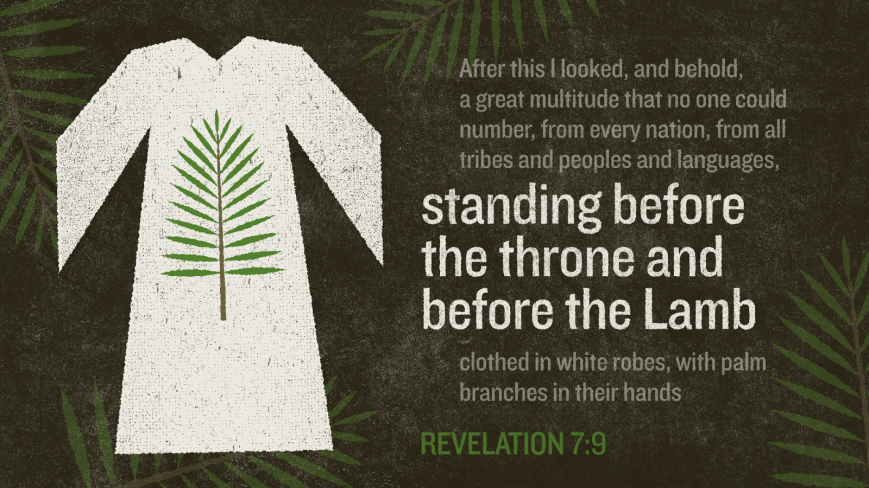
After this I looked, and there was a great multitude that no one could count, from every nation, from all tribes and peoples and languages, standing before the throne and before the Lamb, robed in white, with palm branches in their hands. They cried out in a loud voice, saying, “Salvation belongs to our God who is seated on the throne, and to the Lamb!” And all the angels stood around the throne and around the elders and the four living creatures, and they fell on their faces before the throne and worshiped God, singing, “Amen! Blessing and glory and wisdom and thanksgiving and honor and power and might be to our God forever and ever! Amen.” Then one of the elders addressed me, saying, “Who are these, robed in white, and where have they come from?” I said to him, “Sir, you are the one that knows.” Then he said to me, “These are they who have come out of the great ordeal; they have washed their robes and made them white in the blood of the Lamb. For this reason they are before the throne of God, and worship him day and night within his temple, and the one who is seated on the throne will shelter them. They will hunger no more, and thirst no more; the sun will not strike them, nor any scorching heat; for the Lamb at the center of the throne will be their shepherd, and he will guide them to springs of the water of life, and God will wipe away every tear from their eyes.”
agnus-dei-window-1024x768

The couple had recently celebrated their 60th wedding anniversary when they tragically died in a car crash. They were in relatively good health at the time, mainly due to the wife’s dedication to their diet and forcing them to both get exercise, but when the crash occurred they were immediately brought before St. Peter and the pearly gates.

After a quick check-in, much like the first minutes at a tropical resort, St. Peter volunteered to give them a tore of their heavenly abode. The mansion they would be calling home for eternity was filled with more rooms than they could count with a beautiful kitchen, swimming pool, and movie theater in the basement. As the wife squealed in delight with every passing accommodation, the husband grew skeptical and finally leaned over to Peter and asked, “So how much is this going to cost?”

Peter, flabbergasted, replied, “It’s free, this is Heaven.”

Later, they toured the endless golf course that started in their backyard. With perfect rolling hills that they could only have imagined on earth, they took in the beauty that was available whenever they wanted. The old man, again, asked Peter, “So what are the green fees?

Peter replied, “This is Heaven and you play for free.”

Finally Peter brought the couple to the clubhouse that was filled with people from their lives that they had loved and lost. The joyful reunions went on for some time until Peter motioned for the couple to go through the lavish buffet that had been prepared. The old man, still skeptical, quietly asked Peter how much the food would cost.

Peter, now growing frustrated, said, “Don’t you understand yet? This is Heaven, it’s all free!

The old man stood still and then asked, “Well where are the fat free and low cholesterol tables?”

Peter then began to lecture, “That’s the best part. You can eat as much as you like of whatever you like, and you never get fat or sick. This is Heaven!

Immediately the old man went off with a fit of anger, throwing down his hat and stomping out of the clubhouse.

Peter and the wife both tried to calm down the old man and asked what was wrong. The old man looked at his wife and said, “This is all your fault! If it wasn’t for your diet and exercise, I could have been here ten years ago!

What’s heaven like? I get asked this question on a pretty regular basis. I might be in my office with a grieving family who just lost someone they loved and someone will ask what the person is now “doing” in heaven. Or I’ll be here in the sanctuary teaching a lesson to the preschoolers when the subject of heaven comes up and one of them will say something like: My mommy told me that heaven is full of your favorite candy, and you can have as much of it as you want!

What’s heaven like? There are a decent number of times when scripture is descriptive about the beyond, but it is a far stretch from the jokes and movies many of have experienced on the subject. John caught a glimpse of the heavenly glory of God’s presence in a vision and described it like the grandest worship service to have ever occurred. Countless beings that have made it through the great tribulation surround the throne of the Lord where the Lamb is in the center. They sing with full voices and praise the Lord unceasingly for his majesty is beyond comprehension.

Rev 7v9

The problem with talking about heaven is that whatever we say, it is speculative at best. We can point to scripture where it is described, but the descriptions are made in such a way that heaven is beyond our comprehension. The whole point of heaven after all, is that it is totally other from earthly life. It is beyond life. It is glory and wisdom and thanksgiving and honor and power and might in a way that is impossible for us to understand during our earthly lives.

And even though we can only hint at what heaven might be like, it has become the pinnacle concern for many churches and Christians. What do I have to do to make it to heaven? Or what do we have to do in order to get other people to heaven? These questions dominate our thoughts and we grow anxious about whether or not we, and the people we love, will go on to our heavenly reward.

When talking about heaven, there is a strong temptation to make it so appealing with comparisons to earthly beauty that we neglect to think about the fact that we are called to exist here on earth until our deaths. But this text, this worshipful understanding of heaven, lets us know that God never promised we would not suffer. In fact the opposite is true. Suffering has always been part of our story, and even we here in the blessed region of Western civilization are not immune.

Only in death can we receive the gift of resurrection. It was only through Christ’s crucifixion that he could one day be raised again. The same holds true for us. Only when the bell tolls for us will we share in Christ’s victory over death.

And yet we still talk about it all the time. It is good and right for us to celebrate Christ’s resurrection, but when daydreams about our everlasting reward later prevent us from serving the needs of others right now it becomes cheap grace.

In many churches, like the ones most concerned about whether others are going to heaven or hell after they die seem less concerned with the hells on earth right now. Here in scripture John is confronted with the suffering of the great multitude before they arrive at the throne. They are granted a peace they did not have on earth: they will not hunger, nor thirst, the sun will not strike them, nor any scorching heat because the Lamb of God has shepherded them to the springs of life where God wipes away all tears. But before we can rejoice with the Lord in his divine kingdom, we will endure tribulations in our earthly lives.

Imagining that our lives will be free from suffering is what often leads people to leave the church when something goes wrong. I know too many people my age who were forbidden from attending funerals as children, and then when they finally attended a funeral for the first time when they were older they fell away from the church. I also know too many people who lived such perfect and sheltered lives that when they encountered true poverty for the first time they were overwhelmed by the brokenness of the world and have been unable to return to church.

The church is supposed to be the alternative to this overly rosy view of the world. We have the church to help us remember exactly what God has promised, and what God has not. The church is the place where we confront the hardships of life and rely on the people in the pews next to us to help us through the great tribulations we experience. We are not here to prance around pretending that we have perfect lives without suffering, but instead to proclaim that in trusting the Lord we will find the strength and courage to sustain us until that time when we will join Jesus in the victory over death.

The church is the means by which we combat the hells we experience on earth by attempting to give people hope and faith in something greater than earthly life can offer.

bigstock-Cross-against-the-sky-24690071-panorama

In this church, at St. John’s, we strive to help guide and nurture one another through a variety of means. We have bible studies for the young and the old to help us wrestle with how scripture can speak into our everyday experiences. We collect food and clothing and money for others who are desperately in need. We send people on mission trips to build and plant new foundations and relationships for people who really feel like they are living in hell right now.

But we also have a woman here in the church who has made it her calling to help nurture people in the midst of suffering in the best way she knows how. I believe that Dianne Wright is keeping Hallmark in business through the countless cards she sends out to the community. If you’ve been coming to this church for any regular period of time, and have had so much as a cold, you’ve probably received a card from Dianne Wright. They are always thoughtful, they are always written with purposeful words, and they are always filled with love.

I have the added benefit of not just receiving cards when I need them, but I visit enough of you and our shut-ins to know how prized these letters have become. I was visiting someone at King’s Daughters recently when I saw the familiar script sticking out of the cards adorned in a row on the window sill. The woman I visited described them as the most precious gift she had received since she went in to rehab.

Time and time again I will find myself visiting someone and the subject of Dianne’s cards will come up. They might appear to be a simple and casual gesture, but they speak volumes in the realm of how we are sustained by God’s grace through our neighbor Dianne.

As Christians, we are called to combat the countless hells on earth that plague people through our love and presence. For Dianne Wright, this has meant a ceaseless commitment to communicating through cards the love, depth, and peace of God.

Each of us, in some way shape or form, has gifts that we use to share God’s love with others. Perhaps we have the freedom to visit with people who can no longer visit us. Maybe we, like Dianne, have a penchant for penning letters. Perhaps we have been blessed with lucrative careers that allow us to give charitably to help others. Maybe God has molded us with a spirit of prayer and we can lift up the world through our clasped hands. Perhaps we have become familiar with a particular need in the world and all we need is a little nudge to start serving God by serving others. Maybe we have toyed with the idea of a calling to the ministry and we just need to take a step in faith that God can use us to spread the gospel. Perhaps we have the gift of carpentry like Jesus only we’ve been too nervous to ask someone we know if they need any repairs. Whatever our gift might be, God is calling us to use them to draw people into moments of heaven on earth.

When our time comes God will do with us what God wants. In God’s infinite wisdom and glory we will surround the throne and join in one voice with the saints who came before us, and with the saints who will come after us. We will be washed with the blood of the lamb and God will wipe away every tear from our eyes.

We know not when we will gather with the great multitude, but each day God gives us is a gift. A gift we should celebrate by being a gift for others. Amen.

Why We Do What We Do – Pray

Mark 10.46-52

They came to Jericho. As he and his disciples and a large crowd were leaving Jericho, Bartimaeus son of Timaeus, a blind beggar, was sitting by the roadside. When he heard that it was Jesus of Nazareth, he began to shout out and say, “Jesus, Son of David, have mercy on me!” Many sternly ordered him to be quiet, but he cried out even more loudly, “Son of David, have mercy on me!” Jesus stood still and said, “Call him here.” And they called the blind man, saying to him, “Take heart; get up, he is calling you.” So throwing off his cloak, he sprang up and came to Jesus. Then Jesus said to him, “What do you want me to do for you?” The blind man said to him, “My teacher, let me see again.” Jesus said to him, “Go; your faith has made you well.” Immediately he regained his sight and followed him on the way.

download

The receiving line following worship is vastly underrated. A lot of people make their way out of the sanctuary quickly, whereas others will wait in line just to ask that one question that popped up during the service. It never ceases to amaze me that some of the most profoundly theological and spiritual moments that take place at St. John’s happen in that line after worship on Sunday mornings.

This month’s sermon series “Why We Do What We Do” has its roots in those conversations. Week after week I will hear some of you wonder about the purpose of an acolyte carrying in the flame for worship, or you ask about the value and importance of having a time for offering and collection, or you question why we talk so much about bible study, or you remark about how difficult it is to pray. If you’ve ever left church with a question on your heart and mind, this sermon series is for you.

Today we will explore why we pray.

We’ve all been there before. We’re driving through the parking lot, maybe running a little bit late, and we cannot find a parking spot to save our lives. We search and search, we circle and circle, but nothing opens up and the more we look at the clock the more nervous and frustrated we become.

The man was driving through the grocery store parking lot with a list of items to purchase in his pocket and not a parking spot in sight. To complicate matters, the man’s wife is pregnant at home and he knows that the only thing that will make her happy is a jar of pickles, ice cream, and a bag of Doritos (all on his list). He had rushed out of the house with the hope of returning home with the necessary items as soon as possible, but the lot is full and he’s running out of time.

He decides its time to resort to the guy in the sky. Not the normal praying type, he’s not sure how to start. “Um… God, I’m not sure if you can hear me, but it’s me calling. I need your help. I don’t know how long I’ve been circling this lot, but I need a parking space. Maybe you don’t realize how getting this stuff for my wife will earn me some major brownie points. And I need those brownie points.”

He keeps driving around with no spots opening up, so he decides its time to step up his game: “God, I’ve been a good guy. I give to charity. I listen to others. I try not to swear. Can’t you just help me out this one time?”

Nothing. If the man was desperate before, now he’s starting to panic. He decides it’s time to make a deal. “Okay God, if you give me a parking space I will go to church every Sunday for the rest of my life. I will start tithing money to the church. I’ll even volunteer in the nursery…” When all of the sudden he rounds a corner to see a perfect spot open up just within his reach and decides to finish his prayer: “Forget it God, I found a spot on my own.”

In the story immediately preceding our scripture today James and John (the sons of Zebedee) want something from Jesus. To which Jesus asks, “What do you want me to do for you?” “We want to sit on your right and left in your glory!” They want power and prestige, and they want Jesus to give it to them. And what does Jesus say? “You do not know what you are asking for.”

Why-Pray

Then they came to Jericho. As Jesus and the disciples were walking with a large crowd, Bartimaeus, a blind beggar, was sitting by the roadside. When he heard that it was Jesus of Nazareth walking by, he began to cry out, “Jesus, Son of David, have mercy on me!” However, the crowds were so large that Jesus was unable to hear Bartimaeus, and those closest to the blind man ordered him to be quiet. But Bartimaeus was no ordinary man so he continued to yell out, “Son of David, have mercy on me!” Jesus immediately stood still and called the man forward.

The crowds who have just moments ago ordered the blind man to be quiet now begin to shower him with praise: “Take heart! Get up, he is calling you!” Bartimaeus jumped up from the road and threw off his cloak, his one possession of value, and makes his way to the Lord. Then Jesus asks Bartimaeus the same question he asked the sons of Zebedee: “What do you want me to do for you.” But Bartimaeus’ prayer is completely different from the disciples and we can almost picture him kneeling before Jesus and saying, “My Lord, let me see again.

Why do we pray?

One answer, of course, is that we want God to do something for us. We cry out to God in the midst of suffering for healing, when we are lost we call out for direction, and when we are afraid we ask for peace. We need something from God so we ask for it through prayer.

Another reason to pray is to commune with God. These prayers are not based on receiving something in particular, but setting time apart to listen for the ways that God is speaking in the world. Instead of listing all of our needs and wants, we wait and tune into God’s frequency.

Yet, the majority of prayers come in the form of a need. Sadly, prayer is often our last resort when we can no longer bring order out of the chaos in life and we rely on a higher power to straighten out our mess.

How do we pray?

For centuries faithful disciples have experimented with ways to pray. Silence is always a good place to start. Finding a quiet space and time in our lives and just letting the worries of the world float away. Like Bartimaeus throwing off his cloak, we look for the ways we can rid ourselves of the baggage that clogs our ears and prevents us from listening.

Another form of prayer comes through the reading of small bits of scripture over and over. Like taking one of the psalms and slowly reading the words as our own prayers to God, letting the words of the past make manifest our needs in the present. We dive into the depth of God’s great Word and slowly begin to realize that God is still using scripture to shape us even today.

If all else fails, we can rely on the helpful acronym of PRAY for Prayer.

P – Praise

God, I praise you for all of your marvelous works in the world, and in particular the gift of you Son Jesus Christ.

R – Repent

Lord, I confess that I have not loved you with my whole heart and I have not loved my neighbor as myself. I am truly sorry and I humbly repent.

A – Ask

Father, give me the strength to be a better disciple and patience to accept the things I cannot change.

Y – Yield

God, even with my needs and wants, let your will be done in my life and here on earth. Amen.

pray-first

There are such a great number of ways to pray, that so long as we are doing what we do with intention, it can be a form of prayer. The greater question is not how do we pray, but are we praying for the right things?

On Wednesday night the youth gathered for The Circle. We went through the words of communion and feasted together, we checked in with each other and caught up about the comings and goings of the last week, and then we started to go through a few accountability questions. Someone pulled out the question “Who do I need to be praying for and why?” and the table responded in silence as we began to think about our responses. We listened as each person shared a particular need for someone else and it was obvious that our Adult volunteer was astounded by their maturity, and could not help himself from asking a new question: “Have any of you ever had your prayers answered? I’m not talking about praying for the Redskins to win, or to pass a test but a real and true prayer.”

It was truly a beautiful and holy moment as each of them shared a particular time when God had answered one of their prayers, a true prayer. Not prayers for a sports team, parking space, or academic grade, but for healing, patience, and purpose.

Bartimaeus is a model for discipleship. Instead of waiting for Jesus to just show up in his life, he calls out from the depth of his being for mercy. Instead of assuming that God will give him everything he needs without sacrifice, he quickly throws off the cloak of the past in order to embrace a new future. Instead of expecting a divine healing and a return the normalcy of life, he regains his sight and follows Jesus on the way to Jerusalem.

Bartimaeus calls out to Jesus, he fervently prays for mercy, and the crowds catch a glimpse of God’s grace. This event is a miracle. Miracles are those things that bring people from the darkness into the light, not just for the blind man, but everyone gathered around Jesus. Miracles turn our attention to what really matters in this life.

The true power of the miracle rests with Bartimaeus’ prayer. He calls out to Jesus. He comes to Jesus. He prays his true prayer. He sees Jesus better than the disciples, and he was blind.

What are we praying for?

In each of your bulletins you will find an envelope with a blank piece of paper inside. In a few moments I will be encouraging each of us to take out that paper and write down a true prayer to God. It has been my experience that when I pray out loud I don’t take the necessary time to really contemplate what I am asking for. But if we slow down enough to write down our prayer, it might encourage us to pray like Bartimaeus.

Cash-Envelopes

So we will take time to pray to God in written form, and then we will place the paper in the envelope and seal it. Then I would like each of us to write our name and address on the front and place it in the offering plate later in the service. No one will see this prayer but you and God. But we will mail them back to you in a number of months.

God answers our prayers, sometimes in different ways than we can imagine. My hope is that we will all take the time to earnestly pray to God, and in the months ahead we will begin to have our eyes opened, just like Bartimaeus, to the ways the God is moving in our lives. Amen.

Devotional – Proverbs 22.2

Devotional:

Proverbs 22.2

The rich and the poor have this in common: the Lord is the maker of them all.

Weekly Devotional Image

The way a community responds to a particular event demonstrates where they place their priorities. In the wake of the shooting at Emmanuel AME Church in Charleston, South Carolina, a group of Christians gathered in Staunton to pray and mourn for the lives lost. After a fire that broke out in an apartment complex on the other side of town, the community rallied together and raised money for the families that had been displaced. When a community, regardless of theological differences, can join together in harmony it is a reminder of the power of God’s kingdom here on earth.

However, many of us are often quick to respond to certain events with: “What does it have to do with me?”

I remember hearing a wonderful sermon from a peer of mine about our overwhelmingly insatiability during the holiday season, in sharp contrast with Mary and Joseph making their way toward Bethlehem. Yet, while people were departing from the sanctuary, I listened to numerous Christians making quick comments about all the Christmas presents they had already purchased, or were looking forward to receiving.

Scripture constantly reminds us, and implores us, to look at one another the way God sees us. Yet, more often than not, those of us with stable economic futures look down upon people of lower socio-economic statuses. We do things like avoid the particular streets corners with people begging for money, or we are quick to assume that if they only worked harder, they would be able to pull themselves our of their current situation.

The writer of Proverbs has a good reminder for all of us: “The rich and the poor have this in common: the Lord is the maker of them all.” We, whether we like it or not, are caught up in this great mystery called “life” together. As human beings we are part of God’s great community regardless of socio-economic situations, races, genders, sexual orientations, and any other identifier that we use to divide, rather than celebrate.

nq5fzaff

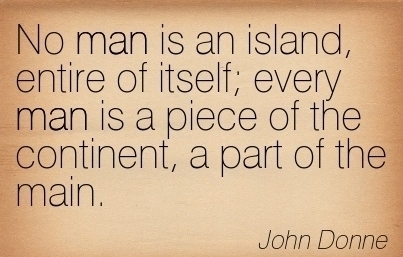
John Donne, the famous English poet, puts it this way: “No person is an island, entire of itself, every person is a piece of the continent, a part of the main… any death diminishes me, because I am part of humankind…”

This week, let us remember that God has created us in God’s image, that we are all connected in the body of Christ, and when something happens in the world, it has everything to do with you and me.

Who Are You? – Sermon on James 1.17-27

James 1.17-27

Every generous act of giving, with every perfect gift, is from above, coming down from the Father of lights, with whom there is no variation or shadow due to change. In fulfillment of his own purpose he gave us birth by the word of truth, so that we would become a kind of first fruits of his creatures. You must understand this, my beloved: let everyone be quick to listen, slow to speak, slow to anger; for your anger does not produce God’s righteousness. Therefore rid yourselves of all sordidness and rank growth of wickedness, and welcome with meekness the implanted word that has the power to save your souls. But be doers of the word, and not merely hearers who deceive themselves. For if any are hearers of the word and not doers, they are like those who look at themselves in a mirror; for they look at themselves and, on going away, immediately forget what they were like. But those who look into the perfect law, the law of liberty, and persevere, being not hearers who forget but doers who act — they will be blessed in their doing. If any think they are religious, and do not bridle their tongues but deceive their hearts, their religion is worthless. Religion that is pure and undefiled before God, the Father, is this: to care for orphans and widows in their distress, and to keep oneself unstained by the world.

who-am-i


The small town sheriff was frustrated when he received a phone-call from the station that interrupted his Sunday supper. A report had come in that a group of young boys were throwing water balloons at strangers walking along Main Street. Reluctantly, the sheriff changed out of his Sunday best into his uniform and went to find the hooligans.

Just as the report noted, a group of young boys were standing on a street corner with a bucket of water balloons and were striking anyone within distance. As he approached in his patrol car, he expected to hear the boys laughing and hollering, but they were rather silent as he inched his way forward. He recognized all the boys from his local church, and dreaded the phone calls he would be making to all of their parents, but he knew their behavior had to stop.

The boys were smart enough not to throw a balloon at the police car, but the sheriff was still nervous to roll down his window in case a wayward throw made it inside. “What do you think you’re doing?” he yelled to the boys. In unison they all solemnly replied, “we’re working for the Lord.” He was mystified by their response, after all how could throwing water balloons at strangers be equated with the almighty? So the sheriff sat in his car with one eyebrow raised and motioned for them to explain.

The ringleader then stepped forward and said, “Didn’t you hear the preacher this morning sheriff? He told us to go out baptizing in the name of the Father, Son, and Holy Spirit. We’ve got Holy Water Balloons and we’ve done already made 45 Christians.”

Every good thing in our lives, every generous act of giving, every perfect gift, every blessing, every compliment, is from above.

Throughout our days, the Lord nurtures, guides, and provides all that we need. More often than not, God uses the people around us to do so, but nevertheless God supplies the goodness in our lives.

The letter of James is beautiful, and it begins with a quick assessment of the discipled life and what it means to live into this identity.

James knew how to notice the small things, because the small acts of life are the nuts and bolts of existence. It is the little things, the small actions and the tiny compliments, that hold together the fabric of our lives and give us the power to build and shape community. What we say and how we act are more important than we can possibly imagine.

The Lord has given us new life by the Word of truth and the power of scripture so that we would become a kind of first fruits. We have been given the great blessings of God’s presence, scripture, and Jesus Christ and now we have the responsibility to let those blessings bear fruit in our lives, and in the lives around us.

We must understand this, children of God, we should be quick to listen, slow to speak, and slow to anger, because our anger does not produce God’s righteousness. How many times have we jumped to a conclusion, or said something without thinking it through and immediately regretted it? How valuable is James’ advice: be quick to listen, slow to speak, and slow to anger?

Our contemporary conversations are filled with “uhhs” “buts” “likes” and other verbal bridges because we are afraid of silence. Rather than actually listening to others, or at least giving them the chance to speak, we fill up every ditch between our words out of fear that someone else will jump in with something else to say. Imagine how much our relationships would change if we only heeded James’ words in our conversations? Can you picture how different our identities would be if we were quick to listen, slow to speak, and slow to anger?

If we have the strength to change the way we converse, then we will begin to welcome with meekness the implanted word that has the power to change the world. Instead of relying on our own words at all times and places, with patience we can remember the great Word of God in Jesus Christ and put all our trust in him. Instead of believing that we are alone in the world and in our situations, we will come to see that God is with us, and has carried God’s people through this before and will again.

But it’s not just about the words we use and speak, as Christians we are invited to be doers of the Word and not merely hearers who deceive themselves.

Have you ever departed from church on a Sunday morning, after hearing a particularly convicting message, only to believe that it had nothing to do with you? Have you ever picked up the bible and started reading only to think about the other people the scripture should apply to instead of you?

For if we are hearers of the word and not doers, then we are like those who look at a mirror and as soon as we walk away immediately forget who we are. Our identities are rooted in the scriptures we read, and in the water of our baptism. But too often, we leave from church, or we put down the bible, or the water dries from our hair, and we immediately forget who we are and whose we are.

If church is supposed to accomplish anything on a regular basis, it is to act like a giant mirror so that we catch a glimpse of who God is calling us to be, and then never forget what we have seen.

who-am-i-1024x575

It was New Year’s Eve 1999 and Javier was afraid. For months news pundits and writers speculated about the “end of the world” coming with the year 2000. In addition to some strange and warped biblical prophecies, technologically proficient workers warned about the change that might come with the digits 99 changing to 00 and the blackouts that could ensue. For weeks people throughout the world prepared for the worst, and the rhetoric about the end times increased.

So Javier found himself getting ready to attend a worship service with his family and friends in El Salvador on the eve of the new millennium and he was afraid. The service itself was fine; it proclaimed the word of God’s faithfulness in spite the warnings about the new millennium, yet Javier could not rid himself of the fear that was shaking him to his core. Before the service came to a close, Javier stood up, walked to the front and asked to be baptized. He did not know what the New Year would bring, he did not know what would happen to the world, but he figured that a little water on his head couldn’t hurt.

Except, that simple affirmation that God was bigger than himself, that simple humbled moment of reverence to God’s power to save was enough to change Javier’s life forever. Of course, the year 2000 did not bring about the end of the world, but it did bring about Javier’s new identity in Jesus Christ. From that night forward he saw himself as a disciple and has lived into that ever sense.

My own baptism took place when I was 19 days old. Other than some strange blurry photographs of my mother and father standing at the front of the church, I have no idea what it was like or what happened. But it came to shape my very identity. The people who were present in worship that day 27 year ago took seriously the commitment to raise me in faith, and helped me hold on to my identity in Jesus.

The Sunday before I became the pastor at St. John’s I stood before my home congregation and thanked them for nurturing me in the faith all these years and said goodbye. But while I stood in the narthex shaking hands after the service, a much older woman came up with a very worn bible in her hands. Without saying much she turned to the back inside cover and showed me my name and the date of my baptism. For decades she had written down the name and date of every person baptized in her presence and made a point to pray for every single one of them, every single day. Her prayers shaped me into who I am.

Those of us to look in the mirror and remember who we are when we walk away, those of us who are doers of the word will be blessed in our actions. Our religion is pure when we, like the disciples from long ago, actually live into the Word of God and start caring about the people in our midst. Our religion is pure when we clasp our hands together and pray for the world. Our religion is pure when we remember our baptisms and are thankful.

tumblr_m8lkq3H8zQ1rqn80jo1_500

Who are you?

What defines your identity?

Perhaps we’ve forgotten who we are and whose we are. Instead of seeing disciples of Jesus Christ in the mirror, we only see fathers, mothers, brothers, sisters. Instead of holding on the image of God in our hearts, we turn away from the mirror of church and we immediately forget what God is speaking into our lives.

Do you remember your baptism? Can you recall the details of what eventually led you to yearn for the water of a new identity? Were you, like Javier, led to baptism out of fear? Were you, like me, led to baptism before you even had a chance to know what was happening?

Baptism is not about quantity; we’re not interested in throwing Holy Water Balloons at everyone within distance. Baptism is instead about discovering our fullest identity in Christ through a covenant by water and the Spirit.

Today, we are all invited to remember our baptisms and be thankful. In a few moments I will pray over our baptismal font, and everyone may come forward to remember and give thanks. The mirror behind the water is there for us to take a good look, so that when we turn around we will not forget who we are.

Disciples of Jesus Christ: Remember that every good thing is from above, that God has given us the word of truth so that we may bear fruit in our lives. Remember to be quick to listen, slow to speak, and slow to anger. Remember that we are called to be doers of the Word. Remember your baptism and be thankful. Remember who you are. Amen.

Strange Stories from Scripture: An Idiot And His Donkey – Sermon on Numbers 22.22-30

Numbers 22.22-30

God’s anger was kindled because he was going, and the angel of the Lord took his stand in the road as his adversary. Now he was riding on the donkey, and his two servants were with him. The donkey saw the angel of the Lord standing in the road, with a drawn sword in his hand; so the donkey turned off the road, and went into the field; and Balaam struck the donkey, to turn it back onto the road. Then the angel of the Lord stood in a narrow path between the vineyards, with a wall on either side. When the donkey saw the angel of the Lord, it scraped against the wall, and scraped Balaam’s foot against the wall; so he struck it again. Then the angel of the Lord went ahead, and stood in a narrow place, where there was no way to turn either to the right or to the left. When the donkey saw the angel of the Lord, it lay down under Balaam; and Balaam’s anger was kindled, and he struck the donkey with his staff. Then the Lord opened the mouth of the donkey, and it said to Balaam, “What have I done to you, that you have struck me these three times?” Balaam said to the donkey, “Because you have made a fool of me! I wish I had a sword in my hand! I would kill you right now.” But the donkey said to Balaam, “Am I not your donkey, which you have ridden all your life to this day? Have I been in the habit of treating you this way?” And he said, “No.”

This morning starts the beginning of our three-part sermon series on Strange Stories from Scripture. For the next three Sundays we will be looking at those wonderful moments from the bible that they never talked about in Sunday school. These are the passages that make us blush, raise our eyebrows, and leave us scratching our heads.

Many of us are familiar with the well-known stories of Moses leading the Israelites through the wilderness, we know all about King David and his kingdom, we can recall the miracles of Jesus, but the bible is also full of tales that are just begging to be used in worship and our daily lives. Our first story is from the book of Numbers regarding the prophet Balaam and his donkey.

Bible Stories 1

(Put on the prophet costume) My name is Balaam and have I got a story for you. All these preachers try to explain what happened and make sense of my life, but they never get it right. Even some of the writers from the bible got real nasty and used me as an example:

Peter said “They have left the straight road and gone astray, following the road of Balaam, who loved the wages of doing wrong, but was rebuked for his own transgression; a speechless donkey spoke with a human voice and restrained the prophet’s madness.” (2 Peter 2.15)

Jude wrote “Woe to the people who are wrong, for they go the way of Cain, and abandon themselves to Balaam’s error for the sake of gain.” (Jude 1:11)

And even the guy your church is named after had something to say: “But I have a few things against you: you have some there who hold to the teaching of Balaam and eat food sacrificed to idols and practice fornication.” (Revelation 2.14)

Harsh.

The truth is, I had a good gig, and I made the best out of it. I was a prophet of prophets, blessed with the powers of divination. I got lucky at the beginning, made a few good choices, used my words the right way, and stories about my powers began to spread.

Going through a dry-spell? For an affordable rate I would come out to your field and pray for the heavens to open up and the rain to pour forth: half due up front, and the other half on delivery.

Frustrated with your in-laws? With a reasonable down-payment I would travel to your relatives house and pray over their domicile for clear-heads and harmonious perspectives. Satisfaction NOT guaranteed.

Unsure of your future? With an easy set of monthly installments I would read your palms and tell you what was coming. I see an argument that remains unsettled… I predict days of joy and days of sorrow… You will be very cold in the winter and very warm in the summer… You will not get what you want for your birthday… Your wife will insist that you help with housework… Your husband will forget your anniversary…

I had a good gig and word spread quickly. Frankly, back in those days, people were willing to pay whatever I asked if they thought it could work. They were looking for cheap miracles at a high price, and I was the man to get the job done.

That’s when the King of Moab, a guy named Balak, entered my life. He had heard about this nation that had escaped Egypt, they called themselves the Israelites, and he wanted me to curse them. Now I wasn’t much for curses, but for the right price I would do anything.

We struck up a contract but before I signed the dotted line, the Lord appeared to me in a dream and told me not to curse God’s people, so I called the whole thing off.

But the king’s men came back and they offered me even more money, houses full of silver and gold. The Lord appeared again in a dream, telling me to go, but only to do and speak as he told me to.

When it came time to go, the money was speaking louder than the Lord so I set off on my trusted donkey, with dreams of swimming pools filled with gold and rooms covered in silver. Ready to say and do whatever it took to get my reward.

Time-out. (Remove prophet costume, and put on donkey costume)

1869218

What an idiot! Can you believe he called himself a prophet of prophets? More like a prophet of profit. I loved Balaam, I carried him everywhere he needed to go, but he was an idiot. Do you know how many times his false promises got us in trouble? I never knew anyone that could smile with such confidence knowing that he was selling hypocrisy. He was like all those televangelists wrapped up in one, and the people couldn’t get enough of it. It never made any sense to me.

What an idiot! The Lord finally gave him permission to go, but Balaam was far more concerned with what he wanted, than what the Lord wanted. (Remove donkey costume, and put on prophet costume).

With the donkey carrying me steadily along toward the king of Moab, I started preparing my plan of attack. For a curse of locusts and famine was a fixed rate, but I could throw in a flood for an extra 15%. I mean, when the king asks you to curse, he surely would have the means to pay for the big stuff.

But as I started tallying up the totals, the dumb donkey turned off the road and started walking into a field! So I picked up my switch and I let him have it.

Later on the journey, when I had finally got the curse prepared with all sorts of big and made-up words, the donkey scraped my foot against a wall! That fool really felt it when I hit him that time.

And finally, when we were close to our destination, the donkey laid down in the middle of the road and just sat there! I was furious, I was Balaam the prophet, so I picked up my switch and hit him for a third time. (Remove prophet costume, and put on donkey costume)

What an idiot. God was so angry with Balaam that he sent an angel of the Lord to kill him on the path, but he was so blinded by his love of money that he saw nothing. I knew that if I did not go into the field, or run us into the wall, or fall down in the path, that the angel of the Lord would surely kill my master.

But after Balaam hit me for the third time, something incredible happened. The Lord opened my mouth and I said to Balaam: “What have I done to you, that you have struck me three times? Am I not your donkey, which you have ridden your whole life to this day? Have I been in the habit of treating you this way?”

Then the Lord opened Balaam’s eyes, and he saw the angel of the Lord standing in the road, ready to kill him. Oh I wish you could’ve been there to see him fall straight to the ground, shaking and quaking in fear. That self-centered prophet of profit saw the error of his ways, and prayed for forgiveness from the Lord. (Remove donkey costume, and put on prophet costume.)

And would you believe it? The Lord told me to get up and say what he told me to say, and do what he told me to do. I met with King Balak, he showed me all the riches I was about to receive, and then he led me out to the Israelites. He told me to curse them, but when I went out to open my arms for the prayer, the Lord told me to bless them. So I did. (remove costume)

nm22_30

Balaam was supposed to be a prophet, someone who sees more than most, someone attuned to the will of God, and yet his donkey saw more than he did. Without that persistent reminder from the donkey carrying him on the road, Balaam would have been killed by his love of money and would have missed the opportunity for transformation.

I know a man who made a lot of money doing what he did, and spent more hours than most glued to his phone for work. One afternoon he came home and his son asked if they could play catch in the backyard. “No, no, no,” he said, “I’ve got too much work to do.” About a month later the son asked if his dad would pick him up from baseball practice to meet some of his friends, but the father had a business commitment so he said no. At the end of the season the son asked his father to come to his final baseball game to see him play, but a emergency happened at work, so the son played without his father in the stands.

Sometime later the family was getting ready to go on vacation and the father was fretting about whether or not his business would be alright without him and he spent the evening frantically packing whatever he could grab. When he turned around from the closet he saw his son stand in the door way holding an envelope. The young boy walked up to his father, and with the slightest quiver in his lip he handed him the envelope and said, “Dad, I’ve saved all my allowance from the last few months all the money I got for my birthday and I want to give it to you.” The father stood there in stunned silence as the boy finished: “but only if you promise to leave your phone at home when we leave for vacation.

There are many donkeys in our lives, hoping to redirect our attention to the path in front of us. Be it a son vying for our attention, a sermon that strikes at our hearts, or a simple remark from a friend, the donkeys are there.

The good news is the fact that we get these little reminders at all! That rather than leaving us to our own devices, the Lord is active and alive in our midst. In our prayers we remember the world is much bigger than just ourselves. In the words of scripture we see faint reflections of ourselves and we are transformed by God’s grace. And in the bread and wine at this table we experience the one who gave his life for us, so that we might give our lives for others. Amen.

The Upside-Down Kingdom – Sermon on Mark 6.30-34

Mark 6.30-34

The apostles gathered around Jesus, and told him all that they had done and taught. He said to them, “Come away to a deserted place all by yourselves and rest a while.” For many were coming and going, and they had no leisure even to eat. And they went away in the boat to a deserted place by themselves. Now many saw them going and recognized them, and they hurried there on foot from all the towns and arrived ahead of them. As he went ashore, he saw a great crowd and he had compassion for them, because they were like sheep without a shepherd; and he began to teach them many things.

251121425_640

Last Sunday our mission team gathered in the parking lot after worship, prayed together, and then set out for the beautiful bounty of West Virginia. I don’t know how the rest of the team felt as we made our way west, but I was excited; we were committing ourselves to a community, we were going to be Christ’s hands and feet, and we were going to experience God’s upside-down kingdom.

McDowell County, West Virginia is nothing short of beautiful. While the roads twist back and forth and the topography ebbs and flows, you are constantly bombarded by the beauty of God’s creation. Sitting behind the wheel, the scenery flies past the window and all evidence of humanity’s presence is gone except for the occasional roadside house and the road beneath the wheels.

By the time we finally made it to Welsh, WV we were ready to work, and we were ready to get out of the cars. But the scenery had drastically changed from the journey; when we arrived in Welsh it felt as if time had stopped. At one time Welch was one of the ten most populated places in the United States. More coal has been found and produced in McDowell County than nearly every other coal mining venture in the rest of the country. The community grew rapidly as the industry boomed, but now it is a ghost town.

IMG_0228

The final moments as we drove up to where we would be staying for the week were met with silence as we absorbed our surroundings. Countless empty buildings littered the streets, handwritten signs adorned the windows begging people and businesses to consider renting the space, and for the longest time we drove without seeing another human being.

The apostles, those first ragtag disciples, had gathered all around their teacher to share with him all they had done and taught. They went on and on about the lives they had changed, the miracles they were able to perform, and moments they had experienced God’s presence. But then Jesus said to them, “Come away to a deserted place all by yourselves and rest awhile.” For many were coming and going, and they had no leisure even to eat.

Our mission team had arrived in our deserted place, but we would find little rest. Our church team was divided into two different work groups; the first would be working in a local food pantry, helping them to organize different donations before the weekly distribution on Saturday, the other would be working on painting the floors of house in the small town of War. The time before and after working would be spent in prayer, bible study, fellowship building, and learning about the local community.

From the Food Pantry group we learned that 100% of the children in McDowell County are on Free/Reduced lunch and that more than 50% of the children are considered homeless. From a former coal miner we learned that for a long time McDowell County was one of the wealthiest in the nation thanks to their coal mining, but that now the mines are being shut-down, and more and more people are without work and purpose.

11145167_10204335886108256_7977281946266719389_o

It would have been easy to show up in McDowell, roll up our sleeves, work hard, and leave feeling good about the work we had done. It would have been easy to make a few friendships, pray for the people we met, and return to our lives in Staunton. It would have been easy to return to the pace of life here without being affected by what we had seen and experienced, but Jesus calls us to live in the Upside-Down Kingdom where our lives are flipped around.

When the crowds were gathering to see this special man named Jesus, many were coming and going and the had no leisure even to eat; what a perfect description of the lives that many people are living today. Far too many of us rush through the mundane aspects of daily living without taking the time to reflect on what we are actually doing.

Kids grab Pop-tarts on their way out the door in the morning, young professionals order the same cup of coffee with urgency before their daily commute, families sit down at a communal table to eat but each member has their nose down in a smart phone in order to connect with others, while actually disconnecting from the people in their midst.

Many of us Christians spend our faith lives just like the crowds so long ago. We treat church not like the precious gift that it is, but like any other commodity in our lives. Instead of seeing it as a vital and life-giving space, we see it as another item on the never-ending check-list of existence. Some of us have so much to do, that church has become an occasional venture, rather than a regular necessity. So many of us are coming and going at such a tremendous speed that we no longer have the time to feast on God’s Word in prayer and in worship.

The mission team, however, abandoned the fast pace regularity of life, and were forced to adjust to God’s schedule. Every morning we woke up to eat and begin our devotions; How were we experiencing God’s Upside-Down Kingdom? Where had we seen brokenness in the community? What is God trying to do through us this week? We began and ended every single activity with prayer, and we devoted ourselves to the people we were serving.

PPT-UpsideDownKingdom

Now many saw the disciples and Jesus, so they hurried there on foot from all the nearby towns and arrived ahead of them. As Jesus went ashore, he saw a great crowd and had compassion for them, because they were wandering like sheep without a shepherd; and he began to teach them many things.

Jesus loved to teach people about the kingdom of God, and he did so with parables. The Kingdom of God is like a mustard seed; though tiny and small, it grows into one of the greatest plants providing shade and offering life. The Kingdom of God is like a wedding-feast where the least of society are invited to eat at the head table. The Kingdom of God is like a sower who goes out to sow, he knows not how the seeds grow but provides rich soil for the seeds to settle in.

While we settled into the rhythms of mission work in McDowell County, we started to  experience what God’s Upside-Down Kingdom is really like.

The Kingdom of God is like a group of privileged folk from Staunton, Virginia who gave up a week of their lives to serve a community of people they had never met. Time and time again they were questioned by the people about their work. No one could understand why a group such as ours would give up their precious time, give up their vacation, to get down on their hands and knees to change a person’s life. We did not go in order to earn our own salvation, we did not go to make ourselves feel better about our faith, we went because God’s Kingdom is one that has been flipped upside-down by the work of Christ, one that compels us to go and love when the world stands bewildered at our actions.

The Kingdom of God is like a house with plywood floors. Rough around the edges, with splintered pieces jutting out all over the place, in need of a few good coats of paint. The pieces of plywood met in different angles and sizes with the grain of the wood running in different directions, requiring dedicated attention while painting. God invites all to participate in this Kingdom, and we are not meant to be all alike. In fact God calls us to celebrate the things that separate us, so that we can learn to live in harmony with one another in the midst of differing grains.

The Kingdom of God is like a child laughing while running around a tiny yard in the middle of West Virginia with a 6 week old puppy. While adults slaved away in the house painting the floors, young children were laughing in a way that helped us to remember why God called us here in the first place; not to just help someone with their material needs, but share in the joy that comes with recognizing God’s grace in something as simple as a puppy, or as profound as a young family moved to tears because of our sacrifice.

The Kingdom of God is like a foot-washing the night before Jesus died, and the last night of a mission trip. Each of us took a turn in the chair and were prayed over by the rest of the church group. Every person was lifted up to God and we gave thanks for all that they had given, praised God for the witness they were discovering in their life, and asked God to be with them as they were sent forth into new places. Each person was valued, appreciated, and celebrated. In God’s Upside-Down Kingdom, even the smallest of servants, even the tiniest bits of effort, are embraced and lifted up for the true value they contain.

The Kingdom of God is like leaving a mission field, to return home only to realize that everywhere we go is a mission field. That whether we are serving the needs of a community in West Virginia, or living into a new reality of love right here in Staunton, God’s Upside-Down Kingdom is everywhere.

The people we served in West Virginia we hungry for something greater than themselves. Though desperately in need of things like food, clothing, and shelter, they actually hungered for something much more precious: value and worth.

The challenge of the story of Jesus with the crowds, is that we read about a people who were hungry while so many of us are full. We are not like the people who gathered to discover Jesus, we are not like the desperate crowds rushing to meet the Lord ahead of the disciples. Nobody here is so eager to find God that they beat me to this sanctuary on Sunday mornings.

For many of us, church is just one of the many activities that fills our modern lives, rather than the one place where we discover lives worth living.

11745349_10207136174344490_769335585716666659_n

Like many mission trips, I think we got more out of it than the people we served. We thought we were going to help them in the midst of suffering, only to discover that we needed to be healed just as much. We needed to stop viewing ourselves as better than the people we were serving, we needed to learn to love them in spite of their behavior and past experiences, we needed to start looking at them the ways God looks at the world: with love.

We went all the way to West Virginia to learn about God’s Upside-Down Kingdom only to realize that we are part of it as well.

When the crowds gathered at the feet of Jesus, when he had compassion on them because they were like sheep without a shepherd, he taught them about things like the Kingdom of God. When we get together every week for worship, we are just like those crowds resting at the feet of the Lord eager and ready to learn. It is through our prayers and hymns, through the people in the pews next to us, and through the words of scripture and a sermon that we discover ourselves in the midst of God’s Upside-Down Kingdom, and we begin living accordingly.

What a blessing to know then, that every day is an opportunity to serve God’s kingdom from the beauty of McDowell, West Virginia to the beauty of Staunton, Virginia. We are called to be Christ’s hands and feet for the world, so let’s get out there and do it. Amen.

Devotional – Psalm 85.12

Devotional:

Psalm 85.12

The Lord will give what is good, and our land will yield its increase.

Weekly Devotional Image

When I was appointed to serve St. John’s UMC two years ago I asked a number of people about the goals of the church: What do we want to look like in five years? What ministries need greater attention? Where is the church heading? I asked and asked and was surprised to discover that our collective vision did not extend past next Sunday; so long as our doors stayed open, and we had people sitting in the pews, we would be content.

For two years this limited vision permeated everything we did as a church and we have been far more concerned with maintenance than mission. Yet at the same time our church has grown in numbers and faithfulness as we continue to discern the will of God for our lives and for the church. In light of this, I grew so accustomed to the status quo, and the consistent growth, that I neglected to start looking toward the future until I heard a sobering statistic at Annual Conference this year: The average person in a United Methodist Church invites someone to worship once every 38 years.

grow

In the wake of discovering this frightening statistic, I felt convicted by the Lord so start looking further than next Sunday and create goals for our church.

1) We grow in faithfulness by giving time every day to God in prayer.

2) We grow in attendance by inviting people to discover the love of God.

3) We grow in stability by offering our gifts and talents to the Lord.

If the mission of the church is to form disciples of Jesus Christ for the transformation of the world, then it is our responsibility to pray faithfully, invite lovingly, and give generously. We are called to be Christ’s body for the world and are equipped by the Lord to do so.

Our first goal is to grow through prayer so that we might be transformed into better disciples. By giving time to God every day in prayer we will start to see how true the psalmist really was: “The Lord will give what is good, and our land will yield its increase.” The Lord will grow our faithfulness, attendance, and stability so long as we are willing to play a part in this mission as well.

As we prepare to take steps into a new week, let us take time to reflect on the church that God has so graciously given to us. How can we be better stewards of this place? Where is God calling us to serve within the community? What goals do we have for the church?

Stranger In A Strange Land – Sermon on Ezekiel 17.22-24

Ezekiel 17.22-24

Thus says the Lord God: I myself will take a sprig from the lofty top of a cedar; I will set it out. I will break off a tender one from the topmost of its young twigs; I myself will plant it on a high and lofty mountain. On the mountain height of Israel I will plant it, in order that it may produce boughs and bear fruit, and become a noble cedar. Under it every kind of bird will live; in the shade of its branches will nest winged creatures of every kind. All the trees of the field shall know that I am the Lord. I bring low the high tree, I make high the low tree; I dry up the green tree and make the dry tree flourish. I the Lord have spoken; I will accomplish it.

stranger-in-a-strange-land

During my first year of college I felt like a stranger in a strange land. I grew up in a family that believed in sitting together for dinner every night. I was raised in a church that took the baptismal vows seriously and helped me pursue my vision of ministry. I had friends that supported my belief systems, and wanted me to be happy. I was strongly rooted in my home, and when I left I felt like I was wandering around without a map.

In the beginning, college was completely unlike home. Instead of eating with my family, I was lucky to eat a meal in the dining hall with anyone. Instead of a supportive church, I tried out a number of campus ministries that made it clear that if I wasn’t converting my heathen classmates I had no business being a part of their group. Instead of friends that loved me, I had surface level connections that were based on a system of consumerism more than genuine friendship.

The things I had grown to love (the comforts, the familiarity, and the rhythms) were gone and I felt like a stranger in a strange land.

Imagine, if you can, the prophet Ezekiel sitting by the river among the exiles. They had been taken from their homeland, uprooted, and planted in a new place. Families were separated, homes were lost, and they no longer knew how to worship their Lord. But the Lord continued to call prophets to proclaim the truth, even in the midst of the unknown.

Ezekiel, a prophet to the exiles, declared what the Lord had said. The Lord will take a branch from the full top of a cedar tree and will set it apart. Then the Lord will break off one of the most tender pieces of the young twigs and plant in on a high and grand mountain. The Lord will plant this piece so that it would produce boughs and bear fruit and become a noble tree unlike any other. Under it, in the protection of its shade, every kind of bird will live and find comfort.

All the rest of the trees will know what the Lord has done. Because the Lord brings low the high tree, and makes the low tree grow. The Lord dries up the green tree, and helps the dry tree flourish. The Lord has spoken, and he will do it.

The message is beautiful and hopeful. The poetic language of God’s creation helps us to imagine a mighty cedar giving life and shade to all who are in need. We can almost smell the scent of the cedar wafting through the air as we hear the words. We are reminded of God’s great power in upsetting normal expectations.

But when we remember who the words were for, when we remember the exiles in captivity, the passage becomes all the more powerful.

The remaining faithful had been carried off into captivity in Babylon. Their suffering was great and their questions were many. “Why has the Lord abandoned us?” “When will we return to the great city of Jerusalem?” “Where is the Lord in the midst of our suffering?”

The foundations of their religion were laid waste by a rampaging army. Those who survived would have witnessed the destruction of the temple, they would have smelled the burnt scrolls in the air, they would have heard the screams of fear and suffering.

The new home of Babylon brought subjection, and powerlessness. The people were small in number, weak in strength, and limited in faith.

They were strangers in a strange land.

Yet, in all of the great stories from scripture, a small people, of little account and worth, are the ones chosen by God to do something incredible. Though insignificant by the world’s standards, they were extraordinary in the eyes of God.

In the midst of the unknown, while their fear was real and palpable, Ezekiel shared this tender message from the Lord. I, the Lord your God, am the one who turns things upside down. I will have the final say about what it going on in your lives. You see the powers around you and you believe they have prevailed, but I will make things new, I will plant the seed that gives shade to the tired, strength to the weak, and life to the dead.

Today we are celebrating our graduates, those who have mastered their present set of educational expectations and are moving on to new horizons.

We have graduates from high school that will be entering the new area of the university. We have graduates with Bachelor’s and Master’s degrees that will be entering the new area of the so-called “working world.”

In a few minutes they will stand before the congregation and we will pray for God’s blessing on them in all that they do. But before we send them off, we need to help open their eyes to the truth.

Soon, and very soon, you will feel like strangers in a strange land. No matter how confident you feel taking the next steps in your life, there will be things that happen that shake the very foundation of what you know and believe. You will encounter new and strange ideas. You will miss your friends, and your family, and hopefully your church.

Moments will come that you will ask the same kinds of questions that the exiles did in Babylon: “Why has the Lord abandoned me?” “When will things get back to normal?” “Where is God in the midst of all this?

So, this message from the Lord through Ezekiel is meant for you as much as it was meant for them. God’s message of love and presence and growth is directed to you in a time of new beginnings and uncertainty. Whether you are about to start at a new school or a new job, let these words be comforting and full of life.

The Lord God almighty took a sprig, a tiny and powerless little thing, and planted him in a place called Bethlehem. He grew up as the son of a carpenter and was ignored by most people until he started to give shade to all the birds of the air, when he started inviting the multitudes into the kingdom of God. Through his words and actions Jesus Christ gave hope to the hopeless, strength to the weak, and life to the dead. Through him the people began to know and experience the love of God and the world was turned upside down.

Ezekiel17.24-660x371

Doesn’t all of this sound familiar? The Lord will plant a new tree… just like the sower who goes into the field… just like a tiny mustard seed become the greatest of all the plants. The Lord will make high the low tree and make low the high tree… just like the first shall be last and the last shall be first… just like the poor being welcomed into the kingdom of God and the religious elite were left scratching their heads.

This kind of inversion has been part of God’s great cosmic plan all along and we are still being swept up in it. The Lord calls on the strangers in a strange land to give hope for the world. The Lord uses the weak and least of these to show how the great tree of life in Jesus Christ gives shade and comfort to all of God’s children.

To those who are about to embark on something new: take heart and know that the Lord is with you. Even when you feel lost and alone, you are not. We, the gathered people, are praying for you and will continue to so long as we have life. But more importantly the Lord has faith in you to do incredible things, to help continually turn the world upside down.

To those who remain: look upon these graduates with hope. Because just as the Lord planted Jesus Christ to be a source of hope, the Lord is about to do the same thing with all of them. He will scatter them like seeds in the earth, he will nurture them through the power of his Spirit, and they will stretch out their arms to the world and will be a source of light in the darkness. Wherever they are planted, they will bear fruit for the world.

During my first year of college I felt like a stranger in a strange land. I wanted to cry out to the Lord like one of the lost exiles in Babylon. I felt abandoned, I felt alone, and I felt afraid. Weeks passed and nothing changed, my relationships started to suffer, and I started putting in the minimal amount of effort necessary in my classes. But it was also when I really learned how to pray.

I didn’t read about it in some book about faith, but I read about it in the book of faith. I looked for the times that Jesus prayed. It helped put things in perspective about what I was going through. It didn’t change my circumstances, but it changed me.

Because true prayer is not about asking God to fix something. True prayer is the gutsy willingness to let God be God in your life. So I gave it over, I prayed less like myself and more like Jesus, I prayed for God’s will to be done in my life instead of for my life to get better. But it did.

When we really pray, its not important what we say, but that we let God have time to speak. Prayer is far more about listening than it is about speaking. Prayer is not listing what we want, but a risk of being exposed to what God wants.

Prayer really changes things, and sometimes what prayer changes is us.

prayer-changes-me

So, whether we are about to embark on a new experience in a new place or we are still spreading our roots here in Staunton; whether we are confident in our faith, or filled to the brim with doubt; whether we feel surrounded by discipled witnesses, or feel completely alone. We are all strangers in a strange land.

As Christians we are called to see the world through the resurrection which means we will never feel comfortable where we are. We love our enemies and turn the other cheek. We offer a tenth of our income and pray for the weak. We listen for the Lord and lift up the meek. Being Christian is about living in the tension between what the world explains and what the Lord proclaims.

But with prayer, by taking time to be holy, we start to see the world turned upside down, we experience the beauty of God’s kingdom, and we find rest in the shade of God’s great cedar tree: Jesus Christ. So let us pray:

O Lord, let your will be done, nothing more, nothing less, nothing else.

O Lord, let your will be done, nothing more, nothing less, nothing else.

O Lord, let your will be done, nothing more, nothing less, nothing else.

Amen.