The End Has No End – Easter Sermon on Mark 16.1-8

Mark 16.1-8

When the sabbath was over, Mary Magdalene, and Mary the mother of James, and Salome brought spices, so that they might go and anoint him. And very early on the first day of the week, when the sun had risen, they went to the tomb. They had been saying to one another, “Who will roll away the stone for us from the entrance to the tomb?” When they looked up, they saw that the stone, which was very large, had already been rolled back. As they entered the tomb, they saw a young man, dressed in a white robe, sitting on the right side; and they were alarmed. But he said to them, “Do not be alarmed; you are looking for Jesus of Nazareth, who was crucified. He has been raised; he is not here. Look, there is the place where they laid him. But go, tell his disciples and Peter that he is going ahead of you to Galilee; there you will see him, just as he told you.” So they went out and fled from the tomb, for terror and amazement had seized them; and they said nothing to anyone, for they were afraid.

resurrection-bonnie-bruno

In the cool of the morning, when everything seems perfect and still, the three women made their way to the tomb. They were carrying spices to anoint his body and as they walked the sun began to rise and the dew held gently to the plants and flowers along the path. I imagine the women, still in shock from the crucifixion, walking silently in a single file line, all caught up in their own thoughts; “Why did he have to die?” “Where have all the other disciples gone?” “I’ve seen him save so many others, but why not himself?

At some point, however, a conversation began between them, “Who will roll away the stone for us at the entrance to the tomb?” Yet, when they arrived, the large stone had already been rolled back. Perhaps with fear already beginning to brew within their hearts, they entered the tomb to discover a young man, dressed in white, sitting off to the side; and they were afraid. The stood shaking before the young man when he said, “Do not be afraid; you are looking for Jesus of Nazareth, who was crucified. He has been raised; he is not here. Look there is the place where they laid him. But go, tell his disciples and Peter that he is going ahead of you to Galilee; there you will see him, just as he told you.” Immediately the women went out and fled from the tomb, running for their lives, because fear and amazement had seized them; and they said nothing to anyone, for they were afraid.

women-arriving-at-the-tomb_he_qi_1999

Easter is, without a doubt, my favorite day of the year. Growing up I used to look forward to the Easter Egg hunts, the gathering for a meal at my grandmother’s house, and singing those great hymns in church. At home, Easter was a big deal. The church was always immaculately decorated with lilies and flowers of all colors, the women wore their favorite spring dresses, and the men even dared to wear ties with splashes of color. During the week leading up to Easter a large tomb would be placed on the church’s front lawn so that from Good Friday to Easter Sunday two men dressed as Roman Centurions would guard the tomb as people drove by. I remember with great joy the year I was finally tall enough to wear one of the costumes and stand out front.

169_1010929804499_155_n

One year, the pastor called me before Easter and asked for my help with the Sunrise service. “Taylor, we are going to have our sunrise service on the lawn. I want you to get here before anyone else, dressed as the angel in the tomb. There will be a fog machine in there and when I say the words “He is Risen” I want you to turn it on, so that when the time comes you will exit the tomb and tell all of the people gathered that Christ has risen and gone on to Galilee before them and so on.”

I was so excited. I arrived at the tomb while it was still dark outside, clothed in white with angel’s wings attached to my back. I knelt down in the tomb and waited. I could hear people gathering outside, exchanging pleasant Easter greetings as the sun began to rise. When the sermon started I patiently waited by the Fog machine, and when I heard the words, “He is Risen” I turned it on.

The only problem was, I turned it on too early. The tomb, being small and closed, filled with smoke rather rapidly. I tried as hard as I could but I began to cough and feel claustrophobic. I can only imagine what it looked like to the people outside: a make-shift tomb that coughed and had smoke billow out from the sides.

Without the help of light I could no longer see anything as I was covered with the thick smoke, when finally the pastor knocked on the tomb and I came out. Instead of a glorious angel glowing in white robes proclaiming the resurrection of the Lord, I tumbled out of the tomb, slipped in the mud, coughed a number of times, forgot my lines, made up something about the glories of God our king, and then quickly jogged off the lawn toward the church building. I was so nervous that in ruining the sunrise service, everyone would have laughed at me and the spectacle I had made, but the truth is, they all just stared at me with bewilderment and fear.

The story of Easter is one that we tell year after year. For centuries this story among all the others is the one that has so captivated the hearts, minds, and souls of Christians. Whether proclaimed from an elegant pulpit, or with the fumbling of an angel covered in smoke, this is a message that can both excite and terrify. The beauty of the story is in the details that open our eyes to the magnificence of God’s resurrected Son, and what it means for us.

We begin with the women who show how love does not end with death. Whereas the other disciples had abandoned the great mission to serve their Lord, these three women loved Jesus beyond the end. They marched to the location of the tomb with heavy hearts, but hearts that still loved the one that had died.

They question how they can enter the tomb with the stone still blocking the entrance. Their question is not answered by earthly means, no one gathers at the entrance to roll the stone away for them. But God had an answer; God always has an answer to the impossible. When they arrive, the stone has been rolled away.

7028203zoomed

Inside they are frightened to discover a young man dressed in white who uttered three of the most powerful words to have ever been spoken: “He is risen!” Everything that followed after this proclamation, the church of Acts, the growth of Christianity throughout the centuries, even all of you gathered here this morning bear witness to the power and transformation of the resurrection itself.

Without the resurrection, all of this is meaningless. If Jesus did not break forth from the grave, if he did not return in the flesh to share bread with his friends, if he does not appear with us through the Holy Spirit than he would have died like any other human. The resurrection changed, and changes, everything.

Christ broke out of the tomb, he destroyed the chains of death, and turned the world upside down. We cannot limit what God can do, not even in death. The women’s fear is therefore perhaps the most appropriate response to this immeasurably Good News.

The tomb was empty and the body gone. This is completely contrary to what the women expected, and anticipated. The resurrection is something totally and utterly new, something all-together without precedent, something that stuns and shocks and stupefies with its inexplicable power.

The angel tells the women, “look, there is the place where they laid him. But go, tell his disciples and Peter that he going ahead of you to Galilee; there you will see him, just as he told you.” Jesus has gone before his friends and disciples to the familiar Galilee of ordinary life. For centuries people have met God in the routine of life, our God is one on the move continually searching and waiting for us. God cannot be confined to the tomb of our limited expectations, but breaks forth in an exciting and dynamic way, out there on the move, reaching the hearts and minds of countless people. Our lives have been illumined by the triune God who lived and died and lived again.

So the women went out and fled from the tomb, for terror and amazement had seized them; and they said nothing to anyone, for they were afraid. What a very strange way to end the Gospel. The news of God’s great resurrection caused the women to run away as fast as they could from the scene in fear. Many people have debated about whether or not this is the true ending, because it doesn’t feel like one. Maybe the last page of Mark’s gospel was accidentally ripped out, or he died before he could finish it. Maybe this is just an unfinished story.

However, I believe there is something profoundly wonderful about this conclusion of the story, precisely because it has no end. The Gospel of Jesus Christ, the Son of God, is always unfinished. There is an unwritten page left for each of us to write, to record the many glorious and joyful things that Jesus has done for and through us. 

2b8baa26a479d6fd19ef0caaa3e988a1

I love this ending because the end has no end! Like the women at the tomb, the young man in white has called us to look on the places where we have buried those whom we love and recognize that the end has no end. We await our joyful reunion with all who have gone on to glory because Christ’s resurrection has become our promised resurrection. God’s story is not over because we have now become characters in the narrative. We take up where Mark’s gospel stops.

Can you imagine anything more wonderful than this? Can you imagine anything more perfect or beautiful than the resurrection of the dead? Can you imagine what joy springs forth from this immeasurably gracious gift? Actually we can scarcely begin to imagine it, for it does not come from our imaginations, but from God almighty.

My friends, today we are gripped with joy and fear. God has exceeded all of our expectations by raising his Son from the dead. God has opened up a new realm of understanding, God has defeated death, God has made himself available to you and me, God has not left us to wander through life alone but is with us in everything that we do.

At this table we get a heavenly foretaste of whats to come. Here at the table we meet God and one another through the bread and the wine. This fellowship is but the beginning of our eternal relationship and participation with God. This table is where heaven and earth meet. This table is where we discover the depth of the resurrection, here we see Christ’s sacrifice and recognize that it has been done for us.

Easter isn’t perfect. For some, it creates more questions than it provides answers. For the women at the tomb it was scary and astonishing. For the church folk gathered together when I bumbled out of the fake tomb it was strange and bizarre. Easter can both excite and terrify. After all, we’re talking about the incarnate God being resurrected from the dead. Easter is all about shattering our expectations of how the world works. Easter is the incredible moment where everything changed forever. Easter is the event the opened up an entirely new realm of possibilities for God’s creation. Easter is about God making all things new.

Where are you in your life right now? Are you looking for a little more clarity about what your world is supposed to look like? Has life lost the wonderful spark that used to bring a smile to your face everyday? Are you afraid of what tomorrow might bring?

Then let the resurrection shine brilliantly in your life today. Open your eyes to the incredible wonders of God’s actions in the world. Hear the story of Christ’s resurrection and believe that this has been made possible for you, no matter who you are, no matter what you’ve done, and no matter what you will do.

Jesus came alive so that we could come alive. Don’t let Easter just be a day that you look forward to, let it be something you experience right now.

What we read today is the end of Mark’s gospel, but the resurrection means that the end has no end. That is the Good News.

He is risen! Hallelujah!


Devotional – Psalm 36.7-9

Psalm 36.7-9

How precious is your steadfast love, O God! All people may take refuge in the shadow of your wings. They feast on the abundance of your house, and you give them drink from the river of your delights. For with you is the fountain of life; in your light we see light.

Weekly Devotional Image

There is something tremendously powerful about baptizing and confirming youth who are old enough to make decisions and act on their own. Over the last two months it has been my distinct privilege to walk alongside some of my younger brothers and sisters in the faith as we made our way through differing confirmation classes. Every week I was surprised, astonished, and impressed with their willingness to participate and ask deep and meaningful questions.

Adult-Confirmation-Web-Image

Yesterday morning I stood before the congregation at St. John’s and confirmed seven youth. I called them individually to kneel before our church and invited their families to lay hands on the particular confirmand. As I placed a cross necklace over their head, and placed my hands on their shoulders, I confirmed each one of them in the love and grace of God the Father, Son, and Holy Spirit. It was a tremendously powerful experience and I noticed a number of people crying throughout the sanctuary as each youth was called forward.

As we surrounded the confirmands I felt, as the psalmist writes, that each youth was “taking refuge in the shadow of God’s wings.” Over the last few months they have feasted on God’s Word in God’s house learning about what it means to be disciples of Jesus Christ. It is my hope and prayer that they have truly come to know and see the light that comes from God.

Holy Week is a strange time in the life of Christians. Over the next few days we will be encouraged to remember Jesus’ final week as he made his way closer and closer to the tomb. On this Monday of Holy Week I hope that you can find yourselves held within the warm embrace and care of God’s wings. As you re-experience the depth of Jesus’ death, and the glory of the resurrection, I encourage you to feast on God’s Word, let it nourish your souls, and believe in the Good News of Jesus Christ.

Holy Week is our time to reconfirm our faith in the God who walked the streets of Jerusalem in preparation for death and life after death. These next days are an opportunity for us to rediscover the mighty acts of God in the world. This week encompasses our need to see and hear the story of God becoming like us to save us.

May God be with each of us as we feast with Jesus on Thursday, weep with him on Friday, and wait for him on Sunday.

Clean Hearts – Homily for Ash Wednesday on Psalm 51.1-12

Psalm 51.1-12

Have mercy on me, O God, according to your steadfast love; according to your abundant mercy blot out my transgressions. Wash me thoroughly from my iniquity, and cleanse me from my sin. For I know my transgressions, and my sin is ever before me. Against you, you alone, have I sinned, and done what is evil in your sight, so that you are justified in your sentence and blameless when you pass judgment. Indeed, I was born guilty, a sinner when my mother conceived me. You desire truth in the inward being; therefore teach me wisdom in my secret heart. Purge me with hyssop, and I shall be clean; wash me, and I shall be whiter than snow. Let me hear joy and gladness; let the bones that you have crushed rejoice. Hide your face from my sins, and lot out all my iniquities. Create in me a clean heart, O God, and put a new and right spirit within me. Do not cast me away from your presence, and do not take your holy spirit from me. Restore to me the joy of your salvation, and sustain in me a willing spirit.

Ash_Wednesday

You are dust, and to dust you shall return.

For the last thousand years, these words have been traditionally used for this particular day. A priest or pastor will place a finger in the ashes, making the sign of the cross on a forehead, while whispering the words “You are dust, and to dust you shall return.”

These are frightening words. We have gathered today to be reminded of our own finitude, to mark the beginning of our forty day observance of Lent, to engage in a period of prayer and fasting. This is a solemn event in the life of our liturgical church, for today we are being asked to think about our own mortality.

When I was in seminary one of my professors told me that the hardest thing about being a pastor is that I have to remind people that they are dying when everything and everyone else tries to claim the contrary. I have been given the unenviable task of proclaiming the true and deep message of Ash Wednesday; we are dust, and to dust we shall return.

Most of us tempted to believe that we are invincible and that life will never catch up with us. We are tempted to believe that death isn’t real. Countless commercials and products are advertised with the sole purpose of prolonging our inevitable end. Even here in church, we spend so much time talking about the joy and hope of God in the resurrection from the dead, that we fail to spend adequate time reminding ourselves of our own finality.

Today, as we take our first steps into Lent with the ashes on our foreheads, we are like the psalmist who cried out, “Have mercy on me, O God, according to your steadfast love… wash me thoroughly from my iniquity, and cleanse me from my sin.” This is a time for us to deeply reflect on the ways that we can be better, the relationships to reconcile, and the new habits to cultivate. Lent is less about giving something up, and more about reorienting yourself back to God in order to use this life that has been given to you. Our desire is for God to create in us clean hearts and to put a new and right spirit within us. We have been given the greatest gift, the gift of life. The question we need to ask ourselves is this, “What are we doing with that great gift?”

In our narthex there is a plaque hanging on the wall in honor of Zig Volskis, a beloved former pastor of St. John’s. On the plaque you will find these words: “So teach us to count our days that we may gain a wise heart” (Psalm 90.12). Life is a fleeting and precious thing, one that we should not take for granted. Let us all learn to count our days, to reflect on our many blessings, rejoice in the gift of life and let our lives be fruitful for those around us.

Death is a frightening thing. Contemplating our finitude and celebrating it in worship is by far one of the strangest things we do as a church. But in the end, we do it so that we may gain wiser hearts, so that God might sustain us in the midst of our sinful lives, and above all so that we can appreciate the sacrifice of Christ on the cross and the glory of the resurrection. Let God use this Lenten season to help create in us clean hearts.

ash-wednesday-1-590x421

My friends, you are dust, and to dust you shall return. For the next forty days we will rest in the shadow of the cross, but remember this, the glory of the resurrection outshines everything, even death. 

Amen.


Questions: The Old and the New – Sermon on Genesis 11.1-9 & Acts 2.1-4

Genesis 11.1-9

Now the whole earth had one language and the same words. And as they migrated from the east, they came upon a plain in the land of Shinar and settled there. And they said to one another, “Come, let us make bricks, and burn them thoroughly.” And they had brick for stone, and bitumen for mortar. Then they said, “Come, let us build ourselves a city, and a tower with its top in the heavens, and let us make a name for ourselves; otherwise we shall be scattered abroad upon the face of the whole earth.” The Lord came down to see the city and the tower, which mortals had built. And the Lord said, “Look, they are one people, and they have all one language; and this is only the beginning of what they will do; nothing that they propose to do will now be impossible for them. Come, let us go down, and confuse their language there, so that they will not understand one another’s speech.” So the Lord scattered them abroad from there over the face of the earth, and they left off building the city. Therefore it was called Babel, because there the Lord confused the language of all the earth; and from there the Lord scattered them abroad over the face of all the earth.

Acts 2.1-4

When the day of Pentecost had come, they were all together in one place. And suddenly from heaven there came a sound like the rush of a violent wind, and it filled the entire house where they were sitting. Divided tongues, as of fire, appeared among them, and a tongue rested on each of them. All of them were filled with the Holy Spirit and began to speak in other languages, as the Spirit gave them ability.

xlba-00052

Today we continue with our sermon series on “Questions.” After requesting responses from all of you regarding your questions about God, Faith, and the Church, we have, again, come to the time when I attempt to faithful respond to those questions. Last week we looked at what it means to be saved and how we can come to understand it in our own lives. Today we are talking about the relationship between the Old and New Testaments, how can we reconcile the vengefully destructive God of the Old Testament with the loving merciful God of the New.

So, here we go…

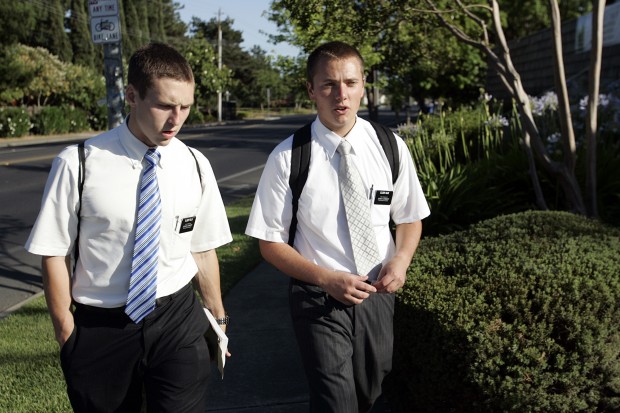
I saw the two representatives walking up and down the street, knocking on the doors of all my neighbors. Sitting at my kitchen counter, I was at home on break from JMU working on a paper for my class called “Jesus and the Moral Life.” As I sat there, Bible and computer spread before me, I eagerly awaited any distraction.

I wondered what organization or church the two men represented. It was clear that whatever they were trying to sell was not working out for them because they were moving quickly between the houses on the other side of the street. I remember trying to focus on my assignment, but my mind wandered regarding the the possibilities of the speech the pair were giving to my neighbors.

When the doorbell finally rang, I sprinted to the front door with my bible in tow.

4fda4bd3327be.preview-620

“Good afternoon sir,” they chimed simultaneously with seemingly forced smiles that almost hurt to witness. “Have you heard about our Lord and Savior Jesus Christ?” I mumbled something in response about being a Christian, but they continued as if I wasn’t really standing there.

“Are you aware of God’s impending destruction of the earth? We have failed to be obedient, and God is surely going to rain down his wrath upon all of us. There will be earthquakes, floods, and famines. Nothing can stop God’s judgement, but we can save you.”

“Tell me more,” I replied.

“Well, Satan and his demons were cast down to earth in 1914 which initiated the End Times. Over the years he has begun to take over human governments in order to create evil on earth. God will come to destroy Satan, and this entire earth with him, but if you join us, God will protect you from his armageddon.”

Now, before I continue, I urge you to remember that I was a young and foolish biblical studies student, convinced that I knew everything there was to know about God, faith, and scripture.

And so, it came to pass that after listening to these two men describe for me the fall of Satan having occurred at the beginning of the 20th century, and their ability to save me from God’s impending destruction, I could no longer contain myself…

“Where does it say that in the Bible?”

“Well, if you look at our pamphlet, it clearly outlines…”

“Where does it say that in the Bible?”

“These charts will show how natural disasters are connected to Satan…”

“Where does it say that in the Bible? I’ve got one right here, and I would love for you to show me where your facts come from.”

At that point they slowly started to step away from the door, thanked me for my time, and continued their evangelistic work to the rest of the neighborhood.

Thinking back upon that interaction, I regret the poor Christian hospitality I showed those two men. I had a predetermined commitment to scripture that blinded me from hearing them out and kindly responding to their interpretive theology. However, I believe the interaction does point to a faulty mode of reading God’s Word that has plagued the church from the beginning.

Marcion was a Christian bishop during the first century. Like many Christians, he saw discrepancies between the actions of God in the Old Testament and during the time of the New Testament. And after wrestling with the differences, Marcion proposed completely rejecting the existence of the God described in the Jewish scriptures, and also argued for omitting the sections of the New Testament that were connected with the Old. Central for Marcion’s edited bible was the idea that the teachings of Jesus were incompatible with the actions of God as found in the Hebrew Scriptures.

After numerous debates, fights, and even scandals Marcion was declared a heretic by the early church fathers and was removed from the church.

Like the two men who came knocking on my door, Marcion (and many others) had a very tunnel-visioned understanding of scripture. If it did not agree with their beliefs, they omitted it, they ignored it, and they taught in spite of it.

Without a doubt, if you read through the stories of the Old and New Testaments you will discover a number of difficulties regarding the actions of God throughout time. Wrestling with these changes has been a part of the church’s history from the very beginning and still takes place today. To fully address these differences it would take numerous sermons series and bible studies, and certainly cannot be fully proclaimed in one sermon. If this is something that you really wrestle with we can talk about doing something in greater detail down the road, but for today’s purposes we can only accomplish so much.

One of the major problems with the inconsistency of scripture is that we tend to view chapters and narratives in isolation. We take one verse from the Old Testament and compare it to one verse in the New. I am thankful for the numbering of chapters and verses for organization, but I believe they have also stratified our understanding of scripture into tiny bits that can be reorganized for our understanding. The Bible is one thing, it is the single story of God with God’s people; it may be divided into two testaments, with numerous chapters and verses regarding a plethora of people and places, but it is nevertheless one unified collection of the living Word for God’s people.

20130115_canon

Rather than reading in isolation, we are called to understand and experience God’s word canonically, which is to say we have to understand each individual narrative in light of the entire saga of scripture. Reading, preaching, and teaching canonically opens our eyes to the many ways that God runs through both testaments like a river; the water may change with the seasons, but the water always moves.

In Genesis 10 we find the story of the tower of Babel. Humanity had one language and had gathered in the plains of Shinar to settle down. There they decided to build a giant tower into the heavens in order to make a name for themselves. God witnessed the construction of this tower, recognized that this was but one domino leading inevitably to a belief that humanity did not need God, so God confused their language and scattered the people over the face of the earth.

In Acts 2 we find the story of the disciples gathered together 50 days after Jesus’ resurrection. While they were all together a great wind came from heaven filling the entire house. All of the disciples were filled with the Holy Spirit and began to speak in other languages.

Babel and Pentecost, two stories, one from the Old Testament, one from the New. These stories are often used in church to make separate points about the identity of God and what it means to be a disciple; Babel demonstrates God’s punishment of humanity for sin and Pentecost shows God’s desire for the gospel to spread amongst all nations and languages. However, they cannot be fully understood without the other. They are not two separate stories describing two different Gods, but are instead part of the greater canonical narrative of how God is God.

Babel contains every bit of the human desire to remain self-reliant and focused on pride. Like the garden, Babel exhibits that same sense of sin whereby humanity believed it no longer needed God. Though the story clearly contains examples of God’s wrath, it also contains an abundance of grace.

In striving to build a city and a tower for themselves, humanity had lost sight of the unity under which they already enjoyed from God. The true sin evident in the story is the arrogance of thinking that humanity must take itself as one takes brick and mortar, and make themselves the lord of history. In violation of the original unity of creation, in humanity’s desire to control its own destiny, the people of Genesis 11 were no longer naturally organized under the great Shepherd, but instead were brought together by the selfish desire to live in ignorance of God’s created order.

God punishes the people gathered together by confusing their language and scattering them over the earth. His wrath is evident, but his grace also lies under the surface. God could have easily used an earthquake or another divine example of control to achieve the punishment. He could have destroyed the tower and everyone in it. But rather than destroying creation, as had been done with Noah and the flood, God merely divides humanity and confuses their language. Instead of raining down death and destruction, God limits the punishment to linguistics.

We discover God’s unyielding grace in the fact that God will continue to be our shepherd regardless of our self-righteousness. God will not abandon us to our own devices but will remain faithful even when we are not.

And remember, the story of Babel does not end in Genesis 10, it continues on throughout the Old Testament and finds reflection in the New. As Christians we are aware that God has more in store for his creation than one isolated story from the past would have us believe. In the person of Jesus Christ the previously divided world finally comes back together. It is in the story of Pentecost that we are reminded again of God’s desire for humanity to rest in unity, not division.

Pentecost tells us about the miracle of the Holy Spirit coming down to help reunite the world in order to fruitfully live into God’s kingdom. God did not abandon the people of Babel, just as God has not abandoned us while we continually act as if we can make through life on our own.

The same year I met the two men who knocked on my door, I took a group of college-age Christians to Taize, an ecumenical monastery in Burgundy, France. We camped for a week on the property, gathering together with 5,000 young Christians three times a day for prayer and reflective hymns. The Christians gathered together that week came from all over the globe, representing nearly every continent. In between the worship services, we met in small groups talking about faith, scripture, and discipleship. When the last day arrived, my group sat together and I asked us to end our week by standing in a circle to pray with each other. I asked everyone to pray the Lord’s prayer together in their native tongue, and then individually pray it so that we could hear what it sounded like. For perhaps the first time in my life, Pentecost became really for me while we prayed together in that field. Though all of us had been divided across the planet we were all brought together by Jesus Christ. Though we had been previously separated we were gathered in unity by the great “I AM.”

6613_1139875468060_4836913_n

Babel and Pentecost are intimately connected but I want to be clear that the relationship between the two testaments is not that God fixes the problems of the Old Testament with the revelations of the New. God did not change himself from wrathful to graceful. The New Testament is not the band-aid for the Old.

Yet, the incarnation of God in the person of Jesus Christ changed everything. The Old Testament tells of God’s interaction with creation and the New Testament inaugurates the event where God came to dwell among us. Jesus Christ is the lens by which we are called to read scripture, both the Old and the New Testament. God’s love of creation is woven into the fabric of scripture, consistently revealed through people like Abraham, Isaac, Jacob, Moses, Isaiah, Jeremiah, Jesus, Mary, Peter, and Paul and places like Egypt, Galilee, Samaria, and Jerusalem.

This is one great cosmic story, a story that begins with God’s creation of all things declaring them good, a story that has no end because it still taking form right now.

So, how do we reconcile the God of the Old Testament with the God of the New Testament? We read scripture knowing that it does not happen in isolation, but can only be understood within the canon of both testaments. 

We read knowing that, like all great things, God is mystery unrevealed until its proper season. We read with faith knowing that God has not abandoned us, though we struggle to find meaning in the shadow of suffering, fear, and doubt, God’s plan for us is greater than we can possibly imagine. We read knowing that God does not choose us because we are good, but because he wants us to be good.

We read scripture in the light of Jesus Christ recognizing that where we find wrath, there is also grace; when we suffer we discover our hope; and when there is death there is also resurrection. Amen.

God of the Living – Sermon on Luke 20.27-38

Luke 20.27-38

Some Sadducees, those who say there is no resurrection, came to him and asked him a question, “Teacher, Moses wrote for us that if a man’s brother dies, leaving a wife but no children, the man shall marry the widow and raise up children for his brother. Now there were seven brothers; the first married, and died childless; then the second and the third married her, and so in the same way all seven died childless. Finally the woman also died. In the resurrection, therefore, whose wife will the woman be? For the seven had married her.” Jesus said to them, “Those who belong to this age marry and are given in marriage; but those who are considered worthy of a place in that age and in the resurrection from the dead neither marry nor are given in marriage. Indeed they cannot die anymore, because they are like angels and are children of God, being children of the resurrection. And the fact that the dead are raised Moses himself showed, in the story about the bush, where he speaks of the Lord as the God of Abraham, the God of Isaac, and the God of Jacob. Now he is God not of the dead, but of the living; for to him all of them are alive.”


The Sadducees know exactly what they’re doing. They are not standing before Jesus truly desiring an answer to their question. They are not like the student whose paper is no longer decipherable because they have used their entire eraser while trying to answer a question. They are in Jesus’ presence for the purpose of embarrassment. Their aim is to argue, frustrate, and force Jesus into a particular way of thinking. The question that formed on their lips is not genuine. They are simply attempting to bait Jesus with one of their classic “what if” questions, a question on which their minds were settled long ago.

Haven’t all of us resorted to this kind of questioning at some point? The militarist asks the pacifist, “what if someone was attempting to rob you and your family, would you fight back?” or the child asks the mother, “what if the world ended tomorrow, would you really make me do my homework tonight?” or the skeptic asks the believer, “what if there is no God, would you still pray?”

“So, Jesus, Moses wrote for us about how to handle a situation if a married man dies without producing children. The wife is to remarry one of her brothers-in-law in order to have a child. But, what if this happened, and a woman remarried 7 brothers and never had any children with them, who would she be married to in the resurrection?”

resurrection


I knew a man who had a wonderful family life. He was a pastor, occasionally moved throughout his conference, but he had established roots in certain parts of the state. He enjoyed his work, but he loved coming him to his wife and children every afternoon. It was when everything seemed perfect that tragedy struck; his wife was killed in a car accident. In the wake of her death, the children were old enough to take care of themselves and when the pastor returned to work he no longer had the energy to serve the local church and so he retired. It was not for a lack of conviction or faith, but the loss of his wife struck him so deeply that he felt it would be irresponsible to try and serve others.

Time passed. The wound from his wife’s death remained open. He mourned. But after awhile he started to find a different rhythm in this new time of his life. The seasons passed and even though he still missed her, he was taking steps toward finding joy again.

He met his second wife later in life through mutual friends. It was clear that they had a connection but neither realized how deeply they cared for one another. When they married it was a joyous celebration and they spent the following decade together.

I got to know the husband and wife in their later years, visiting with them, hearing their story, and breaking bread together. They were meant for each other, and I don’t just mean finishing each others sentences kind of thing. They were adorable in their connection, in their refusal to be separated, and in their faithfulness when the former pastor developed a brain tumor.

I was unable to attend the funeral but I received a phone call from the new widow that evening. Through the abundant tears landing on the telephone I was barely able to make out her words but I could tell that something was worse than the emotions that come with attending the funeral service for your spouse. “I just don’t know what to think, Taylor,” she said while sobbing, “Today, during the service, my step-daughter, my husband’s daughter from his first marriage, delivered part of the eulogy. She stood before that crowded church and lamented the loss of her Daddy. But before she finished, she looked up in the air and said, ‘I’m so happy that Dad is back together with Mom now.”

I was silent.

“What does that mean about me?” she continued. “What will happen when I die? Will he be waiting for me?”

How could anyone speak into that situation? What could you say to help fill the void that her husband left, while remaining faithful to the God who has faith in us.

For a few moments I waited silently on the phone unsure of what to say. But then I remembered that Jesus had been asked a similar question…


Jesus was asked a question that would’ve typically elicited a pastoral response. After all, this story comes toward the end of Luke’s gospel; Jesus has already traveled all over Galilee proclaiming the Good News, healing the sick, feeding the hungry, and pastorally caring for his flock everywhere that he traveled. His answer to the Sadducee’s question is important and vital to our lives not only as Christians but also to all people who reflect on life and death.

Jesus begins his response to the Sadducees’ loaded question rather directly: “People who belong to this age marry and are given in marriage, but to those who are considered worthy of a place in that age and in the resurrection from the dead neither marry not are given in marriage. Indeed they cannot die because they are like angels and are children of God being children of the resurrection.”

In this first part of his response Jesus pointed out the inappropriateness of their question. There is a difference between this age, and the age to come. In this present age the reality of death makes marriage and the perpetuation of life essential. In order to continue the cycle of life, new lives need to be brought into the world. However, in the age to come, in the resurrection, death will be no more, death will die, and those who are blessed enough to attain the resurrection will be as children of God. There is no marriage in the resurrection because it is no longer needed, God’s purposes for life after life after death will be so glorious and inexplicably remarkable that marriage will be no more. 

heaven

There is a difference here between what we commonly imagine about heaven and life after death regarding the immortality of the soul and the resurrection. Many would have us believe that to be Christian means that we have immortal souls, but there is an important distinction between immortality and resurrection. Immortality is based on a doctrine of human nature that denies death; resurrection is based on a doctrine of God which says that even though we die, God gives life to the dead.

In the second part of his response Jesus relies on the teaching of Moses to help undermine the question from the Sadducees. The Sadducees believed that a teaching, belief, practice, or habit was not authentic unless it could be found in the Pentateuch, the first five books of the Bible, the so-called “Mosaic Law.” They would search through those books and unless it was there, it was not relevant or viable for their faith. So Jesus draws on the teaching of Moses, particularly the incident of the burning bush, to further defend his answer.

Do you remember the story? Moses, a shepherd for his father-in-law Jethro is out in the wilderness tending the flock. In the midst of his work he is confronted by a bush that is burning, but the flames refuse to consume the bush. In this interplay between human and the divine Moses is commissioned by God to deliver God’s people, the Israelites, out of slavery in Egypt to the Promised Land. Reluctant to undertake such a task, Moses questions, “Who am I to say sent me?” And God responded, “Tell them I AM sent you, I am the God of Abraham, of Isaac, and of Jacob.”

So when Jesus responds to the Sadducees he remembers this story for them. God is not a God of the dead, but of the living. What we do in the here and now is important, and God will take care of us when our time comes. You may think of Abraham, Isaac, Jacob, and Moses as being dead, but God is their God, they are alive through him.

The Sadducees, in their strict conformity to their theological persuasion were unable to comprehend that standing before them was God in the flesh, that Jesus himself was the Word, the new law, and the new covenant. He not only brought a new teaching, but he himself was the new teaching.

Just as during the time of Jesus’ interaction with the Pharisees, there has been confusion over the implications of the resurrection throughout the history of the church. Resurrection has often been understood in one of two ways: Experientially or Eschatologically.  (bear with me here)

An experiential resurrection would allow for all of us here to achieve a newness in our lives in the here and now on earth; “we have been raised to new life in Jesus Christ.” An eschatological resurrection would mean that God will give life to our bodies after we die to live and reign in the new heaven and the new earth; “Behold I am making all things new.”

What is important for us, what Christ conveyed to that crowd of doubters, is that both of these resurrections contain truth. There is a beauty in the experiential resurrection that we discover when we find ourselves caught up in the mission of God and there is an indescribable fulfillment in the eschatological resurrection that will come when God makes all things new.

Last-Judgment-(Fra-Angelico)-774816


So I stood there silent on the other end of the phone while the new widow cried out of frustration and fear. “What does that mean about me?” she pleaded “What will happen when I die?”

I took a deep breath before speaking into her reality.

“I don’t know whether or not this will bring you peace right now, but a long time ago somebody asked Jesus a really similar question about marriage in the resurrection. I can never tell you for sure what will happen, but I can tell you what Jesus says. In the next life, in the resurrection, there will be no marriage. God will wrap us up in such a way that marriage will no longer be necessary to convey the deep sense of love and connection that it does in this realm. Your husband will not be married to anyone but we will all belong to one another. I know that right now this probably isn’t the most helpful or pastoral response, but isn’t there something beautiful about the fact that when we go on to greater glory we will all be equal before everyone?”


The way Jesus confronted the question of the Sadducees is so relevant for us today as people of grace who contemplate both life and death. What will happen to us in the resurrection? Who will be belong to? Many of these questions trouble us because we are so desperately clinging to the material world here and now. In our families, marriage, and relationships we find fulfillment and purpose. If we lose someone that we root our identity in, what happens in the age to come?

God will take care of us. God will lead us through the loss of our loved ones and hold them within his warm embrace until that time that all the saints will be reunited; not as brothers, sisters, husbands, wives, but as children of God. 

Jesus’ response to the Sadducees is the way that God responds to our questions – not with answers which flatter us, or make the world simpler than it really is, but with his life given for us, that we might more fully give our lives to him.

As we prepare to go forth into the world remember that God is with you in the mundane and in the radiant. God is with you in life and in death, in marriage and divorce, in fear and joy. God is with us in all things here now and forevermore; he is not a God of the dead but a God of the living.

Amen.