Then and Now – Sermon on Ephesians 1.11-23

Ephesians 1.11-23

In Christ we have also obtained an inheritance, having been destined according to the purpose of him who accomplishes all things according to his counsel and will, so that we, who were the first to set our hope on Christ, might live for the praise of his glory. In him you also, when you had heard the word of truth, the gospel of your salvation, and had believed in him, were marked with the seal of the promised Holy Spirit; this is the pledge of our inheritance toward redemption as God’s own people, to the praise of his glory. I have heard of your faith in the Lord Jesus and your love toward all the saints, and for this reason I do not cease to give thanks for you as I remember you in my prayers. I pray that the God of our Lord Jesus Christ, the Father of glory, may give you a spirit of wisdom and revelation as you come to know him, so that, with the eyes of your heart enlightened, you may know what is the hope to which he has called you, what are the riches of his glorious inheritance among the saints, and what is the immeasurable greatness of his power for us who believe, according to the working of his great power. God put his power to work in Christ when he raised him from the dead and seated him at his right hand in the heavenly places, far above all rule and authority and power and dominion, and above every name that is named, not only in this age but also in the age to come. And he has put all things under his feet and has made him the head over all things for the church, which is his body, the fullness of him who fills all in all.

allsaintsday

Today is All Saints’ Sunday, a particular fixture in the Christian liturgical calendar, often celebrated the first Sunday of every November. All Saints is a time and opportunity to name the death of our saints over the last year. And for us, as United Methodist in particular, “saints” refers to all Christians past and present, so we celebrate the church universal as well as those we have lost. Today is a day about remembrance and honor.

Paul writes to the church in Ephesus, “In Christ we have also obtained an inheritance, having been destined according to the purpose of him who accomplishes all things according to his counsel and will, so that we, who were the first to set our hope on Christ, might live for the praise of his glory.” What is this inheritance that he is referring to?

Bob Foley. Bob Foley was a long time usher at the church where I grew up. As a kid I can remember Bob handing me some of the children’s bulletins that I doodled over throughout the church services, and I can remember him patiently waiting on Christmas Eve’s services with candles in his hands. The first time I ever talked to Bob was when I was fourteen, the first Sunday that I ever ran the sound-system for our services. Bob fulfilled his usher obligations, handing out bulletins, helping new visitors and families find a pew, when he finally stood behind me looking over my shoulder. Now imagine with me if you will, a fourteen year old standing in front of a mixing board with hundreds of knobs, lights, and volume controls, at a church with a large sanctuary with hundreds of people prepared for worship. So with fear and trepidation defining my inner struggles Bob leaned forward and whispered in my ear, “good luck.”

soundboard01_big

I’m sure I messed something up that morning, perhaps I forgot to turn off our minister’s microphone so everyone wound up hearing him horribly attempt to keep the tune to “Be Thou My Vision,” or I turned the volume too high and there was feedback in the sanctuary, or no one heard the prayer over the Tithes and Offerings because I forgot to turn the microphone back on. I’m sure I messed up, but Bob walked over to me after the service ended, shook my hand, told me to call him Bob, and smiled while telling me how proud he was.

Thus started an incredible friendship that played itself out every Sunday morning as Bob and I would joke around in the back. He was old enough to be my grandfather but he never treated me like a child; he was encouraging, and respectful, but above all he was a happy man. Whereas many people would drag themselves into church on Sunday mornings, wiping away the sleep from under the eyes and trying to find a trash can for their coffee they had just chugged, Bob was always standing by the door with a smile because he genuinely cared about the church, he loved being there, and he loved God.

When Bob passed away it crushed me. I’ll never forget the feeling in the pit of my stomach when my mother called me during college to let me know what had happened, and I’ll never forget the awful feeling of walking back into the church for the first time without having Bob there with his customary smile.

Paul talks about an inheritance from Christ, something we receive through his mighty acts in the world. There is something special about getting to share the stories of the bible with someone, young or old, to talk about what God did with God’s people, but there is something indescribable about the way God is working in the world right now.

Bob Foley was a saint in my life. But what Bob offered for me and my Christian life was more than the typical church friendship. Bob never sat me down with scripture or told me how to live my life. He never criticized my decisions or offered unwarranted advice. What Bob did for me, was demonstrate how important faith is in the now. He might’ve loved to hear those old stories from scripture, but Bob felt God living in the world in the immediate, thats why he committed to being in church and sharing his smiles with everyone else; to him there was nothing better than being a Christian because he felt God’s presence.

When we read from Paul’s letter to the Ephesians, its as if he’s saying “It is such a great thing to be a Christian!” But, I wonder if that is the first thought that comes to our minds when we think about our Christian heritage today. May it be that the joy and excitement of the gospel has grown stale for many of us? Is living out our Christianity filled with images of too many commitments and disappointments? Have we grown complacent with what it means to be the church in the world? Perhaps a lot of us here are like the elder brother from Christ’s great parable, we see our wayward younger brother return home for a celebration and we are envious. Maybe we hear the words from our Father saying, “You are always with me, and all that I have is yours,” but the thrill and glory of these words have seemed to vanish.

Why are we here? Why did we wake up this Sunday morning and come to church? What brought us, what drove us to ever join together in the first place?

All of us are here because someone loved us enough to bring us, to invite us, to nurture us. Who was that person for you? Who was that saint in your life?

Paul writes about a “love toward all the saints” present in the community in Ephesus. That same love may, in fact, be half-present today in our lives through the casual “hello” at the Food Lion, in the wave as a car drives by in the neighborhood, and in the church fellowship activities in which we participate. But there is a temptation to take all of these things for granted, to live into them everyday, and never value them for what they really are.

I’m not proud to admit that I never realized how important Bob Foley was to my life until after he died. It was only in his absence that I began to appreciate the joy that he taught me every Sunday morning. I took my relationship with Bob for granted and I wish that I had lived into our friendship more while he was still here with us.

Like our relationship, it has taken me some time to discover what made Bob’s faith so worthy of emulation. I have wondered what it was that made him excited about the church, when so many others arrived more out of obligation than expectation.

Have you ever noticed that Paul almost never writes about the actual life of Jesus in his letters? Do you find it interesting that as a leader for the blossoming church in the first century, Paul rarely referenced the exciting life of Jesus Christ? He paid little attention to the Sermon on the Mount, the parables, the miracle stories, or other moving elements from the gospels. It seems, therefore, for the first Christians, what was most important was not what had happened in the past, but how Christ was living in and through them in the present. They most certainly remembered the words and actions of Christ in their worship, but their Christianity was exciting because Christ was still moving in their world.

Paul wrote to the church, “I pray that the God of our Lord Jesus Christ, the Father of glory, may give you a spirit of wisdom and revelation as you come to know him, so that, with the eyes of your heart enlightened, you may know what is the hope to which he has called you, what are the riches of his glorious inheritance among the saints, and what is the immeasurable greatness of his power for us who believe, according to the working of his great power.” The key word in this whole passage is “power.” When the first Christians appealed for conversion to the new faith they did not just talk about what had happened on a hill outside of Jerusalem in the year 33, but they witnessed to what Christ had done for them in their own lives.

Christ is a present power, rather than simply being an admired person from history, Christ transcends time and is with us in the present; that was the paramount miracle for the early church.

On this All Saint’s Day we are called to remember the saints of our lives, the Bob Foleys of the world, to be thankful for what they did for us, but to also live in the present. Be grateful for what they did, and live out our faith today. The saints and Christ are not just some historical influences in our lives but continually live and move through us in the ways that we continue to be faithful in the world.

Do you know God? I don’t mean some sort of dense theological knowledge, but real and tangible and simple. Do you know God in your life? We cannot have knowledge of a person until we see them in action and we shall not have faith in God until we trust and experience his divine love in the world.

There is a difference between the Word of God (Jesus Christ) and the word of God (scripture). Our knowledge of God in this community rests upon God’s Word as Jesus Christ. The Bible is not a textbook in the ordinary sense as a collection of facts that need to be checked and memorized but it is instead a story. In contains the majestic drama of God’s interaction with God’s people. The climax of the story is God’s coming down to dwell among us in the form of flesh, dying for us on a cross, rising again from the grave, returning to glory, and leaving behind a people of God endowed with knowledge of him.

When we remember the saints, when we gather together to read and proclaim scripture, it is important for us to remember God’s mighty acts in the world. However, what makes church and faith compelling, what moves us toward excitement, is God’s present power in the world! Today is the day that we can celebrate the lives that we have lost while also living into the exciting faith of what it means to be Christ’s body for the world.

Today we are called to remember those saints from our lives who shaped us into the people we are now. It is the time to remember disciples like Bob Foley who lived out his faith in his relationships with others, who felt the joy of Christ in his own life and in his own heart.

We remember those who have gone on with joy and with longing, for they are being held in the arms of our great Lord and we anticipate with joy the great reunion of all the saints of the church in God’s time.

Christians are not called to be motivated by the question: “what happens to me when I die?” but rather ”what am I doing with my life right now?” What we do in the here and now, how we live out our faith in the world, is what makes being the body of Christ an exciting and wonderful thing.

Jesus Christ is not a man of the past, a person to be remembered and recorded in history. Christ is alive! Christ is with us here and now in the gifts of bread and wine. Christ continues to live and breathe and change the world because we partake of him when we gather at his table.

If you are looking to find Christ in your life, if you want your faith to move from remembrance to lived reality, and if you want to find a joy worthy of celebration, then come. Come to Christ’s table and discover the inheritance that will change your life forever.

Amen.

Communion

Family and Faith: Family – Sermon on Ephesians 5.21-6.4

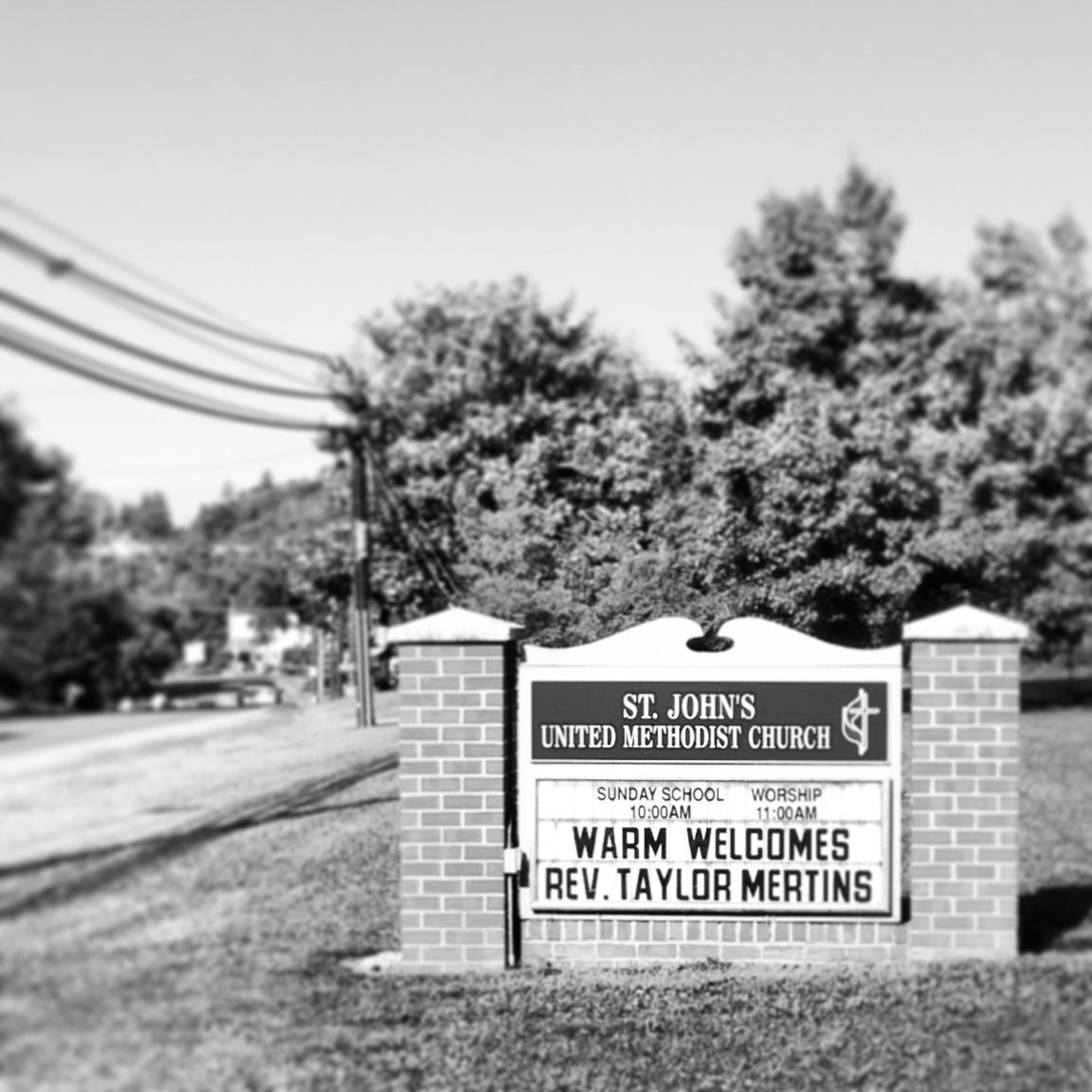
(preached at St. John’s UMC on 9/15/2013)

Ephesians 5.21-6.4:

Be subject to one another out of reverence for Christ. Wives, be subject to your husbands as you are to the Lord. For the husband is the head of the wife just as Christ is the head of the church, the body of which he is the Savior. Just as the church is subject to Christ, so also wives ought to be, in everything, to their husbands. Husbands, love your wives, just as Christ loved the church and gave himself up for her, in order to make her holy by cleansing her with the washing of water by the word, so as to present the church to himself in splendor, without a spot or wrinkle or anything of the kind – yes, so that she may be holy and without blemish. In the same way, husbands should love their wives as they do their own bodies. He who loves his wife loves himself. For no one ever hates his own body, but he nourishes and tenderly cares for it, just as Christ does for the church, because we are members of his body. “For this reason a man will leave his father and mother and be joined to his wife, and the two will become one flesh.” This is a great mystery, and I am applying it to Christ and the church. Each of you, however, should love his wife as himself, and a wife should respect her husband. Children, obey your parents in the Lord, for this is right. “Honor your father and mother” – this is the first commandment with a promise: “so that it may be well with you and you may live long on the earth.” And, fathers, do not provoke your children to anger, but bring them up in the discipline and instruction of the Lord.

Families of faith – part 2. Last week we looked at the role of God within the family; we talked about how our relationships with God extend out toward others, and we left with the challenge to encounter God through his Word and prayer. Today we are focusing on the family unit itself, and what it means to be a Christian family.

family_praying_hands

Have you ever heard of the lectionary? It is a great tool. Many churches and pastors use it to help orient and guide their worship throughout the year. It is a three-year cycle of scripture lessons that allows a community to make its way through the length of the Bible. At its best it forces us, and by us I mean me, to examine different parts of scripture and apply them on a weekly basis. However, at its worst it prevents us from encountering the most troubling verses in scripture because they are conveniently absent from the lectionary.

One of the other options is coming up with an authentic and exciting sermon series. A pastor or a church picks a topic, finds scripture to go along with the message and BOOM! God’s Word breathes new life from the pulpit. At its best it allows us, and by us I mean me, to speak toward and about specific issues within the community and really get at the heart of contemporary Christianity. However at its worst, sermon series reinforce the distancing of difficult texts from being proclaimed in church.

As I was putting together the sermon for this week I kept thinking about the scripture that Pam just read, the so-called “house-hold” code from Ephesians, and I was thankful that I wasn’t going to preach on that text. Its too difficult, filled with ancient patriarchal balderdash that has no place in the modern church. So instead I looked for easier passages, you know something nice from the psalms or proverbs, and maybe a narrative from the New Testament about a mother and her son, but the more I tried to pray and write, the further I felt from God’s Word. And, as the Holy Spirit is apt to do, I was pushed toward preaching on the Ephesians passage precisely because it is so difficult.

I remember once being at a magnificent wedding. The beautiful bride made her way elegantly down the center aisle to her sweetly crying soon to be husband. I can remember the groom, with excited anticipation, nervously rocking back and forth on his heels. The church was decorated perfectly, all the guests sitting with smiles on their faces, women crying, and men pretending not to cry; a truly wonderful wedding.

orlando-wedding-collage

And there was the pastor, standing before the bride and groom and all of us ready to give his homily. He probably said something about love: love is patient; love is kind; it bears all things, believes all things, hopes all things, endures all things (1 Corinthians 13.4, 7). And then all of the sudden he started quoting Ephesians: “Wives, be subject to your husbands as you are to the Lord. For the husband is the head of the wife just as Christ is the head of the church.”

I cringed.

He went on, waxed lyrically about the sanctity of marriage and the different roles the bride and the groom were to play and he ended with this: “John your job is to love your wife, and Sally your job is to respect your husband.”

I have a hard time with the text from Ephesians, or at least the way it has been used throughout the centuries to reinforce gender and sex divisions. It passages like this one that have kept women from being independent, from defining their own future, and even from standing in the pulpit. It puts forth a blueprint not only for marriage but also for simple for male-female interactions that defines the role of the woman versus the role of the man.

“Wives, be subject to your husbands as you are to the Lord. For the husband is the head of the wife just as Christ is the head of the church, the body of which he is the Savior. Just as the church is subject to Christ, so also wives ought to be, in everything, to their husbands.”

I have heard men use these words to continually suppress their wives and other women throughout the church in such an embarrassing way that I have always been afraid to preach from this text.

But then I realized something.

Most people skip over verse 21: “Be subject to one another out of reverence for Christ.”

There can be no doubt that Paul had the patriarchal family order as the backdrop in his letter because he knew no other. But the beginning of the passage touches on something that shines forth an incredible beauty within the family dynamic: Be subject to one another out of reverence for Christ.

The virtue of submission is not popular in our contemporary period. Our desire for freedom and individuality makes the practices of submitting to one another appear obsolete or even negative. Maintaining equality is too important to allow for people to submit themselves to each other. In a way, though, Christianity is committed to the doctrine of human equality in a deeper sense than the ways of the world. It’s not just about an equal playing field, but instead more about submissiveness on every side within a family.

The good news of mutual submission within a Christian family is inseparable from true love. Loving one another means accepting that other as a person, as a “you” and not an “it.” In marriage, in family, in church, and in life a person is never a mere object. We are created in the beautiful image of God, with our own desires and powers for being in relationship with one another, free to say yes and no.

(Photo Credit: Jill Nicole Photography)

(Photo Credit: Jill Nicole Photography)

When Paul addresses and calls the church in Ephesus to submit to one another out of reverence for Christ its all about reciprocity! – It does not merely call upon the less powerful to submit, it equally charges the more powerful to act with gentleness toward and concern for those around them.

When we read the rest of the passage in Ephesians, the description of the household codes for Christians, we need to keep the very first verse at the forefront of our minds – Be subject to one another out of reverence for Christ.

Think about your own families for just a moment, your marriages, your children, and your parents. In living out your Christian identity as a family have you given yourself to others out of love for Christ? How might all of our families look and feel different if we first address one another selflessly in order to mirror what Christ did for us.

Paul writes: Husbands, love your wives, just as Christ loved the church and gave himself up for her, in order to make her holy by cleansing her with the washing of the water by the word. Love your wives. This does not just mean, tell her she looks pretty, buy her flowers every once in awhile, let her hold the remote control for the television. It means loving your partner with self-sacrificial care, “just as Christ loved the church and gave himself for her.” The Christian family is so much more than love, its about sacrifice, trust, reliability, about laying down yourself for the other person out of submissiveness. And wives this goes for you too, Christian marriage and family requires us to enter into this kind of covenant together. This does not just mean, iron his shirts, cook dinner, or let him hold the remote control for the television. How many of us really love our families in the way that Christ loved the church, enough to mount the hard wood of the cross? Love is easy; what you do after love is the hard part.

And children! You’re part of this too. – Honor your father and mother because you are promised that it may be well with you and you may live long on the earth. You are called to submit yourselves to your parents out of reverence for Christ! But parents are also supposed to do the same toward you…

A household in which moral chaos rules, is a tragedy for a child. Adjusting to adult life is never easy. Think about this with me – Can a greater blessing come to a child than to see father and mother in penitent prayer? Realizing that Dad and Mom themselves are sinners! Mom and Dad confessing. When done appropriately penitence on the parents’ side will not rob the parent of their authority within the family. It will instead place obedience within a larger framework of Christian living. Just imagine what it would look like to you if you saw your mother and father on either side of you in the pew, praying and asking for forgiveness for the ways they have fallen short. How would you respond?

In our culture today, we need more than an “educational system” to help our children because secular education will not suffice. We can no longer rely on the school system to teach children everything they need to learn in order to more fully live in the world. Similarly, children need to have the space and freedom to speak the truth against us when we make mistakes because we are always growing and learning what it means to be Christian in the world. There must be admonition of the Lord.


Having a Christian family is only really possible when it mirrors the inclusive grace of the kind of love that is the supreme gift of the Holy Spirit in Jesus Christ.


I think what bothered me most about hearing that preacher during the wedding wasn’t that he used the passage from Ephesians, but how he interpreted it. There was a very clear separation of roles from the man and the woman – love and respect. However, Christian family life can no longer fit into the blueprint that is established in these verses (and they could never fit into them during the first century either).

Families today are no longer made up of only a husband and wife, 2.2 children, a dog and cat, and a white picket fence. Many children today grow up in families with only one mother, or just one father, or their raised by their grandparents, or they have two dads, or two moms, or they’re raised by adopted parents. There are stay-at-home dads as well as stay-at-home moms. Some couples choose not to have kids, and some are incapable. Those families exist not because of a blueprint that they are trying to match, but instead because they are born out of love and submissiveness to one another.

Calls for submission are on all sides – husband to wife and wife to husband – children to parents and parents to children. In our modern world, family life places demands upon mutual subjection greater than ever before.

Be subject to one another out of reverence for Christ. Living into the calling of a Christian family can no longer take place in the form of fitting into an ideal shape or box; Raising and being part of a family is tough. We are not commanded to have complete separate and isolated roles, but are instead invited to mirror the love and life of Christ in the way that we live and love others! Christ is the solid rock upon which we stand, the great and almighty “I AM”, the one in whom we live and move and have our being, the incarnate deity, the beginning and the end.

Be subject to one another out of reverence for Christ.

Amen.

The Story – Sermon on Romans 12.1-8

(preached during my first Sunday as the pastor of St. John’s UMC in Staunton, Virginia on 6/30/2013)

Romans 12.1-8

I appeal to you therefore, brothers and sisters, by the mercies of God, to present your bodies as a living sacrifice, holy and acceptable to God, which is your spiritual worship. Do not be conformed to this world, but be transformed by the renewing of your minds, so that you may discern what is the will of God – what is good and acceptable and perfect. For by the grace given to me I say to everyone among you not to think of yourself more highly than you ought to think, but to think with sober judgment, each according to the measure of faith that God has assigned. For as in one body we have many members, and not all the members have the same function, so we, who are many, are one body in Christ, and individually we are members one of another. We have gifts that differ according to the grace given to us: prophecy, in proportion to faith; ministry, in ministering; the teacher, in teaching; the exhorter, in exhortation; the giver, in generosity; the leader, in diligence; the compassionate, in cheerfulness.

The Story

Years ago there was a young man, fresh out of seminary, ready to begin serving his first appointment. He had taken all of the appropriate classes, learned from the best professors, volunteered in the local community and was excited to finally begin his ministry. After passing all of his boards and graduating from his elite seminary he packed his belongings and headed out into a rural area in the North Georgia Conference to John Wesley United Methodist Church. The young man was so anxious and filled with joy that he could hardly contain himself when he arrived in town the first day, so before he unpacked any of his possessions he drove by his new church. He got in his car and went to the listed address, but he missed the church. When he turned around he discovered what had prevented him from seeing the building – there was the oldest most decrepit looking tree with roots stretching all over the ground blocking the sign and most of the church from being visible on the road. In addition to the tree the young minister noticed that some of the hinges needed replacing and a new coat of paint could help too, but above all things he could not stand that awful tree. And so, before unpacking any of his important belongings, the young man found his chainsaw and went to work on the tree. By the time he had finished chopping it down he was incredibly proud of himself; the sign and building were now completely visible from the road and he thought that perhaps a few extra people might be in church on Sunday morning.

A few days later, as he sat in the study of his parsonage preparing his first sermon, the local District Superintendent called: “I hope you haven’t finished unpacking yet,” he said,  “because you’re being reappointed.”

You see, the church was named John Wesley church for a reason, nearly two hundred years ago John Wesley stood on the roots of that tree and preached to the people in the community about the overflowing grace of God, and they decided to build a church right where he stood, and that young minister had chopped it down.

Stories are remarkably important. They contain everything about who we were, who we are, and who we can be. Stories held within a community help to shape the ways we interact with one another, and how we obtain the collective memories of the past. We tell stories to make people laugh, to teach lessons, and remember the important elements of life.

Today, we live in a world of competing narratives; people and organizations are constantly bombarding us with information regarding what we are to think and, perhaps more frighteningly, who we are to be. It is nearly impossible to turn on the television, get online, or even drive down the road without someone telling us how we are supposed to understand the world. Every single day we are thrust into a world that tells us what we are supposed to think, speak, and do; that frightens me. The world is full of ways for us to discover our identities and they are insufficient when compared to our fullest identities in Christ.

God’s Word, through the apostle Paul, looks out to the world and dismisses all of it. Do not be conformed to this world but be transformed by the renewing of your minds! Do not let your favorite reality television shows dictate how you interact with other people, do not let the news channel be the only way you understand the world, do not let your political persuasions limit your relationships with those who are different from you. Instead, be transformed by the renewing of your minds. Being transformed implies a willingness to let God enter your heart and soul and reorient you. Being transformed into God’s vision for who we are means recognizing that, if way say yes, it would be something great and glorious; but we also notice that saying “yes” carries with it a great consequence, for it will have a huge effect on the way we live our lives.

Transformation, a true change in our lives, occurs when we are turned away from our sinful selfish lives back toward God. We are transformed by the renewing of our minds every time we enter this building to hear God and worship God. The story of the church is supposed to be shaped by the greatest story ever told, God becoming flesh in Jesus Christ in order to reconcile the world unto Himself.

IMG_0391

Last weekend I had the privilege of kneeling before 3,000 Methodist from the state of Virginia and was commissioned by our Bishop as a Provisional Elder for our great denomination. According to the ways of the world this is perhaps the worst time to enter ministry. Mainline Protestant Christianity is floundering in the United States, people are no longer attending churches, worship attendance in plummeting, and Church buildings are being closed regularly. Christianity has lost its status in the political arena, we are becoming biblically illiterate, and young people are largely absent from worship. The average age of a member of a United Methodist church is 57.  I cannot begin to tell you how many people tried to dissuade me from entering the ministry at this point in my life because of these facts; because by the world’s standards, this is not the time for ministry, nor is it the time of the church.

Thanks be to God that we do not need to be conformed to the ways of the world, but instead get to be transformed by the renewing of our minds.

At the beginning of the Gospel according to St. Mark, Jesus begins his Galilean ministry by proclaiming: “The time is fulfilled, and the kingdom of God has come near; repent and believe in the good news.” In this one solitary statement, everything about the world has been changed. From this point forward God’s actions in the world will dictate how history takes places, how everything will be transformed, and how we can understand who we are to be in God’s story.

My story begins when I was baptized at Aldersgate UMC in Alexandria, Virginia when I was 19 days old. That church took the baptismal vows seriously and they raised me in the faith: I learned about the goodness of God from Children’s message, sermons, and the Bible. I helped establish the first youth band in the church, led bible studies, and ran the sound system for Sunday services. I was made part of the body of Christ and invited to participate in any way that I could. After one of my dearest friend’s died in a car accident I found myself praying more than I ever had before and started wrestling with a call to ministry. I majored in Religious Studies and Philosophy at James Madison University and eventually enrolled at Duke Divinity School in order to obtain my Masters of Divinity. I interned at numerous churches helping in a variety of ways from Bryson City, North Carolina to Birmingham, Michigan. I have led mission trips to places all over the United States and abroad. I have sat with people during the darkest moments of their lives at Duke University Hospital, and I have celebrated baptisms and the Lord’s Supper with people who earnestly desired them. But none of my experiences of the church could compare to this morning.

photo(1)

In my life I have never been more nervous, excited, thrilled, terrified, humbled, or blessed than I am right now in this pulpit. We are standing at the precipice of a great journey. We get the privilege to gather together as a community of faith every week to share the Good News of God. As we live and move and have our being in God almighty we will enter this place as the body of Christ to proclaim God’s kingdom on earth. I cannot wait to learn about how God has impacted your lives, made you into the individuals you are, and brought this church together. We get to share our stories with each other because they reveal the great things God is still doing in the world.

The stories of the world can never compare to the actions of God in the world through Jesus Christ. Whether you’re a brother or a sister, mother or father, republican or democrat, rich or poor, none of those narratives, none of those identities, compare with what it means to be Christian.

The stories of scripture help to shape who we become throughout our lives. They speak greater truths than simple affirmations or facts. That’s why Jesus never simply explains anything to anyone throughout the gospels, but instead responds by telling a story, or a parable. Stories are part of the fabric of what it means to be human, and even more importantly what it means to be disciples of Jesus Christ

According to the ways of the world the church is in a difficult place. But I’m not worried about any of that, I’m not worried about anything because my hope is not in me, my hope is not built on the ways of the world, but my hope is built on nothing less than Jesus Christ.  Christ is the solid rock upon which this church stands, comforting, nurturing, and sustaining us in all that we do. We can believe in the future of the church because our faith is in almighty God! We are here to share our stories so that we might learn more about how we are caught up in God’s story. The ways of the world are nothing but sinking sand, they can be shaken and moved by the slightest wind but God’s story is eternally unshakable and unmovable.

Be transformed by the renewing of your minds! Remember your truest identities in Jesus Christ; allow the scriptures to wash over you so that you can remember who you are, and whose you are. Listen to the stories of your brothers and sisters so you can remember how God continues to act in your lives every single day. The kingdom of God has come near! Do not be conformed to this world, but be transformed by the renewing of your minds!

Amen.

IMG_1708

With God’s Help – Sermon on Romans 4.13-17

(preached during my final Sunday at Aldersgate UMC in Alexandria, Virginia on 6/9/2013)

Romans 4.13-17: “For the promise that he would inherit the world did not come to Abraham or to his descendants through the law but through the righteousness of faith. If it is the adherents of the law who are to be the heirs, faith is null and the promise is void. For the law brings wrath; but where there is no law, neither is there violation. For this reason it depends on faith, in order that the promise may rest on grace and be guaranteed to all his descendants, not only to the adherents of the law but also to those who share the faith of Abraham (for he is the father of all of us, as it is written, “I have made you the father of many nations”) – in the presence of the God in whom he believed, who gives life to the dead and calls into existence the things that do no exist.”

With God’s Help

Mid-way through my time in seminary a group of us were regularly gathering for intentional faith formation. Our group was made of 20-something Christians both in and outside of Duke Divinity School. As we met on a weekly basis we learned more about one another’s faith, and what had led each of us to Durham, and our present relationship with God. On one particular evening we were discussing the differences between adhering to the law, or the righteousness of faith, when one of my roommates told the story of why it had taken him so long to return to the church.

My roommate had grown up in the deep south in a town where attending the high school football games on Friday nights were second only to attending the Baptist churches on Sunday morning. He had grown up in the church and eventually chose to be baptized out of fear, rather than an intimate relationship with the triune God. He left church every Sunday unsure of what he had done wrong in the eyes of God, but certainly felt that he had committed some horrible atrocity. At some point during high school, his youth group went on a retreat to a local college campus where a conservative evangelical Christian organization was holding a “Faith Weekend.” The hundreds of young Christians gathered in the large auditorium to hear Christian music, sermons, broke into small groups, and generally worshipped with one another until one evening, during the height of a sermon about accepting Jesus Christ as your personal Lord and Savior, the fire alarm went off. Immediately, all of the counselors and chaperones quickly filed all of the students out of the arena through the exit doors to the parking lot. In the sea of chaos my roommate remembered being incredibly frightened and even began praying that everyone would safely make it out of the building. When his eyes finally adjusted to the dimly lit parking lot, he was surprised to discover lifeboats scattered throughout the area with little ladders leading up into the boats. “Quick!” Someone shouted, “Everyone into the boats as quickly as you can, run!” As my roommate was swinging his legs over the starboard side of a life boat the fire alarm stopped ringing and a man began speaking through a megaphone: “Take a good look around you, there are not enough spaces in all of the life boats for everyone… Have you accepted Jesus Christ as your personal Lord and Savior?”

Those are the kind of scare tactics that move people away from the church.

In the fourth chapter of his epistle to the church in Rome, Paul addresses the differences between adherence to the Law and the righteousness of faith. Paul’s use of the Old Testament figure of Abraham is of fundamental importance for the message he intended to share with the Roman church: Though the reasons behind his attention to the relationship between Jews and Christians in the first century are helpful for understanding Paul’s frame-of-reference, the point still remains pertinent today. God’s promises to God’s people are revealed and realized through faith.

Paul begs us to remember Abraham, the father of Israel, because God promised Abraham that he would inherit the world and this inheritance was not realized through adherence to the law, but through the righteousness of faith. The promise of God was coming to Abraham regardless of his ability to maintain the ordinances declared by God. God would never love Abraham any more or any less than he did the day the covenant was made. For this same reason, God’s promises are realized through faith not only to the adherents of the law, those among us to do everything right, but also to those who share in the same faith as Abraham.

Abraham, formerly known as Abram, called out of his homeland to travel to the land that God would send him, promised to be made a great nation, entered into the holy covenant with God marked by circumcision, the husband of Sarah and the father of Isaac. The man who carried his young son to the land of Moriah where he prepared to sacrifice him only to be stopped by an angel of the Lord, and thus Abraham continued to demonstrate his faith. Abraham the father of the great nation that eventually made its way out of Egypt and into the Promised Land. Abraham. God’s promises are realized to those who share in the same faith as Abraham. We, the Christian Church, share in this same faith and have been grafted into a relationship with the triune God.

On March 12th 1988, when I was 19 days old, my family gathered right over there by the baptismal font and participated as Ken Wetzel baptized me in the name of the Father and the Son and the Holy Spirit. In addition to the water spilled onto my forehead, and the presence of the Holy Spirit there was one fundamentally important aspect of that sacrament that this church participated in: Reverend Wetzel looked out to you, this congregation more than 25 years ago, and asked this question: Will you nurture one another in the Christian faith and life and include this person now before you in your care? The response of this congregation that morning is why I am standing before you today:

With God’s help we will proclaim the good news and live according to the example of Christ. We will surround him with a community of love and forgiveness, that he may grow in his service to others. We will pray for him, they he may be a true disciple who walks in the way that leads to life.

The commitment this church made to God that morning regarding my life as a Christian was one that formed and shaped me into the man I am today. Among the many things that this church committed to, it was the first part of the response, “With God’s Help,” that has made the biggest impact on my life. From my infancy, Aldersgate UMC has been the type of community that recognizes how what we do can only be accomplished with God’s help; that has made all the difference. Instead of being raised in a church where I was taught to fear God, like my roommate from seminary was, I was constantly reminded of how to remain committed to the gospel through hope, faith, and love.

The true beginning of my call to ministry did not begin with my confirmation around that altar, or even when I was a Boy Scout with troop 996, but when I was 13 years old I noticed a call for help in one of our Sunday bulletins for someone to run the soundboard. (It gave me goose bumps to see a similar message in the bulletins from last week). I spent every Sunday for a month standing in the back of the church with men like Bud Walker and Paul Corrum who taught me how to keep the correct sound levels. And until I graduated from High School I ran the sound system for many of our Sunday services, weddings, and funerals. Though I was considerably younger than anyone in the back of the church, men such as Paul Tuoig, Bob Foley, Les Norton, and Sam Schrage made it a point to come stand with me every week and treated me with respect, like an adult, and they treated me like a fellow Christian. There have been countless individuals from this church who have made it their responsibility to demonstrate the goodness of God through their actions on mission trips, meetings, and worship. With God’s Help we will proclaim the good news and live according to the example of Christ.

285_1026151185024_3757_n

After enrolling in college I was invited to act as a ministerial intern for our church every summer until I entered seminary. I was encouraged to lead mission trips all over the world, visit congregants who could no longer attend church, create bible study curricula, and preach regularly. I still can’t believe that Jason and Dennis were foolish enough to let me preach for the first time when I was 19 years old. A plethora of people have expressed their gratitude for my sermons, and leadership on mission trips, but even more important have been those of you who disliked what I said and did, and loved me enough to tell me why. Without you I could not have grown. With God’s Help we will surround him with a community of love and forgiveness that he may grow in his service to others.

IMG_0388


I have been living in Durham, North Carolina for the last three years working on my Masters of Divinity and I have been continually invited to preach from this pulpit. Even if I was invited on specific weekends when Jason and Dennis wanted to go on vacation I nevertheless appreciated the invitation and felt privileged to proclaim the good news within my home church. I have now been approved by the Virginia Conference to serve as a Provisional Elder and have been appointed to St. John’s UMC in Staunton VA. I am incredibly humbled by the fact that, to my knowledge, I am the first person to have grown up through Aldersgate and then pursue a call to ordained ministry. With God’s help, we will pray for him, that he may be a true disciple, who walks in the way that leads to life.

I was incredibly blessed to have grown up through Aldersgate. It was this Christian community that showed me the importance of faith predicated on God’s help. Faith was never taught to me in such a way that I would respond to God out of fear but instead by love. This church nurtured me in such a way that the question: Have you accepted Jesus Christ as your personal Lord and Savior felt uncomfortable and dissonant. It puts too much power and control on our side of the equation. Accepting Jesus sounds a lot more like following the Law than it does embodying the righteousness of faith. If the church is to be thought of from this legal point of view, from simply accepting Jesus, if it is regarded as a condition capable of human attainment, then the church will remain deprived of its dynamic power and continually insecure. This is why I fear that so many young people are no longer coming to church; perhaps they feel completely isolated regarding their relationship with God after accepting Jesus Christ as their personal Lord and Savior. Maybe they believe they carry the burden of their relationship with God completely on their own. Convincing someone to accept Jesus is an important element of Christian discipleship but the difference between accepting Jesus, and confessing Jesus Christ as Lord are two different things. Aldersgate never let my relationship with God stop at acceptance, but pushed me to learn so much more about what it means to be a disciple of Jesus Christ. It is my prayer that the new faith community that this church is preparing to help establish will continue to make disciples of Jesus Christ teaching that faith is faith only when it is an advance, understandable only because if come from God alone. Faith is creative, faith is living, faith is fulfilling, only when we find ourselves wrapped up in God’s love. Faith is real only when it is found With God’s help.

As I look forward to my future in the ministry, I am thankful for Aldersgate, the opportunities it has provided me, and the people that have demonstrated God’s love to me. I would not be standing here if it were not for that baptismal commitment you made to God twenty-five years ago. I never could have discovered faith in God on my own; it was this church that shared the faith of Abraham with me regarding God’s promises to God’s people. I learned the language and grammar of Christianity through sermons, classes, and even vacation bible school. I participated in God’s kingdom on earth by visiting those who were in need, through proclaiming the good news, and even dressing up for living Bethlehem. Paul’s words to the church in Rome have now come alive for me, because this church committed to raising me in the faith, to share the faith of Abraham with everyone, and proclaim the good news of God’s kingdom. This church taught me that the truly creative act by which we all become the children of Abraham does not lie in the possible possibility of the law, but in the impossible possibility of faith.

It’s when I open up to the fourth chapter of Romans that I am reminded of what this church does every day, every week, every month, every year; you open up the strange new world of the Bible. We get to stand on the rocky ground and feel the warmth of the burning bush on our cheek with Moses. We get to feel the water flow between our toes as we wait on the banks of the Jabbok witnessing Jacob wrestle with the angel from God. We get to gather together in the marketplaces and the shores of the lakes watching Jesus perform miracles, feed the multitudes, and teach about the kingdom of God. This church invites us into the strange new world of the Bible.

Just as you made a commitment to God regarding my faith 25 years ago, you also have committed to nurture those sitting to your right and left in faith. To show them Christ’s love in everything you do, to embody the kingdom of God so that we all might share in the faith of Abraham.

With God’s Help we are called to proclaim the good news, to gather together regularly in order to share the story of God’s interaction with God’s people, to read scripture and learn our own story. With God’s help we are commissioned to live according to the example of Christ, to lift up our own crosses and bear them in the world, to serve those in need, to love the unlovable and transform the world by first transforming ourselves.

I thank all of you from the bottom of my heart. To God Be the Glory.

Amen.