Devotional – Matthew 18.15

Devotional:

Matthew 18.15

If another member of the church sins against you, go and point out the fault when the two of you are alone. If the member listens to you, you have regained that one.

Weekly Devotional Image

During our weekly lectionary discussion group, after reading Matthew 18, Leah Pack questioned the group in attendance about whether or not any of us has had an experience of someone from the church confronting us in order to point out our faults. After all, pointing out the faults of a fellow church member is something Jesus charged his disciples to do. While the group pondered particular moments from their church lives, I shared with them one of my experiences.

Preaching in Birmingham

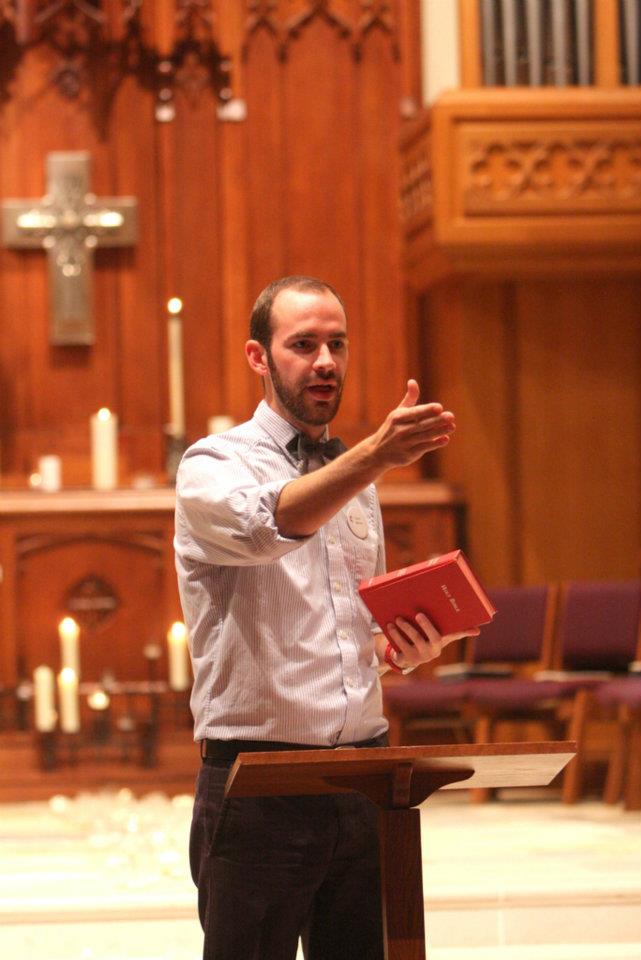
Preaching in Birmingham

I had been helping serve at a church in Birmingham, Michigan for most of the summer. My responsibilities included visiting the hospitals, preaching, teaching, leading worship, and regular committee attendance. It was a particularly rewarding summer for me, and helped me identify my own strengths and weaknesses for ministry. Throughout my internship I met with the Seminary Committee who helped to provide the necessary information for my journey and offer advice and feedback regarding my work. On my last evening in Birmingham the committee shared their final evaluations for the summer and wished me well on my ministerial journey; the group was incredibly gracious and kind with their reflections.

As we prepared to leave the church that night one of the older gentlemen from the committee asked to speak with me privately before we left. “You are so full of it,” he began, “I watched you all summer long, and you might’ve fooled everyone else but you can’t fool me. You are one of the most arrogant and self-righteous young men I have ever met.” And with that he left me alone in the room; his words piercing deep in my soul.

I learned later that the man had a very difficult time watching a young person speak with such confidence from the pulpit on a regular basis and that, for him, was a sign of arrogance. Nevertheless, his words have stayed with me ever since that particular evening a few summers ago. Though I may not completely agree with him regarding his judgment of my faults, it was helpful (though painful) to hear him speak his mind. It has helped me to be mindful of the ways I come off as a pastor to others in ways than I could not previously imagine.

One of the highest callings of discipleship is a willingness to confront others when they are at fault. However it is important to remember that we are not called to judge them, but instead speak the truth in love about ways others have wronged us, and how we can reconcile broken relationships.

How have you confronted others who have faulted you? Has anyone pointed out your faults? Let us be truthful people who are kind with our words and courageous in our faith.


Devotional – Romans 12.9

Devotional:

Romans 12.9

Let love be genuine; hate what is evil, hold fast to what is good;

Weekly Devotional Image

By 1743 the “Methodist” movement within the Church of England was taking off and growing considerably. John Wesley was suddenly responsible for checking in with the numerous societies he had helped to establish in order to continually encourage them in their faith and love. On one such occasion (in February of 1743) Wesley traveled to Newcastle to check on a particular society and was dismayed to discover a lax of discipline within the group.

Though harsh by our modern standards, Wesley examined every member of the society and found it necessary to expel 64 people from the group for the following offenses: “2 for cursing and swearing, 2 for habitual Sabbath-breaking, 17 for drunkenness, 2 for retailing spirituous liquors, 3 for quarreling and brawling, 1 for beating his wife, 3 for habitual and willful lying, 4 for railing and evil speaking, 1 for idleness and laziness, and 29 for lightness and carelessness” (Heitzenrater, Wesley and the People Called Methodists, 138). The offenses were so grave that Wesley believed it was detrimental for the whole if these offenders remained.

Within the week Wesley wrote what we now know as the General Rules. The terms of membership were simple: “a desire to flee the wrath to come, and to be saved from their sins.” But in order to continue in the society, members were required to live out their faith by, “First, By doing no harm, … Second, By doing good, … Thirdly, By attending all the ordinances of God.” (ibid.) These General Rules became foundational for the Methodist movement that eventually led to the creation of the contemporary United Methodist Church.

6a00d8348e805369e2014e5f5f2a3c970c-500wi

Paul wrote to the church in Rome a similarly simple list about what it means to be in Christ: “let love be genuine; hate what is evil, hold fast to what is good.” These principles of Christian discipleship are like the compass of our faith, guiding us to new and continual life in Christ. Wesley truly believed in renewing the Church of England by creating a standard by which the Christians could dedicate their lives. Faith, for him, was serious and worth working hard for. Today we are responsible for renewing our faith through discipleship and our commitment to love God and neighbor.

How do you live out your faith? Has following Jesus become boiled down to showing up for church once a week? Do you follow any guidelines or responsibilities for discipled-living on a daily basis?

Perhaps today we are all being called to a life of dedicated and disciplined faithfulness by simply letting our love be genuine, hating what is evil, and holding fast to what is good.

Devotional – Romans 12.2

Devotional:

Romans 12.2

Do not be conformed to this world, but be transformed by the renewing of your minds, so that you may discern what is the will of God – what is good and acceptable and perfect.

Weekly Devotional Image

“Taylor,” he began, “I have been attending worship at United Methodists churches nearly every Sunday since I was a child and I have never heard anyone preach on the texts you chose this month.” We were sitting in the church social hall after worship yesterday afternoon when a member of our church made it known that he was still learning something new and church and growing in his discipleship. Georgeanna Driver, one of our members who passed away last week, made a similar comment two weeks ago about not knowing that story (Elisha and the she-bears) was even in the bible. It has been exciting and thrilling over the last three weeks to challenge peoples’ perspective on what the Word of the Lord can still speak into our lives today, even stories we might otherwise choose to ignore.

tumblr_mdhatd0Ybh1qhmhdfo1_500

When I was at Duke for seminary our Dean, Dr. Richard Hays, reminded us that the responsibility of the Christian is to be constantly transformed by the renewing of our minds. Etched in the marble archway leading into the chapel, Romans 12.2 is a relevant reminder for students of God’s Word but even more so for the people who have been called to follow Christ. In today’s world/society it is too easy to remain complacent with our understanding of faith and overreact when a new person/idea challenges our faith. In stark contrast Jesus was regularly pushing his disciples into new territory with understandings about the kingdom of God.

What we do as Christians is primarily about God, and only secondarily about us. We gather on Sunday’s to hear the Word of the Lord and then live it out in the world. Worship is that time that helps in the transformation and renewal of our minds so that we may discern God’s will for our lives, rather than be conformed to the ways of the world.

Outside of worship we can be transformed through the reading of scripture. Try opening your Bible to a book or a chapter you’ve never read (or haven’t read in a long time), read a set number of verses, and then pray over them. Ask yourself: what might God be saying to me through these words today?

The Word of God is alive and speaking anew everyday, we need only the faith to hear it and live it out.

Strange Stories from Scripture: Bored To Death (Almost) – Sermon on Acts 20.7-12

Acts 20.7-12

On the first day of the week, when we met to break bread, Paul was holding a discussion with them; since he intended to leave the next day, he continued speaking until midnight. There were many lamps in the room upstairs where we were meeting. A young man named Eutychus, who was sitting in the window, began to sink off into a deep sleep while Paul talked still longer. Overcome by sleep, he fell to the ground three floors below and was picked up dead. But Paul went down, and bending over him took him in his arms, and said, “Do not be alarmed, for his life is in him.” Then Paul went upstairs, and after he had broken bread and eaten, he continued to converse with them until dawn; then he left. Meanwhile they had taken the boy away alive and were not a little comforted.

SAMSUNG

This morning marks the beginning of our three part sermon series on Strange Stories from Scripture. Part of our series was born out of the immense treasure that is begging to be discovered from God’s Word in addition to the fact that it is too easy to fall into a rut with preaching the same and familiar texts over and over. Today we are talking about the fate of a young man who was bored to death (almost).


A young man named Eutychus, who was sitting in the window, began to sink off into a deep sleep while Paul talked longer. Overcome by sleep, he fell to the ground three floors below and was picked up dead.

When I have the opportunity to attend different church services, a very rare occurrence since becoming a pastor, I usually sit toward the front on the right hand side. I am of the persuasion that sitting toward the front helps the worshipper with their ability to participate fully in the service. Yet, I know that others have very different opinions on where they should sit for worship.

When I was in North Carolina, I worshipped for a long time at Duke Memorial United Methodist Church. I, like many of you, sat in nearly the exact same spot every Sunday. I grew accustomed to seeing the same heads in front of me, and the voices surrounding me during the hymns, to the degree that where I sat played a pivotal role in my worship experience. 

One Sunday morning I was surprised to discover a Duke undergraduate student sitting in my spot. I can vividly recall the wave of emotions I felt seeing someone encroaching on my sanctuary territory, but I eventually gave in and sat down next to the young man. He had all the markings of a polite and proper gentleman: his outfit had been perfectly ironed, not a wrinkle in sight, his hair was parted to the side, and he sat with precise posture. I attempted to introduce myself before the service started by I was interrupted by the beginning notes of the organ prelude.

As we made our way through the service, offering up our prayers to God, singing hymns, and reading scripture I took little notice of the young man to my left and genuinely enjoyed our morning service. However, about midway through the sermon I began to notice a sudden change in my neighbor’s disposition. Out of the corner of my eye I witnessed him participating in the age old “my-head-keeps-drooping-down-while-I’m-trying-to-stay-awake.

mr-bean-asleep

While our pastor weaved through the beauties of scripture, this young man was doing everything he could think of to stay awake: he scratched his eyes, stretched his back, and even slapped his own cheek. However, nothing was helping. His head would continue to fall down only to be slingshotted back into position every minute or so.

At this point I was so distracted by the young man that I became worried for him. What if the pastor notices him sleeping and calls him out during the sermon? What if he begins to snore and everyone starts to look at us? What if he actually fell asleep and his head crashed on the pew in front of us? So I did what any good Christian would do…

Hey bud,” I whispered while tapping on his shoulder. He quickly woke up and abruptly turned to stare at me. “If you put your hands like this (hands in the form of prayer) you can rest your head between them on the pew in front of us, you can catch some Zs and everyone will think you’re praying. If you start to snore I’ll nudge you.” With a smile he slapped me on the back and declared, a little too loudly, “thanks Bro!” and promptly fell back asleep.

Falling asleep in church can have dire consequences. What happened to Eutychus that night should be a fair warning for us about what happens when we fall asleep. Paul had come into town and would be leaving the next day. This night time gathering was the last and best opportunity for him to share the Word of the Lord with the people. It happened on the first day of the week, Sunday, when the people joined together to break bread.

This is the first reference to breaking bread as a community since the day of Pentecost in Acts 2; the budding Christian community has begun to sustain one another through the presence of God as experienced through the bread and the cup.

Paul had limited time to discuss the Good News with the church so he continued to speak until midnight. There were many lamps in the room upstairs helping to illuminate the space as Paul conveyed the depth and wonder of God with the people. A young man named Eutychus, which means “lucky,” was sitting in the window while Paul preached from the front of the room. Before too long his eyes began to feel heavy, the warmth of the lamps inviting him to rest his eyes, when he sank into a deep sleep as Paul continued to speak.

44_Ac_20_02_RG

Eutychus fell three stories from the window and was picked up dead. Paul immediately went down, bent over the young man and took him into his arms and said, “Do not be alarmed, for his life is in him.” And then Paul went back to the room upstairs and after breaking bread with his brothers and sisters, he continued to speak with them until dawn. Meanwhile the people had taken the boy away alive and were greatly comforted.

Oftentimes when we talk about the church during the time of Acts, and when we talk about our responsibility to be the church for the world, we compartmentalize the message of faith to going out of our comfort zones, opening our doors, and appealing to unbelievers. Yet this story is a sobering reminder that Christians are called to persevere through many trials, requiring the task of worship to comfort weary travelers on the journey of faith. Paul takes the time to gather with God’s people, break bread, proclaim the Word, and encourage them in faith.

Preaching is that opportunity to teach and enable disciples to discern between true and false gospels, authentic tradition, and how God’s Word continues to speak living and life-giving words into our lives today.

Even if we have the most wonderful and dedicated lives of service, we are weak without the revealed Word of God resonating deep into our souls. Watered-down, inarticulate and unexamined beliefs lead to weak disciples.

What do you want from a sermon?

preach-word

Do you want to be affirmed in your faith? Listen to words about scripture that leave you patting your back for having done a good job? Do you want to be challenged to live a better life through the proclamation of a sermon? What is it that you hope for from someone like me when I stand in the pulpit. Do you want to be kept awake? Do you want something to think about until next Sunday?

Preaching at its finest is, as Paul understood it, that remarkable time when God’s Word becomes incarnate again in our lives. We take the time to sit and listen to the incredible ways that God’s speech speaks something new and fresh in our lives. Preaching is about encouragement, challenge, love, hope, faith, recollection, and dedication. On that evening in Troas the preacher for the day went on a bit too long and it resulted in a young man falling to his apparent death from a window. What can I do to keep you awake to the faith that God has in you?

What do you want to discover in the breaking of bread?

Hands breaking open a baguette --- Image by © Beau Lark/Corbis

Paul was with the gathered church to proclaim the Word and break bread. When we gather together on the first Sunday of the month for communion, what do you want to find? Do you want to walk up to the front feeling unworthy of the gift with your head hung low? Are you hopeful for a feeling of complete joy as you dip the bread into the cup to partake in this heavenly meal?

Communion is that remarkable time when the divine and human come into contact. We come to the table to feast on Christ’s body and blood remembering what Christ did for us and for his disciples that last incredible evening. We partake of this spiritual food that sustains us for our journeys of faith. We break bread and in so doing we join together with all the saints that came before us and will follow after us.

Why do you come to church?

worship

This perhaps is the most important question for us to answer as a worshipping community. Why do we get together to do this week after week? Are we here to check up on old friends, hoping to hear about all the new and wonderful things going on in the community? Do we do church because it is what our parents did and they taught us to do the same thing?

When we hear words proclaimed in this place, when we break bread and gather at the table, God is made known to us. Much like the time when Jesus walked on the road to Emmaus with his disciples, they did not know that he was with them. It was only after he interpreted the scriptures and broke bread with them that their eyes were opened to his presence among them. We gather as Christ’s body to proclaim his Word and feast at his table so that God might become known among us. 

The church today has found itself in a strange place. Unlike the past when preachers and pastors had to worry about maintaining perfect, articulate, and sound theology (fearful of sounding heretic), today one of the greatest challenges facing the church is the ethos of boredom.   Instead of being caught up in the fear of making someone upset or angry because of something in a sermon, the contemporary church faces the incredible task on fighting against boredom, and in particular, being bored to death, at least spiritually.

In the last few weeks I have had a number of Christians from other churches in our community come to meet with me in order to vent their complaints about other pastors. “He doesn’t preach from the Bible!” “She moves too much when she preaches!” “His sermons no longer mean anything to me!” When doing church becomes boring we risk losing people, not just the young, to the temptation of falling asleep to the incredible glories of God.

If we come to church expecting it to be more like a funeral, a boring drab of an excuse to remember and anticipate God’s acts in the world, then it will remain as such. But that crazy night so long ago when Paul went on preaching until the late hours of the night, the gathered people might’ve expected their worship to turn into a funeral, yet Paul confidently broke bread, ate, continued to proclaim, and the boy was presented as alive.

The words and acts of the discipled life rehabilitates the church and the community. It brings us back to life, and transforms us from a fearful little group of people who keep our faith to ourselves to a incredible group of prophets who are able to confront the world’s ways and declare the words that Paul shouted, “there is life!”

There is life in our worship! We have encountered the living God who breathes and moves through us. We sing the hymns of our faith with resounding voices to declare the ways of God. We pray the words of our hopes, our joys, and our concerns by lifting them up to the Lord. We are called to feast at the table like all the apostles and disciples before us to be filled with the grace of God.

Is church boring you to death, or is it offering you life?

Amen.

Devotional – Matthew 14.28-31

Devotional:

Matthew 14.28-31

Peter answered him, “Lord, if it is you, command me to come to you on the water.” He said, “Come.” So Peter got out of the boat, started walking on the water, and came toward Jesus. But when he noticed the strong wind, he became frightened, and beginning to sink, he cried out, “Lord, save me!” Jesus immediately reached out his hand and caught him, saying to him, “You of little faith, why did you doubt?”

Weekly Devotional Image

I love asking questions. Whether I’m sitting around the dining room table with family and friends or I am holding a ladder so that a middle-school student can paint a ceiling in West Virginia; asking questions is something that brings me joy. Of course there are the standard and typical “What’s your favorite movie?” and “What was the last good book that you read?” and even “If you could go on vacation anywhere, where would you go?” I love asking these types of questions because they afford an opportunity for everyone to respond and it often sparks a much longer and deeper conversation.

For as much as I love to ask questions, there is one in particular that I enjoy asking more than any other: “Who from the Bible do you most identify with?” I last asked this question of a handful of middle school students on our recent mission trip and it was so exciting to see them ponder over the question and eventually offer their response. However, when some of them were unable to answer the question I made it my mission to learn enough about each of them to tell them who I thought they reminded me of from the Bible by the end of the week.

walkingonwater9eh

In my life I identify most with the apostle Peter. I was not called out of a simple career to leave everything and follow Christ, I have not had a defining moment where I denied Christ three times, but when it comes to Peter’s personality I line up completely. Like Peter, I always have an answer to every question, I often volunteer for leadership positions, and I regularly speak on behalf of many others. Moreover I see the connections between myself and Peter most vibrantly in the story of Peter getting off the boat to walk with his Lord. When I feel that God is asking me to do something I usually do whatever it takes to jump right in, yet sometimes when I have already left the boat I notice the strong winds of life that make me doubt what I have done. I, like Peter, need to hear Jesus’ question over and over: “You of little faith, why did you doubt?

As we prepare to take steps into a new week I encourage you to reflect on who you identify with from the Bible. Do you feel like David, small but able to accomplish great things? Do you feel like Martha, always busy and working hard to take care of all the chores? Or do you feel like me, which is to say, do you feel like Peter, ready and willing to rush into anything for God? Who from the Bible do you most identify with?

Stuck With God’s Love – Sermon on Romans 8.31-39

Romans 8.31-39

What then are we to say about these things? If God is for us, who is against us? He who did not withhold his own Son, but gave him up for all of us, will he not with him also give us everything else? Who will bring any charge against God’s elect? It is God who justifies. Who is to condemn? It is Christ Jesus, who died, yes, who was raised, who is at the right hand of God, who indeed intercedes for us. Who will separate us from the love of Christ? Will hardship, or distress, or persecution, or famine, or nakedness, or peril, or sword? As it is written, “For your sake we are being killed all day long; we are accounted as sheep to be slaughtered.” No, in all these thing we are more than conquerors through him who loved us. For I am convinced that neither death, nor life, nor angels, nor rulers, nor things present, nor things to come, nor powers, nor height, nor depth, nor anything else in all creation, will be able to separate us from the love of God in Christ Jesus our Lord.

10556522_260783347449301_8976828776060006461_n

I sat in the back of a room filled with sweaty and smelly teenagers. Between the superabundance of Axe Body Spray, the overly-exaggerated expressions of trying to outshine everyone else, and the constant hum of giggling, sighing, and hair flipping, I finally realized what I had gotten myself into: A middle school mission trip to Raleigh County, West Virginia.

We left immediately following worship last Sunday; after talking about Jesus’ parable of the weeds and the wheat I changed out of my robe, rushed home to grab my bags and eat lunch, to return to our parking lot to disembark for West Virginia. Standing by my car I was less than thrilled to discover that our youth were limited in their enthusiasm for our week of service and prayer. Then again, who could blame them? We were about to leave the comforts of Staunton, our families and friends, to sleep on the floors of an old elementary school, preparing all of our own meals, leaving for the bulk of the day to serve the needs of the community, and then to gather every evening in a room full of hormone wrestling middle schoolers.

Untitled

Jesus is our demonstration” was the theme for our week. The first night we read about Jesus’ final evening with his disciples when he knelt on the floor and washed their feet. While our youth were nervously creating new friendships with the 60 other youth in attendance, we discussed what it meant for Jesus to do something like that for his friends.  As we learned about the conditions of the first century, how dirty the disciples’ feet must have been, I scanned the room to see how the information was being received. Honestly, most of them weren’t paying attention. It was our first night, many of us had been traveling all day to get there, and the idea of washing someone else’s feet can be terrifying to a middle schooler.

The evening concluded with individual church time as we further elaborated on the ideas we had discussed that evening. When it became clear that the evening’s theological reflections were not completely cemented in our minds, I decided to change the subject and ask a question of everyone from our group: What are you most excited about and what are you most nervous about this week… Our kids were all excited about serving God and neighbor, but almost every person in that room expressed reservations about mixing together with the other churches; our group was much smaller than the others and our kids were mostly introverted. In their responses I heard, beneath their words, a fear that even with their desire to help, God might not be with them. So, before heading to bed we prayed together for the coming week and for our ability to be in ministry with others.

If God is for us, who is against us? 

That first night, it really felt as if God was not with us. In the boys’ room the smells and sounds were already becoming nauseously palpable when I finally had to shout, with vigor and volume, that it was now time for bed. I learned in the morning that the girls’ room was just as bad if not worse; between the gossiping and giggling our females were unable to sleep through most of the night.

However, throughout the first real day of work that question of God’s presence quickly moved from our limited perspective, to the reality of the people we were serving. Where was God in all of this? As the boys helped organize a Salvation Army Thrift Store and the girls sat with underprivileged children attempting to help them read, we all experienced moments of wondering about the goodness of God. I saw youth stand in silent and frightening awe before a warehouse filled with trash unlike they had ever seen before, I saw youth watching the people who filled the Thrift Store the moment it opened to examine the new items that had come in during the weekend. Were these people really blessed by the grace of God?

10498465_260247174169585_6070330076264503799_o

Who will separate us from the love of Christ? Will hardship, or distress, or persecution, or famine, or nakedness, or peril, or sword?

As the week continued and we spent more time with people in the local community it became harder and harder to see God’s love in their lives. My group, ironically named Mountain Mamas after a line the John Denver song about West Virginia, served a man named Robert whose house was situated in an abandoned neighborhood surrounded by houses that were being taken over by the local vegetation. The first two days we were unable to spend time with him as he had many errands to run but he nevertheless trusted our youth to paint his interior walls and ceiling. Would any of you trust a group of 12, 13, and 14 year olds to paint the inside of your house?

Robert had fallen on both hardship and distress. After years of a seemingly decent marriage his wife had abandoned him to live a life of solitude in a house paradoxically filled with pictures of his entire family. When we finished the ceiling in his kitchen, and began to paint the walls of his living room, Robert was finally able to spend some time with our group as we worked in his house. He often quietly observed from the corner letting the kids do their own thing, but at certain moments he would remove himself from the work space and retreat to his yard.

On one such occasion, toward the end of the week when I felt that I could leave the youth with the paint cans unsupervised, an act of immense trust, I followed Robert outside. I discovered him standing in the front yard looking at the patchy grass between his feet unaware of my presence. “Robert, is everything okay?” I asked. He slowly looked up from the ground and I saw tears welling up in his eyes as his lip began to quiver. “You all don’t know how much this means to me,” he began, “I feel like I’ve been given another chance. It hasn’t always made sense to me, but it seems like I had to fall to the very deepest pit before I could see the light again. You all have given me hope, a new claim on life, and I am so thankful.

When he felt abandoned, when the hardship and distress had brought him to the lowest time of his life, God sent us to serve Robert. God sent a bunch of crazy young Christians to Raleigh County, West Virginia so that we, like Paul, could triumphantly declare a resounding NO. In all these things, in the tremendous valleys of life, when we feel abandoned and alone, we are more than conquerors through Him who loved us. For a few brief moments, we got to be Christ’s body for Robert reminding him of his worth, his value, and his importance.

Paul wrote to the church in Rome to remind them that God is for us. Whatever happens to us that we might imagine as God’s rejection – trials or tribulation, persecution or hunger, hardship or distress – have lost their power to mean that, because God is for us.
nothing can seperate you from His love

Suffering and destitution are not God’s last Word. God raised Christ from the dead reminding us forever and ever that death is not the end, we are not abandoned by the God who breathed life into us. God’s care for people like us is shown in the power he gives, through his love and grace, to overcome all dangers, all feelings of loss, and all loneliness.

It was our privilege to be Christ’s body for Robert this week. I am incredibly thankful for the opportunity we had to serve his needs, to serve the needs of the children in the reading program, and remind all of them of their worth.

However, a strange thing happened during our trip. Even in the midst of helping love on the last, the least, and the lost, I discovered that some from our group were wrestling with some of these things in their own lives. Every evening while we gathered as a church group I was given glimpses of the struggles and valleys in the lives of our people. They might not have the same physical struggles as the people we served, but it was clear that they were unsure of God’s love in their lives.

For I am convinced that neither death, nor life, nor angels, nor rulers, nor things present, nor things to come, nor powers, nor height, nor depth, nor anything else in all creation will be able to separate us from the love of God in Christ Jesus our Lord.

On our last evening together our church group gathered in a small conference room, sitting in a circle on the floor with the lights dimmed while contemporary Christian music lightly played in the background. A chair was placed in the middle of the circle with a basin of water waiting near the legs. One at a time I invited every member of our group to sit in the chair and we took turns washing one another’s feet. Truly I tell you, there are few things in life as humbling and life-giving as washing, and having your feet washed, by a brother or sister in faith. One by one every member in our group sat in the chair and after their feet were washed we surrounded them and placed our hands on them and prayed for them.

Almighty God, thank you for the gift of Chris in our lives. It has been a tremendous joy to see the way you have moved through him this week as he lead and guided us. For the many ways that he serves you as a father, a husband, a teacher, and a friend with give you thanks.

Great God thank you for your wonderful disciple Luke. We praise your name for this young man that you have shaped. His faith is so real and tangible that it gives me hope for your kingdom. He is a blessing to my life and I give you thanks for sending him here this week.

Father of mercy, thank you for your loving servant Tucker. He has so selflessly served the needs of others this week from scrubbing the floor of Robert’s house to befriending some of the outcasts from other churches. He lives out his faith in wonderful and amazing ways. This week could not have been as incredible without him and we are so thankful for all that you are doing through him.

God of grace thank you for Courtney. As she has served the needs of this community we have seen you at work through her. We are blessed by her honesty and willingness to address the truth of our lives. She works hard for the needs of others and so faithfully lives out the call to love you and her neighbor. What a blessing she is to me and my life, thank you for calling her to lead the life that she has faithfully followed.

Most merciful God thank you for the gift of Willow. As a young woman she has so captivated our hearts this week through her commitment to your kingdom. She is so full of light and vibrancy that she changes every life she touches. Our lives would be so dim and lifeless without her and it has been a joy to watch you work through her this week. Thank you for sending Willow into our lives.

Great God thank you for Grace. She is so clearly not a weed but a wheat of faith. Firmly rooted in your love and mercy she has been your Son’s body this week for others and for us. She is a constant reminder of the way you love us, because she places other people’s needs in front of her own. What a joy it is to call her my friend. We are so thankful for all that you have done and will continue to do through her.

It was through tears, through the water of foot washing, and through the faith of prayer that we told everyone in our group what Paul was trying to tell the people in Rome: You are magnificent and God loves you.

Do you know how magnificent you are? Have you ever been able to see yourself the way God sees you? Nothing can separate us from God’s love. Not our doubts, not our failures, not our shortcomings, not our sins, not our disappointments; we are stuck with God’s love. 

You are wonderful and unique, full of grace and glory. God has done, is doing, and will continue to do marvelous things through you. My friends I am convinced that neither death, nor life, nor angels, nor rulers, nor things present, nor things to come, nor powers, nor height, nor depth, nor anything else in all creation will be able to separate us from the love of God in Christ Jesus our Lord.

You are loved, you are wonderful, and you are magnificent.

Amen.

God’s Garden – Sermon on Matthew 13.24-30, 36-43

Matthew 13.24-30, 36-43

He put before them another parable: “The kingdom of heaven may be compared to come one who sowed good seed in his field; but while everybody was asleep, an enemy came and sowed weeds among the wheat, and then went away. So when the plants came up and bore grain, then the weeds appeared as well. And the slaves of the householder came and said to him, ‘Master, did you not sow good seed in your field? Where, then, did these weeds come from?’ He answered, ‘An enemy has done this.’ The slaves said to him, ‘Then do you want us to go and gather them?’ But he replied, ‘No; for in gathering the weeds you would uproot the wheat along with them. Let both of them grow together until the harvest; and at harvest time I will tell the reapers, Collect the weeds first and bind them in bundles to be burned, but gather the wheat into my barn.’” Then he left the crowds and went into the house. And his disciples approached him, saying, “Explain to us the parable of the weeds of the field.” He answered, “The one who sows the good seed is the Son of Man; the field is the world, and the good seed are the children of the kingdom; the weeds are the children of the evil one, and the enemy who sowed them is the devil; the harvest is the end of the age, and the reapers are angels. Just as the weeds are collected and burned with fire, so it will be at the end of the age. The Son of Man will send his angels, and they will collect out of his kingdom all causes of sin and all evildoers, and they will throw them into the furnace of fire, where there will be weeping and gnashing of teeth. Then the righteous will shine like the sun in the kingdom of their Father. Let anyone with ears listen!

wheat180708_03

The best sermons reflect their scripture. If you preach on a Psalm then the sermon should be poetic and prayerful. If you preach on a genealogy then sermon should be historic and cover the breadth and trajectory of time. If you preach on a narrative, then the sermon should contain stories to help enlighten the scriptural narrative. And if you preach on a parable, then the sermon should leave people scratching their heads on their way out of church.

Jesus put before his disciples yet another parable: The kingdom of heaven is like a gardener who planted good seeds in his field. However, while others were sleeping someone else came and planted weeds among the wheat. So when the plants began to grow the weeds appeared with the wheat.

The workers of the garden were confused and worried, “Master, what kind of seeds did you plant? Where did all these weeds come from? Would you like us to go out and remove the weeds from the field?” But the gardener replied, “No; if you remove all of the weeds you would uproot the wheat along with them. Instead, let both of them grow together until the harvest.

Parables are strange things. They are often found on the lips of Jesus, told in such a way that a point of a lesson can be illustrated from the narrative. For those of us familiar with Jesus’ parables we might think of the Prodigal Son or the Good Samaritan or The Mustard Seed. In the parables, Jesus uses a simple and memorable story to convey a deeper and important theological point. He refers to common and everyday things that can find connection with the crowds as he shares with them the beauty and mystery of God.

Though told with a simple style, parables often left the disciples scratching their heads while Jesus addressed the crowds. In our scripture today it was only when they retired to the house that the disciples were finally given the opportunity to ask Jesus what this parable was all about.

The gardener is the Son of Man; the field is the world, and the good seeds are the children of God; the weeds are the children of the evil one, and the enemy who planted them is the devil; the harvest is the end of the age, and the reapers are angels.

The beauty of the parable, its mysterious quality, has been explained and presented to the disciples succinctly and clearly. 

wheat

This morning we are going to do things a little differently. Instead of just standing up here proclaiming the Word, instead of just sitting our there absorbing the Word, we are going to live it out in our worship. 

Let us pretend that this sanctuary is God’s Garden and all of us are the crops. At first we are planted by the Son of Man and are nurtured in this place to grow into disciples of Christ. Whereas a true garden needs sunlight and water, we are sustained through the Word of God and through the Bread and Wine of communion. As we make it through the weeks, months, and years we continue to grow into our faith and become the beautiful wheat of the field. So, as you are able, would you please demonstrate this growth by standing up.

As any good gardener I am now going to inspect our crops… It is clear that we have some incredible wheat this morning!

Leah Pack! I see your growth and am reminded of your dedication to our lectionary bible study, feeding those who are in need at the free clinic, and your willingness to visit those from our church community.

Marshall Kirby! I see your stature and it is definitely clear that you are strong in your faith! I am reminded of your willingness to serve the needs of our church through your leadership with the men’s club, your stupendous diction while reading the scriptures for worship, and your chiseled muscles from years of Christmas tree sales.

Grace Daughtrey! Though still young and maturing into a wonderful wheat it is clear that you are full of faith. I see you standing and I am reminded of your challenging questions during confirmation, your desire to serve our church by carrying in the light of Christ for worship, and the future of our church as you blossom into a remarkable Christian.

Brothers and sisters we have a garden full of God’s wheat, full of faith and trust! To God be the glory! (You may be seated)

But you know, the more I think about it, maybe I wasn’t looking at God’s crops close enough…

Leah Pack, for as strong as your faith looks on the outside I know that you become frustrated with others in the community who do not live out the tough calls of our faith, I know that sometimes you wish you could ignore certain parts of the bible. Leah I’m sorry to say this, but when I look closer it seems that you appear more like a weed than a wheat (Remove Leah from the pew and bring her to the front).

Marshall Kirby, who could argue with your faith? But I know that sometimes you listen to the voices of the world more than the voice of God and you might be too weedy for our garden. (Remove Marshall and bring him to the front)

And Grace, sweet sweet Grace, still so young in your faith, I know that there are times when you would rather sleep than come to church. I’m not sure we can let you stay in our garden (remove Grace and bring her to the front).

I quickly see two things for us to learn from the pruning of God’s Garden:

Before too long I’m sure that we would be able to find a sin in every person sitting in the pews this morning, and eventually we would have to remove all of the weeds. We might have good days, even months, or perhaps years where we can fully live into our discipleship of Jesus Christ, loving God and neighbor, serving the needs of the community, but all of us eventually fall short of His glory. We look at someone and we lust for what they have, we lie to protect ourselves, we love our possessions more than God; whatever the sin is we quickly move from being one of God’s wheat to one of God’s weeds.

God’s Garden is imperfect. Even with all of the proper nurturing, good preaching, splendid teaching, and holy eating, it will never be enough to prevent us from sinning. We can have mountaintop experiences here at church but before long we are tempted to fall back into the familiar rhythms of evil. On the outside we want to look like God’s perfect crop of wheat, fully matured, and ready to be harvested for the kingdom, but in reality, when we look inwardly, we see that all of us at some point or another appear more like one of the weeds in God’s Garden.

The other element of this Garden that strikes at our hearts this morning is that we are not the ones who are called to judge. Lets pretend for just a moment, if we can, that Leah, Marshall, and Grace truly were weeds within this community of faith. Can you imagine what would happen to us if we uprooted them? 

Leah has taught so many over the years about the way God has interacted with God’s creation. If we removed Leah, all of her students in the ways of faith, myself included, would begin to wonder what this thing called faith was all about. At some point many of the people connected to Leah’s life would stop coming to church at all when they realized that she was the one who embodied the love of God for them and their lives. Without Leah being here, they would miss getting to experience God’s grace.

Marshall lives out his discipleship everyday. He it absolutely committed to following Christ here at St. John’s and in the community. Even with his big and tough exterior, he is one of the sweetest men I have ever met. If we removed Marshall, our community would suffer. All of us that have been encouraged by Marshall over the years would lose our sense of identity when he is no longer able to affirm our worth. Without Marshall being here, many of us would miss getting to witness God’s grace.

Grace sees the world the way that God wants us to see one another. Without judgments, without preconceptions, without fear, Grace loves the people around her with a pure heart. Even though Grace is very much a part of the church right now, she also embodies for many of us the hope of the church in the future. If we removed Grace, our vision would suffer. All of us that have been touched by her singing, or her discipleship, or even just her smiles, would no longer see the joy of worship and faith. Grace gives us the hope for committing ourselves to the ways of God. Without Grace being here, we would fail to enjoy God’s grace.

church

I’m sure that God’s Garden would suffer if any of them were removed, and I am sure that God’s Garden would wither and disappear if any of us were removed. We are not the gardener, that role can only belong to the triune God. When we look out on the abundance of produce in this church we are called to see one another the way God sees us, as the great grains of discipleship.

In Jesus’ parable of the wheat and the weeds there is a tremendous emphasis on patience: let them both grow together until the harvest. Our church is made up of sinners and saints, weeds and wheat, and God has called us to grow in faith with one another. As we make our way through the years of communal living, we must be patient with one another.

On the surface level, Jesus’ parable can sound frightening and even disconcerting. The idea of the weeds being gathered at the harvest to be thrown in the fire scares me. But when I look out on God’s Garden here in our church, I am reminded that this is a story all about grace. In the strange world of the parable, in the strange world of being a Christian today, God prohibits our separation and calls us to live in love.

In the strange world of faith it may even be possible for weeds to become wheat.

Thanks be to God that Jesus Christ is the risen Lord who sows the good seed that becomes the church. Thanks be to God that we are nurtured and fed by the Word and the Spirit growing everyday in our fruitfulness for the kingdom and one another. Thanks be to God that we have been raised in faith, surrounded by such a wonderful community of witnesses, and rooted in the deep and rich soil of God’s grace.

Be patient with one another. Do not judge by outward appearance, or inward behavior. Look around at God’s Garden this morning and see the good seed that is growing, see the wheat of faith, see your fellow disciples that will one day shine like the sun in the kingdom of their Father!

Amen.

Take Up Your (Cross) Collar – Sermon on Matthew 11.25-30

Matthew 11.25-30

At that time Jesus said, “I thank you, Father, Lord of heaven and earth, because you have hidden these things from the wise and the intelligent and have revealed them to infants; yes, Father, for such is your gracious will. All things have been handed over to me by my Father; and no one knows the Son except the Father, and no one knows the Father except the Son and anyone whom the Son chooses to reveal him. Come to me, all you that are weary and are carrying heavy burdens, and I will give you rest. Take my yoke upon you, and learn from me; for I am gentle and humble in heart, and you will find rest for your souls. For my yoke is easy, and my burden is light.”

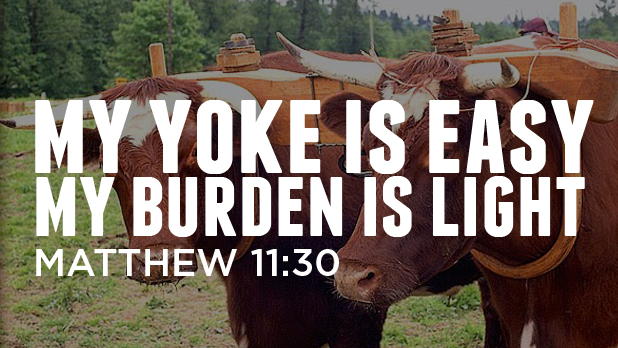
Yoke_Is_Easy

I wonder what the disciples thought when Jesus said, “my yoke is easy, and my burden is light.

Bartholomew probably nodded along in agreement, James and John might have clapped in approval, but there’s a chance that Peter said what I think whenever I come across this passage: “Is he serious?

I mean, in reality, it would seem that what Jesus is talking about here is rather ironic. My yoke is easy and the burden is light? Coming from the one who said: take up your cross and follow me, those who wish to save their life must lose it, sell all of your possessions and give to the poor, let the dead bury the dead, is it easier for camel to go through the eye of a needle than for a rich person to enter heaven… it seems a little paradoxical for him to claim that is yoke his easy and the burden is light. 

When we take a step back and look at the greater picture of this address, Jesus’ invitation is not to the work burdened, nor the sin-burdened, but to the law burdened, to those who felt the heavy weight of religiosity. At a time when law observance was followed by some to a ridiculous degree, Jesus triumphantly invited the weary to come to him for rest.

The promise for the weary is not, however, a rest from inactivity. What Christ offers to the tired is not a vacation from the law but a less burdensome way of fulfilling it. At particular points during his ministry Jesus’ interpretation of the law was more lenient (observing the Sabbath) and at other times more stringent (divorce, acts of mercy, forgiveness). The main thrust being that the weighted matters of the law can be simplified by justice, mercy, and faithfulness.

Compared to the other law followers of his time, Jesus is offering a lesser burden of religious existence. Yet, I can’t help but feel that there is something inherently wrong with the idea that Jesus’ yoke is easy and the burden is light.


It brings me more joy than I can describe to know that I have been serving as the pastor of St. John’s for more than a year. I have only begun to scratch the surface of our collective story, the way we have all come to know God in our lives, and I look forward to our continued journeys of faith.

Years ago a good friend of mine had just finished his first year in ministry, like me, when the “honeymoon” period came to an abrupt end. They say that the “honeymoon” period can last anywhere from 6-18 months; the church body becomes so excited with a new pastor that they are willing to look past the old problems to envision a new reality of faith. However, as with all things, the honeymoon eventually comes to an end. Honeymoons can end by a simple mistake from the pulpit, a forgotten phone call to a parishioner in need, or simply when the new shiny toy looses its luster. For my friend, the honeymoon came to a screeching halt during a church council meeting.

After serving for an entire year it appeared as if things were finally getting better for the church; they had new visitors attending worship, new programs had taken off, and they even had a few youth present during church gatherings. Some of the lay people had come to describe this new young pastor as the shot in the arm that the church had desperately needed. He was their little Messiah, inaugurating a new age and time for the church when it could return to its former glory.

The church council meeting took place in the damp church basement that smelled of mold and burnt coffee one evening shortly after his one year anniversary. The leadership of the church sat appropriately in the stiff folding chairs and exchanged pleasantries about the comings and goings of town until the real business came to the floor: The much needed update to the curtains in the fellowship hall. He describes the moment as a eternity of debating what color would best accent the needs of the hall where peoples’ feeling were hurt over the color-coordination. And then they talked about replacing the organ, and the sanctuary windows. They talked about the only two children in worship, just two, who were deemed disruptive to the older folk. And when they were done complaining about the children, they started to complain about my friend…

presbytery-580x491-300x253

The shut-in list was passed around the table until it arrived in his lap when someone said, “the only explanation must be that you don’t have this list. Our last pastor made sure that each of them were visited one a week.” “Thats wonderful” my friend replied, “Who visits them?” “The pastor does!” they all agreed in unison.

My friend looked down at the list and read the names of the faithful church members who could no longer attend. While he sat there in silence reading over the list one of the older women spoke up, “this is the way we’ve always done it, and we’ve always been successful

“Successful at what?” he said. “There are 36 names on this list. That means there were 4 more people on this list than there were in church last Sunday. I don’t think you’ve been successful at all.”

And thus the honeymoon came to an abrupt conclusion. 


My friend was young, brash, and foolish, and he was wrong. It is part of the pastor’s vocation to visit the shut-ins, to maintain a connection between the people and their church. But he was also right about something; the call of discipleship rest on all of us, not just the pastor.

Once, while I was working on a sermon, I got a call letting me know that a beloved woman from the church I was serving had just been admitted to the local hospital after having a stroke. I remember leaving my my computer and bible open on my desk, and driving straight to the hospital. I sat by her bed and held her hand as she talked to me about everything that had happened to her, her inability to move some of her fingers, her fears about being able to return to the normalcy of life, but the thing that stuck with me most was the last thing she said before I left.

“Thank you for coming to see me,” she said. “I miss my church. I’m so sorry that I haven’t had a chance to come hear you preach, but I’ve been too sick to leave the house and my hearing has gotten so bad. I miss the people. I’ve received a lot of cards that have helped to cheer me up. But you know what? No one has come to visit me. And the only reason you’re here is because I’m in the hospital.

I am a professional Christian. I have it easy. I am paid by you to live out my faith, order the church, preside over the sacraments, proclaim the Word of the Lord, and serve the needs of the community. I attend our committee meetings to help with the ordering of the church, I pray over the waters of baptism and the bread and wine of communion, I preach sermons from this pulpit every week, and when someone has a need I leave what I’m doing to be with them. Going to visit someone in the hospital is what I am called to do. However, one of the hardest things to accept and live into, is our shared commitment to take care of one another.

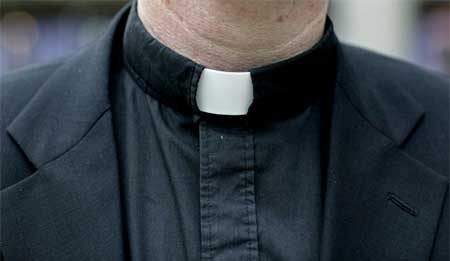
I went to see that woman in the hospital because I knew it was what I was supposed to do. I went because I am a pastor, but more importantly I went because I am a Christian. When I wear my clergy collar it is a constant reminder that I am called to act, think, live, and behave like a Christian. This collar has become my yoke. It sits uncomfortably around my neck as a constant reminder of who I am and whose I am. Im not proud to admit it but, sometimes, I need to wear it in order to live out my faith. Without this yoke around my neck it becomes too easy to fade into the crowd and forget my obligation to make God’s kingdom alive in the world. I am weak enough that I need to have something like this to help me remain faithful.

dogcollar

And so I wonder… I ask myself: Did I go see her because it was the right thing to do? Or did I go see her because that’s what you expect me to do?

When you wear something like this around your neck you begin to act differently. It is an inescapable demarkation that I have given my life to Christ to live a radically transformed life that often feels burdensome and heavy, unlike the easy yoke of today’s scripture.

Jesus calls the weary to come to him because his yoke is easy. A good yoke is one that is carefully shaped so that there will be a minimum of chafing for the animal. Jesus’ yoke therefore is one that is supposed to be kind to our shoulders, enabling us to carry the load more easily. But I will be the first to tell you, sometimes the weight feels unbearable.

Take my yoke upon you and learn from me.” In our discipleship we are not merely called to listen to Jesus’ words and reflect on them. In other words, our faith in not one that is limited to the mind. From Christ we are to learn not only to think, but to do. We gather in this place every Sunday to learn by listening and then living out God’s Word in the world. The yoke of discipleship, much like this collar, is not one that Jesus imposes on us, but one that he wore and continues to wear alongside us. 

When the weight of discipleship begins to feel too heavy for me, I call for Christ’s help with the load. I cannot do this on my own for I am a wretched man, full of sin and devoid of glory. Only through Christ’s love and grace am I able to take up my cross, which is to say I am able to take up my collar, and live as a Christian fully and deeply. 

Imagine what it would look like if we all started acting like Jesus here and everywhere. The burden of wearing a collar like this in the world is mine to bear. But think, if you can, how differently you would act if you wore one around your neck. That’s why I have placed 100 collars in our sanctuary this morning. Take one home with you, leave it in a place where you will see it regularly, and when you do, ask yourself, “how would I behave today if that yoke was hanging around my neck?”

Christ is on the other side of your yoke, helping you to carry this burden of being his body for the world; it is not easy being Christian. The cost of discipleship is one that will cost us our very lives. And just as Christ is helping to carry your yoke, so also are we called to help one another.

When we hear about the sufferings within our community we have been given the great privilege to help carry those who are in their deepest valleys while at the same time recognize that we need to be helped through our sufferings as well.

I count myself blessed to serve the needs of this church, to wear this collar that comes at a price, to take Christ’s yoke upon my shoulders because it is through God’s love, Christ’s mercy, and the Spirit’s presence through people like you that the yoke becomes easy and the burden is light.

Let us all put Christ’s yoke upon our shoulders, let us take up our collars to live as Christ’s body for the world, serving the needs of others while lifting up one another in faith.

Amen.

Devotional – Romans 7.15

Devotional:

Romans 7.15

I do not understand my own actions. For I do not do what I want, but I do the very thing that I hate. 

Weekly Devotional Image

While I was in seminary I became fascinated with the way particular theologians lived their lives. I would read the great treatises and reflections from the likes of Augustine, Aquinas, Calvin, Luther, Wesley, and Barth and have my mind opened to the great wonders of God’s interaction with creation. Their words became life-giving for me as I found myself persuaded by how they understood the world and their critiques of human behavior. However, for as much as I loved their writing I became frustrated with the ways they lived out their faith. With every wonderful theologian I discovered a dark and dangerous life of sin that appeared incompatible with what they were writing about.

Church Dogmatics

Church Dogmatics

For example: Karl Barth, my theological mentor, wrote the massive collection of Church Dogmatics which have slowly become earmarked and absorbed throughout my brief career in ministry. Barth engaged a new theological perspective focused on the paradoxical nature of divinity while at the same time opposing the rise of the Nazi party and Adolf Hitler in Germany. Barth’s thoughts have greatly shaped my understanding of God and church and I am thankful for his witness to the divine in the realm of theology. But like all Christians, Barth was both a saint and a sinner.

vonk

In 1924 Karl Barth met the young and gifted Charlotte von Kirschbaum after he had been married for 12 years. They quickly hit it off and became enamored with one another to the degree that she was invited to live with the Barths beginning in 1929; a relationship that would last for 35 years. They worked together on Barth’s work and were indispensable to one another while creating the Church Dogmatics. While Barth’s wife, Nelly, took care of the children, he and Charlotte would take semester break vacations together. The relationship caused incredible offense among many of Barth’s friends and colleagues and Barth’s children suffered from the stress of the relationship.

After I learned about Barth’s academic and perhaps physical affair, it was hard for me to respect his writings. The dialectic theology that had been so compelling quickly collected dust on my shelf. It took a long time for me to return to Barth’s work, only after I reflected about the sins in my own life.

Sin is unavoidable. Paul reflected on his journey of faith and the temptation of sin in his letter to the church in Rome: “I do not understand my own actions. For I do not do what I want, but I do the very thing that I hate.” What an incredible reflection on sin. We know, those of us who have been raised in the faith, what not to do. We have been taught how to recognize the sinful temptations in our lives. We want to be good and make the right choices. But sin is unavoidable. We choose they very thing we hate and sin continues to creep into our lives with disastrous consequences.

I wonder how often we reflect on our sinfulness. We might hear about what to avoid from the pulpit or from scripture but do we admit our sins to ourselves? I will freely admit that for me it is far easier to reflect on the good things of my life than to admit my short-comings. Perhaps today is the day that we should join Paul and begin to wrestle with our sins. We can begin by admitting the inner conflict within us and then recognize that, like with Barth, God has come in the form of Christ to redeem even our greatest sins so that we can live into a new life of faith and forgiveness.


Go and Lo – Sermon on Matthew 28.16-20

Matthew 28.16-20

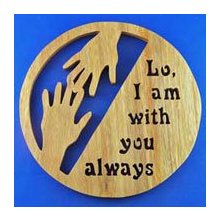
Now the eleven disciples went to Galilee, to the mountain to which Jesus had directed them. When they saw him, they worshiped him; but some doubted. And Jesus came and said to them, “All authority in heaven and on earth has been given to me. Go therefore and make disciples of all nations, baptizing them in the name of the Father and of the Son and of the Holy Spirit, and teaching them to obey everything that I have commanded you. And remember, I am with you always, to the end of the age.

with-you-always---web

I disliked the orthodontist. Every month I would see the appointment on the calendar and I dreaded moving closer and closer to the date. I often thought of excuses that could get me out of going, but I would inevitably have to return at some point to have my braces examined, shifted, and adjusted. Going to the orthodontist was dreadful because I knew, no matter what, I would walk out with my mouth hurting. Going to the dentist was fine, you get you teeth checked and cleaned, but the orthodontist… he was going to put pliers into my mouth and adjust all the little metal bits that were stretching all over my teeth.

When I think back on the orthodontist, it wasn’t so much the pain that I dreaded, but the entire experience. I can vividly recall the frighteningly exaggerated images of people smiling with dreadful teeth in a “before” image alongside of the perfectly straight and whitened smile in the “after” picture. I remember the orthodontist doing magic tricks in the waiting room in order to calm down the terrified children that only went to further their anxieties. But most of all, I remember the poster on the wall by the chair I sat in every month.

When it was my turn to take the seat, I would be propped back and told to wait for a few moments. From that position I could only see one thing, month after month, mocking me from the wall: The popular poem “Footprints

I am sure that many of you are familiar with the poem; the text is often set above an image of a beach or a sunset. But in case you’ve never been lucky enough to experience the poem I will share it with you now…

footprints-in-the-sand

Footprints-

One night a man had a dream. He dreamed he was walking along the beach with the Lord. Across the sky flashed scenes from his life. For each scene, he noticed two sets of footprints in the sand; one belonging to him, and the other to the Lord. When the last scene of his life flashed before him, he looked back at the footprints in the sand. He noticed that many times along the path of his life there was only one set of footprints. He also noticed that it happened at the very lowest and saddest times in his life. This really bothered him and he questioned the Lord about it, “Lord, you said that once I decided to follow you, you’d walk with me all the way. But I have noticed that during the most troublesome times of my life, there is only one set of footprints. I don’t understand why, when I needed you most, you would leave me.” The Lord replied, “My precious, precious child. I love you and I would never leave you. During your times of trial and suffering, when you saw only one set of footprints, it was then that I carried you.”

I disliked the orthodontist, but I loathed this poem. Month after month it sneered down from the wall as if it was mocking me and challenging me to accept my fate. What kind of twisted orthodontist places a poem about being carried through suffering on the wall by the chair with knobs, pliers, and wires with a bright light hanging above as if to interrogate you? But there was the poem. Even when I closed my eyes I could still see the text, the badly cropped image of the footprints in the sand, never leaving me alone.

As I grew older I continued to resent the poem, perhaps because of my mental association of the words with the orthodontist, but I also came to dismiss the poem in light of its cliche and trite claims. To me, it always sounded like the type of thing that an incompetent and bored pastor would offer a grieving family in the wake of a loss.

I can’t stand the poem. But what drives me craziest about it, is the fact that its true. Even with its overly simplistic explanation, with its trite metaphorical conclusions, with its cliche affirmations, it is absolutely true. In the midst of our sufferings it can be very difficult to experience God’s presence, but when we look back, when we reflect on the troublesome moments of life, we can see that it was God who carried us through. “My precious, precious child. I love you and I would never leave you. During your times of trial and suffering, when you saw only one set of footprints, it was then that I carried you.”

Make-Disciples

The end of the gospel according to Matthew. Mark ends abruptly with the women running from the tomb say nothing to anyone because they were afraid. Luke ends with the people constantly praising in the temple for all they had seen and witnessed. John ends saying the gospel could not contain everything that Christ said and did. But Matthew’s gospel ends with the promise of the never-failing presence of Christ. 

The eleven disciples went to Galilee, as they had been told to do, and there on the mountain the saw the risen Christ and they worshipped him, though some doubted. And Jesus told his friends, “All authority in heaven and on earth has been given to me. Go therefore and make disciples of all nations, baptizing them in the name of the Father and of the Son and of the Holy Spirit, and teaching them to obey everything that I have commanded you. And lo, I am with you always, to the end of the age.”

Even though they were in the presence in the resurrected Christ, even though many of them worshipped him, some doubted. There will always be those who question what they worship. Faith is never as perfect and clear as we like it to be; our ways our cloudy and the ways of God are a great and deep mystery. With worship and reverence, doubt is almost always waiting in the shadows, prepared to creep in at our most vulnerable moments.

However, doubt is not the opposite of faith. Show me a person without doubt and I will show you their lack of faith. Doubt helps fuel our faith because it encourages us to question and ponder. Doubt cannot be overcome with arguments, logic, speech, sermons, and reason; the best bible studies and preaching cannot erase our most fundamental doubts. Instead, we need to bring our doubts out of the shadowy recesses of our minds, and venture with them toward God in prayer.

And while some doubted, Jesus gave them their final commandment: Go therefore and make disciples. The church that is not going out, the church that is not on the move sharing the story, is not the trinitarian and believing church that Christ is talking to. We were not told to build a nice and beautiful church in the Shenandoah valley, show up for an hour on Sunday mornings, remember the same story over and over, surround ourselves with people who look, act, and talk just like us, and then return home until the following week. We have been told to GO! Share this incredible story with people who have ears to hear and eyes to see.

We often treat this building/sanctuary like our home. We find comfort here. I cannot tell you how many times I have heard some of you say, “When I sit in these pews, when I see the Good Shepherd stained glass, it feels like I’m home.” But my friends, if we hear anything that God is saying today it is this: home is on the go, home is where we meet God in others outside of this place. 

55896

Even when you feel like God is gone, when you feel lonely and abandoned by your Creator, God is still there. There are always days of faith, and days of doubt; days of peace, and days of war; days of joy, and days of sorrow. The end of Matthew reminds us that Jesus is still Emmanuel, “God with us.” Even when we share the story with someone and feel as if we have failed to convey the gospel, we are not alone. God is with us, even to the end of the age. We have been baptized into the Father, Son, and Holy Spirit, we have been brought into the protection and possession of God, we are incorporated into the church and have been surrounded by a new family that has vowed to keep us close, raise us in faith, and nurture us in love.

The disciples’ journey to share the good news with the nations was not an easy adventure. The books of Acts reminds us again and again how often the disciples were harassed, ignored, and persecuted. I am sure that, at the ends of their lives, many of them wondered why God had abandoned them at their worst moments. Perhaps some of them were fortunate enough to hear those familiar words: “My precious, precious child. I love you and I would never leave you. During your times of trial and suffering, when you saw only one set of footprints, it was then that I carried you.”

Many years ago a man named Samuel Morrison spent 25 years of his life as a Christian missionary in Africa. Maybe, while a younger man, he had heard the words that we read today: Go therefore and make disciples of all nations, baptizing them in the name of the Father, Son, and Spirit and teaching them to obey everything that I have commanded you. Maybe he felt the call of God to do exactly that and left behind the familiarity of home to be Christ’s body for the world.

After 25 years of giving it his all, it was time to return home. There had been days of great success where Samuel had brought many to the knowledge and love of God, but there were also days of great suffering and fruitlessness. When it came time to go home, he boarded his ship and bid farewell to his missionary field of Africa.

And so it came to pass that Teddy Roosevelt was on the same ship with Samuel Morrison returning from a three-week hunting adventure in Africa. Whether they knew about one another’s presence or not, they both sailed across the Atlantic back to the United States.

When the boat arrived in New York City, Samuel was thrilled to discover countless individuals who had gathered at the port with banners and signs echoing cries of “welcome home!” He even noticed a band playing on the dock in celebration of a successful voyage. Samuel’s spirits were high and he truly felt the love of God in his soul.

However, when Samuel made his way down the steps off of the ship, he was disappointed to discover that the crowds, and the signs, and the band were all for Teddy Roosevelt. Thousands had gathered to welcome home a man who had been hunting and killing animals for three weeks; Samuel Morrison had spent 25 years sharing the Word of God, and no one was waiting for him.

He weaved his way in and out of the crowd, disappearing into the shadows, and was quickly lost in the multitudes. Samuel Morrison felt abandoned by God. He found himself walking through the empty streets and alleys of New York praying and disappointed in God. “Why God? Why have you left me alone? Where are you now? I did what you called me to do. I left everything behind to follow your Son and this is what happens when I return home? I gave 25 years of my life for your kingdom! Where are you!?”

Silence. Samuel Morrison walked in silence after screaming out to the Lord and demanding to know what had happened. He continued to walk alone until he heard a small voice, as light as the wind: “I am right here my Son, and you are not home yet.

Amen.