Prisoners of Hope

Zechariah 9.9-12

Rejoice greatly, O daughter Zion! Shout aloud, O daughter Jerusalem! Lo, your king comes to you; triumphant and victorious is he, humble and riding on a donkey, on a colt, the foal of a donkey. He will cut off the chariot from Ephraim and the war-horse from Jerusalem; and the battle bow shall be cut off, and he shall command peace to the nations; his dominion shall be from sea to sea, and from the River to the ends of the earth. As for you also, because of the blood of my covenant with you, I will set your prisoners free from the waterless pit. Return to your stronghold, O prisoners of hope; today I declare that I will restore to you double.


People of Cokesbury Church: the time has come to rejoice! And I don’t mean the easy-going, carefree, yeah we’re happy kind of joy, but jumping on the pews, putting your hands in the air, shouting to the Lord kind of joy. Glory glory glory!

Behold! Our king comes to us, he is triumphant and mighty and victorious. He comes humbly on the back of a donkey. He will destroy the tanks of armies and the defenses of countries. The missiles and the guns and weapons will be obliterated and peace will reign. Our donkey-riding king will rule from east to west and over the whole earth.

We’ve got reason to celebrate! Our king frees us from the waterless pit of our despair and depression. We prisoners of hope have been delivered.

Or maybe, we don’t feel like celebrating. Perhaps our lives don’t match up with the glory described by Zechariah. Maybe the world is a little too broken for peace to rain down like waters. Perhaps we don’t feel like dancing and shouting because we are stuck in a pit; a pit of anger or bitterness or fear or shame or loneliness.

pit

There was a man who was walking down the street when all of the sudden he fell into a deep hole. The walls were so steep that he couldn’t climb out and after struggling for a time he began to cry out for help.

A doctor was passing by along the road and he looked down into the pit when the man yelled up, “Hey! Can you help me out?” The doctor thought about it for a moment while stroking the stethoscope around his neck, and then he reached into his pocket, wrote a prescription, dropped it into the hole, and kept walking.

Then a preacher came walking along and the guy shouted up, “Hey Reverend! I’m stuck down here in this hole, can you help me out?” The pastor very slowly and deliberately put his hands together, said a prayer for the man, and kept walking.

Next a sweet older woman from the local church came up to the edge of the hole and the man yelled, “Excuse me! Please help me out of here.” The woman stared right into the man’s eyes and said, “Don’t you know that God helps those who help themselves?” And with that she went on her way.

Finally, a friend walked up and the man shouted, “It’s me, I’m stuck in the hole, can you help me out?” To which the friend jumped right down into the hole. The man said, “Are you stupid? Now we’re both stuck down here!” And the friend said, “Yeah, but I’ve been down here before and I know the way out.”

Today I am forever hearing about how we need to get others to accept Jesus Christ as their personal Lord in Savior. As if people are wandering around aimlessly looking for something to give meaning to their lives, and so long as they open up their hearts Jesus will be there waiting for them.

The problem with all of that is the fact that Jesus is the king who comes to us, not the other way around. We often get trapped in the pit of believing that we’ve got to go looking for Jesus when he’s the one looking for us.

Our Lord is the one who finds us wandering around the pit of our sorrow and jumps in to show us the way out. Jumping into the pit, after all, is the great story of scripture. God saw what God had made in Genesis and jumped down into the Garden to make humanity in the divine image. God saw Jacob struggling with his relationships and identity and jumped down to wrestle with him by the banks of the river. God saw the suffering of God’s people in Egypt and jumped down to call Moses from the burning bush. God saw the directionless plight of the people and jumped down to anoint David to rule as king. God saw the brokenness of the world and jumped down to take on flesh in the form of a baby born in a manger.

Jesus is the king who jumps down into the pit of our existence and offers us hope.

Zec9

I’ve only been here a short while, but I’ve already seen signs of hope in this church and in this community. Complete strangers in my neighborhood have introduced themselves simply because I’m new, employees at particular businesses have gone above and beyond to be kind and welcoming, a certain someone at the church even gave my wife a bouquet of roses last week.

And from where I stand this morning I see hope. I see individuals whose lives have been transformed by the gospel. I don’t even know many of your names but I know God has acted in your lives, I know that God has delivered you from the pit, because otherwise you wouldn’t be here.

From where I stand I see a church not built on demographics and like-mindedness. I don’t see a church consumed by consumption and driven by desire. I don’t see a church fixated on financial matter or obsessed with objectives.

I see a church of different opinions but similar love. I see a church of faith and fellowship. I see a church of love and hope.

This is a church with prisoners of hope.

We are captivated more by the optimism of “what if” than the pessimism of “it’s too late.” We are held in bondage to the belief that we are more than the mistakes of the past, more that the pain of the present, and more than the unknown of the future. We are prisoners of hope.

And our hope is in Jesus Christ, the one who finds us in the pit and shows us the way out. To be clear: the way out is a way out. It’s not a simple affirmation or secret sentence that fixes everything. Jesus invites us to follow him on the way that leads to life.

The church, as the body of Christ, as the gathering of disciples on the Way, is not a building or a program or an institution. It is neither stuck nor static. The church is a living, breathing, and moving thing.

Institutions care about maintaining the institution, keeping the doors open from week to week, working to keep it working like the past. Movements, however, care about the people, about keeping them from falling into pits of despair and jumping in when someone falls in regardless.

We move on the way out of the pit by following our king. And our king is not like worldly leaders. Our king doesn’t live in a white house or control the gathering of nations. He’s not waking up with Wall Street or guiding troops into battle. Our king comes to us humble on a donkey.

Christ is victorious against the powers of this world, the powers of nations and economics and militaristic might. And even more Jesus is victorious over our greatest enemy, death. But this doesn’t mean that death no longer stings, it does. Without the sting of death there would be no need for hope.

maxresdefault (4)

And we are prisoners of that hope. We look out at this broken and shattered world around us as an opportunity to be put back together. We don’t limit our vision of the man on the corner to his economic situation, we don’t see the young teen loitering as a criminal, we don’t see the loud neighbors as a threat to our security. We are prisoners of hope, we believe in the goodness of all people even when they try to prove the contrary.

This was my first full week at the church and I was wrong about what to expect. I figured that you all knew that I would be overwhelmed by having to unpack my office and adjust to a new community. I assumed that you all would leave me alone for a couple weeks until I got settled. But you all just kept showing up everyday as if I was your pastor.

And you’ve had your questions and I tried to field them as best as I could. I listened to your thoughts and reflections. But if you came by the office this week you know that I won’t let you leave without asking a question of my own: Why Cokesbury Church?

There is a plethora of churches in the Woodbridge community, churches of all shapes and sizes and worship styles. So of all the churches here in this place, why do you choose to gather at this place?

“I’ve been going here as long as I can remember…”

            “The people are just so friendly…”

            “Someone signed me up for the Flea Market and I’ve been coming ever since.”

I’ve enjoyed hearing the answers because they’ve provided a slice of the identity of this place, but one particular answer has really stuck with me.

I won’t say who it was, but someone from this church came by this week and I asked him or her why he or she came to this church. The person thought about it for a good amount of time before answering. “I was lost and Jesus found me in this place.”

Notice: the answer wasn’t I found Jesus here, but that Jesus found me in this place.

All of us have been lost at one point or another. We have fallen into pits that we simply could not escape on our own. We’ve been burdened by financial fear, relationship woes, or employment uncertainty. We’ve felt suffocated by limited direction, unending loneliness, or deep despair. We’ve been bullied, belittled, or berated. But Jesus found us and guided us out.

Thanks be to God that we are shackled as prisoners of hope. Thanks be to God that the Lord has delivered us from a faulty and limited vision of what can be. Thanks be to God that the Lord made a way where there was no way.

The promise of our hope, the hope that we are held captive by, is the restoration of all people and of all things. There is victory in Jesus, victory over the powers and the principalities bent on holding us down, victory over the steeps walls that feel inescapable, even victory over the chains of death.

I don’t know what most of you are going through right now. I don’t know what’s keeping you awake at night, what’s driving you crazy whenever you turn on the television, what causes your fists to clench up whenever you hear it. I don’t know what you’re afraid of, what you’re missing, or what you need. I don’t know where you’ve been, where you are, or where you’re going.

But I do know that Jesus does not leave us abandoned. Jesus jumps down into the miry bog of our lives and says, “Follow me, I’ve been here before, and I know the way out.” Amen.

Devotional – Zechariah 9.9

Devotional:

Zechariah 9.9

Rejoice greatly, O daughter Zion! Shout aloud, O daughter Jerusalem! Lo, your king comes to you; triumphant and victorious is he, humble and riding on a donkey, on a colt, the foal of a donkey.

Weekly Devotional Image

I just entered into my fifth year of ministry and one of the things that has sustained me the most throughout my vocation is the weekly reading of sermons that have nothing to do with the sermon I’m working on. I quickly learned that when you make the jump from receiving sermons to preaching sermons, you lose the important part of worship that is hearing the Word afresh and anew.

Some of my favorite preachers come from a variety of backgrounds and denominational affiliations, but perhaps my favorite preacher is Stanley Hauerwas. What makes Hauerwas’ sermons so powerful is the fact that he’s not a preacher. Though deeply involved in the work of ethics and theology, Hauerwas is still a lay-person and when he proclaims the Word from the pulpit it hits me more than from a lot of long time clergy.

Another reason I love Hauerwas’ preaching, perhaps the most important reason, is that he can get away with saying a lot more from the pulpit than most pastors precisely because he’s not a pastor. There’s a delicate balance the preacher has to find between saying what God wants to be said, and doing it in such a way that it doesn’t alienate everyone such that they won’t be back the next Sunday. But Hauerwas, as a layperson, can say just about whatever he wants.

His sermon on the Fourth of July is one that he stuck with me ever since the first time I read it, and particularly the last few paragraphs. Hauerwas again and again makes the claim that we are so entrenched in the worship of America that we can no longer recognize it for the idolatry that it is. He says that this is evident in the way that the political arena has overshadowed the reality of the church and in how we no longer question if the country has done anything wrong. Instead, we assume that if something is done in the name of America, it is for the greater good.

Bible-and-Flag

Try saying that from the pulpit in a church during the fourth of July weekend and you might not have a church to come back to the following Sunday.

But at the end of the sermon Hauerwas makes one final claim that is worthy of repetition. If the fireworks that burst in the sky and the red, white, and blue on our clothing are more captivating than the bread and wine at the table, then we are not the church. That’s not to say that we shouldn’t join together with neighbors to celebrate our country’s independence, or that we can’t sing patriotic songs or eat hot dogs or light off fireworks. But if all of those things are more important to us, if they speak a greater narrative in and to our lives, then we have to ask ourselves whom we really worship.

The prophet Zechariah proclaims that our King comes to us humble and riding on a donkey. As Christians, our King is not in the fireworks and the festivities and the food of the fourth of July. Our King is with the marginalized, the fearful, and the lonely.

Our King is not of this world. Our King rules the world.

Our King is not in a flag or in a pledge of allegiance. Our King is crucified and calls for our allegiance.

And so rejoice, Christians, sing aloud, for our King is triumphant and victorious. But he is not the same thing as our country.

The Story (First Sermon for Cokesbury UMC)

Romans 12.1-2

I appeal to you therefore, brothers and sisters, by the mercies of God, to present your bodies as a living sacrifice, holy and acceptable to God, which is your spiritual worship. Do not be conformed to this world, but be transformed by the renewing of your minds, so that you may discern what is the will of God – what is good and acceptable and perfect.

IMG_2767

Years ago there was a young man who was about to embark on his second appointment in the United Methodist Church. He had gone to the right seminary and learned from the best professors. He had served his first church faithfully, but the time had come for him to follow his call at a new church.

However, he didn’t know much about where he was being sent. All he knew was the name, John Wesley UMC, and the location, off in the middle of nowhere Georgia.

For four years the young man had worked hard for his first church, he had made just enough mistakes to know what was right and what was wrong, and when he drove into town with the moving van full of his belongings, he went to the church before he went to the parsonage. Filled with excitement and hope he drove out on the old country road but when he arrived at the right address there was no church. So he doubled back and went down the empty road until he found a very disheveled looking building with the biggest and the most hideous tree he had ever seen blocking the sign and most of the church.

The place needed some work: a new roof, new paint, new everything really. But above all things, it needed to have that tree uprooted. The young pastor stood on the front lawn of the property and the wheels started clicking in his mind… How many people had driven past the building without evening knowing it was a church? How could they let such an ugly tree blemish God’s house? And then he knew what he needed to do.

He got in his car and went back to the parsonage, but instead of unpacking all his belongings and getting settled, he was on a mission for one particular box, the one labeled: chainsaw.

Hours later, with sweat dripping from his brow, the pastor stood proudly on the front lawn with the church now being completely visible from the road. The marquee shined with a new brilliance, the side of the building was available for all to see, and the old gnarled tree was perfectly arranged in neat even logs stacked in the back.

A few days passed and the young pastor continued to day dream about how many more people would be there for his first service simply because the tree was gone. And he was working on his first sermon when the telephone rang; it was the District Superintendent. For a fleeting moment the young pastor thought that maybe the DS was calling to congratulate him for taking the initiative to beautify the church, but the DS said, “I hope you haven’t finished unpacking, because you’re being sent to a different church.

You see: the church was named John Wesley UMC for a reason. Back in the 1730s, John Wesley himself had planted that tree during his mission to the colony of Georgia and the community built a church around the tree to commemorate where the founder of the movement had once served. For centuries the tree stood as a reminder of all the Wesley stood for, the roots were reminiscent of the need for a deep love of the scriptures, and its shade was enjoyed like the mustard bush from the time of our Lord.

And that young, foolish, and brazen pastor had chopped it down to the ground.

download

I haven’t been here long, but I love how we have these open windows in the sanctuary, windows through which we can see the church property. And I want to be clear: no trees have been chopped down since I arrived in town!

Stories are remarkably important. They contain everything about who we were, who we are, and who we can be. Stories held within a community help to shape the ways we interact with one another and how we understand what it means to live in this world. We tell stories all the time to make people laugh, to make people cry, and to teach important lessons about life.

We are the stories we tell. And today we live in a world of competing narratives; people and organizations are constantly bombarding us with information regarding what we are to think and, perhaps even more frighteningly, who we are to be.

We only need to think back to the recent presidential election to see how much it further divided us as a country, we only need to turn on the television to see how violence and anger and fear are separating us as a people, we only need to get online for a brief moment to see how broken this world really is.

Every single day we are thrust into a world that tells us how to think, speak, and act through stories.

But God’s Word, through the apostle Paul, looks out to the world and dismisses all of it. Do not be conformed to this world, but be transformed by the renewing of your minds! Do not let your favorite reality television show dictate how you interact with other people, do not let the news channel send you to the corner to cower in fear, do not let your political proclivities limit your relationships with those who are different from you.

Instead, be transformed by the renewing of your minds. Open your eyes to the wonder and beauty of scripture such that it speaks new and good and true words into your lives. Let the story of God with God’s people wash over your like the waters of baptism such that you can take steps into a new life. Feast on the bread and the cup at this table such that it will bring you to the upper room from long ago and you can hear Jesus speak into your ear: “You are mine and I am thine.”

We are the stories we tell.

When the stories of the world become the only stories we tell then we fail to be the church that God is calling us to be. If who we voted for, or what team we celebrate, or what show we love is more important than the living God, we are no longer the church at all.

Paul proclaims that we can be transformed by the renewing of our minds by telling the story that is our truest story. The story of God in the flesh, of a baby born in a manger, a child who sat at the feet of the teachers, a man who fed the hungry, clothed the naked, healed the sick, a savior who turned the world upside-down, a Messiah who died on a cross, a Hope that broke forth from the tomb three days later.

That is our story.

Two weeks ago I sat down at a Chili’s in Hampton with four people from Cokesbury Church. We introduced ourselves and got to know one another. I asked questions in order to find out what the church was like, and they asked questions to find out whether or not the church would like me.

It was a hope filled conversation as we casted visions about what the church can be. But if you had been with us an hour earlier in the midst of Annual Conference with all of the other United Methodists from Virginia, you would’ve felt the whiplash.

According to the ways of the world, Mainline Protestant Christianity is floundering in the United States, worship attendance is plummeting, and churches are being closed regularly. Christianity has lost its status in the political arena, we are becoming biblically illiterate, and young people are absent from the reality of church. At Conference we went over all the statistics, we learned about how the average age of a member of a United Methodist church is 57. We learned that most churches have attendance that has stayed the same or dropped even when the communities surrounding the churches are growing. And we learned that most people who claim to be part of a United Methodist Church invite another person to worship once every 33 years.

By the standards of the world, the church is between a rock and a hard place.

Well then thanks be to God that Jesus is the solid rock upon which the church stands! Thanks be to God that we don’t need to be conformed to the ways of the world, but instead we get to be transformed by the renewing of our minds! Thanks be to God that the Lord is not in the business of statistics and analytics, God, our God, is in the business of making all things new!

IMG_2768

The story of Cokesbury Church is entering a new chapter. God is breathing new life into this church, and not through a new pastor, but through our willingness to know and believe that God will provide. We can name and claim this because our church story is part of God’s great story.

And at the heart of what it means to be the church is a willingness to learn one another’s stories. We learn one another stories by gathering here for worship, by meeting together to study God’s Word, and by going out to serve the community. We learn one another’s stories so that we can cherish the trees of our foundation while at the same time look to the future with hope because God is doing a new thing.

In time I will come to learn your story. I will discover who you are, what you believe, how you think, and how you act. And in time you will come to learn my story, how I felt called to the ministry, what I believe, how I think, how I act. But in learning one another’s stories we will be doing so much more. In fact, in telling our stories we will discover how we are caught up in God’s great story.

Friends, we are more than the stories of the world. We are more than the statistics and the estimates and the analytics. We are God’s people and this is God’s church!

And this is why we read from the story that is our story. The story of scripture speaks greater truths than simple affirmations or facts. In it we learn about who we are and whose we are.

According to the ways of the world the church is in a difficult place. But I’m not worried about any of that, I’m not worried about anything because my hope is not in me, my hope is not built on the ways of the world; my hope is built on nothing less than Jesus’ blood and righteous. I dare not trust the sweetest frame but wholly lean on Jesus’ name!

Christ is the solid rock upon which this church stands; all other ground is sinking sand.

We can believe in the future of the church because our faith is in almighty God! We are here to share our stories so that we might learn more about God’s story. The ways of the world, the stories competing for our allegiance, will falter and crack and fissure, but God’s story is eternally unshakable.

Do not be conformed to this world, but be transformed by the renewing of your minds! Tell the story that is our story! Remember your truest identity in Christ Jesus. Listen for who you are and whose you are in the Word of God. Remember your baptisms and be thankful. Come to the table and see that the Lord is good. Do not be conformed to this world, but be transformed by the renewing of your minds! Amen.

IMG_2769

The Oval Office Of The Universe

Acts 1.6-14

So when they had come together, they asked him, “Lord, is this the time when you will restore the kingdom to Israel?” He replied, “It is not for you to know the times or periods that the Father has set by his own authority. But you will receive power when the Holy Spirit has come upon you; and you will be my witnesses in Jerusalem, in all Judea and Samaria, and to the ends of the earth.” When he had said this, as they were watching, he was lifted up, and a cloud took him out of their sight. While he was going and they were gazing up toward heaven, suddenly two men in white robes stood by them. They said, “Men of Galilee, why do you stand looking up toward heaven? This Jesus, who has been taken up from you into heaven, will come in the same way as you saw him go into heaven.” Then they returned to Jerusalem from the mount called Olivet, which is near Jerusalem, a sabbath day’s journey away. When they had entered the city, they went to the room upstairs where they were staying, Peter, and John, and James, and Andrew, Philip and Thomas, Bartholomew and Matthew, James son of Alphaeus, and Simon the Zealot, and Judas son of James. All these were constantly devoting themselves to prayer, together with certain women, including Mary the mother of Jesus, as well as his brothers.


On Tuesday afternoon I went into the Preschool and sat on the floor of the yellow room with our Preschoolers. In mere minutes I would be walking with them into the sanctuary for their end of year performance and graduation, but for the moment we were sitting crisscross applesauce on the alphabet carpet.

Some of the kids were visibly nervous, rocking back and forth on the floor knees tucked into their chests, others were focused and practicing the words to the songs under their breath, and others were completely oblivious to what we were about to do and instead were making faces at one another and then cackling from the depth of their hilarity.

When I got the signal from our director that the time had come to stand, line up, and make our way into the sanctuary I bounced off the floor and called for attention. I said, “My friends, whose ready to have some fun?!” To which they responded with a conflated and cacophonous scream.

“Well,” I continued, “Before we go upstairs I want everyone to take a deep breath. Good, hold it, now blow it our slowly and listen carefully. I want you all to know that no matter what, this is going to be great, because your families love you, I love you, and Jesus loves you.

One by one they lined up in the hallway in their specific order and just before we started to move one of our boys grabbed me by the pant leg. “But Pastor Taylor, I have a question.” Figuring he needed to use the bathroom or some such thing, I got down on my knees and said, “What is it Keller?” He said, “I know my parents love me because they’re here, and I know you love me because you’re right here, but where’s Jesus?”

I said, “C’mon Keller! We’re seconds away from the program beginning and you want to know where Jesus is?! I don’t have time for this theological nonsense!”

Just kidding. But in the moment I thought about how to answer the question, what would satisfy his longing and curiosity. Where is Jesus?

I thought about placing my one hand on his shoulder and using my other hand to point toward his chest and saying, “Keller, Jesus is in our hearts!”

I thought about grabbing a nearby children’s bible to show him a picture of the Ascension, but of course, children’s bibles only contain stories like Noah’s Ark, Jonah and the Big Fish, and an Easter Sunday that has more to do with budding flowers than a dead man being raised back into life.

So I settled for this: “I’ll tell you where Jesus is after we finish the program.”

jesus-christ-is-lord-by-thomas-hawk

When the disciples came together they asked Jesus, “Are you now going to restore the kingdom to Israel?” After years of listening to parables, watching miracles, and being fed out of nowhere, after encountering their resurrected friend, they still didn’t get it. Jesus replied, “There are some things you are not meant to know. But you will be my witnesses in Jerusalem, in all Judea and Samaria, and even to the ends of the earth.”

When he said this, the disciples watched as he ascended into the sky and a cloud took him out of their sight. And two men in white came by and said, “Men of Galilee, why do you stand with your eyes in the sky?” The disciples returned to Jerusalem and they devoted themselves to prayer while they waited.

The Ascension is important. Sadly, however, it is one of the Sundays that gets lost in the liturgical year and is overshadowed by the likes of Pentecost and Christ the King. This story of what took place 40 days after the first Easter answers our little preschooler’s question about where Jesus is, but it also does so much more.

The Ascension is not about where Jesus is, but where Jesus rules. In the Ascension, Jesus takes his place at the right hand of the Father and becomes the King who rules our lives here and now. In this spectacular moment, a vision that would keep our eyes in the sky, God brings full circle the incarnation that took place in Mary’s womb. God became what we are, and as Jesus returned to the Father the humanity of our existence was brought into the divine.

Far too often we use the Ascension story to explain Christ’s absence from our lives, we use it as the means by which we calm the questions of preschoolers, and comfort those who are in the midst of suffering. But the Ascension loses it’s beauty, majesty, and power when we limit it to the physical location of the Son of God.

When Jesus ascended to the right hand of the Father he received the authority to rule here and now through a particular people called church; people like us.

Today, we throw the word “heaven” around like we throw around the word “love.” We use it as a filler or a descriptor to such a degree that it no longer means anything. And therefore when we say that Jesus ascended into heaven and sitteth at the right hand of God the Father Almighty, we no longer know what we are saying.

In the Ascension, Christ is exalted to the Oval Office of the universe to rule forever and ever.

I use the Oval Office specifically because the Oval Office means something to us, it embodies power and gravitas and even a little bit of fear. It is the place where things get done, where decisions are made that have an effect on our lives, it is where our leader rules.

But of course, our real Leader doesn’t reside in a White House, nor does our Leader work in an Oval Office made by the hands of morals.

Our Lord is Jesus Christ who rules from the Oval Office of the Universe.

qp13YsS

Just as we throw around the term “heaven” today without knowing what we are saying, the same thing happens with “the mission of the church.” Ask any good United Methodist about the mission of the church and they will tell you that we are here to make disciples of Jesus Christ for the transformation of the world. However, the church is already the better place that God has made in the world.

It would seem then, that perhaps the real mission of the church, particularly in the world we live in today, is to reclaim the understanding and belief that Jesus is Lord.

            Because we either live under that reality or we don’t.

After my brief theological conundrum in the basement, I walked up the stairs with the kids and we entered the sanctuary for the program. The kids stood attentively as I welcomed the families and friends, they belted out the songs with such volume that they drowned out the sound system with the backing music, and then we came to the final song.

It’s really simple and it goes like this: “I like to jump every day, I like to jump every day, I like to jump every day because I know He loves me, Jesus loves me, Jesus loves me yeah, yeah, yeah, Jesus loves me, Jesus loves me yeah, yeah, yeah!” And of course, I popped out into the chancel area and jumped with the kids while we were singing. The second time through its all about clapping, so we did that. And then the third time through we sing about dancing, and we did that as well.

While performing with the kids I could hear the parents laughing and clapping along as I made a fool of myself with a bunch of 3, 4, and 5 year olds, but the thing is, they really meant it. The kids threw every bit of themselves into the three verses of that song and they jumped, clapped, and danced with reckless abandon.

After the last song I announced the graduates of the Preschool, those who are going to kindergarten in the fall, and then I dismissed everyone from the sanctuary for a meal in the fellowship hall.

While the families and children were milling about I went to go find Keller to finish our conversation about the location of the Lord. I scanned through all the people and thought about what I might say, what story I could tell, how I could make it intelligible to a 4 year old when I felt another tug at my leg.

Keller was standing there with a huge smile on his face. I said, “Keller, you did a great job and I have my answer for you about where Jesus is.” And he just stood there grinning from ear to ear and said, “I know now Pastor Taylor, I felt him up there when we were dancing!”

2016-05-05-niles-c

Our Christ is a cosmic King who rules and reigns over us. In the ascension Jesus broke forth from the chains of being one of us, among us, into a freedom to rule with authority and power at the right hand of God. We are now his witnesses in Staunton, Augusta County, and to the ends of the earth. As Christians we believe that Christ is with us in the midst of being this strange, wonderful, and beautiful thing called church. Jesus makes himself manifest with us when we break bread, when we pass the peace, when we encounter the stranger, and even when we’re dancing in the sanctuary.

The story of the ascension is transformative for us Christians because in it we recognize our inability to go it alone. The first disciples met together, traveled together, worked together, prayed together, wept together, and rejoiced together, and even danced together all in Christ’s name. Just like them, we need each other’s witness and support, challenge and care, love and grace, to live into the reality that the church is the witness to Jesus Christ.

Jesus reigns from the Oval Office of the Universe at the right hand of God the Father Almighty. But for as much as Jesus sits at the right hand of the Father, Jesus is also with us, the resurrected Christ is the one who makes possible our resurrection, who brings forth reconciliation in our lives, who offers us a story when we have no story, who dances with us, who weeps with us, who is our Lord. Amen.

Devotional – 1 Peter 4.13

Devotional:

1 Peter 4.13

But rejoice insofar as you are sharing Christ’s sufferings, so that you may also be glad and shout for joy when his glory is revealed.

Weekly Devotional Image

“Who are you?” That is without a doubt one of my favorite questions to ask, because the way someone responds to that simple question says a lot about how the individual understands who he/she is. If I asked you the question right now, how would you respond? Recently, I’ve discovered that when I ask the question, the first response is almost always “I’m an American.”

This is, of course, true for many people in the context I serve, and it speaks volumes about priorities and identities. If someone’s immediate response was “I’m a mother” or “I’m a father” we could assume that they understand their parental role as their most important and therefore the identity they identify with most. Similarly, if someone’s response was “I’m a Republican” or “I’m a Democrat” we could assume their political identity is their most important identity.

And answering with “I’m an American” can be a good and right thing, but if that is our first thought or response, it often shapes our understanding of Christianity rather than the other way around.

bible-american-flag

Over the last few months I’ve heard a lot of people talk about their fears regarding change in the cultural ethos and most of it has to do with feeling safe. For instance, “We need to have that wall on the southern border to keep us safe” or, “We should’ve elected Clinton because she would’ve kept us safe.” But as Christians, being consumed by a desire to remain safe is strange and almost unintelligible; we worship a crucified God!

Peter calls the church to “rejoice insofar as you are sharing in Christ’s sufferings.” In America, as Americans, we fell so safe in our Christian identities that we assume being a Christian and being an American are synonymous. Therefore we are more captivated by a national narrative (Freedom, Capitalism, Democracy) than by the Christian narrative (Suffering, Patience, Penitence). But to call ourselves disciples implies an acknowledgement that, if we want to take up our crosses and follow Jesus, we might find ourselves on top of a hill with a criminal on our left and on our right.

Taking our faith seriously is a difficult thing to do when it appears normative in the surrounding culture. Instead we fall captive to the other narratives that we believe dictate our lives. But the truth is that God is the author of our salvation, that the Holy Spirit determines our lives far more than any country, and that Jesus is our Lord.

So-who-are-you


On Stealing Sermons (and the similarities between Jesus and NT Wright)

strangely-warmed-spreaker-header

The team from Crackers & Grape Juice recently spent an afternoon interviewing Brian Zahnd (founder and lead pastor of Word of Life Church, a nondenominational congregation in St. Joseph, Missouri) for our lectionary podcast Strangely Warmed. During our time together we talked about the readings for the season of Easter during year A from the Revised Common Lectionary. For the sixth Sunday of Easter, Brian challenged us to make it all about joy (again) while the world struggles under the weight of the current political climate. If you want to hear the conversation and learn more about stealing sermons, the difference between making disciples and church members, golden calf ministries, and how Jesus (in the gospel of John) is like NT Wright you can check out the podcast here: Easter 6A – Brian Zahnd

Concept: Copy paste buttons on the keyboard. 3D rendering.

Bonus Sermon – The Bad Shepherd

I try to have my sermons finished by Thursday afternoon before being preached on Sunday. This allows me to truly experience Sabbath on Fridays and forces me to think about the scripture throughout the beginning part of the week rather than procrastinating until the end. But every once in awhile, something will take place during the week that necessitates a sermonic change.

Last Friday morning I woke up, read over the sermon one last time and it just didn’t feel right. With everybody online going crazy about the executive order for religious liberty and the House voting on a bill that would repeal and replace most parts of the Affordable Care Act, I felt like God was calling me to trash what I had written and start over. So I did (You can read that sermon here: “The Politics of the Church.“)

But I had already written an entire sermon and crafted a whole worship service around a central theme! So I asked the congregation to pray for me as I offered the new sermon, written later than usual, outside the normal connections through our whole service. And, because I wrote two sermons last week, I have included the sermon that wasn’t preached below…


Psalm 23

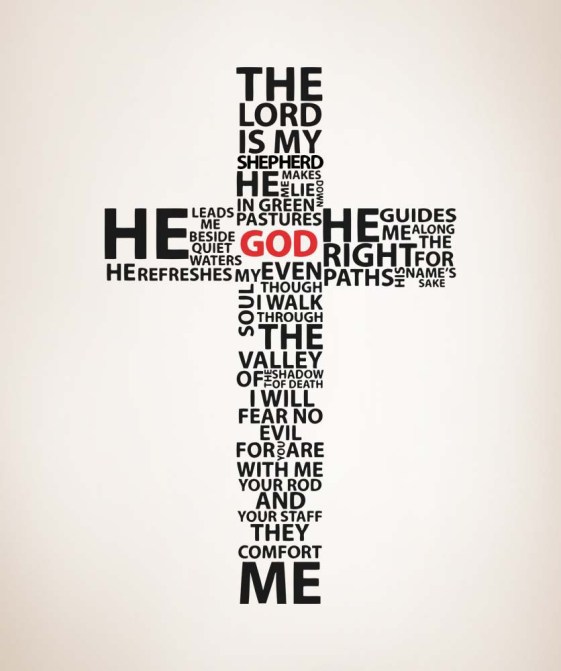
The Lord is my shepherd, I shall not want. He makes me lie down in green pastures; he leads me beside still waters; he restores my soul. He leads me in right paths for his name’s sake. Even though I walk through the darkest valley, I fear no evil; for you are with me; your rod and your staff– they comfort me. You prepare a table before me in the presence of my enemies; you anoint my head with oil; my cup overflows. Surely goodness and mercy shall follow me all the days of my life, and I shall dwell in the house of the Lord my whole life long.

ISHALLNOTWANT


“Pass the wine.” The party was getting on into the wee hours of the morning, and everyone was having a great time. The food was good and plentiful. The wine flowed profusely. The stories kept bubbling forth. “Remember that time we walked into town and everybody just kept staring at us, waiting for something to happen?” “Or what about the day we ate by the beach and talked about the future.” “I’ll never forget the looks on everyone’s faces when we walked out of town that one time and wiped the dirt of our feet.”

It was a great party.

There’s something about the stories and the food and the wine that help blind us from the reality of what is to come. On Thanksgiving we fill our bellies in denial of all the money we are about to spend during the Christmas season. On New Years Eve we clink the champagne in ignorance of all the mistakes we made and we believe that this year will finally be the one we get it all right. On Easter we tell stories about the resurrection in hopes that hope will not fade in the weeks that follow, but the normalcy of life slips in and our hallelujahs don’t have quite the force they did a few weeks ago.

But what did the host think during the party? While the friends were passing around the bottle and giggling with memories of the last few years, what was going through his mind? Was he buzzed with the joy of his compatriots as he walked around the table filling their glasses? Was he nostalgic about all they had been through and in denial of what was going to happen in just a few hours?

Did he think about the words to Psalm 23?

Throughout the gospel narratives Jesus is forever quoting and referring to the Old Testament, and in particular the Psalms. The psalms, it seems, are his prayers. They are familiar and well known and comforting. But while he sat at the table that night, that last night, when he told them the bread was his body and the wine his blood, I wonder if he thought about the 23rd psalm when he looked across the table and into the eyes of his friend Judas: “You prepare a table before me in the presence of my enemies.”

Full disclosure: I don’t enjoy preaching on well-known texts. Give me some obscure passage from Zephaniah or Joel and I will get up here and proclaim it with everything that I’ve got. In fact, I rather enjoy preaching on the passages we don’t know because we can all come to the text with a fresh perspective. But when we read a passage that everyone knows, a passage that we’ve all heard more times than we can count, the challenge becomes that much greater.

Like John 3.16 – For God so loved the world… As soon as the words hit the air most of us immediately wander in our minds to black tape under the eyes of sport figures, scratched notations in bathroom stalls, and college evangelists trying to save souls. And because of this we forget that John 3.16 is part of a much bigger story of Jesus meeting in the late hours with Nicodemus.

Instead, I could randomly flip open the bible, pick any verse, and I think we would receive it better than the well-known texts because we would not bring any of our own baggage to God’s Word.

But today we’ve got one of the most well known, perhaps the most well known passage in all of scripture: Psalm 23.

The Lord is my shepherd, I shall not want.

And already most of you have tuned out whatever I’m about to say. Because the moment we hear these remarkably familiar words, our minds jump back in time to memories of this passage. We start thinking about the last time we read the passage out-loud at a funeral. We remember sitting down on our Grandmother’s lap and hearing her repeat the words without looking in her bible. We are transported back to our childhood Sunday school classrooms where many of us were forced to repeat the psalm, out loud, from memory, in front of our peers.

Perhaps for some of us, the mere mention of the psalm elicits a feeling of joyfulness and peace. We think about the green pastures and the still waters and whatever stress we’ve got going on in our lives starts to fade away.

And maybe for some of us, the mere mention of the psalm elicits a feeling of strange and bizarre reflection. The green pastures and still waters are nice, but why in the world is God preparing tables for us in the presence of our enemies? Our cups are overflowing with many blessings, but why can’t we dwell with the Lord forever, and not just while we’re living?

It is remarkably difficult to approach this text with open eyes because it already means so much to so many of us.

But what did it mean to Jesus?

That night before he gave himself up, the evening of the Last Supper, did he think about the table being prepared before him with an enemy? Did he still believe that his cup overflowed with grace and peace and mercy even though one of his closest disciples was about to betray him for a couple pieces of silver?

In the midst of stress, fear, and anxiety the psalmist offers a strange alternative: the refreshing peace found in the Good Shepherd.

But is the Lord really a good shepherd? Yeah, God will set us down in the green pastures, and will lead us beside the still waters; whatever that means. God takes us down the right paths for his name’s sake, and even though we walk through the valley of the shadow of death, we will fear no evil.

Really? I don’t know about you, but I don’t think I have the kind of faith such that I could walk through a place or a time in my life described as the valley of the shadow of death and not be afraid. I get afraid every time I get a phone call from an older member of the church on their way to the hospital, every time I hear my son fall to the ground with a loud thud, and even when I’m hear at night in the sanctuary and all the lights are off.

And the rod and the staff? Those aren’t meant to be tools of comfort like a quilt or a duvet. Rods and staffs are meant to wring us and knock us back on to the right track when we’ve gone astray. And where does God eventually lead us? To a table prepared just for us in the presence of our enemies.

We love this psalm, we pray it and read it and hear it all the time. But sometimes, God sounds more like a bad shepherd than a good one.

Sometimes we hold it so close that we don’t think about what it really says, or even what it might’ve meant to the one we call the Good Shepherd.

I want to have the faith of the psalmist, I want to be able to look at the darkest valley, and the rod and the staff, and the table filled with my enemies with hope and joy. But this psalm isn’t really about me or us, nor is it about what we think of the Shepherd. It’s a psalm about who God is, and what God does for us, his sheep.

God’s protective power, God’s immense grace, is so great, so unimaginable, that God has the audacity to prepare a table before us in the presence of our enemies. A good shepherd would prepare the table in the presence of our friends and our families; not with the people who want to destroy us. God’s table, provided for us, is not the table we would choose for ourselves. Like a middle school cafeteria, we would rather sit with the people we like than with the bullies eyeing us from across the room.

We read in the psalm that God transforms every situation. But we take that to mean that nothing bad will ever happen to us. A good shepherd, we think, would protect us from every type of evil. But no, our bad shepherd says there will be deathly valleys and enemies galore; the difference is that our shepherd has done something that prevents them from destroying us.

We will absolutely experience hardships, and fear, and stress, but the bad shepherd is with us in the midst of them.

Our shepherd is only a bad shepherd in that we think we know what God should do for us. We abstract this psalm from the reality to which it speaks and make it out to be some kind of shield to protect us from everything in life. What makes our bad shepherd a good shepherd is that our shepherd will never abandon us.

Being a disciple is a way of life that we cannot know outside of being converted to it. For taking up our cross to follow Jesus changes every little thing about the way we live. It means that even though we talk through the valley of the shadow of death, we will fear no evil because Jesus has defeated the very death that casts a shadow in our lives. We cannot live without that fear unless we’ve been converted to a way of life that constitutes knowledge of the bad shepherd who takes care of us.

Sitting down with the very people who hate us is not something we could do without being converted to it. All of us, sinners that we are, would choose the other table. But God in Christ chose to sit down at the table where his betrayer sat, offered him the same bread and cup that we are offered here in church knowing full and well what he was about to do.

Being a Christian is possible only through the grace of God empowering us to follow His Son on the way. We cannot do it on our own accord, and it cannot take place without a radical restructuring of what we know and what we believe. We cannot follow Jesus without sitting at the table, elbow to elbow, with the people who would rather betray us.

And, again, that makes God sound like a pretty bad shepherd. What kind of God would willfully send a child to the table with bullies? What kind of God would use a rod to knock us back into line? What kind of God would ignore the rest of the guests to make sure our cup was overflowing at all times in the middle of a party?

The very same one who was willing to take on our flesh in the incarnation. Our ­bad shepherd really is the good shepherd because Jesus came to live and to die and to live again for the sheep. Christ is the one who makes possible the goodness and mercy that follows us all the days of our lives such that we can sit at the table with hope, because Christ did the same thing for us. Amen.

5132_Psalm_23_Cross-1

What Things?

Luke 24.13-19

Now on that same day two of them were going to a village called Emmaus, about seven miles from Jerusalem, and talking with each other about all these things that had happened. While they were talking and discussing, Jesus himself came near and went with them, but their eyes were kept from recognizing him. And he said to them, “What are you discussing with each other while you walk along?” They stood still, looking sad. Then one of them, whose name was Cleopas, answered him, “Are you the only stranger in Jerusalem who does not know the things that have taken place there in these days?” He asked them, “What things?”


We only know what we know. Though, perhaps a better way to put it is this: we only know what we have been told.

On my first Sunday as the pastor here I stood up in the pulpit and I said that we are the stories we tell. The narratives we tell ourselves and our friends and our families reorient our lives in a way that we often can’t see unless in retrospect. This can be a good thing when our lives are determined by the great narrative of God with God’s people, but it can also become problematic when the only story we tell is our own.

As children we learn by stories. We teach our young about George Washington chopping down his cherry tree as a way to teach the virtue of telling the truth. We tell stories about Jesus teaching his disciples to treat one another the way they wish to be treated in order to instill a sense of the so-called “golden rule.” And perhaps the story we tell the most, the lesson we hope to share on a habitual basis, is this: don’t judge a book by it’s cover.

The “don’t judge a book by it’s cover” story is made manifest in a number of ways from literally not judging a written book by it’s cover page to not judging people because of their clothing. We tell that story over and over again to our children.

1377900993_SAgUiC58QC2wcN6KVafu_book_by_its_cover

And here’s the great irony: we judge books by their covers all the time.

We are told to love the street beggar, but we only see them for their shabby clothing, putrid smell, and most of the time we just walk straight past them.

We are told to love the wealthy, but we only see them for their perfectly pressed shirts, their obscene jewelry, and we assume they have no sense of how the world actually works.

We are told to love people from the South, but we limit our understanding of them to Confederate Flags, Country music, and repressed racism.

We are told to love people from the North, but we only see them for their entitlement, their inability to empathize, and we label them Yankees.

We are told to love the Democrat, but we only see them for their bleeding hearts, tax heavy foolishness, and their thirst for total power.

We are told to love the Republican, but we only see them for their love of guns, dismantling of Government programs, and white superiority.

We are told to love the Muslim, but we only see them for their headscarves, for their Sharia Law that the news channels are forever warning us about, and we blame them for all the problems in the Middle East.

We are told to love the Jew, but we see them as consumed by the pursuit of wealth, always digging up issues from the past, and we assume they are up to more than they let on.

We are told to love the Atheist, but we only see them for their over-reliance on science, their negative attitudes toward religion, and we assume they are going to hell.

We might not fall into all of those generalizations, but each and every one of us are sinners who are guilty of judging books based on their covers. Or, to put it another way, we only know the stories we are told.

            It’s like something keeps us from recognizing Jesus in one another.

the-road-to-emmaus-daniel-bonnell

We barely know anything about the disciples who made their way to Emmaus on the first Easter. One of them has a name, Cleopas, but other than that all we know is that they are walking and talking when Jesus shows up. Regardless of their past decisions, or even their faithfulness to the newly risen Christ, their proximity to the Lord on the road has cemented them in the identity and narrative of Christianity forever.

While they were walking and talking, Jesus came near and went with them, but their eyes were kept from recognizing him. And he said to them, “What are you all talking about?” They stood still looking sad.

            What a telling sentence; from the mere question of a stranger they were stopped dead in their tracks as the reality of what had taken place set in all over again. And then Cleopas realized something strange: how could this man, so close to the city, not know what we have been talking about? Everyone’s been talking about it. And so he asks Jesus, “Are you the only person in Jerusalem who does not know the things that have taken place in these days?” And Jesus replied, “What things?”

            What a remarkably important question. What had taken place in Jerusalem? What had they seen? What had they heard? What’s the story?

How would we answer the question? Imagine, if you can, walking downtown one afternoon, and a stranger walked up and asked us to tell them about Jesus. What would we say?

Would we tell the truth of Jesus’ horrific death on the cross? Would we add our own editorial reflections in order to cast doubt on what we really think? Do we so believe the story that we could tell it?

How we answer Jesus’ question constitutes the very fabric of our lives.

I announced last week that I’ll be leaving St. John’s at the end of June for a new appointment, and in the wake of that announcement I realized I could probably be a little more probing, and perhaps even controversial, from the pulpit since I’m on the way out. Rather than surface level faith stuff, we, and by we I mean me, we can talk about things we would otherwise ignore.

Since I arrived in Staunton four years ago there has been a debate about our local high school. It started long before I got here, and it will be here far after I leave. And it doesn’t have to do with student-teacher dynamics, or accreditation, or any number of other important educational precepts. The controversy is all about the name: Robert E. Lee High School.

8676573_G

Some, of course, want the name to change: They say it’s a relic of the past, it encourages prejudice among the student body, it’s offensive, it’s archaic, it’s racist, etc.

Some, of course, want the name to stay the same: They say it has a profound history with the community that can’t just be washed away, Lee represents a class of gentlemen almost forgotten to the sands of time, we should be proud of the name. It’s important, it’s patriotic, it’s powerful, etc.

And this fight goes on and on and on.

And here’s the thing: the name of the school is offensive and it does hurt people, just like the Confederate flag does. They see the name and it brings forth all sorts of animosity and resentment and fear and pain. Yet, at the very same time, the name is just a name and changing the name of the high school will change very little. It’s as if we believe that by removing the name we will remove all the prejudice and racism and judgment from an entire community.

It doesn’t work like that.

The name Robert E. Lee will forever evoke positive and negative responses from this community; some will support it and some will oppose it. But the problem is far bigger than a name.

And what do we even really know about Robert E. Lee other than the fact that he was a general for the confederacy during the Civil War? We go on and on about what he represents both positively and negatively, but do we really know who he was? Or are we prevented from seeing the Jesus in him too?

A long time ago, in fact, within a year of the Confederate surrender at Appomattox concluding the Civil War, there was a fashionable church in Richmond, VA filled with white folk on a Communion Sunday. Battered and worn, the South was in quite a state after the war, but these people knew well enough that they should be in church. And on that Sunday, an unwanted black man walked into the church right in the middle of the worship service and made his way down the center aisle with all eyes following him and the preacher stupefied in the pulpit. The black man walked down the aisle under the weight of the prejudice and judgment of the church and he knelt down at the Altar and opened up his hands.

Can you imagine the whispered comments between the pews? Can you hear the hushed hateful words in the house of the Lord?

The congregation sat there completely shocked by what they had witnessed and the buzz of anticipation began to ring.

Sensing the room’s pulse, a distinguished member of the church stood up and walked toward the altar. Some leaned toward friends and spouses with whispers of gratitude for the church member handling the situation, and others sighed with relief knowing that he would take care of the awful interruption. But, when the church member arrived at the Altar, he knelt down beside his black brother, wrapped his arms around him, and began to pray. Within second, the entire congregation stood up, as if transfixed by the Spirit, walked to the front and followed his example.

That church member was Robert E. Lee.

Is that story enough to justify keeping the name of our high school? Or does the history of the South, and the continued prejudice toward people of color necessitate a change of name regardless of what Lee did in that church building? I don’t know.

But what I do know is that unless we are willing to open our eyes to the Jesus in one another, unless we are willing to kneel at the Altar with people different from us, unless we are willing to answer Jesus’ question, nothing will ever change.

We make so many assumptions of people without ever doing the good and difficult work of learning who they really are. We see a bumper sticker, or we hear an accent, or we observe a skin tone, or we read a Facebook post, and we let that dictate who they are to us. When truthfully, what we make of those limited observations says far more about us, than about the ones we see.

“Are you the only one in Jerusalem who does not know the things that have taken place these days?” “What things?”

They talked on the road on their way to Emmaus, they told the mysterious man what they had seen and what they had heard, and the more they walked the more Jesus interpreted for them the scriptures. And when night came, Jesus continued to walk but the two men invited him to stay in the city. So they gathered around a table and Jesus took a loaf of bread, broke it, offered it to his friends and their eyes were opened.

Jesus opened their eyes to the truth of the one they were with. Through the simple and ordinary event of breaking bread the profound and extraordinary reality of the resurrection was made manifest before them.

On the roads of life our eyes are often prevented from recognizing the Jesus within the other. Instead we make the continued assumptions and judgments and ignore them. But when we encounter the other, and take time to sit around a common table, when we let the story of Christ reshapes our lives, when we kneel at the altar beside those who are different from us, Jesus opens our eyes. Amen.

Eucharist as Exodus

Exodus 12.1-14

The Lord said to Moses and Aaron in the land of Egypt: This month shall mark for you the beginning of months; it shall be the first month of the year for you. Tell the whole congregation of Israel that on the tenth of this month they are to take a lamb for each family, a lamb for each household. If a household is too small for a whole lamb, it shall join its closest neighbor in obtaining one; the lamb shall be divided in proportion to the number of people who eat of it. You lamb shall be without blemish, a year-old male; you make take it from the sheep or from the goats. You shall keep it until the fourteenth day of this month; then the whole assembled congregation of Israel shall slaughter it at twilight. They shall take some of the blood and put it on the two doorposts and the lintel of the house in which they eat it. They shall eat the lamb that same night; they shall eat it roasted over the fire with unleavened bread and bitter herbs. Do not eat any of it raw or boiled in water, but roasted over the fire, with its head, legs, and inner organs. You shall let none of it remain until the morning; anything that remains until the morning you shall burn. This is how you shall eat it: your loins girded, your sandals on your feet, and your staff in your hand; and you shall eat it hurriedly. It is the Passover of the Lord. For I will pass through the land of Egypt that night, and I will strike down every firstborn in the land of Egypt, both human beings and animals; on all the gods of Egypt I will execute judgments: I am the Lord. The blood shall be a sign for you on the houses where you live: when I see the blood, I will pass over you, and no plague shall destroy you when I strike the land of Egypt. This shall be a day of remembrance for you. You shall celebrate it as a festival to the Lord; throughout your generations you shall observe it as a perpetual ordinance.

Death is inescapable. We know this to be true because we go to the funerals for the people we love. We know this to be true because we sit in church and listen to people like me talk about it. We know this to be true because just a few weeks ago we were walking around with ashes on our foreheads, and the words you are dust and to dust you shall return were stuck in our minds.

I talk about death a lot because it seems like the rest of the world is hell-bent on denying it. Movie stars and pop icons and even politicians do everything that can to ignore the inevitability of their own finitude; they’ll get the Botox, the facelift; they’ll even participate in culturally relevant memes like dabbing now, or planking a few years ago.

Even in church we like to deny death at times. That’s why far more people will be here on Easter than the rest of our Holy Week Services combined. But if Easter is all about new life, then why should we keep talking about death?

Here in the United States, millions of people gathered in churches like this one on Sunday for the Liturgy of the Palms. Christians, like us, lifted up their palm branches and said those all-too familiar words like “Hosanna!” and “Blessed is the one who comes in the name of the Lord!” Here at St. John’s I tried my best to impart upon all of us the staggering nature of being able to shout “Hosanna!” on Sunday and “Crucify!” on Friday.

Maybe you were here and heard the gospel. Maybe you didn’t.

But by now I’m sure that most of us heard what happened in Egypt on Sunday. While we American-Christians sat comfortably in our khakis and color-coordinated cardigans, while we shook our nursery grown palm branches, two Coptic Christian churches in Egypt were bombed. Two men strapped explosives to their bodies, walked up to the respective altars, and detonated.

Dozens of people were murdered.

They died doing the same thing most of us were doing: worshipping the living God who rode into Jerusalem on the back of a donkey.

The only difference between them and us, is that they live in a world far more like Christ’s than we do.

What we’re doing here tonight is not a normal thing; it defies conventional wisdom. We could be anywhere doing anything, but instead we came to this place to share the Lord’s Supper. Being Christian is weird, it is strange, it is different. And in a lot of places, that’s enough to get you killed.

And so it was with the first disciples, who sat in a small room surrounded by their friends long ago. We are here tonight to remember what Jesus said and did in that room. The disciples were there that night to remember what God said and did on the first Passover.

The time had come to break free from the tyrannical and dictatorial rule of Egypt and to go to a strange new land. The Hebrew people were enslaved and worked to the death. And, as if that wasn’t enough, Pharaoh ordered the murder of every first-born male in every Hebrew family. Can you imagine the terror of the powers-that-be coming for your baby boy? But these were their lives, living under the shadow of subjugation.

And the time had come to break free.

God spoke to Moses and gave him explicit instructions on what to gather together, how to cook it, and even how to eat it. With specifics like an overly heavy cookbook, God laid out the plans for their deliverance: Every household shall cook and eat and lamb. Blood from the lamb shall be taken and adorned on the doorposts of the house where they eat it. You shall eat it hurriedly, with your loins girded, sandals on your feet, and staff in your hands. This will be the Passover, for the Lord will pass over the homes marked with blood and strike down every firstborn in Egypt, including the animals. But the blood shall be a sign, and nothing evil will come to you. You must remember this day every year, tell the story to your children, and your children’s children, for this is the day you will be delivered from slavery.

That’s the story the disciples gathered to remember. It’s a strange one, but they, like the generations before them, were a product of that story and it shaped everything about their lives.

And while they were sitting at the table, Jesus reached for a common loaf of bread; he gave thanks to God, and shared it with his friends. As they passed the bread around the table, Jesus said, “I am going to do a new thing, I am giving my body for you.”

And then, before the supper was over, Jesus took a cup, gave thanks to God, and shared it with his friends. As they passed the cup around the table, Jesus said, “This cup is my blood of the new covenant. I’m pouring out my blood for you, and for the world.”

In the frame of the blood of the lamb from the first Passover, Jesus poured out his blood as the Lamb of God.

christ-our-passover

Whenever we share this meal, we like to talk about forgiveness; being forgiven by God for what we’ve done. And this is good, and right, and true. But the first Passover wasn’t about God forgiving the Hebrew people for anything they had done… Passover was about God making a way out of no way; it was about freedom from tyranny and slavery; it was about the journey to a strange new land.

The Hebrew people took blood from the lamb and it was a sign for them to be saved.

Jesus took the cup and told his friends that his blood was to be their freedom from a different form or slavery, far worse than any power in Egypt then, or now. Through the Lamb of God’s blood, we are freed from death.

While sitting at the table with his friends, it’s as if Jesus is telling them that when they see him hanging on the cross, they should see a door with blood. It’s as if Jesus is telling them that his sacrifice, his death, is our exodus.

It might not feel like it at times, like when we gather in the sanctuary for a funeral or when we turn on the news and see what’s happening in Egypt or Syria or any number of places, but death no longer holds any control over us. For centuries the Hebrew people remembered how God delivered them out of Egypt, and for centuries Christians have remembered how Jesus delivered us out of the slavery to sin and death.

            Jesus is our Passover Lamb.

His blood has been spilled in the cup at our table and it covers the doors of our souls.

Tonight, Coptic Christians in Egypt will gather in their churches to remember Jesus’ final night with his friends, just like we are. They will remember God delivering God’s people out of Egypt, and God delivering them out of the bondage of death.

And we might wonder: Why stay in Egypt? As Christians, why don’t they just leave and go to a place where they can worship without the threat of death? Why not come to a place like the United States where they can be free to worship how they please?

Perhaps they will stay because they’ve already had their exodus. They’ve already been delivered from the reign of death into a strange new land we call the Kingdom of God. Maybe they’ve been shaped by the knowledge and faith that Jesus is their Passover Lamb.

I don’t know what you’re wrestling with tonight, whether you’re feeling God’s presence or it’s been a long time since you’ve felt anything remotely holy. I don’t know what sins you need to confess, or who you need to seek reconciliation with. But what I do know is that this meal is the beginning of our exodus; it is our journey to a strange new land.

So come and see that the Lord is good, let this be a moment of remembrance, and look to the cross as a door covered with blood. Amen.

Devotional – Matthew 6.28-29

Devotional:

Matthew 6.28-29

Consider the lilies of the field, how they grow; they neither toil nor spin, yet I tell you, even Solomon in all his glory was not clothed like one of these.

Weekly Devotional Image

In a few hours I will gather with members of the community for a Service of Death and Resurrection for one of St. John’s long-time members, Gracie Jackson. During my first two months serving at St. John’s (almost 4 years ago), I tried to visit as many people as possible from the church community, particularly those who could no longer attend worship on Sundays. I want them to know that the church still cared about them and that they were in our prayers regardless of their presence.

Throughout those first months I was welcomed into a great number of homes and learned so much about Staunton and the impact St. John’s has had throughout the decades. One of my first visits was to the Jackson home where I sat and talked with Lenard and Gracie Jackson. But we didn’t sit for long. Instead, they wanted to give me the grand tour including the basement workshop and the green house in the backyard. There were plants everywhere but one in particular was striking and unlike anything I had seen before. Lenard explained that it was a Night-Blooming Cereus, and like the name implies, it only blooms at night. At the time, I casually mentioned my interest in the plant and we continued the door.

However, a couple days later Gracie told Lenard that he HAD to invite me over to witness the Night-Blooming Cereus in all it’s glory. (Lenard recently told me that in his life there were always two ways to doing things, and both of them were Gracie’s!). So at 10pm Lindsey and I drove over to the Jackson house and the four of us sat in their living room in our pajamas patiently waiting for the plant to do its magic.

When the right time arrived, we huddled in the green house with the dark sky coming through the windows and the cactus bloomed right in front of us. It produced the most exquisite scent and filled the room with its glory. And in that moment I was struck by the holy space we were sharing and was reminded of Jesus’ words from Matthew 6: “Consider the lilies of the field, how they grow; they neither toil nor spin, yet I tell you, even Solomon in all his glory was not clothed like one of these.”

6e7f0caa6dfe8f6541d5babc77c32ecf

That Night-Blooming Cereus was one of the most spectacular things I have ever seen and I never would’ve experienced if it weren’t for Gracie’s insistent invitation. Similarly, our faith is something that is offered to us as an invitation. We can read all about the Lord in Scripture, we can pray privately on our own time, but when we share our faith with another person it can bloom in the most exquisite of ways.

I am so remarkably grateful for the time I got to spend with Gracie, and for the many ways she embodied God’s grace for me.