When Should We Pray? – Sermon on James 5.13-20

James 5.13-20

Are any among you suffering? They should pray. Are any cheerful? They should sing songs of praise. Are any among you sick? They should call for the elders of the church and have them pray over them, anointing them with oil in the name of the Lord. The prayer of faith will save the sick, and the Lord will raise them up; and anyone who has committed sins will be forgiven. Therefore confess your sins to one another, and pray for one another, so that you may be healed. The prayer of the righteous is powerful and effective. Elijah was a human being like us, and he prayed fervently that it might not rain, and for three years and six months it did not rain on the earth. Then he prayed again, and the heaven gave rain and the earth yielded its harvest. My brothers and sisters, if anyone among you wanders from the truth and is brought back by another, you should know that whoever brings back a sinner from wandering will save the sinner’s soul from death and will cover a multitude of sins.

00030228_h


Sunday morning: 11am. The gathered community of faith was sitting patiently in the pews waiting for the worship service to begin. Week after week the people sat in the same pews with the same expressions on their faces. Year after year they listened to preachers come and go telling the same stories about Jesus from different perspectives.

It was just like every other Sunday morning. Mr. Smith sat all the way up on the right hand side in the front pew with his notebook and pen in hand ready to take notes on whatever he heard. Jimmy, John, and Josh were midway back on the left quietly giggling while drawing stick figure battles all over the bulletin. And Miss Ethel, old and frail, was still slowly making her way up the center aisle while the first hymn was being played.

Worship is repetitive; for nearly two millennia Christians have gathered once a week to say the same prayers, hear the same stories, and sing the same songs. Worship is just like any good habit, and the longer you have it, the more fruitful it will become.

The congregation sat attentively while the pastor preached on the power of prayer. The seasoned Christians had heard sermons like this one before; they could almost imagine how the preacher would tie it together before he even spoke the words. The newer Christians were getting a little tired of hearing about prayer week after week, they wondered about when the pastor would call for them to lead a revolution to turn the world upside-down, they wanted to hear about power, not about prayer. And the youth, bless their hearts, if you had called their names from the pulpit in the middle of the service they would have looked up with bug-eyed expressions as if their teacher had singled them out in the middle of class.

The preacher was getting to what he imagined was the pinnacle of his proclamation, the words were flowing accordingly, and he no longer needed to look at his notes to drive the point home. As he stood up in the pulpit, gazing out over his gathered flock, he lifted up his fist for the final paragraph and froze in mid-sentence when he saw Miss Ethel slowly slump over in her pew having taken her final breath on earth.

Hands

When are we supposed to pray? James would have us pray all the time. Are any among you suffering? They should pray. Are any cheerful? They should sing songs of praise. Are any among you sick? They should call for the elders of the church and have them pray over them, anointing them with oil in the name of the Lord.

No matter what is going on in life, whether we’re on a mountaintop of joy, or in the bottom of a valley of sorrow, we should pray. We pray in celebration and in defeat, we pray during the mundane, and we pray during the extraordinary.

The end of James’ letter is a favorite among preachers because it explains itself. There’s no need to go digging through the grammar to exegete a strange or divergent meaning. James means what he says:

We should pray all the time.

            Prayers of deep faith will bring about salvation on earth.

The Lord will raise us up.

            Through prayer, any sin can be forgiven.

            We should confess our sins to other people, and pray for others to be healed.

            Righteous prayers are powerful and effective.

            Elijah was just like us, and he prayed for a drought for three years and it did not rain, and as soon as he prayed for the rain to fall, it did.

            If anyone begins to wander away from faithful life, we do well to reach out and bring them back out of love.

            That’s it.

So, then why is prayer such a last resort for many of us?

James clearly outlines that if Christians do anything, they should pray. As individuals and as a community we are defined by the fact that we believe in relying on something bigger than ourselves being active in the world. Yet, more often than not, Christianity has been compartmentalized into just having a personal relationship with Jesus Christ (something you can do without the church). But having a personal relationship with Jesus Christ, though wonderful, is not what Jesus wants from us. Instead, we are called to be people of prayer who live like Jesus in community with our brothers and sisters in faith.

James clearly outlines what prayer can accomplish: it keeps us humble when life is full of success, and it keeps us hopeful when life is full of disappointment; it encourages us to open our eyes to the ways God is moving in the world, and it encourages us to be active participants in God’s kingdom here on earth.

Prayer is about relationship; it’s about connecting with God through the people around us.

The pastor stood in the pulpit and did not know what to do. He was trying desperately to string the final thoughts of his sermon together when Ms. Ethel fell over in her pew and died. He could feel all the eyes in the sanctuary look from her pew, to him in the pulpit, expecting him to do something. But he panicked and froze.

This was not something they covered in seminary, there was no class on ministering to the dead in the middle of a worship service, so the pastor stood in the pulpit and stared back at the church.

One of the ushers immediately called the rescue squad, but the rest of the church slowly stood up from their pews and began to gather around Ms. Ethel’s pew. No directions were offered, no specific pages of the hymnal were referenced, but as if God’s was orchestrating the entire thing, the congregation gathered around her lifeless body and began to pray and sing.

The words of faith came pouring from their mouths, thanksgivings were uttered, and intercessions were demanded. The great songs like Amazing Grace and How Great Thou Art were sung and hummed by the church. And by the time the ambulance had taken Ms. Ethel away, the pastor and the entire church were holding each other in tears of pain and joy, recognizing the loss of life while acknowledging the hope of the resurrection.

When asked later about the moment of prayer, the parishioners simply explained that in the midst of something so profound, the only thing they could do was pray.

james-4x3

Prayer can be beautiful, but it can also be uncomfortable. We don’t like having to wrestle with our finitude, we don’t like having to admit that one day we will die, that’s why weddings are much more crowded than funerals. But prayer, done rightly, is the most faithful thing we can ever do as Christians.

If James had it his way, we would spend more of our time confessing our sins to our fellow Christians. Talk about uncomfortable. When I encouraged all of you to take time to walk up to the pulpit and proclaim your sins, I did so in jest, but it would make us a more faithful community.

Look around the room: you all are beautiful. On the surface you’ve got the right outfits and dispositions. But on the inside, everyone is facing a battle that they rarely share with anyone else. It is a mistake to assume that we are eager to surrender our privacy to the church, but imagine (if you can) what it would be like if we trusted each other enough to do so.

If we could find just one person to confess to, we would make ourselves vulnerable and ready for healing. Confession is the beginning of transformation.

How are we, as a church, shaped by prayer?

Worship is structured around prayer. We pray for God’s presence to be made known to us in this place on Sunday mornings. We pray collectively for the world toward the beginning of the service. We pray silently from our pews lifting up our own joys and concerns. We pray for the offering that is collected by the ushers. We pray through the hymns we sing and the creeds we confess. The best sermons we hear are the ones less about our lives and more like prayers offered to and about God. And we end worship with a prayer.

In addition to worship we pray before our bible studies and youth meetings. We pray before every committee and before the church council. We are a people of prayer… but are we being shaped by prayer?

We are now going to try something that will probably make us uncomfortable.

In a few moments I will ask us to find someone else in church and ask for their prayers. We tried this on Wednesday night at The Circle meeting and it was a challenge. I asked for the youth to give me just one thing that I could pray for regarding their lives. Immediately I heard about friends or family members that needed prayer, but that wasn’t what I was talking about. I asked, “How can I pray for you right now?” and I want each of us to ask that same question right now.

So, as your able, I encourage you to find someone else in the church, you don’t have to wander too far, but find someone that is not in your immediate family. Once we’ve paired up, I want both people to take an opportunity to share something they need prayers for. This doesn’t have to be an ultimate confessional moment, maybe the thing you need is more patience with your children, perhaps you feel confused about decision and you could use some discernment, or maybe you’re unsure about what God is doing in your life.

Whatever that thing is I want you to share it, and the person who hears it will pray about it. The prayer can be as simple as “Lord, in your mercy, hear our prayer.” Or it can be filled with other words. The point is, I want everyone in this church to have the opportunity to share a need they have, and have someone in this church pray for them right away.

I know this is uncomfortable, but sometimes the most faithful things we do as disciples are born out of discomfort. So, let’s give it a try….

In the words of James: Are any of us suffering? We should pray. Are any of us filled with joy? We should sing songs of praise. Are any of us sick? We should call for our brothers and sisters in Christ to come and pray over us. We should confess our sins to one another, and pray for one another, so that we may be healed and transformed. Amen.

Devotional – Mark 9.47

Devotional:

Mark 9.47

And if your eye cause you to stumble, tear it out; it is better for you to enter the kingdom of God with one eye than to have two eyes and be thrown into hell.
Weekly Devotional Image

I was sitting in a classroom at James Madison University when one of my peers raised her hand to ask a question. The lecture had been focused on the reliability of the New Testament writers/witnesses and a debate had erupted over whether or not to take the bible literally. I sat patiently near the front of the class watching the comments fling back and forth like a ping pong match between the students and our professor when the girl finally raised her hand.

She said, “I just want everyone to know that I take the bible literally because Jesus is my savior.” The rest of us stared at her and then slowly turned to watch our professor’s rebuttal. “Really? You take the entire bible literally all the time?” he asked rhetorically. The silence was palpable. He continued, “Well then, let me ask you this: Are you a sinner?”

With an obvious look on her face, she said, “Of course I am, but Jesus died on the cross to save me from my sins.” The professor responded, “Yes yes, but do you sin, even though Jesus died for the world?” “Duh,” she said, “everyone sins, and that why we need to let Jesus into our hearts.”

The professor then sighed and brought the point home, “So you say you’re a sinner, but I notice that you have two hands, two legs, and two eyes… Jesus told his disciples that if their hands or feet cause them to sin, they should cut one of them off, and if their eyes cause them to sin they should pluck one out. So you see, I’m having a hard time understanding how you take the bible literally, affirm that you’re a sinner, and still have both your hands, both your feet, and both your eyes all at the same time.”

I don’t remember the girl’s name, but I will never forget the way she looked as she slumped back down into her chair thinking about what our professor had said.

Image processed by CodeCarvings Piczard ### FREE Community Edition ### on 2015-05-18 22:39:16Z | http://piczard.com | http://codecarvings.com &

The bible is full of different literary forms that give it life. There are epic poems that retell the great story of the past in order to teach a lesson to the present. There are long genealogies that connect different characters throughout the centuries. There are parables of everyday situations that are meant to leave us scratching our heads in wonder. There are metaphors used (just like we do) to convey meaning in a way that is memorable and effective. There are proverbs, psalms, and poems that contain wisdom beyond their literal words.

The bible is not a historical narrative to be analyzed and redacted like a modern textbook. It is not a perfect collection of rules to live life. The bible is not a text to be read literally all the time in every situation; otherwise we would all be stumbling around with missing appendages.

The great beauty of scripture is that it opens up the strange new world of what it means to be in relationship with God and with our fellow human beings. The greatest moments in our lives cannot be conveyed in simple words to be taken literally, but are in fact so profound that we must use differing literary forms to even begin conveying what our experience was like. The bible is full of wonder and that’s why we keep coming back to it every day and every week to learn more about who we are, and whose we are.

This week, let us open up our bibles to discover the strange new world of God’s kingdom, and start letting it become incarnate in the way we live.

O To Be Wise – Sermon on Proverbs 1.20-33

Proverbs 1.20-33

Wisdom cries out in the street; in the squares she raises her voice. At the busiest corner she cries out; at the entrance of the city gates she speaks: “How long, O simple ones, will you love being simple? How long will scoffers delight in their scoffing and fools hate knowledge? Give heed to my reproof; I will pour out my thoughts to you; I will make my words known to you. Because I have called and you refused, have stretched out my hand and no one heeded, and because you have ignored all my counsel and would have none of my reproof, I also will laugh at your calamity; I will mock when panic strikes you, when panic strikes you like a storm, and your calamity come like a whirlwind, when distress and anger come upon you. Then they will call upon me, but I will not answer; they will seek me diligently, but will not find me. Because they hated knowledge and did not choose the fear of the Lord, would have none of my counsel, and despised all my reproof, there they shall eat the fruit of their way and be sated with their own devices. For waywardness kills the simple, and the complacency of fools destroys them; but those who listen to me will be secure and will live at ease, without dread of disaster.”

seek-wisdom

Wisdom is standing on the street corner shouting at anyone within distance. In all the town squares she is that preacher standing on a box yelling at the crowds to repent from their ways. At the entrance of the largest cities she is the one holding up the signs about our idiocy and the power of God’s wrath. She is all the preachers, prophets, and teachers that weep in sadness that their words are no longer heeded. Wisdom is frightening and demanding.

How long, all you simple minded people in this congregation, how long will you love to remain being so simple in your thoughts and reflections? How long will you enjoy scoffing at the events in your life and hate the knowledge that is given to you in scripture and in church?

Listen to Wisdom right now, because she is pouring out all her thoughts to you and making all of her words known in this place.

Yet, she has called and called, she has screamed and screamed, and none of us have listened. We ignored her words and demands, and now she laughs at our suffering and at us. She will relish in the calamities that come like a whirlwind, she will delight in our frustration and anger. She knows that when we are at the end of our ropes, when we have nowhere else to turn, that we will turn back to her, but it will be too late.

Because we have so consistently hated knowledge and did not fear the Lord, we will eat the fruit of our way, and be sated with our own devices.

Wisdom cries out from the streets, yells at us in our cars and in our pews: “Waywardness kills the simple, and our complacency as fools will be our undoing. But whoever listens to Wisdom will be secure and will live at ease, without dread of disaster.”

Are you feeling uncomfortable yet? When you heard me rambling up here about Wisdom’s disposition, did you squirm in your pews? This is one tough scripture precisely because Wisdom does not mince her words and comes with a clear and stern warning. We can continue in our stupidity that leads to suffering, or we can listen to Wisdom and live in peace.

For a long time, the book of Proverbs has been marginalized and forgotten in contemporary American Christianity. Similarly the church might confess that our wisdom has suffered a similar fate in culture. Many of us no longer read our bibles, we no longer know what it means to pray, and we live in fear rather than in hope.

But are we really at fault? The church has not done the best job of equipping Christians for the work of discipleship, and the world is full of other options for Wisdom. We are constantly overwhelmed with choices and advice. For instance: The front of our church right now is filled with most of the books that I was assigned to read in seminary. You can read about what it means to do church, you can read books about preaching and teaching, you can read about suffering and temptation, but none of those books taught me the true wisdom of what it means to be a pastor.

Any of us can read about the importance of praying for our enemies in scripture, but the words cannot possibly prepare us for the moment when someone grabs us by the hands and actually asks us to pray for them.

Any of us can turn on the news, or search online to hear about the refugee/migrant crisis happening in Europe right now, but all we hear and learn means very little unless we ourselves are forced to flee our home in hopes that someone else will welcome us in.

So it’s not so much that we have not been given the chance to learn and become wise, but because there are so many options out there, we run the risk of feeling like we just walked into at an all-you-can-eat-buffet prepared for people who ate before they arrived.

wisdom-large-3

Books and television shows and lecture halls can point us in the right direction, but lady Wisdom will more often show up in the places where we live our lives. She shows up in the busy streets, in the public squares, and at the bustling intersections. Wisdom appears in our simple experiences, in the blink-and-you’ll-miss-it advice from an acquaintance, and in the quick responses of our children.

On Wednesday night St. John’s hosted the first meeting of “The Circle.” It was designed as a space where the youth of the church can feel comfortable sharing reflections on their own discipleship and partake in communion with one another. Our first meeting went pretty well, the conversation flowed naturally, and I was incredibly impressed by the youth’s ability to convey how Jesus is real for them.

But toward the end of the meeting, I saw the youth really come alive. We were sitting around the table with our bibles opened to Proverbs 1.20-33. We read together about Wisdom yelling out from the streets and then I asked them to share pieces of advice they wished they could tell their parents without fear of getting in trouble.

Up to that point I thought all the youth were really enjoying The Circle, but with one question about advice for their parents, they all became animated and had more advice than I could possibly write down. We went back and forth for at least fifteen minutes before we were able to agree on a solid list that everyone agreed on and, in the true spirit of Wisdom, I am now going to share the list with all of you.

Disclaimer: Parents, your children were vulnerably honest about their responses and they knew I would be sharing them in church. I will not tell you who said what, but listen carefully, because the advice might be for you…

I wish my parents knew that nobody is perfect.

            I wish my parents knew that is not worth it to takes things so seriously all the time.

            I wish my parents knew that they could trust me; after all, I trust them.

           I wish my parents knew how much it hurts when they interrupt me.

            I wish my parents knew that patience is still a virtue, even when you’re old.

            I wish my parents knew that I am smarter than they think I am.

            I wish my parents knew that if they tell me “not to have an attitude,” I am DEFINITELY going to have an attitude.

            I wish my parents knew that I love them, but sometimes I don’t love their cooking.

Wisdom is a tough pill to swallow. But even as difficult as it is to hear Wisdom speak to us this way, whether it be the dreadful warnings in scripture or the advice from our children, it is difficult to argue with her warnings. The advice the youth offered was so profound that it not only applies to parents but to all people. We could read about how we are supposed to behave as rational human beings, but having a youth tells us that patience is a virtue, and to remember that nobody is perfect actually affects us in all the right ways.

It shocks us to hear something so right from someone we least expect. It bewilders us to hear Wisdom crying out in the streets when we would otherwise like to ignore her.

To walk in the way of Wisdom is incredibly demanding. We cannot claim to be wise by reading a lot of books and watching a lot of television, true wisdom requires us to act and move in the world.

gods-wisdom-02

When Wisdom cries out, when we hear about what our children wish they could say to us, it hurts (or at least cuts deep), but it makes sense. When we forget about who we are and whose we are, when we forget about the ways of God built on love, we often get ourselves in terrible predicaments. We say things without thinking, we act without conscience, and we believe we are smarter than the people around us.

I regularly discover wisdom in the people from this church who listen for the still small voice of God while the world is screaming and spinning. I will be in my office after a difficult phone call, or standing outside shaking hands following worship, or walking through the grocery store, when one of you will come up to me and say something that just reorients my entire being. Something like: “Remember God loves you too

Wisdom is all around us, particularly in the people in the pews next to us, calling to us to start behaving like God wants us to. Because Wisdom is finally approachable and possible as we participate in the practices of God, who is Wisdom. We start to see and hear the Wisdom around us as we search for ways to love like God, listen like God, and even laugh like God, in the complicated and ordinary places of life.

I experienced the depth of Wisdom this week when our youth spoke far beyond their ages and dropped some important knowledge on me. In them I experienced a power greater than my own, and realized that if I gave up my false assumption that I was greater than, or wiser than, those youth, I would start to recognize the true wisdom around me and actually listen.

Where do you hear Wisdom? Do you hear her in the scriptures you read? Do you find her in the worship services at St. John’s? Have you seen her shouting through a parent or a spouse or a child? Does she make you uncomfortable when she shows up?

Wisdom speaks to us all the time; we only need the patience to hear her, and the strength to respond. Amen.

Crumbly Faith – Sermon on Mark 7.24-37

Mark 7.24-37

From there he set out and went away to the region of Tyre. He entered a house and did not want anyone to know he was there. Yet he could not escape notice, but a woman whose little daughter had an unclean spirit immediately heard about him, and she came and bowed down at his feet. Now the woman was a Gentile, of Syrophoenician origin. She begged him to cast the demon out of her daughter. He said to her, “Let the children be fed first, for it is not fair to take the children’s food and throw it to the dogs.” But she answered him, “Sir, even the dogs under the table eat the children’s crumbs.” Then he said to her, “For saying that, you may go – the demon has left your daughter.” So she went home, found the child lying in the bed, and the demon gone. Then he returned from the region of Tyre, and went by way of Sidon towards the Sea of Galilee, in the region of the Decapolis. They brought to him a deaf man who had an impediment in his speech; and they begged him to lay his hand on him. He took him aside in private, away from the crowd, and put his fingers into his ears, and he spat and touched his tongue. Then looking up to heaven, he sighed and said to him, “Ephphatha,” that is, “Be opened.” And immediately his ears were opened, his tongue was released, and he spoke plainly. Then Jesus ordered them to tell no one; but the more he ordered them, the more zealously they proclaimed it. They were astounded beyond measure, saying, “He has done everything well; he even makes the deaf to hear and the mute to speak.”

crumbs

Brandy had high expectations for Staunton, Virginia. When she moved here with her adult son Verney, who suffers from Cerebral Palsy, she knew that one of the best ways she could get connected with the community was finding a church home so she went looking. Each Sunday she would get herself ready with just the right outfit, she would put Verney in his wheel chair, and they would worship with a different church. The days between Sundays were spent in prayer about whether or not it was the right fit.

At some point she felt that she had found her church home and she approached the pastor about whether she could join. The conversation was great, she immediately felt loved and welcomed, she learned about Sunday school options, and different opportunities to serve in the church. But before the meeting was over she asked another quick question. “When do you think you could baptize my son Verney, and when will he be able to start taking communion?” The pastor stared back at her with a puzzled look on his face. “Ma’am,” he began, “I will not baptize your son, nor will I offer him communion. He can’t understand what they mean. And honestly, there would be no point.”

Jesus entered the house and did not want anyone to know he was there. Yet, word about him had spread so quickly that he could not escape notice. A woman, whose daughter had an unclean spirit, heard that Jesus had entered the town and she went to bow at his feet.

Up to this point Jesus, as a Jew, had been ministering to the Jews. He had read to them from the Torah, he had proclaimed God’s reign like one of the prophets from old, and he lived according to the law. This woman who came to beg at Jesus’ feet was not Jewish, she was a Gentile of Syrophoenician origin.

The woman was prostrate on the floor begging the Lord to cast out the demon from her daughter. And Jesus said, “Let the children be fed first, for it is not fair to take the children’s food and throw it to the dogs.” But she answered him, “Sir, even the dogs under the table eat the children’s crumbs.”

Imagine a homeless person banging on your door to ask for a favor, or a mother with a handicapped son asking for her son to be given communion, and you can get a sense of what was taking place in front of Jesus.

The unnamed Syrophoenician woman was driven by something more than proper etiquette and expectation; she was so desperately afraid for her daughter’s life that she was willing to beg at the feet of Jesus, a man from a completely different culture and way of life. Yet, Jesus’ response to the woman is one that many of us would rather overlook. We don’t hear Jesus immediately proclaim the grand scope of God’s kingdom; Jesus doesn’t reach out with his hands for a blessing. Instead he calls the woman a dog, and tells her that his mission is for the Jews alone.

The Syrophoenician woman, with no worth or status, does not go quietly into the night. She holds her ground and pushes the point back to Jesus and says: “even dogs eat the crumbs from the table.” When I read this story I imagine a sly smile stretching across Jesus’ face, a smile of recognition that this woman understands the way God’s upside-down kingdom is supposed to work, she believes in God’s goodness, she yearns for the kind of love than goes beyond all borders of culture and race.

So in response to her declaration, Jesus blesses her daughter, and rids her of the demon.

But the story is not over yet.

Jesus continues on his way, and people brought him a deaf man with a speech impediment. The deaf man was brought into a private place away from the crowds and Jesus used the power within him to open the man’s ears and release his tongue. In response Jesus ordered the people to tell no one what he had done, but the more he ordered the more zealously they proclaimed it.

This was radical.

During the first century, the time of Jesus, people who were blind, people who were deaf, and even women had little or no status at all. They were consistently removed from populated areas of life and were largely ignored. In those days people were afraid of anything that was different than the status quo; Jesus embraced it.

The story of the Syrophoenician woman and the deaf man are intricately linked because they demonstrate Jesus’ willingness to upset the expectations of the world and welcome all into God’s love.

body-and-blood-mark-jennings (1)

After Brandy’s meeting with the pastor, the meeting where he told her there was no point for him to baptize or share communion with her son, she abandoned the church. When I met her for the first time and she told me her story, she couldn’t remember what eventually brought her to St. John’s, but when she got here she was afraid. She was afraid that this church would be like the first. She was afraid that this church would see her son as worthless, invisible, and unworthy of their time.

There is something about our own sinful nature, perhaps our deep insecurity, which pushes us to institute rules that give certain people an elevated status while denigrating others. These divisions can take place over differences in physicality, economics, race, gender, sexual identity, and an assortment of other identifiers. Even today in our modern contemporary world, there is a sense that we are supposed to avoid people who are unlike us, that we are entitled to brush past the people in need in our community and in the global community, and that we have no need to embrace the things that separate us.

Jesus’ actions in the two stories from Mark 7 are worth our careful consideration and emulation. Jesus shows how a worthless unnamed gentile woman and an ignorable deaf man are actually vital and worthy people in the kingdom of God. This story forces us to reopen our eyes and ears to the fact that there are no barriers between God and humankind. Nothing can ever separate us to from God’s love in Jesus Christ, not race, class, gender, ethnicity, age, sexual orientation, or physical condition. And if there are no barriers between God and God’s people, then there should be no divisions between us.

Brandy was afraid of how this church would respond, but this church knows the stories of Jesus. All those years ago this church community welcomed Brandy and Verney with open arms, he was baptized in the name of the Father, Son, and Holy Spirit and was always reminded that he had a place at God’s table. This church knows that the best kind of faith is crumbly faith; you only need a little taste for the world to change.

When God came in the form of flesh in Jesus Christ the world was turned upside down. Throughout his earthly ministry Jesus time and again demonstrated that all people are worthy of God’s love. His work and words testified to the fact that the Lord is gracious and merciful, slow to anger and abounding in love. Jesus did everything he could to embody how the Lord is good to all, God’s compassion is over all creation. Jesus even went so far as to carry a cross on his back, hike under the ridicule of the world, and die to defeat death.

communion_elements

We remember and experience how far God was willing to go for our sakes in the bread and in the cup of Communion. When we are invited to this table to feast on the crumbly bread of Jesus’ body and partake in his blood we are like the Syrophoenician woman, we are like the deaf man, and we are like Brandy and Verney. We all come with our shortcomings and brokenness, we all share disappointments and failures, but when we stand before the throne we are all made new in God’s love.

I don’t know what you might be going through in your life right now. Many of us are remarkably reluctant, if not downright afraid, to share where we feel broken in our lives. We don’t want to admit our shortcomings or fears.

But remember the people from God’s word, remember the strong and resilient faith of the Syrophoenician woman who gave voice to God’s power in the world. Remember the deaf man whose life was forever changed as he was welcomed back into the heart of the community. Remember Brandy and Verney who were given hope in the midst of fear. And remember that you are always welcome at Jesus’ table, where the crumbs of eternal life are waiting. Amen

Devotional – Proverbs 22.2

Devotional:

Proverbs 22.2

The rich and the poor have this in common: the Lord is the maker of them all.

Weekly Devotional Image

The way a community responds to a particular event demonstrates where they place their priorities. In the wake of the shooting at Emmanuel AME Church in Charleston, South Carolina, a group of Christians gathered in Staunton to pray and mourn for the lives lost. After a fire that broke out in an apartment complex on the other side of town, the community rallied together and raised money for the families that had been displaced. When a community, regardless of theological differences, can join together in harmony it is a reminder of the power of God’s kingdom here on earth.

However, many of us are often quick to respond to certain events with: “What does it have to do with me?”

I remember hearing a wonderful sermon from a peer of mine about our overwhelmingly insatiability during the holiday season, in sharp contrast with Mary and Joseph making their way toward Bethlehem. Yet, while people were departing from the sanctuary, I listened to numerous Christians making quick comments about all the Christmas presents they had already purchased, or were looking forward to receiving.

Scripture constantly reminds us, and implores us, to look at one another the way God sees us. Yet, more often than not, those of us with stable economic futures look down upon people of lower socio-economic statuses. We do things like avoid the particular streets corners with people begging for money, or we are quick to assume that if they only worked harder, they would be able to pull themselves our of their current situation.

The writer of Proverbs has a good reminder for all of us: “The rich and the poor have this in common: the Lord is the maker of them all.” We, whether we like it or not, are caught up in this great mystery called “life” together. As human beings we are part of God’s great community regardless of socio-economic situations, races, genders, sexual orientations, and any other identifier that we use to divide, rather than celebrate.

nq5fzaff

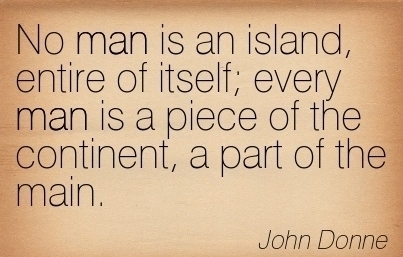
John Donne, the famous English poet, puts it this way: “No person is an island, entire of itself, every person is a piece of the continent, a part of the main… any death diminishes me, because I am part of humankind…”

This week, let us remember that God has created us in God’s image, that we are all connected in the body of Christ, and when something happens in the world, it has everything to do with you and me.

Who Are You? – Sermon on James 1.17-27

James 1.17-27

Every generous act of giving, with every perfect gift, is from above, coming down from the Father of lights, with whom there is no variation or shadow due to change. In fulfillment of his own purpose he gave us birth by the word of truth, so that we would become a kind of first fruits of his creatures. You must understand this, my beloved: let everyone be quick to listen, slow to speak, slow to anger; for your anger does not produce God’s righteousness. Therefore rid yourselves of all sordidness and rank growth of wickedness, and welcome with meekness the implanted word that has the power to save your souls. But be doers of the word, and not merely hearers who deceive themselves. For if any are hearers of the word and not doers, they are like those who look at themselves in a mirror; for they look at themselves and, on going away, immediately forget what they were like. But those who look into the perfect law, the law of liberty, and persevere, being not hearers who forget but doers who act — they will be blessed in their doing. If any think they are religious, and do not bridle their tongues but deceive their hearts, their religion is worthless. Religion that is pure and undefiled before God, the Father, is this: to care for orphans and widows in their distress, and to keep oneself unstained by the world.

who-am-i


The small town sheriff was frustrated when he received a phone-call from the station that interrupted his Sunday supper. A report had come in that a group of young boys were throwing water balloons at strangers walking along Main Street. Reluctantly, the sheriff changed out of his Sunday best into his uniform and went to find the hooligans.

Just as the report noted, a group of young boys were standing on a street corner with a bucket of water balloons and were striking anyone within distance. As he approached in his patrol car, he expected to hear the boys laughing and hollering, but they were rather silent as he inched his way forward. He recognized all the boys from his local church, and dreaded the phone calls he would be making to all of their parents, but he knew their behavior had to stop.

The boys were smart enough not to throw a balloon at the police car, but the sheriff was still nervous to roll down his window in case a wayward throw made it inside. “What do you think you’re doing?” he yelled to the boys. In unison they all solemnly replied, “we’re working for the Lord.” He was mystified by their response, after all how could throwing water balloons at strangers be equated with the almighty? So the sheriff sat in his car with one eyebrow raised and motioned for them to explain.

The ringleader then stepped forward and said, “Didn’t you hear the preacher this morning sheriff? He told us to go out baptizing in the name of the Father, Son, and Holy Spirit. We’ve got Holy Water Balloons and we’ve done already made 45 Christians.”

Every good thing in our lives, every generous act of giving, every perfect gift, every blessing, every compliment, is from above.

Throughout our days, the Lord nurtures, guides, and provides all that we need. More often than not, God uses the people around us to do so, but nevertheless God supplies the goodness in our lives.

The letter of James is beautiful, and it begins with a quick assessment of the discipled life and what it means to live into this identity.

James knew how to notice the small things, because the small acts of life are the nuts and bolts of existence. It is the little things, the small actions and the tiny compliments, that hold together the fabric of our lives and give us the power to build and shape community. What we say and how we act are more important than we can possibly imagine.

The Lord has given us new life by the Word of truth and the power of scripture so that we would become a kind of first fruits. We have been given the great blessings of God’s presence, scripture, and Jesus Christ and now we have the responsibility to let those blessings bear fruit in our lives, and in the lives around us.

We must understand this, children of God, we should be quick to listen, slow to speak, and slow to anger, because our anger does not produce God’s righteousness. How many times have we jumped to a conclusion, or said something without thinking it through and immediately regretted it? How valuable is James’ advice: be quick to listen, slow to speak, and slow to anger?

Our contemporary conversations are filled with “uhhs” “buts” “likes” and other verbal bridges because we are afraid of silence. Rather than actually listening to others, or at least giving them the chance to speak, we fill up every ditch between our words out of fear that someone else will jump in with something else to say. Imagine how much our relationships would change if we only heeded James’ words in our conversations? Can you picture how different our identities would be if we were quick to listen, slow to speak, and slow to anger?

If we have the strength to change the way we converse, then we will begin to welcome with meekness the implanted word that has the power to change the world. Instead of relying on our own words at all times and places, with patience we can remember the great Word of God in Jesus Christ and put all our trust in him. Instead of believing that we are alone in the world and in our situations, we will come to see that God is with us, and has carried God’s people through this before and will again.

But it’s not just about the words we use and speak, as Christians we are invited to be doers of the Word and not merely hearers who deceive themselves.

Have you ever departed from church on a Sunday morning, after hearing a particularly convicting message, only to believe that it had nothing to do with you? Have you ever picked up the bible and started reading only to think about the other people the scripture should apply to instead of you?

For if we are hearers of the word and not doers, then we are like those who look at a mirror and as soon as we walk away immediately forget who we are. Our identities are rooted in the scriptures we read, and in the water of our baptism. But too often, we leave from church, or we put down the bible, or the water dries from our hair, and we immediately forget who we are and whose we are.

If church is supposed to accomplish anything on a regular basis, it is to act like a giant mirror so that we catch a glimpse of who God is calling us to be, and then never forget what we have seen.

who-am-i-1024x575

It was New Year’s Eve 1999 and Javier was afraid. For months news pundits and writers speculated about the “end of the world” coming with the year 2000. In addition to some strange and warped biblical prophecies, technologically proficient workers warned about the change that might come with the digits 99 changing to 00 and the blackouts that could ensue. For weeks people throughout the world prepared for the worst, and the rhetoric about the end times increased.

So Javier found himself getting ready to attend a worship service with his family and friends in El Salvador on the eve of the new millennium and he was afraid. The service itself was fine; it proclaimed the word of God’s faithfulness in spite the warnings about the new millennium, yet Javier could not rid himself of the fear that was shaking him to his core. Before the service came to a close, Javier stood up, walked to the front and asked to be baptized. He did not know what the New Year would bring, he did not know what would happen to the world, but he figured that a little water on his head couldn’t hurt.

Except, that simple affirmation that God was bigger than himself, that simple humbled moment of reverence to God’s power to save was enough to change Javier’s life forever. Of course, the year 2000 did not bring about the end of the world, but it did bring about Javier’s new identity in Jesus Christ. From that night forward he saw himself as a disciple and has lived into that ever sense.

My own baptism took place when I was 19 days old. Other than some strange blurry photographs of my mother and father standing at the front of the church, I have no idea what it was like or what happened. But it came to shape my very identity. The people who were present in worship that day 27 year ago took seriously the commitment to raise me in faith, and helped me hold on to my identity in Jesus.

The Sunday before I became the pastor at St. John’s I stood before my home congregation and thanked them for nurturing me in the faith all these years and said goodbye. But while I stood in the narthex shaking hands after the service, a much older woman came up with a very worn bible in her hands. Without saying much she turned to the back inside cover and showed me my name and the date of my baptism. For decades she had written down the name and date of every person baptized in her presence and made a point to pray for every single one of them, every single day. Her prayers shaped me into who I am.

Those of us to look in the mirror and remember who we are when we walk away, those of us who are doers of the word will be blessed in our actions. Our religion is pure when we, like the disciples from long ago, actually live into the Word of God and start caring about the people in our midst. Our religion is pure when we clasp our hands together and pray for the world. Our religion is pure when we remember our baptisms and are thankful.

tumblr_m8lkq3H8zQ1rqn80jo1_500

Who are you?

What defines your identity?

Perhaps we’ve forgotten who we are and whose we are. Instead of seeing disciples of Jesus Christ in the mirror, we only see fathers, mothers, brothers, sisters. Instead of holding on the image of God in our hearts, we turn away from the mirror of church and we immediately forget what God is speaking into our lives.

Do you remember your baptism? Can you recall the details of what eventually led you to yearn for the water of a new identity? Were you, like Javier, led to baptism out of fear? Were you, like me, led to baptism before you even had a chance to know what was happening?

Baptism is not about quantity; we’re not interested in throwing Holy Water Balloons at everyone within distance. Baptism is instead about discovering our fullest identity in Christ through a covenant by water and the Spirit.

Today, we are all invited to remember our baptisms and be thankful. In a few moments I will pray over our baptismal font, and everyone may come forward to remember and give thanks. The mirror behind the water is there for us to take a good look, so that when we turn around we will not forget who we are.

Disciples of Jesus Christ: Remember that every good thing is from above, that God has given us the word of truth so that we may bear fruit in our lives. Remember to be quick to listen, slow to speak, and slow to anger. Remember that we are called to be doers of the Word. Remember your baptism and be thankful. Remember who you are. Amen.

Too Blessed To Be Stressed – Sermon on Ephesians 6.10-20

Ephesians 6.10-20

Finally, be strong in the Lord and in the strength of his power. Put on the whole armor of God, so that you may be able to stand against the wiles of the devil. For our struggle is not against enemies of blood and flesh, but against the rulers, against the authorities, against the cosmic powers of this present darkness, against the spiritual forces of evil in the heavenly places. Therefore take up the whole armor of God, so that you may be able to withstand on that evil day, and having done everything, to stand firm. Stand therefore, and fasten the belt of truth around your waist, and put on the breastplate of righteousness. As shoes for your feet put on whatever will make you ready to proclaim the gospel of peace. With all of there, take the shield of faith, with which you will be able to quench all the flaming arrows of the evil one. Take the helmet of salvation, and the sword of the Spirit, which is the word of God. Pray in the Spirit at all times in every prayer and supplication. To that end keep alert and always persevere in supplication for the saints. Pray also for me, so that when I speak, a message may be given to me to make known with boldness the mystery of the gospel, for which I am an ambassador in chains. Pray that I may declare it boldly, as I must speak.

too-blessed-to-be-stressed

Friends, I want to share with you the secret of being too blessed to be stressed. Have you felt yourself crumbling over the demands of life? Are you frustrated with your children and their inability to actually listen? Are you worried about your loss of independence? Well then, this sermon is for you.

I know that it might seem impossible to get to a place where being blessed wipes away all the stress of our lives, but we can do it!

Here are my top five tips on how to be too blessed to be stressed:

1) Walk away from the problems! Life is too short to worry about other people. When you start to feel that stress bubbling in your gut, just walk away. We are not our brothers’ keepers. We don’t need to let other people bring us down with their worries, so just walk away.

2) Read or watch something funny! Laughter is the cure to stress. The purpose of life is to be happy all the time, so it is time for us to start embracing the hilarity of life. Instead of complaining and being stressed, we need to turn on our TVs to that witty sitcom and let the laughter loose.

3) Stop procrastinating! Seize the day. Don’t put off to tomorrow what can be done today. Avoid procrastination and stress will disappear.

4) Give your money to church! You just have to plant that little seed, and you will be rewarded one hundred-fold. Money is the root of all evil, but the point of life is to prosper. If you give you money to church, you will start to receive even more blessings than you can imagine. Give your money to the church, and you will really be too blessed to be stressed.

5) Praise the stress away! Give thanks in the midst of your troubles and peace will start to slip right in. Just look at your problems and say to yourselves, “I am thankful for this” and everything will change. But what if your too stressed to even say a praise? Try holding your arms out to your side and take in deep breath, and as you breathe out, slowly lower your arms. Once you pushed out all the air, breathe in and out 5 times in quick suggestion. I would check with your doctor before trying this, because it might not be safe for everyone, but it sure works for me!

If you follow my five easy tips, you will be too blessed to be stressed!

7b839f659cabce0fbe9c4eafa477161b

Ok, let’s be real for a moment. Everything I just said, from the praising your stress away, to breathing in and out in repetition, I stole from other sermons. In just a quick search on the internet I found a seemingly limitless amount of prosperity-gospel sermons aimed at ridding stress, by being blessed. From the likes of Joel Osteen and others, I created a list of five bits of advice that I had found that guarantee to turn your life around.

Here’s the problem: All these promises of wealth, health and happiness by following a simple list, a guaranteed better life by blind faith, do not resonate with scripture.

The praise service had been hitting all the marks. The band was in sync, people had their hands up in the air thanking the Lord, and a few were even dancing in front of their fold out chairs. The gymnasium had been transformed into a space of worship, and they were quickly running out of room.

The sermon was delivered with a never ending smile, encouraging people to look on the sunny side side, celebrate successes, and praise God in all time in all places. Coffee was passed around to all the worshippers, and whether it was the caffeine or not, people were jazzed up for God.

Following the service, as was customary, the preacher waited by the door and shook hands with people as they exited. His smile had remained bright and white from the sermon throughout the whole service, and was now shining upon families as they departed. However, one woman paced back in forth at the back of the line before finally throwing up her hands and walking out.

Worried that he had done something wrong, that pastor apologized to the couple in front of him and chased the woman out the door. “Ma’am,” he shouted as she stormed off to her car, “Don’t forget to praise God!

She stopped dead in her tracks on the asphalt, made a quick 180, walked right up to the preacher, and put her finger up to his nose. “I’ve had it up to here with you and all your silly happiness and praise. I can’t stand coming to a church that won’t let me be angry.

As Christians, and as human beings, we are often told to “go with the flow” “chill out” and “relax” but Paul’s words to the church in Ephesus are a reminder to stand firm. Not with antiquated and backwards beliefs, but firm in our convictions. That woman stomped out of worship because her life was in shambles, and the preacher was telling her to be joyful and praise God. In not so many words he was telling her that being a Christian is easy, and requires us to be happy 24-7-365.

Paul’s words to the church were unpopular. We would rather hear from the prosperity preachers, and the praise preachers, that tell us how easy life can be if we only have faith in God, if we only “walk away from the problems”, if we only give our money to church.

Friends, being a Christian is not popular, nor is it easy.

Paul’s words are still unpopular because they are a challenge to such a secular society, particularly the one we live in.

Be strong in the Lord in the strength of his power. Put on the whole armor of God. There will come times when the wiles of the devil tempt us at the very heart of our being. Our truest struggles are not against enemies of blood and flesh, but against rulers, and authorities that strive for injustice at every turn.

Following Christ means standing firm in defense of justice and love. Taking up our crosses means that we will suffer for the love of God, and if we are too blessed to be stressed, then we are not working hard enough for the Kingdom.

So, take up the whole armor of God and stand firm. God has provided us with the power of truth, righteousness, peace, faith, salvation, the Spirit, and prayer. These are our tools to work against the evils of our world, we shall adorn them over our bodies for our lives, and we can remain steadfast in our convictions.

If we walk away from the problems of life, then we are not following Jesus’ command to minister to the last, least, and lost. Ignoring the stresses and injustices of life means that we are not loving our neighbors as ourselves.

If we give our money to church with the expectation that it will solve all of our problems, it will not! The offering plate of worship in not a cash register for a commodified exchange. We give as a response to God’s goodness, not as an expectation of blessing in return.

And if we try to praise the stress away, if we only want to hear about the joy, then we will continue to ignore the truth of reality and what it means to really follow Jesus.

Put on the whole armor of God because you will need it.

For a long time being Christian was just what everyone did. Most people were born into Christian families and went to the same church their whole lives without ever giving it a second thought. We lived in a Christian culture.

Interestingly enough, today following Christ means being counter-cultural. Imagine how strange a thing it is that we come back week after week to learn about being humble and risking unpopularity. We hear stories about how suffering and ridicule, if not worse, are part of our identity.

I like to joke that Jesus could use some new PR, because the stuff church offers doesn’t sell. There are no quick fixes and simple schemes. There are no “five easy steps to happiness.” Even in during Jesus ministry, the crowds grew to an incredible degree, but by the end, he was all alone marching up the hill with a cross on his back.

Jesus speaks to us through the words of scripture today calling us to be counter-cultural, to stand firm in the strength of God’s power.

“I am too blessed to be stressed” is such a strange thing for a Christian to claim. Having faith implies struggle. Discipleship is a journey filled with wonder, joy, and hardship.

This is the kind of thing that we are bold to proclaim. That God came in the form of Christ to walk among the people and turn the world upside-down. That Christ offered stories and commands that help to shape our lives so that we can shape others. That Jesus went to the very limit of his life dedicated to the profound power of love and it got him killed on a cross. That three days later he rose from the grave, defeated death, and offered salvation to the world.

maxresdefault

We are not too blessed to be stressed. If we are anything we are too blessed to be content. When we remember all that God was willing to do for us and for the world, it ignites a desire in our hearts to start transforming the world. When we feel God’s love in our lives through a friend, we are given the strength to do the same for someone else. When we break down and raise our clenched fists in the air at God, when we pray from the depth of our being, God shows up and starts to reorient our lives through change.

We are too blessed to be content. The world is full of rulers, authorities, cosmic powers of darkness, and spiritual forces of evil. God has blessed us to stand firm against the injustices of life and say “no more!” We will not sit idly by while the world tells people they have no value, we will not participate in a system that perpetuates economic disparity, we will not give in to the evil powers of prejudice and presumption.

We say, “no more!” and we clothe ourselves with the whole armor of God and we go marching against the evils of the world. We wear the belt of truth and open our eyes to what is really going on. We strap on the breast plate of righteousness and live according to love rather than hate. We put on shoes that allow us to get on the move and declare the gospel of peace. We brandish the shield of faith, holding on to the promises of God. We adorn our heads with the helmet of salvation, hold the sword of the Spirit, and we persevere in prayer.

We say “no more!” to the rulers, and the authorities, and the cosmic powers of darkness because we are too blessed to be content. Amen.

Devotional – John 6.60

Devotional:

John 6.60

When many of his disciples heard it, they said, “This teaching is difficult; who can accept it?”

Weekly Devotional Image

We have a great lectionary bible study at St. John’s. Every Thursday at 10:30am a dedicated group gathers to pray for one another and then read and discuss the four lectionary readings for the week. The group was started with a simple suggestion, and has grown to become one of the most life-giving teaching ministries of St. John’s.

The group is made up of both members from church, and from other churches throughout the community. With such a diverse background in church experiences, we have come to grow in faith by learning from other traditions, as well as our own.

A few weeks ago, after reading through the week’s Gospel section, one of our most faithful attendees threw up her hands and declared, “How can anyone do all this stuff?” I think that after weeks of hearing Jesus’ commands to the disciples, she was overwhelmed by how much is expected of discipleship and how consuming it can really be.

Her question is one that Christians have been asking themselves since the very first disciples. After a particularly long discussion on being the bread of life (John 6), the disciples throw up their collective hands and say, “This teaching is difficult; who can accept it?”

Fotolia_54007866_XS

In our contemporary culture, many of us want grace without expectation, we want to leave church on Sundays feeling good about ourselves, and we are ready to commit so long as the commitment is limited. We, like the first disciples, are confused by Jesus’ words when we are asked to start living accordingly. We feel good about sacrificing our time at the Food Pantry, but we refuse to forgive that person in our pew who started a hurtful rumor. We feel good about seeing children in Sunday School, but are easily annoyed by the cries from babies during worship. We feel good about the scriptures that affirm our lifestyles, and use other passages to persecute and oppress those who are different according to our world view.

Jesus’ teachings are difficult, and ask us to sacrifice nothing short of our very lives. But Jesus also offers us something greater than any political promise, social status, or monetary moment; Jesus offers us eternal life.

What teachings do you struggle with? Where do you need support in following the call to discipleship? We can grow in faith by joining bible studies that allow us to wrestle with difficult teachings in community. We can grow in faith by reaching out to the seasoned Christians in our lives and seeking their advice. And we can grow in faith by bringing our struggles to the Lord, and praying for wisdom.

Devotional – 1 Kings 3.5

Devotional:

1 Kings 3.5

At Gibeon the Lord appeared to Solomon in a dream by night; and God said, “Ask what I should give you.”

Weekly Devotional Image

When I go on mission trips, I love asking youth a familiar set of questions. For instance: After a few days of cold-cut sandwiches for lunch at our work sites, I always ask them to share what would be their ideal meal. In a matter on minutes, strangers become best friends over their intense bonds with the likes of Gummi Bears, Big Macs, Snickers Ice Cream Bars, etc.

Occasionally I will ask them to share their favorite movie or book, and I always wind up asking about their favorite story from the bible. The questions are a mechanism by which conversations will begin to flow, but it also helps to create friendships over shared interests with people that never imagined they could be friends.

A few weeks ago while I was serving with a mission team in McDowell County, WV I asked the group one of my go-to questions: “If a Genie offered to grant you one wish, what would you wish for?” Some of the answers were hysterical: “I would ask for a swimming pool full of chocolate syrup” “Definitely a basketball court as my bedroom” and “french fries; lots and lots of french fries.” The question got the conversation flowing and we all began to debate the merits of our particular wishes compared with the wishes of our peers.

genie

Later on that afternoon, while we were cleaning up our tools before heading back to our main site, one of the younger boys from my crew approached me with a strange look on his face. He stood next to me for what felt like a long time before he finally spoke. “I’ve been thinking about your question, you know the one about the Genie, and I finally got my answer: I would wish to be more patient.” In all the quick responses to the initial Genie question, I neglected to ask this young man what he would wish for, and when he finally shared his answer, it hit me deep in my soul.

After his father David died, Solomon was approached by the Lord and was offered anything he wanted. Solomon, though given the opportunity to request anything in the world, asked for wisdom. That young boy on the mission trip, rather than being led by selfish desires for wealth and power, told me that what he really wanted was patience.

When we go to God in prayer, what do we ask for? Are we treating God like a Genie who will give us our greatest wishes? Or are we seeking the Lord’s power to help shape us into the disciples God knows we can be?

Strange Stories From Scripture: A Week In The Word – Sermon on Judges 3.12-23

Judges 3.12-23

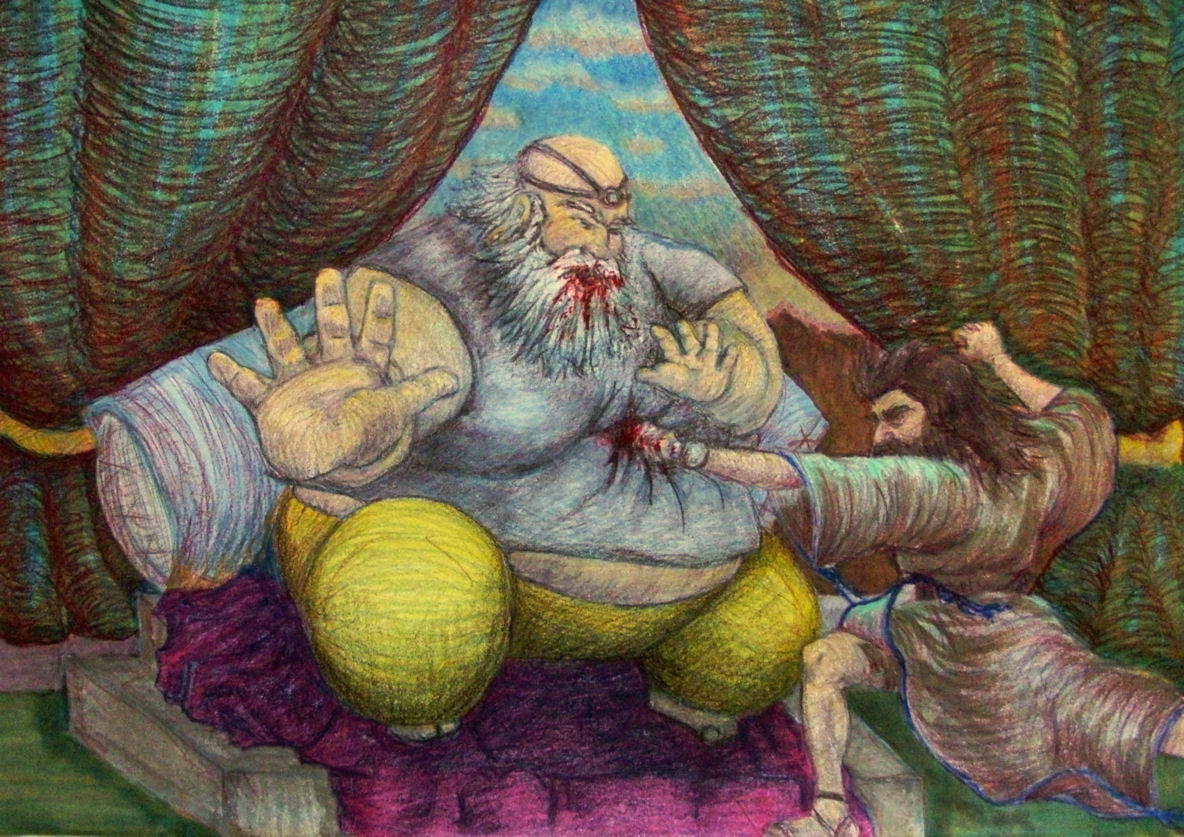
The Israelites again did what was evil in the sight of the Lord; and the Lord strengthened King Eglon of Moab against Israel, because they had done what was evil in the sight of the Lord. In alliance with the Ammonites and the Amalekites, he went and defeated Israel; and they took possession of the city of palms. So the Israelites served King Eglon of Moab eighteen years. But when the Israelites cried out to the Lord, the Lord raised up for them a deliverer, Ehud son of Gera, the Benjaminite, a left-handed man. The Israelites sent tribute by him to King Eglon of Moab. Ehud made for himself a sword with two edges, a cubit in length; and he fastened it on his right thigh under his clothes. Then he presented the tribute to King Eglon of Moab. Now Eglon was a very fat man. When Ehud had finished presenting the tribute, he sent the people who carried the tribute on their way. But he himself turned back at the sculptured stones near Gilgal, and said, “I have a secret message for you, O king.” So the king said, “Silence!” and all his attendants went out from his presence. Ehud came to him, while he was sitting alone in his cool roof chamber, and said, “I have a message from God for you.” So he rose from his seat. Then Ehud reached with his left hand, took the sword from his right thigh, and thrust it into Eglon’s belly; the hilt also went in after the blade, and the fat closed over the blade, for he did not draw the sword out of his belly; and the dirt came out. Then Ehud went out into the vestibule, and closed the doors of the roof chamber on him, and locked them.

Today marks the second part of our series on Strange Stories from Scripture. As a church we are taking time to look at those wonderful moments from the bible that they never talked about during Sunday school. These are the stories that make us blush, raise our eyebrows, and leave us scratching our heads.

Many of us are familiar with the well-known stories of Moses leading the Israelites through the wilderness, we know all about King David and his kingdom, we can even recall the miracles of Jesus, but the bible is also full of tales that are just begging to be used in worship and our daily lives.

Our first story was from the book of Numbers regarding the foolish prophet Balaam and his talking donkey. We explored how the donkey attempted to steer Balaam in the right direction, and pondered about the donkeys in our lives.

Today we are talking about Ehud and King Eglon from the book of Judges.

Ehud-and-Eglon (1)

Monday.

I’m sitting in my office, going over the emails from the weekend when I pull out the list of all the scriptures from now until Christmas Eve. I reread the plan for the sermon series on Strange Stories from Scripture, I wonder if people felt convicted by the sermon on Balaam and his donkey yesterday. I check the email once again to see if anyone took the time to send me a complaint about the sermon. The only one I receive makes a comment about seeing such a “smart… donkey” in the pulpit, but I file it away for later.

The A.C. is pumping out cold air, and I open up my bible to Judges 3 to read the scripture for Sunday. The story of Ehud and Eglon. As the words flow past my eyes, I can’t help myself from giggling in the office: Ehud stabs him in the belly, and Eglon was so fat that the blade disappeared and the dirt came out. I quickly scan through a number of other translations to see what they do with the vague “dirt” description. Some call it dirt, most call it dung, but at least one calls it poop.

When I see the word poop in the bible, it just makes me laugh.

I wonder if people will let me get away with saying poop from the pulpit on Sunday morning. I quickly make a note to pray about it during the week, before deciding whether or not to put “poop” in the sermon.

This has got to be one of the funniest and strangest stories in the bible, but before I dive into sermon writing, I decide to leave the word document open on my computer, and get to some of my other daily tasks before returning.

Tuesday.

The screen stares back at me empty. So I decide to get the mental juices flowing and rewrite the story in my own words:

The Israelites messed up again. Whether they were grumbling for more food, or worshipping false idols, they messed up, and the Lord decided to raise up King Eglon of Moab against God’s people, because they were continually messing up. King Eglon, with the help of God, went and defeated Israel and ruled over God’s people for 18 years.

But then, of course, the Israelites started to cry out to the Lord for delivery, perhaps they had seen the error of their ways, so God decided to provide their savior, Ehud, a left-handed man.

The Israelites, at the time, were in the habit of sending their taxes to King Eglon, and Ehud used this delivery to make his attack. He fashioned himself a double-edged sword, and attached it to his thigh under his clothes.

King Eglon was a very fat man.

ehud2

When Ehud finished delivering the money, he sent his compatriots away, and teased the King with the promise of a secret message from God. Eglon sent away all of the people from his inner court and invited Ehud to share this secret. But as Ehud leaned in to deliver the precious secret, he removed the hidden dagger and thrust it into Eglon’s belly.

Strangely enough, the further Ehud pushed, more of Eglon fat rolled over the blade until it disappeared from view, and Eglon’s poop came out. Then Ehud snuck out of the chamber and locked the doors behind him.

I rewrite the story, looking for sermonic inspiration that would drop down from heaven like manna in the wilderness, but I just sit in my office wondering what in the world God is trying to say through the text. Throughout the day the phone and doorbell continue to ring at church, and I welcome the distractions.

Wednesday.

I pull out some commentaries on the text, and decide to see what other people think God was saying. A few of them go into remarkable detail about the significance of Ehud being left-handed, while others address how detailed the descriptions were, and a few even propose a sexually metaphorical interpretation.

The more I read, the less the story makes me laugh. Instead of looking at the story like a cartoon with poop on the floor, I see human beings driven by enough anger and fear to conquer a nation, and murder a king.

Reluctantly, I start searching online for other sermons about Ehud and Eglon. Do people preach about this? What in the world do they say?

One of the sermons is titled, “Lefty vs. Hefty” and it is all about the differences between the two central characters. The writer emphasizes Ehud’s cunning against Eglon’s girth.

One of the sermons is titled, “Salvation” and it goes into profound detail regarding how, supposedly, God ordains the killing of people even today who get what they deserve. The preacher calls for the people to commit themselves to a radical system of justice, where they take matters into their own hands, just like Ehud did.

One of the sermons is titled, “The Power of Praise” and it focuses on how Ehud was able to trick Eglon into giving him the opportunity to strike. It ends with a reminder for the listeners to be careful about the promises they hear and the compliments offered their way, because a dagger might be lurking in the corner.

The more I read from God’s Word and from other sermons the more I regret picking the scripture for the series:

Eglon, the fat king, is now less a caricature, and more like the punishment God ordained for the people for messing up.

Ehud, the people’s deliverer, is now less a righteous judge, and more like a murderer.

Months ago I thought it would be perfect and hilarious to use this text during a series on Strange Stories, but now I worry about what I will actually say about it when the time comes.

Thursday.

Sitting in a coffee shop in attempts to begin crafting a sermon, I continue to stare at a blank screen. I have started at least three different sermons but before I am able to start really crafting a deep response to the Word, I highlight the text and pressed “delete.” Nothing feels good enough, all of the attempts feel flat.

How is this story speaking anything into our world today? What does the death of Eglon at the hand of Ehud have anything to do with the life of St. John’s and the community of disciples?

I close the computer and grab a nearby newspaper in hopes to distract myself from the seemingly endless flicker of the cursor on my computer. The top article says “US drops Atomic Bomb on Japan 70 years ago today.

1945-08-07-New-York-Times-headline

Before I realize it, I am sucked into the article, and the sermon floats away from the forefront of my mind. The writer has reproduced the original texts used the Associated Press the day the Atomic Bomb was first reported:

“An atomic bomb, hailed as the most terrible destructive force in history and as the greatest achievement of organized science, has been loosed upon Japan… The atomic bomb destroyed more than 60 percent – 4.1 square miles – of Hiroshima, city of 343,000 and radio Tokyo reported “practically every living thing” there was annihilated… Secretary of War Henry Stimson said, “If they do not now accept our terms, they may expect a rain of ruin from the air the like of which has never been seen on this earth.” (From the original AP article http://bigstory.ap.org/urn:publicid:ap.org:3fd267ba7b3c40479382189c99172d61)

I read the article and tears begin to form and fall down my face. Normally I would hide my face from the other patrons, but I am so struck by the words that I forget where I am and what I’m doing. 70 years ago we dropped the most powerful weapon we had ever created on a nation and virtually wiped out an entire city in a matter of seconds.

I start to remember where I am, and the sermon that needs to be written. The connections between the article and the scripture start to form:

Did Ehud leave the sword in Eglon because he wanted the effects to be devastating? Did he want to leave his mark in such a way that death was not the only consequence? Was the Atomic Bomb our sword that we had hidden under our clothes? Did we attack Japan in such a way that death was only the beginning of what we wanted to accomplish?

I wonder what people will think if I try to draw a connection between the anniversary of the Atomic Bomb with the death of Eglon at the hand of Ehud. Did Ehud do the right thing? Did we do the right thing? I have no idea where the sermon is heading.

Friday

I sigh deeply in front of my computer. Picking the Ehud and Eglon story was a bad idea. I explore an idea about dressing up like Ehud with a sword in church but it feels trite, impractical, and vaguely irreligious. I start writing a poem about how the Lord calls people to do extraordinary things during extraordinary times, but then it feels like I’m telling people its okay to murder and steal.

I sit in silence with my hands outstretched praying for the Lord’s will to be done, and for the sermon to be written. And I wait.

Saturday

The Community Cook-Out is going well; children are running around, adults are being fed, and conversations are flowing all over the place. I am thankful for the distraction the cook-out has provided, though I’m also worried about tomorrow morning. What will I say when the time comes? What is God’s Word speaking into our lives right now?

I watch the community in action. Not just the church, but all the people who make Staunton what it is and I think about Jesus. I remember the call to live radically transformed lives based on love and forgiveness, not on fear and retribution. I see people breaking bread for the first time, and I see Jesus in the midst of the people providing hope, the Holy Spirit giving life to our words and relationships, and God making new and lasting connections.

I think about Jesus and the new life he invites his disciples to experience. I think about the lengths God was willing to go to to respond to the cries of God’s people, raising up prophets and judges. I think about God finally offering the most precious gift he ever could, his Son, to die for all the people out on the front lawn of the church, and for the world.

I wonder if the story of Ehud and Eglon isn’t so much about how we react when the world pushes us into a corner, but about the trajectory of God’s gifts to the world. That at one time God would raise up a judge to save Israel, but that now God raised up his Son to save us from ourselves and from death.

Sunday

I stand in the sanctuary before disciples hungry for the Word of God and I say: I offer this to you in the name of the Father, and the Son, and the Holy Spirit. Amen.