Think of the Children! – Sermon on Psalm 78.1-8

Psalm 78.1-8

Give ear, O my people, to my teaching; incline your ears to the words of my mouth. I will open in my mouth a parable; I will utter dark sayings from of old, things that we have heard and known, that our ancestors have told us. We will not hide them from their children; we will tell to the coming generation the glorious deeds of the Lord, and his might, and the wonders that he has done. He established a decree in Jacob, and appointed a law in Israel, which he commanded our ancestors to teach their children; that the next generation might know them, the children yet unborn, and rise up and tell them to their children, so that they should se this hope in God and not forget the works of God, but keep his commandments; and that they should not be like their ancestors, a stubborn and rebellious generation, a generation whose heart was not steadfast, whose spirit was not faithful to God.

kids-in-church

I love when scripture is straight-forward. With the amount of passages in both the Old and New Testaments that remain ambiguous, it is remarkably refreshing to encounter a text that is so simple with its claims and expectations.

Listen up! Open your ears to what I’m about to say regarding the mighty acts of God. I will remember for us the forgotten sayings from the past, we will not hide them from the children, we will share with them all the wonders of God. The Lord commanded our ancestors to teach our children, so that they would indeed teach their children, so that none of us would forget what God has done. Above all, let us not fall back into the rhythms of our distant ancestors, a stubborn and rebellious generation, a generation whose heart was not steadfast, nor was their spirit faithful to God.

What follows our reading from this morning is a record of history in song. The psalmist sets up his challenge: to remember the mighty acts of God for the future generations; and then declares the history of God with God’s creation. The tradition, the narrative, is so strong that the psalmist will not depart from it, since his purpose is to instruct rather than to entertain. That old old story has become so important to him, that he will tell it to the best of his ability for the sake of God’s people.

As I read the words to Psalm 78 this week, I couldn’t help but wonder about what we are teaching our children. If our desire to instruct the future generations regarding the mighty deeds of God is as strong as this Psalm claims, then how are we living that out today in our faith and in our church?

3rnvk6

On Tuesday morning, with the words from scripture percolating in my heart and soul, I made my way down to the Preschool to welcome our children into the building. I’ll admit that opening the door for our students is one of the things that I look forward to most during the week. The children are always so excited about entering the classrooms for the activities and learning that will enrich them. Whereas many parents have to drag their high-school students out of bed, banging pots and pans, even dumping water on them to wake them up, the Preschool students see school as something worth celebrating and waking up for!

It brings me so much joy to see their smiling faces every morning, to hear them shout “Pastor Taylor!” and run over to give me a hug as if they thought that they had lost me forever, to see them walking with their parents or guardians hand in hand hopeful for the day ahead. When I look at them in the morning I can’t help but think about the future generations of the church, and our community. In the basement of our building, we have the privilege of shaping, molding, and nurturing those who will one day take care of us.

Anyway, when the children arrived on Tuesday morning they came in with their normal excitement and made their way to their respective classes. I usually try to sneak back down around snack time for the selfish purpose of receiving some carrots with ranch dressing, or pretzel sticks, and I often ask each of the children what they had been learning about that morning.

“Pastor Taylor, I learned about the letter “G.” Goofy, Girl, Grass, and Grapes!”

“Pastor Taylor, I learned that spiders have eight legs and make a web to catch their food!”

“Pastor Taylor, I learned that we stole the land away from the Indians and forced them to move across the country!”

On Tuesday morning, every one of those children looked at me when I walked in, and shouted, “Pastor Taylor, we learned how to vote!” The teachers had set up a voting booth in the yellow room, and each child had the opportunity to vote on their snack for the day: Pringles Chips, or Oreo Cookies (obviously Oreos were victorious). Every child had the opportunity to go behind the curtain, place their vote in secrecy, and then received an “I Voted!” sticker.

10629408_721542274588756_4548535686040301173_o

Downstairs in the basement we work on educating the future generation on the important things: Letters, Shapes, and Numbers; Animals, Plants, and Weather; Hygiene, Responsibility, and even Civic Duty. However, sometimes we get so caught up in the education of our youth, that we lose sight of what God has called us to do. Because right now I know that every child from our Preschool can tell you why we vote, and how we vote, but I know that only a few of them can tell you who Jesus is, and what he came to do. What does it say about our culture when more people now recognize the McDonald’s Golden Arches than they recognize the cross of Jesus Christ? What does it say that we train our children regarding voting procedures, but we do not teach them how to pray?

I have very fond memories of growing up in church. I loved the change in the liturgical seasons, and the different colors around the altar. I loved getting invited up to the front of the church once a month to receive communion. I loved getting to hear the choir sing with passion on a regular basis. I loved church because it was fun.

Yet, I can’t really remember what I learned. I know that when I was much younger, we, the kids, were only allowed to stay in the sanctuary until the “children’s sermon” and then we were escorted out of the sanctuary to the classrooms to work on arts and crafts as if whatever was happening in worship was for adult audiences only; Aldersgate UMC Rated PG-13

I remember learning about the big stories, the ones that everyone knows: Noah and the Ark, David and Goliath, Jesus and his disciples. But there are so many things about church that I never learned. 

My grandmother remembers her mother placing a coin in her hand every Sunday so that she would place it in the offering plate. From a young age she was habituated into the practice of giving back to God out of the abundance that she had. But by the time my mother came around this was not something that was instilled in her, and therefore it was not instilled in me. I have no idea whether or not my parents ever gave money to the church because it was not something we ever talked about.

What I do remember is a story that one of my pastors told about receiving a letter from a young boy in the congregation. The boy had been mowing lawns in the community and his parents had talked to him about the importance of tithing so that boy collected 10% of his lawn-mowing earnings, and placed them in the offering plate inside of a ziplock bag. The way my pastor told the story was so powerful that it got many of the adults crying. Look at the faith of this young boy and his willingness to give back to God!

Photo of a Collection Plate

But when I think about that now, I don’t see it as something special, in fact I see it as something rather ordinary. The fact that it was something so deeply celebrated as a rarity is another testament to the fact that we have neglected to tell the story of God’s mighty acts to the coming generation. They recently did a study at my home church and they discovered that only 25% of the people who attend worship give money to the church. That means that 3/4 people in the pews let the offering plate pass right over them. What are we instilling in the future generations that allows them to witness the incredible acts of God in the world today? How are we sharing the story with others so that we remember who we are and whose we are?

Instead, we hope and expect that others will just figure it out on their own and that they will know to give 10%, that they will know how and when to pray for their enemies, that they will place their hope in the resurrection in the midst of death. We so desperately want to privatize everything in our lives that we don’t want to talk about our prayers, we don’t want to talk about how much we give to church, and we don’t walk to talk about when and how we doubt.

When I was in seminary we were required to take a class on preaching. For weeks we gathered in the basement of the Divinity School listening to our professor lecture on the importance of proclaiming the Word, and then we were asked to preach in front of our peers on assigned texts so that they could critique our style and form. One day however, our preaching class went on a field trip to one of the local funeral homes in Durham, NC. The point of the visit was to help prepare us for the sermons that we would be preaching at funerals, offer advice on how to interact with funeral home directors, and talk about the theology behind death.

We walked through the facility from the basement where they did the embalming to the chapel where they held smaller services. And when we passed through one of the rooms, I noticed that a coffin had been prepared and opened for a viewing that would happen that afternoon. I stopped to pay my respect and offer up a brief prayer when I saw one of my friends frozen in place with her gaze locked on the casket. At 27 years old, she had never seen a dead body. Even with all the training and reading, the practice and focus, she was completely shocked by the sight, and I had to physically help her out of the room to continue the tour. I can remember her muttering under her breath as if she was unaware that she was actually speaking “death is so real.” I learned later that she had never been to a funeral and seeing that embodiment of death for the first time came as a frightening and almost overwhelming dose of reality.

What does it say when we keep our young people from experiencing death through funerals? Are we so afraid of death that it blinds us from the hope of the resurrection? Are we so concerned about how it might affect the coming generation that we neglect to instill in them the story about how God conquered death through Christ on the cross?

Of course, this isn’t just about teaching children the stories. It’s about all of us, whether we’re nine or ninety. We gather here in this space to remember, over and over, the great acts of God in the world. We move from creation, to redemption, back and forth, to remind one another what God did for us, and what God continues to do through us.

The psalmist, so long ago, believed in retelling the story to help shape the people of God. The psalmist believed that in going back to their origins, by remembering who they are and whose they are, they would always find the living God. When we retell the story we become a people of habit and pattern, we become shaped by the Word to be Christ’s body in the world today. 

We tell the story to open our eyes to how God has provided us with so many blessings that we respond by giving back to God our tithes and offerings. We tell the story so that we can open our hearts to the ways that we can love God and love our neighbors as ourselves. We tell the story so that we can open our souls to the great cosmic victory over death and remember that we have the hope of the resurrection.

If we want the coming generations to be steeped in the Word of the Lord, if we want them to remember the glorious deeds of God, and his might, and the wonders that he has done, if we want them to be a people of hope, then its up to us to share the story with them.

Amen.

What’s Right With The Church? – Sermon on Philippians 4.1-9

Philippians 4.1-9

Therefore, my brothers and sisters, whom I love and long for, my joy and crown, stand firm in the Lord in this way, my beloved. I urge Euodia and I urge Syntyche to be of the same mind in the Lord. Yes, and I ask you also, my loyal companion, help these women, for they have struggled beside me in the work of the gospel, together with Clement and the rest of my co-workers, whose names are in the book of life. Rejoice in the Lord always; again I will say, Rejoice. Let your gentleness be known to everyone. The Lord is near. Do not worry about anything, but in everything by prayer and supplication with thanksgiving let your requests be made known to God. And the peace of God, which surpasses all understanding, will guard your hearts and your minds in Christ Jesus. Finally, beloved, whatever is true, whatever is honorable, whatever is just, whatever is pure, whatever is pleasing, whatever is commendable, if there is any excellence and if there is anything worthy of praise, think about these things. Keep on doing the things that you have learned and received and heard and seen in me, and the God of peace will be with you.

right with church

What’s right with the church? Easy sermon topic… I thought. I was having lunch with a some friends a few days ago when I casually mentioned the theme for our worship service this week, and shared with them my desire to accentuate the positive aspects of communal Christianity. I realized that this sermon was going to be very difficult to write when I asked them to share their ideas about what the church is doing right, and the table remained silent for an uncomfortable amount of time. What’s right with the church?

Two weeks ago Sue Volskis walked into my office before our lectionary bible study and in addition to the crossword puzzles that she so graciously gives to me, she handed over a manuscript. The title read: “What’s Right With The Church; a sermon by Zig Volskis; May 17, 1987.” She had been going through some of Zig’s things and found a sermon about the state of the church that he had preached the year before I was born. Whatever I had planned to do for the rest of the afternoon was placed on the back burner and I dove straight into his writing.

It is a beautiful sermon, and I wish that I could have been there to hear it in person. Instead of focusing on all the negative elements of church life, of which there are plenty, Zig dedicated the sermon to looking at the positive and life-giving elements of the body of Christ that is the church.

Zig proclaimed that as a child he would have responded to his question with the church bells and music. They both represented the energy and depth of the worshipping community through sounds and music. The music of church reassured the people that God was the one in control, even if the world claimed the contrary.

As an adult, Zig claimed that his answer had changed over a career of serving the church for thirty years. The first and foremost thing that is right about the church is that it endures! Empires come and go, churches are destroyed by war and exodus, yet the body of Christ endures.  With all its blindness, and plundering, for all its refusal to use its enormous resources, the church, nevertheless, has sought to minister to human need in a thousand different ways. And for untold numbers of persons the helping hand of the church has been a life-saver.

Zig ended the sermon with a call to those who love the church: make more room for it, bring to it your best and highest devotion. And to those who are not sure about the church: you will not find perfection here, but come in anyway, and help us make it better. There are so many things right about the church that the things that are wrong don’t really matter that much anyway. Amen.

On Monday morning I read through our scripture lesson for today, part of Paul’s letter to the church in Philippi, and I kept hearing Zig’s words in my mind. Paul, like Zig, could have listed all of the things wrong with the church and then implore the people to be better. He could’ve listed their sins and talked about the importance of temperance and self-control. But he didn’t. Like Zig, Paul instead calls the people to focus on the goodness in their church lives. Let your gentleness be known through your living. Remember that the Lord is near, and don’t worry about the trivial moments of life but instead go to the Lord in prayer and the peace of God will guard your minds and souls. Whatever is true, whatever is honorable, whatever is just, whatever is pure, whatever is pleasing, whatever is commendable, if there is any excellence and if there is anything worthy of praise, think about these things.

This is not a call to ignore the negative, nor is it a command to turn a blind eye to the problems of church. Paul is instead offering the church a way of understanding the world through the beauty and joy of what church can be.

Take it from a young pastor – there are plenty of problems in the church; from here at St. John’s to the global church. Churches are broken because they are filled with broken people. I could stand up here this morning and outline the depth of our depravity, I could talk to you about the problems facing the Middle East, we could talk about the Ebola Crisis, I could share with you the remarkably inappropriate comments I heard other clergy make this week about homosexuality. We could spend our church service focusing on all the negative but we already do enough of that.

whats-right-with-the-church-576x180

It is nearly impossible to turn on the television, open a newspaper, or get online without being bombarded with the problems of the world. And if the media is so inclined to mention something about the church is it almost always a controversy or a reminder of our brokenness.

So today, I want us to be different from the world. I want to follow Zig’s example, which is to say I want to follow Paul’s example, and talk about what’s right with the church.

I never had a choice about being a Christian. There was a never a time in my life where my family was not part of the church. Some of my earliest memories are of Church services, living nativities, and sitting at the altar during children’s messages.

As a kid I would have answered the question by saying the church is fun! Where else do we get to spend time on a weekly basis hearing about the incredible stories of God with God’s people? Where else will adults make fools of themselves for the sake of sharing the Good News with young people? For me the church has always been fun and I therefore had no reason to choose something else to do. The continued presence of the church in my life, and its influence over my actions and decisions, is a reminder that (unlike the popular American perspective) the choices made for us and in spite of us are often of more lasting consequences than the choices made by us (Willimon, What’s Right With The Church, 35-36). We like to think that we choose God, when in fact God is the one who chooses us.

What’s right with the church? The church is the place where people discover and live-into the reality that God has gone looking for them. I might experience God in the middle of the woods, or in the loving embrace of a friend, but church is the place where I learn the language to articulate those experiences. My eyes are opened by the church regarding how to experience God in this place, and in the world. The community of faith proclaims the Word so that we can absorb it, and live it out in the world. The people who gather as Christ’s body reach out to us in love through God’s will to call us in.

As I got older I might’ve answered the question by saying that the church’s music is awesome! Whether singing the incredible hymns from the hymnal, or wailing on the drums during a contemporary worship service, I have always loved church music. The words and tunes that we rely on every week articulate the faith of scripture and the value it plays in our lives.

I love those moments when I find myself whistling a tune, or mumbling through the lyrics of a song only to realize that it fits perfectly with my present moment. Sometimes the music of church gets the better of me and my emotions runneth over. Some of you might not realize it, but I stand behind this pulpit when I sing the hymns, so that, just in case I start crying, none of you will see it.

The music of our church is awesome because it can bring us to tears, bring smiles to our faces, reignite the flame of faith, and give us goosebumps. I love the music of church because it is so unlike the music we hear Monday through Saturday; it encourages us in our faith.

While in seminary I might’ve answered the question by saying the church is a radically alternative community. This place in unlike anything else you can experience. The church at its best is a place where everyone can belong regardless of anything else in your life.

Paul calls the church “a colony of heaven.” We are like an island of one kingdom in the midst of another. We exist communally because we could not survive on our own, we need others to help us stay accountable to the grace that God has poured on our lives. We work through our faith and live together in harmony as an alternative community where the world, for us, has been turned upside down.

We are a strange group of people who are more focused on others than ourselves, we believe the first will be last and the last will be first. In this alternative community we are habituated by love for love. In baptism we take vows to raise children in love and faith, in marriage we take public vows to help the new couple remain accountable to God and one another, in funerals we offer honest and truthful words about someone’s life, death, and promised resurrection.

But if you asked me today, right now, “What’s right with the church?” My answer would be: it’s incarnational. In the incarnation God took on our human flesh in Jesus Christ to be both fully God and fully human. Our church is incarnational. We gather together to hear the Word of the Lord and let it become flesh in the ways we live our lives.

Incarnational_2

The church is the fundamental location for discovering and receiving the peace of God. This peace is something that is beyond my ability to describe with words, but it is a peace that the world cannot give; money cannot by it, nor can we earn it through social positioning. The peace of God comes from God as a gift, peace which surpasses all understanding. It is a comfort that soothes every fiber of our being, while at the same time electrifies our existence into something new, bold, and incredible. In church we confront the living God who first breathed life into us, who walks along the paths of understanding with us side-by-side, and will stay with us no matter what.

The incarnational church refuses to be moved by the expectations of the world, and instead remains committed to the love of God in our daily lives. We who have been Christians for any reasonable amount of time can remember others who have lived before us a life that was full of incarnational joy, people who heard the Word and let it become flesh in their lives. We are better, stronger, and fuller Christians for having known and watched such fellow disciples. And now we have the same opportunity to be a source of incarnational joy and life to others with whom we come in contact.

What’s right with the church?

In spite of its obvious corruptions and imperfections, it is the church that reminds us about the love of God that will not let us go, as it points us toward the true home of our souls.

So, let me say to you who love the church: make more room for it, bring to it your best and highest devotion. Pray fervently for its renewal and commitment toward being Christ’s body in the world.

And let me say to you who are not so sure about the church: You will not find perfection here, but come in anyway, and help us make it better. Help us open our eyes to the way the living God is moving and speaking in the world so that we can continue to be the body of Christ for the world.

There are so many things right about the church that the things that are wrong don’t really matter that much anyway.

Amen.

Divine Irony – Sermon on Exodus 2.1-10

Exodus 2.1-10

Now a man from the house of Levi went and married a Levite woman. The woman conceived and bore a son; and when she saw that he was a fine baby, she hid him three months. When she could hide him no longer she got a papyrus basket for him, and plastered it with bitumen and pitch; and she put the child in it and placed it among the reeds on the bank of the river. His sister stood at a distance, to see what would happened to him. The daughter of Pharaoh came down to bathe at the river, while her attendants walked beside the river. She saw the basket among the reeds and sent her maid to bring it. When she opened it, she saw the child. He was crying, and she took pity on him. “This must be one of the Hebrews’ children,” she said. Then his sister said to Pharaoh’s daughter, “Shall I go and get a nurse from the Hebrew women to nurse the child for you?” Pharaoh’s daughter said to her, “Yes.” So the girl went and called the child’s mother. Pharaoh’s daughter said to her, “Take this child and nurse it for me, and I will give you your wages.” So the woman took the child and nursed it. When the child grew up, she brought him to Pharaoh’s daughter, and she took him as her son. She named him Moses, “because,” she said, “I drew him out of the water.”

newjudaicia4

Can you imagine what was going through the mother’s mind when she placed her little son in the papyrus basket? Can you see her tears flowing down on to the boy who would change the course of history because she was forbidden to let him live?

Everything had changed in Egypt. Joseph had been sold into slavery but saved the Egyptian people by storing up food for the coming famine. He was widely respected and his people were held in safety because of his actions. But eventually a new king arose over Egypt and he did not know Joseph. He feared the Israelites, their power, and their numbers.

The Israelites quickly went from being a powerful force within another nation, to a group of subjugated slaves who feared for their lives. They were forced to work in hard service in every kind of field labor, they were oppressed and belittled, and their family lives were slowly brought into jeopardy. Pharaoh commanded the Hebrew midwives to kill all the males born to Hebrew women, but when they resisted, he changed the decree so that “every boy that is born to the Hebrews shall be thrown into the Nile, but every girl shall live.

Once a prosperous and faithful people, the Israelites had lost everything. Yet, even in the times of greatest distress, people continue to live and press forward… A Levite man married a Levite woman and she conceived and bore a son. When he was born and she saw that he was good, she kept him hidden for three months. But a time came when she could no longer hide the child and she found herself making a basket to send her baby boy into the Nile.

Kneeling on the banks of the river, she kissed her son goodbye, placed him in the crude basket, and released him to the unknown. The boy’s sister, who was allowed to live in this new regime, sat along the dunes and watched her baby brother float down the river toward where a group of women we beginning to gather.

Exodus-Chapter-2-The-Child-Moses-on-the-Nile

Pharaoh’s daughter saw the basket among the reeds, and when she opened it she saw the boy, and took pity on him. She recognized that he was one of the Hebrew boys but she was compelled to be compassionate toward him. The sister, with a stroke of genius, realized that she had the opportunity to save her brother and stepped forward from her hiding place to address the princess. “Shall I go and find a nurse from the Hebrew woman to nurse the child for you?” Pharaoh’s daughter said to the young slave, “Yes.” So the girl went and found her mother, the mother of the child she had just released into the Nile, and brought her to the princess. Pharaoh’s daughter charged her, “Take this child and nurse it for me, and I will give you your wages for doing so.” So the mother received back her own son and nursed him. However, when the child grew up, she brought him back to Pharaoh’s daughter, and she adopted him as her son, and she called him Moses because “I drew him out of the water.”

This story about the birth and the childhood of Moses is one of the most familiar texts from the Old Testament. It has just the right amount of suspense, intrigue, serendipity, divine irony, human compassion, intervention, and it concludes with a happy ending. Moses’ birth has captivated faithful people for millennia and offers hope even amidst the most hopeless situations.

One of the greatest pastors I have ever known serves a new congregation in Northern Virginia. Jason Micheli has inspired countless Christians to envision a new life of faithfulness previously undiscovered. He played a pivotal role in my call to ministry, we have traveled on countless mission trips together, he presided over Lindsey’s and my wedding, but above all he is my friend.

1934842_1140098793643_1336612_n

Jason and his wife Ali embody, for me, what a Christian relationship looks like. They support one another in their different ventures without overstepping their boundaries, they challenge each other to work for a better kingdom, and they believe in the Good News.

For a long time Jason and Ali knew that they wanted to adopt a child and they traveled to Guatemala when Gabriel was 15 months old to bring him home. As a young pastor and lawyer, Jason and Ali had busy schedules that were filled with numerous responsibilities that all dramatically changed the moment Gabriel entered their lives. They went from understanding and responding to the rhythms of one another to having a 15 month old living with them, a child who they were responsible for clothing, feeding, nurturing, and loving. I know that the first months must have been tough, but Ali and Jason are faithful people, they made mistakes and learned from them, they loved that precious child, and they continued to serve the needs of the community the entire time.

Jason and Gabriel

Jason and Gabriel

A year and a half later, just when the new patterns of life were finally becoming second nature, a lawyer who helped them find Gabriel contacted them. There was another family in the area who had adopted a 5 year old Guatemalan boy named Alexander, but they no longer wanted him. The lawyer recognized that Jason and Ali had recently adopted a child but wanted to find out if they would adopt another. However, the lawyer explained that this 5 year-old was supposedly very difficult, his adoptive family was ready to get rid of him, and he didn’t speak any English. Jason and Ali had a choice: lift this child out of the Nile, or let him continue to float down the river?

The story of Moses’ adoption by the Egyptian princess is filled with irony:

Pharaoh chose the Nile as the place where all Hebrew boys would be killed, and it became the means of salvation for the baby Moses.

The unnamed Levite mother saves her precious baby boy by doing precisely what Pharaoh commanded her to do.

The daughters of the Hebrews are allowed to live, and they are the one who subvert the plans of the mighty Pharaoh.

A member of the royal family, the Pharaoh’s daughter, ignores his policy, and saves the life of the one who will free the Hebrew people and destroy the Egyptian dynasty.

The Egyptian princess listens to the advice of the baby’s sister, a young slave girl.

The mother gets paid to do exactly what she wants to do most of all.

The princess gives the baby boy a name and in so doing says more than she could possibly know. Moses, the one who draws out, will draw God’s people out of slavery and lead them to the Promised Land.

Divine Irony! God loves to use the weak and the least to achieve greatness and change the world. God believes in using the low and despised to shame the strong and the powerful. God, in scripture and in life, works through people who have no obvious power and strengthens them with his grace.

How fitting that God’s plan for the future and the safety of the Hebrew children rests squarely on the shoulders of a helpless baby boy, a child placed in a basket, an infant released into the unknown. How fitting that God promised to make Abraham, a childless man with a barren wife, a father of more nations than stars in the sky? How fitting that God chose to deliver Noah from the flood on an ark, and young Moses from death in a basket floating on a river? God inverts the expectations of the world and brings about new life and new opportunities through the most unlikely of people and situations.

Jason and Ali prayed and prayed about the five-year old Guatemalan boy named Alexander. What would happen to them if they brought him into their lives? Everything was finally getting settled with Gabriel and they believed they had their lives figured out. They had planned everything perfectly, yet they we now being asked about bring a completely unknown, and perhaps devastating, element into their lives.

What would you have done? If you knew that there was a child, even with an unknown disposition, that was being abandoned by his adoptive family how would you react? Would you respond with open arms?

Alexander is now 11, soon to turn 12, and is without a doubt one of the most mature and incredible human beings I have ever met. After Jason and Ali met him for the first time they knew that God was calling them to bring him into their family, to love him with all that they had, and they responded like the faithful people they are, with open arms.

Jason, Ali, Alexander, and Gabriel

Jason, Ali, Alexander, and Gabriel

When Alexander arrived at Jason and Ali’s home, he came with the clothes on his back and nothing else. A five year old Guatemalan boy with little English was dropped off at their home; I can’t even imagine what it must have felt like for him. Yet, Jason and Ali brought him into their family and they never looked back. 

In the beginning, they had to sleep with him in his bed night after night, in attempts to comfort him and let him know that they were never going to leave him. That no matter what he did, no matter how far he fell, there was nothing that would ever separate their love for him. For a child that had been passed from person to family to family, Alexander had no roots, he had little comfort, and he had not experienced love.

Jason and Ali stepped into his life just as Alexander stepped into theirs. Perhaps filled with fear about what the future would hold for their little family Jason and Ali’s faithfulness shines brilliantly through the life of a young man named Alexander who I believe can, and will, change the world.

I imagine that for some time Jason and Ali believed that they, like Pharaoh’s daughter, had drawn Alexander out of the river of abandoned life. But I know that now when they look back, when they think about that fear of the unknown, they realize that Alexander was the one who drew them out of the water into new life. Divine Irony. 

In the story of Moses’ adoption out of the Nile, God is never mentioned. There are no divine moments when God appears on the clouds commanding his people to do something incredible, there are no decrees from a burning bush (not yet at least), and there are no examples of holy power coming from the heavens. Yet, God is the one working in and through the people to preserve Moses’ life and eventually the life of God’s people. God, like a divine conductor, orchestrates the music of life with changing movements and tempos that bring about transformation in the life of God’s people.

I believe that most of you, if not all of you, would take up a new and precious child into your lives. Whether you feel that you are too young, too old, too poor, too broken, you would accept that child into your family and raise it as your own. We are people of compassion, we are filled with such love that we can do incredible and beautiful things.

But it becomes that much harder when you look around and understand what we have become through baptism. Every child, youth, or adult, that it baptized into the body of Christ has been lifted out of the Nile of life into a new family. The people in the pews have truly become your brothers and sister in the faith through God’s powerful baptism. The Divine Irony is that we might feel we are called to save the people in church, when in fact they might be the ones called to save us. 

The story of Moses’ birth and childhood is beloved. It contains just enough power to elicit emotional responses from those of us lucky enough to know the narrative. It is a reminder of God’s grace and love through the powerful and the powerless. But above all it is a reminder that like a great and loving parent, Moses has been taken into the fold of God’s merciful love and grace. That we, through our baptisms and commitments to being disciples of Jesus Christ, have been brought out of the frightening waters of life into the adoptive love and care of God almighty. That we, though unsure of our future and plans, are known by the God of beginning and end.

Just as Jason and Ali held Alexander every evening, just as Pharaoh’s daughter cradled Moses in her arms, we have a God who loves us, who holds us close, and will never let us go. 

Amen.


Gabriel and Alexander in 2009

Gabriel and Alexander in 2009

Devotional – Romans 6.8

Devotional:

Romans 6.8

But if we have died with Christ, we believe that we will also live with him.

Weekly Devotional Image

Starting Friday afternoon, I will gather with thousands of United Methodists from all over the Virginia Conference. This is our annual meeting to discuss current challenges facing the church, celebrate the ordination of new pastors, and grow in our faith and love of God. Holy Conferencing sits at the foundation of what it means to be part of the UMC and traces back to the time of John Wesley.

To be perfectly honest, Annual Conference has its ups and downs. There is nothing quite like the Service of Ordination that will take place on Saturday evening; ordinands will kneel before the Bishop and take the vows of serving our church will all that they have and we will sing those great and familiar hymns as we pray over these new ministers and their churches. The episcopal address, made by our Bishop, seeks to encourage the lay and clergy leaders of our conference while at the same time faithfully address the concerns and challenges of the future.

2014ACLogo

But there will come a time when the Annual Conference will descend into petty arguments, oversimplified generalizations, and frustrated ramblings. We will be asked to vote on resolutions regarding a wide-variety of issues facing the church including the possibility of changing the language regarding homosexuality in our Book of Discipline. The roller-coaster of Annual Conference will move up and down and many of us will have our faith restored in the church, only to have it completely erased after a few arguments break out.

As I reflect back on the previous Annual Conferences I have attended, and prepare for this coming weekend, I wonder if our Holy Conferencing is more about us, or more about Jesus. We need to ask ourselves why we gather in the first place: Are we here to pat ourselves on the back and congratulate one another on a productive year in ministry? Or are we here to learn more about God, nourish ourselves through worship, and find renewed energy to be Christ’s body for the world as we return to our churches?

Sometimes, things must be crucified in order for resurrection to take place. We have to be prepared to let something die and end so that we can find new life and discover new opportunities for our great church to be what God has called us to be. Paul wrote to the church in Rome, “But if we have died with Christ, we believe that we will also live with him.” Annual Conference is a perfect opportunity to remember that all of this (the church, ministry, serving the community) is not about me but its about God. If we let our old selves die and put on Christ we will be able to faithfully participate in a weekend dedicated to the renewal of our church. However, if we continue to talk and act as if Jesus isn’t in the room with us we will fail to grow and be fruitful for the world around us.

So, as you prepare to enter a new week I challenge you to confront the areas of your life where Christ is not at the forefront of your being. How are you still holding onto the old self? How can you let a part of your life be crucified so that something new and beautiful and wonderful can be resurrected?

Eyes On The Sky – Sermon on Acts 1.6-14

Acts 1.6-14

So when they had come together, they asked him, “Lord, is this the time when you will restore the kingdom to Israel?” He replied, “It is not for you to know the times or periods that the Father has set by his own authority. But you will receive power when the Holy Spirit has come upon you; and you will be my witnesses in Jerusalem, in all Judea and Samaria, and to the ends of the earth.” When he had said this, as they were watching, he was lifted up, and a cloud took him out of their sight. While he was going and they were gazing up toward heaven, suddenly two men in white robes stood by them. They said, “Men of Galilee, why do you stand looking up toward heaven? This Jesus, who has been taken up from you into heaven, will come in the same way as you saw him go into heaven.” Then they returned to Jerusalem from the mount called Olivet, which is near Jerusalem, a sabbath day’s journey away. When they had entered the city, they went to the room upstairs where they were staying, Peter, and John, and James, and Andrew, Philip and Thomas, Bartholomew and Matthew, James son of Alphaeus, and Simon the Zealot, and Judas son of James. All there were constantly devoting themselves to prayer, together with certain women, including Mary the mother of Jesus, as well as his brothers.

MenofGalilee

I was sitting in the congregation at Trinity United Methodist Church in Lexington, VA for my first district event as a pastor. The room was filled, as you would expect, with older Christians (lay and clergy) dedicated to the kingdom of God as made manifest in the UMC. We listened to our District Superintendent discuss the challenges facing the church in our contemporary period and how similar they are to the problems that John Wesley faced in England when he initiated the Methodist movement of scriptural holiness.

All of the districts that make up our Annual Conference are required to gather annually for the purposes of restoring our souls for the adventure of doing church, and to discuss business matters as they pertain to our locality. Reports are filed annually for our review and approval as well as a new budget that needs to be considered by the body of Christ gathered together.

As far as I was concerned, the budget appeared fine. Sure, there were a few minor changes; some programs needed more money, and some programs had been receiving too much without being fruitful for the church. The only noticeable and significant change was found regarding the budgetary needs for “district youth.” I can’t remember the exact figures but it was a noticeable decline in funding for the young people of the district.

One representative present noticed this significant change and decided to make it abundantly clear to everyone how upset she was that the money had been decreased. She said, “I want to know why we lowered the district youth budget. The youth are the future of the church, and if we don’t invest in the them, the church will disappear.

youth

A worthy comment, don’t you think?

Our District Superintendent then calmly responded to her comment: “I appreciate what you are saying. We do need to invest in our youth. But I want to be clear about something; the youth are not the future of the church, they are very much a part of the church right now. The mentality that “the youth are the future of the church” prevents us from treating them as the church in the present. We will gladly restore money to the youth district budget, but for the last few years we have done nothing with and for them. I would love to hear ideas about what we can do right now for them, and then we can responsibly apply money to the District Youth.”

youth-ministry

After Jesus’ resurrection, he spent 40 days with his beloved disciples speaking about the kingdom of God. This forty day period was a great pause in the dynamic actions of God in the world; after the resurrection but before the day of pentecost, Christ had fellowship with his brothers and sisters to teach them about the coming days of ministry and service.

When they had come together after Jesus had completed his teaching, some of the disciples asked the question that was still on everyone’s mind: “Lord, is this the time that you will restore the kingdom to Israel?” Even after the resurrection, they were so caught up in the drama of Roman occupation that their vision of God’s kingdom was limited to political ramifications alone. So Jesus did what all great teachers do, he ignored their question: “It is not for you to know the times or periods that God has set by his own authority. But you will receive power when the Holy Spirit comes and you will be my witnesses in Jerusalem, in all Judea and Samaria, and to the ends of the earth.” When he had finished saying this, he was lifted up toward heaven and a cloud took him out of the disciples presence.

ascension

The disciples stood transfixed, as any of us would have, with their eyes on the sky, perhaps held is disbelief. Suddenly two men in whites robes appeared and said, “Why do you stand looking up toward heaven? This Jesus who has been taken up to heaven will return in the same way” So, the disciples returned to Jerusalem and devoted themselves to prayer.

Jesus made three promises to his disciples before he ascended into heaven: the gift of the Holy Spirit would come, they would spread their witness to the ends of the earth, and Jesus himself would eventually return. They had been given a job to do before he left: wait for the Spirit in Jerusalem and then spread the gospel, but when he was lifted up the disciples stood paralyzed with the eyes on the sky. Can you blame them? Jesus had come back from the grave, resurrected and clothed in the glory of God to teach them about the kingdom, and now he had left again. Their friend and Lord had departed, entrusting the future of the church and the kingdom to this group of uneducated, poor, and often ignorant community.

While standing with their necks craned backwards two men appear to remind the disciples of their purpose, a reminder that we need to hear as well: “Why are you looking up to the heavens?” You have a job to do. There is work to be done.

When the woman stood up to question the budget as the District Conference I could understand where she was coming from. Reducing the money from the youth budget sounds like a bad thing to do. But her notion of “youth as the future of the church” is just like the disciples stuck with their eyes on the sky. One of the greatest problems facing the present church is our inability to see the present. We become so consumed with the future of the church that we lose sight of our mission right here and now. 

It astounds me how often people ask me about the future of the church. And I don’t mean what the church will be doing next year. People want to know the long term hope for the church of the distant future. The questions I hear are regularly oriented to a future that is beyond our ability to grasp or imagine: Where are all the young people? How can we convince the millennials to attend church? How can we build 250 churches in the next 30 years? …

This is how many of us live our lives, consumed by the distant future of all things, not just the church: we think about the next war, the next financial rise or decline, the future of democracy in America and abroad, the survival of the “perfect” family model of a husband, wife, 2.5 children, a dog, and a white picket fence. We no longer look at the horizon, instead we want to look over the mountains and imagine the great fields and grasses beyond our vision.

Jesus, however, was of a different mind. Begin now! Get your eyes out of the sky and start focusing on the present. Right here and now our task is to transform the present by witnessing to Christ, to the kingdom, and to his Word. This is not to say that we are forbidden from planning for the future; we can, but not at the expense of the present. Do not worry about tomorrow, for tomorrow will bring worries of its own. Today’s trouble is enough for today.

When the angels reproved the disciples for their transfixed gaze on the heavens, how did the disciples respond? They waited and and they prayed.

In an age of activism and instant gratification, we would expect the disciples to something a little more “useful” than wait and pray. We would expect them to meet together in different committees to implement action plans like: creating contemporary worship services. To ask questions such as:“how can we build 250 churches in the next thirty years?” or “how can we convince the young people to start coming to church?” Yet, when they were told to witness to the ends of the earth, when they were tasked with spreading the Word of the Lord, their first response was prayer. While the world was ready to keep spinning, to forget about the political problem that was squashed when they crucified Jesus, ready to get back to life as usual, the disciples met in the upper room and devoted themselves to prayer.

Gathering to wait and pray are often depicted as the two primary actives of a faithful church. It amazes me how far I, and we, have fallen from this blueprint. When the church encounters a crisis we treat it as such and we immediately implement plans and programs to fix it. When I am asked about how I intend to get more people to start attending church, people want to know what I’m going to change in order to make church appealing immediately. Imagine, if you can, how people would react if, after they asked the question, I responded, “I should pray about it.

tumblr_lkmfiz50eV1qesq39o1_500

We don’t want to wait. We want things to happen immediately. Thats why people still ask, whenever I introduce myself as the Pastor of St. John’s, “how many people do you have in worship?” We want numbers, and figures, and diagrams, and growth, and tangible results as soon as possible. Christ, on the other hand, wants patience and prayer.

Waiting and praying is a heavy burden for those of us caught up in the technically impatient world of the present. We live in an age of instant everything, and so many want the church to be exactly the same way. One of the toughest tasks that will face us as a church, and I really mean us, the people of St. John’s, will be to be a people of prayer, when the world expects us to be a people of instant results.

In life, all things come and go. Where there is life there is always death, where there is love there is loss, where there is hope there is sorrow, where there is joy there is pain. So too, Jesus came to be with his people, and then he left; he ascended into heaven. Sometimes, not always, but sometimes there is an unrecognized good that comes with the going.

Jesus wants persons, not puppets. We are not here to be controlled by the great puppet master in the sky who moves us to where we are supposed to go. Instead Jesus has left us to be his body for the world, to be true and full persons who are prepared to go and be witnesses to the ends of the earth. Sometimes we have to be left on our own to really learn who we are, and whose we are.

A parent can never be there for every single thing their child ever does. If they were, the child would never learn how to grow, blossom, and mature into their true nature. A boss can never oversee everything their employees do, otherwise the business would lack the great imaginative capabilities of numerous minds, rather than a solitary and isolated vision. A pastor can never lead as a perfect disciple for everyone else to follow, because all pastors are like everyone else, sinners who have fallen short of the glory of God.

Christ ascended into heaven so that the church could become his body for the world, so they we could become his witnesses in Jerusalem, in all Judea and Samara, and to the ends of the earth.

So, how do we begin? How do we live into this call that Christ has placed on our lives? How can we start being his body for the world and have a vibrant and life-giving church?

We begin by waiting and praying.

Like the disciples, we need to be patient before we jump into “fixing” all of the “problems” that we see. Imagine a church that prayed fervently for the needs of our faith community in the hope of meeting the needs of so many on a regular basis. Imagine what this place would look like if we spent the first fifteen minutes of worship every Sunday in silence, waiting and praying to the God who calls us and knows us by name. Imagine what our family lives would look like if we spent five minutes with our children praying for them and their friends every morning before they left for school. Imagine a faith life where we prayed not just for what we want, but for the needs and hopes of the people who bother us the most.

It would be strange. For many it would be uncomfortable. Waiting and praying are no longer natural habits for the people who live in the world today. We have become so habituated into expecting “instant everything” that we rarely relish in the joy that is patience and prayer.

Today, let us become a people of waiting and prayer. As we take the steps to this table we are reminded that even though Jesus ascended to heaven, he never really left us. For he is here with us in the bread and the wine. He becomes manifest in our lives when we participate in his kingdom on earth. Do not let yourselves be burdened by the worries of the future, instead let us all get our eyes out of the sky and start doing the work of the Lord here and now, work that begins with prayer.

Who Is This? – Sermon on Matthew 21.1-11

Matthew 21.1-11

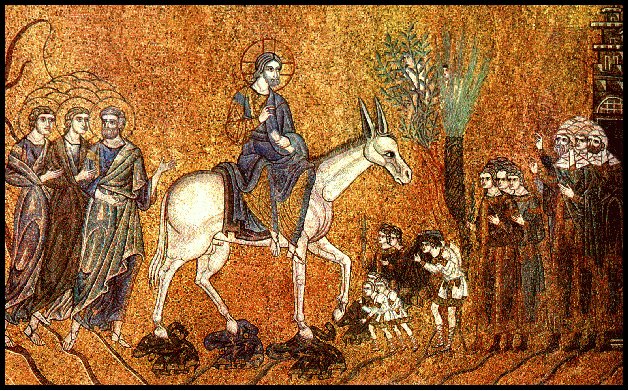
When they had come near Jerusalem and had reached Bethphage, at the Mount of Olives, Jesus sent two disciples, saying to them, “Go into the village ahead of you, and immediately you will find a donkey tied, and a colt with her; untie them and bring them to me. If anyone says anything to you, just say this, ‘The Lord needs them.’ And he will send them immediately.” This took place to fulfill what had been spoken though the prophet, saying, “Tell the daughter of Zion, Look, your king is coming to you, humble, and mounted on a donkey, and on a colt, the foal of a donkey.” The disciples went and did as Jesus had directed them; they brought the donkey and the colt, and put their cloaks on them, and he sat on them. A very large crowd spread their cloaks on the road, and other cut branches from the trees and spread them on the road. The crowds that went ahead of him and that followed were shouting, “Hosanna to the Son of David! Blessed is the one who comes in the name of the Lord! Hosanna in the highest heaven!” When he entered Jerusalem, the whole city was in turmoil, asking, “Who is this?” The crowds were saying, “This is the prophet Jesus from Nazareth in Galilee.”

Christ's Entry into Jerusalem by Hippolyte Flandrin c. 1842

When Jesus tells you to do something, you do it. Sometimes it takes us a long time to figure this out, but for the disciples it must have been second nature. Two disciples were told to enter the next village and there they would find the necessary transportation; a donkey and a colt. “If anyone asks what you are doing, don’t worry about it, just tell them, ‘The Lord needs them.’

So the disciples went into the village, found the animals, and brought them back to Jesus. The rest of the disciples took off their cloaks and placed them on the donkey for Jesus to sit on. As they approached Jerusalem crowds of people took off their own cloaks, gathered palms from the fields, and placed them on the road for Jesus’ donkey to trample on. The people were shouting “Hosanna (Save us now!) to the Son of David! Blessed is the one who comes in the name of the Lord! Hosanna in the highest heaven!

Finally, when he entered Jerusalem, the whole city was in turmoil, asking, “Who is this?” The crowds were saying, “This is the prophet Jesus from Nazareth in Galilee.”

Hosanna_988

This story opens up for us Jesus’ royal status in a public setting. Rather than entering the holy city with an army wielding swords and shields, this king of kings entered Jerusalem humbly and gently on the back of a donkey. This was, of course, to fulfill what had been spoken through the prophet, “Tell the daughter of Zion, Look, your king is coming to you, humble, and mounted on a donkey.” Yet, you have to wonder, what did the crowds make of this prophet entering Jerusalem the way he did?

Matthew tells us that the crowds rejoiced to such a degree that they took off their clothes to place them on the road. They were so enamored by this coming prophet that they took it upon themselves to adorn the dirty roads with their cloaks as a symbol of royalty. They shouted “Hosanna Hosanna” while waving the palms branches just as we did this morning. But, at the end of the scripture, the whole city of Jerusalem is apparently in turmoil, as if an earthquake had happened, and they begin to ask, “Who is this?

The irony that follows our particular story is tragic. Within a week’s time the crowds that were shouting “Hosanna!” began to shout “Crucify!” The disciples that were so willing to find the donkey and use their own clothing as a saddle, would fall asleep on their Lord in the garden of Gethsemane. The people who walked before Jesus announcing his triumphant entry in the holy city, would follow behind him as he dragged his own cross to the top of calvary. In Jesus’ last pilgrimage to Jerusalem, the son of David reenters David’s city, but the only throne he will find is on a cross.

Is is frighteningly easy for us to think that by celebrating Palm Sunday we are acknowledging Jesus as a king in the way that Jerusalem failed to do! We need to be constantly reminded of how easy our shouts of “Hosanna” can change to “Crucify.”

Over the course of Lent this year, our confirmation class has been gathering together every week after church to learn more and more about this thing we call discipleship. Every time we gathered we shared a meal, just like Jesus would have with his disciples, and then we jumped right into the lesson. We focused on how Jesus is the vine, and we are the branches; to follow Christ we need to bear fruit in our lives.

The weekly lesson always had activities paired with them in order to flesh out what we had been talking about. When we looked at God the Father we discussed creation, sin, and redemption. We cut out pictures from magazines that reminded us of sin and discussed ways to avoid the temptations of our lives. When we focused on the Holy Spirit we all took turns wearing blind folds and walked around the church property helping to guide one another the way that the Spirit guides us. When we talked about Paul we wrote letters to our church about things we do well, and things that we need to change. I gave the youth old dinner plates and a permanent marker, inviting them to write down any negative memories, disappointments, or frustrations, and then we took the plates into the parking lot and smashed them into a hundred pieces. The following week we used those broken pieces to adorn our cross that now stands here in the sanctuary.

IMG_1279

One of my favorite actives from confirmation this year occurred when we talked about God the Son, Jesus Christ. I invited each of the confirmands to take 10 minutes to walk around our church building and look for Jesus. They were told to find words, phrases, or pictures that reminded them of their Lord and then write it down. Once we gathered back together, we shared what we had found and then I asked them the same question that the people in Jerusalem asked after Jesus entered on the back of a donkey: “Who is Jesus?”

The room was silent. Even though they had walked around the building and shared their discoveries with one another, they were reluctant to even attempt to answer the question.

As I stood there before our confirmands, uncomfortably waiting in the silence, I realized how difficult that question is: Who is Jesus?

I have often heard people remark that the youth are the future of the church. Logically speaking, this is true. One day we will return to dust and those who are younger than us will remain. But they are also very much the church right now. So, young people, listen to me very carefully: Confirmation is just like taking those first steps into Jerusalem. All of the adults here are looking at you to save them and the church. But, be careful, because their cries of hosanna can change to crucify before you even realize it.

We all do it. We look at the promise of youth, thanking God for their lives and imaginations, but as soon as they step too far we are ready to chastise them. So, as an example, here are some of the things that our confirmands wrote to our church:

Dear St John’s… I love the way that you greet everyone when they enter church. I love how our church feels like one big family. I love the way you care about me.

All wonderful and positive affirmations about what we do. Hosanna indeed.

But each letter also had to include things that we could change, ways that we could be better:

I wish we had younger people in church on Sundays. I think that we need actually start doing something for those in need. Maybe we can start a garden and give all of the produce away. I think we should start clapping for the choir after they sing a really wonderful song, rather than just sit in silence.

Not terribly offensive, but certainly different. I imagine that these young minds have countless suggestions of how we can do church differently, how we can embody the will of God in what we do, how we can make the Word incarnate in our lives. But, if it makes us uncomfortable, if it pushes us too far, how are we going to react? Will we still look at them with “hosannas” on our mind, or will we dismiss these new innovative ideas just as Jesus was dismissed by the crowds?

So, to the more mature gathered here at St. John’s this morning: I encourage you to look on these bright young confirmands with hope and respect. Do not jump to conclusions about their ideas simply because they are young and inexperienced, they could be closer to the will of God than any of us. Their answer to the question, “Who is Jesus?” might be completely different than yours, but if you ask them, they can show you a side of our Lord that you’ve never known.

And to the confirmands I say this: Remember that Jesus entered Jerusalem in a humble way, without a sword, vulnerable to whatever his enemies wished to do to him. As Albus Dumbledore once said, “the truth is a beautiful and terrible thing, and should therefore be treated with caution.” We want to hear your ideas, we want to see the world and the church through new perspectives, but be humble in the way you share what you see with us. Be kind in your sharing, and we will return that kindness in our hearing. Their answer to the question, “Who is Jesus?” might be completely different than yours, but if you ask them, they can show you a side of our Lord that you’ve never known.

entry-into-jerusalem-12th-century-mosaic2

Today, Jesus’ triumphant entry into Jerusalem is a cautionary tale reminding us of how quickly our opinion can sway; how quickly we can be divided; how quickly we can forget that we are one body in Jesus Christ. Young or old, experienced or recent to the faith, we are in this church together. We join together for worship week after week learning to speak and act and think and live and love as Christians.

This message isn’t just for our confirmation class; its for each and every single one of us gathered here today. We have a choice, we can choose to follow our own path, ignore the needs of those who bother us, and learn to take care of ourselves alone. We can move with the crowds and let our shouts from “hosanna” quickly change to “crucify” whenever we so choose. Or, we can march up to Calvary with our Lord carrying our own crosses. We can work together to bear fruit in God’s kingdom on earth. We can love the unlovable because God loves us.

“Who is this?” the crowds asked. Who is this strange man entering into the holy city to turn the world upside down? Who is this prophet who knows our innermost desires and listens to us when we feel alone? Who is this king who sits on the throne of a cross? Who is this priest that shares his bread and wine, body and blood, with and for us? Who is this incarnate God who died for the sins of the World? Who is this man that healed the sick, fed the hungry, and clothed the naked? Who is this teacher that shares all of his parables with us? Who is this Lord that humbles himself to be just like us? Who is this Savior that is completely unlike us?

If someone asked you, “Who is this?” how would you respond?

Amen.


Apocalypse When? – Sermon on Luke 21.5-19

Luke 21.5-19

When some were speaking about the temple, how it was adorned with beautiful stones and gifts dedicated to God, he said, “As for these things that you see, the days will come when not one stone will be left upon another; all will be thrown down.” They asked him, “Teacher, when will this be, and what will be the sign that this is about to take place?” And he said, “Beware that you are not led astray; for many will come in my name and say, ‘I am he!’ and, ‘The time is near!’ Do not go after them. When you hear of wars and insurrections, do not be terrified; for these things must take place first, but the end will not follow immediately.” Then he said to them, “Nation will rise against nation, and kingdom against kingdom; there will be great earthquakes, and in various places famines and plagues; and there will be dreadful portents and great signs from heaven. But before all this occurs, they will arrest you and persecute you; they will hand you over to synagogues and prisons; and you will be brought before kings and governors because of my name. This will give you an opportunity to testify. So make up your minds not to prepare your defense in advance, for I will give you words and a wisdom that none of your opponents will be able to withstand or contradict. You will be betrayed even by parents and brothers, by relatives and friends; and they will put some of you to death. You will be hated by all because of my name. But not a hair on your head will perish. By your endurance you will gain your souls.


            The disciples have gathered together with Jesus. They’ve probably shared some bread, fish, and wine while sitting around and talking about the latest news from Galilee and the recent happenings in Jerusalem. Peter, ever extraverted, decides to change the conversation to the majesty of the temple: “Oh how lovely it was, adorned with remarkable stones and the gifts dedicated to God. Have you ever seen such gold in your lives?” The other disciples nod in approval, while Jesus remained silent. Bartholomew furthers Peter’s claim: “The temple of God is indeed a witness to God’s majesty in the world. Only the God of Abraham, Isaac, and Jacob could have such a place!” They all begin to agree with one another, affirming the glory and might of their God, the God of Israel, worthy of such a temple.

            But then, in sharp contrast to their excited exclamations, Jesus speaks up, “All of these things that you see, the temple in all its glory, the days will come when not one of these stones will be left upon another; all of them will be thrown down.

            The disciples have been around Jesus long enough to know that when he says something like this, its important to pay attention. “But how could this be?” they wondered; the temple was a sign of God’s glory. So then one of the disciples, perhaps Peter, asked on behalf of the whole group, “Teacher, when will this be, and what will be the sign that this is about to take place?”

apocalypse-when

            What a question. Its stories like this one that help to remind me how similar we all are to the disciples. Because that question is the same one I would’ve asked. Okay Jesus, things are going to get rough, when? What will happen to let us know that this is about to take place?

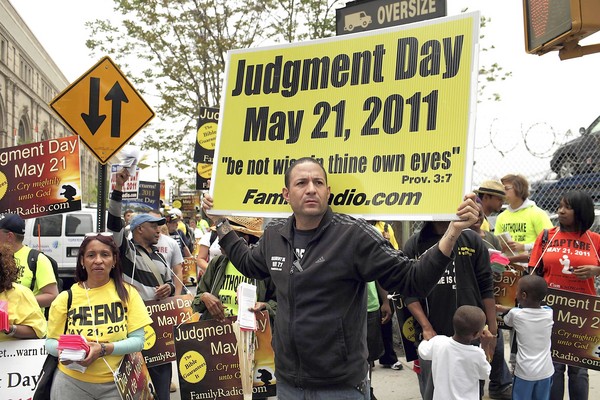
            How appropriate and funny is it that Jesus’ first warning about the apocalypse is directed toward the would-be-prophets who predict the end of the world? Just within my lifetime I can think of a number of examples of the self-affirmed prophets who claim to know the exact date of the approaching end of the world. And even though Jesus has clearly warned us against them, when they come forth with their predictions, they never fail to get a hearing, media presence, and air time.

61786025


And people listen to them! Droves of people go to the bank and withdraw their life savings, bunkers are dug and filled with emergency supplies, and some even take their own lives rather than accept the coming doom and gloom predicted by these would-be prophets. Jesus looks out at his disciples, and therefore every one of us, and declares, “Beware that you are not led astray; for many will come in my name and say, ‘I am he,’ and, ‘The time is near!’ Do not go after them.

            There always seems to be some other form of allegiance in the world that appears better than what we learn to live into from God’s Word. Some affiliation more fruitful, some path through the trials of life that seems more certain and secure. We would rather rely on reason than faith. We would prefer to deal with material possessions than with spiritual growth. The tragedy of the history of God and God’s people is that we have continually been a people running off like that, generation after generation, in pursuit of other, perhaps easier, gods.

            After this first warning, Jesus continues his diatribe regarding the eschaton: “When you hear of wars and insurrections, do not be terrified; for these things must take place first, but the end will not follow immediately. Nation will rise against nation, and kingdom against kingdom; there will be great earthquakes, and in various places famine and plagues; and there will be dreadful portents and great signs from heaven. But before all this occurs, they will arrest you and persecute you; they will hand you over to synagogues and prisons; and you will be brought before kings and governors because of my name.”

tumblr_lxqyysSSQ61qlvp8so1_500

            I have often heard non-Christians remark about how easy it is to be Christian. Those with a limited knowledge of what it means to be a faithful people often charge the church as being a means of escape from the harsh realities of the world. “It must be so easy to be Christian, you don’t have to worry about what really goes on in the world, just waiting for your heavenly reward.” However, in sharp contradiction to these claims Jesus very bluntly puts forth how very difficult it is, and will be, to be Christian. In a way, being Christian, is in some sense, an escape, not our of life, but right into the depth of it; from meaningless into meaning, from futility into purpose, from bondage into freedom.

            The Good News of Jesus Christ has always been paradoxical in its ability to disturb the ways of the world. Those with privilege look on it with suspicion, those with power look at it with disappointment. The Jewish leaders were shaken by it and fearful. Rome outlawed it. The first disciples all suffered persecution and condemnation. Jesus did not get killed for loving too much, but for turning the world upside down; for changing the perspective of what it means to be first and last, for defeating death, and removing power from the powerful.

            “This will give you an opportunity to testify. So make up your minds not to prepare your defense in advance, for I will give you words and a wisdom that none of your opponents will be able to withstand or contradict.”

            When Jesus addresses the disciples, describing for them the very trials and tribulations that they were to face he makes it clear that these are the hours of opportunity. When the world shouts No, the church responds with a resounding Yes!

            Our faith is not a creed, not a way of thinking about life, not 5 steps to make a better you; it is the I and Thou of a God who calls us by name, addresses us, seeks us, a moment of meeting, the time for hearing and becoming. Our faith is about confronting the problems of the world, living into them, and transforming the world for God’s kingdom. The Bible, God, and our faith is never on pause. The time is now!

            What Jesus describes in this passage is what we often call the apocalypse. What kinds of images come to your mind when you think about the apocalypse? Death? Destruction? Zombies? Though these are the popular images often associated the apocalypse, apocalypse deals with a revelation, which discloses the realm of God behind the world of historical and interpretable events.

            Timing is important when we talk about revelation from God. What Jesus describes, the events surrounding the suffering of his followers will happen in the future. There will come a time when Christians are called to testify to their faith when everything around them will argue the contrary. The apocalypse is coming in the future.

            However, most of the events that Jesus described took place within the 1st century of the church. The temple was destroyed in 70 AD, the disciples were called before synagogues and governors to witness to their faith. They were rejected by the world and suffered because of their association with Jesus Christ. Nations rose against nations and wars took place. The apocalypse happened in the past.

            What becomes real for us today, though, is that God’s revelation, the apocalypse, is happening right now! What Jesus described in his apocalyptic descriptions helps to show how what is going on is mixed with what is really going on. Events set in the larger context of God’s purposes in the world. We have been caught up in God’s great cosmic victory and therefore we are surrounded by symbols, signs, and mysterious elements regarding what is really taking place. As strange as this may seem to us as enlightened, modern, and rational people, it is a dramatic witness to the tenacity of faith and hope among the people of God.

            “You will be betrayed even by parents and brothers, by relatives and friends; and they will put some of you to death. You will be hated by all because of my name. But not a hair on your head will perish. By your endurance you will gain your souls.”

            How easy is it to be Christian? Apparently, its not. What is at stake for us in this passage is the commitment and call to be faithful witnesses under unusual stress and frustration. For us, here in Staunton, it might be hard to imagine suffering for our Christian identities. But faithfulness and endurance under threat and disapproval (and even penalty of death) are the qualities of discipleship during the time of witnessing. Disciples, and that means all of us here, are not exempt from suffering. If there is any doubt of this period of testing and testimony is still present, you need only look to what recently happened in the Philippines, or the dozens of Christians who were recently executed in North Korea for having Bibles, or the suffering of members within this church right now. Some of you might know of the suffering within the church, perhaps its even happening to you, just look around.

            Jesus’ address to the disciples regarding the apocalypse, the revelation of God, calls us to reflect on our own discipleship. I have been told again and again that if people are not complaining about me in the church I serve, than I am not doing my job. Being Christian implies a willingness to be pushed into the discomfort of discipleship in order to live into the new reality that Christ initiated with his death on the cross.

            Are we almost Christians? Are we content to arrive on Sunday mornings in order to go back to work on Monday without any change in our lives? Are we comfortable with seeing all of the suffering around us and letting it pass by our vision without stopping to question why? Are we ready to witness God’s kingdom transform the world without our participation?

            Or are we fully Christian? Have we felt the love of God in our hearts and we are ready to respond to that love with our commitment to faithfulness? Do we sit in the shadow of the cross while awaiting the glory of the resurrection? Are we ready to witness to the goodness of God even amidst our own suffering?

            I love the question the disciples ask: “When is this going to happen?” But there’s another question I feel compelled to ask: “Why is it going to happen?” If our Christian lives are comfortable and easy, perhaps we’re not doing enough. If the amount of suffering the first disciples went through was part of God’s revelation, then maybe we should be going far enough to disrupt the powers of the world. What would it take for us to believe so fervently, that we would live such faithful lives worthy of persecution from those around us?

            We have to know that what Christ is talking about is the end. And we have to know with equal knowledge that it is also the beginning. That the God of grace and glory is bent on rescuing his own from the misery that finds us in life, and continually working toward that salvation. That God is committed to saving us with the Good News according to Christ, and eagerly doing it by means of every life that will give itself away to him and his kingdom.

            Teacher, when will this be, and what will be the sign that this is about to take place? The apocalypse, the revelation of God, is now.

            Amen.