Devotional – Psalm 34.8

Devotional:

Psalm 34.8

O taste and see that the Lord is good; happy are those who take refuge in him.

Weekly Devotional Image

Last night, after we finished dinner, my wife and I got out the Robin costume for our 18 month old Elijah. The Halloween decorations had been up for weeks, we were stocked with candy for the neighborhood kids, and the time had come to begin trick-or-treating. And, wonderfully enough, this was to be Elijah’s first ever outing on Halloween and the excitement was palpable in the air.

However, once we made it outside we realized that no one else was combing the neighborhood. And, not wanting to be that family, we patiently waited in our front yard until we saw at least one other costumed child before we guided Elijah up to our neighbor’s front door. He only made it to ten houses last night but he ran down every sidewalk with the kind of excitement that leaves parents smiling and giddy with joy.

When we returned to our house, we set up chairs in the front yard and waited to pass out candy to kids from the neighborhood. And for the first fifteen minutes Elijah was fine with sitting on my lap, but at some point he remembered that people had strangely handed him pieces of candy and he wanted it. Lindsey and I quickly agreed that it would be fine for him to have one piece of candy (he’s maybe tasted chocolate all of three times in his life) and when he crunched down on his Kit-Kat bar his eyes lit up like fireworks. For the next fifteen minutes all he said was “mmmmmm” and “more.”

23004572_10209829521205700_6305377128442765365_o

In some strange way, the kind of excitement and joy that my kid experienced last night is the same kind of excitement and joy that we are privileged to experience in the church. The fleeting sugar rush that entered Elijah’s blood stream eventually disappeared, but the table that we feast at as a community of faith has an everlasting significance. The hope and wonder Elijah had while walking up to other homes is the same hope and wonder we discover when we actually do the good and hard work of loving our neighbors as ourselves.

The challenge of a holiday like Halloween is that there is so much build-up and when its over, its over. But with God we discover something that is truly good; we find a refuge offered without cost.

We can find happiness in this life through experiences of glee and moments of wonder, we can decorate our homes for all of the pertinent holidays, but true happiness comes when we discover that the Lord is good, and that one holy day with God is more powerful than any holiday.

Why Do We Serve?

Matthew 22.34-40

When the Pharisees heard that he had silenced the Sadducees, they gathered together, and one of them, a lawyer, asked him a question to test him. “Teacher, which commandment in the law is the greatest?” He said to him, “You shall love the Lord your God with all your heart, and with all your soul, and with all your mind. This is the greatest and the first commandment. And a second is like it: ‘You shall love your neighbor as yourself.’ On these two commandments hang all the law and the prophets.

Love loves to love love. Love, in my opinion, is one of the most over-used and (therefore) underwhelming words that we use on a regular basis. We teach our children to be careful with their hearts and affections unless they are in love. We wait to value a romantic relationship as something with a future only when we love and feel loved by the other. We spend way too much money in February every year in attempts to declare our love through chocolate, cards, and other frivolous items.

Love.

In the church, sadly, the call to love God and neighbor has become so routined that we have become numb to it, or we view it superficially. When we hear something like how we are called to love God and neighbor, we worry more about who are neighbors are, than we actually spend time thinking about loving God in such a way that it spills out to our neighbors.

In a time when the word “love” is greatly abused, it is important to remember that the fundamental component of biblical love is not affection or hallmark cars, but service.

To love is to serve.

servesearch

When I was 14 years old I was sitting in church on a typical Sunday morning and I was flipping through the bulletin rather than listening to whatever was coming from the pulpit. We were an almost every Sunday family and I don’t have many memories of my life without church in it, but that doesn’t mean that I always loved the church.

I used to get so bored that I would doodle all over the bulletin with images of planes, robots, and destruction. I even got to the point where I was so bored that I would pick up the bible out of the pew rack and would flip to a random passage and start reading.

            But that Sunday, when I was 14, I read something in the bulletin that truly changed my life forever: “Soundboard operator needed. Training begins next Sunday.”

The next Sunday I showed up early for worship and stood awkwardly by the sound system until Bud Walker arrived. For the next month he stood behind me every Sunday, looking over my shoulder, and whispered directions into my ear about what to do… this knob controls this… you have to press both buttons to record the service… make sure to hit mute before the hymn begins.

And after my month of training, the responsibility was mine.

My faithfulness today is largely a result of learning to serve the church as the soundboard operator as a teenager. Up until then my understanding of church was limited to the place we went to for an hour a week, but serving the church opened my eyes to so much more.

And, of course, it wasn’t without its strange moments… There were plenty of Sundays when I forgot to mute the microphones in time and everyone got to hear one of our preachers sing something that I would hesitate to even call a melody. There were the many Saturdays that I was needed to run the board for a wedding service and I got to witness the stumbling and hung-over groomsmen struggling to keep up with the perfectly coordinated bridesmaids. And there were the dozens of funerals for both young and old Christians, funerals for people I knew and for people I never met, funerals that taught me what being a Christian is really about.

Running the soundboard was one of the most important decisions of my life because it taught me to listen to worship carefully. Instead of doodling in the bulletin I had to focus on the sermons and the hymns and they took on a whole new meaning for me.

My service to God through the church resulted in my loving the church.

But why do we serve? We could just say something like the Son of Man came not to be served but to serve and end the sermon right there. But service, at least Christian service, is about more than simply copying Jesus.

Or we could talk about how Jesus says to the crowds, “Just as you have done unto the least of these so you have done unto me.” But even then, service is about more than serving the hidden Jesus in our midst.

We serve, because in serving we learn what it means to love.

f0e651fd6aac05640a4daa2d474fe3e3--ministry-leadership-leadership-is

The Pharisees wanted to test Jesus, but what they really wanted was to trap him. A lawyer came forward and said, “Teacher, which commandment is the greatest?” Jesus answers by first quoting the Shema, the centerpiece of morning and evening Jewish prayer services, “You shall love the Lord your God with all your heart, with all your soul, and with all your mind.” But he doesn’t stop there. Jesus reinterprets the greatest commandment in scripture to include, from Leviticus, “You shall love your neighbor as yourself.” These two commandments, according to Jesus, are what the entirety of the law and the prophets hang on.

            Or, to put it another way, the greatest commandment is to love God and neighbor.

            Or, still yet another way to put it, you can’t love God without loving your neighbor, and you can’t love your neighbor without loving God.

This little bit of wisdom from Jesus came on the Monday of Holy Week. Between the tension of the palms waving frantically on Sunday and the hardwood of the cross waiting on Friday, this is what Jesus chose to share with the people of God.

            The greatest thing we can do in this life is love.

And there can be no love without service.

For some reason, in the church, we read this passage and all we ever really emphasize is the call to love our neighbors. We produce programs designed to break down the walls between us and them, we host events and gatherings designed to bridge the gaps between us and them, and then whenever we feel like we “love” our neighbors we check off the box and move on to the next item.

And for sure, we would do well to have some more love for our neighbors. I asked our Sunday School class last week about what sounds annoy them the most, and just about every person in the room complained about a noise that comes from their literal neighbors. Whether it’s the loud music shaking the windows, or the backyard dogs that won’t stop barking, or the cars that rev their engines as the peel out of the neighborhood.

And I wonder if our neighbors would annoy us if we ever offered to serve them dinner. Imagine, if you can, walking up to the neighbor you know the least, the one who frustrates you the most, and asking if they’d like to come over for dinner some time.

Serving someone in that intimate of a setting is the equivalent of the scales falling from Paul’s eyes so that he could see clearly again. Serving a neighbor something as simple as a meal is the beginning of a journey that leads them away from being a neighbor, into the realm of being a friend.

But we’ve all heard sermons like that before. We’ve all left church at some point with the challenge to be a little more friendly or kind to the people around us. For some reason we whittle this passage down in such a way that all we think about is loving our neighbor, and we’ve almost done so at the expense of loving God.

            Do we love God?

I mean, we talk a lot about how much God loves us, but do we feel love for God? There was a Christian many centuries ago who said that he wanted to love God in such a way that he would be so completely seized by that love that all the desires of his heart and all the actions, affections, thoughts, and decisions which flow from them would be directed toward God. Is that what we feel?

Instead of thinking about and exploring ways that we might love God, we’re stuck in realm of thinking and exploring ways on how to handle the person who lives next door.

But, at the core of what it means to follow Jesus, loving God and loving neighbor cannot be separated from one another.

Loving God results in loving our neighbors, and loving our neighbors results in loving God. Or, maybe, serving God allows us to serve our neighbors, and serving our neighbors allows us to serve God.

So instead of asking, “Do we love God?” perhaps the real question is, “How are we serving God?”

In each of your bulletin you will find an insert with details about ways to serve God here at Cokesbury. By no means is this list totally comprehensive, but it presents a sampling of any number of ways we can love God by serving God in this place (and frankly, outside of this place).

My life changed because I read about a need in a bulletin 15 years ago. It was through the work of serving the church at the soundboard that I fell in love with the God who was revealed to me in worship. The soundboard became a launch pad toward other areas of the church where I spent even more time in service of God and neighbor. I spent nights sleeping at Rising Hope in their hypothermia shelter, I joined a praise band that led worship, I went on mission trips all over Virginia and all over the world. And I can honestly say that all of it happened because I saw the request in the bulletin.

111d27e1caf4453c066b9ab44b4b0977

So here’s your list. From joining our missions committee, to reading scripture in worship on Sunday, to helping with our monthly food distribution, there is a place for everyone in this room to plug in and serve God. And maybe as you skim over the list you feel like there isn’t something for you, perhaps you have a new idea about how we can serve God together as a church. If so, tell somebody about it, tell me, and let’s make it a reality.

For friends, it is in the service of God that we learn what it means to love God. And when we learn what it means to love God we begin the work of loving our neighbors. And then we live into the greatest commandment made manifest in Jesus.

Because, after all, that’s really why we serve. We serve because we have been served.

In all of God’s majesty and mystery, God chose to descend into the world of our brokenness and shame to take on our flesh as a baby born in a manger. God served us in Christ through words, and acts, and miracles. God served us by mounting the hard wood of the cross to die and rise again three days later.

We worship a God of service and action, One who does not remain high and far away, One who is not absent from the perils of this world, but One who believes in moving in and through our being as we take steps in this life.

We worship a God who serves, and that’s why we serve.

Or, better yet, we worship a God who loves, and that’s why we love. Amen.

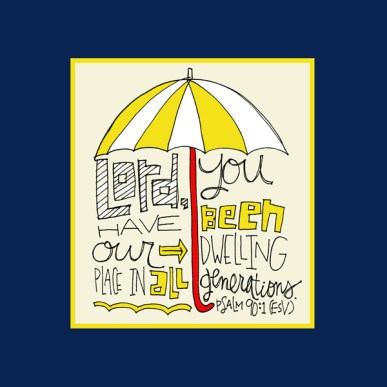
Devotional – Psalm 90.1

Devotional:

Psalm 90.1

Lord, you have been our dwelling place in all generations.

Weekly Devotional Image

On Sunday we spent the entirety of our worship service talking about why we give to the church. We looked at biblical calls to generosity, we reflected on the challenges of tithing, and we even went through our Missional Budget for 2018. I know that it was a challenging service because I could see the tension it created throughout the pews, but I am happy to be part of a church that is willing to be honest and vulnerable with one another.

When looking at a church budget it is important to ask questions about money and how it will be used. Questions like: How much of our budget is going to salaries? Should we be spending that much on our copier expenses? Do we anticipate our giving increasing or decreasing next year?

I’ve spent enough time looking at church budgets to determine, rather quickly, whether a budget is designed for maintenance or for mission. A budget focused on maintenance prioritizes building expenses and maintaining the status quo over and against just about anything else. Maintenance budgets are designed to keep the church looking, and running, like the year before and insuring that the doors will be open every week. For better, but usually worse, maintenance budgets propel the idea that the church building itself is the decisive factor in what it means to be the church.

120601_Psalm90_1

A budget focused on mission is different in that it prioritizes ministries and vision for the year(s) ahead. Missional budgets are designed to ask: “What’s God calling us to do?” and figuring our how to live into that reality. That challenge and joy of a missional budget is the belief that God is our dwelling place more than a building or a property.

That’s not to diminish a church structure or property; churches (as in physical buildings) allow for a gathering of people on the journey of faith and they establish a place for community. But when the church (as building) becomes more important than the church (as Body of Christ) we fail to remember that God has been our dwelling place in all generations.

I am thrilled to be part of a church that puts a priority on mission rather than maintenance. The challenge, however, is committing to that reality and remembering that God is our dwelling more than the buildings we gather in on Sunday mornings.

The Church Doesn’t Exist To Make A Difference

I’m in my fifth year of full-time ministry and I just received my first piece of anonymous “hate” mail. I use the word “hate” loosely, because at no point in the letter am I threatened or made to feel afraid, but the person clearly hated a sermon of mine and took the time to write a full page with bolded words, underlined sentences, and even a section entirely in the color red.

On Sunday I preached a sermon about why Christians pray and in it I said: “…the missing demographic from the church, the so-called millennial generation, are missing because they (we) have yet to experience the kind of sorrow and fear that leaves people feeling anchorless. It doesn’t have much to do judgments about the relevancy of the church, but more to do with the fact that when someone feels like life is perfect, they don’t see how the church can make a difference. But that’s the thing: the church doesn’t exist to make a difference. The church exists to praise the living God who fills our lives with the kind of joy that sustains us through both the mountains and the valleys we experience. Church isn’t about us. It’s about God. And, to bring it full circle, all of us are in need of the prayer that leads to joy and the joy that leads to prayer, because all of us have something weighing us down… I love asking people if God’s has answered their prayers because the answer is almost always, “Yes.” But, most of the time, we can only see how God has answered our prayers while looking backward. We can only see how God has answered our prayers through the profound reflection on the time we’ve had with a community that has sustained us until we have eyes to see what God has done.”

And today, Wednesday, I received an anonymous letter ripping apart my claim that the Church doesn’t exist to make a difference. Basically, he/she feels that the church is only one of the ways for an individual to experience God in the world, and the the church has failed to take care of people in need, and therefore it’s up to people like the writer to support the needs left unattended in the world through political means and civic organizations.

I wish the person had included their name, or at least a way to respond to their criticism, such that we could have a conversation about the subject. But without any way to do so, I decided to put it up here on the blog in hopes that it reaches him/her:

eternal-mission-church_620

The Church Doesn’t Exist To Make A Difference

We have a book in the United Methodist Church called The Book of Discipline. In it, its paragraph 120 if you’re interested, we have the mission of the church written our plainly for all to read and understand: “The mission of the United Methodist Church is to make disciples of Jesus Christ for the transformation of the world.”

Making disciples is at the heart of what it means to be a United Methodist. I mean, its what Jesus calls the disciples to do at the end of Matthew’s gospel (Go therefore and make disciples…). But making disciples is often confused with filling the pews; it results in having conversations about how to get more people in the building while neglecting to interact and connect with people already in the building, it results in infantile/surface level discipleship, and it results in working for the numbers instead of the kingdom.

And then we have this bit about transforming the world. Is that really our mission? Does the church exist to change the people and the community around us? Should that be our only focus? Does the church exist to make the world a better place?

The church is defined by the sacraments of communion and baptism in order to be a community of peace. The church, therefore, is called not to make the world a better place, but to be the better place God has already made in the world.

Today we are so steeped in the allure and promises of our political ideologies that we often superimpose them onto the church. We look to the mighty and the powerful so that we can learn how to change the world around us. But look at what makes the church the church: Jesus Christ. God is made manifest in the world not through the powerful, not through the expectations of the mighty, but through a baby born in a manger, through wandering Israelites, through tax collectors and fishermen, through a poor rabbi murdered by the state.

The church is already the better place God has made in the world.

But it’s hard for us to believe that.

It’s hard for us to believe that the church is the better place God has made in the world because many of us worship our government, or social programs, the way we once worshipped the Lord. We follow the never-ending political news-cycle like we once checked in on our brothers and sisters in faith. We read and repost articles about local civic organizations as if they are going to bring us salvation that we claim, through the Creed, that Jesus already brought.

Christians in America have played the political game for so long that we can almost no longer differentiate between America and God. Or, at the very least, we assume that if the church is not involved in the work of making the world a better place, than it’s not worth our time and attention.

In scripture, Jesus calls this behavior idolatry.

For far too long we’ve limited our imagination of the church to being the mechanism by which we can develop strategies that can, to put it in political terms, Make America Great Again or Make The World A Better Place. But that is not the task nor is it the mission of the church. The task of the church is to be a community of character that can survive as a witness to the truth.

All of this is not meant to be a critique of civic organizations that work to change the world, nor is it meant to be a critique of policies of the political right or left. Neither is it a denial of the importance of caring for the last, least, and lost in our communities. No, this is about our captivity to the presumption that organizations and political parties determine our lives more than the living God.

Yes, everyone is free to use their money and their time and their talents as they see fit. In our country we worship this freedom to a frightening degree (However, we tend to only relish in our freedom to say and do what we want, and the moment we encounter the other perspective we either cover our ears in anger, or we rush against them with vitriol.). We can try to do what we can to make the world a better and safer place.

But being a Christian is not about (political) freedom or being safe. After all, we Christians worship a crucified God and we seek to be in fellowship with the One who mounted the hard wood of the cross. Following Jesus is all about challenging the presumptions of the world with the truth of the lordship of Christ that often puts us in a place of danger. Following Jesus means believing the greatest freedom and power we’ve ever received did not come from the Declaration of Independence, or from giving money to a group like Kiwanis, but through Jesus Christ who died on a cross.

I do sincerely apologize for making a claim about the church not making a difference in the world. After all, I am a pastor because the church changed my life. But I also recognize that for as much as I want to attribute the difference I have experienced to the church, Jesus is the one who made all the difference.

We spend so much time thinking and living into a strange reality that assumes the church exists to serve the members of the church, or to make the world a better place. But that doesn’t have much to do with Jesus. Any political party and any civic organization can do lots of things to make their members happier and safer and better (at least in terms familiar to the world).

But the church, as the body of Christ, exists to be the better place God has already made in the world. God in Christ transformed the powers and principalities such that the world has been turned upside down. God in Christ captivates our hearts and souls by proclaim who we really are and whose we really are. God in Christ is the one in whom we live and move and have our being. God in Christ has made all the difference.

Devotional – Psalm 25.5

Devotional:

Psalm 25.5

Lead me in your truth, and teach me, for you are the God of my salvation; for you I wait all day long.

Weekly Devotional Image

On Friday, at a campaign rally in Alabama, President Trump suggested that any “son of a b!@#$” who kneels during the national anthem should be fired. His comment was made in reference to the growing controversy initiated by the (former) NFL player Colin Kaepernick who last year knelt during the national anthem to protest police shootings of black people. And as more and more players began to join Kaepernick in demonstrating, responses from political figures have garnered a lot of attention including the recent comments from the president.

At both a wedding reception on Saturday evening and in church yesterday I overheard a number of conversations between people about the controversy and battle lines were quickly drawn. On one side there are people who believe those who kneel represent anti-patriotic sentiments and that they are ungrateful for the military. On another side there are people who believe that kneeling in protest is part of the 1st Amendment and therefore is absolutely an American thing to do and that it should be protected.

Witnessing conversations about the American Flag and the responses of professional football players to it reminded me of Stanley Hauerwas concern that most Christians today are moved more by the American Flag than by the cross of Jesus Christ. This is not to say that there is anything wrong with the flag (though it is certainly a more complicated symbol than we often think it is), but the fact that the flag itself generates more response and appears to be more powerful than the cross is something that should give Christians pause.

Bible-and-Flag

It’s one thing for talking heads to ramble about the pros and cons of kneeling during the anthem but it’s another thing entirely when it comes to the realm of the church. These days the church seems to revolve around tweets from the White House more than the revealed Word of God. These days the church appears to spend more of it’s time debating the values of our country’s democracy than our Savior’s teachings and ethics. These days the church seems to believe that our salvation will come from Congress more than from Jesus Christ.

The psalmist wrote, “Lead me in your truth, and teach me, for you are the God of my salvation; for you I wait all day long.” As Christians, our God is the God of salvation, God is the first and the last, and God is the one for whom we wait all day long. Our creeds and our prayers, our hymns and our scriptures, all point to the definitive claim that God is the source of our being and that the cross of Christ is, and forever shall be, the most determinative symbol in our lives.

But sometimes, it doesn’t feel like it.

Instead, in the realm of the church we label one another as liberal or conservative when we’re supposed to see one another as brothers and sisters in Christ. When we have culture wars over things like NFL players kneeling during the national anthem we classify entire groups of people as pro or anti American, we neglect to remember that all of us are children of God. When we are more concerned about how someone responds to the flag than we are about how someone responds to the grace of God, we neglect to be a church that can faithfully say: “Lead me in your truth, and teach me, for you are the God of my salvation.”

What’s Right With The Church?

Psalm 145.1-8

I will extol you, my God and King, and bless your name forever and ever. Every day I will bless you, and praise your name forever and ever. Great is the Lord, and greatly to be praised; his greatness is unsearchable. One generation shall laud your works to another, and shall declare your mighty acts. On the glorious splendor of your majesty, and on your wondrous works, I will meditate. The might of your awesome deeds shall be proclaimed, and I will declare your greatness. They shall celebrate the fame of your abundant goodness, and shall sing aloud of your righteousness. The Lord is gracious and merciful, slow to anger and abounding in steadfast love.


People outside the church love to talk about its faults and failures. For instance: Church organizations were able to mobilize and respond to the recent devastation in Texas and Florida before FEMA or the Red Cross, but whenever the Church is in the news it has to do with a failure to keep track on money properly, a scandal involving clergy, or a denomination’s vote on something like homosexuality.

Last week I shared some stories about a recent wedding I presided over, and I told you about how effusive some of the people in attendance were with their praise. There is something strange and mysterious about a wedding that leads people to speak in deeply honest ways. Perhaps it’s the fact that love is in the air, or that reunions are bringing people together, or the free alcohol. However, what I didn’t share with you last week were the negative comments from other people.

“I don’t think you’re gonna have a job much longer preacher. You know the church is dying right?”

            “How can you support a system that is so archaic and out of touch with reality?”

            “You seem like a nice guy but I think the church is more responsible for evil in the world than good.”

It’s easy to pick on people outside of the church who are so harsh and judgmental with their language. It’s easy to pick on them because they’re not here, they don’t know what God is up to, they don’t know what the church is really like.

And for as much as people outside of the church love to talk about its faults and failures, people inside the church might be even worse.

I went to my first clergy meeting for the Alexandria District this week and I was struck by how somber so many of us were. Throughout the time of our gathering there was far more negativity than positivity, and at some point it felt like the whole point of the meeting was to get preachers together to complain about people like you.

            What’s right with the church?

Fotolia_137876364_Subscription_Monthly_M-1080x675

A few years ago I was given a copy of sermon preached by a man named Zig Volskis in 1987, the year before I was born. In it he attempts to answer that very question, “What’s right with the church?” Zig, like me, was frustrated with all of the negativity surrounding the church and instead he wanted to focus on the life-giving elements of the body of Christ that is the church.

Zig preached that as a child he would have responded to the question with: the church bells and music. They both represent the energy and depth of the worshipping community through sounds and communal response. The music of the church reassures the people that God is the one in control, even is the world claims the contrary.

As an adult, Zig claimed that his answer had changed over a career of serving the church for thirty years. He believed the best thing about the church is that it endures. Empires come and go, even church buildings are destroyed by war and exodus, yet the body of Christ always endures. With all its blindness and plundering, for all its inability to faithfully use its enormous resources properly, the church has sought to minister to human needs in thousands of different ways. And, for untold numbers of persons, the helping hand of the church has been a lifesaver.

Zig ended the sermon with a call to those who love the church: make more room for church, bring to the church your best and highest devotion. And to those who are not sure about the church: you will not find perfection here, but come in anyway, and help us make the church better.

And with that he said: Amen.

Over the years I’ve thought a lot about Zig’s sermon, and in particular our willingness to overemphasize the negative rather than addressing the positive. And, I’ll be the first to admit – The church does have problems. From this Cokesbury here in Woodbridge to the great universal church, we have problems because, at its heart, the church is filled with people like us: broken, flawed, sinners.

I could take time to bring up poor management, or fiscal irresponsibility, or personal judgments. We could spend weeks talking about how we’ve failed as a church, we could spend weeks talking about how we need to get better, but in so doing we would fail to recognize all the things that are right with the church.

But the psalmist, and the witness of scripture, chooses to focus on the things that are right. I will extoll the Lord, I will meditate on the goodness of God, I will declare the greatness of God. Every generation will share with those who follow all the splendor and majesty of God.

The psalm we have today is like a hymn, something to be declared by the entire congregation. And if you look at it, and really read through each line, it is so over the top with declarations of God’s glory that it sounds like the kind of love letters middle school students used to leave in each other’s lockers.

The love and praise the psalmist has for God is not something that can remain bottled up and hidden away. There is a quality of God’s grandeur that evokes a response, it pushes us to bring forth our gladdest praise and declare from the rooftops about the mighty works of God.

However, most of us are uncomfortable with wearing our faith on our sleeves. We don’t know quite what to make of religious displays of affection. We can’t even imagine standing up in church to talk about what God has done for us.

This psalm, these words about God, they are an invitation to remember what God has done for us, and shout it out.

I love asking people to tell me about sermons they remember from the past. Such as: Have you ever heard a sermon on Psalm 145? Can you remember the preaching from when you were a kid? Can you even remember what I preached about last week? The truth is that most of us remember very little, myself included!

I think back on what it was like to be raised in the church and I can’t remember any sermon I heard. There are a couple phrases that continue to bounce around the grey matter between my ears, but I don’t remember anything more than that. But you know what I do remember? I remember the people who got up and talked about how the church had changed their lives.

I remember sitting as a child at the altar and listening to a man in a hospital gown talk to us about how the church visited him when he was in the hospital after finding out he had cancer. I remember the woman who wept from the pulpit as she was thanking people for attending her husband’s funeral. I remember the older man who was baptized in front of the whole church who then shared his story about how he lost everything in his life, and then found everything when he started coming to church.

There is a profound power in being reminded, again and again, of what God is doing in the world and in the church. There is something good and right and true about sharing stories of what is right with the church. So that’s exactly what we’re going to do.

Founders-Day-2017-672x330

I’m going to go first, as an example, but then I want to open up this space and this time for you to share what you think is right with the church.

Shortly after I arrived here at Cokesbury, I was working on a sermon in my office when a bunch of people came in through the door and kept walking past without saying a word. I mean I was the new guy and they didn’t even both to check on me. And they call themselves Christians! I found out later they were the Prayer Shawl team, and that they had work to do in the conference room.

I sat in my office for a while, pretending to work, but what I was actually doing was eavesdropping. I wanted to know what they were really up to, I wanted to know what these ladies were really like, I wanted some gossip.

But I was disappointed. Instead their conversation was filled with affirmation for one another, and they worked and worked and worked.

You want to know what I think is right with the church? Our prayer shawl team. They gather together and have created a beautiful community designed to make the community more beautiful. They work to give away everything they’ve created to be a blessing to others. And they do so with abundant joy. Each of their shawls, and all of the squares in our bulletins today are seeds they are casting into the world, and because of their work and God’s grace, those seeds will grow to bear beautiful fruit for God’s kingdom.

So, now its your turn: What’s right with the church?


There are few things in this life more joyful than discovering how our lives are caught up with the great and enduring story of God’s wondrous works. As we share what’s right with the church we discover how connected we are with one another. As we listen to what’s right with the church we rediscover the faith and the fervor of the psalmist within each and every one of us.

So to those who love the church: make more room for it, bring to it your best and highest devotion. And to those who are not sure about the church: you will not find perfection here, but come anyway, and help us make the church better. Amen.

Devotional – Jeremiah 15.16

Devotional:

Jeremiah 15.16

Your words were found, and I ate them, and your words became to me a joy and the delight of my heart; for I am called by your name, O Lord, God of hosts.

Weekly Devotional Image

Cokesbury Church celebrated its 58th anniversary on Sunday. For our Founder’s Day we had the choir singing and clapping, we were blessed by a sacred dancer, our children marched through the sanctuary singing happy birthday, each person in attendance was given a puzzle piece to add together in order to produce an image of the church, and we had one of our former members return to offer the sermon.

It was a strange a beautiful thing to witness a church reunion for which I am the newest part. While I am still learning about all of the traditions of the church, I had the opportunity to meet so many people on Sunday for whom Cokesbury is/was their home church for longer than I’ve been alive. Before the service started I was able to mill about and observe reunions between people who had gone far too long without seeing one another, and I overheard stories about the church from the past while also listening to hopes about the future.

21150212_10209733530326681_1060543143271111218_n (1)

All in all, it was a remarkable worship service and I count myself blessed for having played a small role in it.

When the service came to its conclusion, and I offered the benediction, I stood like I always do in the narthex and shook hands with people on their way to the social hall for our reception. The food was hot and ready by the time we finished and we could all smell the delicious feast awaiting us in the air.

While I was walking around and shaking hands a man walked up to introduce himself and I made some offhand comment about how he needed to stick around for the food otherwise I’d have to eat it all. In response he smiled, looked me right in the eye, and said, “Son, we just feasted on the Word and I don’t know if I’ve ever been more full in my whole life. But I’ll see what I can do.”

We can feast on any number of things: food, experiences, even television shows (aka binge watching). But how often do we feast on the Word? The prophet Jeremiah knew that feasting on God’s Word would bring a delight unmatched at any church potluck or dinner function. Jeremiah knew that God’s Word would fill his heart in a way that no relationship ever could. Jeremiah knew that when the Lord called his name it would sound better than any music to have ever touched his ears.

We feast on God’s Word whenever we worship, whenever we pray, and whenever we read the bible. And though we might try to alleviate our hunger with a number of empty solutions, God’s Word will always be there to offer us true satisfaction.

Pub(lic) Theology – What’s Right With The Church?

Crackers-Banner-1

Before the beginning of the Virginia Annual Conference in June, the team from Crackers & Grape Juice hosted a pub theology event at Bull Island Brewing Company in Hampton, Va. The evening was full of good music, good beer, and good conversation. Our guest was the profane and profound Jeffrey Pugh who talked a lot about what it means to be a Christian during the era of Trump. This episode is part two of our Pub Theology event in which we field questions from the crowd. If you would like to subscribe to the podcast or listen to the episode you can do so here: Pub(lic) Theology – What’s Right With The Church? 

19222878_1811269405868344_690887276155292691_o

On Not Looking Like A Pastor

Stanley Hauerwas is known for telling his seminary students that they should never marry couples off the street and they should never do a funeral in a funeral home. His instructions to soon-to-be-pastors can sound a bit harsh the first time around but they are worthy commands.

Pastors should not preside over funerals in funeral homes because we are supposed to have Services of Death and Resurrection in the same place that baptisms take place. Our life with God begins in baptism, and finds its new beginning in our death; those two things should not be separated.

However, in my time as a pastor I’ve done a handful of funerals in funeral homes simply because the family was afraid of the cost of having the funeral home transport the body/urn and they were overwhelmed by the total cost to begin with.

But the prohibition to never marry someone off the street is one that I have taken very seriously.

In our current culture, the divorce rate is creeping above 50% which means that by the time I retire from ministry, there’s a chance that half of the marriages I presided over will have already come to an end. This terrifies me.

In response to the continually growing trend of separations and divorces, I have made a concerted effort to spend as much time with couples before their wedding so that whether I knew them before their request or not, they will not be strangers by the time I stand with them by the altar. I insist on having a minimum of three pre-marital counseling sessions and I reserve the right to not perform the marriage if I feel either something is wrong, or that I am not the one to bring them together.

Of all the questions that I ask, (and I do ask a lot) the one that makes couples the most uncomfortable is not the question about sex, or even how they handle money, but about why they want me to perform the wedding. And I don’t mean me personally, but why do they want it to be a religious service.

I ask this question because it is a lot easier (and cheaper) to drive down to the local courthouse and be married by a justice of the peace. There’s no premarital counseling involved, there’s no need to have a packed room full of people and for a liturgy. So, why have a religious ceremony?

Last night I was having a pre-martial counseling session with a couple whose wedding is coming up, and upon asking the question the soon-to-be husband very honestly answered that he is suspicious of organized religion, that my involvement has less to do with his choice than with the family’s choice, but that in the end he wanted it to be religious (and wanted me to do it) because I don’t seem like a normal pastor.

IMG_2758

Drinking Methodist “Champagne” at the Easter Sunrise Service

I hear that kind of thing all the time. I’ll be at a local coffee shop working on a sermon when someone will strike up a conversation and when it moves to the topic of employment, and they learn I’m a United Methodist pastor, they’ll say something like “Are you sure?”

Or I’ll be at a party with mutual friends and when I’m introduced, as a pastor from a nearby church, people will always hide their beer cans or glasses of wine behind their back until they see that I am holding one as well.

Or when I drop off my son at day care after months of learning about the teachers and other parents I’ll be wearing a clergy collar and someone will ask me if it’s a joke.

I, apparently, don’t look, sound, or act like a pastor.

And I think this is a good thing.

I think it is a good thing precisely because of what Dr. Hauerwas taught me: Never marry people off the street. When I am invited into the intimacy that is shared between two people prior to their wedding, when I can have real and vulnerable conversations with them about the sanctity of marriage and God’s ultimate role in it, I can break down these strange stereotypes about what a pastor is supposed to look and sound like.

Being myself, rather than having a presumed pastor-like personality, helps to show the world that Christians (and the church) are not what the world makes of us. We Christians are not all like the Westboro Baptists who are forever picketing certain events, nor are we all like the gay-shaming ultra-conservatives who belittle people for their identity, nor are we all like the quiet, antiquated, and archaic pastors from television shows and movies.

We, Christians and Pastors alike, are more than how the world portrays us. We are broken people who are in need of grace. We are faithful people filled with the joy of the Spirit. We are hopeful people who believe the church is the better place God has made in the world.

So I am grateful for not appearing like a pastor. I am grateful because I believe it will help me help others to see what the grace of God has done for me.

Devotional – Psalm 139.4

Devotional:

Psalm 139.4

Even before a word is on my tongue, O Lord, you know it completely.

Weekly Devotional Image

I was shaking hands with people on their way out of worship when a young man, about my age, walked up. We exchanged the pleasantries due to one another in a place like church and then he asked if I would be willing to pray for him. I said something like, “Sure I’ll be happy to add you to my prayer list” and then prepared to shake the next person’s hand. But the young man kept standing there and said, “No. I need you to pray for me right now.”

He told me about the struggles in his life all while people standing in line waited patiently. He shared about his inability to find work, his complicated relationship with his father, and his general feeling of despair. And then he grabbed me by the hands, closed his eyes, and waited for me to pray. So I did.

I had casually known the young man for a couple years but I had no idea about his struggles. Week after week we were in the same church, singing the same songs, offering the same prayers, but I knew nothing about what was happening under the surface.

The psalmist proclaims, “Even before a word is on my tongue, O Lord, you know it completely.” And this is good and right and true. The Lord knows what we need and what we want even before we can articulate what we need and what we want. But just because God knows our words before we do, that doesn’t mean that everyone else does as well.

shutterstock_153536591

In today’s world many of us are uncomfortable with the thought of asking someone to pray for us, let alone having him or her do it right in the moment of our asking. Instead we fill the time of prayer concerns with the needs of other with whom we are familiar. And even then, the expectation is usually that a general prayer will be offered for individuals and groups removed from the immediate situation so that we can move on to something else.

The Lord knows what we need, but the people closest to us (our friends, family, church members) usually don’t. Instead, they are habituated by the masks we wear. They grow comfortable with what they experience and then assume that so long as everything on the surface appears normative then everything deeper must be the same.

What would it look like for you to ask someone in your life to pray for you this week? And not the “can you pray for me sometime” casual request we are used to hearing but the “I need you to pray for me right now.” It might be uncomfortable and even frightening, but it is at the heart of what it means to be in relationship with others in a way that is true, deep, and faithful.