Devotional – John 1:29

Devotional:

John 1.29

The next day [John] saw Jesus coming toward him and declared, “Here is the Lamb of God who takes away the sin of the world!”
Weekly Devotional Image

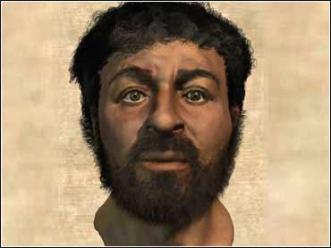
The quest for the historical Jesus, for the most authentic and true description of the man, dominated a strain of theological thought during the 19th and 20th centuries. Theologians would dissect scripture, historians would recover artifacts, and pastors practically posit who Jesus really was during the first century. In large part it was a response to the world’s obsession with historical and verifiable truth at the time, but it also captivated the minds of many Christians who sat in the pews on Sunday mornings.

Through their work Jesus was seen as a Rabbi (a teacher and prophet of first-century Judaism), a Light to the Gentiles (a philosophical mediator between differing groups), a Monk who ruled the world (a monastic example of the need to remove oneself from the world), the Prince of Peace (the divine example of pacifism), a Liberator (the opposition to economic and social injustice), and a slew of other identities.

In response to this growing trend, Albert Schweitzer famously said that going to look for the real Jesus is like looking into the bottom of a well; we know there is something down below, but what we’re really seeing is a faint reflection of ourselves.

historical-jesus

Many of us are guilty of this similar line of thought even today. We have a social cause on our radar and we twist and manipulate Jesus to defending our cause. Politically, regardless of which side we identify with, we make the assumption that Jesus is on our side when debating someone with a different position. Our churches are so sure that Jesus supports our behavior that we are suspicious of everyone outside the bubble of our experience.

John, however, saw Jesus and declared, “Here is the Lamb of God who takes away the sin of the world!”

How do we see Jesus? Do we limit Jesus to some political ideology or ethical principle? Do we believe that Jesus is our side and that we have a responsibility to convert those who disagree with us? Do we look for Jesus and only see a faint reflection of ourselves?

Or do we see Jesus like John? Do we open up scripture to enter the strange new world of the bible and encounter the Lamb of God? Do we understand Jesus as totally other and at the same time just like us? Do we believe that Jesus has not only taken away our sin (and therefore calls us to be holy) but also taken away the sins of our enemies?

How do we see Jesus?

The Humanity of God – Christmas Eve Sermon on Luke 2.1-7

Luke 2.1-7

In those days a decree went out from Emperor Augustus that all the world should be registered. This was the first registration and was taken while Quirinius was governor of Syria. All went to their own towns to be registered. Joseph also went from the town of Nazareth in Galilee to Judea, to the city of David called Bethlehem, because he was descended from the house and family of David. He went to be registered with Mary, to whom he was engaged and who was expecting a child. While they were there, the time came for her to deliver her child. And she gave birth to her firstborn son and wrapped him in bands of cloth, and laid him in a manger, because there was no place for them in the inn.

Colorful holiday lights background, defocused

Christmas Eve! No matter how old or jaded we may be, no matter what kind of year precedes this night, Christmas Eve never fails to brighten our spirits. I look forward to Christmas Eve with a kind of painful excitement: I know there are people here tonight who will not be here the rest of the year, I know this holiday carries with it more meaning than can be contained in a 15 minute sermon, and yet to share the story of salvation is one of my greatest privileges.

But then the question must be asked: Why are you here tonight? Some of you were raised in this church and can’t imagine being anywhere else. Some of you have come alone; others are with large families taking up an entire pew. Some of you have been planning to come here for weeks and some of you decided on a last-minute impulse. Some of you have been dragged here against your will, out of loyalty and guilt. And some of you are here for the first time in a very long time.

Some of you are young and are full of hope and anticipation; most of your Christmases are still in front of you. Some of you who are older are filled with memories of Christmases past that will never come again. Some of you are looking forward to getting back home to the fireplace and the presents and the tree; others dread going home. Whoever you are, and whatever you’re feeling, I’m glad you’re here tonight.


On April 26th, I woke up to the sounds of my excited wife declaring, “I think it’s happening.” The due date for our son had come and gone and each day we waited with anticipation of his coming arrival. So, being the incredible husband that I am, I started offering Lindsey all kinds of things: “Do you want me to make you breakfast? Can I massage your feet? Would you want me to call the doctor?”

She, however, was distracted from my offers by the pain she was starting to experience.

As the day progressed I must’ve checked our hospital bag no less than 42 times, I made sure we had enough clothes and snacks, I went through the 3 birthing playlists (one for calm, one for happy, one for pushing), and I asked Lindsey how she was feeling every fifteen minutes. While I was frantically going through my list over and over, Lindsey was on the couch trying to find a comfortable position to sit in until things really got going.

Mary and Joseph spent the day before their son’s birth traveling over harsh terrain while Joseph led the donkey that was carrying his pregnant fiancé. With every bump and slip, the pain Mary experienced increased and she hoped against hope they would find a place to stay in Bethlehem.

When my wife’s contractions started coming at a regular interval we called the doctor’s office and they told us to come in. Under the caring gaze of the nurses and medical staff Lindsey went through a number of tests before they told her, as kindly as they could, that it was still too early to go to the hospital, so we went home instead.

Mary’s contractions must’ve started to really ramp up as they arrived in the sleepy little town of Bethlehem. All the people they encountered were busily talking about the census that the emperor had required, how they all had to be there in Bethlehem without a choice. To the degree that no one even noticed the man escorting the pregnant woman on a donkey as they passed through the outskirts of the town.

We waited all day and finally at 9pm, the contractions we regularly occurring at such intensity that we knew the time had come. Being the good husband that I am, the car had been packed with our hospital bags for hours and all I had to do was gingerly walk Lindsey to the car and drive to the hospital with care and focus. When we were given a room time seemed to increase in speed dramatically. With every passing minute the contractions were intensifying and the nurses came in at a higher frequency to check on Lindsey and the baby.

Mary and Joseph wandered through the town at a snail’s pace hoping to find somewhere to stay, or a relative to encroach upon. But the farther they walked, the less hope they had of finding a place for the night.

At some point, my beloved wife was breathing strongly through a particularly rough contraction when the nurse said, “Honey, I think it’s time to talk about pain management.” I, watching her go through this thought to myself, “Gee, I think its time for me to have some pain management.” But, being the good husband that I am, I knew not to speak that thought out loud.

Joseph guided the donkey to their last hope, the inn, while his wife was breathing heavily through a particularly rough contraction. The innkeeper saw them walking up and went to the door to announce: “We’re full.” Being the good man that he was, Joseph then led the donkey and Mary to a stable, the only place left and helped her down into some crinkly hay.

At 7am on April 27th, Lindsey started to push. She was surrounded by a team of medical staff, machines monitoring every heartbeat and contraction, and by me trying to figure out what I could to do help.

When Mary could tell that the time had arrived, she started to push. She was surrounded by dirty animals huddled together for warmth, hay that was covered in dirt and hair from the animals, and a man who was trying to figure out what he could do to help.

And with a final push, a son was born into the world. The baby was quickly placed into his mother’s arms and for a fleeting moment nothing happened. In our hospital room the medical team waited with blankets and devices, in the stable the animals watched as the miracle of life came to fruition.

And then, with what sounded like a rush of wind, the baby sucked and breathed in air for the very first time.

From a dirty barn house to an immaculately clean hospital delivery room, the first breath of Jesus and my son Elijah highlights the fragility of this thing we call life. And don’t we take it for granted? All of us have been breathing throughout this sermon without even thinking about it, but we can only live because we can breathe.

In the beginning God’s breathed the breath of life into Adam, God breathed life into Jesus, God breathed life into my son Elijah, God breathed life into every one of you.

It is something worth celebrating because it is a miracle.

But this service, what we’re doing here tonight, is not a mere celebration of a mother and her newborn child’s arrival into the world. It is about more than the miracle of life. This is the unique story of God in the flesh. The baby placed in the manger is not us and we are not Him. He is totally other.

And yet – and this is the real mystery of Christmas – Jesus is the incarnation of the living God, but at the same time, though he is entirely other than us, he has become one of us. Nothing less than God himself has become Emmanuel, God with us.

In Jesus’ birth, God entered history in a new and strange way with the promise that in the kingdom that has no end, sadness will be turned into joy, sin will be destroyed by righteousness, and death will be defeated by resurrection.

But it all started in a tiny little stable with a couple all-alone in the world. That is the true miracle of Christmas – the fragility and humanity of God in a breath. For it is in our breathing that we constantly encounter the one thing we have to do to survive and the one thing we have from the beginning to the end of our days. And that is where God is; with every single breath we inhale the Spirit of the Lord who first breathed life into us. And in our breathing we connect with the one who breathed for the first time in the manger long ago…

And through that first breath, God emptied himself of all power and reign and might and majesty, leaving it all behind to enter our corrupted, polluted, and tragic world. Gone were the days of abandonment, gone were the times of uncertainty, and gone was the power of death. For God came into the world through a baby in a manger to save us from ourselves; to be with us in every single breath; to offer us the true gift of Christmas: God with us.

Merry Christmas. Amen.

christmascandle

Too Busy To Welcome – Advent Homily on Romans 15.7

Romans 15.7

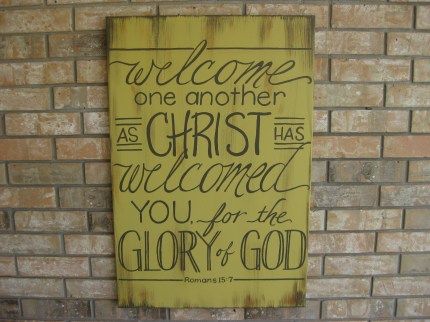
Welcome one another, therefore, just as Christ has welcomed you, for the glory of God.

too-busy-for-christmas-1

When Bob Sharp was sent to Marquis Memorial, I know that he was welcomed because it didn’t take long for the church to paint his office burgundy and gold in honor of his dedicated devotion to the Washington Redskins.

When Courtney Joyner started at St. Paul’s, I know she was welcomed because she is a triple-threat: She can sing, she can jam, and she can preach.

When John Benson first preached at Augusta Street, I know he was welcomed because his people haven’t stopped shouting “Amen!” since his first sermon.

When Won Un showed up at Central, I know he was welcomed because their entire church community has developed an affinity for Kimchi and they know that if they can’t find Won on a nice day, it’s because he’s out riding his bike.

When Janet Knott arrived at Jollivue, I know she was welcomed because she preaches with gifts, and who doesn’t love presents?

When Clayton Payne began at Cherryvale, I know he was welcomed because people keep showing up week after week even though he keeps preaching the same sermon over and over again.

When Bryson Smith was appointed to St. Paul’s, I know he was welcomed because they know if the sermon falls flat, he can always sing a solo and get the people to shout “Praise the Lord!” and “Mercy!”

When Sarah Locke was sent to Christ, I know she was welcomed because people started showing up in her kitchen while she was still unpacking boxes. I know that because I was there!

I know the United Methodist churches of Staunton are a welcoming bunch because you have so warmly welcomed your pastors. But I wonder, do we welcome everyone to our churches in the same way we welcome the pastor when he or she first arrives? Do you really welcome one another just as Christ welcomed us?

When I arrived in Staunton, Won and I got together and thought it seemed about time to resurrect the Lenten and Advent luncheons. We were not here when they used to happen and so we were able to tweak the schedule and the organization a little bit. Important for us was the shifting of host churches and guest speakers so that everyone got a chance to welcome, and every preacher got a chance to preach.

Fun fact: As of Christmas day, I will have preached in every single United Methodist Church in Staunton. And it only took me three and a half years!

Anyway, we got the Lenten luncheons started again, and the first time I was invited to preach we were gathering at Central UMC. At the time, I was young and naive, and I thought it would be a good idea to wear my Carharrt Overalls when I preached from the pulpit in order to really drive home the message. Maybe you were there. Maybe you even remember some of the things I said.

I poured out my heart and soul from the pulpit at Central UMC and I did my best to make the people of St. John’s as proud as possible. Afterwards, during lunch, after the tenth or so person made a comment about my attire, an older woman came up to me and asked if we could talk (I won’t say which church she was from).

So we moved to the corner of the social hall, and she gingerly placed her hand on my shoulder and said, “I understand that you’re new to town you might be looking for a church home, so we’d love to have you join us for worship on Sunday.”

I remember just standing there stunned. I mean, it was a kind gesture for her to invite me to church (particular when the average person in a United Methodist Church invites someone to worship once every 33 years). But going to another church on Sunday is impossible.

She welcomed me, but she didn’t listen to me. I suspect that she was more concerned with having people in the pews, than with knowing who the people are in the pews.

Welcome one another, therefore, just as Christ welcomed you, for the glory of God.

How did Jesus welcome? Well, he certainly didn’t wait for people to just show up because he was having a service on a Wednesday afternoon, or a Sunday morning, or even on Christmas Eve. Jesus welcomed others by showing up in their lives, he met them where they were and ministered to them in terms and in ways they could understand. He told stories that connected with their daily living, stories about the soil and the birds of the air. He welcomed them in the midst of their suffering and isolation. He welcomed the very people who would abandon him to a table without cost.

At St. John’s we have a Preschool and I spend time every week leading the kids in what we call chapel time. I’ll take a lesson from scripture and try to rework it in ways that can understand and apply to their life.

Last week, after practicing the Christmas pageant for what felt like the thousandth time, I set up a small table near the altar and I invited the kids to come sit and listen. The thirty minutes prior to chapel time were filled with pushing and tripping and laughter and debauchery, but when they sat down around the table I started speaking in a soft voice, and they all started to listen.

I said, “My friends, I have something I want to share with you. This is bread and grape juice, but it is about to me much more than that. For this is a gift that Jesus gives to us. Some of you might do this in your church on Sundays, and whenever we sit at the table we are remembering Christ’s love for us. At this table, all of us are welcome no matter what. So let’s pray… God thank you for loving us so much that you welcome us no matter what we’ve done and no matter who we are. I pray that you would pour out your Spirit on us and make us more like Jesus so we can love others. Amen.”

And then one by one I called them by name, I gave each of them a piece of the bread, they dipped it into the cup, and the received communion.

Unlike us, the preschoolers have the benefit of not rushing around through this season of Advent endlessly crossing items off our to-do lists. Unlike us, the preschoolers don’t feel burdened by the tyranny of things and can sit quietly for a moment to receive a gift better than anything under the tree.

It often happens around this time of year that we feel too busy to welcome. We become more concerned with the wrapping paper and the ornaments and appearance of things than with the welcoming love of the Lord who was born into an unwelcoming town. When our sanctuaries fill up with more people than usual on Christmas Eve we are more often burdened by making sure everything is in the right place, than we are by making sure we are in the right place to welcome and be welcomed by the Lord.

And it is at the meal, the Lord’s Supper, the thing that most of us do on the first Sunday of the month, where we learn what it really means to welcome like Jesus. For Jesus is the one inviting you to the table, not merely hoping that you will show up to fill an empty place in a pew, but earnestly and truly yearning for your presence. You are invited because you are unique, you are wonderful, and you are a child of God. There is a place for you at the table no matter what.

Can you imagine what our churches would really look like if we welcomed others as Christ welcomed us?

Amen.

The Tyranny of Titles – A Christmas Pageant Homily

Matthew 18.1-5

At that time the disciples came to Jesus and asked, “Who is the greatest in the kingdom of heaven?” He called a child, whom he put among them, and said, “Truly I tell you, unless you change and become like children, you will never enter the kingdom of heaven. Whoever becomes humble like this child is the greatest in the kingdom of heaven. Whoever welcomes one such child in my name welcomes me.”

img_2120

A father was with his four year old daughter last Christmas, and it was the first time she ever asked what the holiday meant. He explained that Christmas is all about the birth of Jesus, and the more they talked the more she wanted to know about Jesus so he bought a kid’s bible and read to her every night. She loved it.

They read the stories of his birth and his teachings, and the daughter would ask her father to explain some of the sayings from Jesus, like “Do unto others as you would have them do unto you.” And they would talk about how Jesus teaches us to treat people the way we want to be treated. They read and they read and at some point the daughter said, “Dad, I really like this Jesus.”

Right after Christmas they were driving around town and they passed by a Catholic Church with an enormous crucifix out on the front lawn. The giant cross was impossible to miss, as was the figure that was nailed to it. The daughter quickly pointed out the window and said, “Dad! Who’s that?”

He realized in that moment that he never told her the end of the story. So he began explaining how it was Jesus, and how he ran afoul of the Roman government because his message was so radical and unnerving that they thought the only way to stop his message was to kill him, and they did.

The daughter was silent.

A few weeks later, after going through the whole story of what Christmas meant, the Preschool his daughter attended had the day off in celebration of Martin Luther King Jr. The father decided to take the day off as well and treat his daughter to a day of play and they went out to lunch together. And while they were sitting at the table for lunch, they saw the local newspaper’s front-page story with a picture of Martin Luther King Jr. on it. The daughter pointed at the picture and said, “Dad! Who’s that?”

“Well,” he began, “that’s Martin Luther King Jr. and he’s the reason you’re not in school today. We’re celebrating his life. He was a preacher.”

And she said, “for Jesus?!”

The father said, “Yeah, for Jesus. But there was another thing he was famous for; he had his own message and said you should treat everyone the same no matter what they look like.”

She thought about it for a minute and said, “Dad, that sounds a lot like do unto others as you would have them do unto you.”

The dad said, “Yeah, I never thought about it like that but it’s just like what Jesus said.”

The young girl was silent again for a brief moment, and they she looked up at her dad and said, “Did they kill him too?”

img-wallpapers-christmas-eve-omohit-158401

Kids get it. They make the connections that we’re supposed to make. And even though 2016 has been a rough year with the political rhetoric and partisanship at its worst, and all the culturally significant individuals we lost (David Bowie, Leonard Cohen, Prince, Gene Wilder, John Glenn, etc.), and with the migration of refugees from the Middle East to Europe at the highest levels since the Second World War… our preschoolers have had a tremendous year.

Today, we adults live under the tyranny of titles. We want to label individuals based on a crazy assortment of criterion. He’s a Republican, she’s a Democrat, that family is poor, that family is rich, that woman is black, that man is Hispanic, that couple is gay, that couple is straight.

But the Preschoolers who gather in our basement don’t see the world and one another the way we see the world and one another.

Instead they see each other as Cruz, and Hadley, and Charlie, and Ellie Rose, and Owen, and Maddie, and Graham, and Henry. They, unlike us, do not view the world through the cynical lens that so many of us have adopted over the years. They, unlike us, see the world like Jesus.

Like that little girl with her father, they understand the cost of discipleship in a way that few us can.

I’ve been here long enough to have spent a lot of time thinking about what the Preschool should be teaching the children. I’ve had consultations with the teachers about curricula and paradigms. I’ve even met with some of you to discuss the growth and transformation of your children in response to the nurture and education they receive in the basement.

I’m guilty of the same cynicism that treats young people like objects to be molded in a factory to come out prepared for the world. When Jesus is the one who calls us not to make children into adults, but to change adults into children.

This Christmas, I have a challenge for you. Instead of being consumed by the desire to transform your little ones to fit into one of the labels of society, try to let them transform you. Try to look at the world the way they do. Try to love one another the way they do.

For it is on Christmas that we celebrate the birth of God in the flesh, born as a baby in a manger to a young couple all alone in the world. God did not come to change the world through political power or through economic wealth or through militaristic might. God changed the world through a baby, not unlike the ones we are celebrating with tonight. Amen.

Devotional – James 5.8

Devotional:

James 5.8

You also must be patient. Strengthen your hearts, for the coming of the Lord is near.

Weekly Devotional Image

Christmas pageants require patience. Christmas pageants for preschoolers require particularly profound patience. Every year the students of St. John’s Preschool spend time each day during the season of Advent practicing and rehearsing their lines for their annual Christmas pageant. We always have a Mary and a Joseph who carefully hold a baby doll in their hands as they sit patiently toward the front. We always have a couple Wisemen who are forever beating each other with gold, frankincense, and myrrh. And we have an assorted collection of barnyard animals including mice, sheep, cows, and at least one donkey.

Today I gathered with the children in the sanctuary and, as the defacto narrator, I led them through the pageant from beginning to end. When our shyer students walked up to the microphone I was ready to feed them their line and when our gregarious students walked up to the microphone I covered my ears in anticipation of them belting out their one line proclamation.

Meanwhile, a father of one of our students was in the preschool preparing Christmas trees for each of the classrooms. The hope was that after practicing, the children would return to their rooms with the surprise of cheer waiting for them in the form of a tree and then they could decorate each tree as they saw fit.

christmas-trees

When we finished the pageant, I walked with the children to their rooms and as soon as they saw the Christmas trees they went berserk. Our pretend shepherds were jumping up and down while our animals were spinning around in circles and even Mary and Joseph were screaming with joy. I did my best to calm them and then we sat on the floor to talk about the trees and how the relate to the Christmas story. I began with what I thought was a rather innocuous question: “Why do we celebrate Christmas?” To which one of our three year olds shouted out, “TO GET PRESENTS!!!”

Advent is a season of patience. While others want to jump straight to Christmas morning, while our preschoolers salivate over wrapped boxes under the tree, we strive to patiently wait for the coming of the Lord. This is the season of strengthening our hearts so that we might be prepared to receive the gift of the Christ-child with unadulterated joy (like the preschoolers) while also remembering the real present is God’s presence with us.

Devotional – Romans 15.7

Devotional:

Romans 15.7

Welcome one another, therefore, just as Christ has welcomed you, for the glory of God.

Weekly Devotional Image

It is hard to welcome one another, until we ourselves know what it means to be welcomed. We can imagine what we need to do and how we need to behave, we can get out the best silverware and the matching dinner sets, we can fill everyone’s cups to the brims, but until we have experienced being welcomed, we will struggle to welcome others.

I spent the last week in Orlando, Florida with my in-laws for the Thanksgiving holiday. They were forced to practice a new type of welcoming and hospitality because they hosted their 7-month old grandson for the first time. In addition to the normal preparations for people visiting, they had to procure a stroller, pack-n-play, diapers, wipes, and an assortment of other necessary items. Moreover, they had to adjust their schedules to the sleeping habits of our son and reorient all of their plans around his general disposition and mood.

And while we sat around the dinner table on Thanksgiving I was struck by how welcomed I felt throughout the week. They could have made assumptions about what we needed and then acted on it, but instead they approached us and asked what they could do to help. They could have become quickly frustrated with Elijah changing their plans but they adapted and made us feel comfortable. They could have expected us to change to fit into their way of life, but instead they changed to fit into ours.

img_9511

One of the most brilliant aspects of the Advent season is our anticipation of the way God fit into our way of life by taking on flesh and being born as a baby in a manger. Rather than giving up on humanity’s inability to repent and turn back to God, God comes down and meets us where we are. God, in Christ, welcomes us into the kingdom of God by connecting with us in ways that we can perceive and understand.

The same holds true for the life of the church, and for us as individual Christians. We welcome one another just as Christ welcomed us, for the glory of God. When we encounter those for whom the church is a strange new world, we don’t just wait for them to “catch up,” instead we adapt our ways to meet them where they are. When we welcome people into our homes for food and fellowship, we don’t dominate the conversation with whatever we want, instead we seek to invite all present to shape what we talk about. When we discover new people sitting in the pews near us, we don’t make quick judgments about who they are based on their appearance, instead we remember how the Lord welcomed us and we do the same toward others.

Devotional – Philippians 4.7

Philippians 4.7

And the peace of God, which surpasses all understanding, will guard your hearts and your minds in Christ Jesus.

Weekly Devotional Image

How do you think people would respond if there was something that, if consumed once a week, would improve mental and physical health and reduce mortality by 20-30% over a 15-year period? What if this miraculous elixir was in reach of millions of people in America and research has proven that it truly does make a tremendous difference in the lives of people who consume it? How quickly do you think it would become the most popular remedy in the country?

Last week, under the “Breaking News” tab on USA Today Online, was a story detailing the availability of this particular product and the research to back up the claims. And, believe it or not, the “miracle drug” is regular church attendance.

Generic Background Image

After 20 years of research, a group of colleagues from Harvard University published their work suggesting that regularly attending religious services brings about better physical and mental health. Regarding physical health, the researchers claim that, “Adults who attend a service at least once a week versus not at all have been shown to have significantly lower risk of dying over the next decade and a half.” Beyond physical health, participating in regular worship leads to “greater optimism and lower rates of depression.”

After reading the article, one would think that every house of worship would be filled to the brim every weekend!

However, the article begs the question: Why do people worship?

Do we gather together because we want the physical and mental health benefits? Are we so consumed by the fear of death that we will sit in uncomfortable pews once a week just so we can live longer? Do we understand and value worship the same we that we understand and value the prescriptions in our medicine cabinets?

Or, do we worship because in worship we encounter the living God? Are we so consumed by the love of God that we cannot understand a way of life without gathering together once a week? Have we been transformed by the Lord who knows us and calls us by name?

The peace of God, which surpasses all understanding, will guard our hearts and our minds in Christ Jesus. We encounter the peace of God whenever we gather together, whenever we proclaim God’s Word, whenever we respond to that Word, and whenever God’s sends us into the world to be the light that shines in the darkness.

Worship, though apparently beneficial for our mental and physical health, is not about what we get out of it. Instead, worship is about what God gets out of us.

Not My President


Colossians 1.11-20

May you be made strong with all the strength that comes from his glorious power, and may you be prepared to endure everything with patience while joyfully giving thanks to the Father, who has enabled you to share in the inheritance of the saints in the light. He has rescued us from the power of darkness and transferred us into the kingdom of his beloved Son, in whom we have redemption, the forgiveness of sins. He is the image of the invisible God, the firstborn of all creation; for in him all things in heaven and on earth were created, things visible and invisible, whether thrones or dominions or rulers or powers – all things have been created through him and for him. He himself is before all things, and in him all things hold together. He is the head of the body, the church; he is the beginning, the firstborn from the dead, so that he might come to have first place in everything. For in him all the fullness of God was pleased to dwell, and through him God was pleased to reconcile to himself all things, whether on earth or in heaven, by making peace through the blood of the cross.

not-my-president-anti-trump-protesters-900


A year ago today I stood in this pulpit and preached about how God’s kingdom is not of this world. I used Pilate’s interrogation of Jesus (“Are you the King of the Jews?” “You say that I am…”) to juxtapose the world’s expectations against God’s expectations. The sermon ended with a staccato’d refrain that emphasized the kingship of Jesus and our allegiance to his kingdom.

I said:

The world tells us to gain all we can.

            Jesus tells us to give all we can.

            The world tells us to seek vengeance.

            Jesus tells us to seek forgiveness.

            The world tells us to destroy our enemies.

            Jesus tells us to love our enemies.

            The world tells us we are the center of the universe.

            Jesus tells us that God is the center of all things.

            The world tells us to ignore the weak.

            Jesus tells us that the meek shall inherit the earth.

            The world tells us that death is the end.

            Jesus tells us that death is the beginning.

I didn’t think it at the time, but it was a pretty political sermon. After all, making the claim that Christ is our King is a political statement. But what I didn’t anticipate was how the words from that sermon would play out over the next 365 days.

We’re told not to mix politics with religion. Political opinions and religious beliefs are supposed to be kept in the private sphere, they are things we can think about on our own time but the world has no right to interfere with either.

Except the world interferes with both all the time. We hear about things like the Christian Coalition, and the need for Christians to take back the Supreme Court, and I even get emails asking about what the church is going to do regarding local school board decisions.

We hear that the church is not supposed to be political. We shouldn’t endorse particular candidates or platforms. We shouldn’t tell people how to vote, or even to vote at all. The church can’t be political in the sense that it can’t be Republican or Democrat, but the church itself is a politic. To be part of the church, to be part of the body of Christ, implies that our worldview is changed and therefore everything else changes as well.

Like many Sundays throughout the liturgical year, this one has a special focus and significance. However, Christ the King Sunday is a more recent addition to the Christian calendar. Whereas Christians have celebrated the likes of Maundy Thursday and Pentecost for a long time, Christ the King was only established as official day in the church in 1925. It took the church 1900 years to need this day the same way that we need it now.

In 1925, Mussolini had been head of Italy for 3 years, a loud insurrectionist in Germany named Hitler had been out of jail for a year and his Nazi party was rapidly growing in power, and the entire world was suffering under the weight of a Great Depression.

Yet, despite the rise of autocratic dictators, despite the lack of economic opportunities, despite the strange and uncomfortable silence between two World Wars, Christ the King asserted, and still does, that Jesus Christ is Lord and he shall reign forever and ever.

Throughout the last Christian year from Christ the King to Christ the King, we’ve read from Genesis to Revelation, we’ve encountered the living God in the stories from Creation to Redemption, we’ve been transformed by the Word of the God becoming incarnate in the way we live our lives…. And all of this, all of the Sundays, all of the sermons, all of the scriptures, have pointed to one thing: Jesus Christ is Lord.

That’s the thing about Christians, for us everything starts and ends with Jesus. In his letters Paul addresses this strange and beautiful quality of Jesus over and over again. And rather than trying to accommodate Jesus to the ways of the world, Paul calls for all Christians to put Christ first. Yet, Christ is the King of a Kingdom that is so different, and so far from what we’re comfortable with, that putting Jesus first is difficult.

In Jesus’ kingdom the rules and the ruler are different. All assumptions about what is important, and who we are to be, and what we are to care about, have been changed.

It’s like being deported to a strange new land where everyone else is speaking a strange language. It takes time to learn the lingo, and adapt to the habits of the people around us. It’s not a simple matter of fitting Jesus into our present way of thinking, nor is it just giving an hour of our week to worship in a church. We don’t fit Jesus into our lives; Jesus fits us into his.

We are the ones transferred, moved, and deported from one kingdom to another. We move from the kingdom of consumption to the kingdom of communion; from the kingdom of popularity to the kingdom of poverty; from the kingdom of destruction to the kingdom of deliverance; from the kingdom of competition to the kingdom of cooperation.

Everything about what we think we know and understand changes in the kingdom of God, because Christ is King.

USA ELECTION AFTERMATH

The last two weeks have been particularly tumultuous in our country: Economically disenfranchised people are fearful about the potential of losing their health care coverage, while some devastated Democrats are calling for the murder of Donald Trump. Muslims are being threatened with a registration much like the Jews were forced to register in Germany prior to World War II, while Trump voters are being physically assaulted across the national landscape. Immigrants are cowering in fear over whether or not they’re going to be deported, while countless protestors are flooding the streets of cities and the pages of social media with the declaration: Not My President.

Some are berating and demeaning the crowds for their rejection of Donald Trump as their president as if this is the first time people have rejected the president-elect in the United States. It was only sixteen years ago that tee-shirts and bumper stickers were mass produced with pictures of George W. Bush accompanied by the words: Not My President. It was only 8 years ago that Confederate flags were waved during protests after Barack Obama won the election and people were chanting: Not My President.

Thank God Jesus is not our president.

For if Jesus were our president we would have had to pick him to lead us, and we never would have picked him to lead us. We would never willingly elect someone who told us that the first will be last and the last will be first. We would never willingly elect someone who told us to sell all of our possessions and give the proceeds to the poor. We would never willingly elect someone who told us to open up all the borders and let all the refugees in. We would never willingly elect someone who spent so much time with the riff-raff of society.

If Jesus were our president he would be a product of the world rather than a product of God’s incarnation. He would have to make promises to the rich in order to maintain economic stability. He would have to compromise with other world leaders who treat their citizens like dirt. He would have to second-guess the stories he told out of fear that he would not be re-elected in the future.

If Jesus were our president he would have to make us promises that he could never keep, instead of being the glue that keeps all of us together. He would have to take sides in political debates and ostracize entire communities. He would have to brag about the stability of the union rather than name the brokenness that is keeping us from becoming who God is actually calling us to be. He would have to order the extermination of particular individuals and communities in order to keep our country safe.

Thank God Jesus is not our president. Jesus is our King. And instead of electing him, he elected us.

The kingdom Jesus rules is not of this world and it forces us to confront how broken our world really is. Jesus, as our king, subverts the powers and principalities and shows us a new way.

In this broken and flawed world, we see and know God because we see and know Jesus. Jesus is the image of the invisible, the very beginning of everything in creation. Jesus is before all things, and in him all things hold together.

When we encounter things that appear diametrically opposed, things like Republicans and Democrats, Christ is the glue that holds it all together. Through the blood of his death, the blood that was poured out for the world, we encounter the “other” as brother and the “stranger” as “sister.” All the worldly things that seek to divide us are broken down by the glory of the cross that seeks to bring peace and reconciliation rather than division and destruction.

807586_1

It is not an easy thing to be a Christian, to worship Christ as King. We need the strength of God to endure everything with patience while giving thanks to the Father, because we cannot do discipleship on our own. But when Christ becomes first in our lives, when every Sunday is like Christ the King Sunday, when we realize that we a part of a strange new kingdom, everything else starts to change.

Our King does not build walls to keep people out, nor does our king require the registration of different communities under the auspices of “safety.” Our King invites all to the table to discover the power and love of his grace.

Our King does not call for his followers to take up the sword to wipe out political opposition. Our King forgave the people who delivered him to the cross.

Our King does not pander to us with empty promises in order to procure our allegiance. Our King meets us where we are with a simple invitation saying, “follow me.”

Nearly 100 years ago, Christians all across the world needed the first Christ the King Sunday. They needed a Sunday set apart to reflect on how the Lordship of Christ outshines even the most powerful of dictators and the most devastating of depressions.

Today, we need it just as much. We need Christ the King Sunday because it helps to remind us that Jesus’ kingdom is not of this world. It forces us to confront the strange reality of our King being nailed to a cross for the people of his kingdom. It reminds us that peace comes through his sacrifice, a sacrifice that we remember at this table.

Do not be conformed to the ways of this world, but be transformed by the bread and the cup at the Lord’s Table. Instead of consuming the politics and priorities of the world, be consumed by the grace of God made manifest is Jesus Christ. Reject the powers and principalities that seek to undo God’s creation, and kneel before the true King: Jesus Christ. Amen.

Devotional – 2 Thessalonians 3.13

Devotional:

2 Thessalonians 3.13

Brothers and sisters, do not be weary in doing what is right.

Weekly Devotional Image

This election cycle has been exhausting. The endless torrent of sound bites blasted through the television, the revelatory number of click-bait articles on social media, and the overwhelming amount of animosity between neighbors with differing political signs in their front yards have left most of us feeling weary and worn. I don’t know if this is a common thing for pastors to experience during presidential election cycles, but I’ve had more people than I can keep track of show up at my office telling me which candidate God wants me to vote for.

Many have already cast their ballots, but the majority of Americans will gather at the polls tomorrow to make their choice. Churches, schools, and other local community buildings will be filled with all kinds of people; people who are exercising their right to vote for the first time, people who feel they are being forced to vote for the lesser of two evils, people who will vote according to the party line regardless of the names attached to the positions, and people who believe that this election is the most important in the history of the United States.

Sadly, there are some for whom the foretaste of power has given them the bravado to stand outside polling areas to intimidate other voters. Whether the shout at the top of their lungs, or physically approach particular individuals, they will do what they believe is right in order to secure what they believe is right. Sadly, this election cycle has led to the bombing of political offices and the burning of black churches. Violence and fear still reigns supreme in this country. Sadly, the anger and animosity percolating in the country will not come to a peaceful conclusion when all the votes have been tallied. Many will be just as angry, if not angrier, if their candidate loses.

screen-shot-2015-06-19-at-3-11-31-pm

Friends, in this time of great strife and division, do not be weary in doing what is right. Do not forget that the people who we disagree with politically are the very people that Jesus calls us to pray for and love. Do not forget that to be Christian is to believe that Jesus is Lord, and that God is really in control regardless of who wins the election. Do not forget that though we may not think alike, we may certainly love alike.

If you are in the Staunton area, I invite you to gather together at St. John’s UMC at 7pm tomorrow evening. As the polls close and the pundits proclaim early victories on the news, we will be in the Lord’s sanctuary feasting at the table. We will listen for the Spirit and ask for God’s will to be done. We will pray for our politicians, whether we voted for them or not.

Not To Boast, But…

2 Thessalonians 1.1-4, 11-12

Paul, Silvanus, and Timothy, To the church of the Thessalonians in God our Father and the Lord Jesus Christ: Grace to you and peace from God our Father and the Lord Jesus Christ. We must always give thanks to God for you, brothers and sisters, as is right, because your faith is growing abundantly, and the love of everyone of you for one another is increasing. Therefore we ourselves boast of you among the churches of God for your steadfastness and faith during all your persecutions and the afflictions that you are enduring. To this end we always pray for you, asking that our God will make you worthy of this call and will fulfill by his power every good resolve and work of faith, so that the name of our Lord Jesus may be glorified in you, and you in him, according to the grace of our God and the Lord Jesus Christ.

love_god_love_people_1x

“I’d like to come by and shoot a story about St. John’s.”

The producer from WHSV had called the church and when I heard his request through the phone I was both nervous and excited. A story. About St. John’s. On Television. But then I realized I needed to ask a question.

“About what exactly?”

We do a fair amount for our local community, but I had a feeling this request was for something else. And in the pit of my stomach I was worried that he wanted to do a story about the controversy series we recently finished. After two months of standing up in the pulpit and belaboring different points of friction, I was looking forward to leaving the controversies aside for a little while, and did not want to speak on behalf of a church where we are clearly divided over a number of issues.

But then he said, “I saw on your website that your church is hosting a communion service on Election Day, and I thought that was something more people should know about.”

He arrived about 30 minutes later with a bag full of camera equipment and a spiral bound notebook full of questions. He set everything up in the office and ran a microphone cable under the desk and into my lap to pick up on all of the dialogue. We tested for light and volume levels for a couple minutes, made sure I was in the frame, went over the specifics about looking at him and not directly into the camera, and then he pressed the record button.

“Tell me a little about the church…”

“Well,” I began, “Not to boast, but, this is the best church in the entire Shenandoah Valley. We’ve got a Preschool that has been in existence for about 30 years and has the greatest reputation for its education. The children are nurtured by our beloved teachers, they receive the necessarily information to excel when they leave for Kindergarten, and we strive to teach them about the virtues of love, grace, and mercy.

We have a solid youth group that meets on Wednesday evenings from 7-8pm for communion, discipleship formation, and bible study. The group contains the best and brightest kids from Staunton and they regularly out disciple me, their pastor. They have a hunger for the Word and are willing to vulnerably encounter one another in questions about their faith. To be honest, they give me hope for the future of the church because they believe in what we are doing almost more than most of the adults.

We have a lectionary bible study of which more than half of the attendees are not members of our church. Every week they gather in the room next door to read four scripture texts and prayerfully discern what God is saying to them through the text. They bring their experience and love of the bible to that group and all of us have grown in our faith because of that bible study.

On Sunday mornings we have some of the best worship that any church in Staunton has to offer. Our order of worship is streamlined for maximum impact, our hymns directly relate to the greater theme and narrative of worship, most of the time the sermons aren’t half bad, and we’ve got an organist who can really make our organ move and groove. The kind of hospitality that our church members extend to strangers and longtime members is worthy of imitation by all churches and they are truly the reason people come back week after week.

On any given week our building is used by a number of local civic organizations including girl scouts, cub scouts, and boy scouts. We have a quilt-for-a-cause team that regularly works on quilts that are then given away to local children in need. We’ve got a group of volunteers called the Cheer Team who take time to visit with those who are lonely or afraid in the community. We’ve got others who go to the Trinity Soup kitchen to cook and serve food to the homeless. We send a mission team of youth every summer to help different communities in need. We’ve got…”

“Just a little bit” he said. “Now,” he went on, “tell me about this Election Day communion service.”

“Are you sure you don’t want to know more about St. John’s? I really could go on, I was only really getting started.”

“No, let’s try to stay on task.”

So for the next 45 minutes he recorded as we went back and forth about the current state of politics in our country, we waxed lyrical about pamphlets and fliers we’ve received here at the church about who we should vote for as Christians, we explored the theological implications of a communion service in the midst of such political division, and we even discussed the practical matters of how much bread to purchase and how many people we should expect to attend.

All in all, we examined just about every aspect of the Election Day Communion service and when we had gone through all his questions, we shook hands and he left to get some exterior shots of the building. The last thing he said was, “It should be on the evening news in the next day or two.”

We don’t have cable at the parsonage, but you better believe I kept checking the WHSV website for the story about our church. With every click to reload the page I dreamt about how many people would see the wonderful descriptions of the church, I imagined how many people would hear all the things I boasted about, and I began picturing our pews filled to the brim on Sunday morning.

Two days later, the story finally appeared on in the news cycle. The opening shot was an image of our altar, the one right behind me, and as the news anchor began introducing the story my teeth chattered with excitement.

The anchor said, “St. John’s Pastor Taylor Mertins has this to say….”

Then the shot cuts to me in the office, with Star Wars figurines and works of theology on my shelves. Here was the big moment. And then I watched myself say, “We are going to pray for our political leaders whether it’s the person we voted for or not. That would be the most Christian thing we could do.”

And then it ended. 10 seconds. The vast majority of our conversation was left on the cutting room floor, and 45 minutes of bragging was reduced to a 10 second sound bite.

Now, don’t get me wrong. I am grateful that WHSV came to do a story about our Election Communion Service, it will be a profound moment of unity in the midst of chaos and division, I only wish that everyone watching got to hear and experience all the things that make our church what it is.

And then I reread our scripture text for this morning.

2 Thessalonians is one of the earliest Christian documents that the church has. It is the second letter written by Paul to the church in Thessalonica. And apparently, the Thessalonians have their act together. Not only does Paul mention the fact that he gives thanks and prays for their little community, but also Paul boasts about their church to all the other churches. They are the city on the hill to which all the others churches should aspire to, they are the standard by which other churches should measure themselves, and they are worth bragging about.

But why did Paul choose to brag about them?

Was it the number of people they had in the pews on Sunday morning? Perhaps they had a remarkable preschool that was helping to shape the future? Maybe they had a youth group that met once a week for communion, fellowship, and bible study? Or perhaps they had streamlined their worship services to connect all of the hymns with the scripture, and the sermon, and the offering, and the prayers?

No.

Paul boasted about the Thessalonians because they remained steadfast in their faith in the midst of persecutions and afflictions. Paul boasted about their church because they grasped and lived into the mission of the church: to grow in love of God and love of neighbor.

We, the church, are a different people. We, the church, are an alternative form of community. Rather than being labeled and defined by the marks of culture that surround us – consumption, power, greed, political parties, nationalities, sexual identities, economics – we are like strangers living in a strange land.

What we value and desire is not what the world values and desires.

            What we proclaim and believe is not what the world proclaims and believes.

            What we worship and affirm is not what the world worships and affirms.

            We are a different people, we Christians.

Though the world may change, though new presidents may reside in the oval office, though new pastors can be sent to different churches, we grow in love of God and love of neighbor. That is our mission, and if anyone can say we love God and others, if that’s what they boast about, well that’s good enough.

love-god-love-others-720-e1340940523238

So perhaps, the ten-second sound bite about the Election Day Communion service is precisely what the community should know about our church. They don’t need to know about our different activities and ministerial programs, they don’t need to know the specifics of our Sunday liturgy, they don’t need to hear a forty-five minute speech about all the best things we’ve got going on at St. John’s.

All they need to know is that we are growing in love of God and neighbor by putting aside things like all of our political differences and joining together to feast at God’s table. Instead of being captivated by the world as the results pour in on Novembers 8th, we will be here loving one another and remembering that we worship the living God.

Therefore, maybe it is our sense of challenge, our willingness to return to this place Sunday after Sunday that connects us with the church in Thessalonica from so long ago. They suffered under persecution and affliction and were able to keep the faith. We wrestle with the competing narratives that vie for our allegiance and we keep the faith. Rather than falling prey to the whims of the world, instead of being consumed by the popularity of politics, we remember that we are God’s people. This land is going through a time of great division and schism, but because of God’s grace, we have not lost sight of who we are and whose we are.

To this end we pray, asking that God will continue to make us worthy of the call and that God will fulfill by His power every good resolve and work of faith so that the name of our Lord Jesus may be glorified in us, and us in him, according to the grace and mercy of God.

The mission of the church, and the mission of all Christians, is to love God and love others. That’s it. Amen.