Ten Things I Learned My First Year of Ministry

I recently celebrated the completion of my first year of ministry for St. John’s UMC in Staunton, VA.  Throughout my first year I experienced numerous mountaintop experiences as well as deep spiritual valleys. I baptized infants and adults into the body of Christ, I presided over the table and shared the body and blood with the people of God, I brought couples into holy matrimony, and I gave witness to the life and death of faithful Christians. I have learned a lot and am continuing to grow. Below are 10 of the biggest lessons I learned from my first year in ministry.
stained-glass-569x379

1. Every Church Is Different 

I was blessed to grow up (theologically) under the tutelage of great mentors in Dennis Perry and Jason Micheli. Until I left for college I worshipped at Aldersgate UMC for the majority of my life and had very little experience outside of my home church. I learned very quickly throughout seminary, and particularly while serving at St. John’s, that all churches are different. What I preached at Aldersgate would never work at St. John’s and vice versa. Every church has its own context and collective narrative that must be learned before the rhythm of worship and preaching can begin to be fruitful for both the pastor and the congregation. It takes time, but it is time well spent to learn the story of the people.


2. Being New Can Go A Long Way

When I was commissioned last summer I became the youngest pastor in the Virginia Annual Conference and would become the youngest pastor to serve at St. John’s since 1955. The church had grown accustomed to their pastors retiring from this appointment and were excited to receive a new and fresh-from-seminary pastor. Being new has gone a long way. I have been given certain freedoms to explore different ways of worship, teaching, and discipleship purely because I am still new to this. The laity have been particularly forgiving of my preaching because, I hope, they recognize that I am continuing to learn our collective narrative every Sunday from the pulpit. The atmosphere in church has been exciting over the last year which has encouraged our members to invite others to worship, something that all churches need in order to share the Good News.


3. It Can Be Lonely

Jason Micheli has previously written about the loneliness he experienced in his first church because there were very few people around his age. In a similar way  my wife and I have had a difficult time in Staunton meet and making new friends outside of church. Part of this stems from the fact that there are simply not very many young people in Staunton. However it is challenging to make friends outside of the church when some people immediately put up a wall when they learn that I am a pastor. It is remarkably important to maintain friendships that began in, and before, seminary but it is challenging when the geographic divide makes it difficult to stay in touch. All pastors need community; their church and people outside of it.


4. Committee Meetings Are Hard

Seminary cannot prepare you for committee meetings. I was never asked to serve on a committee before I became a pastor so I had to quickly learn the functions of each and their patterns of serving the church without any prior experience. Though the Book of Discipline outlines the roles of the committees, every church lives out these responsibilities in different ways. There have been many nights where I come home thrilled about the direction of the church I serve, and other nights where I have felt defeated by what had taken place during a committee meeting. It is so important to remember that all of this, doing church and being the body of Christ for the world, it about God and not myself.


5. It’s Important To Be Involved In The Community

When I met with the SPRC for the first time I asked what they wanted most from their pastor. The collective response was that they wanted a pastor who would be known in the community. I made a concerted effort to make that come true during my first year. For example: I have been quick to introduce myself to people in town as the pastor of St. John’s, I joined the Stonewall Brigade Band (performing continuously since 1855!) and play drums with them every Monday night as we perform free concerts in Gypsy Hill Park, and I sent hand written letters to the immediate community surrounding the church introducing myself and asking if there was anything I could do for them. The church is not just the people who gather on Sunday mornings; we are intricately connected with the people in the community. It is therefore important to establish a presence within the community outside of the church.


6. My Vision Is Not The Same Thing As The Church’s Vision

I have come up with a lot of new ideas over the last year and a number of them have become very fruitful for our church. Recently however, I have begun to realize that my vision is not necessarily synonymous with the church’s vision. The people of St. John’s have been doing church a lot longer than I have; they have an established wisdom about what can and can’t work for our faith community. It has been good for me to lead with a passionate vision, but then at other times it has been even better for me to take a step back and let the lay leadership’s vision guide us.


7. Workaholism Is Just One Step Away

Every church has many needs from the pastor: visiting the shut-ins, preparing and leading worship on a weekly basis, ordering the church, etc. Though many might assume that being a pastor is a one-hour-a-week job, it is so much more than that. As someone who is regularly at the church facility there are a number of other jobs that I never imagined would be regular parts of my ministry. I have been a plumber, carpenter, Preschool teacher, preacher, mower, snow-shoveler, counselor, teacher, accountant, therapist, etc. For pastors there is a temptation to let the needs of the church dictate every aspect of your life. It is vitally important to maintain a regular sabbath and share the responsibilities of church with the body of Christ.


8. Less And Less People Know Their Bibles

I often take for granted how much scripture is known by the people of church. There are, of course, the prayer warriors and bible study leaders who know their bibles better than I do, but over the last year there have been a number of experiences that had demonstrated a staggering amount of biblical illiteracy. For example: One Sunday I casually mentioned Jacob wrestling with the angel on the banks of the Jabbok river with a bible study class when they all looked up at me and one of them said, “that’s definitely not in the bible.” Or after preaching about the last supper and then going through the entire communion liturgy a longtime church member said, “I never knew that what we do with communion comes from the Jesus’ last supper!” As the greater church looks to the future of the Christian faith we need to be particularly careful about how we return to a love of the bible and nurture scripturally shaped imaginations.


9. Reading Makes For Better Preaching

Soon after arriving in Staunton I had more free time on my hands than I had initially anticipated. I was able to make all my visits, have the sermon written by Wednesday and take care of my other responsibilities which freed me for having time to read from both the bible and theological works. By the time the fall rolled around I found myself incredibly busy and lost the time to read outside of what I needed on a weekly basis; my preaching suffered during this time. I relied too heavily on commentaries and personal anecdotes because my own faith walk was suffering under the weight of weekly ministry. Only when I had come to a realization of the way my work was affecting my faith was I able to re-focus and re-prioritize in such a way that I found time to feed my soul outside of my regular responsibilities. We become better writers and better preachers by actively reading and responding to God’s Word beyond the weekly sermon or lesson in our lives.


10. I Have The Best Job In The World

A professor of mine from seminary once said, “If you can do anything else outside of ministry then stop right now. Ministry can be one of the least rewarding vocations: spiritually, monetarily, and socially. But if you can’t do anything else, which is to say if you feel so called to ministry that you can’t do anything else, then it will be the most rewarding thing you’ll ever do.” For some this was a big wake up call and a few eventually dropped out of school, but for me it only refueled my fire. And he was right. Ministry is the greatest job in the world. Where else could I spend my time deep in God’s Word? What job would give me the ability to preside over something as precious as the water dripping on a child’s head in baptism or offering the gift of bread and wine to the weary travelers of faith? It is a privilege to serve God’s kingdom as the pastor of St. John’s UMC and more rewarding than I could have ever imagined.


(Originally written for the Tamed Cynic blog)
Believing Is Seeing – Good Friday Homily on Mark 15.33-39

Mark 15.33-39

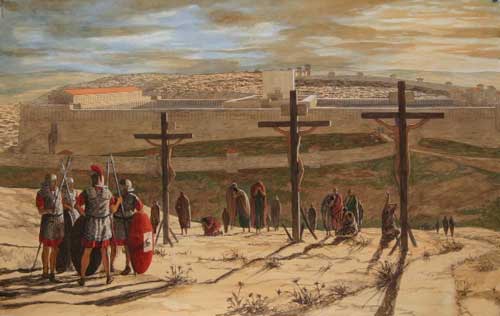
When it was noon, darkness came over the whole land until three in the afternoon. At three o’clock Jesus cried out with a loud voice, “Eloi, Eloi, lema sabachthani?” which means, “My God, my God, why have you forsaken me?” When some of the bystanders heard it, they said, “Listen, he is calling for Elijah.” And someone ran, filled a sponge with sour wine, put it on a stick, and gave it to him to drink, saying, “Wait, let us see whether Elijah will come to take him down.” Then Jesus gave a loud cry and breathed his last. And the curtain of the temple was torn in two, from top to bottom. Now when the centurion, who stood facing him, saw that in this way he breathed his last, he said, “Truly this man was God’s Son!”

CrucifixionBaloghWeb

This is a day unlike any other. In the entire history of the world there has been nothing quite like what we remember today, and there will never be anything quite like it in the future. Millions upon millions of people have been killed unjustly and prematurely; but only this death has to do with the salvation of the world.

Look around at those who have gathered together with you tonight. Most people, of course, are not here. They are out doing what they do on any ordinary Friday night – dancing, drinking, eating, driving, laughing, loving. It has always been like this…

When Jesus was marched up to the place called Golgotha, which means the skull, most people did not even notice. Crucifixion was such a common activity that people were conditioned to avert their gaze from the bodies hanging on crosses. Many people were preoccupied with their own problems, which might help to explain why Jesus was so abandoned by his closest friends.

So, on this strange night, a night unlike any other, we gather together to remember the death of a man who was, and is, God in the flesh.

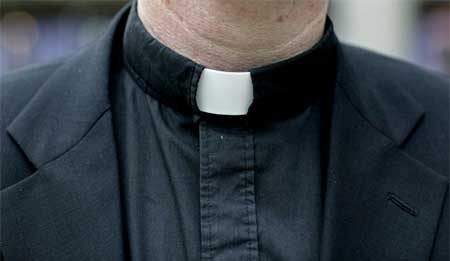
dogcollar

All week long I have been wearing my clerical collar. I know this might seem like a fairly Catholic thing to do, but it is traditional for all clergy to wear such things. For years I have been warned by other pastors about the dangers of wearing this collar: “No matter wear you go, people will assume that they can talk to you about all their problems.” “You can never prepare yourself for all the glares you will receive.” “It is a relic of the past, if you want to connect to people of today, ditch the collar and find something contemporary.” For me, I simply wanted to wear it this week to mark the occasion of Holy Week, and on another level I wanted to wear something that would force me to act like a Christian in public. You can’t get away with cutting in line at the grocery store when you’re dressed like this.

So I initially chose to wear it this week to honor this special time in the life of the church, but it slowly became an experiment here in Staunton. After hearing all of the stories about what this collar can bring in terms of interactions in the community, I was excited to see what might happen. I had plenty to do this week, but whenever I had the chance, I would go somewhere publicly; I worked on a sermon at a coffee shop, played drums for the Stonewall Brigade band, went to Walmart, the Staunton mall, Food Lion, I walked up and down Beverley street. I went everywhere that I could think of.

I was anxious about all the conversations and judgments people might make of my appearance, but I went out anyway. And you’ll never believe what happened… nothing.

I walked around this whole town and I received absolutely no response about my appearance. No one asked me about it, no one pointed and whispered, no one even looked at it. Now I know I’m not the best looking guy, but I’m used to people tat least taking a glance my way occasionally; its something we all do out of habit. But for the last few days I have felt largely invisible.

IMG_1279

So I decided to take it one step forward… Today, at noon, I arrived at church to begin carrying our cross all around Staunton. The cross that the confirmands so diligently decorated and created dug into my shoulders as I departed from the church and walked toward downtown. I walked from the church to Beverley Street, went up both hills on either side, and eventually made my way back toward the north end of town. I walked for two hours, and you know what happened? Nothing. 

Now, of course, walking with a 8 ft long cross will gather attention, I noticed a handful of people driving and walking who began to stare at the object on my back, but the moment I smiled, made eye contact, or waved, they diverted their attention to something else. Two couples actually switched what side of the road they were walking down in order to avoid my trajectory. For two hours I walked in silence and contemplation, every greeting I uttered was met with a blank stare, and just like with the clergy collar, I felt invisible this afternoon.

That was until I was standing next to a man waiting at the light by the library. I noticed that he kept looking at my cross, back to the ground, back to the cross, and back to the ground. Finally I heard him mutter, but loud enough for me to hear, “Jesus H. Christ.” To which I replied, “Actually its Taylor C. Mertins, but thanks for the compliment.” He did not think it was as funny as I did.

While walking across the lawn to put the cross back in the sanctuary I began to wonder if this is what Jesus felt like when he carried his cross. I wonder if what was most tragic was not the fact that he died, but that he died without anyone really caring or noticing. How strange that God chose to save us in this way, in the death of his Son abandoned by his friends on a cross.

Today, as it was in the time that Jesus died, many of us believe that we need not look at the cross at all. Here in our sanctuary all we have is this tiny cross on the altar. Many of us are far more familiar with the idea that, “God so loved the world, that everyone who believes in him may not perish but have eternal life.” In that verse we are told not to look, but merely to believe.

We so desperately want to skip over the suffering of Friday and jump straight to the glory of Sunday. Thats why more people attend church on Mother’s Day than Maundy Thursday and Good Friday combined. The cross is a harsh message. We want to divert our attention away from it. We want to hear good news. We want to laugh in church. We want to walk out feeling better about ourselves and the world. 

Yet, to ignore Christ’s death on the cross is to be tempted to believe that we are no longer in danger. But my friends, even Christ’s death does not mean we get to escape death, but only that even in death we will not be abandoned by God.

Looking on the cross and believing God are inseparable. Perhaps we have grown so accustomed to seeing the Christian cross that we now largely ignore it. Or we really know what the cross means so when we see it we, like the contemporaries of Christ, avert our gaze. But, Christ died on the cross. He hung up there for hours. He cried out to God. He suffered. He died.

This good Friday we are called to open our eyes to what Christ did, to look on the cross and live, to realize that believing is seeing.

How very strange of God to save us in this way, and how much stranger that we are to look on Jesus’ death if we are to have life.

Amen

creative stuff 020 - Copy


Weekly Devotional – 2/3/14

Devotional:

Matthew 5.14:

“You are the light of the world. A city built on a hill cannot be hid.”

image

For years this verse has served to defend the example that Christians are to make for the world to follow. “You are the light of the world,” Jesus says, “a city built on a hill cannot be hid.” Which is to say, you are shining as a light for others to see the error of their ways. Just as a city on a hill can be seen by all, so will your discipleship shine gloriously in order to transform the world.

But what if we’ve been reading it wrong? Or at least, what if there is a different way to read that verse?

Christians are almost always under the proverbial magnifying glass within the local community and at large. Just turn on the news and you will hear of scandals in Catholic and Protestant churches. The smallest bit of controversial news can take on a completely different manner once it is revealed that a Christian is part of the spectacle. Whether we recognize it or not, the world has expectations of us regarding our behavior and commitment to the gospel; we are held to a standard of excellence by those within, and those outside of, the church.

bible-magnifying-glass

In many ways the verse from Matthew could be read as, “You must be like a city on a hill, like a lamp in full view.” The desire to appear perfect as an example for all others is worthy of consideration and application, however, we need to remember that we will continue to fall short of God’s glory; we are not perfect beings. We are under the microscope of the community because of our commitment to be God’s people for the world.

So, instead of self-righteously proclaiming that we are the perfect example for the world to follow, perhaps we should instead recognize how visible we are to the world. Our faithful discipleship should be driven by our love of God, rather than wanting to the world to see how great and wonderful we are. Let us all strive to be the light of the world, not for our own glory, but for the glory of God to shine through us.


Questions: The Old and the New – Sermon on Genesis 11.1-9 & Acts 2.1-4

Genesis 11.1-9

Now the whole earth had one language and the same words. And as they migrated from the east, they came upon a plain in the land of Shinar and settled there. And they said to one another, “Come, let us make bricks, and burn them thoroughly.” And they had brick for stone, and bitumen for mortar. Then they said, “Come, let us build ourselves a city, and a tower with its top in the heavens, and let us make a name for ourselves; otherwise we shall be scattered abroad upon the face of the whole earth.” The Lord came down to see the city and the tower, which mortals had built. And the Lord said, “Look, they are one people, and they have all one language; and this is only the beginning of what they will do; nothing that they propose to do will now be impossible for them. Come, let us go down, and confuse their language there, so that they will not understand one another’s speech.” So the Lord scattered them abroad from there over the face of the earth, and they left off building the city. Therefore it was called Babel, because there the Lord confused the language of all the earth; and from there the Lord scattered them abroad over the face of all the earth.

Acts 2.1-4

When the day of Pentecost had come, they were all together in one place. And suddenly from heaven there came a sound like the rush of a violent wind, and it filled the entire house where they were sitting. Divided tongues, as of fire, appeared among them, and a tongue rested on each of them. All of them were filled with the Holy Spirit and began to speak in other languages, as the Spirit gave them ability.

xlba-00052

Today we continue with our sermon series on “Questions.” After requesting responses from all of you regarding your questions about God, Faith, and the Church, we have, again, come to the time when I attempt to faithful respond to those questions. Last week we looked at what it means to be saved and how we can come to understand it in our own lives. Today we are talking about the relationship between the Old and New Testaments, how can we reconcile the vengefully destructive God of the Old Testament with the loving merciful God of the New.

So, here we go…

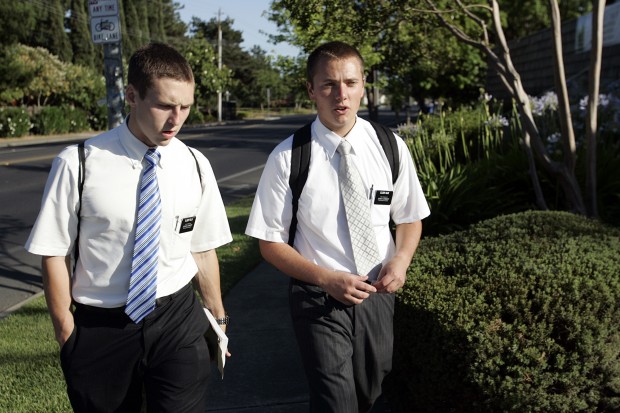
I saw the two representatives walking up and down the street, knocking on the doors of all my neighbors. Sitting at my kitchen counter, I was at home on break from JMU working on a paper for my class called “Jesus and the Moral Life.” As I sat there, Bible and computer spread before me, I eagerly awaited any distraction.

I wondered what organization or church the two men represented. It was clear that whatever they were trying to sell was not working out for them because they were moving quickly between the houses on the other side of the street. I remember trying to focus on my assignment, but my mind wandered regarding the the possibilities of the speech the pair were giving to my neighbors.

When the doorbell finally rang, I sprinted to the front door with my bible in tow.

4fda4bd3327be.preview-620

“Good afternoon sir,” they chimed simultaneously with seemingly forced smiles that almost hurt to witness. “Have you heard about our Lord and Savior Jesus Christ?” I mumbled something in response about being a Christian, but they continued as if I wasn’t really standing there.

“Are you aware of God’s impending destruction of the earth? We have failed to be obedient, and God is surely going to rain down his wrath upon all of us. There will be earthquakes, floods, and famines. Nothing can stop God’s judgement, but we can save you.”

“Tell me more,” I replied.

“Well, Satan and his demons were cast down to earth in 1914 which initiated the End Times. Over the years he has begun to take over human governments in order to create evil on earth. God will come to destroy Satan, and this entire earth with him, but if you join us, God will protect you from his armageddon.”

Now, before I continue, I urge you to remember that I was a young and foolish biblical studies student, convinced that I knew everything there was to know about God, faith, and scripture.

And so, it came to pass that after listening to these two men describe for me the fall of Satan having occurred at the beginning of the 20th century, and their ability to save me from God’s impending destruction, I could no longer contain myself…

“Where does it say that in the Bible?”

“Well, if you look at our pamphlet, it clearly outlines…”

“Where does it say that in the Bible?”

“These charts will show how natural disasters are connected to Satan…”

“Where does it say that in the Bible? I’ve got one right here, and I would love for you to show me where your facts come from.”

At that point they slowly started to step away from the door, thanked me for my time, and continued their evangelistic work to the rest of the neighborhood.

Thinking back upon that interaction, I regret the poor Christian hospitality I showed those two men. I had a predetermined commitment to scripture that blinded me from hearing them out and kindly responding to their interpretive theology. However, I believe the interaction does point to a faulty mode of reading God’s Word that has plagued the church from the beginning.

Marcion was a Christian bishop during the first century. Like many Christians, he saw discrepancies between the actions of God in the Old Testament and during the time of the New Testament. And after wrestling with the differences, Marcion proposed completely rejecting the existence of the God described in the Jewish scriptures, and also argued for omitting the sections of the New Testament that were connected with the Old. Central for Marcion’s edited bible was the idea that the teachings of Jesus were incompatible with the actions of God as found in the Hebrew Scriptures.

After numerous debates, fights, and even scandals Marcion was declared a heretic by the early church fathers and was removed from the church.

Like the two men who came knocking on my door, Marcion (and many others) had a very tunnel-visioned understanding of scripture. If it did not agree with their beliefs, they omitted it, they ignored it, and they taught in spite of it.

Without a doubt, if you read through the stories of the Old and New Testaments you will discover a number of difficulties regarding the actions of God throughout time. Wrestling with these changes has been a part of the church’s history from the very beginning and still takes place today. To fully address these differences it would take numerous sermons series and bible studies, and certainly cannot be fully proclaimed in one sermon. If this is something that you really wrestle with we can talk about doing something in greater detail down the road, but for today’s purposes we can only accomplish so much.

One of the major problems with the inconsistency of scripture is that we tend to view chapters and narratives in isolation. We take one verse from the Old Testament and compare it to one verse in the New. I am thankful for the numbering of chapters and verses for organization, but I believe they have also stratified our understanding of scripture into tiny bits that can be reorganized for our understanding. The Bible is one thing, it is the single story of God with God’s people; it may be divided into two testaments, with numerous chapters and verses regarding a plethora of people and places, but it is nevertheless one unified collection of the living Word for God’s people.

20130115_canon

Rather than reading in isolation, we are called to understand and experience God’s word canonically, which is to say we have to understand each individual narrative in light of the entire saga of scripture. Reading, preaching, and teaching canonically opens our eyes to the many ways that God runs through both testaments like a river; the water may change with the seasons, but the water always moves.

In Genesis 10 we find the story of the tower of Babel. Humanity had one language and had gathered in the plains of Shinar to settle down. There they decided to build a giant tower into the heavens in order to make a name for themselves. God witnessed the construction of this tower, recognized that this was but one domino leading inevitably to a belief that humanity did not need God, so God confused their language and scattered the people over the face of the earth.

In Acts 2 we find the story of the disciples gathered together 50 days after Jesus’ resurrection. While they were all together a great wind came from heaven filling the entire house. All of the disciples were filled with the Holy Spirit and began to speak in other languages.

Babel and Pentecost, two stories, one from the Old Testament, one from the New. These stories are often used in church to make separate points about the identity of God and what it means to be a disciple; Babel demonstrates God’s punishment of humanity for sin and Pentecost shows God’s desire for the gospel to spread amongst all nations and languages. However, they cannot be fully understood without the other. They are not two separate stories describing two different Gods, but are instead part of the greater canonical narrative of how God is God.

Babel contains every bit of the human desire to remain self-reliant and focused on pride. Like the garden, Babel exhibits that same sense of sin whereby humanity believed it no longer needed God. Though the story clearly contains examples of God’s wrath, it also contains an abundance of grace.

In striving to build a city and a tower for themselves, humanity had lost sight of the unity under which they already enjoyed from God. The true sin evident in the story is the arrogance of thinking that humanity must take itself as one takes brick and mortar, and make themselves the lord of history. In violation of the original unity of creation, in humanity’s desire to control its own destiny, the people of Genesis 11 were no longer naturally organized under the great Shepherd, but instead were brought together by the selfish desire to live in ignorance of God’s created order.

God punishes the people gathered together by confusing their language and scattering them over the earth. His wrath is evident, but his grace also lies under the surface. God could have easily used an earthquake or another divine example of control to achieve the punishment. He could have destroyed the tower and everyone in it. But rather than destroying creation, as had been done with Noah and the flood, God merely divides humanity and confuses their language. Instead of raining down death and destruction, God limits the punishment to linguistics.

We discover God’s unyielding grace in the fact that God will continue to be our shepherd regardless of our self-righteousness. God will not abandon us to our own devices but will remain faithful even when we are not.

And remember, the story of Babel does not end in Genesis 10, it continues on throughout the Old Testament and finds reflection in the New. As Christians we are aware that God has more in store for his creation than one isolated story from the past would have us believe. In the person of Jesus Christ the previously divided world finally comes back together. It is in the story of Pentecost that we are reminded again of God’s desire for humanity to rest in unity, not division.

Pentecost tells us about the miracle of the Holy Spirit coming down to help reunite the world in order to fruitfully live into God’s kingdom. God did not abandon the people of Babel, just as God has not abandoned us while we continually act as if we can make through life on our own.

The same year I met the two men who knocked on my door, I took a group of college-age Christians to Taize, an ecumenical monastery in Burgundy, France. We camped for a week on the property, gathering together with 5,000 young Christians three times a day for prayer and reflective hymns. The Christians gathered together that week came from all over the globe, representing nearly every continent. In between the worship services, we met in small groups talking about faith, scripture, and discipleship. When the last day arrived, my group sat together and I asked us to end our week by standing in a circle to pray with each other. I asked everyone to pray the Lord’s prayer together in their native tongue, and then individually pray it so that we could hear what it sounded like. For perhaps the first time in my life, Pentecost became really for me while we prayed together in that field. Though all of us had been divided across the planet we were all brought together by Jesus Christ. Though we had been previously separated we were gathered in unity by the great “I AM.”

6613_1139875468060_4836913_n

Babel and Pentecost are intimately connected but I want to be clear that the relationship between the two testaments is not that God fixes the problems of the Old Testament with the revelations of the New. God did not change himself from wrathful to graceful. The New Testament is not the band-aid for the Old.

Yet, the incarnation of God in the person of Jesus Christ changed everything. The Old Testament tells of God’s interaction with creation and the New Testament inaugurates the event where God came to dwell among us. Jesus Christ is the lens by which we are called to read scripture, both the Old and the New Testament. God’s love of creation is woven into the fabric of scripture, consistently revealed through people like Abraham, Isaac, Jacob, Moses, Isaiah, Jeremiah, Jesus, Mary, Peter, and Paul and places like Egypt, Galilee, Samaria, and Jerusalem.

This is one great cosmic story, a story that begins with God’s creation of all things declaring them good, a story that has no end because it still taking form right now.

So, how do we reconcile the God of the Old Testament with the God of the New Testament? We read scripture knowing that it does not happen in isolation, but can only be understood within the canon of both testaments. 

We read knowing that, like all great things, God is mystery unrevealed until its proper season. We read with faith knowing that God has not abandoned us, though we struggle to find meaning in the shadow of suffering, fear, and doubt, God’s plan for us is greater than we can possibly imagine. We read knowing that God does not choose us because we are good, but because he wants us to be good.

We read scripture in the light of Jesus Christ recognizing that where we find wrath, there is also grace; when we suffer we discover our hope; and when there is death there is also resurrection. Amen.