God With Us – Homily on James 5.13-20

I was recently asked to speak to a local group of ICM Chaplains about the importance of carrying our faith into the workplace. It was an honor and a privilege to speak with such great chaplains and enjoy an evening of fellowship together. Below is the homily I preached for the occasion.

James 5.13-20

Are any song you suffering? They should pray. Are any cheerful? They should sing songs of praise. Are any among you sick? They should call for the elders of the church and have them pray over them, anointing them with oil in the name of the Lord. The prayer of faith will save the sick, and the Lord will raise them up; and anyone who has committed sins will be forgiven. Therefore confess your sins to one another, and pray for one another, so that you may be healed. The prayer of the righteous is powerful and effective. Elijah was a human being like us, and he prayed fervently that it might not rain, and for three years and six months it did not rain on the earth. Then he prayed again, and the heaven gave rain and the earth yielded its harvest. My brothers and sisters, if anyone among you wanders from the truth and is brought back by another, you should know that whoever brings back a sinner from wandering will save the sinner’s soul from death and will cover a multitude of sins.

11295

She walked with a limp and was struggling under the oppressive humidity. Employed by the church as a custodian, the older woman largely kept to herself but you could tell that she was remarkably lonely. I had taken the time to express kind greetings throughout the summer but they never developed into a conversation. I was serving as an intern at a rural church in the deep recesses of Western North Carolina and I spent most of my days exploring the Great Smokey Mountains instead of sitting in my stuffy office reading over my sermons for Sundays.

Her loneliness was palpable enough that I finally decided to do something about it, and one Thursday morning toward the end of my time I invited her to come on hike with me along a creek right outside of town. I had been part of the church long enough to know that the building itself often casts a shadow over the lives of the people who call it home, and if you really want to get to know someone, you’ve got to go somewhere else.

She walked with a limp and was struggling under the oppressive humidity. I offered her my water bottle while we sat along the creek and let our feet cool off in the water. While sitting side by side I realized that I knew nothing about her outside of her name, but over the next thirty minutes I learned more about her than anyone else in town. Without prompting, without asking any questions, she started to spill forth details that had remained buried for a long time. I learned that she had been a writer in Chicago pursuing truth wherever possible, I learned about her desire to have children but had a husband who felt otherwise, I learned about the husband’s pension for physical punishment, I learned about the night he had one too many and beat her so bad she wound up in the hospital with a limp and brain damage, I learned about how she fled to escape his wrath to North Carolina, I learned about how she could only find work as a church custodian because of her physical problems, I learned that she felt alone, afraid, and empty.

We prayed. We prayed and prayed out in those woods. We spilt tears into the creek and we asked for God’s peace. Before we returned to town, my curiosity was too strong to not ask the question on my heart: “Why did you tell me all of that?” I asked. “Because you didn’t ask, you just listened.”

_

He came to the prayer meetings but never said a word. Every Wednesday morning the family men would sit in one of the parlors at the church and pray for one another before leaving for work. 40 such men had grown to value their time spent with God and one another to help them through the day ahead. We all listened about the problems at home, the children who refused to listen, the bosses who ignored their hard work, the financial struggles, and the crises of faith. It was a time of great vulnerability for us to share our doubts and frustrations without a sense of shame or judgment.

He came to the prayer meetings but never said a word. He never shared his frustration, never offered to pray. He just sat silently in the corner, sipped on his coffee, and left silently at the end of the meeting. That was the routine until one morning when he approached me and asked if he could take me out to breakfast. 20 minutes later I found myself sitting at the Birmingham Country Club in Birmingham, MI with a man who made more in a year than I will make in my entire life. He told me he had cancer, that he had not told anyone else, and that he didn’t know what to do. We prayed together while our coffee grew cold and asked for God’s grace to rain down on us in all things. Before we returned to our cars, my curiosity was too strong to not ask the question on my heart: “Why did you tell me all of that?” I asked. “Because you’re not the pastor, and I felt I could trust you.”

_

Icicles were beginning to form in my beard. The Christmas trees stood brilliantly arranged on the lawn of St. John’s UMC, with snow caught on the branches while families perused the plentiful selection of White Pines and Frasier Furs. I located one such family with two young children examining a tree near the end of the row. I offered to pull it off the line so they could examine from all angles and imagine it in their living room. We began talking about Staunton and what it means to be a true Stauntonian when they shared with me their desire to find a local church community. “We just moved here,” they said, “and we were hoping to plug in and meet some new people.”

“Well look no further than St. John’s” I began. “We’ve got services on Sundays, a wonderful Preschool, and people who are full of love. However, the pastor isn’t worth a can of beans.” They leaned in closer and asked with a whisper: “Well, then why do you come here if the pastor is so bad? “Because he is me. What makes our church wonderful are the people who attend, not the one who stands at the front.”

_

ICM: Industrial Commercial Ministries. Your mission is to be a caring presence in the workplaces you serve. You bring faith to the people as a sign of God’s love and presence. I love what you do, because you are called to be just like me, which is to say, you are called to be pastoral in the places that matter most. One of the failings of the modern church is the relegation of faithful living to one hour a week on Sunday mornings. We have diminished the role of Christian discipleship to the worship of God alone, which has allowed us to forget that we have put on Christ Monday through Saturday.

In my experience the most transformative moments in Christians’ lives take place somewhere other than church. My role as a pastor is to equip the people of God to be the body of Christ for the world. As chaplains you have the distinct privilege of sitting and praying with people in the midst of terrible valleys and incredible mountaintops. You, more than pastors, are deeply entrenched in the true mission field of 21st century Christianity.

The end of James contains one of the most beautiful calls for Christians to act like Christ: “Therefore confess your sins to one another, and pray for one another, so that you may be healed.” Being a Christian is not just about coming to church. Being Christian requires a commitment to confessing our shortcomings with one another, seeking help for the struggles of life no matter where we are and no matter what we do. Being a Christian requires us to be God’s loving and forgiving presence for people who feel they had been abandoned to the cruel fates of the world.

I give God many thanks for the work that you do as chaplains. You get to sit along the creeks of life, soaking your feet in the water, while listening to people open up about their pasts in a way that can be healing and transformative. You get to pray with people who have been dealt heavy blows regarding family issues, hopeless diagnoses, and financial burdens. You get to make Christianity wonderful by being the body of Christ for the world in the world.

I believe the Holy Spirit is moving through all of you. I believe God has done some incredible things through your willingness to meet people where they are. I believe the future of Christianity will be largely dependent on people like you who make the world become flesh in the way you live your lives.

This season of advent is perfect reminder for those of us called to be chaplains. We wait for Emmanuel, God with us, so that we can share that incredible good news with others: God is with you.

Amen.

Devotional – Genesis 28.16-17

Devotional:

Genesis 28.16-17

Then Jacob woke from his sleep and said, “Surely the Lord is in this place – and I did not know it!” And he was afraid, and said, “How awesome is this place! This is none other than the house of God, and this is the gate of heaven.” 

Weekly Devotional Image

Next Sunday, after worship, a group from St. John’s will be leaving for Raleigh County, West Virginia for a week of mission work. Mission trips were foundational for my own faith development and I am excited to share a new experience with some of the youth from our church. Part of our time will be spent doing physical work for people in need, but a large portion of our trip will be dedicated to nurturing and fostering relationships with the children of the community. It is my hope and prayer that the youth will have their eyes opened to the ways we are called to serve our brothers and sisters.

One of the problems that faces many mission trips is the idea that, as the “missionaries,” we will be bringing Jesus to these people. I have seen it happen far too often when a group of privileged Christians make the false assumption that the people they are serving are devoid of God and it is their fundamental responsibility to bring God along as if God was something that they had packed in their suitcases.

genesis-28-16

The truth that we often fail to recognize is that God is already in that place! We are called not to bring God along with us, but instead to open our eyes to the way that God is already working in the world. When a mission trip has gone incredibly well, when the proper theology has been outlined for the participants, they come home with a different perspective about their faith; they come home having been helped by the people they served rather than the other way around. God is not something that we can compartmentalize, ship around, open at will, and exchange in a consumeristic program. If that is our idea of mission than we have failed the God we serve because we have wrongly believed that we get to decide where God goes and who gets to experience God’s majesty. God is already in that place! God has gone on ahead of us (just like Jesus went ahead of the disciples to Galilee) and will be made known to us as we serve others.

Jacob, after running away from his angry brother Esau, assumed that he had left everything behind. In a way, he believed that he could not only run away from his family and responsibilities, but that he could escape the God of his father and grandfather. How blessed was he to awake from his dream and discover the truth of God’s grace! “Surely the Lord is in this place – and I did not know it! How awesome is this place!”

As we prepare to take steps into a new week let us wake up from the dream that we get to control God and discover the truth, like Jacob did, that God is already in this place! God has been working through the family and friends around you for longer than you can imagine.

Wherever you go this week be assured that the Lord is with you.

Go and Lo – Sermon on Matthew 28.16-20

Matthew 28.16-20

Now the eleven disciples went to Galilee, to the mountain to which Jesus had directed them. When they saw him, they worshiped him; but some doubted. And Jesus came and said to them, “All authority in heaven and on earth has been given to me. Go therefore and make disciples of all nations, baptizing them in the name of the Father and of the Son and of the Holy Spirit, and teaching them to obey everything that I have commanded you. And remember, I am with you always, to the end of the age.

with-you-always---web

I disliked the orthodontist. Every month I would see the appointment on the calendar and I dreaded moving closer and closer to the date. I often thought of excuses that could get me out of going, but I would inevitably have to return at some point to have my braces examined, shifted, and adjusted. Going to the orthodontist was dreadful because I knew, no matter what, I would walk out with my mouth hurting. Going to the dentist was fine, you get you teeth checked and cleaned, but the orthodontist… he was going to put pliers into my mouth and adjust all the little metal bits that were stretching all over my teeth.

When I think back on the orthodontist, it wasn’t so much the pain that I dreaded, but the entire experience. I can vividly recall the frighteningly exaggerated images of people smiling with dreadful teeth in a “before” image alongside of the perfectly straight and whitened smile in the “after” picture. I remember the orthodontist doing magic tricks in the waiting room in order to calm down the terrified children that only went to further their anxieties. But most of all, I remember the poster on the wall by the chair I sat in every month.

When it was my turn to take the seat, I would be propped back and told to wait for a few moments. From that position I could only see one thing, month after month, mocking me from the wall: The popular poem “Footprints

I am sure that many of you are familiar with the poem; the text is often set above an image of a beach or a sunset. But in case you’ve never been lucky enough to experience the poem I will share it with you now…

footprints-in-the-sand

Footprints-

One night a man had a dream. He dreamed he was walking along the beach with the Lord. Across the sky flashed scenes from his life. For each scene, he noticed two sets of footprints in the sand; one belonging to him, and the other to the Lord. When the last scene of his life flashed before him, he looked back at the footprints in the sand. He noticed that many times along the path of his life there was only one set of footprints. He also noticed that it happened at the very lowest and saddest times in his life. This really bothered him and he questioned the Lord about it, “Lord, you said that once I decided to follow you, you’d walk with me all the way. But I have noticed that during the most troublesome times of my life, there is only one set of footprints. I don’t understand why, when I needed you most, you would leave me.” The Lord replied, “My precious, precious child. I love you and I would never leave you. During your times of trial and suffering, when you saw only one set of footprints, it was then that I carried you.”

I disliked the orthodontist, but I loathed this poem. Month after month it sneered down from the wall as if it was mocking me and challenging me to accept my fate. What kind of twisted orthodontist places a poem about being carried through suffering on the wall by the chair with knobs, pliers, and wires with a bright light hanging above as if to interrogate you? But there was the poem. Even when I closed my eyes I could still see the text, the badly cropped image of the footprints in the sand, never leaving me alone.

As I grew older I continued to resent the poem, perhaps because of my mental association of the words with the orthodontist, but I also came to dismiss the poem in light of its cliche and trite claims. To me, it always sounded like the type of thing that an incompetent and bored pastor would offer a grieving family in the wake of a loss.

I can’t stand the poem. But what drives me craziest about it, is the fact that its true. Even with its overly simplistic explanation, with its trite metaphorical conclusions, with its cliche affirmations, it is absolutely true. In the midst of our sufferings it can be very difficult to experience God’s presence, but when we look back, when we reflect on the troublesome moments of life, we can see that it was God who carried us through. “My precious, precious child. I love you and I would never leave you. During your times of trial and suffering, when you saw only one set of footprints, it was then that I carried you.”

Make-Disciples

The end of the gospel according to Matthew. Mark ends abruptly with the women running from the tomb say nothing to anyone because they were afraid. Luke ends with the people constantly praising in the temple for all they had seen and witnessed. John ends saying the gospel could not contain everything that Christ said and did. But Matthew’s gospel ends with the promise of the never-failing presence of Christ. 

The eleven disciples went to Galilee, as they had been told to do, and there on the mountain the saw the risen Christ and they worshipped him, though some doubted. And Jesus told his friends, “All authority in heaven and on earth has been given to me. Go therefore and make disciples of all nations, baptizing them in the name of the Father and of the Son and of the Holy Spirit, and teaching them to obey everything that I have commanded you. And lo, I am with you always, to the end of the age.”

Even though they were in the presence in the resurrected Christ, even though many of them worshipped him, some doubted. There will always be those who question what they worship. Faith is never as perfect and clear as we like it to be; our ways our cloudy and the ways of God are a great and deep mystery. With worship and reverence, doubt is almost always waiting in the shadows, prepared to creep in at our most vulnerable moments.

However, doubt is not the opposite of faith. Show me a person without doubt and I will show you their lack of faith. Doubt helps fuel our faith because it encourages us to question and ponder. Doubt cannot be overcome with arguments, logic, speech, sermons, and reason; the best bible studies and preaching cannot erase our most fundamental doubts. Instead, we need to bring our doubts out of the shadowy recesses of our minds, and venture with them toward God in prayer.

And while some doubted, Jesus gave them their final commandment: Go therefore and make disciples. The church that is not going out, the church that is not on the move sharing the story, is not the trinitarian and believing church that Christ is talking to. We were not told to build a nice and beautiful church in the Shenandoah valley, show up for an hour on Sunday mornings, remember the same story over and over, surround ourselves with people who look, act, and talk just like us, and then return home until the following week. We have been told to GO! Share this incredible story with people who have ears to hear and eyes to see.

We often treat this building/sanctuary like our home. We find comfort here. I cannot tell you how many times I have heard some of you say, “When I sit in these pews, when I see the Good Shepherd stained glass, it feels like I’m home.” But my friends, if we hear anything that God is saying today it is this: home is on the go, home is where we meet God in others outside of this place. 

55896

Even when you feel like God is gone, when you feel lonely and abandoned by your Creator, God is still there. There are always days of faith, and days of doubt; days of peace, and days of war; days of joy, and days of sorrow. The end of Matthew reminds us that Jesus is still Emmanuel, “God with us.” Even when we share the story with someone and feel as if we have failed to convey the gospel, we are not alone. God is with us, even to the end of the age. We have been baptized into the Father, Son, and Holy Spirit, we have been brought into the protection and possession of God, we are incorporated into the church and have been surrounded by a new family that has vowed to keep us close, raise us in faith, and nurture us in love.

The disciples’ journey to share the good news with the nations was not an easy adventure. The books of Acts reminds us again and again how often the disciples were harassed, ignored, and persecuted. I am sure that, at the ends of their lives, many of them wondered why God had abandoned them at their worst moments. Perhaps some of them were fortunate enough to hear those familiar words: “My precious, precious child. I love you and I would never leave you. During your times of trial and suffering, when you saw only one set of footprints, it was then that I carried you.”

Many years ago a man named Samuel Morrison spent 25 years of his life as a Christian missionary in Africa. Maybe, while a younger man, he had heard the words that we read today: Go therefore and make disciples of all nations, baptizing them in the name of the Father, Son, and Spirit and teaching them to obey everything that I have commanded you. Maybe he felt the call of God to do exactly that and left behind the familiarity of home to be Christ’s body for the world.

After 25 years of giving it his all, it was time to return home. There had been days of great success where Samuel had brought many to the knowledge and love of God, but there were also days of great suffering and fruitlessness. When it came time to go home, he boarded his ship and bid farewell to his missionary field of Africa.

And so it came to pass that Teddy Roosevelt was on the same ship with Samuel Morrison returning from a three-week hunting adventure in Africa. Whether they knew about one another’s presence or not, they both sailed across the Atlantic back to the United States.

When the boat arrived in New York City, Samuel was thrilled to discover countless individuals who had gathered at the port with banners and signs echoing cries of “welcome home!” He even noticed a band playing on the dock in celebration of a successful voyage. Samuel’s spirits were high and he truly felt the love of God in his soul.

However, when Samuel made his way down the steps off of the ship, he was disappointed to discover that the crowds, and the signs, and the band were all for Teddy Roosevelt. Thousands had gathered to welcome home a man who had been hunting and killing animals for three weeks; Samuel Morrison had spent 25 years sharing the Word of God, and no one was waiting for him.

He weaved his way in and out of the crowd, disappearing into the shadows, and was quickly lost in the multitudes. Samuel Morrison felt abandoned by God. He found himself walking through the empty streets and alleys of New York praying and disappointed in God. “Why God? Why have you left me alone? Where are you now? I did what you called me to do. I left everything behind to follow your Son and this is what happens when I return home? I gave 25 years of my life for your kingdom! Where are you!?”

Silence. Samuel Morrison walked in silence after screaming out to the Lord and demanding to know what had happened. He continued to walk alone until he heard a small voice, as light as the wind: “I am right here my Son, and you are not home yet.

Amen.

Devotional – John 14.18-19

Devotional:

John 14.18-19

“I will not leave you orphaned; I am coming to you. In a little while the world will no longer see me, but you will see me; because I live, you also will live. 

Weekly Devotional Image

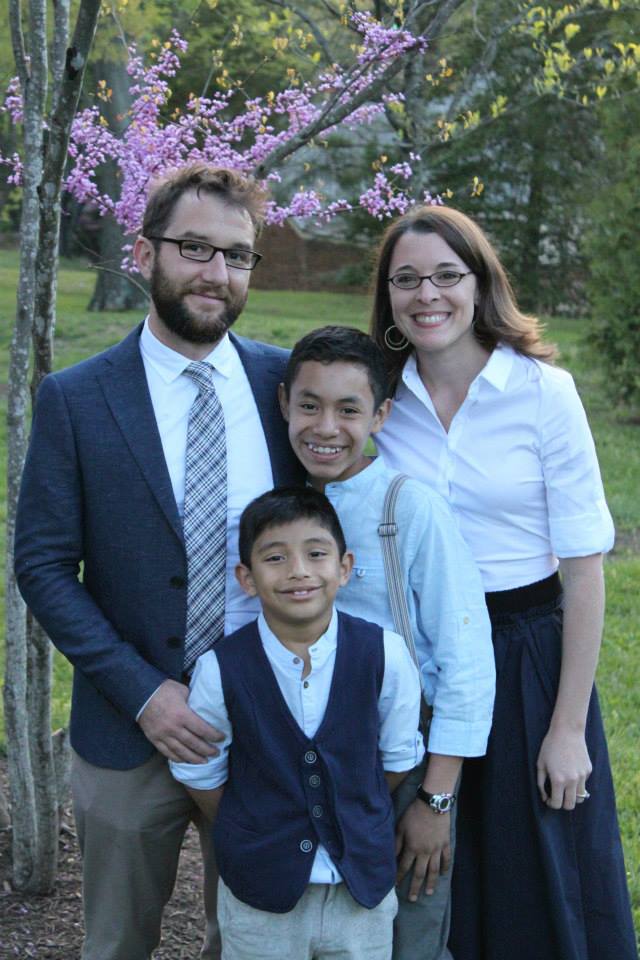
Two of my favorite people in the world made the choice to adopt two Guatemalan boys and raise them as their own. I don’t know a lot about the conversations and planning that took place before both of the adoptions, but I do know that they would tell you it was the best decision they ever made. Gabriel and Alexander are two of the finest young men that I have the privilege of calling my friends; Jason and Ali (their parents) are responsible for their strong and dynamic character. Whenever I travel home to Alexandria I make a point of stopping by their house just to catch up with the boys and have my mind blown by how much they have grown and changed.

10310117_10152423618803879_7313295905510655067_n

When Jason and Ali first brought each of the boys home they had to make the deliberate effort to spend as much time as possible with the boys. Though only children, the parents could sense that they were afraid of being let go and sent somewhere else. Without the mental faculty to fully grasp the depth of their adoption, they could experience the fear of being abandoned. For many nights Ali and Jason would stay with their boys in their rooms just so they would know that they were loved, that they were known, and that they would never be abandoned. I love those two boys more than I can describe. I love their parents more than I can describe. (Jason presided over Lindsey’s and my wedding ceremony; Gabriel was our ring-bearer; Alexander did the Old Testament reading)

Millions.Front

Before Jesus’ crucifixion and resurrection he assured his disciples that he would not leave them orphaned. Even though he knew he would have to leave them, the Holy Spirit would be poured out to never leave them. Much like Jason and Ali staying with their boys night after night, God in Christ has not left us to be orphaned. Our Father is with us so that we can know we are loved, that we are known, and that we will not be abandoned.

The call of all Christians is to combat the plague of loneliness in the world. It is through many of our actions that God’s love is manifest in the world so that people may know what it means to come within God’s loving embrace. Do you know someone who feels abandoned right now? Have you noticed anyone retreating into their own isolation? Our challenge today is to reach out to those who feel orphaned and help them to see God’s presence in their lives.

Mountains and Valleys – Sermon on Mark 9.2-8

Mark 9.2-8

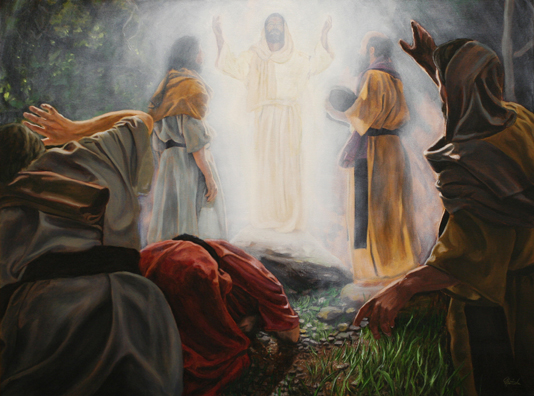
Six days later, Jesus took with him Peter and James and John, and led them up a high mountain apart, by themselves. And he was transfigured before them, and his clothes became dazzling white, such as no one on earth could bleach them. And there appeared to them Elijah with Moses, who were talking with Jesus. Then Peter said to Jesus, “Rabbi, it is good for us to be here; let us make three dwellings, one for you, one for Moses, and one for Elijah.” He did not know what to say, for they were terrified. Then a cloud overshadowed them, and from the cloud there came a voice. “This is my Son, the Beloved; listen to him!” Suddenly when they looked around, they saw no one with them any more, but only Jesus.

the-transfiguration

And he was transfigured before them, and his clothes became dazzling white, such as no one on earth could bleach them.

Six days later. An innocuous beginning to our scripture today. In order to properly experience the depth of the transfiguration, we have to go back six days in the life of Jesus and his disciples. Before hiking the mountain with the inner circle of Peter, James, and John, Jesus asked the disciples about his identity. “Who do people say that I am?” “Well Jesus, some call you John the Baptist, and others call you Elijah or one of the prophets.” “Okay, but who do you say that I am?” Peter answered, “You are the Christ, the Messiah.

Jesus then immediately taught his disciples about his impending death, and predicted his resurrection for the first time; “The Son of Man must undergo great suffering, and be rejected by the elders, the chief priests, and the scribes, and be killed, and after three days rise again.” Peter, the great representative for the rest of the disciples, the great representative for all of us, pulled Jesus aside and began to rebuke him for making such claims: “the messiah cannot be rejected by the elders and be killed Jesus, thats not what a messiah is supposed to do.”

Jesus quickly stopped Peter in his tracks, “Get behind me Satan! For you are setting your mind not on divine things but on human things.”

And so, six days later, perhaps when the disciples needed a reinforcement of faith after such a strange episode, the inner circle was invited by Jesus to the top of a mountain. I can imagine their wavering faith as they slowly walked along the path, unable to comprehend the new understanding of what it meant for their Lord to be the Messiah.

In the cool of the morning, with the dew still hanging in the air, Jesus was transfigured before the disciples. His clothes became dazzling white beyond human comprehension. And there, on either side of Jesus appeared Elijah and Moses. Then Peter said aloud, perhaps while cowering in fear, “Rabbi, it is good for us to be here; let us make three dwellings, one for you, one for Moses, and one for Elijah.” Suddenly, a cloud overshadowed them, and from the cloud there came a great voice: “This is my Son, the Beloved; listen to him!” And when they looked around, they saw no one with them anymore, but only Jesus.

4, Example 2a, The Saviour's Transfiguration, an early-15th century icon from the Tretyakov Gallery, attributed to Theophanes the Greek

Today, we celebrate Transfiguration Sunday. In the life of Jesus the Transfiguration was a defining moment that would come to determine the course of his mission to the world. From this point forward the trajectory of Jesus and his disciples was set toward Jerusalem. For the modern church, Transfiguration Sunday is celebrated immediately before Ash Wednesday and the beginning of Lent. Just as the Transfiguration trained the disciples’ eyes to the coming death and resurrection of Jesus, so too we are training ourselves to make our way through the coming forty days of Lent preparing for the celebration of Easter.

What do you think of this story? It has forever been a favorite of mine for many reasons. What does the appearance of Elijah and Moses mean for the disciples and Jesus? What must it have felt like to be there with Peter, James, and John to have witnessed Jesus transfigured before them? How powerful and enveloping was the cloud and God’s voice declaring Jesus as his Beloved? A whole sermon series could be devoted to these 7 verses. However, today we are going to focus on Peter’s peculiar request to build three dwellings on top of the mountain.

Peter is both frightened and ignorant. Within the last week he had made the stunning confession of Jesus as the Christ and then he was connected with the likes of Satan and commanded to move behind Jesus. Like many Christians, Peter was willing to go wherever Christ called him, though that didn’t necessarily mean he understood everything that was going on. This event had to have been remarkable for the three disciples present. In a brilliant fashion Jesus was validated as the Son of God. In spite of the shock regarding his own suffering and approaching death, this transfiguration confirmed him as the Lord’s anointed, the beloved Son.

Perfectly timed as a reinforcement for the disciples’ faith, particularly in the wake of Peter’s movement between perfection and ignorance, Peter responds to this glorious moment with the desire to build three dwellings. Behind his words was the need to prolong the experience. Who among us would not want to stay up there on the mountaintop with the transfigured Jesus flanked by Moses and Elijah? This was a moment high worth; the true, embodied, and illuminated understanding of Jesus. It was an experience that any of us would have liked to make permanent. However, life is not made up of mountaintops alone, for every glorious mountain there is a equally draining valley. It was good for Peter to experience the transfiguration, but it was NOT good for him to try and prolong the experience. Life must continue to move on.

A few months ago I was blessed with the opportunity to preside over my first wedding. Brian and Sarah are a delightful couple and I was thrilled with the invitation to join them together in marriage. The wedding went off without a hitch, well thats not exactly true, I had to remind the nervous father of the bride to stand with her until he gave her away, and then I had to direct him to sick back down after he had finished. Nevertheless, when it came time for the homily, I stood before Brian and Sarah, remarking about the sanctity of marriage and the role that God plays in all of our unions. I ended the homily with something I tell all couples preparing for marriage:

1175334_605087304526_1820722616_n

“From this point forward your individual stories are coming together. I want to tell you something that most will try to claim the contrary. Today will NOT be the happiest day of your lives. If you limit the joy of what you can experience in marriage to this one particular Saturday afternoon, it will cease to be organic and life-giving but instead repetitive and dull. You have an incredible story in front of you, one that has yet to be written, you are traveling as strangers into a strange land. There will be countless mountains and valleys and so much of your horizon is still beautifully unwritten.

Like Peter, many of us want to desperately hold on to those “transfigured” moments of our lives. We want to experience events where we get a little slice of heaven, but as soon as they fall in our laps we are often unwilling to let them go. The excitement of Christmas is often replaced by the anxiety and dull atmosphere of January. The beauty of a newborn baby is quickly rivaled by the long nights of crying and wailing. The joy of summer break from school flies by too quickly and before we know it we are sitting in a new classroom surrounded by unfamiliar faces. Life is made up of both mountains and valleys. Neither one can, nor should, last forever.

shenandoah-blue-ridge_2014_600x450

Transfigured moments are all around us, particularly here in worship. Worship is supposed to be a shining hour, high and lifted up, an event where the glory of God the Father, Son, and Spirit shines radiantly throughout our space. Like the disciples gathered on the mountain, worship is supposed to surround us like a cloud when Jesus and his revelation of God are made known to each of us. Worship, when done well, produces a glow unlike anything else on earth. Worship, beauty, joy, love; all of these are those wonderful transfigured moments that surround us daily. A life that has no transfigured hours of worship is poor, no matter how rich and decadent the elements may be.

So, just think for a moment, imagine the many areas in which the mood of Peter, when he said, “Lets just stay here” blocks the possibilities of life. Life cannot just be one big wedding celebration, nor can it be replaying our favorite song over and over and over again, nor can it be a endless worship service here at St. John’s. Whether we like it or not, we cannot stay on top of the mountain forever, we have to move and go on to new experiences of life, faith, and understanding.

As the disciples grew closer and closer to their Lord, his words and proclamations became increasingly difficult to understand and follow. While making their way to the inevitable result of Jerusalem, the disciples needed to hear Jesus. The voice from the cloud echoed out, “listen to him!” and I can think of no better words for all us to hear this morning.

When I was 16, standing on the sidewalk along Ft. Hunt road in Alexandria, Virginia on a cold and dark December evening my life was forever changed. I am a product of “listening to him.” I stand before you as the pastor serving this church because I was enveloped in that strange cloud of God’s grace, without a big booming voice, without particular words, and yet I somehow knew that I could do nothing with my life other than serving the church. My life has been filled with mountaintop experiences, some of them on literal mountain tops, but there have also been deep and seemingly endless valleys.

And so, what are to make of us this Transfiguration? That day when he took the three disciples to the mountainside to pray, his countenance was modified, his clothing was aflame. Two men appeared, Moses and Elijah came. Lost in the cloud a voice, have no fear, we draw near, lost in a cloud, a sign, Son of Man turn your ear.

We are just like those disciples standing on the mountainside with Jesus. We are given glimpses of heaven regularly in our lives. We are blessed to be showered with transfigured moments if we have eyes to see and ears to hear. However, life must be made of both mountains and valleys. Like the disciples we are called to listen to Jesus when the time comes to re-enter the reality of life. We have the privilege of listening to Jesus and having his words become incarnate in the ways that we live our lives.

lord__s_supper_by_bclary-d37hhzp

If you want to truly experience a transfigured moment in your life, look no further than this table with the gifts of bread and wine. This banquet that has been prepared for you and me is an encounter with the divine, it is a little slice of heaven for us. This is our mountaintop, that incredible and glorious moment when Jesus’ true radiance shined in a way unlike anything else on earth. In this communion we are brought into union with the triune God, we are nourished with the grace of God for our journeys of faith. 

So, as we prepare to feast at Christ’s table, remember that we cannot stay on the mountain forever. We will depart from this place and enter the world filled with the body and the blood. Listen to him in the valleys of life knowing that we are always going on to something new and wonderful. Let us all strive to be transfigured and delight in God’s will, walking in his ways forever. God is with us at the wedding receptions and in the hospital waiting rooms, God is with us when we fall and love and when we lose our jobs. God is with us when we cradle new-born children for the first time and when they leave us to begin their own lives. God is with us on the highest mountains and in the deepest valleys. Listen to him.

Amen.