Baptism Isn’t A Choice

Matthew 5.14-16

You are the light of the world. A city built on a hill cannot be hid. No one after lighting a lamp puts it under a bushel basket, but on the lampstand, and it gives light to all in the house. In the same way, let your light shine before others, so that they may see your good works and give glory to your Father in heaven. 

Dear Lucia,

You’re not going to remember today. 

In the church we call what we do to you today a sacrament, an outward sign of an invisible grace. It is a way in which God communicates something to us about us. And, you’re too young to have any idea what any of this means.

So I’m writing you a letter.

Hopefully one day your parents will sit you down and explain what happened to you, perhaps they will even apologize for the unenviable course this set you on (at least according to the world), and if you’re really lucky they’ll let you in on the secret of all secrets: It’s not just you who can’t understand what happened, none of us really do.

Baptism, at its best, is a people called church fumbling around in the darkness hoping God can make something of our nothing.

And, to make matters even stranger, getting baptized is a whole lot like getting married: A bunch of people gather together to hear promises exchanged knowing full and well that, as humans, breaking promises is precisely our cup of tea.

No matter how good we are or how bad we are, we never quite live up to the expectations we place on ourselves.

And yet God remains steadfast to us precisely when we don’t return the favor.

But, I’m getting ahead of myself.

Today we baptize you into the Good News of Jesus Christ which, upon first glance, might actually seem like bad news. You know, the whole turn the other cheek and love your neighbors as yourself stuff. I promise you will discover moments when turning the cheek seems like the worst possible decision and I guarantee you’re going to find a neighbor with whom love appears impossible. And, contrary to how you will probably see baptisms in your own future, whether in the church in some movie, it’s not a picture perfect rainbows in the sky moment of bliss.

You are baptized into the death of Jesus so that you, to use the language of Paul, might become the gospel.

It’s actually quite strange.

Lucia, decades ago, when your great-grandparents and even grandparents were baptized into the faith, it was done so under the cloud of what we call Christendom – a time in which Christians thought they knew how to identify the difference it meant to be Christian. Those differences were often defined by what the church said you could or couldn’t do. But those differences were relatively indistinguishable from what the country or community thought would be best anyway.

It was a time when it was assumed that just about everyone went to church on Sunday morning, that to be a good person was synonymous with being Christian, and that so long as you said your prayers and put the right amount of money in the offering plate and made sure you did more good things than bad things everything would work out in the end.

That time is long gone and its not coming back.

And that, my dear niece, is truly Good News. What makes it Good News is the fact that you are being baptized into a radically different time for God’s church, a time of rediscovery for how unusual it is for us to be the church in the world. 

It is not an overstatement to say that what happens to you in baptism makes you different from other people. What I hope you come to know and see and believe is that the difference has little to do with you and everything to do with Jesus who is the difference who makes all the difference. 

In time you will come to discover that we who call ourselves Christians are a weird bunch – After all, we worship a God who became one of us, a Lord both fully human and divine, who rather than beating the world into moralistic submission, died on the cross and was resurrected three days later. 

Even your baptism, this solitary moment in the life of faith, is a pretty bizarre endeavor. Should someone have walked by when I held you in my arms dumping water on your head they might’ve thought, “Is he trying to drown her?” And the truth is, yes, in a sense. Baptism is about drowning you in the Holy Spirit that you might arise different, because of Jesus.

Lucia, according to the strange new world of the Bible, Jesus says you are the light of the world. If that’s true it is only and forever because Jesus is the light of the world first. He shines in the darkness, he is the Good News in a world drowning in bad news, he is the divine Word dwelling among us.

The best we can hope to do is reflect that light.

For, the more we think we’re the light of the world, the more we screw everything up. That I used “we” in that sentence is indicative of your baptism incorporating you into the church, a church that will forever be fallibly messing up the words from the Word. 

And we’ve certainly messed this one up from Matthew’s gospel.

For years, centuries even, this little bit of the story has been used to defend the example that Christians are supposed to make for the world to follow. Which is to say, you shine as a light for others to see the errors of their ways. 

Just as a city on a hill can be seen by all, so too will your faith shine gloriously in order to transform the world.

But that’s a little backwards. For one thing, as I already noted, Jesus is the light of the world, not us. And secondly, the proclamation of the Lord here actually calls into question the very habits and practices that have so hindered the faith.

Let me put it this way: You are like a city on a hill, like a lamp in full view. The desire to appear perfect as an example for others is all good and fine, but you’re going to fail. We all do. That’s the reason we need Jesus. 

Therefore, instead of self-righteously proclaiming that you, or any other Christian for that matter, is the perfect example to follow, perhaps we should consider how visible we are to the world and to God. That is, God already sees and knows you better than you will ever know yourself. And knowing that you won’t live up to the promises made in your baptism and in the proclamation of the gospel, God already nailed to the cross every one of your sins before you even had a chance to make them.

Or, to put it another way, God has imprisoned all to disobedience in order that God might be merciful to all.

Lucia, when you read this one day and you wonder why I rambled on and on about all of this, don’t blame me – your parents picked this text for your baptism. I think it’s rather notable that, right before this passage, Jesus offers what we in the church call the Beatitudes. 

And, I must confess Lucia, I’m not sure why the baptized are not included in the list. Surely it would’ve been better for the Lord to say, “Blessed are the baptized for they will be surprised by what God has in store for them.”

Perhaps Jesus did not include what is done to you and for you today because the baptized either make the choice for themselves or, as in your case, the choice is made for them. Whereas the poor, those who mourn, the meek, those who hunger and thirst for righteousness, the merciful, the pure in heart, the peacemakers, and the persecuted name the different states of life that happen to those who are baptized.

Today, your baptism, is not a choice that you, or frankly even your parents, made. That Jesus has to the gall to call you a city on a hill is indicative of it. The only decision possible for you was made on another hill 2,000 years ago on top of which stood a cross.

The only thing you have to do Lucia, is be what you are. How you live and move in the body of Christ called the church will be a visible act that will forever separate you from the rest of the world. 

Today you are made different. Not because of me, or your parents, or Godparents, or even the church. You are different because Jesus is the difference that makes all the difference. 

So welcome precious lamb to the strange new world of the baptized in which in spite of your worst, and even best intentions, God loves you and there’s nothing you can do about it. Amen. 

Remember Who(se) You Are!

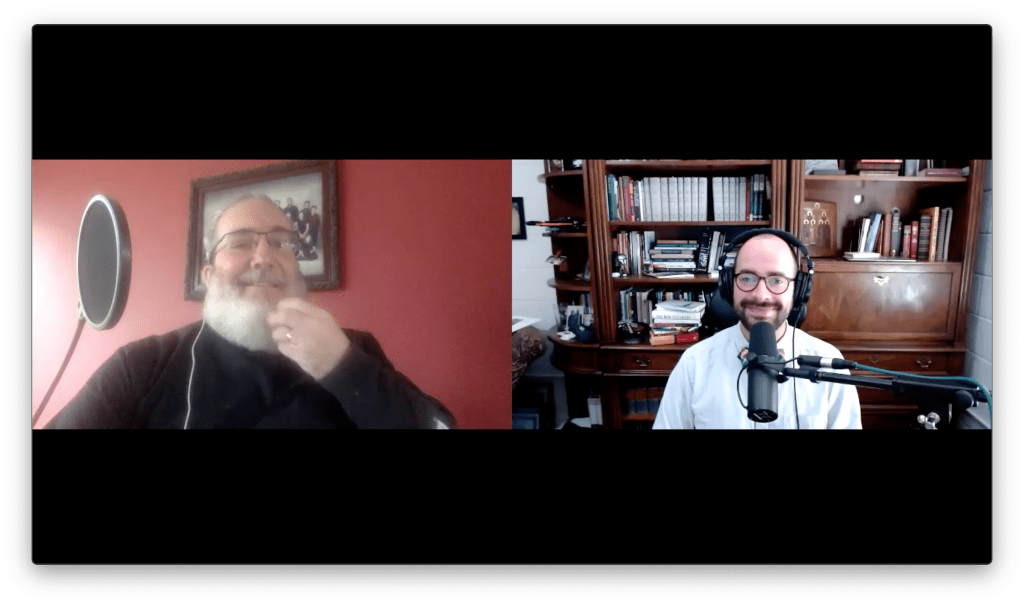
This week on the Strangely Warmed podcast I speak with Kenneth Tanner about the readings for the 8th Sunday After Pentecost [A] (Genesis 29.15-28, Psalm 105.1-11, 45b, Romans 8.26-39, Matthew 13.31-33, 44-52). Ken is the pastor of Holy Redeemer in Rochester, Michigan. Our conversation covers a range of topics including Athanasius’ On The Incarnation, keeping the Cross in Christmas, weddings beds, the canon, family trees, the importance of liturgy, the Romans Argument, buying the whole field, and baking bread. If you would like to listen to the episode or subscribe to the podcast you can do so here: Remember Who(se) You Are!

Buying The Farm

Matthew 13.44-46

The kingdom of heaven is like treasure in a field, which someone found and hid; then in his joy he goes and sells all that he has and buys that field. Again, the kingdom of heaven is like a merchant in search of fine pearls; on finding one pearl of great value, he went and sold all that he had and bought it. 

When I get to heaven, I’m gonna shake God’s hand

Thank him for more blessings than one man can stand

Then I’m gonna get a guitar and start a rock-n-roll band

Check into a swell hotel, ain’t the afterlife grand?

And then I’m gonna get a cocktail, vodka and ginger ale

Yeah, I’m gonna smoke a cigarette that’s nine miles long

I’m gonna kiss that pretty girl on the tilt-a-whirl

‘Cause this old man is goin’ to town

Then as God as my witness, I’m gettin’ back in show business

I’m gonna open a nightclub and call it “The Tree of Forgiveness”

And forgive everybody ever done me any harm

Well, I might even invite a few choice critics, those syphilitic parasitics

Buy ‘em a pint of Smithwick’s and smother ‘em with my charm

Yeah when I get to heaven, I’m gonna take that wristwatch off my arm

What are you gonna do with time after you’ve bought the farm?

Those are some of the lyrics from John Prime’s last recorded song before his recent death. And, I haven’t been able to get them out of my head. For one, the chorus is pretty catchy and I feel just the right amount of naughty for singing about drinking Moscow Mules and smoking cigarettes. But mostly because of the bit about watches in heaven.

I mean, what good is knowing what time it is when you’ve already bought the farm?

Buying the farm, incidentally, is an expression that came into existence around the time of World War II during which the insurance payout on a soldier’s death often afforded the opportunity for a surviving widow to pay out the mortgage on the homestead – ie. Buying the farm.

Jesus says the kingdom of heaven is like treasure hidden in a field which a man found and then subsequently hid again. Jesus, in all of his parabolically paradoxical wonder, does some of his best work in hiddenness, in the not-yet-to-be-understood. 

It’s why the parables leaves us scratching our heads instead of really understanding the subject at hand.

Even the earliest disciples struggled with the stories. After Jesus prophesied his death and resurrection for the third time, not the second nor the first, scripture tells us that the disciples did not understand any of these things, and they did not know what Jesus was talking about.

The mystery of the kingdom, even when its most literal details are all spelled out remains inaccessible to their understanding.

Which means we’re in good company with the disciples.

God is God and we are not.

Or, as the psalmist puts it, “such knowledge is too wonderful for me, it is so high that I cannot attain it.”

But Jesus is hellbent on bringing us closer to the hidden mystery, even if it means we’re none the wiser on the other side.

Ultimately, Jesus says, the mystery of the kingdom is like treasure hidden in a field; it is something worth selling anything we must in order to enjoy having it at all.

Most of the time when we read these two brief parables in tandem with one another, the treasure in the field and the pearl of great price, we think of them as proxies for our individual responses to Jesus’ kingdom. That is, each of us have the ability and the responsibility to go out seeking the kingdom and must be willing to pay whatever price for it. 

But, it’s more than that.

Because the two who are so willing to go and sell everything for the mystery is just as much about the whole church as it is about the individuals within in.

It’s about the church’s relationship to the world in which it finds itself, and how in the world they relate to one another.

Right now, in the midst of a pandemic that is keeping us from gathering in-person with one another, the lines have become more blurred than ever about where the world ends and where the church begins.

And this is Good News.

What makes the advent of our current time such Good News for the church is the reminder that the church is not a club of insiders who happen to have a monopoly on the mystery that is the kingdom made incarnate in Jesus Christ. The church is not about our respective identities, or good behavior, or particular income brackets.

The church is a sign to the world of the mystery by which the light of the world has already shined upon all of creation.

Let me put it another way: For far too long the church has operated as if it’s this specific enclave that has access to salvation that the world does not, that people outside the church have to come inside and be just like us in order to have access to the one we call the Lord.

And there’s some truth to it – “there is no salvation outside the church” is a prevailing theological understanding across the church. But that language implies that everything is already perfect inside these walls and everything is damned outside. It leads churches to believing we are the paragons of virtue, the arbiters of everything that is good and right and true. And therefore we believe that evangelism, whatever it is, is all about making outsiders look like insiders – its all about getting people out there, in here, so that they can look, act, and speak like us.

What that ignores is the fact that the church isn’t full of perfect people – its full of sinners!

But that’s not how we act.

Instead we put up signs about how welcoming we are, and we’re only really welcoming so long as people start assimilating the moment they join the club we happen to call church.

Or we take the latest buzzwords and create slogans for our websites about tolerance, but we don’t tolerate anything outside what we consider worthy.

Or we invite people to church implicitly assuming that it’s our job to fix our friends/neighbors/co-workers so they can have perfect lives just like us!

All of that is false advertising.

It’s like putting a cake in the window of a running store – it only confuses people about what our business really does.

Similarly, whenever we market the church as a bunch of perfect people only getting more perfect, we deceive people as to what we are all about.

Notice – the discoverer of the treasure in the field goes and buys the whole thing. He doesn’t bury the treasure off in the best corner of the lot only to purchase that small portion. He buys the whole thing!

The church doesn’t exist as an a priori negation of the world, nor does it stand off as an exclusive country club for only the best of the best – the church is filled with the world whether we like it or not.

And the sooner we start liking it the better off we’ll be, because without it none of us would cut it.

The church is not perfection here on earth because its filled with a random sampling of all the broken people the world has to offer, the very people for whom Christ died, people wading through the waters of baptism to live in the light of the resurrection recognizing that we deserve not a single beam of it.

Rather than only procuring the best part of the field, the man buys the whole thing complete with sink holes, poison ivy, weeds, and thorny bushes. 

The same then holds true for the church – if we can’t bring ourselves to buy, that is: bring in, every different condition of our condition, the smart and the stupid, the good and the bad, the holy and the unholy, then we can’t even pretend we’re the church at all.

But why all this insistence of the all-ness of the mystery of the kingdom? Why isn’t it just for the choice and select few who maintain moral purity at all times?

Well, in addition to the totality of the field purchased by the parabolic figure, and the willingness of the merchant to sell all he had to buy the pearl, the power of the mystery is hidden in the most universal of all things: death. 

Now, bear with me for a moment: I know we don’t want to have to think about death any more than we already do. Though, I will note that just about every single product in the world is designed and advertised to make us think we can live forever.

But Jesus does his work, his best work, in the mystery of his own death, its in the darkness of a seed buried in the ground or treasure in a field or a man in the tomb, that the world is forever turned upside down. 

And, for what its worth, though Matthew tells us that man bought a field, there’s no reason to think the field wasn’t a farm. And, in the end, we all buy the farm.

Some of us get stupidly rich, some of us get horribly sick, some of us lose people we love, some of us write book, some of us teach others how to read or write books, some of us lose ourselves, and some of us throw it all away because of one foolish mistake, but every last one of us dies in the end.

Every single person, whether Christian or not, whether good or bad, will someday come into possession of the field of death in which Jesus has hidden the treasure of his salvific work.

As has been said from this pulpit on a number of occasions, the kingdom of Heaven will only and forever be populated by forgiven sinners. Hell, whatever it may be, exists only as a courtesy for those who want no part of forgiveness.

The entire world will buy the farm.

And the best news, the Good News, is that we are saved by meeting the Lord in his death. 

Some of us participate in Jesus’ death here and now in the deadening of ourselves in the waters of baptism, whereas others experience it only at the end of their days, but Jesus comes to raise the dead. That’s his mysterious work. And there’s nothing on this earth that can stop him from doing it.

But, that’s not how we often talk, as the church, as Jesus’ body, in the world right now. Instead, we take this profoundly powerful and mysterious Kingdom and make it out as if there are only two types of people in the world – the completely right and the dead wrong.

And, again, the purchaser doesn’t buy only the best looking parts of the field. He procures the whole thing!

Which leads us to the parable of the pearl of great price.

The merchant is looking for something and he knows not quite what he is looking for until he finds it.

Or, perhaps, it finds him.

All of us, in different ways, are merchants of our own desires – shopping day and night for that which we don’t quite know or even understand. 

We adopt the latest culturally relevant habit because we believe it will make us whole.

We go and buy the latest Apple product because we convince ourselves it will finally bring order to the chaos of our lives.

We look for the greener grass over the next hill because surely life must be better than whatever this is.

And then, if the miracle of miracles occurs and people stumble into the church (or online during a streamed service) looking for something, what does the church offer in turn?

Hey, um, here’s the mystery of Jesus Christ all wrapped up nice and neat for you, the in-dwelling or his kingdom, but… if you want any part of it, you’re gonna need to shape up. So, uh, write this down, you need to work on your racism, sexism, classism, ageism, ethnocentrism, STOP USING STYROFOAM, go vegan, gluten free, eat locally, think globally, fight against gentrification, DON’T DRINK SO MUCH, practice civility, mindfulness, inclusiveness, take precautions on dates, keep sabbath, live simply, practice diversity, do a good deed daily, love your neighbors, give more, complain less, make the world a better place, YOU DRINK TOO MUCH.

If people have ever been evangelized by fear mongering or higher ethical stands, they might be converted from something, but not to the Gospel.

I mean, who the hell would sell everything to buy all of that?

That whole list is undoubtedly filled with good things, things that we should probably all work on, but Jesus comes not to make us struggle under the weight of additional expectations. He says, “Come to me all of you with heavy burdens and I will give you rest.

The work of Christ, the hidden mystery of the kingdom, frees us from the sins that shackle us to a world in which we will never really feel home in.

Our home, instead, is in the kingdom. It is the kingdom – a kingdom built on love, freely offered and given to each and every single person past, present, and future, and the only thing anyone ever has to do to have it is buy the farm.

Because purchasing gladly at whatever cost is the heart of these two brief parables.

It is an utterly precious and priceless mystery – something to be enjoyed.

At the very least, there should be smiles in the church, not grimaces. We should be hearing Good News, not bad news. We should relish in our freedom, not in our burdens.

For, Jesus as the mysterious kingdom is already buried and hidden in the world. The church just as the good fortune of sharing that Good News with anyone and everyone whenever we can. Church, at its best, is nothing less that joyful discovering the truth that’s always been there, the truth that meets us where we are, that Jesus has already done for us far more than we could ever do for ourselves.

In the end we don’t have to sell everything we have for the field or for the pearl because, as the old hymn goes, Jesus paid it all.

Therefore, the grace of Jesus Christ is actually free. It’s not expensive, it’s not even cheap, it’s free.

And that’s exactly what makes the Good News so good. Amen. 

God Knows Your Internet Search History

This week on the Strangely Warmed podcast I speak with Teer Hardy about the readings for the 7th Sunday After Pentecost [A] (Genesis 28.10-19a, Psalm 139.1-12, 23-24, Romans 8.12-25, Matthew 13.24-30, 36-43). Teer serves at Mt. Olivet UMC in Arlington, VA. Our conversation covers a range of topics including Zoom meetings on the Peloton, dreaming dreams, timelessness, (un)holy spaces, God’s choices, birth pangs, losing control, doom-scrolling, parable preaching, and making the world a better place. If you would like to listen to the episode or subscribe to the podcast you can do so here: God Knows Your Internet Search History

In The Weeds

Matthew 13.34-43

Jesus told the crowds all these things in parables; without a parable he told them nothing. This was to fulfill what had been spoken through the prophet: “I will open my mouth to speak in parables; I will proclaim what has been hidden from the foundation of the world.” Then he left the crowds and went into the house. And his disciples approached him, saying, “Explain to us the parables of the weeds of the field.” He answered, “The one who sows the good seed is the Son of Man; the field is the world, and the good seed are the children of the kingdom; the weeds are the children of the evil one, and the enemy who sowed them is the devil; the harvest is the end of the age, and the reapers are angels. Just as the weeds are collected and burned up with fire, so will it be at the end of the age. The Son of Man will send his angels, and they will collect out of his kingdom all causes of sin and all evildoers, and they will throw them into the furnace of fire, where there will be weeping and gnashing of teeth. Then the righteous will shine like the sun in the kingdom of their Father. Let anyone with ears listen!

Contrary to how we often talk about, or even display, Jesus – He was pretty feisty. 

Sure, he sat with the crowds and multiplied the loaves and fishes – He calmed the storm while the disciples cowered in fear – He cured the sick, elevated the marginalized, and sought out the last, least, lost, little, and dead.

But that doesn’t negate how contentious he was.

The Gospels paint a picture of the Messiah man such that we can see how he was eventually done in by the hostility that surrounded him.

It’s all good and well that you fed the crowds Jesus, but why didn’t you rain down manna from heaven for the rest of us?

Thanks for calming the storm out on the sea Jesus, but what about all the other hurricanes and typhoons?

I’m all for making the last first Jesus, but if I’m in a position of power right now you’re not going to take it away from me, are you?

It’s amazing to take a step back from the strange new world of the Bible every once in a while to think about how enthusiastic the crowds were for Jesus. Free meals not withstanding. The parables, what we’ve been focusing on here for the last few weeks, they’re downright confounding, they’re anything but clear, and they don’t paint the prettiest picture of the Kingdom.

And, apparently, this wasn’t anything new, at least according to the Lord.

Matthew tells us here that Jesus spoke in parables, and without a parable he told them nothing. This was to fulfill what had been spoken through the prophet: “I will open my mouth to speak in parables and I will proclaim what has been hidden from the foundation of the world.” 

This is how the Lord works, in mysterious, confusing, and scratch-your-head kind of ways. With stories about a sower scattering seeds, a Father who throws a party for his wayward son, and a field with weeds and wheat.

All of the parables, whether they’re parables of grace or judgment, they all point to God’s strange proclamation that the kingdom is already here, existing under the banners of judgement and grace. It’s not something off in the distant future that we have to wait for or work for. Rather, it’s among us in this present moment, and has been with us, mysteriously, since the foundation of the world.

Of course, the mystery of the kingdom throughout history is the whole point. For, since those days back in the Garden with Adam and Eve, the kingdom has been hidden and only signs of it have broken through (the people Israel, Jesus, the Church, etc.). But it has only been hidden, not absent. 

It is not, “yet to come.”

It is already here in strange and mysterious ways. 

Which leads us, bewilderingly enough, back to the parable of the Weeds and the Wheat.

A brief refresher: A man plants good seeds in his field. But one night, while everyone’s dreaming of sugarplums, an enemy comes and plants weeds among the wheat. When the plants start to grow the servants of the man notice the weeds and ask if they should remove them. But the man says, “Nope, if you take out the weeds you’ll only ruin the wheat. Just wait for the harvest and we’ll get it all sorted out.”

That didn’t sit well enough with the disciples, and perhaps even with some of us today, so only after leaving the crowds and retiring to the house do the disciples pick up the previous, and unending, line of inquiry. “Lord,” they say, “You’ve got some explaining to do. Tell us what the parable of the Weeds really means…

“Fine,” Jesus seems to say. “The story I told wasn’t good enough for you eh? Well how about I explain every little part so it loses its excitement and you all can rest easy. But I should warn you, the more you know, the more you know. And you might not like what you come to know.

“Okay,” Jesus begins, “Check this out: I’m the guy sowing all the good seeds. The field is the whole cosmos, and the good seeds are the people of the kingdom. But the weeds, they are from the evil one, and the evil one is, well, evil. The harvest is the end of the age, and the harvesters are angels. I will send out the angels, and they will collect out of the kingdom all the stumbling blocks and all the indwellers with sin, and they will throw them into the furnace of fire! Then the righteous will shine like the sun in the kingdom. Did you get all of that? Are you happy with the explanation O disciples of mine?”

Are we happy with it?

Maybe we are. We’re pretty decent people after all. Heck, we’re watching a worship service online for God’s sake. We’re not terribly worried about being considered among the weeds. And, frankly, we know so disreputable types who might deserve the furnace.

Or maybe, this doesn’t sit too well with us. We know, in our heart of hearts, that we’re not as good as other people think we are and that, if we were to identify ourselves in the parable, we have more in common with the weeds than the wheat. Does that mean Jesus is going to send the angels to toss us into the fiery abyss?

It’s notable that, having listened to the Lord wax lyrical for an afternoon about sowers, wheat fields, mustard seeds, and yeast, the disciples gather in the house with Jesus and they demand to have the “parable of the weeds” explained to them.

Of all they heard, that’s what they wanted unpacked. And even the way they frame the inquiry, they have managed to turn the parable into something else. No mention of the divine farmer who delights in letting things grow together, no questions about where the farmer sows the wheat, they don’t even ask about the servants and their response to the growing field.

All they heard was a story about weeds.

Jesus delighted in giving those disciples a tale about the confounding relationship between good and evil from the vantage point of the Lord, but all they received was a pigeon-holed story about evil, and only evil. 

Perhaps we should give the disciples some credit. Rather than slinking down in their seats pretending to know exactly what was going on, they had the gall to raise their hands with an, “Excuse me Jesus, I don’t get it.

I like to imagine that when questioned about his parabolic utterances, Jesus responded first to the disciples by saying, “Yep, you really don’t get it.

But that’s not in scripture.

What is in scripture, on the other hand, is Jesus’ apparent willingness to unpack all that he had laid before them, one detail after another. 

Even today, we struggle like those disciples. We don’t understand the church’s relationship to the world, we don’t understand the complex dance between good and evil, we don’t understand what it means to be the wheat anymore than what it means to be the weeds. And if, and that’s a big if, we ever do start to see behind the curtain, if things start to fall into place, it’s a journey toward understanding and never an end in itself.

But it is a tremendous gift to be part of that journey. For, the parables of the kingdom make it rather clear that heaven is not “up there somewhere” but rather it is a kingdom that creates time and takes up space here and now. Jesus speaks through these strange and wild and wonderful stories so that we, those who receive them, might be for the world the reality of the kingdom. 

Sometimes we forget that in Jesus we get to see and hear what countless people had longed to see and hear.

The Lord made flesh, dwelling among us, telling stories about what reality really looks like.

And yet, the reality of Jesus’ explanation still hangs before us, a dreaded fiery catastrophe for those whom the harvesters gather together.

“Just as the weeds are gathered and burned with fire,” Jesus says, “so will it be at the end of the age. The Son of Man will send his angels, and they will gather out of his kingdom all stumbling blocks and doers of iniquity.”

And that is what God will do. The New Jerusalem, the Supper of the Lamb, would be pretty weak if the Lord allowed such stumbling blocks to remain. Evil will be dealt with. It will be vanquished forever and ever. 

The disciples, like us, can’t help but assume that’s their job right here and right now. “Forget letting the angels divide up the weeds in the wheat Jesus! We can start right now! Give us a list of all the unforgivable sins and we’ll sort everyone out for you!”

And, as I’ve said before, we’ve done that kind of work since since the beginning of time an we’re still doing it today. We are quick to find a sin, whatever sin we want, and hold it over one another as the sign of someone’s outside-ness to our inside-ness. We fight to have the Ten Commandments hung in court houses, we keep locking people up for every crime under the sun, we keep putting people on death row, and what have we got to show for it?

When are we finally going to make the world a better place?

Jesus says, in his explanation of the parable, this work doesn’t belong to us. It’s up to him. And for that we should be remarkably thankful. Because not a one of us would cut it as a wheat in the kingdom of heaven. “No one is righteous, no not one,” to steal an expression of Paul’s. There is only one who has lived a life without sin, and he became sin in order that we might be freed from it. He went ahead and nailed every last one of our sins to the cross, past, present, and future. He forgave us from the cross for the worst sin of them all, for trying to kill God.

We, whether we like to admit it or not, are in the weeds – we deserve the furnace. 

I know that sounds a little too fire and brimstone for those of us who are Methodists. After all, we believe we have open hearts, minds, and doors even if everything about our lives scream the contrary.

But we can’t ignore Jesus’ explanation. I mean, we asked for it. 

And the angels will throw them into the furnace of fire. Then the righteous will shine like the sun in the kingdom of their Father. Let anyone with ears listen!

The furnace of fire. That quite an image that Jesus chose. Interestingly, furnace is not a word that occurs in scripture all that much. In fact, it’s rather rare. Jesus uses it here, and he will use it again seven verses from now, and it also shows up, unsurprisingly, in the Book of Revelation.

But there’s one other, very notable, use of the word furnace in the Bible. It happens in Daniel chapter 3. 

Let take a very abbreviated trip into the Old Testament for a moment – The people Israel are living in exile in Babylon having been taken from the Promised Land. King Nebuchadnezzar of the Babylonians catches word that three men (Shadrach, Meshach, and Abednego) are refusing to worship the gods of Babylon and the king orders them to be thrown into the furnace of fire. Where, miracles of miracles, nothing happens to them. 

Moreover, when Nebuchadnezzar looks inside he see another mysterious figure with the three men. The King orders them to be removed from the fiery furnace and he blesses the God of the men he had previous condemned to death.

They are delivered from the fiery furnace and they stand as the righteous in a land of iniquity. It doesn’t take a lot of imagination to picture them glowing from their fiery ordeal standing as a testament to the power of the Lord for salvation.

Jesus says that the weeds will be tossed into the furnace of fire and then the righteous will shine like the sun in the Kingdom of the Lord. 

In the end, the Kingdom will be populated entirely and only by forgiven sinners. That is, all of us. Hell, whatever it may be, exists only as a courtesy for those who don’t want any part of forgiveness. The fire of refining that comes at the end of the age will burn away all the stumbling blocks to the kingdom, it will burn away all iniquity, and the only thing left will be forgiven sinners. Nothing more, less, or else. 

Amen. 

God Works With Manure

This week on the Strangely Warmed podcast I speak with Teer Hardy about the readings for the 6th Sunday After Pentecost [A] (Genesis 25.19-34, Psalm 119.105-112, Romans 8.1-11, Matthew 13.1-9, 18-23). Teer serves at Mt. Olivet UMC in Arlington, VA. Our conversation covers a range of topics including self-care, ordinary people, church pro-tips, low hanging fruit, family problems, lamps in parenting, other gods, the Gospel in Romans, peaceful living, sowing stories, and fertilizing with the Word. If you would like to listen to the episode or subscribe to the podcast you can do so here: God Works With Manure

Baking(dom)

Matthew 13.31-33

He put before them another parable: “The kingdom of heaven is like a mustard seed that someone took and sowed in his field; it is the smallest of all the seeds, but when it has grown it is the greatest of shrubs and becomes a tree, so that the bird of the air come and make nests in its branches.” He told them another parable: “The kingdom of heaven is like yeast that a woman took and mixed with three measures of flour until all of it was leavened.”

He put before them another parable.

Do you think the disciples ever got tired of Jesus’ stories?

“Enough with the Prodigal and the Samaritan and the Sower Jesus! Can’t you give us something clear and concrete? When are you going to tell us what to do?”

I’ve asked, albeit rhetorically, each week during this sermon series on Jesus’ parables of the Kingdom if we’re sure we want to follow this guy.

And it’s a worthy question for reflection.

After all, Jesus never seems to shut up about this stuff – the first being last and the last being first, forgiving forever, turning the other cheek, the kingdom being like a guy throwing seeds into a field like its going out of style.

But today the question is slightly different. It’s less about the King of the Kingdom, and more about the Kingdom itself. 

Are we sure this is the kind of Kingdom we want to live in? Because this Kingdom Jesus inaugurates in and through himself, it’s not very impressive.

If the kingdom we up to us, we’d no doubt pick something large, something impressive, something effective. 

Remember back in the days when we could actually have a parade for the 4th of July? The whole community coming out in matching colors, the firefighters and the ambulances, and the military veterans, and the marching bands, and the FIREWORKS!

That’s impressive. It’s a sign of power and even solidarity.

But for as much as we might want to believe that’s what Jesus kingdom is like, it’s decidedly not. 

Indeed, as the disciples and everyone else around Jesus found out, the Kingdom does not come in a way we would expect or create on our own.

It’s notable that, when asked how to pray, Jesus told the disciples to first pray for God’s kingdom to come on earth as it is in heaven. What’s implied in that statement, though not necessarily talked about very often, is the fact that God’s kingdom is not naturally inside any of us.

Which is just another way of saying, we can’t make the Kingdom come on our own.

Instead, it’s like a seed buried into the ground, or yeast mixed into flour, it must be done to us by the Spirit from the outside.

The kingdom of God is like a mustard seed – teeny tiny, and yet when buried in the ground it grows to be one of the greatest of all shrubs. It’s remarkable, when deciding how to describe the kingdom, Jesus purposefully uses the smallest known seed at the time.

And that doesn’t square well, at times, for the followers of Jesus. We want something big and impressive and effective. Instead we’re stuck with a tiny seed. 

Even those of us who feel like we’ve got our theology all figured out, myself included, this can rub us the wrong way. 

We pray for things like greatness and we get humbled by the Lord who works in small and mysterious ways.

We ask for a sign from the Lord and we’re treated not with an earthquake but instead a still small voice.

We want God to rule by just putting the right political leaders in office so that can pass laws that will make everything perfect, but it doesn’t happen (and it never will).

We have this constant temptation to believe that we can make things right if we just work hard enough. We wrestle with a desire to bring the kingdom into being from the top down rather than from the bottom up. We think we’re responsible for, and in charge of, the kingdom.

But we’re not.

And we can’t even really see it all the time.

Notice, a mustard seed doesn’t do anyone any good until its buried deep into the soil. Not unlike a first century carpenter turned rabbi who, after being buried in the tomb was raised three days later, but I’m getting ahead of myself.

The mustard seed’s work happens in hiddenness, in mystery. It gets tucked away under the good soil and it becomes that which it was created to be completely on it’s own. It grows and it grows until its branches are enough to provide nests for all the birds of the air. 

And the thing about mustard seeds, a thing that many of us don’t know because we’re not sowing mustard seeds in any of our gardens, is that there’s a reason we don’t plant mustard seeds. In fact, it was a punishable offense during the time of Jesus to plant a mustard seed in someone’s field because when it grows it chokes out every single plant, it resists just about every single attempt at its destruction, and it really won’t stop doing it’s mustard seed thing once it’s planted in the ground.

Like the mustard seed, the kingdom grows and accomplishes its designed purpose in spite of everything that stands against it. It cannot be destroyed and it cannot be taken away. And it will grow in spite of our knowledge for or against it. 

Prior to this parable Jesus has been going on with talk about the great divine Sower and the field with wheat and weeds and it’s like he says, “Look, I’ll give it to you one more time. The kingdom is not what you think it is. It’s not military might, it’s not parades of power, it’s not the domination of democracy. It’s just the sun shining in the sky, birds flying in and out of the shade. It’s a seed that grows from nothing into something. The best thing you can do is enjoy it.”

And then, as if to drive home the same point from one further angle, he launches into a parable about baking.

The kingdom of heaven is like yeast that a woman took and mixed with three measures of flower until all of it was leavened.

Now, the parable of the leaven is barely even one full verse in the gospel and yet it contains multitudes. To begin with, we should sit on the fact for a moment that the surrogate for God in this particular parables is a woman – a female baker. All of the patriarchal patterns of the church really don’t have much to stand on. In other places Jesus compares himself to a mother hen, and quite notably, women are the only ones who don’t abandon Jesus in the end.

Moreover, without women preachers, none of us would’ve heard about the resurrection in the first place!

And the work of this baker isn’t just a nice little loaf for Sunday brunch. Jesus says she mixed three measures (SATA) of flour, which is a bushel. That’s 128 cups! And when you get done putting in the 42 cups of necessary water to make the bread, you’re left with 101 pounds of dough!

But Jesus doesn’t stop there – 101 pounds of dough are thoroughly mixed until all of it, ALL OF IT, was leavened. 

Unlike the mustard seed, you can’t take the yeast out of the dough once it’s mixed in. Sure, it would be pretty hard to find a mustard seed in the ground after its buried, but you could theoretically do it. But yeast? No way. The minute the yeast start to do its thing it completely transforms the flour and it cannot be reversed. 

The yeast, in a wonderfully theological sense is completely and totally hidden within the dough. Which, in a way, means that the kingdom of heaven, like leavened bread, has been with us here from the beginning and will always be here. It is among us. And no amount of badness, or even goodness, can do much of anything to it. 

The baker has done her job and now the yeast will make something of nothing. So intimate and immediate is the yeast with the dough and water that nothing can stop it. So intimate and immediate is the Kingdom in the world that there is no way on earth of stopping it from doing exactly what its supposed to do.

But, again, we, like those early disciples, are left scratching our heads about what in the world in means for us. Because if we don’t gather as the church for our marching orders then what are we really doing? If we can’t make the world a better place with three easy steps, if we can’t make the Kingdom come on our own, then what kind of Kingdom is it anyway?

How are we supposed to respond to this paradoxical set of parables?

Well, perhaps we respond like we do to baking – with patience. 

Ask any baker, one of the worst things we can do is throw the dough into the oven before it’s ready. And, really, good bread is made when the yeast does what it’s supposed to do without our interfering with it. 

And, please forgive this final declension into baking – how does yeast actually make the dough into the stuff of perfection. It dies and fills the dough with thousands of little pockets of carbon dioxide. And when those pockets of air are heated, the bread rises.

It’s a miracle.

Make some bread some time, throw it in the oven, and sit and watch.

It’s incredible.

And here’s the real kicker with the parable: warm carbon dioxide, the stuff that makes bread bread, is the same thing we make every time we breathe out. 

The whole of the Kingdom, operates similarly by warm breath.

Jesus is the breathed Word of God, begotten not made from the beginning of creation. God breathes the Spirit into Adam in the garden. That same spirit, Ruah, Breath, Wind, flows in and around all that we do giving life to the lifeless and possibility to countless impossibilities.

Jesus breathes out the Spirit after the resurrection onto his rag tag group of fearful followers hiding in the Upper Room. 

That same Spirit is breathed out on the day of Pentecost filling the church with a mighty wind to go and share the Good News with the world. 

Even what I’m doing right now is only possible because of the warm breath that comes from my mouth as I speak. And, the best news of all, is that God is able to make something of my nothing every week that I stand to speak. 

In the end, God’s warm breath is what’s it all about. Whether its in the bread baking in the oven, or the Spirit poured out on all flesh, or what you’re doing right now to simply live. 

Notice too, about your own breath, you don’t have to will yourself to do it, you don’t have to think about it at all for it to happen. You simply breathe. Over and over again. 

Just like the leavened bread – its happens automatically. And when that leavened bread, the Bread of life, the one we call Jesus is mixed definitely into our lives, it unfailingly lightens every single one of us. 

The job, mysteriously enough, is already done. Finished and furnished before the foundation of the world. Completed by the One who breathed out his life for us from the cross, forgave us with his final breaths before his death, and forever prays on our behalf even when we can’t.

Which is all to say, we are as good and baked into existence right here and right now. We have been mixed into the flour and water and yeast that becomes something we never could on our own. 

The only thing we have to do is trust that Jesus will do his yeasty work. And that, in the end, when we detect the smell of fresh bread wafting from the oven of the Kingdom, we will truly be home. Forever. Amen. 

Yokes Over Easy

This week on the Strangely Warmed podcast I speak with Drew Colby about the readings for the 5th Sunday After Pentecost [A] (Genesis 24.34-38, 42-29, 58-67, Psalm 45.10-17, Romans 7.15-25a, Matthew 11.16-19, 25-30). Drew is the lead pastor of Grace UMC in Manassas, VA. Our conversation covers a range of topics including the paradox of doing nothing, an arranged marriage, the scandal of particularity, allegory, Pauline honesty, the goodness of our badness, having fun with Jesus, and the strange burden of Christianity. If you would like to listen to the episode or subscribe to the podcast you can do so here: Yokes Over Easy

No Way To Run A Farm

Matthew 13.24-30

He put before them another parable: “The kingdom of heaven may be compared to someone who sowed good seed in his field; but while everybody was asleep, an enemy came and sowed weeds among the wheat, and then went away. So when the plants came up and bore grain, then the weeds appeared as well. And the slaves of the householder came and said to him, ‘Master, did you not sow good seed in your field? Where, then, did these weeds come from?’ He answered, ‘An enemy has done this.’ The slaves said to him, ‘Then do you want us to go and gather them?’ But he replied, ‘No; for in gathering the weeds you would uproot the wheat along with them. Let both of them grow together until the harvest; and at harvest time I will tell the reapers, Collect the weeds first and bind them in bundles to be burned, but gather the wheat into my barn.’”

What is the Bible really about?

That’s a worthy question. And, plenty of people have tried their best to summarize the Holy Scriptures nicely so that it can fit onto a bumper sticker or in a Tweet.

“God is Love.”

“God provides.”

“God is whoever raised Jesus from the dead having first raised Israel out of Egypt.”

That sort of stuff.

They’re all fine and they’re all true.

But compartmentalizing the Bible into a fragment is always and forever a fool’s errand. It is a fool’s errand because whenever we lift it up, we are beckoned and transported to the strange new world of the Bible. 

We with Abraham in Haran. We hear a call that commands him to go.

We are with Moses in the wilderness. For forty years he has been living among the sheep, doing penance for his crime in Egypt. When suddenly there comes a call from a burning bush: “Moses! Moses!”

And we are there with the crowds, lifted on tiptoe struggling to hear what we can from this Messiah man, the one who has come to save the world. And what does he say?

“Listen: the kingdom is like a farmer who sowed only the best seeds in his field. And one night, the farmer’s enemy came and scattered weeds among all the good seeds. So much so that when the plants came up and bore grain, the weeds were all over the place. The servants of the farmer come and say to him, “Where the H-E-double hockey sticks did all these weeds come from?” And the farmer says, “They are from my enemy.” So the servants, dedicated as they are, they ask if they should go out into the fields to remove all the weeds. A no doubt practical response to the dilemma at hand. But the farmer says, “No; for in gathering up all the weeds you’ll destroy all my wheat. Let both of them grow until the harvest. And then we’ll figure it out.”

So, standing among the crowds, peaking over one another’s shoulders we think to ourselves, “Well dang o dang, that guy really is the Messiah! He speaks so clearly and elegantly about what his kingdom is all about. Let’s follow him.”

But before we have a chance to leave it all behind, someone nearby leans toward us and says, “Hey, I’d think twice before following that so-called Messiah. Did you really hear what he just said? ‘Let the weeds grow with the wheat’ thats the worst farming advice I’ve ever heard. What kind of king can this Jesus be if he doesn’t even know how to manage a garden?”

And, we realize, this stranger in the crowd has a point. The practice of not pulling out the weeds until the harvest is no way to run a farm. Such a lackadaisical approach to the agricultural conundrum only guarantees the choking out of all the good plants in addition to creating a bumper crop of unwanted weed seeds that will plague the field for generations.

Are we sure this is the Lord we want to worship?

Perhaps Jesus was just not as good of a farmer as he was a carpenter. After all, his advice about not building a house on sand is spot on. But his ideas about running a farm leave a lot to be desired.

In any case, this is one of the story he told to his disciples about what the kingdom of heaven is like.

The good seeds sown all across the property, the ones that will one day grow to bear grain, are those whose lives are the flowering of what has been sown but the Son of Man. Think of someone who embodies everything about what it means to be a good person, to be a good Christian. Someone who always goes out of their way to check on the last, least, lost, little, and even the dead. Someone who is logged in for online worship every week. Someone who gives 10% of their income back to God.

All that stuff.

They are the good seeds scattered everywhere.

And up until this point, all is well. But, like all good stories, well can turn to hell right quick.

The farmer’s enemy shows up in the middle of the night, while everyone is asleep, and sows weeds among the wheat.

Notice two things: First, everyone is in bed. They’ve already done their job as far as the crop is concerned. The work of the good seed is not threatened, but only inconvenienced, by the arrival of the enemy’s weeds. 

Which leads to the second thing: If the enemy really wanted to mess things up for the farmer, why not do something a little more effective, a little more dramatic? The enemy could’ve lit the field on fire, or flooded it with water, or dug up all the good seeds to plant them in the enemy’s own field.

Instead, the enemy merely tosses in the seeds of weeds to make the job of the farmer a little harder.

Sadly, whenever we read this story or hear about it in church, we do so in such a way that it results in people like us making claims about how certain people need to be destroyed, removed, and obliterated, in order to shore up the kingdom. 

Which is to say, we believe we have to use every tool at our disposal to stop the devil from showing up and dropping weeds into all the perfect things we have going on in our lives.

But, that’s not what Jesus does with this parable.

As I already noted, the weeds will not interfere with the growth of the wheat. The weeds are not a danger to the good seeds development but rather an inconvenience to the farmer and his servants.

And that’s what the parable is really all about.

The servants, those working for the farmer, the ones entrusted with the work in the field, the ones who wear things like this on Sunday mornings, are the ones who have the bright idea to take some immediate action against the undesirables in the field.

“Come on Jesus, I know you keep talking about the grand scope of your kingdom, but have you really thought about what might happen if you let all the riffraff in? Why don’t you let us go out in the world and get rid of all those weeds that keep ruining things for the rest of us?

The farmer, though, seems to have a radically different strategy: Let it be.

“That’s irresponsible!” We think to ourselves or have the gall to mention aloud. “Let it be? That’s a hippy Beatles driven response to the world! Surely Jesus would give us something better to do!”

And yet, throughout history, it’s precisely when we’ve taken those kind of actions into our hands, that the very worst of humanity has come to the surface.

Or, let me put it another way: The seeds sown here in the parable (ZIZANIA in Greek) is an annual grass weed that look an awful lot like wheat when it grows. Which is to say, it’s very difficult to tell them apart, let alone take one out without taking out the other.

The end of the parable, the farmer’s insistence that the servants cannot take out the weeds without damaging the wheat is a profound and challenging word for those of us convinced that we are responsible for fixing the world’s problems, that we can truly make the world a better place.

The desire for making the world a better place almost always makes the world worse.

For, all of our programs (and at time pogroms) designed to get rid of evil are doomed to do exactly what the farmer suggests will happen.

Because the servants, whoever they might be, are either too busy or confused or self righteous to recognize any real difference between good and evil and all they will ever accomplish is tearing out the wheat with the weeds.

What we good and well-meaning folk often forget, as good and as well-meaning as we think we are, is that there is no one who is categorically good just as there is no one who is categorically evil.

In a very real way we are all pretty messed up.

Or, to use Paul’s words, “For I know nothing good dwells within me, I do not do the good I want, but the evil I do not want is what I do.”

I remember helping a church reinvent itself a number of years ago when I was in college. We wanted to create a list of beliefs and expectations for those who would join us. And, at first, it was simple stuff like, “We believe in the triune God” and “We confess Jesus as Lord.” But then it quickly turned to things like, “No hatred allowed” and “liars will be asked to leave” and “members must be present at least 3/4 of the Sundays in a year.”

Which, by the end, meant that no one was worthy of the church.

To connect it back to the parable, the only result of a truly dedicated campaign to rid the world of evil will be the abolition of literally everybody.

Does that mean we should just kick back, and let the world fall to pieces? The parable doesn’t imply that resistance to evil is wrong, only that its not effective in terms of salvation. We can introduce all sorts of programs to solve all the problems on earth. We can advocate for just wars, and capital punishment, and bigger and fuller jails of dirty rotten scoundrels. 

But, as Christians, we can’t assume that any of those thing will “make the world a better place.” 

We can take up the sword all we want, but we cannot forget that those who live by the sword die by the sword. 

Just as with the parable of the Sower, the kingdom comes along automatically, despite the presence of weeds among the wheat. The weeds may not be real wheat, but if the servants go to the trouble of removing the less desirables, a truly horrific scene can unfold.

It was a new nation of so-called good people that brutally tortured, enslaved, and murdered entire generations of people all in the name of manifest destiny.

It was a democratically elected leader of the most advanced nation in the world, at the time, who ultimately brought about the execution of 6 million Jews.

I could go on and on.

And yet, behind the servants’ question is the question we all wrestle with, “What are we supposed to do?”

Looking out at the tragedies of the world we can’t help but wonder what we could possibly ever do to change anything in a meaningful way.

We can help ourselves from wondering, in spite of all the evidence of the past, that maybe the world would be better if we got rid of all the weeds.

“No,” Jesus says through the farmer, “Pull up evil and you’ll pull up goodness right along with it.”

And then comes the most remarkable and bewildering word in the whole parable: APHETE them to grow together. In our English translations it says, “Let both of them grow” but  in Greek the word is APHETE and its the same word for forgiveness. It’s in the Lord’s Prayer we say every week. APHES us our trespasses as we APHEMEN those who trespass against us. 

It is here, in the light of the farmer’s strange and divine forgiveness that the parable truly hits home: the malice, the evil, the badness that is manifest in the real world and in the real lives of real people is not to be dealt with by abolishing the things or persons in whom it dwells. 

It can only be dealt with, with forgiveness – a recognition that even the best of us aren’t as great as we think we are. 

But what if people keep screwing things up?

What is the enemy comes back the next year and sows even more weeds among the wheat?

Well, at least according to the farmer in Jesus’ parable, the enemy is free to come back and drop his weeds. And, on the basis of Jesus’ life, death, and resurrection, God has announced the exact same thing. 

No enemy, not the devil, not you, not me, and not anybody else, is outside the realm of God’s forgiveness in Jesus Christ.

If that sounds unbelievably radical, it is!

But remember, Jesus on the cross, in the moments immediately prior to his death, he doesn’t threaten his enemies, he forgives them.

APHES one more time.

That might not sit well with those of us suffering under the weight of the world, or those of us troubled by what we see on TV every night, but according to the mystery that is God’s kingdom, it is already here, sown, sprouting, and bearing fruit. And all the weeds of this world can’t do a thing about it.

We are hooked, downright addicted, to assuming that its all up to us. Give us just a small taste of the power that comes with making decisions about what is good and right and true and we’ll never be able to kick the habit. We delight in believing that we are the ones who get to settle scores here and now and yet, in the end, none of us could possibly make it in Jesus’ kingdom unless forgiveness reigns supreme.

Forgiveness, APHES, it’s no way to run a farm, but it’s the only way to run the kingdom. Amen.

The Church Isn’t Full Of Hypocrites (There’s Always Room For More)

This week on the Strangely Warmed podcast I speak with Matthew Husband about the readings for the 4th Sunday After Pentecost [A] (Genesis 22.1-14, Psalm 13, Romans 6.12-23, Matthew 10.40-42). Matthew is an occupational therapist in Westerville, Ohio. Our conversation covers a range of topics including canonical preaching, the Bible on a bumper sticker, sacrifices, foolish prayers, obedience to grace, singing the faith, baptismal protests, and memorable zingers. If you would like to listen to the episode or subscribe to the podcast you can do so here: The Church Isn’t Full Of Hypocrites (There’s Always Room For More)