Forgiving the Dust – Sermon on Genesis 3.19 & Matthew 6.9-15

Genesis 3.19

By the sweat of your face you shall eat bread until you return to the ground, for out of it you were taken; you are dust, and to dust you shall return.

Matthew 6.9-15

“Pray then this way: Our Father in heaven, hallowed be your name. Your kingdom come. Your will be done, on earth as it is in heaven. Give us this day our daily bread. And forgive our debts, as we also have forgiven our debtors. And do not bring us to the time of trial, but rescue us from the evil one.” For if you forgive others their trespasses, your heavenly father will also forgive you; but if you do not forgive others, neither will your Father forgive your trespasses.

xlba-00052

This morning marks the beginning of our two part Sermon Series on Questions. After polling the gathered body about the types of questions you all have about God, Faith, and the Church this series was created. We begin by looking at two of the most prevalent questions: What does it mean to forgive? Should the dead be cremated or buried?

Strange things are done for funerals. There are people who insist on placing the favorite objects or tokens from the deceased into the casket in order to bring comfort to the dead, after they’re dead. Others take the ashes of their loved ones to have them placed under high pressure and temperature and have them formed into diamonds to be worn on a finger or necklace. In some communities the location of the burial spot has less to do with geology and availability as it does regarding the direction of the grave.

In Western North Carolina almost every cemetery is organized so that the gravestone, and therefore the bodies, are facing east. While I helped a church in Bryson City, North Carolina it was not uncommon to hear stories about families standing at the graveside, deeply grieving in their loss, when a distant cousin or uncle would pull out a trusty compass and declare that they had the body facing the wrong direction. Whether built in a valley or up on a hill, EVERY grave had to face east. Part of this comes from biblical reasons, but I always heard that it was done so that when Jesus comes back with the sunrise, he wants to see smiling faces, and not rear-ends.

Because I work for the church, I have the privilege to be with people at the paramount of their suffering and help guide them through their grief and pain. Whereas most of the world refuses to talk about death and what comes with it, I relish in the opportunity to declare that even though death is real, it has been defeated. We tend to treat death as an unspeakable subject, when it is at the very heart of what it means to be human.

Even with the sorrow that death brings, I must also admit that comedy often comes along with it.

I could tell you about all the truly scandalous things I have learned about the departed when I meet with a family to plan the funeral. We share stories about the person’s life, what they were passionate about, what set them a part from others. But at some point, and it almost always happens, the friends and families begin to share stories that should not be repeated. I sit there with my pen and paper in hand, fighting the urge to write down every perfect bit of gossip I hear, until someone usually realizes who they are talking to and they politely request that I neglect to mention those parts during the sermon.

I could tell you about how nobody knew what to do with the ashes of my grandfather’s brother after he passed so they just kept him around for awhile. And when my great-grandmother died, my grandfather asked the funeral home if he could spend a few moments alone with her after the viewing. Feigning some sort of important spiritual and prayerful goodbye, he quickly walked up once the room was empty, took a gallon size zip-lox bag containing uncle Preston, and  carefully hid him in the casket with my great-grandmother.

I could tell you about how the first time I met Dick Dickerson, he shared with me all sorts of stories regarding his wife Mildred and he kept motioning over toward the kitchen. I thought that this was a sweet and precious habit that was born out of their relationship, and that Dick was habituated into remembering her being in the kitchen, but when I asked him about it, he laughed out loud and told me that he was keeping her ashes in a bag above the sink.

It is important to remember that it okay to laugh after death. That first laugh or smile often comes with a feeling of guilt, but, if I can be so bold as to speak for the people I have buried, they would be happy to know that we are happy.

Strange things are done for funerals. Sometimes they bring the best out in people; a prodigal son returns home to bury his father; a wayward daughter reconnects with her family. But other times, they bring out the worst.

There were two brothers who fiercely loved their mother. Raised by her alone after losing their father at a young age, they worshipped her and were so very thankful for all that she had given them. The time came for them to start their own families, but they never neglected to remember their wonderful mother. It came as a shock to the local community when she passed away rather abruptly, but the wake of her death was truly felt between her sons.

They met with the pastor to go over funeral arrangements when the fight began…

The older son wanted his mother to be cremated. He claimed it was what she desired and had shared the detail with him on a number of occasions.

The younger son wanted his mother to be buried. He respected her wishes, but he was utterly convinced that the bible said you have to be buried in the ground.

burial_vs_cremation

By the time I arrived in the community, no one could even remember what they wound up doing with the mother, but ever since that fight, the brothers had refused to speak to one another.

Both of them had good points when it came to taking care of their mother’s body- we should respect the wishes of the person, while at the same time remain faithful to scripture.

Some believe that we should only bury bodies. Their arguments are based on the concept that out bodies were made in the image of God and will be resurrected when Christ returns. Most of the key people people in both the Old and New Testaments were buried, including the one who was crucified on a cross. It allows us to properly mourn their loss, and even create a place, such as cemeteries, for us to visit and pay our respects to those who helped to shape and mold us. Moreover they claim that burning a body, cremating it, prevents it from being newly constituted in the resurrection.

Some believe that we should only cremate bodies. Their arguments are based on the concept that nothing is impossible with God, that God can most certainly recreate a body for the resurrection. All flesh eventually decays and returns to the earth becoming just like the dust from which we were created. If God can only resurrect those whose bodies are buried, then anyone who has perished under less than ideal circumstances would be withheld from the resurrection. They also argue that cremation can be less expensive than burial and therefore helps families to thrive and serve God and neighbor. They choose to keep the ashes in an urn or scatter them in such a way that it is done in a fruitful and honorable manner.

Bottom line: we are dust, and to dust we shall return. When we die, whether we are cremated or buried in the ground, we are gone. Our bodies remain and eventually return to the dust from which God brought us into being. Nothing is impossible for God. When the time comes for the bodily resurrection, nothing, and I mean nothing, can stop God from forming us into our new bodies, bodies that will not look like the ones we had here on earth, bodies that are brilliant and beyond our imagination. What becomes important for us is the need to be present with the friends and families for those who have died, and be loving in the way that we see to their needs, whatever they are, in order to help them grieve and mourn.

I never had a chance to talk with the brothers about their argument before the funeral. This happened long in the past. I never had a moment for a surprise intervention or reconciliation. I wish I had the opportunity because this is what I would share with them:

“One of the bravest and strangest things we do as Christians is pray the Lord’s Prayer. Asked by his disciples about the way to pray, Jesus taught his friends to say the words that each of us say every Sunday in church. We collectively pray to OUR father, not MY father, or Jesus’ Father, but OUR father. We request that our limited daily means be met, we yearn for the bread that gives us life. And then we pray for God to forgive us just as we forgive those around us. We pray this to God because we are not strong enough to do it on our own and we need the Spirit to move in us and strengthen us for the terrifically difficult work of forgiveness.

6a00d8341c019953ef019aff52e6fa970b

You two lost your mother, you lost the rock that so much of your lives were founded upon. The one who was always there for you, cared for you, and nurtured you was gone and you wanted to do everything you could for her funeral to be perfect. Yet, you let your own opinions get the better of you, and you let your selfishness blind you from the kind of love your mother made manifest here among us. Your mother is gone, I know you might not be ready to hear it, the grief might still be too difficult to bear, but she is gone. She is now with OUR heavenly father. 

What are you two going to do with the lives she gave you, what are you going to do with the lives that God gave you? Will you continue to bear grudges against each other, refuse to speak and commune, ignore the needs of your respective brother? Will you let an argument about funeral practices divide you from the only family you have left?

Forgiveness is the hardest thing in the world; to see the other and look past everything that have done to hurt you and belittle you, and act on love rather than hate. We don’t forgive because God told us to, and we don’t forgive because its what your mother would have wanted, we forgive because its the last thing worth working for. Without forgiveness we are nothing.

God’s love knows no bounds. Neither should ours. Look at each other and stop seeing the old arguments and disagreements, look at each other forgive.”

Strange things are done for funerals and they can bring out the best, or the worst, in us. It is my prayer that funerals might bring out the best in us. Instead of limiting them to a simple worship service to praise God, think about how we could truly recognize the gift of the one who has gone, and strive to live better and braver lives. Let us see those tense and vulnerable moments, like funerals, as opportunities to forgive and start anew with the people in our lives.

Forgiveness is a difficult thing. It is irrational, draining, and frightening. It requires bravery rarely seen, faith rarely developed, and hope rarely witnessed. Yet, if Christ was willing to forgive those who hung him on the cross, if God is willing to forgive us all our trespasses, just imagine how many things we can forgive in our lives, even the dust.

Amen.

The Talent Show – Sermon on Matthew 25.14-30

Matthew 25.14-30

“For it is as if a man, going on a journey, summoned his slaves and entrusted his property to them; to one he gave five talents, to another two, to another one, to each according to his ability. Then he went away. The one who had received the five talents went off at once and traded with them, and made five more talents. In the same way, the one who had the two talents made two more talents. But the one who had received the one talent went off and dug a hole in the ground and hid his master’s money. After a long time the master of those slaves came and settled accounts with them. then the one who had received the five talents came forward, bringing five more talents, saying, ‘Master, you handed over to me five talents; see, I have made five more talents.’ His master said to him, ‘Well done, good and trustworthy slave; you have been trustworthy in a few things, I will put you in charge of many things; enter into the joy of your master.’ And the one with the two talents also came forward, saying, ‘Master, you handed over to me two talents; see, I have made two more talents.’ His master said to him, ‘Well done, good and trustworthy slave, you have been trustworthy in a few things, I will put you in charge of many things; enter into the joy of your master.’ Then the one who had received the one talent also came forward, saying ‘Master, I knew that you were a harsh man, reaping where you did not scatter seed; so I was afraid, and I went and hid your talent in the ground. Here you have what is yours.’ But his master replied, ‘You wicked and lazy slave! You knew, did you, that I reap where I did not sow, and gather where I did not scatter? Then you ought to have invested my money with the bankers, and on my return I would have received what was my own interest. So take the talent from him, and give it to the one with the ten talents. For to all those who have, more will be given, and they will have an abundance; but from those who have nothing, even what they have will be taken away. As for this worthless slave, throw him into the outer darkness, where there will be weeping and gnashing of teeth.’

Burying-His-Talent

I have an idea. We are going to start things off in the sermon a little differently this morning. Instead of sitting patiently and attentively while I spout off about theological ideas and anecdotes, we are going to do an activity…

In the parable of the talents, the master gives to the first slave five talents, the second slave two talents, and to the third slave he gives one talent. During the time of Christ, a talent was worth more than fifteen years of wages for a daily laborer; therefore this was a tremendous amount of money. So, here’s our activity: I want us to imagine that we are the modern equivalent of the master’s slaves, and we are going to discuss what we are going to do with the talents. If you’re sitting in the front third of the sanctuary I want you to imagine that the master has given you $50,000. In the middle third I want you to imagine that the master has given you $20,000. And the back third I want you to imagine that the master has given you $10,000. (If you remember anything from worship today, let it be this: It pays to sit near the front!) Anyway, I would like you to break up into groups of three or four and discuss what you would do with the money for the benefit of the kingdom of God. Begin.

Okay. The master would like to know what you are planning to do with his talents…

Of course, in the parable things work out a little differently. The master has decided to go on a great journey, and entrusts an incredible amount of money to three of his slaves. He provides them with five talents, two talents, and one talent, to each according to his ability. After the master leaves the five talent slave goes off and works hard with his talents and makes five more. Likewise the two talent slave goes off and works hard to earn two more talents. However the one talent slave went off and dug a hole in the ground to hide his master’s money.

The master returns and is greatly thrilled with the first two slaves. He rewards their trustworthy and hardworking nature by placing them in charge of many things, and then invites them into the joy of their master. But with the one talent slave, the master is very disappointed. The third slave was afraid of his master and saw that he was harsh, so he hid the talent in the ground. To which the master replies, “You wicked and lazy slave! You knew, did you, that I reap where I did not sow, and gather where I did not scatter? Then you ought to have invested my money with the bankers, and on my return I would have received what was my own interest.” The master takes away the one talent and orders the slave to be thrown into the outer darkness where there will be weeping and gnashing of teeth.

Out of all the parables that Jesus shared with his disciples, this one has probably been more abused and misused than any other. Once any parable is abstracted from the proclamation of the kingdom, misreading is inevitable. Jesus shared a story about a shepherd who goes after the one sheep that is missing – God rejoices in seeking out those who are lost, even if they appear insignificant. Jesus tells another story about a young man who squanders his inheritance and comes back to his father begging to be welcomed as a slave and the father throws a great banquet for the return of the prodigal – God, though harsh, is a loving, reconciling, and forgiving presence.

Parable Definition

The parable of the talents however, has been twisted around to fit the arguments of many pastors and theologians throughout the centuries. For instance, this passage has been cited, in prosperity gospel churches, as a defense for why God wants us to become wealthy; God blesses us money so that we can make more money! Additionally this scripture has been used to claim that the poor are poor because of their own faults and problems, God gave them all the opportunities in the world to become rich, but they failed to pull themselves up by their boot straps and make something of themselves.

Jesus is not using this parable to recommend to his followers that we should work hard, make all the money we can, to give all we can. Instead, the story is a judgment against those who think they deserve what they earned, and a judgment against those who do not know how precious is the gift that they have been given.

The slaves did nothing to earn their five, two, and one talents. They were given as gifts! What becomes crucial is how they regarded the gifts and what they did with them.

A professor of mine in seminary named Stanley Hauerwas is widely regarded as a radical ethicist in the church. He has made some stunning proposals throughout his career about the need for the church to be the church and reclaim a sense of its radical nature in order to return to its mission for the kingdom of God.

Stanley Hauerwas

Stanley Hauerwas

He argued that we, as pastors, should never perform funerals in funeral homes because the services of death and resurrection should always take place where baptisms happen. He argued that we, as pastors, should never marry strangers off the street but take the time to know them intimately before bringing them together in holy marriage. He argued that we, as pastors, should remove American Flags from sanctuaries because the flag’s presence blurs the line between what our country expects of us, and what God requires of us. But one of the strangest proposals he ever made has to do with money and the church.

When we receive new members we often have them stand up here in front of the church like Tom and Linda will do a little bit later and take vows of membership. They promise to serve the church with their time and gifts for the glory of God. We then applaud them and shake their hands after the service.

Hauerwas believes that we should add a new requirement to membership. Whenever we receive new members, they should stand in front of the entire gathered body and announce how much money they earn in a calendar year… (pause for dramatic emphasis)

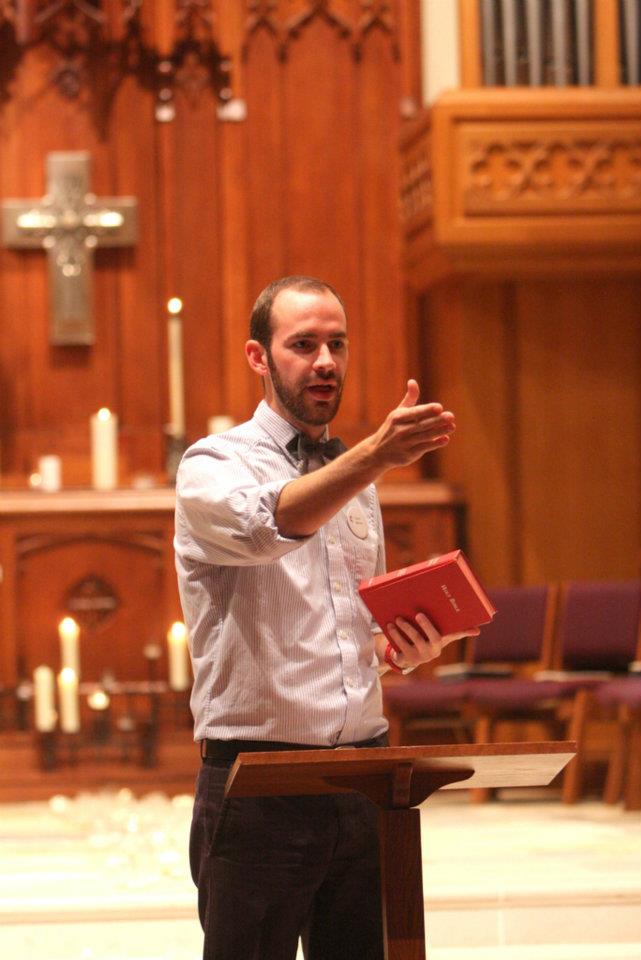
“Hi, I’m Taylor Mertins. Born and raised in Alexandria, Virginia, I am a transplant to the Staunton region and I really enjoy the pace of life here. I serve as a pastor in the United Methodist Church and I make $36,500 a year.”

His reasoning behind this is two-fold: It would allow the church to have greater transparency regarding the wealthy during times of need. If everyone knows who the bigger earners are, they can seek them out when someone in the community is in dire straits, or if the church needs immediate help with something.

It would also allow the church to recognize the great gaps of wealth within the local congregation regarding the rich and the poor. When a family joins that make very little during the year, it would allow us to know who it is that we can truly help by consolidating our resources. We, as Americans, do such a good job at trying to cover up our socioeconomic status that we are blind to those who are in need in the pews next to us. 

What do you think? Should we adopt his plan here at St. John’s?

I’m not so sure. I understand his idea on principle, but I believe that it would result in us abusing one another and it would prevent us from viewing everyone as part of the body of Christ. If you discovered that one of the humble women in the church was a millionaire wouldn’t you treat her differently? If you discovered that one of the men who appears very wealthy has no money at all, wouldn’t you treat him differently?

Yet, at the same time, I really like Hauerwas’ idea. It would push us to be more vulnerable with one another about what we have to offer, and what we need. So I’m going to offer a slightly different proposal. What if, when we received new members, we required them to share their talents with us?

00024924_h

Jesus’ parable of the talents uses money, but in the big picture it has nothing to do with money at all. God, as the master, has given each of us unique abilities and talents that we have been tasked to use in the world for the kingdom. To some he has given more talents than to others, which is to say the hand is not the foot, nor is the arm like the leg, in the body of Christ. Yet everyone has been blessed with some talent that is beautiful, wonderful, and incredibly important. 

Jesus’ disciples are called to do the work that Jesus has given us to do — work as simple and hard as learning to tell the truth and learning to love our enemies. Such work is the joy that our master invites us to share with him.

The slaves that earned more with their talents did so because they worked with what they had. No effort is made to describe how the slaves doubled their talents, but that they worked hard with the talents the master had given them. However the one talent slave rationalizes his failure to do anything with the talent entrusted to him by blaming the master! How often are we guilty of the same thing? —Blaming God for the failures that are indeed our fault.

Since the beginning of the church is has been a routine for Christians to excuse themselves by protesting that their gifts are too modest to be significant. How can little ole me possibly do anything for God’s kingdom?

Let me assure each of you of the contrary: You have been given gifts, wonderful and unique talents, that are begging to be used in the church for the world, and in the world for the church. You might not recognize them as such, you might feel insecure about whatever they are, but God has endowed you with the gifts so that they can be used. If you hide them inwardly, if you dig a hole in the ground, you fail to make good on the investment that God has made in you.

Jesus insists, through the parable, that the talents that God has provided us are to be used and implemented to their full ability. Christian discipleship is not something that we can just hope our pastors or churches can carry us through, but instead requires hard work. It demands that we take a good look at our lives and talents and ask how we can put them to use for God’s kingdom.

What talents do you see in your life? Are you a teacher who has the gift of sharing the Good News of God’s Word with others? A carpenter who has the gift to repair and shape shelters for others? A prayer warrior who has the gift to pray for our church, our community, and our world? A financially savvy individual who has the gift of helping others learn how to manage and invest their money? A nurse or doctor who has the gift of healing and presence?

I see a church full of Christians who have gifts that God has given.

Church should be like a great talent show where we share with others what God has given us, so that we can them employ those gifts for the kingdom. What are you doing with your talents?

Amen.

What’s Love Got To Do With It? – Sermon on Matthew 22.34-40

Matthew 22.34-40

When the Pharisees heard that he had silenced the Sadducees, they gathered together, and one of them, a lawyer, asked him a question to test him. “Teacher, which commandment in the law is the greatest?” He said to him, “You shall love the Lord your God with all your heart, and with all your soul, and with all your mind. This is the greatest and first commandment. And a second is like it: You shall love your neighbor as yourself. On these two commandments hang all the law and the prophets.”

1304770_orig

Teacher, which commandment in the law is the greatest?

What a great question. The bible is full of teachings, so many in fact that a number of passages contradict. It details the history of God with God’s people from the beginning of creation, through the patriarchs, politicians, and prophets. The law is complex and detailed at times with provisions for how to treat one another, and behave faithfully. Are we to live by all of the commandments equally or is there one that stands alone? “Teacher, which commandment in the law is the greatest?

Jesus is asked about the greatest commandment, the one that stands alone as a beacon under which all the other laws pale in comparison. The lawyer is looking for a solitary answer, yet Jesus refuses to name only one; for Christ the love of God and neighbor are inseparable.

Jesus said to the lawyer, “You shall love the Lord your God with all your heart, and with all your soul, and with all your mind. This is the greatest and first commandment. And a second is like it: You shall love your neighbor as yourself. On these two commandments hang all the law and the prophets.”

What I want to know is this: What does it actually mean to love God and neighbor?

A number of years ago I was flying back from Guatemala after a week-long mission trip when I had one of the strangest encounters with love. In order to save money the church had purchased tickets from all over the aircraft and none of us were sitting together. Frankly, after a week of building stoves in the remote highlands of Guatemala I was perfectly fine sitting away from everyone; we smelled, we were irritable, and we were tired. When I boarded the plane all I could think about was the thrill of falling asleep and waking up back at home. My seat was located toward the front of the coach section on the left side, the middle of three seats. I arrived before my seat-mates, and when it was clear that they were a married couple, with me in the middle, I offered to move to the aisle so that they could sit next to one another. Big mistake.

Don’t get me wrong, they were remarkably kind and in good spirits. They had been vacationing together in Guatemala at a resort and were full of joy and happiness. I think they were in their early sixties, and though they had been probably married for a few decades, they looked like the trip had helped them to fall in love all over again.

From what I remember our conversation was pleasant, they told me about their resort, I told them about the stoves we built, they talked about the exquisite food, I told them about my Peanut-Butter and Jelly sandwiches. They asked me about my calling to ministry, and I asked them about their family. Without a doubt the funniest moment occurred when the steward came by and asked what we would like to drink; I was prepared to ask for a ginger ale but they insisted on purchasing me a glass of wine. When I told them that I was not yet old enough to drink alcoholic beverages they giggled and and exclaimed, “well sweetie, we won’t tell anyone,” right in front of the steward. Needless to say: I did not have a glass of wine.

Anyway, when the inflight movie started up on the headsets in front of us, I was dismayed to discover that the entire plane would be watching the romantic comedy “P.S. I Love You.” Now even if you’ve never heard of the movie, thats fine, suffice it to say that it is a romantic comedy with apathetic acting and a very limited narrative; within the first five minutes you know exactly how the movie will end. I decided to rest my eyes and catch some Zs but the couple next to me were hooked. With their headphones plunged deep into their ear canals they kept asking each other questions out loud, “Wait was he her husband?!” “Oh poor thing, what will she do now?!” “Do you think he’s right for her?!” Try as I might, I was unable to fall asleep. When the movie finally ended I muttered a quick prayer to God, thanking him for delivering me from the captivity of the couple sitting next to me, but that’s when the kissing began.

I’m not talking about your simple peck on the lips of affection, but full-on “sitting in the back seat of a car at a drive in movie” kind of kissing. All I can remember is forcing myself as far away as possible in my seat in order to clear myself from being hit by a wayward arm or leg. It was awful. I tried listening to music, I tried reading from a book, but there was nothing that could distract me from the love fest happening to my left. Suddenly however the husband stopped kissing his wife, pulled her away from his face and said with completely sincerity, “PS I Love You honey” and they commenced kissing to an even higher degree.

How are we supposed to love God and neighbor? Are we called to be filled with the Romantic-Comedy-kiss-your-spouse-on-an-airplane kind of love?

Love, in my opinion, is one of the most over-used and underwhelming words that we use on a regular basis. We teach our children to be careful with their hearts and affection unless they are in love. We wait to value a romantic relationship as something with a future only when we love and feel loved by the other. Even in our preschool I witness our children hugging one another and talking about love as if it is a prerequisite for friendship.

DO-YOU-LOVE-YOUR-NEIGHBORS

In the church, sadly, the call to love God and neighbor has become so routined in Christianity that we have become numb to it, or only view it superficially. When we hear that we are called to love our neighbor as ourselves, we don’t ask what it means to love, we just want to know who are neighbors are supposed to be!

In a time when the word “love” is greatly abused, it is important to remember that the fundamental component of biblical love is not affection, but commitment. Warm feelings of love and gratitude may fill our souls as we consider all that God has done for us, but it is not a warm and fuzzy feeling that Christ demands of us. Instead, love for God and neighbor is a stubborn and unwavering commitment. We do not have to feel affection for our neighbor, nor for God; to love our neighbors is to imitate God by taking their needs seriously.

It is true that God loves us in an affectionate and sweet way. He has called us by name and breathed life into us. But most of God’s love for us can be summarized as putting up with us in spite of all our faults and shortcomings. God has stayed with us when we no longer deserved his presence.

Pre-marital counseling is a privilege in my profession. I must admit that in the beginning I was afraid of pre-martial counseling sessions, but now I really enjoy them. I used sit with couples without having been married myself, but now with 6 months of married life experience, I am an expert! There is something indescribably precious about getting to meet with a couple before their wedding to talk about the deep realities of life-long commitment. When we gather together, it is a time of holiness and vulnerability that, I hope, will help them in the days, weeks, months, and years to come.

I also greatly enjoy those counseling sessions because I get to ask questions that would otherwise be completely inappropriate in any other circumstance. If I’m feeling particularly gung-ho I begin with the zinger: “tell me about your last fight.” Couples upon stare back at me in disbelief, or claim that they have never fought. Or I begin with a standard question turned upside down: “Why in the world do you want to get married in the church?” I inform them that we could get in the car and drive down to the courthouse and they could be married that afternoon; it would be easier and cheaper. So what is it that makes you want to get married in a church?

All of the questions I ask are aimed at trying to get them to start thinking about life beyond love. Because when I ask why they want to get married, I almost always hear “because I love her” or “because I love him.”

Love is nice, but love is not enough.

At least not the kind of love that we have been habituated into through Hallmark, Romantic-Comedies, and Trashy Novels. Love, to us, often has more to do with lust and affection than it does with commitment and patience.

Love is not enough because she is not going to look that good in ten years, and nor will he. Whatever physical love you feel for each other, it will change. You think you know each other? You think that love is enough? Just wait till you wake up next to them every morning for an entire year, or he starts snoring every night, or she forgets what you asked her to do week after week.

Are we supposed to love God and neighbor the way we are called to love our spouse? Yes, but it is a type of love that we often lose sight of. It is not the way the world tells us to love, but a love that we learn from God.

For centuries Israel disobeyed the God who brought them out of Egypt, the God of their ancestors, yet God’s love remained steadfast. For centuries the church has disobeyed the Word of the Lord and let sinfulness run rampant. When we act on behalf of the Lord for our own selfish purposes, when we make a mockery of this beautiful thing called the church, when we refuse to go to God in our prayers, we neglect to love the God who loves us in spite of what we do. God has put up with people like you and me for centuries, he has be stubbornly present with us, and thats what love is all about.

LoveNeighbor

Christ calls us to be stubbornly loving with our neighbor, who, by the way, is everyone, with unwavering commitment. Christians, Jews, Muslims, Atheists, Agnostics, Catholics, and even Baptists. Blacks, Whites, Heterosexuals, Homosexuals, the rich, the poor, the strong, the weak, the elderly, and the youthful. Loving the neighbor must teach us how to love God. Jesus has radically pushed us into a way of being where we are told to love all our neighbors, even our enemies, and we can only do so when we imitate the kind of love that God has for us.

Someone this week put it this way: It is often easier to love someone than to like them.

Truly to love God is to love the neighbor; truly to love the neighbor is to love God.

You might not like what God is doing in your life right now, you might want to cry out with clenched fists in anger about God’s presence, you might feel that God has abandoned you. You don’t have to like God to love God.

You might feel like the people closest to you have ignored your needs and have stopped listening to you, you might feel like the outcasts in our community don’t deserve any of your time or energy, you might feel like your neighbor has done something to you that is beyond forgiveness. You don’t have to like your neighbor, to love your neighbor.

It sure is a strange thing to follow Christ. How bizarre is it that he has turned the world upside down and called to the first to be last and the last to be first? How weird is it that he has shattered the world’s vision to be replaced with God’s imagination?

My friends, let us be stubborn with our patience, unwavering with our commitment, and radical with our love toward God and neighbor. 

Amen.

Authorized for What? – Sermon on Matthew 21.23-32

Matthew 21.23-32

When he entered the temple, the chief priests and the elders of the people came to him as he was teaching, and said, “By what authority are you doing these things, and who gave you this authority?” Jesus said to them, “I will also ask you one question; if you tell me the answer, then I will also tell you by what authority I do these things. Did the baptism of John come from heaven, or was it of human origin?” And they argued with one another, “If we say, ‘From heaven,’ he will say to us, ‘Why then did you not believe him?’ But if we say, ‘Of human origin,’ we are afraid of the crowd; for all regard John as a prophet.” So they answered Jesus, “We do not know.” And he said to the, “Neither will I tell you by what authority I am doing these things. “What do you think? A man had two sons; he went to the first and said, ‘Son, go and work in the vineyard today.’ He answered, ‘I will not’; but later he changed his mind and went. The father went to the second and said the same; and he answered, ‘I go, sir’; but he did not go. Which of the two did the will of his father?” They said, “The first.” Jesus said to them, “Truly I tell you, the tax collectors and the prostitutes are going into the kingdom of God ahead of you. For John came to you in the way of righteousness and you did not believe him, but the tax collectors and the prostitutes believed him; and even after you saw it, you did not change your minds and believe him.”

446190966_640

Jesus does what Jesus wants. He has gone all over Galilee proclaiming the Good News, bringing sight to the blind, and healing to the sick. He has fed the multitudes miraculously, walked on water, and calmed the storm. He entered the holy city of Jerusalem on the back of a derelict donkey, charged into the temple and drove out the money-lenders while overturning the tables. Radical and revolutionary, Jesus does what he wants, and now the chief priests and the elders want to stop him in his tracks.

“Who in the world do you think you are? Who gave you the authority to do these things?” Of course, “these things,” refer to him cleansing the temple, curing the blind and lame, feeding the hungry, providing for the poor, listening to the weak, and giving hope to the hopeless. The question has been posed to Jesus before, but never has the question been more ominous; Jesus is in enemy territory and those asking the question will constitute the court that will later sentence him to death by crucifixion.

What gives you the right to come in here and tell us how we are supposed to understand the world?” They do not really want an answer to their question. Instead, they are seeking an opportunity to trap Jesus by means of his response. So Jesus does what he wants: He ignores their question for the moment and proposes a counter-question that they too cannot answer without getting in trouble.

“I will ask you a question; if you tell me the answer, then I will also tell you by what authority I do these things. Did the baptism of John come from heaven, or was it of human origin?” The chief priests and the elders argue among themselves about how they can answer. This is a classic Catch-22; “If we say his baptism was from heaven then Jesus will ask why we did not believe him and have him beheaded, and if we say it was an earthly thing the crowds will revolt against us because they all regard John as a prophet.” Caught in a dilemma of their own making, they recognize that there is no way they can answer the question without putting themselves in a worse position, so they answer with the answer that students have relied on for centuries, “We do not know.”

I imagine then, that Jesus smiled while saying, “neither will I tell you by what authority I am doing these things.”

Rev. Dr. Warren Smith

Rev. Dr. Warren Smith

When I was in seminary a professor named Warren Smith led my class through the great wonders of Church History. We studied some of the greatest theologians and mapped the various trajectories of theological positions that have brought our church through the centuries. After a semester of heavy reading and writing, Dr. Smith ended his final lecture with a story…

When he was a young pastor he was appointed to a church fresh out of seminary and did his best to proclaim the Word, serve those in need, and live into God’s kingdom on earth. For months the church listened deeply to his sermons and prayers, and grew in their love of God and neighbor. However, there was one older woman who never spoke to Dr. Smith after worship. She would sit patiently in her pew, unaffected by his words and gestures, and would return to the parking lot without saying a word to the young pastor. That was the typical routine until one Sunday she made her way in the receiving line following church.

Who do you think you are?” she began. “To come into this church and tell us how to live our lives. I have been a Christian longer than you have been alive. What could you possibly teach me about what it means to follow Christ?” And with that, she left.

Her words struck deep in Dr. Smith’s soul. Was she right? What could he possibly teach someone who had been following the Lord for decades when he had just graduated from seminary? Dr. Smith however, is not one to go gently into the night.

The following Sunday, Dr. Smith made his way to the pulpit and began to preach with words that resonated throughout the sanctuary: “I know I may look young from this pulpit. I know that some of you might be concerned with my ability to preach and teach in this church considering my age. But when I stand in this pulpit I AM 4,000 YEARS OLD. I speak with the great cloud of witnesses that have gone before me. I am equipped by the Holy Spirit to proclaim the Good News of Christ because the Lord is with me even to the end of the age.”

“So too,” he said to my class, “remember that you have been authorized to do incredible things and you are older than you think.”

When Dr. Smith’s authority was challenged he responded by recalling the great tradition of the living Word that is brought forth into new life on a regular basis. He looked back in order to look forward. He validated his responsibility by acknowledging his earthly youth while at the same time affirming his divine wisdom through the Holy Spirit.

When Jesus’ authority was challenged by the chief priests and the elders he responded with an unanswerable question, and then with a parable. The parable becomes the lens by which they can see their error and envision a proper understanding of God’s reign in the world.

What do you think? There was a man with two sons. He went to the first and asked him to work in the vineyard. The first son refuses, but later he changed his mind and went to work in the field. The father went to the second son and asked him to work in the field as well. The second son agrees to work, but never went to the vineyard. Which of these two sons did the will of his father?

The chief priests and elders respond in unison, “the first.” It is obvious that even though the son refused to work, the fact that he did, in the end, is far better than the son who agrees to work and never enters the vineyard. Jesus then uses the parable to draw the unmistakable conclusion that they, the chief priests and elders, are the second son who has failed to do the father’s will. “The tax collectors and the prostitutes are going into the kingdom of God ahead of you. John came in the way of righteousness and you did not believe him, but they did. Even after you saw what he did, you did not change your minds and believe. You preach and preach, but you never practice the words you proclaim.

Jesus responding with a parable is typical of the gospels, and helpful for bringing about new understanding. He uses a story in order to open up the kingdom of God to show that it works in a way that is approachable and livable.

What do you think of the parable? In your faith journey do you feel like the first brother? Was there a time that you rejected the calling of God on your life, refused to believe, only to find yourself caught up in the grace of God and working in the vineyard of the kingdom? Is your faith vibrantly alive and fruitful?

Or do you feel like the second brother? Was there a time that your faith was so alive that you were willing to say “yes yes” to God’s call on your life only to find yourself apathetic to the work of the church in the kingdom? Is your faith stagnant and fruitless?

use-me

Individually, we can respond to God’s call in faithful ways by reaching out to others in our community and letting God’s love abound in their lives through our actions. But collectively, as a church, it can be quite difficult to be Christ’s body for the world.

This week I met with a handful of other Methodist clergy from the valley and we discussed our local churches, some of the challenges facing our congregations, and the fruit that has come forth during our time of service. We talked about new ministry ideas that might help share the Good News with people in our communities while also affirming the many challenges of being the church for the world today. But, to be honest, most of the conversation was a time for the leaders to complain about the lack of enthusiasm in their churches, their inability to see the call of the church and the mission of God in the world. At one point a friend of mine shook his head and said softly, “It can be so depressing to hear that most of our churches are far more concerned with maintenance, than mission.

One of the hardest things to admit, as a church, is that we are more often like that second son than the first. After all, here we are sitting in the vineyard, preparing to go out to harvest the grapes. But as Christians, we can become blind to what God is doing in the world around us. How sad is it that “church work” can quickly degenerate into conversations about maintaining our building, with no excitement about what God’s living Word and grace are doing in our community? How sad is it that the majority of our conversations and budget are focused on making sure that the church will still be here next Sunday instead of focusing on the renewal of the church and the formation of disciples of Jesus Christ for the transformation of the world? Like the second brother we say that we are going to work in the vineyard, but instead of harvesting grapes we spend our time rearranging the stones along the path. 

I’ll admit that our church is changing, we are slowly moving away from the maintenance model and are becoming lively and excited about the ways we can be Christ’s body for the world. We are no longer content with just being a building where people can sit together on a Sunday morning. A church is not a building. A church is the work of the people for the vineyard, for the kingdom.

Jesus was authorized by his father in heaven to do the will of God on earth. To overturn the tables in the temple, to call out the leaders of the people for their hypocrisy and limited vision, to seek out the last, least, and lost, to bring them a sense of wholeness, to feed the hungry, to clothe the naked, to make disciples.

In the same way, Christ has authorized us to be his body for the kingdom of God. Today we have the remarkable responsibility of acting like God’s son, and the first son from the parable; even when we doubt our responsibility to the mission of God we are needed in the vineyard.

What are we doing as a church? Are we giving our tithes and offerings to God so that the church will stay open, so that we can hear an articulate and thoughtful 15 minute sermon every week. Are we content with letting our discipleship look like maintenance?

What are we doing as Christians? Are we radical people who believe that God continues to do amazing things in the world? Do we hope and pray for God’s will to really be done here on earth among us?

We have been authorized to do great and wonderful things in the world. Let us remember and believe that the Lord will provide, that nothing will ever separate us from God’s love, and that we have been called to work in the vineyard.

Amen.

Devotional – Matthew 18.21-22

Devotional:

Matthew 18.21-22

Then Peter came and said to him, “Lord, if another member of the church sins against me, how often should I forgive? As many as seven times?” Jesus said to him, “Not seven times, but, I tell you, seventy-seven times.

Weekly Devotional Image

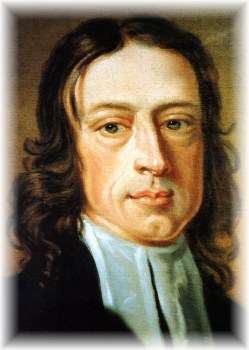
In October of 1735 John Wesley and his brother Charles left England and sailed to Savannah, Georgia where John would be the minister in the newly formed Savannah parish. Part of his religious upbringing had already instilled a desire for holiness of heart and life and Wesley believed that his new appointment provided a wonderful opportunity to hone his craft and enrich his faith. During his time serving as the pastor attendance at the church services steadily increased though he was disappointed by the lack of lived-out faith outside of worship.

John Wesley

John Wesley

Even with the growth in worship, many in the community disliked Wesley’s high church background and it proved to be a continual element of controversy. During this same time Wesley began to fall in love with the young and beautiful Sophia Hopkey. They courted for a period of time but after a brief visit to preach the Good News to the local Native Americans, Wesley was remarkably disappointed to discover that Sophia had married William Williamson. Wesley was devastated by the news and took out his frustration in a rather inappropriate way; he denied Sophia communion during church services.

Wesley, of course, had “reasons” to justify his actions (he believed that her zeal for living out her Christian faith had declined and he followed the guidelines from the Book of Common Prayer in prohibiting her sacramental participation) but he was also fueled by his heartache and anger in withholding the bread and wine. It quickly became quite the controversy and legal action was taken against Wesley eventually leading to him fleeing the colony and returning to England.

One of the highest, and most difficult, callings of Christian disciples is to forgive. When confronted with the question of forgiveness in the community Peter ventured forth the idea of forgiving someone seven times when Christ augmented the proposal to seventy-seven or seventy times seven times. Forgiveness, it would seem, is not something to be measured and checked off the list, but instead something that is deeply entrenched within the life of the community. Wesley let his personal feelings get the better of him, and he foolishly barred a young woman from Christ’s table. Christians, both clergy and lay, are called to the difficult task of everlasting forgiveness, even when it hurts.

Is there someone that you are still holding a grudge against? Who do you need to forgive in your life?

Devotional – Matthew 18.15

Devotional:

Matthew 18.15

If another member of the church sins against you, go and point out the fault when the two of you are alone. If the member listens to you, you have regained that one.

Weekly Devotional Image

During our weekly lectionary discussion group, after reading Matthew 18, Leah Pack questioned the group in attendance about whether or not any of us has had an experience of someone from the church confronting us in order to point out our faults. After all, pointing out the faults of a fellow church member is something Jesus charged his disciples to do. While the group pondered particular moments from their church lives, I shared with them one of my experiences.

Preaching in Birmingham

Preaching in Birmingham

I had been helping serve at a church in Birmingham, Michigan for most of the summer. My responsibilities included visiting the hospitals, preaching, teaching, leading worship, and regular committee attendance. It was a particularly rewarding summer for me, and helped me identify my own strengths and weaknesses for ministry. Throughout my internship I met with the Seminary Committee who helped to provide the necessary information for my journey and offer advice and feedback regarding my work. On my last evening in Birmingham the committee shared their final evaluations for the summer and wished me well on my ministerial journey; the group was incredibly gracious and kind with their reflections.

As we prepared to leave the church that night one of the older gentlemen from the committee asked to speak with me privately before we left. “You are so full of it,” he began, “I watched you all summer long, and you might’ve fooled everyone else but you can’t fool me. You are one of the most arrogant and self-righteous young men I have ever met.” And with that he left me alone in the room; his words piercing deep in my soul.

I learned later that the man had a very difficult time watching a young person speak with such confidence from the pulpit on a regular basis and that, for him, was a sign of arrogance. Nevertheless, his words have stayed with me ever since that particular evening a few summers ago. Though I may not completely agree with him regarding his judgment of my faults, it was helpful (though painful) to hear him speak his mind. It has helped me to be mindful of the ways I come off as a pastor to others in ways than I could not previously imagine.

One of the highest callings of discipleship is a willingness to confront others when they are at fault. However it is important to remember that we are not called to judge them, but instead speak the truth in love about ways others have wronged us, and how we can reconcile broken relationships.

How have you confronted others who have faulted you? Has anyone pointed out your faults? Let us be truthful people who are kind with our words and courageous in our faith.


Devotional – Matthew 14.28-31

Devotional:

Matthew 14.28-31

Peter answered him, “Lord, if it is you, command me to come to you on the water.” He said, “Come.” So Peter got out of the boat, started walking on the water, and came toward Jesus. But when he noticed the strong wind, he became frightened, and beginning to sink, he cried out, “Lord, save me!” Jesus immediately reached out his hand and caught him, saying to him, “You of little faith, why did you doubt?”

Weekly Devotional Image

I love asking questions. Whether I’m sitting around the dining room table with family and friends or I am holding a ladder so that a middle-school student can paint a ceiling in West Virginia; asking questions is something that brings me joy. Of course there are the standard and typical “What’s your favorite movie?” and “What was the last good book that you read?” and even “If you could go on vacation anywhere, where would you go?” I love asking these types of questions because they afford an opportunity for everyone to respond and it often sparks a much longer and deeper conversation.

For as much as I love to ask questions, there is one in particular that I enjoy asking more than any other: “Who from the Bible do you most identify with?” I last asked this question of a handful of middle school students on our recent mission trip and it was so exciting to see them ponder over the question and eventually offer their response. However, when some of them were unable to answer the question I made it my mission to learn enough about each of them to tell them who I thought they reminded me of from the Bible by the end of the week.

walkingonwater9eh

In my life I identify most with the apostle Peter. I was not called out of a simple career to leave everything and follow Christ, I have not had a defining moment where I denied Christ three times, but when it comes to Peter’s personality I line up completely. Like Peter, I always have an answer to every question, I often volunteer for leadership positions, and I regularly speak on behalf of many others. Moreover I see the connections between myself and Peter most vibrantly in the story of Peter getting off the boat to walk with his Lord. When I feel that God is asking me to do something I usually do whatever it takes to jump right in, yet sometimes when I have already left the boat I notice the strong winds of life that make me doubt what I have done. I, like Peter, need to hear Jesus’ question over and over: “You of little faith, why did you doubt?

As we prepare to take steps into a new week I encourage you to reflect on who you identify with from the Bible. Do you feel like David, small but able to accomplish great things? Do you feel like Martha, always busy and working hard to take care of all the chores? Or do you feel like me, which is to say, do you feel like Peter, ready and willing to rush into anything for God? Who from the Bible do you most identify with?

God’s Garden – Sermon on Matthew 13.24-30, 36-43

Matthew 13.24-30, 36-43

He put before them another parable: “The kingdom of heaven may be compared to come one who sowed good seed in his field; but while everybody was asleep, an enemy came and sowed weeds among the wheat, and then went away. So when the plants came up and bore grain, then the weeds appeared as well. And the slaves of the householder came and said to him, ‘Master, did you not sow good seed in your field? Where, then, did these weeds come from?’ He answered, ‘An enemy has done this.’ The slaves said to him, ‘Then do you want us to go and gather them?’ But he replied, ‘No; for in gathering the weeds you would uproot the wheat along with them. Let both of them grow together until the harvest; and at harvest time I will tell the reapers, Collect the weeds first and bind them in bundles to be burned, but gather the wheat into my barn.’” Then he left the crowds and went into the house. And his disciples approached him, saying, “Explain to us the parable of the weeds of the field.” He answered, “The one who sows the good seed is the Son of Man; the field is the world, and the good seed are the children of the kingdom; the weeds are the children of the evil one, and the enemy who sowed them is the devil; the harvest is the end of the age, and the reapers are angels. Just as the weeds are collected and burned with fire, so it will be at the end of the age. The Son of Man will send his angels, and they will collect out of his kingdom all causes of sin and all evildoers, and they will throw them into the furnace of fire, where there will be weeping and gnashing of teeth. Then the righteous will shine like the sun in the kingdom of their Father. Let anyone with ears listen!

wheat180708_03

The best sermons reflect their scripture. If you preach on a Psalm then the sermon should be poetic and prayerful. If you preach on a genealogy then sermon should be historic and cover the breadth and trajectory of time. If you preach on a narrative, then the sermon should contain stories to help enlighten the scriptural narrative. And if you preach on a parable, then the sermon should leave people scratching their heads on their way out of church.

Jesus put before his disciples yet another parable: The kingdom of heaven is like a gardener who planted good seeds in his field. However, while others were sleeping someone else came and planted weeds among the wheat. So when the plants began to grow the weeds appeared with the wheat.

The workers of the garden were confused and worried, “Master, what kind of seeds did you plant? Where did all these weeds come from? Would you like us to go out and remove the weeds from the field?” But the gardener replied, “No; if you remove all of the weeds you would uproot the wheat along with them. Instead, let both of them grow together until the harvest.

Parables are strange things. They are often found on the lips of Jesus, told in such a way that a point of a lesson can be illustrated from the narrative. For those of us familiar with Jesus’ parables we might think of the Prodigal Son or the Good Samaritan or The Mustard Seed. In the parables, Jesus uses a simple and memorable story to convey a deeper and important theological point. He refers to common and everyday things that can find connection with the crowds as he shares with them the beauty and mystery of God.

Though told with a simple style, parables often left the disciples scratching their heads while Jesus addressed the crowds. In our scripture today it was only when they retired to the house that the disciples were finally given the opportunity to ask Jesus what this parable was all about.

The gardener is the Son of Man; the field is the world, and the good seeds are the children of God; the weeds are the children of the evil one, and the enemy who planted them is the devil; the harvest is the end of the age, and the reapers are angels.

The beauty of the parable, its mysterious quality, has been explained and presented to the disciples succinctly and clearly. 

wheat

This morning we are going to do things a little differently. Instead of just standing up here proclaiming the Word, instead of just sitting our there absorbing the Word, we are going to live it out in our worship. 

Let us pretend that this sanctuary is God’s Garden and all of us are the crops. At first we are planted by the Son of Man and are nurtured in this place to grow into disciples of Christ. Whereas a true garden needs sunlight and water, we are sustained through the Word of God and through the Bread and Wine of communion. As we make it through the weeks, months, and years we continue to grow into our faith and become the beautiful wheat of the field. So, as you are able, would you please demonstrate this growth by standing up.

As any good gardener I am now going to inspect our crops… It is clear that we have some incredible wheat this morning!

Leah Pack! I see your growth and am reminded of your dedication to our lectionary bible study, feeding those who are in need at the free clinic, and your willingness to visit those from our church community.

Marshall Kirby! I see your stature and it is definitely clear that you are strong in your faith! I am reminded of your willingness to serve the needs of our church through your leadership with the men’s club, your stupendous diction while reading the scriptures for worship, and your chiseled muscles from years of Christmas tree sales.

Grace Daughtrey! Though still young and maturing into a wonderful wheat it is clear that you are full of faith. I see you standing and I am reminded of your challenging questions during confirmation, your desire to serve our church by carrying in the light of Christ for worship, and the future of our church as you blossom into a remarkable Christian.

Brothers and sisters we have a garden full of God’s wheat, full of faith and trust! To God be the glory! (You may be seated)

But you know, the more I think about it, maybe I wasn’t looking at God’s crops close enough…

Leah Pack, for as strong as your faith looks on the outside I know that you become frustrated with others in the community who do not live out the tough calls of our faith, I know that sometimes you wish you could ignore certain parts of the bible. Leah I’m sorry to say this, but when I look closer it seems that you appear more like a weed than a wheat (Remove Leah from the pew and bring her to the front).

Marshall Kirby, who could argue with your faith? But I know that sometimes you listen to the voices of the world more than the voice of God and you might be too weedy for our garden. (Remove Marshall and bring him to the front)

And Grace, sweet sweet Grace, still so young in your faith, I know that there are times when you would rather sleep than come to church. I’m not sure we can let you stay in our garden (remove Grace and bring her to the front).

I quickly see two things for us to learn from the pruning of God’s Garden:

Before too long I’m sure that we would be able to find a sin in every person sitting in the pews this morning, and eventually we would have to remove all of the weeds. We might have good days, even months, or perhaps years where we can fully live into our discipleship of Jesus Christ, loving God and neighbor, serving the needs of the community, but all of us eventually fall short of His glory. We look at someone and we lust for what they have, we lie to protect ourselves, we love our possessions more than God; whatever the sin is we quickly move from being one of God’s wheat to one of God’s weeds.

God’s Garden is imperfect. Even with all of the proper nurturing, good preaching, splendid teaching, and holy eating, it will never be enough to prevent us from sinning. We can have mountaintop experiences here at church but before long we are tempted to fall back into the familiar rhythms of evil. On the outside we want to look like God’s perfect crop of wheat, fully matured, and ready to be harvested for the kingdom, but in reality, when we look inwardly, we see that all of us at some point or another appear more like one of the weeds in God’s Garden.

The other element of this Garden that strikes at our hearts this morning is that we are not the ones who are called to judge. Lets pretend for just a moment, if we can, that Leah, Marshall, and Grace truly were weeds within this community of faith. Can you imagine what would happen to us if we uprooted them? 

Leah has taught so many over the years about the way God has interacted with God’s creation. If we removed Leah, all of her students in the ways of faith, myself included, would begin to wonder what this thing called faith was all about. At some point many of the people connected to Leah’s life would stop coming to church at all when they realized that she was the one who embodied the love of God for them and their lives. Without Leah being here, they would miss getting to experience God’s grace.

Marshall lives out his discipleship everyday. He it absolutely committed to following Christ here at St. John’s and in the community. Even with his big and tough exterior, he is one of the sweetest men I have ever met. If we removed Marshall, our community would suffer. All of us that have been encouraged by Marshall over the years would lose our sense of identity when he is no longer able to affirm our worth. Without Marshall being here, many of us would miss getting to witness God’s grace.

Grace sees the world the way that God wants us to see one another. Without judgments, without preconceptions, without fear, Grace loves the people around her with a pure heart. Even though Grace is very much a part of the church right now, she also embodies for many of us the hope of the church in the future. If we removed Grace, our vision would suffer. All of us that have been touched by her singing, or her discipleship, or even just her smiles, would no longer see the joy of worship and faith. Grace gives us the hope for committing ourselves to the ways of God. Without Grace being here, we would fail to enjoy God’s grace.

church

I’m sure that God’s Garden would suffer if any of them were removed, and I am sure that God’s Garden would wither and disappear if any of us were removed. We are not the gardener, that role can only belong to the triune God. When we look out on the abundance of produce in this church we are called to see one another the way God sees us, as the great grains of discipleship.

In Jesus’ parable of the wheat and the weeds there is a tremendous emphasis on patience: let them both grow together until the harvest. Our church is made up of sinners and saints, weeds and wheat, and God has called us to grow in faith with one another. As we make our way through the years of communal living, we must be patient with one another.

On the surface level, Jesus’ parable can sound frightening and even disconcerting. The idea of the weeds being gathered at the harvest to be thrown in the fire scares me. But when I look out on God’s Garden here in our church, I am reminded that this is a story all about grace. In the strange world of the parable, in the strange world of being a Christian today, God prohibits our separation and calls us to live in love.

In the strange world of faith it may even be possible for weeds to become wheat.

Thanks be to God that Jesus Christ is the risen Lord who sows the good seed that becomes the church. Thanks be to God that we are nurtured and fed by the Word and the Spirit growing everyday in our fruitfulness for the kingdom and one another. Thanks be to God that we have been raised in faith, surrounded by such a wonderful community of witnesses, and rooted in the deep and rich soil of God’s grace.

Be patient with one another. Do not judge by outward appearance, or inward behavior. Look around at God’s Garden this morning and see the good seed that is growing, see the wheat of faith, see your fellow disciples that will one day shine like the sun in the kingdom of their Father!

Amen.

Take Up Your (Cross) Collar – Sermon on Matthew 11.25-30

Matthew 11.25-30

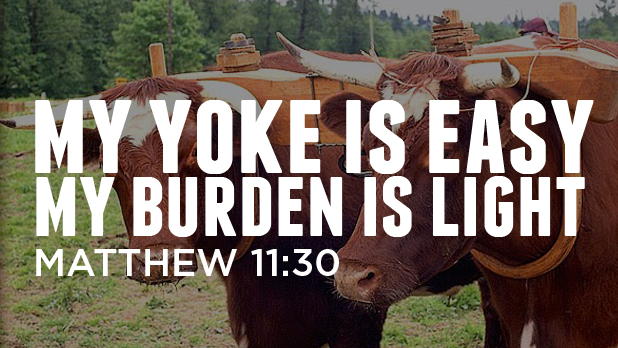
At that time Jesus said, “I thank you, Father, Lord of heaven and earth, because you have hidden these things from the wise and the intelligent and have revealed them to infants; yes, Father, for such is your gracious will. All things have been handed over to me by my Father; and no one knows the Son except the Father, and no one knows the Father except the Son and anyone whom the Son chooses to reveal him. Come to me, all you that are weary and are carrying heavy burdens, and I will give you rest. Take my yoke upon you, and learn from me; for I am gentle and humble in heart, and you will find rest for your souls. For my yoke is easy, and my burden is light.”

Yoke_Is_Easy

I wonder what the disciples thought when Jesus said, “my yoke is easy, and my burden is light.

Bartholomew probably nodded along in agreement, James and John might have clapped in approval, but there’s a chance that Peter said what I think whenever I come across this passage: “Is he serious?

I mean, in reality, it would seem that what Jesus is talking about here is rather ironic. My yoke is easy and the burden is light? Coming from the one who said: take up your cross and follow me, those who wish to save their life must lose it, sell all of your possessions and give to the poor, let the dead bury the dead, is it easier for camel to go through the eye of a needle than for a rich person to enter heaven… it seems a little paradoxical for him to claim that is yoke his easy and the burden is light. 

When we take a step back and look at the greater picture of this address, Jesus’ invitation is not to the work burdened, nor the sin-burdened, but to the law burdened, to those who felt the heavy weight of religiosity. At a time when law observance was followed by some to a ridiculous degree, Jesus triumphantly invited the weary to come to him for rest.

The promise for the weary is not, however, a rest from inactivity. What Christ offers to the tired is not a vacation from the law but a less burdensome way of fulfilling it. At particular points during his ministry Jesus’ interpretation of the law was more lenient (observing the Sabbath) and at other times more stringent (divorce, acts of mercy, forgiveness). The main thrust being that the weighted matters of the law can be simplified by justice, mercy, and faithfulness.

Compared to the other law followers of his time, Jesus is offering a lesser burden of religious existence. Yet, I can’t help but feel that there is something inherently wrong with the idea that Jesus’ yoke is easy and the burden is light.


It brings me more joy than I can describe to know that I have been serving as the pastor of St. John’s for more than a year. I have only begun to scratch the surface of our collective story, the way we have all come to know God in our lives, and I look forward to our continued journeys of faith.

Years ago a good friend of mine had just finished his first year in ministry, like me, when the “honeymoon” period came to an abrupt end. They say that the “honeymoon” period can last anywhere from 6-18 months; the church body becomes so excited with a new pastor that they are willing to look past the old problems to envision a new reality of faith. However, as with all things, the honeymoon eventually comes to an end. Honeymoons can end by a simple mistake from the pulpit, a forgotten phone call to a parishioner in need, or simply when the new shiny toy looses its luster. For my friend, the honeymoon came to a screeching halt during a church council meeting.

After serving for an entire year it appeared as if things were finally getting better for the church; they had new visitors attending worship, new programs had taken off, and they even had a few youth present during church gatherings. Some of the lay people had come to describe this new young pastor as the shot in the arm that the church had desperately needed. He was their little Messiah, inaugurating a new age and time for the church when it could return to its former glory.

The church council meeting took place in the damp church basement that smelled of mold and burnt coffee one evening shortly after his one year anniversary. The leadership of the church sat appropriately in the stiff folding chairs and exchanged pleasantries about the comings and goings of town until the real business came to the floor: The much needed update to the curtains in the fellowship hall. He describes the moment as a eternity of debating what color would best accent the needs of the hall where peoples’ feeling were hurt over the color-coordination. And then they talked about replacing the organ, and the sanctuary windows. They talked about the only two children in worship, just two, who were deemed disruptive to the older folk. And when they were done complaining about the children, they started to complain about my friend…

presbytery-580x491-300x253

The shut-in list was passed around the table until it arrived in his lap when someone said, “the only explanation must be that you don’t have this list. Our last pastor made sure that each of them were visited one a week.” “Thats wonderful” my friend replied, “Who visits them?” “The pastor does!” they all agreed in unison.

My friend looked down at the list and read the names of the faithful church members who could no longer attend. While he sat there in silence reading over the list one of the older women spoke up, “this is the way we’ve always done it, and we’ve always been successful

“Successful at what?” he said. “There are 36 names on this list. That means there were 4 more people on this list than there were in church last Sunday. I don’t think you’ve been successful at all.”

And thus the honeymoon came to an abrupt conclusion. 


My friend was young, brash, and foolish, and he was wrong. It is part of the pastor’s vocation to visit the shut-ins, to maintain a connection between the people and their church. But he was also right about something; the call of discipleship rest on all of us, not just the pastor.

Once, while I was working on a sermon, I got a call letting me know that a beloved woman from the church I was serving had just been admitted to the local hospital after having a stroke. I remember leaving my my computer and bible open on my desk, and driving straight to the hospital. I sat by her bed and held her hand as she talked to me about everything that had happened to her, her inability to move some of her fingers, her fears about being able to return to the normalcy of life, but the thing that stuck with me most was the last thing she said before I left.

“Thank you for coming to see me,” she said. “I miss my church. I’m so sorry that I haven’t had a chance to come hear you preach, but I’ve been too sick to leave the house and my hearing has gotten so bad. I miss the people. I’ve received a lot of cards that have helped to cheer me up. But you know what? No one has come to visit me. And the only reason you’re here is because I’m in the hospital.

I am a professional Christian. I have it easy. I am paid by you to live out my faith, order the church, preside over the sacraments, proclaim the Word of the Lord, and serve the needs of the community. I attend our committee meetings to help with the ordering of the church, I pray over the waters of baptism and the bread and wine of communion, I preach sermons from this pulpit every week, and when someone has a need I leave what I’m doing to be with them. Going to visit someone in the hospital is what I am called to do. However, one of the hardest things to accept and live into, is our shared commitment to take care of one another.

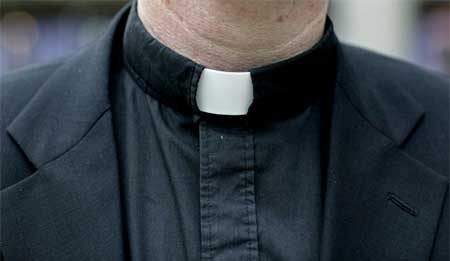
I went to see that woman in the hospital because I knew it was what I was supposed to do. I went because I am a pastor, but more importantly I went because I am a Christian. When I wear my clergy collar it is a constant reminder that I am called to act, think, live, and behave like a Christian. This collar has become my yoke. It sits uncomfortably around my neck as a constant reminder of who I am and whose I am. Im not proud to admit it but, sometimes, I need to wear it in order to live out my faith. Without this yoke around my neck it becomes too easy to fade into the crowd and forget my obligation to make God’s kingdom alive in the world. I am weak enough that I need to have something like this to help me remain faithful.

dogcollar

And so I wonder… I ask myself: Did I go see her because it was the right thing to do? Or did I go see her because that’s what you expect me to do?

When you wear something like this around your neck you begin to act differently. It is an inescapable demarkation that I have given my life to Christ to live a radically transformed life that often feels burdensome and heavy, unlike the easy yoke of today’s scripture.

Jesus calls the weary to come to him because his yoke is easy. A good yoke is one that is carefully shaped so that there will be a minimum of chafing for the animal. Jesus’ yoke therefore is one that is supposed to be kind to our shoulders, enabling us to carry the load more easily. But I will be the first to tell you, sometimes the weight feels unbearable.

Take my yoke upon you and learn from me.” In our discipleship we are not merely called to listen to Jesus’ words and reflect on them. In other words, our faith in not one that is limited to the mind. From Christ we are to learn not only to think, but to do. We gather in this place every Sunday to learn by listening and then living out God’s Word in the world. The yoke of discipleship, much like this collar, is not one that Jesus imposes on us, but one that he wore and continues to wear alongside us. 

When the weight of discipleship begins to feel too heavy for me, I call for Christ’s help with the load. I cannot do this on my own for I am a wretched man, full of sin and devoid of glory. Only through Christ’s love and grace am I able to take up my cross, which is to say I am able to take up my collar, and live as a Christian fully and deeply. 

Imagine what it would look like if we all started acting like Jesus here and everywhere. The burden of wearing a collar like this in the world is mine to bear. But think, if you can, how differently you would act if you wore one around your neck. That’s why I have placed 100 collars in our sanctuary this morning. Take one home with you, leave it in a place where you will see it regularly, and when you do, ask yourself, “how would I behave today if that yoke was hanging around my neck?”

Christ is on the other side of your yoke, helping you to carry this burden of being his body for the world; it is not easy being Christian. The cost of discipleship is one that will cost us our very lives. And just as Christ is helping to carry your yoke, so also are we called to help one another.

When we hear about the sufferings within our community we have been given the great privilege to help carry those who are in their deepest valleys while at the same time recognize that we need to be helped through our sufferings as well.

I count myself blessed to serve the needs of this church, to wear this collar that comes at a price, to take Christ’s yoke upon my shoulders because it is through God’s love, Christ’s mercy, and the Spirit’s presence through people like you that the yoke becomes easy and the burden is light.

Let us all put Christ’s yoke upon our shoulders, let us take up our collars to live as Christ’s body for the world, serving the needs of others while lifting up one another in faith.

Amen.

Go and Lo – Sermon on Matthew 28.16-20

Matthew 28.16-20

Now the eleven disciples went to Galilee, to the mountain to which Jesus had directed them. When they saw him, they worshiped him; but some doubted. And Jesus came and said to them, “All authority in heaven and on earth has been given to me. Go therefore and make disciples of all nations, baptizing them in the name of the Father and of the Son and of the Holy Spirit, and teaching them to obey everything that I have commanded you. And remember, I am with you always, to the end of the age.

with-you-always---web

I disliked the orthodontist. Every month I would see the appointment on the calendar and I dreaded moving closer and closer to the date. I often thought of excuses that could get me out of going, but I would inevitably have to return at some point to have my braces examined, shifted, and adjusted. Going to the orthodontist was dreadful because I knew, no matter what, I would walk out with my mouth hurting. Going to the dentist was fine, you get you teeth checked and cleaned, but the orthodontist… he was going to put pliers into my mouth and adjust all the little metal bits that were stretching all over my teeth.

When I think back on the orthodontist, it wasn’t so much the pain that I dreaded, but the entire experience. I can vividly recall the frighteningly exaggerated images of people smiling with dreadful teeth in a “before” image alongside of the perfectly straight and whitened smile in the “after” picture. I remember the orthodontist doing magic tricks in the waiting room in order to calm down the terrified children that only went to further their anxieties. But most of all, I remember the poster on the wall by the chair I sat in every month.

When it was my turn to take the seat, I would be propped back and told to wait for a few moments. From that position I could only see one thing, month after month, mocking me from the wall: The popular poem “Footprints

I am sure that many of you are familiar with the poem; the text is often set above an image of a beach or a sunset. But in case you’ve never been lucky enough to experience the poem I will share it with you now…

footprints-in-the-sand

Footprints-

One night a man had a dream. He dreamed he was walking along the beach with the Lord. Across the sky flashed scenes from his life. For each scene, he noticed two sets of footprints in the sand; one belonging to him, and the other to the Lord. When the last scene of his life flashed before him, he looked back at the footprints in the sand. He noticed that many times along the path of his life there was only one set of footprints. He also noticed that it happened at the very lowest and saddest times in his life. This really bothered him and he questioned the Lord about it, “Lord, you said that once I decided to follow you, you’d walk with me all the way. But I have noticed that during the most troublesome times of my life, there is only one set of footprints. I don’t understand why, when I needed you most, you would leave me.” The Lord replied, “My precious, precious child. I love you and I would never leave you. During your times of trial and suffering, when you saw only one set of footprints, it was then that I carried you.”

I disliked the orthodontist, but I loathed this poem. Month after month it sneered down from the wall as if it was mocking me and challenging me to accept my fate. What kind of twisted orthodontist places a poem about being carried through suffering on the wall by the chair with knobs, pliers, and wires with a bright light hanging above as if to interrogate you? But there was the poem. Even when I closed my eyes I could still see the text, the badly cropped image of the footprints in the sand, never leaving me alone.

As I grew older I continued to resent the poem, perhaps because of my mental association of the words with the orthodontist, but I also came to dismiss the poem in light of its cliche and trite claims. To me, it always sounded like the type of thing that an incompetent and bored pastor would offer a grieving family in the wake of a loss.

I can’t stand the poem. But what drives me craziest about it, is the fact that its true. Even with its overly simplistic explanation, with its trite metaphorical conclusions, with its cliche affirmations, it is absolutely true. In the midst of our sufferings it can be very difficult to experience God’s presence, but when we look back, when we reflect on the troublesome moments of life, we can see that it was God who carried us through. “My precious, precious child. I love you and I would never leave you. During your times of trial and suffering, when you saw only one set of footprints, it was then that I carried you.”

Make-Disciples

The end of the gospel according to Matthew. Mark ends abruptly with the women running from the tomb say nothing to anyone because they were afraid. Luke ends with the people constantly praising in the temple for all they had seen and witnessed. John ends saying the gospel could not contain everything that Christ said and did. But Matthew’s gospel ends with the promise of the never-failing presence of Christ. 

The eleven disciples went to Galilee, as they had been told to do, and there on the mountain the saw the risen Christ and they worshipped him, though some doubted. And Jesus told his friends, “All authority in heaven and on earth has been given to me. Go therefore and make disciples of all nations, baptizing them in the name of the Father and of the Son and of the Holy Spirit, and teaching them to obey everything that I have commanded you. And lo, I am with you always, to the end of the age.”

Even though they were in the presence in the resurrected Christ, even though many of them worshipped him, some doubted. There will always be those who question what they worship. Faith is never as perfect and clear as we like it to be; our ways our cloudy and the ways of God are a great and deep mystery. With worship and reverence, doubt is almost always waiting in the shadows, prepared to creep in at our most vulnerable moments.

However, doubt is not the opposite of faith. Show me a person without doubt and I will show you their lack of faith. Doubt helps fuel our faith because it encourages us to question and ponder. Doubt cannot be overcome with arguments, logic, speech, sermons, and reason; the best bible studies and preaching cannot erase our most fundamental doubts. Instead, we need to bring our doubts out of the shadowy recesses of our minds, and venture with them toward God in prayer.

And while some doubted, Jesus gave them their final commandment: Go therefore and make disciples. The church that is not going out, the church that is not on the move sharing the story, is not the trinitarian and believing church that Christ is talking to. We were not told to build a nice and beautiful church in the Shenandoah valley, show up for an hour on Sunday mornings, remember the same story over and over, surround ourselves with people who look, act, and talk just like us, and then return home until the following week. We have been told to GO! Share this incredible story with people who have ears to hear and eyes to see.

We often treat this building/sanctuary like our home. We find comfort here. I cannot tell you how many times I have heard some of you say, “When I sit in these pews, when I see the Good Shepherd stained glass, it feels like I’m home.” But my friends, if we hear anything that God is saying today it is this: home is on the go, home is where we meet God in others outside of this place. 

55896

Even when you feel like God is gone, when you feel lonely and abandoned by your Creator, God is still there. There are always days of faith, and days of doubt; days of peace, and days of war; days of joy, and days of sorrow. The end of Matthew reminds us that Jesus is still Emmanuel, “God with us.” Even when we share the story with someone and feel as if we have failed to convey the gospel, we are not alone. God is with us, even to the end of the age. We have been baptized into the Father, Son, and Holy Spirit, we have been brought into the protection and possession of God, we are incorporated into the church and have been surrounded by a new family that has vowed to keep us close, raise us in faith, and nurture us in love.

The disciples’ journey to share the good news with the nations was not an easy adventure. The books of Acts reminds us again and again how often the disciples were harassed, ignored, and persecuted. I am sure that, at the ends of their lives, many of them wondered why God had abandoned them at their worst moments. Perhaps some of them were fortunate enough to hear those familiar words: “My precious, precious child. I love you and I would never leave you. During your times of trial and suffering, when you saw only one set of footprints, it was then that I carried you.”

Many years ago a man named Samuel Morrison spent 25 years of his life as a Christian missionary in Africa. Maybe, while a younger man, he had heard the words that we read today: Go therefore and make disciples of all nations, baptizing them in the name of the Father, Son, and Spirit and teaching them to obey everything that I have commanded you. Maybe he felt the call of God to do exactly that and left behind the familiarity of home to be Christ’s body for the world.

After 25 years of giving it his all, it was time to return home. There had been days of great success where Samuel had brought many to the knowledge and love of God, but there were also days of great suffering and fruitlessness. When it came time to go home, he boarded his ship and bid farewell to his missionary field of Africa.

And so it came to pass that Teddy Roosevelt was on the same ship with Samuel Morrison returning from a three-week hunting adventure in Africa. Whether they knew about one another’s presence or not, they both sailed across the Atlantic back to the United States.

When the boat arrived in New York City, Samuel was thrilled to discover countless individuals who had gathered at the port with banners and signs echoing cries of “welcome home!” He even noticed a band playing on the dock in celebration of a successful voyage. Samuel’s spirits were high and he truly felt the love of God in his soul.

However, when Samuel made his way down the steps off of the ship, he was disappointed to discover that the crowds, and the signs, and the band were all for Teddy Roosevelt. Thousands had gathered to welcome home a man who had been hunting and killing animals for three weeks; Samuel Morrison had spent 25 years sharing the Word of God, and no one was waiting for him.

He weaved his way in and out of the crowd, disappearing into the shadows, and was quickly lost in the multitudes. Samuel Morrison felt abandoned by God. He found himself walking through the empty streets and alleys of New York praying and disappointed in God. “Why God? Why have you left me alone? Where are you now? I did what you called me to do. I left everything behind to follow your Son and this is what happens when I return home? I gave 25 years of my life for your kingdom! Where are you!?”

Silence. Samuel Morrison walked in silence after screaming out to the Lord and demanding to know what had happened. He continued to walk alone until he heard a small voice, as light as the wind: “I am right here my Son, and you are not home yet.

Amen.