Mountains and Valleys – Sermon on Mark 9.2-8

Mark 9.2-8

Six days later, Jesus took with him Peter and James and John, and led them up a high mountain apart, by themselves. And he was transfigured before them, and his clothes became dazzling white, such as no one on earth could bleach them. And there appeared to them Elijah with Moses, who were talking with Jesus. Then Peter said to Jesus, “Rabbi, it is good for us to be here; let us make three dwellings, one for you, one for Moses, and one for Elijah.” He did not know what to say, for they were terrified. Then a cloud overshadowed them, and from the cloud there came a voice. “This is my Son, the Beloved; listen to him!” Suddenly when they looked around, they saw no one with them any more, but only Jesus.
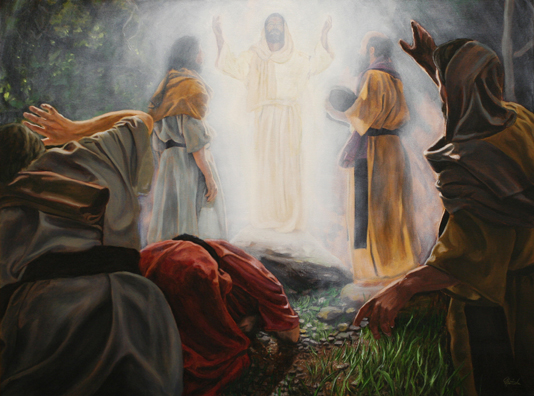
the-transfiguration

And he was transfigured before them, and his clothes became dazzling white, such as no one on earth could bleach them.

Six days later. An innocuous beginning to our scripture today. In order to properly experience the depth of the transfiguration, we have to go back six days in the life of Jesus and his disciples. Before hiking the mountain with the inner circle of Peter, James, and John, Jesus asked the disciples about his identity. “Who do people say that I am?” “Well Jesus, some call you John the Baptist, and others call you Elijah or one of the prophets.” “Okay, but who do you say that I am?” Peter answered, “You are the Christ, the Messiah.

Jesus then immediately taught his disciples about his impending death, and predicted his resurrection for the first time; “The Son of Man must undergo great suffering, and be rejected by the elders, the chief priests, and the scribes, and be killed, and after three days rise again.” Peter, the great representative for the rest of the disciples, the great representative for all of us, pulled Jesus aside and began to rebuke him for making such claims: “the messiah cannot be rejected by the elders and be killed Jesus, thats not what a messiah is supposed to do.”

Jesus quickly stopped Peter in his tracks, “Get behind me Satan! For you are setting your mind not on divine things but on human things.”

And so, six days later, perhaps when the disciples needed a reinforcement of faith after such a strange episode, the inner circle was invited by Jesus to the top of a mountain. I can imagine their wavering faith as they slowly walked along the path, unable to comprehend the new understanding of what it meant for their Lord to be the Messiah.

In the cool of the morning, with the dew still hanging in the air, Jesus was transfigured before the disciples. His clothes became dazzling white beyond human comprehension. And there, on either side of Jesus appeared Elijah and Moses. Then Peter said aloud, perhaps while cowering in fear, “Rabbi, it is good for us to be here; let us make three dwellings, one for you, one for Moses, and one for Elijah.” Suddenly, a cloud overshadowed them, and from the cloud there came a great voice: “This is my Son, the Beloved; listen to him!” And when they looked around, they saw no one with them anymore, but only Jesus.

4, Example 2a, The Saviour's Transfiguration, an early-15th century icon from the Tretyakov Gallery, attributed to Theophanes the Greek

Today, we celebrate Transfiguration Sunday. In the life of Jesus the Transfiguration was a defining moment that would come to determine the course of his mission to the world. From this point forward the trajectory of Jesus and his disciples was set toward Jerusalem. For the modern church, Transfiguration Sunday is celebrated immediately before Ash Wednesday and the beginning of Lent. Just as the Transfiguration trained the disciples’ eyes to the coming death and resurrection of Jesus, so too we are training ourselves to make our way through the coming forty days of Lent preparing for the celebration of Easter.

What do you think of this story? It has forever been a favorite of mine for many reasons. What does the appearance of Elijah and Moses mean for the disciples and Jesus? What must it have felt like to be there with Peter, James, and John to have witnessed Jesus transfigured before them? How powerful and enveloping was the cloud and God’s voice declaring Jesus as his Beloved? A whole sermon series could be devoted to these 7 verses. However, today we are going to focus on Peter’s peculiar request to build three dwellings on top of the mountain.

Peter is both frightened and ignorant. Within the last week he had made the stunning confession of Jesus as the Christ and then he was connected with the likes of Satan and commanded to move behind Jesus. Like many Christians, Peter was willing to go wherever Christ called him, though that didn’t necessarily mean he understood everything that was going on. This event had to have been remarkable for the three disciples present. In a brilliant fashion Jesus was validated as the Son of God. In spite of the shock regarding his own suffering and approaching death, this transfiguration confirmed him as the Lord’s anointed, the beloved Son.

Perfectly timed as a reinforcement for the disciples’ faith, particularly in the wake of Peter’s movement between perfection and ignorance, Peter responds to this glorious moment with the desire to build three dwellings. Behind his words was the need to prolong the experience. Who among us would not want to stay up there on the mountaintop with the transfigured Jesus flanked by Moses and Elijah? This was a moment high worth; the true, embodied, and illuminated understanding of Jesus. It was an experience that any of us would have liked to make permanent. However, life is not made up of mountaintops alone, for every glorious mountain there is a equally draining valley. It was good for Peter to experience the transfiguration, but it was NOT good for him to try and prolong the experience. Life must continue to move on.

A few months ago I was blessed with the opportunity to preside over my first wedding. Brian and Sarah are a delightful couple and I was thrilled with the invitation to join them together in marriage. The wedding went off without a hitch, well thats not exactly true, I had to remind the nervous father of the bride to stand with her until he gave her away, and then I had to direct him to sick back down after he had finished. Nevertheless, when it came time for the homily, I stood before Brian and Sarah, remarking about the sanctity of marriage and the role that God plays in all of our unions. I ended the homily with something I tell all couples preparing for marriage:

1175334_605087304526_1820722616_n

“From this point forward your individual stories are coming together. I want to tell you something that most will try to claim the contrary. Today will NOT be the happiest day of your lives. If you limit the joy of what you can experience in marriage to this one particular Saturday afternoon, it will cease to be organic and life-giving but instead repetitive and dull. You have an incredible story in front of you, one that has yet to be written, you are traveling as strangers into a strange land. There will be countless mountains and valleys and so much of your horizon is still beautifully unwritten.

Like Peter, many of us want to desperately hold on to those “transfigured” moments of our lives. We want to experience events where we get a little slice of heaven, but as soon as they fall in our laps we are often unwilling to let them go. The excitement of Christmas is often replaced by the anxiety and dull atmosphere of January. The beauty of a newborn baby is quickly rivaled by the long nights of crying and wailing. The joy of summer break from school flies by too quickly and before we know it we are sitting in a new classroom surrounded by unfamiliar faces. Life is made up of both mountains and valleys. Neither one can, nor should, last forever.

shenandoah-blue-ridge_2014_600x450

Transfigured moments are all around us, particularly here in worship. Worship is supposed to be a shining hour, high and lifted up, an event where the glory of God the Father, Son, and Spirit shines radiantly throughout our space. Like the disciples gathered on the mountain, worship is supposed to surround us like a cloud when Jesus and his revelation of God are made known to each of us. Worship, when done well, produces a glow unlike anything else on earth. Worship, beauty, joy, love; all of these are those wonderful transfigured moments that surround us daily. A life that has no transfigured hours of worship is poor, no matter how rich and decadent the elements may be.

So, just think for a moment, imagine the many areas in which the mood of Peter, when he said, “Lets just stay here” blocks the possibilities of life. Life cannot just be one big wedding celebration, nor can it be replaying our favorite song over and over and over again, nor can it be a endless worship service here at St. John’s. Whether we like it or not, we cannot stay on top of the mountain forever, we have to move and go on to new experiences of life, faith, and understanding.

As the disciples grew closer and closer to their Lord, his words and proclamations became increasingly difficult to understand and follow. While making their way to the inevitable result of Jerusalem, the disciples needed to hear Jesus. The voice from the cloud echoed out, “listen to him!” and I can think of no better words for all us to hear this morning.

When I was 16, standing on the sidewalk along Ft. Hunt road in Alexandria, Virginia on a cold and dark December evening my life was forever changed. I am a product of “listening to him.” I stand before you as the pastor serving this church because I was enveloped in that strange cloud of God’s grace, without a big booming voice, without particular words, and yet I somehow knew that I could do nothing with my life other than serving the church. My life has been filled with mountaintop experiences, some of them on literal mountain tops, but there have also been deep and seemingly endless valleys.

And so, what are to make of us this Transfiguration? That day when he took the three disciples to the mountainside to pray, his countenance was modified, his clothing was aflame. Two men appeared, Moses and Elijah came. Lost in the cloud a voice, have no fear, we draw near, lost in a cloud, a sign, Son of Man turn your ear.

We are just like those disciples standing on the mountainside with Jesus. We are given glimpses of heaven regularly in our lives. We are blessed to be showered with transfigured moments if we have eyes to see and ears to hear. However, life must be made of both mountains and valleys. Like the disciples we are called to listen to Jesus when the time comes to re-enter the reality of life. We have the privilege of listening to Jesus and having his words become incarnate in the ways that we live our lives.

lord__s_supper_by_bclary-d37hhzp

If you want to truly experience a transfigured moment in your life, look no further than this table with the gifts of bread and wine. This banquet that has been prepared for you and me is an encounter with the divine, it is a little slice of heaven for us. This is our mountaintop, that incredible and glorious moment when Jesus’ true radiance shined in a way unlike anything else on earth. In this communion we are brought into union with the triune God, we are nourished with the grace of God for our journeys of faith. 

So, as we prepare to feast at Christ’s table, remember that we cannot stay on the mountain forever. We will depart from this place and enter the world filled with the body and the blood. Listen to him in the valleys of life knowing that we are always going on to something new and wonderful. Let us all strive to be transfigured and delight in God’s will, walking in his ways forever. God is with us at the wedding receptions and in the hospital waiting rooms, God is with us when we fall and love and when we lose our jobs. God is with us when we cradle new-born children for the first time and when they leave us to begin their own lives. God is with us on the highest mountains and in the deepest valleys. Listen to him.

Amen.


Raphael’s “The Transfiguration”

Transfiguration_RaphaelThis Sunday I will be preaching about Peter’s peculiar desire to make three dwellings for Jesus, Elijah, and Moses on the mountain during the transfiguration. In his words, I believe, was the desire to remain on that mountain in order to continually experience God’s radiance. However, life is full of both mountaintops and valleys. It was good for Peter to experience the transfiguration; it was not good for him to try to prolong it.

Raphael’s The Transfiguration captures the incredible contrast between the mountain and the valley. The top of the frame witnesses to the glory and radiance described by the synoptic writers, the beauty of that striking event. The bottom shows the tragic need and suffering of the disciples.

The image serves to help connect the two seemingly opposed experiences. Our lives are made up of both joy and suffering, righteousness and sin, success and failure. It is in a painting such as this that we are reminded of the true value of the incarnation; God came in the form of flesh in Jesus Christ, fully God and fully human, to be celebrate with us in our triumphs and weep with us in our sorrows.

Son of Man, Son of God

In preparation for Transfiguration Sunday (March 2, 2014)


“The Transfiguration” by Sufjan Stevens

When he took the three disciples to the mountainside to pray

his countenance was modified, his clothing was aflame

Two men appeared, Moses and Elijah came

They were at his side

The prophecy, the legislation spoke

Of whenever he would die


Then there came a word of what he should accomplish on the day

Then Peter spoke, to make of them a tabernacle place

A cloud appeared in glory as an accolade

They fell on the ground

A voice arrived, the voice of God

The face of God covered in a cloud


What he said to them, the voice of God, the most believed son

Consider what he says to you, consider what’s to come

The prophecy was put to death, was put to death

And so will the son

And keep your word, disguise the vision

Till the time has come


Lost in the cloud, a voice

Have no fear, we draw near

Lost in the cloud, a sign

Son of man, turn your ear


Lost in the cloud, a voice

Lamb of God, we draw near

Lost in the cloud, a sign

Son of man, son of God


But I Say…2 – Sermon on Psalm 119.33-40 & Matthew 5.43-48

Psalm 119.33-40

Teach me, O Lord, the way of your statutes, and I will observe it to the end. Give me understanding, that I may keep your law and observe it with my whole heart. Lead me in the path of your commandments, for I delight in it. Turn my heart to your decrees, and not to selfish gain. Turn my eyes from looking at vanities; give me life in your ways. Confirm to your servant your promise, which is for those who fear you. Turn away the disgrace that I dread, for your ordinances are good. See, I have longed for your precepts; in your righteousness give me life.

Matthew 5.43-48

“You have heard that it was said, ‘You shall love your neighbor and hate your enemy.’ But I say to you, Love your enemies and pray for those who persecute you, so that you may be children of your Father in heaven; for he makes his sun rise on the evil and on the good, and sends rain on the righteous and on the unrighteous. For if you love those who love you, what reward do you have? Do not even tax collectors do the same? And if you greet only your brothers and sister, what more are you doing than others? Do not even the Gentiles do the same? Be perfect, therefore, as your heavenly Father is perfect.

257760778642631661_Ag9PBVg2_c

Be perfect, therefore, as your heavenly Father is perfect.

Annual Conference is that one time of the year that all the diehard Methodists get together for a weekend of facts, faith, and fellowship. Representatives from each church gather in an effort to discuss contemporary issues facing the church, learn from various speakers, and celebrate the ordination and retirement of particular clergy.

A few summers ago, while serving a church outside of Detroit, Michigan, I was invited to attend the Detroit Annual Conference session. I listened to members of the conference debate whether or not to give more money to fight against malaria in Africa, how to address concerns over our pension system, and arguments about what it means to pray for physical healing in the church. Toward the end of the session, we came to my favorite part of every Annual Conference, The Service of Ordination. People, young and old alike, who felt the call of God on the lives to pursue a life of ministry, folk who have worked and sacrificed for years to be standing in front of all the people, were preparing to be commissioned and ordained for work in the church.

Detroit Annual Conference

Detroit Annual Conference

As the small group of adults stood shoulder to shoulder on the stage I wondered about their backgrounds, where they might be appointed, and what kind of ministerial careers they would have. Dressed in their robes, the candidates prepared to answer the traditional Wesleyan questions that thousands of Methodist clergy have had to answer over the last two centuries.

“Have you faith in Christ?”

The candidates definitively responded with a resounding “Yes!”

“Do you believe in the ordinances of the United Methodist Church?”

“Yes!”

“Are you going on to perfection?” 

Most of the responses we completely in sync, except for one woman toward the end. Instead of answering like her fellow peers, she shook her head as if to say no, while her voice said yes. 

YES

YES

Be perfect, therefore, as your heavenly father is perfect.

For that one clergy candidate, achieving perfection was something that she was clearly unsure about. I imagine that she understood her own fallibility, her sinfulness, as preventing her from ever being perfect. Moreover she probably thought that only Christ could be perfect and that it would never be possible for her.

Be perfect, therefore, as your heavenly father is perfect.


Here we are again, caught up in Jesus’ Sermon on the Mount. It was hard enough that he told his disciples to not lose their tempter, to not lust, and to renounce the right to retaliate; but now Jesus is instructing us to love those who hate and harm us. Really? Jesus is like that boss or parent that knowingly give us a list of things to do that we can never accomplish. Why does Jesus expect the impossible from those who follow him?

Using the same formula that we talked about last week, Jesus establishes the current expectations of the law and then he enhances them: “You have heard that it was said, ‘You shall love your neighbor and hate your enemy.’ But I say to you, Love you enemies and pray for those who persecute you, so that you may be the children of your Father in heaven; for he makes his sun rise on the evil and the good, and sends rain on the righteous and the unrighteous. For if you love those who love you, what reward do you have? Do not even tax collectors do the same? And if you greet only your brothers and sisters, what more are you doing than others? Do not even the Gentiles do the same? Be perfect, therefore, as your heavenly Father is perfect.”

Two important questions arise from Jesus’ declaration: Who is my enemy?; Why am I supposed to love them? 

Enemy number 1: Those who are evil. Anyone who takes advantage of the weak, anyone who promotes violence in power struggles, and anyone who exhibits evil in the world is my enemy. They are the ones who actively seek to work against God’s love and kingdom in the world. They are the people who participate in destructive tendencies toward others and are fans of violence, subjugation, and selfishness.

Enemy number 2: My friends and family. In many ways, some of our greatest enemies are those who are closest to us. Our friends and family are the ones who set expectations for what our lives are supposed to look like. They are the ones who know whether or not we are living up to our potential. They see our truest sides, they know about our weaknesses, they remember our history. When we create walls between ourselves and those who are close to us, we often do so because we are afraid of being too vulnerable with them, we fear what they can do to us.

Enemy number 3: Ourselves. I am my own worst enemy. I am the commander of my life. I am responsible for the choices and decisions I make. I know my own weaknesses better than anyone else, I hold myself to a standard that, when not met, leaves me feeling down and blue. I have more power than I should regarding the hearts, minds, and souls of so many people in my life, and if I abuse that power, I become an even greater enemy than anyone else in my life.

When we hear that Jesus calls us to love and pray for our enemies we do well to not relegate our enemies to far away and distant peoples. Our worst enemies might be sitting here with us in church this morning. We all have enemies in ways, that sometimes, we cannot even imagine. That neighbor who always trims your bushes, or that acquaintance who always takes advantage of your hospitality, or that stranger who belittles people at the supermarket are just as much our enemies as those who bring and promote terror across the world. For the Christian, the words neighbor and enemy are synonymous and are remarkably far reaching.

And Jesus tells us to love them, and to pray for them.

So, why? Why are we supposed to love those who hate and persecute us? Why does Jesus call us to love the people who often make our lives miserable?

We are not called to love them in order to change them. Thats not the point. Certainly the conversion of an enemy to a trusted friend can be the result of our discipleship and call to love, but it is not necessary, nor should it be our motivation for loving our enemies. Love is not a weapon or a tool. Genuine love has not ulterior motive; its purpose is simply to benefit the one being loved, regardless of the response. We are called to love unconditionally.

If you love someone, enemy or not, in order to change them, they will never change. Our love for others should not come with baggage but must be the same as the free and unconditional love and grace that comes to us from God.

We love others because God first loved us. Elsewhere in the world, it is normal to return love for love and hate for hate. Christians who do no more than this fade into the background of life. They cannot be the light of the world and salt of the earth.

Love your enemies and pray for those who persecute you so that you may be children of your Father in heaven. This kind of love is less about feelings and more about actions. For the early Christians to love the Roman oppressor or the face slapping persecutor was not about having “warm and fuzzy feelings” but to react in a positive way. I know that we have been trained to think of love as a feeling, particularly in the wake of Valentine’s day, but love is something you DO. That why Jesus calls his disciples to go the extra mile and turn the other cheek; physical embodiments of love for our enemies. Whatever else you can do to love your enemy, Jesus leaves it up to our imaginations as to how we can do so. Our love for others is called to be abnormal, above and beyond what the world would be satisfied with.

In addition to the embodiment, the DOING, of love, we are also called to pray for our enemies. You have heard it said that if you do this its enough, well to Jesus we can always do more, we can always be better. Loving our enemies is one thing, it is difficult and taxing, but praying for our enemies is another thing altogether.

love-your-enemies_dvd.original

Praying for our enemies requires us to seriously attempt to see them from God’s point of view. The sun rises on the evil and the good, and God sends rain on the righteous and the unrighteous. We cannot truly pray for our enemies without acknowledge our common humanity; our enemies have been created in the image of God, just as we were. And no matter how bad they are, no matter how nefarious, no matter how sinful, nothing can ever erase God’s image from their lives, nor from ours.

The call to pray for our enemies is like being a parent who can earnestly say to their child, “I love you, but I don’t like what you’re doing.” Praying for our enemies will always fall short unless we remember that God love us just as much as our enemies. Seeing them in the light of God’s love is the first step toward loving them, and praying for them.

So, is this even possible? Are we capable of loving and praying for our enemies? Can we be perfect? If we try to do it on our own, it is impossible. Only by the grace of God, only with God’s help, can we heed Jesus’ call to love and pray for our enemies. Truly I tell you, this is one of the most difficult aspects of being a Christian. We are called to an impossible life, if we try to do it on our own. Christ is not asking us to simply “like” everybody, but rather to act and pray in love toward those we like and those we do not like.

Be perfect, therefore, as your heavenly Father is perfect. 

At our Lectionary Bible Study this week, we sat in one of the Sunday school rooms and read this text out loud. As usual, many of the comments and questions were quite profound leading toward a greater understanding of the text for all of us. As we were coming to the end of our time together, Betty Hairfield offered a story regarding this idea of perfection.

Years ago, while Betty was in college, she began worshipping at a United Methodist Church because it was closer to campus than the denomination she grew up with. One day Betty was told about the question of perfection that all ministerial candidates were asked about. Like the woman who shook her head while saying “yes,” Betty kept the words close to her heart and she began to understand the depth of the question: “Are you going on to perfection?” For Betty, this was a transformative moment. If perfection is not our goal, then whats the point? Why should we continue to worship a God who loves unless we try to live better lives. That realization, that question of perfection, is what led Betty to join the United Methodist Church.

We are not called to be content with the mediocrity of discipleship but instead we are called to live radical and abnormal lives. Like the psalmist we need to pray for God’s wisdom and grace to be the kind of people who can change the world. We need to strive to be better than good, to live into the new reality that Jesus established with his life, death, and resurrection. Love and pray for those who are evil, for your friends and family, and for yourselves!

Are we going on to perfection? Yes, but only with God’s help.

Amen.

Weekly Devotional – 2/24/14

Devotional:

Psalm 2.10-12

Now therefore, O kings, be wise; be warned, O rulers of the earth. Serve the Lord with fear, with trembling kiss his feet, or he will be angry, and you will perish in the way; for his wrath is quickly kindled. Happy are all those who take refuge in him. 


I love working on my sermons in any place other than my office. When I sit at my desk I become easily distracted by the many other responsibilities that I have in ministry, and I discover that my focus is not on the words before me. So, whenever I have the opportunity, I work on my sermons at local coffee shops in and around Staunton.

One of the greatest advantages of working on a sermon at a coffee shop is that most people see me sitting with a bible and a computer and they see me as someone strange, and therefore leave me alone to work diligently. (However, sometimes this backfires because people see the bible and begin to confess to me their most recent and devastating sins…) I enjoy working on proclaiming God’s word outside of the church building because it helps to inspire and remind me of the totality of God’s grace beyond the walls of his churches.

This past week I was sitting in one of my favorite coffee shops, writing about the Sermon on the Mount, when I began to notice that two other patrons were talking about faith and Christianity. Being in a public place, I do not feel bad for overhearing their conversation, and, frankly, once it started going I couldn’t stop listening. (It was clear that the two gentlemen were talking about running for political office; one had already served, and the other was looking for advice about beginning a political campaign.) This is what I heard:

Candidate: Should I start attending church?

Politician: Well, do you believe in God?

Candidate: No.

Politician: In this town, you should start attending whether you believe or not. If people here believe that you believe, they’ll believe in you. So, yes, start attending (he then listed some of the prominent and most well-attended churches). When you give speeches you need to talk about how you feel God calling you to this office even if you don’t believe it. The religious folk will be more likely to support you if they think you’re religious.

Candidate: Okay, I think I can do that.

Politician: Good. I’m going to coach you: I’ll teach you hold to hold your hands when talking, how to dress for debates and fundraisers, and how to talk about God being on your side of this campaign.

Gods-Politics

The psalmist warns the rulers of the world: serve the Lord with fear and with trembling. Our God is not one to be messed with. To frivolously throw around the call of the Lord on one’s life is to invite chaos and tribulation. As I listened to the politicians discuss how to play into the religious sensibilities of the people of Staunton I began to wonder about all of our desires to attend church. Do we worship God so that other people will think better of us? Or do we worship because God so loves us that there is not other way to respond?

So, as we prepare to begin a new week I caution us to remain committed to the life of discipleship that we have been incorporated into. If our faith hinges on the approval and expectations of others it cannot be fruitful for our lives. Faith can only become real when our hearts are set aflame for Christ.

But I Say… – Sermon on Matthew 5.21-26

Matthew 5.21-26

You have heard that it was said to those of ancient times, ‘You shall not murder’; and ‘whoever murders shall be liable to judgment. ‘But I say to you that if you are angry with a brother or a sister, you will be liable to judgment; and if you insult a brother or sister, you will be liable to the council; and if you say, ‘You fool,’ you will be liable to the hell of fire. So when you are offering your gift at the altar, if you remember that your brother or sister has something against you, leave your gift there before the altar and go; first be reconciled to your brother and sister, and then come and offer your gift. Come to terms quickly with your accuser while you are on they way to court with him, or your accuser may hand you over to the judge, and the judge to the guard, and you will be thrown into prison. Truly I tell you, you will never get out until you have paid the last penny.


Unless your righteousness exceeds that of the scribes and the Pharisees, you will never enter the kingdom of heaven.

Lets assume that all of us are here this morning because we want to be good people. We see what our lives look like on a daily basis, and we recognize Sunday mornings as opportunities to better ourselves, to hear about the kind of people we are supposed to be.

Lets also assume that we are already fairly decent people. I mean look at us. We are sitting here in church on Sunday morning, thats certainly doing better than the people who are still sleeping in at home, curled up under their soft and warm blankets.

som05_calvinandhobbes_ch870114

Becoming a better person is what Christianity is all about, isn’t it? One of the main functions of any religion is to be shaped and molded into something greater than we currently are. This journey of faith is aimed at reconstructing ourselves so that we might resemble Jesus in the way that we live in the world.

But, the trouble for us who know a little bit about Jesus is that we know it was the good people, the scribes and the Pharisees, the ones who obeyed all the laws, the ones who, like us, showed up for worship on time, the people who gave fervently to the temple, who remained faithful to their spouses, who loved the Lord their God with all their heart, who knew all the scriptures, who walked humbly with God, those people were the ones who eventually yelled, “Crucify him!” 

What drove them to such disregard for the Messiah who walked among them? What could have made them move from strict religious adherence, to crowds thirsty for punishment?Well, one answer is the scripture that we have today.

We find Jesus here in the middle of the Sermon on the Mount. Let me set up the trajectory: Jesus was born in Bethlehem, escaped to Egypt with Mary and Joseph, returned to Nazareth, was baptized by his cousin John in the river Jordan, was cast into the wilderness by the Spirit to be tempted by the devil for 40 days and nights, began his Galilean ministry, called his first disciples, and then gave his Sermon on the Mount.

This sermon marks the beginning of Jesus’ mission to God’s people. The words of the sermon will come to dictate who Jesus will serve, how he will share God’s grace with the people, and why he was dragged to the cross.

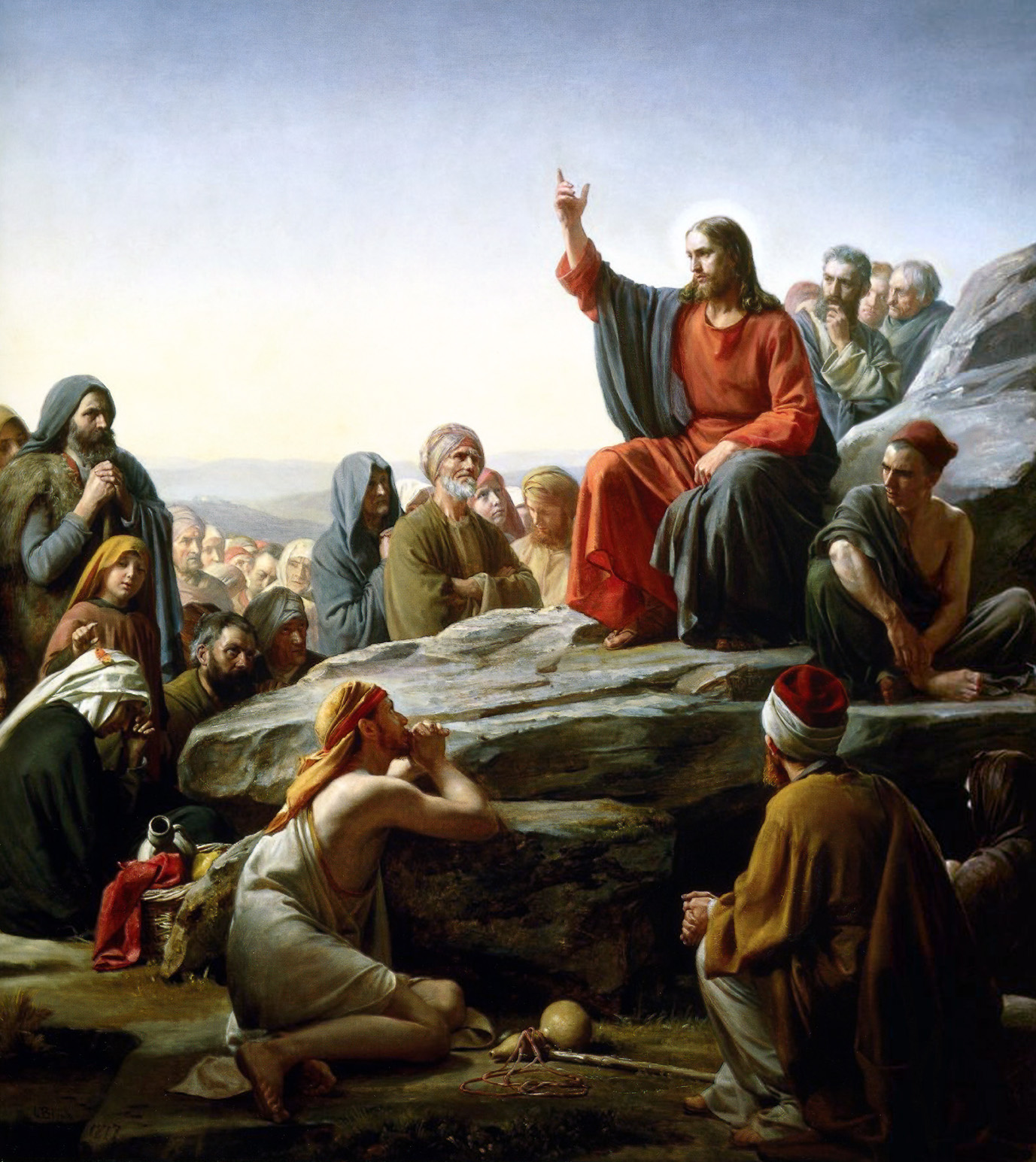
The Sermon on the Mount Carl Bloch, 1890

The sermon begins like all good sermons, Jesus jumps right to the point: Blessed are the poor in spirit, for theirs is the kingdom of heaven. Blessed are those who mourn, for they will be comforted. Blessed are the meek, for they will inherit the earth, and so forth.

With the people no doubt scratching their heads regarding whatever this inversion of the world’s dynamics was supposed to mean, Jesus moves forward, “You all are the salt of the earth, you are the light of the world. Do not think that I have come to abolish the law or the prophets; I have come not to abolish but to fulfill.”

The sermon concludes with Jesus’ reinterpretation of the Mosaic ten commandments, which is where our scripture begins today:

You have heard it that it was said to those of ancient times, ‘You shall not murder’; and ‘whoever murders shall be liable to judgment.’ But I say to you that if you are angry with a brother or a sister, you will be liable to judgment; and if you insult a brother or a sister, you will be liable to the council; and if you say, ‘You fool’ you will be liable to the hell of fire.

What a sermon this is shaping out to be.

Jesus’ teaching is stricter than the law itself. He will go on to proclaim do not get angry, do not lust, do not swear, do not seek revenge, and do not hate your enemy. He takes the law and make it even harder to obey.

Under the old law only murder and other extreme offenses were guilty of death, but under Jesus’ understanding angry temper is to be similarly judged. And he doesn’t stop there! Even those who would call others, “stupid” or “fool” are worthy of judgment by the court.

For Jesus, anger is just as bad as murder. Killing is not done by knives, and guns, and fists alone, but by the angry words muttered between friends, or the casual indifference between classmates that often makes people feel less than human.

Jesus looked out at the crowd and saw people worthy of love. His sermon is not just a message for Christians to follow regarding other Christians, but its a call to recognize the inherent value in all people. In Jesus’ day there was a custom of placing a large gold coin beneath the mainmast of most sailing vessels. For those who knew, this meant that even a wreck had value. Jesus recognized that value in all people, and called those with ears to hear to a life of grace, mercy, and love toward all people everywhere.

“You have heard it was said to those of ancient times… but I say to you…” Thats a classic Jesus move. It is possible to be so good, and right all the time, that you are wrong. You can be so religious that you miss the point of religion. Legalistic adherence to the law can begin to overshadow the importance of love and grace in your daily living. Overvaluing the law can lead to a faith that is cold, calculated, dry, and dull instead of a faith that is warm, wide, fun, and forgiving.

Jesus continues, “So when you are offering your gift at the altar (when you decide to place your offering in the plate) if you remember that your brother or sister has something against you, leave your gift there before the altar and go; first be reconciled to your brother and sister, and then come and offer your gift. Come to terms quickly with your accuser while you are on the way to court with him, or your accuser may hand you over to the judge, and the judge to the guard, and you will be thrown into prison. Truly I tell you, you will never get out until you have paid the last penny.

A professor of mine in seminary told a story about a church in Africa that took this command quite seriously. Every Sunday morning the people would make their way to the church located in the middle of the village. Some with sleep still in their eyes would drag their lethargic bodies down the dusty road, continuing the same march they made every week.

At the bottom of the steps leading into the small sanctuary, the local pastor would be smiling from ear to ear greeting everyone as they came forward, however the doors would remain locked. The crowd would grow and grow until everyone from the village was present, anxiously waiting outside the church.

“Look around you,” the preacher’s voice would echo, “who do you need to reconcile with? Who have you betrayed since last we met? Go and find your brothers and sisters, make peace with one another. Until you do, these doors will remain locked.

For the next twenty minutes, all of the African congregants would slowly make their way throughout the crowds searching for those who they had wronged, and who had wronged them. Now this wasn’t a town where you could just stand around and pretend that everything had been perfect since last Sunday. Everyone knew everyones’ business. That meant that they truly had to make peace with the collective church. Without the reconciliation, the people had no business entering the church to worship God. Only after the pastor was satisfied that everyone had been merciful with one another, were the doors opened and worship continued.

Some might say that Jesus’ command that someone should leave their gift at the altar to reconcile with his brother or sister is a depreciation of worship; however, it is actually an exaltation of worship. Just as it happened for that African church, God sees our inmost motives, and we are called to worship God in truth. If we have baggage with others in the community, we mock God by coming before the altar instead of first reconciling ourselves with others. God is concerned with our lives and our worship; we cannot ignore one while participating in the other.

I thought about doing something radical this morning. After reading the scripture for Sunday, and remembering the story from my professor, I wondered what it would have been like to stand outside those doors preventing all of you from entering today. But, after having shoveled at the parsonage and the church the last few days in the cold, I thought better of it. Nevertheless, what would our worship in this place look like, if first we made peace with those in the pews, rather than anonymously continuing down our faith journeys all alone?

1531994_199633020231001_10668999_o

What Jesus presented to the crowd, what Jesus presents to us this morning is not so much a new law to be strictly observed, but instead a new way of living our lives. Jesus makes his point dramatically in order for a change of heart to take place.

Jesus is here with us this morning, addressing us as he did to that crowd so long ago: You already know that you are forbidden to murder anyone, but now I’m telling you that you are forbidden to become angry with anyone. Call someone a fool and you’ll be worthy of punishment. Do you truly want to be good? Don’t just keep the law like the “good” Christians, go beyond the law.

Challenge yourselves to be greater than following guidelines and lists. Strive to love those around you to such a degree that the world will be transformed into the kingdom of God.

As a professor of mine once said, we are so accustomed to coming to a church like this and, if we should struggle and stumble with a passage like this one, it usually takes no more than 15 minutes for a skillful preacher, using the skills of story-telling, diversion, and trite formulaic expressions to explain it away. To reassure all of us that a nice person like Jesus never would have had a reason to say something tough to good people like us.

I know of no way to do that with this text. No amount of pop-psychology or narratival reductionism can remove the true message of Jesus’ words. The tougher the text, the more likely  it was to have come straight from the lips of Jesus. Being a Christian is no easy thing. It requires us to love greatly, and to forgive deeply.

Now more than ever we need to reclaim the high call of Jesus’ sermon. Young people today find and seek validation in their peers and parents that, when not offered, leads to self-destructive habits. Just think of the cases of bullying that have recently dominated significant media attention. Words and actions are powerful things. We often do not realize how powerful we can be with our words, and how destructive we can be if we are not careful.

Love is the key to all the commands of scripture, particularly Jesus’ sermon on the mount.

holy-life-tiles

Today, Jesus’ sermon is as hard to swallow as it was 2,000 years ago. You have heard that it was said to those of ancient times, “Do this and don’t do that,” but what Jesus says to us is to do more, go beyond the law, strive for something incredible, work for the kingdom, let God’s Word be incarnate in your lives, imagine a more graceful and purposeful life, seek out the last, least, and lost, be better than good, be holy as your heavenly father is holy.

Amen.


(I am thankful for Will Willimon’s sermon “Being Good” for inspiring parts of the above message)


Weekly Devotional – 2/17/14

Devotional:

1 Corinthians 3.16

Do you know that you are God’s temple and that God’s Spirit dwells in you?


While preaching yesterday morning I mentioned, anecdotally, a practice regarding ship building. During the time of Jesus (and even today in some places) a gold coin would be placed underneath the mainmast of most sailing vessels. Some claim that this practice began with the Romans as they used the coin to appease the gods. Others believe that the Romans placed the coin to help purchase a spot in the afterlife for the sailors who were lost at sea. Regardless of the true beginning of the tradition, it helped to show other sailors that even a wreck had value.

16-god-is-with-us-gods-promises.jpg?w=584&h=584

Years ago, while approaching the end of a mission trip in Costa Rica, I helped lead a group of young people through a foot-washing service. A basin and chair was set up in the middle of the room and, after reading the appropriate scripture from the gospel according to John, I encouraged those present to find someone that had made a particular impact on them that week (positively or negatively) and then ask to wash their feet. With soft music playing in the background I witnessed God’s grace manifest in the tears that poured on the ground from those washing, and from those who were being washed. It is a remarkably humbling thing to kneel and take someone’s feet into your hands, but perhaps even more humbling is to have someone wash your feet.

As the service continued I noticed that one of the older boys was dutifully making his way through the entire room asking to wash everyone’s feet. Every time someone sat in the chair before him he would focus intently on what he was doing, demonstrating God’s love through his fingers and the water.

When I finally had a chance, I stood up, walked over to him, and asked to wash his feet. “I’m not worth it,” he replied, “no one should be washing my feet.” I responded: “Yes you are my friend. The whole point is to wash and be washed. You are worth it.”

While writing to the church in Corinth, Paul asks, “Do you know that you are God’s temple and that God’s Spirit dwells in you?” This is a question that I want to ask whenever I see someone feeling down or blue. I want to shout out, “You have value! You are uniquely beautiful, made in the image of God, worthy of being loved! God’s Spirit is in you!”

So, as we begin a new week I ask: Do you know that you are God’s temple and that God’s Spirit dwells in you? Do you know that you have worth, that you are special, that you are wonderful? Do you know that God loves you for who you are no matter what?

I hope you do.


Weekly Devotional – 2/3/14

Devotional:

Matthew 5.14:

“You are the light of the world. A city built on a hill cannot be hid.”

image

For years this verse has served to defend the example that Christians are to make for the world to follow. “You are the light of the world,” Jesus says, “a city built on a hill cannot be hid.” Which is to say, you are shining as a light for others to see the error of their ways. Just as a city on a hill can be seen by all, so will your discipleship shine gloriously in order to transform the world.

But what if we’ve been reading it wrong? Or at least, what if there is a different way to read that verse?

Christians are almost always under the proverbial magnifying glass within the local community and at large. Just turn on the news and you will hear of scandals in Catholic and Protestant churches. The smallest bit of controversial news can take on a completely different manner once it is revealed that a Christian is part of the spectacle. Whether we recognize it or not, the world has expectations of us regarding our behavior and commitment to the gospel; we are held to a standard of excellence by those within, and those outside of, the church.

bible-magnifying-glass

In many ways the verse from Matthew could be read as, “You must be like a city on a hill, like a lamp in full view.” The desire to appear perfect as an example for all others is worthy of consideration and application, however, we need to remember that we will continue to fall short of God’s glory; we are not perfect beings. We are under the microscope of the community because of our commitment to be God’s people for the world.

So, instead of self-righteously proclaiming that we are the perfect example for the world to follow, perhaps we should instead recognize how visible we are to the world. Our faithful discipleship should be driven by our love of God, rather than wanting to the world to see how great and wonderful we are. Let us all strive to be the light of the world, not for our own glory, but for the glory of God to shine through us.


Questions: In the End… – Sermon on John 14.5-6, 1 Timothy 2.1-4, and John 13.34

(Instead of a typical ~15 minute sermon from the pulpit, I broke the following sermon up into 3 homilies. I preached the first from the pulpit, the second from the lectern, and the third from the middle)

John 14.5-6

Thomas said to him, “Lord, we do not know where you are going. How can we know the way?” Jesus said to him, “I am the way, and the truth, and the life. No one comes to the Father except through me.

1 Timothy 2.1-4

First of all, then, I urge that supplications, prayers, intercessions, and thanksgivings be made for everyone, for kings and all who are in high positions, so that we may lead a quiet and peaceable life in all godliness and dignity. This is right and is acceptable in the sight of God our Savior, who desires everyone to be saved and to come to the knowledge of truth.

John 13.34

I give you a new commandment, that you love one another. Just as I have loved you, you should also love one another.


Today we conclude our sermon series on “Questions.” After requesting responses from all of you regarding your questions about God, faith, and the church, we have, again, come to the time when I attempt to faithfully respond to those questions. Over the last two weeks we have looked at what it means to be “saved” and how the Old and New Testaments relate to one another. Today we are talking about other faiths and how they relate to Christianity. So, here we go…

xlba-00052

John 14.5-6: Thomas said to him, “Lord, we do not know where you are going. How can we know the way?” Jesus said to him, “I am the way, and the truth, and the life. No one comes to the Father except through me.

For nearly an entire semester I sat in the front row for my class on “Hindu Traditions” at JMU. My professor was a practicing Hindu and regularly lectured from the front, pacing back and forth as we covered history, beliefs, and habits. Dr. Mittal was remarkably passionate about the subject and as we came to the conclusion of the class, I was thankful for his ability to open my eyes to the wonders of a great religion.

It was during our last class session that Dr. Mittal asked if there were anything remaining questions before the Final Exam. A few hands raised, mostly questions about the actual exam; Would it be multiple choice? Would it contain essays? But, one young woman, prominently displaying her “Campus Crusade for Christ” sweater, asked a question that I’ll never forget: “If you know you’re going to hell for being a Hindu, why wouldn’t you become a Christian to save yourself?”

The room was silent. 

Dr. Mittal, having been calm and collected all semester, began to clench his fists together and flare his nostrils. “How dare you speak to me that way! I am so tired of you young foolish Christians trying to tell me what to believe in. Get out of my class!”

The disciple Thomas, ever concerned about what Jesus is really saying, questioned his Lord about the truth of where they were going. And Jesus replied, “I am the way, and the truth, and the life. No one comes to the Father except through me.” Jesus does not know the way, truth, and life; rather, he is all of these. And he is not merely a way, but THE way. Jesus is the unique and visible manifestation of God on earth. 

il_fullxfull-288241452

From the beginning of the church, this statement has been axiomatic for Christianity. If you desire to know God, to find salvation, and to experience grace in your life, you can only find it through Jesus Christ; hence the strong push for evangelism over the last 2 millennia. Not only did Jesus command the disciples to go to all the nations baptizing everyone in the name of the Father and the Son and the Holy Spirit, but we have been steeped in our tradition that affirms salvation can only come through Jesus Christ.

In the first few centuries the church agreed that outside of the church, there is no salvation. In order to experience the forgiving pardon of God you had to be taught the ways of the church, engage in acts of kindness and mercy, and be baptized in order to find your identity within the body of Christ. Even with the rise of other religions, and the interaction between them and Christianity, we affirm that the only way to God is through his Son, our Lord, Jesus Christ.

I remember feeling so uncomfortable that day in class because of what my fellow student had said to Dr. Mittal. In the moment I thought she just wanted to frustrate him, or illicit some sort of reaction from him. However, perhaps she was being remarkably genuine, concerned about his salvation, and wanted to know why he would continue on a path that would separate him from God.

After all, no one can come to the Father except through Jesus Christ.

Amen.


1 Timothy 2.1-4: “First of all, then, I urge that supplications, prayers, intercessions, and thanksgivings be made for everyone, for kings and all who are in high positions, so that we may lead a quiet and peaceable life in all godliness and dignity. This is right and is acceptable in the sight of God our Savior, who desires everyone to be saved.”

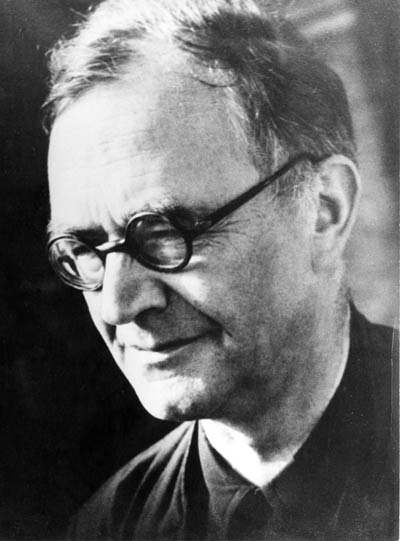
Karl Barth, the dialectic theologian of the 20th century (who I have mentioned a number of times from the pulpit) was often vague regarding his understanding of the totality of salvation. In his lectures and publications there are examples where he almost affirms a universalist understanding of God’s redemptive work. He dances around the claim that all have been, and will be, saved through Christ’s death and resurrection.

Karl Barth

Karl Barth

Once, after a series of lectures, a young theologian bravely raised his hand to ask a question. “Professor Barth, I would like to know once and for all: are you a universalist? Do you believe that everyone will go to heaven?” Barth probably crossed his arms and thought deeply about his response. After contemplating the implications of what he was about to say, Barth answered the young theologian: “That is a great question. Let me put it this way: I will not be disappointed if heaven is crowded.”

The question of universalism is remarkably relevant considering the great range of thought regarding faith and discipleship. Our world is becoming more and more diverse, with differing understandings of Christianity springing up all over the world. Was Christ’s sacrifice on the cross only for those who believe in him, or was it for all of creation?

We might think of the often quoted John 3.16: “For God so loved the world that he gave his only begotten Son” or the number of instances in scripture where individuals outside the realm of Israel (such as Rahab from Jericho, Nebuchadnezzar from Babylon, and the unnamed centurion who declared, “Truly this man was God’s Son” at the moment Christ died on the cross) who played remarkable roles in the story of God’s interaction with God’s people.

We might think of the fact that humankind was created in the image of God. Every individual has been molded from God’s image and given life through the Spirit regardless of their religious affiliation.

We might think of examples from Christ’s ministry where he did not come for the religious elite, but for the last, the least, and the lost. Jesus shared meals with the sinners, the vagrants, and the outcasts. Jesus said, “Those who are well have no need of a physician, but only those who are sick. Go and learn what this means, “I desire mercy, not sacrifice,” For I have come to call not the righteous but sinners.”

If we believe that nothing can ever separate us from the love of God in Jesus Christ, neither death, nor life, nor angels, nor rulers, not things present, nor things to comes, nor powers, nor height, nor depth, nor anything else in all creation, then God’s mercy truly knows no bounds. God’s love is so magnificent and unconditional that it extends not only to all of us gathered here, but to all creation. God’s love has been poured out through Christ’s death and resurrection onto the church, and to everyone outside of the church. Jews, Muslims, Christians, Atheists, Agnostics, and everyone in between have been caught up in God’s great cosmic victory over death.

In Barth’s response to the young theologian, he deliberately avoided answering the specific question, yet he embodied the kind of hope that all Christians should have; that God’s love is so powerful that he came to die for us, while we were yet sinners; that God’s mercy is so strong that nothing will ever separate us from God; and that God’s grace is so abundant that heaven will be crowded.

After all, “This is right and acceptable in the sight of God our Savior, who desires everyone to be saved.” Amen.


John 13.34: “I give you a new commandment, that you love one another. Just as I have loved you, you should also love one another.”

During my final year of seminary I served as an on-call chaplain at Duke University hospital. We were required to stay on the hospital property for 24 hours attending the numerous pages, calls, and deaths that occurred throughout our shift. One night, after sitting with numerous families who had just learned that someone had died, after talking with patients just diagnosed with inoperable cancer, after pacing up and down the sterile halls for hours, I found myself in the chapel. A tiny room, no bigger than our narthex, it contained numerous religious materials, a piano, an altar, and a notebook for prayers. Whenever I had a moment I would stop in and pray the prayers out loud, and most of the time it was empty. It became a place of solace for me, a space where I could remove myself from the chaos of the hospital.

Burning Bush in Duke Hospital's Chapel

Burning Bush in Duke Hospital’s Chapel

Every once and awhile I would encounter a Muslim praying on his knees in the corner. We would always politely nod toward one another and continue on with our religious responsibilities. But that night, the night that felt like it would never end, everything changed.

I was standing at the altar, while my companion prayed in the corner, we both spoke in a whisper so as to not disturb the other, when all of the sudden he stopped, stood up, and walked to my side. “Let us pray together” he said. And without discussing the details, without organizing our thoughts, without debating the theological differences and implications, we both began to pray, shoulder to shoulder, for the people we were serving. When our prayers naturally came to their conclusion, we met eye to eye, nodded, and went on our separate ways.

In compiling all of the questions for this sermon series, “What happens to people of other faiths?” appeared more than any other. Without a doubt, the existence of and interactions with other religions is, perhaps, the most significant challenge to, and opportunity for, the Christian church today. Moreover, the rise of atheism further complicates the picture into a varied mosaic whereby the church is challenged to address both those who do not believe and those who do believe, but who believe differently from us.

So, what happens to people of other faiths? I don’t know. We can take Jesus words from John, or other affirmations from scripture and receive very different answers. One of the struggles with being a Christian is that we have to paradoxically affirm both responses, that salvation can only come through the church, and that through Christ all have been saved. “What happens to people of other faiths?” is an interesting question, but in the end, God is the only one who holds the answer. However, a question that strikes at our hearts today is: “How do we relate to people of other faiths?”

Jesus commands all of us to love one another, this is the new commandment. If there is any command from Jesus to obey in our lives regarding other faiths it is this: love one another. In my own life God has used a number of people from outside the church to help teach me about what it means to be a discipleship of Jesus Christ: questions from my secular friends about why I believe, the love expressed by indigenous Mayan women in the highlands of Guatemala, one of the Muslim doctors at Duke Hospital who met me in the depth of suffering for prayer.

What has been revealed for us through Christ’s life, death, and resurrection is that God desire us to be in relationship with others. This means that we have to be willing to be vulnerable with people different from us, people whose beliefs contradict our own, and people with no beliefs at all. We are called to love one another just as God has loved us. We are not here just to minister to other Christians, but to the whole world. We are called to seek justice and mercy in the world for ALL who are oppressed regardless of age, race, sexual orientation, gender, economic status, and religious affiliation.

And so, in the great adapted words of John Wesley: Though we may not think alike, though our differences of opinion and religious understanding may vary considerably, though we may not agree on the scope of salvation, though we may not have the same opinion about the role that Jesus plays in the cosmic victory over death, may we not love alike?

Without all doubt, we may. Amen.

Weekly Devotional – 1/20/14

Devotional:

Psalm 27.1-2

The Lord is my light and my salvation; whom shall I fear? The Lord is the stronghold of my life; of whom shall I be afraid? When evildoers assail me to devour my flesh — my adversaries and foes — they shall stumble and fall. 

bl-martin-luther-king-jr

For the last few years I have made a point to watch one of my favorite sermons/speeches from Martin Luther King Jr. on this particular holiday. On April 3rd 1968 Dr. King delivered an address at the Church of God in Christ headquarters in Memphis Tennessee. As he makes his way eloquently through the problems facing Memphis, and addressing them as only a great preacher could do, you can feel as if you were sitting in the audience that night. He concludes with these words:


“Well, I don’t know what will happen now. We’ve got some difficult days ahead. But it really doesn’t matter with me now, because I’ve been to the mountaintop. And I don’t mind. Like anybody, I would like to have a long life; longevity has its place. But I’m not concerned about that now. I just want to do God’s will. And He’s allowed me to go up to the mountain. And I’ve looked over. And I’ve seen the Promised Land. I may not get there with you. But I want you to know tonight, that we, as a people, will get to the promised land! So I’m happy tonight. I’m not worried about anything. I’m not fearing any man! Mine eyes have seen the glory of the coming of the Lord.


The next day, Dr. Martin Luther King Jr. was shot while standing on his motel’s second floor balcony.

To be devoted to Christian faith is never easy. Maintaining faith is spite of such horrible atrocities in the world is remarkably difficult. When faith is limited to talk, its easy. Dr. King showed the world the cost of discipleship when you talk and walk the faith of Jesus Christ.

Our faith is constantly tempted by outside elements and we are called to resist those temptations by living out our faith in whatever ways we can. The psalmist writes, “The Lord is my light and my salvation; whom shall I fear?” If we take seriously the faith we affirm in Jesus Christ, if we proclaim Christ as Lord, then we really don’t have anything to fear.

So, as we all continue in our own faith journeys, let us remember the great disciples of the past, particularly Martin Luther King Jr. Let us strive to not only speak our faith, but walk it as well. Let us strive to work against injustice whenever we see it. Let us love unconditionally. Let us be the body of Christ for the world. Let us work hard to keep the faith as God has kept his faith in us.