Devotional – Philippians 1.27

Devotional:

Philippians 1.27

Only, live your lives in a manner worthy of the gospel of Christ, so that, whether I come and see you or am absent and hear about you, I will know that you are standing firm in one spirit, striving side by side with one mind for the faith of the gospel.


Weekly Devotional Image

I’ve been writing weekly devotionals since shortly after entering the ministry. On Monday mornings I sit down with the lectionary texts for the week, I read through all of them, and then I usually pick one or two verses to write about. I try not to overthink the whole thing and instead I hope that God will speak through the words I use in such a way that they resonate with God’s Word.

Over the years a lot of the devotionals have ended with rhetorical questions; a lingering thought to stay with you, the reader, throughout the day/week. Examples: What would it look like to pray for one of your enemies this week? Or, When was the last time you prayed about the money you spend?

Most of the time I get the devotional done in a short amount of time and I send off the mass email and post it online for anyone and everyone to read, and rarely (I can count the number of times on two hands) do I ever receive a response. And frankly, that’s okay. The devotionals are not written so that I can get a response, instead they’re designed to bring forth a response from the reader in the way they (you) live out the rest of the day.

But this devotional is different. This time I actually want responses.

lifeworthy_TitleSlide

Paul wrote to the church in Philippi about “living in a manner worthy of the gospel of Christ.” What does it mean to live in a manner worthy of the gospel? When I’ve preached about this text, or taught it in a Bible Study, I’ve whittled it down to: “Live your life as if Jesus is in the room with you.” Surely we would behave and speak and think differently if we knew and believed that Jesus was physically close in the room. But living in a manner worthy of the gospel has to be about so much more than that, it has to be more complicated and strange and wonderful and beautiful. So, I end with these non-rhetorical questions in the hope that you (dear readers) will respond:

What does it mean to live in a manner worthy of the gospel?

What behaviors or habits or practices would signify that someone is living in a manner worthy of the gospel?

How are you trying to live in a manner worthy of the gospel?

Practice Resurrection – Easter Sunrise Sermon

Mark 16.1-8

When the Sabbath was over, Mary Magdalene, and Mary the mother of James, and Salome bought spices, so that they might go and anoint him. And very early on the first day of the week, when the sun had risen, they went to the tomb. They had been saying to one another, “Who will roll away the stone for us from the entrance to the tomb?” When they looked up, they saw that the stone, which was very large, had already been rolled back. As they entered the tomb, they saw a young man, dressed in a white robe, sitting on the right side: and they were alarmed. But he said to them, “Do not be alarmed; you are looking for Jesus of Nazareth, who was crucified. He has been raised; he is not here. Look, there is the place they laid him. But go, tell his disciples and Peter that he is going ahead of you to Galilee; there you will see him, just as he told you.” So they went out and fled from the tomb, for terror and amazement had seized them; and they said nothing to anyone, for they were afraid.
17966886_10206879248298323_4940910702880605006_o


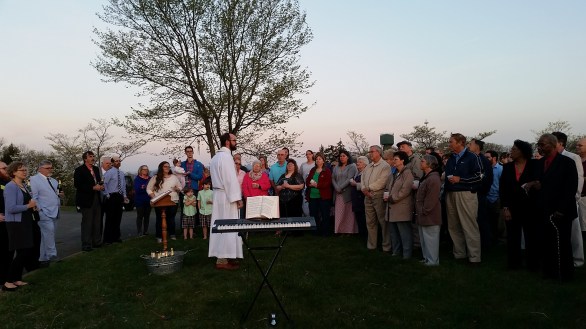
Hallelujah! Hallelujah! Hallelujah! Man it feels good to say that word! In the church I serve, we have purposely avoided saying “Hallelujah” since before Ash Wednesday. No hymns, no prayers, no sermons contained the word. And now we can shout it out with all the pent-up gusto we’ve been holding in throughout Lent. Hallelujah! He is risen!

NT Wright is quite a famous theologian and he has said on numerous occasions that on Easter Christians should break out the champagne! But, we’re good United Methodists, so we’re stuck with Welsh’s Sparkling Grape Juice, plus it’s 6:30 in the morning and a bunch of us have other church services to go to after this!

But nevertheless, it’s time to pop some bottles and celebrate! I’ve passed out bottles to all the clergy so just go to the closest pastor to receive your cup. It’s time to shout out some Hallelujah and drink some Methodist champagne!

A Toast: To the God of Grace and Glory who broke forth from the tomb; Hallelujah!

Easter: What is this day all about? For centuries people like you and me have gathered like this to remember the first Easter. But, has Easter changed throughout the centuries?

We have a lady at St. John’s who, I believe, is keeping Hallmark in business. Whenever I visit people from our church community there is a better than good chance that I will see a card from Dianne on a refrigerator, or on a countertop, just to brighten someone’s day. And, wanting to be more like Dianne, I started looking through the greeting cards at Rite-Aid the other day in the section titled, “Easter.”

I flipped through a handful, looking for something appropriate, but then I couldn’t stop myself. And before I knew it I had gone through every single Easter card. They were all filled with nice words like “renewal” and “rebirth” and “revival.” They had colorful pictures of butterflies, lilies, and baby bunnies. But not one of them contained the right word: Resurrection.

easter-sunday1120-1024x576

Easter is not the celebration of spring.

This is important! While we are bombarded with images and messages about spring being the season of rebirth and renewal, the resurrection is something entirely different.

I can assure you that the women who walked to the tomb that first Easter were not captivated by the birds singing in the air, or the new buds bursting from the trees. They, as Mark so eloquently puts it, were afraid.

But we are far removed from the strange new world of the bible, and instead we like to make Easter about the egg hunts, the bunny who comes like a thief in the night, and the rebirth of nature. Maybe then, we are actually just like the women who fled from the tomb; the message and power of the resurrection is such that we can barely bring ourselves to say anything about it at all.

I, or any of the fine preachers from Staunton, could stand before you this morning and talk all about the change of seasons, the wonder of the birds chirping as the sun rises, the call to a new life. But does any of that actually grab you? Does it terrify you? Does it fill you with such hope that you would stand against the tyranny of the Roman Empire?

Easter is not about spring. Easter is resurrection.

Resurrection is God’s penultimate Word to us, His creatures. And frankly, it should make us tremble and consider running in the other direction because recognizing this new truth and new reality means that we will, sooner or later, have to give up our dependence upon the things that the world tells us we need: beauty, security, wealth, power, careers, out loved ones, even our lives.

But since you’re here at the crack of dawn to worship the living God, you must surely get it already. You’re here because your lives have been transformed by the power of the resurrection and you can’t go back. Or maybe, just maybe, you’re like me and you’ve heard this story so many times before that you’ve become a little numb to the Good News of God bursting from the tomb. Perhaps we need to be shocked or afraid like the women who ran away. Maybe resurrection isn’t supposed to make us smile and grin. Perhaps resurrection is supposed to make us run away in bewilderment.

Resurrection changes everything.

Just shy of a year ago, my wife gave birth to our son Elijah. And at first it was terrifying. I’ll never forget pushing him in his little basinet down to the recovery room and Lindsey finally getting to rest after the draining ordeal of childbirth. My beautiful wife was sleeping soundly, and our beautiful baby boy was asleep at the foot of her bed. It was a profoundly holy moment. And then Elijah started choking.

At first I looked around for a nurse or a doctor to do something, and then remembered that we were all alone. So I got up, rushed to him, used a suction cup to clear his throat, and he promptly nuzzled into my neck.

Having a baby changed everything.

Eventually we made it home and started figuring out how to exist with another tiny little human being in the house. We got into a good rhythm. And, I decided to start reading to him every night.

He was barely a month old when I picked up my collection of the Chronicles of Narnia and began with The Lion, The Witch, and The Wardrobe. Every night I would flip through the old and worn pages that called us into the strange new land of Narnia. And, of course, it meant nothing to him, but it meant everything to Lindsey and me.

We read the entire collection in just over a month and the very last paragraph of the very last book goes like this: And for us, this is the end of all stories… But for them, it was only the beginning of the real story. All their life in this world and all their adventures in Narnia had only been the cover and the title page: now at last they were beginning chapter one of the Great Story, which no one on earth has read: which goes on forever: in which every chapter is better than the one before.

narnia1

The end of Mark’s gospel, this wonderful bit about the women running away afraid, is no ending at all. It is a great ellipsis in which the story continues through us. The women were afraid because the resurrection was unlike anything this earth had ever known. They could not comprehend the sheer magnitude of God’s dynamic and reality-altering gift in his Son breaking free from the chains of death.

But their story, and our story, does not end with the written gospel. Their story, and our story, is resurrection. The gospel of Jesus Christ, the Son of God, is always unfinished. There is an unwritten page left for each of us to write, in which we record the many glorious, joyful, and even frightening things that God has done for and through us.

Easter, resurrection, isn’t perfect like a hallmark card. We cannot contain the inexplicability of God raising Jesus from the dead in pastel colors with a simple quote about renewal. It’s strange, and complicated, and scary.

For some of us Easter creates more questions than it provides answers. For the women at the tomb it was frightening and astonishing. For all of you it probably feels uncomfortable as we passed around out Methodist champagne with shouts of Hallelujahs while gathering in a place like this: a cemetery.

Easter can be downright terrifying.

But’s its not the end of the story. Jesus came alive so that we could come alive. The resurrection forces us to not experience Easter as just a day when the seasons change, but the very life-altering, earth shaking, cosmically confusing, moment of transformation of all things.

This, what we’re doing here, is our witness to the fact that we do not know what will happen next. We do not know when the bell will toll for us. And, if we’re truly honest with ourselves, this frightens us.

But hear the Good News: resurrection is the beginning of a new story, which goes on forever, in which every chapter is better than the one before. Jesus’ story, our story, has no end.

Hallelujah! Amen.

Devotional – Luke 11.1

Devotional:

Luke 11.1

He was praying in a certain place, and after he had finished, one of his disciples said to him, “Lord, teach us to pray, as John taught his disciples.”

Weekly Devotional Image

Back in October I preached a sermon series on why we do what we do. One Sunday we explored why we give our gifts to the church, another Sunday we explored why we worship the way we do, and on the final Sunday we talked about why we pray.

Of course, we usually pray because we want something from God; we cry out to God in the midst of suffering for healing, when we are lost we call out for direction, and when we are afraid we ask for peace. We know why we pray, and Jesus answered the question of “How to pray?” by giving the disciples the Lord’s Prayer.

But I often wonder if we are praying for the right things.

Cash-Envelopes

To conclude the sermon back in October I asked everyone in worship to open their bulletins and pull out the envelope and blank piece of paper that had been placed inside. I said, “I would like each of us to take out the paper and write down a true prayer to God. It has been my experience that when I pray out loud I don’t take the necessary time to really contemplate what I am asking for. But if we slow down enough to write down our prayer, it might encourage us to pray like Jesus. So write out your prayer, and then place it in the envelope and seal it. Then I would like each of us to write our name and address on the front and place it in the offering plate later in the service. No one will see this prayer but you and God. And we will mail them back to you in a number of months. God answers our prayers, sometimes in different ways than we can imagine. My hope is that we will all take the time to earnestly pray to God, and in the months ahead we will begin to have our eyes opened to the ways God is moving in our lives.”

That was nine months ago, and today the envelopes are being sent back out.

We currently live in a culture so steeped in instant gratification that we expect God to answer our prayers immediately. However, God’s time is not the same thing as our time. It is my belief that God has, in some way, shape, or form, answered our prayers over the last nine months and perhaps we can only see that now looking back. So keep your eye out for your mailbox this week, rejoice in the prayer that you once offered, and give thanks for the way God has responded.

Partying with Jesus

Luke 14.15-24

One of the dinner guests, on hearing this, said to him, “Blessed is anyone who will eat bread in the kingdom of God!” Then Jesus said to him, “Someone gave a great dinner and invited many. At the time for the dinner he sent his slave to say to those who had been invited, ‘Come; for everything is ready now.’ But they all alike began to make excuses. The first said to him, ‘I have bought a piece of land, and I must go out and see it; please accept my regrets.’ Another said, ‘I have bought five yoke of oxen, and I am going to try them out; please accept my regrets.’ Another said, ‘I have just been married, and therefore I cannot come.’ So the slave returned and reported this to his master. Then the owner of the house became angry and said to his slave, ‘Go out at once into the streets and lanes of the town and bring in the poor, the crippled, the blind, and the lame.’ And the slave said, ‘Sir, what you ordered has been done, and there is still room.’ Then the master said to the slave, ‘Go out into the roads and lanes, and compel people to come in, so that my house may be filled. For I tell you, none of those who were invited will taste my dinner.’”

parables

Today marks the beginning of our July Sermon Series on The Power of the Parables. A favorite rhetorical device of Jesus’, a parable is a story that illustrates a lesson or principle usually without explanation. They are simple and life-sized with familiar characters and they are supposed to drive us crazy.

Over the centuries the parables have become so watered down through the church that they no longer carry the same weight and punch that they once did. The familiar parables are beloved to us, The Feast, The Mustard Seed, The Prodigal Son, The Good Samaritan, but during the time of Jesus they were frustrating and confusing. Over the next month we will do our best to recover this sense of strangeness and encounter the power of the parables.


I really didn’t want to go. I’m not one to feel anxious but the entire car ride was white knuckled and nauseating. As we went around the block until we could find an available parking space I came up with even more excuses to why we shouldn’t go into the party but I kept my mouth shut. While walking up the front steps my knees began to wobble but Lindsey put her hand in mine and confidently opened the front door and walked right in.

I really didn’t want to do.

Days before Lindsey had casually mentioned that we were invited to an engagement party for someone she knew from work. We were dating at the time so I was willing to do pretty much anything to keep her interested in me so I agreed to attend. The days passed and finally I decided to learn a little more about this couple before we showed up for their party. I assumed that the bride-to-be was a fellow coworker with Lindsey, that they had spent countless hours together learning about one another, but I was wrong.

She met the woman through work because she was a customer who happened to strike up a conversation one time and casually invited Lindsey to attend her engagement party. They had barely spent 30 minutes together and we were now supposed to join her and her husband-to-be for a celebration of their impending wedding.

“We can’t go,” I declared. “We don’t know them at all! If this was just a casual double date or even a dinner party I would entertain the thought of going, but we absolutely, positively, cannot go to a stranger’s engagement party!”

            Lindsey replied, “Oh yes we can, and yes we will!”

The moment Lindsey and I walked through the doorway we were engulfed into a living room filled to the brim with party-goers. Like the proverbial record scratching through a speaker system, most people turned to look at us and when no one recognized who we were they all went back to their prior conversations. To me, it was a nightmare.

Lindsey, on the other hand, was lapping it all up. She thrives on this kind of unexpected atmosphere and quickly began floating through the house to find the happy couple. I remained transfixed just on the inside of the front door watching her disappear into a large community filled with joy. It was only when she completely disappeared from view that it really hit me how even though I was in a room full of people, I felt absolutely alone.

Jesus was surrounded by a group of people at a party when someone shouted out, “Blessed is anyone who will eat bread in the kingdom of God!” Then Jesus said to him, “A man decided to have a party and invited many. He sent out his people to those who had been invited to announce that everything was ready, but each of them started to make excuses. One of them said, ‘Sorry, I just moved and I’ve got so much to take care of at the new house; please accept my regrets.’ Another said ‘I just bought a new car and I really want to give it a test spin; please accept my regrets.’ Another said, “We just got home from the honeymoon, and therefore we cannot come.’ So they returned to the party with bad news about the impending lack of attendance. The man throwing the party became frustrated and sent them back out into the streets to bring in the poor, the crippled, the blind and the lame.”

I wandered around the party, looking for an opportunity to jump into a conversation with anyone about anything. Lindsey was invited, but I felt compelled to attend and was trying to make the best of it. I literally knew no one in the house and was hoping to find a place to stay put until Lindsey returned. In the den I encountered a group of good looking young couples who were talking about their strong financial portfolios, so I kept walking right passed them. In the backyard, sitting around a fire, there was another group of friends talking about the virtues of libertarianism, so I kept walking right passed them. In the dining room I experienced an air of exclusivism as the group insisted on telling one inside joke after another, and I decided to start the loop all over again. These were not my people.

caleb050315 (1)

The crowded house felt like a never-ending loop of diversity and strangeness whereby I found no one like me. Everyone seemed so different and unlikely paired up in conversations and I continued to mingle about without ever opening my mouth.

In the kitchen I saw an opportunity for a small reprieve: a glass of water. My hope was that the act of walking into the space for a glass would give me a brief moment of purpose. With a glass in my hand, I turned away from the sink and was immediately met with an outstretched hand from a middle-aged man with a wide smile.

The servants returned from rounding up the poor, the crippled, the blind, and the lame, and still there was room at the party. The host had enough and he sent them back out once more and ordered them to compel people to come in, so that the party might be full.

The wide smile said, “My name’s Mark. Who are you?”

I returned the smile and attempted to introduce myself without giving away the strangeness of my attending a party to which I did not belong. He asked me about my work, I told him I was a student. I asked him about his work and he told me that he was in sales. We talked for about five minutes before he asked the question I dreaded: “So how do you know the happy couple?

I briefly thought about lying and making up some intricate story of our long time friendship, but after walking around without conversation for so long I decided to stick to the truth. I explained that I had no idea who they were, that they could be standing with us in the kitchen and I wouldn’t even know which two people we were celebrating. I confessed my discomfort in walking around a house without knowing a soul inside, and laid it all out.

The man looked back at me the whole time with a puzzled look on his face and then he said, “Well, I’m the father of the bride. And in my opinion it’s better to have a house full of strangers to celebrate than a house with no one at all. So I’m happy you’re here.

Parables are a strange breed. They are heard in a number of ways, even by the same person at different times. They defy explanation and demand proclamation. They should leave us scratching our heads just likes the first disciples, they should jolt us, and they should shock us.

At times we can identify with the party host. We have all spent time preparing for a celebration, filling out all the invitations, only to have people make excuses for not attending. We have known the embarrassment of putting all our energy into something and not having nearly enough people show up for the event.

At times we can identify with the people who have excuses. We’ve all received invitations to something we don’t want to attend, or something that has grown so familiar that it no longer holds the luster it once did. We have known the ease of creating an excuse in the midst of a moment and the hope that enough other people will show up to distract from our lack of attendance.

And at times we can identify with the people compelled to attend. We have found ourselves in an environment we did not deserve to be a part of. We know the strangeness of being surrounded by people who do not look like us, nor think like us, nor speak like us. We have known the joy that comes with being caught up in something bigger than ourselves, and the thrill that comes with being welcomed into a strange and new community.

That’s the power of a parable: it can strike us differently every time we hear it. A new detail will emerge that we’ve never seen before, or we will identify with a character we’ve never thought about before. The power of a parable is its ability to convey a deep and profound truth about Jesus without succumbing to the desire of explanation. We know what it means without anyone telling us what it means, even if it upsets our expectations about what the kingdom will look like. The power of a parable is its ability to show us that God’s kingdom is strange, unexpected, and beautiful.

A man was sitting in church one Sunday when he felt compelled to invite others to attend the following week. Whenever he brought the subject up with coworkers and friends they quickly and politely made excuses for not being able to attend. He couldn’t believe it; he was inviting them to discover God’s grace, not go to an office party. And as Sunday loomed closer, he began inviting complete strangers to join him in worship. He would rather have a church filled with oddballs and strangers discovering the grace of God, than no one at all.

A mother becomes distraught when all of the kids she invited to her son’s birthday party made excuses for not coming. She can’t bear to picture her son’s face while she places a birthday cake down at a table surrounded by empty chairs. So she gets onto Facebook and makes a plea for anyone, anyone, to come to her son’s birthday party. She would rather have a house full of strangers to celebrate her son, than for him to sit at that table all by himself.

A father rejoices when his daughter meets the man of her dreams and they plan to get married. In order to properly celebrate he sends out all the invitations he can afford to fill his house to the brim. And in the middle of the party he meets a complete stranger in the kitchen and believes that it’s better to have a house full of strangers to celebrate than a house with no one at all.

Partying with Jesus is a strange, unexpected, and beautiful thing; precisely because Jesus loved filling places with people who by all other accounts did not belong together. He was the original melting pot for diversity. He compelled his disciples to go out into the streets to share the good news. He knew that what he had to offer would radically transform the lives of the people who received it.

All of us are here, not because we received an invitation in the mail, but because someone once compelled us to come. They believed that bringing us in to this party was worth it because it would transform our very lives. And now we are compelled again to come to the party and to the table. Here we will feast and rejoice with the bread and the cup and Jesus is the one who looks at us in the middle of the party and says, “I’m happy you’re here.” Amen.


lord__s_supper_by_bclary-d37hhzp

Devotional – John 20.30

Devotional:

John 20.30

Now Jesus did many other signs in the presence of his disciples, which are not written in this book.

Weekly Devotional Image

My favorite piece of scripture is Mark 10.45: For the Son of man came not to be served but to serve, and to give his life a ransom for many.” I love the idea that, like Jesus, we are called to serve the needs of others rather than focusing on ourselves all the time. One of the verses that has made the most impact in my life is from Matthew 27.46: “And about three o’clock Jesus cried with a loud voice, “Eli, Eli, lema sabachthani?” that is, ‘My God, my God, why have you forsaken me?’” Through it I began to realize the depth of Jesus’ humanity and what he went through on our behalf.

There are plenty of verses that make me laugh, like Acts 20.9: “A young man named Eutychus, who was sitting in the window, began to sink off into a deep sleep while Paul talked still longer. Overcome by sleep, he fell to the ground three floors below and was picked up dead.” And there are some passages that leave me scratching my head in confusion, like Mark 9.50: “Salt is good; but if salt has lost its saltiness, how can you season it?”

th

Last Easter my friend Jason Micheli preached his sermon on what he called “the biblical verse that really ticks [him] off, the scripture verse that irritates the you-know-what out of [him] is John 20.30: Now Jesus did many other signs in the presence of his disciples, which are not written in this book.”

And I have to agree with him.

Why in the world would John omit other stories about Jesus’ life? If there were other miracles, other teachings, other divine moments, why wouldn’t he include them in the gospel? Most of the time I read from the bible I feel very fulfilled, but when I read John 20.30 I feel like I got short-changed.

Yet, on some level, I feel like it’s quite appropriate. If Easter tells us anything it’s that the living Lord is still on the move meeting us on the roads of life. John’s gospel could never contain all of Jesus’ miracles because he is still making them happen here and now. Sometimes we believe that we can only find and discover the Lord in the sacred texts of scripture, but that’s when we need to open our eyes to the wonders around us and see how God is still moving in the world.

When was the last time you felt the presence of God? Hopefully you experienced the Spirit of the Lord during your recent Easter service, or maybe you discovered God in the breaking of bread during communion. This week, let us all take heart knowing that we can find God in the words of scripture and in our experiences in the world.

Washing With Tears – Maundy Thursday Homily on John 13.12-20

John 13.12-20

After he had washed their feet, had put on his robe, and had returned to the table, he said to them, “Do you know what I have done to you? You call me Teacher and Lord – and you are right, for that is what I am. So if I, your Lord and Teacher, have washed your feet, you also ought to wash one another’s feet. For I have set you an example, that you also should do as I have done to you. Very truly, I tell you, servants are not greater than their master, nor are messengers greater than the one who sent them. If you know these things, you are blessed if you do them. I am not speaking of all of you; I know whom I have chosen. But it is to fulfill the scripture, ‘The one who are my bread has lifted his heel against me.’ I tell you this now, before it occurs, so that when it does occur, you may believe that I am he. Very truly, I tell you, whoever receives one whom I send receives me; and whoever receives me receives him who sent me.”

bbo_ob_mcmca_40_slide

The disciples had already finished their food, they had passed around the bread and the cup, and Jesus had told them it was his body and blood. For many of them these words might’ve gone in one ear and out the other; after all Jesus was known for saying all sorts of the things that didn’t make sense right away. Perhaps some of them were picking up the crumbs from the bread when Jesus got up from the table. Others might have been refilling their cups with wine when Jesus tied a towel around his waist. But by the time he started to wash their feet the room must have been silent. 

Imagine how profound it would have been to see Jesus kneeling on the floor and using water to wash away the grime of Jerusalem. Even more amazing is the fact that Jesus doesn’t waste time explaining what he’s about to do, he just gets down on the ground and goes to work.

However, Peter, the ever vocal disciple interrupts the serene mood with a question: “Lord, are you going to wash my feet?

“Right now it won’t make sense my friend, but soon it will all come together. If you want to be in this with me, you must let me wash your feet.”

Jesus went from one disciple to the next taking as much time as necessary, holding their feet in his hands, letting the water drip upon them, until he finished.

I took a group of middle-schoolers on a mission trip a number of years ago to Winchester, Virginia. We worked in trailer parks building wooden steps up to the doors, we worked on a wheel chair ramp that took up an entire yard, and we worked on clearing out areas that had been long forgotten. All week we did everything we could to serve the needs of the people from the nearby community, and every night we gathered to sing songs and praise our Lord.

At the end of the week we were invited into the fellowship hall for a foot-washing ceremony. I don’t know if any of you have had the chance to spend a week working outside with middle-schoolers, but it begins to smell pretty bad pretty fast; the prospect of washing one another’s feet was not high on my list of priorities. The leader explained that long ago Jesus washed his disciples feet and we would be doing the same thing. Everyone was invited to participate, but if you were uncomfortable you could simply ask for a prayer instead.

A few chairs and basins were set in the middle of the space, and when the music began we were on our own.

In my work group there was a precious young girl who had worked so incredibly hard all week and there was a young boy that annoyed her every chance he had. He would begin by playfully flicking paint onto her clothes, but when she asked him to stop he became relentless. He called her names behind her back, and schemed to turn the other kids against her. Even after I pulled him aside to set him straight he continued to prey on her at every opportunity. 

As we sat in the room waiting for the first people to go forward for the foot washing, I watched the young girl stand up, and bee-line across the room for the annoying boy. For a fleeting moment I was afraid that she had finally had too much and she was about to sock him in the face, but instead she leaned over and asked if she could wash his feet.

While other people started to do the same, my gaze was transfixed on the boy and girl from my group. The boy had gone over the line time and time again yet there she was holding his foot in her hand and washing it. When I looked closer I saw that she was crying and her tears were falling on his feet. And when I looked even closer I saw that he was crying and his tears were falling in her hair.

Foot washing is a service among equals in a company where no one’s status stands out. When Jesus finished with his friends, he called them to do the same to one another. We wash and are washed by our Lord through our brothers and sisters in Christ. When we kneel before a fellow Christian and hold their feet in our hands we make our way back to the upper room so long ago. We aren’t just called to wash the feet of those whom we love, but even the ones who drive us crazy and fill us with anger. Remember: Jesus washed Judas’ feet knowing full and well what he was about to do. 

Sometimes the people we need to reconcile with most are the ones in the pews next to us. We tend to sweep under the rug all of the proverbial problems we have with our friends and family and are far more inclined to complain about strangers. If we are filled with stress regarding the closest people in our lives than this might be the best place to embark on a new beginning. Perhaps the water can bring new life for us and for the ones we love and hate.

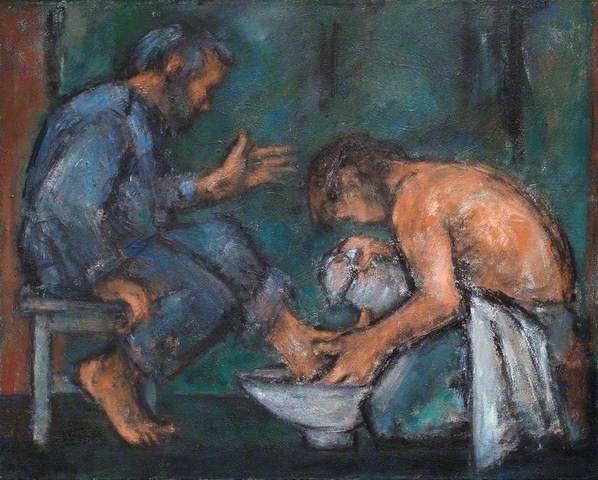
Jesus took time after breaking bread with his friends to wash their feet. He humbled himself to the floor and showed them what faithful love looks like. With each foot he equipped them for bringing the peace of God into the world. He washed away their insufficiencies and doubts. He rid them of labels and assumptions. He showed them how important they were for the kingdom of God.

If you want to know what faithful love looks like, look no further than this time when we follow the example of Jesus and wash one another. Amen.

IMG_2100

Listen to Him! – Sermon on Mark 9.2-9

Mark 9.2-9

Six days later, Jesus took with him Peter and James and John, and led them up a high mountain apart, by themselves. And he was transfigured before them, and his clothes became dazzling white. such as no one on earth could bleach them. And there appeared to them Elijah with Moses, who were talking with Jesus. Then Peter said to Jesus, “Rabbi, it is good for us to be here; let us make three dwellings, one for you, one for Moses, and one for Elijah.” He did not know what to say, for they were terrified. Then a cloud overshadowed them, and from the cloud there came a voice, “This is my Son, the Beloved; listen to him!” Suddenly when they looked around, they saw no one with them any more, but only Jesus.

20cuaresmaB2

Two years ago, today, I woke up like every other Sunday and got ready for church. Though I was enriched with theological education Monday – Friday in seminary, I looked forward to spending time in worship with people who were not from school on Sundays. Duke Memorial UMC is a beautiful church located right on the corner of downtown Durham and serves the needs of a wide variety of people. The sanctuary is wider than it is long, with a balcony, and a raised area above the altar for the choir and the organ. The church prides itself on its ability to worship faithfully, and engage deeply in the community.

Two years ago, today, I woke up like every Sunday morning, but this one would be different. While my roommates got ready to attend their respective churches, my phone began to ring and my pastor’s name appeared on the phone. Now, many of you might not know this, but if you receive a phone call from me on Sunday morning, it usually means there’s an emergency. I nervously answered the phone and through her scratchy voice I learned that both pastors of Duke Memorial were sick, and neither one of them would be able to preach. I had a feeling that I knew were the conversation was headed and I quickly glanced over at my clock; worship would begin in one hour. She continually apologized for their sickness and then finally asked if I would be willing to preach in a very short amount of time. “Of course” I said with a chipper voice, knowing full and well that I had not the faintest idea regarding what I would preach about.

The next hour was a blur.

I obviously did not have the time to write out a manuscript, I was not able to consult numerous commentaries about the text, and I had not spent an appropriate amount of time in prayer over the passage. All I knew was that the passage was the same as today’s (Mark 9.2-9) and that it was Transfiguration Sunday.

Duke Memorial UMC

Duke Memorial UMC

I barely made it in time for the service to began with a 3×5 index card in my pocket with three key points that I wanted to make. Upon arrival I searched for a bulletin to discover what else would be going on during the service and I quickly said a prayer before entering the sanctuary. My eyes were still closed when organ began and an acolyte walked up to me and asked, “Where’s the preacher?” To which I responded, “You’re looking at him.

The next hour was also a blur.

I led us through the usual motions of worship after explaining the lack of two ordained pastors. We prayed together; we sang together; we read together; I preached; and before I knew it, the service came to a conclusion ten minutes earlier than usual.

While people departed from the sanctuary, I did as all pastors do and stood at the door to shake hands with everyone. Many made comments thanking me for my service and willingness to preach on such short notice, but most of the compliments came in the form of, “Hey thanks for getting us out early!

However, there was one older woman waiting around at the back of the line for her turn to come forward. Another thing you might not know is that if someone waits a long time to speak after a service, they usually have a critique or a criticism that they don’t want to share in front of everyone else. I waited and waited until nearly everyone was gone when she finally stepped forward and grabbed my hand; “Son,” she said, “I’ve been coming to this church my whole life to worship the Lord and hear people preach. I want you to know that you said more in 10 minutes than many could say in 45. Thank you.” And with that she left the sanctuary.

Two years ago, today, I woke up and got tapped to preach a sermon at a moment’s notice. Now, of course, I am the pastor here at St. John’s and I have plenty of time each week to work on preparing for Sunday worship. I have the time to be in prayer over the words of scripture, I have the time to consult commentaries about what’s happening in the deeper sense of the text, I have the time to write out a full manuscript of everything I will say from this pulpit. But this week, I kept thinking about what happened two years ago on Transfiguration Sunday, and I wanted to do something similar…

00027841_h

Instead of combing through numerous books highlighting the ins and outs of Mark 9, instead of doing all the things I normally do to prepare a sermon, I began by reading one verse: “Then a cloud overshadowed them, and from the cloud there came a voice, “This is my Son, the Beloved; listen to him!”” and then I felt propelled to do something radical, something that I have not done in a long time, something that I want to share with all of you right now:

I listened to Jesus.

I spend so much time talking about Jesus, that I don’t spend enough time listening to him. Now, I have had some remarkably beautiful and religious experiences in my life, but I have never literally heard the Lord speak like on the mountain during the Transfiguration. I felt called to the ministry but it did not come in the form of a voice booming down from on high saying, “Taylor you need to be a pastor!” So, this week, I put away all the books, and tried to listen to Jesus speaking in my life.

I heard Jesus during my interactions with other people: 

One of my best friends in the world found out he has cancer this week. As a young pastor, husband, and father of two young boys, he is more often on the other side of the hospital bed praying for people in the midst of suffering. I immediately wanted to shout with my clenched fists in the sky, I wanted to know why this was happening, but when he wrote to me about his diagnosis I heard Jesus telling me that I need to keep the faith. I remembered that even pastors need prayers and that all of us are called to be faithful and loving people toward those who are suffering around us.

A few days ago I visited one of our long time church members who is nearing the end of her life. Upon arrival I learned, from one of her helpers, that she had tried to get herself ready for the visit, but discovered that she did not have enough energy to get out of bed. As I made my way into her bedroom, and knelt beside her bed, I saw her smile for the first time in a long time; “It’s not everyday that I invite a young man into my bedroom” she said with a laugh. We talked together about her struggles, we reflected on the many blessings from her life, and we prayed for God’s peace to reign abundantly in the days ahead. While kneeling beside her bed I heard Jesus telling me to be thankful for my blessings. I felt convicted by her faithfulness to not wallow in my own self-pity, and strive to live my life as fully as she has.

I heard Jesus during my reading of scripture.

This might come as a shock but I am ashamed at how rarely I read my bible. Sure, I read scripture every morning as a devotional practice; Sure, I read the bible every day in preparation for sermons on Sundays. But it has been a long time since I just picked up the good book and started reading for the simple pleasure of reading. More often than not my reading of scripture is based on a requirement or using the text as a resource. Even when I tell myself that I am reading for the right reasons I find myself writing down notes about using this bit in an epistle article or weekly devotional.

So, one day this week, I carved out some time and sat down with my bible. It took a while to rid myself of the vocational tendencies I have when reading scripture, but eventually the words and pages started to flow through my mind. I read about the great acts of God during the life of Moses, I flipped ahead to the story of Samson when he toppled the pillars and destroyed the Philistines, I soaked up some of the psalms and let their words become poetry for my soul, I walked the streets of Jerusalem with Jesus as he prepared to overturn the tables in the temples, I entered the strange new world of the bible and felt it come alive. Through reading the scriptures I heard Jesus telling me to that all people are part of God’s cosmic plan. From the patriarchs in Genesis, to the crowds in Mark, to the disciples at St. John’s, God can use anyone to bring about his will on earth.

I heard Jesus in the silence. 

silent-listen

I am not a quiet person. I am as extroverted as can be. I usually have music playing in my office, or I am tapping my fingers away in some sort of percussive rhythm, or I am humming a hymn or song out loud. But this week I tried to be quiet and listen. I turned off the radio in the car, I let my turntable collect some dust, and I left my headphones at home. Silence is uncomfortable. Even a few moments of silence can drive us to fidget in our seats. Allow me to demonstrate: (1 minute of silence from the pulpit)

How did that feel? Yet, even though it makes some of us uncomfortable, silence can be beautiful. Turning off the noise this week allowed me to hear things that I normally miss: the sound of children laughing in the preschool, the crisp sound of pages turning in my bible, I even heard my heartbeat. What did you hear during our minute of silence? Maybe you heard the wind blowing against the roof of our church, perhaps you heard people breathing beside you in the pews, or maybe you heard heard the faint murmurings of your heart beating. During my time in silence this week I heard Jesus telling me that life is precious and beautiful. Only God could have imagined something like a heart to give us life, constantly thriving and pumping to bring existence to our bodies, a constant reminder of the fragility and beauty of what it means to be alive.

The disciples thought they knew everything they needed to know about Jesus. They believed they had him completely figured out. But when they made it to the top of the mountain God made it very clear that their assumptions and expectations were wrong; whenever we think we know what God is up to, its usually more about us than God. Its like looking for something at the bottom of a well, when all we really see is a faint reflection of ourselves. The Transfiguration shines brilliantly as a reminder that we are called to listen to Jesus. We need to hear him through the people in our lives, through our prayers, through our bibles, and through the silence.

Listen to Him through the words of Thanksgiving at the Lord’s table. Hear what God has done in the world for people like you and me. Listen to the Messiah that speaks to us through the bread and the cup. Hear the Lord speaking to you as you come to gather at the altar. Listen closely, and you just might hear God speak. Amen.

Dinner in the Kingdom – Sermon on Luke 14.1, 7-14

Dinner in the Kingdom

Luke 14.1, 7-14

On one occasion when Jesus was going to the house of a leader of the Pharisees to eat a meal on the Sabbath, they were watching him closely. When he noticed how the guests chose the places of honor, he told them a parable. “When you are invited by someone to a wedding banquet, do not sit down at the place of honor, in case someone more distinguished than you has been invited by your host; and the host who invited both of you may come and say to you, ‘Give this person your place,’ and then in disgrace you would start to take the lowest place. But when you are invited, go and sit down at the lowest place, so that when your host comes, he may say to you, ‘Friend, move up higher’; then you will be honored in the presence of all who sit at the table with you. For all who exalt themselves will be humbled, and those who humble themselves will be exalted.” He said also to the one who had invited him, ‘When you give a luncheon or a dinner, do not invite your friends or your brothers or your relatives or rich neighbors, in case they may invite you in return, and you would be repaid. But when you give a banquet, invite the poor, the crippled, the lame, and the blind. And you will be blessed, because they cannot repay you, for you will be repaid at the resurrection of the righteous.


A few years ago, I sat in the depth of a couch listening to one of my best friends named Josh [you can check out his blog here] talk about our assignment for the week. A number of us had been gathering on a regular basis in a sort-of “spiritual discipline accountability group.” Every week we read through a chapter from James Bryan Smith’s The Good and Beautiful Life, discussed what we had learned, prayed, and then talked about our assignment for the next week. To be honest, the assignments were what I enjoyed most about the group because every week we were given a new challenge regarding our faith lives that we could live out.

37

For instance one week we discussed the super-abundance of technological distractions in our lives and our challenge was to go on a “media-fast.” This meant that for 48 hours we were to try our best to put our cell phones away, rid ourselves of Facebook and twitter, keep the television turned off, and the magazines closed. For those two days we would distance ourselves from the distractions in our lives.

Most of our assignments were straightforward, and the results predictable. By fasting from media, we would inevitably spend more time with God and realize how much time we waste every single day. When we spent the week praying for our enemies, we would realize how connected we really are as the body of Christ, etc.

However, when I sat on the couch that night a few years ago, we were given a task that I thought would be too easy. “This week,” my friend read aloud, “you are to give away possessions to people. (Easy, I remembered thinking to myself) But here’s the catch,” he continued, “you have to do it in secret. This doesn’t mean you need to go out and buy something nice for someone, but truly give away something that you love without any expectation of receiving anything in turn.”

Giving and receiving gifts can both be a joy and a challenge. We live in culture so saturated in capitalism that nearly everything we do is based on a “giving-receiving model.” When someone offers to pay for our lunch, the conversation usually continues with, I’ll get the next one. When we give someone a gift, whether we admit it to ourselves or not, we hope that we will receive something just as nice in return, eventually. We no longer know how to receive gifts with true gratitude because before we even enjoy whatever has been given, we feel indebted and begin to plan on giving something back in return.

And so it came to pass one evening that Jesus went to the house of a leader of the Pharisees to eat dinner. As everyone was getting settled, sitting down in their chairs, filling up their glasses of wine, Jesus looked around and noticed how the invited guests were choosing the places of honor. He cleared his throat, and started to tell those with ears to hear, a parable: “when you are invited by someone to a banquet, do not sit down in the best places, in case someone more distinguished than you arrives and then the host will have to tell you to go sit somewhere else. Instead, you should sit in the lowest place, so that when the host sees you they will say, “my friend, move up higher, take one of the better seats.” For all who exalt themselves will be humbled, and those who humble themselves will be exalted.”

eucharist

Jesus loves to use the mundane, the everyday, to help convey the depth of God’s kingdom. He uses the common experiences of people, the home or marketplace, farms and fishing boats, to reveal aspects of the character of his listeners, while also demonstrating the way of life in the kingdom of God. The Kingdom of God is like a mustard seed, the Kingdom is like a sower going out to sow, the Kingdom is like a dinner party. So the first part of our passage today is therefore fairly straightforward: Stay humble. When you get invited places, do not assume that you are worthy of the best seat, but seek the lowest.

But Jesus continues on beyond the parable by addressing the one who had invited him: “When you have people over for a lunch or dinner, do not invite your friends or your brothers or your relatives or your rich neighbors, who can all return the favor of your invitation. Instead, when you’re hosting a party invite the poor, the crippled, the lame, and the blind. And you will be blessed, because they cannot repay you, for you will be repaid at the resurrection of the righteous.”

It is very easy to read this passage from scripture and limit the meaning to social justice and ethics. In fact most of the commentaries written on this part of Luke 14 constrain the interpretation to simple ethical contributions. However, Luke gives us plenty of evidence to show that the real subject at hand is the Kingdom of God.

From the beginning of the passage Luke has given us a clue that there is more at stake here than etiquette; Jesus is telling a parable; Jesus is calling for kingdom behavior.

For the first part of the parable we do well to remember to resist the temptation to use humility as a means of receiving benefits. Taking the low seat because one is humble is one thing; taking the low seat as a way to move up is another. This is about maintaining our humility so that we embody the kind of life Jesus led and therefore receive exaltation in our humility.

As Jesus continues by addressing the host we can all imagine the wonderful elements that come with hosting a party. Inviting others embodies friendliness, generosity, graciousness, and concern for the comfort of others. However all of us know the ugly face of generosity that binds us when gifts come with strings attached. Just as in Jesus’ time, hosts often expect a return on their generosity toward others and therefore only invite people who are able to return the favor. But in the kingdom, God is the host, and who can truly repay God?

When we started our week of giving away possessions I was truly excited. I love giving gifts to people, and like the host in our parable I love inviting people over for dinner. I started scheming and planning on how I could start to give away my things to my friends. I analyzed them individually and started to think about who could use certain things. I went first to my collection of vinyl records and books, pulled out some of my very favorites, wrapped them up, and delivered them in secret without any indication that I had been the one to do so. I hid their gifts by their front doors, in the academic boxes at school, and I even left a few on the hoods of cars. Now to be clear, these were not just simple things that I had collected and would be willing to give away, but they were truly sentimental items that I had grown very attached to. I can remember wrapping up my first iTouch, my favorite Jazz LP from Dave Brubeck, and the first theological work I ever read from Karl Barth. These weren’t just  “things” but were part of who I am. In the days that followed after the surprise deliveries I felt absolutely miserable.

The hard part was not parting with the objects, but it was doing it in obscurity. I wanted all of my friends to know that I was the one who gave them their gifts. Keeping my mouth shut was so very difficult for me, because I wanted credit for the good deeds I had done. I thought that I wanted them to know how much time and energy I had put into their surprises, but what I really wanted was a little praise for what I had done. I realized that I was just like the host of the party in our scripture today; I was doing something nice to mask my own desire for affirmation.

But in the kingdom of God, things work differently.

kingdomofheaven3

The story from scripture today is about God’s continued commitment to make us into people who can be depended upon to love strangers since we have learned, in Christ, what its like to be a stranger and be loved, even when we least deserve it. Preachers often list off virtues for people to emulate but there is only one true virtue: the lowly acknowledgment of God. Preachers also often list off sins to be avoided, but there is only one true sin: self-worship, our attempt to set ourselves at the center of the world, and the center of God’s table.

Jesus confronts us this morning: Who are you inviting over? To whom are you showing hospitality? Are you having over the same old people who can continue to pay you back for what you’re doing? Or are you reaching out to the last, least, and the lost?

To entertain for those with whom we are most comfortable is to set one’s own circle as the center of the universe; it is selfish. To entertain people beyond our comfort zone is to remember that God sees humanity as one family and that his love runs most quickly to those who are most in need.

Jesus is the one who chooses us, not the other way around. Jesus is not calling us here to provide for the needs of the poor and the disabled; He very simply asks us to invite them over for dinner. True hospitality is not having one another over on Friday night, but welcoming those who are in no position to host us in return.

This week we cannot rationalize ourselves out of the text and we cannot use metaphors or other interpretative elements to make it say something different. Luke 14 is not just about “loving” people, because Jesus didn’t get killed for loving… a lot more is at stake than just being nice. God is pulling us out of our comfort and complacency to live radically transformed lives. It does not matter whether you 71 or 17, our lives have been transformed in Jesus Christ and it is never too late to rediscover that transformation.

Christ is the host of this party. This is not St. John’s table, or my table, or even our table, but it belongs to Christ. None of us deserve to be invited. We regularly forget the goodness of God in our lives, we ignore the commands to love the unloved, and we fall short of his glory over and over. Yet, here we are. We come to this table with empty hands and hungry hearts, needing God to do for us that which we cannot do for ourselves.

Christ freed, and continues to free us from the expectations of the world. We no longer have to follow along with everyone else but instead get to live new and exciting lives. Who do you know that needs to feel a little more love?

Christ has invited you to his table. Who are you inviting to yours?

Amen.