If You Knew… – Sermon on John 4.5-15

John 4.5-15
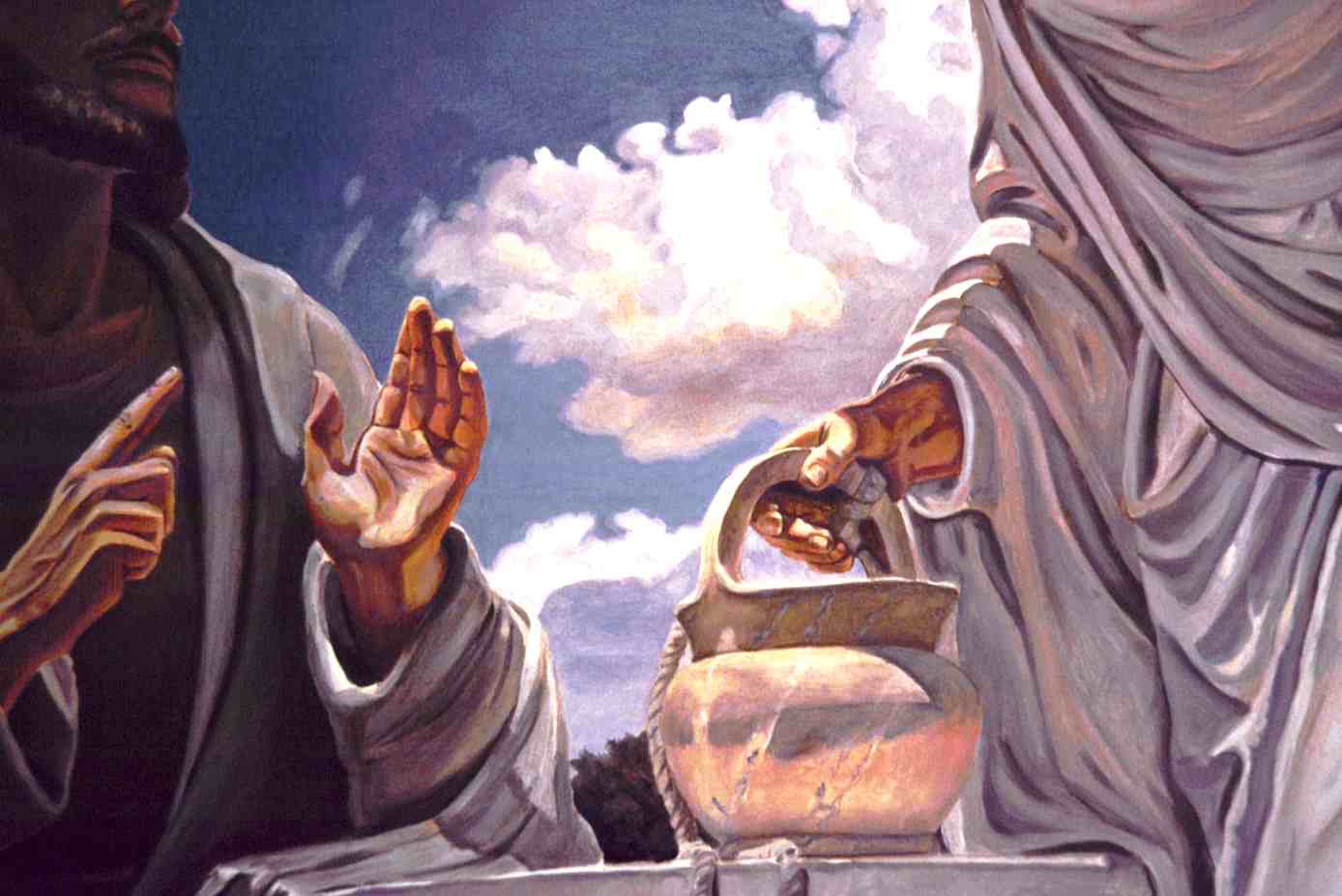
So he came to a Samaritan city called Sychar, near the plot of ground that Jacob had given to his son Joseph. Jacob’s well was there, and Jesus, tired out by his journey, was sitting by the well. It was about noon. A Samaritan woman came to draw water, and Jesus said to her, “Give me a drink.” (His disciples had gone to the city to buy food.) The Samaritan woman said to him, “How is it that you, a Jew, ask a drink of me, a woman of Samaria? (Jews do not share things in common with Samaritans.) Jesus answered her, “If you knew the gift of God, and who it is that is saying to you, ‘Give me a drink,’ you would have asked him, and he would have given you living water.” The woman said to him, “Sir, you have no bucket, and the well is deep. Where do you get that living water? Are you greater than our ancestor Jacob, who gave us the well, and with his sons and his flocks drank from it?” Jesus said to her, “Everyone who drinks of this water will be thirsty again, but those who drink of the water that I will give them will never be thirsty. The water that I give them will become in them a spring of water gushing up to eternal life.” The woman said to him, “Sir, give me this water, so that I may never be thirsty or have to keep coming here to draw water.”

Woman-at-the-Well-ii-100070

Jesus answered her, “If you knew the gift of God, and who it is that is saying to you, ‘Give me a drink,’ you would have asked him, and he would have given you living water.”

In the heat of the day, with the sun held straight above, Jesus was resting by a well. He was tired from his recent journey, traveling around Galilee healing the sick, feeding the hungry, and now here he was, sweating under the sun in the middle of Samaria. He had sent his disciples into the local city of Sychar to procure some food and was enjoying some “me-time” by the well when a woman appeared.

Now, you might not know this, but Jesus definitely did; nobody goes to the well at noon. Its too hot out around lunch time when the sun strikes the ground. Most people went either in the cool of the evening of the cool of the morning. At those times the local wells were bustling with women, gossiping about the coming and goings in town, while taking care of retrieving water and washing clothes.

So, at this most bizarre time, a Samaritan woman made her way to the well where Jesus was resting. “Give me a drink” Jesus asked. But the Samaritan woman replied, “Why are you, a Jew, asking me, a woman from Samaria, for something to drink.” You see, at the time Jews did not share anything in common with the Samaritans, let alone using the same cup or even really speaking to one another. Jesus replied, “If you knew the gift of God, and who it is that is saying to you, ‘Give me a drink,’ you would have asked him, and he would have given you living water.”

header-livingwater

The woman pondered this for a moment and then said, “Sir, you have no bucket, and the well is deep. Where do you get that living water. Are you greater than Jacob, who gave us this well, and his sons and animals that drank from it?” Sensing that she was missing the point Jesus tried again to explain, “Everyone who drinks of this water will be thirsty again, but those who drink the water that I will give them will never be thirsty. The water that I give them will become in them a spring of water gushing up to eternal life.”

Leather_bucket_of_a_well


Believing that she finally understood what this strange bearded man was saying, the woman said to him, “Sir, give me some of that water, so that I may never be thirsty or have to keep coming here to drink water.”

Sometimes, no matter how much explaining, no matter how many metaphors you use, no matter how many illustrations, people will not get the point. During the heat of the day, that strange time to draw water, Jesus revealed the depth of his ministry to this unnamed woman and she doesn’t get it. Jesus’ words “If you knew…” are perfect for describing the situation. If she knew who she was talking to, if only she knew what living water was, If she knew then she would have understood. But living water is not necessarily an easy thing to grasp.

I love this story. Its filled with so many wonderful details that could each become their own sermons. For instance, I love the fact that Jesus was tired. Many of us are tired within our lives. A tired Christ therefore must understand what its like to feel this way, as no one else ever could, Jesus could perceive the struggle in the woman by the well just like he knows our struggles. In that small, seemingly insignificant detail we discover that Christ is with us, because he is like us. Its Christ’s humanity that brings him down to us, and in his divinity that we are brought to him.

Another detail: The woman approaches Jesus, but he makes the first step that opens this great story: “Give me a drink.” There is no shadow of a doubt that what draws most people to Jesus is not so much what he gives us as what he asks. We are moved and drawn toward Christ because he looks on us to help, offering us a share in this thing called the kingdom of God. So the unnamed woman is reeled in with this simple request.

Another detail: After a short debate about the historical prohibitions about a Jew and Samaritan interacting with one another, Jesus declares and offers his “living-water,” Though he repeats his description numerous times, the woman misunderstands. How often are we presented with an aspect of the Gospel, perhaps for our entire lives, and we still never really understand what its all about?

So, what is the point of the story? Is there one? Are we supposed to walk away from this feeling Christ’s living water gushing up from within us? Are we supposed to offer Christ’s living water to our friends and family?

In many ways, the focus of the narrative rests in the fact that Jesus, as a Jew, is in enemy territory. The most substantial detail is in the fact that he offers the living water to the least likely of persons: female, Samaritan, we discover later that she was a frequent object of the men in town, the focus of gossip, and isolated from everyone else. It was to the least of these that Jesus attempts to reconcile the divided nations of Samaria and Israel.

One of my professors loved to tell a story about his roommate from college. They were going to school in South Carolina during the height of the Civil Rights movement when my professor’s friend decided to travel to Washington DC in order to participate in a Civil Rights March. Upon returning back to school, the friend relayed what had happened during the trip:

He described that everything was about as normal as you could imagine. he arrived, met up with the people he needed to, marched where he was supposed to, handed out flyers. By the time it was over he was exhausted while waiting for his plane to bring him home. As he sauntered onto the airplane, he sat down in my seat and, you’ll never believe this, he was sitting next to Martin Luther King Jr.
It was the craziest thing. He had gone all the way to DC and here he was, sitting on an airplane, next to his hero.

martin_luther_king_jr-_and_lyndon_johnson_large

“So,” my professor asked, “what happened?!” Well, he got so nervous, and he was sweating, and fidgeting, and rehearsing what he might say, but there was a small problem: Martin Luther King Jr. was asleep. I mean what was he going to do? Wake up the leader of the Civil Rights movement? So he just waited, sitting there, staring at him, watching him sleep. After the flight had nearly reached its destination, he finally opened his eyes. “Dr. King I don’t know what to say. You are my hero. I just traveled all the way to DC to help march for Civil Rights, you are such an inspiration, I am so impressed with…” “Thank you. God Bless.” he interrupted, seemingly ending the conversation. But the young man was undeterred. “Dr. King you don’t understand, you have changed my life, you have opened my eyes to the many opportunities that are not available to others… “I appreciate your kind words son.” Dr King interrupted again. However he was was not finished, “Dr. King, you don’t understand. My father is a racist. I left home because of him and his prejudice. He offered to pay for my college, but I have cut all ties with him. We have not exchanged a word in years because of his racial bigotry.” At this point Dr. King’s eyes widened, he turned his body to face this young college student and he reached out and grabbed him by the collar, “You have got to love your father. Whether he’s racist or not, loving him is the only thing you can do.” And with that he let go, closed his eyes, and promptly fell back asleep. It was at that moment that my professor’s roommate realized that Dr. Martin Luther King Jr. really was a prophet, beyond all expectation and assumption.

Woman at the Well

In the story of the woman at the well, Jesus began to reconcile a very old, and very real division between the Jews and the Samaritans. The whole story is about religious tensions and a church which sought to overcome them in the first few centuries. Though portrayed as a simple interaction between two individuals at a well under the heat of the sun, the narrative has major religious implications for us, even today. Just like with Nicodemus, the conversations points to something great and profound that will change the way that we interact in the world.

The gospel, in all its magnificence, is incarnational in its ability to use everyday realities to convey a deeper sense of the divine.

But here’s the problem: when we confront a text such as this we tend to think of it it in large grandiose terms; Jesus reconciled the Jews and Samaritans. There is no church unfamiliar with ancient and large divisions within people: Catholic and Protestant, Jew and Christian, Faithful and Faithless. But, like the man on the airplane learned, sometimes the reconciliation needs to occur much closer to home. 

When Jesus met the woman at the well, he offered the beginning of a new life to the least likely of candidates. Before him stood an unnamed woman, a Samaritan, a polygamist, a focus of gossip, and a isolated individual. The first reconciliation did not take place at a theological council, or a political rally, but it happened face-to-face.
At-the-well

I would venture to guess, that in all of our lives we have “a woman at the well.” He or she might not be as obvious as the character in our narrative today, but we all know someone who has been ostracized from the group. Whether its that kid that everyone else makes fun of at school, or that politically opposed neighbor you have living down the street, or maybe its someone within your own family. Its sad considering how easy it is for us to cut ties with people around us as if their hearts and souls were just another commodity for us to examine, purchase, and then throw away.

Martin Luther King Jr. sat on a plane next to a young college student and reminded him that the truest forms of Christian living happen at home, within our own families and friends.

Jesus, our Savior, sat at the well and in the simplest of conversations help to re-establish a woman’s life. With simple questions and the beginning of a friendly relationship he gave her the kind of identity that she had lost in her life. He provided her with one of the greatest gifts the world has ever known: he gave her a sense of worth.

“If you knew” was Jesus’ great rebuttal to her ignorant question. How much of our lives are wasted and could be reignited by that little phrase? If you knew that man who stands on the corner every Tuesday morning has nobody else in the world and needs a friend; If you knew that in your own family there is someone who has lost their identity and needs to rediscover a sense of worth; If you knew that your son or daughter wants to reconnect even if you don’t; If you knew that the stranger asking for a drink was actually Jesus; would you do it?

Jesus calls us to love one another. Not just the people we worship with, not just the people who make us feel comfortable, but the last the least, and the lost. Where is the woman at the well in your life? How will you greet her the next time you meet?
Amen.
Nicodemus and Sidewalk Chalk – Sermon on John 3.1-17

John 3.1-17

Now there was a pharisee named Nicodemus, a leader of the Jews. He came to Jesus by night and said to him, “Rabbi, we know that you are a teacher who has come from God; for no one can do these signs that you do apart from the presence of God.” Jesus answered him, “Very truly, I tell you, no one can see the kingdom of God without being born from above.” Nicodemus said to him, “How can anyone be born after having grown old? Can one enter a second time into the mother’s womb and be born?” Jesus answered, “Very truly, I tell you, no one can enter the kingdom of God without being born of water and Spirit. What is born of the flesh is flesh, and what is born of the Spirit is spirit. Do not be astonished that I said to you, ‘You must be born from above.’ The wind blows where it chooses, and you hear the sound of it, but you do not know where it comes from or where it goes. So it is with everyone who is born of the Spirit.” Nicodemus said to him, “How can these things be?” Jesus answered him, “Are you a teacher of Israel, and yet you do not understand these things? Very truly, I tell you, we speak of what we know and testify to what we have seen; yet you do not receive our testimony. If I had told you about earthly things and you do not believe, how can you believe if I tell you about heavenly things? No one has ascended into heaven except the one who descended from heaven, the Son of Man. And just as Moses lifted up the serpent in the wilderness, so must the Son of Man be lifted up, that whoever believes in him may have eternal life. For God so loved the world that he gave his only Son, so that everyone who believes in him may not perish but may have eternal life. Indeed, God did not send the Son into the world to condemn the world, but in order that the world might be saved through him.

john-3-16

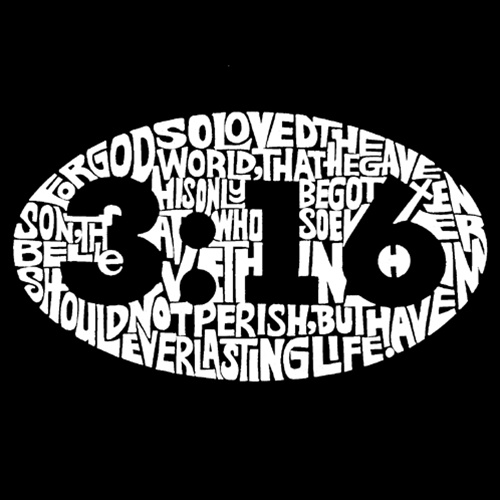
For God so loved the world that he gave his only Son, so that everyone who believes in him may not perish but have eternal life.

There was a pharisee named Nicodemus and he came to visit Jesus at night. As a leader of the Jews it was probably best to visit Jesus under the cover of darkness, and when they met together Nicodemus began to ask Jesus about all he had seen and heard. “Teacher, it is clear to us that you have come from God because no one can perform the signs that you do apart from the presence of God.” “You’re absolutely right,” Jesus replied, “No one can see the kingdom of God without being born from above.”

“Now wait a minute Jesus, how can anyone be born after having grown old? Can someone re-enter their mother’s womb and be born?” Jesus calmly answered, “Listen Nicodemus, no one can enter the kingdom of God without being born of water and Spirit. What is born of the flesh is flesh, and what is born of the Spirit is spirit. Do not be surprised that I told you that you had to be born from above. You know very well that the wind blows where it chooses, you hear the sound of it, but you do not know where it comes from or where it goes. So it is with everyone who is born of the Spirit.”

“But Jesus how can these things be?!” “Nicodemus, are you a teacher of Israel, and yet you do not understand these things? If I had told you about earthly things you would’ve believed,  but now I talk to you about heavenly things and you do not believe. No one has ascended into heaven expect the one who descended from heaven, the Son of Man. Just as Moses lifted up the serpent in the wilderness, so must the Son of Man be lifted up, that whoever believes in him may have eternal life. For God so loved the world that he gave his only Son, so that everyone who believes in him may not perish but have eternal life. Indeed, God did not send the Son into the world to condemn the world, but in order that the world might be saved through him.”

Nicodemus_Jesus

Last week we looked at one of the most well known stories from the Old Testament: Adam and Eve in the Garden. Today I could not help myself from proclaiming one of the most well known New Testament scriptures: John 3:16. In the entire biblical canon, both the Old and New Testaments, there must be few, if any, scriptures that have been so remarkably loved by so many as this text. It is simple and to the point. It opens up endless possibilities. It embodies the hope of all Christians. It is beautiful and appealing. It begins with the beginning and stretches into the far reaches of eternity. It proclaims that which is most fundamental to our faith: that God loves us. 

But the scripture today is about so much more than just that one isolated verse. I am thrilled that so many of us have memorized John 3:16, but we cannot forget about the inquisitive soon-to-be disciple named Nicodemus.

What do you make of this pharisee who came to see Jesus in the middle of the night?


On Tuesday morning, after gathering with the UMW, I made my way outside onto our back parking lot. After months of cold weather, with mounds of snow continually piling up, the Pre-School was finally able to play outside again. Now, let me be clear: I am just like those children. Having been cooped up in this church all winter I was just as, if not more, excited to run around and play outside. The children all had their plastic cars and bikes, some were running around in circles, others were using the fake gas pump to fill up the cars, (capitalism at its finest) when I saw a box of sidewalk chalk.

sidewalk-chalk

I silently made my way to the middle of the black top with the biggest piece of chalk that I could find and I began to draw. Without saying a word, or drawing attention to myself, the children began to congregate around me in a large circle. “Pastor Taylor, what are you drawing?” I heard one them mutter behind me, and I replied, “You’ll see in a moment.” As I stepped back the children moved with me, and there on the blacktop was a giant head with a wide open mouth. Why? I have no idea, but its what I drew. And without really understanding what I was doing I told the children that I was going to jump in the mouth of this mystery person made out of chalk. If I had said that to any of you, you would have thought that I lost my marbles. But with the children, they believed me, they looked into my soul, and some of them even begged me not to do it. But there I stood crouched with my hands at my side, and I jumped in. Of course I acted as if I was falling in and some of the children laughed, and when I was done, I encouraged some of them to jump in. There was a moment when the first girl stepped forward to the edge of the face. As I saw her prepare to jump in I realized she was unsure of what would happen to her. While rocking her hands back and forth I could see the sense of wonder and imagination brewing within her as she jumped right in.

Thats what Nicodemus was like. Jesus is known for having said that whoever does not receive the kingdom of God like a child shall not enter it. Nicodemus had a childlike and inquisitive faith. When confronted with the man of many wonders, Nicodemus wanted to jump right in to learn more about this new kingdom. While his contemporaries scoffed at the new teaching, Nicodemus’ imagination allowed him to see deeply into the truth of Jesus.

The other leaders of the synagogues were already muttering with irritated resentment regarding this so-called teacher who was beginning to develop a following. They disagreed with his strange ways, his strange teaching, and his strange disregard for authority. Nicodemus, however, felt there was indeed something strange about Jesus, but it could not be dismissed so easily. To Nicodemus, God was still speaking through people, and to his ears there was something in this new proclamation worth considering.

So, under the cover of night, Nicodemus went to learn more. He wanted to see for himself, he desired to hear from the man himself, to question and to learn. Instead of giving into the rumors, Nicodemus wanted to base his understanding on first hand experience. He could not settle for hearing about the man, but instead needed to jump straight into the abyss of the Son of Man.

In his willingness to question Christ we discover that Nicodemus was a great man who possessed enviable qualities. While suffocated by the surrounding culture and religions assumptions and expectations, he somehow managed to exhibit an open-mindedness that broke the chains of religious limitation. 

Moreover, Nicodemus is one of the best examples of discipleship. By the end of the gospel account Peter will have denied Jesus in a shameful panic, the rest of the disciples will have scattered or run off into hiding. For all practical purposes, the story had come to a close. But Nicodemus, this strange pharisee from our story today, openly stood forth as one of Jesus’ only remaining friends. Nicodemus dared to risk the punishment of superiors, the resentment of his peers, by paying the last loving rites to the dead body of Jesus that would have been treated as trash by anyone else.

Nicodemus is an understatedly important figure in the Gospel for us in the life of the church. He is so familiar to us, because he is just like us. He asked the kind of questions that many of us would have asked, had we been there with our Lord.

If you take a step back from the account, what Jesus was talking about sounds impossible. How can someone be born anew? Jesus simply responds to our misunderstanding and confusion; its not about being physically reborn as a child, but about being born anew in such a way that you can reorient your life. We must be born anew. Our prayer and our hope should be rooted in the desire to be recreated. Make me another kind of being from what I am. Renew a steadfast spirit within me. Create in me a clean heart. Do all this, O God, so that I can lead a different life. 

The whole point of the gospel is that God can achieve the impossible. Just as God can raise Jesus from the dead, God can achieve the impossible with you and me. And he does it! We see it happening in other peoples lives, our wayward friends who reorient their lives for the better. We have experienced it on some measure in our own lives however small or large. How does God change us? Ah, says Jesus, that is part of the great mystery. The wind comes who knows how, cleansing, refreshing, and then before we know it, its gone.

For God all things are possible. We can be born anew. We can find a new orientation for our lives no matter how young or old we may be. But even greater than this, is the promise of eternal life.

Jesus ends his conversation with Nicodemus with the, now famous, “for God so loved the world that he gave his only Son, that whoever believes in him may have eternal life.”

Martin Luther, the great protestant reformer once said, “If I were as our Lord God, and these vile people were as disobedient as they are now, I would knock the whole world to pieces!” We consistently make a mockery of God’s love by continually disobeying his commands, and by ceasing to love others as we love ourselves. How can God love us when we ruin everything he created including ourselves?

God loves us, because God is love. God loves the world; his foolish, blundering, wayward, and sin sick world. This love utterly breaks through our foolish conceptions of what love means and is; God’s love runs out to lengths that sounds incredible to our human ears because we could never return that same love.

god-god-is-love-lord-love-the-greatest-love-of-all-favim

God is like that remarkable parent who continues to love a child through all the wrong decisions and failures. Picking them up from the police station, driving them back to rehab, sitting with them night after night helping with homework, loaning them money when they fall on hard times. The only difference being that when our love for our children fails, his love for us remains steadfast.

God proves his love toward us by doing all that God can do, and giving all that God can give to help us; stretching himself even to sacrifice his only Son, and hold back nothing.

Thats what Nicodemus learned from his time with Jesus. That in the impossible mystery of God’s created order, God’s love knows no bounds, was made manifest in Christ’s death on the cross for you and for me and for the whole world.

Let us all strive to live like Nicodemus. Let our faith be inquisitive and exciting. Let us all prepare to jump into the unknown, to fearlessly step into a relationship with the triune God, and above all remember that great scripture: God so loved the world that he gave his only Son, so that everyone who believes in him may not perish but have eternal life. To God be the Glory.

Amen.


Weekly Devotional – 2/10/14

Devotional:

1 Corinthians 3.5-7

What then is Apollos? What is Paul? Servants through whom you came to believe, as the Lord assigned to each. I planted, Apollos watered, but God gave the growth. So neither the one who plants nor the one who waters is anything, but only God who gives the growth. 

Charisma is an important element of leadership. In the contemporary Church there are a number of very charismatic leaders who are drawing numbers of people to faith in Jesus Christ. Many of these Christian leaders have published books, are interviewed by major news corporations, and have a strong social network presence. The fact that names such as Rob Bell, Joel Osteen, Rachel Held Evans, Rick Warren, Adam Hamilton, and Mark Driscoll (among others) are known in many homes across the American landscape says a lot about the growth of contemporary Christianity headlined by strong and charismatic leadership.

Rob Bell

Rob Bell

Mark Driscoll

Mark Driscoll

Adam Hamilton

Adam Hamilton

Joel Osteen

Joel Osteen

I have read books by the above mentioned leaders, I have watched youtube videos of their sermons/lessons. They can be very persuasive in the way they present their understanding of the gospel. In many ways, they are doing a great service for the Church through their ability to maintain the relevancy of the Christian faith for the modern world.

However, there is a strong temptation with charismatic leaders to become more consumed by them, than by the one they are talking about. For example: I recently heard about a church that, instead of giving new Christians a bible, they gave them a copy of Rob Bell’s Velvet Elvis. Now, Velvet Elvis is an incredible commentary on the place of faith in the modern world, but it is not a substitute for God’s Word. Charismatic leaders achieve a great thing when they bring people to the faith, but it is God who grows us in our faith.

When Paul was confronted with the differing teachings of Apollos in the Christian community of Corinth, he rightly affirmed the capacity for Christian leaders to plant the seed of faith and provide the initial nourishment of water, but in the end it is always God who provides the growth.

tumblr_lbbposcwda1qcqn2ko1_500

We are not called to follow the Rob Bells and Mark Driscolls of Christianity, but instead we are called to follow Jesus Christ. As we all continue down our faith journeys, let us embrace the wonderful teaching of charismatic leaders remembering that their job is to always point, not at themselves, but toward Jesus Christ. Let us see the light of Christ shine through them and us so that we might grow in our faith according to God’s grace, love, and mercy.