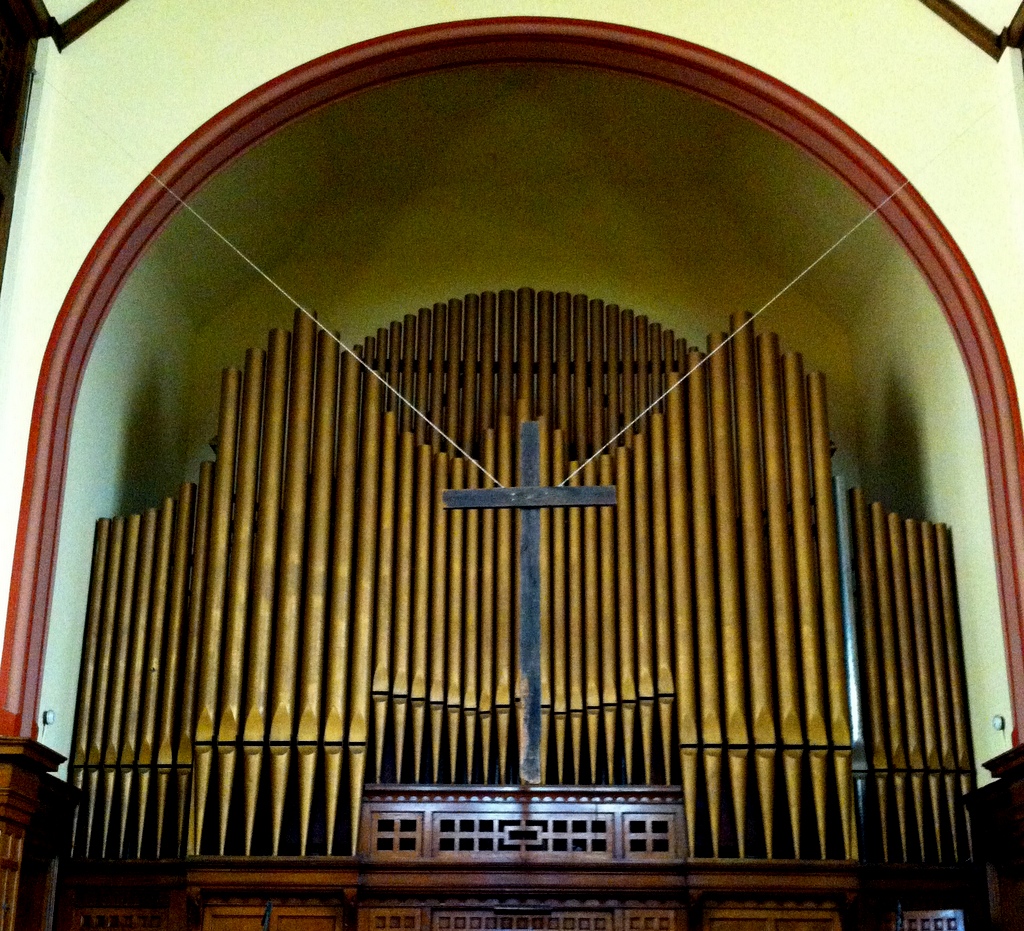
The Image of the Invisible – Sermon on Colossians 1.15-28

Colossians 1.15-28

He is the image of the invisible God, the firstborn of all creation; for in him all things in heaven and on earth were created, things visible and invisible, whether thrones or dominions or rulers or powers – all things have been created through him and for him. He himself is before all things, and in him all things hold together. He is the head of the body, the church; he is the beginning, the firstborn from the dead, so that he might come to have first place in everything. For in him all the fullness of God was pleased to dwell, and through him God was pleased to reconcile to himself all things, whether on earth or in heaven, by making peace through the blood of his cross. And you who were once estranged and hostile in mind, doing evil deeds, he has now reconciled in his fleshly body through death, so as to present you holy and blameless and irreproachable before him – provided that you continue securely established and steadfast in the faith, without shifting from the hope promised by the gospel that you heard, which has been proclaimed to every creature under heaven. I, Paul, became a servant of this gospel. I am now rejoicing in my sufferings for your sake, and in my flesh I am completing what is lacking in Christ’s afflictions for the sake of his body, that is, the church. I became its servant according to God’s commission that was given to me for you, to make the word of God fully known, the mystery that has been hidden throughout the ages and generations but has now been revealed to his saints. To them God chose to make known how great among the Gentiles are the riches of the glory of this mystery, which is Christ in you, the hope of glory. It is he whom we proclaim, warning everyone and teaching everyone is all wisdom, so that we may present everyone mature in Christ. For this I toil and struggle with all the energy that he powerfully inspires within me.

dsc03573small

A few years ago, I was with a group of people from Northern Virginia who regularly traveled into Washington D.C. to help serve food to the homeless with a group called Sunday Suppers. The team would gather together on a Sunday afternoon, prepare countless bag lunches and a large dinner and then travel into the city. The point of the mission was not so much just to provide food for the hungry, but everywhere we stopped we would set up tables so that all of us could sit and eat together.

I had gone on a few of these Sunday evening adventures, and had even gotten to the point where I recognized a few of the “regulars” and knew them by name. On one particularly cold December evening, I was with a group of youth serving food near a metro station when I struck up a conversation with one of the “regulars” named Charles and a church member who was on his first Sunday Suppers trip. Charles stood there in front of us with his hands outstretched waiting for food, his ripped navy sport-coat showed years of ware, and his curly grey and black hair was billowing outside of his knit cap. “I really appreciate this,” he said, “but you Christian types always come out around Christmas and Easter. The people out here, we have more food than we know what to do with, but where are you in July? You might not realize it, but that’s when we need you to come. I’m with these people everyday, and I know what they need.”

I was distracted for the rest of the evening. I kept thinking about how happy and pleased I was with our missional activities, and how quickly those feelings disappeared after I had talked with Charles. It wasn’t until the ride home that the young boy who I had been standing with talked to me. He was looking down at his knees when he finally began to speak: “Sometimes we feel like we’re being Jesus for people, bringing them food, sitting and eating with them. I guess it makes us feel good. But tonight, I felt like Charles was being Jesus for us.”

The gospel is for all people and all minds. Throughout the book of Acts and the epistles Paul is notorious for using the contexts of particular people to help illuminate the glory of Jesus Christ. For the Colossians, he bends to their philosophical speculations to demonstrate the importance of Christ for the world. He searches for a point of contact and then pushes there again and again until the fullness of God in Christ permeates throughout their common understanding. For the Colossians Paul relates Christ to their Natural Theology, presenting God’s unique revelation of himself in Christ in the categories of thought with which they are familiar. He exalts Christ in terms that they would understand. This is how he spread the Good News throughout the Mediterranean.

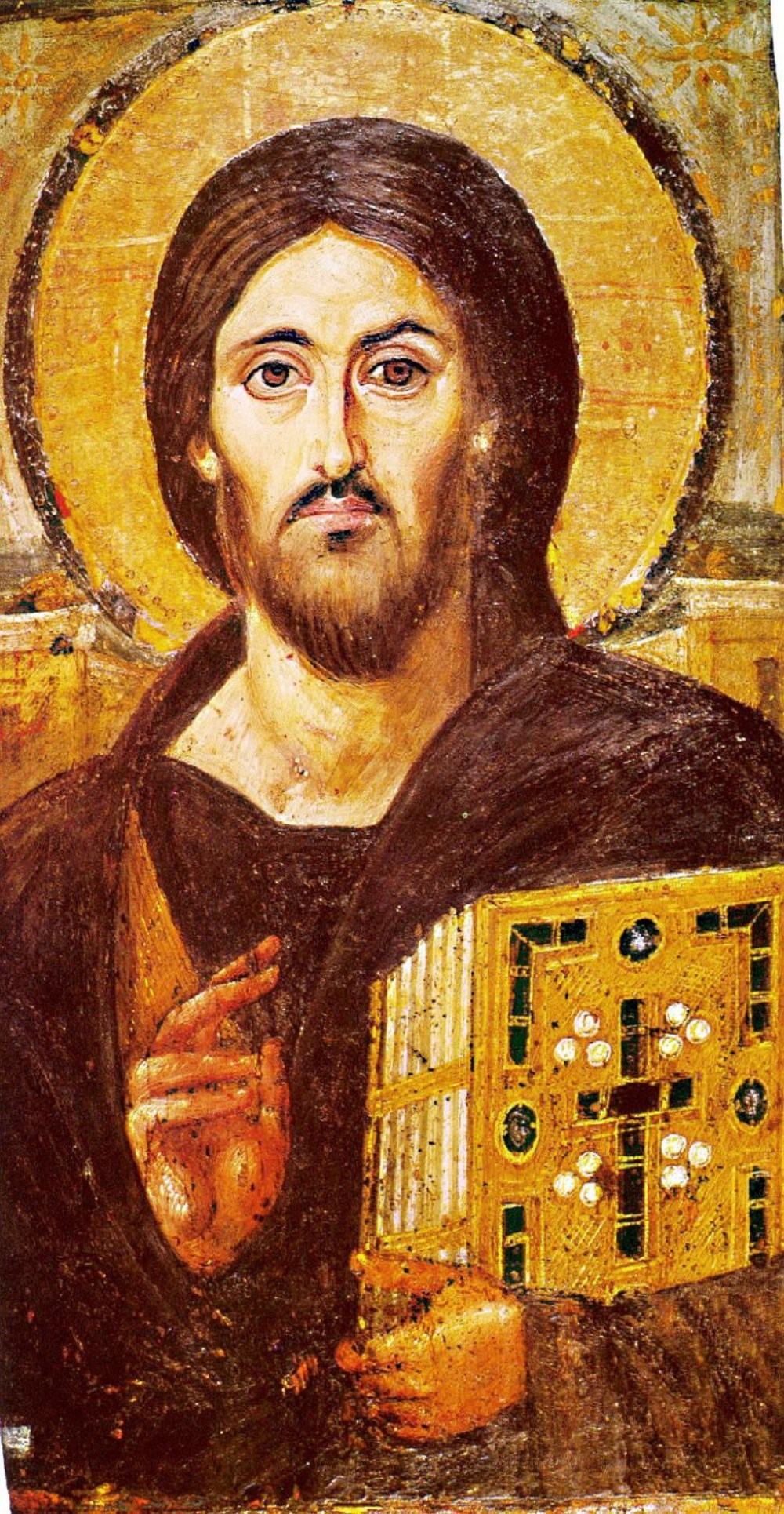
Throughout the history of the Church we have similarly tried to rediscover who Christ is for particular times and places. Pastors, preachers, and prophets have used many names and adjectives corresponding with peoples’ understandings. Jesus has been referred to as “The Good, the True, and the Beautiful, The Rabbi, The Turning Point of History, The Light of the Gentiles, The King of Kings, The Cosmic Christ, The Son of Man, The True Image, The Crucified One, The Monk Who Rules the World, The Bridegroom of the Soul, The Divine Human, The Universal Man, The Mirror of the Eternal, The Prince of Peace, The Teacher of Common Sense, The Poet of the Spirit, The Liberator, The Man Who Belongs to the World” (Chapter Titles from Jaroslav Pelikan’s Jesus Through the Centuries).
unknown-artist-christ-pantocrator-st-catherine-monastery-mount-sinai-egypt-6th-century-e1277330981153


John Henry Newton, the Anglican priest who wrote Amazing Grace, also tried to convey this searching for appropriate descriptors through one of his hymns:

“Jesus, my Shepherd, Brother, Friend,

My Prophet, Priest, King,

My Lord, my Life, my Way, my End,

Accept the praise I bring.”

We, like Paul, have continuously adapted Jesus to terms, ideas, and images acceptable to particular peoples and cultures. This has been an incredibly important element of the Christian message as we have made the Gospel approachable from many different places. And though we should continue to make the bible relevant for those outside the church, we have fallen prey to our own self-righteousness and sin. Like the group that night serving food to the homeless in DC, we often think that Jesus is walking along with us, that we are bringing Jesus to people, when in fact we should be following him because he is already there.

We always try to make Jesus look just like us. Each successive period in Christian history has found its own thoughts in Jesus, which was one of the only ways to make him live, but we have continuously created him in accordance with our own desires, hopes, and character. We don’t realize it, but most of the times we think we find Jesus, its like we are looking into the bottom of a well – all we’re really seeing is a faint reflection of ourselves.

Just look around our church, you can find all sorts of images of Jesus. Jesus with blonde hair and blue eyes, Jesus with slight stubble, and Jesus with a full-blown beard. I’ve seen pictures of Jesus wearing a black leather jacket standing in front of an American flag. I’ve seen images of an African American Jesus working in the fields in Pre-Civil War America. I’ve seen Jesus in jeans and a flannel shirt cutting down trees. I’ve even seen Jesus in a business suit speaking with clients.

All of these portrayals are important. They get at the heart of Jesus being Emmanuel: “God with us.” They help to adapt Jesus to a particular culture and set of people, making him and his message relevant for the masses. However, when we use all these different images of “God with us,” We cannot forget that Jesus’ identity begins with God.

Jesus is the image of the invisible God, the first born of all creation, fully God and fully human. In Jesus all things in heaven and on earth were created, things both visible and invisible. He himself is before all things, and in him all things hold together. For in him the fullness of God was pleased to dwell and through him God was pleased to reconcile to himself all things. He is the image of the invisible God, the word for image in Greek is εἰκών, meaning likeness or a representation. Jesus in not merely a picture of God but contains God’s likeness: literally divine.

The letter to the church in Colossae contains all sorts of information necessary for the people to align themselves with the Lord. Paul uses the language of natural theology for them, he adapts Jesus to their culture, but he is unwilling to separate the identity of Christ from almighty God. Jesus is the image of the invisible God. The letter to the Hebrews also tells us: “Jesus Christ is the same yesterday and today and for ever. Do not be led away by diverse and strange teachings; for it is well for the heart to be strengthened by grace” (Heb. 13.8-9). Jesus is God with us, made incarnate to all people, but we must remember that in him the fullness of God was pleased to dwell in order to reconcile himself to all things; the same yesterday, today and for ever.

This past week I spent two days on a retreat at the Conference Center in Blackstone Virginia. I gathered with all of the other provisional candidates from our Annual Conference as we discussed our journeys of faith and the future of the church. There were clergy present from all over the state of Virginia, some young, some old, some newly Christian, and some Christian since birth. We gather twice every year to help maintain our connectional system while working together for the future of God’s kingdom. Our Bishop, Young Jin Cho, opened our time together with a service of worship and preached to us about following Jesus. He talked about the story when Mary and Joseph had accidentally left Jesus at the Temple in Jerusalem. Mary must have been moving along, assuming that Jesus was walking right with her, and then she discovered that he was missing. She had to completely turn around until she realized that she had left without him. Bishop Cho encouraged us to continually ask ourselves these questions: Are we walking and hoping that Jesus approves what we’re doing, or are we following him? Have we turned ourselves back to the Lord like Mary? Or are we wandering around the desert? He concluded by stating: “Without spiritual disciplines in the church there can be no discipleship, without spiritual disciplines we will not be able to follow Jesus.”

Bishop’s Cho thoughts are relevant for us this morning as we consider Jesus being the image of the invisible God. We need to ask ourselves. Are we almost Christians? Do we live our lives in such a way that we assume and hope that Jesus is on board with us? Do we imagine that Jesus looks just like us, talks like us, thinks like us? Do we believe that God would be proud of the way we live our lives?

Or are we truly Christian? Do we recognize that while Jesus is just like us, he is also totally unlike us? Do we follow behind Jesus letting him lead us? Do we love him with all of our heart soul mind and strength? Are we willing to allow ourselves to recognize that Jesus is in the people we encounter rather than us bringing him to them? Do we hope in God in Jesus Christ? Are we comfortable standing in the shade of the cross while looking for the glory of the resurrection?

When I sat in the van on my way home from Washington DC the light of the gospel was made real through that young man sitting next to me. For the rest of my life I will never forget his words: “Sometimes we feel like we’re being Jesus for people, bringing them food, sitting and eating with them. I guess it makes us feel good. But tonight, I felt like Charles was being Jesus for us.”

We’re not Jesus, and that’s a good thing. We gather together here to worship the remarkable God who became flesh in the man Jesus Christ, the man who walked and talked among us pointing back toward God. We no longer need to adapt Jesus to particular settings, but instead adapt ourselves to Jesus Christ. We are here, like Paul, to make the Word of God fully known. The scripture today helps to remind us that we are not Jesus Christ, but that we have the responsibility to be shaped by the Word of God to be the body of Christ for the world. God has chosen to show us the riches and glory of this mystery, we’re not Jesus, but Jesus is in us and is leading us toward the future hope of glory.

Amen.

The Harvest is Plentiful – Sermon on Luke 10.1-11

(preached at St. John’s UMC on 7/7/13)

Luke 10.1-11

After this the Lord appointed seventy others and sent them on ahead of him in pairs to every town and place where he himself intended to go. He said to them, “The harvest is plentiful, but the laborers are few; therefore ask the Lord of the harvest to send out laborers into his harvest. Go on your way. See, I am sending you out like lambs into the midst of wolves. Carry no purse, no bag, no sandals; and greet no one on the road. Whatever house you enter, first say, ‘Peace to this house!’ And if anyone is there who shares in peace, your peace will rest on that person; but if not, it will return to you. Remain in the same house, eating and drinking whatever they provide, for the laborer deserves to be paid. Do not move about from house to house. Whenever you enter a town and its people welcome you, eat what is set before you; cure the sick who are there, and say to them ‘The kingdom of God has come near to you.’ But whenever you enter a town and they do not welcome you, go out into its streets and say, ‘Even the dust of your town that clings to our feet, we wipe off in protest against you. Yet know this: the kingdom of God has come near.’

IMG_1753

The Harvest is Plentiful

When I was in my freshman year of college, I attended numerous on-campus Christian organizations. Every week I gathered with a different set of people intent on worshipping God in a place where God is largely absent from thoughts, conversations, and actions. On one particular Wednesday evening I found myself in a room with ~100 other students preparing for worship. From what I remember of the event, the music was sub-par, the message was flat and lacking biblical foundations, but the people we incredibly kind and welcoming. As I made my way out of the worship space that night, unsure of whether I would return the following week, a young woman walked over and presented me with a stack of papers. “Thank you so much for coming tonight!” she exclaimed with pronounced over-emphasis, “Bring these with you to the Moffet Dorm, knock on every door, and make sure the students know that they are going to hell unless they accept Jesus Christ. Thanks!”

With the packet in my hands I made my way out of the building to the nearest trashcan, dumped the papers, and never returned.

By the time we get to the tenth chapter of the gospel according to Luke, the disciples have spent enough time with Jesus to witness healings, miracles, teachings, and even the transfiguration. After a peculiar debate about who can truly follow the Lord, Jesus appointed seventy others in addition to the twelve disciples to go on ahead of him everywhere that he intended to go. It was clear at this point that the mission of Jesus Christ in the world was expanding beyond the limits of the core followers. The harvest is plentiful, but the laborers are few. The instructions to the seventy are simple and direct: Do not be overburdened by what you carry, greet each house you enter with peace, do not move about simply from house to house, eat what is offered, cure who you can, and above all say to them, “The kingdom of God has come near to you.” Jesus chose seventy people to carry out this vitally important mission to the greater area in order to spread the good news of the reign of God incarnate in the man Jesus Christ.

The choice of seventy is particularly striking considering its linkage to the time of Moses when the Israelites were wandering through the wilderness. The Lord said to Moses, “Gather for me seventy of the elders of Israel, whom you know to be the elders of the people and officers over them; bring them to the tent of meeting, and have them take their place with you.” These seventy became part of the leadership of the budding nation, and helped to carry the message of Yahweh to the people throughout their trials and tribulations, joys and celebrations. So Jesus, ever aware of the Old Testament and its ability to reveal God’s grace in the world, appointed seventy to help with his ministry in the world.

The way Jesus expanded the Gospel in the areas surrounding his ministry is relevant for how we, the church, still exist within the world today. Unlike the college ministry that I had experienced we are not called to knock on people’s doors, threatening them with hell unless they accepted Jesus Christ as their personal Lord and Savior. Jesus’ ministry rejects those kinds of tendencies and rather emphasizes three important aspect on what it means to be the body of Christ for the World

1)    Reach the Community

2)    Focus on the present and future

3)    Prayer

Community: Jesus commands the seventy to enter the communities where he will eventually reach. Ministry in the church is not supposed to be focused inwardly, but instead out there, toward the greater community. If the church is focused primarily on maintaining the status quo, and creating ministry for those already within the doors then we will wind up worshipping ourselves rather than God every Sunday. Much to the contrary of many Christian programs we are not called to move about form house to house trying to convince people to believe in God. Jesus specifically says in the passage this morning: “Do not move about from house to house.” Instead, the church is about making relationships with the community so that others can see and experience God’s love through us. Marching door to door, or just expecting people to show up on Sunday morning will never achieve the fullness of God’s kingdom on earth. The best way to help a church grow, and therefore participate in God’s glory, is to simply invite someone to worship that you are already in a solid relationship with. Our faith community will grow when we have something worth sharing, and we already do – God came in the form of flesh to dwell among us so that we might be brought back to God, God died on the cross for us so that we might never die again!

The Present: Jesus ministry was always focused on the present and the future while also remembering the past. It is important to remember what allowed Jesus to be who he was, figures like Moses and the stories of the Israelites, but its important to notice that he did not try to just merely repeat what had already been done. He used the past to help him envision a new and exciting future. Many of you have been with this church for a long time, there are things that you have experienced that have made this church what it is. We need to remember our past so that we might envision what the future can look like. That means that we simply can’t keep repeating everything we’ve always done, but use our story to help inform how we continue to participate in God’s kingdom today and in the future. Jesus’ ministry was always on the move, invigorating and exciting for everyone who participated in it. Our church is and will continue to be an exciting place where worship can bear fruit in our lives and the lives of the greater community, where our missions and service can help those in need within our building and abroad.

Prayer: Jesus consistently relied on prayer throughout his ministry and therefore demonstrated for us what can be a sustaining practice as we wrestle with what it means to be Christian in the world. Whenever Jesus faced a particular challenge throughout his life, he used prayer to return his focus to the one thing needful, and allowed him to fully embody the mercy and love of God in his thoughts, words and actions. Jesus commanded the seventy to greet every place they entered with “Peace to this house,” this is a prayer that can continue to help to bring all of us back together as the body. We, as a church, are similarly called to be a people of prayer who rely on spending time with God in order to reflect God most fully for the world. Without prayer we are just like any other organization. But with prayer we become God’s holy church.

A few months ago I was with Lindsey visiting her sister in New York when I received a phone call at 9am one morning from my home District Superintendent. “Taylor, I know you were probably not expecting this phone call so soon, but you have been appointed by the Bishop to your first church. (I remember sitting excited on the other end of the line, anxious to hear more) You will be serving St. John’s UMC in Staunton VA. The Bishop and the cabinet believe your gifts and graces fit with the church and we will be praying for you.” Like anyone else would, the first thing I did was Google the church to find out any information that I could. As I searched around on numerous websites, I looked at maps and pictures, listened to part of one of Rev. Meadows’ sermons, and even started looking around at the wonderful city of Staunton, until I finally found the church’s listing on the general United Methodist Church’s website database: “Thank you for visiting. You are always welcome. The church has many doors through which people share in serving God and others. Whether you visit in person or via the Internet, we hope you discover something here to encourage in your spiritual journey. Average worship attendance: 70.”

70. That number stuck with me for the following weeks. I began to pray for those seventy people, for you, regarding the beginning of our time together. I compared the number with fellow seminarians who were also discovering their new appointments. But there was something more about the number, something I could not quite put my finger on until I found myself reading from the tenth chapter of the gospel according to the Luke the week before I graduated.

“After this the Lord appointed seventy others and sent them on ahead of him in pairs to every town and place where he himself intended to go. He said to them, “The harvest is plentiful, but the laborers are few; therefore ask the Lord of the harvest to send out laborers into his harvest.”

IMG_1702

Here we are, nearly seventy Christians just like the ones Jesus sent out into the world. How blessed are we to have such a wonderful number of people worshipping. Jesus appointed seventy of his followers to change the world, just imagine what we can be capable of here in Staunton! Through reaching out to the greater community, focusing on the present, and relying on prayer we can be the seventy appointed by Jesus to go out sharing the good news. Jesus is calling us, calling us to be more and do more than we have in the past, he is calling us to be nothing short of the seventy described in the Luke chapter 10.

The kingdom of God has come near. God has brought this church together in order to reach the community and help share the story of God’s interaction with God’s people. We have the Lord’s Supper to help us reflect on the past while looking forward to an incredible future. And we are called to a life of prayer, of commitment to the church, and faith in the triune God.

Truly I tell you, the harvest is plentiful. Jesus is sending us to be his people in the world.

Amen.

The Story – Sermon on Romans 12.1-8

(preached during my first Sunday as the pastor of St. John’s UMC in Staunton, Virginia on 6/30/2013)

Romans 12.1-8

I appeal to you therefore, brothers and sisters, by the mercies of God, to present your bodies as a living sacrifice, holy and acceptable to God, which is your spiritual worship. Do not be conformed to this world, but be transformed by the renewing of your minds, so that you may discern what is the will of God – what is good and acceptable and perfect. For by the grace given to me I say to everyone among you not to think of yourself more highly than you ought to think, but to think with sober judgment, each according to the measure of faith that God has assigned. For as in one body we have many members, and not all the members have the same function, so we, who are many, are one body in Christ, and individually we are members one of another. We have gifts that differ according to the grace given to us: prophecy, in proportion to faith; ministry, in ministering; the teacher, in teaching; the exhorter, in exhortation; the giver, in generosity; the leader, in diligence; the compassionate, in cheerfulness.

The Story

Years ago there was a young man, fresh out of seminary, ready to begin serving his first appointment. He had taken all of the appropriate classes, learned from the best professors, volunteered in the local community and was excited to finally begin his ministry. After passing all of his boards and graduating from his elite seminary he packed his belongings and headed out into a rural area in the North Georgia Conference to John Wesley United Methodist Church. The young man was so anxious and filled with joy that he could hardly contain himself when he arrived in town the first day, so before he unpacked any of his possessions he drove by his new church. He got in his car and went to the listed address, but he missed the church. When he turned around he discovered what had prevented him from seeing the building – there was the oldest most decrepit looking tree with roots stretching all over the ground blocking the sign and most of the church from being visible on the road. In addition to the tree the young minister noticed that some of the hinges needed replacing and a new coat of paint could help too, but above all things he could not stand that awful tree. And so, before unpacking any of his important belongings, the young man found his chainsaw and went to work on the tree. By the time he had finished chopping it down he was incredibly proud of himself; the sign and building were now completely visible from the road and he thought that perhaps a few extra people might be in church on Sunday morning.

A few days later, as he sat in the study of his parsonage preparing his first sermon, the local District Superintendent called: “I hope you haven’t finished unpacking yet,” he said,  “because you’re being reappointed.”

You see, the church was named John Wesley church for a reason, nearly two hundred years ago John Wesley stood on the roots of that tree and preached to the people in the community about the overflowing grace of God, and they decided to build a church right where he stood, and that young minister had chopped it down.

Stories are remarkably important. They contain everything about who we were, who we are, and who we can be. Stories held within a community help to shape the ways we interact with one another, and how we obtain the collective memories of the past. We tell stories to make people laugh, to teach lessons, and remember the important elements of life.

Today, we live in a world of competing narratives; people and organizations are constantly bombarding us with information regarding what we are to think and, perhaps more frighteningly, who we are to be. It is nearly impossible to turn on the television, get online, or even drive down the road without someone telling us how we are supposed to understand the world. Every single day we are thrust into a world that tells us what we are supposed to think, speak, and do; that frightens me. The world is full of ways for us to discover our identities and they are insufficient when compared to our fullest identities in Christ.

God’s Word, through the apostle Paul, looks out to the world and dismisses all of it. Do not be conformed to this world but be transformed by the renewing of your minds! Do not let your favorite reality television shows dictate how you interact with other people, do not let the news channel be the only way you understand the world, do not let your political persuasions limit your relationships with those who are different from you. Instead, be transformed by the renewing of your minds. Being transformed implies a willingness to let God enter your heart and soul and reorient you. Being transformed into God’s vision for who we are means recognizing that, if way say yes, it would be something great and glorious; but we also notice that saying “yes” carries with it a great consequence, for it will have a huge effect on the way we live our lives.

Transformation, a true change in our lives, occurs when we are turned away from our sinful selfish lives back toward God. We are transformed by the renewing of our minds every time we enter this building to hear God and worship God. The story of the church is supposed to be shaped by the greatest story ever told, God becoming flesh in Jesus Christ in order to reconcile the world unto Himself.

IMG_0391

Last weekend I had the privilege of kneeling before 3,000 Methodist from the state of Virginia and was commissioned by our Bishop as a Provisional Elder for our great denomination. According to the ways of the world this is perhaps the worst time to enter ministry. Mainline Protestant Christianity is floundering in the United States, people are no longer attending churches, worship attendance in plummeting, and Church buildings are being closed regularly. Christianity has lost its status in the political arena, we are becoming biblically illiterate, and young people are largely absent from worship. The average age of a member of a United Methodist church is 57.  I cannot begin to tell you how many people tried to dissuade me from entering the ministry at this point in my life because of these facts; because by the world’s standards, this is not the time for ministry, nor is it the time of the church.

Thanks be to God that we do not need to be conformed to the ways of the world, but instead get to be transformed by the renewing of our minds.

At the beginning of the Gospel according to St. Mark, Jesus begins his Galilean ministry by proclaiming: “The time is fulfilled, and the kingdom of God has come near; repent and believe in the good news.” In this one solitary statement, everything about the world has been changed. From this point forward God’s actions in the world will dictate how history takes places, how everything will be transformed, and how we can understand who we are to be in God’s story.

My story begins when I was baptized at Aldersgate UMC in Alexandria, Virginia when I was 19 days old. That church took the baptismal vows seriously and they raised me in the faith: I learned about the goodness of God from Children’s message, sermons, and the Bible. I helped establish the first youth band in the church, led bible studies, and ran the sound system for Sunday services. I was made part of the body of Christ and invited to participate in any way that I could. After one of my dearest friend’s died in a car accident I found myself praying more than I ever had before and started wrestling with a call to ministry. I majored in Religious Studies and Philosophy at James Madison University and eventually enrolled at Duke Divinity School in order to obtain my Masters of Divinity. I interned at numerous churches helping in a variety of ways from Bryson City, North Carolina to Birmingham, Michigan. I have led mission trips to places all over the United States and abroad. I have sat with people during the darkest moments of their lives at Duke University Hospital, and I have celebrated baptisms and the Lord’s Supper with people who earnestly desired them. But none of my experiences of the church could compare to this morning.

photo(1)

In my life I have never been more nervous, excited, thrilled, terrified, humbled, or blessed than I am right now in this pulpit. We are standing at the precipice of a great journey. We get the privilege to gather together as a community of faith every week to share the Good News of God. As we live and move and have our being in God almighty we will enter this place as the body of Christ to proclaim God’s kingdom on earth. I cannot wait to learn about how God has impacted your lives, made you into the individuals you are, and brought this church together. We get to share our stories with each other because they reveal the great things God is still doing in the world.

The stories of the world can never compare to the actions of God in the world through Jesus Christ. Whether you’re a brother or a sister, mother or father, republican or democrat, rich or poor, none of those narratives, none of those identities, compare with what it means to be Christian.

The stories of scripture help to shape who we become throughout our lives. They speak greater truths than simple affirmations or facts. That’s why Jesus never simply explains anything to anyone throughout the gospels, but instead responds by telling a story, or a parable. Stories are part of the fabric of what it means to be human, and even more importantly what it means to be disciples of Jesus Christ

According to the ways of the world the church is in a difficult place. But I’m not worried about any of that, I’m not worried about anything because my hope is not in me, my hope is not built on the ways of the world, but my hope is built on nothing less than Jesus Christ.  Christ is the solid rock upon which this church stands, comforting, nurturing, and sustaining us in all that we do. We can believe in the future of the church because our faith is in almighty God! We are here to share our stories so that we might learn more about how we are caught up in God’s story. The ways of the world are nothing but sinking sand, they can be shaken and moved by the slightest wind but God’s story is eternally unshakable and unmovable.

Be transformed by the renewing of your minds! Remember your truest identities in Jesus Christ; allow the scriptures to wash over you so that you can remember who you are, and whose you are. Listen to the stories of your brothers and sisters so you can remember how God continues to act in your lives every single day. The kingdom of God has come near! Do not be conformed to this world, but be transformed by the renewing of your minds!

Amen.

IMG_1708

With God’s Help – Sermon on Romans 4.13-17

(preached during my final Sunday at Aldersgate UMC in Alexandria, Virginia on 6/9/2013)

Romans 4.13-17: “For the promise that he would inherit the world did not come to Abraham or to his descendants through the law but through the righteousness of faith. If it is the adherents of the law who are to be the heirs, faith is null and the promise is void. For the law brings wrath; but where there is no law, neither is there violation. For this reason it depends on faith, in order that the promise may rest on grace and be guaranteed to all his descendants, not only to the adherents of the law but also to those who share the faith of Abraham (for he is the father of all of us, as it is written, “I have made you the father of many nations”) – in the presence of the God in whom he believed, who gives life to the dead and calls into existence the things that do no exist.”

With God’s Help

Mid-way through my time in seminary a group of us were regularly gathering for intentional faith formation. Our group was made of 20-something Christians both in and outside of Duke Divinity School. As we met on a weekly basis we learned more about one another’s faith, and what had led each of us to Durham, and our present relationship with God. On one particular evening we were discussing the differences between adhering to the law, or the righteousness of faith, when one of my roommates told the story of why it had taken him so long to return to the church.

My roommate had grown up in the deep south in a town where attending the high school football games on Friday nights were second only to attending the Baptist churches on Sunday morning. He had grown up in the church and eventually chose to be baptized out of fear, rather than an intimate relationship with the triune God. He left church every Sunday unsure of what he had done wrong in the eyes of God, but certainly felt that he had committed some horrible atrocity. At some point during high school, his youth group went on a retreat to a local college campus where a conservative evangelical Christian organization was holding a “Faith Weekend.” The hundreds of young Christians gathered in the large auditorium to hear Christian music, sermons, broke into small groups, and generally worshipped with one another until one evening, during the height of a sermon about accepting Jesus Christ as your personal Lord and Savior, the fire alarm went off. Immediately, all of the counselors and chaperones quickly filed all of the students out of the arena through the exit doors to the parking lot. In the sea of chaos my roommate remembered being incredibly frightened and even began praying that everyone would safely make it out of the building. When his eyes finally adjusted to the dimly lit parking lot, he was surprised to discover lifeboats scattered throughout the area with little ladders leading up into the boats. “Quick!” Someone shouted, “Everyone into the boats as quickly as you can, run!” As my roommate was swinging his legs over the starboard side of a life boat the fire alarm stopped ringing and a man began speaking through a megaphone: “Take a good look around you, there are not enough spaces in all of the life boats for everyone… Have you accepted Jesus Christ as your personal Lord and Savior?”

Those are the kind of scare tactics that move people away from the church.

In the fourth chapter of his epistle to the church in Rome, Paul addresses the differences between adherence to the Law and the righteousness of faith. Paul’s use of the Old Testament figure of Abraham is of fundamental importance for the message he intended to share with the Roman church: Though the reasons behind his attention to the relationship between Jews and Christians in the first century are helpful for understanding Paul’s frame-of-reference, the point still remains pertinent today. God’s promises to God’s people are revealed and realized through faith.

Paul begs us to remember Abraham, the father of Israel, because God promised Abraham that he would inherit the world and this inheritance was not realized through adherence to the law, but through the righteousness of faith. The promise of God was coming to Abraham regardless of his ability to maintain the ordinances declared by God. God would never love Abraham any more or any less than he did the day the covenant was made. For this same reason, God’s promises are realized through faith not only to the adherents of the law, those among us to do everything right, but also to those who share in the same faith as Abraham.

Abraham, formerly known as Abram, called out of his homeland to travel to the land that God would send him, promised to be made a great nation, entered into the holy covenant with God marked by circumcision, the husband of Sarah and the father of Isaac. The man who carried his young son to the land of Moriah where he prepared to sacrifice him only to be stopped by an angel of the Lord, and thus Abraham continued to demonstrate his faith. Abraham the father of the great nation that eventually made its way out of Egypt and into the Promised Land. Abraham. God’s promises are realized to those who share in the same faith as Abraham. We, the Christian Church, share in this same faith and have been grafted into a relationship with the triune God.

On March 12th 1988, when I was 19 days old, my family gathered right over there by the baptismal font and participated as Ken Wetzel baptized me in the name of the Father and the Son and the Holy Spirit. In addition to the water spilled onto my forehead, and the presence of the Holy Spirit there was one fundamentally important aspect of that sacrament that this church participated in: Reverend Wetzel looked out to you, this congregation more than 25 years ago, and asked this question: Will you nurture one another in the Christian faith and life and include this person now before you in your care? The response of this congregation that morning is why I am standing before you today:

With God’s help we will proclaim the good news and live according to the example of Christ. We will surround him with a community of love and forgiveness, that he may grow in his service to others. We will pray for him, they he may be a true disciple who walks in the way that leads to life.

The commitment this church made to God that morning regarding my life as a Christian was one that formed and shaped me into the man I am today. Among the many things that this church committed to, it was the first part of the response, “With God’s Help,” that has made the biggest impact on my life. From my infancy, Aldersgate UMC has been the type of community that recognizes how what we do can only be accomplished with God’s help; that has made all the difference. Instead of being raised in a church where I was taught to fear God, like my roommate from seminary was, I was constantly reminded of how to remain committed to the gospel through hope, faith, and love.

The true beginning of my call to ministry did not begin with my confirmation around that altar, or even when I was a Boy Scout with troop 996, but when I was 13 years old I noticed a call for help in one of our Sunday bulletins for someone to run the soundboard. (It gave me goose bumps to see a similar message in the bulletins from last week). I spent every Sunday for a month standing in the back of the church with men like Bud Walker and Paul Corrum who taught me how to keep the correct sound levels. And until I graduated from High School I ran the sound system for many of our Sunday services, weddings, and funerals. Though I was considerably younger than anyone in the back of the church, men such as Paul Tuoig, Bob Foley, Les Norton, and Sam Schrage made it a point to come stand with me every week and treated me with respect, like an adult, and they treated me like a fellow Christian. There have been countless individuals from this church who have made it their responsibility to demonstrate the goodness of God through their actions on mission trips, meetings, and worship. With God’s Help we will proclaim the good news and live according to the example of Christ.

285_1026151185024_3757_n

After enrolling in college I was invited to act as a ministerial intern for our church every summer until I entered seminary. I was encouraged to lead mission trips all over the world, visit congregants who could no longer attend church, create bible study curricula, and preach regularly. I still can’t believe that Jason and Dennis were foolish enough to let me preach for the first time when I was 19 years old. A plethora of people have expressed their gratitude for my sermons, and leadership on mission trips, but even more important have been those of you who disliked what I said and did, and loved me enough to tell me why. Without you I could not have grown. With God’s Help we will surround him with a community of love and forgiveness that he may grow in his service to others.

IMG_0388


I have been living in Durham, North Carolina for the last three years working on my Masters of Divinity and I have been continually invited to preach from this pulpit. Even if I was invited on specific weekends when Jason and Dennis wanted to go on vacation I nevertheless appreciated the invitation and felt privileged to proclaim the good news within my home church. I have now been approved by the Virginia Conference to serve as a Provisional Elder and have been appointed to St. John’s UMC in Staunton VA. I am incredibly humbled by the fact that, to my knowledge, I am the first person to have grown up through Aldersgate and then pursue a call to ordained ministry. With God’s help, we will pray for him, that he may be a true disciple, who walks in the way that leads to life.

I was incredibly blessed to have grown up through Aldersgate. It was this Christian community that showed me the importance of faith predicated on God’s help. Faith was never taught to me in such a way that I would respond to God out of fear but instead by love. This church nurtured me in such a way that the question: Have you accepted Jesus Christ as your personal Lord and Savior felt uncomfortable and dissonant. It puts too much power and control on our side of the equation. Accepting Jesus sounds a lot more like following the Law than it does embodying the righteousness of faith. If the church is to be thought of from this legal point of view, from simply accepting Jesus, if it is regarded as a condition capable of human attainment, then the church will remain deprived of its dynamic power and continually insecure. This is why I fear that so many young people are no longer coming to church; perhaps they feel completely isolated regarding their relationship with God after accepting Jesus Christ as their personal Lord and Savior. Maybe they believe they carry the burden of their relationship with God completely on their own. Convincing someone to accept Jesus is an important element of Christian discipleship but the difference between accepting Jesus, and confessing Jesus Christ as Lord are two different things. Aldersgate never let my relationship with God stop at acceptance, but pushed me to learn so much more about what it means to be a disciple of Jesus Christ. It is my prayer that the new faith community that this church is preparing to help establish will continue to make disciples of Jesus Christ teaching that faith is faith only when it is an advance, understandable only because if come from God alone. Faith is creative, faith is living, faith is fulfilling, only when we find ourselves wrapped up in God’s love. Faith is real only when it is found With God’s help.

As I look forward to my future in the ministry, I am thankful for Aldersgate, the opportunities it has provided me, and the people that have demonstrated God’s love to me. I would not be standing here if it were not for that baptismal commitment you made to God twenty-five years ago. I never could have discovered faith in God on my own; it was this church that shared the faith of Abraham with me regarding God’s promises to God’s people. I learned the language and grammar of Christianity through sermons, classes, and even vacation bible school. I participated in God’s kingdom on earth by visiting those who were in need, through proclaiming the good news, and even dressing up for living Bethlehem. Paul’s words to the church in Rome have now come alive for me, because this church committed to raising me in the faith, to share the faith of Abraham with everyone, and proclaim the good news of God’s kingdom. This church taught me that the truly creative act by which we all become the children of Abraham does not lie in the possible possibility of the law, but in the impossible possibility of faith.

It’s when I open up to the fourth chapter of Romans that I am reminded of what this church does every day, every week, every month, every year; you open up the strange new world of the Bible. We get to stand on the rocky ground and feel the warmth of the burning bush on our cheek with Moses. We get to feel the water flow between our toes as we wait on the banks of the Jabbok witnessing Jacob wrestle with the angel from God. We get to gather together in the marketplaces and the shores of the lakes watching Jesus perform miracles, feed the multitudes, and teach about the kingdom of God. This church invites us into the strange new world of the Bible.

Just as you made a commitment to God regarding my faith 25 years ago, you also have committed to nurture those sitting to your right and left in faith. To show them Christ’s love in everything you do, to embody the kingdom of God so that we all might share in the faith of Abraham.

With God’s Help we are called to proclaim the good news, to gather together regularly in order to share the story of God’s interaction with God’s people, to read scripture and learn our own story. With God’s help we are commissioned to live according to the example of Christ, to lift up our own crosses and bear them in the world, to serve those in need, to love the unlovable and transform the world by first transforming ourselves.

I thank all of you from the bottom of my heart. To God Be the Glory.

Amen.

Temptation – Sermon on Luke 4.1-13 (Text)

(Preached at Duke Memorial UMC in Durham, NC on 2/17/2013)

Luke 4.1-13: Jesus, full of the Holy Spirit, returned from the Jordan and was led by the Spirit in the wilderness, where for forty days he was tempted by the devil. He ate nothing at all during those days, and when they were over, he was famished. The devil said to him, “If you are the Son of God, command this stone to become a loaf of bread.” Jesus answered him, “It is written, ‘One does not live by bread alone.’” Then the devil led him up and showed him in an instant all the kingdoms of the world. And the devil said to him, “To you I will give their glory and all this authority; for is has been given over to me, and I give it to anyone I please. If you, then, will worship me, it will all be yours.” Jesus answered him, “It is written, ‘Worship the Lord your God, and serve only him.’” Then the devil took him to Jerusalem, and placed him on the pinnacle of the temple, saying to him, “If you are the Son of God, throw yourself down from here, for it is written, ‘He will command his angels concerning you, to protect you,’ and ‘On their hands they will bear you up, so that you will not dash your foot against a stone.’” Jesus answered him, “It is said, ‘Do not put the Lord your God to the test.’” When the devil had finished every test, he departed from him until an opportune time.


“What strikes you most about this passage?” my professor inquired of the class. We had just read through Jesus’ temptation in the wilderness by the devil, and Dr. Kavin Rowe wanted to hear some of our thoughts. My classmates and I tried diligently to impress our professor with exegetical insights within the texts: “Well Dr. Rowe, the 40 days in the wilderness clearly connects with the Israelites 40 years of wandering through the wilderness before entering the Holy Land.” “Actually, the 40 days of Jesus’ fasting reflects Moses’ 40 days of fasting on Mt Sinai and Elijah’s 40 day fast before discovering God in the sound of sheer silence.” “The temptation has a Christological focus demonstrating for us, the readers, Jesus’ humanity in his need for food, and his divinity with being able to resist the temptations by the devil.” This went on for some time, and my professor sat that thoughtfully nodding his head along with some of our comments until he decided to end this unspoken competition. “What I find most interesting,” he said, “is that the devil knows scripture better than we do.”

            The temptation narrative has been the traditional scripture reading for the first Sunday of Lent because it helps to connect with our forty-day journey from Ash Wednesday to Easter Sunday. In it we learn about the man Jesus from Nazareth before he begins his public ministry throughout Galilee. Filled with the Holy Spirit Jesus was led by the Spirit into the wilderness where he was tempted by the devil, ate nothing for forty days and was famished. It is no wonder then that the devil’s first temptation is for Jesus to demonstrate his power over creation by turning a stone into a loaf of bread. But Jesus, ever the biblical scholar, quotes Deuteronomy: “One does not live by bread alone.” Obviously frustrated, the devil then immediately showed Jesus all of the kingdoms of the world and tempted him with the power to rule over all things if only Jesus will worship the devil. But Jesus, demonstrating his biblical literacy again, quotes Deuteronomy: “Worship the Lord your God, and serve only him.” And then the devil brings Jesus to the temple in Jerusalem and decides to beat Jesus at his own game: Throw yourself down from here Jesus, if you really are the Son of God, for it is written, “He will command his angels concerning you, to protect you, and On their hands they will bear you up, so that you will not dash your foot against a stone.” The devil has finally played his trump card; he uses Psalm 91 to tempt Jesus for the third and final time. You can almost see here the smile begin to form on Jesus’ face, the devil has got him cornered, he is sitting on the precipice of the temple while he Jesus replies assuredly, “it is written, ‘Do not put your Lord to the test.’” And the devil departed from him until an opportune time.

            Temptation is complex, and has rested at the center of our liturgical observance of Lent for centuries. Today people tend to give up “temptations” throughout their Lenten fast in order to focus more on God. Over at the Divinity School, I like to call this practice “Lenten Olympics.” It is not uncommon to hear subtle braggings throughout the halls of Duke: “This year I’m giving up sweets,” some will say, but because they’re in seminary they always add a theological counterpart, “and every time I want to eat candy or a cupcake I will pray instead.” “Sweets? That’s easy. I’m going to give up eating meat in order to honor the glory of God’s creation.” “Meat? I’m giving up television so that my focus can remain on the Word of God” And for as much as I love my peers in the Divinity School, I out-did all of them last year: I gave up four F’s: Facebook, Fast food, Fermented Drinks, and Facial Hair (which meant that I shaved every morning for forty days). What’s worse is that everyone knew what I had given up because it became part of most of my conversations. As people would compare their sacrifices and temptations I was there waiting for the right moment to outshine them with the ultimate sacrifice of my tender and clean shaven face.

Isn’t it amazing how often we can so easily turn the gospel around to be more about our own selfishness than the good news of Jesus Christ?

Ever since last Lent I’ve thought a lot about temptation, and what it means to turn our priorities around to enter into a penitential attitude toward God during these forty days. Lent used to be a time of preparation for believers, a time of prayer, penance, repentance, self-denial, and catechesis. It used to be the annual period where new converts were taught about the kingdom of God, and the body of Christ as the church before they entered through baptism. Today, lent is often celebrated as a time to go on that diet we’ve been planning, or a competition of our own self-righteousness.

The things that I have given up in the past were not even real temptations. I am not tempted to play on Facebook, or grow a beard. We are not tempted by sweets, or television, or meat. Temptations are not often obvious in our lives, but this story about Jesus’ temptation in the wilderness helps to describe the continual challenges of the Christian life: forgetting our baptismal identity, the desire to be successful rather than faithful, the thought that we can get through our lives without our hope, faith, and prayers in Jesus Christ.

Real temptation is never an offer to fall, but instead to rise. In the Garden of Eden, the serpent did not ask, “Do you wish to be as the devil?” but instead, “Do you want to be like God?” The truest forms of temptation are indications of strength, not weakness. We are not tempted to do what we cannot do, but what is within our power, the greater our strength, the greater the temptation.

As I mentioned last week, the focus of my work at Duke Memorial is with our members who can no longer attend services, and those who would like regular pastoral visits. In addition to this ministry I am also completing my CPE (clinical pastoral education) requirement for ordination in the UMC. I spend most of my Mondays at Duke University Hospital learning about death, grief, and suffering. Additionally I spend a twenty-four hour period once a month as the on-call chaplain at the hospital. I am paged for every death, for the people who would like a visit from the chaplain, and a handful of other reasons. I recently received a page while I was at the hospital regarding the death of a patient. When I entered the waiting room to find the grieving family, I instead discovered one solitary woman who was weeping in the corner. After introducing myself and learning about what happened, we talked about the woman’s mother who just died after a prolonged battle with cancer. We talked about the mother’s faith, and how important the bible was to her, about the marriage that resulted in the one daughter who now was alone at the hospital. And as the tears started to flow again she looked right into my eyes and slowly shook me to my core: “I have watched my mother suffer horribly for the last few years. I took her to her radiation and chemotherapy appointments, I watched her body slowly disintegrate, I watched the look of life slowly disappear from her eyes. I knew that she was eventually going to die, but I never really believed it, I always thought that she would just live forever.”

Throughout my experiences both with this church and the hospital, I have discovered that one of our greatest temptations is to believe that we can escape death. Truly I tell you, everyone in this room will one day die. It does not matter if you are young or old, wealthy or poor, happy or sad, death is real and inescapable.

We are so often tempted to believe that death isn’t real. But it is.

On Wednesday night I sat in this sanctuary with a handful of people as we gathered together for worship. Besides Good Friday, Ash Wednesday is the one day in the Christian year that we most intimately confront our own deaths. The sign of Jesus’ death were drawn onto our foreheads with ashes as we were reminded that we are dust, and to the dust we shall return. Perhaps the entire season of lent is the best time to confront our own finitude and remember that this, that life itself, is the greatest gift of God.

Now I am not encouraging us to spend the next 6 weeks thinking about death every chance we get. But I encourage us to remember that God has breathed the breath of life into each and every once of us. When we remember that life is a precious gift, we when do not fall to the temptation of thinking death isn’t real, we can live our lives more fully.

Temptation is real and often strikes us when we least suspect it. Jesus was led into the wilderness in order to be tempted, but we can be tempted at any moment in our lives. Over the next few weeks Duke Memorial will be inviting us to observe Lent as a congregation by walking with Jesus through scripture. This is incredibly appropriate because Jesus overcame temptation by drawing upon scripture.

Though filled with hunger after a forty day fast Jesus remembered scripture: we do not live by bread alone. There are things conveyed to us in life through the grace of God that provide more nourishment than we can imagine. Though he came to proclaim the year of the Lord’s favor and turn the world upside down Jesus remembered scripture: we are called to worship the Lord our God and serve only him. And even though the devil brought Jesus to Jerusalem and used scripture against Jesus in order to put God’s promises to the test regarding his death, Jesus remembered scripture, and resisted.

What the devil never knew was that Jesus would eventually face death in Jerusalem, and when he did he would still choose not his own deliverance, but would faithfully mount the hard wood of the cross on our behalf.

As we make our way through this Lenten season I want to remind us that being committed to the way of God does not exempt us from struggles in the world. Those who are most engaged in the ways of God seem to experience most intensely the oppositions of evil and the temptations of the devil.

Over the next six weeks, if you feel tempted to forget your identity in Christ I encourage you to remember your baptism, consider the water the was poured over you in order to bring you into the body of Christ.

If you feel tempted to be successful rather than faithful, I encourage you to remember that the Lord only requires two things of us: To love God with all our heart, soul, mind and strength, and to love our neighbors as ourselves.

If you feel tempted to believe that you can make if through this life without your hope, faith, and prayers in God I encourage you to remember that God became flesh in Jesus Christ, suffered on earth and died on the cross for you and me.

And if you feel tempted to believe that you can escape death, I encourage you to remember that death is real, but it is not the end.

Amen.

The Lord Will Raise Them Up – Sermon on James 5.13-20

(Preached at Aldersgate UMC on 9/30/2012)

James 5.13-20: “Are any among you suffering? They should pray. Are any cheerful? They should sing songs of praise. Are any among you sick? They should call for the elders of the church and have them pray over them, anointing them with oil in the name of the Lord. The prayer of faith will save the sick, and the Lord will raise them up; and anyone who has committed sins will be forgiven. Therefore confess your sins to one another, and pray for one another, so that you may be healed. The prayer of the righteous is powerful and effective. Elijah was a human being like us, and he prayed fervently that it might not rain, and for three years and six months it did not rain on the earth. Then he prayed again, and the heaven gave rain and the earth yielded its harvest. My brothers and sisters, if anyone among you wanders from the truth and is brought back by another, you should know that whoever brings back a sinner from wandering will save the sinner’s soul from death and will cover a multitude of sins.”

James, the brother of Jesus wrote to the early Christians: Are any among you suffering? They should pray. Are any cheerful? They should sing songs of praise. Are any among you sick? They should call for the elders of the church and have them pray over them, anointing them with oil in the name of the Lord. The prayer of faith will save the sick, and the Lord will raise them up. Let us pray.

The man was dying. The sterile controlled atmosphere of the hospital room was almost beyond comprehension. Electronic devices were hung particularly from metallic arms, fluids were flowing, and the low buzz of the oxygen machine provided the only audible accompaniment. The man in the bed was dying and he knew it. His pale blue eyes rested upon mine as I sat across from him not knowing what to say. The sounds of the hospital filled the void of our conversation while his wife wept next to me and his 12 year old son sat stoically staring out the window. I was in the first week of my internship in Birmingham, Michigan and had naively volunteered to make the hospital visits that day. The Henry Ford Hospital was what the parishioners affectionately referred to as the “Cadillac of Hospitals” and it certainly felt that way. Upon entering through the magnificently large main entrance, you were greeted by an assortment of boutiques and small restaurants; there were more trees planted inside the opulent hospital than there were outside on the grounds. Everything about it screamed the opposite of hospital until you explored far enough in to find the patients in their rooms.

The man continued to stare at me from his bed; his eyes spoke more to me than anything conversation would have. I expected to see fear and anxiety in those pale blue eyes, but instead I saw peace, a peace that existed in stark contrast with the tears being spilled on the couch next to me. I had attempted to initiate small talk when I had entered the room, but it went nowhere. As I returned to the dying man’s gaze I was overwhelmed with a profound desire, one that was instigated beyond myself. I leaned forward from my chair toward his bed and though I was afraid of how he would respond, I asked, “May we pray together?”

Throughout the gospel narrative Jesus constantly finds himself in a setting where his saving touch is required. As he made his way throughout Galilee, droves of suffering human beings followed the humble rabbi and implored him to make them well. He was dragged into houses to cure fevers, followed by crawling lepers seeking his simple touch, compelled by friends of a paralytic to bring back restoration. He was confronted with people consumed by demons that were then cast out at the touch and sound of Jesus’ voice. A woman with a hemorrhage reached out just to touch the hem of his garment as he passed by. The blind and deaf were brought before him over and over again, requiring only the simplest touch from Jesus to be made well.

The God who became flesh in Jesus Christ was intimately involved in the healing business. The church, it seems then, should be decidedly emphasizing the healing power that Jesus presented in his earthly ministry. Important for us is that according to the New Testament Jesus also laid his hands on his disciples enabling them to perform similar miracles to those that he himself had accomplished. He sent out the twelve two by two in order to proclaim the Good News and “they cast out many demons, and anointed with oil many who were sick and cured them” (Mark 6.13) Even after Jesus’ death and resurrection, the early church continued in this tradition and was capable of healing the crippled, casting out demons, and even restoring the dead back to life (Acts 3.1-10; 5.12-16; 9.32-43).

Written at some point in the latter half of the first century, the epistle of James has been traditionally connected with James, the younger brother of Jesus. The letter is famous for being Martin Luther’s least favorite book of the bible. Part of the letter addresses the difficult problem of wrestling between faith and work, and what really accomplishes salvation. But this morning we find ourselves at the end of the letter, and James confronts us: Are any of you suffering? You should pray. Are any of you cheerful? You should sing songs of praise. Are any of you sick? You should call for the elders of the church and have them pray over you, anointing you with oil in the name of the Lord. The prayer of faith will save the sick, and the Lord will raise them up.

I wonder about what it really means to be healed. Its very clear in the Bible that when Jesus and the disciples pray or lay their hands on someone that they are physiologically healed from their suffering: the blind see, the deaf hear, and the lame walk. But is this the full intent of healing? What does the “prayer of faith” have to do with being made well? Do we gather every week in order to worship the God who fixes broken bones, or is there more to “healing?”

Beyond physical restoration, Jesus places significant emphasis on the power of being healed in the community. Because of the fear of weakness and sickness in the first century, many who suffered were ostracized from their families and were isolated outside of the community. The people of the New Testament were very logical: they needed to isolate the sick from those who were well. However, Jesus does not agree with the logic of the world. After most of the healing narratives, Jesus commands the newly restored to return to their family or town. Jesus inverts this prescription institutionalized on the suffering with his resounding command: “Go home to your friends.”

The letter of James falls completely in line with Jesus’ perspective of the way the church should stand in contrast to the world. James specifically addresses those within the community who are suffering and sick and admonishes them to call upon the elders to pray over them. James, in line with Jesus, places all of the power with the weak and the last rather than the strong and the first.

Though James’ letter is filled with many commands for Christian living, this scripture right at the very end of the letter is the first and only time that he addresses the ekklesia, the church. The church of the first century existed in sharp contradiction to the expectations of the world. Can you imagine what that community looked like, where the sick had the power to call on the elders to come visit them; a place where the weak and lonely were no longer isolated from their families and friends; an intentional way of living predicated on the practice of mutuality? Remember this: What we believe shapes how we behave.

When I asked the dying man if we could pray together, I did not know how he would respond. The tension in the room was palpable, but he held my gaze and nodded in approval. Before I reached out my hands, I asked if there were certain things I could pray for in that moment. Usually, when I’ve asked this question in hospital rooms the answer is same: “Pray for this to go away, pray for me to get better.” But that afternoon in Michigan, the dying man turned my world upside down: “I want you to pray for the church,” he said, “I want you to pray for the church so that it can take care of my wife, so that my son can have role-models to emulate. I want you to pray for the church so that my wife won’t remain lonely without me, so that my son has someone to throw a baseball with. I want you to pray for the church so that it can be a family for mine… I know I’m dying, but I’m not worried about that anymore because I have faith in our God”

That dying man’s faith is what grace is all about. He believed in something greater, more wonderful, and magnificently mysterious. He, in those simple words, spoke the truth of Gospel better than many preachers ever have. Living a life of faith is not about what you do but it’s about who you are. It’s not about signing up for every Sunday suppers or mission trips, but about believing in the goodness of God and the redemptive quality of Jesus’ death on the cross. It’s not about isolating the weak and the sick away from the healthy; it’s about making community. It’s about being the place where the dying man’s wife and son could be family. The life of faith is predicated on the grace poured out on us everyday of our lives, whether its the simple touch of a hand in a hospital room, or a young boy hugging his father when he finally comes home from work.

The dying man, James, and Jesus all show us how grace works. We are called to live in such a way that we can live up to the expectations of that dying man’s prayer. The church, this church, is the place where we can answer his prayer. We can come together in our suffering through praying and being present with one another. We can come together in our cheerfulness singing our songs of joy and praise. We can come together when we are sick and weak calling for everyone in the church to pray over one another.

How many of us our suffering? How easy it is to pretend like we’re okay when everything is falling apart around us? Have we told anyone about our suffering? Over the last month and a half I have been interning for a church in Durham, North Carolina. As the church’s congregational care intern, it is my responsibility to visit members from the church in the hospital or those who can no longer make it to church. Maybe it’s because they know I’m studying to be a pastor, but many of the people I have visited have shared with me the depth of their being: I have learned about cancers, divorces, unemployment. What I come to discover later is that I am the only one who knows about any of it. Many of these people have not shared their suffering with the best friends, or even their real pastors. Why are we so afraid to open up with on another? Have you told anyone about how you’re suffering? Listen to the command of Jesus through his brother James! We are the church James is speaking to! What would it mean for you to share your fears and failures with your brothers and sisters in Christ. How differently might we view each other when we know the depth of one another’s being?

James is showing us how we can be healed. Part of that responsibility rests on our shoulders: Are any of you sick? You should call for the church to pray over you! We are called to be a community committed to the welfare of the entire body of Christ, one where we know how we are doing, and what we can do for each other. That is our responsibility. What we believe shapes how we behave!

“The prayer of faith will save the sick, and the Lord will raise them up.”

Our belief is that through God’s grace that we find our truest wellness. The grace that he gave to us without any merit of our own, the grace that was poured upon us in the redemption of the world by our Lord Jesus Christ, the grace that knows no bounds! Through grace, the Lord will raise us up.

Amen.

What Would You Do? – Sermon on Mark 3.31-35

(Preached on July 1, 2012 at the Shine Service at First UMC in Birmingham, Michigan)

Mark 3.31-35: Then his mother and his brothers came; and standing outside, they sent to him and called him. A crowd was sitting around him; they said to him, “Your mother and your brothers and sisters are outside, asking for you.” And he replied, “Who are my mother and my brothers?” And looking at those who sat around him, he said, “Here are my mother and my brothers! Whoever does the will of God is my brother and sister and mother.”

The afternoon heat was unbearable. I kept trying to find patches of shade as I walked across Duke’s campus, but it wasn’t doing any good. I had purposefully picked out my clothes that morning: khaki pants, a long sleeve button-up shirt and a bowtie, and now I regretted it. As streams of students slithered past me I quickly glanced at my watch again and again hoping that something was wrong with the ticking arms; it was as if they were looking back up at me perfectly content to say with every tick: you – are – late. Taking a moment to regain my bearings, I promptly increased my pace towards the edge of campus. As the number of students decreased, the number of men and women in white coats with stethoscopes around their shoulders took their place. Finally my feet bridged the dividing line between the university and the hospital, and I took a moment to inspect myself- My mouth was parched from panting across campus, my bowtie had become loose and looked pathetic dangling from my collar, and my shirt had turned into a darker shade of blue thanks to my perspiration.

I felt calmer knowing that I had finally arrived at the hospital, but when I took the damp map out of my pocket, I knew my adventure was far from over. The building I needed to be on was sidewalks, stairways, and parking lots away from my present location. As I unnecessarily folded the map back into my pocket I departed once again towards inevitability.

Fifteen minutes later, after going into the wrong building and finally asking a security guard, I found myself sitting in the office of the Clergy Supervisor of Duke University Hospital, who was late. Immediately upon entering the room I felt uncomfortable – the man had accolades and degrees hung on every available surface, he had manifold worn books perfectly placed behind his desk, and his Air-Conditioning was on full blast. I tried to make myself comfortable in one of his chairs, but the brisk air coming from the window unit continued to build the tension inside, and outside, of my body. During the moments of waiting I pulled out my phone and checked my emails, I glanced at the man’s books with curiosity, I flipped through my bible to find comforting passages, and I tried to pray my way out of my own anxiety until he entered the room. It was about to start, my interview for a position at Duke University hospital as one of their on-call chaplains for two semesters, a necessity for completing ordinations requirements for the United Methodist Church.

“Tell me a little about yourself,” he said after sitting down across from me. “Tell me about why you think God has called you to be a minister.” Immediately I relaxed – you see I’ve answered that question hundreds of times – but as the interview moved on from my own narrative it was clear that this wasn’t going to be easy. “Tell me more about your father, what does he do for a living, is he proud of you, would you say you’re an embarrassment to him, if I asked him would he tell me that he loves you, do you love him?” “And what about your mother, does she have confidence in you or she ashamed of your calling?” The pointed questions were relentless, and after an hour and a half I had had just about enough. Finally he looked up at me, putting down his list of questions and taking off his glasses he said, “Taylor I only have one more question to ask you, this one is situational. Two weeks ago we had a beautiful young couple come to the hospital. I remember seeing them both smile as they came in, this was the day they had been waiting for, the birth of their first child. A few hours later after a successful delivery the couple were now parents to a beautiful baby girl, but something was wrong, something had happened to her shortly after her birth and within ten minutes she was dead. The young woman was in shock, sporadically calling out for help, and the young man sat weeping in the corner. The nurse, who was with the couple throughout the entire process, called the on-call clergy and informed him that he needed to come down to baptize the dead baby girl; Taylor, what would you do?”

I imagine that when the crowds had gathered around Jesus that morning they must have felt similarly uncomfortable. They no doubt had been following Jesus around Galilee: sweating from the heavy heat, and anxious about what this man had to say. After what had to have been a prolonged session inside of the house, someone interrupted Jesus’ teaching to inform him that his family was outside beckoning for him. Mark’s gospel also tells us that his family was searching after Jesus because they thought he had gone out of his mind with all of his developing popularity and proclamations about the kingdom of God. So after having already healed people and developing a considerable following, his family has come to call upon him, and yet he turns to the crowd with a question, “Who are my mother and my brothers?”

The answer, to me, seems pretty obvious right? “Um, Jesus your mother is the one who brought you into the world, I believe her name is Mary, and your brothers are the others she brought into the world.” Yet, the crowd remained silent; they sat possibly perplexed by the ridiculousness of such a simple question. Without receiving a response Jesus looks out at the crowd sitting around him and declares, “All of you, here are my mother and my brothers! Whoever does the will of God is my brother and sister and mother.”

When I read this story in Mark’s gospel, I immediately think about Mary the mother of Jesus. How must she have felt to learn about Jesus’ declaration? The woman who brought him into the world, raised him, hid him from Herod’s destruction, went back for him at the Temple when he was only a boy, had now been passed over for the crowds. However, I think this story is not about a rejection of his biological family, but a redefining of what it means to be family in the kingdom of God. Jesus looks out at the crowd because everything is going to be different. Familial ties will no longer be written by blood or tradition, but by doing the will of God.

Exodus 20.12: “Honor your father and your mother, so that your days may be long in the land that the Lord your God is giving you.” And what about Colossians 3.20: “Children obey your parents in everything, for this is your acceptable duty in the Lord.”

These proclamations of scripture hold up in Jesus’ new reality, only we must redefine what it means to be mother, father, sister, and brother. Jesus looks out at the crowd to help reorient their connections with one another. My mother and sisters and brothers are those who do the will of God.

“What would you do?” the interviewer asked me. “What would you do about baptizing the dead baby girl?” I remember looking down at my hands in my lap and realizing that I had no idea how to answer the man’s question. But I took a deep breath and closed my eyes for a few seconds and then I opened my mouth to respond:

“I would begin by walking down the hallway to the room where the family was waiting. While walking I’m sure that I would begin thinking to myself, “Am I even allowed to do this? I’m not even ordained yet, so I’m pretty sure that I shouldn’t be baptizing anyone. And what about the fact that the baby has passed away, are we allowed to baptize those who have already died?” I know that the theological conundrums would weigh heavily in my thoughts, I would recall passages from great theologians, and pin them against the Word of God in scripture, over and over until I would finally stop. I would take a breath and I would realize that this has nothing to do with me. God is going to do whatever God wants with the baby regardless of me placing water on her head or not. If God chooses me to be a vessel of God’s grace, that pales in comparison to God’s power to act on behalf of that infant. God’s will for that child has already been enacted, and she is now being cradled in the arms of her heavenly father. My responsibility is no longer to that child, but to the parents. So I would walk into the room and I would embrace the couple. I would wrap my arms around them and let them weep into my shoulders. I would let them lament the loss of their child, and I would mourn with them. And when the time became appropriate I would look them in the eyes and explain what I am about to do. I would tell them that baptism is a visible sign of an invisible grace. When I place water on the baby’s head she would be baptized into the body of Christ becoming a child of God. By participating in this sacrament it is not only for your daughter, but also for both of you as parents. From now on when you gather at your church you must realize that all the children present are as much your children as they are to their biological parents. That you are to be paternal and maternal to each of them, as you would have been to this baby girl. Baptism is our way of redefining what it means to be family. Baptism means we are all made new. Then I would take the child into my arms, and cupping water in my hands I would baptize her in the name of the Father, and of the Son, and of the Holy Spirit. That is what I would do.”

My interviewer nodded and thanked me for my answer and I asked if would be okay for me to ask a question. I wanted to know what the on-call clergyperson did that night when this actually took place. The interviewer sighed and his gaze fell to the floor before he responded by saying, “The young man walked into the room, looked at the baby and the parents and said, ‘my religious convictions will not allow me to baptize babies,’ and he walked out of the room.”

Now I am not standing here this morning to debate the efficacy of infant vs. adult baptism or full immersion vs. sprinkling, but what I am here talking about is how we are supposed to remember that baby girl. How we are supposed to relate to one another.

I think what took place that morning in Galilee when Jesus addressed the crowds would have been important for the young couple to hear. Jesus changed everything, he helped turn the world upside down, he advocated for a provided a new reality by which we are truly connected as family through Christ.

Last week when Chad preached I loved his message. When he talked about how busy we have all become and as parents we are responsible for relational connections I thought it was remarkably appropriate. However, I do not have any kids, and a lot of what he talked about felt like it did not have any bearing on my life. And then I started to wonder about the other people at the service; what about those of us who do not have a family, what about those of us who are unable to having children, what about those of us who have lost their children? That’s when I started to think about Jesus addressing the crowd about what it means to be family in the Kingdom of God, and I realized how important Chad’s message was last week. We do need to relearn how to relate with our families, but our family is no longer defined by biology. Families who put others first are the ones who are taking part in the kingdom of God. They are the ones who realize that the church has become the new family.

We should make ourselves vulnerable enough to one another that we can treat everyone as our brother, sister, mother, or father. Think about what the church could be like if we stopped acting as if the rows of chairs were dividers, but rather branches of the great family tree that is the body of Christ.

In a few moments Chad will be inviting all of us forward to receive Communion. I can think of no better response to the story of Jesus’ redefinition of family than by coming to the communal table and receiving the bread and juice as the family of Jesus Christ. There is one table, there is one cup, there is one loaf, there is one body, and there is one family. As you walk up this morning I want you to take the time to look around at everyone that walks up with you. These people are no longer your neighbors or your friends, they are not your enemies or your competitors, but rather they are your brothers, sisters, sons, daughters, mothers, and fathers.

It is my hope and prayer that this church is the place where that family from the hospital could come home to. Where they could walk in on a Sunday morning and see their father and mothers walking to their seats hand in hand, where they could hug and speak with their brothers and sisters in fellowships, and where they could see all of their children playing gleefully.

Jesus asks, “Who are my mother and my brothers?” – We are.

Amen.

Following Christ Does Not Fix Your Problems: Sermon on 2 Corinthians 5.11-17

(Preached on June 10, 2012 at Cass UMC in Detroit, Michigan)

2 Corinthians 5.11-17

Therefore, knowing the fear of the Lord, we try to persuade others; but we ourselves are well known to God, and I hope that we are also well known to your consciences. We are not commending ourselves to you again, but giving you an opportunity to boast about us, so that you may be able to answer those who boast in outward appearance and not in the heart. For if we are beside ourselves, it is for God; if we are in our right mind, it is for you. For the love of Christ urges us on, because we are convinced that one has died for all; therefore all have died. And he died for all so that those who live might live no longer for themselves, but for him who died and was raised for them. From now on, therefore, we regard no one from a human point of view; even though we once knew Christ from a human point of view, we know him no longer in that way. So if anyone is in Christ, there is a new creation: everything has become new!

Prayer

The night was cold. My mother had remarked earlier that I was foolish to not bring a coat with me, and I knew she was right, but for some reason the frigid air was a welcome relief to my body. My footsteps stretched forth into the evening air hollow and empty, and I knew that I was alone. The sidewalk squares kept moving underneath my feet until I suddenly became immobile. The moving images of the late cold night abruptly stopped and I saw my breath in front of me. Unaware of what was about to happen, something pulled me down to my knees on the cold hard concrete and I began to pray like I never had before.

Earlier in the week Anna Ringer had died in a car accident. She was a beautiful and loving teenager who had the majority of her life still in front of her when it was taken from her. That cold night when I found myself walking alone, my friends and I had been mourning the loss of Anna. The evening had felt like a blur to me, it was Christmas time so everyone was wearing red and green, but I can barely remember who was there, or what we had talked about. What I do remember was that everyone came to me asking about what was going to happen to Anna now that she was dead. Though I had grown up in the church, I was ill equipped to answer the question, but I tried my best over and over again.

I had left the gathering that night without really saying goodbye to anyone; I floated out of the back door consumed in my own thoughts before I realized that I was actually going anywhere. And when I found myself on my knees under the cold blanket of the night, I began to pray to God.

I remained motionless as long as I needed to express everything to God that I needed him to know, and when I stood up I knew that God was calling me to the ministry and everything in my life would change.

Have you ever really felt transformed? Have you ever felt as if everything had been stripped away and you were a completely new person? Have you ever woken up one morning and everything was different? Maybe you felt that way when you got your first paycheck, or when you had your first child, or when you fell in love for the first time. There was clearly a moment, putting that first paycheck into your wallet, or cradling your child in your arms, or kissing your love for the first time, when you knew that nothing would ever be the same. It’s that feeling that Paul is talking about in his second letter to the Corinthians.

Written around 55 AD, 2nd Corinthians is filled with appeals, exhortations, threats, attacks, self-defense, self-praise, and irony. It is a confusing letter and presents a difficult argument to follow through continually. In the passage read this morning however, Paul is blunt and straightforward with his thoughts. The first point he makes is that…

“If we have been acting crazy, or ridiculous, or strange it is for God”

Being a Christian means willing to be considered crazy. Just think about it… We gather together regularly to partake in a meal of Jesus’ flesh and blood, we pray for our enemies, we serve the poor when we ourselves are often poor, we believe that because Jesus died for us we will be raised into eternal life. I can assure you that Paul was indeed crazy, or at least as crazy as any Christian is supposed to be. He insists in his 2nd letter to the Corinthians that there has only been one motive in all his work – to serve God and to help those in Corinth. When I think about Paul’s life, it makes sense that he would need to defend his sanity and motivations to the church. Remember, this is the man who had a stable and comfortable living persecuting the Christians, who then dropped everything and began to propagate the message that he was trying to destroy… there was a time when he had judged Jesus Christ by human standards, and in those days he had set out to blast the followers and to eliminate the Christian faith from the earth. Now his standards have changed. Now, having been in Christ the man who sought to rid the world of Jesus Christ was transformed to live his life to glorify the Lord. He had his own moment like I did on the sidewalk, where we both knew that nothing would ever be the same.

The second thing that Paul tells the Corinthians, and us, is that “Christ died, and therefore all have died.”

Let me say that again, Christ died, and therefore all have died… This is the plainest sentence in the bible that fully embodies the consequences of Christ’s death. Just as in the one Adam all have sinned, so Christ as representative for humanity died and therefore we have all died. So if we have all already died, what happens now? Paul tells us, that Christ died for all that those who live might live no longer for themselves. As 2nd Timothy 2.11 tells us: If we died with him, we shall also live with him; If we endure, we shall also reign with him”

We, as human beings, have value because Christ died for us. Whether or not people have responded to the grace of God, whether people pray at their beds at night or not, Christ died for everyone and are treasured by God. Everyone has value. Right now in this room I am standing here to assure you that you have value, that God has breathed into you the breath of life, that God truly loves you, and that we must all love one another. It is in our commitment to live for one another, just as Christ lived to die for us, that the new creation comes into being.

The final and third point Paul makes is that “If anyone is in Christ, there is a new creation.”

Many Christians have heard this sentence over the centuries and have believed that it is referring to a personal change in Christians. That if you accept Christ you will be made anew. However, just because you accept Christ you are not guaranteed a better life. Being in Christ does not mean that you will be given a job, or that your sickness will go away, or that suffering will cease. Paul does not say, “If anyone is in Christ, they are a new creation,” instead he says “If anyone is in Christ, there is a new creation.” This is not just about a personal change, but a transformation of the entire created order.

I know that I began this morning by talking about my personal call, the beginning of my walk with God toward ministry. In many ways it is very similar to what happened to Paul, but it is not what Paul is talking about in 2nd Corinthians. It is instead the reason why he and I feel called to the ministry at all.

If we are in Christ there is a new creation; when we gather together this morning we are participating in the new created order of the kingdom of God. We are affirming that Christ has offered us a place where the entire world can be, and has already begun to be, transformed. CASS United Methodist Church and CASS Community Social Services are responses to the new created order established by Christ. When you take down this cross above my head and drag it through the streets of Detroit you are initiating the new creation. You are participating in the greatest gift ever given to humanity. You are making possible the existence of this reality.

I have to warn you again that being in Christ will not fix all your problems; it will not give you a lucrative career, it will not provide you with a home, nor will it cure your diseases. Instead, being in Christ helps to create a new community, one like CASS, where the new creation can take place. That cold night when I prayed on my knees and responded to God’s call on my life, I did so because I believe in the good news of Jesus Christ. That the new creation is possible: where those who suffer can be taken care of, where the homeless can be given shelter, where the hungry can be given food, and where we can learn to live for one another.

Amen.