The Story – Sermon on Romans 12.1-8

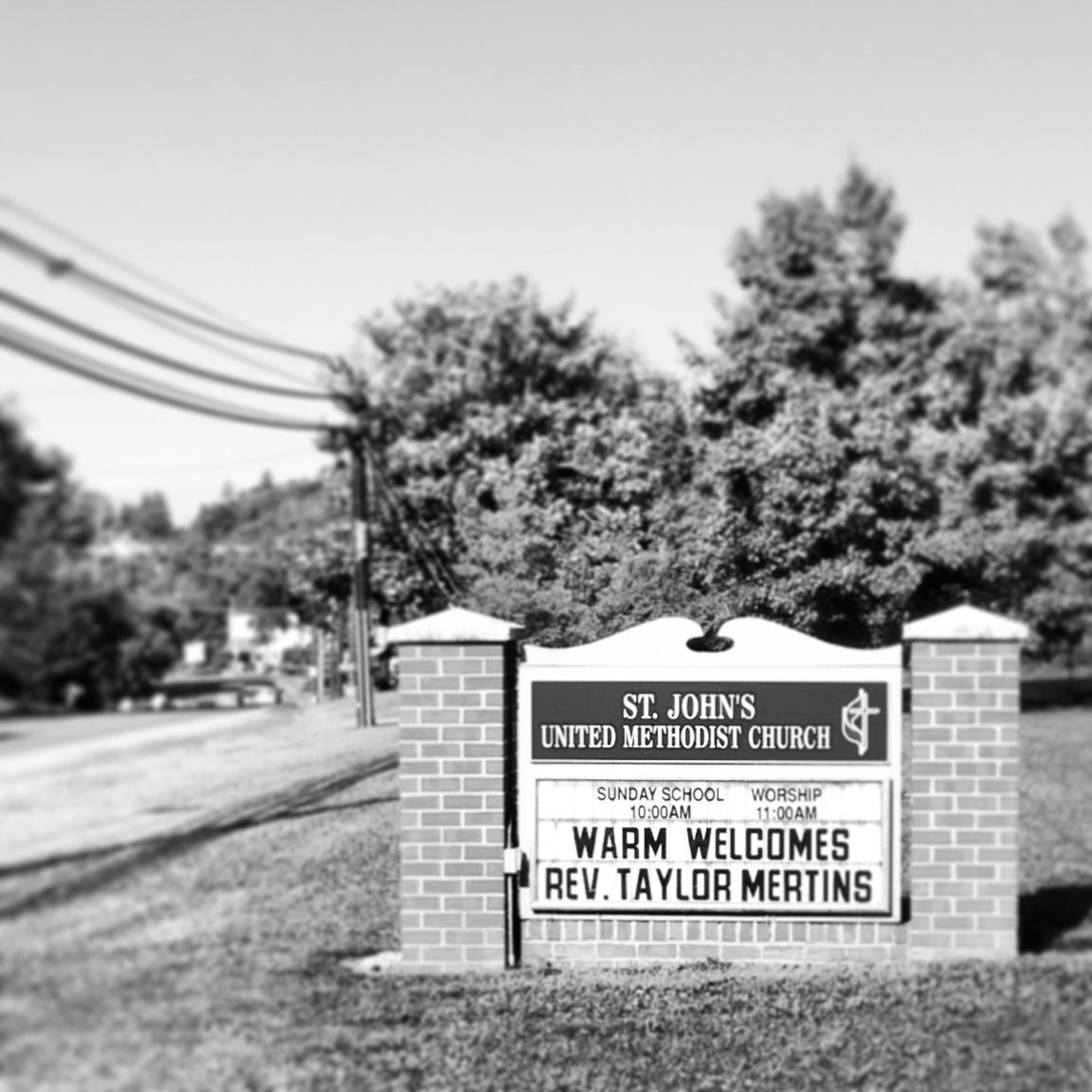
(preached during my first Sunday as the pastor of St. John’s UMC in Staunton, Virginia on 6/30/2013)

Romans 12.1-8

I appeal to you therefore, brothers and sisters, by the mercies of God, to present your bodies as a living sacrifice, holy and acceptable to God, which is your spiritual worship. Do not be conformed to this world, but be transformed by the renewing of your minds, so that you may discern what is the will of God – what is good and acceptable and perfect. For by the grace given to me I say to everyone among you not to think of yourself more highly than you ought to think, but to think with sober judgment, each according to the measure of faith that God has assigned. For as in one body we have many members, and not all the members have the same function, so we, who are many, are one body in Christ, and individually we are members one of another. We have gifts that differ according to the grace given to us: prophecy, in proportion to faith; ministry, in ministering; the teacher, in teaching; the exhorter, in exhortation; the giver, in generosity; the leader, in diligence; the compassionate, in cheerfulness.

The Story

Years ago there was a young man, fresh out of seminary, ready to begin serving his first appointment. He had taken all of the appropriate classes, learned from the best professors, volunteered in the local community and was excited to finally begin his ministry. After passing all of his boards and graduating from his elite seminary he packed his belongings and headed out into a rural area in the North Georgia Conference to John Wesley United Methodist Church. The young man was so anxious and filled with joy that he could hardly contain himself when he arrived in town the first day, so before he unpacked any of his possessions he drove by his new church. He got in his car and went to the listed address, but he missed the church. When he turned around he discovered what had prevented him from seeing the building – there was the oldest most decrepit looking tree with roots stretching all over the ground blocking the sign and most of the church from being visible on the road. In addition to the tree the young minister noticed that some of the hinges needed replacing and a new coat of paint could help too, but above all things he could not stand that awful tree. And so, before unpacking any of his important belongings, the young man found his chainsaw and went to work on the tree. By the time he had finished chopping it down he was incredibly proud of himself; the sign and building were now completely visible from the road and he thought that perhaps a few extra people might be in church on Sunday morning.

A few days later, as he sat in the study of his parsonage preparing his first sermon, the local District Superintendent called: “I hope you haven’t finished unpacking yet,” he said,  “because you’re being reappointed.”

You see, the church was named John Wesley church for a reason, nearly two hundred years ago John Wesley stood on the roots of that tree and preached to the people in the community about the overflowing grace of God, and they decided to build a church right where he stood, and that young minister had chopped it down.

Stories are remarkably important. They contain everything about who we were, who we are, and who we can be. Stories held within a community help to shape the ways we interact with one another, and how we obtain the collective memories of the past. We tell stories to make people laugh, to teach lessons, and remember the important elements of life.

Today, we live in a world of competing narratives; people and organizations are constantly bombarding us with information regarding what we are to think and, perhaps more frighteningly, who we are to be. It is nearly impossible to turn on the television, get online, or even drive down the road without someone telling us how we are supposed to understand the world. Every single day we are thrust into a world that tells us what we are supposed to think, speak, and do; that frightens me. The world is full of ways for us to discover our identities and they are insufficient when compared to our fullest identities in Christ.

God’s Word, through the apostle Paul, looks out to the world and dismisses all of it. Do not be conformed to this world but be transformed by the renewing of your minds! Do not let your favorite reality television shows dictate how you interact with other people, do not let the news channel be the only way you understand the world, do not let your political persuasions limit your relationships with those who are different from you. Instead, be transformed by the renewing of your minds. Being transformed implies a willingness to let God enter your heart and soul and reorient you. Being transformed into God’s vision for who we are means recognizing that, if way say yes, it would be something great and glorious; but we also notice that saying “yes” carries with it a great consequence, for it will have a huge effect on the way we live our lives.

Transformation, a true change in our lives, occurs when we are turned away from our sinful selfish lives back toward God. We are transformed by the renewing of our minds every time we enter this building to hear God and worship God. The story of the church is supposed to be shaped by the greatest story ever told, God becoming flesh in Jesus Christ in order to reconcile the world unto Himself.

IMG_0391

Last weekend I had the privilege of kneeling before 3,000 Methodist from the state of Virginia and was commissioned by our Bishop as a Provisional Elder for our great denomination. According to the ways of the world this is perhaps the worst time to enter ministry. Mainline Protestant Christianity is floundering in the United States, people are no longer attending churches, worship attendance in plummeting, and Church buildings are being closed regularly. Christianity has lost its status in the political arena, we are becoming biblically illiterate, and young people are largely absent from worship. The average age of a member of a United Methodist church is 57.  I cannot begin to tell you how many people tried to dissuade me from entering the ministry at this point in my life because of these facts; because by the world’s standards, this is not the time for ministry, nor is it the time of the church.

Thanks be to God that we do not need to be conformed to the ways of the world, but instead get to be transformed by the renewing of our minds.

At the beginning of the Gospel according to St. Mark, Jesus begins his Galilean ministry by proclaiming: “The time is fulfilled, and the kingdom of God has come near; repent and believe in the good news.” In this one solitary statement, everything about the world has been changed. From this point forward God’s actions in the world will dictate how history takes places, how everything will be transformed, and how we can understand who we are to be in God’s story.

My story begins when I was baptized at Aldersgate UMC in Alexandria, Virginia when I was 19 days old. That church took the baptismal vows seriously and they raised me in the faith: I learned about the goodness of God from Children’s message, sermons, and the Bible. I helped establish the first youth band in the church, led bible studies, and ran the sound system for Sunday services. I was made part of the body of Christ and invited to participate in any way that I could. After one of my dearest friend’s died in a car accident I found myself praying more than I ever had before and started wrestling with a call to ministry. I majored in Religious Studies and Philosophy at James Madison University and eventually enrolled at Duke Divinity School in order to obtain my Masters of Divinity. I interned at numerous churches helping in a variety of ways from Bryson City, North Carolina to Birmingham, Michigan. I have led mission trips to places all over the United States and abroad. I have sat with people during the darkest moments of their lives at Duke University Hospital, and I have celebrated baptisms and the Lord’s Supper with people who earnestly desired them. But none of my experiences of the church could compare to this morning.
photo(1)

In my life I have never been more nervous, excited, thrilled, terrified, humbled, or blessed than I am right now in this pulpit. We are standing at the precipice of a great journey. We get the privilege to gather together as a community of faith every week to share the Good News of God. As we live and move and have our being in God almighty we will enter this place as the body of Christ to proclaim God’s kingdom on earth. I cannot wait to learn about how God has impacted your lives, made you into the individuals you are, and brought this church together. We get to share our stories with each other because they reveal the great things God is still doing in the world.

The stories of the world can never compare to the actions of God in the world through Jesus Christ. Whether you’re a brother or a sister, mother or father, republican or democrat, rich or poor, none of those narratives, none of those identities, compare with what it means to be Christian.

The stories of scripture help to shape who we become throughout our lives. They speak greater truths than simple affirmations or facts. That’s why Jesus never simply explains anything to anyone throughout the gospels, but instead responds by telling a story, or a parable. Stories are part of the fabric of what it means to be human, and even more importantly what it means to be disciples of Jesus Christ

According to the ways of the world the church is in a difficult place. But I’m not worried about any of that, I’m not worried about anything because my hope is not in me, my hope is not built on the ways of the world, but my hope is built on nothing less than Jesus Christ.  Christ is the solid rock upon which this church stands, comforting, nurturing, and sustaining us in all that we do. We can believe in the future of the church because our faith is in almighty God! We are here to share our stories so that we might learn more about how we are caught up in God’s story. The ways of the world are nothing but sinking sand, they can be shaken and moved by the slightest wind but God’s story is eternally unshakable and unmovable.

Be transformed by the renewing of your minds! Remember your truest identities in Jesus Christ; allow the scriptures to wash over you so that you can remember who you are, and whose you are. Listen to the stories of your brothers and sisters so you can remember how God continues to act in your lives every single day. The kingdom of God has come near! Do not be conformed to this world, but be transformed by the renewing of your minds!

Amen.

IMG_1708

With God’s Help – Sermon on Romans 4.13-17

(preached during my final Sunday at Aldersgate UMC in Alexandria, Virginia on 6/9/2013)

Romans 4.13-17: “For the promise that he would inherit the world did not come to Abraham or to his descendants through the law but through the righteousness of faith. If it is the adherents of the law who are to be the heirs, faith is null and the promise is void. For the law brings wrath; but where there is no law, neither is there violation. For this reason it depends on faith, in order that the promise may rest on grace and be guaranteed to all his descendants, not only to the adherents of the law but also to those who share the faith of Abraham (for he is the father of all of us, as it is written, “I have made you the father of many nations”) – in the presence of the God in whom he believed, who gives life to the dead and calls into existence the things that do no exist.”

With God’s Help

Mid-way through my time in seminary a group of us were regularly gathering for intentional faith formation. Our group was made of 20-something Christians both in and outside of Duke Divinity School. As we met on a weekly basis we learned more about one another’s faith, and what had led each of us to Durham, and our present relationship with God. On one particular evening we were discussing the differences between adhering to the law, or the righteousness of faith, when one of my roommates told the story of why it had taken him so long to return to the church.

My roommate had grown up in the deep south in a town where attending the high school football games on Friday nights were second only to attending the Baptist churches on Sunday morning. He had grown up in the church and eventually chose to be baptized out of fear, rather than an intimate relationship with the triune God. He left church every Sunday unsure of what he had done wrong in the eyes of God, but certainly felt that he had committed some horrible atrocity. At some point during high school, his youth group went on a retreat to a local college campus where a conservative evangelical Christian organization was holding a “Faith Weekend.” The hundreds of young Christians gathered in the large auditorium to hear Christian music, sermons, broke into small groups, and generally worshipped with one another until one evening, during the height of a sermon about accepting Jesus Christ as your personal Lord and Savior, the fire alarm went off. Immediately, all of the counselors and chaperones quickly filed all of the students out of the arena through the exit doors to the parking lot. In the sea of chaos my roommate remembered being incredibly frightened and even began praying that everyone would safely make it out of the building. When his eyes finally adjusted to the dimly lit parking lot, he was surprised to discover lifeboats scattered throughout the area with little ladders leading up into the boats. “Quick!” Someone shouted, “Everyone into the boats as quickly as you can, run!” As my roommate was swinging his legs over the starboard side of a life boat the fire alarm stopped ringing and a man began speaking through a megaphone: “Take a good look around you, there are not enough spaces in all of the life boats for everyone… Have you accepted Jesus Christ as your personal Lord and Savior?”

Those are the kind of scare tactics that move people away from the church.

In the fourth chapter of his epistle to the church in Rome, Paul addresses the differences between adherence to the Law and the righteousness of faith. Paul’s use of the Old Testament figure of Abraham is of fundamental importance for the message he intended to share with the Roman church: Though the reasons behind his attention to the relationship between Jews and Christians in the first century are helpful for understanding Paul’s frame-of-reference, the point still remains pertinent today. God’s promises to God’s people are revealed and realized through faith.

Paul begs us to remember Abraham, the father of Israel, because God promised Abraham that he would inherit the world and this inheritance was not realized through adherence to the law, but through the righteousness of faith. The promise of God was coming to Abraham regardless of his ability to maintain the ordinances declared by God. God would never love Abraham any more or any less than he did the day the covenant was made. For this same reason, God’s promises are realized through faith not only to the adherents of the law, those among us to do everything right, but also to those who share in the same faith as Abraham.

Abraham, formerly known as Abram, called out of his homeland to travel to the land that God would send him, promised to be made a great nation, entered into the holy covenant with God marked by circumcision, the husband of Sarah and the father of Isaac. The man who carried his young son to the land of Moriah where he prepared to sacrifice him only to be stopped by an angel of the Lord, and thus Abraham continued to demonstrate his faith. Abraham the father of the great nation that eventually made its way out of Egypt and into the Promised Land. Abraham. God’s promises are realized to those who share in the same faith as Abraham. We, the Christian Church, share in this same faith and have been grafted into a relationship with the triune God.

On March 12th 1988, when I was 19 days old, my family gathered right over there by the baptismal font and participated as Ken Wetzel baptized me in the name of the Father and the Son and the Holy Spirit. In addition to the water spilled onto my forehead, and the presence of the Holy Spirit there was one fundamentally important aspect of that sacrament that this church participated in: Reverend Wetzel looked out to you, this congregation more than 25 years ago, and asked this question: Will you nurture one another in the Christian faith and life and include this person now before you in your care? The response of this congregation that morning is why I am standing before you today:

With God’s help we will proclaim the good news and live according to the example of Christ. We will surround him with a community of love and forgiveness, that he may grow in his service to others. We will pray for him, they he may be a true disciple who walks in the way that leads to life.

The commitment this church made to God that morning regarding my life as a Christian was one that formed and shaped me into the man I am today. Among the many things that this church committed to, it was the first part of the response, “With God’s Help,” that has made the biggest impact on my life. From my infancy, Aldersgate UMC has been the type of community that recognizes how what we do can only be accomplished with God’s help; that has made all the difference. Instead of being raised in a church where I was taught to fear God, like my roommate from seminary was, I was constantly reminded of how to remain committed to the gospel through hope, faith, and love.

The true beginning of my call to ministry did not begin with my confirmation around that altar, or even when I was a Boy Scout with troop 996, but when I was 13 years old I noticed a call for help in one of our Sunday bulletins for someone to run the soundboard. (It gave me goose bumps to see a similar message in the bulletins from last week). I spent every Sunday for a month standing in the back of the church with men like Bud Walker and Paul Corrum who taught me how to keep the correct sound levels. And until I graduated from High School I ran the sound system for many of our Sunday services, weddings, and funerals. Though I was considerably younger than anyone in the back of the church, men such as Paul Tuoig, Bob Foley, Les Norton, and Sam Schrage made it a point to come stand with me every week and treated me with respect, like an adult, and they treated me like a fellow Christian. There have been countless individuals from this church who have made it their responsibility to demonstrate the goodness of God through their actions on mission trips, meetings, and worship. With God’s Help we will proclaim the good news and live according to the example of Christ.

285_1026151185024_3757_n

After enrolling in college I was invited to act as a ministerial intern for our church every summer until I entered seminary. I was encouraged to lead mission trips all over the world, visit congregants who could no longer attend church, create bible study curricula, and preach regularly. I still can’t believe that Jason and Dennis were foolish enough to let me preach for the first time when I was 19 years old. A plethora of people have expressed their gratitude for my sermons, and leadership on mission trips, but even more important have been those of you who disliked what I said and did, and loved me enough to tell me why. Without you I could not have grown. With God’s Help we will surround him with a community of love and forgiveness that he may grow in his service to others.

IMG_0388


I have been living in Durham, North Carolina for the last three years working on my Masters of Divinity and I have been continually invited to preach from this pulpit. Even if I was invited on specific weekends when Jason and Dennis wanted to go on vacation I nevertheless appreciated the invitation and felt privileged to proclaim the good news within my home church. I have now been approved by the Virginia Conference to serve as a Provisional Elder and have been appointed to St. John’s UMC in Staunton VA. I am incredibly humbled by the fact that, to my knowledge, I am the first person to have grown up through Aldersgate and then pursue a call to ordained ministry. With God’s help, we will pray for him, that he may be a true disciple, who walks in the way that leads to life.

I was incredibly blessed to have grown up through Aldersgate. It was this Christian community that showed me the importance of faith predicated on God’s help. Faith was never taught to me in such a way that I would respond to God out of fear but instead by love. This church nurtured me in such a way that the question: Have you accepted Jesus Christ as your personal Lord and Savior felt uncomfortable and dissonant. It puts too much power and control on our side of the equation. Accepting Jesus sounds a lot more like following the Law than it does embodying the righteousness of faith. If the church is to be thought of from this legal point of view, from simply accepting Jesus, if it is regarded as a condition capable of human attainment, then the church will remain deprived of its dynamic power and continually insecure. This is why I fear that so many young people are no longer coming to church; perhaps they feel completely isolated regarding their relationship with God after accepting Jesus Christ as their personal Lord and Savior. Maybe they believe they carry the burden of their relationship with God completely on their own. Convincing someone to accept Jesus is an important element of Christian discipleship but the difference between accepting Jesus, and confessing Jesus Christ as Lord are two different things. Aldersgate never let my relationship with God stop at acceptance, but pushed me to learn so much more about what it means to be a disciple of Jesus Christ. It is my prayer that the new faith community that this church is preparing to help establish will continue to make disciples of Jesus Christ teaching that faith is faith only when it is an advance, understandable only because if come from God alone. Faith is creative, faith is living, faith is fulfilling, only when we find ourselves wrapped up in God’s love. Faith is real only when it is found With God’s help.

As I look forward to my future in the ministry, I am thankful for Aldersgate, the opportunities it has provided me, and the people that have demonstrated God’s love to me. I would not be standing here if it were not for that baptismal commitment you made to God twenty-five years ago. I never could have discovered faith in God on my own; it was this church that shared the faith of Abraham with me regarding God’s promises to God’s people. I learned the language and grammar of Christianity through sermons, classes, and even vacation bible school. I participated in God’s kingdom on earth by visiting those who were in need, through proclaiming the good news, and even dressing up for living Bethlehem. Paul’s words to the church in Rome have now come alive for me, because this church committed to raising me in the faith, to share the faith of Abraham with everyone, and proclaim the good news of God’s kingdom. This church taught me that the truly creative act by which we all become the children of Abraham does not lie in the possible possibility of the law, but in the impossible possibility of faith.

It’s when I open up to the fourth chapter of Romans that I am reminded of what this church does every day, every week, every month, every year; you open up the strange new world of the Bible. We get to stand on the rocky ground and feel the warmth of the burning bush on our cheek with Moses. We get to feel the water flow between our toes as we wait on the banks of the Jabbok witnessing Jacob wrestle with the angel from God. We get to gather together in the marketplaces and the shores of the lakes watching Jesus perform miracles, feed the multitudes, and teach about the kingdom of God. This church invites us into the strange new world of the Bible.

Just as you made a commitment to God regarding my faith 25 years ago, you also have committed to nurture those sitting to your right and left in faith. To show them Christ’s love in everything you do, to embody the kingdom of God so that we all might share in the faith of Abraham.

With God’s Help we are called to proclaim the good news, to gather together regularly in order to share the story of God’s interaction with God’s people, to read scripture and learn our own story. With God’s help we are commissioned to live according to the example of Christ, to lift up our own crosses and bear them in the world, to serve those in need, to love the unlovable and transform the world by first transforming ourselves.

I thank all of you from the bottom of my heart. To God Be the Glory.

Amen.

Temptation – Sermon on Luke 4.1-13 (Text)

(Preached at Duke Memorial UMC in Durham, NC on 2/17/2013)

Luke 4.1-13: Jesus, full of the Holy Spirit, returned from the Jordan and was led by the Spirit in the wilderness, where for forty days he was tempted by the devil. He ate nothing at all during those days, and when they were over, he was famished. The devil said to him, “If you are the Son of God, command this stone to become a loaf of bread.” Jesus answered him, “It is written, ‘One does not live by bread alone.’” Then the devil led him up and showed him in an instant all the kingdoms of the world. And the devil said to him, “To you I will give their glory and all this authority; for is has been given over to me, and I give it to anyone I please. If you, then, will worship me, it will all be yours.” Jesus answered him, “It is written, ‘Worship the Lord your God, and serve only him.’” Then the devil took him to Jerusalem, and placed him on the pinnacle of the temple, saying to him, “If you are the Son of God, throw yourself down from here, for it is written, ‘He will command his angels concerning you, to protect you,’ and ‘On their hands they will bear you up, so that you will not dash your foot against a stone.’” Jesus answered him, “It is said, ‘Do not put the Lord your God to the test.’” When the devil had finished every test, he departed from him until an opportune time.


“What strikes you most about this passage?” my professor inquired of the class. We had just read through Jesus’ temptation in the wilderness by the devil, and Dr. Kavin Rowe wanted to hear some of our thoughts. My classmates and I tried diligently to impress our professor with exegetical insights within the texts: “Well Dr. Rowe, the 40 days in the wilderness clearly connects with the Israelites 40 years of wandering through the wilderness before entering the Holy Land.” “Actually, the 40 days of Jesus’ fasting reflects Moses’ 40 days of fasting on Mt Sinai and Elijah’s 40 day fast before discovering God in the sound of sheer silence.” “The temptation has a Christological focus demonstrating for us, the readers, Jesus’ humanity in his need for food, and his divinity with being able to resist the temptations by the devil.” This went on for some time, and my professor sat that thoughtfully nodding his head along with some of our comments until he decided to end this unspoken competition. “What I find most interesting,” he said, “is that the devil knows scripture better than we do.”

            The temptation narrative has been the traditional scripture reading for the first Sunday of Lent because it helps to connect with our forty-day journey from Ash Wednesday to Easter Sunday. In it we learn about the man Jesus from Nazareth before he begins his public ministry throughout Galilee. Filled with the Holy Spirit Jesus was led by the Spirit into the wilderness where he was tempted by the devil, ate nothing for forty days and was famished. It is no wonder then that the devil’s first temptation is for Jesus to demonstrate his power over creation by turning a stone into a loaf of bread. But Jesus, ever the biblical scholar, quotes Deuteronomy: “One does not live by bread alone.” Obviously frustrated, the devil then immediately showed Jesus all of the kingdoms of the world and tempted him with the power to rule over all things if only Jesus will worship the devil. But Jesus, demonstrating his biblical literacy again, quotes Deuteronomy: “Worship the Lord your God, and serve only him.” And then the devil brings Jesus to the temple in Jerusalem and decides to beat Jesus at his own game: Throw yourself down from here Jesus, if you really are the Son of God, for it is written, “He will command his angels concerning you, to protect you, and On their hands they will bear you up, so that you will not dash your foot against a stone.” The devil has finally played his trump card; he uses Psalm 91 to tempt Jesus for the third and final time. You can almost see here the smile begin to form on Jesus’ face, the devil has got him cornered, he is sitting on the precipice of the temple while he Jesus replies assuredly, “it is written, ‘Do not put your Lord to the test.’” And the devil departed from him until an opportune time.

            Temptation is complex, and has rested at the center of our liturgical observance of Lent for centuries. Today people tend to give up “temptations” throughout their Lenten fast in order to focus more on God. Over at the Divinity School, I like to call this practice “Lenten Olympics.” It is not uncommon to hear subtle braggings throughout the halls of Duke: “This year I’m giving up sweets,” some will say, but because they’re in seminary they always add a theological counterpart, “and every time I want to eat candy or a cupcake I will pray instead.” “Sweets? That’s easy. I’m going to give up eating meat in order to honor the glory of God’s creation.” “Meat? I’m giving up television so that my focus can remain on the Word of God” And for as much as I love my peers in the Divinity School, I out-did all of them last year: I gave up four F’s: Facebook, Fast food, Fermented Drinks, and Facial Hair (which meant that I shaved every morning for forty days). What’s worse is that everyone knew what I had given up because it became part of most of my conversations. As people would compare their sacrifices and temptations I was there waiting for the right moment to outshine them with the ultimate sacrifice of my tender and clean shaven face.

Isn’t it amazing how often we can so easily turn the gospel around to be more about our own selfishness than the good news of Jesus Christ?

Ever since last Lent I’ve thought a lot about temptation, and what it means to turn our priorities around to enter into a penitential attitude toward God during these forty days. Lent used to be a time of preparation for believers, a time of prayer, penance, repentance, self-denial, and catechesis. It used to be the annual period where new converts were taught about the kingdom of God, and the body of Christ as the church before they entered through baptism. Today, lent is often celebrated as a time to go on that diet we’ve been planning, or a competition of our own self-righteousness.

The things that I have given up in the past were not even real temptations. I am not tempted to play on Facebook, or grow a beard. We are not tempted by sweets, or television, or meat. Temptations are not often obvious in our lives, but this story about Jesus’ temptation in the wilderness helps to describe the continual challenges of the Christian life: forgetting our baptismal identity, the desire to be successful rather than faithful, the thought that we can get through our lives without our hope, faith, and prayers in Jesus Christ.

Real temptation is never an offer to fall, but instead to rise. In the Garden of Eden, the serpent did not ask, “Do you wish to be as the devil?” but instead, “Do you want to be like God?” The truest forms of temptation are indications of strength, not weakness. We are not tempted to do what we cannot do, but what is within our power, the greater our strength, the greater the temptation.

As I mentioned last week, the focus of my work at Duke Memorial is with our members who can no longer attend services, and those who would like regular pastoral visits. In addition to this ministry I am also completing my CPE (clinical pastoral education) requirement for ordination in the UMC. I spend most of my Mondays at Duke University Hospital learning about death, grief, and suffering. Additionally I spend a twenty-four hour period once a month as the on-call chaplain at the hospital. I am paged for every death, for the people who would like a visit from the chaplain, and a handful of other reasons. I recently received a page while I was at the hospital regarding the death of a patient. When I entered the waiting room to find the grieving family, I instead discovered one solitary woman who was weeping in the corner. After introducing myself and learning about what happened, we talked about the woman’s mother who just died after a prolonged battle with cancer. We talked about the mother’s faith, and how important the bible was to her, about the marriage that resulted in the one daughter who now was alone at the hospital. And as the tears started to flow again she looked right into my eyes and slowly shook me to my core: “I have watched my mother suffer horribly for the last few years. I took her to her radiation and chemotherapy appointments, I watched her body slowly disintegrate, I watched the look of life slowly disappear from her eyes. I knew that she was eventually going to die, but I never really believed it, I always thought that she would just live forever.”

Throughout my experiences both with this church and the hospital, I have discovered that one of our greatest temptations is to believe that we can escape death. Truly I tell you, everyone in this room will one day die. It does not matter if you are young or old, wealthy or poor, happy or sad, death is real and inescapable.

We are so often tempted to believe that death isn’t real. But it is.

On Wednesday night I sat in this sanctuary with a handful of people as we gathered together for worship. Besides Good Friday, Ash Wednesday is the one day in the Christian year that we most intimately confront our own deaths. The sign of Jesus’ death were drawn onto our foreheads with ashes as we were reminded that we are dust, and to the dust we shall return. Perhaps the entire season of lent is the best time to confront our own finitude and remember that this, that life itself, is the greatest gift of God.

Now I am not encouraging us to spend the next 6 weeks thinking about death every chance we get. But I encourage us to remember that God has breathed the breath of life into each and every once of us. When we remember that life is a precious gift, we when do not fall to the temptation of thinking death isn’t real, we can live our lives more fully.

Temptation is real and often strikes us when we least suspect it. Jesus was led into the wilderness in order to be tempted, but we can be tempted at any moment in our lives. Over the next few weeks Duke Memorial will be inviting us to observe Lent as a congregation by walking with Jesus through scripture. This is incredibly appropriate because Jesus overcame temptation by drawing upon scripture.

Though filled with hunger after a forty day fast Jesus remembered scripture: we do not live by bread alone. There are things conveyed to us in life through the grace of God that provide more nourishment than we can imagine. Though he came to proclaim the year of the Lord’s favor and turn the world upside down Jesus remembered scripture: we are called to worship the Lord our God and serve only him. And even though the devil brought Jesus to Jerusalem and used scripture against Jesus in order to put God’s promises to the test regarding his death, Jesus remembered scripture, and resisted.

What the devil never knew was that Jesus would eventually face death in Jerusalem, and when he did he would still choose not his own deliverance, but would faithfully mount the hard wood of the cross on our behalf.

As we make our way through this Lenten season I want to remind us that being committed to the way of God does not exempt us from struggles in the world. Those who are most engaged in the ways of God seem to experience most intensely the oppositions of evil and the temptations of the devil.

Over the next six weeks, if you feel tempted to forget your identity in Christ I encourage you to remember your baptism, consider the water the was poured over you in order to bring you into the body of Christ.

If you feel tempted to be successful rather than faithful, I encourage you to remember that the Lord only requires two things of us: To love God with all our heart, soul, mind and strength, and to love our neighbors as ourselves.

If you feel tempted to believe that you can make if through this life without your hope, faith, and prayers in God I encourage you to remember that God became flesh in Jesus Christ, suffered on earth and died on the cross for you and me.

And if you feel tempted to believe that you can escape death, I encourage you to remember that death is real, but it is not the end.

Amen.